In Singapore, an Exim & Mfr Enterprise is a specific type of business that handles both manufacturing its own products and managing its import and export logistics in-house. For logistics providers, these integrated companies are prime targets because their business models rely on consistent, high-volume shipping across complex global supply chains.
Unlocking the Exim and Mfr Enterprise Opportunity
Figuring out how to identify and connect with an Exim & Mfr Enterprise can give freight forwarders a real strategic edge. These businesses aren't just one-off customers; their entire operation depends on the steady flow of goods. Since they manage everything from production to distribution, their logistics needs are predictable and often quite large, making them excellent long-term partners.
You'll find plenty of these opportunities in Singapore's high-growth sectors. Think about companies in electronics, pharmaceuticals, or precision machinery – they frequently use this integrated model. Their need for dependable, specialised freight services, like temperature-controlled transport or secure handling for sensitive parts, opens the door for logistics providers who can prove their expertise.
A data-driven approach is key to cutting through the noise. When sales teams analyse shipment patterns and commodity flows, they can zero in on companies with active, high-volume shipping needs that are a perfect match for what they offer.
This kind of targeted strategy makes your outreach far more effective. You can skip the generic sales pitches and approach potential clients with genuine insights about their operations. Getting the fundamentals right is the first step, and you can dive deeper into building a successful import-export business in our detailed guide. This focused approach makes sure you're putting your energy into the most promising prospects.
Analysing Shipment Patterns and Key Trade Lanes
To really get a foot in the door with an Exim & Mfr enterprise, you need to understand their logistics footprint. It's all about mapping their flow of goods by digging into customs and trade data. This reveals the crucial patterns in their air and ocean freight that point directly to high-value opportunities, taking you far beyond simple guesswork.
You'll often find a heavy concentration of specific commodities moving along very particular routes. For example, Singapore’s top manufacturing exporters are constantly sending out high-value goods like advanced semiconductors, biomedical products, and precision machinery parts. When you can spot these patterns, you can perfectly align your logistics services with what they actually do day in and day out.
This chart breaks down the opportunity scores for key sectors within the Exim & Mfr landscape, based on shipment volume and value.
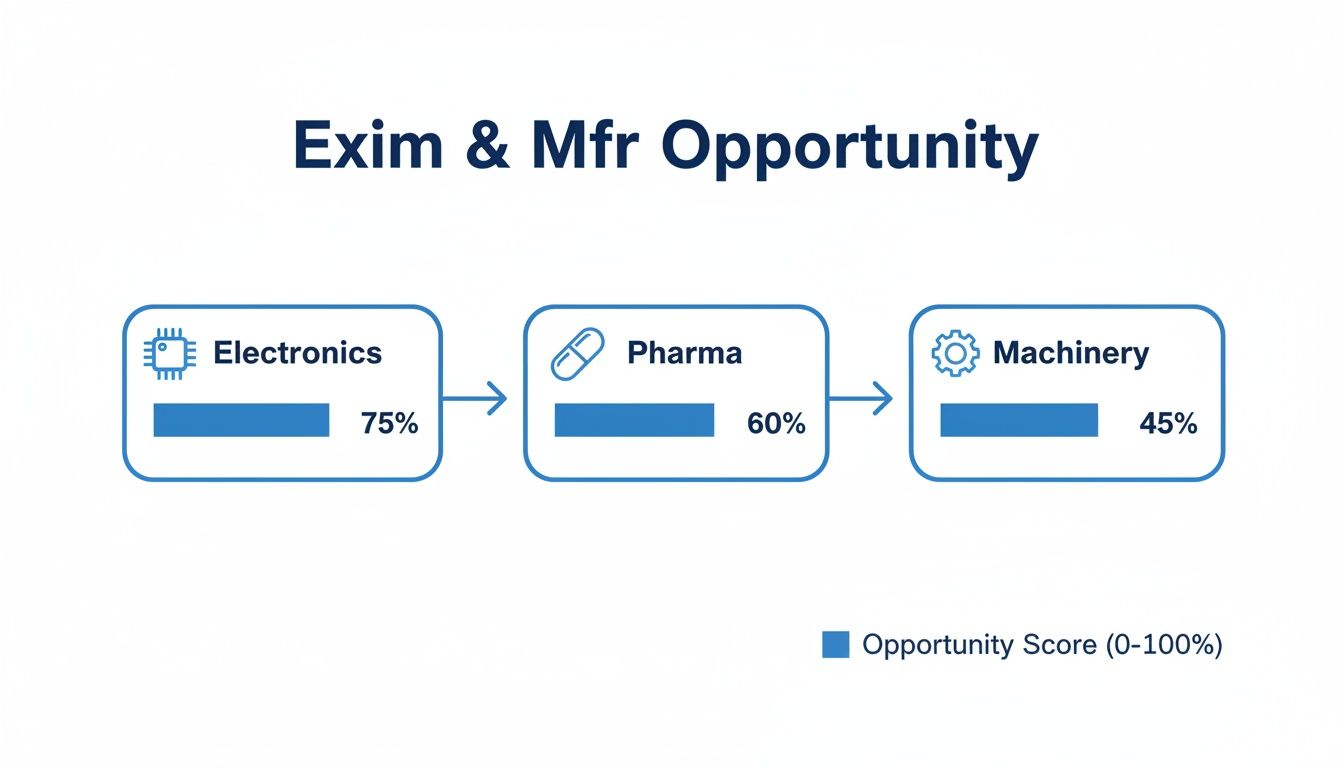
As you can see, electronics leads the pack, driven by consistent, high-value shipments, with pharmaceuticals and machinery following close behind.
Core Trade Lanes and Commodities
Pinpointing the most active trade lanes lets you focus your sales efforts where they'll have the biggest impact. Your analysis might uncover a manufacturer that consistently ships from Singapore to major hubs in Europe or North America. This is your opening.
To give you a clearer picture, I've put together a table summarising the typical shipping profile for these enterprises. It covers everything from what they ship to how they ship it.
Exim & Mfr Enterprise Shipment Profile
A summary of typical shipping characteristics for manufacturing and export enterprises in Singapore's key growth sectors.
| Metric | Description / Key Data Point |
|---|---|
| Primary Exports | Advanced electronics (semiconductors), pharmaceuticals, and specialised industrial machinery. |
| Key Destination Hubs | Major airports and seaports in the United States, Germany, and the Netherlands. |
| Freight Mode Preference | Air freight is heavily favoured for high-value, time-sensitive electronics and pharmaceuticals. |
| Ocean Freight Usage | Used for bulk machinery, raw materials, and less time-critical components. |
| Shipment Frequency | Tends to be high and consistent, especially for electronics and pharma sectors. |
This data provides a solid foundation for building a targeted sales strategy. For instance, knowing a prospect frequently sends temperature-sensitive biomedical products to Frankfurt means you can walk in and pitch your specialised cold-chain solutions for that exact lane. It’s a direct, relevant approach that shows you've done your homework.
Lately, Singapore's manufacturing sector has seen major year-on-year growth, much of it fuelled by the boom in demand for AI-related semiconductors and strong pharmaceutical output. This surge is obvious in the export numbers, underlining a growing need for smart lead discovery and shipper outreach. You can get more details on Singapore's economic performance and how it affects these critical trade lanes.
Identifying the Right Decision-Makers to Contact
Getting your foot in the door at a company like Exim & Mfr Enterprise is all about talking to the right people. Sending a generic email to a general inbox just doesn't cut it anymore; it'll get deleted before it's even read. You need to connect with the specific individuals who actually make the decisions on logistics and freight.
When your sales team understands who does what, they can speak directly to the challenges that keep these people up at night. That’s how you build real rapport and show you can solve their problems from day one.

Key Roles and Their Priorities
Let's break down the main players in the decision-making process. If you want to move past a generic sales pitch, you have to tailor your message to what each of these roles actually cares about.
-
Supply Chain Manager
This person is looking at the entire picture, from the factory floor to the final delivery. Their world revolves around end-to-end efficiency—things like optimising inventory levels, cutting down lead times, and making sure manufacturing and distribution are perfectly in sync. They’ll listen if you can offer better visibility and rock-solid reliability. -
Logistics Director or Manager
Here's your tactical expert. They're the ones in the trenches, responsible for the day-to-day execution of shipping. Their main focus? On-time performance, carrier dependability, and keeping freight costs under control. If you've got solid data on lane performance or a smart idea for mode optimisation, they're all ears. -
Procurement or Sourcing Head
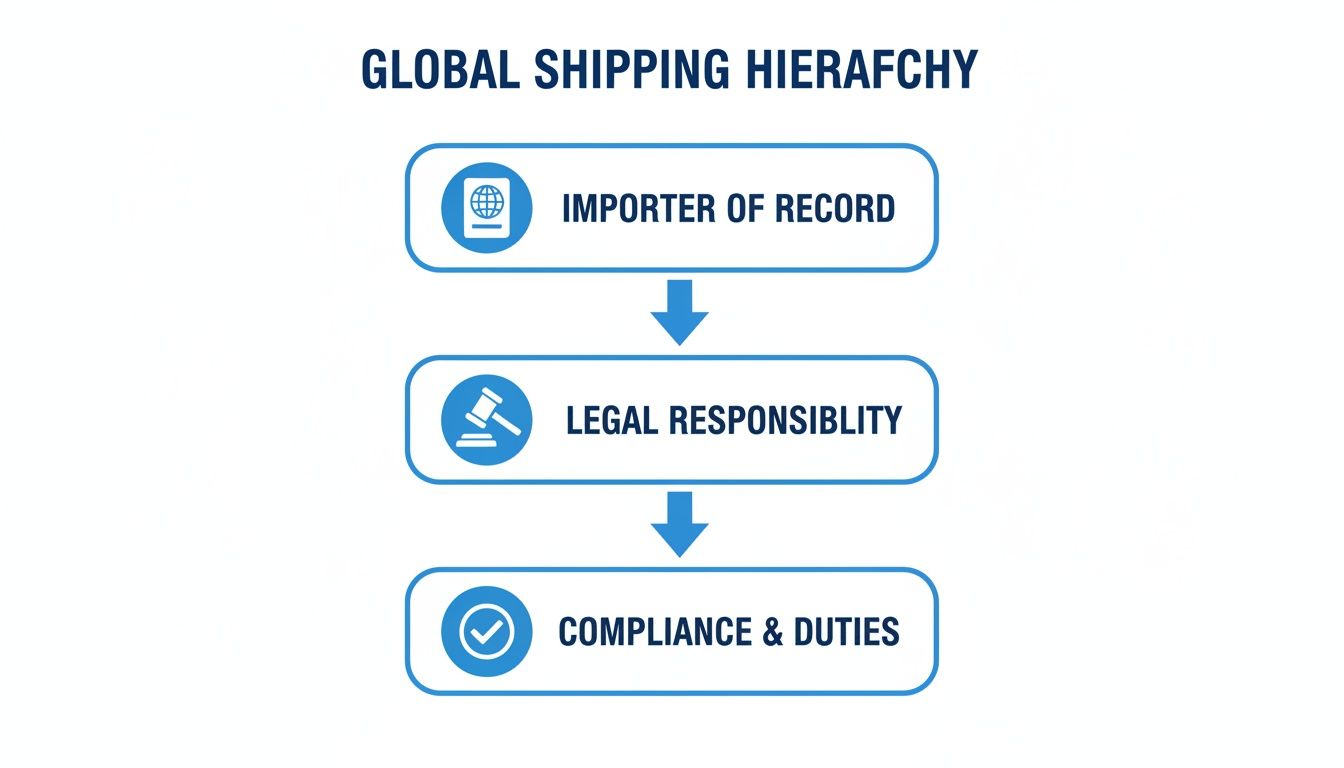
This individual lives and breathes the bottom line. Their job is to negotiate contracts and find cost savings wherever possible. To get their attention, you need to talk about competitive pricing, clear value, and the benefits of a long-term partnership. Don’t forget compliance, either—it’s a huge part of their world. For a deeper dive into their legal responsibilities, check out our guide on understanding the Importer of Record.
By understanding these roles, you can start to pinpoint their likely frustrations. A Logistics Director might be wrestling with constant customs delays on a key trade lane, while the Head of Procurement is under pressure to consolidate freight spend.
When you bring up these specific operational headaches in your first conversation, it immediately shows you’ve done your homework. It proves you understand the real-world pressures of a business like Exim & Mfr Enterprise.
Turning Trade Data into Your Secret Weapon for Sales
Forget casting a wide net and hoping for the best. When you're trying to win business with an Exim & Mfr enterprise, the real power lies in turning raw customs data into a precision-guided prospecting tool. This isn't just about finding companies; it's about filtering them based on real, actionable criteria that perfectly match what you offer.
Imagine building a list of every manufacturer in Singapore that ships high-value electronics to Germany by air. That’s the kind of hyper-targeting we're talking about. This data-first approach means you’re only reaching out to businesses with a proven, current need for your services.
How to Sharpen Your Prospect List
Modern data platforms go way beyond just giving you numbers. They layer this raw data with verified contacts and deep company intelligence, taking you from a vague company name to the actual Logistics Director or Supply Chain Manager who makes the decisions. You can see how to access this kind of global trade data over at Coreties Trade.
Here are a few ways to start slicing the data to find your ideal clients:
- Filter by Commodity: Focus your search on companies shipping the exact goods you handle best, whether that's pharmaceuticals, machinery, or perishable goods.
- Analyse Trade Lanes: Pinpoint prospects who are active on the specific trade routes where your network and pricing give you a clear edge.
- Assess Shipment Volume: Why chase small fish? Prioritise the high-volume shippers to make sure your team is spending their time on the biggest opportunities.
The moment you adopt this strategy, your team's efficiency skyrockets. You stop wasting time and resources on leads that were never a good fit and, naturally, your win rate goes up.
The latest trade data reveals a lot of resilience in Singapore's non-oil domestic exports. Even with some market jitters, the manufacturing sector is pushing export values up. This points to clear opportunities, especially in airfreight for niche categories like Animal & Vegetable Oils, all while the AI and pharma booms continue to gather steam. Digging into Singapore's recent export performance gives you the kind of timely insight that makes your first call or email incredibly relevant.
Crafting Outreach That Gets a Response
Let's be blunt: generic sales pitches are dead on arrival. If you want to connect with the key people at a busy Exim & Mfr enterprise, your message has to show you've done your homework. You need to provide immediate, specific value right from the first sentence.
That means ditching the vague "we can save you money" promises. Instead, lead with a sharp, data-driven insight you've uncovered about their actual shipping operations. Mention a recent high-volume shipment, a specific trade lane they rely on, or a particular commodity they're moving. This instantly proves you understand their business and sets you apart from the flood of mass emails in their inbox.

This approach respects their time and, more importantly, positions you as a potential strategic partner, not just another vendor trying to make a sale. It’s the perfect way to open the door for a real conversation about solving their specific operational headaches.
Structuring a Compelling Email
A powerful outreach email follows a simple but effective framework. It's all about grabbing attention with relevance, backing it up with hard data, and making it incredibly easy for them to say yes to the next step.
Here’s how to build it:
- A Truly Personalised Subject Line: Forget just using their name. Mention a specific trade route or product, like, "Question about your air freight to Frankfurt." That’s far more likely to get clicked than a generic sales headline.
- The Data-Driven Hook: Your opening line needs to land with impact. Get straight to the point with the insight you found. For example, "I noticed your company has been consistently shipping semiconductors by air from Singapore to the Netherlands."
- Propose a Relevant Solution: Immediately connect that observation to a direct benefit you can provide. Building on the previous example, you could say, "We have priority capacity on that lane and have helped similar electronics shippers cut their transit times by 15%."
- A Clear Call to Action: Don't leave things open-ended. Suggest a quick, specific next step. Something like, "Would you be open to a 10-minute call next Tuesday? I can share some data on how we're seeing that lane perform."
This method turns your outreach from a shot in the dark into a targeted business proposal. You're not just asking for their time; you're offering them valuable, specific information that speaks directly to their supply chain challenges.
When you follow this structure, you completely change the dynamic. You demonstrate a genuine understanding of what an Exim & Mfr enterprise deals with day-to-day, making a positive response far more likely.
Your Quick-Reference Prospecting Playbook
Before you pick up the phone or type that first email to an Exim & Mfr enterprise, spending just a few minutes on prep can make all the difference. Think of this as your go-to playbook for crafting a smart approach, making sure your pitch hits the mark with the right decision-maker.
The key is to connect your solution to their specific, day-to-day problems. The matrix below will help you do just that.
Decision-Maker Outreach Matrix
I've put this table together to quickly map out who you're talking to, what they likely care about most, and how you can use trade data to grab their attention. It's a simple way to make sure your message is always relevant.
| Job Role | Primary Concern | Effective Outreach Angle (Using Data) |
|---|---|---|
| Logistics Director | Reliability & Performance | "I noticed your consistent air shipments to Frankfurt; we offer priority capacity on that lane." |
| Supply Chain Manager | End-to-End Efficiency | "Our data shows your average transit time to the US West Coast could be improved by 1-2 days." |
| Procurement Head | Cost & Value | "We can offer a competitive rate for your typical ocean freight volume to Southeast Asia." |
Using a data point isn't just about sounding smart; it shows you've done your homework and aren't just sending another generic email. It proves you understand their business.
So, before you reach out, run through a quick mental checklist: have you found the right person, spotted a relevant trade lane in their shipping data, and crafted a sharp, value-focused opening line?
This simple, repeatable process is what separates a good sales pro from a great one. It makes every interaction feel informed and strategic, which is exactly what you need to get a positive response.
Frequently Asked Questions
What Exactly Is An Exim & Mfr Enterprise?
An Exim & Mfr enterprise is a type of business you'll see a lot in Singapore's industrial parks. In simple terms, they're companies that both manufacture their own products and handle their own import-export operations.
Think of it this way: instead of making a product and then hiring a separate company to ship it, these integrated businesses manage the entire supply chain themselves, from the factory floor right through to global distribution. This makes them really valuable, consistent shippers.
Why Should I Focus My Sales Efforts On Them?
For any logistics provider, targeting these enterprises is a smart move. Their entire business model is built on a constant, predictable movement of goods.
This means they’re looking for reliable, long-term freight partnerships, not just a one-time deal. That stability can translate directly into more consistent revenue for you. Plus, their needs are often complex—from specialised goods like pharmaceuticals to tricky multi-modal shipments—creating perfect opportunities for an expert freight forwarder to step in and show their value.
So, How Do I Actually Find These Companies?
You'll have to look beyond standard company directories. The most reliable way to pinpoint a true Exim & Mfr enterprise is by digging into customs and trade data.
Using a platform that provides this kind of data lets you filter for companies based on specific criteria like the commodities they ship, how often they ship, and the trade lanes they use. This method points you straight to businesses that are actively manufacturing and exporting.
What's The Best Way To Approach Them?
Your best bet is to lead with data and make it personal. Forget generic, copy-paste sales pitches; they get deleted instantly.
Instead, craft an outreach message based on real insights you’ve gathered. For example, you could open an email by referencing their recent shipment volumes on a specific route you happen to service. This small detail immediately shows you’ve done your homework and understand their business, making it far more likely you'll start a real conversation about how you can help.
Stop guessing and start winning. With Coreties, you can access verified contacts and real-time trade data to connect with the right decision-makers at every Exim & Mfr enterprise. Find your next high-value shipper today at https://coreties.com.