Tag: cold chain logistics

  • Your Guide to Global Perishable Services

    Your Guide to Global Perishable Services

    Global perishable logistics is the specialized world of moving things that can spoil—fresh food, flowers, pharmaceuticals—across international borders. It’s a high-stakes field where success hinges on maintaining an unbroken cold chain, a delicate dance of speed and technology to keep products perfect from farm to pharmacy or from field to fork.

    The High-Stakes World of Perishable Logistics

    Welcome to the fast-paced, high-pressure world of perishable logistics. This isn't just about moving boxes from A to B. It's the art and science of keeping delicate, high-value products pristine as they travel thousands of miles.

    Think about it: getting fresh Norwegian salmon to a sushi counter in Tokyo or vibrant Kenyan roses to a florist in Amsterdam. Both have to arrive looking, smelling, and tasting as if they just left the source. For freight forwarders, mastering this demanding niche isn't just another service offering; it's a direct path to a significant and growing revenue stream.

    The core challenge is simple to state but incredibly complex to solve: get sensitive goods to their destination without any drop in quality. This demands a perfectly orchestrated symphony of precise temperature control, lightning-fast transit, and flawless execution at every step.

    Any weak link in this chain—a delayed flight on a scorching tarmac, a malfunctioning reefer container, or a customs holdup—can instantly turn a profitable shipment into a complete, costly loss.

    A Rapidly Expanding Market

    The good news? Demand for reliable perishable shipping is absolutely surging. As consumers develop a taste for fresh, year-round exotic foods and the global pharmaceutical industry expands its reach, the market is booming.

    The global perishable logistics service market is on track to grow from $18.42 billion in 2023 to a staggering $31.26 billion by 2033, climbing at a steady 5.43% each year. This growth, detailed in reports from market analysts like Spherical Insights, underscores the massive opportunity for logistics pros who can deliver unwavering reliability.

    At its heart, perishable logistics is a race against time and temperature. A successful shipment means a product's shelf life is spent in the hands of the consumer, not sitting in a warehouse or on a dock.

    Before we dive deeper into the "how," it's helpful to understand which products typically travel by which mode. The choice between air and sea often comes down to a trade-off between speed, cost, and the product's own resilience.

    Key Perishable Categories by Transport Mode

    Category Primary Mode Reason
    High-Value Seafood (e.g., live lobster, fresh tuna) Air Extremely short shelf life and high market value justify the cost of speed.
    Exotic & Soft Fruits (e.g., berries, figs, cherries) Air Highly fragile and prone to spoilage; they need to reach market shelves within days.
    Fresh-Cut Flowers Air Peak freshness (or "vaselife") is fleeting. Speed is essential to capture their value.
    Pharmaceuticals & Vaccines Air Often require ultra-precise temperature control and rapid delivery for urgent medical needs.
    Hardy Fruits & Vegetables (e.g., apples, citrus, onions) Sea Can withstand longer transit times (weeks), making cost-effective ocean freight the ideal choice.
    Frozen Meats & Seafood Sea Once frozen solid, the primary goal is maintaining temperature, which modern reefer containers do well over long voyages.

    This table gives you a general idea, but the lines are always blurring as cold chain technology improves, opening new possibilities for both air and ocean freight.

    The Key Players and Rewards

    Getting this right requires a network of specialists: farmers, drug manufacturers, packaging experts, carriers, and customs brokers. As a freight forwarder, your job is to be the conductor of this orchestra, coordinating every player to ensure the shipment moves without a hitch.

    The rewards are substantial. Not only does this unlock higher-margin business, but it also builds a powerful reputation for precision and reliability—two of the most valuable currencies in the logistics industry. For instance, knowing how to expertly manage the complexities of fresh produce imports is a critical and highly sought-after skill.

    This guide will give you the foundation you need to navigate this exciting field, from cold chain fundamentals to the data-driven strategies that will help you find and win more business.

    Mastering the Fundamentals of Cold Chain Logistics

    The heart of all global perishable services is the cold chain. The best way to think about it is like a high-stakes relay race, but instead of a baton, you're passing along a perfectly controlled temperature. It’s an unbroken, climate-controlled journey from the farm, lab, or factory all the way to the consumer. Drop that "temperature baton" just once, and the race is over. The product is ruined.

    Every successful shipment of sensitive goods—be it fresh produce, pharmaceuticals, or flowers—hinges on this seamless handoff. It’s not just about keeping things cold. It's about maintaining a very specific, constant temperature that's right for that exact product. A small slip-up can mean the difference between a profitable delivery and a total loss.

    This process boils down to the delicate interplay between time, temperature, and technology.

    Diagram illustrating the essential steps in perishable logistics: time, temperature, and technology.

    As you can see, these three factors aren't isolated; they're completely intertwined. Get one wrong, and the other two can't save your shipment.

    The Four Key Stages of the Cold Chain

    To get a real handle on perishable logistics, you need to understand the four fundamental stages of the journey. Each one comes with its own set of challenges and demands specific equipment and procedures to keep that temperature-controlled bubble intact.

    1. Pre-Cooling: This is where it all starts, right after harvest or production. The immediate goal is to pull the "field heat" out of produce or get a vaccine down to its required temperature, and to do it fast. Proper pre-cooling drastically slows ripening and bacterial growth, essentially hitting the "pause" button and extending the product's shelf life from the get-go.

    2. Cold Storage: Once cooled, goods are moved into specialized refrigerated or frozen warehouses. Think of these facilities as climate-controlled waiting rooms, holding products at their precise temperature and humidity before they start their long-haul trip.

    3. Cold Transport: This is the part of the chain everyone sees—the refrigerated trucks (reefers), ocean containers, and air cargo holds. The mission here is simple but difficult: maintain that perfect temperature while the product is on the move, sometimes for thousands of miles. You can learn more about the specialized reefer units that make this possible from industry leaders like Carrier Transicold.

    4. Last-Mile Delivery and Processing: That final handoff to the retailer or end consumer is often the trickiest part. This leg of the journey might involve smaller refrigerated vans or highly specialized insulated packaging to make sure the product stays in its safe temperature zone right up until it's in the customer's hands.

    A breakdown in any one of these stages jeopardizes the entire shipment. There are no do-overs.

    Why Temperature Precision Is Everything

    Different products have wildly different needs. A few degrees of variance, what we call a temperature excursion, can be catastrophic.

    A temperature excursion is any time a product goes outside its specified temperature range. It’s the single biggest risk in shipping perishables and can render an entire load worthless, even if the deviation only lasts for a short time.

    Just look at the variety in these common examples:

    • Frozen Fish: Has to be kept in a deep freeze, at or below -18°C (0°F), to stop spoilage and preserve its texture.
    • Fresh Berries: Need a chilled—but not frozen—environment around 0°C to 2°C (32°F to 36°F) to keep from getting mushy or moldy.
    • Fresh-Cut Flowers: Are incredibly delicate and require a cool 2°C (36°F) to keep them from blooming too early and wilting.
    • Certain Vaccines: Demand an extremely tight temperature window, sometimes as narrow as 2°C to 8°C (36°F to 46°F). For these, freezing is just as destructive as getting too warm.

    Understanding and enforcing these specific temperature profiles is what separates a standard logistics provider from a true specialist in global perishable services. It’s a field where precision isn't just a goal; it's the product you're selling.

    Choosing Your Transport Mode: Air vs. Sea

    One of the first and most important conversations you'll have with a client shipping perishables is about transport mode. Are we flying it, or is it going by sea? This isn't just about picking the fastest or cheapest route; it's a strategic decision that can make or break the entire shipment.

    Think of it as choosing between a sprinter and a marathon runner. Each is built for a different race, and picking the wrong one guarantees failure. Your expertise comes in matching the product's unique needs—its shelf life, value, and urgency—to the right mode of transport. Get it wrong, and you’re looking at wiped-out profit margins or, even worse, a total loss.

    A large white airplane in the sky above a cargo ship filled with colorful containers on the sea.

    Let's break down the strengths of each so you can make the right call every time.

    The Case for Air Freight: When Speed Trumps Cost

    When time is everything, air freight is the only game in town. It’s the express lane for high-value, short-shelf-life goods that absolutely must arrive at distant markets in pristine condition. What would take weeks on the ocean becomes a matter of hours or days in the air.

    This speed isn't a luxury; it's a necessity for products like:

    • Premium Seafood: Fresh tuna destined for a top-tier Tokyo sushi bar simply can't survive a long ocean voyage.
    • Delicate Flowers: Those Kenyan roses for Valentine's Day in Europe have to be flown in, or they’ll wilt before they ever see a vase.
    • Life-Saving Pharmaceuticals: Temperature-sensitive vaccines and biologics often have critical delivery windows where speed is paramount.

    For these kinds of products, the higher cost of air freight isn't a downside. It’s an investment that protects the product’s immense value. The extra freight cost is a rounding error compared to the revenue you’d lose from a spoiled shipment.

    The Case for Ocean Freight: Your Go-To for Volume and Value

    While air freight is the sprinter, ocean freight is the powerhouse marathon runner. For hardier goods with a longer shelf life, shipping via a modern refrigerated container (a "reefer") is by far the most economical choice.

    You can move an incredible amount of product for a fraction of the cost of air. This scale and efficiency make ocean freight the backbone of the world's food supply.

    Ocean freight’s value proposition is simple: it allows producers to compete in global markets by keeping transportation costs low. Without it, many of the fresh fruits and vegetables we enjoy year-round would be unaffordable luxuries.

    Goods that are a perfect fit for a sea journey include:

    • Hardy Produce: Think Chilean apples, South African citrus, or Peruvian onions. These items can easily handle the transit time.
    • Frozen Goods: Frozen meat, fish, and vegetables are ideal candidates. Here, the challenge isn't speed but maintaining a consistent sub-zero temperature, which reefer containers do exceptionally well.

    Making the Strategic Call

    The global food logistics industry is colossal—it was recently valued at a staggering $162 billion. In one recent year alone, the air transport of fresh produce shot up by 8%. Fruit and vegetables led the charge, making up almost a third of all perishable air cargo, with fish close behind at 21%. You can dig into more of this data to see how air cargo powers the food industry.

    These numbers show just how much the choice of transport mode shapes what's available on store shelves around the world. When you're advising a client, it always comes down to balancing four things: product value, shelf life, shipment size, and budget. Mastering this balancing act is what separates a good freight forwarder from a great one and is the core of providing a top-tier global perishable service.

    Navigating Customs and Global Regulations

    For a shipment of electronics, a customs delay is a headache. For a shipment of fresh fish or berries, it’s a countdown to total disaster. Every minute stuck at the border is a minute of shelf life lost, with the product wilting, thawing, or spoiling—ticking ever closer to a complete financial write-off.

    This is where the real pros in global perishable services earn their stripes. Getting a handle on the tangled web of international regulations isn't just about pushing paper. It's about turning one of the biggest risks in the business into a genuine competitive advantage.

    When you can confidently tell a client their shipment will sail through customs, you're not just selling freight space. You're selling peace of mind. You're the one who helps them avoid spoilage, sidestep massive fines, and prevent the kind of supply chain disaster that ruins reputations.

    The Paperwork That Protects Your Shipment

    The secret to smooth sailing is getting the documentation perfect before the shipment ever leaves. Think of these documents as your cargo's passport—they prove it's safe, legal, and welcome in the destination country. For most food and agricultural goods, two documents are absolutely non-negotiable.

    • Phytosanitary Certificates: This is a must-have for anything that grows—fresh fruit, vegetables, flowers, you name it. It's issued by the agricultural authority in the origin country and officially certifies that your goods have been inspected and are free from pests and diseases.
    • Health Certificates: If you're shipping animal products like meat, seafood, dairy, or eggs, this is your golden ticket. A government health or veterinary authority issues it to confirm the products are fit for human consumption and sourced according to specific health and safety standards.

    A missing signature or an incorrectly filled-out form is the fastest way to get a reefer container unplugged and sidelined. At that point, there are no do-overs. The cargo will be held, and the clock starts ticking much, much faster.

    Understanding the Gatekeepers

    Every country has its own regulatory bodies guarding its borders. Here in the United States, you’re dealing primarily with the Food and Drug Administration (FDA) and the Department of Agriculture (USDA), both of which have stringent rules for imported foods.

    But your expertise can't stop there. These agencies have counterparts all over the world, and their rulebooks can be wildly different. Shipping to the European Union, for example, involves a completely different set of standards—often far stricter—than shipping to markets in Asia or South America. True expertise means knowing the specific requirements for every single trade lane you service.

    Successful customs clearance is about proactive preparation, not reactive problem-solving. It's about having every 'i' dotted and 't' crossed long before the shipment even leaves the port or airport.

    A huge part of that preparation is classifying products with the exact right codes. If you want to get into the weeds, you can learn more about how Harmonized System codes work and see why they're so critical for any international shipment.

    From Hurdle to Advantage

    At the end of the day, your deep knowledge of these regulations is what you're really selling. Other forwarders might treat customs as just another box to check, but you can position your expertise as a vital risk-management service that protects your client's bottom line.

    This is how you build unshakable trust. You become the strategic partner who safeguards their investment, guarantees the integrity of their product, and keeps their business moving forward. By transforming regulatory chaos into a smooth, predictable process, you make your service indispensable in the high-stakes world of perishable logistics.

    How Forwarders Win Business with Data

    Laptop displaying data charts on a wooden table, with boxes and 'DATA DRIVES GROWTH' on a world map.

    In logistics, guesswork is a fast track to nowhere. If you want to grow your business—especially in the high-stakes world of global perishable services—you have to stop making cold calls and start having strategic, data-backed conversations. This is the difference between chasing leads and becoming a magnet for high-value clients.

    The real game-changer is learning to turn raw information into actionable intelligence. By tapping into global customs data, forwarders can see exactly which companies are importing perishable goods, what they’re shipping, and their most critical trade lanes. We're not talking about vague market trends; we're talking about specific, actionable opportunities.

    Think about it. Instead of calling a prospect and asking if they ship fresh produce, imagine calling them and saying, "I see you're regularly importing frozen shrimp from Vietnam to Los Angeles. I have a solution that can improve reliability on that specific lane." That's the power of putting data to work.

    Transforming Data into a Target List

    The first step is getting practical. This is where platforms like Coreties come in, doing the heavy lifting by sifting through millions of customs records to build a clear, targeted prospect list. It’s like being handed a map that shows you exactly where the treasure is buried.

    You can filter this mountain of data to find your ideal customer. A forwarder who specializes in seafood, for instance, can instantly pull a list of every company importing "frozen shrimp" or "fresh salmon" into their target regions.

    This gives you a massive head start. You’re no longer wasting time on companies that have no need for your specific services. Instead, every name on your list is a qualified lead with a proven need for what you offer. It's the difference between casting a wide, empty net and spearfishing for the biggest catch.

    Pinpointing Key Trade Lanes and Decision Makers

    Once you have a list of the right companies, the next move is to understand their business inside and out. Data tools let you see their busiest trade lanes, how often they ship, and even which carriers they're currently using. This information is pure gold for crafting a pitch that actually lands.

    Armed with this insight, you can skip the generic sales call and jump straight to a strategic conversation. When you can reference a prospect’s actual shipping activity, it proves you’ve done your homework and truly understand their unique challenges.

    Effective outreach isn't about what you sell; it's about proving you understand what the prospect buys. When your first email references their specific shipping patterns, you immediately establish credibility and value.

    Better yet, advanced platforms can help you find the right people to talk to. Forget scrolling endlessly on LinkedIn. You can surface contact information for the logistics managers, supply chain directors, and procurement heads—the very people who have the authority to sign the contracts.

    Seizing Opportunities in High-Growth Markets

    Finding the right companies is only half the battle; you also need to focus on the right regions. For airfreight forwarders, the Asia-Pacific region is a major hotspot, accounting for over 35% of the global perishable transport market. That market is projected to skyrocket to $32.9 billion by 2034, opening up huge opportunities on lanes like China-to-India for vegetables or Australia-to-EU for seafood. With perishables expected to make up 25% of all freight by 2030, having the right data is no longer optional. You can learn more about this explosive growth from the full IMARC Group report.

    This is where a tool like Coreties truly shines. By combining daily customs data with routing information from partners like Routescanner, you can pinpoint importers on these high-growth lanes and immediately propose competitive, end-to-end transport options.

    Carriers who adopt this data-driven strategy have reported a 30x improvement in their outreach efficiency. They've gone from sending one generic email to over thirty hyper-personalized messages in the same amount of time. This is how you stop prospecting and start closing deals.

    Common Questions About Global Perishable Services

    Shipping perishables is a high-stakes game. Whether you're a veteran freight forwarder or working with one, you know the margin for error is razor-thin. It’s a world filled with complex rules, ever-changing tech, and a constant race against the clock.

    Let's cut through the noise and tackle some of the most pressing questions we hear from people in the industry. Getting these answers right is the key to managing risk, winning new business, and building a reputation for reliability.

    What Is the Single Biggest Risk in Shipping Perishables?

    Without a doubt, the biggest threat is a temperature excursion. This is industry-speak for any time a product's temperature strays from its required range, even for a short while. It’s the stuff of nightmares for perishable shippers.

    What causes it? A reefer unit could fail, a container might get stuck on a blistering hot tarmac, or a lengthy customs inspection could happen without a power source. Even improper loading can create hot spots inside a container. The result is almost always the same: a product's quality, safety, and shelf life are compromised, often leading to a total loss. This is why the entire operation hinges on maintaining an unbroken cold chain.

    The moment a product’s temperature goes out of spec, its shelf life starts to rapidly degrade. For high-value goods like pharmaceuticals or fresh seafood, even a few degrees for a few hours can mean the difference between a successful delivery and a seven-figure insurance claim.

    How Do I Find Companies That Need Perishable Shipping?

    The old way was a mix of guesswork, cold calls, and hoping you stumbled upon the right contact. Today, the most effective method is to use a data platform that gives you a direct look into global trade flows. You can stop guessing and start seeing exactly who is moving perishable goods.

    These tools let you build a highly specific list of potential clients. Imagine you could instantly pull a list of every company importing "fresh flowers" from Colombia or "frozen fish" from Norway. You can see their shipping volumes and frequency, allowing you to craft a pitch that speaks directly to their needs instead of making a generic sales call.

    What Technology Is Most Important for Perishable Logistics?

    It really comes down to two key areas: operations and business development.

    For keeping shipments safe, real-time visibility and monitoring technology is absolutely essential. We're talking about IoT sensors inside the containers that provide a live feed of data—temperature, humidity, location, even door-open alerts. If a reefer's temperature starts to climb mid-ocean, you get an alert and can take action, potentially saving the entire shipment.

    For growing your business, the most important tools are the data platforms we just mentioned. They combine customs data and routing information to help you not only find new clients but also design the most efficient and competitive routes for their sensitive cargo. It turns market intelligence into a powerful sales engine.


    Find your next high-value perishable client faster than ever. Coreties transforms global trade data into a targeted list of qualified leads, complete with decision-maker contacts and their exact shipping needs. Stop cold calling and start closing with data-driven outreach by visiting https://coreties.com.

  • Your Guide to Winning Singapore Food Imports

    Your Guide to Winning Singapore Food Imports

    For a nation like Singapore, food imports are its lifeblood. The country sources over 90% of its food supply from a vast network of global partners, a reality that creates a massive, non-stop logistics opportunity for freight forwarders and carriers.

    This guide is your playbook for carving out a piece of this critical, multi-billion-dollar market.

    Why Food Imports Fuel Singapore's Economy

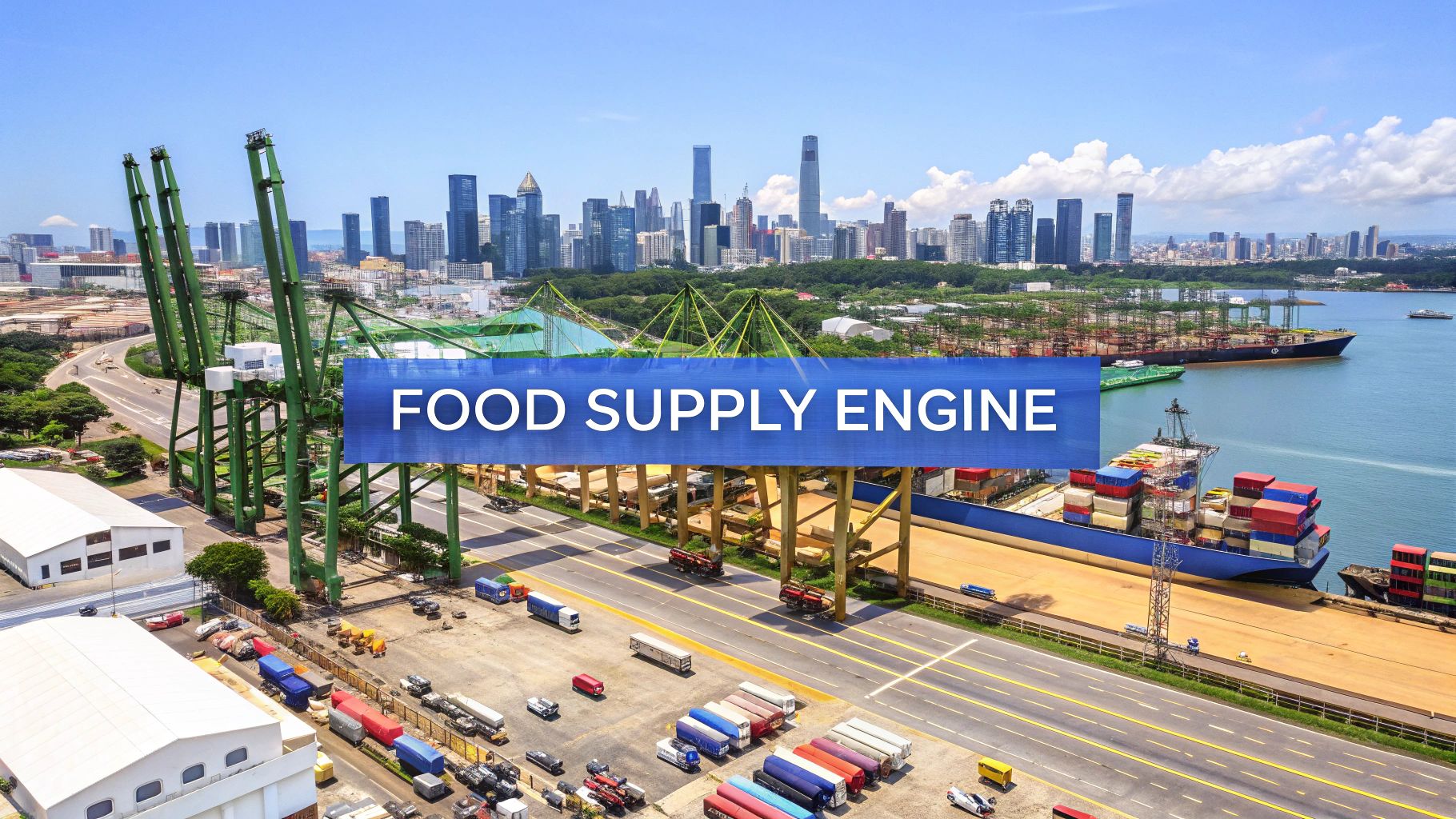
    A busy port with container ships and cranes, symbolizing a food supply engine for a city.

    Think of Singapore as a high-performance engine that runs on fuel shipped in from every corner of the globe. That essential fuel is food. With very limited agricultural land, the island nation's survival and economic stability are directly tied to how well its global supply chain operates. This isn't just another market; it's a matter of national food security.

    For logistics professionals, this dependency translates into a remarkably resilient and ever-present revenue stream. Unlike seasonal goods or passing consumer fads, the demand for food is constant. Every single day, millions of residents depend on a steady flow of produce, meat, and seafood arriving by both air and sea.

    A Landscape of Opportunity and Challenge

    The scale here is immense. To feed its 5.9 million residents, this bustling city-state imports food from an incredible 187 countries and regions. That’s a huge leap from just 140 sources two decades ago, highlighting a very deliberate diversification strategy to buffer against risks like geopolitical tensions, climate events, and pandemics.

    This constant expansion of trade lanes is a golden opportunity for forward-thinking freight forwarders to tap into high-volume routes. You can discover more about Singapore's food security strategy and its global sourcing efforts to get a better sense of the big picture.

    Of course, this lucrative market comes with its own unique hurdles. Success here requires more than just moving boxes from Point A to Point B. It demands real expertise in navigating a complex and exacting ecosystem.

    For logistics providers, Singapore's food import market isn't just about transport; it's about becoming a critical partner in the nation's food security framework. Mastering the regulations and cold chain isn't just a good idea—it's the price of entry.

    Navigating the Core Demands

    To truly succeed, logistics providers have to master a few key areas that define this market. These aren't just obstacles; they're the primary areas where a knowledgeable forwarder can add serious value and build lasting client relationships.

    The main challenges you'll face are:

    • Complex Regulations: Sticking to the strict guidelines set by the Singapore Food Agency (SFA) is completely non-negotiable.
    • Cold Chain Integrity: Getting temperature-sensitive shipments right—from chilled meats to fresh produce—is crucial for preventing spoilage and massive financial losses.
    • Customs and Documentation: Making sure every single shipment has flawless paperwork is the only way to avoid costly, frustrating delays at the port or airport.

    This guide will give you the essential playbook for turning these very challenges into your biggest competitive advantages.

    To get a foothold in Singapore's food import market, you need a map. Not just any old map, but one that shows you exactly where the highest volumes of food are coming from and what those products are. For logistics professionals, it's like a treasure map pointing straight to the most profitable and consistent trade lanes that keep the nation's global pantry stocked.

    Knowing these key routes is the difference between casting a wide, ineffective net and making a precise, surgical strike. It lets you zero in on the shippers and commodities that offer the most consistent volume. Your prospecting shifts from guesswork to a data-driven strategy, giving your sales team a serious competitive edge.

    The Heavyweights: Meat and Poultry

    Meat and poultry are an absolute powerhouse in Singapore's food import scene. This category is a massive opportunity, but it demands a rock-solid cold chain. For carriers who can get it right, it offers substantial, recurring business. The sheer volume alone makes it a top-tier target for any logistics provider.

    Just look at the numbers. In 2023, Singapore's total meat imports hit a staggering US$1.4 billion—that's 407.3 million kilograms, making it the 29th largest global market for meat. The biggest slice of that pie? Frozen cuts and edible offal of fowls, which alone accounted for US$273.5 million.

    And where is it all coming from? Brazil is the undisputed king here, supplying an incredible 80.1% of that specific product. The Brazil-Singapore route is a goldmine for both air and ocean carriers.

    This isn't just about moving frozen chicken. It's about plugging into a highly organised, high-volume supply chain that is a cornerstone of Singapore's food security. The consistency of this trade lane is something you can build a strong portfolio around.

    For freight forwarders, the data gives a clear directive: focus on Brazilian poultry exporters shipping to Singaporean importers. That's your direct path to securing high-value, long-term contracts. Get to know their specific needs and understand the requirements of the major players, like the Mediterranean Shipping Line, to really tailor your services.

    Fresh Produce From Regional Partners

    While meat travels across oceans, the fresh produce market is all about close-to-home partnerships. For fruits and vegetables, freshness is everything and shelf life is short. This trade lane is defined by speed and efficiency, often relying on a well-oiled machine of land and sea transport.

    Malaysia is, without a doubt, the primary source for a huge portion of Singapore's fresh produce. The short transit times across the Causeway and Second Link make it the perfect partner. This route sees a constant flow of trucks carrying everything from leafy greens to tropical fruits, which demands a logistics network that's both incredibly fast and flexible.

    Key opportunities in this lane include:

    • Cross-border trucking services that can handle customs clearance without a hitch.
    • Cold storage facilities strategically placed near the border to manage inventory and distribution.
    • Last-mile delivery solutions that get produce to retailers in pristine condition.

    Of course, it's not just Malaysia. Countries like Australia and China are also major suppliers, especially for produce that has a longer shelf life or is out of season locally. These routes often depend on refrigerated sea freight, with specialised air cargo used for high-value, delicate items like berries and avocados.

    Before we dive into the next categories, let's take a quick look at the top food import lanes at a glance.


    Top Singapore Food Import Categories and Key Source Countries

    This table highlights the major food categories imported by Singapore, their recent market value, and the primary countries supplying them, offering a snapshot of key trade lanes.

    Food Category Recent Import Value (Approx.) Primary Source Countries Key Logistics Considerations
    Meat & Poultry US$1.4 Billion Brazil, USA, Australia Reefer containers (ocean), temperature-controlled air cargo, strict veterinary certification.
    Fresh Fruits & Vegetables US$1.2 Billion Malaysia, China, Australia Fast land transport (Malaysia), efficient customs clearance, short-shelf-life handling.
    Seafood US$1.1 Billion Indonesia, Vietnam, Norway, China Cold chain for fresh/frozen, live transport solutions, air freight for high-value items.
    Dairy & Eggs US$900 Million Australia, New Zealand, USA Unbroken cold chain, specialised handling for liquid/fragile goods, reefer availability.

    This overview clearly shows where the big money and volume lie, giving you a starting point to focus your sales and operational planning.


    Dairy and Seafood From Oceania and Beyond

    The dairy and seafood categories really put Singapore's global reach on display. Australia and New Zealand are the dominant forces in dairy, supplying essentials like milk, cheese, and butter. These products require a flawless, unbroken cold chain, making reefer container availability and reliability a critical selling point for any carrier trying to win this business.

    Seafood, another huge part of the local diet, arrives from all over the world. While neighbours like Indonesia and Vietnam are major suppliers of fresh and frozen seafood, premium products like salmon are often air-freighted from as far away as Norway. These high-value, time-sensitive shipments are perfect targets for air cargo specialists who can guarantee temperature integrity from the moment it leaves the water to the moment it lands in Singapore.

    Navigating SFA Regulations Without Delays

    If you’re moving food into Singapore, the Singapore Food Agency (SFA) is the ultimate gatekeeper. For any logistics provider handling Singapore food imports, you have to see the SFA not as a hurdle, but as the final checkpoint. Every single shipment needs its papers in perfect order to get through without being held up, fined, or flat-out rejected.

    Getting this process right is non-negotiable. It’s the difference between being just another carrier and becoming a strategic partner who gives clients invaluable peace of mind. Let's be frank: mastering SFA compliance is a massive value-add that helps you win and keep high-value accounts in a very competitive space.

    The SFA’s main job is to keep the nation’s food supply safe and secure. This means everything from frozen beef to fresh avocados is covered by strict rules on how it’s imported, handled, and sold. For freight forwarders, this boils down to one thing: absolute precision in your paperwork and processes.

    The Shipment Passport: Your SFA Compliance Checklist

    Think of it like this: just as a traveller needs a passport and visa, every food shipment needs its own set of credentials. One missing or incorrect document can bring the entire operation to a grinding halt, racking up costly port charges and leaving you with a very unhappy client.

    The whole process starts before the shipment even leaves its port of origin. You’ve got to have the right licences and permits sorted out first. Skipping this step is like showing up to the airport for an international flight without a ticket—you're not going anywhere.

    Here’s the essential paperwork you'll need:

    • Importer's Licence: The importer in Singapore must be officially licensed by the SFA. No exceptions.
    • Import Permit: You need a specific permit for each individual consignment, which is applied for through the TradeNet system.
    • Health Certificates: For high-risk items like meat and seafood, a government-endorsed health certificate from the exporting country is mandatory. It’s their official stamp saying the product is safe to eat.
    • Certificates of Origin: This document simply verifies where the food was actually produced.

    Getting through SFA requirements isn't about memorising a thousand rules. It's about building a bulletproof, repeatable process. A simple checklist for every single shipment can wipe out 90% of the common documentation mistakes that cause delays at the port.

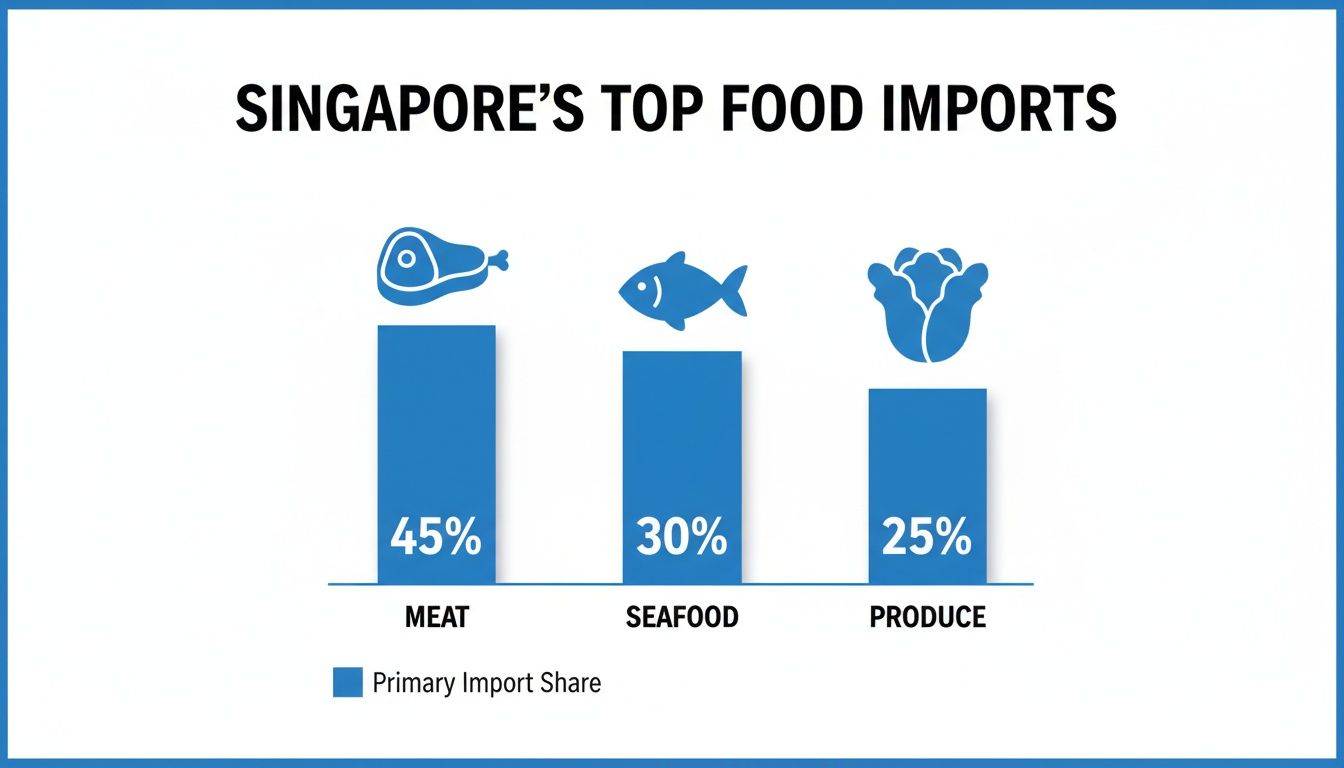
    The chart below shows the big-ticket categories that get the most regulatory attention simply because of their sheer volume.

    Bar chart showing Singapore's top food imports: Meat 45%, Seafood 30%, Produce 25%.

    As you can see, meat, seafood, and fresh produce are the dominant players. Each of these comes with its own very specific sanitary and phytosanitary (SPS) requirements that have to be met.

    Avoiding Common—and Costly—Mistakes

    While paperwork is king, it's not the only place where things can go wrong. A few other common slip-ups can cause major delays and financial headaches. Knowing these pitfalls ahead of time lets you guide your clients and really show your expertise.

    One of the most frequent offenders is incorrect product labelling. The SFA has incredibly detailed rules for what needs to be on a food label. We’re talking product name, ingredient list, country of origin, and net weight—all in English. A simple typo or omission can get an entire container flagged for re-labelling, which is a slow and expensive fix.

    Another huge bottleneck is a mismatch between what's declared on the paperwork and what's actually in the container. This happens all the time with mixed shipments where the Harmonized System (HS) codes aren't applied correctly to every single item. If you need a refresher, our guide on the Singapore customs HS code system is a great resource for ensuring accuracy.

    Finally, failing to meet specific product standards can lead to a shipment being rejected on the spot. For instance, fresh produce might be tested for pesticide residues, or processed foods checked for unapproved additives. The best move you can make is to advise your clients to confirm these standards with their suppliers long before the shipment is even booked. It’s a crucial step that ensures a smooth ride and helps everyone avoid a costly disaster.

    Mastering the Cold Chain for Perishable Goods

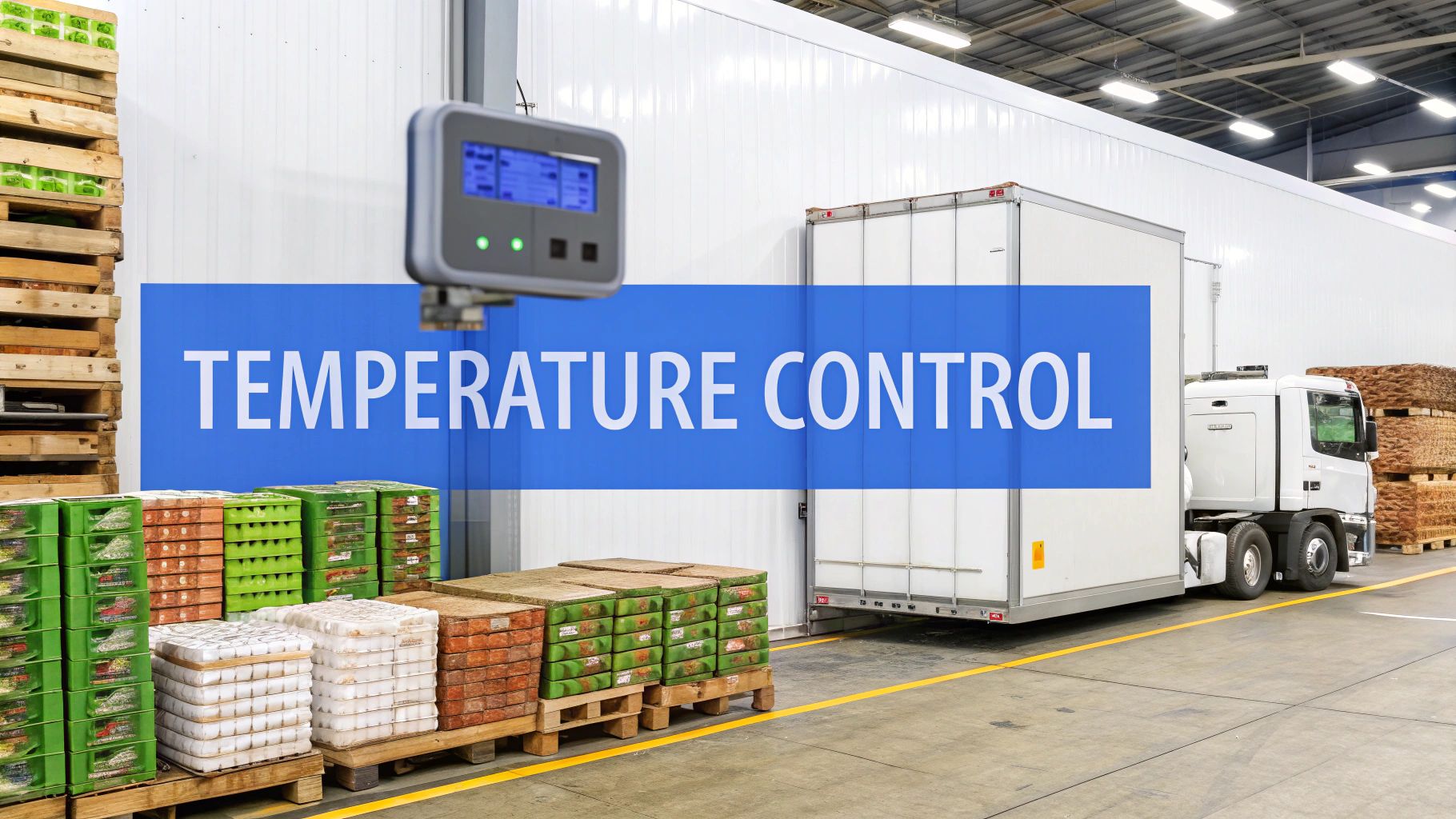
    Warehouse scene showing a refrigerated truck, pallets of goods, and a temperature control sign.

    When it comes to Singapore food imports, a lot of the journey is a high-stakes race against the clock. Temperature isn't just a detail; it's everything. For sensitive cargo like chilled meats, fresh seafood, and delicate produce, even a small shift from the ideal temperature can turn a valuable shipment into a complete write-off. This is the reality of cold chain management, and getting it right is non-negotiable.

    Imagine the cold chain as an unbroken, temperature-controlled tunnel running all the way from a farm in Australia to a supermarket shelf in Singapore. A single crack in that tunnel—a faulty reefer unit on a ship, a long delay on a sun-baked tarmac, or sloppy handling in a warehouse—can compromise the entire shipment. This is precisely where a logistics provider proves their worth.

    Effectively managing the cold chain means you are the guardian of that tunnel. It demands airtight coordination across every single link, making sure the "baton" of temperature integrity is passed flawlessly from one handler to the next.

    Technology and Infrastructure: The Cold Chain Lifeline

    Today’s cold chains are underpinned by a whole suite of technologies built to prevent these costly temperature deviations. These aren’t just nice-to-haves; they are fundamental tools for managing risk and giving clients peace of mind for their sensitive cargo.

    The most important technologies in the toolkit include:

    • Real-time Temperature Monitors: These are small, IoT-enabled sensors placed inside containers that stream live temperature and humidity data. This gives you the power to act immediately if conditions start to stray from the required range.
    • Specialised Packaging: Think insulated containers, gel packs, and phase-change materials. These create a stable micro-environment around the product, adding another layer of defence against outside temperature swings.
    • Refrigerated Containers ("Reefers"): The workhorses of the cold chain, these are essentially mobile refrigerators. Getting the most out of them means paying attention to every detail, including the proper maintenance of components like refrigerated shipping container floor drains.

    Of course, all this tech needs to be backed by world-class infrastructure. Singapore gets this. Both Changi Airport and the Port of Singapore have invested huge sums into cold storage facilities, refrigerated loading docks, and fast-track handling processes designed specifically for perishables.

    A single temperature excursion can wipe out the entire profit margin of a shipment. For a logistics provider, offering a guaranteed, monitored cold chain isn't a premium service—it's the core promise that builds trust and secures long-term business with high-value food shippers.

    Mitigating Risks and Proving Reliability

    The biggest threats in any cold chain are human error and equipment failure. A simple mistake, like keying in the wrong temperature on a reefer or leaving a container door open for a few extra minutes, can have devastating results. This is why having rock-solid standard operating procedures (SOPs) is just as critical as the technology you use.

    To position your service as the go-to, reliable choice, you have to show you're on the front foot with risk management. This means pre-trip inspections of all refrigerated gear, having contingency plans ready for unexpected delays, and keeping the client in the loop with transparent communication throughout the journey.

    When you hand over a detailed temperature log at delivery, it’s more than just good practice. It's concrete proof of your commitment to quality and integrity. By demonstrating this level of expertise, you stop being just another carrier. You become a crucial partner in your client’s supply chain, safeguarding their products and making sure they land in Singapore in perfect condition, time after time.

    Finding High-Value Food Shippers with Data

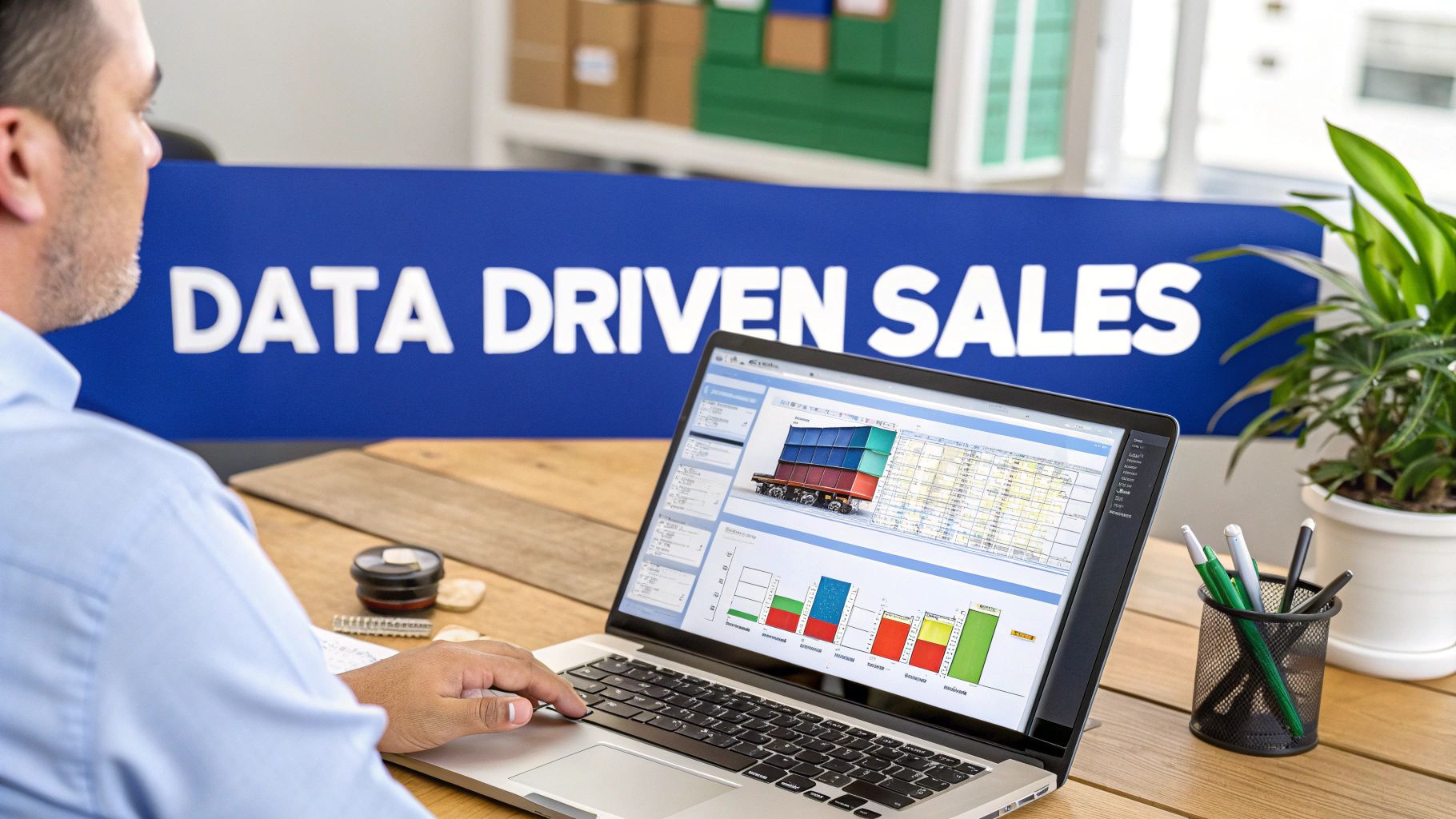
    A man views a laptop displaying sales data, logistics charts, and a truck, with a 'DATA DRIVEN SALES' sign.

    Knowing the market landscape and all the regulatory hurdles is one thing. Actually turning that knowledge into new business is a whole different ball game. For freight forwarders and carriers, this means getting past the old-school grind of cold calls and generic email blasts to find clients who genuinely need what you're offering.

    The secret to cracking this market is data. Forget guessing which companies are importing food into Singapore. It’s time to put on your detective hat and let hard facts guide your sales strategy. This simple shift turns prospecting from a spray-and-pray numbers game into a precision-guided operation.

    Platforms built on global customs data become your eyes and ears on the ground, showing you exactly who is shipping what, from where, and how often. This isn't just a static list of company names. It's a living, breathing map of the entire Singapore food imports ecosystem, pointing you directly to the big players and their specific shipping habits.

    From Raw Data to Actionable Leads

    The first step is to see data for what it really is: a collection of clues, not just numbers in a spreadsheet. Every single bill of lading and customs declaration tells a story about a company's real-world supply chain needs. By piecing this information together, you can answer the critical questions that make your prospecting laser-focused.

    You can instantly find out:

    • Who are the biggest food importers? Zero in on the companies consistently bringing in container loads of meat, produce, or seafood.
    • Which trade lanes are they active on? See if their key routes from Brazil, Australia, or Malaysia line up with your company's operational strengths.
    • How often do they ship? Spot those regular, clockwork-like shipments that scream "long-term contract opportunity."
    • Who are they working with now? This gives you a clear picture of the competition and helps you figure out exactly how to position your own services.

    This kind of insight lets you build a highly targeted prospect list filled with genuinely warm opportunities, not just cold leads. You're no longer just another forwarder begging for their business; you're a problem-solver who's already done their homework.

    Crafting Outreach That Actually Gets a Reply

    When you're armed with specific details about a prospect’s shipping history, your outreach instantly becomes more relevant and impossible to ignore. Instead of a generic "Can we handle your freight?" email that gets deleted on sight, you can lead with a powerful, data-driven conversation starter.

    Think about sending a message like this:

    "I noticed your company consistently imports frozen poultry from Santos, Brazil, to Singapore. We specialise in that specific trade lane and have deep experience maintaining cold chain integrity for sensitive shipments just like yours."

    An approach like this immediately shows you understand their business and have a specific solution for their real-world needs. It cuts through all the noise and positions you as a knowledgeable expert, not just another salesperson. You can find out more about how to effectively check a company's import-export activities to get even better at this.

    This whole strategy is backed by the sheer volume of goods flowing into the country. Singapore's Food & Live Animals imports have averaged a massive SGD 992.89 million every month for the last decade, even hitting a record SGD 1,297.23 million in December 2021. Even with market ups and downs, volumes held strong at SGD 928.43 million in February 2024. That stability, driven by the nation's 90%+ reliance on imports, is a green light for any carrier planning their next move.

    The Efficiency Revolution in Logistics Sales

    The difference between old-school and data-driven prospecting is night and day. Traditional methods eat up your time and deliver painfully low conversion rates. A modern, data-first approach, on the other hand, is fast, targeted, and gives you a much better return on your effort. Using advanced data extraction software helps logistics companies pull crucial information together from different places, making it much easier to find and qualify high-value food shippers.

    Let’s put it side-by-side to see just how big the difference is.

    Traditional vs Data-Driven Prospecting for Food Shippers

    This table shows the huge jump in efficiency you get by using a data platform like Coreties instead of banging your head against the wall with manual sales methods.

    Activity Traditional Method (Hours/Week) Coreties Method (Hours/Week) Outcome & Advantage
    Lead Generation 8-10 hours of slogging through directories, LinkedIn, and company websites. 1-2 hours of filtering customs data for high-volume food importers on your key lanes. 80% time saving. You get pre-qualified leads based on actual shipping activity, not guesswork.
    Contact Discovery 5-7 hours of hunting for decision-maker names and guessing email formats. <1 hour with instant access to verified contacts and their LinkedIn profiles. Huge cut in admin work. You connect directly with the right people in logistics and supply chain.
    Outreach & Personalisation 6-8 hours of writing generic emails for a big, untargeted list and hoping for the best. 1-2 hours of writing smart, personalised emails based on what you know they import. Sky-high engagement. Your messages are relevant and prove you're an expert, leading to far better response rates.
    Total Weekly Time 19-25 hours 3-5 hours Up to 5x more efficient. Your sales team can finally focus on building relationships and closing deals.

    The numbers in the table don't lie—the advantages are clear as day. By making the switch to a data-first strategy, sales teams can get dozens of hours back every single month. That newfound time allows them to focus on what actually moves the needle: having real conversations with qualified prospects, building solid relationships, and ultimately, winning more business in Singapore’s competitive food import market.

    Alright, you've got the lay of the land—the complete map to Singapore’s massive food import market. Now, how do you turn that knowledge into real business?

    Success here isn't just about moving boxes from Point A to Point B. It’s about becoming a critical link in the nation's food security chain. That requires a smart, deliberate approach, and I’ve always found it boils down to four key areas.

    First, you absolutely have to know the market inside and out. Pinpoint the high-volume trade lanes for meat, fresh produce, and seafood. Where is the demand most consistent? Focusing your efforts on these hotspots means your sales team isn't just throwing darts in the dark; they're targeting the most lucrative segments of Singapore food imports.

    Mastering What Truly Matters

    Next, you need to become an expert in compliance. Think of the Singapore Food Agency (SFA) guidelines not as a bureaucratic headache, but as your competitive advantage. When your documentation is flawless and your labelling is perfect every single time, you're not just a carrier anymore. You become a trusted advisor, saving your clients from costly delays and building the kind of loyalty that competitors can't touch.

    Then, you have to be obsessive about the cold chain. For anything perishable, temperature control is everything. There’s no room for error. Investing in the right technology and having rock-solid operating procedures isn't just about protecting cargo—it’s about proving your reliability when a single mistake can mean a total loss for your client.

    In such a competitive field, your ultimate edge comes from turning all this market knowledge into sharp, actionable sales intelligence. Winning isn't just about being good at logistics; it's about prospecting smarter with data, so you can connect with the right shippers before anyone else does.

    Finally, and this is where the real magic happens, use customs data to build a killer sales pipeline. Forget cold calls and generic marketing emails that get deleted instantly. Armed with real shipping data, you can identify high-value importers, see exactly what they're moving, and craft a pitch so relevant it's impossible to ignore. This data-first strategy is how you unlock real, sustainable growth.

    These four pillars aren’t just theory; they’re a practical framework for winning. By putting these insights into action, you can carve out your piece of this thriving trade and cement your place as a leader in the market.

    Common Questions & Straight Answers

    When you're dealing with Singapore's food import scene, a lot of questions pop up. It’s a complex world of regulations, tight timelines, and high stakes. Here are some of the most common queries I hear from logistics pros, along with some straight-talking advice based on years in the trenches.

    What's the Single Biggest Mistake to Avoid?

    Easy. Treating documentation as a last-minute job. It's the most common and expensive error you can make.

    Assuming the paperwork for Singapore food imports will just sort itself out is a recipe for disaster. A single missing health certificate or a slightly off HS code on an import permit is all it takes to get an entire container stuck at the port. Suddenly, you're looking at painful demurrage charges, potential fines from the Singapore Food Agency (SFA), and a client relationship that's gone sour fast.

    The only way to win this game is to be proactive. Have a non-negotiable, pre-shipment checklist. Verify every single document is perfect before the cargo even thinks about moving. Compliance isn't just a box to tick; it's your best insurance against costly delays.

    How Can We Compete with the Big, Established Players?

    You're not going to beat the industry giants by trying to be a cheaper version of them. To break into a market this established, you have to compete smarter. That means finding a niche and absolutely owning it.

    Instead of being a generalist, become a specialist. Think about where you can add real, focused value:

    • Pick a high-demand commodity: Become the go-to expert for handling something specific, like chilled Australian beef or high-value Norwegian salmon. Know the ins and outs better than anyone.
    • Offer next-level visibility: Use technology to give clients real-time temperature and location tracking. This kind of peace of mind is a huge selling point that larger carriers often don't provide to every customer.
    • Master a trade lane: Dominate a specific route, like the Malaysia-Singapore land-bridge for fresh produce. Be known for having the fastest, most reliable customs clearance on that lane.

    By carving out your own space, you build a powerful reputation for being the best at one thing, which is far more valuable than being average at everything.

    Air Freight or Sea Freight: Which is Better for Food?

    This is a classic question, but there's no single right answer. It’s not about which mode is "better" overall, but which one is right for the specific product. They serve completely different strategic needs.

    Here’s a simple way to think about it:

    • Sea Freight: This is your workhorse. It's built for frozen goods, processed foods, and anything with a decent shelf life, like apples or onions. For bulk shipments where time isn't the absolute top priority, it's hands-down the most cost-effective choice.
    • Air Freight: This is your express service for the VIPs—the high-value, highly perishable items. We're talking fresh berries, live seafood, or premium chilled meats where every single hour counts. The high cost is an investment in preserving freshness and market value.

    The most successful logistics providers are the ones who can confidently advise clients on both. When you can explain exactly why air freight is worth the cost for one shipment but sea freight is the smarter play for another, you're no longer just a vendor—you're a strategic partner.

    Your ability to guide clients to the optimal choice for their specific product is what builds the kind of trust that leads to long-term business.


    Ready to stop guessing and start winning high-value food shippers? Coreties transforms global customs data into your ultimate sales playbook. Find qualified leads, connect with decision-makers, and craft data-driven outreach that gets replies. Discover your next client with Coreties today.