
Singapore's export market is a goldmine of high-value goods, but you need the right map to find the treasure. It's dominated by advanced electronics, pharmaceuticals, and specialised machinery. For any logistics seller trying to break in or expand, knowing these core industries is just the starting point. The real game is about pinpointing the companies with consistent, high-volume shipping needs.
Getting to Know the Singapore Export Scene
To really make a dent and find the best exporters in singapore, you have to look past the obvious and dig into the trade data. This is where the true market dynamics reveal themselves. Yes, Singapore’s strategic location and business-friendly policies have built a robust export economy, but the golden opportunities are hidden within specific, fast-growing commodity groups and the trade lanes they frequent.
Forget the scattergun approach of contacting every company you can find. A focused analysis lets you pour your energy into sectors that are actually shipping, meaning you're not just finding any exporters—you're finding the right ones.
Where the Action Is: High-Growth Sectors and Key Commodities
The engine room of Singapore's export economy is its high-tech and high-value manufacturing. While many industries play a part, a few consistently stand out for their sheer volume and upward trajectory.
Here's a quick snapshot of the key export categories showing significant recent growth, which can help you identify high-potential industries.
Singapore's High-Growth Export Sectors
| Export Sector | Key Products | Recent Growth Indicator |
|---|---|---|
| Electronics & Electrical Machinery | Semiconductors, integrated circuits, disk media, telecom equipment | Accounts for over a third of total exports, with some sub-sectors growing over 80%. |
| Pharmaceuticals & Chemicals | Pharmaceutical products, organic chemicals, medical instruments | Requires specialised, often temperature-controlled, logistics solutions. |
| Specialised Machinery | Industrial turbines, precision engineering components, manufacturing equipment | Reflects Singapore's critical role in complex global supply chains. |
These are the sectors where logistics demand is proven and growing. By understanding what they ship and how they ship it, you can tailor your value proposition to solve their specific challenges.
The electronics and electrical machinery sector is the undisputed champion, making up over a third of all exports. We're talking about a daily flood of semiconductors, integrated circuits, and telecom gear leaving the country.
Then you have the biomedical sciences hub. Singapore pushes out a massive volume of pharmaceuticals, organic chemicals, and medical instruments—shipments that often demand specialised handling and cold-chain integrity. Finally, specialised machinery, from industrial turbines to precision parts, highlights Singapore’s position as an essential link in global manufacturing supply chains.
The official numbers back this up. Singapore's non-oil domestic exports (NODX) recently posted a remarkable 4.8% growth, blowing past forecasts. What powered this surge? Electronics. Integrated circuits jumped 32.1%, disk media products climbed 53.5%, and telecommunications equipment shot up by an astounding 81.4%. You can read more about these export growth trends on The Straits Times.
Drilling down into these specific products is crucial. To get a better handle on identifying them within customs data, check out our guide on how to navigate Singapore's customs HS codes.
By zeroing in on these thriving areas, you align your sales efforts with the most active and valuable parts of the market. This data-first approach means your time is spent engaging prospects who have immediate and ongoing logistics needs, which naturally leads to better conversations and a much higher chance of winning their business.
Using Customs Data to Find Qualified Shippers
A bigger list isn't the answer to better prospecting; a smarter one is. For any logistics provider trying to win business with exporters in Singapore, the best tool in your arsenal is customs data. This raw information, once you know how to filter and analyse it, goes from being a sea of noise to a curated pipeline of genuinely qualified leads.
Forget sifting through outdated business directories. Real trade data tells you exactly who is actively shipping, what they’re moving, and how often they're doing it. This methodical approach means your sales team spends their time on prospects with tangible, immediate logistics needs, which completely changes your prospecting ROI. It’s the difference between a shot-in-the-dark cold call and a warm, data-backed conversation.
Pinpointing Active Exporters with Precision Filters
The real magic of a platform like Coreties is its ability to slice through the clutter. You can move past basic company demographics and start filtering prospects based on their actual shipping behaviour. This is how you build hyper-targeted lists of companies whose needs are a perfect match for what you do best.
Here are a few of the most powerful filters I always start with:
- HS Codes: This lets you zero in on companies exporting specific commodities. If you specialise in handling electronics, you can filter for HS Code 85 to instantly find every company shipping semiconductors and telecommunications gear.
- Trade Volume: Want to find the bigger fish? Set a filter for the total weight or declared value of shipments over a set period. This helps you prioritise exporters with more consistent, high-value freight.
- Shipping Frequency: This is key for identifying businesses with regular, ongoing demand. A simple filter for companies shipping more than five times a month to a specific destination uncovers businesses with stable, predictable logistics needs.
- Trade Lanes: Focus your energy on the routes where you have the strongest operational advantage. You can build a targeted list of every company exporting from Singapore to key markets like China, Malaysia, or the USA.
By combining these filters, you can create an incredibly powerful search. For example, you could find all Singaporean companies that have shipped over 10,000 kg of pharmaceutical products (HS Code 30) to the United States in the last six months. That’s not a prospect; that’s a qualified lead ready for a call.
The workflow below shows just how simple yet effective this process is for turning raw data into real conversations.
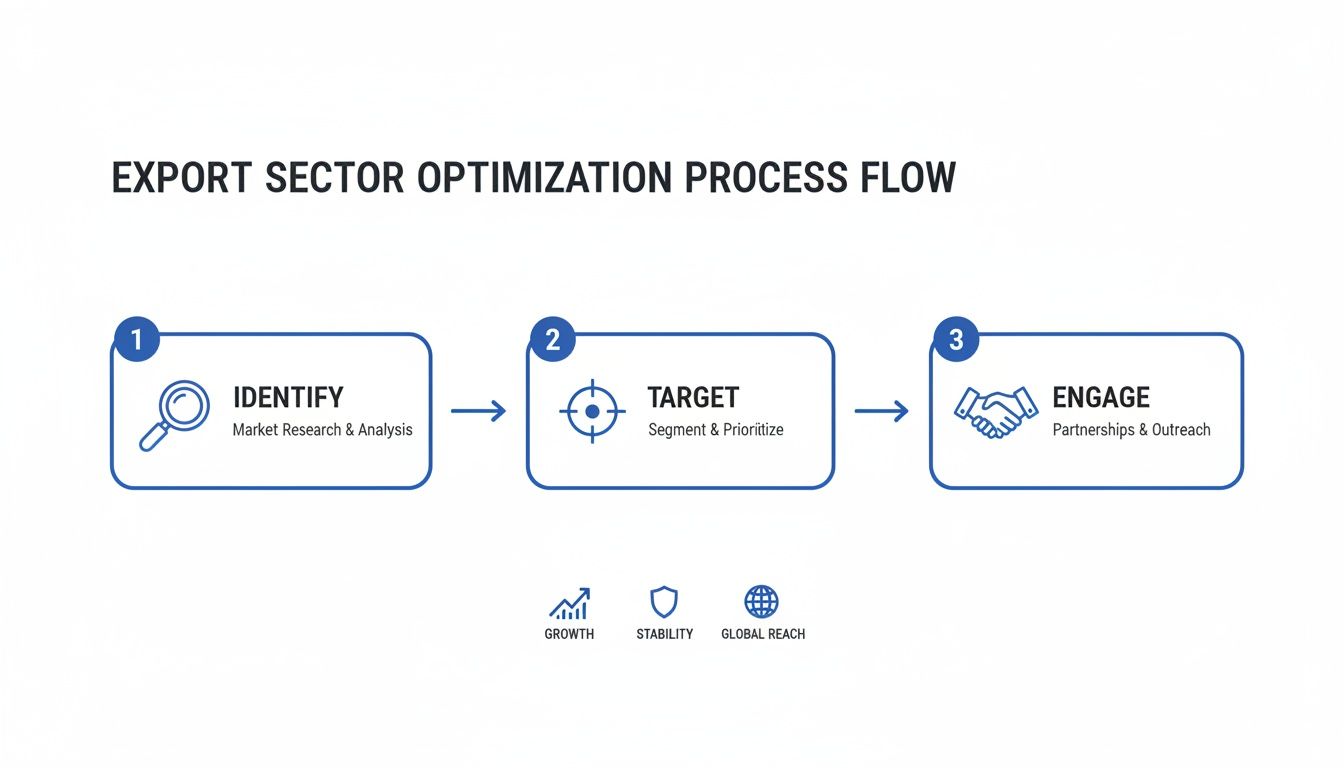
This simple flow—Identify, Target, Engage—is the foundation of a data-driven sales strategy. It gets you from broad market awareness to specific, high-potential conversations, fast.
From Data Points to Actionable Insights
Once your initial filters are in place, the next step is to interpret what you’re seeing to qualify prospects even further. A company shipping a high volume of a single commodity to one destination has very different pain points from one sending smaller, mixed consignments to multiple countries. Your pitch has to reflect that reality.
For instance, a company consistently exporting machinery parts to Taiwan could be a perfect fit for your consolidated LCL services on that lane. Another business moving high-value electronics to Europe might be much more interested in a proposal that highlights your premium air freight capacity and enhanced security measures. If you want to dive deeper into this, check out our guide on how to use an HS code filter for smarter prospecting.
This level of insight is just impossible to get from standard prospecting tools. When you ground your strategy in real shipping data, you're not just finding potential customers—you're uncovering their specific logistics challenges before you even pick up the phone.
Spotting High-Value Trade Lanes and Opportunities
Let's be honest, not all trade lanes are created equal. If you want to succeed in prospecting exporters in Singapore, you need to get smart about identifying and chasing the most profitable shipping routes. Global trade is always in flux, and those shifts constantly carve out new opportunities for anyone paying close attention.
The best way to do this? Ditch the guesswork and dive into real-world customs data. This is how you pinpoint lanes with surging volumes and tailor your services to match. Imagine knowing that exports to a specific country have shot up recently. You can get ahead of the curve, secure competitive capacity on that lane, and walk into a sales meeting with a powerful, relevant value proposition.
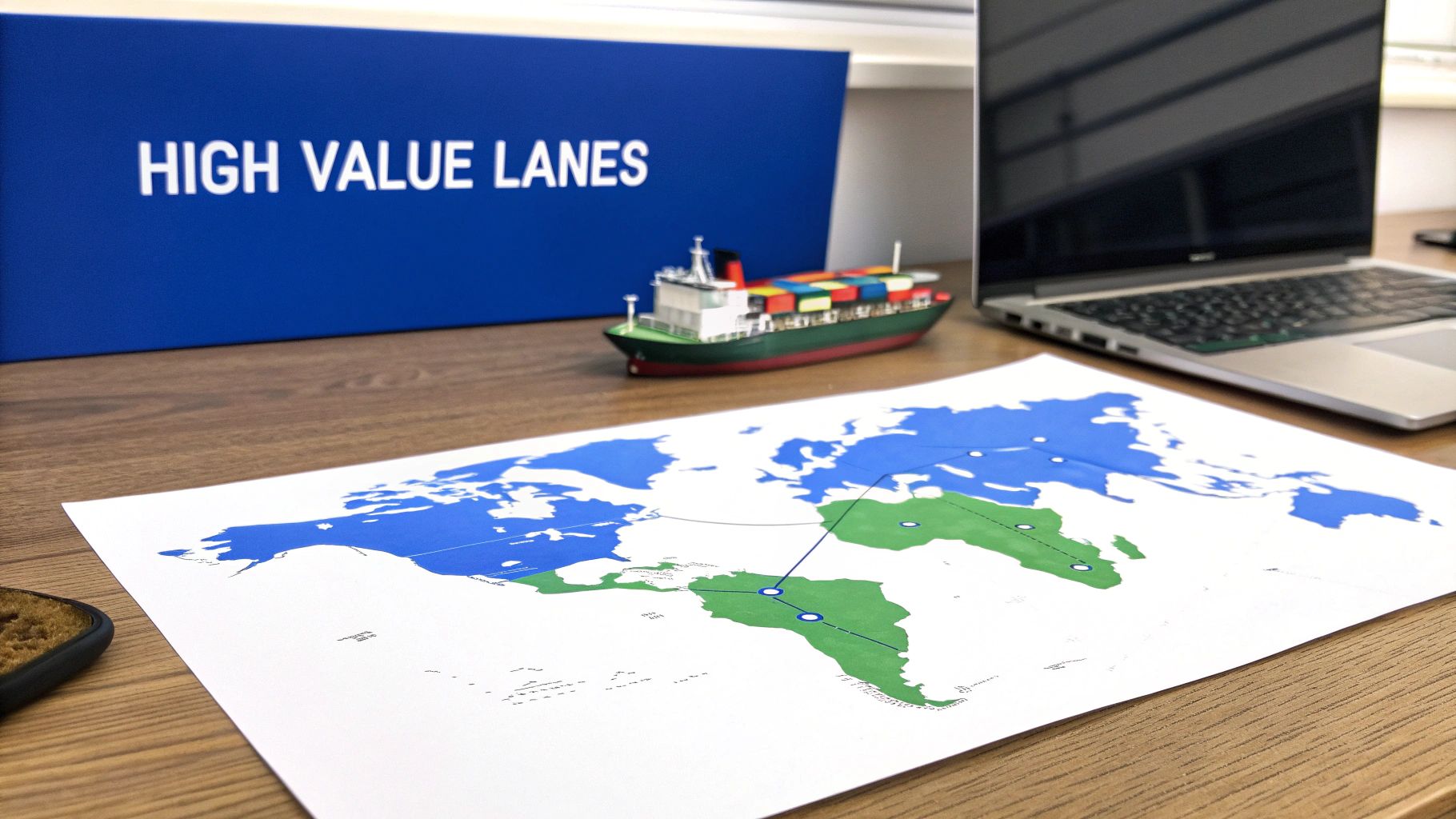
This image nails the concept of finding those golden lanes. The real trick, though, is turning that big-picture idea into hard data that fuels your sales strategy.
Analysing Recent Trade Shifts
Looking at the latest data, we can see some pretty significant shifts in where Singapore's exports are headed. Recent figures for non-oil domestic exports (NODX) show a 17.9% jump in shipments to China. Even more impressive, exports to Taiwan climbed 24.3%, and Malaysia saw a solid 13.3% increase.
On the flip side, the United States market took a hit, with exports dropping a sharp 36.3%. You can dig into these recent export figures from Morningstar for a closer look.
This isn't just random noise; it's a clear signal. Singapore's export focus is pivoting towards key Asian markets. For freight forwarders, these numbers are gold. They tell you exactly where to point your sales team—towards lanes with proven, growing demand and away from those hitting a rough patch.
Turning Lane Data into a Sales Advantage
Knowing the trends is one thing; using them to win business is another. This is where you can really separate yourself from the competition. Forget the generic sales pitch and start segmenting your prospect list based on where they actually ship their goods.
Here's how this plays out in the real world:
- For Exporters to China and Taiwan: Your outreach should be all about your strong capacity, competitive transit times, and local know-how in these booming markets. You're speaking their language.
- For Exporters to Malaysia: You can lead with efficient cross-border trucking or smart intermodal solutions that balance speed with cost. It’s a practical, valuable suggestion.
- For Exporters to the US: The conversation changes. With volumes down, your focus should shift to value-add services. Talk about optimising their supply chain, suggest alternative routing, or offer warehousing solutions to help them navigate the downturn.
By aligning your service offerings with real-time trade lane dynamics, you transform from a simple service provider into a strategic partner. You are no longer just selling freight; you are offering data-backed solutions to a prospect’s most current and pressing logistics challenges.
This level of insight is what makes top performers stand out. It ensures your team is always zeroed in on the most promising parts of the market, armed with a message that actually resonates. When you can engage the right exporters in Singapore with solutions that solve their immediate operational headaches, your chances of winning their business go way up.
Connecting With the Right Decision-Makers
You've got a solid list of high-potential exporters in Singapore. Great. But that's only half the battle, isn't it? A list of company names doesn't sign deals. Real people do. This is where we shift from crunching customs data to taking targeted action, getting your pitch past the gatekeepers and onto the screen of the person who actually makes the decisions.
Let's be honest: firing off a brilliant proposal to a generic info@ email address is a complete waste of your time and effort. Our goal is to pinpoint the exact individuals whose job it is to solve the shipping headaches you're built to fix.

Identifying Key Logistics Contacts
First things first, you need to know who you’re looking for. Aiming for the "CEO" at a major enterprise is usually a rookie mistake; they're often too far removed from the day-to-day grit of logistics. You need to get more granular.
Your best bet is to find people with titles that scream logistics, supply chain, or operations. Think along these lines:
- Head of Logistics
- Supply Chain Manager
- Global Operations Director
- Procurement Manager (especially those with a logistics focus)
- Export/Import Manager
This is where a tool like LinkedIn Sales Navigator becomes your best friend. You can zero in on a target company and filter its employee list by these keywords. It’s a quick and dirty way to build a highly relevant contact list, ensuring your message lands with someone who genuinely cares about freight rates and on-time deliveries. If you're looking to understand how these roles fit into different company structures, it helps to know the differences between EXIM, MFR, and enterprise setups.
A common pitfall I see is aiming too high or too low in the org chart. A junior coordinator probably doesn’t have the authority to sign off on a new freight partner. A C-level exec is focused on the 30,000-foot view, not specific shipping lanes. Your sweet spot is the mid-to-senior level manager who feels the direct pain of logistics problems.
Crafting Data-Driven Outreach
Once you’ve identified the right person, your outreach has to show you’ve done your homework. A generic "we can save you money" email gets deleted in a heartbeat. This is your chance to weave in the valuable data you've already gathered.
Your opening line is everything. It needs to instantly signal that this isn't some mass-blasted spam. Reference a specific commodity they ship or a high-volume trade lane they operate on, and you’ll immediately establish credibility.
Here’s a practical example for a prospect shipping electronics to Taiwan:
Subject: A thought on your electronics shipments to Taiwan
Body: "Hi [Prospect Name], I saw that your company is a significant exporter of integrated circuits to Taiwan. With volumes on that lane growing, I thought you might be interested in our consolidated air freight options that have been helping similar electronics shippers reduce transit times by up to 20%."
See the difference? This approach is powerful because it’s not about you—it’s about them. It shows you understand their business, their specific market, and their potential challenges.
The scale of opportunity here is massive. In a recent peak month, Singapore's total export value hit 70,121.84 SGD million, with forecasts trending around 64,000 SGD million for the coming months. With that much volume moving, a personalised, data-informed message isn't just a good idea; it's the only way to cut through the noise. You can discover more insights about Singapore’s export trends on Trading Economics.
Crafting Proposals That Win Business
Getting that first "yes" from a decision-maker is a great feeling, but it’s really just the starting whistle. The real game is turning that initial interest into a solid, long-term partnership. This is where you bring all your data-driven insights to the table and build a proposal that doesn't just quote prices—it solves their specific shipping challenges.
Your whole mindset needs to shift from just selling freight to offering genuine strategic value. You’ve already done the hard work of figuring out what an exporter ships and where. Now, it’s time to use that intel to frame a proposal that speaks directly to their world, proving you get their supply chain inside and out.
Moving Beyond Price-Led Conversations
The quickest way to get lost in the noise is to make it all about price. Competing on cost is a race to the bottom, turning your valuable service into a commodity. The good news is, the customs data you've gathered on exporters in Singapore gives you the perfect opening to talk about value, efficiency, and reliability—the things that really impact a shipper's bottom line.
Think about it this way: you’re not just offering a rate for shipping electronics to Europe. You’re proposing a smarter routing option through a key partner hub that could shave a day off transit time. Or maybe you're suggesting a clever intermodal solution that perfectly balances cost and speed for their chemical shipments to the US.
It’s these kinds of specific, thoughtful recommendations that show you’re thinking like a partner, not just another vendor quoting a lane.
Tailoring Solutions with Trade Data
Your proposal should feel like a direct answer to the prospect's needs, using their actual shipping patterns as the foundation. Let's walk through a couple of practical examples.
-
The High-Volume Electronics Exporter: You’ve found a company sending thousands of kilograms of semiconductors (HS Code 85) to Taiwan every month. A generic air freight quote won’t cut it. Instead, your proposal could lead by highlighting your priority booking access with certain airlines on that specific lane, guaranteeing their high-value, time-sensitive goods are always wheels-up on schedule.
-
The Specialised Chemical Shipper: Your data shows a prospect exports organic chemicals (HS Code 29) to several spots in Southeast Asia. Here, you can lead with your proven expertise in handling hazardous materials. Outline your specific safety protocols and compliance measures that take the risk off their plate for this sensitive cargo.
The trick is to turn data points into direct, tangible benefits. Don't just say, "I see you ship to Germany." Instead, explain how your consolidated service to Hamburg will improve their operations, reduce their risk, or even save them money in ways they hadn't considered.
This consultative approach completely changes the sales dynamic. You’re no longer just one of many bidders in their inbox; you become a trusted advisor. By proving you’ve invested the time to understand their business before you even ask for it, you’re not just more likely to win the deal—you're laying the groundwork for a profitable, long-lasting relationship.
Got Questions About Finding Singaporean Exporters?
Even with the best data in hand, hitting the ground running to find new exporters in Singapore can feel tricky. You're not alone. Let's walk through some of the most common questions and sticking points I see sales professionals run into.
Think of this as your quick-reference playbook for getting past those hurdles that can really stall your momentum.
What's the Best Way to Actually Get a List of Exporters?
Honestly, forget generic business directories. The real game-changer is getting your hands on a platform that taps directly into customs and bill of lading data. This is where the gold is.
Why? Because it’s not about finding a list of companies; it's about finding proof of their shipping activity. This kind of data lets you get incredibly specific.
- Commodities: You can use HS codes to pinpoint companies that export the exact goods you're best at handling. No more guessing.
- Shipping Volume: Want to chase the big fish? Filter for high-volume shippers and focus your energy where it counts.
- Trade Lanes: Target businesses shipping to destinations where you know you have a competitive edge.
- Frequency: Zero in on companies with steady, reliable shipping schedules—the bread and butter of our business.
When you start with real trade data, you’re no longer prospecting blind. You’re building a qualified list of active exporters who have a clear, current need for what you’re selling.
Which Industries Are Shipping the Most Volume Right Now?
No surprise here: electronics are king. This sector is a juggernaut, pushing out massive volumes of integrated circuits (HS Code 85), telecom gear, and computer parts. We're talking about over a third of Singapore’s total exports.
But don't stop there. Pharmaceuticals, chemicals, and specialised machinery are also huge players. The key is to look deeper. Use the data to see which specific products are heading to destinations that match your strongest trade lanes.
The real secret isn't just knowing the top industries; it's finding the perfect overlap between a niche's needs and your unique value. For instance, if you're a pro at cold-chain, targeting pharmaceutical exporters shipping to Europe is a far smarter play than just spamming every manufacturer out there.
How Do I Make My Outreach Email Not Sound Like Everyone Else's?
Data-driven personalisation is your secret weapon. Generic emails get deleted in seconds. Your first message has to prove you’ve done your homework.
Try opening with something specific you found. For example: "I noticed your company is consistently shipping electronic components to Taiwan. That’s a key lane for us, and we've been able to secure priority air freight space that could cut your transit times."
This kind of opener works because it immediately shows you get their business. You're not just another forwarder—you're a potential partner who understands their specific routes and commodities. That's how you cut through the noise and get a reply.
What Are Some Common Prospecting Mistakes I Should Avoid?
One of the biggest pitfalls is chasing only the massive, household-name exporters. They’re constantly bombarded by your competitors and are usually locked into rigid, long-term contracts. The smarter move? Use data to find those fast-growing small and medium-sized enterprises (SMEs). Their logistics needs are changing, and they're often more open to new partners.
Another classic mistake is leading with price. Your first email should scream "value," not "discount." Show you understand their supply chain. Finally, make sure you're talking to the right person. Don't just email a generic info@ address. Use tools like LinkedIn Sales Navigator to find the Head of Logistics or Supply Chain Manager—the person who can actually say yes.
Ready to stop guessing and start connecting with qualified exporters in Singapore? Coreties transforms raw customs data into an actionable pipeline of high-value leads. Filter by commodity, lane, and volume, then connect with verified decision-makers using data-driven outreach. Discover how much faster you can build your sales pipeline.