You're probably doing what most logistics sales teams do when a border-lane target lands on the list. You pull up the company site, scan for warehouse capacity, note any customs or security certifications, and decide within a few minutes whether the account belongs in partner development, shipper prospecting, or competitive monitoring.
That shortcut works until it doesn't.
On the U.S.-Mexico lane, surface facts can hide the operational detail that determines whether a company is easy to work with, hard to displace, or vulnerable to a smarter approach. Axys Logistics Inc is a good example. At first glance, it presents the right signals for cross-border freight: a Laredo footprint, CTPAT certification, and a positioning around international door-to-door service. For a freight forwarder or carrier sales team, that makes it look immediately relevant.
The harder question is whether those public signals translate into a clear commercial angle. That's where disciplined company profiling matters more than generic list building. If your team is cleaning target data before outreach, it also helps to understand how email verification works, because bad contacts waste time faster in logistics than in almost any other outbound workflow.
A second problem sits underneath the company profile itself. In cross-border freight, certifications tell you something. They don't tell you everything. Publicly visible trust markers often coexist with major information gaps around actual handling procedures, especially when hazardous cargo enters the conversation. That gap is where sales intelligence gets interesting.
If your team also tracks adjacent border operators and broker ecosystems, reviewing profiles such as Loera Customs Brokerage in Laredo helps put Axys into a broader local operating context rather than treating it as an isolated lead.
Introduction Decoding a Key Player on the US-Mexico Border
A business development manager targeting the U.S.-Mexico corridor usually starts in Laredo for a reason. It's where warehouse capacity, drayage coordination, customs timing, and handoff discipline all collide. Companies based there can influence not only linehaul execution but also customer confidence in cross-border freight planning.
Axys Logistics Inc deserves attention because its public profile points to a company built around those handoff moments. The strongest visible marker is its role as a certified distribution center in Laredo, tied to cross-border cargo movement and international door-to-door freight. For sales teams, that combination suggests more than simple storage. It suggests a node where operational decisions get made.
Why this company shows up on serious prospect lists
Teams looking for partner-fit or account-fit usually want to know three things quickly:
- Physical relevance: Does the company control meaningful infrastructure in a border market?
- Compliance relevance: Does it hold certifications that affect customs treatment or security expectations?
- Commercial relevance: Does its operating model create a reason for you to call?
Axys checks those boxes at a high level. That doesn't automatically make it a good partner, a good prospect, or a weak competitor. It does mean the account is worth deeper analysis.
The useful question isn't whether a company looks credible online. It's whether its public operating signals reveal a practical opening for your team.
What matters more than the marketing layer
For a sales analyst, a company profile becomes valuable when it moves from descriptors to implications. “CTPAT certified” matters because it points to a security regime. “Laredo warehouse” matters because it changes how freight can be staged, re-expedited, and transferred across a border supply chain. “Door-to-door” matters because it usually implies coordination complexity rather than one isolated transport leg.
That's why Axys is worth decoding carefully. The public profile gives enough evidence to identify a real border-lane operator with infrastructure, credentials, and an intermodal posture. It also leaves enough unsaid to create strategic questions. Those questions are often more valuable than the headline facts.
Axys Logistics Inc Business Overview
A sales rep looking at Axys from a border-freight angle would see a familiar setup first: a Laredo operator with warehouse capacity, cross-border touchpoints, and a security credential that signals customs relevance. The more useful read is narrower. Axys appears to market itself as a controlled border transfer node, yet the public record is far more specific on CTPAT than on hazardous materials handling protocols. For forwarders moving regulated freight, that gap is not a throwaway detail. It is a concrete qualification question and, in the right outreach sequence, a reason to start the conversation.
The company profile published on ZoomInfo for Axys Logistics Inc lists a certified distribution center in Laredo, Texas, with 65,000 square feet of warehouse space, service positioning around cargo re-expedition and international door-to-door freight, a Laredo address at 4108 Trade Center Blvd, a Querétaro presence at Agustín Melgar #34, and a freight forwarder listing under USDOT 2858369 with active status and MCS-150 mileage reporting of 601,890 miles per year.
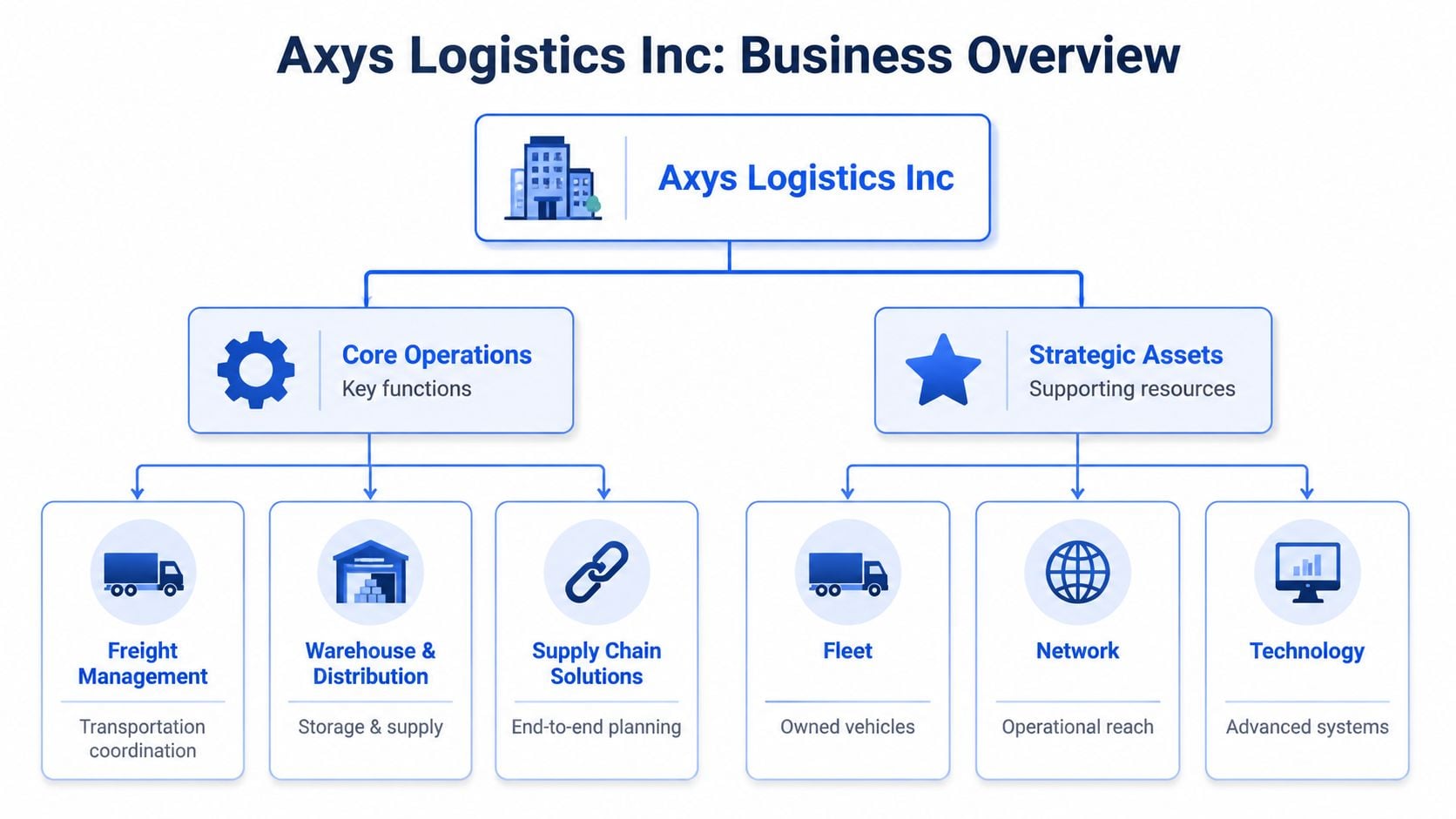
Those facts point to a company with real operating substance in a high-value geography. In Laredo, warehouse square footage matters less as a vanity metric than as evidence of what the site can absorb during border friction. A facility of that size can support staging, transfer recovery, consolidation, and short-dwell re-expedition work. That fits the company's public service framing better than a pure storage model.
CTPAT is the other headline signal, and it deserves a more careful reading than it usually gets. The certification supports the view that Axys has documented security controls tied to cross-border customs expectations. That matters for shippers that care about chain-of-custody discipline and partner screening. What is missing from public materials is equally useful. There is no comparable level of visible detail around HAZMAT procedures, dangerous goods segregation, or regulated-freight handling standards. That does not prove a compliance weakness, but it does create uncertainty for any prospect evaluating Axys for shipments where security certification alone is not enough.
That uncertainty can become sales intelligence.
If your team sells cross-border forwarding, transload support, warehousing, or compliance services, Axys sits in a category where a targeted question can qualify the account fast. Ask how the operation separates CTPAT-driven security controls from hazardous materials operating procedures. Ask whether the Laredo site supports regulated freight by class, whether documentation review is handled in-house, and whether emergency response and storage rules are standardized across the U.S. and Mexico footprint. Operators with mature answers are often strong partners. Operators without clear public documentation may still buy outside support.
Key company facts at a glance
| Attribute | Detail |
|---|---|
| Company | Axys Logistics Inc |
| Laredo function | Certified distribution center |
| Warehouse footprint | 65,000 square feet |
| Laredo address | 4108 Trade Center Blvd |
| Querétaro address | Agustín Melgar #34 |
| Certification | CTPAT |
| USDOT designation | Freight Forwarder |
| USDOT number | 2858369 |
| MCS-150 mileage reporting | 601,890 miles/year |
| Service framing | Cargo re-expedition and international door-to-door freight |
For account mapping, Axys looks like a border-centered logistics operator with enough infrastructure and regulatory positioning to merit serious attention. The stronger conclusion is more specific. Its public profile supports outreach built around compliance depth, not just capacity. That makes it a useful contrast case against other cross-border operators, including profiles such as Import Logistics Inc in logistics sales research, where the distinction between visible credentials and visible operating protocols can shape the pitch.
Core Services and Strategic Operating Lanes
The simplest way to read Axys's service model is this. It sits where freight changes state. Freight arrives, gets staged, gets reassigned, gets documented, and then continues under a different handling context. That's a more strategic role than basic transport execution.
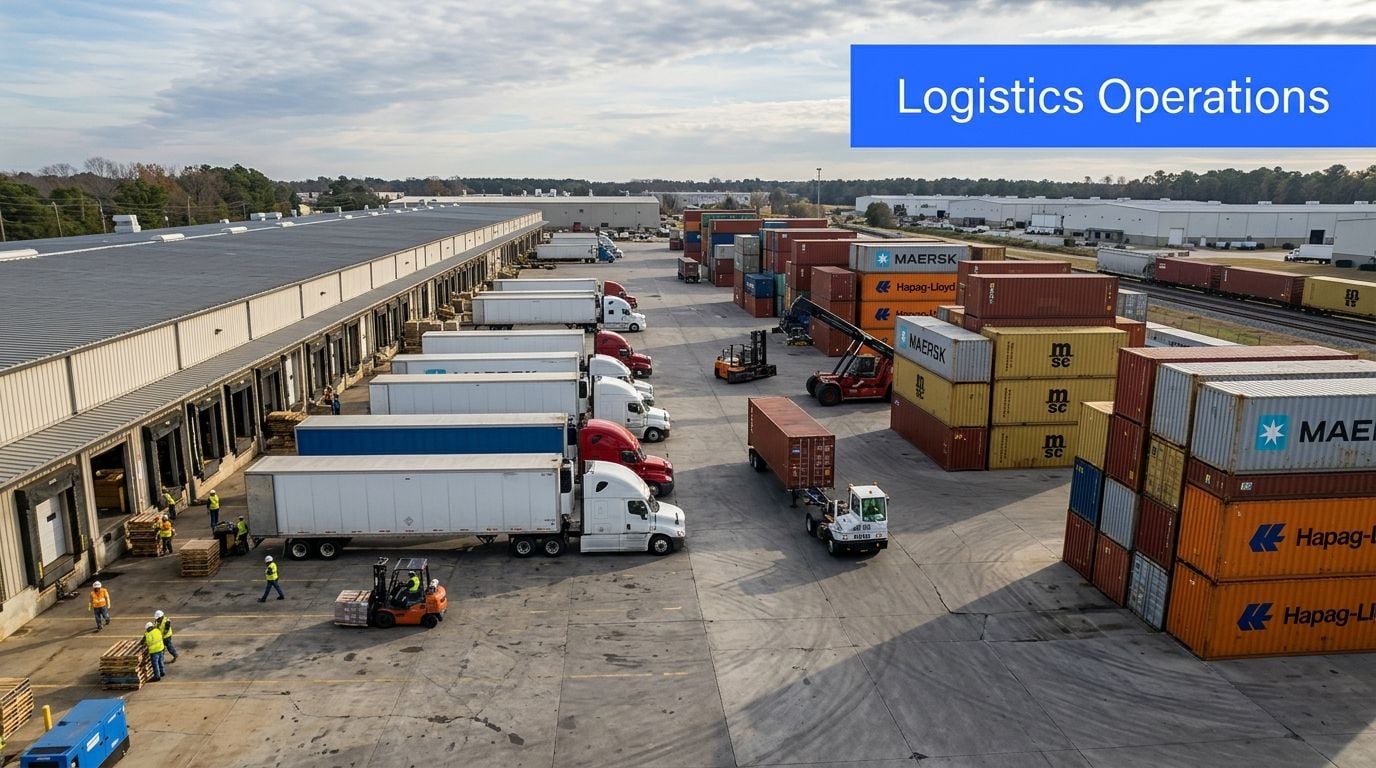
The company's publicly described services include import and export movement across land, sea, and air, plus infrastructure designed for cargo re-expedition and international door-to-door freight, based on the earlier company profile reference. That mix matters because it suggests Axys isn't selling one isolated leg. It's selling continuity across disruptions, mode changes, and border checkpoints.
Why re-expedition is the key clue
Cargo re-expedition is the phrase worth circling. In ordinary marketing copy, broad service claims can be vague. Re-expedition is different. It usually points to operational involvement when freight needs to be redirected, transferred, accelerated, or reconstructed for onward movement.
That has real sales implications:
- For partner teams: Axys may be useful when your network needs a controlled border transfer point.
- For carrier reps: The account may buy capacity around timing-sensitive reloads and onward delivery coordination.
- For customs-adjacent providers: The company likely values process reliability more than low-cost generic support.
A cross-border operator built around re-expedition often becomes important when shipments can't easily roll through unchanged. Documentation, physical transfer, or timing can force a handoff. That's where warehouse design and compliance discipline start influencing service quality.
The likely lane logic behind Laredo and Querétaro
A Laredo and Querétaro pairing points to a recognizable commercial lane structure. Querétaro connects to a major industrial region in central Mexico. Laredo functions as the U.S. border-side transfer and processing point. Put those together and you get a corridor that can support recurring shipper flows, mixed modal planning, and controlled northbound or southbound distribution.
This is why Axys's “door-to-door” claim matters more than it first appears. Door-to-door in cross-border freight isn't a branding flourish. It usually requires coordination among origin handling, linehaul, customs steps, border transfer, and destination delivery. Companies that can manage that chain tend to become sticky with customers.
Practical rule: When a border operator combines warehousing, re-expedition, and door-to-door positioning, don't treat it like a simple drayage or forwarding lead. Treat it like a network-control lead.
A comparable border-market profile such as Laser Forwarding in Laredo can be useful when you're pressure-testing how local operators define service scope.
HAZMAT capability changes the conversation
Axys's public profile also indicates the ability to process hazardous materials with UN number documentation and Material Safety Data Sheets (MSDS). That changes the risk profile of the business. It suggests the company handles freight categories where documentation precision and liability management are central, not optional.
Here's a short explainer that helps frame the complexity of cross-border freight execution:
For a sales team, HAZMAT capability is less about pitching “we also handle hazmat” and more about identifying where execution can break. Hazardous freight creates more dependencies around notice windows, document readiness, carrier eligibility, and border compliance. If Axys is active in that space, the strongest outreach won't be broad. It will be procedural.
What this service mix implies commercially
A company operating across land, sea, and air while emphasizing border warehousing and re-expedition usually sits in one of two strategic positions. It either coordinates fragmented shipper requirements, or it absorbs complexity that the shipper doesn't want to manage directly.
Both are useful. Both also create openings for specialized providers.
If you're approaching Axys as a partner, the account may value service extensions that protect continuity around handoffs. If you're approaching it as a prospect, the best message won't be “we move freight.” It will be “we reduce operational uncertainty at the points where your model depends on precision.”
Analyzing Performance Signals and Reputation
A sales rep reviewing Axys after a shipper requests cross border HAZMAT support faces a familiar problem. The company shows public security credibility through CTPAT positioning, yet public detail on HAZMAT operating controls is thin. That mismatch matters more than a polished company description because border freight risk usually appears in the gap between certification and procedure.
Public reputation in logistics is most useful when it signals operating discipline, partner standards, and possible blind spots. For Axys, the visible signal is security-minded cross-border capability. The less visible issue is whether that discipline extends into publicly documented hazardous materials workflows, such as carrier qualification, segregation standards, incident response, or shipment-specific documentation controls.
What the visible credentials do signal
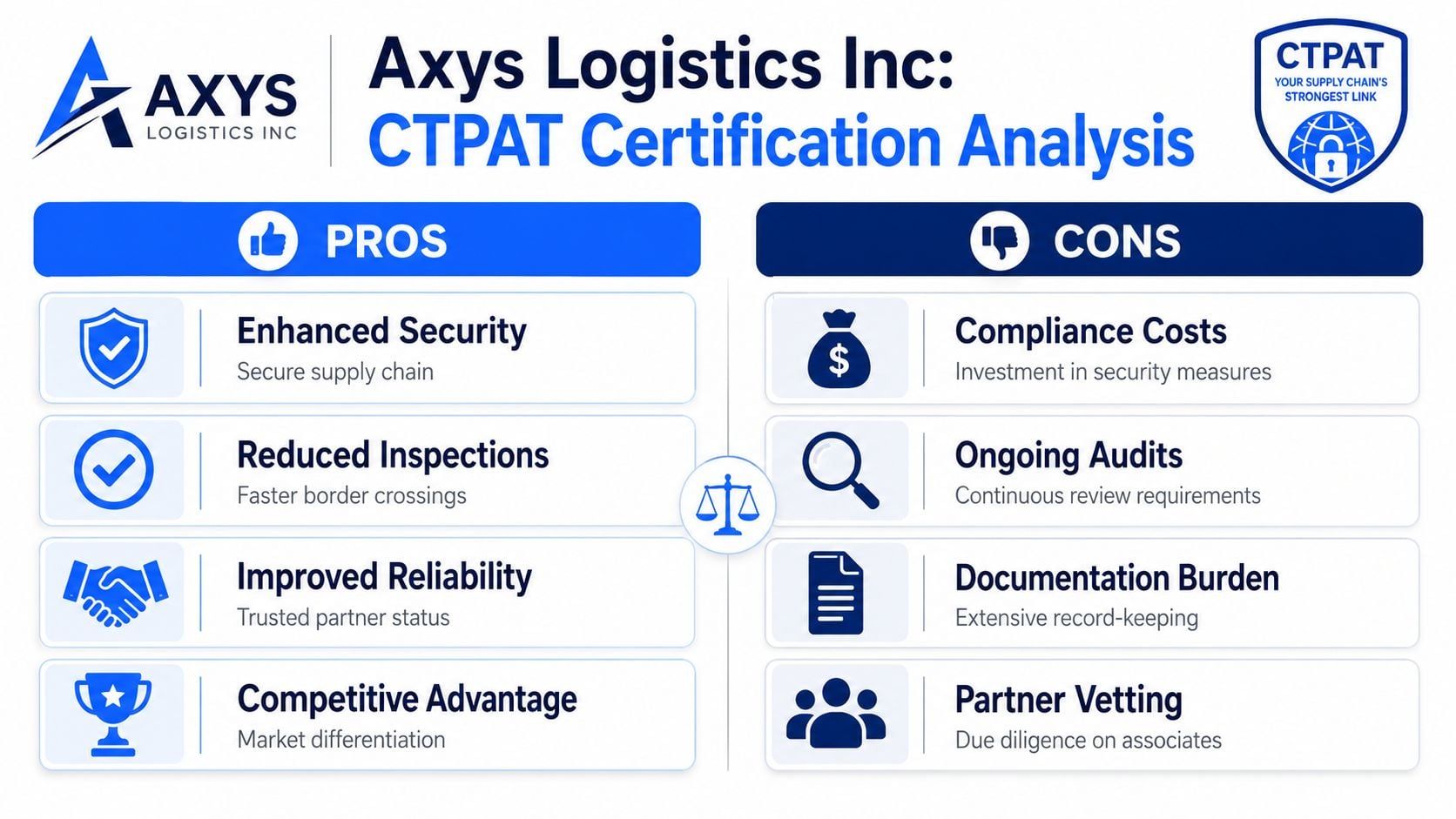
CBP's CTPAT program is a supply chain security framework, not a blanket proxy for end-to-end freight compliance. According to U.S. Customs and Border Protection's CTPAT program overview, participants are expected to maintain documented security practices across areas such as business partner requirements, cargo security, conveyance security, physical access controls, and personnel security. For a cross-border operator, that usually implies a controlled operating environment and higher expectations for counterparties.
That reading is useful for sales teams because it changes the qualification test. Axys is unlikely to respond well to generic “we can help with overflow freight” messaging. A more credible approach is to show that your team can match a documented operating cadence, maintain chain-of-custody discipline, and reduce exceptions at the border.
CTPAT signals process maturity. It does not answer every compliance question.
The real reputation question is what is not public
That distinction is where the account gets interesting. A company can be credible on supply chain security and still leave buyers, partners, and intermediaries with limited public visibility into HAZMAT-specific controls. For freight forwarders, that is not just a risk marker. It is a sales opening.
The public record supports that narrower reading. The FMCSA SAFER company snapshot for Axys Logistics Inc is useful for entity verification and carrier registration context, but it does not provide the procedural depth a hazardous materials buyer would want. In parallel, Panjiva's profile and analysis of Axys Logistics points to commercial activity and market presence, yet it does not close the gap on public HAZMAT execution detail either. That leaves a practical question unanswered: how does Axys operationalize hazardous freight controls at the shipment level across border handoffs?
For a sales analyst, that gap changes the outreach angle from capability selling to protocol selling.
What to infer without overstating the case
Two conclusions are reasonable.
First, Axys appears serious enough about cross-border operations to align itself with recognized security standards. That supports a higher baseline of procedural discipline than many smaller freight intermediaries communicate publicly.
Second, the absence of detailed public HAZMAT protocols creates uncertainty exactly where specialized providers can be useful. If your company offers hazmat documentation review, vetted carrier capacity, bilingual exception management, SDS handling support, or border transfer controls, your message can be framed as risk reduction inside an already structured operation.
That is a stronger position than arguing price or broad capacity.
A practical reputation read on Axys is this: the company presents as credible and organized, but the public record leaves room for questions about hazardous freight execution depth. For savvy forwarders, that is less a reason to avoid the account than a reason to approach it with a precise compliance conversation.
Strategic Implications for Your Logistics Business
Axys becomes more interesting when you stop asking “Who are they?” and start asking “How should we classify them in our pipeline?” For most logistics businesses, the answer is that Axys can sit in two buckets at once. It's a potential partner in border execution, and it's a potential prospect for highly specific support.

The partner case is easy to understand. A company with a Laredo distribution footprint, a Mexico-side presence, and a compliance-heavy operating posture can be useful when your own network needs a dependable cross-border handoff point. If your customers need deconsolidation, transfer coordination, or managed continuation into Mexico, Axys fits the shape of a company worth evaluating.
The real opening sits in what isn't public
The more valuable angle is the gap between visible certification and visible procedural guidance. Publicly, Axys highlights serious cross-border capability. Less visible is a detailed explanation of how it handles HAZMAT-specific compliance in live operating conditions.
That gap is documented in Panjiva's profile and analysis of Axys Logistics, which notes the lack of publicly detailed, actionable protocols for HAZMAT compliance during cross-border U.S.-Mexico shipments. The same source notes that 11% of Mexican carriers face bond delays and frames the resulting ambiguity as a 30x outreach inefficiency for sales teams targeting HAZMAT shippers.
That's not a trivial insight. It means the market problem isn't just “hazmat is complex.” The problem is that buyers and partners may struggle to validate who manages the complexity well before a shipment is already at risk.
How to use that gap without overreaching
A smart sales team shouldn't frame this as proof that Axys has a compliance weakness. The evidence doesn't support that. What it supports is a lack of public procedural transparency around a category where precision matters.
That creates several practical opportunities:
- Target procedural buyers: Reach out to operations leaders, compliance managers, and cross-border coordinators instead of generic procurement contacts.
- Lead with edge cases: Ask about bond triggers, notification timing, and document handling rather than opening with broad transportation capacity.
- Offer validation, not criticism: Position your service as a way to strengthen certainty around HAZMAT moves, not as a fix for assumed failure.
Commercial insight: Information gaps create sales openings when your message helps the prospect reduce uncertainty they already live with.
The best classification for Axys in a sales system
If you're organizing account strategy, classify Axys as a high-context border account. That means your team shouldn't use generic freight templates, generic broker intros, or volume-first language.
Instead, route the account to reps who can handle conversations about customs timing, bonded exposure, and hazardous documentation logic. On the U.S.-Mexico lane, the accounts that look most established are often the ones where subtle operational questions produce the strongest commercial entry points.
Data-Driven Outreach Angles Using Coreties
The difference between average outreach and effective outreach is specificity. A generic message to Axys will sound like every other freight email in their inbox. A precise message tied to their operating profile has a chance to start a useful conversation.
If your team is building outbound systems, it's worth reviewing resources like LinkedFuse's B2B lead generation guide. Not for freight-specific tactics, but for sharpening how you segment accounts and tailor first-touch messaging before a rep ever sends the email.
Outreach angle one for border partnership
This angle works if you want to position your company as a complementary operator.
Subject: Cross-border support around your Laredo handoffs
Hi [Name], I'm reaching out because Axys appears to operate a substantial cross-border setup through Laredo, with warehousing and re-expedition built into the model. We work with teams that need dependable support around border transfer points, especially when freight continuity matters more than lowest-cost execution. If your team is reviewing partners for overflow coordination or handoff coverage, I'd be glad to compare where we can support without disrupting your current process.
Why it works: it reflects their border role without pretending to know internal pain points. It also respects the account's likely operational maturity.
Outreach angle two for HAZMAT compliance discussion
This is the highest-value angle when your offer touches customs-sensitive freight or hazardous cargo support.
- Start with observed complexity: “Your public profile suggests Axys handles compliance-heavy cross-border freight.”
- Move to the gap carefully: “What isn't always visible from the outside is how teams structure bond readiness and shipment notice workflows for HAZMAT.”
- Offer a focused conversation: “We help logistics teams tighten those handoffs so documentation and timing don't become the weak point.”
A full email could read like this:
Subject: HAZMAT border workflow question
Hi [Name], I noticed Axys is positioned around international freight and secure cross-border handling. We've been speaking with logistics teams that want tighter control over HAZMAT-related handoffs, especially where bond requirements and shipment notice timing can create avoidable delays. If that's an active area for your operation, I'd welcome a short discussion on how your team currently manages those edge cases and whether outside support would be useful.
This message works because it invites expertise instead of challenging credibility.
Outreach angle three for routing and service design
This version is best for teams selling multimodal, cross-border, or network optimization support.
| Approach | Best contact type | Opening idea |
|---|---|---|
| Partnership support | Operations or branch leadership | Emphasize border handoff strength |
| HAZMAT process support | Compliance or cross-border specialists | Focus on procedural certainty |
| Routing improvement | Network planning or commercial leadership | Discuss alternative lane design |
A sample version:
Hi [Name], Axys's presence across Laredo and Querétaro suggests a structured corridor strategy rather than one-off shipment handling. We work with logistics teams that periodically review route design and partner alignment on cross-border freight where timing, customs steps, and onward mode selection all affect service quality. If your team is evaluating where existing lane setups can be tightened, I'd be glad to share a few ideas.
What not to send
The wrong outreach to Axys usually falls into one of three traps:
- Overclaiming familiarity: Don't pretend you know their internal HAZMAT process if you don't.
- Using commodity language: “We offer reliable shipping solutions” won't get traction.
- Pitching too broadly: This account calls for a narrow first message, not a menu of services.
The strongest first touch to Axys should sound like it came from someone who understands border operations, not someone blasting a list.
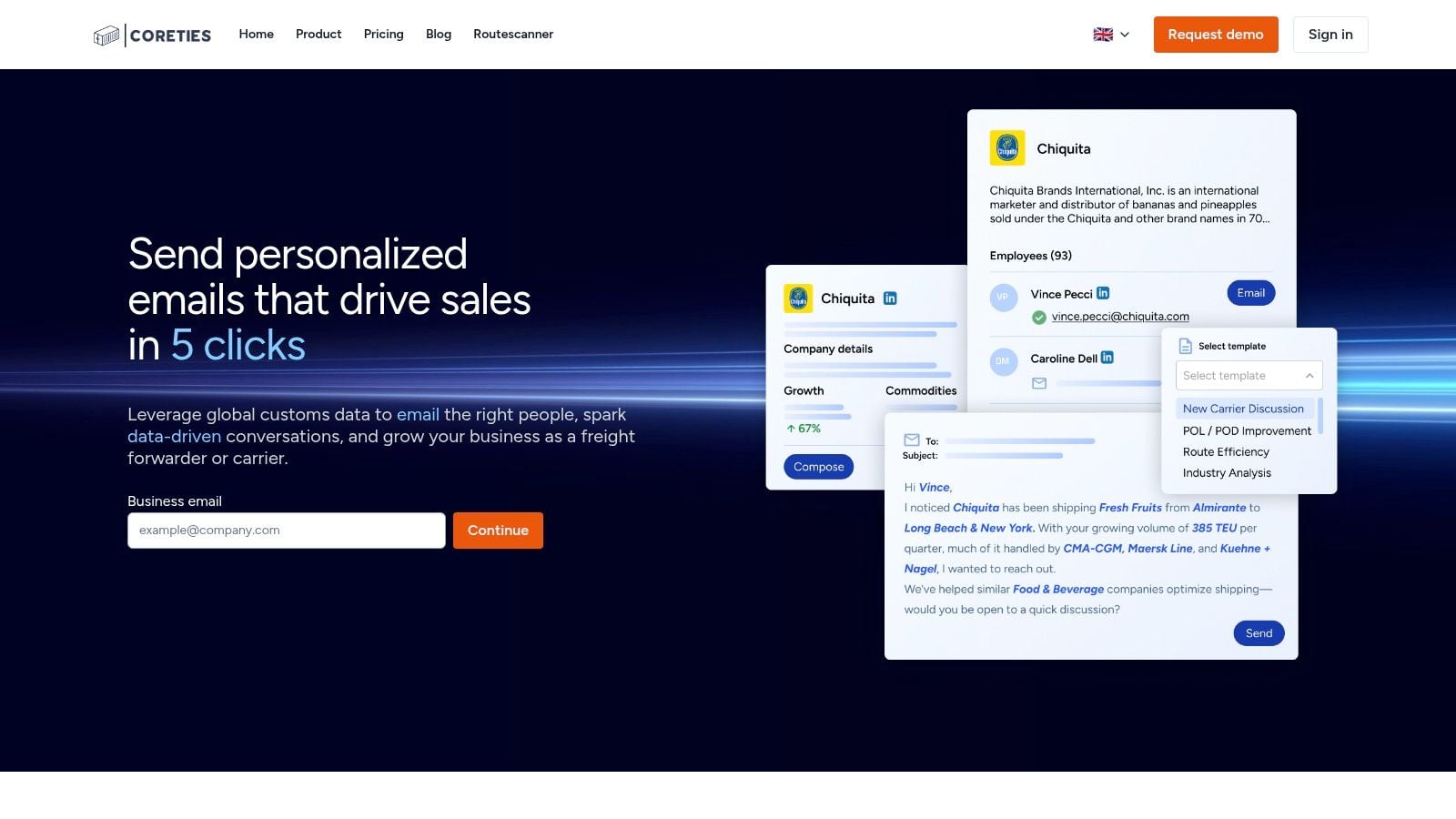
If your team wants to turn customs data and company signals into practical outreach, Coreties gives freight forwarders, carriers, and logistics sales teams a faster way to identify relevant accounts, find the right contacts, and send customized messages built around real trade-lane context instead of generic prospecting.


