Tag: freight forwarders

  • Top 10 Exporters in South Africa: A 2026 Guide

    Top 10 Exporters in South Africa: A 2026 Guide

    A sales rep lines up three South African prospects for the same week. One exports vehicles on fixed production schedules. One ships pulp through port and inland rail interfaces. One sells temperature-sensitive food into time-critical retail programs. The country may sit under one target market label, but the buying triggers, cargo risks, and operating models are completely different.

    That is the primary challenge with exporters in south africa. The opportunity is real, yet concentrated. South Africa generated R 2.04 trillion in exports in the 2024 to 2025 fiscal year, with a trade surplus of R 196.1 billion, and trade activity makes up a large share of the economy, according to Trade Intelligence's analysis of South Africa export trends. For freight forwarders, that matters less as a macro headline than as a filtering tool. Large export value does not automatically produce accessible freight opportunities. Volume sits inside a limited set of sectors, lane structures, and operational requirements.

    That changes the prospecting logic.

    A forwarder with automotive experience should not approach a citrus exporter with the same value proposition used for an OEM plant. A team built around reefer control, cold-chain exception management, and retailer compliance should not spend months chasing mining accounts that buy on a different cadence and often prioritize bulk systems, port allocation, and contract structure over standard forwarding support. The highest-yield accounts are the ones where your network design, documentation capability, and mode expertise match the exporter's actual cargo profile. For teams selling vehicle-related programs, that may include export logistics for cars and automotive cargo.

    This article is built as a sales playbook, not a generic list. Each exporter is assessed through four practical lenses: what they ship, what logistics problems are likely to matter, which roles typically influence transport decisions, and how a freight seller can approach the account with a relevant point of view. That framing helps commercial teams rank accounts, shape outreach, and avoid wasting pipeline time on exporters that look attractive at headline level but do not fit their service model.

    1. Ford Motor Company of Southern Africa

    Ford Motor Company of Southern Africa (Silverton Assembly Plant, Pretoria)

    A vessel cutoff shifts at short notice. Vehicles are staged, plant output keeps coming, and the exporter now has a narrow window to prevent yard congestion from turning into a production and customer-service problem. That is the kind of situation that makes Ford Motor Company of Southern Africa worth studying as a target account.

    Silverton matters because it sits in a part of South Africa's export base where logistics performance is measured in missed windows, damaged units, document accuracy, and escalation speed. Ford's export program creates recurring freight demand, but the key opportunity for a forwarder is not generic capacity supply. It is control over exceptions across finished vehicles, parts, packaging, and time-sensitive support flows.

    Cargo profile and sales angle

    The account should be segmented before outreach. Finished vehicles usually follow RoRo planning and strict dispatch coordination. Parts, accessories, packaging returns, and urgent service inventory create a different sales motion, often with more room for specialized forwarding support.

    That distinction changes who feels the pain.

    • Finished vehicle stakeholders: outbound logistics, plant dispatch, transport procurement, regional distribution leadership
    • Parts and premium freight stakeholders: aftermarket logistics, plant materials teams, supply chain managers, procurement
    • Cargo types worth qualifying: completed vehicles, service parts, CKD-related support, returnable packaging, urgent recovery freight
    • Best opening topics: vessel rollover response, port congestion contingencies, milestone visibility, document accuracy, and escalation handling

    A forwarder that understands car export logistics and automotive shipping requirements can use that knowledge to ask better questions in the first call. The useful discussion is rarely “Can we quote this lane?” It is “Which flows create the highest cost when the plan breaks?”

    That approach also helps identify where incumbents may be weak. A lead logistics provider may control the core export program while smaller, high-friction movements receive less attention. Ford can therefore be a practical prospect for overflow capacity, premium recovery freight, destination-specific exception handling, or support on parts movements that sit outside the main vehicle program.

    Practical rule: Lead with failure points inside the transport chain. Automotive decision-makers already assume a forwarder can book freight. They pay attention when you show how you would handle a missed vessel window, staging overflow, customs document error, or dealer-critical parts shortage.

    Ford is a strong fit for sales teams with existing automotive references, disciplined operating procedures, and credible escalation processes. It is a poor fit for forwarders that compete mainly on spot price or cannot show OEM-grade control at the port, document, and handoff level.

    2. BMW Group Plant Rosslyn

    BMW Rosslyn is the kind of account that can look closed from the outside and still offer an opening if you approach the right problem. The plant has a long export tradition, and that creates stable transport patterns. It also means incumbent providers often cover the obvious work.

    Your entry point usually isn't “replace the lead provider.” It's “solve a gap the incumbent doesn't prioritize.” For Rosslyn, that could mean premium exception freight, battery-adjacent handling for electrified variants, overflow capacity during model transitions, or destination-specific support where service quality matters more than the linehaul rate.

    What moves and who cares

    Rosslyn's export profile centers on high-value finished vehicles, with supporting flows tied to packaging, parts, and launch-related urgency. That mix usually pulls in multiple stakeholders, not just one buyer.

    Consider how the decision map often breaks down:

    • Plant logistics teams care about dispatch reliability and yard flow.
    • Procurement cares about carrier discipline and contract compliance.
    • Regional supply chain leaders care about market continuity and escalation speed.
    • After-sales teams care about urgent service parts when downstream inventory tightens.

    The outreach message should reflect that structure. A generic “we handle automotive cargo” email won't land. A targeted note about short-notice capacity, milestone tracking, or destination exceptions has a better chance because it speaks to the plant's real pain.

    BMW is also a reminder that not every valuable account is won through broad prospecting. Some are won by identifying a narrow operational wedge, then proving reliability there before asking for a larger share.

    3. Toyota South Africa Motors

    Toyota South Africa Motors (Prospecton Plant, Durban)

    Toyota's Prospecton plant matters because it combines model diversity with strong port adjacency. For a logistics sales team, that's a different proposition from a single-model inland OEM. You're not just looking at finished vehicle export scheduling. You're looking at a broader web of parts, accessories, and replenishment activity around Durban.

    That makes Toyota a better fit for forwarders and carriers that can sell process density. If your company can coordinate ocean bookings, drayage, documentation, and plant-facing responsiveness without creating more complexity for the customer, this account becomes easier to approach.

    Outreach that reflects the cargo reality

    Toyota's likely export needs include finished vehicles, parts support, accessory shipments, and contingency transport when production or port conditions shift. The sales conversation should reflect that range.

    A practical outreach pattern looks like this:

    • Start with cargo segmentation: separate finished vehicles from parts and aftermarket support
    • Reference Durban intelligently: discuss port scheduling, cut-off reliability, and backup routing rather than treating port access as automatic
    • Offer a narrow pilot: one destination, one product family, or one exception-management workflow

    Toyota-type accounts respond better to operational specificity than broad capability statements. If your first email could also be sent to a fruit exporter, it's too generic.

    Toyota is especially relevant for teams that already know how to sell around incumbent relationships. The direct lane might be protected. The secondary need often isn't.

    4. Sappi Southern Africa

    Sappi Southern Africa (Pulp, Paper, DWP)

    Sappi is one of the clearest non-automotive export targets because its cargo profile is industrial, recurring, and easier to map against specific shipping capabilities. Dissolving wood pulp, paper, and related products create year-round export needs that differ from the stop-start rhythm of many project-driven accounts.

    For freight forwarders, that means Sappi isn't only a shipper. It's a lane-planning opportunity. If your network performs well on heavy containerized cargo, breakbulk coordination, or mill-to-port orchestration, this is the kind of exporter worth prioritizing.

    Why pulp exporters are different

    Pulp and paper shippers usually care about consistency before novelty. They need booking discipline, cargo integrity, and smooth documentation for repeat flows. Their transport buying behavior often rewards providers who reduce friction over time.

    That changes how you should position yourself. Don't pitch “flexibility” in the abstract. Pitch repeatability.

    • Cargo types to discuss: dissolving wood pulp, specialty papers, packaging grades, mill exports, and container or bulk-adjacent flows
    • Likely decision-makers: export logistics managers, mill supply chain leads, procurement, customer service-linked logistics coordinators
    • Best outreach hook: reliability on repeat sailings and reduced exception workload for the shipper team

    Sappi also has a natural fit with forwarders that help customers evaluate provider suitability at the handling level. That makes this guide on how to choose a freight forwarder useful background for shaping a more consultative message.

    The warning sign is overpromising speed. Industrial exporters like Sappi often value controlled execution more than aggressive promises that create downstream service failures.

    5. Mondi South Africa

    Mondi South Africa (Richards Bay & Merebank)

    A truck arrives at a mill on schedule, the cargo is production-ready, and the shipment still fails commercially because moisture control slipped, port handoff timing broke down, or a booking rollover pushed delivery into a customer's converting cycle. That is the Mondi sales problem in practical terms. For freight forwarders, this account is less about finding spot volume and more about proving control over repeat industrial flows.

    Mondi matters because it sits in a useful position within South Africa's export mix. As noted earlier, the country exports across several industrial categories rather than relying on one finished-goods segment. That makes packaging and paper producers attractive targets for logistics sales teams that want recurring freight tied to manufacturing demand, not only to consumer or commodity swings.

    The operating profile is distinct from both automotive and pure bulk resources. Mondi's mills generate planned output, recurring shipment patterns, and cargo that can lose value through handling errors rather than through headline transit delays alone. A forwarder that understands that difference can frame a stronger first conversation.

    How to position your offer

    Start with the transport consequences of the cargo, not with broad claims about service.

    • Cargo types to discuss: containerized paper, pulp-related products, reels, palletized packaging materials, and mill-to-port export flows
    • Likely decision-makers: export logistics managers, mill supply chain leads, procurement managers, and customer service or planning teams involved in shipment execution
    • Best outreach hook: lower exception rates through booking discipline, moisture-aware handling, and contingency routing during port or rail disruption

    A useful pitch to Mondi is operationally specific. Explain how your team handles cargo protection, equipment suitability, cut-off management, and communication across mill, transporter, terminal, and consignee-facing stakeholders. That signals competence faster than generic promises about flexibility or end-to-end coverage.

    Decision-makers in this category often judge providers on preventable failure points. Wet cargo claims, avoidable booking changes, weak milestone visibility, and poor backup routing all create work for the shipper's internal team. If your process reduces those handoffs and escalations, you have a real reason to pursue the account.

    Sustainability may appear in procurement criteria. The buying decision still tends to favor execution quality, predictable sailings, and fewer operational surprises. For logistics sales professionals, Mondi is a strong target if you can show process discipline in detail.

    6. Sasol Chemicals South Africa

    Sasol Chemicals South Africa

    Sasol Chemicals is one of the strongest targets on this list if your company knows hazardous cargo. If you don't, skip it. Chemical exporters separate capable logistics providers from those who rely on broad commercial language and hope the operations team can figure it out later.

    In this environment, specialization becomes a sales asset. Multiple product families, varied packaging formats, and IMDG-related compliance requirements create a real opening for forwarders and carriers that can show competence with packed dangerous goods, tanks, and documentation-heavy export processes.

    What to say in the first outreach

    You don't need to know every product line to sound credible. You do need to sound like you understand the transport consequences of the product mix.

    A good first approach should mention some combination of:

    • Mode fit: packed cargo, isotanks, bulk-adjacent movements, and urgent replenishment
    • Compliance depth: dangerous goods handling, documentation accuracy, and destination restrictions
    • Customer value: fewer compliance escalations, tighter milestone control, and cleaner handoffs

    Chemical shippers don't reward improvisation. They reward providers who can explain the process before anything goes wrong.

    Sasol is also useful for sales teams building multi-HS-code prospect lists. One exporter can support more than one transport product if your organization handles varied service lines well. That makes the account commercially dense even if the first win is narrow.

    7. Kumba Iron Ore

    A vessel is waiting at Saldanha Bay, the export program has shifted, and rail performance upstream has already changed the loading picture. In that situation, Kumba does not buy generic freight capacity. It buys control, timing, and operational credibility across a tightly connected export chain.

    That makes Kumba one of the more selective exporters in south africa for logistics sales teams. The commercial opening sits inside the handoffs between mine output, rail allocation, terminal sequencing, and vessel readiness. Providers that understand those dependencies can position around real risk points instead of competing on broad rate language.

    Kumba also matters because iron ore remains a meaningful share of South Africa's export mix, as noted earlier in the article. For freight forwarders and marine service providers, that concentration changes prospecting logic. A small number of mining accounts can influence a large amount of export value, so account planning and stakeholder mapping matter more than high-volume outreach.

    Where a forwarder can actually win

    The primary bulk flow is specialized and relationship-heavy, so the better route in is through surrounding logistics tasks that affect export continuity or cost.

    Useful entry points include:

    • Port and vessel coordination: agency support, documentation flow, ETA updates, and berth communication tied to loading windows
    • Project and maintenance cargo: spares, shutdown materials, heavy-lift items, and urgent inbound freight linked to mine or terminal uptime
    • Exception management: alternate plans when rail timing, vessel schedules, or port congestion create knock-on disruption
    • Cross-border or specialist moves: controlled handling for oversized, technical, or time-sensitive cargo outside the main ore stream

    The decision-makers are usually not a single shipping manager. Mining exporters often split influence across supply chain leadership, procurement, port logistics teams, and technical managers responsible for plant reliability. That has a direct sales implication. A generic introduction to procurement alone will often stall if you cannot explain how your service protects uptime, vessel planning, or shutdown schedules.

    What to say in the first outreach

    Lead with one operating problem you can solve.

    A credible approach should reference cargo categories Kumba is likely to move outside its core ore exports, then connect those movements to measurable operating outcomes. Examples include faster delivery of critical spares, tighter milestone reporting for project cargo, or stronger control over vendor handoffs into port or mine locations.

    Good outreach usually includes:

    • Cargo relevance: mining equipment, MRO spares, project freight, and technical imports linked to operations
    • Operational value: fewer delays around shutdowns, better visibility on milestone dates, and cleaner coordination between site, port, and vessel contacts
    • Stakeholder fit: language that makes sense to logistics, procurement, and maintenance teams, not just freight buyers

    Kumba is a good test account for sales teams that claim they sell solutions rather than transport. If your team can map the mine-to-port chain, identify the non-core cargo attached to that chain, and speak to the right operational stakeholders, the account becomes actionable. If not, it stays a brand name on a target list.

    8. Exxaro Resources

    A vessel nomination is in place, rail performance slips, stock builds at the wrong point in the chain, and the exporter now has a commercial problem disguised as a logistics problem. That is the right way to view Exxaro. The account is attractive because coal exports move in high volumes, but sales teams win only when they understand how corridor reliability, terminal allocation, and handoff timing affect revenue, demurrage exposure, and customer service.

    For freight forwarders, Exxaro is not a generic bulk prospect. It is a targeted play around support cargo and coordination risk. The core export flow may sit with established rail, terminal, and bulk shipping structures, but mining groups still buy adjacent services around equipment, spares, port documentation, project cargo, and contingency planning. That is where a new provider can enter.

    What Exxaro is likely to buy

    The strongest opportunities are rarely the headline coal movement itself. They sit around the operating system required to keep exports moving.

    Relevant cargo and service categories include:

    • Mining equipment and components: replacement parts, conveyors, pumps, valves, and heavy industry inputs tied to site uptime
    • MRO and technical spares: time-sensitive imports or domestic repositioning for maintenance teams
    • Project cargo: oversized or high-value equipment linked to plant upgrades, processing infrastructure, or mine development work
    • Port and documentation support: agency coordination, milestone reporting, customs handling, and exception management
    • Contingency logistics: alternative routing studies, breakbulk options, and escalation plans when standard channels tighten

    That mix changes the sales motion. A forwarder pitching "bulk capacity" will struggle. A forwarder that can explain how it handles critical industrial cargo, protects maintenance schedules, and improves exception visibility has a better chance of reaching a serious conversation.

    Who to target inside the account

    Exxaro-style exporters usually split logistics influence across several functions. Procurement may control vendor onboarding, but operational stakeholders shape urgency and service acceptance.

    Priority roles typically include:

    • supply chain and logistics managers
    • procurement managers for operational spend
    • project managers tied to capital equipment moves
    • maintenance and engineering leaders responsible for plant availability
    • port or export coordination teams managing shipment readiness

    Each group's distinct approach to risk assessment shapes their inquiries. Procurement will ask about pricing structure and supplier discipline. Operations will ask what happens when a part misses a shutdown window. Project teams will ask for milestone control and site delivery planning.

    What to say in first outreach

    Lead with one narrow, credible use case.

    A stronger opening references industrial cargo Exxaro is likely to move around its export program, then links your service to an operating outcome. Examples include faster handoff control for shutdown spares, better milestone reporting for oversized equipment, or clearer exception management between supplier, port, and site teams.

    Your outreach should show three things:

    • Cargo understanding: coal may be the revenue engine, but the buying window for a new logistics supplier often sits in non-core industrial freight
    • Operational relevance: delays affect maintenance timing, project delivery, and export readiness, not just transport cost
    • Execution detail: named escalation paths, reporting cadence, and contingency options carry more weight than broad capability claims

    If your team also handles refrigerated or time-sensitive specialty freight elsewhere, the service discipline described in this guide to global perishable logistics and handoff control is useful framing. The commodity is different, but the sales lesson is the same. Buyers respond to providers who can show how they manage timing risk across multiple transfer points.

    Coal remains a meaningful part of South Africa's export mix, as noted earlier in the article. That attracts experienced competitors. Exxaro becomes a winnable target only when your pitch is specific enough to solve an operating constraint, not broad enough to sound like every other carrier introduction.

    9. Capespan

    A reefer container misses its intended vessel cut-off during peak fruit season. The cargo may still move, but the commercial damage starts before departure. Shelf-life tightens, retail delivery windows come under pressure, and the exporter needs updates fast enough to make allocation decisions across customers and markets. That operating reality makes Capespan a high-value target for freight forwarders that can sell control, not just capacity.

    As noted earlier in the article, agricultural exports are a meaningful part of South Africa's export profile. For Capespan, that translates into regular movement of temperature-sensitive fruit with short tolerance for handling errors. The logistics conversation should stay specific: citrus, grapes, and pome fruit each bring different packhouse timing, cold-store discipline, and transit risk.

    The account mapping is more important here than a generic sales pitch. Forwarders should identify export logistics managers, procurement leaders, cold-store or operations managers, and commercial teams responsible for customer delivery commitments. A quality or technical role may also influence provider selection where claims exposure, temperature records, or protocol compliance are under review.

    A stronger outreach sequence should show how your team handles the points where perishable programs usually fail:

    • Cargo profile fit: named experience with reefer exports, packhouse-to-port coordination, and commodity-specific temperature handling
    • Exception management: vessel rollover protocols, escalation contacts, and update timing during delays or equipment issues
    • Port and routing options: practical alternatives during congestion, including transshipment and destination communication support
    • Data visibility: milestone reporting that helps Capespan's commercial team act before a service failure becomes a customer problem

    The sales angle is operational. Fresh-fruit exporters often review providers after a preventable communication gap, an avoidable temperature excursion, or poor recovery planning during disruption. A forwarder that can explain its handoff controls in the language of perishables will stand out. This overview of global perishable logistics services is useful context for framing that discussion around timing, temperature, and compliance.

    Capespan is attractive because the need is recurring and the buying criteria are measurable. If your team can show decision-makers how you reduce rollover exposure, protect cold-chain integrity, and keep overseas stakeholders informed, you are offering a commercial safeguard rather than another freight quote.

    10. Sea Harvest Group

    A refrigerated container misses its vessel cutoff in Cape Town. For an automotive shipper, that is a scheduling problem. For a seafood exporter, it can trigger customer claims, shelf-life pressure, and immediate questions from quality teams at origin and destination. That operating reality makes Sea Harvest Group a useful target for freight forwarders that can sell control, not just transport.

    Sea Harvest belongs on this list because its export mix is operationally uneven. Frozen hake, abalone, fishmeal, and related marine products do not move with the same booking pattern, temperature controls, document set, or consignee expectations. A forwarder that treats all seafood as one cargo category will miss both margin and credibility.

    The opportunity is account segmentation. Food-grade frozen exports usually need reefer equipment availability, cold-store slot coordination, and disciplined milestone reporting. Marine ingredient cargoes can involve different handling priorities, buyer communication needs, and packaging formats. Those differences shape who buys logistics internally and what problem they are trying to solve.

    For sales teams, the practical question is where to enter the account.

    • Decision-maker roles to map: export managers, cold-store or dispatch leaders, procurement managers for freight, and QA or compliance teams that influence release processes
    • Cargo-specific offers: reefer allocation planning, pre-cooling and loading coordination, export documentation accuracy, temperature record visibility, and exception handling for rolled bookings or inspection delays
    • Commercial watchpoints: catch variability can change weekly volumes, port disruption can compress lead times, and reefer shortages can shift routing or sailing choices

    The strongest outreach usually sounds more like an operating review than a capability statement. Reference the cargo type, the likely failure point, and the internal stakeholder affected by it. For example, a message to logistics procurement should focus on vessel reliability, claims exposure, and destination reporting. A message to QA should focus on temperature integrity, document accuracy, and escalation timing when a shipment falls outside plan.

    Sea Harvest is attractive because the logistics pain is specific and repeatable. If your team can show how it protects cold-chain performance for retail or foodservice cargo while also handling the distinct requirements of marine-product exports, you are giving the account a reason to test you on a live lane rather than file you with other generalist forwarders.

    Comparison of 10 South African Exporters

    Company Export profile & modes Logistics advantages / USPs Value to freight forwarders & carriers Key risks / access constraints
    Ford Motor Co. (Silverton, Pretoria) Next‑gen Ranger exports to 100+ markets; RoRo & container High monthly OEM volumes; modernized plant; predictable schedules Ideal for lane planning and high-frequency U.S. OEM flows Rail/port shifts can change modal routing; model concentration risk
    BMW Group Plant Rosslyn BMW X3 production (incl. electrified variants); ocean/air possible Three‑shift steady output; high‑value PHEV exports; long export history Reliable repetitive flows with good schedule visibility Single‑model exposure; incumbent lead‑logistics may limit access
    Toyota South Africa (Prospecton, Durban) Hilux, Fortuner, Corolla Cross; container exports via Durban Diversified model mix; close to Durban port; strong parts exports Strong ocean scheduling potential and diversified destination lanes Limited public export split data; OEM logistics often managed by incumbents
    Sappi Southern Africa Dissolving wood pulp (DWP), specialty & packaging papers; bulk & containers Year‑round large volumes; integrated forestry & trading arm Good for carriers serving textiles, pharma & paper markets Commodity price swings affect rhythms; some grades need special handling
    Mondi South Africa (Richards Bay & Merebank) Bleached hardwood pulp, linerboard; bulk & container flows Reliable mill‑to‑port supply; sustainability credentials Stable export flows attractive to port/logistics providers and brand owners Port/rail constraints; demand cycles impact volumes
    Sasol Chemicals South Africa Commodity & specialty chemicals; bulk, ISO tanks, packed cargo (IMDG) Multiple shipping modes; frequent hazardous shipments; dedicated logistics team Opportunities for carriers experienced in hazardous/specialized cargo Hazardous classification increases compliance burden; feedstock volatility
    Kumba Iron Ore (Anglo American) Iron ore (lump & fines) via Saldanha Bay; capesize bulk Large consistent volumes; dedicated export terminal; long‑term contracts Attractive for capesize operators, port agencies and long‑haul planners Rail corridor bottlenecks; exposure to seaborne price cycles
    Exxaro Resources (Coal) Thermal coal exports via RBCT and alternative corridors; bulk High‑volume regular shipments; corridor experience; tender opportunities Good for bulk operators and corridor/handling service providers Rail/terminal congestion risks; energy transition pressure on demand
    Capespan (Fresh Fruit) Citrus, grapes, pome; year‑round reefer exports; NA subsidiary Integrated grower/packer/exporter; U.S. subsidiary; proprietary planning tech Consistent reefer volumes; simplified U.S. import pathways for partners Perishability demands tight cold chain; weather/phytosanitary risks
    Sea Harvest Group (Seafood) Frozen hake, abalone, fishmeal; cold‑store container loading; EU‑registered Vertical integration; robust QA; on‑site cold loading; 30+ export markets Regular reefer flows with strict compliance, good for refrigerated carriers Catch variability, quotas; reefer capacity and port congestion impact schedules

    Your Next Move in the South African Logistics Market

    A Durban sales manager gets two briefs on the same morning. One is for a fruit exporter facing vessel rollover risk in peak season. The other is for a chemicals producer that cares more about hazardous compliance, tank availability, and schedule discipline than rate alone. Both are South African exporters. They do not buy logistics the same way, and they should not be prospected the same way.

    That is the practical takeaway from the ten companies above. South Africa is not a single shipper pool. It is a set of export clusters with different buying triggers, operating constraints, and internal owners of the transport problem. Automotive plants tend to buy through structured procurement and plant logistics teams. Bulk miners depend on corridor performance, terminal access, and contract reliability. Perishables exporters make decisions around timing, cold-chain integrity, and exception management. Pulp, paper, and chemicals groups sit somewhere in between, often valuing repeatable execution across multiple lanes and shipment types.

    The macro backdrop supports targeted selling, but only if it is translated into account strategy. Export activity remains significant, as noted earlier in the trade data already cited. At the same time, pressure on export values and margins can change shipper behavior quickly. In practical terms, that increases receptiveness to conversations about rerouting, service resilience, inventory buffering, and destination diversification. A weak pitch in this environment is a generic introduction. A stronger pitch starts with a lane-specific hypothesis about where the exporter is losing time, margin, or control.

    Concentration matters too. South Africa's export profile still leans heavily on a relatively narrow set of sectors and commodities, as noted earlier. That creates two implications for freight forwarders. First, a change in commodity pricing or demand can alter shipment frequency long before a company stops exporting. Second, exporters under pressure often review logistics providers by problem type rather than by annual tender cycle alone. That is why static lead lists underperform. Shipment behavior changes faster than company descriptions.

    The more useful filter is operational stress. Which exporters are exposed to port congestion, rail inconsistency, destination complexity, or strict product handling requirements? Which roles feel that stress first? In automotive, it may be plant logistics or inbound and outbound transport planners. In forestry and chemicals, it may sit with export managers, supply chain managers, or procurement leads. In fruit and seafood, commercial teams matter, but cold-store operators, export coordinators, and logistics managers often feel disruption earlier and can define the brief more precisely.

    Research cited earlier also points to unrealized export potential and underperformance among large exporters. For a logistics sales team, that is not a policy talking point. It suggests many established shippers are still looking for better market access, more dependable routing, and service models that protect contribution margin when infrastructure underperforms. The same operating logic appears outside freight as well. Process discipline and workflow visibility matter in any scaling business, including improving business output for SaaS companies.

    Port friction makes the outreach angle even narrower. During peak periods, especially in perishables, delays do not just create inconvenience. They change sellable shelf life, customer claims exposure, detention risk, and planning confidence for the next booking cycle. That means the offer should be concrete. Suggest alternate ports where feasible, cross-border trucking options, split bookings, pre-cleared documentation workflows, or destination-side coordination that reduces the cost of missed windows.

    A workable playbook is straightforward. Segment by cargo type. Prioritize by routing pain. Map the likely decision-maker by product and shipment model. Then write outreach that shows you understand the exporter's actual operating risk, not just its annual revenue.

    Coreties is useful in that workflow because it can help teams identify exporters in south africa by shipment activity, narrow accounts by cargo and geography, and infer where a forwarder's service offering is most likely to fit. Used well, that shifts prospecting from broad market coverage to account selection based on lane behavior and buying context.

    The ten companies in this article are not just names for a database. They are candidate accounts for distinct sales motions. Ford, BMW, and Toyota require disciplined approaches tied to plant continuity and procurement structure. Sappi, Mondi, and Sasol call for operational credibility across mixed cargo profiles. Kumba and Exxaro suit corridor, bulk, and contract-led strategies. Capespan and Sea Harvest require cold-chain precision and strong exception handling.

    If you want to turn this market into a working prospect list, Coreties can help you identify South African exporters by shipment activity, surface likely decision-makers, and build outreach around cargo type, geography, and lane focus instead of sending one-size-fits-all sales emails.

  • Import and export companies in singapore: Find trusted partners today

    Import and export companies in singapore: Find trusted partners today

    Singapore's strategic location and pro-business environment make it a global trade powerhouse. For logistics providers, freight forwarders, and sales teams, identifying the right import and export companies in Singapore is crucial for capturing new business and building resilient supply chains. Yet, with thousands of registered traders, pinpointing qualified leads can feel like searching for a needle in a haystack.

    This guide cuts through the noise. We have curated a definitive list of the top 7 directories and platforms where you can find, vet, and connect with Singaporean trading partners efficiently. This resource is designed specifically for professionals aiming to streamline their sales prospecting and partnership discovery processes.

    Inside this comprehensive roundup, you will learn:

    • Which platforms offer the most detailed company profiles, including financial data and key contacts.
    • How to filter directories to find businesses operating in specific industries or trade lanes.
    • Actionable strategies for leveraging each resource to build targeted lead lists.

    We will break down the unique strengths of each tool, from structured B2B databases perfect for building organised prospect lists to local directories ideal for uncovering niche players. More importantly, we'll offer practical insights on how to use these platforms effectively, ensuring your outreach is not just efficient, but also impactful. Each entry includes direct links and screenshots to help you navigate these resources immediately. Consider this your go-to guide for connecting with the vibrant network of import and export companies in Singapore.

    1. Kompass Singapore – Importers & Exporters Directory

    For sales and business development teams needing a structured, top-of-funnel prospecting tool, Kompass Singapore stands out as an essential B2B directory. It is less of a direct logistics provider and more of a powerful database for identifying potential partners among the vast number of import and export companies in Singapore. Its primary strength lies in its highly organised data, allowing users to move beyond generic searches and into targeted lead generation.

    The platform functions as a sophisticated filter for the entire Singaporean business landscape. Users can quickly segment companies by their specific roles, such as "Importer," "Exporter," "Distributor," or "Producer." This is invaluable for logistics professionals aiming to build a pipeline of qualified shippers. Instead of sifting through thousands of companies, a sales team can instantly generate a list of, for example, all electronics manufacturers in Singapore that explicitly identify as exporters.

    Key Features and User Experience

    Kompass’s interface is built for efficiency, particularly for those building outreach lists. Its structured taxonomy is its main differentiator, allowing for precise market segmentation.

    • Granular Filtering: Search by industry (e.g., "Pharmaceuticals," "Automotive Parts"), company size, and specific activities. This helps pinpoint high-value targets.
    • Detailed Company Profiles: Listings often include key personnel, contact numbers, revenue figures, and a description of their business activities, providing a solid foundation for initial outreach.
    • Data Export Capabilities: The core value for sales teams is the EasyBusiness service. This paid feature allows users to export curated prospect lists directly into CSV or Excel formats, ready for integration into a CRM system. A free trial is typically available to test its functionality.

    How to Use Kompass Effectively

    To maximise the platform's potential, go beyond simple keyword searches. Start by defining your ideal customer profile (ICP). Are you a 3PL specialising in cold chain logistics? Use Kompass to filter for food and beverage exporters. Are you an airfreight forwarder? Search for high-value electronics or medical device importers. The precision of its filters directly translates into higher-quality leads.

    Pro Tip: Before committing to a paid plan, leverage the free access to browse profiles and assess the data quality within your target vertical. Even without exporting, the free profiles provide enough information to manually build a small, highly targeted prospect list.

    Pricing and Access

    While basic browsing is free, accessing the full depth of data and, most importantly, the export functionality, requires a subscription to the EasyBusiness plan. Some contact details are also gated behind a free registration wall. This model makes Kompass best suited for sales teams who see it as a strategic investment in lead generation rather than a casual search tool. Understanding the nuances of this market is crucial; you can learn more about the intricacies of the import-export business landscape here.

    Feature Free Access EasyBusiness (Paid)
    Company Search Yes, with basic filters Advanced, multi-criteria filtering
    Contact Details Limited (often gated) Full access to direct phone and email data
    List Exporting Not available Yes (CSV, Excel), customisable
    Target Audience Researchers, casual browsers Sales teams, marketers, business development pros

    Website: https://sg.kompass.com/a/importers-and-exporters/81100/

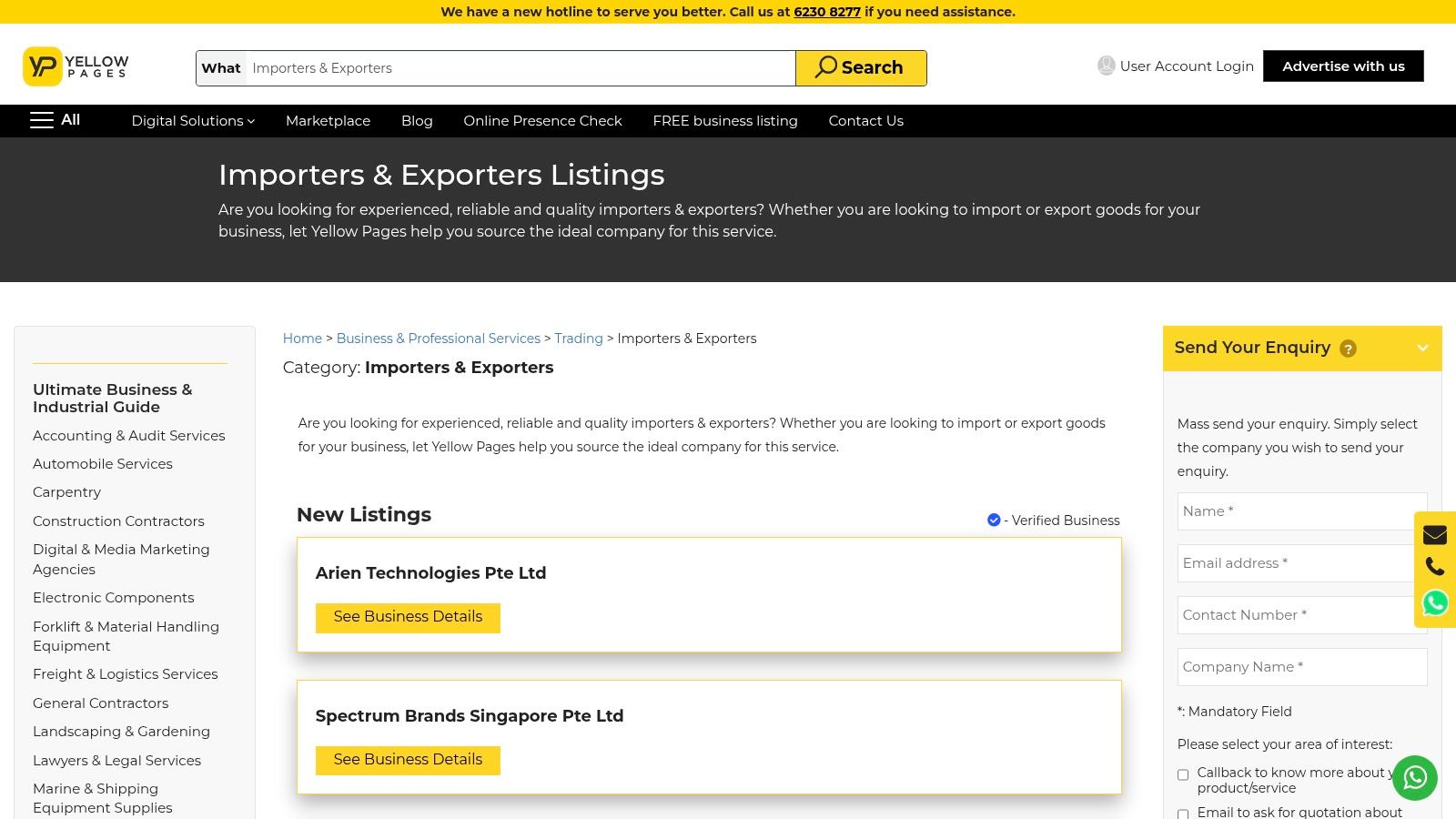
    2. Yellow Pages Singapore – Importers & Exporters

    For those seeking a straightforward, locally focused tool to find partners, Yellow Pages Singapore offers a traditional yet effective business directory. Unlike global B2B databases, its strength lies in its simplicity and deep roots in the local market, making it an excellent resource for identifying small-to-medium-sized import and export companies in Singapore that might not have a significant online presence elsewhere. It serves as a rapid discovery tool for direct outreach and initial market mapping.

    The platform is organised into clear business categories, with dedicated pages for "Importers & Exporters" and "Exporters." This allows for quick navigation to relevant listings. While it lacks the sophisticated filtering of specialised sales intelligence tools, its direct approach is ideal for sales teams needing to quickly build a list of local contacts or for businesses looking for a straightforward way to connect with potential logistics partners without a steep learning curve.

    Yellow Pages Singapore – Importers & Exporters

    Key Features and User Experience

    Yellow Pages Singapore prioritises accessibility and direct contact. The interface is familiar and intuitive, designed for users who need actionable information like phone numbers and addresses without navigating complex systems.

    • Dedicated Category Pages: The platform curates businesses into specific categories, allowing users to browse all listed "Importers & Exporters" in one place.
    • Direct Contact Information: A significant advantage is that many listings prominently display direct phone numbers and physical addresses, facilitating immediate outreach via calls or even direct mail.
    • "Send Your Enquiry" Feature: Many profiles include a built-in contact form, allowing users to send a message directly to the listed company through the Yellow Pages portal, streamlining the initial point of contact.
    • Mix of Businesses: The directory includes a wide range of companies, from well-established trading houses to smaller, niche operators, offering a broad view of the market.

    How to Use Yellow Pages Effectively

    To get the most out of the platform, use it as a starting point for local prospecting. Instead of broad searches, use the dedicated category pages to manually browse and qualify potential partners. Its value is highest when searching for smaller, local traders who may not be listed on larger international platforms. Use the provided phone numbers for direct, high-touch sales calls.

    Pro Tip: Cross-reference interesting companies you find on Yellow Pages with their ACRA (Accounting and Corporate Regulatory Authority) registration to verify their business status and gather more detailed corporate information before engaging.

    Pricing and Access

    Yellow Pages is a free-to-use directory for browsers. There are no subscriptions or paywalls to access the core listing information, making it an accessible tool for any team, regardless of budget. Businesses pay to get listed or to have enhanced profiles, but for users searching for companies, the access is open. This model is perfect for ad-hoc searches and for teams that don't require the advanced data export and filtering capabilities of paid platforms. For a deeper understanding of the regulatory environment these companies operate in, you can find valuable insights by exploring more about the role of an importer in Singapore.

    Feature Free Access Paid (for Lister)
    Company Search Yes, by category and keyword N/A
    Contact Details Publicly available (phone, address, website) N/A
    List Exporting Not available (manual collection required) N/A
    Target Audience Sales teams doing local outreach, SMEs, researchers Singaporean businesses seeking local visibility

    Website: https://www.yellowpages.com.sg/listing-category/business-professional-services/trading/importers-exporters/

    3. SGPBusiness – Singapore Company Search

    For due diligence and initial verification, SGPBusiness serves as an indispensable, free-to-use directory of all Singapore-registered entities. Unlike lead-generation platforms, its core function is to provide foundational, publicly available data, making it a crucial first step in the pre-qualification process. It helps sales teams and logistics providers confirm the legitimacy and operational status of potential partners among the many import and export companies in Singapore.

    The platform acts as a high-level verification tool, drawing directly from official registries. Users can quickly search for a company by name or registration number to confirm its existence, registered address, and official business activities. This initial check is vital for filtering out inactive or improperly classified companies before investing time in deeper outreach, ensuring that prospecting efforts are directed at legitimate and relevant businesses.

    Key Features and User Experience

    SGPBusiness offers a straightforward, no-frills interface designed for rapid information retrieval. Its value lies in its simplicity and reliance on official data, making it a trusted source for preliminary background checks.

    • Fast Company Verification: Instantly search for any Singapore-registered company to see its official status (e.g., "Live Company"), registration number, and incorporation date.
    • SSIC and Activity Descriptions: Profiles include the company's Singapore Standard Industrial Classification (SSIC) code and a description of its principal activities, helping you confirm if their business aligns with your target sector.
    • Data Freshness: The platform indicates when the data was last refreshed, providing confidence in the currency of the information presented.

    How to Use SGPBusiness Effectively

    Maximise SGPBusiness by integrating it at the very beginning of your sales funnel. Before adding a company from a trade show or a referral to your CRM, run a quick search on SGPBusiness. This simple step verifies that the company is active and officially registered for activities related to trade. For example, you can confirm whether a company is classified under a freight forwarding or wholesale trade SSIC.

    Pro Tip: Use the SSIC code listed on a prospect's SGPBusiness profile as a keyword in other databases like Kompass or LinkedIn. This can help you uncover similarly classified companies, expanding your list of potential import and export companies in Singapore.

    Pricing and Access

    SGPBusiness is completely free to use, with no registration or subscription required. This makes it an accessible tool for everyone, from individual freight brokers to large enterprise sales teams. Its purpose is not to provide direct contact details for sales outreach but to serve as a public utility for business verification. This focus on official data is essential, especially when dealing with compliance aspects like customs declarations, where understanding a company's registered activities is crucial. You can dive deeper into the classification of goods by understanding the role of the HS code system in Singapore.

    Feature Free Access Paid Access
    Company Search Yes, by name or registration number Not applicable
    Contact Details Not provided Not applicable
    Verification Data Full access to registration status and SSIC Not applicable
    Target Audience Anyone needing to verify a Singaporean company Sales and compliance teams for pre-qualification

    Website: https://www.sgpbusiness.com/

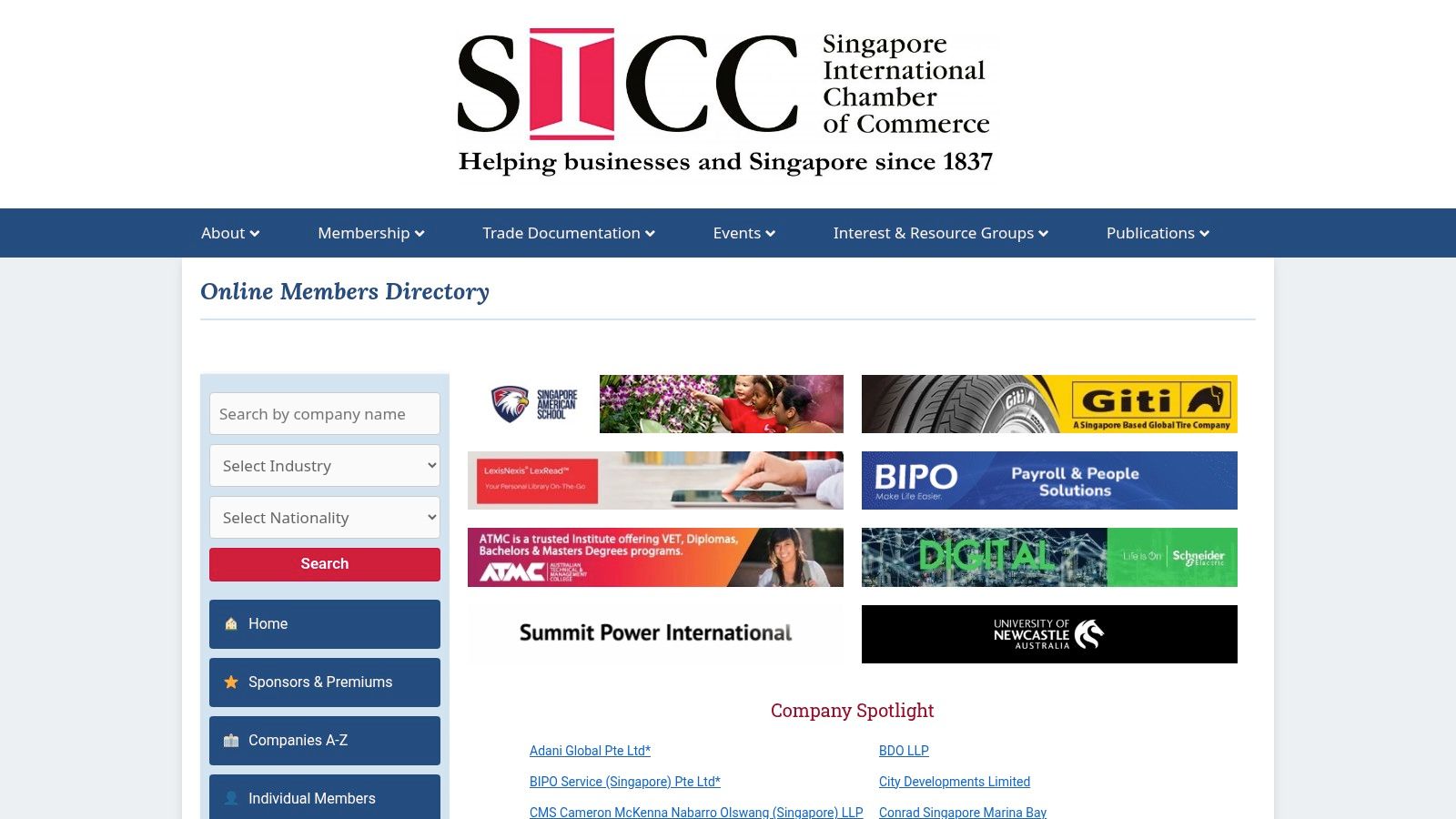
    4. Singapore International Chamber of Commerce (SICC) – Online Members Directory

    For businesses seeking a vetted and highly credible source of partners, the Singapore International Chamber of Commerce (SICC) Online Members Directory offers a curated alternative to sprawling public databases. Unlike open directories, the SICC list comprises member companies that have been verified by the Chamber, adding a layer of trust and reliability. This makes it an excellent resource for identifying established import and export companies in Singapore that are active and committed participants in the nation's trade ecosystem.

    Singapore International Chamber of Commerce (SICC) – Online Members Directory

    The directory functions as a high-trust network for business development. While not as granular in its filtering as dedicated data platforms, its strength lies in the implied credibility of its members. For a freight forwarder, connecting with an SICC member company often means engaging with a business that is serious about its role in international trade, potentially leading to more substantive and long-term partnerships. The platform allows users to find companies categorised under relevant sectors like "Traders" and "Transport & Logistics."

    Key Features and User Experience

    The SICC directory is straightforward and designed for networking and initial discovery rather than mass data extraction. Its value is in the quality and reputation of the listed entities.

    • Vetted Membership: Every company listed is a member of the SICC, signalling a degree of stability and commitment to the local business community.
    • Sector-Specific Search: Users can filter the online directory by industry sectors, making it easy to isolate potential partners in logistics, manufacturing, or trading.
    • Detailed Member Profiles: Each profile typically includes a business description, contact information, and a link to the company's website, providing essential details for initial outreach.
    • Annual Printed Directory: For those who prefer an offline resource, the SICC publishes a comprehensive annual Members' Directory available for purchase, which often contains more detailed contact information.

    How to Use SICC Effectively

    The best approach is to use the directory for targeted, high-quality prospecting. Instead of building a large list, focus on identifying a handful of best-fit companies. Use the sector search to find "Traders" or "Logistics" providers. Review their company profiles to understand their business and ensure they align with your service offerings. The goal here is quality over quantity, leveraging the SICC's reputation as a conversation starter.

    Pro Tip: When reaching out to a company found through the SICC directory, mention it. Stating "We found your company listed as a valued member of the SICC" can add credibility to your outreach and differentiate it from generic sales emails.

    Pricing and Access

    The online members' directory is free to browse and search, providing public access to company names and basic details. However, to unlock the full potential of the network and access more in-depth resources like the printed directory, becoming an SICC member yourself is often the most effective route. This positions the SICC not just as a directory, but as a strategic networking and business development ecosystem.

    Feature Free Online Access SICC Membership (Paid)
    Company Search Yes, by name and sector Full access to all member benefits and events
    Contact Details Basic contact info and website links Access to exclusive networking and member-only data
    List Exporting Not available Not applicable (directory is for browsing)
    Target Audience Researchers, B2B prospectors Companies seeking deep integration into SG business community

    Website: https://sicc.com.sg/membership/sicc-online-members-directory/

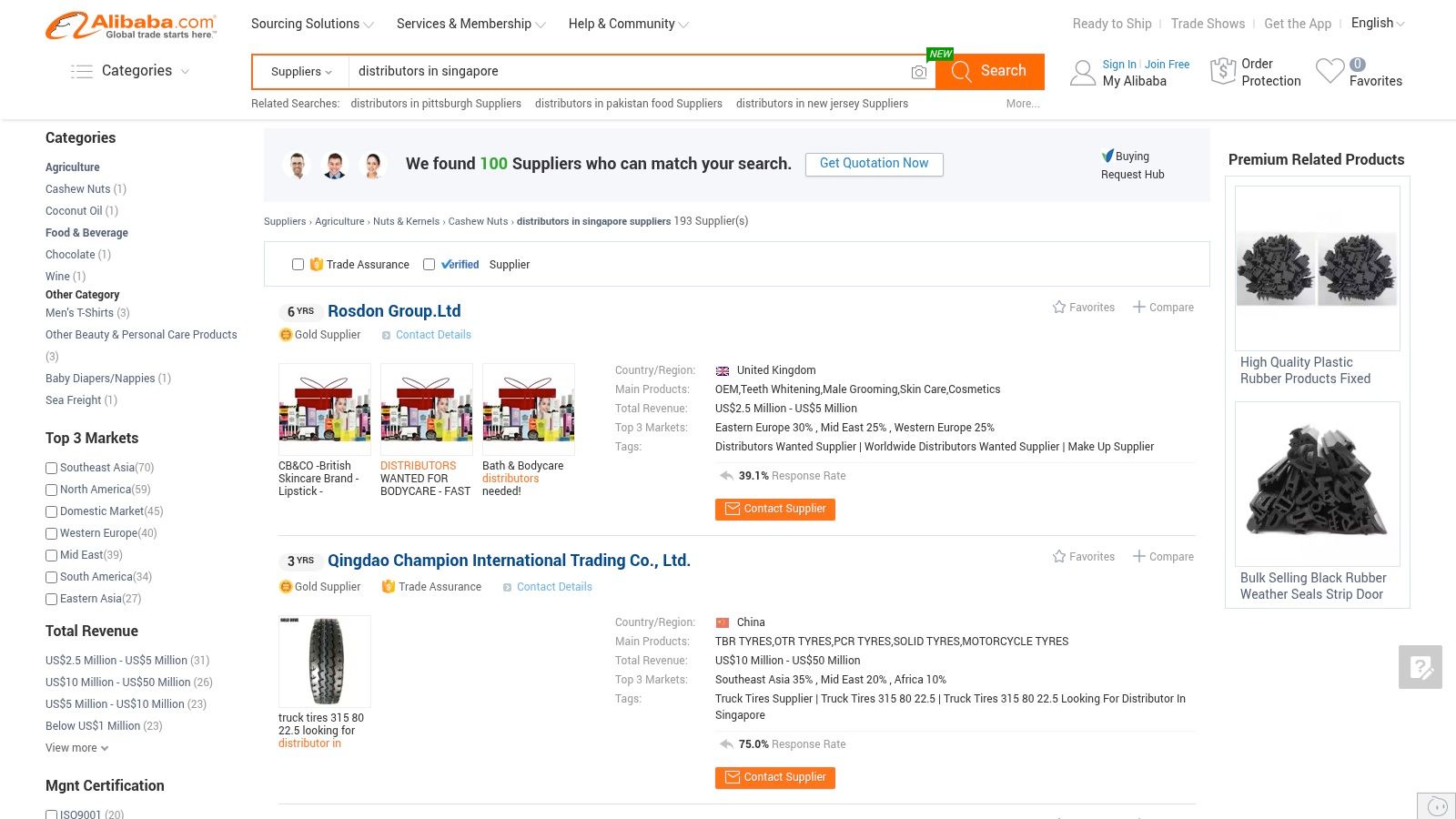
    5. Alibaba – Suppliers in Singapore (Country/Region filter)

    For businesses seeking to source products directly or find trading partners for smaller consignments, Alibaba offers a unique approach. While known as a global B2B giant, its powerful filtering capabilities allow users to specifically target import and export companies in Singapore. This transforms the platform from a broad sourcing engine into a targeted tool for connecting with Singapore-based traders, distributors, and manufacturers across a vast array of product categories.

    Its core strength lies in its transactional nature, making it ideal for initiating contact, requesting quotations (RFQs), and arranging for samples or small test orders. Unlike pure directories, Alibaba facilitates the entire initial engagement process, from discovery to communication and even secure payment through its Trade Assurance programme for eligible suppliers. This makes it an accessible starting point for companies looking to validate a Singaporean supplier before committing to larger freight volumes.

    Alibaba – Suppliers in Singapore (Country/Region filter)

    Key Features and User Experience

    Alibaba’s platform is designed for rapid supplier evaluation and outreach. The interface allows buyers to efficiently compare multiple suppliers and initiate conversations, streamlining the procurement and partner discovery process.

    • Singapore-Specific Filtering: Users can easily isolate suppliers by selecting "Singapore" in the Country/Region filter, instantly narrowing the massive database to local entities.
    • Request for Quotation (RFQ) Tools: The platform's primary value is its streamlined RFQ workflow, enabling buyers to send detailed product requests to multiple Singaporean suppliers simultaneously and manage responses in one place.
    • Supplier Verification Signals: Listings often feature trust badges, such as "Verified Supplier" and the number of years they have been on the platform, providing a preliminary layer of due diligence.
    • Trade Assurance: For applicable transactions, this feature provides a payment protection service, securing funds until the buyer confirms the order has been received as agreed.

    How to Use Alibaba Effectively

    To leverage Alibaba for finding Singaporean partners, use the filters strategically. Start by searching for your product, then immediately apply the "Country/Region: Singapore" filter. Scrutinise the supplier profiles for clear indicators of their business type. Many are traders or distributors, which can be ideal for consolidating products but may differ from dealing with a direct manufacturer. Always engage with multiple suppliers to compare pricing, communication quality, and product specifics.

    Pro Tip: Before placing a large order, always start with a sample. Use the platform's messaging system to ask detailed questions about their export capabilities, typical shipping incoterms, and experience with your target market. This initial interaction is a strong indicator of their professionalism.

    Pricing and Access

    Searching, browsing profiles, and contacting suppliers on Alibaba is entirely free for buyers. Costs are incurred only when purchasing products. The platform is built on a transactional model, where suppliers pay for premium memberships and advertising. This free access makes it an invaluable tool for market research and initial supplier vetting without any upfront financial commitment. However, it's crucial to remember that the onus of due diligence rests heavily on the buyer, as the quality and legitimacy of listings can vary significantly.

    Feature Free Access (Buyer) Paid (Supplier)
    Supplier Search Yes, with advanced filters (including location) N/A
    Contacting Suppliers Yes, via integrated messaging and RFQ tools N/A
    Placing Orders Yes, directly through the platform Requires a supplier membership to list products
    Target Audience Buyers, importers, product sourcers Exporters, manufacturers, trading companies

    Website: https://www.alibaba.com/distributors-in-singapore-suppliers.html

    6. Global Sources – Country Search (Singapore)

    For businesses focused on product sourcing and identifying verified manufacturers, Global Sources provides a powerful B2B marketplace. While known for its extensive network of Chinese and ASEAN suppliers, its ‘Source by Country’ function is a highly effective tool for zeroing in on import and export companies in Singapore. This platform is ideal for procurement managers and businesses looking to source finished goods directly from Singapore-based exporters.

    The core strength of Global Sources lies in its deep integration of product discovery with supplier verification. Users can search for specific products (e.g., “semiconductor components”) and then apply a country filter to see only suppliers from Singapore. This immediately connects a product need to a potential export partner, streamlining the initial stages of the supply chain process. It positions itself as a trust-centric platform, aiming to connect buyers with credible, trade-show-vetted manufacturers and exporters.

    Key Features and User Experience

    Global Sources is built for buyers who need to assess supplier credibility quickly. The interface combines product listings with rich supplier profiles, offering a more holistic view than a simple business directory.

    • Verified Supplier Status: Many listings feature badges like "Verified Supplier" and "Audited Manufacturer," indicating that Global Sources has independently authenticated their business registration, production capabilities, and quality control systems.
    • Source by Country Filter: The ability to isolate Singaporean suppliers is crucial. This transforms a global sourcing engine into a targeted tool for finding local export partners.
    • Rich Product & Company Details: Profiles often include main products, factory size, QC processes, and certifications, providing essential data for due diligence before making first contact.
    • Integrated Inquiry System: The platform facilitates direct communication with suppliers through its built-in Request for Quotation (RFQ) and inquiry tools.

    How to Use Global Sources Effectively

    To get the most out of the platform, combine product and country searches. Start by searching for your product category, then navigate to the supplier location filters and select "Singapore." This avoids generic searches and surfaces companies that actively export the goods you need. Pay close attention to the verification badges and the supplier’s years in business.

    Pro Tip: Look for suppliers who participate in Global Sources trade shows. This often signals a more established and export-ready company that is invested in international trade and is more likely to have robust logistics and compliance processes in place.

    Pricing and Access

    Browsing the platform, viewing products, and seeing supplier profiles are generally free, but you will need to register for an account to send inquiries or access deeper company details. This free registration model is designed to connect serious buyers with suppliers. While there are no direct subscription fees for buyers, some premium analytics or sourcing services may be offered separately.

    Feature Free Access (Registered User) Premium Services (Varies)
    Supplier Search Yes, with country and product filters Advanced sourcing support, dedicated matchmaking
    Verification Details Yes, badges and basic reports are visible Full, in-depth audit reports may require a fee
    Send Inquiries (RFQ) Yes, unlimited to listed suppliers Not applicable
    Target Audience Procurement managers, sourcing agents, importers Large enterprises needing managed sourcing services

    Website: https://www.globalsources.com/

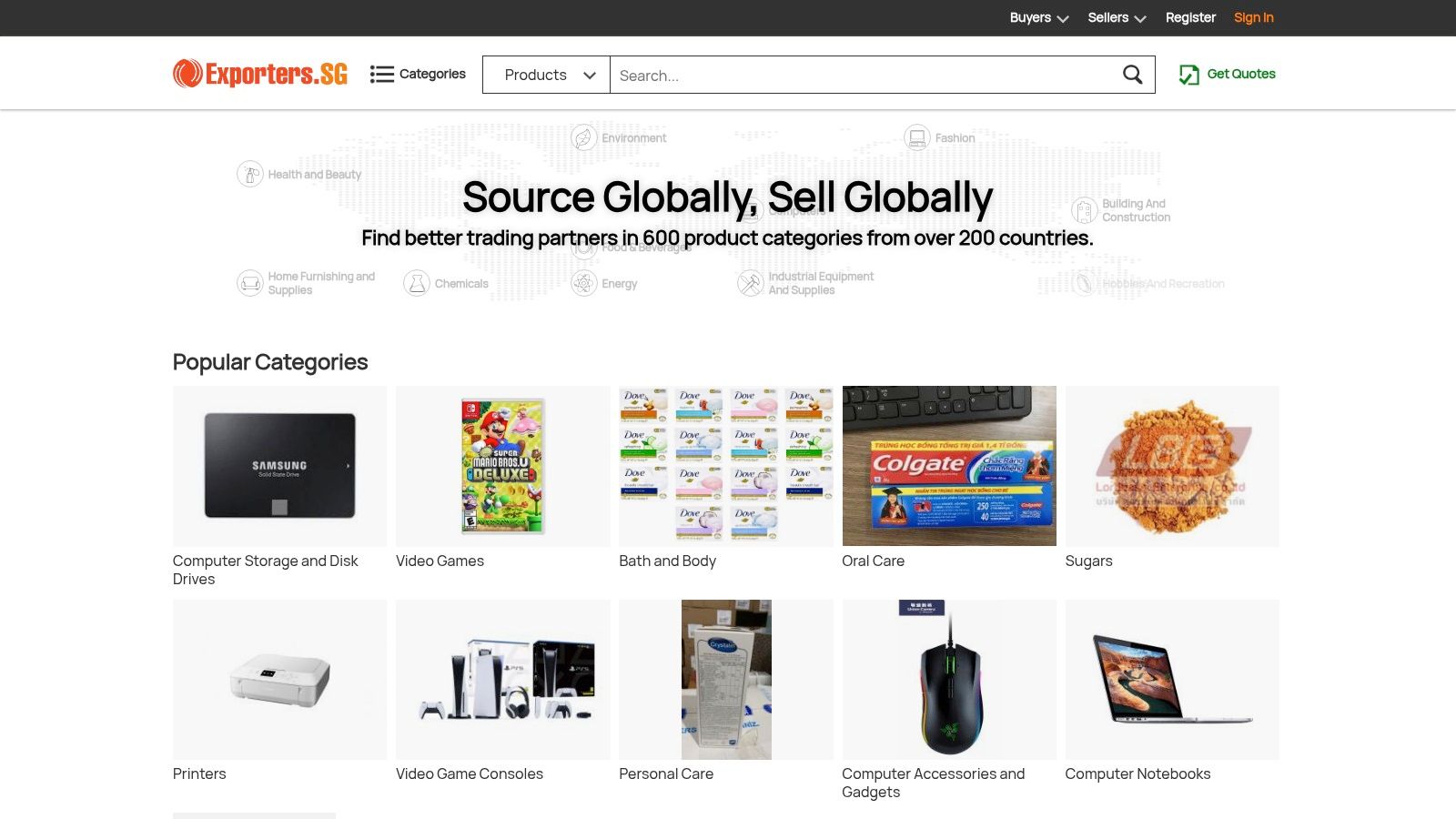
    7. Exporters.SG – Singapore-based B2B Marketplace

    For businesses seeking a direct B2B connection within the Asian trade ecosystem, Exporters.SG serves as a vital digital marketplace. Unlike pure data providers, this platform is a hands-on portal designed to facilitate direct transactions and partnerships. It’s an essential resource for companies looking to source products or find buyers, acting as a bridge between the diverse import and export companies in Singapore and their global counterparts. Its strength lies in its dual-purpose functionality, catering equally to sellers looking for leads and buyers posting inquiries.

    Exporters.SG – Singapore-based B2B Marketplace

    The platform functions as a dynamic "yellow pages" for international trade, focused heavily on the Singaporean and broader Asian markets. Users can navigate extensive directories of exporters and importers, filtering by specific product categories like "Apparel," "Electronics," or "Food & Beverage." This targeted approach allows a procurement manager in Europe, for instance, to quickly find a list of Singaporean coffee exporters or an electronics distributor to source specific components.

    Key Features and User Experience

    Exporters.SG is built around action-oriented tools that encourage direct communication between trading partners. The user interface is straightforward, prioritising connectivity over complex analytics.

    • Dual-Sided Marketplace: Users can browse exporter listings or post their own "buying leads," specifying exactly what products they need. This creates opportunities for both active searching and passive lead generation.
    • Comprehensive Listings: Company profiles include business descriptions, product catalogues, and contact information, providing a solid basis for initiating trade discussions.
    • Category and Location Filters: The ability to narrow searches by industry and country helps users efficiently pinpoint relevant suppliers or buyers.
    • Mobile Accessibility: A dedicated mobile app allows users to manage inquiries and browse listings on the go, which is crucial for time-sensitive trade opportunities.

    How to Use Exporters.SG Effectively

    To get the most value, engage with the platform’s interactive features. If you are a buyer, don't just browse; post a detailed buying lead. Specify your required product, quantity, target price, and shipping destination. This shifts the effort to sellers, who will then approach you with proposals. For sellers, regularly check the buying leads section for your product category and respond promptly to relevant inquiries to stay ahead of competitors.

    Pro Tip: When creating an exporter profile, invest time in building a comprehensive and professional listing. Include high-quality product images, detailed descriptions, and clear contact information. A complete profile is significantly more likely to attract serious inquiries from international buyers.

    Pricing and Access

    Basic access, including browsing company listings and posting buying leads, is generally free. However, to gain a competitive edge, Exporters.SG offers premium membership tiers. These paid plans provide enhanced visibility, such as top placement in search results, a verified member badge to build trust, and advanced promotional tools. This model allows casual users to explore the platform at no cost while offering serious traders the tools they need to boost their international presence.

    Feature Free Membership Premium Membership (Paid)
    Company Listing Yes, with basic profile features Enhanced profile, priority placement, verified badge
    Browse Listings Full access to exporter/importer directories Full access
    Post Buying Leads Yes Yes, with potential for higher visibility
    Direct Enquiries Yes Advanced communication and promotion tools
    Target Audience SMEs, sourcing agents, individual traders Established exporters, serious buyers, distributors

    Website: https://www.exporters.sg/

    7-Way Comparison: Singapore Import & Export Directories

    Service Implementation complexity Resource requirements Expected outcomes Ideal use cases Key advantages
    Kompass Singapore – Importers & Exporters Directory Moderate — use filters and export workflows Paid plan for full exports (free trial available); time to filter Targeted prospect lists and role-tagged leads List-building, outbound prospecting, vertical filtering Structured taxonomy; CSV/Excel exports; contact details on profiles
    Yellow Pages Singapore – Importers & Exporters Low — simple browsing and enquiry flow Mostly free; manual lookup and outreach Quick local discovery and direct contact info Rapid outreach to local SMEs and small traders Local focus; many phone/address listings; easy navigation
    SGPBusiness – Singapore Company Search Low — basic search and lookup Free; minimal time per lookup Company existence, registration and status verification Pre-qualification and basic compliance checks Free, fast verification using public data
    SICC – Online Members Directory Low–Moderate — searchable member listings Free search; full printed directory or membership may cost Vetted, credibility-signaled contacts Networking, credible supplier discovery, chamber engagement Chamber-vetted members; useful sector classifications
    Alibaba – Suppliers in Singapore (Country filter) Low–Moderate — search + RFQ workflows Free browsing; paid services/assurance optional; time for due diligence High-volume supplier responses, sample/order opportunities Rapid supplier comparison, RFQs, sampling and small orders Massive reach; RFQ tools; Trade Assurance on eligible listings
    Global Sources – Country Search (Singapore) Moderate — country+category sourcing and verification Free browse; signup to view gated details; event attendance optional Higher-trust exporter leads and show-connected suppliers Category-plus-country sourcing; verified exporter searches Emphasis on verified exporters and sourcing events
    Exporters.SG – Singapore-based B2B Marketplace Low–Moderate — listing and inquiry tools Free tier with paid promotional features; mobile app available Local marketplace leads and posted buying leads Local supply or buying; promotional visibility for sellers Singapore-based platform; serves both buyers and sellers; long-standing local presence

    From Prospecting to Partnership: Activating Your Outreach Strategy

    Navigating Singapore’s dynamic trade landscape requires more than just a list of names; it demands a sophisticated strategy for identifying, qualifying, and engaging the right partners. Throughout this guide, we have explored a diverse set of resources, from the comprehensive directories of Kompass and Yellow Pages to the membership-focused listings of the Singapore International Chamber of Commerce (SICC) and the B2B marketplaces of Alibaba and Exporters.SG. Each platform offers a unique lens through which to view the vast network of import and export companies in Singapore, providing the foundational data necessary to build your initial prospect list.

    The key takeaway is that no single source provides a complete picture. A truly effective prospecting strategy integrates insights from multiple platforms. For instance, you might identify a potential partner on SGPBusiness, cross-reference their industry standing through SICC, and then verify their product specialisation on Global Sources. This multi-pronged approach ensures your outreach is not just broad, but also deep and well-informed.

    Synthesising Data into Actionable Intelligence

    The real challenge begins after you have compiled your initial list. How do you transform this raw data into a pipeline of qualified, high-intent leads? This is where strategic execution becomes paramount. Simply cold-calling or sending generic emails to a long list of companies is an inefficient use of valuable sales resources. The goal is to move from a volume-based approach to a value-based one.

    To achieve this, your team must focus on several critical steps:

    1. Segmentation and Prioritisation: Do not treat all prospects equally. Segment your list based on criteria that matter most to your business. This could include company size, specific commodities they trade, key trade lanes (e.g., Singapore-Europe, Intra-Asia), or their likely logistics needs (air freight vs. ocean freight). Prioritise outreach to companies that most closely align with your ideal customer profile.

    2. Identifying Key Decision-Makers: A general inquiry to an info@ email address is easily ignored. Your research must extend to identifying the specific individuals responsible for logistics, procurement, or supply chain management. This targeted approach dramatically increases the likelihood of your message reaching the right person and receiving a response.

    3. Crafting a Value-Driven Message: Your initial contact should immediately demonstrate that you understand the prospect’s business and have a relevant solution. Instead of a generic "we offer freight services" pitch, lead with a specific insight. For example, "We noticed your company frequently imports electronics from Vietnam and have developed a consolidated air freight solution that has reduced transit times by 15% for similar businesses."

    The Power of Data-Driven Outreach

    The directories and platforms we have covered provide the "who," but modern sales intelligence tools provide the "what, when, and why." While manual research is a starting point, leveraging specialised platforms built on global customs data can act as a significant force multiplier for your sales team. These tools cut through the noise, allowing you to filter for companies that are actively shipping specific products along your key trade lanes.

    Key Insight: The transition from simple prospecting to a successful partnership hinges on your ability to connect with the right person, at the right time, with a message that resonates with their specific business challenges. Generic outreach is no longer effective in a competitive market.

    By integrating this level of precision into your strategy, you empower your business development team to engage in meaningful conversations backed by real-world data. This elevates your outreach from a speculative inquiry to a strategic proposal. You are no longer just another logistics provider; you are a potential partner who has already done their homework and can offer tangible value from the very first interaction. This data-first approach is the definitive way to build a robust and sustainable growth engine for your operations within the bustling hub of import and export companies in Singapore.


    Ready to move beyond static directories and activate a truly data-driven sales strategy? Coreties transforms global trade data into a powerful lead generation engine, allowing you to identify active shippers, pinpoint key decision-makers, and craft compelling outreach based on verified shipping histories. Stop prospecting in the dark and start building a high-quality pipeline by visiting Coreties to see how you can connect with your ideal customers today.