Tag: logistics leads

  • Find Top Importers in UK: 2026 Sales Playbook

    Find Top Importers in UK: 2026 Sales Playbook

    You can feel the wasted motion in most freight sales teams. Someone exports a directory list, someone else cleans company names in a spreadsheet, and then reps start emailing businesses that may not have imported anything in months, or ever on the lanes you serve.

    That approach breaks because the market doesn't sit still. Buyers change suppliers, shift origin countries, test new commodities, and react to customs friction faster than most sales teams update their CRM. If you're still prospecting from generic databases, you're working from a picture of the past.

    The better question isn't "who are importers in uk?" It's "which UK companies are actively importing the products, from the origins, with the customs complexity that match our network right now?" Once you work from that question, customs data stops being a research exercise and becomes your sales operating system.

    Beyond Directories Finding UK Importers with Real Intent

    Most directories tell you what a company says it does. Customs data tells you what it moves.

    That's the shift. Sales teams don't need more names. They need evidence of buying behavior. A company tagged as "wholesale" or "manufacturing" might look relevant in Companies House or a broad B2B database, but that doesn't tell you whether it's importing on your target lane, whether it's active this quarter, or whether its shipment profile fits your service model.

    The UK import market is active enough that guessing is expensive. UK goods imports peaked at £81.3 billion in December 2025 and then rebounded to £80.9 billion in February 2026, according to UK overseas trade in goods statistics. That kind of movement matters because importers don't experience volatility as an abstract chart. Their teams feel it in stock planning, routing changes, supplier switches, and customs pressure.

    A businesswoman observing digital holographic trade data and an interactive map showing UK import export statistics.

    Why directories underperform

    A generic list usually fails in three ways:

    • It misses timing: A company may fit your ICP on paper but have no recent import activity.
    • It hides lane relevance: "Importer" isn't enough if your margins depend on a specific origin, mode, or commodity.
    • It creates weak outreach: Reps end up sending broad emails because they don't know what the prospect is moving.

    That last point is the killer. Weak data produces vague messaging, and vague messaging gets ignored.

    Practical rule: If your first email could be sent to any shipper, it shouldn't be sent to this one.

    What real intent looks like

    In logistics sales, intent isn't a form fill or a webinar signup. It's customs-declared activity. A business importing from non-EU origins has already shown budget, operational need, and exposure to compliance. That's far more useful than a directory category.

    The teams that consistently win don't start with "all UK importers." They start narrower:

    Prospecting approach What you know What you still have to guess
    Generic directory Industry, size, website Active importer status, lane, commodity, customs complexity
    Customs-led targeting Recent import activity, likely lane focus, commodity patterns Current provider, internal decision-maker, contract timing

    That difference changes your whole pipeline. Instead of chasing a giant list, you build a smaller one with higher sales relevance.

    A lot of reps still think more volume solves poor targeting. It doesn't. If the list is stale, all you've done is automate waste. For importers in uk, shipping activity is the filter that separates curiosity from commercial reality.

    Unlocking a Goldmine of UK Importer Data

    The raw material for better prospecting is already out there. The problem isn't access. It's knowing which sources tell you something useful for sales and which ones only help with background checks.

    In 2025, the number of UK businesses actively importing grew to 334,294, with 236,963 classified as import-only, and firms sourcing exclusively from non-EU countries rose by 12%, according to HMRC customs importer and exporter population data. For a freight sales team, that means the opportunity isn't hidden. It's dispersed, and you need a better way to isolate the right slice of it.

    An infographic showing five key sources for finding UK importer data, including government records and databases.

    What each source is good for

    Some sources help you verify a company. Others help you decide whether it's worth contacting at all.

    • HMRC and UK trade datasets: These are the foundation for market direction. They show where importer growth is happening and which trade patterns deserve attention.
    • Companies House: Useful for legal entity checks, directors, filing history, and whether a business looks operationally healthy.
    • LinkedIn and company websites: Good for finding people, departments, and signs of supply chain maturity.
    • Industry associations: Helpful when you need sector context, especially in regulated or niche verticals.
    • Commercial trade databases: These save time by aggregating, cleaning, and structuring customs-related signals into something reps can act on.

    Raw data versus usable sales data

    A lot of teams confuse access to data with readiness for outreach. They're not the same thing.

    Raw data is messy. Entity names vary. Subsidiaries create duplicates. Product descriptions can be inconsistent. If a rep has to clean the data manually before every campaign, the team won't stay disciplined. That's when people drift back to cheap list buys.

    A better stack combines trade signals with contact enrichment. Tools such as the DMpro platform for qualified leads can help with lead finding workflows once you've defined your target criteria. For teams that want customs activity stitched directly into logistics prospecting, Coreties' guide to supply chain databases is useful reading because it frames the difference between broad company data and shipment-driven filtering.

    The winning workflow isn't "find companies, then hope they're relevant." It's "find import activity, then attach the right company and person."

    What to pull into your prospect record

    Before a company enters outreach, your record should answer a few practical questions:

    1. Is this business actively importing?
    2. Does its apparent lane profile match where we have carrier strength or routing options?
    3. Does the commodity suggest customs, documentation, or service complexity we can solve?
    4. Can we identify the trading entity clearly enough to avoid bad data and bounced outreach?

    If you can't answer those, the record isn't sales-ready.

    A customs-led list is smaller than a bought database, but that's the point. Your reps should spend time on evidence-backed opportunities, not on companies that merely look import-adjacent.

    Filtering Your Data to Find Ideal Importers

    A big importer dataset is still just noise until you force it through a commercial lens. Filtering is where targeting starts.

    The mistake I see most often is reps applying only one filter. They search by country, or by commodity, or by company type, and then call it a target list. That produces a lot of names and very little fit. The better method is layered filtering.

    A hand interacting with a digital interface that transforms chaotic scribbles into organized, structured data rows.

    Start with the lane, not the logo

    If your team is strongest on South Asia to the UK, or North America to the UK, begin there. Don't begin with famous brands. Begin with flows you can serve profitably.

    The lane filter matters because it sharpens every conversation after it. A shipper importing from a region where you already know transit options, cut-off realities, and customs pinch points is easier to qualify and easier to pitch with confidence.

    A practical filter stack often looks like this:

    • Trade lane first: Origin country or region tied to your buying power or routing strength.
    • Commodity second: Focus on goods your ops team handles cleanly and your sales team understands.
    • Importer profile third: Separate likely one-off buyers from repeat importers and structured procurement teams.
    • Complexity flag fourth: Highlight shipments where documentation, valuation, or compliance create real pain.

    Use policy shifts as a targeting filter

    The best targeting lists aren't just operational. They're contextual.

    With the 2025 Developing Countries Trading Scheme upgrades, importers can gain tariff-free access for goods from countries such as Nigeria and Bangladesh. The same government update notes potential 30%+ cost savings in sectors like garments or electronics, alongside an £1.2bn drop in EU imports, which creates a strong filter for lane-diversification outreach through the UK government DCTS announcement.

    That gives you a useful sales angle. If you already serve emerging non-EU lanes, look for UK importers whose current sourcing pattern suggests they may be evaluating alternatives to EU-heavy procurement.

    What works: contacting a shipper with a lane hypothesis tied to its sourcing category.
    What doesn't: sending "we offer global freight solutions" to every importer in a vertical.

    For importers managing cross-border responsibility questions, Snappycrate's IOR compliance resources are a practical reference because importer-of-record issues often sit close to expansion into unfamiliar lanes.

    Build a shortlist, not a monument

    Your filtered list should become uncomfortable in a good way. Small enough that every account feels chosen. Specific enough that a rep can explain in one sentence why it's on the list.

    Ask your team to document each account using this quick grid:

    Filter Example of a useful note
    Lane fit Imports appear aligned with a region where we already quote competitively
    Commodity fit Product category matches our customs and handling experience
    Service angle Potential need for consolidation, brokerage coordination, or routing support
    Trigger Shift in sourcing geography or entry into a new lane

    A short explainer can help reps visualize the difference between broad search and tactical filtering:

    When a rep finishes filtering, the outcome shouldn't be "I found hundreds of companies." It should be "I found a focused set of importers in uk that match our lane, our service model, and a timely commercial angle."

    Connecting Data to People Who Make Decisions

    Company-level targeting gets you to the right account. Revenue only moves when you reach the right person inside it.

    Misdirected outreach often causes many solid prospecting efforts to stall. The team identifies a valid importer, then sends outreach to a generic inbox or the wrong department. Operations might care about freight execution, but procurement may own the provider relationship. In another business, the supply chain manager runs the review and finance signs off later. You need a workflow, not guesswork.

    Job titles worth chasing

    Titles vary, but the pattern is consistent. You're looking for people with responsibility over inbound movement, supplier coordination, customs friction, or logistics spend.

    Start with titles like these:

    • Logistics Manager when the company seems execution-heavy.
    • Head of Supply Chain when the business has broader planning maturity.
    • Procurement Manager if sourcing and transport decisions appear linked.
    • Import Manager or Customs Manager in firms with heavier compliance exposure.
    • Operations Director in smaller companies where one person owns multiple functions.

    Don't assume the highest-ranking person is the best first contact. In many mid-sized import businesses, a practical manager with a budget problem is more responsive than a director with a crowded inbox.

    A repeatable contact workflow

    This process is simple and it works when reps stick to it.

    1. Confirm the legal entity so you don't map contacts to the wrong subsidiary.
    2. Review LinkedIn company headcount and department structure to see whether logistics is centralized or shared.
    3. Pull two to three likely contacts, not one. A primary, a secondary, and a fallback.
    4. Verify email before launch so your campaign quality doesn't degrade.
    5. Write to the person closest to the pain, then copy seniority into follow-up only if needed.

    The useful thing about shipment-led targeting is that it makes people research easier. Once you know why the account matters, finding the right contact becomes purposeful. You're not hunting names blindly. You're matching a trade pattern to an accountable role.

    For teams building this bridge between shipment data and contact discovery, Coreties' article on logistics and sales is a practical reference because it ties commercial research to who should receive the message.

    A customs record tells you where the company acts. LinkedIn tells you who inside the company has to live with that decision.

    What reps should log before first contact

    A rep should be able to answer these points without opening six browser tabs during a call:

    • Why this company now
    • Which person is most likely to care
    • What operational issue or lane shift we believe exists
    • What we can discuss that isn't generic

    That last point matters. "Can we quote your freight?" is weak. "We noticed a likely sourcing pattern that may need a different routing and customs setup" is a conversation starter.

    The handoff between targeting and outreach is where discipline shows. If your SDR or sales rep can't explain why a specific contact was chosen, the account wasn't qualified enough.

    Strategic Prioritization of Your Importer Pipeline

    Once you have a good list, don't work it top to bottom. That's a warehouse picking method, not a sales strategy.

    A first-in, first-out pipeline treats every importer as equal. They aren't. Some accounts fit your network cleanly and can move fast. Others are real opportunities but come with slower timelines, harder compliance needs, or weak internal ownership. Prioritization is where you stop acting busy and start allocating effort.

    Score for fit and speed

    You already have the ingredients for a simple lead score. You don't need a complicated model. You need a commercial one.

    A practical score can combine:

    Scoring factor Why it matters
    Lane alignment Accounts on lanes where you can quote credibly should move first
    Commodity suitability Familiar cargo types reduce sales friction and onboarding pain
    Contact quality A verified decision-maker beats a generic inbox every time
    Operational complexity Some complexity creates urgency, too much can slow early wins
    Likely buying readiness Clear activity and change signals deserve faster follow-up

    This gives the team a common language. Instead of saying "this feels like a good account," reps can say "high lane fit, strong contact, moderate complexity."

    Use compliance posture as a prioritization signal

    Risk profile matters more than many sales teams admit. Under the UK's Border Target Operating Model, low-risk importers can clear in 24-48 hours, while high-risk categories can take 5-7 business days. The same source notes that forwarders can prioritize low-risk prospects because they tend to represent 60-70% faster revenue cycles, based on the UK customs and importing guide.

    That doesn't mean you ignore high-risk importers. It means you classify them differently.

    • Low-risk prospects: Good candidates for fast outbound, standard discovery calls, and quicker quoting.
    • Higher-risk prospects: Better suited for consultative outreach where brokerage support or compliance advisory is part of the sale.
    • Unclear-risk prospects: Hold until you learn enough to avoid dragging the team into long, unqualified cycles.

    Watch for trigger events, not just fit

    The best accounts are rarely just a good match. They also have a reason to engage now.

    A useful trigger might be a visible shift in sourcing geography, a change in the type of goods being imported, or signs that the importer is entering a lane where you already know the routing and documentation pitfalls. You don't need to overstate what you know. You just need a credible hypothesis.

    Field note: Priority goes to the importer where you can explain both fit and timing. Fit without timing goes cold. Timing without fit wastes margin.

    Sales managers earn their keep. They should force reps to rank accounts before outreach begins. If every target is marked high priority, the scoring model is decorative. The list should tighten, and some accounts should wait.

    A lean, prioritized pipeline also improves follow-up quality. Reps spend more time preparing account-specific messaging and less time spraying generic emails across a bloated queue.

    Sample Outreach Sequences That Cut Through the Noise

    Most cold outreach to importers fails because it sounds like it was written before the sender knew anything about the account.

    Bad message:

    Hi, we are a global freight forwarding company offering competitive rates for sea and air freight. We would love to support your shipping needs. Are you available for a quick call this week?

    Nothing in that email proves relevance. It asks for time before earning interest.

    A prominent blue and yellow envelope icon stands out against a blurred background of various pastel envelopes.

    A better first email

    A stronger email uses one trade signal, one operational angle, and one narrow ask.

    Subject: Question on your inbound lane setup

    Hi [Name],

    Reaching out because your team appears active on inbound trade that may involve a non-EU sourcing pattern. We work with UK import teams when a lane starts creating pressure around routing choices, customs coordination, or consolidation.

    If that lane is currently under review, I can share a short view on routing options and where forwarders usually see friction first.

    Worth a brief exchange next week?

    Best,
    [Sender]

    That email works better because it doesn't pretend you know everything. It shows enough context to sound informed and gives the buyer a reason to respond.

    A simple three-touch sequence

    Use restraint. The goal is to start a conversation, not perform a sequence.

    1. Email one
      Lead with the lane or sourcing pattern and a likely pain point.

    2. LinkedIn connection request
      Keep it short. Mention that you sent a note tied to their inbound shipping setup.

    3. Follow-up email
      Add one useful angle. For example, a customs documentation issue, a lane diversification question, or a routing consideration relevant to their profile.

    For teams refining tone and structure, Truelist.io's email writing guide is worth reviewing because it helps tighten weak cold email habits without pushing templates that sound robotic. If you want examples specific to freight sales, Coreties' guide on how to generate leads in logistics gives a useful commercial frame for turning research into outreach.

    What good follow-up sounds like

    The second message should add value, not guilt.

    Try this:

    Hi [Name],

    Following up on my earlier note. The reason I reached out is simple. When UK importers adjust sourcing or expand on less familiar lanes, the first issues usually show up in routing consistency, document quality, and handoffs between suppliers and customs-facing teams.

    If that's relevant, happy to send a few observations tailored to your inbound setup.

    Best,
    [Sender]

    That's enough. Short, specific, and easy to answer.


    If your team is still building importer lists from directories and broad company databases, it's leaving too much to chance. Coreties helps freight forwarders and logistics sales teams turn customs data into targeted prospect lists, identify the right decision-makers, and send relevant outreach built around actual trade activity instead of guesswork.

  • Find Coffee Buyers Online: A Logistics Sales Playbook

    Find Coffee Buyers Online: A Logistics Sales Playbook

    Online coffee demand has created a buyer segment that many freight sales teams still miss. The opportunity is not in broad “coffee importer” lists. It sits with online-first roasters, subscription brands, and growing importers whose shipping patterns already point to real revenue.

    These companies buy freight differently from legacy coffee importers. Purchase cycles are shorter. Shipment sizes can be smaller. The pressure on delivery timing, customs visibility, freshness risk, and landed margin is higher. A provider that can explain the lane, the handoff points, and the compliance exposure will get more traction than one more forwarder quoting a rate.

    This is significant because online coffee shippers rarely fit the old prospecting model. Many do not route tenders through a large procurement team. The decision often sits with a founder, an operations manager, or a sourcing lead who is balancing origin strategy with working capital and customer retention. If outreach starts without shipment evidence, it usually sounds generic and gets ignored.

    The playbook is different for logistics providers.

    Start with customs data and shipment activity, not search results. Use that data to confirm the lane, shipment rhythm, origin mix, and likely pain points. Then approach the person who owns the import problem with a routing and compliance angle tied to their current operation. That is how logistics teams get meetings in this market, and how they turn online coffee growth into closed freight business.

    The Untapped Goldmine in Your Trade Lanes

    Online coffee sales are growing fast enough to reshape who buys freight, how they buy it, and what they expect from a logistics partner. For freight teams, that matters less as a market headline and more as a lane-level revenue signal. If containers or airfreight tied to coffee already move through your network, there is a strong chance part of your next customer base is sitting inside trade lanes you already know well.

    That is the part many logistics sellers miss.

    The opportunity is concentrated in online-first roasters, subscription brands, and specialty importers that need tighter control over timing, customs, handoffs, and landed cost. These accounts may not look large on day one. They often produce better sales outcomes than bigger importers because the problem is immediate, the decision path is shorter, and the value of a strong routing plan is easier to prove.

    Why traditional prospecting misses them

    Freight sales teams usually miss this segment because they start with broad company research instead of shipment behavior. Exhibitor lists, generic importer databases, and keyword searches give you names. They do not tell you whether the company is still importing, which origins it buys from, how often it ships, or where service failures are likely to happen.

    That gap shows up in outreach quality.

    A rep who cannot speak to origin mix, transit risk, CFS handling, customs exposure, or replenishment timing sounds like another forwarder shopping a rate. A rep who can point to a recurring Colombia to East Coast pattern, a seasonal spike from Ethiopia, or a mismatch between shipment cadence and inventory pressure sounds useful. If your team needs a repeatable method for building lists from actual freight activity, this playbook for finding shippers for freight brokers is the right starting point.

    One practical rule has held up across coffee accounts I have sold into: a mid-sized importer with a clean recurring lane is usually a better target than a bigger account with scattered freight and no clear routing fit.

    What makes the segment valuable

    Online coffee shippers feel operational pain early. A customs hold, missed connection, or documentation error does not just delay freight. It can throw off roasting schedules, subscription orders, promo calendars, and cash tied up in inbound inventory. That gives logistics providers room to sell something more useful than port-to-port pricing.

    The value is specific. Better origin routing. Fewer handoff failures. More predictable clearance. Better visibility at the points where coffee shipments tend to stall.

    That is why this segment fits logistics providers so well. Roasters and ecommerce operators already have plenty of content written for them. Very little guidance shows freight teams how to connect customs data to a lane-specific value proposition and turn that into meetings. In coffee, that connection is the sales edge.

    If your network is already strong in Latin America, East Africa, Southeast Asia, or U.S. inbound specialty flows, the demand is probably not outside your business. It is already moving through lanes you cover. The missed opportunity is usually in how accounts are identified and how the first pitch is framed.

    Finding Buyers Beyond a Google Search

    If you want real coffee buyers online, start with shipment evidence, not search results. Google is useful for validation. It’s weak for discovery. Customs data, import records, marketplace activity, and product signals are what turn a vague sector into a workable list.

    A five-step infographic showing a data-driven process for identifying potential international coffee buyers for business.

    The strongest pocket of opportunity is specialty. In the U.S., 45% of American adults enjoyed specialty coffee in the past day, up 80% since 2011, and the segment was valued at $47.8 billion in 2024, according to specialty coffee ecommerce statistics. If you're building a target list, specialty importers should sit near the top because they’re more likely to care about origin-specific sourcing, timing, and route quality.

    Start with trade data, not company directories

    Bills of lading and import manifests tell you who is moving coffee. For a logistics seller, that’s the difference between guessing and selling.

    Use customs data to pull companies importing green coffee or related coffee products in your target market. Then sort those records by:

    • Origin country fit. Match importers to the origins your network serves well.
    • Shipment recurrence. Repeated import activity usually matters more than a single large movement.
    • Port pattern. A consistent port of discharge often reveals where routing alternatives can help.
    • Product focus. Specialty, single-origin, or green coffee importers usually have more sensitivity to delay and handling quality.

    If you need a broader framework for lane-based prospecting, this guide on finding shippers for freight brokers is useful because the same logic applies here. Start with shipment behavior, then build the human layer on top.

    Build your raw list in five passes

    Don’t try to perfect the list on day one. Build it in passes.

    1. Extract coffee importers from customs records
      Pull company names tied to coffee shipments in the countries and lanes you care about.

    2. Layer in marketplace visibility
      Check whether those companies appear on green coffee marketplaces, direct-trade sites, or specialty sourcing platforms.

    3. Confirm ecommerce intent
      Visit their sites. Look for subscriptions, direct-to-consumer sales, online checkout, or strong education content around origin and roast profile.

    4. Flag operational complexity
      Note whether they buy from multiple origins, mention traceability, or emphasize freshness and micro-lots.

    5. Segment by likely need
      Put each account into a simple bucket such as “stable recurring importer,” “growing specialty buyer,” or “digital-first roaster with likely compliance pain.”

    What to look for on the buyer’s website

    A lot of useful qualification starts before you ever touch LinkedIn.

    Use the site to answer practical questions:

    Signal What it often means for logistics
    Subscription offers Inventory continuity matters more
    Single-origin or rotating lots Sourcing changes may create routing complexity
    Traceability language Compliance and documentation will matter in the pitch
    Brewing guides and origin storytelling Product quality and timing are part of the brand promise
    Wholesale plus DTC They may need mixed logistics support, not one-size-fits-all forwarding

    A website won’t tell you everything, but it does tell you whether the company sells coffee like a commodity or like a differentiated product. That distinction changes your sales angle.

    The best coffee leads usually reveal themselves in two places at once. Their shipment records show movement, and their website shows why the movement matters.

    Don’t ignore smaller buyers

    A common mistake is discarding companies that aren’t moving huge visible volume. In coffee, smaller importers can still be strong accounts if their lane is regular and their operation is growing. They often have fewer internal logistics resources, which makes a data-backed forwarder more valuable.

    What doesn’t work is treating every importer the same. A high-volume commodity buyer and a specialty roaster buying online from multiple origins may both import coffee, but the sales motion is different. One buys on procurement discipline. The other buys on reliability, responsiveness, and control.

    That’s why discovery should capture behavior, not just names.

    Qualifying Prospects and Identifying Decision-Makers

    A raw prospect list looks productive. It isn’t. Effective work starts when you decide which companies deserve time, and which person inside each company owns the freight problem.

    A young person with braided hair working on a laptop displaying data charts at a desk.

    The coffee market creates a specific opening for logistics providers because small to medium roasters sourcing green coffee online often get access to marketplaces, but not enough guidance on customs, freight routing, and shipping delays, as noted in Bellwether Coffee’s marketplace overview. That means your qualification process should focus less on “does this company import?” and more on “does this company have enough complexity to need help?”

    Separate good prospects from interesting companies

    Not every importer is worth chasing. Some have stable incumbent forwarders, narrow lanes, and little appetite for change. Others are operationally exposed and easier to move.

    I’d qualify coffee buyers online with four filters:

    • Lane relevance
      If the company imports from origins where you already know the forwarders, transshipment points, inland options, and common choke points, keep it.

    • Shipment consistency
      Repeated activity is more valuable than sporadic imports. Consistency usually means budget, process, and a recurring problem to solve.

    • Product sensitivity
      Specialty, traceable, or origin-driven coffee tends to create a stronger case for route quality and shipment visibility.

    • Organizational simplicity
      Smaller brands often decide faster. You may be dealing directly with a founder, operations lead, or head of sourcing.

    A lot of general B2B advice on strategies for effective lead qualification applies here, but coffee freight adds a lane and compliance layer. A company can look attractive commercially and still be a bad fit if their routing need is too simple for your model.

    Score for pain, not just potential

    The best coffee account isn’t always the biggest. It’s the one where your service solves an expensive friction point.

    Use a simple scoring lens:

    Qualification lens High-fit sign
    Routing complexity Multiple origins or changing procurement patterns
    Documentation burden Strong traceability messaging or international sourcing emphasis
    Delay sensitivity Subscription, launch cycles, or rotating offerings
    Internal bandwidth Lean team, founder-led, or small ops function
    Lane match Existing strength in the same trade lane

    Many sales teams go wrong. They prioritize visible size over solvable pain. In coffee logistics, pain converts.

    Field note: If a prospect talks heavily about origin, transparency, and roast timing, they’re rarely buying freight on price alone.

    Find the person with authority

    Once a company qualifies, stop looking for a generic inbox. You want the person whose day gets worse when a shipment is late, held, or rerouted poorly.

    Typical decision-makers include:

    • Founder or co-founder at smaller roasters
    • Head of operations in growing ecommerce brands
    • Green coffee buyer when sourcing and logistics overlap
    • Procurement or supply chain lead at more mature importers
    • Logistics manager where freight is already centralized

    LinkedIn Sales Navigator, company websites, trade announcements, and contact data platforms can help. The key is matching title to likely pain. A founder cares about margin and customer experience. A green buyer cares about origin flow and reliability. An ops lead cares about execution.

    Read the org chart through the business model

    The title alone doesn’t tell you enough. Read it against how the company sells.

    If the brand is direct-to-consumer and education-heavy, the founder may still control sourcing decisions. If they run wholesale plus online subscriptions, operations may own the freight handoff. If they market around transparency, a sourcing lead may influence the final decision even if finance signs off.

    That’s why qualification and contact selection should happen together. The company might be right, but the wrong contact can make a strong account look cold.

    The Data-Driven First Contact Playbook

    A cold email to coffee buyers online only works if it sounds like you already understand their operation. Generic freight outreach dies fast. The buyer can tell in one glance whether you’re pitching everyone or speaking to them.

    A person in a green sweater types on a laptop next to a glass of iced coffee.

    There are useful benchmarks here. For email campaigns targeting online coffee buyers, aim for a 35% open rate and 4.42% CTR, and personalize around buyer preferences because 62% of buyers prefer local or independent roasters, according to this outreach data for online coffee sales. Those numbers matter less as bragging rights and more as guardrails. If your campaigns sit far below that, the message is probably too generic.

    Subject lines that earn the open

    The subject line should prove relevance without sounding automated. Don’t lead with “freight services” or “introducing our company.” Lead with something the buyer recognizes from their business.

    Good subject line patterns:

    • Question tied to a lane
      “Question on your Colombia imports”

    • Operational angle
      “Reducing delay risk on green coffee shipments”

    • Specific sourcing signal
      “Routing support for specialty coffee imports”

    • Margin-oriented framing
      “A landed-cost review for your coffee lanes”

    What usually fails:

    • “Reliable logistics partner”
    • “Streamline your supply chain”
    • “Quick introduction”
    • “Following up on my previous email”

    Those sound like mass outreach because they are.

    Use a three-part email structure

    The most effective first contact emails I’ve seen follow a simple structure.

    1. Observation
      Mention something factual from their business. A sourcing origin on their site. A recurring import lane. A direct-to-consumer subscription model.

    2. Problem framing
      Connect that fact to a logistics risk. Customs friction, route reliability, handoff visibility, or compliance burden.

    3. Low-pressure CTA
      Ask for a short conversation about one lane or one recurring challenge.

    Here’s a clean version:

    Hi [Name],
    I noticed your team emphasizes single-origin and traceable coffee offerings. Companies buying this way often run into avoidable friction around documentation, routing changes, and shipment timing, especially when imports come from more than one origin.

    I work with import-focused logistics conversations in this space and usually start by reviewing one active lane for routing options, customs exposure, and handoff risk.

    Would it be useful to compare your current setup on one coffee lane against a few alternative routing approaches?

    This works because it’s restrained. No long company intro. No attachment. No fake familiarity.

    Personalization that actually matters

    Most sales reps confuse personalization with token detail. Writing “I loved your website” is not personalization. Writing “You’re offering rotating single-origin releases, so a delayed inbound shipment can affect launch timing and customer experience” is.

    Use details that connect to cost or operational risk:

    • Origin-driven product pages
    • Traceability messaging
    • Subscription or recurring order structure
    • Seasonal releases
    • Multi-origin sourcing

    If you want a broader framework for message construction, this cold email guide for sales teams is worth reviewing. The strongest parts carry over well to freight: short openings, one clear problem, and a CTA that asks for a conversation instead of a commitment.

    A short video can also help your team tighten outreach habits before scaling.

    Calls to action that get replies

    Coffee buyers online are busy. Don’t ask them to “hop on a call to discuss synergies.” Ask something smaller and more concrete.

    Try these:

    • “Open to a quick review of one inbound lane?”
    • “Would it help if I mapped alternatives for one coffee origin you’re buying from?”
    • “Worth comparing your current route against a customs-plus-transit view?”

    The goal of first contact is not to close. It’s to earn a reply because the buyer sees a practical reason to engage.

    Keep the first email narrow. One lane, one problem, one next step.

    What to avoid in coffee outreach

    A few mistakes kill response rates:

    • Long brand stories. The buyer doesn’t care yet.
    • Rate-led selling. Price without context turns you into a commodity.
    • Attachment-heavy emails. They add friction.
    • False assumptions. Don’t claim you know their exact pain if you only suspect it.
    • Overpersonalization theater. If the detail doesn’t connect to a logistics issue, leave it out.

    The best first emails sound like they were written by someone who looked at the account, understood the lane, and knows where freight can break.

    Sell Solutions Not Just Shipping Routes

    If your pitch stops at transit and price, you’ll lose good coffee accounts to incumbency or indifference. Coffee importers already know dozens of providers can move cargo. What they need is someone who can reduce risk around sourcing, customs, route choice, and margin exposure.

    A young woman and man sitting at a desk having a professional discussion with coffee.

    One area is becoming especially important. Post-2025 EU Deforestation Regulation enforcement adds an estimated 10-20% to sourcing expenses for non-compliant coffee, which makes compliance and traceability support a direct margin issue, based on this summary of coffee sourcing impacts. If you can speak intelligently about that kind of exposure, you stop sounding like a rate sheet and start sounding like risk control.

    The winning conversation is about landed cost

    Coffee buyers online rarely think in isolated freight charges. They think in delivered product economics. That’s why your sales conversation should revolve around landed cost and disruption cost.

    Talk about:

    • Route choices and reliability
    • Customs readiness and document quality
    • Handoffs that create delay risk
    • Traceability support
    • Inventory timing against sales cycles

    A route that looks cheaper on paper can become more expensive if it creates holds, misses launch timing, or complicates compliance. That’s the frame. You’re not selling a movement. You’re selling a cleaner operating model.

    Show options, not just opinions

    The strongest sales meetings in this market include alternative route designs. Not vague statements. Actual options.

    That might include:

    Buyer concern Stronger logistics pitch
    “Our current setup works” Show one lane with a different routing structure and explain the operational trade-off
    “We already have a forwarder” Focus on overflow, benchmarking, or a high-friction origin
    “We buy small lots” Position visibility, coordination, and compliance support instead of pure scale
    “We need traceability” Tie documentation flow and shipment data to compliance readiness

    Providers who understand intermodal options have an edge. A useful reference point is this article on sales and logistics coordination, especially if your team needs a better way to connect commercial outreach with operational design.

    Buyers rarely switch forwarders because of a single promise. They switch when someone shows a better way to run one recurring lane.

    Position compliance as margin protection

    A lot of coffee importers still treat compliance as a paperwork issue. It isn’t. It’s a commercial issue. If non-compliance raises sourcing expense, weak logistics support becomes a profit problem.

    For coffee buyers, the pitch should sound like this:

    • You help preserve margin by reducing avoidable routing and document risk.
    • You support traceability expectations tied to origin-based sourcing.
    • You bring clearer visibility into how freight choices affect delivery reliability.
    • You reduce the chance that a sourcing strategy gets undermined by execution.

    That matters even more for smaller online coffee brands because many don’t have a deep internal trade compliance bench. They may have strong sourcing instincts and weak import infrastructure. A forwarder who can bridge that gap becomes sticky.

    Don’t oversell “freshness” if you can’t operationalize it

    A lot of logistics sellers tell coffee companies they understand freshness. Then they offer nothing specific. That hurts credibility.

    If you mention freshness or quality sensitivity, tie it to operational decisions:

    • Fewer risky handoffs
    • Better route consistency
    • Cleaner coordination around arrival windows
    • Faster issue escalation when something slips

    Coffee buyers online can tell when you’re using industry language as decoration. They respond when you connect that language to movement control.

    Building Your Scalable Prospecting Engine

    A manual process can win a few meetings. It won’t build a market. To make coffee buyers online a repeatable revenue channel, your team needs a weekly system that combines lane discovery, qualification, and outreach without rebuilding the workflow every time.

    Use a fixed weekly operating rhythm

    The easiest way to sustain output is to split prospecting into repeatable blocks.

    A workable rhythm looks like this:

    • Monday
      Pull new coffee-related importer activity in target lanes.

    • Tuesday
      Review websites, segment accounts, and assign a fit level.

    • Wednesday
      Enrich contact data and identify likely decision-makers.

    • Thursday
      Send a focused batch of personalized emails by lane or origin theme.

    • Friday
      Review replies, update account notes, and refine the next week’s targeting.

    This rhythm matters because it stops prospecting from becoming random. Your team starts building familiarity with recurring origins, common routing pain, and account types that convert.

    Standardize what gets captured

    Every qualified coffee prospect should go into your system with the same fields. Keep it simple, but make it usable.

    Minimum fields:

    • Company name
    • Coffee category focus
    • Origin countries observed
    • Trade lane relevance
    • Likely logistics pain
    • Decision-maker name and title
    • Outreach angle
    • Next action

    Without structure, a good discovery process falls apart at the handoff stage.

    Reduce research drag with the right tools

    Platforms are critical in this regard. A tool like Coreties’ supply chain database workflow is relevant because it combines customs-based company discovery with contact enrichment and lane context, which fits this exact sales motion. For a logistics team, that means less time stitching together manifests, LinkedIn, and email tools by hand.

    The important point isn’t automation for its own sake. It’s consistency. If one rep can identify importers, pull decision-makers, and draft context-aware outreach in a single session, the team can cover more lanes without losing relevance.

    Track messaging by problem type

    Don’t measure coffee outreach as one single campaign. Break it by operational pain:

    Outreach theme Best-fit account type
    Routing alternatives Multi-origin or delay-prone buyers
    Customs and documentation Traceability-focused importers
    Overflow support Incumbent-forwarder accounts
    Growth support Smaller online-first roasters

    That lets you see which angles generate actual conversations.

    The scalable version of this strategy isn’t “send more emails.” It’s “build the same good email faster because the underlying data is already organized.”

    Once the system is running, your team spends less time hunting and more time talking to companies that already fit your lanes.

    Frequently Asked Questions for Logistics Teams

    Should I target green coffee importers or roasted coffee sellers?

    Start with green coffee importers if your team is strongest in international freight. They usually have more obvious customs, documentation, and routing needs. Roasted coffee sellers can still matter, especially if they import finished product or manage mixed sourcing models, but the logistics pain is often clearer on the green coffee side.

    What if the prospect already has a freight forwarder?

    That’s normal. Don’t try to displace the incumbent across the whole account on the first conversation. Offer a benchmark on one lane, one origin, or one pain point. Overflow support, difficult origins, and compliance-heavy shipments are often the easiest entry points.

    Are smaller online coffee brands worth the effort?

    Yes, if the lane repeats and the business model creates sensitivity to delays or documentation errors. Smaller brands often move faster, have less internal logistics support, and care more about communication quality. They may not start as the largest account, but they can become durable customers.

    Who usually responds first inside the company?

    In smaller companies, founders and operations leads often respond faster than procurement-style roles. In more mature importers, supply chain or logistics contacts may be the better path. The right contact depends on who feels the operational pain most directly.

    How much should I mention compliance in the first outreach?

    Enough to show you understand the issue. Not so much that the email reads like a legal briefing. A brief reference to traceability, customs readiness, or margin risk is usually enough to earn interest if the account already fits.

    What’s the fastest way to improve results?

    Tighten your targeting before you increase volume. Better account selection beats more activity. When your outreach references a real lane, a visible sourcing model, and a plausible logistics issue, reply quality improves quickly.

    How do I know this market is worth building a process around?

    Because the demand is growing, the buyers are fragmented, and many still lack strong freight guidance. That combination creates space for logistics teams that can combine customs intelligence with practical route design and sharp outreach.


    If you want a cleaner way to turn customs data into coffee prospect lists, identify the right contacts, and send lane-specific outreach without stitching together multiple tools, take a look at Coreties. It’s built for logistics teams that need a practical system for finding and contacting shippers in markets like online coffee.

  • Find & Win PVC Pipe Buyers: A Logistics Sales Playbook

    Find & Win PVC Pipe Buyers: A Logistics Sales Playbook

    You’re probably staring at a list of “building materials” importers right now and already know what happens next. Half the companies don’t move pipe at all. A chunk buy through distributors. The rest may import once, disappear for months, and waste your sequence.

    That’s the trap with generic prospecting. It treats pvc pipe buyers like any other industrial lead, even though this category leaves a much clearer shipping trail than most freight targets.

    The opportunity is large and structured. The North American PVC pipes market reached 4.7 million tons in 2025 and is projected to reach 7.3 million tons by 2034, with the region accounting for 38.1% of global market share in 2026 according to IMARC’s North America PVC pipes market analysis. The United States accounts for the bulk of demand, tied to construction activity and pipeline infrastructure investment in that same analysis. For a logistics sales team, that matters because this isn’t random cargo. It’s repeatable, specification-driven freight tied to durable end markets.

    The reps who win pvc pipe buyers don’t start with company size or vague industry labels. They start with shipment evidence, lane behavior, product clues, and buyer pain. They know which accounts import repeatedly, which ones buy pressure-rated product, which ones are exposed to volatile sourcing, and which contacts own the forwarding decision.

    If your inbound capture is weak, even strong outbound work leaks revenue. Teams tightening that side of the funnel often pair prospecting with AI-powered lead capture tools so buyer conversations from chat and web forms reach the CRM with context instead of getting dumped into a generic inbox.

    Beyond Generic Leads in the PVC Market

    Most freight teams lose time before they ever send the first email. They pull importer lists by broad construction terms, maybe sort by container volume, then push the same pitch to everyone. That process creates activity, not pipeline.

    PVC is different because the buyer base is easier to separate if you work from trade behavior instead of category labels. Municipal supply, plumbing distribution, irrigation, industrial systems, and project cargo all buy pipe differently. Their shipment patterns, spec language, and lane needs aren’t the same. Treat them the same, and your message sounds generic from line one.

    What weak pvc pipe buyer lists look like

    A bad list usually has one of three problems:

    • The company isn’t really a pipe buyer. It may handle mixed construction imports with pipe buried inside a broad purchasing profile.
    • The volume is too thin to matter. One or two opportunistic shipments rarely justify a customized sales cycle.
    • The contact path is wrong. You reach a branch purchaser or office admin instead of the person who owns routing, tendering, or import planning.

    That’s why generic “top importers” lists underperform. They tell you who exists. They don’t tell you who buys repeatedly, by lane, with enough consistency to support a forwarding relationship.

    Practical rule: If a lead can’t be tied to repeat import behavior and a recognizable PVC product profile, it’s still research, not a sales target.

    Why this market deserves specialized attention

    The prize is worth the extra work because pvc pipe buyers often operate with recurring replenishment cycles, project-based surges, and product constraints that affect freight planning. That gives a good sales team more angles than price alone.

    A buyer moving municipal water pipe cares about damage prevention, fit, handling, and dependable scheduling. A distributor balancing imports across regions cares about stable routing and quick visibility when supply gets tight. A prospect who buys mixed fittings and pipe may care more about consolidation and documentation quality than transit speed.

    The playbook works when you stop asking, “Who imports construction products?” and start asking better questions:

    1. Which companies import under the right product code?
    2. Which ones move enough freight to justify focused pursuit?
    3. What pipe type are they buying?
    4. Who inside the account owns the freight decision?
    5. What operational risk can we solve better than the next forwarder?

    That shift is what turns pvc pipe buyers from a cold list into a targeted sales motion.

    Locating High-Volume Importers with Customs Data

    High-value pvc pipe prospecting starts with customs records, not directories. Directories tell you what a company says it does. Bills of lading show what it moved.

    The baseline workflow is straightforward. Parse customs data, filter for the right product family, remove low-signal importers, and then rank by recurring lane activity. The verified methodology for this niche uses HS code 3917, volume thresholds above 10 TEUs per month, and recurring orders on lanes such as Asia-EU. That process can reach an 85% match rate to verified buyers according to the methodology cited in this PVC pipe and fittings dimensions resource.

    An infographic outlining five strategic steps for identifying high-volume global importers of PVC pipe products.

    Start with the code, not the keyword

    Keywords help, but they’re messy. Importers describe pipe in different ways across shipments. Some list pressure pipe, conduit, fittings, or plastic tubing language that won’t show up in a simple search.

    HS code 3917 gives you a cleaner starting point because it covers tubes, pipes, and hoses of plastics. If your team needs a refresher on product code structure before building searches, this short guide to understanding HS code classification is useful.

    Once you pull 3917 traffic, narrow the field by shipment descriptions that suggest PVC rather than unrelated plastic tube products. Don’t rely on one field. Read product lines, suppliers, origins, consignee names, and repeated commodity wording together.

    The filtering sequence that saves time

    Reps often make the mistake of sorting by total shipment count first. That creates a bloated list full of importers with occasional or mixed cargo. A better sequence is to filter in layers.

    1. Product filter first
      Pull import activity under HS 3917, then keep records that reference PVC pipe, PVC fittings, sewer pipe, DWV, pressure pipe, conduit, or related wording.

    2. Consistency second
      Remove one-off importers. Recurring orders matter more than isolated spikes because they indicate a buyer with an established import habit.

    3. Volume third
      Apply the greater than 10 TEUs per month benchmark from the verified methodology. That won’t fit every target market, but it’s a strong screen for teams that want commercially meaningful accounts.

    4. Trade lane fourth
      Group prospects by active lanes. Asia-Europe may matter for one desk. Asia-US or Latin America-North America may matter for another. The lane should fit your network and carrier relationships, not just the buyer’s size.

    5. Supplier concentration last
      Accounts with very concentrated sourcing often have a different sales angle than buyers splitting purchases across multiple origins. One signals stability. The other may signal active risk management or supplier experimentation.

    Buyers with recurring imports are usually easier to convert than companies that look large on paper but move pipe sporadically.

    What to look for inside the shipment history

    Once a company survives your filters, inspect the shipment rhythm. Don’t just count bookings. Read them.

    Useful signs include:

    • Repeated supplier names that suggest a stable procurement channel
    • Regular seasonality tied to project schedules or inventory replenishment
    • Port pairs that align with your strong routing options
    • Mixed line items showing the buyer may also need fittings, valves, or bundled accessories
    • Consignee variations that reveal branch-level delivery patterns or regional distribution

    Those details shape the first message. “We help with PVC shipments” is forgettable. “I noticed your recurring imports on a specific lane and saw a pattern that may be creating avoidable routing exposure” gets attention because it sounds like you did real work.

    Build a target list that sales can actually use

    A prospect list should be short enough to work and rich enough to personalize. If the list is too broad, reps default to templates and lose the advantage customs data gave them.

    A practical target sheet for pvc pipe buyers should include:

    Field Why it matters
    Company name Basic account identification
    Import lane Tells you whether your network fits
    Shipment frequency Separates repeat buyers from noise
    Approximate volume band Helps prioritize effort
    Product wording Indicates likely pipe category
    Supplier country Supports routing and diversification angle
    Last shipment timing Helps sequence outreach
    Likely decision function Guides contact research

    That’s enough to drive action without burying the rep in analysis.

    Common mistakes when mining customs data

    The biggest issue isn’t lack of data. It’s sloppy interpretation.

    • Over-trusting broad descriptors
      “Plastic pipe” doesn’t always mean the buyer fits your lane or service model.

    • Ignoring recency
      A strong importer from an old period may not be active now.

    • Ranking only by size
      Large accounts can be harder to displace than mid-market buyers with changing sourcing patterns.

    • Skipping lane fit
      If your network isn’t competitive on the buyer’s active corridor, the lead isn’t ready no matter how attractive the shipment volume looks.

    The reps who find strong pvc pipe buyers don’t chase the largest spreadsheet. They build a ranked list of importers whose freight profile matches what their operation can win.

    Qualifying Prospects Beyond Shipment Volume

    Volume gets you a company. Technical context gets you a sales angle.

    A lot of reps stop once they’ve confirmed recurring imports. That’s where they flatten every pvc pipe buyer into the same message. The smarter move is to read the freight through the product itself. Pipe specifications tell you what kind of buyer you’re dealing with, what service risks matter, and how informed your outreach needs to be.

    A professional analyzing customer growth data on a digital tablet while sitting by white PVC pipes.

    The spec details that change the conversation

    Verified qualification guidance for this niche includes analyzing bill-of-lading data and technical references for specs such as tensile strength of 7,500 PSI and schedule ratings. It also highlights a common credibility point: Schedule 40 PVC is often underspecced for applications above 140°F. That comes from Spears manufacturing technical data, and it matters because it helps you speak to risk, not just freight.

    If your note to a prospect shows you understand the difference between basic pipe movement and spec-sensitive cargo, you sound like a logistics partner instead of a rate sender.

    Read the shipment like an operator

    When qualifying pvc pipe buyers, look for clues that separate commodity movement from higher-stakes freight:

    • Schedule references
      Sch 40 and Sch 80 signal different use cases and handling expectations.

    • Application terms
      Municipal water, sewer, DWV, irrigation, conduit, and chemical service all imply different buyer concerns.

    • Fittings compatibility language
      If shipments reference fittings or molded components, dimensional consistency and handling become more important.

    • Pressure or performance wording
      These buyers are usually less tolerant of substitutions, transit damage, and poor documentation.

    A buyer moving standard stock pipe for broad distribution may respond to reliability and inventory support. A buyer tied to engineered applications may respond better when you show awareness of specification risk and routing control.

    Field note: Technical fluency doesn’t mean pretending to be an engineer. It means knowing enough to ask the right freight questions and avoid saying the wrong thing.

    Segment the account before you contact it

    Don’t send one message to every importer on your list. Segment first.

    A simple segmentation model works well:

    Buyer segment Typical clue in trade data Stronger sales angle
    Distribution-focused buyer Repeated mixed SKUs, branch consignees Shipment consistency, consolidation, delivery coordination
    Municipal or infrastructure buyer Pressure-rated or project-specific wording Damage prevention, documentation discipline, lane stability
    Industrial or technical buyer High-spec references, fittings detail Spec awareness, controlled handling, exception management
    Price-sensitive sourcing team Supplier shifts across origins Routing options, sourcing diversification, volatility mitigation

    Many teams also sharpen their internal qualification process. If your reps need a framework for that discipline, this guide on how to qualify sales leads effectively is a practical companion.

    Find the person who can move the opportunity

    The right company with the wrong contact is still a stalled deal.

    In this niche, the decision-maker isn’t always the procurement head. Depending on the account, freight influence may sit with:

    • Procurement directors who own overseas vendor terms
    • Logistics managers who control forwarding relationships
    • Import managers who care about execution and visibility
    • Operations leaders who feel the cost of delays, claims, and poor delivery coordination

    Start with the function closest to the observed problem. If the account appears to have volatile sourcing and lane complexity, procurement may care most. If the buyer imports steadily but across several facilities, logistics or operations may be the better door.

    What doesn’t work in qualification

    Three mistakes show up constantly.

    First, reps confuse product category with customer need. Two buyers can both import PVC pipe and care about completely different outcomes.

    Second, they overuse technical terms without connecting them to freight consequences. Mentioning Schedule 40 means nothing unless you tie it to handling, application sensitivity, or credibility.

    Third, they skip contact verification and spray branch-level staff. That creates internal noise and makes the account harder to approach later with a serious point of view.

    A qualified pvc pipe buyer isn’t just a company that imports pipe. It’s a company whose product profile, routing pattern, and decision ownership line up with a specific service proposition you can defend.

    Crafting Your Value Proposition for PVC Shipments

    Most pitches to pvc pipe buyers sound interchangeable. Better transit times. Better rates. Better service. Every forwarder says some version of that, and buyers tune it out.

    The stronger pitch starts with the buyer’s real exposure. PVC pipe prices surged 500% after 2020 amid supply chain disruption and alleged price-fixing, leading to settlements for purchasers, according to coverage of the antitrust litigation involving PVC pipe buyers. Whether your prospect followed that litigation closely or just lived through the volatility, the takeaway is the same. Buyers in this market are highly sensitive to supply stability, sourcing options, and freight reliability.

    A young professional in a white shirt working on a laptop with industrial PVC pipe fittings behind him.

    Sell stability, not just transportation

    If your opening message leads with “Can we quote your next shipment,” you’ve already narrowed your value to price.

    A stronger value proposition sounds more like this:

    • You understand the buyer’s active origin and destination pattern.
    • You can discuss alternate routing if one supplier region gets tight.
    • You know rigid pipe shipments create fit, handling, and claim exposure.
    • You can support decisions with current trade and lane evidence, not broad promises.

    That turns the conversation from rates into risk control.

    Tie your message to specific buyer pain

    The most effective logistics pitch for pvc pipe buyers usually connects to one of four problems:

    Buyer concern Weak pitch Better pitch
    Supply volatility “We can move your cargo.” “We can help evaluate routing and sourcing flexibility when one origin becomes unstable.”
    Damage and handling “We’re careful with freight.” “We look at packaging, loading pattern, and handoff points because rigid pipe claims often start before final delivery.”
    Visibility gaps “We provide updates.” “We build the lane view around recurring shipments so your team sees delays early, not after a missed handoff.”
    Procurement pressure “We’re competitive on price.” “We support procurement with lane-specific alternatives so they’re not forced into one routing assumption.”

    That’s why logistics sales teams benefit from sales frameworks designed for freight instead of generic B2B scripts. This article on sales in logistics is useful if you’re tightening how your team positions operational knowledge during prospecting.

    The buyer doesn’t need another vendor claiming service quality. The buyer needs evidence that you understand where disruption hits their margin and schedule.

    Language that earns a reply

    A few examples of message angles that work better than broad capability statements:

    • For a recurring importer on one lane
      “I noticed repeated PVC movements on the same corridor. If that lane tightens, do you already have alternate routing options mapped?”

    • For a buyer shifting suppliers
      “Your recent import pattern suggests sourcing diversification. That usually creates routing and handoff friction before it creates savings.”

    • For a spec-sensitive account
      “When the product has stricter application requirements, the forwarding issue isn’t speed alone. It’s avoiding preventable handling and documentation mistakes.”

    What fails is generic confidence without proof. “We provide end-to-end solutions” says nothing. “We reviewed your lane pattern and saw an avoidable concentration point” says you did the homework.

    Position yourself as a decision aid

    The best value proposition in this category doesn’t try to outshout incumbents. It gives the buyer a sharper operating lens.

    That can mean helping the prospect think through alternate gateways, handoff risk, supplier concentration, loading implications, or the impact of project-tied delivery windows. Even if the first conversation doesn’t produce an immediate quote, it can reposition you from outsider to useful commercial contact.

    That’s a better long game with pvc pipe buyers because many don’t switch forwarders from one email. They switch when a buyer remembers who showed understanding before a lane problem became urgent.

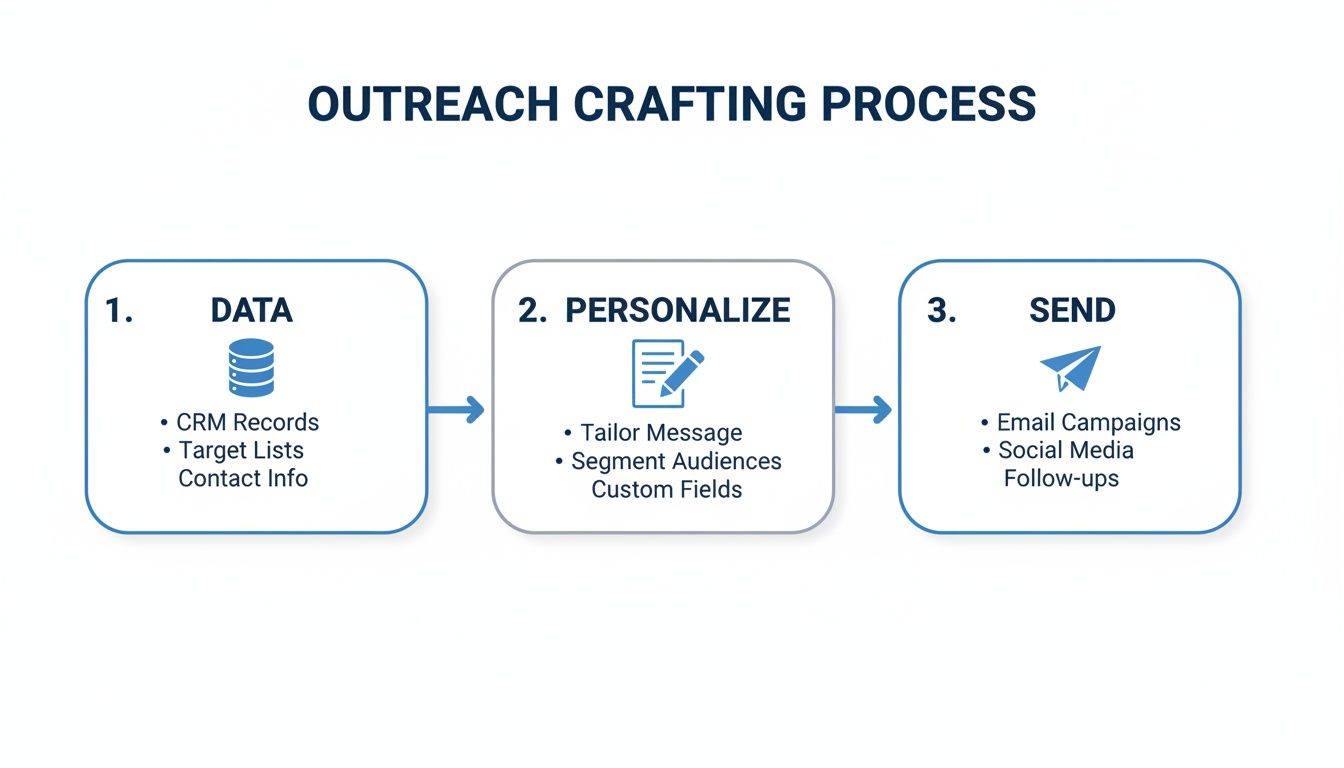
    Executing a Data-Driven Outreach Sequence

    Once the account is found and qualified, outreach should feel like a continuation of the analysis. Too many reps do the hard work of research and then send a message that could have gone to any importer.

    The sequence should prove three things fast. You know the buyer’s freight pattern. You understand enough about the product to ask intelligent questions. You can tie both points to a commercial benefit.

    A useful reference point for this kind of targeting is the broader discipline of working from supply chain databases for sales prospecting, where the goal is to convert trade records into account-specific messaging rather than generic outreach.

    The sequence structure

    A short three-touch sequence works well for pvc pipe buyers because the product is operationally specific and buyers tend to respond better to concise, informed outreach than to long nurture campaigns.

    Touchpoint Channel Core Message & Personalization Hook
    Touch 1 Email Mention the observed import lane, recent PVC product wording, and one likely pain point tied to routing, sourcing concentration, or handling. Ask for a short discussion, not a broad capability review.
    Touch 2 Email follow-up Add a useful observation such as alternate routing logic, shipment pattern consistency, or a question tied to product type such as pressure-rated versus general distribution stock.
    Touch 3 LinkedIn Send a brief connection request referencing the account’s PVC import activity and the specific operational issue you raised by email. Keep it conversational and low pressure.

    First email template

    The first touch should sound like it came from someone who read the trade data.

    Subject: [Importer Company] PVC imports on [lane]

    Hi [First Name],
    I’ve been reviewing companies importing PVC pipe on the [observed lane], and [Importer Company] stood out because the shipment pattern looks consistent rather than project-only.

    I also noticed wording that suggests [specific PVC type or application]. That usually changes the freight conversation because routing stability and handling matter more than a generic lowest-cost move.

    If you’re reviewing options for that lane, I can share a few observations on where teams typically see friction across origin handoff, transit reliability, or final delivery coordination.

    Worth a short call next week?

    [Name]

    This works because it’s narrow. It doesn’t ask for a bid. It offers a point of view.

    Follow-up that adds value

    The second touch should not say “just bumping this up.” Add one new insight.

    Practical follow-up: Reference a specific issue that logically fits the account. For example, if the buyer appears concentrated in one sourcing region, mention the benefit of pressure-testing alternate routing before the next disruption forces a rushed decision.

    A simple version:

    Hi [First Name],
    One follow-up on my earlier note. For PVC buyers importing repeatedly on [lane], the biggest weakness is often dependency on one routing pattern until congestion or supplier changes expose it.

    If useful, I can share how I’d assess backup options for [origin] into [destination] without changing your whole procurement setup.

    Best,
    [Name]

    LinkedIn touch that supports the email

    The LinkedIn note should be short enough to read in the preview pane.

    Hi [First Name], I emailed because your team appears active in PVC pipe imports on [lane]. Reaching out with one idea around routing stability and handling for that flow. Thought it made sense to connect here as well.

    That’s enough. Don’t restate the full pitch.

    Personalization hooks that actually matter

    When reps hear “personalization,” they often add trivia. That doesn’t help. Personalization should come from operational relevance.

    Strong hooks include:

    • Observed lane dependence and whether that lane matches your network strength
    • Apparent supplier shifts, which may indicate sourcing diversification or instability
    • Product wording suggesting municipal, sewer, conduit, or pressure-rated applications
    • Consignee spread, which may point to branch distribution complexity
    • Recurring timing, which can hint at project cycles or inventory replenishment patterns

    Emerging use cases can also sharpen the note. PVC demand is tied to infrastructure modernization and adjacent applications such as water systems, conduit, and rural utility-related needs. You don’t need to force a trend story into every email, but if the shipment pattern aligns with those markets, it can help your message sound timely instead of generic.

    What to measure without overcomplicating it

    You don’t need a complex dashboard to improve this motion. Track a few practical signals:

    • Replies by segment
      Which buyer type engages most often?

    • Meetings by lane
      Where does your network support conversion?

    • Positive response by message angle
      Do buyers respond more to sourcing stability, handling knowledge, or lane alternatives?

    • Sales-cycle quality
      Are you getting quote requests, discovery calls, or dead-end “send rates” responses?

    These metrics matter because they tell you whether your positioning is landing with the right buyer profile. If one segment only asks for spot rates and never books serious discovery, the issue may be targeting, not rep performance.

    Sequence mistakes that kill momentum

    Three problems show up repeatedly:

    • Overwriting the first email
      If the prospect has to dig for the point, the email loses.

    • Using technical language as decoration
      Mention specs only when they support a freight or risk point.

    • Asking for too much too early
      Don’t request shipment files, lane awards, or a full network review in the opening exchange.

    Keep the first conversation narrow. A buyer is more likely to take a short call about one lane problem than a broad meeting about your entire service portfolio.

    With pvc pipe buyers, good outreach feels informed and restrained. It shows enough homework to earn a reply, then leaves room for the buyer to confirm where the actual issue sits.

    Building a Sustainable PVC Shipper Pipeline

    Winning pvc pipe buyers consistently isn’t about finding one great list. It’s about building a repeatable commercial system.

    The system is simple to describe and harder to execute with discipline. Start with customs evidence. Layer in technical product clues. Segment the account by likely need. Reach the right decision-maker with a lane-specific point of view. Then keep refining based on who replies, who takes meetings, and who moves into quoting and live opportunities.

    What the strongest teams repeat

    Teams that build durable pipeline tend to repeat the same habits:

    • They rank accounts by fit, not noise. A smaller importer with recurring shipments and a clear lane problem often deserves more focus than a famous name with locked-in forwarding.
    • They use product knowledge selectively. Enough detail to build credibility. Not so much that the outreach reads like an engineering memo.
    • They keep message discipline. One email, one issue, one reason to talk.
    • They review lost opportunities for pattern, not excuses. If buyers engage but stall, the handoff from prospecting to commercial development may be weak.

    Why this niche keeps getting more important

    The market backdrop supports long-term focus. The global PVC pipes market was valued at USD 79.1 billion in 2025 and is projected to reach USD 131.1 billion by 2034 at a 5.77% CAGR, while Asia Pacific is expected to hold 52% revenue share by 2035 according to this global PVC pipes market outlook. For logistics teams, that means pvc pipe buyers won’t remain a narrow side category. They’re part of a growing global trade flow with regional sourcing complexity and recurring project demand.

    If you’re building rep process around that kind of market, resources like Outrank's sales representative guide can help tighten execution discipline around targeting, messaging, and follow-through.

    The durable advantage isn’t access to more leads. It’s knowing which leads deserve a specialized conversation and having a workflow your team can repeat every week.

    The teams that dominate this niche won’t be the ones sending the most emails. They’ll be the ones that understand pvc pipe buyers well enough to sound relevant before the buyer has to explain the business.


    If you want to put this playbook into practice, Coreties gives logistics teams a way to turn customs data into targeted pvc pipe buyer lists, identify relevant contacts, and build outreach around real lanes and shipment history instead of guesswork. It’s a practical starting point if your team wants a repeatable system for finding and engaging pipe importers with more precision.

  • Unlock Opportunities: Find Your Ideal Importer from China

    Unlock Opportunities: Find Your Ideal Importer from China

    Most freight sales teams don’t have a lead problem. They have a targeting problem.

    A rep spends the morning on LinkedIn, pulls a list of companies that “look like” they buy overseas, sends a batch of generic emails to info@ inboxes, then follows up with a cold call to someone in reception. By the end of the day, there’s activity, but not much progress. The pipeline feels busy and thin at the same time.

    That gets worse when you’re chasing an importer from china. The market is huge, the buyer set is messy, and a lot of companies talking about China sourcing aren’t moving freight in a way that fits your network. If you sell ocean, air, customs, transloading, compliance support, or multi-leg forwarding, guessing isn’t a sales strategy.

    The fix isn’t more hustle. It’s better signal.

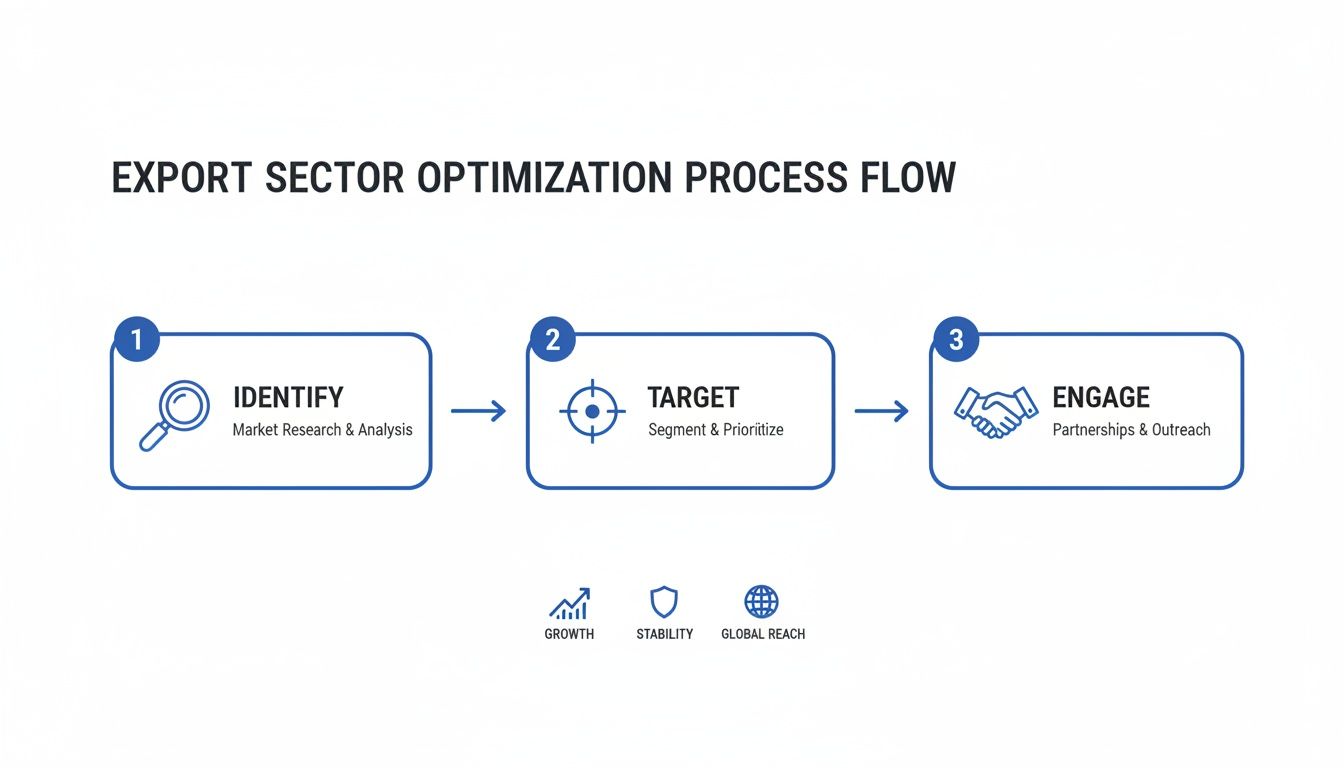
    The teams that consistently close importer accounts work from shipment evidence first, then build outreach around trade lane reality, commodity fit, and decision-maker relevance. They don’t ask, “Who might import from China?” They ask, “Who is importing now, on lanes we can serve, with pain we can solve?”

    Beyond the Cold Call A New Prospecting Playbook

    A new rep usually starts with the same playbook. Search “supply chain manager” on LinkedIn. Export a list from somewhere. Send the same note to everyone. Mention rates, mention service, ask for a shipment. Wait.

    That process creates motion, not traction.

    The problem is simple. Most of those companies aren’t active fits. Some don’t import from China at all. Some do, but only once in a while. Some already have a stable forwarding setup. Some are exactly the right prospect, but the message lands with the wrong person and says nothing useful.

    Why generic prospecting breaks down

    The importer market has real risk built into it. Nearly 90% of first-time importers from China fail, with an average loss of $50,000 per venture, largely because of avoidable mistakes in supplier selection, documentation compliance, and quality control, according to this breakdown of first-time China importer failure patterns.

    That fact matters for sales. It means many prospects don’t need another “Can I quote your next shipment?” email. They need a partner who understands where import programs break.

    Practical rule: If your outreach starts with your rate sheet, you’re competing with every other forwarder. If it starts with the shipper’s actual risk, you’re in a different conversation.

    Old-school prospecting also wastes your best asset, which is context. A rep who knows the lane, the commodity, the likely bottleneck, and the internal stakeholder can write a short message that sounds informed instead of mass-produced.

    That’s also why smart teams don’t throw away channels like LinkedIn. They just use them with discipline. If your reps still rely on social selling, this LinkedIn prospecting guide is useful because it shows how to structure outreach instead of spraying connection requests.

    What the modern workflow looks like

    A practical importer-from-China playbook looks more like this:

    1. Start with shipping activity and confirm the company is importing.
    2. Read the lane so you know what they move, from where, and how often.
    3. Filter hard so the list matches your network, service model, and margin profile.
    4. Find the operator or budget owner instead of emailing a dead mailbox.
    5. Write from evidence. Mention a real issue you can help solve.

    That approach is a lot closer to account selection than lead generation.

    If your team still builds lists manually, it’s worth reviewing how freight sellers tighten this process in practice through customs-driven targeting, as outlined in this Coreties article on https://www.coreties.com/blog/finding-shippers-for-freight-brokers.

    Using Customs Data to Uncover Your Ideal Shipper Profile

    Most reps hear “customs data” and think database, spreadsheet, or analyst work. In sales, it’s simpler than that. It’s a live trail of commercial behavior.

    If a company appears in customs records as an active buyer, you’re no longer guessing whether it’s a real importer from china. You’re looking at operating evidence.

    China’s total imports reached a record US$2.65 trillion in 2025, and its total import-export volume hit US$6.36 trillion, which is why the pool of potential importer accounts is so large and why broad prospecting alone becomes inefficient in this market, as reported by China Briefing’s review of China trade in 2025.

    A professional analyzing custom data insights on multiple computer monitors in a bright, modern office workspace.

    The signals that matter first

    A raw shipment record isn’t useful by itself. The value comes from reading patterns.

    Start with these signals:

    • Shipment recurrence tells you whether the company is testing suppliers, buying seasonally, or running a stable replenishment program.
    • Origin concentration shows whether sourcing is centralized in one Chinese manufacturing cluster or spread across multiple points.
    • Destination pattern helps you see whether they’re feeding one warehouse, multiple DCs, or mixed customer delivery points.
    • Carrier and forwarder changes can reveal a switch in service model, internal disruption, or dissatisfaction.
    • Commodity description tells you what the cargo likely demands in handling, compliance, and timing.

    A company importing furniture and a company importing electronics may both say they “import from China,” but they are not the same sales motion. One may care most about floor planning, demurrage control, and inland final mile. The other may care about tighter inventory turns, classification accuracy, and time-definite options.

    Read the story, not just the record

    Good reps don’t stop at “they imported.” They ask what the records imply operationally.

    Here’s a simple interpretation table your team can use.

    Customs signal What it often means for sales
    Repeating shipments on the same lane The account may value consistency, scheduling discipline, and lane-specific expertise
    Multiple Chinese origins The buyer may be managing several suppliers and could feel pain around coordination
    Irregular shipment spacing Procurement may be reactive, seasonal, or tied to supplier instability
    Different service providers over time The shipper may be testing alternatives or cleaning up service issues
    Commodity with compliance exposure Outreach should go to supply chain or compliance leadership, not just procurement

    That’s the difference between list building and account reading.

    The shipment data gives you a reason to contact the company. The pattern gives you a reason for them to answer.

    Build the first universe broadly

    At this stage, don’t over-filter.

    Pull a broad set of active companies importing from China within the sectors your team understands. If you’re strong in apparel, industrial inputs, consumer products, electronics, machinery, or food-related support services, let the initial universe stay wide enough to show pattern clusters.

    Then review the records with a sales lens:

    • Who imports repeatedly enough to justify account development?
    • Who uses lanes you can support well with your existing network?
    • Who seems operationally exposed because of routing complexity, supplier spread, or product sensitivity?
    • Who has enough activity that a better forwarder relationship would matter?

    A tool like Coreties can be useful as one option. It turns customs records into searchable company lists, then layers contact and routing context on top so reps can move from discovery to outreach without rebuilding the account by hand.

    What not to do with customs data

    A lot of teams misuse shipment intelligence in two ways.

    First, they go microscopic too early. They spend too long analyzing a single account before deciding whether it’s even a fit. Second, they treat every importer the same once they confirm activity.

    Avoid both.

    The purpose here is to build a credible prospect universe fast. You are not writing the final pitch yet. You are identifying active shippers whose behavior suggests they belong in your territory.

    Use customs data to answer three basic questions:

    1. Is this company a real importer from china?
    2. Does it move freight in a way that matches our operating strengths?
    3. Is there enough pattern in the shipments to justify a specific approach?

    If the answer is yes on all three, the account moves forward. If not, move on.

    Qualify Prospects by Trade Lane and Commodity

    Discovery creates volume. Qualification creates pipeline.

    Most sales teams lose discipline here. They build a broad list from shipment activity, then refuse to cut it down because every importer feels like a possible opportunity. That’s how reps end up chasing low-fit freight, awkward geographies, and cargo they can’t serve well.

    The sharper move is exclusion.

    A four-stage prospect qualification funnel chart illustrating the process of identifying and targeting potential importers.

    Trade lane fit comes before company size

    A mid-sized importer on a lane you know cold is usually better than a large account on a lane where your team has no edge.

    That means your first qualification pass should focus on route logic:

    • Origin fit. Which Chinese ports or manufacturing zones align with your agent setup and carrier coverage?
    • Destination fit. Which arrival ports match your customs, drayage, transload, or inland strengths?
    • Mode fit. Are you strongest in ocean, air, or a blended model for urgent SKUs?
    • Handover fit. Does the buyer ship in a way that lets you control the right leg and effectively deliver value?

    A lot of forwarding teams say they handle “China imports” broadly. In practice, they win on narrower combinations.

    Commodity fit changes the conversation

    Commodity filtering matters because the same lane can produce completely different sales motions depending on cargo type.

    A shipper moving industrial components may care about production continuity and documentation control. A shipper moving retail goods may care more about booking reliability and warehouse timing. A shipper moving sensitive products may involve legal, compliance, quality, and sourcing teams earlier.

    An estimated 70% of first-time China importers face major issues, many tied to logistics errors such as underestimating full transit times, since port wait and customs can add 10-20 days, according to Approved Forwarders’ guide to common importing mistakes.

    That’s why commodity qualification isn’t just segmentation. It shapes the problem you lead with.

    A practical filtering sequence

    Don’t qualify everything at once. Use a narrowing sequence.

    Filter layer What you’re checking Why it matters
    Trade lane Specific origin and destination pattern Confirms you can support the lane operationally
    Commodity Product family or handling profile Tells you what pain points and stakeholders matter
    Shipment style Repeat cadence, consolidation pattern, mode tendencies Helps you gauge account value and urgency
    Internal fit Margin profile, service complexity, territory ownership Keeps reps focused on winnable business

    This is also where internal examples help a new rep. If your team is good with machinery inbound to one coast but weak on lightweight fashion programs spread across multiple DCs, say it plainly. Qualification should reflect operational truth, not brochure language.

    What a qualified list should look like

    A qualified list should feel almost narrow enough to make a rep nervous.

    That’s a good sign.

    You want a rep to look at the list and immediately know why each company is on it. Not because it imports from China in a vague sense, but because the account aligns with lane, cargo, and service capability.

    Field note: If a rep can’t explain in one sentence why the account belongs in their patch, the account isn’t qualified yet.

    For example, your shortlist may include companies importing dense industrial goods through one origin cluster into one gateway where your team already controls customs and inland moves. That list is far more actionable than a random set of “Asia importers.”

    If you need a simple model for how niche trade segmentation changes prospecting quality, this article on https://www.coreties.com/blog/soybean-importers-in-china is a useful reference because it shows how trade data gets more valuable as the category gets more specific.

    What to cut without regret

    Remove prospects that create noise:

    • Companies outside your lane strengths
    • Cargo categories you can’t serve confidently
    • One-off importers with no repeat signal
    • Accounts whose shipment pattern suggests tiny strategic value
    • Prospects owned by another territory or another team

    Salespeople hate deleting names. Strong sales leaders insist on it.

    Every account you remove gives the rep more time to study the accounts that remain. That’s where better meetings come from. Not from having more names, but from having names your operation can support with conviction.

    From Company Name to Decision-Makers Inbox

    Once the account list is qualified, the next failure point is obvious. The team contacts the wrong person.

    A company can be a perfect fit on paper and still go nowhere because the outreach lands with a buyer who doesn’t own freight, a receptionist, or a generic procurement alias that never replies.

    A professional woman in a green blazer typing on a laptop with a blue text overlay.

    Start with role, not just seniority

    New reps often over-prioritize titles that sound impressive. Seniority matters, but operational ownership matters more.

    For an importer from china, common stakeholder groups include:

    • Logistics managers who own execution, bookings, and daily issue management
    • Supply chain directors who care about continuity, cost control, and service structure
    • Compliance leaders when product origin, sourcing visibility, or regulatory exposure is in play
    • Operations executives when freight issues affect inventory, customer service, or plant continuity

    The best contact is the one who feels the problem you solve.

    That matters even more when compliance becomes part of the sales angle. With the Uyghur Forced Labor Prevention Act, goods from the Xinjiang region are presumed to involve forced labor unless proven otherwise, which makes compliance and supply chain leadership highly relevant contacts for affected import programs, as explained in Northeastern’s coverage of UFLPA supply chain traceability work.

    Build a contact map inside the account

    Don’t stop at one name.

    A solid account map usually includes one operational contact, one strategic contact, and one adjacent stakeholder. That gives the rep options if the first email stalls, and it reduces the risk of tying the whole effort to a single inbox.

    Use this progression:

    1. Identify the department most likely to own inbound freight.
    2. Pull likely titles tied to logistics, supply chain, procurement, or compliance.
    3. Check the person’s relevance against the commodity and lane.
    4. Verify the contact path before launch.

    If the cargo profile suggests traceability exposure, a compliance-oriented contact may be more responsive than a transportation manager. If the issue looks like booking discipline and inland execution, the logistics lead may be the right first move.

    Enrichment has to be operationally clean

    A bad contact record creates avoidable damage. Emails bounce. Reps waste follow-ups. Sender reputation suffers.

    That’s why the enrichment step matters as much as finding the name. You need a verified email, current role alignment, and ideally a current LinkedIn profile so the rep can cross-check relevance before sending.

    A lot of teams ignore deliverability until performance drops. That’s backward. If your sales motion depends on outbound email, this Mastering Email Deliverability Strategies piece is worth reviewing with reps before they scale campaigns.

    A quick video overview can help newer reps understand how this contact-to-conversation workflow should feel in practice.

    What a rep should know before pressing send

    Before a first touch goes out, the rep should be able to answer:

    • Why this person instead of another contact in the account?
    • What part of the import program they likely influence?
    • Which issue will matter most to them?
    • What proof point from the shipment pattern makes the outreach feel informed?

    Don’t hand a rep a company name and call it a lead. Hand them a company, a likely owner, and a reason that owner should care.

    That’s the handoff point between data work and message work. If the contact is wrong, even a smart pitch falls flat.

    Crafting Outreach That Gets a Response

    At this point, most of the hard work is done. The mistake is acting like it isn’t.

    Reps build a good list, identify the right lane, find the right stakeholder, then send the same old message anyway. “We handle China imports.” “Can we quote your next shipment?” “Would love to connect.”

    That throws away the advantage.

    A close up view of a computer monitor displaying an email draft for a business partnership proposal.

    What weak outreach sounds like

    Weak logistics outreach is easy to spot:

    • It leads with the seller
    • It asks for a meeting too early
    • It says nothing specific about the account
    • It treats all China importers as interchangeable
    • It offers a quote before diagnosing a problem

    A bad email sounds like a brochure wearing a greeting.

    A better email sounds like an operator who has done the homework.

    Use the shipment pattern to earn relevance

    The rep doesn’t need to show off every data point. They need to use one or two signals that prove they understand the account.

    Good outreach usually includes:

    • A clear observation about the importer’s lane, sourcing pattern, or likely friction point
    • A practical implication tied to timing, compliance, routing, or execution
    • A modest offer that lowers the effort required to respond

    That’s it.

    Here’s a simple comparison:

    Weak version Stronger version
    We’re a global freight forwarder and would love to quote your imports from China. Noticed your inbound China program appears concentrated on a small number of origins. When buyers scale that way, coordination between supplier handoff, booking timing, and arrival planning usually matters more than the linehaul quote alone.
    Can we set up a call to discuss your shipping needs? If it’s useful, I can share where importers on similar lanes usually run into avoidable timing and compliance issues.
    We offer ocean, air, and customs clearance. We support import programs where freight execution and regulatory handoff need to stay tight across more than one function.

    Lead with risk the buyer already recognizes

    The best emails don’t manufacture urgency. They name the risk the buyer already feels.

    One underused angle is sanctions complexity. The 2023 to 2025 OFAC FAQs prohibit PRC-controlled firms from participating in Venezuelan-origin transactions routed through U.S. channels, which creates a real compliance issue for some import programs involving Chinese entities and third-country trade structures, as detailed in the updated OFAC FAQs.

    That doesn’t belong in every email. But if the trade pattern suggests exposure, mentioning it tells the buyer you understand more than freight rates.

    Sales advice: Relevance beats creativity. A plain email with one accurate operational insight will outperform a polished email that could have gone to anyone.

    A practical email structure reps can reuse

    Use a short structure that keeps the message grounded.

    Opening line

    Reference the account in a way that proves this is not list spam. Mention the import program, lane pattern, or sourcing structure at a high level.

    Problem line

    Name one issue that often matters for that profile. This could be timing drift, routing complexity, handoff control, or compliance exposure.

    Value line

    Offer one useful next step. Not a giant pitch deck. Not a “full capabilities overview.” Just a specific kind of help.

    Closing line

    Ask a low-friction question.

    For example:

    • Would it be helpful if I shared a quick read on lane options?
    • Worth comparing your current setup against a tighter routing model?
    • Open to a short discussion if this is already on your team’s radar?

    That tone works because it respects the buyer’s time and doesn’t pretend the relationship already exists.

    Match the message to the stakeholder

    The same account needs different outreach depending on who receives it.

    • To a logistics manager, focus on execution, transit reliability, and day-to-day friction.
    • To a supply chain director, focus on continuity, planning confidence, and structural risk.
    • To a compliance stakeholder, focus on origin visibility, documentation exposure, and screening discipline.
    • To an operations leader, focus on what freight problems do to inventory and customer commitments.

    That’s where many teams leave money on the table. They personalize the company, but not the person.

    If you want your team to tighten this link between shipment data and outbound messaging, this article on https://www.coreties.com/blog/logistics-and-sales is a useful way to frame sales as an extension of operational understanding rather than generic prospecting.

    Keep follow-up useful

    Follow-up should add signal, not pressure.

    A second message can mention another angle from the account’s import pattern. A third can offer a practical observation about routing or stakeholder alignment. What it shouldn’t do is repeat “just bumping this to the top of your inbox.”

    When outreach gets responses, it usually isn’t because the rep wrote something brilliant. It’s because the buyer recognized themselves in the message.

    Building a Sustainable Importer Pipeline for 2026

    Teams that rely on list buying and cold calls live in a feast-or-famine cycle. One month feels active. The next month dries up. Reps start over, rebuild lists, and repeat the same waste.

    A sustainable pipeline looks different.

    It starts with active importer identification, not assumption. It narrows by lane and commodity, not broad industry labels. It moves to the right stakeholder, not whichever email address turns up first. Then it converts shipment intelligence into outreach that sounds informed because it is informed.

    What this changes inside a sales team

    When reps work this way, coaching gets easier.

    Managers can review account choices, qualification logic, contact mapping, and email quality using evidence instead of opinion. Territory planning improves because the team can see where importer clusters match actual network strengths. Marketing becomes more useful because campaigns can support lane and commodity priorities instead of generic brand messaging.

    The bigger shift is cultural. Sales stops behaving like a numbers game and starts behaving like a targeting discipline.

    The standard that will matter next

    The market for any importer from china account isn’t getting simpler. Buyers face routing complexity, compliance pressure, sourcing shifts, and internal pressure to protect margin while keeping cargo moving. A rep who only offers rates will be easy to ignore.

    The winning seller is the one who shows up already understanding how the import program works, where it breaks, and who inside the account owns the fix.

    That’s the standard worth training to for 2026. Not more outreach. Better selection, sharper qualification, cleaner contact strategy, and messages built from real trade behavior.


    If your team wants to operationalize that workflow, Coreties is built for exactly that motion. It turns customs data into targeted shipper lists, helps reps surface relevant contacts, and supports personalized outreach based on lanes, departments, and shipment patterns so prospecting becomes a repeatable sales process instead of a guessing game.

  • Top 7 Soybean Importers in China for Logistics Sales Teams (2026 Guide)

    Top 7 Soybean Importers in China for Logistics Sales Teams (2026 Guide)

    China's immense appetite for soybeans is a cornerstone of global agricultural trade. In 2025 alone, the nation brought in over 99 million metric tons, with the bulk arriving from Brazil and the United States to support its massive feed and food processing sectors. For logistics sales teams, these figures represent a colossal freight market ripe with opportunity. However, capitalizing on this demand requires moving beyond general port statistics for hubs like Dalian or Qingdao. Success hinges on a precise understanding of the major players driving these shipments.

    This guide provides an actionable profile of the most significant soybean importers in China, from state-owned enterprises to private crushers. We cut through the noise to deliver the critical details your sales team needs:

    • Company Profiles: Who are the key importers and what is their operational scale?
    • Trade Lane Patterns: Which ports do they use and what are their typical import origins?
    • Logistics Needs: What are their specific requirements for shipping and handling?

    This resource is designed to be more than just a list. We will detail the operational footprints of each major importer, including giants like COFCO Group and Wilmar China (Yihai Kerry), alongside regional powerhouses such as Shandong Bohi. Furthermore, we will equip you with specific outreach strategies and templates, drawing on data from platforms like Coreties, to connect with the decision-makers who control this cargo. This direct approach will help you convert market intelligence into qualified leads and secure your position in one of the world's most consistent commodity trade lanes.

    1. COFCO Oils & Oilseeds (COFCO Group)

    As China's largest state-owned agricultural and food enterprise, COFCO Group is a foundational pillar in the country's food security strategy. Its Oils & Oilseeds division, COFCO Oils & Oilseeds, is arguably the most significant single entity among soybean importers in China. This division's operations are deeply integrated, spanning global procurement, port logistics, domestic storage, and massive-scale crushing activities. For logistics providers, engaging with COFCO means tapping into a consistent, high-volume flow of bulk agricultural commodities.

    Their business model combines long-term contracts with spot market purchases, creating a steady cadence of shipping demand. This ensures a reliable stream of freight business, particularly on the heavily-trafficked Brazil-China and U.S.-China trade lanes. Due to its government-backed status and sheer scale, COFCO operates with a level of volume and consistency that few private importers can match.

    Actionable Insights for Logistics Sales Teams

    Engaging with a state-owned enterprise (SOE) like COFCO requires a specific approach. Decision-making is often centralized and follows formal procurement protocols. New logistics vendors should prepare for a structured and potentially lengthy onboarding process. Initial contact should focus on showcasing reliability, scale, and a deep understanding of bulk agricultural shipping requirements.

    Pro Tip: Instead of a generic capabilities deck, create a custom presentation that maps your company's service offerings directly to COFCO's key import gateways. Highlight your operational presence and past performance at ports like Dalian, Tianjin, and in the Shandong province, which are central to COFCO's network.

    Here is a breakdown of key operational data and outreach strategies:

    Operational Area Details & Sales Angle
    Typical Import Volume In excess of 15 million metric tons annually.
    Key Sourcing Regions Brazil, United States, Argentina.
    Primary Ports of Entry Dalian, Tianjin, Rizhao, Dongguan, and various ports along the Yangtze River.
    Decision-Makers Procurement and Logistics Managers within COFCO Oils & Oilseeds and related subsidiaries.
    Outreach Strategy Focus on demonstrating value in port-to-crusher logistics. Emphasize your ability to manage demurrage, optimize discharge times, and provide reliable inland transport from their coastal terminals to their crushing facilities. Demonstrate a strong track record in handling Panamax and Capesize vessels.

    Ultimately, succeeding with COFCO is a game of demonstrating scale, reliability, and patience. Their centralized structure means fewer, but much larger, contracts. Proving your company can handle their immense volume with precision is the key to becoming a long-term logistics partner.

    Website: https://www.cofco.com/en/brandproduct/cofcooils/

    2. Jiusan Group (Beidahuang Group)

    A subsidiary of the state-owned agricultural giant Beidahuang Group, Jiusan Group is a major force among soybean importers in China, with a strong focus on processing. Headquartered in Heilongjiang province, a key domestic soybean-growing region, Jiusan has strategically expanded its crushing operations to coastal areas to handle massive volumes of imported soybeans. This dual focus on both domestic and imported supply chains makes them a complex and valuable target for logistics providers.

    Jiusan's business model is centered on large-scale soybean crushing to produce soybean oil and meal. Their import program is designed to feed a network of advanced processing plants located near major ports. For logistics sales teams, this means Jiusan represents a consistent source of demand for port-to-plant services, including discharge, storage, and inland transportation. They are a significant player on the Brazil-China and U.S.-China trade routes, often securing large shipments to ensure their coastal crushing facilities run at high capacity.

    Actionable Insights for Logistics Sales Teams

    Engaging with Jiusan Group requires an understanding of their operational footprint, which extends from the northern agricultural heartland to the southern coastal import hubs. Their logistics needs are not just about ocean freight; they are deeply concerned with the efficiency of the entire supply chain from the vessel's arrival to the crushing plant's silo. Your sales approach should demonstrate a clear grasp of these integrated needs.

    Pro Tip: Differentiate your proposal by offering value-added services beyond standard ocean freight. Develop a "Port-to-Crusher" logistics package that details your capabilities in managing customs clearance, port handling, short-term warehousing, and dedicated trucking or rail services directly to their key processing plants in areas like Dalian, Tianjin, and Guangxi.

    Here is a breakdown of key operational data and outreach strategies:

    Operational Area Details & Sales Angle
    Typical Import Volume Imports often exceed 10 million metric tons annually.
    Key Sourcing Regions Primarily Brazil and the United States.
    Primary Ports of Entry Dalian, Tianjin, Rizhao, Fangchenggang.
    Decision-Makers Look for roles like Logistics Director, Supply Chain Manager, and Procurement Manager within Jiusan Group and its key coastal subsidiaries.
    Outreach Strategy Focus your pitch on cost-saving and efficiency gains in the last mile. Highlight your ability to minimize port dwell times and ensure a predictable, just-in-time flow of soybeans to their crushing facilities. Case studies demonstrating successful management of high-volume, bulk agricultural commodities for other large processors will be highly effective.

    Successfully partnering with Jiusan involves proving you can be a reliable link in their high-stakes processing chain. They prioritize partners who can deliver efficiency and predictability, as any disruption directly impacts their production output. Demonstrating expertise in managing the complex logistics at their primary port gateways is the most direct path to winning their business.

    Website: http://www.93.com.cn/

    3. China Grain Reserves Group (Sinograin)

    As the manager of China's central grain reserves, China Grain Reserves Group (Sinograin) plays a critical, policy-driven role among soybean importers in China. Unlike purely commercial importers, Sinograin's primary mandate is to manage the national stockpile for food security. Its import activities are directly tied to replenishing or rotating these reserves, often executed through structured tenders and auctions rather than continuous market participation.

    Sinograin's import patterns are less about seasonal demand and more about strategic state objectives. This creates large, time-sensitive shipping opportunities when the government decides to build its reserves. Logistics providers who can meet the stringent requirements of a state-backed entity gain access to substantial, albeit periodic, freight volumes. Partnering with Sinograin means aligning with national food policy, offering high counterparty security and predictable execution once a contract is secured.

    Actionable Insights for Logistics Sales Teams

    Engaging with Sinograin is fundamentally different from dealing with commercial crushers. Access is formal, highly structured, and driven by public tenders. Success requires constant monitoring of official announcements and a deep understanding of government procurement processes. New partners must be prepared for rigorous compliance checks and a focus on reliability above all else. Understanding these dynamics is a cornerstone of a successful Pan-Asia logistics strategy.

    Pro Tip: Sinograin's tenders are often announced with short lead times. Pre-position your value proposition with their key logistics and trading subsidiaries. Your pitch should emphasize rapid mobilization, adherence to strict quality control (QC) protocols during discharge, and experience with government or state-owned enterprise contracts.

    Here is a breakdown of key operational data and outreach strategies:

    Operational Area Details & Sales Angle
    Typical Import Volume Highly variable, but can involve multi-million ton tenders in a single year depending on reserve policy.
    Key Sourcing Regions Primarily Brazil and the United States, with procurement decisions influenced by geopolitical and policy factors.
    Primary Ports of Entry Nationwide network aligned with its storage depots. Key ports include Dalian, Tianjin, Qingdao, and various facilities in southern China.
    Decision-Makers Bidding and procurement departments within Sinograin and its specialized oils and trading subsidiaries. Decisions are made through formal tender evaluation committees.
    Outreach Strategy Monitor official tender websites and government procurement portals. Focus on building a reputation for reliability. Showcase your ability to manage large-volume bulk shipments under tight schedules and meet precise delivery windows for both port discharge and subsequent inland transport to their designated storage facilities.

    Winning business with Sinograin is about being prepared, compliant, and responsive. While the opportunities are not constant, their scale is immense. Logistics firms that demonstrate an ability to navigate the formal procurement process and execute flawlessly will be well-positioned to secure these high-value, state-directed shipments.

    Website: http://www.sinograin.com.cn/

    4. Yihai Kerry Arawana Holdings (Wilmar China)

    Operating as the China-based arm of the global agribusiness giant Wilmar International, Yihai Kerry Arawana Holdings is a dominant force among soybean importers in China. Its business model is built on a vertically integrated "crush-to-consumer" supply chain. The company imports enormous quantities of soybeans to feed its network of crushing plants, which in turn supply its well-known consumer brands like Arawana cooking oil.

    Yihai Kerry Arawana Holdings (Wilmar China)

    This structure generates frequent and predictable inbound shipping demand, making Yihai Kerry a prime target for logistics providers. With over 80 strategic locations, their operation requires seamless coordination from port discharge to final distribution. Their adherence to multinational corporate standards also means that procurement and logistics processes are professional and clearly defined, a key differentiator from some smaller, regional importers. Logistics sales teams who understand the complexities of the import and export business will find their structured approach beneficial.

    Actionable Insights for Logistics Sales Teams

    Engaging with Yihai Kerry means aligning with a highly professional, multinational organization. Their procurement teams expect documented performance, clear communication, and partners who can operate within their established compliance frameworks. While they may have a preference for existing relationships, demonstrating superior efficiency or cost savings on their key trade lanes can open doors.

    Pro Tip: Focus proposals on end-to-end efficiency. Since Yihai Kerry manages the entire chain from import to retail, they are highly sensitive to disruptions. Showcase your ability to provide real-time tracking from port-of-loading to their crushing facility, and highlight any digital tools that improve visibility and reduce administrative burdens for their logistics teams.

    Here is a breakdown of key operational data and outreach strategies:

    Operational Area Details & Sales Angle
    Typical Import Volume Estimated to be over 10 million metric tons annually, driven by continuous demand from their consumer brands.
    Key Sourcing Regions Brazil, United States, Argentina.
    Primary Ports of Entry Major coastal hubs including Tianjin, Qinhuangdao, Lianyungang, and ports in the Pearl River Delta to serve their widespread network of processing plants.
    Decision-Makers Logistics and Supply Chain Managers within Yihai Kerry's Oils & Grains division. Procurement decisions are often made at a corporate or regional level.
    Outreach Strategy Demonstrate a strong understanding of their integrated model. Offer solutions that connect ocean freight with reliable domestic logistics, such as barging or rail transport to inland facilities. Emphasize your company’s quality control and safety records, as these are critical for a food-grade supply chain.

    Winning business with Yihai Kerry requires a professional, data-driven approach. Their frequent and predictable shipping schedules offer a stable source of volume for logistics partners who can meet their high operational standards and integrate smoothly into their sophisticated supply chain.

    Website: https://www.yihaikerry.net/

    5. Jiusan Grain & Oil Industry Group

    Jiusan Grain & Oil Industry Group is a major force in China's soybean processing sector, particularly well-known for its deep roots in the country's northeast agricultural heartland. As one of the more prominent soybean importers in China, Jiusan maintains a steady flow of imports to feed its network of crushing plants located in both coastal and inland regions. Their business is vertically integrated, covering crushing, refining, and marketing of soybean oil and meal, which creates consistent demand for ocean freight volumes.

    Jiusan Grain & Oil Industry Group

    The group's multi-plant footprint offers notable flexibility for logistics providers. Cargo can be routed to different ports depending on freight rates, port congestion, and inland transport costs. This structure means Jiusan's logistics teams are constantly evaluating the most efficient port-to-plant pathways, creating opportunities for forwarders who can offer competitive and reliable services across multiple coastal gateways. While historically focused on the northeast, their expansion into coastal areas like Tianjin and Guangdong has broadened their import logistics needs.

    Actionable Insights for Logistics Sales Teams

    Engaging with Jiusan requires a balanced approach that respects their established operations in the northeast while highlighting capabilities in newer coastal locations. Their logistics and procurement teams are experienced and focused on total landed cost. A successful sales pitch will go beyond ocean freight and demonstrate a clear understanding of their inland supply chain challenges.

    Pro Tip: Your value proposition should center on optimizing their multi-port strategy. Develop a comparative analysis showing the total logistics cost (ocean freight, port handling, inland transport) for delivering soybeans from origin to one of their key inland plants via different ports of entry, such as Dalian versus Tianjin.

    Here is a breakdown of key operational data and outreach strategies:

    Operational Area Details & Sales Angle
    Typical Import Volume Estimated 7-10 million metric tons annually.
    Key Sourcing Regions Brazil, United States, Argentina.
    Primary Ports of Entry Dalian, Tianjin, Guangzhou, Fangchenggang.
    Decision-Makers Procurement Managers, Logistics Directors, and Supply Chain personnel within the main group and its regional plant subsidiaries.
    Outreach Strategy Focus on providing flexible, multi-port logistics solutions. Emphasize your network's ability to handle inland transportation, especially rail and truck, from ports like Dalian to their crushing facilities in Heilongjiang. Highlight expertise in managing seasonal challenges, such as winter conditions affecting rail transport in the northeast.

    Ultimately, winning business with Jiusan involves demonstrating deep knowledge of their operational network. They are less of a monolithic entity than a collection of powerful regional operations. Logistics partners who can provide tailored, cost-effective solutions for specific plant locations, while also offering strategic flexibility at the corporate level, will be best positioned for success.

    Website: https://www.93.com.cn/

    6. Shandong Bohi Industry Group

    Based in the agricultural heartland of Shandong province, Shandong Bohi Industry Group is a prominent private grain and oil processor. While not a state-owned enterprise, Bohi's scale and strategic coastal location make it a key player among private soybean importers in China. Its business is built around large-scale soybean crushing, with integrated facilities that produce both food-grade oils for domestic consumption and soymeal for the region's massive animal feed industry.

    Shandong Bohi Industry Group

    The group's proximity to major ports like Qingdao is a significant logistical advantage, enabling efficient vessel turnaround and direct pipelines from berth to crushing plant. For logistics providers, Bohi represents a steady, crush-driven import demand that is less influenced by state policy and more by market fundamentals. Their operational focus across both food and feed channels ensures consistent plant utilization and a reliable need for inbound soybean shipments.

    Actionable Insights for Logistics Sales Teams

    Engaging with a large private entity like Bohi requires a different approach than with SOEs. The decision-making process is often more agile and relationship-driven. While formal tenders exist, building trust with the procurement and logistics teams can open doors more quickly. A key challenge is that much of their corporate communication and public information is in Chinese, requiring bilingual capabilities within your sales or support teams.

    Pro Tip: Don't just focus on the ocean freight segment. Bohi's business includes domestic distribution of refined oils and soymeal, as well as some export of finished products to nearby Asian markets. Propose an integrated solution that includes not only port services but also domestic trucking or coastal shipping to their distribution hubs.

    Here is a breakdown of key operational data and outreach strategies:

    Operational Area Details & Sales Angle
    Typical Import Volume Estimated 3-5 million metric tons annually.
    Key Sourcing Regions Brazil, United States, Canada.
    Primary Ports of Entry Qingdao, Rizhao, Yantai.
    Decision-Makers Sourcing Directors, Logistics Department Managers, and key personnel within their International Trade division.
    Outreach Strategy Demonstrate specific expertise at the Port of Qingdao. Highlight your ability to minimize port costs and accelerate cargo clearance. Since their import schedule is less public, focus on building a relationship to gain visibility into their shipping needs. Offer value-added services like real-time cargo tracking and customs brokerage support.

    Success with Bohi hinges on demonstrating efficiency and building direct relationships. Unlike the massive, infrequent contracts of SOEs, opportunities with private importers like Bohi may be more frequent but smaller in individual size. Proving your value in optimizing their port-to-plant supply chain is the most effective way to become a trusted logistics partner.

    Website: http://www.bohi.com.cn/

    7. Cargill Investments (China) Ltd. — Grain & Oilseeds

    As a dominant global agricultural trading house, Cargill has a deeply entrenched presence in China's agribusiness sector. Its Grain & Oilseeds division is a vital player among soybean importers in China, operating multiple large-scale crushing facilities in key coastal areas. Cargill’s business model is a powerful combination of global commodity trading prowess and localized operational assets, making them a sophisticated and high-volume partner for logistics providers.

    Cargill Investments (China) Ltd. — Grain & Oilseeds

    Unlike state-owned enterprises, Cargill’s operations are driven by global market dynamics, with its trading desks and risk management teams playing a central role in procurement. They manage their own ocean freight and hedging, presenting an opportunity for logistics firms that can offer competitive, reliable execution on port services and inland distribution. Their well-established facilities in locations like Nantong, Dongguan, and Yangjiang are designed to efficiently handle Panamax cargoes, primarily from Brazil and the U.S.

    Actionable Insights for Logistics Sales Teams

    Engaging with a multinational corporation like Cargill requires a different strategy than approaching an SOE. While they have standardized vendor onboarding and strict compliance protocols, decision-making can be more distributed between global trading desks and local plant-level logistics teams. New vendors must demonstrate a clear value proposition rooted in efficiency and reliability.

    Pro Tip: Cargill values data-driven performance. When approaching their teams, lead with concrete metrics from your past performance on similar trade lanes. Showcase your average vessel discharge times, demurrage/despatch records, and truck turnaround times at their key ports of entry. This data-first approach aligns with their internal culture of operational excellence.

    Here is a breakdown of key operational data and outreach strategies:

    Operational Area Details & Sales Angle
    Typical Import Volume Estimated 10-14 million metric tons annually across their China facilities.
    Key Sourcing Regions Brazil, United States, with some sourcing from Argentina.
    Primary Ports of Entry Nantong (Jiangsu), Dongguan (Guangdong), Yangjiang (Guangdong), Tianjin, and Rizhao (Shandong).
    Decision-Makers A mix of Plant Logistics Managers, Regional Supply Chain Managers, and Procurement leads within their Grain & Oilseeds division. Ocean freight decisions are often made at a regional or global trading level.
    Outreach Strategy Focus on post-discharge value. Highlight your capabilities in managing port storage, providing real-time inventory visibility, and ensuring a seamless, just-in-time flow of soybeans from port silos to their crushing plants. Emphasize strong safety records and compliance frameworks, as this is a non-negotiable for Cargill.

    Winning business with Cargill involves proving you can integrate smoothly into their sophisticated, high-stakes supply chain. While their existing supplier network is competitive, consistent performance and a focus on reducing their operational risks, such as vessel delays or stock-outs at the crusher, can create a strong opening for a long-term partnership.

    Website: https://www.cargill.com.cn/

    Top 7 Soybean Importers in China — Quick Comparison

    Item Implementation complexity Resource requirements Expected outcomes Ideal use cases Key advantages
    Soybeans Trade Data — Coreties Low — subscribe and use web tools Subscription fee, user time for outreach Faster prospecting; route-aware leads Sales outreach; market intelligence; targeted campaigns Large indexed importer/exporter lists; contact discovery; routing context
    COFCO Oils & Oilseeds (COFCO Group) High — formal SOE engagement and contracts Significant capacity, compliance, long‑term contracts Reliable large-volume shipments and steady tenders Long-term bulk shipping partners; major lane capacity planning Massive scale, deep port access, procurement consistency
    China Grain Reserves Group (Sinograin) High — policy-driven tender processes High compliance, tender capability, documentary rigor Time-bound, sizable state-backed shipments Tender bidding; macro-driven capacity allocation Counterparty security; clear policy-driven demand signals
    Yihai Kerry Arawana (Wilmar China) Medium–High — established vendor requirements Proven performance, documentation, steady execution Frequent, predictable import programs Continuous crush flows; regular port calls Predictable volumes; professional procurement; downstream distribution
    Jiusan Grain & Oil Industry Group Medium — regional multi-plant coordination Regional logistics flexibility; port routing options Stable offtake and flexible port routing Northeast/coastal routes; feed-market shipments Multi‑plant footprint; port flexibility; stable demand
    Shandong Bohi Industry Group Medium — relationship-based engagement Local language coordination; relationship management Steady crush-driven imports; efficient port turnaround Qingdao/coastal lanes; relationship sales Coastal proximity; integrated crush/refining; feed & food focus
    Cargill Investments (China) Ltd. Medium — standardized multinational onboarding High service-levels, compliance, integrated trading support Reliable execution; aligned freight and commodity risk Integrated freight+commodity solutions; scalable logistics Global risk management; standardized vendor processes; broad China presence

    From Intelligence to Action: Winning Your Next Logistics Contract

    This guide has provided a detailed roadmap into the operational world of China's most significant soybean importers. We've moved beyond simple company names to dissect their import volumes, preferred trade lanes, key decision-maker roles, and specific operational priorities. Understanding the differences between a state-owned enterprise like COFCO and a private-sector giant like Shandong Bohi is the foundational step. The real competitive edge, however, comes from converting this intelligence into targeted, value-driven action.

    A generic sales pitch offering "reliable shipping" will not capture the attention of a procurement manager at Yihai Kerry or a logistics director at Sinograin. Their challenges are far more specific. They are concerned with demurrage costs at Qingdao, supply chain visibility for shipments from Brazil, and finding partners who understand the complexities of China's quarantine and inspection protocols. Success in this market depends on your ability to speak directly to these pain points.

    From Data to Deals: Key Takeaways for Your Sales Strategy

    To truly make an impact, your sales process must be as refined as the supply chains you hope to manage. The information on each of the major soybean importers in China is not just trivia; it's a blueprint for your outreach.

    • Customization is King: A one-size-fits-all approach is a recipe for failure. Your pitch to Jiusan Group, a regional powerhouse focused on the Northeast, should be fundamentally different from your proposal for Cargill, a multinational with a global, standardized procurement process. Highlight your capabilities in specific ports like Dalian for Jiusan, while emphasizing global data integration and compliance for Cargill.

    • Demonstrate Niche Expertise: Your team must be fluent in the language of agribusiness logistics. This means understanding seasonality, the specific requirements for handling food-grade commodities, and the typical documentation needed for customs clearance in China. When you can discuss the nuances between a shipment from the U.S. Pacific Northwest versus one from Santos, Brazil, you instantly build credibility.

    • Target the Right Decision-Maker: Sending a brilliant proposal to the wrong person is a common mistake. As detailed in each company profile, the key contact could be a Logistics Manager, a Procurement Director, or a Supply Chain Specialist. Use the contact signals and role descriptions provided to ensure your message lands on the desk of someone with the authority to act.

    • Focus on Value, Not Just Price: While cost is always a factor, the most sophisticated soybean importers in China prioritize value. This includes on-time performance, real-time tracking, risk mitigation, and proactive communication. Frame your service as a solution that protects their bottom line by preventing costly delays and disruptions, not just as a cheaper option.

    Implementing Your Outreach Program

    Armed with this detailed intelligence, your next step is to build a systematic and effective outreach plan. A strong sales strategy is built on consistent and well-informed prospecting. For those looking to refine their approach to finding and engaging high-value clients, understanding modern techniques is critical. To effectively win new logistics contracts with soybean importers, sales teams need robust prospecting strategies. Explore this guide for actionable insights on identifying and engaging potential clients: 10 Sales Prospecting Best Practices for SaaS Founders.

    The Chinese soybean market is a colossal opportunity, representing billions of dollars in logistics spend annually. The importers detailed in this article are the gatekeepers to that opportunity. They are not looking for another faceless vendor; they are searching for strategic partners who can bring efficiency, reliability, and predictability to their complex international supply chains. By using the data, templates, and insights from this guide, you can position your organization as that indispensable partner. The market is competitive, but it rewards those who are the most prepared, targeted, and persistent in their efforts. Your next major contract is waiting.


    Ready to stop guessing and start targeting the right soybean importers in China with precision? Coreties provides the live trade data and verified contact intelligence you need to identify active buyers and craft compelling outreach. Transform your sales process from manual research to data-driven action by visiting Coreties today.

  • Finding shippers for freight brokers: Win New Business in 2026

    Finding shippers for freight brokers: Win New Business in 2026

    Finding shippers isn't what it used to be. The old playbook of hammering the phones and refreshing load boards just doesn't cut it anymore. Today, the sharpest brokers and forwarders are using a much more surgical approach: they dig into customs and carrier data to find companies with real, active shipping needs.

    From there, it’s all about crafting outreach that speaks directly to a prospect’s specific trade lanes and logistics activity. This data-first mindset is the new gold standard for building a reliable sales pipeline.

    Rethinking Shipper Prospecting in 2026

    Man pointing at a large digital world map display in a modern operations center with computers.

    Let's be honest: the days of getting by on sheer volume of cold calls are over. Shippers are drowning in generic emails and calls from brokers all promising the same thing. To break through that noise, you have to show up with immediate, tangible value from the very first conversation.

    This is actually great news for anyone willing to adapt. The global freight brokerage market isn't just growing; it's getting smarter. The market was valued at USD 54.9 billion in 2024 and is on track to hit USD 100.2 billion by 2034.

    While North America holds a solid 33% market share, the real action is in the Asia-Pacific region. Its manufacturing sector alone accounted for a 30.2% market share in 2024, signaling a massive opportunity in cross-border trade.

    Adopting a Modern Freight Sales Mindset

    So, how do you capture a piece of that growth? It boils down to embracing two powerful trends: digitalization and the explosion in global trade. The most successful brokers I know have stopped acting like simple matchmakers and started behaving like strategic advisors armed with hard data.

    By focusing on data-driven insights, you transition from a commodity service provider to an indispensable partner. You're not just offering a rate; you're offering intelligence.

    A modern approach means you're no longer just looking for "a company that ships stuff." You're identifying the specific logistics manager at an e-commerce firm who's struggling with port delays or the purchasing director at a manufacturer who needs a better solution for their components coming out of Southeast Asia.

    As you rethink your strategy for 2026 and beyond, knowing how to properly build a sales pipeline gives you a proven framework for turning these insights into consistent revenue.

    A New vs. Old Look at Prospecting

    The difference between the old way and the new way is stark. One is about casting a wide, inefficient net, while the other is about precision targeting.

    Traditional vs Modern Shipper Prospecting Methods

    Method Traditional Approach Modern Approach Outcome
    Lead Source Buying generic lists, using load boards, cold calling directories. Mining customs data (BOLs), analyzing carrier networks, industry reports. Higher quality leads with verified shipping activity.
    Outreach "Can I give you a quote?" Generic, one-size-fits-all pitch. "I see you’re moving 10 containers a month from Vietnam to Long Beach…" A consultative, value-driven conversation from the start.
    Targeting Broad industries or geographic areas. Anyone who might ship. Specific companies in niche industries on exact trade lanes. Deeper expertise and a stronger reputation in a profitable vertical.
    Goal Find a load. Any load. Become a strategic partner for the shipper's entire supply chain. Long-term, high-value relationships and recurring revenue.

    Moving to a modern approach isn't just about using new tools; it’s a fundamental shift in strategy that positions you for long-term success, not just one-off wins.

    Where to Focus Your Efforts Now

    To build a pipeline of shippers who will actually stick around, you need to shift your attention to a few areas that deliver compounding returns. Stop trying to be everything to everyone and start getting specific.

    • Find Your Niche: Instead of being a generalist, become the go-to expert for a specific vertical. Think automotive parts, pharmaceuticals, or perishable foods. Deep knowledge in one area is far more valuable than shallow knowledge in many.
    • Master Key Trade Lanes: Dominate a few profitable routes. Whether it's transpacific eastbound or intra-Asia, developing deep carrier relationships and operational expertise on specific lanes makes you invaluable.
    • Let Data Lead the Conversation: Use global trade data to turn a cold call into a warm, consultative discussion. Starting with "I know you ship X from Y" is infinitely more powerful than "Do you have any freight for me?"

    Defining Your Ideal Shipper Profile

    Before you even think about picking up the phone or firing off an email, let's get one thing straight: chasing every possible lead is a surefire way to burn out and get nowhere. The most successful brokers I know don't play a numbers game; they play a strategy game. It all starts with creating a crystal-clear Ideal Shipper Profile (ISP).

    Think of your ISP as a hyper-detailed picture of the perfect customer. This isn't just about company size or location. It's about finding shippers whose freight is a perfect match for what your brokerage does best, leading to profitable, long-term relationships.

    Beyond Generic Company Details

    A truly effective ISP digs much deeper than basic company info. It's built on the logistical DNA of a shipper's business. To get the ball rolling, you can use a solid ideal customer profile template as a framework, but the real magic is in the details you fill in.

    Here’s what you should be zeroing in on:

    • Specific Trade Lanes: Don't just say you're looking for "importers." Get granular. Are you after shippers moving automotive parts from Germany into the U.S. Southeast? As we cover in our guide to finding importers in Germany, specificity is your greatest asset.
    • Niche Industries: Do you have a knack for handling delicate electronics or time-sensitive pharmaceuticals? Leaning into an industry where you have proven expertise immediately sets you apart from the generalists.
    • Shipment Volume & Frequency: Be realistic. Is your operation built to handle a customer moving 200 containers a month, or is five per month more your speed? Target shippers whose volume fits your operational sweet spot.
    • Unique Logistics Needs: What are the tough problems you solve? Maybe it’s providing reliable temperature-controlled capacity, navigating hazmat regulations, or managing complex drayage at gridlocked ports. Pinpoint shippers who desperately need that expertise.

    The point isn't to find just any shipper with freight. The goal is to find the right shipper. A well-defined ISP transforms your prospecting from a shot in the dark into a targeted, strategic mission.

    When you get this specific, you're no longer just another broker cold-calling. You're a specialist who understands a prospect's business before you even introduce yourself.

    Pinpointing Your Brokerage's Strengths

    Building your ISP is a two-way street. It’s just as much about a critical look in the mirror as it is about defining the customer. What is your brokerage’s unfair advantage?

    Maybe you have an iron-clad network of carriers running the I-5 corridor in the Pacific Northwest. Or perhaps your team has mastered the art of clearing customs for airfreight coming out of Vietnam.

    Get brutally honest about what you do better than anyone else. If you have deep-seated relationships with carriers on the transpacific eastbound lane, that’s your gold mine. Your ISP should then be laser-focused on companies that live and die by that lane. This is where you stop selling a rate and start offering a real solution to their biggest headaches.

    Using Data to Build Your Prospect List

    Alright, you've mapped out your ideal shipper. Now it’s time to stop theorizing and start building a real-world prospect list. Cold calling random businesses is a recipe for frustration. The real game-changer? Using publicly available global customs data to find companies that are a perfect fit for your brokerage.

    Think of it as a live feed of the shipping world. This isn't just a directory of company names; it's a window into who is actively shipping, what they’re moving, where it’s going, and how often. It’s the difference between guessing who needs your help and knowing who needs it right now.

    The trick is to start broad and then narrow your focus until you have a list of high-value targets. You're essentially filtering the entire market down to your sweet spot.

    A process flow diagram outlines defining a shipper profile: Industries, Lanes, and Needs.

    This simple flow—from industry to specific lanes and finally to their unique needs—is how you zero in on the best prospects. Every company that makes it to the end of this process isn't just a lead; they're a potential long-term partner.

    Turning Data Into Actionable Leads

    The raw data itself, usually in the form of millions of Bills of Lading (BOLs), can feel overwhelming. Trying to sort through that manually is a non-starter. This is where you need a good data platform to do the heavy lifting, surfacing the golden nuggets from all that noise.

    Let’s say you’re an expert in moving machinery parts from Asia to the US Midwest. With the right tool, you can instantly pull a list of every company that imported those specific goods on those exact lanes within the last 90 days.

    This isn't just a list; it's deep sales intelligence. You get:

    • Active Shippers: Companies with a current, proven need for your lanes.
    • Shipment Patterns: You can spot frequency, volume, and even seasonal trends.
    • Existing Partners: You can often see which carriers or forwarders they're using, giving you an immediate competitive angle.

    Your goal is to turn an ocean of data into a short, powerful list of companies that mirror your Ideal Shipper Profile. This stops the guesswork and puts all your sales energy where it counts.

    The digital freight brokerage space is growing fast—projected to jump from USD 5.87 billion in 2024 to USD 24.36 billion by 2030, according to Grand View Research. For sales teams, this means opportunity. Platforms that tap into daily customs data have been shown to boost outreach efficiency by up to 30x.

    From Company Name to Key Contact

    Finding the right company is a huge step, but it's only half the job. Now, you need to find the right person—the Logistics Manager or Supply Chain Director who actually makes the decisions. Firing off an email to a generic "info@" address is the fastest way to get ignored.

    This is where modern lead-sourcing tools really shine. They don't just give you the company name; they connect the dots to verified contact information. In a matter of clicks, you can go from seeing a prospect's recent shipment to having the LinkedIn profile and direct email of the person in charge. If you're new to this, our guide on using company import-export data is a great place to start.

    It's this final connection that makes a data-driven strategy so potent. You're no longer just guessing. You're armed with the who (the company), the what (their shipping activity), and the direct line you need to start a smart, relevant conversation.

    Crafting Outreach That Actually Gets a Reply

    A laptop and smartphone sit on a wooden desk, featuring a 'Smart Outreach' text overlay.

    You’ve done the heavy lifting and built a fantastic, data-backed prospect list. But now comes the real test: breaking through the wall of noise that is a logistics manager’s inbox. They get dozens of generic emails every single day, and most of them go straight to the trash.

    The secret isn’t a magic template. It's about changing your entire approach. Instead of a cold, self-serving pitch, you're starting a warm conversation based on specific details you already know about their freight. This simple shift from "asking" to "informing" makes all the difference.

    The Problem With Most Prospecting Emails

    Generic emails get deleted. It’s that simple. To get a response, every part of your message has to prove you’ve done your homework and aren't just blasting out a template you bought online.

    Think about it from the shipper’s perspective. Vague subject lines like "Freight Quote" or "Partnership Opportunity" scream "I don't know anything about you." They're lazy and they get ignored. Your message needs to show you understand their world from the very first line.

    The most effective outreach feels less like a sales pitch and more like a free consultation. You aren't just asking for their business; you're offering intelligence that can immediately improve it.

    Personalization Is More Than a First Name

    True personalization is about weaving the specific shipping details you’ve uncovered directly into your outreach. It’s the difference between saying "I see you ship things" and "I see you just moved a container of industrial machinery from Hamburg." One is generic, the other shows you’re a professional.

    Let’s put this into a real-world context. Your data shows a company is consistently importing machinery from Germany into Chicago.

    This is what most brokers send (and why they fail):

    Subject: Freight Services

    Hi Sarah,
    My name is John from ABC Brokerage. We offer competitive rates for FCL and LCL shipments. Do you have any freight you need a quote for?

    This is what an expert sends (and why it works):

    Subject: Your Recent Shipment from Hamburg

    Hi Sarah,
    I saw your company recently imported a container of industrial machinery from Hamburg to Chicago. With the current congestion at the port, have you explored routing options through the Great Lakes as an alternative to the East Coast rails? We've helped similar importers cut transit times by up to four days on that lane.

    The second email doesn't even ask for the business yet. It offers a valuable, specific insight that opens the door for a real conversation. When you lead with this kind of value, finding shippers for freight brokers becomes a much more strategic—and successful—process.

    To help you put this into practice, here’s a breakdown of what makes a high-converting email.

    Key Elements of a High-Converting Outreach Email

    Email Component Purpose Bad Example Good Example
    Subject Line Earn the click by being specific and intriguing. Freight Quote Question about your recent Dallas to LA shipment
    Opening Line Immediately prove you've done your research. I'm reaching out to see if you need help with your shipping... I noticed you're consistently moving produce out of Nogales...
    Value Prop Connect their activity to a problem you can solve. We have the best rates. With the current capacity crunch, have you considered using intermodal on that lane to lock in costs?
    Call to Action Make it easy and low-friction to respond. Let me know if you want a quote. Is this something you'd be open to discussing for 10 minutes next week?

    Following this structure shifts the dynamic entirely. You're no longer just another salesperson—you're a potential partner with valuable ideas.

    Propose Smarter Routes from Day One

    The ultimate power move is to offer a better logistics solution in your very first email. By analyzing a shipper's active lanes, you can often spot more efficient or cost-effective alternatives they might not have considered.

    This is where you can truly shine as an expert. Mentioning a specific routing alternative—like a different port, a cross-dock opportunity, or a shift to intermodal—instantly proves your value and sets you apart from the competition.

    Tools that merge customs data with real-time carrier and intermodal schedules are your best friend here, as they make finding these opportunities much faster. If you want to get deeper into the weeds on this, our post on using enterprise-level import-export data is a great resource. Presenting a smarter route is the single fastest way to turn a cold lead into a serious conversation.

    Turning a Warm Lead Into a Loyal Shipper

    Getting that positive reply to your outreach feels great, but don't pop the champagne just yet. That "yes" is just the beginning. Now the real work starts—the part where you go from being a name in an email to a genuine partner they can't imagine working without.

    This all hinges on your first real conversation, what we call a discovery call. This isn't the time for a hard sales pitch. Think of it more like a diagnostic session. Your main job here is to shut up and listen. You need to understand their world, their frustrations, and what keeps them up at night. A great call shifts the focus from a single load to a long-term, strategic relationship.

    Running an Effective Discovery Call

    The whole point of this call is to figure out if this shipper is actually a good fit for you. You used data to get your foot in the door; now you'll use your expertise and intuition to see if you should stay.

    I always tell my team to think of themselves as logistics doctors. You can't prescribe a solution until you've properly diagnosed the problem.

    So, what should you be asking? Focus on questions that peel back the layers and reveal their real pain points.

    • Current Pains: Get them talking with open-ended questions. I've had huge success with things like, "What's the most frustrating part of your shipping process right now?" or my personal favorite, "If you had a magic wand, what's the one thing you'd fix about your logistics?" Their answer is pure gold.
    • Service Expectations: You need to know what they truly value. Is it the absolute cheapest rate? Or is it perfect on-time performance and constant communication? A great way to frame this is, "In your eyes, what separates a good freight partner from a great one?"
    • The Decision-Making Process: It’s critical to know who actually controls the budget and gives the final green light. You can ask this directly without being pushy: "Besides yourself, who else is typically involved when you bring on a new logistics partner?"

    Remember, you're not just hunting for freight. You're uncovering problems that you are uniquely qualified to solve. When a shipper complains about poor communication from their current broker, that's a massive opportunity for someone who prides themselves on proactive updates.

    Finding shippers isn't about selling your services; it's about solving their problems.

    From First Call to Ongoing Partner

    Once you've talked and feel confident it's a good match, the real relationship-building begins. The goal is to stay top-of-mind without becoming a pest. Nobody likes the broker who calls every Tuesday asking, "Got anything for me?" That’s the fastest way to get your number blocked.

    Instead, every single time you reach out, provide some kind of value.

    Send a quick email with an industry article you think they'd find interesting. If you see a news flash about port congestion on a lane you know they run, forward it with a quick, "Saw this and thought of you—might cause some delays." This shows you're invested in their business, even when a commission isn't on the line.

    This slow-burn approach builds incredible trust and positions you as an expert resource, not just another salesperson. Then, when they have an emergency shipment or finally decide to kick their current provider to the curb, you’ll be the very first person they call. That consistent, value-first follow-up is what transforms a warm lead into a loyal, profitable shipper who’s in it with you for the long haul.

    Common Questions About Finding Shippers

    Even with a solid, data-backed strategy, a few questions always seem to pop up when you're on the hunt for new shippers. Getting straight answers to these common hurdles can give you the confidence to turn your prospecting grind into a steady stream of wins.

    Let's break down some of the most frequent questions I hear from brokers trying to build their book of business.

    What Is the Fastest Way to Find Active Shippers?

    Hands down, the quickest way to find shippers who are actively moving freight is by tapping into real-time customs data. It's like getting a peek behind the curtain.

    Platforms that provide this information show you exactly who is importing and exporting, on which lanes, and how often. You're no longer taking a shot in the dark; you're targeting businesses with a proven, immediate need for the exact services you offer. This lets you skip the generic cold calls and start a much warmer conversation based on their actual, recent shipping activity.

    How Can I Stand Out from Other Freight Brokers?

    Stop selling and start solving. The difference between you and the ten other brokers calling a prospect this week is the value you bring to that first conversation. This is where personalization, fueled by good data, becomes your secret weapon.

    Use what you've learned from customs or carrier data to craft a message that’s impossible to ignore.

    For instance, instead of a generic "Can I quote your next shipment?" email, try leading with an observation:

    "I was looking at your recent container volume from Shanghai to Los Angeles and had a thought…"

    This shows you’ve done your homework. Even better, if you can spot a potential inefficiency or suggest a better routing, you immediately position yourself as a strategic partner, not just another salesperson hungry for a quote.

    What Are Some Underutilized Sources for Shipper Leads?

    Everyone knows about customs data and load boards, but the real gems are often found where other brokers aren't looking. You have to think beyond the obvious channels.

    Here are a few goldmines that are surprisingly overlooked:

    • Niche LinkedIn Groups: Find the groups where logistics and supply chain managers hang out. Don't just spam them; listen to their discussions. You'll uncover real pain points and opportunities to offer genuine solutions.
    • Local Business Journals: These publications are a treasure trove. They're constantly announcing new manufacturing facilities, warehouse expansions, and major distribution deals—all of which are flashing neon signs for new or expanding shipping needs.
    • Your Best Carriers: Your carrier partners are on the front lines. They know which shippers are getting poor service from their current brokers. A warm referral from a carrier who trusts you is one of the most powerful introductions you can possibly get.

    How Many Times Should I Follow Up with a Lead?

    Persistence is key, but pestering is a death sentence. The sweet spot is a sequence of 5-7 touches spread out over a few weeks. Mix up your channels—use email, LinkedIn, maybe even a well-timed call—to stay on their radar without becoming an annoyance.

    The cardinal rule of following up? Every single touchpoint has to offer new value.

    That "just checking in" email is a waste of everyone's time. Instead, send them a relevant article, share an observation about their industry, or offer a quick insight you found about their shipping patterns. This keeps you top-of-mind as a helpful expert, not just another name in their inbox.


    Finding and connecting with the right shippers is faster and more effective with the right tools. Coreties transforms global customs data into verified prospect lists, helping you find and contact key decision-makers with personalized, data-driven outreach. See how you can build a stronger pipeline by visiting the Coreties website.

  • A Modern Playbook to Win Any Import Export Firm

    A Modern Playbook to Win Any Import Export Firm

    Let's be honest: the days of winning over an import export firm with cold calls and generic email blasts are long gone. In today's freight forwarding world, if you want to get ahead, you need a much smarter, data-backed strategy. This guide is all about that new approach—using global customs and shipment data to find and connect with the shippers who truly need your services.

    A New Playbook for Winning Import-Export Business

    A person's hands point at a laptop displaying a colorful data analytics world map, with a coffee cup.

    It’s time to stop prospecting blindly. The freight forwarders and carriers who are really succeeding have traded guesswork for certainty. The core idea is simple but powerful: shift your focus from who you can sell to, to how you can offer immediate, tangible value based on a company's real-world shipping patterns.

    This means you can finally stop pushing generic service packages. Instead, you can build proposals that directly address an import-export firm's day-to-day operations. When you analyse their shipment data, you can see their active trade lanes, the exact commodities they're moving, and how often they're shipping.

    Pinpointing Real, Actionable Opportunities

    The sheer amount of global trade data can feel like trying to drink from a firehose, but hidden within it are incredible opportunities. Just look at a major hub like Singapore. In 2022, its exports of goods and services were a massive 186.55% of its GDP, while imports came in at 150.31%. Think about that—it shows the colossal volume of shipments moving through its ports every single day, creating a goldmine for finding new partners. You can dig deeper into these kinds of trade dynamics over at globaledge.msu.edu.

    Adopting this data-first mindset completely changes your sales game. You're no longer asking a prospect what they need; you're approaching them with a solution for a need you've already identified.

    This strategic shift turns you from just another vendor into a proactive partner who brings valuable insights to their supply chain. It’s the difference between knocking on a door and being invited inside.

    The real strength here is precision. When you work with these insights, you can:

    • Zero in on high-value shippers: Spend your time on companies whose shipping volumes and routes are a perfect match for what you do best.
    • Grasp their specific needs: You'll know the HS codes, ports, and carriers they’re already using before you even pick up the phone.
    • Create hyper-personalised outreach: Your messages will actually connect because they mention real operational details, not just a vague sales pitch.

    This guide lays out a proven framework to turn that raw data into qualified leads and, ultimately, into loyal, long-term clients. For a broader overview, take a look at our guide on the intricacies of the import and export business.

    Pinpointing High-Value Shippers with Customs Data

    Close-up of a laptop displaying a world map with shipping locations, with 'HIGH-VALUE SHIPPERS' overlay.

    It's time to stop casting a wide, inefficient net and switch to precision targeting. With global trade data platforms, you can get a clear view into exactly how your ideal import export firm operates. This isn't about just finding any company that moves cargo; it's about identifying the ones whose needs are a perfect match for your specialised services.

    The trick is to learn the signals that flag a prospect as high-value. These aren't just hunches; they're hard data points pulled directly from customs records and bills of lading. Consistent, data-backed insights empower your sales team to stop chasing poor-fit leads and concentrate on companies they can truly help.

    Moving Beyond Basic Company Searches

    Generic searches will only ever give you generic results. If you want to build a list of A-tier prospects, you need to apply advanced filters that get into the real nitty-gritty of global logistics. This approach lets you slice through the noise and surface companies whose shipping behaviour tells a compelling story.

    Think about the detailed filters you can find in a platform like Coreties. You can layer multiple criteria to paint a super-specific picture of your ideal customer. For example, you could pinpoint a company that consistently ships automotive parts from Germany to Singapore. That single piece of data tells you they have a recurring need on a trade lane you specialise in.

    Here are the key data points to start with:

    • Shipment Frequency: Are they shipping daily, weekly, or just once a month? High frequency signals a steady, reliable revenue stream for any logistics partner lucky enough to win their business.
    • Commodity Types: What exactly are they moving? If you have expertise in perishables or hazardous materials, finding shippers of those goods makes you an instant, high-value match.
    • Trade Lane Consistency: Do they use the same routes over and over? A consistent lane suggests a stable supply chain and a fantastic long-term opportunity for partnership.

    By zeroing in on these signals, you shift from a reactive sales process to a proactive one. You're not just finding leads; you're uncovering strategic opportunities where your unique value is impossible to ignore.

    Using Filters to Build Your Target List

    Let's walk through a real-world scenario. Imagine your firm has a killer rate on the Vietnam-to-US lane, especially for electronics. Using a trade data platform, you could filter for every import export firm that has shipped goods with specific electronics HS codes from the Port of Hai Phong to the Port of Long Beach in the past six months.

    If you want to get deeper into this, our guide on the power of using an HS code filter is a great resource.

    That one search immediately generates a list of pre-qualified leads. You already know their product, their origin port, and their destination port. This is no longer a cold list. It’s a warm list of companies with a proven, ongoing need for the exact services you excel at. This data-driven precision makes your outreach relevant from the very first sentence, massively boosting your chances of starting a real conversation.

    Finding the Right Decision-Makers

    Spotting a promising import export firm in a pile of shipment data is a great first step, but it’s really only half the job. Let’s be honest, a perfectly tailored proposal sent to a generic info@ email address is going straight to the digital graveyard. If you actually want to close deals, you have to get in front of the right person—the one whose daily headache is solving the very logistics puzzles you're an expert in.

    This is where data enrichment becomes your secret weapon. The whole point is to turn a company name from a bill of lading into the verified email and phone number of a key decision-maker. Getting this step right means your message actually lands in the inbox of someone who has the authority to say "yes."

    From Company Name to Key Contact

    Once you've got a solid list of target shippers, the real detective work begins: finding the key players inside those companies. You need to connect with the people whose job titles scream "logistics."

    This used to be a manual, time-consuming slog, but a platform like Coreties can now do the heavy lifting for you, pulling up LinkedIn profiles and verified emails for contacts at your target company almost instantly. This lets you slice and dice the contact list to find the exact person you're looking for.

    Keep your eyes peeled for titles like these:

    • Logistics Manager or Director: This is your front-line pro, the person dealing with the day-to-day chaos of shipping.
    • Supply Chain Director or VP: Think bigger picture. This person is focused on the overall efficiency and strategy of the entire supply chain.
    • Procurement Manager: They're the ones holding the purse strings for services, including the freight contracts you want to win.
    • Operations Manager: This role often has a wide remit, and logistics is almost always a major piece of their operational puzzle.

    Targeting these specific roles means you sidestep the gatekeepers and get straight to the person who feels the pain of a missed delivery or a customs delay. You’re not just another cold email—you’re a potential solution arriving directly to the problem-solver.

    Refining Your Search for Maximum Impact

    To really stand out, you need to drill down even further. A massive import export firm isn't a monolith; it might have several logistics managers, each responsible for different regions or product lines. This is where getting granular with your filters for location and department makes all the difference, especially when you're exploring leads within enterprise-level exim organisations.

    Imagine you've found a shipper moving a lot of cargo into Singapore. It makes no sense to email their North American logistics head. Instead, you'd filter for contacts based right there in Singapore or, at the very least, in the wider APAC region. This simple move immediately shows you’ve done your homework and aren't just spamming a list. It signals that you have local knowledge and are a serious potential partner, not just another vendor blasting out emails.

    This level of detail helps you build a complete picture of your ideal contact. You can see their exact role, how senior they are, and even glance at their career history on LinkedIn. All of this is gold when it comes to personalising your outreach. You can reference their specific responsibilities or mention their company’s recent shipping patterns. This transforms your prospecting from a shot-in-the-dark numbers game into a targeted, strategic sales effort, massively boosting your odds of getting a reply and starting a real conversation.

    Crafting Outreach That Actually Gets a Response

    You’ve done the hard work. You have a solid list of ideal prospects and you know who the key decision-makers are. But here's the reality: that list is worthless if your outreach falls flat. A generic sales email to an import–export firm is a guaranteed one-way ticket to the trash folder.

    To actually start a conversation, your message needs to cut through the noise. It has to show, not just tell, that you've done your homework and have something genuinely valuable to offer. This is where you put all that rich shipment data to work, transforming it from a spreadsheet row into a conversation starter they can’t ignore. Forget vague claims like "we offer competitive freight services." It’s time to get specific.

    The Anatomy of a Hyper-Personalised Email

    A killer email isn't about flowery language; it's about razor-sharp relevance. Every single sentence should be built around what you know about the prospect's real-world operations. This immediately changes their perception of you. You're no longer just another salesperson; you're a potential partner who already gets it.

    Let's break down what makes these emails work.

    • The Data-Driven Subject Line: Your subject line is everything. It’s the gatekeeper. Ditch the generic stuff. Instead of "Freight Forwarding Solutions," try something that feels like an internal memo: "A question re your apparel shipments from Shanghai." It's specific, intriguing, and signals that this email is actually for them.

    • The Insightful Opening: Your first sentence has one job: prove you're not guessing. It needs to hook directly into their recent shipping activity, showing you've looked beyond their company name.

    A truly effective outreach starts by referencing a specific, verifiable detail from a prospect's recent shipping data. This simple act instantly elevates your message from a cold pitch to a relevant business inquiry.

    For example, you could open with: "I noticed your company’s recent TEU shipments of apparel (HS Code 6204.42) from Shanghai to Felixstowe." That one line does so much heavy lifting—it proves you understand their cargo, their volumes, and their lanes.

    From Insight to Actionable Value

    Okay, you've got their attention. Now, you need to pivot from observation to value. This is the crucial step where you connect their current shipping patterns to a tangible improvement you can provide. Your goal is to plant a seed—an idea for a better way of doing things they might not have considered.

    Let’s say the import–export firm you’re targeting has been running the same lane for years. Your own analysis, maybe pulled from a platform like Coreties, shows there’s a smarter route.

    Here’s how you could frame that insight:

    "While the Shanghai-Felixstowe lane is a classic, have you considered routing through Rotterdam to take advantage of the new rail connections into the UK? For a shipment of your size, this could potentially shave up to 48 hours off your inland transit times."

    See the difference? You’re not just pitching a service. You’re offering free, expert consultation that could directly benefit their supply chain.

    Structuring Your Call to Action

    The final piece is a clear and compelling call to action (CTA). Vague requests like, "Let me know if you're interested," put all the work on the prospect. You need to make it incredibly easy for them to say yes.

    Your CTA should propose a low-friction next step. Don't ask for a 30-minute demo right out of the gate. Try something much lighter:

    • "Would you be open to a brief 10-minute call next week to walk through what this alternative route could look like for your Q4 shipments?"
    • "If it's helpful, I can send over a one-page comparison of the transit times and cost estimates for both routes. What's the best email for that?"

    This approach feels less like a sales commitment and more like the start of a helpful discussion. When you ground every part of your outreach in the prospect’s real shipping data, you don't just increase your chance of getting a reply. You set the stage for turning a well-researched lead into a long-term client.

    Building a Repeatable Sales Workflow for Growth

    One-off wins feel great, but they don't build a business. Real, sustainable growth in logistics sales comes from having a scalable, repeatable process. Once you've got the tools to pinpoint a promising import export firm and its key decision-makers, the real work begins: turning that process into a well-oiled machine. This is how you create a steady flow of qualified opportunities, making business development a consistent, optimised activity instead of a mad scramble.

    The aim here is simple but powerful: create a system where a single sales rep can spend just one focused hour sending over 30 highly personalised, data-driven emails. That kind of efficiency is a game-changer. It frees your team from the drudgery of manual prospecting so they can focus on what they do best—building relationships and closing deals.

    This all boils down to a straightforward, three-part motion: gather the right data, use it to personalise your message, and then send it out.

    A flow chart illustrating the three-step outreach crafting process: Data, Personalize, and Send.

    This is the foundation of a system that turns raw shipment data into actual, meaningful conversations.

    Structuring Your Daily Prospecting Hour

    To hit that level of productivity, you need structure. Forget starting from scratch every single day. The secret is to build your workflow around saved searches and meticulously organised lists. This transforms a daunting task into a simple, repeatable routine that just plain works.

    Here’s a practical workflow you can put into action right away:

    • Create and Save Your Go-To Searches: For every territory or trade lane you cover, build a specific search query in a platform like Coreties and save it. Think along the lines of "Shippers of automotive parts from Japan to Singapore" or "Companies importing consumer electronics into the UK." Running these saved searches daily takes mere seconds and immediately brings fresh, qualified leads to your screen.

    • Map Out Your Territory with Geo-Search: Get visual with your market. A geo-search tool lets you literally draw a circle on a map to see all the relevant shipper activity in that zone. It's incredibly useful for planning regional sales trips or uncovering clusters of high-potential clients you might have otherwise missed.

    • Sort Prospects into Actionable Lists: When you find a good lead, don't let it get lost in a massive search result. Move it into a dedicated list. Name them something useful, like "Q4 Singapore Follow-Up" or "High-Volume Vietnam Shippers." This kind of segmentation is what allows you to run truly targeted campaigns.

    Systematising the discovery phase removes the friction that slows down most sales teams. Your goal should be to spend less time hunting for information and more time acting on the insights it gives you.

    Activating Your Lists with Sequences

    With your prospects neatly organised, the final piece of the puzzle is engaging them at scale without sounding like a robot. This is where automated follow-up sequences shine.

    You can enrol an entire list of similar companies into a pre-written email sequence. By using data points you've already gathered—like their company name or a specific trade lane they use—each email feels personal.

    This approach lets you nurture dozens of potential relationships at once. A thoughtfully crafted sequence keeps you on their radar, delivering value over a series of touchpoints until that import export firm is ready to talk business. This repeatable system is the engine that drives sustainable growth and makes sure your pipeline never runs dry.

    Your Top Questions About Shipper Prospecting Answered

    Switching to data-driven prospecting is a big move. It’s a completely different way of finding clients, so it’s only natural to have questions about how it all works in practice. We've heard a lot of the same queries from freight forwarders and carriers making the jump, so let's tackle them head-on.

    Think of this as your practical guide to clearing up the common hurdles so you can start using tools like Coreties with total confidence.

    How Current Is the Shipment Data?

    This one comes up all the time, and for good reason—timing is everything in logistics. The great news is that global customs data is typically updated daily. You can often see a bill of lading online within 24 to 48 hours after it’s been filed.

    This isn’t about looking at what a company shipped six months ago; it’s about seeing what’s happening right now. Imagine spotting a new shipper moving cargo on a lane you specialise in. With this kind of speed, you can get in touch while their shipping needs are still fresh in their minds, giving you a huge leg up on competitors who are still working from old directories.

    The freshness of customs data is your edge. It turns prospecting from a historical review into a live, actionable intelligence operation, allowing you to engage with an import export firm at the perfect moment.

    Can I Find Contact Information for Small Businesses?

    Definitely. It's a common misconception that data tools only work for big corporations. Modern data enrichment platforms are surprisingly good at digging up the right contacts at small and medium-sized businesses (SMEs). They scan everything from public records and company websites to professional networks like LinkedIn to pinpoint the person in charge.

    The trick is to think about who wears the logistics hat in a smaller company. You might not find a "VP of Supply Chain," but you'll almost certainly find someone with a title like:

    • Owner or Founder
    • Operations Manager
    • General Manager

    Someone is responsible for getting those goods moving. Good data enrichment helps you figure out exactly who that person is, so your pitch lands in the right inbox instead of a generic "info@" address.

    What If My Target Company Uses a Freight Forwarder?

    Seeing a freight forwarder’s name on a bill of lading can feel like hitting a brick wall, but it's really a detour, not a dead end. In fact, it’s a very common scenario. The best data platforms are designed to see past this.

    They can often identify the actual shipper or consignee listed on the documentation, even when a forwarder is the primary name. This is a game-changer. It means you can go straight to the source—the business that owns the cargo. When you know who the end customer is, you can speak directly to their pain points, whether it’s shipping car parts or coffee beans, making your outreach far more relevant and powerful.


    Ready to stop prospecting with guesswork and start using a precise, data-driven system? Coreties provides the tools you need to find high-value shippers, connect with the right decision-makers, and send messages that actually get a response. Stop searching and start connecting by visiting https://coreties.com.

  • Exporters in singapore: A Quick Guide to Finding and Qualifying Top Partners

    Exporters in singapore: A Quick Guide to Finding and Qualifying Top Partners

    Singapore's export market is a goldmine of high-value goods, but you need the right map to find the treasure. It's dominated by advanced electronics, pharmaceuticals, and specialised machinery. For any logistics seller trying to break in or expand, knowing these core industries is just the starting point. The real game is about pinpointing the companies with consistent, high-volume shipping needs.

    Getting to Know the Singapore Export Scene

    To really make a dent and find the best exporters in singapore, you have to look past the obvious and dig into the trade data. This is where the true market dynamics reveal themselves. Yes, Singapore’s strategic location and business-friendly policies have built a robust export economy, but the golden opportunities are hidden within specific, fast-growing commodity groups and the trade lanes they frequent.

    Forget the scattergun approach of contacting every company you can find. A focused analysis lets you pour your energy into sectors that are actually shipping, meaning you're not just finding any exporters—you're finding the right ones.

    Where the Action Is: High-Growth Sectors and Key Commodities

    The engine room of Singapore's export economy is its high-tech and high-value manufacturing. While many industries play a part, a few consistently stand out for their sheer volume and upward trajectory.

    Here's a quick snapshot of the key export categories showing significant recent growth, which can help you identify high-potential industries.

    Singapore's High-Growth Export Sectors

    Export Sector Key Products Recent Growth Indicator
    Electronics & Electrical Machinery Semiconductors, integrated circuits, disk media, telecom equipment Accounts for over a third of total exports, with some sub-sectors growing over 80%.
    Pharmaceuticals & Chemicals Pharmaceutical products, organic chemicals, medical instruments Requires specialised, often temperature-controlled, logistics solutions.
    Specialised Machinery Industrial turbines, precision engineering components, manufacturing equipment Reflects Singapore's critical role in complex global supply chains.

    These are the sectors where logistics demand is proven and growing. By understanding what they ship and how they ship it, you can tailor your value proposition to solve their specific challenges.

    The electronics and electrical machinery sector is the undisputed champion, making up over a third of all exports. We're talking about a daily flood of semiconductors, integrated circuits, and telecom gear leaving the country.

    Then you have the biomedical sciences hub. Singapore pushes out a massive volume of pharmaceuticals, organic chemicals, and medical instruments—shipments that often demand specialised handling and cold-chain integrity. Finally, specialised machinery, from industrial turbines to precision parts, highlights Singapore’s position as an essential link in global manufacturing supply chains.

    The official numbers back this up. Singapore's non-oil domestic exports (NODX) recently posted a remarkable 4.8% growth, blowing past forecasts. What powered this surge? Electronics. Integrated circuits jumped 32.1%, disk media products climbed 53.5%, and telecommunications equipment shot up by an astounding 81.4%. You can read more about these export growth trends on The Straits Times.

    Drilling down into these specific products is crucial. To get a better handle on identifying them within customs data, check out our guide on how to navigate Singapore's customs HS codes.

    By zeroing in on these thriving areas, you align your sales efforts with the most active and valuable parts of the market. This data-first approach means your time is spent engaging prospects who have immediate and ongoing logistics needs, which naturally leads to better conversations and a much higher chance of winning their business.

    Using Customs Data to Find Qualified Shippers

    A bigger list isn't the answer to better prospecting; a smarter one is. For any logistics provider trying to win business with exporters in Singapore, the best tool in your arsenal is customs data. This raw information, once you know how to filter and analyse it, goes from being a sea of noise to a curated pipeline of genuinely qualified leads.

    Forget sifting through outdated business directories. Real trade data tells you exactly who is actively shipping, what they’re moving, and how often they're doing it. This methodical approach means your sales team spends their time on prospects with tangible, immediate logistics needs, which completely changes your prospecting ROI. It’s the difference between a shot-in-the-dark cold call and a warm, data-backed conversation.

    Pinpointing Active Exporters with Precision Filters

    The real magic of a platform like Coreties is its ability to slice through the clutter. You can move past basic company demographics and start filtering prospects based on their actual shipping behaviour. This is how you build hyper-targeted lists of companies whose needs are a perfect match for what you do best.

    Here are a few of the most powerful filters I always start with:

    • HS Codes: This lets you zero in on companies exporting specific commodities. If you specialise in handling electronics, you can filter for HS Code 85 to instantly find every company shipping semiconductors and telecommunications gear.
    • Trade Volume: Want to find the bigger fish? Set a filter for the total weight or declared value of shipments over a set period. This helps you prioritise exporters with more consistent, high-value freight.
    • Shipping Frequency: This is key for identifying businesses with regular, ongoing demand. A simple filter for companies shipping more than five times a month to a specific destination uncovers businesses with stable, predictable logistics needs.
    • Trade Lanes: Focus your energy on the routes where you have the strongest operational advantage. You can build a targeted list of every company exporting from Singapore to key markets like China, Malaysia, or the USA.

    By combining these filters, you can create an incredibly powerful search. For example, you could find all Singaporean companies that have shipped over 10,000 kg of pharmaceutical products (HS Code 30) to the United States in the last six months. That’s not a prospect; that’s a qualified lead ready for a call.

    The workflow below shows just how simple yet effective this process is for turning raw data into real conversations.

    Export sector optimization process flow with three steps: Identify, Target, Engage, aiming for Growth, Stability, Global Reach.

    This simple flow—Identify, Target, Engage—is the foundation of a data-driven sales strategy. It gets you from broad market awareness to specific, high-potential conversations, fast.

    From Data Points to Actionable Insights

    Once your initial filters are in place, the next step is to interpret what you’re seeing to qualify prospects even further. A company shipping a high volume of a single commodity to one destination has very different pain points from one sending smaller, mixed consignments to multiple countries. Your pitch has to reflect that reality.

    For instance, a company consistently exporting machinery parts to Taiwan could be a perfect fit for your consolidated LCL services on that lane. Another business moving high-value electronics to Europe might be much more interested in a proposal that highlights your premium air freight capacity and enhanced security measures. If you want to dive deeper into this, check out our guide on how to use an HS code filter for smarter prospecting.

    This level of insight is just impossible to get from standard prospecting tools. When you ground your strategy in real shipping data, you're not just finding potential customers—you're uncovering their specific logistics challenges before you even pick up the phone.

    Spotting High-Value Trade Lanes and Opportunities

    Let's be honest, not all trade lanes are created equal. If you want to succeed in prospecting exporters in Singapore, you need to get smart about identifying and chasing the most profitable shipping routes. Global trade is always in flux, and those shifts constantly carve out new opportunities for anyone paying close attention.

    The best way to do this? Ditch the guesswork and dive into real-world customs data. This is how you pinpoint lanes with surging volumes and tailor your services to match. Imagine knowing that exports to a specific country have shot up recently. You can get ahead of the curve, secure competitive capacity on that lane, and walk into a sales meeting with a powerful, relevant value proposition.

    Global logistics setup with a world map, container ship model, laptop, and 'HIGH VALUE LANES' sign.

    This image nails the concept of finding those golden lanes. The real trick, though, is turning that big-picture idea into hard data that fuels your sales strategy.

    Analysing Recent Trade Shifts

    Looking at the latest data, we can see some pretty significant shifts in where Singapore's exports are headed. Recent figures for non-oil domestic exports (NODX) show a 17.9% jump in shipments to China. Even more impressive, exports to Taiwan climbed 24.3%, and Malaysia saw a solid 13.3% increase.

    On the flip side, the United States market took a hit, with exports dropping a sharp 36.3%. You can dig into these recent export figures from Morningstar for a closer look.

    This isn't just random noise; it's a clear signal. Singapore's export focus is pivoting towards key Asian markets. For freight forwarders, these numbers are gold. They tell you exactly where to point your sales team—towards lanes with proven, growing demand and away from those hitting a rough patch.

    Turning Lane Data into a Sales Advantage

    Knowing the trends is one thing; using them to win business is another. This is where you can really separate yourself from the competition. Forget the generic sales pitch and start segmenting your prospect list based on where they actually ship their goods.

    Here's how this plays out in the real world:

    • For Exporters to China and Taiwan: Your outreach should be all about your strong capacity, competitive transit times, and local know-how in these booming markets. You're speaking their language.
    • For Exporters to Malaysia: You can lead with efficient cross-border trucking or smart intermodal solutions that balance speed with cost. It’s a practical, valuable suggestion.
    • For Exporters to the US: The conversation changes. With volumes down, your focus should shift to value-add services. Talk about optimising their supply chain, suggest alternative routing, or offer warehousing solutions to help them navigate the downturn.

    By aligning your service offerings with real-time trade lane dynamics, you transform from a simple service provider into a strategic partner. You are no longer just selling freight; you are offering data-backed solutions to a prospect’s most current and pressing logistics challenges.

    This level of insight is what makes top performers stand out. It ensures your team is always zeroed in on the most promising parts of the market, armed with a message that actually resonates. When you can engage the right exporters in Singapore with solutions that solve their immediate operational headaches, your chances of winning their business go way up.

    Connecting With the Right Decision-Makers

    You've got a solid list of high-potential exporters in Singapore. Great. But that's only half the battle, isn't it? A list of company names doesn't sign deals. Real people do. This is where we shift from crunching customs data to taking targeted action, getting your pitch past the gatekeepers and onto the screen of the person who actually makes the decisions.

    Let's be honest: firing off a brilliant proposal to a generic info@ email address is a complete waste of your time and effort. Our goal is to pinpoint the exact individuals whose job it is to solve the shipping headaches you're built to fix.

    A person's hand touches a tablet displaying 'Reach DECISION MAKERS' and a business profile picture.

    Identifying Key Logistics Contacts

    First things first, you need to know who you’re looking for. Aiming for the "CEO" at a major enterprise is usually a rookie mistake; they're often too far removed from the day-to-day grit of logistics. You need to get more granular.

    Your best bet is to find people with titles that scream logistics, supply chain, or operations. Think along these lines:

    • Head of Logistics
    • Supply Chain Manager
    • Global Operations Director
    • Procurement Manager (especially those with a logistics focus)
    • Export/Import Manager

    This is where a tool like LinkedIn Sales Navigator becomes your best friend. You can zero in on a target company and filter its employee list by these keywords. It’s a quick and dirty way to build a highly relevant contact list, ensuring your message lands with someone who genuinely cares about freight rates and on-time deliveries. If you're looking to understand how these roles fit into different company structures, it helps to know the differences between EXIM, MFR, and enterprise setups.

    A common pitfall I see is aiming too high or too low in the org chart. A junior coordinator probably doesn’t have the authority to sign off on a new freight partner. A C-level exec is focused on the 30,000-foot view, not specific shipping lanes. Your sweet spot is the mid-to-senior level manager who feels the direct pain of logistics problems.

    Crafting Data-Driven Outreach

    Once you’ve identified the right person, your outreach has to show you’ve done your homework. A generic "we can save you money" email gets deleted in a heartbeat. This is your chance to weave in the valuable data you've already gathered.

    Your opening line is everything. It needs to instantly signal that this isn't some mass-blasted spam. Reference a specific commodity they ship or a high-volume trade lane they operate on, and you’ll immediately establish credibility.

    Here’s a practical example for a prospect shipping electronics to Taiwan:

    Subject: A thought on your electronics shipments to Taiwan

    Body: "Hi [Prospect Name], I saw that your company is a significant exporter of integrated circuits to Taiwan. With volumes on that lane growing, I thought you might be interested in our consolidated air freight options that have been helping similar electronics shippers reduce transit times by up to 20%."

    See the difference? This approach is powerful because it’s not about you—it’s about them. It shows you understand their business, their specific market, and their potential challenges.

    The scale of opportunity here is massive. In a recent peak month, Singapore's total export value hit 70,121.84 SGD million, with forecasts trending around 64,000 SGD million for the coming months. With that much volume moving, a personalised, data-informed message isn't just a good idea; it's the only way to cut through the noise. You can discover more insights about Singapore’s export trends on Trading Economics.

    Crafting Proposals That Win Business

    Getting that first "yes" from a decision-maker is a great feeling, but it’s really just the starting whistle. The real game is turning that initial interest into a solid, long-term partnership. This is where you bring all your data-driven insights to the table and build a proposal that doesn't just quote prices—it solves their specific shipping challenges.

    Your whole mindset needs to shift from just selling freight to offering genuine strategic value. You’ve already done the hard work of figuring out what an exporter ships and where. Now, it’s time to use that intel to frame a proposal that speaks directly to their world, proving you get their supply chain inside and out.

    Moving Beyond Price-Led Conversations

    The quickest way to get lost in the noise is to make it all about price. Competing on cost is a race to the bottom, turning your valuable service into a commodity. The good news is, the customs data you've gathered on exporters in Singapore gives you the perfect opening to talk about value, efficiency, and reliability—the things that really impact a shipper's bottom line.

    Think about it this way: you’re not just offering a rate for shipping electronics to Europe. You’re proposing a smarter routing option through a key partner hub that could shave a day off transit time. Or maybe you're suggesting a clever intermodal solution that perfectly balances cost and speed for their chemical shipments to the US.

    It’s these kinds of specific, thoughtful recommendations that show you’re thinking like a partner, not just another vendor quoting a lane.

    Tailoring Solutions with Trade Data

    Your proposal should feel like a direct answer to the prospect's needs, using their actual shipping patterns as the foundation. Let's walk through a couple of practical examples.

    • The High-Volume Electronics Exporter: You’ve found a company sending thousands of kilograms of semiconductors (HS Code 85) to Taiwan every month. A generic air freight quote won’t cut it. Instead, your proposal could lead by highlighting your priority booking access with certain airlines on that specific lane, guaranteeing their high-value, time-sensitive goods are always wheels-up on schedule.

    • The Specialised Chemical Shipper: Your data shows a prospect exports organic chemicals (HS Code 29) to several spots in Southeast Asia. Here, you can lead with your proven expertise in handling hazardous materials. Outline your specific safety protocols and compliance measures that take the risk off their plate for this sensitive cargo.

    The trick is to turn data points into direct, tangible benefits. Don't just say, "I see you ship to Germany." Instead, explain how your consolidated service to Hamburg will improve their operations, reduce their risk, or even save them money in ways they hadn't considered.

    This consultative approach completely changes the sales dynamic. You’re no longer just one of many bidders in their inbox; you become a trusted advisor. By proving you’ve invested the time to understand their business before you even ask for it, you’re not just more likely to win the deal—you're laying the groundwork for a profitable, long-lasting relationship.

    Got Questions About Finding Singaporean Exporters?

    Even with the best data in hand, hitting the ground running to find new exporters in Singapore can feel tricky. You're not alone. Let's walk through some of the most common questions and sticking points I see sales professionals run into.

    Think of this as your quick-reference playbook for getting past those hurdles that can really stall your momentum.

    What's the Best Way to Actually Get a List of Exporters?

    Honestly, forget generic business directories. The real game-changer is getting your hands on a platform that taps directly into customs and bill of lading data. This is where the gold is.

    Why? Because it’s not about finding a list of companies; it's about finding proof of their shipping activity. This kind of data lets you get incredibly specific.

    • Commodities: You can use HS codes to pinpoint companies that export the exact goods you're best at handling. No more guessing.
    • Shipping Volume: Want to chase the big fish? Filter for high-volume shippers and focus your energy where it counts.
    • Trade Lanes: Target businesses shipping to destinations where you know you have a competitive edge.
    • Frequency: Zero in on companies with steady, reliable shipping schedules—the bread and butter of our business.

    When you start with real trade data, you’re no longer prospecting blind. You’re building a qualified list of active exporters who have a clear, current need for what you’re selling.

    Which Industries Are Shipping the Most Volume Right Now?

    No surprise here: electronics are king. This sector is a juggernaut, pushing out massive volumes of integrated circuits (HS Code 85), telecom gear, and computer parts. We're talking about over a third of Singapore’s total exports.

    But don't stop there. Pharmaceuticals, chemicals, and specialised machinery are also huge players. The key is to look deeper. Use the data to see which specific products are heading to destinations that match your strongest trade lanes.

    The real secret isn't just knowing the top industries; it's finding the perfect overlap between a niche's needs and your unique value. For instance, if you're a pro at cold-chain, targeting pharmaceutical exporters shipping to Europe is a far smarter play than just spamming every manufacturer out there.

    How Do I Make My Outreach Email Not Sound Like Everyone Else's?

    Data-driven personalisation is your secret weapon. Generic emails get deleted in seconds. Your first message has to prove you’ve done your homework.

    Try opening with something specific you found. For example: "I noticed your company is consistently shipping electronic components to Taiwan. That’s a key lane for us, and we've been able to secure priority air freight space that could cut your transit times."

    This kind of opener works because it immediately shows you get their business. You're not just another forwarder—you're a potential partner who understands their specific routes and commodities. That's how you cut through the noise and get a reply.

    What Are Some Common Prospecting Mistakes I Should Avoid?

    One of the biggest pitfalls is chasing only the massive, household-name exporters. They’re constantly bombarded by your competitors and are usually locked into rigid, long-term contracts. The smarter move? Use data to find those fast-growing small and medium-sized enterprises (SMEs). Their logistics needs are changing, and they're often more open to new partners.

    Another classic mistake is leading with price. Your first email should scream "value," not "discount." Show you understand their supply chain. Finally, make sure you're talking to the right person. Don't just email a generic info@ address. Use tools like LinkedIn Sales Navigator to find the Head of Logistics or Supply Chain Manager—the person who can actually say yes.


    Ready to stop guessing and start connecting with qualified exporters in Singapore? Coreties transforms raw customs data into an actionable pipeline of high-value leads. Filter by commodity, lane, and volume, then connect with verified decision-makers using data-driven outreach. Discover how much faster you can build your sales pipeline.