Tag: supply chain

  • Impex Forwarding Agency: A Complete 2026 Explainer

    Impex Forwarding Agency: A Complete 2026 Explainer

    You can know what a forwarder does and still choose the wrong one.

    That's the gap most buyers miss. They focus on rate sheets, transit promises, or whether a provider says it handles imports and exports. But the first real question is simpler: who is this company, exactly, and what can it do for my shipment? The name Impex Forwarding Agency is a useful case study because it exposes how messy logistics vetting can become when public information is thin, fragmented, or inconsistent.

    A new logistics manager often assumes that if a company appears in a directory, its identity, location, and scope are already clear. In practice, they often aren't. And when that basic clarity is missing, everything downstream gets harder: lane matching, customs planning, service expectations, and accountability when something goes wrong.

    Decoding the Impex Forwarding Agency Enigma

    The confusing part about Impex Forwarding Agency isn't just what it does. It's pinning down which entity a searcher is even looking at.

    A professional man with glasses observes a digital global logistics and shipping map on a large screen.

    One public industry listing shows IMPEX Forwarding Agency, Inc. in Brownsville, Texas, while another listing places IMPEX Forwarding Agency, Inc. in Laredo, Texas, creating uncertainty around location, scope, and even whether buyers are looking at the same company or separate operations, as noted in this industry directory profile.

    That kind of ambiguity sounds minor until you're the person responsible for a live shipment.

    Why this confusion matters in real operations

    If your freight moves through South Texas, a Brownsville presence can imply one operational footprint. A Laredo presence can imply another. Those differences can affect border routing, drayage coordination, customs timing, and who answers when a truck is delayed.

    A buyer doesn't need a perfect corporate family tree. But they do need answers to practical questions:

    • Who am I hiring? Is this the same legal entity across locations, a branch structure, or a naming overlap?
    • Where do they operate? Which office handles booking, documentation, and exception management?
    • What do they cover? Pure forwarding, customs support, local handling, or broader logistics coordination?

    Practical rule: If you can't confirm identity, don't assume capability.

    The bigger lesson behind the name

    This is why vetting a specialized logistics partner starts before pricing discussions. You're not just buying transportation. You're buying coordination, judgment, and issue resolution across multiple handoffs.

    Think of a forwarder search like hiring a subcontractor for a factory expansion. If the business card is clear but the actual operating footprint isn't, you'd pause. Logistics deserves the same caution.

    A seasoned shipper usually checks three things first:

    1. Entity clarity
      Match the company name across directories, website details, invoices, and contact signatures.

    2. Geographic relevance
      Confirm whether the office you're speaking with handles your lane, your port pair, or your border crossing.

    3. Service depth
      Separate what they market from what they perform directly versus through partners.

    When public information is sparse, that's not automatically a red flag. Small and specialized firms often have limited digital footprints. But it does mean the buyer has to do more work up front.

    That's where the term itself helps. Before judging the specific company, it helps to understand what an Impex agency is supposed to do in the first place.

    Defining the Role of an Impex Agency in Your Supply Chain

    Start with the term. Impex is common shorthand for import and export. So an Impex Forwarding Agency is a company that helps move goods across borders and coordinates the paperwork, parties, and transport steps required to do it.

    The simplest analogy is this: an impex agency is the travel agent for your cargo.

    A travel agent doesn't usually manufacture the airplane, own every airport, or stamp your passport. But that agent can line up the route, reserve space, organize documents, and help solve problems when plans change. A forwarding agency plays a similar role for freight.

    An infographic detailing the services of Impex Forwarding Agency including logistics, risk management, and cost efficiency.

    What sits at the center of the job

    An impex agency typically coordinates among several actors at once:

    • Shippers and consignees who need freight picked up and delivered
    • Carriers that provide ocean, air, or inland transport capacity
    • Customs-related parties that handle clearance requirements
    • Warehouses and local operators that receive, store, or transfer cargo
    • Documents and compliance workflows that keep the shipment legal and moving

    That means the agency's real value isn't just booking space. It's orchestration.

    A good coordinator prevents small mistakes from becoming expensive disruptions. One wrong consignee detail, one late document, or one misunderstood cutoff can derail an otherwise simple shipment.

    Why companies rely on them

    International shipping has too many moving parts for most importers and exporters to manage ad hoc. Rates change, port processes differ, customs rules vary by country, and responsibility is split across many companies.

    An impex agency helps reduce that complexity by acting as a control point.

    A forwarder's job isn't only to move cargo. It's to keep decisions, documents, and timing aligned across organizations that don't share the same systems.

    That's especially useful for smaller shippers and for growing companies that don't yet have large in-house logistics teams. Instead of building expertise for every country pair, they rely on a partner that already understands common shipping patterns and process risks.

    What new managers often get wrong

    New managers sometimes assume a forwarder is just a middleman adding cost. Sometimes that criticism is fair, especially if the provider contributes little beyond relaying emails. But a capable impex agency can reduce friction in ways that don't show up neatly on the first quote.

    For example, they may:

    • catch a document mismatch before customs review
    • suggest a different routing when capacity tightens
    • consolidate freight to simplify handling
    • coordinate with overseas partners when suppliers miss deadlines

    In other words, they manage the connections between supply chain steps.

    That doesn't mean every impex agency offers the same level of support. Some stay close to pure forwarding. Others move toward broader supply chain management. That distinction matters more than many buyers realize.

    A Breakdown of Core Impex Forwarding Services

    When buyers hear Impex Forwarding Agency, they often assume a standard package of services. That's risky. In freight, two companies can use similar labels while offering very different operational depth.

    The core service set

    At the basic level, an impex forwarder usually helps with shipment execution tasks such as:

    • Freight booking for ocean or air movements
    • Document coordination for commercial shipping paperwork
    • Customs handoff support by working with brokers or customs-facing partners
    • Cargo consolidation when multiple smaller shipments need to move together
    • Insurance coordination if the shipper wants cargo protection arranged
    • Pickup and delivery planning with inland transport providers

    Those are the nuts and bolts. If you're new to international logistics, think of these as the difference between planning a trip and getting all the tickets, transfers, and check-in details lined up correctly.

    Basic forwarder versus integrated logistics partner

    The more important distinction is whether the agency stops at forwarding or extends into broader execution.

    Public market content around logistics providers often leaves this vague, even though it's one of the most important buying questions. As discussed by Impex Worldwide's logistics and warehousing overview, shippers often want clarity on whether a provider handles only forwarding or can also support warehousing, inventory control, and more end-to-end coordination.

    That difference changes how many handoffs your team has to manage.

    A narrower forwarding model

    A basic forwarding model may be enough if:

    • your company already has warehouse partners in place
    • your customs process is stable
    • your shipments are repetitive and predictable
    • you mainly need booking and document handling

    This works well when your internal team already controls most of the supply chain.

    A broader operating model

    An integrated logistics partner becomes more valuable when your business needs one provider to coordinate several adjacent tasks. That can include warehousing, stock visibility, local transportation, and tighter synchronization between import timing and downstream operations.

    If your team spends more time stitching vendors together than managing freight strategy, you probably need broader support than a basic forwarder provides.

    Questions that reveal the difference

    Don't ask only, “Do you offer warehousing?” That gets you a marketing answer. Ask operational questions instead:

    1. Who manages inventory visibility if cargo arrives early?
    2. Can your team coordinate customs timing with warehouse receiving?
    3. Do you control the warehouse relationship directly or refer it out?
    4. Who owns exception handling when transport and storage plans conflict?

    Those questions expose whether the provider has a true operating model or merely a referral network.

    A lot of disappointment in logistics comes from assumed services. The buyer thought the forwarder would handle a task. The forwarder thought the buyer had arranged it separately. Clear service boundaries prevent that mismatch.

    Distinguishing Impex Agencies from Brokers and NVOCCs

    Logistics language gets sloppy fast. People say “forwarder,” “broker,” “NVOCC,” and “agent” as if they're interchangeable. They aren't.

    The overlap in conversation is real, but the roles differ in meaningful ways. If you assign the wrong job to the wrong party, you create delays, duplicate work, or compliance exposure.

    Why the labels matter

    A shipper may say, “Our forwarder handles customs.” Sometimes that means the forwarder coordinates a licensed customs broker. It doesn't necessarily mean the same company files the customs entry itself.

    Likewise, a company may market itself as a full logistics partner while operating mainly as a forwarding intermediary. That doesn't make it bad. It just means you need to know which function sits where.

    Logistics partner role comparison

    Logistics Player Primary Role Owns Transport Assets? Key Document Issued
    Impex forwarding agency Coordinates international shipment movement, documents, and handoffs across parties Usually not required to own major transport assets Often booking-related shipping documents or house-level shipment paperwork, depending on operating model
    Customs broker Handles customs entry, classification, and clearance-related filings Typically no Customs entry and related clearance filings
    Freight forwarder Arranges cargo transport with carriers and partners Usually not Often house shipment documents or forwarding instructions
    NVOCC Buys space from ocean carriers and resells it to shippers Does not operate the vessel itself House Bill of Lading

    That table is a working guide, not a substitute for checking the exact legal standing of a provider in your trade lane.

    A practical way to separate the roles

    Use a simple question set when you're on an introductory call.

    Ask who controls customs filing

    If the provider says, “We handle customs,” ask whether that means they file directly or coordinate through a broker. The distinction matters because customs work carries specific responsibilities and licensing implications.

    If you want a deeper plain-English breakdown of those differences, this guide on freight forwarder vs customs broker is a useful companion.

    Ask who issues the transport document

    For ocean freight in particular, ask who issues the shipment document at the house level and who manages the carrier relationship. That helps you tell whether you're dealing with a forwarder acting as coordinator or an NVOCC with a different commercial role.

    Ask who takes the lead when things go wrong

    This may be the most revealing question of all.

    • If customs holds cargo, who owns the next action?
    • If the vessel rolls, who secures alternatives?
    • If inland pickup misses a cutoff, who reorganizes the plan?

    The clearest logistics partner is the one that can tell you, without hesitation, where its responsibility starts and where it ends.

    The common mistake buyers make

    Buyers often evaluate logistics companies by what they say yes to. A smarter approach is to evaluate them by how precisely they describe their role.

    Precision is a sign of operational maturity. A provider that explains limits clearly is often safer than one that promises to do everything.

    Those seeking an impex forwarding agency are often looking for that all-purpose problem solver. Sometimes they'll find one. Sometimes they'll find a narrow specialist. Both can be useful, but only if the role matches the job.

    How to Evaluate and Select Your Impex Forwarding Partner

    The best partner on paper can still be the wrong partner for your shipment profile. Selection works better when you treat it like supplier qualification, not casual vendor shopping.

    A real-world listing for the Brownsville company suggests Impex Forwarding Agency is a relatively small operation, with 10 to 19 employees and $1 million to $5 million in annual revenue, according to its ZoomInfo company profile. That size suggests a boutique business rather than a giant network player, which can be a strength if your freight needs close attention or niche lane familiarity.

    A checklist infographic titled Choosing Your Impex Partner listing six key factors for selecting a logistics partner.

    Read the company profile like an operator

    A smaller forwarder can offer tighter communication, local knowledge, and faster escalation paths. But it can also mean fewer in-house specialists, less after-hours coverage, or heavier reliance on partner networks.

    Neither outcome is automatic. The point is to interpret company size in relation to your needs.

    If you ship oversized project cargo through many regions, you may want a broader platform. If you move repeat freight through a focused corridor, a boutique partner may fit better.

    A vetting checklist that actually helps

    Use questions that reveal operating fit, not just sales polish.

    • Lane relevance
      Ask where they're strongest. Don't settle for “global coverage.” You want to hear specific ports, borders, or country pairs they know well.

    • Escalation path
      Find out who handles exceptions. Is it the salesperson, an operations desk, a named account manager, or an overseas agent?

    • Service boundaries
      Ask what they perform directly and what they coordinate through others.

    • Documentation discipline
      Look for clear answers on document timelines, data accuracy checks, and shipment milestones.

    • Tech visibility
      Ask what shipment updates your team will receive and how those updates are delivered.

    • Commercial clarity
      Request fee explanations in plain language. If charges are hard to unpack during onboarding, they'll be harder to resolve later.

    A broader framework for that screening process appears in this guide on how to choose a freight forwarder.

    Use the case study the right way

    Don't treat public directory details as proof of quality. Treat them as starting signals.

    For example, a boutique South Texas profile may suggest local specialization, cross-border familiarity, or a focused customer base. That's a hypothesis, not a conclusion. Your next step is to test it in conversation.

    Ask for examples of lanes they handle often. Ask how they manage customs-adjacent coordination. Ask who your team will speak to during a disruption. A capable partner won't dodge those questions.

    Accelerating Partner Discovery with Data-Driven Tools

    Traditional partner discovery is slow. You ask peers for referrals, scan directories, visit trade shows, and send introductory emails to companies that may or may not fit your lane. That process can still work, but it burns time and often produces shallow shortlists.

    Data changes the starting point.

    Instead of beginning with a name and trying to guess whether the company is active in your trade flow, you can begin with shipment activity, geography, and operating patterns, then work backward to likely-fit partners.

    A three-step funnel diagram illustrating the data-driven process for identifying, vetting, and integrating new forwarding partners.

    What trade data can reveal

    One trade dataset tied to Impex Forwarding Agency shows 821 shipments from India, representing 79.8% of its activity in that dataset, with additional shipment activity linked to China, Germany, and Taiwan, China, according to this trade profile. That kind of detail matters because it points to lane familiarity you wouldn't get from a generic company description alone.

    If you're a shipper sourcing from India, that's immediately useful. If you need a provider focused on Europe-to-U.S. inland distribution, it may raise different questions.

    A stronger discovery workflow

    A more practical partner search often looks like this:

    1. Start with lane evidence
      Identify companies showing activity in the origins, destinations, or commodity flows that matter to you.

    2. Layer on company fit
      Review size, geography, and service claims. Check whether the operating profile matches your shipment complexity.

    3. Target the right contact
      Reach out to the person likely to understand your lane, not just the first generic inbox you find.

    4. Use the first call to verify capability
      Confirm identity, operational scope, and escalation ownership before discussing pricing in depth.

    Data doesn't replace due diligence. It narrows the field so your due diligence starts from a better place.

    Where tools fit

    Platforms built around logistics data prove useful. For example, Coreties' supply chain database approach is designed to help freight teams and carriers work from customs-based company intelligence, buyer-supplier signals, and contact data instead of broad cold prospecting.

    Used well, that kind of tool doesn't just help sales teams find leads. It helps operators and procurement teams ask sharper questions earlier. You stop guessing which forwarders are active in your lane and start evaluating those with visible signs of relevant trade activity.

    That shift matters because most poor partner fits don't happen from bad intentions. They happen from weak initial filtering.

    Building a Resilient and Efficient Global Supply Chain

    A reliable supply chain rarely comes from choosing the cheapest logistics vendor in a rush. It comes from choosing partners whose role, lane fit, and operating model are clear before freight starts moving.

    The ambiguity around Impex Forwarding Agency makes that point well. A name alone doesn't tell you enough. You need identity clarity, service clarity, and evidence that the provider's strengths match your actual trade flow.

    That mindset scales beyond one company. Every importer, exporter, forwarder, carrier, and logistics manager benefits from the same discipline:

    • verify who the provider is
    • understand what role they really play
    • test whether their coverage matches your needs
    • use data to narrow the field before outreach begins

    The strongest logistics relationships feel simple to the customer because the hard coordination work happens behind the scenes. That kind of simplicity is built through careful selection, clear responsibilities, and better information at the start.

    If you treat an impex forwarding agency as a strategic operating partner rather than a line item, you'll make better decisions. You'll also build a supply chain that handles disruption with less confusion and less scrambling.


    If you need a practical way to identify and evaluate freight partners using customs-based trade activity and decision-maker data, Coreties offers one option for turning broad market research into a focused shortlist and more informed outreach.

  • How to Choose a Freight Forwarder Guide

    How to Choose a Freight Forwarder Guide

    A lot of shippers start looking for a new forwarder after a bad week.

    A container misses cutoff. The booking team goes quiet for half a day. Customs asks for a document nobody mentioned earlier. Your sales team keeps asking where the cargo is, and all you have is a vague email saying the shipment is “being monitored.” That’s usually the moment someone opens a browser and types how to choose a freight forwarder.

    The problem is that most buying processes begin too late and too vaguely. Teams ask for “better service” or “lower rates” when what they need is tighter lane control, cleaner documentation, stronger exception handling, or better visibility. If you don’t define that up front, you’ll end up comparing polished sales decks instead of operational fit.

    The best forwarder for a fast-growing importer moving palletized retail goods from Asia isn’t necessarily the best forwarder for a manufacturer moving time-sensitive parts by air, or an events business shipping exhibition materials with fixed delivery windows. Good selection starts long before the first quote request.

    Laying the Groundwork for Your Search

    A shipper called me after a preventable failure. The forwarder had been acceptable on routine moves, then a priority shipment slipped during a busy week. No one escalated early. No one owned the problem. The cargo arrived late, the consignee was furious, and the shipper’s team realized they had never clearly defined what “good service” meant in the first place.

    That’s common. Companies often inherit a forwarder through history, pricing pressure, or a supplier recommendation. Then they try to fix performance after problems show up. The smarter move is to define your shipping profile before you speak to the market.

    A professional analyzing business data on a laptop to define logistical needs for freight forwarding.

    Build your shipper profile first

    Start with your actual movement pattern, not your assumptions. List your primary trade lanes, then your secondary lanes. Add shipment frequency, mode, cargo type, seasonality, and any customer commitments tied to delivery windows.

    If you handle show materials, retail launches, spare parts, regulated cargo, or anything with a hard deadline, a generic “door-to-door” requirement isn’t enough. A business coordinating installations for trade events, for example, has very different logistics needs than a regular replenishment importer. Teams planning physical event logistics often benefit from studying adjacent suppliers too, including firms involved in Stand Builders Australia, because exhibition timelines expose whether your freight plan is deadline-proof.

    Use a short internal worksheet before sending any RFP:

    • Trade lanes: Document the origin, destination, and handoff points that matter most.
    • Cargo profile: Note dimensions, weights, packing type, special handling, and whether the cargo is hazardous, temperature-sensitive, fragile, or oversized.
    • Service scope: Decide whether you need port-to-port, port-to-door, customs brokerage, warehousing, consolidation, or project handling.
    • Operational pain points: Record where the current setup breaks. Late documents, poor visibility, surprise charges, weak destination support, or inconsistent communication.
    • Commercial priorities: Clarify what matters most when trade-offs appear. Transit time, reliability, invoice accuracy, claims handling, or flexibility during disruptions.

    Practical rule: If your team can’t describe the shipment profile in operational terms, the forwarder can’t quote or serve it properly.

    Define non-negotiables and preferences

    To refine your choice, separate your requirements into two lists. The first list contains essential criteria. The second is preferred.

    Non-negotiables might include customs capability on a lane, destination presence, handling experience with your commodity, or escalation coverage across time zones. Preferred items might include a nicer portal, broader warehouse footprint, or a single global account manager. If you mix these together, you’ll overvalue convenience and undervalue execution.

    A lot of teams also fail to choose the right type of forwarder. The freight forwarding market is estimated at around USD 280 billion and is segmented into global incumbents with 55 to 60% market share, traditional or niche forwarders with around 25%, and digital-first forwarders with 10 to 15%, according to Forto’s market overview of freight forwarder categories. That matters because you shouldn’t shop the whole market the same way.

    Match your needs to the right forwarder category

    A global incumbent can make sense when you need broad geographic coverage, formal processes, and support across many countries. A niche forwarder often wins when your cargo is unusual or your lane needs specialist handling. A digital-first provider can be the better fit when system integration, visibility, and workflow speed carry real value for your team.

    Here’s the rough filter I use:

    Business situation Usually worth testing first
    Multi-country shipping program with standardized processes Global incumbent
    Specialized commodity or difficult lane Niche forwarder
    High need for visibility, automation, and faster data flow Digital-first forwarder

    If your internal team still needs a basic refresher on roles and scope before comparing providers, this plain-English guide on what a freight forwarder does is useful.

    The strongest selection processes don’t begin with a provider list. They begin with a clear operating brief. Once you have that, good forwarders recognize that you’re serious, and poor-fit ones usually disqualify themselves quickly.

    Evaluating a Forwarder's Core Capabilities

    Once your shipment profile is clear, stop listening for broad promises. Start testing operational backbone. A reliable forwarder stands on four pillars: network strength, compliance expertise, capacity access, and insurance coverage.

    Research into forwarder selection puts reliability at 4.78 out of 5, meeting deadlines at 4.72, and competitive pricing at 4.70, with forwarding time carrying more weight than price alone in practice, according to the Open Transportation Journal research on freight forwarder selection factors. That ranking matches what happens on the ground. Shippers rarely leave a solid partner because of a small rate gap. They leave because service failure bleeds into customer relationships and internal firefighting.

    A diagram outlining the four core capabilities of a freight forwarder: network strength, compliance expertise, capacity access, and insurance.

    Network strength

    A forwarder’s network is more than a map on a website. Ask whether they operate owned offices, long-term agents, or a loose patchwork of partners. There’s nothing wrong with agent networks in principle, but you need to know who controls execution at origin and destination.

    On your key lanes, ask direct questions:

    • Who handles origin booking and documentation: Is it their own office or a third-party partner?
    • Who controls destination delivery: Is there a named team, or does the handoff disappear into an unknown local agent?
    • Where do escalations go: Can your team reach someone with authority at both ends of the shipment?
    • What happens in off-pattern locations: Secondary ports and inland points often expose weak networks fastest.

    A slick sales rep will say they have “global coverage.” That phrase means very little on its own. You want named locations, named partners, and a clear explanation of who owns the shipment when something goes wrong.

    Weak destination control is one of the fastest ways to turn a decent origin rate into a bad customer experience.

    Compliance expertise

    Many buyers ask shallow questions. Don’t ask whether a forwarder “understands customs.” Ask how they handle your specific cargo, trade lane, document set, and product classification issues.

    Good compliance conversations sound like this:

    • How do you validate commercial documents before cargo moves?
    • Who reviews HS code issues when a shipment falls into a gray area?
    • Do you provide customs brokerage directly or through a partner?
    • What’s your process when customs requests clarification after filing?
    • How do you manage regulated, dangerous, or controlled cargo?

    If your product type is specialized, ask for examples of similar work. Not percentages. Not anonymous claims. Ask them to describe the workflow, the checkpoints, and who signs off. A strong operator can explain their process clearly.

    There’s a useful parallel in other transport-heavy sectors. Teams that spend time understanding aviation customer support often notice the same pattern. Service quality isn’t just about front-end responsiveness. It depends on how operational teams handle disruptions, compliance pressure, and customer communication at the same time.

    Capacity access

    Capacity doesn’t only matter during extreme peak season. It matters any time carriers tighten space, flights shift, or routings become less stable. A forwarder with broad carrier relationships and mode flexibility usually protects you better than one leaning on a narrow set of options.

    Ask for specifics such as:

    1. Which carrier relationships matter most on our lanes?
    2. How do you handle rolled bookings?
    3. Can you switch between ocean, air, and multimodal options when urgency changes?
    4. What’s your escalation path if booked space disappears?
    5. How early do you recommend forecasting during seasonal pressure?

    The best answers aren’t abstract. They include alternatives, constraints, and decision logic. If a forwarder can only say “we work with many carriers,” keep pushing.

    Insurance coverage

    Cargo insurance is where many shippers realize too late that they were never properly protected. Carrier liability and cargo insurance aren’t the same thing. A forwarder should explain that difference plainly, not bury it in terms and conditions.

    Use this quick check:

    Insurance question What you want to hear
    What does carrier liability cover? A clear explanation that it is limited and not equivalent to full cargo protection
    Do you offer cargo insurance? Yes, with terms explained in writing
    How are claims handled? Named process, documentation list, and realistic timeline
    Who assists during claims? A specific contact or claims team

    Ask this directly: “If my cargo is damaged or partially lost, who does what in the first 24 hours?”

    A dependable forwarder won’t dodge that question. They’ll walk you through first notice, survey requirements, document preservation, and who communicates with the insurer. That level of clarity usually tells you more than the quote does.

    Assessing Technology and Shipment Visibility

    A weak tech stack shows up long before a major disruption. You see it in delayed updates, spreadsheet-based milestone tracking, and account managers forwarding screen grabs instead of giving you usable shipment data.

    Person using a computer displaying a digital dashboard for tracking global shipping and logistics routes.

    When I assess a forwarder’s technology, I don’t start with “Do you have a portal?” Almost everyone says yes. I start with whether the system helps the shipper act earlier and coordinate better. A portal that only confirms what already happened isn’t much of an advantage.

    What useful visibility actually looks like

    Good visibility means your team can answer routine questions without chasing someone by email. Where is the shipment? Has it cleared? Did the departure roll? Is delivery booked? Are documents complete? Which milestone is late?

    The forwarders worth taking seriously usually show strength in these areas:

    • Integrated data flow: Shipment milestones can feed your own systems without manual rekeying.
    • Exception alerts: Delays, holds, or milestone misses trigger proactive communication.
    • Clear user views: Purchasing, logistics, customer service, and finance can each see the information they need.
    • Document access: Commercial paperwork, shipping documents, and status records are easy to retrieve.
    • Operational commentary: Status updates include context, not just timestamps.

    If the demo relies on a rep clicking through a perfect shipment, ask to see a delayed one, a customs hold, or a changed routing. That’s where real visibility tools either help or collapse.

    A tracking page isn’t the product. The product is earlier intervention.

    Technology reveals culture

    This is the overlooked part. A forwarder’s internal use of data says a lot about how they’ll serve you. Teams that invest in better data handling, route analysis, and workflow discipline usually operate with more structure across the board.

    That’s also why I pay attention to how forwarders use data for commercial work, not just shipment updates. Forwarders using data-driven tools for lead generation and competitive routing can generate 30+ personalized emails per hour and that capability often correlates with a 25% higher win rate, according to this Freightos-linked discussion of modern forwarder selection and data-led selling. I don’t cite that because outreach speed is your problem as a shipper. I cite it because it signals something more important: disciplined operators use data to find patterns, present alternatives, and build better proposals.

    A forwarder that can identify competitive routing options before you ask is often the same kind of organization that handles exceptions with more rigor.

    For a grounded view of what modern logistics teams expect from platforms, this breakdown of software for freight forwarding companies is a useful benchmark.

    What to ask in the demo

    Use the technology review to test operational maturity, not design polish.

    Ask questions like these:

    • Show me how a shipment exception is flagged and assigned.
    • How are ETA changes communicated?
    • Can your milestones feed into our ERP, TMS, or reporting workflow?
    • What can my finance team see without asking the operations desk?
    • How do you separate estimated milestones from confirmed milestones?
    • What happens when a carrier update is missing or delayed?

    This short explainer is worth watching before a demo because it frames the broader role technology plays in forwarding operations:

    A lot of failed implementations come from buying a forwarder with decent transport capability but weak information discipline. If your team depends on visibility to plan production, communicate with customers, or control inventory, don’t treat tech as a side issue. Treat it as part of service quality.

    Decoding Pricing Models and Contract Terms

    The cheapest quote on day one often becomes the most expensive forwarder by the end of the shipment.

    That isn’t cynicism. It’s how freight pricing works when scope is fuzzy, local charges are excluded, and exception handling is weak. Industry analysis says 62% of shippers report that forwarders chosen for their low initial price end up incurring double the demurrage and detention costs, often resulting in 15 to 25% higher total cost than initially quoted, according to the Incodocs guide to choosing the right freight forwarder.

    Compare quote structures, not just totals

    Most shippers end up reviewing some mix of these pricing approaches:

    Pricing model What it looks like Main trade-off
    All-in quote One bundled figure covering major transport elements Easy to compare quickly, harder to audit if charges shift
    Cost-plus Base transport cost plus defined margin or management fee More transparent, but requires disciplined review
    Hybrid Core rate plus listed accessorials and pass-through items Often realistic, but exclusions matter a lot

    None of these models is automatically better. The core issue is transparency. If two quotes use different assumptions on free time, destination charges, customs scope, or surcharge pass-throughs, they aren’t comparable.

    Read the exclusions line by line

    The quote total gets attention. The exclusions decide your actual landed cost.

    Review these areas carefully:

    • Origin and destination handling: Ask exactly what terminal, documentation, and delivery coordination charges are included.
    • Customs and brokerage: Confirm whether customs filing, clearance support, or examination-related handling is outside scope.
    • Accessorials: Clarify storage, waiting time, chassis-related charges, re-delivery, inspection fees, and out-of-gauge handling where relevant.
    • Rate validity: Check how long the quoted rate stands and what can trigger repricing.
    • Fuel and carrier surcharges: Make sure pass-through logic is written clearly.

    Commercial discipline: If a quote looks materially cheaper, assume something is missing until proven otherwise.

    I prefer to review freight quotes with an “invoice backwards” mindset. Start with what the final invoice could include, then test whether each item has been addressed in the quote. That approach catches far more issues than comparing freight lines side by side.

    Contract terms that deserve scrutiny

    Service contracts and standard terms usually get reviewed too late. By the time legal sees them, the buying team has already mentally chosen the forwarder. That’s backwards.

    Pay close attention to:

    1. Liability language
      Don’t assume the contract gives broad cargo protection. It may restate limited carrier liability and place the burden on you to insure the shipment separately.

    2. Demurrage and detention responsibility
      The contract should make clear who notifies, who escalates, and what happens if delays stem from documentation errors or operational misses.

    3. Payment terms and dispute windows
      Check how quickly invoices must be disputed, what backup documentation is provided, and whether payment timing affects cargo release.

    4. Subcontracting and handoff control
      If the forwarder uses third parties extensively, the agreement should state how they manage service quality and accountability.

    5. Termination and transition support
      If the relationship sours, you need a clean exit without data loss, release issues, or confusion over open shipments.

    A strong forwarder won’t object to precise contract questions. In fact, good operators often prefer them because they reduce downstream conflict. Weak operators usually push hard to keep the conversation on the headline rate.

    The Final Vetting Process and Pilot Shipments

    By this point, you should be down to a short list. Now the essential work begins. At this stage, you stop evaluating claims and start validating performance.

    A structured scoring framework improves selection when it gives trade lane expertise a 30% weight and technology a 20% weight. Forwarders specializing in specific lanes can reduce delays by 20 to 30%, and firms using this methodology report an 85% partner retention rate, according to the JCtrans article on scoring frameworks for forwarder selection.

    Ask scenario-based RFP questions

    Most RFPs are too generic. They ask whether the forwarder offers customs support, visibility, or urgent shipping. Every forwarder says yes.

    Use scenario questions instead. They force the team to reveal process quality, escalation logic, and operational depth.

    Try prompts like these:

    • A shipment is rolled at the port after cargo is gated in. What happens in the next few hours, and who contacts us?
    • Customs requests clarification on classification after filing. Who leads the response?
    • Our consignee changes delivery timing after arrival. How do you control storage and communication?
    • A supplier misses document cut-off. What’s your salvage plan?
    • We need a mode change because a customer delivery window tightened. How do you price and execute that decision?

    Strong teams answer with steps, named roles, and likely risks. Weak teams drift into sales language.

    Check references the right way

    Reference checks are often wasted because buyers ask broad questions like “Are they good to work with?” That gets polite, unhelpful answers.

    Ask references about the moments that matter:

    • Communication under pressure: When something slipped, did they escalate early or late?
    • Invoice accuracy: Were charges clean and explainable?
    • Problem-solving: Did they propose options or just relay bad news?
    • Destination execution: Was handoff quality consistent?
    • Account stability: Did key contacts stay in place long enough to build familiarity?

    Don’t ask references if they like the forwarder. Ask whether they trust the forwarder during a bad week.

    If your shortlisted partner will handle export screening, sanctions-sensitive parties, or compliance workflows tied to shipment release, it also helps to understand adjacent controls such as denied party screening, because a forwarder’s compliance maturity often shows up in those surrounding processes.

    Run a pilot before broad rollout

    A pilot shipment is the cleanest way to test how a forwarder behaves. Keep the pilot meaningful but controlled. Don’t hand them your easiest lane if your real concern is exception handling. Choose a shipment that reflects your normal operational friction without exposing the business to unnecessary risk.

    A good pilot structure includes:

    1. Defined scope
      Specify the lane, mode, cargo profile, Incoterms, and required milestones.

    2. Success criteria
      Decide in advance what “good” means. That might include milestone communication, document accuracy, responsiveness, and invoice clarity.

    3. Named contacts
      Require the forwarder to identify who owns booking, documentation, customs coordination, and escalation.

    4. Review cadence
      Hold a pre-shipment call, an in-transit check-in if relevant, and a post-shipment review.

    5. Written debrief
      Capture what worked, what slipped, and what required intervention from your side.

    Use a decision checklist

    Even experienced teams get influenced by personality, brand familiarity, or a strong rate presentation. A simple scorecard keeps the process honest.

    Evaluation Criteria Forwarder A Score (1-5) Forwarder B Score (1-5) Notes
    Trade lane expertise
    Communication quality
    Technology and visibility
    Customs and compliance capability
    Pricing transparency
    Destination control
    Capacity flexibility
    Insurance and claims handling
    Pilot shipment performance
    Cultural fit and responsiveness

    What elite shippers are quietly testing

    The best shippers don’t just ask whether a forwarder can move freight. They test whether the provider can support planning, reduce ambiguity, and improve commercial decisions. That means they pay attention to lane knowledge, data quality, and how quickly the forwarder turns incomplete information into an actionable shipment plan.

    Forwarders reading this should take that seriously. Elite buyers notice whether your team asks smart questions during qualification, whether your routing logic is grounded in current conditions, and whether your tech improves decisions. Operational capability gets you shortlisted. Structured thinking gets you selected.

    Negotiation Tips and Critical Red Flags

    Negotiation isn’t just about rate. If you make it only about rate, you train the forwarder to win your business by shaving visible costs and protecting margin elsewhere.

    The better approach is to negotiate the conditions that shape outcome quality.

    What to negotiate besides price

    Focus on terms that reduce operational volatility:

    • Free time and charge exposure: Ask for clarity and, where possible, better protection around demurrage, detention, storage, and re-delivery exposure.
    • Escalation commitments: Name who responds after hours, during weekends, and during major shipment exceptions.
    • Rate validity and review triggers: Avoid vague repricing language that leaves too much open.
    • Service reporting: Ask for regular review of invoice disputes, delays, and recurring exception types.
    • Implementation support: Make sure onboarding, SOP creation, and contact mapping are part of the launch.

    A forwarder that pushes back on every non-rate term is telling you how the relationship will feel when pressure rises.

    Red flags that should stop the process

    Some warning signs are obvious. Others are easy to excuse in the moment and expensive later.

    Watch for these:

    • Vague answers: They speak confidently but never get specific about your lane, cargo, or escalation path.
    • Weak references: They can’t provide relevant customers from similar trade flows or shipment types.
    • Old or shallow systems: Tracking is cosmetic, updates are manual, and document retrieval is clumsy.
    • Price-first selling: The whole pitch centers on a low quote, with little discussion of process control.
    • Inconsistent account team: You meet a strong seller, then discover daily execution sits with a thinly staffed operations desk.
    • Defensive behavior during due diligence: They resist detail on claims handling, subcontracting, or destination control.

    Walking away early is cheaper than managing a bad fit across dozens of shipments.

    The right freight forwarder won’t be perfect. No forwarder is. But the right one will be transparent about constraints, disciplined in execution, and credible when things go wrong. That’s what you’re buying.


    If you're a freight forwarder or logistics team that wants to become the kind of partner discerning shippers choose, Coreties helps you work with better data. It turns global customs data into targeted prospect lists, supports personalized outreach, and helps teams bring lane-specific insight into shipper conversations so they can sell on fit and routing value, not just price.

  • A Logistics Guide to Exporters in Pakistan for 2026

    A Logistics Guide to Exporters in Pakistan for 2026

    Pakistan’s exports have expanded sharply over the past two decades. For a logistics sales team, that matters because a larger export base usually means more repeat bookings, more specialized handling requirements, and a wider gap between casual quoting and account-based selling.

    The opportunity is not “Pakistan” as a broad market. It is the subset of exporters with steady outbound volume, buyer-driven compliance, and predictable lanes into the US and Europe. Those accounts buy consistency. They care about booking windows, routing guide adherence, carton and pallet efficiency, claims control, and fast exception handling when a shipment slips.

    That is why sector selection comes first. Pakistan is strongest in finished and semi-finished goods such as textiles, rice, footwear, sports goods, and cement. Each category creates a different freight sale. Knitwear and home textiles usually require disciplined seasonal planning. Rice exporters care more about container availability, port timing, and destination-specific documentation. Sports goods and footwear often tie directly to retail calendars, where a missed delivery date can cost far more than a rate difference.

    Destination mix also shapes the sales plan. Exporters with established US and EU business are usually the better first targets because those lanes reward service reliability, visibility, and compliance support, not just price. For prospecting, that means building a list by exporter type, product category, and shipment pattern, then validating the account with a clean exporter and importer data workflow before outreach.
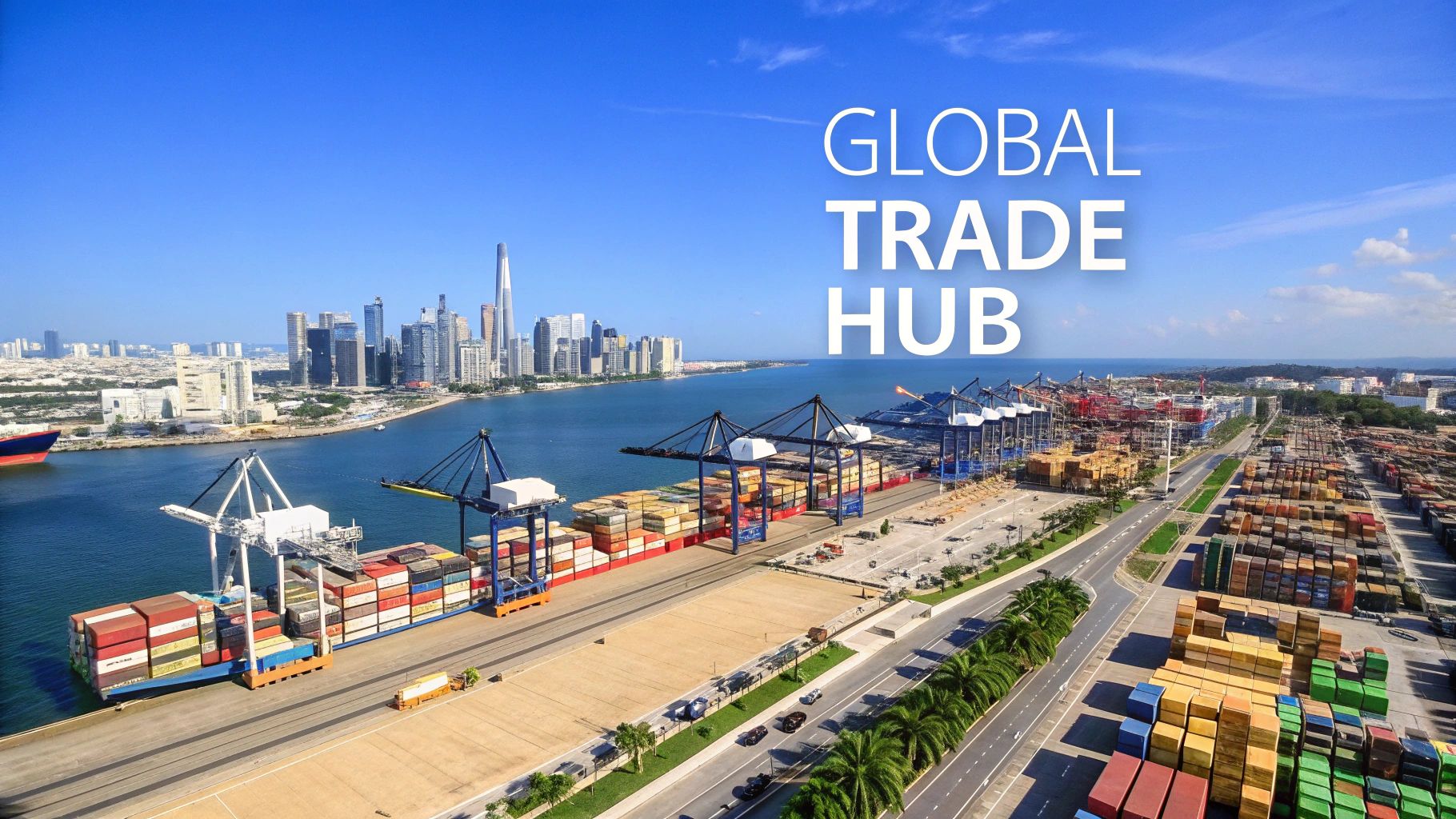
    There is also a practical sales angle many teams miss. Pakistan-based exporters still deal with congestion, schedule changes, inland coordination issues, and margin pressure from overseas buyers. A forwarder that can reduce dwell time, improve handoff visibility, and present lane-specific routing options will get more traction than one pitching generic air and ocean capacity.

    1. Interloop Limited

    Interloop Limited

    Interloop Limited belongs near the top of any Pakistan logistics target list because large, program-based textile exporters create repeatable revenue. The appeal is not just shipment volume. It is shipment predictability, buyer compliance pressure, and the chance to win one lane, one division, or one service failure the incumbent forwarder has not fixed.

    Interloop’s manufacturing model also changes the sales motion. A vertically integrated operation across yarn, knitting, dyeing, and finishing gives logistics teams a cleaner operating environment than fragmented sourcing networks. Fewer handoffs usually mean better production visibility, tighter booking discipline, and clearer root-cause analysis when cargo misses cutoff. That matters if you are selling reliability, not just freight.

    Why Interloop deserves account-level planning

    Interloop sits inside Pakistan’s strongest export engine: finished textile goods tied to established overseas buyers. In practical terms, that means the shipper is likely managing recurring orders, strict documentation standards, carton-level accuracy, and delivery windows that connect directly to retail replenishment plans. The freight provider that wins here usually proves control over milestones, exceptions, and communication.

    This is also a useful account for data-led prospecting. Start with the product family and lane pattern, then identify the buying entities, consignee mix, and shipment rhythm through an exporter and importer data workflow. That gives outreach a commercial angle. You are not asking for freight business in general. You are showing where schedule slippage, split bookings, or weak visibility may already be creating cost.

    A practical Interloop pitch usually includes three points:

    • Buyer-facing execution: document accuracy, compliance handling, and milestone updates that reduce escalation risk.
    • Peak-season planning: secured space strategy and routing options before allocations tighten.
    • Exception control: fast recovery plans for rolled cargo, cutoff misses, or transshipment disruptions.

    The wrong pitch is easy to spot. Generic claims about low rates rarely move a mature exporter with benchmarked carrier pricing and existing forwarder relationships. A better opening is lane-specific. Show where your team can improve transit consistency to the US or EU, reduce handoff delays, or protect delivery dates during peak booking periods.

    Trade-offs before you spend time on the account

    Interloop is attractive, but it is not a simple win. Large exporters often divide freight by buyer, geography, or mode, and incumbent providers usually defend the core lanes aggressively. Procurement may like your rate while operations rejects your process, or the factory may want flexibility your destination setup cannot support.

    That is why this account rewards selective pursuit. If your team has strong destination control, retailer appointment experience, and a credible exception-management process, Interloop is worth serious coverage. If those pieces are weak, the account will absorb sales time without converting.

    2. Yunus Textile Mills

    Yunus Textile Mills

    Yunus Textile Mills sits in a category where freight economics are usually driven by cube before weight. That single fact changes the sales approach. Bedding, sheets, and made-ups are program cargo with fixed delivery windows, carton-level compliance rules, and retailer routing requirements that punish avoidable mistakes.

    For logistics teams, Yunus is less about selling transit speed and more about controlling planning accuracy. Load configuration, booking timing, document discipline, and container utilization all have a direct effect on margin. A one-point gain in cube use across repeat FCL programs can matter more than a small ocean rate concession.

    Its Karachi operating base matters for the same reason. The conversation gets operational quickly. Cutoffs, stuffing schedules, dray availability, and port handoff discipline are the issues that decide whether a forwarder is useful or replaceable.

    Where Yunus fits in a territory plan

    Yunus belongs on a target list built around repeatable export programs, not one-off spot business. Home-textile exporters often ship against structured buyer calendars, which gives sales teams a clearer opening if they can tie service performance to store sets, replenishment cycles, or promotional deadlines.

    This account also works well for data-led prospecting. If you are using shipment intelligence to build coverage by exporter, buyer, and HS code cluster, Yunus is the kind of shipper that rewards lane-specific preparation. Teams using platforms like Coreties should be looking for recurring destination patterns, seasonality by consignee, and signs of split-volume opportunities rather than sending generic forwarding pitches. The same account-mapping logic used for major Southeast Asian shippers in this guide to exporters from Thailand applies here.

    Outreach that matches how the account buys

    The strongest pitch starts with buyer execution. Home-textile exporters care about whether cartons book on time, paperwork clears cleanly, and delivery milestones stay visible after origin handoff. Retail chargebacks, missed booking windows, and poor milestone communication create more pain than a modest rate gap.

    A practical outreach angle usually covers:

    • Retail routing guide control: Show that your team can handle booking compliance, document accuracy, and destination milestone updates.
    • Cube and container planning: Discuss carton mix, utilization, and consolidation options early, especially on repeat programs.
    • Karachi execution discipline: Reference cutoff management, stuffing coordination, and local origin responsiveness in concrete terms.

    The trade-off is straightforward. These accounts can produce steady volume, but they also expose weak origin control fast. If your team cannot support short booking cycles, precise documentation, and consistent exception handling, Yunus will be hard to win and harder to keep.

    I would qualify this account based on operational fit before pricing. If your origin team is strong on retailer programs and your customer service desk can manage exception-heavy cargo without creating noise for the shipper, Yunus is worth sustained coverage.

    3. Artistic Milliners

    Artistic Milliners

    Artistic Milliners sits in one of Pakistan’s highest-value export lanes: denim and finished apparel moving into demanding US and European buyer programs. For a logistics sales team, that matters because these accounts do not buy freight as a commodity. They buy reliability across seasonal handoffs, routing guide compliance, and fast recovery when a booking or destination plan shifts.

    This is a different sales motion from broader home-textile coverage. Artistic operates across spinning, weaving, dyeing, and garmenting, and it sells into buyers that compare Pakistan with other sourcing countries before they compare one forwarder with another. The practical implication is simple. A pitch limited to Karachi execution and a low rate will sound incomplete.

    Why this account deserves targeted coverage

    Artistic Milliners is a good prospect when your team can speak to lane design, not just shipment execution. Denim programs often carry tighter merchandising windows, more frequent style changes, and sharper pressure on handover dates than basic replenishment cargo. Miss a booking window on a fashion-driven order, and the cost is larger than the freight delta.

    The account is also attractive because denim exporters tend to run repeat programs once a lane is set up correctly. That creates room for a forwarder to grow from trial bookings into a larger share of wallet. The trade-off is that service failures are remembered quickly, especially when the shipper is already managing buyer expectations across multiple origins.

    What to sell

    The strongest outreach connects Pakistan origin performance to the buyer’s broader sourcing plan. I would frame the conversation around three issues:

    • Origin versus network fit: Explain where Pakistan delivers the best cost-to-lead-time balance and where split-origin planning protects the buyer’s calendar.
    • Denim program control: Speak directly about booking discipline, factory coordination, carton readiness, and exception handling during peak style turnover.
    • Visibility for sourcing teams: Show how your team will manage milestone reporting, reroutes, and escalation paths when a buyer changes destination or delivery timing.

    If you use shipment-intelligence tools such as Coreties, this is the point to bring real trade evidence into the pitch. Show the account’s active markets, likely consignee patterns, relevant HS code clusters, and shipment cadence. That turns the meeting from a generic capability presentation into a territory plan.

    A useful benchmark is how apparel exporters in other multi-origin sourcing markets structure their lane decisions. This review of Thai apparel exporter coverage strategies helps sharpen that comparison.

    Practical sales read

    Artistic Milliners is a strong target for teams that can manage premium apparel accounts with tight communication standards. The opportunity is real, but so is the operational burden. Buyer-facing manufacturers expect quick answers, clean documents, and enough carrier depth to recover when plans change late.

    I would qualify this account on three points before quoting aggressively: destination mix, urgency profile, and internal origin support. If your Pakistan team is good at exception handling and your customer service desk can support high-visibility apparel programs without creating noise, Artistic is worth sustained pursuit. If the operation is mostly spot-rate driven, this account will be expensive to win and easy to lose.

    4. Matco Foods

    Matco Foods

    Matco Foods sits in a category that freight teams often misread. Rice is one of Pakistan’s major export lines, and that changes the selling motion immediately. This account is less about chasing a low ocean rate and more about controlling a food export process that can break on documents, labeling, or consignee instructions.

    Matco is attractive because the business is not limited to raw commodity movement. The company has exposure to branded, retail-facing, and value-added food products, which usually creates a steadier shipment pattern than purely opportunistic trading. For a logistics seller, that means better odds of repeat FCL business if execution is clean.

    The commercial angle is specific. Food shippers buy reliability differently from apparel exporters. They care about booking discipline, pre-alert accuracy, packing list consistency, certificate handling, and whether your team can keep an importer calm when a first shipment draws extra scrutiny.

    A weak pitch sounds like this: “We can save you on freight.” A credible pitch sounds like this: “We can handle buyer-specific documents, align cutoffs with production, and flag exceptions before the consignee escalates.”

    What the shipment profile means

    For Matco, the useful sales questions start at the SKU and destination level. Are you looking at bulk rice, branded retail packs, private-label programs, or ingredient shipments? Each one changes carton configuration, labeling control, and document risk. It also changes who influences the forwarder decision. Procurement may start the conversation, but QA, export documentation, and the overseas importer often shape who stays on the lane.

    If you use shipment-intelligence tools such as Coreties, look for HS code concentration, consignee repetition, destination spread, and monthly shipping rhythm before the first call. That gives you a working territory plan instead of a generic capability deck. In food accounts, that difference matters.

    • Best opening: Lead with food-export document control, buyer instruction management, and visibility during handoff points.
    • Best-fit services: Ocean FCL, document review support, consignee coordination, and exception handling on time-sensitive releases.
    • Likely friction points: Seasonal procurement cycles, shipment timing around crop availability, importer compliance checks, and extra attention on first orders.

    Field note: Food exporters remember the forwarder who catches a document mismatch before cargo arrival. That saves more business than a minor rate win.

    Where to aim your outreach

    Gulf lanes deserve early attention here, and so do importer programs that need consistent retail-ready execution. That is the practical read, as noted earlier in the article. If your network is strong into UAE and broader regional distribution points, say so with specifics. Name the ports, the transit profile, and the document workflow your operations team can support.

    The US can also matter, but it usually comes with more importer-side caution on initial shipments. That is where many sales teams lose momentum. They sell space, then improvise on compliance. A better approach is to map the first-shipment process in advance, including document owners, cutoff discipline, and who handles consignee questions after sailing.

    Matco is worth pursuing if your Pakistan team is organized and your customer service desk can manage food accounts without creating confusion. It is a poor fit for sellers who rely on spot quotes and reactive operations. In this segment, calm execution keeps the account.

    5. Forward Sports

    Forward Sports

    Forward Sports gives logistics sellers access to one of Pakistan’s most distinctive industrial clusters. Sialkot isn’t generic manufacturing. It’s specialized, export-oriented, and built around skilled production in sports goods, surgical products, and related categories. When you prospect a company like Forward, you’re not just chasing one shipper. You’re entering a cluster.

    That matters because cluster-selling works. Win one visible sports-goods account, and your credibility with adjacent exporters improves. Lose one shipment during a tournament-driven demand spike, and word travels just as fast.

    Why the sports-goods niche is attractive

    This isn’t a heavy-freight story. Soccer balls and related sports goods are lightweight, cartonized, and flexible enough to fit both air and ocean depending on urgency. That gives freight teams more ways to enter the account. Airfreight can be relevant for launch windows and replenishment. Ocean can work for stable forecasts and event build-ups.

    Pakistan’s export basket is still concentrated in finished consumer products, and that concentration creates room for service specialization. Sports goods fit the same broader pattern. They’re sold into consumer channels, seasonal calendars, and brand-controlled programs, not anonymous commodity markets.

    How to approach the account

    The best outreach is event-aware. Tie your message to league calendars, tournament demand, launch timing, or replenishment risk. The worst outreach is a generic “we’d love to support your business” email with no reference to seasonality or mode choice.

    Try this framing instead:

    • Airfreight angle: Use when the exporter faces launch windows, last-minute replenishment, or short retailer deadlines.
    • Ocean angle: Use for forecasted build-up and regular cartonized exports.
    • Cluster angle: Show that you understand Sialkot’s supplier ecosystem and can support nearby shippers as volumes grow.

    If a sports-goods exporter can switch between air and ocean on short notice, your internal handoff between products needs to be clean. If it isn't, don't pitch flexibility.

    Trade-offs that matter

    Demand spikes around major sporting cycles can strain both production and capacity. That’s good for forwarders with strong exception handling. It’s bad for teams that rely on routine bookings and slow internal approvals. There’s also a brand-control issue. High-profile sports manufacturers often work under tighter IP and customer restrictions than general merchandise exporters.

    Forward Sports is a strong target for operators who can combine mode flexibility with disciplined communication. It’s less attractive if your air and ocean teams work like separate businesses.

    6. Lucky Cement Limited

    Lucky Cement Limited

    Lucky Cement Limited changes the conversation completely. This is not a containerized consumer-goods account. It’s a bulk and break-bulk play. If your team only thinks in cartons, PO management, and retailer routing guides, you’ll misread this account.

    Cement and clinker exporters need different commercial instincts. Vessel availability, terminal capability, discharge constraints, and fuel economics carry more weight than brand compliance or SKU complexity. Sales teams that understand charter structures and cargo handling can create real value here. Teams that don’t usually end up talking past the customer.

    Where Lucky fits in a logistics portfolio

    Pakistan’s import-export imbalance also points to a broader logistics opportunity. Goods imports were valued at $70.176 billion in 2022 versus $30.769 billion in exports, according to Pakistan trade data analysis. While Lucky is an export target, that imbalance is commercially useful because many industrial players participate in both inbound and outbound flows. The account can open wider industrial conversations than a standard exporter lead.

    Lucky is attractive for another reason. Industrial shippers often evaluate providers differently from consumer-goods exporters. They care about cargo handling know-how, vessel positioning, terminal coordination, and freight economics under changing market conditions.

    What works in outreach

    You need to sound operational from the first message. Mention bulk handling, charter support, break-bulk planning, or discharge-side coordination. Don’t lead with generic “supply chain solutions.” Industrial exporters hear that from everyone.

    • Strong fit: Bulk chartering, break-bulk expertise, terminal relationships, and industrial cargo planning.
    • Weak fit: Container-first pitches that ignore cargo form and vessel economics.
    • Key caution: Freight economics can shift quickly with vessel availability and bunker costs, so margin discipline matters.

    Real trade-offs

    The upside is clear. Large export streams can justify bigger-ticket freight opportunities than standard FCL business. The downside is equally clear. Industrial cargo is less forgiving operationally, and one misread on terminal conditions or vessel planning can erase the value of the account.

    Lucky Cement is worth pursuing if your team already serves bulk or project cargo. If your business is built around retail ocean freight, this may look appealing on paper but drain time in practice.

    7. Service Global Footwear Limited (SGFL)

    Service Global Footwear Limited (SGFL)

    Service Global Footwear Limited deserves attention for a simple reason. Footwear export programs create more sales angles than a basic apparel account, but they are still operationally manageable for a forwarder that understands retail timing.

    That mix matters. Shoes carry seasonal launch pressure, style-level packaging differences, buyer routing rules, and material-specific classification work. A sales team that can speak to those details gets a better first meeting than one pitching generic freight savings.

    SGFL also benefits from public-company visibility. That makes account qualification easier on the front end. Credit review, compliance checks, and stakeholder mapping usually move faster when more information is already in the market.

    Why SGFL deserves attention

    As noted earlier, Pakistan’s export strength sits largely in finished consumer goods. SGFL fits that profile well. For logistics sales, that usually means repeatable shipment flows tied to buyer calendars, replenishment cycles, and launch windows rather than one-off industrial moves.

    The practical value is straightforward. If your team wins one footwear lane and performs well during peak allocation periods, the account can expand into repeat bookings across categories, destinations, or buyer programs.

    This is a timing account.

    Outreach strategy and shipment logic

    Footwear sales calls go wrong when the rep does not understand the product. Uppers, soles, materials, carton dimensions, country-of-origin rules, and buyer labeling requirements can all affect the shipment plan. Before outreach, align sales and operations on classification and product language. This guide to shoes HS code helps keep prospecting tied to the actual commodities moving.

    A stronger opening for SGFL focuses on shipment execution, not broad capability claims:

    • Program consolidation: Show how you would manage bookings across multiple footwear lines while keeping SKU and PO visibility intact.
    • Peak allocation control: Offer a clear process for booking discipline, rollover prevention, and exception handling during seasonal pressure.
    • Carton and routing accuracy: Speak directly to buyer compliance, destination-specific labeling, and handoff discipline at origin.
    • Style-driven planning: Acknowledge that tooling, materials, and minimum order commitments can shift cargo readiness by style, not just by purchase order.

    I would also segment the pitch by lane. EU-bound footwear often requires a different service conversation than Gulf or North America traffic. Transit-time tolerance, retailer compliance, and carton presentation are not the same across those programs.

    Where this account can go wrong

    Footwear looks easier than it is. Teams that treat it like standard garments usually miss the points that trigger claims, delays, or chargebacks. The weak spots are predictable. Misclassified products, poor carton visibility, missed ship windows, and buyer-routing errors.

    SGFL is a good target for forwarders that can connect product knowledge to booking control. If your operation is built for simple spot-rate selling, this account will absorb time and expose service gaps quickly.

    Comparison of 7 Leading Pakistani Exporters

    Company Implementation complexity Resource requirements Expected outcomes Ideal use cases Key advantages
    Interloop Limited Moderate, strong compliance docs ease onboarding but brand allocations add coordination High, vertically integrated plants, digital sampling, ISO lab Steady year‑round container volumes and reliable compliance Large‑retailer sock, activewear and apparel programs Scale, extensive certifications, recognized global clients
    Yunus Textile Mills Moderate, program setup for big‑box retailers but experienced team Very high, large weaving/processing/stitching capacity, port proximity Consistent full‑container program shipments and predictable exports Home textiles full‑container programs for US/EU retailers High capacity, export efficiency, retailer compliance experience
    Artistic Milliners Moderate, denim‑specific processes with multi‑country coordination High, full denim value chain and international facilities Near‑shoring options, sustainable supply and design support Denim fabrics/garments and brands seeking near‑shoring or ESG credentials Multi‑country footprint, design/sales presence, strong sustainability focus
    Matco Foods Moderate, requires food import compliance (FDA/APHIS) and FSVP documentation High, integrated rice processing, seasonal sourcing, branded SKUs Regular branded and bulk shipments with food‑grade QA Basmati rice, rice ingredients, food importers needing certified QA Established QA systems, branded product portfolio, diverse rice‑derived SKUs
    Forward Sports Low–Moderate, established quality systems but IP controls may restrict options Moderate, specialized thermal‑bonded and hand‑stitch production, skilled labor Predictable tournament‑linked cadence; lightweight cartonized shipments Soccer balls and sports goods for global brands; LCL/FCL or air freight High‑precision production, FIFA/Adidas credentials, Sialkot cluster benefits
    Lucky Cement Limited Moderate, bulk/break‑bulk logistics and terminal coordination required Very high, large clinker/cement capacity, charter and terminal needs Consistent clinker exports supporting bulk charter and terminal use Bulk clinker/cement shipments to Africa, South Asia and Americas Large export program, routing flexibility, industry pricing transparency
    Service Global Footwear Limited (SGFL) Moderate, varied constructions require tooling and seasonal planning High, broad manufacturing processes, group infrastructure, export network Flexible SKU handling and established exports to 30+ countries Athletic and casual footwear programs for multi‑brand sourcing Diverse construction capability, scale from group support, public financial transparency

    From Prospect to Partner Activating Your Pakistan Strategy

    A list of exporters in Pakistan is useful. A lane-based sales system is better. The companies above are not interchangeable, and that’s the whole point. Interloop and Yunus call for retailer-grade visibility and disciplined container execution. Artistic Milliners needs a more strategic conversation around origin optionality and buyer calendars. Matco demands documentation control and food-grade process discipline. Forward Sports rewards mode flexibility. Lucky Cement belongs with bulk expertise. SGFL sits in the middle, where product complexity and consumer timing intersect.

    That’s why generic prospecting underperforms in this market. Pakistan’s export economy is large enough to matter, but concentrated enough that you can build a focused attack plan. The United States, China, and the United Arab Emirates are central destinations for Pakistani exports, while the European Union collectively remains a major destination block, as noted earlier. If you map those corridors against actual shipper profiles, your outreach gets sharper fast.

    There’s another reason to be selective. Pakistan’s exporters still face logistics inefficiencies that hurt competitiveness, and the pressure isn’t abstract. The analysis of Pakistan’s export bottlenecks describes chronic issues that can push shipping costs 20% to 30% above regional peers and argues that logistics upgrades could realize $5 billion to $10 billion in untapped exports. For a freight forwarder or carrier, that’s not just background context. It’s the sales opening. Exporters don't need another supplier who says “we move cargo.” They need one who can reduce uncertainty in a difficult operating environment.

    That also means you shouldn’t stop at the biggest textile names. There’s an underserved opportunity in non-textile diversification. The review of Pakistan’s handicraft export potential notes that handicraft exports earn only “a few hundred million dollars” annually and argues that better organization and clustering could add hundreds of millions more. For logistics teams, that’s the signal to prospect beyond obvious accounts. Engineering exporters, handicraft SMEs, and specialty manufacturers may be smaller individually, but they can be easier to win if the big enterprise accounts are locked up.

    The operating model I’d use is simple. Segment by sector first, then by lane, then by buyer type. Build one message for home textiles into the US. Another for rice and food-grade cargo into Gulf or North American destinations. Another for industrial bulk exports. Keep each outreach sequence tied to known shipment realities, not generic service claims.

    A platform like Coreties can fit naturally into the workflow. If you’re turning this list into an active pipeline, the value isn’t the company names alone. It’s being able to validate shipment patterns, identify likely HS-code activity, find the right logistics or supply chain contact, and tailor the message around live trade behavior instead of assumptions. That’s the difference between cold outreach and relevant outreach.

    The market is already big. The challenge is execution. If your team works from static directories, broad job titles, and untargeted email copy, Pakistan will feel crowded. If you work from customs-driven signals, lane priorities, and product-specific messaging, the same market becomes much more manageable. That’s how you move from a prospect list to an account plan, and from an account plan to actual booked freight.

    For teams refining that outbound motion, this guide on winning marketing and outreach strategy is a useful companion read because the mechanics matter almost as much as the account list.


    If you want to turn these exporters in Pakistan into a real pipeline, Coreties helps you move from company name to contact, lane signal, and personalized outreach faster. It’s built for freight forwarders, carriers, and logistics sales teams that need customs-driven prospecting instead of static lead lists.

  • 7 Key Importers in Germany to Target in 2026: A Logistics Guide

    7 Key Importers in Germany to Target in 2026: A Logistics Guide

    Germany stands as Europe’s economic powerhouse, a central hub for global trade with a colossal appetite for imported goods. For logistics sellers, freight forwarders, and carriers, penetrating this market means connecting with the right importers in Germany. The challenge isn't just identifying these companies; it's understanding their specific needs, import volumes, and key trade lanes to offer a genuinely valuable partnership. A generic sales pitch rarely works. Success requires a targeted, data-driven strategy.

    This guide moves beyond simple directories to provide a structured approach for finding and qualifying high-value German importers. We will profile a curated list of significant players across various industries, from chemicals to coffee and retail, including HELM AG, Brenntag SE, and the Neumann Kaffee Gruppe. More importantly, you will learn how to use customs data to prioritize these prospects, identify their shipping patterns, and pinpoint decision-makers. For logistics sellers aiming to optimize their operations within the EU, exploring various data-driven tools and software solutions is crucial. Understanding the landscape of these Top Supply Chain Softwares for EU operations can provide a significant competitive advantage in managing complex supply chains.

    You will gain actionable insights into:

    • Key Importer Profiles: A categorized look at major German importers like METRO AG and the REWE Group, complete with direct links.
    • Data-Driven Prospecting: How to qualify leads using customs data to assess import frequency, volume, and origin ports.
    • Effective Outreach Tactics: Practical templates and strategies for contacting logistics managers and procurement heads.
    • Compliance and Regulations: A brief on essential German and EU import compliance considerations.

    This article is your roadmap to transforming a broad market into a concrete list of qualified sales opportunities. Let’s get started.

    1. HELM AG

    HELM AG stands as a significant player for logistics providers targeting high-value, regulated cargo. This Hamburg-based, family-owned company specializes in the global marketing and distribution of chemicals, fertilizers, crop protection products, and active pharmaceutical ingredients (APIs). Their operational model makes them one of the most structured importers in Germany, presenting a prime opportunity for carriers and forwarders with specialized capabilities.

    HELM AG crop protection solutions being applied in a field

    What makes HELM a noteworthy target is its centralized command structure. Key purchasing, logistics, and trade compliance decisions for its global operations are managed from its Hamburg headquarters. This simplifies the sales process for logistics sellers, as you can engage with a single, influential team rather than navigating a decentralized network of regional offices. They import substantial and consistent volumes across multiple commodity types, providing a steady stream of business for their chosen logistics partners.

    Engagement Strategy and Key Considerations

    Gaining HELM as a client requires a specific approach due to their stringent qualification process and long sales cycles. They prioritize partners who can demonstrate deep expertise in handling complex and regulated goods.

    • Highlight Specialized Capabilities: Emphasize your certifications and experience with ADR (hazardous road transport), IMO (dangerous maritime goods), and GDP/GxP (Good Distribution/Storage Practices for pharma). They need partners who understand the compliance and quality assurance required for temperature-sensitive and hazardous materials.
    • Focus on Partnership: HELM often engages in long-term offtake agreements and contract manufacturing. Position your services not just as a transactional carrier but as a strategic partner that can support their complex supply chain structures.
    • Prepare for Tenders: Logistics contracts are typically awarded through formal tender processes. Patience and a well-prepared, competitive bid are essential.

    Qualifying HELM with Customs Data

    To tailor your pitch, you can use customs data to analyze HELM's specific import activities. By examining bill of lading records, you can identify their primary trade lanes, the specific products they are importing, and their shipment frequencies. For example, you might find they are importing a particular API from India or crop inputs from China. This level of detail allows you to approach them with a highly relevant and informed proposal. To get this granular, you need to know the specific commodity codes for their products; you can research how to find these identifiers to support your analysis.

    Feature Analysis Details
    Industry Focus Chemicals, Crop Protection, Pharmaceuticals (APIs)
    Key Decision Center Hamburg, Germany (Centralized Purchasing & Logistics)
    Strengths for Sellers Consistent high-volume imports, need for specialized logistics (hazmat, temp-control), partnership-oriented.
    Challenges for Sellers Strict supplier qualification, long onboarding and tender cycles, high compliance demands.

    Website: https://www.helmag.com/

    2. Brenntag SE

    Brenntag SE represents a massive opportunity for logistics providers due to its position as the global market leader in chemical and ingredients distribution. Headquartered in Essen, Germany, the company imports extensive volumes of industrial and specialty chemicals, plus food and pharmaceutical ingredients. Their sprawling pan-European network of warehouses, blending facilities, and application labs makes them one of the most operationally complex importers in Germany, creating consistent demand for sophisticated logistics support.

    Brenntag SE chemical distribution facility with large storage tanks

    What makes Brenntag an attractive, albeit challenging, target is its diversified demand and predictable import flows. The company serves a wide array of industries, from coatings and personal care to food and pharma, which stabilizes their import volumes year-round. This stability is driven by sophisticated forecasting and inventory planning, which can simplify capacity discussions for their logistics partners. They require frequent value-added services, including the handling of tankers, Intermediate Bulk Containers (IBCs), and dangerous goods.

    Engagement Strategy and Key Considerations

    Securing business with Brenntag requires demonstrating robust safety standards and the ability to meet stringent performance metrics. Their procurement is highly structured, and competition is fierce, often favoring incumbent providers.

    • Emphasize Safety and Compliance: Brenntag places a very high premium on Health, Safety, and Environment (HSE) and product stewardship. Highlight your safety records, driver training programs, and certifications like SQAS (Safety and Quality Assessment for Sustainability).
    • Showcase Value-Added Capabilities: Their model often involves more than simple point-to-point transport. Promote your expertise in handling bulk liquids, repackaging, and managing complex DG consignments. Being able to support their network with flexible, reliable services is a key differentiator.
    • Prepare for Centralized Tenders: Logistics procurement is typically managed centrally through formal tenders. A successful bid requires competitive pricing, but more importantly, it must prove your operational reliability and adherence to strict Key Performance Indicators (KPIs).

    Qualifying Brenntag with Customs Data

    Using customs data is critical for understanding Brenntag's vast and varied import activities. By analyzing bill of lading information, you can pinpoint the specific chemicals and ingredients they import, their primary countries of origin, and the German ports they utilize most frequently. This data can reveal, for instance, consistent flows of a particular food additive from Southeast Asia or an industrial chemical from the United States. This intelligence enables you to approach their procurement teams with a proposal that addresses a specific, high-volume trade lane, showing you've done your homework.

    Feature Analysis Details
    Industry Focus Industrial & Specialty Chemicals, Food & Pharma Ingredients
    Key Decision Center Essen, Germany (Centralized Procurement) with regional influence.
    Strengths for Sellers Predictable, high-volume flows; Year-round demand; Need for specialized handling (DG, tank, IBC).
    Challenges for Sellers Competitive, centralized tendering process; Strict KPI and safety requirements; Incumbents have an advantage.

    Website: https://www.brenntag.com/en-de/

    3. Neumann Kaffee Gruppe (NKG)

    Neumann Kaffee Gruppe (NKG) represents a massive opportunity for logistics providers specializing in food-grade containerized freight. As one of the world's foremost green coffee service companies, this Hamburg-based group imports enormous quantities of green coffee beans through German ports. Their role as a key consolidator, quality controller, and distributor for the European coffee market makes them one of the most significant importers in Germany for agri-commodities.

    Neumann Kaffee Gruppe (NKG)

    What distinguishes NKG is its end-to-end control of the coffee supply chain, from sourcing at origin to final distribution. Their portfolio includes everything from mainstream to specialty coffees, managed through various affiliated trading units and service companies under the NKG umbrella. This structure creates consistent, high-volume container flows that are ideal for FCL (Full Container Load) optimization. For carriers and forwarders, this means predictable business tied to seasonal but steady import cycles. Their deep presence at the Port of Hamburg also signals a close working relationship with major ocean carriers.

    Engagement Strategy and Key Considerations

    Approaching NKG requires an understanding of the specific demands of the agri-commodity trade. While coffee is a stable import, its handling requires attention to detail regarding quality, certification, and timing.

    • Offer Value-Added Services: NKG's business is not just about port-to-port transportation. Pitch services like container drayage, warehousing, sampling, quality inspection support, and re-bagging. Demonstrating capabilities that streamline their onshore operations can be a strong differentiator.
    • Showcase Certification Expertise: The coffee market is heavily influenced by certifications like Organic, Fairtrade, and Rainforest Alliance. Highlight your experience in managing the specific documentation and handling protocols required to maintain the integrity of these certified supply chains.
    • Emphasize Port Proximity and Efficiency: Given their Hamburg focus, demonstrate your operational strength in and around the port. Fast container turnaround, efficient customs clearance, and reliable inland transport connections are critical selling points. You might need to act as the official Importer of Record, and understanding the responsibilities involved is key; you can find more detail on what this role entails by reading about the Importer of Record.

    Qualifying NKG with Customs Data

    Customs data is a powerful tool for building a targeted approach to NKG. By analyzing their shipment records, you can gain specific insights into their supply chain. Look for key coffee-producing origins like Brazil, Vietnam, Colombia, and Ethiopia to identify their primary trade lanes. You can also determine the volumes they move at different times of the year, corresponding to harvest seasons. This allows you to approach their logistics teams with concrete proposals for specific routes, offering competitive rates or capacity guarantees during their peak shipping periods.

    Feature Analysis Details
    Industry Focus Agri-Commodities (Green Coffee Beans)
    Key Decision Center Hamburg, Germany (Centralized Trading & Logistics)
    Strengths for Sellers High-volume, containerized FCL flows; seasonal but predictable demand; opportunities for value-added logistics services.
    Challenges for Sellers Commodity market volatility can affect volumes; strict quality and certification handling requirements; competitive Hamburg market.

    Website: https://www.nkg.net/

    4. METRO AG (METRO Sourcing International)

    METRO AG, through its global sourcing arm METRO Sourcing International, represents a major opportunity for logistics providers focused on the Asia-Europe trade lane. While METRO is a German wholesale giant, its sourcing for non-food and private-label products is centralized through its Hong Kong headquarters. This structure makes it one of the most organized large-volume importers in Germany, creating a clear point of entry for forwarders handling consolidated container freight.

    METRO AG (METRO Sourcing International)

    The key to understanding METRO is its sourcing model. METRO Sourcing International coordinates with numerous suppliers across Asia, consolidating a wide range of non-food stock keeping units (SKUs) into full container loads (FCLs) destined for European distribution centers, including major hubs in Germany. This creates predictable, high-volume flows that are ideal for ocean carriers and NVOCCs who can manage large-scale, multi-origin consolidation programs. For logistics sellers, the appeal is the chance to secure significant and regular business from a single, globally coordinated entity.

    Engagement Strategy and Key Considerations

    Securing a contract with METRO Sourcing requires a focus on efficiency, compliance, and scale. Their operations are mature and process-driven, meaning they expect partners to integrate smoothly into their existing supply chain framework.

    • Demonstrate Asia-Europe Expertise: Your pitch must highlight proven capabilities in managing FCL and consolidation services from key Asian export hubs (e.g., China, Vietnam, Bangladesh) to major German ports like Hamburg or Bremerhaven.
    • Emphasize Compliance Management: Non-food consumer goods are subject to strict EU regulations (e.g., REACH, CE marking). Showcase your ability to manage documentation and ensure compliance for a diverse product range, as this is a critical concern for METRO.
    • Prepare for Centralized Tendering: Logistics procurement is highly centralized and managed through formal, competitive tenders. The sales cycle can be long, but a successful bid can result in a substantial, long-term contract.

    Qualifying METRO with Customs Data

    You can refine your approach by analyzing customs data to understand METRO’s import patterns. Bill of lading data will reveal their primary Asian suppliers, the specific HS codes for their non-food goods (like kitchenware, textiles, or small electronics), and the frequency of their shipments into Europe. This information helps you build a targeted proposal that speaks directly to their current operational needs, such as offering better transit times from a specific sourcing region or demonstrating cost efficiencies on established routes. Knowing these details is a fundamental part of the modern import and export business.

    Feature Analysis Details
    Industry Focus Wholesale, Retail (Non-food consumer goods, private-label products)
    Key Decision Center Hong Kong (METRO Sourcing International for global sourcing)
    Strengths for Sellers Predictable high-volume FCL flows, consolidated shipments from Asia, mature supplier portal and processes.
    Challenges for Sellers Tender-heavy procurement process, strict compliance and testing requirements for non-food goods, centralized decision-making.

    Website: https://www.metro-sourcing.hk/

    5. REWE Group (REWE Far East)

    For logistics providers specializing in high-volume, containerized retail goods, REWE Group represents a significant opportunity. As one of Europe's largest trade and tourism corporations, its consistent import demand for food and non-food items makes it a cornerstone for carriers focused on Asia-Europe trade lanes. The company's sourcing arm, REWE Far East, acts as the central hub for managing procurement, quality control, and logistics for private-label goods originating from Asia, solidifying its role as one of the most prominent importers in Germany.

    REWE Group (REWE Far East)

    What makes REWE Group a compelling target is the structured nature of its import operations via REWE Far East. This subsidiary centralizes buying for a wide array of private-label and seasonal products, creating predictable, high-frequency FCL shipment flows into major North European gateways. This centralized model simplifies engagement for logistics sellers, providing a clear point of contact and a defined process for vendor qualification. Their established framework for product testing and corporate social responsibility (CSR) offers a clear playbook for what is required in terms of documentation and compliance.

    Engagement Strategy and Key Considerations

    Approaching a retail giant like REWE requires a strategy built on reliability, compliance, and an understanding of the fast-moving consumer goods (FMCG) market. Their vendor vetting is intensive, but success leads to consistent, year-round business.

    • Demonstrate Compliance Expertise: REWE's commitment to sustainability and product safety is non-negotiable. Highlight your ability to manage and provide documentation related to CSR audits, factory inspections, and lab testing results. Your processes must support their stringent quality assurance demands.
    • Focus on Reliability and Visibility: The retail sector operates on tight schedules. Emphasize your on-time performance metrics, exception management protocols, and shipment visibility tools. Proving you can prevent stockouts and support just-in-time inventory is critical.
    • Align with Asia-Europe Trade Lanes: Since REWE Far East is the primary sourcing arm, demonstrate specific capabilities and capacity on key trade routes from China, Vietnam, and other Asian manufacturing hubs to ports like Hamburg and Bremerhaven.

    Qualifying REWE Group with Customs Data

    Using customs data is essential to understand the scale and specifics of REWE’s import activities. By analyzing bill of lading data, you can pinpoint the exact ports of loading in Asia, the types of goods being shipped (e.g., home goods, textiles, preserved foods), and the frequency of their container movements. This insight allows you to approach their logistics teams with a data-backed proposal that speaks directly to their current supply chain needs, potentially highlighting opportunities for consolidation or efficiency gains on specific routes.

    Feature Analysis Details
    Industry Focus Retail (Food & Non-Food), Private-Label Consumer Goods
    Key Decision Center Cologne, Germany (Corporate HQ); Hong Kong (REWE Far East Sourcing)
    Strengths for Sellers Year-round FCL demand, high-frequency shipments from Asia, clear compliance and CSR requirements.
    Challenges for Sellers Intensive vendor vetting and lab testing, long tender cycles, strong relationships with incumbent carriers.

    Website: https://www.rewe-group.com/en/

    6. Otto Group (Otto International)

    For logistics providers specializing in retail and e-commerce supply chains, the Otto Group represents a major opportunity. As a massive Hamburg-based retail and e-commerce conglomerate, their sourcing arm, Otto International, manages a colossal flow of consumer goods. They are one of the most significant importers in Germany, specializing in apparel, home textiles, and hardlines, with a supply chain heavily reliant on Asia-Europe trade lanes.

    Otto Group (Otto International)

    What sets Otto International apart is its highly structured global sourcing organization, which has more than 20 sourcing locations worldwide. This network feeds a steady stream of products into the German market for both its private-label brands and third-party marketplace sellers. This creates predictable, high-volume ocean freight demand with clear seasonal peaks, allowing carriers and forwarders to plan capacity and offer consolidation services. Their deep involvement in fast-moving fashion also means they require agile and time-sensitive air freight solutions to keep pace with trends.

    Engagement Strategy and Key Considerations

    Engaging with the Otto Group requires demonstrating both scale and a commitment to their rigorous compliance standards. Their logistics procurement is mature, and they often work with established partners, making it a competitive environment.

    • Emphasize Social and Product Compliance: Otto enforces strict social compliance and product safety standards. Highlight your experience with factory audits, ethical sourcing verification (e.g., BSCI), and quality management systems. This is a non-negotiable entry requirement.
    • Offer Value-Added Services: Beyond pure transport, propose services like buyer's consolidation, warehousing, quality inspection, and last-mile distribution support. Their complex supply chain offers many points where a logistics partner can add value.
    • Focus on Key Trade Lanes: Concentrate your sales efforts on their primary sourcing regions in Asia, particularly China, Bangladesh, and Vietnam. A strong origin-side presence is a critical selling point.

    Qualifying Otto Group with Customs Data

    You can use customs data to pinpoint specific opportunities within Otto's vast import operations. By analyzing their shipment records, you can identify the types of products being moved, their key suppliers, and the ports of loading and discharge. This intelligence helps you understand their seasonal shipping patterns for apparel versus home goods, for instance. A freight forwarder could see a high volume of textiles from a specific port in Bangladesh and approach Otto with a tailored consolidation program from that origin, demonstrating immediate value and market knowledge.

    Feature Analysis Details
    Industry Focus Retail, E-commerce (Apparel, Home Textiles, Hardlines)
    Key Decision Center Hamburg, Germany (Central Logistics) & Global Sourcing Offices
    Strengths for Sellers Predictable high-volume on Asia-Europe lanes, opportunities for consolidation and value-added services, demand for both ocean and air freight.
    Challenges for Sellers Extremely strict social compliance and safety standards, competitive tenders with established partners, long onboarding process.

    Website: https://www.ottoint.com/

    7. Port International GmbH

    Port International GmbH is a critical target for logistics providers specializing in refrigerated (reefer) and perishable cargo. This Hamburg-based direct importer has a century-long history in the fresh produce trade, focusing on items like bananas, citrus, and berries. They manage direct-import programs for major German and EU retailers, making them one of the most consistent importers in Germany for time-sensitive, temperature-controlled freight.

    Port International GmbH banana harvest

    What makes Port International a valuable lead is its direct control over large, year-round import volumes. Through subsidiaries focused on organics and specific fruit programs, the company manages the entire supply chain from sourcing to retail delivery. Key logistics and procurement decisions are made at their Hamburg headquarters, offering a clear point of contact for logistics sellers. Their need for reliable cold-chain solutions presents a recurring business opportunity for carriers and forwarders with proven reefer capabilities.

    Engagement Strategy and Key Considerations

    Securing business with Port International requires a sharp focus on reliability and specialized perishable-handling expertise. The tight shelf-life windows of their products mean that on-time performance is not just a goal, but a strict requirement.

    • Demonstrate Cold-Chain Mastery: Highlight your reefer capacity, temperature monitoring technology (like real-time trackers), and procedures for rapid terminal handling. They need partners who can guarantee an unbroken cold chain from port to distribution center.
    • Showcase Flexibility: The fresh produce industry is subject to harvest cycles and weather-related volatility. Emphasize your ability to adapt to last-minute schedule changes and provide contingency plans for potential delays.
    • Focus on Retail Compliance: Port International supplies major EU retailers. Position your services as a solution that supports their retail-ready programs, including just-in-time deliveries to ripening facilities and distribution hubs.

    Qualifying Port International with Customs Data

    You can use customs data to strategically target Port International by understanding their specific trade patterns. Analyzing bill of lading information reveals their primary sourcing countries, such as Ecuador for bananas or Spain for citrus, and the seasonality of their shipments. This data allows you to identify their peak seasons and approach them when they have the greatest need for reefer capacity. Knowing the specific HS codes for produce like bananas (0803) or oranges (080510) enables a granular search, helping you create a pitch that addresses their exact shipping lanes and volume requirements.

    Feature Analysis Details
    Industry Focus Fresh Produce (Bananas, Citrus, Berries, Organics)
    Key Decision Center Hamburg, Germany (Centralized Logistics & Procurement)
    Strengths for Sellers Year-round reefer volumes, predictable seasonal peaks, ideal for carriers with cold-chain and quick-turn capabilities.
    Challenges for Sellers High pressure on on-time performance due to tight shelf-life, potential for last-minute schedule changes due to harvest volatility.

    Website: https://port-international.com/en/

    Top 7 German Importers Comparison

    Company Implementation complexity Resource requirements Expected outcomes Ideal use cases Key advantages
    HELM AG High — stringent supplier qualification and long onboarding/tender cycles Specialized compliance teams; hazardous & temperature‑controlled handling; global sourcing coordination Consistent, regulated chemical and API import volumes Ocean/air lanes for regulated, temperature‑sensitive and hazardous commodities; long‑term contracts Strong QA/compliance, centralized trade control, global footprint and ADR/IMO/GxP expertise
    Brenntag SE High — centralized tendering and strict HSE/KPI demands Tank/IBC/DG handling, warehousing, blending labs, high HSE standards Predictable year‑round volumes with regular need for specialized handling Industrial and specialty chemical distribution; carriers with DG and tank capabilities Pan‑EU network, sophisticated forecasting, stable diversified demand
    Neumann Kaffee Gruppe (NKG) Medium — seasonal variability and certification/documentation needs Containerized logistics, sampling/rebagging, quality control and storage Seasonal but steady container flows; opportunities for FCL optimization Green coffee imports, value‑added container services (sampling, rebagging) End‑to‑end coffee services, strong Hamburg port presence and origin programs
    METRO AG (METRO Sourcing International) Medium‑High — centralized sourcing with compliance and testing requirements Consolidation for Asia‑EU FCL flows, vendor coordination, QA onboarding Large, consolidated shipments with predictable seasonal peaks Non‑food private‑label and bulk imports from Asia requiring consolidation Global sourcing HQ, mature supplier processes and large consolidated volumes
    REWE Group (REWE Far East) High — intensive vendor vetting, testing and CSR processes Robust QA/compliance, testing infrastructure, containerized inbound capability Year‑round FCL shipments with strict documentation and sustainability requirements Food and private‑label imports from Asia with strong CSR/testing needs Strong product‑compliance and sustainability frameworks; process maturity
    Otto Group (Otto International) High — strict social compliance and time‑sensitive fashion logistics Agile air/ocean lanes, rapid lead‑time management, vendor development tools Predictable seasonal peaks; high‑volume Asia‑EU flows with time sensitivity Apparel, home textiles and fast‑fashion imports needing fast transit Mature demand planning, supplier tools, predictable seasonal fashion lanes
    Port International GmbH Medium — cold‑chain sensitivity and quick‑turn demands Reefer capacity, temperature monitoring, ripening and rapid terminal handling Year‑round reefer volumes with seasonal peaks and tight SLAs Fresh produce imports (bananas, berries, citrus) requiring cold‑chain Strong reefer/cold‑chain capabilities; retail‑ready supply and organics programs

    From Insight to Revenue: Scaling Your German Import Strategy

    This deep dive into Germany's import landscape reveals a clear path forward for logistics providers. We've moved beyond simply listing major players like HELM AG and Brenntag SE; we've dissected the very fabric of their supply chains. The goal was to equip you with a precise, data-backed methodology to not just find, but actively engage and win business with the most prominent importers in Germany.

    The core takeaway is this: success in the German market hinges on targeted intelligence, not a wide, speculative net. Random cold calls and generic emails are relics of an older sales model. Today's most effective logistics sales teams operate more like market analysts, using customs data to understand a prospect's real-world shipping behavior before the first contact is ever made.

    Key Takeaways for Your Sales Pipeline

    Let's distill the most critical points from our analysis:

    • Data is Your Compass: Relying on firmographic data alone (company size, revenue) is insufficient. The true potential of a prospect like Neumann Kaffee Gruppe or REWE Group is found in their bill of lading data. This reveals their active trade lanes, shipment frequencies, current carriers, and seasonality, giving you a sharp competitive edge.
    • Specialization Wins: The German import market is highly segmented. A logistics provider specializing in chemicals has a different value proposition than one focused on fast-moving consumer goods for retailers like METRO AG. Align your outreach and service offerings directly with the specific needs of an importer's industry.
    • Personalization is Non-Negotiable: A generic pitch to Otto Group will be ignored. A tailored message referencing their specific sourcing from Asia and offering a solution for a known pain point (e.g., peak season capacity, sustainability tracking) will command attention. Your outreach must prove you've done your homework.

    Putting It All into Action: Your Next Steps

    Transforming these insights into tangible revenue requires a structured, tool-assisted approach. Generic prospecting is inefficient; a focused strategy is essential. To effectively scale your import strategy and reach key decision-makers, understanding and applying robust B2B lead generation strategies is paramount. These frameworks help you organize the data you've gathered into actionable sales campaigns.

    Here is a practical workflow to implement immediately:

    1. Select Your Tool: Choose a trade data platform that aligns with your specific needs. Are you focused on ocean freight, air freight, or both? Do you need deep historical data or real-time shipment alerts? Answering these questions will guide you to the right solution.
    2. Define Your Ideal Customer Profile (ICP): Don't just target "importers in Germany." Define your ICP with precision: e.g., "German importers of perishable goods from South America with at least 50 TEUs per month, currently using Carrier X or Y."
    3. Build Your Target List: Use your chosen data tool to filter the market based on your ICP. This moves you from a list of thousands of companies to a manageable list of high-value, pre-qualified prospects.
    4. Craft Your Angle: For each prospect, analyze their data to find your "in." Are they heavily reliant on a single trade lane? Have their shipment volumes recently increased? Use this intelligence to build a compelling, problem-solving narrative.

    Key Insight: The most successful logistics sellers don't sell services; they sell solutions to specific, data-verified operational challenges. Your ability to identify those challenges before the first conversation is your single greatest advantage.

    Moving from a broad understanding of the German market to a targeted, revenue-generating sales motion is the final, crucial step. It requires a commitment to a data-first culture and the discipline to execute a methodical outreach plan. The tools and tactics outlined in this guide provide the blueprint. Now, the execution is up to you.


    Ready to transform raw trade data into qualified leads and actionable sales intelligence? Coreties provides the platform to identify, analyze, and engage with high-value importers in Germany with unparalleled precision. Move beyond static lists and start building a dynamic pipeline with Coreties today.

  • What Does a Freight Forwarder Do? A 2026 Guide to Global Logistics

    What Does a Freight Forwarder Do? A 2026 Guide to Global Logistics

    Ever tried to ship something internationally yourself? It can feel like a full-time job. That's where a freight forwarder comes in. The simplest way to think of them is as a travel agent for your cargo.

    They don't own the ships, planes, or trucks, but they have the network and expertise to manage your entire shipping process, from the factory floor to your customer's door.

    Your Guide to Freight Forwarding Basics

    Imagine you need to get a pallet of goods from a supplier in Vietnam to a warehouse in Ohio. You could spend countless hours trying to find a reliable ocean carrier, a port agent, a customs broker, and a trucking company for the final delivery. It’s a logistical nightmare.

    Or, you can make one call to a freight forwarder.

    These are the logistics experts who act as the crucial link between you (the shipper) and all the different transportation services needed to move your freight. Their job is to wrangle the complexities of international shipping so you can focus on running your business. Understanding the landscape of global logistics means knowing the big names, like XPO Logistics, who play a significant role in freight transportation and end-to-end supply chain management.

    What Does a Freight Forwarder Actually Handle?

    The real value of a freight forwarder is in the services they bundle. They aren't just booking a spot on a container ship; they're managing the entire journey from start to finish.

    This typically involves:

    • Negotiating freight rates with their network of carriers to get you the best possible price.
    • Booking cargo space on the right vessel, plane, train, or truck for your specific timeline and budget.
    • Handling all the documentation, a mountain of paperwork that includes the Bill of Lading, commercial invoices, and packing lists.
    • Arranging for customs clearance to ensure your goods don't get stuck in regulatory limbo at the border.

    By taking on these critical tasks, a good forwarder lifts a massive weight off your shoulders. The headaches of global shipping are their specialty.

    A freight forwarder makes global trade accessible. They level the playing field, enabling small and medium-sized businesses to ship their products worldwide with the same efficiency as large corporations.

    The table below gives you a quick snapshot of their most important responsibilities.

    Core Functions of a Freight Forwarder at a Glance

    This table breaks down the primary responsibilities a freight forwarder handles for shippers.

    Core Function What It Means for Your Business
    Carrier Negotiation & Booking They find and book the most efficient and cost-effective transport for your goods.
    Documentation Management They handle all the complex paperwork to ensure a smooth transit.
    Customs Clearance They navigate international trade laws to prevent your shipment from getting stuck.
    Shipment Consolidation They combine smaller shipments to get you better shipping rates (LCL).

    In short, they manage the moving parts so you don't have to, turning a complicated process into a single, manageable transaction.

    The Core Services of Freight Forwarding

    People often call a freight forwarder a "travel agent for your cargo," and while that's a good starting point, it barely scratches the surface. They're much more than just booking agents; they are the architects and project managers of a global supply chain, making sure goods get from point A to point B without a hitch.

    At its core, a forwarder's role is to manage the complex dance between the person shipping the goods (the shipper) and the company physically moving them (the carrier). Think of them as the central nervous system connecting all the moving parts.

    An infographic depicting the freight forwarder process flow from shipper to forwarder to carrier.

    This graphic really simplifies the relationship. The forwarder acts as the essential middleman, shielding the shipper from the headaches of dealing directly with multiple carriers, complex regulations, and endless paperwork. Let's dig into the specific services that make this all possible.

    Carrier Negotiation and Booking

    One of the most fundamental jobs a freight forwarder has is securing space for your cargo on a ship, plane, or truck. They don't own these assets themselves. Instead, they leverage their massive network and high-volume business to negotiate much better rates with carriers than a single company ever could. This is a huge win for small and medium-sized businesses.

    • Rate Negotiation: Forwarders essentially buy transport space in bulk, getting a "wholesale" price that they can then pass on to their clients.
    • Carrier Selection: They're experts at picking the right carrier for the job, weighing critical factors like cost, speed, reliability, and the specific type of cargo you're moving.

    This service alone gets to the heart of what does a freight forwarder do: they find the smartest, most cost-effective route for your products.

    Meticulous Documentation Management

    International shipping generates a mountain of paperwork. Seriously. A single mistake on one form can lead to major delays, hefty fines, or even customs authorities seizing your shipment. Forwarders are masters of navigating this paper trail.

    A perfect example is the Bill of Lading. This single document is incredibly important—it's the receipt for your goods, the contract for their carriage, and the title of ownership all in one. To really get a handle on it, it's worth learning more about what a Bill of Lading is in shipping and its critical role.

    Beyond that, they handle a whole host of other documents:

    • Commercial Invoices
    • Packing Lists
    • Certificates of Origin
    • Export and Import Declarations

    By making sure every "i" is dotted and every "t" is crossed, they keep your cargo flowing smoothly across borders.

    A freight forwarder’s true value isn't just in moving boxes—it's in managing the immense flow of data and documentation required to move those boxes legally and efficiently across international borders.

    Shipment Consolidation and Optimization

    If you're shipping a smaller quantity of goods, consolidation is an absolute game-changer. Instead of paying for an entire container that's mostly empty (Full Container Load or FCL), a forwarder can bundle your cargo with other shipments to fill a single container. This is called Less-than-Container-Load (LCL) shipping, and it can slash your costs dramatically.

    The scale of this work is enormous. The global freight forwarding market hit an incredible USD 156.4 billion in 2024, proving just how vital they are to global trade. The top players manage staggering volumes. For example, one major forwarder recently handled 4,872,248 TEUs (twenty-foot equivalent units) in a year, a testament to their incredible consolidation power. Ultimately, forwarders are in the business of providing comprehensive shipping solutions that fit the unique needs of each client.

    Navigating Customs and Global Trade Compliance

    If your freight forwarder is the travel agent for your cargo, their customs team is the immigration lawyer. They’re the specialists who ensure your goods have the legal right to enter a new country. Get this part wrong, and your entire shipment can be stopped dead in its tracks at the border, tangled in red tape.

    Every country has its own unique web of regulations, tariffs, and taxes. A good forwarder knows how to navigate this maze for you. They don’t just fill out paperwork; they anticipate problems and manage risk, making sure a minor clerical error doesn't turn into a major supply chain disaster.

    Desk setup with laptop, open book, documents, pen, and a 'Customs Compliance' card, illustrating international trade processes.

    The Role of a Customs Broker

    Most reputable freight forwarders either employ licensed customs brokers in-house or have a rock-solid partnership with one. These are the certified professionals who speak directly with government agencies like Customs and Border Protection (CBP) on your behalf.

    Their world revolves around the intricate details that make for a smooth border crossing:

    • Tariff Classification: They are masters of the Harmonized System (HS) codes, using them to correctly classify your goods. This single step determines the duties and taxes you'll owe.
    • Documentation Submission: They prepare and file all the necessary documents electronically—from the commercial invoice and packing list to critical import security filings.
    • Duty and Tax Calculation: They accurately figure out what you owe in customs duties, tariffs, and local taxes (like VAT), then handle the payment process.
    • Inspection Coordination: If customs flags your cargo for a physical inspection, the broker manages the entire process to get it released as quickly as possible.

    Trying to handle this on your own is a massive headache. For an experienced forwarder, it's just another Tuesday. Their deep knowledge of these procedures is what transforms a potential customs nightmare into a routine clearance. This process is a key part of the larger picture we cover in our guide to export-import services.

    A forwarder’s customs expertise is your best defense against crippling delays, surprise fines, and seized shipments. They don't just move boxes; they ensure those boxes have the legal paperwork to cross borders.

    Mitigating the Risks of Non-Compliance

    Let's be blunt: getting customs wrong is expensive. A simple classification mistake can trigger huge fines, demands for back-payment of duties, and your products being locked up in a warehouse for weeks or even months. A skilled forwarder acts as your shield against these threats.

    Their role has only gotten more critical. With global trade in goods and services projected to grow by 2.5% in 2025, the volume and complexity of paperwork are exploding. Forwarders are at the heart of this activity, especially in major hubs. The Asia-Pacific region, for instance, represents 37.01% of a massive USD 130.88 billion ocean freight market. You can explore more data on the growing ocean freight forwarding market on mmrstatistics.com.

    Handing off customs to a freight forwarder isn't just about convenience; it's an investment in a predictable and secure supply chain. They are constantly tracking changes in trade policy so you don't have to. That peace of mind, knowing your goods will keep moving, is often the most valuable service they offer.

    Optimizing Routes with Multimodal Transport

    Booking a shipment is one thing, but figuring out the smartest way for it to travel is where a freight forwarder really shines. This is where their strategic brain comes into play, acting less like a booking agent and more like a master logistics planner. Their key tool? Multimodal transport.

    This just means they blend different types of shipping—like sea, air, rail, and truck—into a single, coordinated journey. Think of it like planning your own vacation. You might fly across the ocean, take a train between cities, and then grab a taxi to your hotel. A forwarder does the exact same thing for your cargo, hand-picking the right mode for each leg of the trip to get you the best balance of speed, cost, and safety.

    A tablet displaying optimized flight routes and a sign reading 'Optimized Routes' with a blurred logistics port in the background.

    Building the Perfect Logistical Puzzle

    Putting together a multimodal route isn't a simple task. It's a complex puzzle where a seasoned forwarder has to weigh dozens of factors for every single shipment.

    Here are just a few of the critical pieces they have to fit together:

    • Transit Time: How fast does it absolutely need to be there? Air is quick but pricey; ocean is slow but budget-friendly. A forwarder knows when to use which.
    • Cost Efficiency: What's the target budget? By mixing modes, they can often hit a specific price point that a single carrier can't match.
    • Cargo Type: Is the shipment perishable, fragile, oversized, or hazardous? The goods themselves will immediately rule out certain transport options.
    • Geopolitical and Environmental Factors: A good forwarder is always watching the news. They monitor everything from port congestion and labor strikes to incoming typhoons, ready to reroute cargo to avoid getting stuck.

    This is a massive part of what a freight forwarder does. They take a list of constraints and turn it into a streamlined, real-world shipping plan.

    A freight forwarder's job isn't just to find a route; it's to design the route. They use multimodal transport as their toolkit to build a supply chain that perfectly aligns with a client's budget and timeline.

    Real-World Examples of Multimodal Strategy

    So what does this look like in practice? Let's say you're shipping high-value electronics from a factory in Asia to a distributor in Europe. Flying the whole way would be incredibly expensive, but putting it on a boat might take too long and tie up capital.

    This is where a forwarder gets creative. They might propose a sea-air solution: the cargo travels by ocean vessel to a major hub like Dubai, where it's quickly transferred to an airplane for the final leg into Europe. This clever hybrid approach can slash transit time compared to an all-ocean route while costing a fraction of an all-air move.

    This kind of strategic thinking is invaluable. The land freight segment alone was valued at USD 108.41 billion in 2023, and top forwarders are moving staggering amounts of cargo. For example, Ceva Logistics handled 1.9 million TEUs in ocean freight. By constantly optimizing these massive flows, they can deliver up to 25% reductions in lead times—a game-changing advantage. You can learn more about the expanding freight forwarding market at Technavio. Their ability to build these kinds of smart, resilient supply chains is precisely why so many businesses turn to them.

    How Freight Forwarders Win New Business

    So, we've broken down what a freight forwarder does. Now for the million-dollar question: how do they actually find customers? The old-school image of a salesperson hammering the phones with a giant list of companies is a thing of the past. It was a pure numbers game, and frankly, it was exhausting.

    Today’s leading forwarders have thrown that playbook out the window. They operate much more like tech startups, using powerful data to pinpoint exactly who needs their help, and when. Instead of guessing, they’re prospecting with surgical precision.

    From Data to Deals

    This isn't just a minor tweak; it’s a complete overhaul of the sales process. The game has shifted from cold outreach to warm, intelligent engagement.

    Modern sales reps can now use specialized platforms to see what’s actually happening in global trade. This allows them to:

    • Zero in on a Trade Lane: Instantly pull a list of every company shipping from Shanghai to Los Angeles.
    • Target by Cargo: Find all the businesses importing automotive parts or time-sensitive perishable goods.
    • Qualify by Volume: Focus their energy on high-volume shippers moving dozens of containers a month, not one-offs.

    What used to take weeks of painstaking manual research can now be done in minutes. They can build a list of ideal, pre-qualified prospects before their morning coffee is even finished.

    The best freight forwarders today don't sell services—they solve problems. By using trade data to see a shipper's real-world logistics patterns, they can walk in the door with a solution already in hand, not just a generic sales pitch.

    A Modern Sales Rep's Workflow

    Let's see how this works in the real world. Imagine a sales rep wants to drum up new business on the busy Vietnam-to-Germany trade lane.

    Step 1: Identify a High-Value Shipper
    Using a prospecting platform, the rep runs a search for companies that recently imported at least ten containers of furniture from Ho Chi Minh City to Hamburg. Right away, a list of qualified businesses pops up.

    Step 2: Find the Right Decision-Maker
    The platform gives them more than just a company name. It points them directly to the key contacts in the logistics or supply chain department, complete with verified email addresses and professional profiles. No more getting stuck with gatekeepers.

    Step 3: Craft a Personalized Outreach
    This is where the magic happens. Instead of a bland "Can we handle your shipping?" email, the rep sends something that shows they've done their homework. They can reference the specific trade lane, mention the type of cargo, and even suggest a more efficient routing option. If you want to see how this fits into a bigger picture, you can learn more about how to structure an import-export firm for this kind of strategic growth.

    This data-first approach creates incredible efficiency. It transforms a process once filled with dead-end calls into a focused strategy, connecting sales teams with the right people at the very moment they need help. This is how modern forwarders build and maintain their competitive edge.

    Choosing the Right Freight Forwarder for Your Business

    Picking a logistics partner is one of the most important calls you'll make for your business. The right freight forwarder can make your supply chain feel smooth and predictable, while the wrong one can lead to a world of pain—think expensive delays, surprise fees, and constant firefighting. This isn't just about finding the cheapest quote; it's about finding a genuine partner.

    A great forwarder should feel like they're part of your own team. They're the ones bringing the expertise, the global network, and the problem-solving chops that let you focus on what you do best. But with so many companies out there, how do you tell the real pros from the amateurs? It all starts with knowing what to look for and asking the right questions.

    Key Evaluation Criteria

    Let's be clear: not all freight forwarders are the same. To find a good fit, you have to look past the sales pitch and really dig into how they operate.

    • Industry Specialization: Do they actually know your product? A forwarder who's a pro at shipping perishable food has a completely different skill set and network than one who moves heavy machinery. Ask for proof they’ve handled your specific type of cargo before.
    • Global Network Strength: How strong are their connections where it matters most for you? Get specifics about their partner offices and agents at both the origin and destination ports you use. A weak link in the chain can bring everything to a halt.
    • Technological Capabilities: Can you see what’s happening with your shipment? In this day and age, a modern forwarder must offer a digital platform for real-time tracking, easy access to documents, and clear communication. If their tech feels outdated, their service probably is too.
    • Customer Service Reputation: Things will go wrong. It's just a part of logistics. The real question is, how do they handle it? Hunt down reviews and ask for references that can speak to how they communicate and solve problems when the pressure is on.

    Freight Forwarder vs. Direct Carrier: A Head-to-Head Comparison

    Before you go any further, it’s crucial to understand the difference between using a forwarder and trying to book directly with a carrier (like an airline or shipping line). Each has its place, and this quick comparison should help you see the tradeoffs.

    Factor Freight Forwarder Direct Carrier
    Service Scope End-to-end management, covering everything from booking and customs to final delivery. Usually just port-to-port or airport-to-airport transportation.
    Flexibility High. They can mix and match different carriers and transport modes to find the best route. Low. You're stuck with their network, their assets, and their schedules.
    Rate Access Can offer great rates, especially for smaller businesses, by consolidating shipments (LCL). The best rates are almost always reserved for huge, enterprise-level shippers.
    Support You get a single point of contact who acts as your advocate for the entire journey. You might have to deal with multiple departments and have little leverage in a dispute.

    Ultimately, the choice depends on your needs. If you have massive, consistent volume and an in-house logistics team to manage all the details, a direct carrier relationship might work. For almost everyone else, a freight forwarder offers the flexibility, support, and expertise needed to navigate the complexities of global shipping.

    Frequently Asked Questions About Freight Forwarding

    Even after breaking it all down, a few common questions always seem to pop up. It's completely normal. Let's dig into some of those specifics to make sure you have a rock-solid understanding of how a freight forwarder really works.

    What Is the Difference Between a Freight Forwarder and a Broker?

    This is a big one, and it's easy to get them confused. While they both act as go-betweens, their roles are worlds apart.

    Think of a freight broker as a matchmaker. They connect a shipper who has goods with a carrier who has a truck, and they take a fee for making the introduction. Their job is usually done right there. They don't typically handle the freight or the paperwork.

    A freight forwarder, on the other hand, is your shipment's dedicated project manager. They take direct responsibility for your cargo, often issuing their own Bill of Lading. They aren't just making an introduction; they're managing the entire journey from start to finish—the documentation, the customs clearance, the physical handling, and the final delivery.

    How Do Freight Forwarders Make Money?

    It’s not just about service fees. A forwarder's business model is built on two key things: volume and value.

    Their main income comes from the gap between the wholesale rates they get from carriers and the price they offer you. Because they book so much space—hundreds or thousands of containers a year—they can negotiate significant discounts that a single business simply can't access. They pass some of those savings to you and keep the difference as their margin.

    On top of that, they do charge for specific services, such as:

    • Preparing and filing complex customs documents.
    • Arranging cargo insurance to protect your goods.
    • Providing short-term warehousing or storage.

    The real value isn't just in the cost savings on freight but in the time and headaches you avoid.

    A freight forwarder’s model is built on leveraging their buying power and deep industry knowledge. They turn their scale and expertise into a simple, cost-effective shipping solution for their clients.

    Can a Small Business Benefit from Using a Freight Forwarder?

    Absolutely. In fact, small businesses often see the biggest benefits. If you're a small company looking to ship just a few pallets, you're in a tough spot. You can't fill a whole container, so you're often stuck with incredibly high costs or simply can't ship internationally at a competitive rate.

    This is where forwarders really shine. They use Less than Container Load (LCL) consolidation to bundle your small shipment with others into a single, full container. This strategy gives you access to the same global shipping network and competitive pricing that large corporations enjoy. It completely levels the playing field.


    Ready to stop guessing and start connecting with qualified shippers? Coreties transforms global trade data into high-value leads. Find the right decision-makers, craft personalized outreach based on real shipping activity, and win new business faster. Discover your next customer on Coreties.

  • A Practical Guide to Vanguard Logistics Tracking in 2026

    A Practical Guide to Vanguard Logistics Tracking in 2026

    Keeping tabs on your Vanguard Logistics shipment is pretty straightforward once you know where to look. Whether you have a Bill of Lading (B/L), booking number, or container number, you can get a real-time status update on your Less-than-Container-Load (LCL) cargo through Vanguard’s own portal or a number of third-party trackers.

    Your Starting Point for Vanguard Logistics Tracking

    Man tracking a shipment on a smartphone, holding documents, with a laptop and delivery box.

    When you're dealing with LCL freight, visibility is everything. Knowing exactly where your cargo is helps you manage your client’s expectations, line up your next steps in the supply chain, and avoid those frustrating—and often expensive—delays at the destination. Vanguard's global network is backed by tools designed to give freight forwarders like you that exact oversight.

    It all starts with finding the right number on your shipping documents.

    Key Tracking Identifiers

    Before you can pull up any tracking information, you need one of the main reference numbers for your shipment. Think of these as the unique password to your cargo's journey.

    Here’s a quick guide to help you find what you need on your paperwork.

    Tracking Number Type Format Example Common Location
    Bill of Lading (B/L) Number VGLS123456789 Top right or main body of the Bill of Lading document.
    Booking Number BKGVAN0987654 Found on the initial booking confirmation email or form.
    Container Number VGCU1234567 Usually on the container release or loading confirmation documents.

    Having these numbers ready is the key. It saves you from digging through paperwork later.

    My best advice? Keep your commercial invoice or the original booking confirmation email close by. They almost always have the details you need to start a trace without any hassle.

    This guide will show you exactly how to use these identifiers on Vanguard’s platform and other services. And while we're zeroing in on Vanguard here, you can also find general shipment tracking information that’s useful for a variety of carriers. Getting this process down pat turns tracking from a reactive headache into a proactive tool, putting you firmly in control of your shipments.

    Navigating the Vanguard Logistics Tracking Portal

    Forget spending time on the phone or chasing down email replies. The best way to get a live look at your shipment's status is by going straight to the source: the official Vanguard Logistics tracking portal. It’s built for self-service, giving you direct access to the most accurate, up-to-the-minute information from Vanguard's own network.

    A blue banner overlaying an open book and laptop reads 'VANGUARD PORTAL GUIDE' with a pen and notebook.

    Right on the homepage, you’ll find the tracking widget. Its simple design means you can jump straight to tracking without having to click through a bunch of menus.

    Plugging in Your Tracking Numbers

    Once you’re on the Vanguard website, the tracking system is ready to go. What’s great is the flexibility it offers—you're not stuck with just one type of number to find your cargo.

    You can usually track your shipment using one of these common identifiers:

    • Bill of Lading Number: This is your go-to reference for tracking a specific shipment once it's on its way.
    • Booking Number: Perfect for checking in on your cargo's status early on, sometimes even before the B/L is finalised.
    • Container Number: If your LCL shipment is part of a consolidation, this lets you track the entire container it’s travelling in.

    Just select the right reference type from the dropdown, pop in your number, and hit enter. The portal does the rest, pulling up the latest information without any guesswork.

    Uncovering Deeper Shipment Details

    The portal offers much more than just a basic "in transit" update. After you input your number, you’ll get a detailed view of your cargo’s journey, showing the specific milestones it has hit along the way. This level of detail is a long-standing priority for Vanguard. Way back in December 2009, they hit a record of 50,000 EDI messages in a single month, a clear sign of their early commitment to electronic data. You can explore more about the history of digital integration in logistics to see how far these systems have come.

    The real value isn’t just seeing where your shipment is now, but where it has been. Look for details like 'Vessel Departure' and 'Arrival at Transshipment Hub' to build a complete picture of the timeline and proactively communicate with your clients.

    One of the most useful features I've found is the ability to download the Proof of Delivery (POD) directly from the portal. This is a huge timesaver. Instead of having to email a customer service agent and wait for a reply, you can grab the document yourself the moment it’s available. It empowers your team to close out their files and finalise records much more efficiently.

    Let’s face it, a vague 'In Transit' status doesn’t help anyone when clients are breathing down your neck for an ETA. Getting to grips with the specific language used in Vanguard Logistics tracking is the secret to managing expectations and keeping your supply chain humming. Every status update tells a story about where your LCL cargo is and what's next.

    When you see ‘CFS Cut-off’, breathe a sigh of relief. This means your cargo made it to the Container Freight Station (CFS) on time. It's the first major checkpoint, confirming your goods are in the queue for consolidation and loading.

    Next up is ‘Vessel Departure’. This one’s straightforward: the ship with your container has officially sailed from the port of origin. Now you can start mapping out a more realistic timeline for its journey across the water.

    What Do the Mid-Journey Updates Mean?

    Once your shipment is at sea, you’ll see more than just a simple "in transit" message. These updates are crucial for anticipating the next moves.

    • Arrival at Transshipment Hub: This tells you the vessel has docked at an intermediate port. Your container might be shifted to another ship here to complete its voyage.
    • Departure from Transshipment Hub: This confirms your container is moving again after the stopover, back on course to its final destination.

    Seeing a transshipment update is perfectly normal for many international routes. From experience, I can tell you this is a good moment to sanity-check your timeline. Delays at busy hubs can happen, and they will affect your final delivery date.

    The one status everyone is waiting for is ‘Available for Pick-up’. This is the green light. It confirms the container has been unloaded, your LCL shipment has been deconsolidated at the destination CFS, and it's cleared customs. Your trucker can now go and collect it.

    Knowing what these terms actually mean allows you to give precise, confident updates to your clients—a simple practice that builds immense trust. For those juggling complex supply chains, our guide on tracking with other major players like CJ Logistics Singapore might offer some extra helpful tips.

    To make things even clearer, here’s a quick breakdown of common Vanguard tracking statuses and what they mean for you as a forwarder.

    Vanguard Tracking Status Meanings

    Status Update What It Means Action Required by Forwarder
    Booked The shipment has been booked with Vanguard, but the cargo has not yet been received. Prepare cargo for drop-off and ensure all paperwork is in order for the CFS Cut-off.
    CFS Cut-off The cargo has been successfully delivered to the Container Freight Station before the deadline. No immediate action. This is a key milestone achieved. Monitor for the next status.
    Vessel Departure The ship carrying the consolidated container has left the Port of Origin. Inform the client of the departure and provide an estimated transit time.
    Arrival at Transshipment Hub The vessel has arrived at an intermediate port for transfer to another vessel. Review the ETA. Delays are possible here, so keep an eye on the next departure update.
    Available for Pick-up The LCL shipment has been deconsolidated and has cleared customs at the destination. Arrange for final-mile delivery or notify the consignee that the cargo is ready for collection.

    Translating these statuses from logistics jargon into clear, actionable information is a small step that makes a huge difference in managing your shipments and keeping your clients happy.

    Navigating Common Tracking Issues and Delays

    Even with the best systems, sometimes tracking updates hit a snag. If you run into a problem with your Vanguard Logistics tracking, the first rule is: don't panic. Let's figure out what's going on.

    More often than not, an "invalid number" error is just a simple typo. It's easy to mix up numbers or accidentally paste a booking reference into the Bill of Lading field. Always start by carefully checking the number you entered against your original shipping documents.

    If the number is definitely correct but the status hasn't budged for a few days, you might be looking at a genuine delay. This can happen for all sorts of reasons—think port congestion, unexpected customs inspections, or a hold-up during transshipment. Knowing the usual milestones of a shipment can help you figure out where the bottleneck might be.

    This flowchart maps out the typical journey of a Vanguard shipment, giving you a clearer picture of where your cargo should be.

    A detailed flowchart illustrating Vanguard shipment status, including steps for received, in transit, and at hub with counts.

    As you can see, a shipment moves through several stages—from being received to in transit and then arriving at a hub. These are all perfectly normal parts of the journey.

    Knowing When to Escalate a Problem

    So, you've triple-checked your tracking number and the shipment has been stuck in the same status for an unusually long time. Now what? It's probably time to get in touch with Vanguard’s customer service.

    Before you pick up the phone or draft an email, get your details in order. This will save you a lot of time and hassle.

    • Have your Bill of Lading (B/L) number and Booking number ready. These are essential.
    • Jot down the container number if it's available.
    • Make a quick note of the last known status and the date it was last updated.

    When you reach out to their support team, be direct and clear. Start with your B/L number and explain the problem concisely. For example: "I'm calling about Bill of Lading number VGLS12345. The tracking has shown 'Arrival at Transshipment Hub' for the past ten days with no movement. Can you provide an update?"

    This approach gets straight to the point, helping the support agent locate your shipment's records and investigate much faster. If you're looking for more tips on dealing with carriers, our guide on reaching customer service at DHL has some great strategies that apply here too. A little preparation goes a long way toward getting a quick resolution.

    Integrating Vanguard Tracking into Your Workflow

    Let's move beyond just checking a status. This is where Vanguard Logistics tracking stops being a simple lookup tool and becomes a real asset for your business. For freight forwarders and sales teams, weaving this data into your daily routine can turn a reactive chore into a proactive strategy that builds serious client trust and helps you win more deals.

    It’s about using tracking insights to do more than just answer the question, "Where's my cargo?" It's about using that information to deliver a higher level of service. For example, if you're actively monitoring a shipment, you can get ahead of customs clearance requirements or pre-book the final-mile truck. That creates a smooth, seamless experience for your client that most competitors just can't match.

    From Reactive Updates to Proactive Strategy

    When you have consistent, reliable tracking data at your fingertips, you can build a much more compelling sales pitch. Suddenly, you're not just selling a freight rate; you're selling visibility, reliability, and peace of mind.

    Imagine being able to show a potential client exactly how your team uses Vanguard’s dependable tracking to manage their timelines, giving them a clear, predictable window into their supply chain. This is especially powerful given Vanguard's massive global network. A solid grasp of concepts like route optimization can also help you explain why their cargo is moving a certain way, adding another layer of expertise to the conversation.

    The goal here is to shift the conversation from cost to value. When you can prove your ability to provide consistent updates and manage exceptions before they become problems, you're not just another forwarder—you're a strategic partner.

    Vanguard Logistics Services runs one of the world's largest Less-than-Container-Load (LCL) networks, with over 120 of its own offices in more than 30 countries. For a forwarder, that footprint is a goldmine of opportunity to build out new trade lanes, especially through major hubs like Singapore. You can see more on Vanguard's significant market presence on Growjo.com.

    Actionable Integration Tips

    Here are a few practical ways I've seen teams successfully weave tracking data into their day-to-day operations:

    • Automated Client Updates: Don't wait for the client to ask. Set up internal alerts tied to key tracking milestones. When a container hits ‘Vessel Departure’ or becomes ‘Available for Pick-up’, have a templated (but personalised) email fire off to your client automatically.

    • Performance Reviews: Use historical tracking data to your advantage in quarterly business reviews. Pull up the reports and show your clients, with hard data, how you’ve consistently hit delivery windows and managed their freight effectively.

    • Sales Prospecting: Pay attention to which companies are shipping on lanes where you know Vanguard has a strong, direct service. You can then approach them with a data-backed pitch, offering a more reliable and efficient routing option than they might be using now.

    When you start treating tracking data as an operational tool, you build a system that not only keeps your current clients happy but actively helps you find and win new ones. If you're looking to refine your outreach, our guide on effective strategies for contacting prospects like Aramex in Singapore might give you some fresh ideas.

    Got Questions About Vanguard Logistics Tracking? We’ve Got Answers.

    Even with the most straightforward tracking systems, questions pop up. Here are some quick answers to the things we get asked about most, helping you sort out any tracking issues without missing a beat.

    How Often Will My LCL Shipment Status Update?

    For Less-than-Container-Load (LCL) shipments, you'll see status updates at critical points in the journey. Think of it less like a live GPS feed and more like a series of important checkpoints.

    You should expect a new update when your cargo:

    • Is received at the origin Container Freight Station (CFS)
    • Is loaded and the vessel departs
    • Arrives at any transshipment ports
    • Becomes available for pickup at the destination

    Don't panic if you see the status stay the same for several days. That's completely normal when a vessel is out on the open ocean. The key is to watch for those major milestone updates.

    I've Lost My Tracking Number—What Now?

    It happens to the best of us, but thankfully, it's usually an easy fix. Your first port of call should be your booking confirmation email or the commercial invoice. The Bill of Lading (B/L) or booking number you need is almost always listed right there.

    Still can't track it down? No problem. Just reach out to your Vanguard Logistics contact or their local office. Give them other details you have on hand, like the shipper or consignee's name and the rough shipping date. They can pull up the shipment details from their end and get you the right number.

    How Do I Get a Proof of Delivery (POD)?

    Once the tracking portal shows your shipment has been delivered or collected, you can usually grab the Proof of Delivery (POD) yourself. Just look for a download link or an icon next to the final delivery status update in the portal.

    Being able to download the signed POD instantly is a huge timesaver. It means you can close out your files and get your own invoices sorted much faster, without having to wait on a customer service email.


    Ready to stop searching for leads and start connecting with qualified shippers? Coreties transforms global trade data into actionable sales opportunities, letting you find and contact decision-makers up to 30x faster. See how it works at coreties.com.

  • Mastering the Import Export Business in Singapore

    Mastering the Import Export Business in Singapore

    At its core, an import-export business is all about moving goods between countries. It’s the critical link that connects manufacturers, suppliers, and consumers across the globe. The entire process involves buying products from one nation (imports) and selling them to another (exports), all orchestrated by logistics experts like you—the freight forwarders and carriers who make it all happen.

    Understanding the Modern Import Export Business

    Aerial view of a bustling container port with cranes, ships, stacked containers, and a city skyline.

    Think of the global economy as a massive, intricate machine. The import-export business is its engine, constantly humming as it moves parts, raw materials, and finished goods exactly where they need to be.

    This is what allows a smartphone designed in California, built in China with parts from South Korea, to land on a shelf in a Singaporean electronics shop.

    At the heart of this complex dance are freight forwarders and carriers. You’re the architects who organise and execute the physical journey of goods across oceans and continents. Without your expertise in logistics, documentation, and customs clearance, global trade would simply grind to a halt.

    Singapore: The Global Trade Hub

    For professionals in this game, location is everything. Singapore stands out as a premier global hub, not just because it’s strategically located, but because its infrastructure is world-class and the environment is built for business. The Port of Singapore is one of the world’s busiest, connecting to over 600 ports in more than 120 countries.

    This creates a massive field of opportunity for anyone in the freight industry. The sheer volume and variety of goods flowing through Singapore means there’s a constant demand for skilled:

    • Ocean Freight Managers who can find the best shipping routes and juggle complex cargo movements.
    • Account Executives who know how to build solid relationships with importers and exporters.
    • General Managers of freight forwarding firms who steer the ship, overseeing operations and driving growth.

    The numbers back it up. In the first quarter of 2025, Singapore’s total merchandise trade jumped by 4.9% compared to the previous year. This was driven by a 6.4% rise in total imports, a clear sign of strong demand fuelling the country’s huge re-export market. You can dig into the complete trade performance review for a closer look at these trends.

    In this competitive arena, success is no longer just about moving boxes from Point A to Point B. It’s about leveraging information to make smarter, faster, and more profitable decisions.

    Ultimately, a deep, practical understanding of this ecosystem is what separates the best from the rest. It’s about looking past the container ships and customs forms to see the underlying patterns of supply and demand. By harnessing the power of global shipping and customs data, you can gain a real edge, spot new opportunities, and serve your clients more effectively in a market that never stops moving.

    Understanding the Building Blocks of Global Trade

    Any solid import-export business is built on a few fundamental pillars. For those of us in the freight world, getting a grip on these isn’t just some textbook exercise—it’s how you anticipate what a client needs, spot potential disasters before they happen, and offer real value that goes way beyond just booking a container.

    When you master these basics, you stop being just another vendor. You become a strategic partner.

    It all kicks off with thorough market research. Think of it as the intel-gathering phase before the main event. Before a client even thinks about sourcing a product, they have to know if there’s a market for it. This means getting clear answers to some tough questions: Does anyone in the target country actually want this product? Who’s already selling it? And what’s the sweet spot for pricing?

    As an account executive, when you see a client has this groundwork covered, it’s a green light. It tells you they’re serious, they’ve done their homework, and they’re worth your best logistical effort.

    Finding and Vetting Suppliers

    Once a viable market is locked in, the next pillar is sourcing the product and vetting the supplier. Anyone can find a manufacturer online; finding one you can actually trust is the real challenge. The whole game is about building confidence from thousands of miles away.

    A solid vetting process usually involves a few non-negotiables:

    • Getting samples to check the product quality with your own hands.
    • Checking business licences and certifications to make sure they’re legitimate.
    • Doing a site visit or hiring a third-party inspector, especially for big-ticket orders.
    • Digging into their trade history to see their real shipping volumes and who they work with.

    This is the stage where a lot of deals simply fall apart, often due to bad communication or mismatched expectations. From a forwarder’s perspective, the clients who nail this part are almost always the most organised and reliable to work with.

    Making Sense of Customs and Trade Deals

    The third pillar, and easily the most tangled, is navigating the maze of customs regulations, tariffs, and trade agreements. This is where your expertise as a logistics pro truly comes into its own. Every country has its own set of rules dictating what can come in, how it needs to be declared, and what duties are due.

    Think of customs as a series of locked gates, each requiring a different key. Your paperwork—the Commercial Invoice, Bill of Lading, or Certificate of Origin—these are your keys. A tiny mistake, like a single wrong digit in an HS code, can leave a shipment worth millions sitting at the port for weeks. It’s a massive headache your clients are desperate to avoid.

    This is where a great freight forwarder becomes a guide. You help your clients find the right keys for the right gates, making sure their cargo glides through smoothly instead of getting tangled up in red tape.

    On top of that, trade agreements like the Comprehensive and Progressive Agreement for Trans-Pacific Partnership (CPTPP) can slash or even wipe out tariffs on certain goods. Being able to advise a client on how to properly document their cargo to take advantage of a deal like that is a game-changer. It’s a high-value service that builds incredible loyalty.

    The constant ebb and flow of trade volumes highlight just how critical it is to stay on top of things. Just look at Singapore, where external trade shot up by 14.9% in September 2025, powered by a huge rebound in electronics like integrated circuits and PCs. That kind of surge is a clear signal of growing demand and a golden opportunity for forward-thinking freight forwarders to grab more ocean cargo business. You can dive deeper into Singapore’s recent trade performance to see the numbers for yourself.

    By truly understanding these pillars—market viability, supplier reliability, and regulatory compliance—you can size up opportunities and serve your clients on a whole new level. And when you also know which business model your prospect is running, you get an even deeper layer of insight, letting you craft logistics solutions that fit their specific needs and operational headaches perfectly.

    Mastering Logistics and Critical Documentation

    Hands filling out shipping paperwork on a clipboard, with a laptop, files, and a package on a white desk.

    Once the deal is signed, the theory ends and the real work begins: moving the actual goods. This is the operational heart of global trade, a complex dance of physical movements and digital handshakes where getting it right isn’t just important—it’s everything. Honestly, this is the stage that separates the pros from the amateurs.

    The very first strategic decision is a classic one: ocean freight or air freight? Each has its place, and as a freight professional, your job is to guide clients to the right choice for their specific needs.

    • Ocean Freight is the reliable workhorse of global trade. It’s perfect for large, heavy, or non-urgent shipments and offers unbeatable cost-effectiveness. The obvious trade-off? Time.
    • Air Freight is the express courier service for the world. It’s the only real option for high-value, perishable, or time-critical goods. You slash transit times, but your client pays a premium for the speed.

    For any account executive, this conversation is about more than just quoting prices. It’s about digging into your client’s inventory cycles, production schedules, and market pressures to find the genuinely optimal path.

    The Paperwork That Powers Global Trade

    Logistics might seem like it’s all about trucks, ships, and cranes, but it truly runs on a river of precise documentation. In the import-export business, paperwork isn’t a tedious formality; it’s the legal and financial backbone of every single shipment. A tiny error here can trigger delays costing thousands, torching both your client’s budget and your hard-won reputation.

    Think of these documents as the cargo’s passport. Each one serves a critical purpose, telling a specific part of the shipment’s story to customs officials, banks, and buyers along the way.

    A shipment with flawed paperwork is like a traveller showing up at the border without a visa—it’s going absolutely nowhere. Nailing the documentation is non-negotiable for smooth customs clearance.

    Let’s break down the essential trio of documents that you’ll see on nearly every shipment. Understanding these inside and out is fundamental to demonstrating true supply chain expertise.

    Unpacking the Critical Document Trio

    These three documents work together as a system of checks and balances. They ensure everyone—the seller, the buyer, and the carrier—is perfectly aligned.

    1. Commercial Invoice: This is much more than a simple bill. It’s the detailed record of the transaction, giving customs the core information they need to assess duties and taxes. Common mistakes like an incorrect value or a vague product description are massive red flags for customs and a fast track to getting your shipment stuck.
    2. Bill of Lading (B/L) or Air Waybill (AWB): This is arguably the most powerful piece of paper in the entire shipping process. It wears three hats: it’s a receipt for the goods, a contract between the shipper and the carrier, and—most importantly—a document of title. The person holding the original B/L can claim the cargo, which makes its accuracy absolutely critical.
    3. Packing List: This document gives a granular breakdown of what’s inside each package—weights, dimensions, and item counts. It works hand-in-hand with the commercial invoice and allows customs to verify the cargo without having to physically rip open every single box.

    Beyond these big three, you’ll often need a Certificate of Origin to prove where the goods were made. This is essential for qualifying for preferential tariffs under free trade agreements. Getting comfortable with this paperwork is a core skill, and if you want to go deeper, our guide on how to ship your cargo overseas is a fantastic place to start.

    Ultimately, navigating logistics and documentation comes down to proactive management. When you understand the why behind each step and each document, you can spot problems before they happen, advise clients with real confidence, and keep their cargo flowing seamlessly across borders. That’s how you become an indispensable partner.

    Managing Financial Transactions and Mitigating Risks

    In the import-export game, logistics gets the cargo moving, but it’s finance that really makes the world go ‘round. As a freight forwarder, getting a handle on the financial pressures your clients are under is more than just good service—it’s how you become a strategic partner. It’s how you go from being just another service provider to someone who actively protects their bottom line.

    How money changes hands across borders is a massive point of stress for both importers and exporters. The seller wants to know they’ll get paid, and the buyer wants to be damn sure they’ll get the goods they ordered. The payment method your client chooses says a lot about their appetite for risk and their cash flow strategy.

    Navigating International Payment Methods

    Two main methods really dominate international trade finance, and each one strikes a different balance between security and cost.

    1. Telegraphic Transfer (TT): This is basically a wire transfer, sending money directly from the buyer’s bank to the seller’s. It’s quick and clean, but it offers almost zero security. A seller might push for a TT in advance, which is fantastic for them but leaves the buyer completely exposed until the shipment shows up.
    2. Letter of Credit (LC): Think of an LC as a guarantee from the buyer’s bank. It promises the seller they’ll get their money, but only after they provide specific, compliant shipping documents. It’s like putting the payment in a secure escrow, offering solid protection for both sides. The catch? LCs are notoriously complex, slow, and expensive to set up.

    Here’s a simple way to look at it: A Telegraphic Transfer is like paying with cash—it’s fast, but risky. A Letter of Credit is like using a lawyer-managed escrow account—it’s way safer for everyone involved, but it comes with a mountain of paperwork and higher fees.

    Knowing which method a client prefers gives you a real window into their business. A client who always uses LCs is probably risk-averse or dealing with new, unproven suppliers. On the other hand, a client who’s comfortable with TT payments likely has solid, long-standing relationships with their partners.

    Proactive Risk Management Strategies

    Beyond just getting paid, a successful import-export operation needs a sharp focus on managing the countless risks baked into global trade. And these risks go way beyond a simple late payment.

    First up, currency volatility is a constant headache. A sudden swing in exchange rates can wipe out profit margins literally overnight. Smart traders often use financial tools like forward contracts to lock in an exchange rate, which brings some much-needed predictability to their costs.

    Second, cargo insurance is absolutely non-negotiable. From a fire in the warehouse to a storm on the high seas, the potential for loss or damage is always there. As a freight professional, advising clients on the right level of insurance coverage is a massive value-add. It shows you know your stuff and genuinely care about protecting their investment.

    Finally, you’ve got geopolitical flare-ups and market swings that can throw a wrench in even the most carefully laid plans. This is where staying informed isn’t just a good idea—it’s a competitive advantage. For instance, recent data shows Singapore’s imports dipped to 58,268.79 SGD million in November 2025 after a hectic October. This highlights the constant flux that keeps us on our toes. You can dig into the details on Singapore’s import trends and forecasts to get a better feel for these market dynamics.

    Juggling all these financial and operational variables is a serious challenge. To go deeper, check out our guide on how to save costs and manage risks during market volatility. By truly understanding these pressures, you can anticipate your clients’ needs and position your services as a crucial part of their risk strategy, building much stronger, more resilient business relationships.

    Using Customs Data to Find and Win New Business

    Theory is one thing, but action is what closes deals.

    The sharpest people in the import-export business don’t just react to the market; they use data to find opportunities before their competitors even know they exist. This is where raw customs and shipping data becomes your most powerful tool for hunting down leads and growing your business.

    For freight forwarders, carriers, and their sales teams, this isn’t about becoming a data scientist. It’s about becoming a data detective—sifting through clues hidden in global trade flows to pinpoint prospects with serious potential. It means ditching the cold calls and generic emails for a highly targeted, insight-driven approach that actually gets a response.

    This whole process is about turning raw numbers into real-world intelligence. When you know who is shipping what, where they’re shipping it from, and how often, you’ve got a massive advantage. You can craft a pitch that speaks directly to a prospect’s current, real-life shipping needs.

    From Raw Data to High-Potential Leads

    First things first, you need to know what you’re looking for. Customs data is a goldmine, but without a map, it’s easy to get lost. As an Ocean Freight Manager or Account Executive, your job is to cut through the noise and isolate the signals that say, “this company might need my services.”

    You’re looking for patterns and, more importantly, changes. A sudden jump in shipment volume, a new trade lane opening up, or a switch in commodity type—these are all flashing green lights.

    Here are the key data points to zoom in on:

    • Company Name: Obvious, but essential. Find the active importers and exporters.
    • Shipment Volume & Frequency: See who the big players are and, more importantly, spot the up-and-comers with growing trade activity.
    • Commodity Type (HS Codes): Understand exactly what a company is moving. This allows you to tailor your pitch around your specific expertise.
    • Trade Lanes: Map out their main shipping routes (e.g., Shanghai to Singapore) to see if they match up with your strongest service areas.
    • Current Carrier/Forwarder: Know who you’re up against. This gives you a clear picture of the competition.

    Think of customs data as a live X-ray of the global supply chain. It lets you see beneath the surface, revealing the operational heartbeat of potential clients. It shows you exactly where you can step in with a better, faster, or more cost-effective solution.

    Platforms like Coreties are built to make this detective work easier. They organise mountains of information with filters that let you quickly zero in on the most promising leads based on what you’re looking for.

    Finding the Right Person to Contact

    Okay, so you’ve identified a target company. The next—and absolutely critical—step is finding the right person to talk to.

    Sending a brilliant, data-driven pitch to a generic “info@” email address is like shouting into the void. You need to connect with the decision-maker who actually controls the logistics budget.

    This is where you need to enrich your data. After finding a company through its shipping activity, you need to dig up the contact details for people in roles like:

    • Logistics Manager
    • Supply Chain Director
    • Procurement Manager
    • VP of Operations

    This is how you turn a company name into a real conversation. Without this step, even the best data is just trivia.

    This diagram breaks down the essential parts of a global trade transaction, from payment all the way to delivery.

    Diagram illustrating a global payment process with steps: Payment (98% success), Insurance ($50M+ covered), and Delivery (3-5 days).

    Each step is a point where efficiency and trust are everything, showing why having reliable partners is so important.

    Crafting a Data-Driven Outreach That Works

    You have your target company. You have the right contact. Now it’s time to craft a message that actually gets read.

    Generic sales emails are deleted in seconds. Your message has to show, right from the first line, that you’ve done your homework and you understand their business. The trick is to lead with a specific insight you found in the data.

    Let’s walk through how to build an email that gets opened, read, and—most importantly—replied to.

    Data-Driven Outreach Email Template

    Here’s a practical template for turning a data point into a compelling conversation starter.

    Email Section Content Example Why It Works
    Specific Subject Line “Question about your recent electronics shipments from Vietnam” It’s immediately relevant and proves you’ve done your research. This isn’t just another sales blast.
    Opening Hook “Hi [Name], I noticed your company has increased its container volume of electronic components from Ho Chi Minh City by 35% over the last quarter.” You’re leading with a precise data point, showing you understand their specific business activity.
    Value Proposition “We specialise in the HCMC to Singapore lane and have helped similar electronics importers reduce their average transit time by 2 days.” This connects their activity directly to your solution and offers a concrete, measurable benefit.
    Call to Action “Would you be open to a brief 15-minute call next week to discuss how we might offer a more efficient solution for your growing volume?” It’s clear, low-commitment, and focuses on providing value, not just on making a sale.

    This approach completely flips the script. You’re no longer just another salesperson asking for their business; you’re a knowledgeable consultant offering a specific solution to a challenge they’re facing right now.

    This data-informed strategy is the future of sales in the import-export world. It empowers Account Executives and Freight Forwarder GMs to work smarter, not harder. By focusing your efforts on prospects who have a clear and present need for your services, you dramatically increase your conversion rates, build a healthier pipeline, and drive sustainable growth.

    It’s about turning global trade data into your own competitive advantage.

    Future-Proofing Your Import-Export Operations

    Look, anyone can close today’s deals. But real success in this business isn’t just about the here and now—it’s about setting yourself up to win tomorrow’s game. The world of global trade is always in motion, and if you’re a freight leader worth your salt, you know you need to be ready for what’s next. It’s time to stop just reacting to problems and start building a business that’s designed to grow, no matter what the market throws at it.

    The first move? Building a resilient operation. That means stop putting all your eggs in one basket. Diversify your network of partners so you’re not overly dependent on a single carrier or a single trade lane. When the inevitable disruption hits—whether it’s geopolitical drama, a weather disaster, or an economic slump—a flexible network is your lifeline. It lets you reroute cargo and keep your promises to clients without breaking a sweat.

    Riding the Waves of Change

    Beyond just having a solid network, you’ve got to keep your eyes on the horizon. There are some massive shifts happening right now that are completely changing how goods move around the planet. Getting ahead of these trends isn’t just smart; it’s essential for survival.

    Right now, three big transformations are rewriting the rulebook:

    1. Greener Supply Chains: The pressure for sustainable logistics is mounting. It’s not just a nice-to-have anymore. Clients and regulators are demanding lower carbon emissions, which opens up a huge opportunity for forwarders who can deliver eco-friendly shipping options and prove it with clear data.
    2. The E-commerce Juggernaut: The explosion of online shopping has turned traditional shipping models on their head. This isn’t about massive bulk shipments anymore; it’s about handling a flood of smaller, direct-to-consumer parcels that need to get there fast. It’s a whole new logistics puzzle.
    3. The Digital Takeover: From automated documents to instant digital payments, technology is sinking its teeth into every part of the trade process. If you’re not adopting these tools, you’re already falling behind. This isn’t a choice anymore—it’s a necessity to stay efficient and competitive.

    Here’s the bottom line for any freight forwarding leader: being able to adapt isn’t just a skill, it’s the competitive advantage. The companies that don’t just react to these trends but weave them into their very fabric are the ones that will own the market in the years ahead.

    Using Tech to Get Smarter, Not Just Busier

    Technology is the engine powering all of this change. Take Artificial Intelligence (AI). It’s finally moving beyond a buzzword and becoming a genuinely practical tool for us. AI systems can chew through historical shipping data, weather forecasts, and real-time port congestion reports to actually predict delays before they happen. Imagine being able to offer smarter routes and delivery times you can actually stand by.

    This is the kind of forward-thinking, grounded in smart tech and a bit of foresight, that separates the good from the great in the import-export world. By building a tough, resilient network and embracing the big shifts remaking our industry, you’re not just preparing to survive the future—you’re setting yourself up to profit from it.

    Frequently Asked Questions

    Even the most experienced pros have questions about the finer points of the import-export game. Here are some straight answers to the most common queries we hear from leaders in freight forwarding.

    What Is the Most Important Document in Shipping?

    This is a classic question. While every piece of paper matters, the Bill of Lading (B/L) or its air freight equivalent, the Air Waybill (AWB), is the undisputed heavyweight champion. Think of it as a receipt for the goods, a contract for their journey, and the title deed all rolled into one. The person holding it can claim the cargo. A single mistake on the B/L can bring an entire shipment to a screeching halt.

    How Do I Choose Between a Freight Forwarder and a Customs Broker?

    It’s a common point of confusion, but the distinction is actually quite simple.

    A freight forwarder is like a travel agent for your cargo. They map out and manage the entire journey, from the factory door to the final destination. A customs broker, on the other hand, is the specialised immigration lawyer for your goods, focusing entirely on getting them legally cleared through customs.

    The easiest way to remember it: forwarders manage the movement (logistics), while brokers manage the legal entry (compliance). Any successful import-export business needs to master both.

    What Is the Biggest Mistake New Importers Make?

    We see this one all the time, and it’s a costly one. The most frequent error is failing to classify their goods correctly using the proper Harmonized System (HS) code. This one slip-up can cascade into a whole world of pain: paying the wrong duties, facing massive delays at the border, and even getting hit with hefty fines. It completely torpedoes the financial planning for a shipment.

    Can I Start an Import-Export Business with Little Money?

    Absolutely. You just have to start with a lower-risk business model. Becoming an export agent or a sourcing agent is a fantastic way to get your foot in the door without needing a lot of capital. You aren’t buying the goods yourself; you’re just the matchmaker, connecting a buyer and a seller and taking a commission. It’s one of the most accessible entry points into this business.


    Stop guessing and start winning. Coreties uses global customs data to find your ideal clients and drafts personalised, data-driven emails that get responses. Get 5 targeted leads delivered to you daily—all you have to do is press send. Learn more at https://coreties.com.