Tag: freight forwarding leads

  • 7 Top Importers of Garments to Target in 2026

    7 Top Importers of Garments to Target in 2026

    U.S. textile imports reached $107.72 billion in 2024, with apparel imports at $83.7 billion, showing just how much cargo still moves through this category despite supply chain shifts and tariff pressure (USA apparel importer data and OTEXA summary). That’s why importers of garments stay at the center of every serious freight sales plan.

    Generic prospecting fails in this market. Large apparel shippers already hear from forwarders every week. If your outreach sounds like “we handle Asia to USA” or “we’d love to quote your business,” it gets ignored. These companies buy on timing, lane fit, compliance confidence, and your ability to show that you understand how their freight moves.

    The better approach is simple. Build your target list from shipment behavior, not brand recognition alone. Start with apparel-focused customs activity under HS Chapters 61 and 62, then look for trade lanes, shipment rhythm, and whether the importer’s profile fits your network. A forwarder strong in Vietnam to U.S. FCL shouldn’t chase the same accounts as a team built around India consolidations or faster-turn replenishment freight.

    That’s where a data-first workflow matters. Customs data helps you identify who is importing regularly, which origins matter, and where a company may be vulnerable to delays, cost swings, or capacity mismatches. From there, a platform like Coreties can help narrow the list fast, surface the right people inside logistics and procurement, and support outreach tied to real shipping activity instead of generic claims.

    If you’re also building supplier-side intelligence, this guide on how to find wholesale suppliers is a useful complement.

    The names below are worth targeting because they combine import scale with practical forwarding opportunities. Some are off-price retailers with mixed-SKU flow and fast inventory turns. Others are brand groups with structured sourcing calendars and stricter compliance gates. The playbook changes by account. That’s the point.

    1. The TJX Companies (T.J. Maxx, Marshalls, HomeGoods)

    TJX Companies deserves a different sales motion than a typical apparel brand or department store account. Its off-price model creates irregular buying windows, fast turns, and a freight profile that can shift by origin, season, and available deal flow. Forwarders that treat TJX like a standard retail shipper usually miss the account.

    The opportunity is real, but the entry point is narrow.

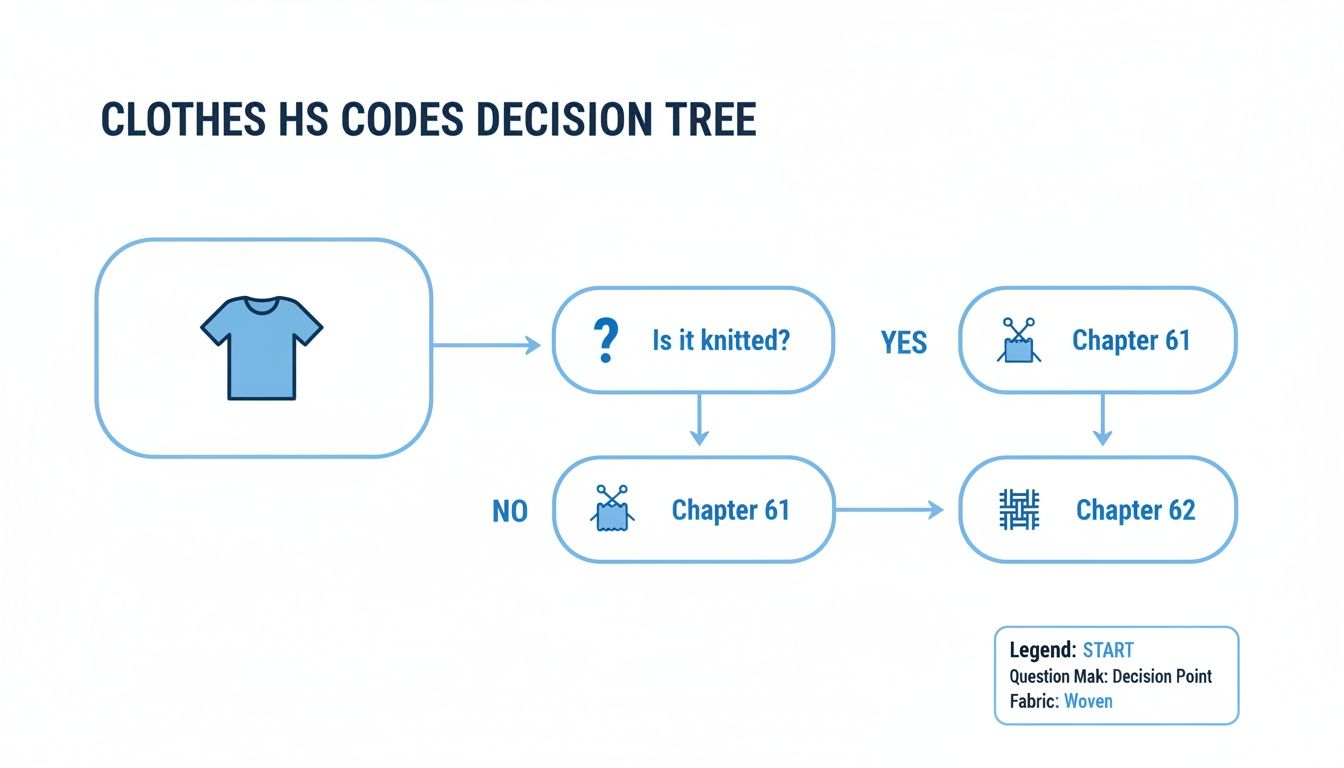
    TJX tends to reward operators who can handle short booking lead times, mixed vendor activity, and frequent execution changes without creating noise for the customer. That means your prospecting should start with lane fit and shipment behavior. If customs activity under Chapters 61 and 62 shows consistent knit and woven garment imports from origins where your partners are strong, that is the signal to build around. If your team needs sharper product mapping before outreach, keep this guide to the HS code for garments close during account qualification.

    A second filter is control. Large retail programs care about who holds responsibility at each handoff, especially when routing, customs, and final delivery sit across multiple parties. If you plan to pitch a model that shifts responsibilities between vendors, buyers, and service providers, make sure your team is clear on importer of record responsibilities in apparel freight.

    Where forwarders usually win with TJX

    The strongest opening is specific. Lead with one origin cluster, one operating advantage, and one recurring problem you can reduce.

    Use points like these:

    • Lead with lane evidence: Name the origin countries where you already control bookings, vendor communication, and document collection.
    • Speak to buying variability: Show that you can handle mixed loads, partials, and last-minute booking adjustments without losing visibility.
    • Focus on execution at destination: Mention transload coordination, appointment management, and exception follow-up tied to retail delivery requirements.

    TJX buyers hear broad claims every week. “Global reach” and “competitive rates” do not separate you. Operational detail does.

    What to avoid in outreach

    TJX is price conscious, but cheap-first messaging usually weakens your position. It signals that your service will break under pressure.

    Avoid these mistakes:

    • Rate-only outreach: Cost matters, but the first conversation usually comes from control, speed, and reliability in the right lane.
    • Generic fashion language: “We support apparel brands worldwide” is too vague to earn attention.
    • Loose compliance language: If your pitch ignores documentation accuracy, routing discipline, or vendor coordination, you sound risky.

    My rule for accounts like TJX is simple. Sell the first workable wedge, not the whole network. One lane. One service gap. One shipment pattern you can improve with less friction for the customer. That approach gets meetings.

    2. Ross Stores (Ross Dress for Less, dd’s DISCOUNTS)

    Ross Stores (Ross Dress for Less, dd’s DISCOUNTS)

    Ross Stores belongs on a freight forwarder’s target list for one reason. Process discipline decides who gets in and who gets cut.

    Ross runs an off-price model, but the sales angle is not “high apparel volume.” The better angle is repeatable execution inside a formal vendor and routing structure. Forwarders who win here usually handle booking control, document accuracy, and exception management with very little noise. Teams that improvise their way through retail imports usually struggle.

    Why Ross is a good target

    Ross is attractive because the account can support steady import activity across a broad supplier base while holding carriers and service partners to a tight standard. That creates a clear filter for prospecting. If your operation is strong in origin coordination, routing compliance, and retail delivery follow-through, Ross is worth serious attention.

    The opportunity gets sharper when you look at shipment detail instead of broad market talking points. Review the HS codes used for imported clothing and apparel programs before outreach, then map those codes to Ross shipment patterns, origin clusters, and seasonality. That gives your sales team a practical way to spot where volume concentrates and where your network fits.

    Ross is usually a strong prospect if your team can support:

    • Origin-side control across multiple vendors
    • Mixed-load planning for off-price buying patterns
    • Clean documentation and routing guide execution
    • Port-to-DC coordination with fast exception follow-up

    Best entry angle for sales teams

    Lead with proof that you can operate inside an established import process. Ross does not need a forwarder to explain retail logistics. The buyer needs confidence that your team can take instructions, manage vendor communication, and keep shipment milestones visible without creating extra work internally.

    That is also why account selection matters. A sales team may get a meeting with a good rate sheet, but Ross keeps providers that hand off cleanly to operations. If your branch has weak SOP control, inconsistent milestone updates, or frequent document corrections, this is a poor pilot account.

    Use Coreties to keep the outreach specific. Pull the likely logistics and transportation contacts, tie your message to a lane or shipment pattern you already run well, and show where your team reduces exceptions. A note about “supporting apparel brands” is too vague. A note about improving vendor booking compliance from a named origin set is much stronger.

    Ross rewards consistency. That is the trade-off and the opportunity. The freight can be recurring, but only for forwarders that treat compliance and execution as part of the sale, not as an operations problem to solve later.

    3. Burlington Stores

    Burlington Stores

    Burlington Stores belongs high on a target list for one reason. It creates repeat freight demand across a wide apparel mix, and that demand only converts into revenue for forwarders that can control execution beyond the port.

    The account is appealing because the freight problem is layered. Burlington needs steady inbound flow, broad supplier coordination, and domestic handoff that does not break once the container lands. A forwarder that only sells ocean space will struggle here. A forwarder that can manage booking discipline, transload timing, customs accuracy, and delivery visibility has a real angle.

    Where Burlington fits in a target list

    Burlington makes sense for sales teams that already know how to handle retail freight at a branch level. The buying model creates recurring shipment activity, but the true test is whether your operation can hold together when vendor quality varies, documents arrive late, and delivery timing starts slipping.

    That is why Burlington is not just a volume play. It is a process play.

    The forwarders that tend to fit Burlington well usually bring strength in a few specific areas:

    • Frequent inbound shipment management
    • Coordination from port arrival through DC delivery
    • Vendor follow-up across several origin countries
    • Exception reporting that helps the customer act quickly

    The sales wedge that tends to work

    Lead with a freight problem Burlington experiences. Inventory freshness is one. If purchase orders move through many vendors and origins, even small booking delays can push receipts back and create pressure downstream in transload, appointments, and store allocation.

    That gives sales teams a practical opening. Speak to PO flow, sailing protection, and exception control. If your team is strong in a specific origin cluster, say which one. If you have a better handoff model for transload and final delivery, explain how it reduces missed milestones. If your customs team catches classification issues early, connect that to fewer avoidable entry delays.

    Reps also need category context before they write outreach. This guide to clothes HS code helps tie garment classifications to likely shipment patterns, which makes prospecting sharper and more credible.

    A Burlington sequence should stay narrow and operational:

    • First message: Mention a lane, origin set, or apparel program your team already runs well.
    • Second message: Show one measurable operational improvement, such as better vendor booking compliance or faster issue escalation after cutoff risk appears.
    • Third message: Offer a review of a defined import flow, not a generic intro call.

    Coreties matters here because contact accuracy changes the quality of the pitch. Use it to identify the logistics, transportation, and import decision-makers tied to apparel flow, then build outreach around the shipment patterns your team can effectively support.

    Burlington can become a durable account. It is rarely an easy first close. Procurement discipline is tight, and execution mistakes show up fast in chargebacks, missed receipts, and internal friction.

    “Fresh inventory” sounds like a merchandising concern. For a retailer like Burlington, it is also a transportation and compliance issue. Repeated misses on booking, classification, or handoff timing create downstream cost long before anyone argues about rates.

    4. PVH Corp. (Calvin Klein, Tommy Hilfiger)

    PVH Corp. deserves a different sales motion than the off-price accounts above. You are not chasing spot-volume gaps or opportunistic lane wins. You are trying to earn a place inside a brand organization that already runs on calendars, approvals, vendor standards, and internal reporting.

    That changes the pitch.

    PVH is attractive because the freight problem is layered. Multiple brands create overlapping but distinct shipping rhythms. Product launches, wholesale commitments, retail delivery dates, and e-commerce replenishment put pressure on origin planning and exception handling in different ways. A forwarder that can keep those moving without creating noise has a real opening.

    Why PVH deserves attention

    PVH’s value to a freight forwarder is not just shipment count. It is the quality of the account if you fit their operating model.

    Expect a buying team that looks closely at process control:

    • Multi-brand import schedules
    • Broad sourcing coverage across overseas factories
    • Higher expectations for compliance and milestone reporting
    • Decision-makers who already work inside structured systems and vendor requirements

    That last point matters. PVH does not need a tutorial on basic forwarding. They need proof that your team can fit into an established import program and make it run better.

    What a serious pitch sounds like

    Start with predictability. Brand groups care about product timing, handoff discipline, and clean exception management. If your team can protect launch windows, reduce avoidable expedite decisions, or improve origin coordination across fragmented suppliers, say that early and back it with a specific example.

    The strongest outreach usually centers on three points:

    • Calendar control: Show that you understand booking cutoffs, seasonal peaks, and the cost of missing a delivery window tied to a brand launch or retail set date.
    • Mode judgment: Explain how you decide what should stay on ocean, what deserves deferred air, and what needs premium rescue capacity based on margin and timing.
    • Systems fit: Speak clearly about milestone visibility, EDI capability, vendor communication, and escalation discipline.

    Such situations quickly expose weak sales language. “We handle apparel” is forgettable. “We helped a brand importer reduce late origin handoffs by tightening supplier booking follow-up and exception escalation” sounds like a team that understands the job.

    There is also a real trade-off in the account. PVH can produce stable volume and long tenure. The cost of entry is higher. Approval cycles are longer, credibility matters more, and internal alignment usually matters as much as rates.

    Use Coreties here with precision. Find the logistics, transportation, import, and sourcing leaders connected to apparel flows, then map your message to actual shipment behavior, likely origin clusters, and the HS code families your team handles well. That turns outreach from generic capability claims into a point of view a brand-led importer will respect.

    One field lesson stands out. PVH teams are often less interested in hearing that freight can move from A to B. They pay attention when a forwarder can reduce planning friction, protect key dates, and communicate exceptions before those exceptions become internal problems.

    5. Gap Inc. (Gap, Old Navy, Banana Republic, Athleta)

    Gap Inc. (Gap, Old Navy, Banana Republic, Athleta)

    Gap Inc. rewards forwarders who can sell a lane plan, not just a company pitch. The business spans multiple brands, supplier bases, and demand profiles, so generic outreach usually gets ignored. A sharper entry point is a specific origin program, a consolidation fix, or a mode strategy tied to one part of the portfolio.

    Sourcing diversification matters here because it changes the sales conversation. The question is no longer whether a shipper buys across several countries. The question is whether your team can support the countries, handoff points, and service expectations that come with that sourcing mix.

    That is the genuine opening.

    If your strength sits in Vietnam, India, Indonesia, Bangladesh, or Cambodia, Gap deserves attention. If you can pair those origins with disciplined consolidation, vendor coordination, and dependable transit planning, you have a case to make. If you only have coverage in one pocket of Asia and need workarounds everywhere else, this account gets harder fast.

    Gap also forces better segmentation than many forwarders use. Old Navy freight does not deserve the same message as Athleta or Banana Republic freight. Margin tolerance, speed requirements, and SKU volatility differ by brand, and your outreach should reflect that.

    A practical prospecting framework looks like this:

    • Start with HS code families you handle well: Use customs data to isolate apparel categories where your team already has strong origin control and booking discipline.
    • Study recurring shipment patterns: Look for repeat origins, seasonality, and consolidation opportunities instead of sending a broad capability deck.
    • Match your pitch to the brand model: Value retail needs cost control and consistency. Premium or assortment-sensitive flows may justify faster recovery options and tighter exception handling.
    • Target the right operators: Use Coreties to identify logistics, transportation, sourcing, and import leaders tied to those shipment patterns, then tailor the message to the lanes they likely manage.

    Many freight sales efforts lose credibility at this point. The rep says the company can handle apparel from Asia to the U.S. That tells Gap nothing useful. A better message is specific: you spotted repeated movement in a lane your team runs well, you see room to tighten consolidation or vendor booking compliance, and you can explain how that would reduce friction for the people managing the flow.

    Gap can be a strong account for forwarders that run multi-country origin programs with discipline. It can also expose weak execution quickly. If your operation depends on constant heroics, inconsistent origin follow-up, or loose communication between overseas offices and the U.S. team, a multi-brand importer like this will surface those gaps early.

    6. G-III Apparel Group (DKNY, Donna Karan, Karl Lagerfeld)

    G-III Apparel Group (DKNY, Donna Karan, Karl Lagerfeld)

    G-III Apparel Group is a smart prospect for forwarders that want meaningful apparel volume without walking straight into the complexity of a massive big-box retailer. The company’s mix of owned and licensed brands creates steady import activity, but it also creates operating pressure that weak forwarders struggle to handle.

    The opportunity is straightforward. G-III needs partners that can support fashion-driven replenishment, wholesale delivery windows, and the occasional recovery shipment when a launch date or retailer commitment gets tight. That combination gives good sales teams room to stand out, especially if they bring shipment-level insight instead of a generic apparel pitch.

    Why G-III is worth targeting

    G-III works best for forwarders that already know which apparel categories and origin lanes they run well. Start with customs activity tied to the HS code families you can service consistently, then look for recurring supplier countries, booking cadence, and signs of deadline-sensitive movement. That gives you a sharper account plan and a better reason to reach out.

    This is also a strong Coreties account. Once you identify the product categories and lanes that matter, use Coreties to find the logistics, transportation, sourcing, and import leaders connected to those flows. Outreach gets stronger when it references a likely operating reality, such as repeated movement from a key origin or patterns that suggest seasonal pressure, instead of broad claims about global coverage.

    What to emphasize in outreach

    G-III is not just buying container space. The company is managing brand commitments, delivery timing, and retailer expectations across multiple labels. Your message should reflect that.

    Focus on points like these:

    • Calendar protection: Show that your team can keep purchase order timing, origin coordination, and milestone visibility under control when vendor execution gets uneven.
    • Selective air support: Position air freight as a recovery option for specific launch or wholesale commitments, not as an expensive substitute for weak planning.
    • Multi-brand account discipline: Explain how your team handles different service needs across brands without letting communication break down.
    • Exception handling: Be clear about escalation paths, response times, and who owns decisions when cargo misses plan.

    One mistake reps make with G-III is pitching the company as if every brand behaves the same way. They do not. Licensed brands can shift faster than expected. Priorities change by season, by customer, and by product category. A forwarder that only sells a fixed routing guide and a rate sheet will sound replaceable.

    The better pitch is operational. Show that you can support unstable parts of the apparel cycle without creating more noise for the customer. If you can point to a lane pattern, a category fit, and a clear exception process, you will have a stronger conversation with this account than a rep who leads with capacity claims alone.

    7. Centric Brands

    Centric Brands is a strong target for forwarders that sell process control, not just freight rates. The company operates across licensed, owned, and private-label brands, which usually means mixed shipment profiles, changing production calendars, and stricter supplier coordination than a single-brand importer.

    That sourcing mix matters. Centric can shift volume across countries, product categories, and vendor groups faster than a simpler apparel account. For a sales rep, that creates an opening. The pitch should show that you can stabilize origin planning, booking discipline, and shipment visibility when the supplier base is spread across multiple programs.

    Why Centric is worth pursuing

    Centric is attractive because the account has real operating complexity without being a pure one-off spot buyer. A contract manufacturing model puts pressure on vendor follow-through, document accuracy, and handoff timing at origin. If your team is good at consolidation planning, milestone management, and exception follow-up, that capability is easier to prove here than at a shipper with a narrower model.

    This is also the kind of account where trade data becomes useful in outreach. Review HS code activity, origin concentration, and seasonal shipment patterns before the first email. Then use Coreties to identify the likely owners across logistics, transportation, imports, or supply chain and tailor the message by function. A VP of logistics cares about service consistency and escalation control. An imports manager usually cares about vendor compliance, booking accuracy, and avoiding preventable delays.

    What works in outreach

    Start with one lane, one category, or one recurring execution problem. Broad claims about global coverage are easy to ignore.

    A better message sounds like this:

    • Show origin control: Explain how your team manages booking discipline, factory follow-up, and cut-off compliance across vendors that perform at different levels.
    • Use shipment signals: Reference a likely sourcing corridor, category flow, or seasonality pattern tied to apparel programs, not a generic statement about garment imports.
    • Address compliance risk: Speak to document accuracy, carton visibility, and milestone reporting. Those points matter more than a broad promise to save money.
    • Define exception ownership: Say who responds when cargo slips plan, how fast updates are issued, and how decisions get escalated.

    One trade-off is worth stating clearly. A forwarder can help Centric create a more stable freight plan, but only if the operating model supports supplier accountability. That is part of why responsible sourcing and supplier treatment matter in apparel, as discussed in this analysis of broken apparel sourcing partnerships. Forwarders do not set buying terms, but they do influence whether shipments move with control or with constant last-minute recovery work.

    Centric is a good fit for teams that know how to turn shipment data into a sales plan. If you can connect HS codes, lane behavior, and the right decision-maker inside the account, you will sound more credible than a rep who leads with price and waits for an RFQ.

    Top 7 Garment Importers Comparison

    Company Implementation complexity Resource requirements Expected outcomes Ideal use cases Key advantages Key challenges
    The TJX Companies (T.J. Maxx, Marshalls, HomeGoods) High: large scale, frequent POs, strict compliance Large LCL/FCL capacity, near-port transload, strong audit support Steady year-round volumes with rapid turn cycles Asia–US lanes, consolidation, near-port transload providers Continuous replenishment, clear compliance standards Very price sensitive; stringent vendor approval
    Ross Stores (Ross Dress for Less, dd’s DISCOUNTS) Moderate-high: mixed SKUs, tight routing guides Flexible mixed-SKU handling, DC appointmenting, audit cadence Regular programmatic volumes with repeat business Forwarders with DC integration and cost-efficient routing Consistent replenishment cycles, clear compliance manual Aggressive cost focus, selective onboarding
    Burlington Stores Moderate: focus on freshness and turnover Ocean consolidation, transload, reliable domestic linehaul Consistent inbound flows across store network Ocean + transload + domestic linehaul operators Vendor portal and supply-chain transparency ease onboarding Cost-driven procurement; limited trials for new providers
    PVH Corp. (Calvin Klein, Tommy Hilfiger) High: multi-brand, multi-channel planning and peaks High-capacity ocean/air, EDI/DC systems, advanced KPIs Stable high-volume programs with predictable seasonal peaks Expert logistics partners for brand programs Operational sophistication enables fast process adoption Tight SLAs and relationship-led approval cycles
    Gap Inc. (Gap, Old Navy, Banana Republic, Athleta) High: multi-brand routing and multi-origin sourcing Multi-lane origin consolidation, modal flexibility, VAS Predictable seasonal flows and consolidation opportunities Origin consolidation, VAS providers, multimodal lanes Diverse country mix creates multiple lane options Complex routing/compliance and pricing pressure in value segments
    G-III Apparel Group (DKNY, Donna Karan, Karl Lagerfeld) Moderate: brand/season variability, wholesale demands Ocean and time-sensitive air capacity, wholesale distribution links Year-round import demand with fashion drop peaks Time-sensitive air freight and wholesale distribution support Familiar operations teams, multi-brand import volume Licenses or brand shifts can abruptly change volumes
    Centric Brands Moderate: predictable seasonality but licensing variability Origin consolidation, compliance programs, seasonal planning Optimized PO/sailing with seasonal predictability Kidswear seasonality optimization, origin consolidation Clear supplier compliance playbook, predictable seasons Licensing cycles and decentralized decision making

    Turn Apparel Insights Into Lasting Revenue

    Knowing the biggest importers of garments is useful. It’s not enough.

    Many freight teams lose in this segment for a simple reason. They prospect at the company level, but apparel buys and ships at the lane, calendar, and compliance level. A logo on a target list doesn’t tell you whether the account fits your network, your operating model, or your sales motion. Shipment behavior does.

    That’s the core playbook.

    Start with customs activity under the apparel chapters that matter. Look for frequency, lane concentration, and whether the importer behaves like a retailer with replenishment flow or a brand group with planned seasonal peaks. Then qualify hard. If your team is strong in Vietnam FCL, don’t burn hours on accounts dominated by origins where your network is thin. If your operation is built for flexible consolidation, lean into off-price retail accounts where mixed-SKU flow is normal. If your team handles exception-sensitive, calendar-driven freight well, target brand groups that care about launch timing and structured vendor execution.

    The second step is contact strategy. Large importers rarely respond because the wrong person gets the wrong message. A generic email to a corporate inbox won’t create movement. You need the logistics manager, transportation lead, sourcing operations contact, or procurement stakeholder who can connect your offer to active freight. Then you need a reason for them to care now. Recent shipment activity, origin changes, tariff pressure, or recurring lane concentration are all better opening hooks than “just introducing ourselves.”

    This is also where teams often waste the most time. They pull data from one place, contacts from another, then spend hours trying to turn raw shipment information into a usable message. The process breaks because it’s too manual. Reps either skip the research or over-research and never send the email.

    A workable system compresses all of that. Build the list. Filter by lane and product relevance. Find the right person. Write the outreach around a real shipping signal. Then send enough volume to learn which angles are landing. If your reps can’t do that consistently, the issue usually isn’t effort. It’s workflow design.

    Coreties fits naturally into that kind of process because it’s built around customs-driven lead discovery and logistics outreach. For teams selling to importers of garments, that means less time hunting and more time talking to accounts that match the network you already have.

    The long-term win isn’t one converted shipper. It’s a repeatable revenue engine. Apparel is still one of the most commercially important cargo categories in the market, but it’s crowded and unforgiving. The forwarders who win aren’t the ones sending the most messages. They’re the ones showing up with the clearest evidence that they understand the importer’s freight.

    If you want another practical example of turning messy information into usable business intelligence, this piece on Mastering Data Parsing to Transform Unstructured Data Into Business Insights is worth reading.

    The teams that treat garment prospecting like account-based logistics sales will keep winning. The teams that rely on generic cold outreach will keep getting ignored.


    If you want a faster way to find importers of garments, identify verified logistics contacts, and build outreach around real shipment data, take a look at Coreties. It’s designed for freight forwarders, carriers, and logistics sales teams that need a practical workflow for turning customs data into qualified conversations.

  • 7 Key Exporters From Thailand to Target in 2026

    7 Key Exporters From Thailand to Target in 2026

    A rep opens a list of Thai exporters on Monday morning and sees the usual problem. There are plenty of names, but no clear order of attack. Ten accounts look large enough to matter. Five are probably locked into global tenders. Three may have real lane friction, but nothing in a basic directory tells you which three.

    Prospecting breaks down at that stage.

    Teams pull a list, tag companies by product, and send broad outreach. Response rates stay weak because the message could have gone to any shipper in any country. Timing is wrong, the value proposition is vague, and the exporter sees no proof that the seller understands its shipment profile. High-potential accounts usually sit elsewhere. They tend to have repeat flows, operational pressure points, and trade lanes that match your network. You find them faster with shipment signals than with static company databases.

    Thailand gives freight sellers a strong hunting ground. The country’s export base is broad, active, and tied to global demand across food, chemicals, polymers, rubber, and industrial products, as noted by the International Trade Administration’s Thailand market overview. Export growth creates motion. Routing decisions change, procurement teams review providers, and service failures become easier to expose. The commercial opportunity is not “Thai exports” in general. It is choosing the right shipper profile inside that volume.

    That is the angle of this guide. It is a scoring framework for freight forwarders, NVOCCs, carriers, and 3PL teams that want to identify which exporters from Thailand are worth prioritizing. The seven companies below matter, but the list alone is not the point. The useful part is how to read each exporter. Which accounts are operationally mature. Which ones require a narrow entry point. Which ones reward reefer control, documentation accuracy, hazardous cargo discipline, schedule protection, or lane-specific pricing.

    I have seen teams waste a quarter chasing marquee names with generic “can we quote your shipments?” emails.

    A better approach is simpler and harder. Score the account first. Check shipment frequency, destination concentration, product handling requirements, seasonality, incumbent complexity, and signs of network stress. Then write outreach that sounds like it came from someone who has moved that freight before. The sections that follow are built to help you do exactly that.

    1. Thai Union Group PCL

    Website: thaiunion.com

    A sales rep sees Thai Union on a target list and assumes the account is attractive because of scale. An experienced logistics team asks a harder question first. Where is the opening, and what would make procurement or operations take a meeting from one more forwarder?

    Thai Union deserves attention because the cargo profile is layered. The company operates across seafood, shelf-stable products, frozen items, pet food, and ingredients. That mix affects booking behavior, documentation flow, packaging standards, and service expectations. Thailand’s food export base remains significant, as reflected in export reporting from the Office of Agricultural Economics, Ministry of Agriculture and Cooperatives, so Thai Union belongs on a serious prospect list. The mistake is treating it like a broad rate-shopping account.

    Why this exporter matters

    This is a network discipline account. A team that handles ambient food well may still struggle with frozen cargo cutoffs, retailer-driven documentation, or customer-specific SOPs tied to destination markets. Thai Union is large enough that different business units can behave like separate prospects under one parent name.

    Score the account on the factors that shape a win:

    • Cargo mix fit: Separate shelf-stable, frozen, and pet food flows before you estimate opportunity. They do not buy the same service.
    • Incumbent strength: Expect formal procurement, established carriers, and tested backup providers. Entry usually comes through a narrow lane or a recovery need.
    • Operational tolerance: Food exporters punish preventable errors fast. Late documents, weak exception handling, and vague milestone updates get remembered.
    • Destination concentration: Repeated port pairs matter more than headline export volume. Concentrated lanes create a better case for schedule protection and overflow support.

    I would also check whether shipment patterns suggest steady replenishment programs or event-driven demand spikes. The outreach changes depending on that answer.

    Where forwarders usually misread the opportunity

    The common mistake is to sell “global coverage” and “competitive pricing” to a shipper that already has both options in market. Thai Union is more likely to respond to a provider who can solve a specific service risk. That could be reefer monitoring on a vulnerable lane, cleaner handoff control at a congested transshipment point, or a backup allocation plan during peak demand.

    That is why customs data matters here. Look for consistency in destination markets, carrier rotation, booking cadence, and signs of split routing. A pattern of recurring shipments into the same gateways can indicate a stable program. Split volumes across multiple providers can indicate either deliberate risk management or performance friction. Those are very different sales situations.

    If your team is strongest in food-grade and temperature-sensitive exports, lead with that proof and point to your experience with perishable logistics services for exporters managing cold-chain risk. If your strength is general dry freight, be careful. This account can consume a lot of selling time without producing a credible point of entry.

    What works in outreach

    Use an operating hypothesis, not a generic intro.

    For example, if shipment history shows repeat US or EU destinations with similar product categories, write to the lane and the failure point. Mention schedule protection, document accuracy, contingency space, or escalation ownership. Keep the note short enough that an operations manager can scan it and decide whether it reflects real understanding.

    A workable message sounds like this:

    “Reviewed your recurring food export flows into the same destination gateways. We support shippers that need backup allocation and tighter exception handling when schedule changes threaten customer delivery windows. If your team is reviewing contingency coverage on any of those lanes, I can share how we structure bookings, document control, and escalation.”

    That is specific enough to be credible and narrow enough to invite a response.

    If you need a broader lane overview before outreach, this guide on export from Thailand is a useful starting point for aligning shipper profile with route strategy.

    2. Charoen Pokphand Foods PCL

    Website: cpfworldwide.com

    Charoen Pokphand Foods PCL (CPF)

    CPF is a reefer sales test. If your team does not understand cold-chain discipline, forecast-based booking, and sanitary document pressure, this is the wrong account to pursue aggressively.

    That does not mean the account is closed. It means your approach has to be built around operational trust.

    Where CPF fits in a prospecting stack

    CPF’s strength is vertical integration. For a logistics seller, that translates into steadier planning, more structured documentation, and fewer random ad hoc moves than smaller food exporters. The trade-off is obvious. Procurement is formal, onboarding is slower, and incumbents are difficult to displace without a measurable operational edge.

    Use a high bar when scoring them:

    • Reefer fit: Prioritize only if you can demonstrate container quality, monitoring discipline, and escalation ownership.
    • Compliance fit: Food exporters want clean process. They do not want to teach a provider how their paperwork works.
    • Forecast fit: This account rewards teams that can support planned programs rather than chase spot freight.

    If your network is stronger in dry cargo than in perishables, CPF may still be worth tracking, but not as an immediate close target.

    For teams building stronger temperature-controlled positioning, this overview of global perishable services is relevant to how you frame capability.

    Messaging that gets read

    Thai business culture tends to reward patience, respect for hierarchy, and relationship-led communication, according to this guide on working with suppliers in Thailand. That is especially relevant with a large agrifood shipper. Aggressive sequencing and “just following up again” language can hurt more than help.

    So keep your message calm, specific, and useful.

    A strong first email to CPF should reference one thing only. For example, a recurring destination region, a likely reefer lane challenge, or support for overflow periods. Do not stack every service you offer into one note.

    What works:

    We support food exporters that need reliable reefer execution when forecasted allocations tighten. If your team reviews backup capacity on selected lanes from Thailand, I can share where we have consistent equipment access and how we handle exception updates.

    What does not work:

    “We move refrigerated cargo worldwide and would love to be added to your vendor list.”

    That sounds interchangeable.

    CPF is worth targeting when you can prove one of three things. You reduce execution risk. You offer a contingency option. Or you can support lane-specific growth without operational noise.

    3. Indorama Ventures PCL

    Website: indoramaventures.com

    Indorama Ventures PCL (IVL)

    A sales rep sees Indorama Ventures on a target list, notices the global footprint, and assumes the account is worth chasing immediately. That is usually the wrong starting point. IVL can be a strong account, but only for teams that sell with process, lane visibility, and operational discipline.

    This shipper sits in a category where size matters less than fit. Polyester, PET, packaging materials, and related industrial flows usually come with repeatable shipment patterns, strict documentation requirements, and procurement teams that compare forwarders on execution consistency. A forwarder that performs well on ad hoc problem-solving but struggles to standardize SOPs will have a hard time converting and keeping this business.

    How to score IVL realistically

    A better way to qualify IVL is to look past brand recognition and score the account on shipment behavior. Thailand’s manufacturing base supports heavy movement in industrial goods and machinery, as reflected in the country’s manufacturing and capital goods export profile from the International Trade Administration. IVL fits that structured export environment.

    For freight sales, the screening questions are practical:

    • Can your team handle recurring industrial cargo with tight document control?
    • Can you support more than one routing option without rate or service inconsistency?
    • Can operations, pricing, and customer service hold the same SOP after handoff?
    • Can you present lane evidence during procurement instead of relying on relationship selling alone?

    Customs data should drive the next step. Review shipment frequency, consignee concentration, destination clusters, and container mix. A stable pattern usually signals a program account. A fragmented pattern may point to product-level variation, regional customer requirements, or a buying team that values backup coverage over full-network conversion.

    Teams building regional chemical and polymer coverage often benefit from a tighter Pan-Asia logistics operating model, because account growth here depends on consistency across multiple Asian and intercontinental lanes, not one-off wins.

    Best entry points

    The best opening is narrow and operational. Offer support for a secondary trade lane, overflow during peak allocation periods, a customer-specific delivery program, or a documentation-heavy segment such as recycled or sustainability-linked material flows.

    That approach works because it lowers switching risk.

    A few trade-offs are clear with IVL:

    • Standardization beats improvisation: Buyers in this category usually reward repeatable execution.
    • Rate pressure exists: Low pricing gets attention, but weak exception management kills credibility fast.
    • Timing affects response quality: Outreach tied to visible shipment patterns is stronger than generic quarterly prospecting.

    The message also needs to match the traffic pattern you see. If customs records show concentration into one region, send a corridor-specific note with a clear service angle. If the volume spreads across smaller consignee programs, position your team around control, escalation speed, and clean handoffs between origin and destination.

    Generalist messaging underperforms here. IVL is a better fit for forwarders that can prove process control in plain language and back it up with shipment-level evidence.

    4. PTT Global Chemical PCL

    Website: pttgcgroup.com

    SCG Chemicals (SCGC)

    A vessel rolls, a plant keeps producing, and the exporter still expects the cargo plan to hold. That is the operating reality with PTT Global Chemical. Sales teams that treat GC like a standard rate-buying account usually lose credibility early, because integrated petrochemical shippers screen vendors on process control before they care about presentation.

    GC is attractive for a different reason than a generic "top exporter" list would suggest. The value is in repeatable freight patterns. Product families, plant-linked output, and recurring customer programs can produce stable lane volumes if your team can read the shipment data properly and match it to a specific service offer.

    That changes how to score the account.

    A forwarder should examine customs activity for signs such as destination concentration, shipment cadence, consignee spread, and packaging or product clues that point to containerized polymer flows versus more specialized handling requirements. Those signals help separate a real entry point from a broad but unfocused target list.

    The account tends to fit forwarders that already have a chemical playbook in place:

    • Experience with polymer or chemical export bookings
    • Operations teams that follow tight SOPs without constant supervision
    • Lane reviews supported by shipment-level evidence, not generic promises
    • Documentation discipline across recurring customer programs

    Where reps struggle is predictable. They pitch speed, relationships, and general responsiveness to a shipper that usually buys governance, consistency, and low exception risk. Vendor onboarding, service measurement, and internal approvals can be strict. If your team cannot explain cutoff management, booking controls, rollover prevention, and who owns escalation when a sailing slips, the sales process slows down fast.

    I would also qualify this account hard before assigning senior sales time. If customs records suggest concentrated exports into regional manufacturing hubs, lead with a corridor plan and a clear operating structure. If the traffic looks fragmented across multiple buyers, position control towers, milestone visibility, and clean handoffs between Thailand origin teams and destination offices. For teams building a regional offer, this overview of a Pan-Asia logistics operating model is a useful frame for the conversation.

    A message that works with GC is usually specific and restrained:

    We reviewed your likely export pattern by lane and customer mix. We see an opportunity to support one controlled segment first, either a regional polymer program or an overflow lane during tighter vessel allocation. If useful, we can map the handoff points, booking controls, and exception workflow before discussing rates.

    That kind of outreach respects how integrated chemical shippers buy. It lowers perceived switching risk and gives procurement or logistics managers something operational to evaluate.

    The trade-off is clear. GC can become a high-retention account with recurring freight and structured reviews. It can also strain weak operations teams when plant maintenance, allocation changes, or short booking windows compress the shipping cycle. Flexible capacity helps, but disciplined execution is what keeps the account.

    5. SCG Chemicals SCGC

    Website: scgchemicals.com

    A planner at SCGC confirms a resin order for a customer with a fixed production window. The container still has to leave on schedule, arrive in clean condition, and hit the consignee’s receiving plan without surprises. That is the standard you are selling into.

    SCGC rewards forwarders who can connect commercial discipline with operational control. Resin and specialty compound exports often sit inside tighter customer commitments than general industrial cargo. If a shipment misses a vessel, arrives with preventable handling issues, or goes dark at transshipment, the problem reaches beyond transport and into customer confidence.

    Why SCGC is a valuable target

    For sales teams, the opportunity starts with account structure. SCGC should be scored as several sub-accounts, not one broad name on a target list. Separate the business by product family, export lane, packaging format, and buyer type. That is how you identify where a forwarder can win a pilot move instead of wasting months on a generic enterprise pitch.

    The practical fit is usually strongest where your team can map and control repeatable flows such as:

    • packaging resin programs with fixed booking rhythms
    • industrial compounds moving to established manufacturing destinations
    • customer-specific lanes with stable forecast patterns
    • shipments where cargo condition, documentation accuracy, and milestone visibility affect downstream production planning

    This cargo often fits planned ocean programs. Your service must support consistency in addition to simple movement. That changes the sales motion. Spot-rate language is rarely enough. Buyers want to hear how bookings are protected, how exceptions are escalated, and how destination milestones reach the consignee.

    Outreach that reflects the shipper’s reality

    Good outreach to SCGC sounds precise. It also shows restraint.

    Lead with one corridor or one shipment profile you believe matches their operating model. Mention a practical control point your team handles well, such as bagged cargo handling, feeder risk management, or milestone updates shared with both shipper and consignee. That gives logistics managers something operational to assess.

    A message in this category can be simple:

    We reviewed SCGC’s likely export profile by recurring lane and shipment type. One area where we may help is controlled support for a resin program that needs stable bookings, clear transshipment visibility, and disciplined cargo handling at origin. If useful, we can outline the operating checkpoints first and validate fit before discussing pricing.

    That approach works because it lowers switching risk. It also matches how technical and procurement stakeholders tend to evaluate freight providers in chemical supply chains.

    One caution from experience. Broad sustainability messaging usually does little here unless it ties back to execution. If your value is lower damage exposure, tighter milestone reporting, or cleaner handoffs at destination, say that directly. SCGC is the kind of account where a narrow pilot, reviewed properly, can open the door to a much larger book of business.

    6. Sri Trang Agro-Industry PCL

    Website: sritranggroup.com

    A sales rep gets one Sri Trang inquiry, quotes fast, and assumes rubber will move like any other commodity box. The critical work then begins. Equipment suitability, cargo condition, moisture exposure, and document accuracy all show up before the shipment reaches destination.

    That is why Sri Trang belongs on a forwarder target list. This is the kind of account that rewards operational discipline more than polished prospecting.

    The strategic case for targeting STA

    Sri Trang matters because rubber remains one of Thailand’s defining export categories, and large rubber shippers can produce repeatable volume on stable trade lanes. For a forwarder trying to build share in industrial raw materials, this is a practical account to score highly if your team already handles cargo integrity controls well.

    The better way to evaluate STA is by shipment profile, not brand recognition alone. Check customs data for recurring ports, buyer concentration, container cadence, and seasonality. A shipper with consistent lane repetition and downstream manufacturing customers is often worth more than a larger name with fragmented routing and irregular booking behavior.

    There is also a real trade-off here. Rubber can create steady business, but service failure is expensive. A missed cutoff or dirty container does not just create a one-off exception. It can disrupt a factory schedule, trigger claims exposure, and force the shipper to spend time validating cargo condition that should have been controlled at origin.

    How to approach this account

    Generic commodity language will not carry this conversation. Sri Trang’s logistics team is more likely to respond when outreach shows you understand the failure points that affect rubber exports.

    Focus on the controls that matter in execution:

    • Equipment suitability: Confirm how container cleanliness and prior cargo checks are handled before release.
    • Cutoff and booking control: Explain how your team protects bookings and escalates rollover risk early.
    • Cargo condition and documentation: Both documentation and cargo condition are critical.
    • Lane-specific visibility: Show how milestones are reported on the corridors that matter to their buyers.

    If your network supports multiple transport structures, mention that only when it matches an observed shipment pattern. I would not pitch optionality for its own sake. I would point to one likely corridor, one shipment type, and one control point where service quality changes the outcome.

    A message that fits this account can be brief:

    We reviewed Sri Trang’s likely export flow by lane and shipment cadence. One area where we may help is origin control for rubber shipments that need clean equipment, dependable cutoff management, and clear milestone reporting to support downstream production planning. If useful, we can outline the operating checkpoints first and confirm fit before discussing rates.

    That works because it sounds like an operator wrote it. For Sri Trang, that is usually the difference between being ignored and getting a serious reply.

    7. Mitr Phol Group

    Website: mitrphol.com

    A forwarder usually feels the difference with a sugar account in the first call. The shipper is not testing who can quote fastest. They are testing who understands harvest timing, inventory buildup, port allocation risk, and how byproducts change the shipping mix across the year.

    That is why Mitr Phol belongs on a priority list for exporters from Thailand. This account suits teams that score targets by shipment pattern and buying process, not by brand recognition alone. If your customs data workflow shows concentrated export windows, repeat destinations, and stable commodity programs, Mitr Phol deserves a closer look.

    Why Mitr Phol belongs on the list

    Mitr Phol stands out because the sales motion is structured. Sugar, ethanol, and biomass-related activity create a shipper profile that often rewards planning discipline more than broad service menus. For a forwarder, that changes qualification. The question is not whether you can handle cargo. The question is whether you can support a seasonal program without losing control when volumes bunch around the same lane and week.

    This also gives the account a useful scoring signal. Exporters with cyclical programs can be highly attractive when your network matches their timing. They can also drain resources if your carrier relationships are shallow on the relevant corridors. I would rank Mitr Phol higher only when shipment data and procurement timing line up with capacity you can secure.

    What to examine before outreach

    Start with cadence and concentration. Look for recurring lane patterns, shipment clustering around harvest and production cycles, and signs that bookings move in blocks rather than as scattered ad hoc loads. That tells you whether to treat the account as a tender pursuit, a contract allocation opportunity, or a low-probability spot target.

    Then examine the buying environment:

    • Seasonal density: Do shipment peaks create weeks where allocation discipline matters more than rate?
    • Procurement structure: Are you prepared for a formal review process with lane-level discussions instead of one-off pricing?
    • Commodity handling fit: Can your operation support the documentation, scheduling, and equipment planning this cargo requires?
    • Reporting needs: If the customer tracks sustainability or supply chain exceptions closely, can you show milestone reporting that matches that expectation?

    Those points matter because Mitr Phol is a planning account. Outreach should reflect that.

    A weak message offers global coverage and vague service claims. A useful message shows that you reviewed likely export patterns and understand the trade-off between rate, allocation, and schedule reliability during peak periods. If your team has experience handling industrial-agri cargo conversations, say so plainly. That angle is more credible here than a generic multinational pitch.

    A message in the right tone could read like this:

    We reviewed Mitr Phol’s likely export profile by shipment cycle and lane concentration. Our team may be a fit where seasonal volume requires dependable allocation, disciplined booking control, and milestone reporting that supports program planning rather than one-off spot execution. If useful, we can start with one corridor and outline the operating checkpoints before discussing pricing.

    That approach works because it respects how this shipper is likely to buy. Mitr Phol is not just another large name on a Thailand exporter list. For the right forwarder, it is a score-and-prioritize account where customs signals, seasonality, and procurement fit should drive the sales decision.

    Top 7 Thai Exporters Comparison

    Company Implementation complexity Resource requirements Expected outcomes Ideal use cases Key advantages
    Thai Union Group PCL Moderate: mature systems but requires compliance and niche value propositions to access panels Mixed cold-chain and ambient logistics, traceability/QA integration, high-volume ocean capacity Predictable, high-volume US lanes for tuna and seafood, with seasonal variability Large-volume seafood programs, traceable/ESG-driven supply chains Global brands, advanced traceability (SeaChange), strong US market access
    Charoen Pokphand Foods PCL (CPF) Moderate to high: refrigerated/chilled compliance and centralized procurement add complexity Strong reefer capacity, cold-chain handling, SPS documentation and contingency routing Steady reefer export volumes with firm forecasts; occasional last-minute routing from SPS/quota changes Refrigerated/frozen protein programs, multi-origin contingency plans Vertical feed-farm-food integration, strong export compliance teams
    Indorama Ventures PCL (IVL) Low to moderate: commodity flows are straightforward but quality/moisture controls are critical Bulk/container polymer handling, storage for rPET, documentation for ISCC certification Year-round, high-volume polymer flows sensitive to commodity price swings Commodity resin supply, recycled/ISCC-certified resin programs for converters Scale in PET value chain, growing rPET/ISCC offerings, standardized documentation
    PTT Global Chemical PCL (GC) Moderate: tight SLAs and EDI/vendor portal expectations require disciplined execution Reliable bulk/polymer equipment, slot reliability, strict quality control and EDI integration Consistent export flows aligned with plant runs; vulnerable to shutdown-driven compression Stable upstream feedstock contracts, large-volume polymer lanes Integrated refinery-to-polymers chain, broad product slate, mature EDI systems
    SCG Chemicals (SCGC) Moderate: centralized procurement and onboarding cycles can be lengthy Bag/FIBC/bulk handling, technical application support collaboration, occasional specialty handling Predictable resin shipments suited to fixed-lane ocean programs; cyclical volume shifts possible Packaging/resin supply, technical/spec-driven partnerships Broad grade slate, green polymer solutions, application engineering support
    Sri Trang Agro-Industry PCL (STA) Low to moderate: commodity flows are straightforward but quality/moisture controls are critical Bulk/container handling, moisture-controlled storage and clean equipment, export compliance Year-round bulk rubber flows that are generally predictable but price-sensitive Tire, medical and industrial rubber supply chains requiring reliable commodity flows Large processing capacity, integrated sourcing, mature export experience
    Mitr Phol Group Moderate: pronounced seasonality and quota/tariff exposure require planning Bulk/container sugar handling, tender processes, sustainability reporting and compliance Large, cyclical export programs suitable for multi-year lane planning; shipment bunching possible Raw/refined sugar and ethanol bulk programs, long-term lane commitments Multi-mill export network, strong sustainability reporting, professional tendering

    Turn Insights into Action with Data-Driven Outreach

    A Bangkok sales rep pulls a list of Thai exporters, sends the same intro email to all of them, and gets silence. The problem is usually not volume. It is account selection and message fit.

    The seven exporters above should not sit in one generic prospecting queue. A forwarder that can win Thai Union on food-safe backup capacity may have no business calling on IVL without clear lane data, packaging compatibility, and a procurement entry point. A team that performs well on Sri Trang’s commodity flows may still struggle with CPF if reefer execution is not already proven. Good pipeline reviews separate those cases early.

    Start with a scorecard your sales and operations teams can both defend. I use four filters first:

    • Lane fit: the exporter already ships into corridors where your pricing, carrier relationships, and destination handling are credible
    • Cargo fit: your team has real operating experience with the product, packaging, temperature, cleanliness, documentation, or safety requirements involved
    • Buying entry point: there is a realistic opening such as overflow allocation, a secondary trade lane, a seasonal volume spike, or a service recovery issue
    • Shipment signal: customs data shows repeat traffic, stable consignee patterns, or a carrier mix that suggests the incumbent setup is not locked down

    That changes the conversation fast.

    Instead of asking, “Do you need a freight partner?”, write to the lane manager or procurement lead with a point of view tied to their traffic. For Thai Union, that may be a note about backup routing for time-sensitive food exports during port disruption. For SCGC, it may be a tighter message around a specific resin lane where your team already handles bagged or bulk chemical cargo. For Mitr Phol, the stronger opener is often planning discipline. Capacity planning before peak movement matters more than a generic rate promise.

    Customs data helps you choose which angle to use. It can show whether an exporter ships in steady weekly patterns or in concentrated bursts, whether buyers are diversified or concentrated, and whether the carrier mix changes often enough to create an opening. Those are practical sales signals, not research trivia. They help a rep decide who deserves a customized sequence, who belongs in a light-touch nurture track, and who should be dropped for now.

    Coreties is relevant here because it lets teams identify Thai exporters, filter by shipment behavior, and find decision-makers without relying on a generic company database. Used well, that shortens the gap between account selection and account-specific outreach.

    Message quality still decides whether data turns into meetings. Teams with strong targeting and weak copy usually waste the advantage, so this guide on email marketing for lead generation is a useful reference if your outreach lacks specificity.

    The practical goal is simple. Send fewer emails, but make each one reflect the exporter’s lanes, cargo profile, and likely buying trigger.

    If your team wants to build a cleaner prospect list for exporters from Thailand, Coreties is built for that workflow. It helps freight forwarders, carriers, and logistics sales teams turn customs data into target accounts, find decision-makers, and write outreach based on actual trade behavior instead of guesswork.

  • Greenfield Produce Imports: 2026 Playbook to win greenfield produce imports

    Greenfield Produce Imports: 2026 Playbook to win greenfield produce imports

    In the world of produce logistics, everyone wants to land the big, established accounts. But what if you could find the next big account before they even know they're big? That's the idea behind a greenfield produce import.

    Think of it like finding a patch of fertile, unplowed farmland in a valley where every other plot has been claimed for years. These are companies just starting to import produce, meaning their supply chains are brand new and their loyalties haven't been locked down yet.

    What is a Greenfield Produce Import?

    Two wooden crates of fresh avocados and tomatoes at a shipping port with blue and white containers.

    For a freight forwarder or carrier, spotting a greenfield importer is like getting a call from a client before they even realize they need your help. These businesses are building their logistics from scratch, making them incredibly open to new partners. They haven't signed any long-term contracts or settled into comfortable routines with the major players.

    This opens up a golden opportunity. You can get in on the ground floor and become their go-to logistics partner, helping to design a supply chain that will support their growth for years to come.

    Who Qualifies as a Greenfield Importer?

    The "greenfield" label isn't just for brand-new startups. It applies to several situations that all point to fresh business potential. If you know what to look for in customs data, you can cast a much wider net and find more of these valuable prospects.

    Greenfield produce importers generally fit into one of three profiles:

    • The New Venture: This is a classic startup—a new company formed specifically to import fresh produce. They have zero shipping history, so their first few bills of lading are a massive signal.

    • The Diversifying Business: Picture an established company, maybe one that has imported apparel or electronics for years, suddenly deciding to get into perishables. A large retailer that only ever handled dry goods might start importing fresh avocados to keep up with customer demand. That's a greenfield opportunity.

    • The New Lane Explorer: This is an experienced produce importer who decides to branch out. For example, a company that has exclusively imported limes from Mexico for a decade might suddenly start a new shipping lane for grapes from Peru. Their expertise is in produce, but their logistics for that new lane are brand new.

    The common thread with any greenfield opportunity is change. It's an importer whose shipping needs have just been born or have fundamentally shifted. This cracks their supply chain wide open for a proactive logistics partner to come in and prove their value.

    This isn't a niche market, either. It’s growing fast, fueled by consumer habits. Shoppers expect to find their favorite fruits and vegetables on the shelves year-round and are always curious to try exotic produce from across the globe. This pressure forces importers to constantly find new suppliers and build new shipping routes.

    By learning how to identify these up-and-coming players, you can stop fighting over the same saturated accounts. Instead, you can focus on building solid, lasting relationships with the next wave of major produce shippers. The next sections will show you exactly how to find them.

    Spotting Greenfield Importers in Customs Data

    A professional's hand points to a 'Data Detective' binder on a desk with a laptop displaying data visualization.

    Finding a greenfield produce importer in a sea of customs data is like being a detective at a crime scene. These high-potential prospects are hiding in plain sight, and you just need to know which clues to look for. Instead of cold-calling a random list, you can pinpoint companies that are just starting to dip their toes into the produce market.

    Think of it as tracking footprints. A big, established importer leaves deep, obvious tracks that everyone can see. A new, greenfield prospect leaves faint but fresh prints. Your job is to spot those early signs before your competitors even know there's a new path to follow.

    Signals of a New Importer

    The most obvious sign of a new player is a sudden, unexpected change in their shipping activity. You might see a company that has never touched produce before suddenly file a bill of lading with a produce-specific HS code. That's your "aha!" moment—a new importer is born.

    These first shipments are almost always small. We’re talking a few pallets or a single Less-than-Container Load (LCL) shipment. Don't mistake this for a low-value account; it's a test run. They're testing the waters, checking market demand, and figuring out the cold chain. This is the absolute best time to reach out. To effectively spot greenfield importers in customs data, some sales teams use methods similar to those in this practical guide to B2B lead scraping.

    A common mistake is writing off these low-volume shippers. A consistent pattern of small, regular shipments often means a serious business is methodically scaling up. These are the accounts that blossom into long-term, high-volume partnerships.

    Another tell-tale sign is the appearance of a new trade lane. Keep a close eye on shipments from countries famous for certain products, like avocados from Mexico or grapes from Chile. When a company with no shipping history from that region suddenly starts importing, it’s a massive flag that they're diversifying their product line.

    Greenfield Signals vs Established Importer Patterns

    To zero in on these opportunities, it helps to understand what makes a greenfield importer’s data footprint look different from a mature company’s. The table below breaks down the key contrasts you’ll see when analyzing shipment data.

    Data Indicator Greenfield Importer Signal Established Importer Signal
    Shipment History No prior shipments, or sudden appearance after a long gap. Long, consistent history of regular shipments.
    Volume & Frequency Low initial volume (pallets, LCL), infrequent but may become regular. High, predictable volume (multiple FCLs), frequent and seasonal.
    HS Code Usage New produce-related HS codes appear for the first time. Consistent use of the same set of produce HS codes.
    Trade Lanes A new, specific lane opens up (e.g., Peru to Miami). Established, diversified lanes from multiple origins.
    Supplier Mix Often a single, new supplier for the initial shipments. Multiple, long-term supplier relationships are visible.

    Seeing these greenfield signals is your cue to act. These companies are actively solving new logistics puzzles and are far more likely to be open to a new freight partner than an established importer with deeply entrenched relationships.

    Key Data Points to Monitor

    To turn a simple data alert into a qualified lead, you need to connect the dots. Looking at these data points together helps you build a story about a company's ambitions.

    • HS Code Activity: The sudden appearance of a new Harmonized System (HS) code is your number one clue. For instance, a company known for importing electronics (HS Chapter 85) that suddenly logs a shipment under Chapter 08 (Fruits and Nuts) is a can't-miss target. You can get more specific strategies for this in our guide on the HS code filter.

    • Shipment Volume and Frequency: Look for low but consistent initial volumes. One shipment could be an anomaly, but two or three over consecutive months points to a deliberate business plan taking shape.

    • Trade Lane Analysis: A US-based snack company that has only ever imported from Europe suddenly opening a lane from Peru is a huge greenfield signal. It tells you they’re launching a new product and have an untested supply chain that you can help them perfect.

    By piecing together these digital clues, you can see a company's strategy unfolding right in the data. This allows you to approach them with a relevant, timely offer long before they ever put out a public request for quotes.

    How to Turn Customs Data Into Qualified Leads

    Getting your hands on customs data is one thing, but knowing what to do with it is where the real money is made. A raw list of companies is just noise. The goal is to sift through that noise and pinpoint the businesses with a real, immediate need for your logistics services.

    Think of it like this: raw customs data is the ore, and your job is to refine it into pure gold. This isn't about guesswork; it's a methodical process that focuses your sales team on leads that are actually ready to talk. With a platform like Coreties, you can build a repeatable workflow instead of getting buried in manual searches.

    Applying Strategic Filters to Isolate Opportunities

    The first cut is all about smart filtering. You start by getting specific with produce HS codes. For instance, if you filter for shipments under code 080440 (avocados), you'll instantly see every company just starting to bring them into the country. It’s a direct signal of new business.

    Then, you can layer on another crucial filter: the trade lanes. Let's say your bread and butter is moving freight from Mexico to the USA. You can set up an alert that flags any new importer using that specific MEX-USA lane for produce. Combining the commodity with the route is a dead giveaway that a company is launching a new initiative that fits your services perfectly.

    This approach quickly cuts a massive, overwhelming list down to a handful of high-potential targets whose recent moves align exactly with what you offer.

    Qualifying Your Shortlist of Importers

    With a focused list in hand, it's time to separate the serious players from the tire-kickers. This is where you learn how to find sales leads that actually convert by looking at their behavior, not just a single data point.

    Here’s what that looks like in practice:

    • Analyze Shipment Frequency: One test shipment is interesting. But two or three shipments over a few months? That’s a real sign of commitment. You’re looking for a pattern of low but steady volume, which often signals a new importer is carefully ramping up their supply chain.
    • Cross-Reference Company Details: Do a quick background check. Does the company's website or LinkedIn profile back up what you're seeing in the data? If a snack company suddenly starts talking about "globally sourced ingredients" on their site, you've just validated your lead.
    • Identify Decision-Makers: The final piece is finding the right person. Forget blasting generic inboxes. You need to find titles like Logistics Manager, Supply Chain Director, or Head of Procurement. On a platform like Coreties, this information is often tied directly to the company profile, giving you verified emails and LinkedIn profiles to start a meaningful conversation.

    This detailed qualification is essential, especially with how fast the market is growing. U.S. agricultural imports are projected to climb to $220 billion by 2026, with suppliers like Mexico accounting for almost a third of all produce. Finding the right newcomers in such a massive field is everything.

    The screenshot below shows how a data platform can lay all this out for you, making the qualification process fast and almost intuitive.

    This view gives you an at-a-glance confirmation of whether you're looking at a legitimate greenfield produce imports prospect by showing their recent shipments, top products, and volumes.

    For more powerful strategies on lead generation, take a look at our complete guide on finding shippers for freight brokers.

    How to Craft an Outreach Email That Actually Gets a Reply

    A laptop on a desk displays a map of South America with location pins and contact profiles for targeted outreach.

    Okay, you’ve done the hard work of digging through customs data and found a promising greenfield importer. Now comes the moment of truth: the first contact. Let’s be honest, a generic "we move freight" email is a one-way ticket to their trash folder. To stand a chance with these new shippers, your outreach needs to be sharp, specific, and show your value right out of the gate.

    The secret is to lead with what the data told you. You’re not just another salesperson—you’re a logistics expert who has already spotted a way to improve their brand-new supply chain. This completely changes the conversation from a cold pitch into a genuine consultation.

    When you mention the exact trade lane, the specific commodity, and the shipment patterns you noticed, you prove you've done your homework. An email that starts with, "I noticed you recently began importing Hass avocados from Peru," immediately tells them you understand their world. It builds instant credibility and cuts through all the noise from your competitors.

    Lead With Real, Tangible Value

    Just showing them you've been paying attention is good, but it's not enough. The best approach is to offer them something genuinely useful in that very first message. And I'm not talking about vague promises of "better rates." I mean demonstrating your expertise in a way they can't ignore.

    If you’re using a platform that combines customs data with real-world routing tools, like the Coreties integration with Routescanner, you can do this brilliantly. You can actually map out a more efficient or faster route for their shipments before you even speak to them. This shows the prospect you aren’t just asking for their business—you’re already bringing ideas to the table to improve it.

    Think of it this way: You're not just showing up to a new restaurant and asking to be their produce supplier. You're showing up with a better recipe for their signature dish. By offering a solution before they’ve even asked, you position yourself as an essential partner from day one.

    Email Framework for a Brand-New Importing Company

    When you're reaching out to a company that's completely new to the import game, your job is to be their guide. They're likely feeling overwhelmed by this new, complex world and will welcome a partner who can make things simpler. Your tone should be supportive, insightful, and proactive.

    Subject: Your New Produce Imports from [Country of Origin]

    Body:
    Hi [Prospect Name],

    My name is [Your Name] from [Your Company]. I specialize in cold chain logistics for fresh produce importers.

    Our data shows you’ve recently started bringing in [Commodity, e.g., mangoes] from [Country of Origin] into [Port of Arrival]. Congratulations on getting this new lane up and running.

    As you start to scale, keeping your routes efficient and your product fresh is everything. We took a look at your current shipping lane and, using real-time carrier data, found a potential alternative that could cut your transit time by up to 2 days.

    I’ve attached a quick comparison. Would you be open to a 15-minute call next week to walk through it? My only goal is to show you how the right logistics partner can help you grow this new venture profitably, right from the start.

    Best,
    [Your Name]

    Why does this email work? It's not a template; it's a conversation starter. You're showing them their own business from a new angle, offering a concrete benefit (less transit time), and asking for a very small, low-pressure commitment to learn more.

    Email Framework for an Established Business Branching Into Produce

    Now, what if your prospect is an established business just diversifying into greenfield produce? They get logistics, but the cold chain might be a whole new beast. Here, your outreach needs to acknowledge their expertise while positioning yourself as the perishables specialist they now need.

    Subject: Question about your new [Commodity] shipments

    Body:
    Hi [Prospect Name],

    My name is [Your Name], and I head up the perishables team at [Your Company]. I saw that [Prospect's Company]—which I know for its work in [Their Established Industry, e.g., electronics]—has recently started importing [Commodity, e.g., berries].

    That's an exciting expansion. We know from experience that moving into a temperature-controlled supply chain brings a lot of new challenges, from agricultural customs compliance to maximizing shelf life on arrival.

    We've helped other companies make this exact shift, and I believe we can help you avoid some of the common, costly mistakes. For example, we helped a similar client optimize their packaging and routing out of [Country of Origin], which extended their product's shelf life by 3-4 days.

    Would you have a few minutes next week for me to share a couple of key insights specific to the [Country of Origin] to [Destination] lane?

    Regards,
    [Your Name]

    This approach connects because it’s built on respect. You’re acknowledging their success, focusing on the unique pain points of perishables, and using a short, powerful case study to prove you know what you’re talking about.

    By customizing your outreach like this, you’re not just sending another email. You’re starting a valuable relationship founded on expertise and real data.

    Why the Market for High-Value Produce Is Exploding

    Knowing how to find greenfield prospects is one thing, but understanding the sheer size of the prize is what makes this strategy so powerful. The global appetite for fresh, high-value produce isn't just growing—it's exploding. We're not talking about a minor market shift; this is a fundamental change in how the world eats, and it's creating a massive opening for logistics providers who know where to look.

    This boom is all about major consumer trends. Shoppers now expect to find their favorite fruits and vegetables on the shelves year-round, regardless of local seasons. At the same time, the push toward healthier eating has sent demand for fresh, exotic, and nutritious foods through the roof. People want Peruvian blueberries in December and Mexican avocados in April, which depends on complex, high-value supply chains that barely existed a decade ago.

    The Numbers Behind the Boom

    This isn't just a gut feeling; the data tells a clear story. While demand for staple crops like wheat and corn tends to fluctuate, the real action is in high-value horticultural products. These are the very items that demand sophisticated cold chain logistics—exactly the kind of specialized service freight forwarders excel at.

    This means the biggest growth opportunities aren't in bulk commodity shipping anymore. They're in the specialized, high-margin world of fresh produce, where reliability and speed are everything.

    And this trend is only getting stronger. In 2026, global food imports are projected to smash records, hitting $2.22 trillion—an 8% jump from the previous year. This growth is almost entirely driven by high-value fresh goods. While the costs for staple crops are expected to drop, categories like beverages and spices are forecast to climb by a staggering 34.5%, with dairy not far behind at 16.4%. You can dig into the specifics of this forecast in this detailed Tridge report.

    This data is the ultimate validation for focusing on greenfield produce imports. When you target these new and emerging players, you’re not just chasing small accounts; you’re planting your flag in the fastest-growing segment of global food trade.

    Your Role in a Growing Market

    For freight forwarders and carriers, this market explosion translates directly into opportunity. Every new importer bringing in exotic fruits or out-of-season vegetables is a brand-new supply chain waiting to be built. These companies are looking for partners who get the complexities of perishables, from tricky customs clearance to precise temperature control.

    Think about the forces at play:

    • Year-Round Demand: Consumers no longer accept seasonal limits, which forces retailers and their importers to source from all over the world.
    • Health and Wellness: The global focus on healthy living is a primary engine for fruit and vegetable consumption.
    • Exotic Tastes: A growing curiosity for new flavors is driving imports of items like dragon fruit, mangosteens, and specialty avocados.

    Each of these trends creates a direct need for expert logistics. By finding the greenfield importers who are tapping into these demands, you can lock in high-margin business before the competition even knows it exists. This is especially true in markets with strict import rules, a topic we explore in our guide to Singapore food imports. This proactive approach shifts your sales process from just quoting rates to building strategic partnerships, securing your place in a market that's set for incredible growth.

    Knowing the theory is one thing, but actually turning data into a repeatable sales process is what separates the top performers from the rest. This is where the right tools, like a dedicated platform such as Coreties, can make all the difference, moving your prospecting from a manual chore to a strategic advantage.

    Let's walk through a real-world scenario. Imagine your goal is to find new avocado importers moving product across the busy US-Mexico border. Instead of starting from scratch, you can zero in on this high-value lane with surgical precision.

    Step 1: Set Your Search Area

    First things first, you need to define your hunting ground. Using a geo-search function is like drawing a virtual fence around a critical area—say, the bustling border crossing at Laredo, Texas.

    This simple action immediately filters out all the noise. You’re no longer sifting through irrelevant shipments; your focus is now squarely on companies active in your key operational zone. This step alone can save you hours of work by cutting out companies and trade lanes that just aren't a fit for your services.

    Step 2: Filter by High-Value Produce

    With your territory defined, it's time to get specific. This is where you layer on a commodity filter. By plugging in the specific HS code for avocados, 080440, you're telling the system to show you only the companies importing that exact product.

    Suddenly, you're not just looking at produce in general. You're now targeting the greenfield produce imports market for one of the most popular items on the planet. This sharpens your focus down to a handful of highly relevant prospects.

    The numbers don't lie; this is a market you want to be in.

    Infographic showing global produce growth with 2.22 trillion in imports, 34.5% overall growth, and 16.4% in dairy.

    As the data shows, global demand is surging, with $2.22 trillion in imports and overall growth hitting 34.5%. High-value segments like produce and dairy (with 16.4% growth) are right at the heart of this expansion.

    Step 3: Pinpoint the Newest Importers

    Here’s the secret sauce. Instead of getting a list of every avocado importer under the sun, you sort the results by "First Shipment Date." Just like that, all the brand-new, greenfield prospects pop right to the top of your list.

    This gives you a powerful first-mover advantage. You can instantly see which companies just started their importing journey, meaning they are almost certainly in the process of building out their supply chains and looking for reliable partners right now. They haven't been locked in by your competitors for years.

    Step 4: Find the Decision-Makers

    Okay, you’ve found a promising new company. Now what? The next step is finding the right person to talk to.

    By clicking into the company’s profile, you can typically find a goldmine of information: a list of key employees, their job titles, and often, verified email addresses and links to their LinkedIn profiles. This lets you bypass the gatekeepers and connect directly with the Logistics Manager or Head of Procurement—the very people who make the decisions about freight partners.

    Step 5: Craft Your Data-Driven Outreach

    Now it's time to put it all together. With your target identified, you can use a customizable email framework. Good platforms can even auto-populate the email with the specific data you just uncovered.

    For example, the system can draft an email that starts with, "Hi [Prospect Name], I saw your company recently began importing avocados from Mexico into Laredo…"

    This personalized approach does more than just get their attention; it proves you’ve done your homework.

    To really seal the deal, you can add a competitive route option from a tool like Routescanner. By suggesting a faster or more cost-effective shipping solution in your very first email, you’re offering tangible value from the get-go. This entire workflow connects the dots, turning raw data into a qualified conversation and giving your sales team a powerful, repeatable engine for growth.

    Answering Your Questions About Greenfield Prospecting

    Jumping into a data-driven strategy like greenfield prospecting always brings up a few practical questions. Let's walk through some of the most common ones we hear from freight professionals.

    Is Customs Data Really Reliable for Finding New Importers?

    Yes, it’s one of the most solid sources you can get your hands on. Think about it: this data comes directly from official shipment manifests, the documents every company must file with government agencies to move goods across borders. It’s not speculation; it’s a record of what actually happened.

    For finding greenfield importers, this is where the magic happens. You’re not just seeing old, established patterns. You’re spotting the first blip on the radar—a company's first-ever shipment of avocados, for instance. That's a hard fact, a signal of a new opportunity before anyone else knows it exists.

    The key is to treat the data as the starting point for your investigation. A single data point is a clue; a pattern of data points is a qualified lead. It tells you exactly where to focus your sales efforts for maximum impact.

    What’s the Point of Chasing an Importer with Tiny Volumes?

    This is a common hang-up, but it’s where you have to shift your mindset. Those initial small volumes for greenfield produce imports are rarely the end goal for the importer. They're almost always test shipments to check product quality or dip a toe in the water to gauge market demand.

    Seeing small shipments isn't a red flag; it's an invitation. Your goal is to get in the door right then and there, build a relationship, and prove your value. When they're ready to scale from one pallet to multiple containers, you’ll already be their go-to logistics partner. A good data platform helps you watch this growth, turning a small, nurtured seed into a massive, long-term account.

    Can This Greenfield Strategy Work for Other Industries?

    Absolutely. The term 'greenfield' might have its roots in produce, but the core principle is universal. A greenfield prospect is simply any company that’s new to importing a specific product or shipping on a new trade lane.

    You can apply this exact same playbook to uncover new importers of just about anything:

    • Electronics
    • Apparel
    • Automotive parts
    • Medical supplies

    The strategy doesn't change. You just swap out the HS codes for the industry you're targeting, monitor for companies starting new lanes or diversifying their imports, and get in front of them early. It’s a powerful approach that works across the entire freight market.


    Ready to stop guessing and start targeting the most promising greenfield shippers with precision? Coreties transforms raw customs data into a list of qualified, high-potential leads, complete with decision-maker contacts and data-driven outreach tools. Discover how you can find and win your next big account by booking a demo.

  • A Practical Guide to HS Code Search Singapore for Logistics Pros

    A Practical Guide to HS Code Search Singapore for Logistics Pros

    Getting the right HS code in Singapore is one of those non-negotiable first steps for any import or export shipment. It’s how you correctly classify goods for customs, ensuring you pay the right duties and taxes. The whole process boils down to finding the specific 8-digit ASEAN Harmonised Tariff Nomenclature (AHTN) code needed for every single trade declaration.

    Why Mastering HS Code Search in Singapore Is a Game Changer

    Let's be honest, looking up HS codes usually feels like a tedious bit of admin. It's just a string of numbers you need to plug into a form. But what if you started looking at it differently? What if it was the key to tapping into Singapore's colossal trade volumes?

    This guide is about shifting that perspective. We're moving the HS code search from a "have-to-do" task to a powerful tool for growing your business. It’s about seeing past the digits and understanding the real financial impact of getting it right. A wrong code isn't a simple typo; it can trigger expensive fines, hold up your shipments for days, and seriously strain relationships with your clients.

    The Scale of Singapore's Trade

    There's a reason Singapore's port runs like a well-oiled machine, and a highly organised classification system is a huge part of it. The city-state's ability to manage its explosive trade growth leans heavily on precise HS code classification.

    Consider this: Singapore's total imports recently hit $452.9 billion. Out of that, a single code—HS Code 854211 for electronic integrated circuits—made up a massive $94.8 billion, or about 21% of all imports. This level of precision, managed through millions of TradeNet permits each year, is what allows 95% of declarations to be cleared in under 10 minutes. You can dive deeper into Singapore's import data on Deepbeez.

    That incredible volume means there's no room for error. A small mistake repeated over thousands of shipments can quickly snowball into a major financial and logistical headache.

    From Compliance to Competitive Advantage

    Getting a handle on the HS code system is about more than just staying out of trouble. For freight forwarders and logistics pros, it's a goldmine of market intelligence. When you start analysing which codes are being used most frequently, you can:

    • Pinpoint high-growth industries: A sudden spike in imports for a specific product category is a clear signal of a booming market.
    • Target high-volume shippers: Once you know the top HS codes, you can identify the companies that are actually moving those goods.
    • Create smarter sales pitches: Imagine approaching a potential client already knowing the specifics of their products and trade patterns. It shows you’ve done your homework and understand their business.

    By mastering the HS code search process, you transform a mandatory data point into a competitive advantage. It’s the difference between simply moving boxes and providing strategic value that helps your clients—and your own business—grow.

    Learning to perform an accurate HS code search in Singapore is the foundation of any successful import-export business strategy. Next, we’ll get into the practical steps of using official customs resources not just for compliance, but to sharpen your sales prospecting and boost your operational efficiency. It’s all about turning required data into real revenue.

    Your Primary Tool: The Official Singapore Customs Search Engine

    Before you even think about third-party tools, your first and most reliable stop for an HS code search in Singapore should always be the official source. Singapore Customs offers a direct, free way to find the correct 8-digit ASEAN Harmonised Tariff Nomenclature (AHTN) code for your goods.

    This official portal, now part of the GoBusiness platform, is the definitive database for customs compliance. Why does that matter? Because using it means you're pulling information straight from the authority that will actually process your declarations. This dramatically cuts down your risk of classification errors right from the start.

    Starting Your Search on GoBusiness

    When you land on the search page, you have two main ways to find a code: by searching a keyword description or by entering a known HS code prefix. Both methods are useful, but success often comes down to thinking like a customs officer, not just a salesperson. A vague term like "electronic device" is going to throw thousands of results your way, whereas something specific like "portable Bluetooth speaker" will get you much closer, much faster.

    Getting this right isn't just a tedious administrative task; it's a strategic move that can drive business growth.

    Flowchart depicting strategic HS code utilization transforming a tedious task into a strategic tool for growth.

    The key takeaway here is specificity. Singapore Customs revamped its tools, like the HS/CA Search Engine, to funnel users to GoBusiness for seamless 8-digit AHTN lookups. This is a powerful system, checking controls across over 10,000 products and pointing you to the correct Competent Authorities for goods that attract special duties, like liquor or tobacco.

    Considering that TradeNet can process over 40 million permits in a busy year, the entire system's efficiency hinges on importers and exporters like you providing precise inputs. You can get more official guidance on the process from the Singapore Customs website.

    Pro Tip: Always start with the most specific term you can think of. If you’re importing furniture, don’t just search for "table." Try "wooden dining table" or "metal office desk" instead. The more detail you feed the system, the quicker you'll land on the correct classification.

    How to Refine Your Search Terms

    Drilling down from a general product category to a specific, classifiable item is a skill. It’s about using language that aligns with customs terminology. Here’s a look at how to shift your thinking from vague to effective.

    Effective Keyword Strategies for HS Code Search

    Vague/Common Term Specific/Effective Term Why It Works Better
    "Shoes" "Men's leather dress shoes" Narrows by gender, material, and purpose, which are key classification criteria.
    "Plastic box" "Polypropylene storage container" Identifies the specific polymer, a crucial detail in Chapter 39 of the HS.
    "Computer part" "8GB DDR4 RAM module" Moves from a generic category to a specific component with distinct features.
    "Toy" "Stuffed animal toy, cotton" Specifies the type of toy and its primary material, avoiding a vast and varied category.

    As you can see, the trick is to add layers of detail: material, function, primary component, and intended user. This approach helps the search engine filter out irrelevant codes and present a much more manageable list of options.

    Interpreting the Search Results

    Once you hit 'search', the portal will return a list of potential HS codes and their descriptions. This is where you need to put your analyst hat on. Don't just grab the first code that looks right.

    Read the full description for every potential match. The results page will usually show you:

    • The full 8-digit AHTN code, which is mandatory for all declarations.
    • A detailed product description linked to that specific code.
    • A clear indicator if the item is a controlled good.
    • The responsible Competent Authority (CA) you’ll need a permit from, if applicable.

    One of the most common mistakes people make is glazing over the "controlled goods" status. For instance, some telecommunication equipment might seem straightforward, but it could easily require a permit from the Infocomm Media Development Authority (IMDA). The search portal makes this information obvious, helping you avoid very expensive delays at the border.

    Always double-check this column. Make absolutely sure you have all the necessary permits in place long before your shipment is scheduled to arrive.

    Navigating Classification Rulings and Avoiding Common Pitfalls

    Punching a keyword into the Singapore Customs search engine and finding a potential HS code is a good first step, but it's rarely the end of the story. The real work begins when you’re dealing with ambiguous products or tricky import scenarios. This is where a simple search isn't enough, and a small mistake can lead to costly delays or penalties.

    A fantastic, yet often overlooked, resource is the classification rulings database from Singapore Customs. This is a public archive of past decisions, showing how customs officials have classified specific, often complex, goods. It’s an invaluable peek into how the rules are interpreted in the real world.

    But here’s a critical point: past rulings are not legally binding for your shipment. Think of them as a powerful reference guide that shows the official thought process, but they don't give you a free pass, even if your product seems identical.

    When a Simple Search Just Won't Cut It

    Let's walk through a common situation. You're importing a new smartphone model sold as a retail package. Inside the box, you have the phone, a USB-C cable, and a pair of wired earbuds. What's the right move?

    The rookie mistake is to find separate HS codes for the phone, the cable, and the earbuds. This is a classic pitfall that will get your declaration flagged. The global rules for HS classification—known as the General Interpretative Rules (GIRs)—state that goods sold in a set for retail are typically classified under the one component that gives the set its essential character.

    In this case, the smartphone is obviously the star of the show. It defines the entire package. So, the whole box gets classified under the single HS code for the smartphone. Getting this wrong is a surefire way to get a call from customs.

    The guiding principle here is "essential character." Whenever you have a bundle or kit, ask yourself: which single item defines the product's main function and value? That's the HS code you use for the entire set.

    Seeking an Official Classification Ruling

    So, what happens when you’re genuinely stuck? Maybe you're dealing with a new piece of hybrid machinery or a multi-function gadget that could logically fit under two different headings. Simply guessing is the worst thing you can do.

    This is your cue to apply for an official Classification Ruling directly from Singapore Customs. This isn't just advice; it's a legally binding decision for your specific product. It gives you certainty and shields you from compliance risks down the road.

    You should seriously consider applying for a ruling if:

    • The product is new to the market or technologically complex with no clear classification history.
    • The item could reasonably be classified under multiple HS codes, especially if they have different duty rates.
    • You're importing a high volume or high value of the product, where the financial risk of getting it wrong is significant.

    The process means submitting a detailed application, complete with technical specs, marketing brochures, and sometimes even a product sample. Yes, it takes some time and effort, but the peace of mind an official ruling provides is well worth it, protecting your business from any future disputes.

    By mastering these finer points, you can navigate the complexities of customs with much more confidence. For a deeper dive into the whole process, you can find more information about the HS code system in Singapore and its impact on your supply chain.

    Turning HS Code Data into High-Quality Shipper Leads

    A tablet displays 'HS Code Statistics' with a world map and data, next to a 'Shipper Leads' binder.

    Alright, now let’s shift gears from compliance to client acquisition. Getting a handle on Singapore's HS code system is about more than just keeping customs happy—it’s a powerful tool for building your sales pipeline. The raw data you've just learned to master is a goldmine for finding your next big contract.

    This is where you bridge the gap between abstract numbers and real business intelligence. By digging into import and export statistics, you can spot high-volume trade lanes, identify booming industries, and pinpoint the exact companies moving those goods.

    From Trade Statistics to Prospect Lists

    The public data from official sources offers some incredible insights. For instance, in 2021, Singapore's exports hit an impressive $457.1 billion. A huge chunk of that—over 36%—came from electrical machinery (HS Chapter 85), which alone accounted for $167 billion.

    Imagine you notice a surge in volume for HS code '854211', which covers microcircuits. That’s not just an interesting factoid; it’s a bright, flashing signal. It tells you there's a growing demand for shipping these specific, high-value components.

    Your job is to translate that code into a targeted list of potential shippers. Who is actually importing and exporting under this classification? That’s the key connection that turns customs data into a list of warm leads.

    When you focus on specific HS codes, you stop cold calling and start prospecting with data. You can approach a potential client already knowing what they ship, where they ship it, and the potential volumes involved.

    A closer look at Singapore's trade data reveals some clear trends. Understanding these top import categories can help you focus your sales efforts where the action is.

    Top 5 Imported Product Categories in Singapore

    Here's a snapshot of some of Singapore's leading import categories, which represent significant opportunities for logistics providers.

    HS Code Chapter Product Category Recent Import Value (USD) Key Opportunity for Forwarders
    85 Electrical Machinery & Equipment ~$150 Billion High-value, often time-sensitive electronics require specialised handling and secure transport.
    27 Mineral Fuels, Oils, Distillation Products ~$80 Billion Bulk liquid transport, tank storage, and complex regulations offer a specialised service niche.
    84 Machinery, Mechanical Appliances, Nuclear Reactors ~$65 Billion Heavy-lift, project cargo, and spare parts logistics for industrial and manufacturing sectors.
    90 Optical, Photographic, Medical Instruments ~$25 Billion High-value, fragile goods demanding climate control and careful handling, especially med-tech.
    30 Pharmaceutical Products ~$15 Billion Temperature-controlled supply chains (cold chain logistics) are critical and in high demand.

    This data isn't just for market reports; it’s a roadmap. If you have expertise in handling electronics or managing cold chains, you know exactly which doors to start knocking on.

    Automating the Lead Generation Process

    Manually connecting HS codes to company names and finding the right contacts is a slow, tedious grind. This is where modern trade intelligence platforms come in, doing the heavy lifting for you.

    These tools are built to:

    • Link HS codes directly to company names, so you can instantly see who is importing or exporting a specific product.
    • Provide contact information for key people, like logistics managers or supply chain directors.
    • Analyse a company's trade patterns, showing their shipping frequency, key trade partners, and preferred routes.

    For example, a freight forwarder could use an HS code filter to pull a list of every Singaporean company that imported industrial machinery from Germany in the last three months. The platform doesn't just give you a list of names; it gives you the context to craft a highly relevant pitch.

    Instead of a generic sales call, you can reach out and say, "I see you're regularly bringing in equipment under HS code 8456. We have a lot of experience and great rates on the Germany-to-Singapore lane." That kind of specific, informed approach immediately sets you apart.

    Once you have this intelligence, you can plug it into effective B2B lead generation strategies to turn data into meetings. By combining sharp analysis with a structured outreach plan, you can make customs intelligence a reliable, scalable source of new business.

    Using Advanced Tools for a Competitive Edge

    Once you've got the hang of the official portals, you might start wondering what else is out there. While Singapore Customs gives you the essential, correct information for your declarations, the top players in the logistics game are using something more powerful. They’re tapping into sophisticated third-party platforms to get a real market advantage.

    These platforms aren't just HS code finders. They pull in global customs data from multiple sources, clean it up, and present insights you’ll never find on a government website. Think of them as an intelligence layer over raw shipping data. They use smart technology to spot trade patterns, identify market shifts, and even point you towards shippers your competitors have completely missed. It’s the difference between looking up a single fact and seeing the entire market laid out before you.

    A man views dual monitors displaying business charts and data with a 'COMPETITIVE EDGE' banner.

    From Data Points to Direct Connections

    The real magic of these tools is how they connect the dots. They can take a simple HS code search in Singapore and turn it into a direct lead for your next big client.

    Let me walk you through a common scenario:

    1. A freight forwarder logs into their trade intelligence platform. They run a search for companies in Singapore that have recently imported machinery from Germany, specifically under HS code chapter 84.
    2. The platform doesn't just return a bunch of codes. It spits out a list of five specific companies that match the criteria, complete with their shipping frequency and estimated cargo volumes.
    3. For the most promising company on that list, the tool provides the direct contact details for their Head of Logistics—name, title, and a verified email address.

    What used to take hours of digging through LinkedIn and company websites now takes a few clicks. For companies building their own systems to gather this kind of extensive data, a key technical consideration is using the best proxies for web scraping to ensure reliable and uninterrupted data collection.

    The goal here is to shift from broad market-gazing to precise, actionable intelligence. It’s not just about knowing what is being shipped, but knowing who is shipping it and how you can get in touch with them.

    Crafting the Hyper-Personalised Pitch

    With this level of detail in hand, you’re ready to make contact. But this isn’t a cold call; it's a warm, informed approach that immediately sets you apart. You can now craft a message that's so specific, it's almost impossible to ignore.

    For instance, your email could say something like: "Hi [Logistics Manager's Name], I saw your company has been bringing in industrial machinery from Hamburg. The Germany-Singapore lane is one of our specialities, and we've just secured excellent capacity and rates for Q4. I’d be happy to show you how we could streamline your next few shipments."

    This approach proves you’ve done your homework. It shows you understand their business and are already thinking about how to solve their specific challenges. That kind of personalisation is what turns a simple HS code search into a real conversation—and, with a bit of skill, a new long-term client.

    Common Questions About Finding HS Codes in Singapore

    Even with the best tools in hand, you're bound to run into some tricky situations when classifying goods. Let's tackle some of the most common questions and real-world challenges that pop up when dealing with Singapore Customs.

    What’s the Difference Between the 6-Digit HS Code and Singapore’s 8-Digit AHTN Code?

    This is probably the most frequent point of confusion, and it’s a crucial one to get right. Think of it this way: the first six digits of an HS code are the universal standard set by the World Customs Organisation (WCO). That part of the code is the same almost everywhere, from the US to the UK.

    But Singapore, as a member of ASEAN, takes it a step further. We add two extra digits to create the 8-digit ASEAN Harmonised Tariff Nomenclature (AHTN). These last two digits provide a much more detailed breakdown for things like regional trade agreements, specific duty rates, and local statistical tracking.

    For any import or export declaration you file in Singapore, you absolutely must use the full 8-digit AHTN code. Submitting just the global 6-digit version is a guaranteed way to have your declaration rejected on the spot.

    What if My Product Could Fit into Two Different HS Codes?

    Ah, the classic classification dilemma. It happens all the time. You’ve got a product that seems to legitimately fall under two different headings, and you're stuck.

    Your first move should always be to go back to the General Interpretative Rules (GIRs). These aren't just suggestions; they are the official legal framework that dictates how to classify goods when there's ambiguity.

    The GIRs generally push you to prioritise:

    • The code with the most specific description of your product over a more general one.
    • The code that represents the material or component that gives the item its essential character.

    If you've gone through the GIRs, scoured the customs rulings, and you're still not 100% sure, don't guess. The professional and safest path is to apply for an official Classification Ruling from Singapore Customs. It gives you legal certainty and protects you from the headaches and potential fines that come with a misdeclaration.

    How Often Do HS Codes Change, and How Do I Keep Up?

    HS codes are definitely not a "set it and forget it" affair. The WCO rolls out major updates to the global 6-digit system every five years, with the last big revision happening in 2022.

    On top of that, Singapore or ASEAN can make their own amendments to the 8-digit AHTN codes whenever needed to adapt to new technologies or trade policies. The best way to stay on top of this is to regularly check the circulars and updates on the official Singapore Customs website.

    An even smarter strategy is to rely on an integrated trade data platform. These tools automatically update their HS code databases, taking the manual work out of staying compliant and ensuring your data is always current.


    Finding the right code is just one piece of the puzzle. The real magic is turning that data into business opportunities. Coreties is built for freight forwarders who want to skip the endless research, connecting HS codes directly to verified shipper contacts. You can build highly targeted prospect lists and start meaningful conversations in minutes. Discover how to find your next client at https://coreties.com.

  • Your Complete Guide to Clothes HS Code Classification

    Your Complete Guide to Clothes HS Code Classification

    If you're shipping apparel internationally, you've probably come across the term clothes HS code. Think of it as a universal passport for every textile product that crosses a border. This standardised numerical system, officially the Harmonized System (HS), is how customs authorities worldwide classify and identify garments.

    It's this code that ensures a cotton t-shirt is recognised as a cotton t-shirt everywhere, which in turn determines the correct tariffs and duties. For clothing, the most critical distinction to get right from the start is whether your item belongs in Chapter 61 (knitted or crocheted apparel) or Chapter 62 (woven or non-knitted apparel).

    What Is the Clothes HS Code System

    A desk with a laptop, folded blue clothes, a passport, and 'HS CODE Basics' text on a banner.

    Managed by the World Customs Organization (WCO), the Harmonized System is essentially the global language of trade. For anyone in logistics—especially freight forwarders and shippers—getting the clothes HS code right isn't just a box-ticking exercise; it's fundamental to your operations. A wrong code can trigger costly delays, customs audits, and even hefty financial penalties.

    Proper classification is also a cornerstone of efficient e-commerce supply chain management, influencing everything from how quickly your goods clear customs to when they land on your customer's doorstep. But once you understand how the codes are structured, the whole system becomes much less intimidating.

    Breaking Down the Code Structure

    Every HS code for clothing is built on a logical, hierarchical structure that gets more specific with each pair of digits. The first six digits are the same globally, which guarantees that a t-shirt is classified consistently whether it's arriving in Singapore or being exported to Spain.

    Here’s a simple breakdown of what those numbers mean:

    • Chapter (First 2 digits): This is the highest-level category. For apparel, you'll almost always be looking at Chapter 61 for knitted goods or Chapter 62 for woven ones.
    • Heading (Digits 3-4): This narrows it down to the type of garment. For example, within Chapter 61, the heading 05 creates the code 6105, which specifically means "Men's or boys' shirts, knitted or crocheted."
    • Subheading (Digits 5-6): This layer adds more detail, usually about the material. The code 6105.10, for instance, tells customs that the knitted men's shirts are specifically "of cotton."

    Countries then add their own digits (from the 7th to the 10th) for national tariff lines and statistical tracking. Our guide on the https://www.coreties.com/blog/hs-code-singapore offers a closer look at these local variations. This level of precision is vital, as duty rates can change dramatically based on just one of these final numbers.

    Quick Reference for Common Clothes HS Codes

    If you're in logistics, you know that finding the right HS code for clothing fast is crucial for getting shipments through customs without a hitch. Think of this section as your go-to cheat sheet, organising common apparel by what it is and what it's made of. It's designed to help you quickly find what you need for everyday shipments, saving you from digging through dense classification rules every time.

    The first and most important distinction in apparel classification is the fabric's construction. Everything boils down to two chapters: Chapter 61 for knitted or crocheted items and Chapter 62 for woven items. Is the fabric made of interlocking loops (knitted), or is it a grid of intersecting threads (woven)? That single decision is your starting point.

    You can see this structure laid out in the Harmonized System itself, as shown on the WCO Trade Tools website.

    This official breakdown into Sections, Chapters, and Headings is the blueprint for every single clothes HS code.

    Common HS Codes for Garments

    To speed things up, I’ve put together a table with the 6-digit HS codes for some of the most common clothing items we see moving across borders. Just keep in mind that these first six digits are the universal part; the importing country will add its own digits to get more specific.

    Here’s a quick lookup table that gets straight to the point, highlighting the all-important split between knitted (Chapter 61) and woven (Chapter 62) goods.

    Common Clothes HS Codes at a Glance

    Garment Type Primary Material HS Code (Chapter 61 – Knitted) HS Code (Chapter 62 – Woven)
    T-Shirts & Vests Cotton 6109.10 N/A (Typically knitted)
    Trousers & Shorts Cotton 6103.42 (Men's) / 6104.62 (Women's) 6203.42 (Men's) / 6204.62 (Women's)
    Blouses & Shirts Synthetic Fibres 6106.20 (Women's) 6205.30 (Men's) / 6206.40 (Women's)
    Sweaters & Pullovers Man-Made Fibres 6110.30 N/A (Typically knitted)
    Jackets & Blazers Wool or Fine Animal Hair 6103.31 (Men's) / 6104.31 (Women's) 6203.31 (Men's) / 6204.31 (Women's)
    Underpants & Briefs Cotton 6107.11 (Men's) / 6108.21 (Women's) 6207.11 (Men's) / 6208.91 (Women's)

    This table covers many of the basics, giving you a solid starting point for classification.

    How to Use This Table Effectively

    When you use this table, the golden rule is to always confirm the primary material by weight. That single factor often determines the final subheading. For example, a men's woven blazer made mostly of wool falls under HS code 6203.31. But if that same jacket were made from cotton, its code would change to 6203.32.

    A common pitfall I see is misclassifying unisex items. Customs authorities often have very specific rules based on the garment's cut, sizing, or even how it buttons (e.g., left-over-right for menswear) to determine whether it’s for men or women. This directly changes the HS code heading, so it pays to be precise.

    This quick reference is a fantastic shortcut, but don't forget to cross-check your final code against the official tariff schedule of the destination country. This is especially true for garments with mixed materials or unusual features. Getting it right not only keeps you compliant but also helps you avoid costly delays and penalties that can easily throw your entire supply chain off schedule.

    How Material Composition Impacts Your HS Code

    Once you've figured out if a garment is knitted (Chapter 61) or woven (Chapter 62), your next task is to pinpoint its material composition. This is a huge factor in getting the HS code right, as customs officials rely on it to apply the correct tariffs and trade regulations.

    It all starts with identifying the single fibre that has the greatest weight. A shirt made of 100% cotton is simple enough, but most modern clothing is made from blends to improve feel and performance. Getting the material right is one piece of the puzzle; another is managing the physical goods, where efficient textile storage systems play a vital role in any smooth supply chain operation.

    This flowchart shows that first, crucial decision point every classifier has to make: knitted or woven?

    HS codes decision tree flowchart for classifying clothes as knitted or woven.

    Making the right choice here gets you into the correct chapter. From there, the material composition guides you to the exact heading and subheading for your product.

    The Predominant Weight Rule

    When dealing with blended fabrics, customs classification hinges on the predominant weight rule. The idea is straightforward: the garment is classified under the heading for whichever single textile material outweighs any other.

    Let's look at a sweater made from a blend:

    • 45% Cotton
    • 35% Polyester
    • 20% Wool

    In this case, no single material hits the 50% mark. However, cotton is the heaviest component, so you would classify this sweater under the HS code for cotton sweaters. In Singapore's dynamic textile and garment market, cotton is king, making up US$7.86 billion—roughly half the market—and is forecast to grow by 5.45% through 2032.

    Key Takeaway: The Predominant Weight Rule isn't about a majority. It's about plurality. The single heaviest fibre dictates the classification, even if it's less than 50% of the total weight.

    Classifying Common Materials

    Different materials point to different subheadings within the HS code framework. Knowing these distinctions is absolutely essential for accurate classification.

    Cotton (e.g., Subheading .20): Garments where cotton is the main material, like a men's woven shirt (6205.20), are some of the most frequently classified items.

    Man-Made Fibres (e.g., Subheading .30, .40): This is a wide-ranging category that covers synthetic fibres like polyester and artificial ones like viscose. A women's woven polyester blouse, for instance, would be classified under HS code 6206.40.

    Wool or Fine Animal Hair (e.g., Subheading .10, .31): This is where you'd classify items like a men's woven wool suit jacket (6203.31).

    Getting the material right isn't just a box-ticking exercise for compliance; it has a direct effect on the duties you'll pay and your access to certain markets. If you want to go deeper into material classification, have a look at our guide on the fabric HS code.

    Classifying Clothes by Gender and Age Group

    Once you’ve nailed down the material and construction, the next step in pinpointing the right HS code for clothing is figuring out who it's made for. The Harmonized System draws a hard line between clothes for men and women, and for adults and children. This isn't just a minor detail; it determines the four-digit heading and is fundamental to getting your tariffs and stats right.

    Take, for example, HS Heading 6203, which covers "Men's or boys' suits, ensembles, jackets…". Right next to it, you'll find Heading 6204 for "Women's or girls' suits, ensembles, jackets…". This parallel setup runs through both Chapter 61 (knitted) and Chapter 62 (woven), making it a core principle of apparel classification. Confusing these two is a surprisingly common mistake, and it can be a costly one.

    Differentiating Men's and Women's Apparel

    So, what happens with unisex-style items? Customs officials don't just guess. If there's no clear label, they rely on objective, physical characteristics to decide if a garment is for men or women.

    Here’s what they typically look for:

    • Cut and Styling: Garments with a shaped waistline or darts meant to fit a bust are almost always classified as womenswear.
    • Sizing: The sizing system itself is a huge clue. A UK women's size 12 is a world away from a men's medium, and customs knows the difference.
    • Closure: It's an old-school rule, but it still holds: men's garments traditionally button on the right and fasten left-over-right. Women's clothing is the opposite.

    Getting this right has real commercial impact. In Singapore's apparel market, which is heavily reliant on imports under HS chapters 61 and 62, womenswear accounted for a massive 56.3% of the market share, worth US$2.0 billion in 2023. You can dig into data on Singapore's apparel market trends to see exactly why logistics teams are so meticulous about classifying this high-value segment correctly.

    Classifying Infant and Children's Wear

    Infants' clothing gets its own dedicated HS headings, like 6111 for knitted items and 6209 for woven ones. The rule of thumb here is size. A garment is generally considered infants' wear if it's designed for a baby with a body height not exceeding 86 cm.

    Anything larger than that moves into the "boys'" or "girls'" categories, which are nested within the main men's and women's headings. Properly classifying by age and gender isn't just about ticking a compliance box—it's about making sure your shipments sail through customs without getting flagged for unnecessary inspections or delays.

    Using Clothes HS Codes for Lead Generation

    For freight forwarders and logistics sales teams, a clothes HS code is far more than a customs formality. It's a powerful key that unlocks a goldmine of global trade data, turning a simple compliance number into a direct route for finding high-value shippers.

    Instead of casting a wide net for "apparel companies," you can use customs data platforms to get surgically precise. Filtering import and export records by a specific HS code lets you find exactly who is shipping the products you're best equipped to handle.

    Pinpointing High-Value Prospects

    Let's say your sales team has deep expertise in managing high-volume, fast-fashion imports. You can pinpoint this exact market by filtering trade data for the right codes.

    • Filter by garment type: A quick search for HS code 6109.10 will instantly pull up a list of every company importing cotton T-shirts.
    • Identify volume shippers: Dive into the bill of lading data tied to these codes. You can see which importers are moving the most containers or have the highest shipment values, separating the big players from the small fry.
    • Analyse trade lanes: See which businesses are consistently shipping from manufacturing hubs like Vietnam or Bangladesh into key markets like Singapore. This reveals active, lucrative supply chains ready for your services.

    This transforms your prospecting from educated guesswork into a data-backed strategy. You end up focusing your energy on companies with proven, current shipping needs. Platforms like Coreties are built specifically to turn these raw data points into clean, actionable lead lists.

    As the screenshot shows, the right platform can translate messy customs data into a neat prospect list, complete with contact information and detailed shipping history.

    Crafting Data-Driven Outreach

    Once you've built a target list, the HS code data gives you everything you need for outreach that actually works. You can stop sending generic "we can move your freight" emails and start conversations that show you've done your homework.

    Example Outreach Angle: "I noticed your company's recent shipments of women's woven trousers (HS code 6204.62) from China. We have extensive capacity on that lane and have helped similar apparel importers reduce their transit times by an average of two days."

    This level of specific detail immediately establishes your credibility and proves you understand their business, making a response far more likely. It pays to focus on growing markets. For instance, Singapore's fashion apparel imports under HS Chapters 61 and 62 grew by an impressive 11.47% from 2023 to 2024, confirming why this trade lane should be a priority. You can dig deeper into these trends by exploring research on Singapore's apparel market.

    The table below outlines a few practical strategies to get you started.

    Actionable Lead Generation Strategies Using Clothes HS Codes

    Strategy Required HS Code Filter Business Outcome
    Target High-Volume Importers Filter by a specific code (e.g., 6109.10 for T-shirts) and sort by shipment volume or value. Identify the largest, most consistent shippers in a niche, ensuring sales efforts are focused on high-potential accounts.
    Find New Trade Lane Opportunities Search for companies importing apparel (Chapters 61 & 62) from a specific country of origin (e.g., Bangladesh). Uncover active supply chains and prospects who are already shipping on lanes where your company has a competitive advantage.
    Identify Competitor's Clients Filter for shipments handled by a rival freight forwarder, then analyse the HS codes of the goods they are moving. Pinpoint dissatisfied clients or opportunities where you can offer better service or rates for specific product types.

    Ultimately, this strategic use of clothes HS codes connects your team's technical knowledge directly to revenue growth. It's an indispensable tool for any modern logistics sales professional. For a more detailed walkthrough of this technique, check out our guide on how to find qualified leads with an HS Code filter.

    Common Classification Mistakes to Avoid

    Auditing classification errors of clothing and goods with a magnifying glass and checklist on a wooden desk.

    Getting a clothes HS code wrong isn't just a simple paperwork slip-up. It can snowball into hefty fines, frustrating shipping delays, and even seizures by customs. If you look at customs data year after year, you'll see that textiles and apparel consistently rank among the most frequently misclassified product categories. This isn't an area where you can afford to guess.

    One of the most common and easily avoidable mistakes we see is mixing up knitted and woven fabrics. It sounds basic, but classifying a woven shirt from Chapter 62 under the knitted apparel Chapter 61 is an immediate red flag for customs officials. This kind of error often triggers a full inspection, leaving your shipment stuck in port for days or even weeks.

    Misclassifying Garment Sets and Mixed Fibres

    Another tricky area is how to handle clothing sets. For instance, a men's suit that's sold together as a single retail product needs to be classified under a single HS code. The correct approach is to classify the entire set under the heading for the jacket or blazer (usually HS Heading 6203). You can't code the trousers separately; that’s a direct violation of classification rules and will cause problems.

    Mixed-fibre garments also trip people up all the time. The rule here is about identifying the material with the predominant weight. It's not about which fibre makes up more than 50% of the garment, but which single fibre is the heaviest.

    A perfect example: a jumper made of 45% cotton, 35% polyester, and 20% wool. Even though no single fibre makes up half the weight, you must classify it as a cotton jumper because cotton is the single heaviest component.

    Overlooking National Code Variations

    Relying on the international six-digit HS code and stopping there is a critical mistake. Every importer must use the full eight- or ten-digit code that’s specific to the country of destination. Those last few digits are what determine the actual tariff rate. Get them wrong, and you could be facing a bill for underpaid duties or, conversely, overpaying and losing money.

    Here are a few practical tips to keep your classifications accurate and avoid these common pitfalls:

    • Always Verify Fabric Construction: Don't just rely on a spec sheet. If you can, get your hands on a fabric sample to confirm whether it's knitted (Chapter 61) or woven (Chapter 62) before you assign any code.
    • Consult Set Classification Rules: When you're dealing with goods sold as a set, get familiar with the General Rules of Interpretation (GRI 3). It provides the official guidance for these specific situations.
    • Obtain Full Material Specs: Always ask your manufacturer for a detailed bill of materials. You need this breakdown to accurately determine the predominant fibre by weight.
    • Use Destination Country Tariff Schedules: Before finalising anything, cross-reference your classification against the official tariff database of the importing country. This is the only way to be certain you're using the correct and complete national-level code.

    Your Top Questions About Clothes HS Codes, Answered

    When you're dealing with international clothing shipments day in and day out, you're bound to run into some tricky questions about HS codes. Let's clear up some of the most common ones that pop up.

    Getting these details right from the start is the key to getting your apparel through customs without a hitch.

    How Do I Find the Full 10-Digit HS Code?

    This is a big one. The first six digits of an HS code are the same everywhere—they're part of a global standard managed by the World Customs Organisation. But for customs duties and trade statistics, countries add their own digits to the end, creating a full code that’s usually 8 or 10 digits long.

    To get the complete, country-specific code for your clothing, you have to check the official customs tariff database for the country you're shipping to. There's no way around this. Using the right code is essential because those final digits dictate the exact duty rate you'll pay.

    What's the Difference Between an HS Code and an HTS Code?

    People often use these terms as if they mean the same thing, but there's a crucial difference. An HS code is the universal 6-digit international standard.

    An HTS code, which stands for Harmonized Tariff Schedule code, is the 10-digit system used specifically by the United States for imports. It starts with the standard 6-digit HS code and adds four more digits for U.S.-specific tariff and data collection. Other places have their own versions, like the EU's 8-digit Combined Nomenclature (CN) code.

    Key Insight: Think of the 6-digit HS code as the global foundation. The HTS or CN code is the country-specific extension built on top of it. Always use the full, correct code for your destination country to stay compliant and avoid overpaying duties.

    Are Accessories Like Belts and Scarves Classified with Apparel?

    This is a classic trap. As a rule, accessories don't get lumped in with the clothing in Chapters 61 and 62. You need to classify each item on its own, unless it officially qualifies as part of a set under customs rules.

    Here's a quick look at where some common accessories land:

    • Belts: Usually found in Chapter 42 (leather) or Chapter 39 (plastic). If they're mostly textile, they might end up in Chapter 62.
    • Scarves and Shawls: These are classified by how they're made—Chapter 61 if they're knitted or crocheted, and Chapter 62 if they're woven.
    • Hats and Headgear: These get their own dedicated chapter, Chapter 65.

    It's absolutely vital to classify every item in a shipment separately. Trying to bundle a belt with a pair of trousers under a single clothes HS code is a surefire way to trigger customs delays and potential fines.


    Stop chasing leads and start using data to find them. With Coreties, you can filter global trade data by specific clothes HS codes to pinpoint your ideal shipping prospects in seconds. Uncover high-volume importers, map out trade routes, and build outreach lists that actually convert. Learn more and book your demo with Coreties today.

  • Exporter and Importer: Your Guide to the exporter and importer Landscape

    Exporter and Importer: Your Guide to the exporter and importer Landscape

    At its most basic level, an exporter is the party selling and sending goods out of a country, while an importer is the one buying and bringing those goods in. Think of it like a global handshake: the exporter extends their hand by shipping the product, and the importer completes the deal by receiving it.

    Understanding the World of Exporters and Importers

    Two men exchanging a wooden box at a shipping yard with many containers, representing import-export business.

    While the definitions seem simple, the roles of exporters and importers are packed with legal and financial responsibilities that can make or break a shipment. They're not just passive senders and receivers; they are the key players in any international trade transaction.

    For freight forwarders, who are the organisers and problem-solvers of global logistics, mastering the nuances of these roles is non-negotiable.

    The Role of the Exporter

    The exporter is the seller, producer, or shipper who kicks off the entire logistics journey. Their job is to prepare the goods for their international voyage and ensure every local regulation is met before the cargo even thinks about leaving the country.

    Their main duties typically include:

    • Packaging and Labelling: Properly packing goods to survive a long journey and labelling everything to meet international standards.
    • Export Documentation: Getting all the critical paperwork in order, from the commercial invoice and packing list to any special export licences.
    • Export Customs Clearance: Officially declaring the goods to their own country's customs authority and settling any export-related fees or taxes.

    Imagine a furniture maker in Malaysia sending a container of handcrafted tables to a buyer in Australia. That Malaysian company is the exporter. They're on the hook for everything from securely packing the tables to clearing them with Malaysian customs and getting them loaded onto the ship at Port Klang.

    The exporter’s fundamental task is to get the product packed, documented, and legally cleared to leave its home country. A single mistake here can create a bottleneck that delays the entire shipment from the very start.

    If you're thinking about starting your own trading operation, it pays to understand the full scope of what's involved in running a successful import-export business.

    The Role of the Importer

    On the other side of the transaction is the importer, the buyer who takes the baton once the goods arrive in the destination country. Their responsibility is to navigate all the local entry requirements to get the cargo released and delivered.

    The importer's key responsibilities usually are:

    • Import Customs Clearance: Filing the correct entry declarations with the customs agency in their country.
    • Paying Duties and Taxes: Handling all import duties, tariffs, and taxes (like VAT or GST) needed to clear the goods.
    • Final Delivery: Organising the final leg of the journey—transporting the goods from the port to their warehouse, distribution centre, or storefront.

    Exporter vs Importer Key Responsibilities at a Glance

    To make it even clearer, here's a simple breakdown of who typically does what in an international shipment.

    Responsibility Exporter Role Importer Role
    Origin Logistics Arranges transport from factory to the port/airport of departure. Not typically involved.
    Export Documentation Prepares commercial invoice, packing list, export licences. Receives and verifies copies of documents.
    Export Customs Files export declaration and pays any origin duties/fees. Not involved.
    Main Freight Arranges and pays for shipping (depending on Incoterms). Arranges and pays for shipping (depending on Incoterms).
    Import Customs Not involved. Files import declaration and works with a customs broker.
    Duties & Taxes Not involved. Pays all applicable import duties, tariffs, and taxes.
    Destination Logistics Not typically involved. Arranges transport from the arrival port/airport to the final destination.

    This table shows how the responsibilities are split, with the handover often happening somewhere in the middle of the journey. Understanding this division of labour is crucial for anticipating needs and providing value as a logistics partner.

    Decoding the Language of Global Trade and Compliance

    Desk with trade compliance book, Incoterms note, tablet, pen, and shipping documents.

    For any exporter and importer, compliance isn't just about paperwork. It's the entire rulebook that keeps international trade moving. When a freight forwarder speaks this language fluently, they stop being just a service provider and become a strategic partner—one who can spot trouble before it starts and offer real guidance.

    This all comes down to mastering the documents and terms that are the bedrock of every shipment. Get it wrong, and you're looking at delays, fines, and very unhappy clients.

    The Essential Paper Trail

    Think of shipping documents as a passport for your cargo. Each piece of paper serves a critical purpose, proving ownership, value, and compliance from the moment it leaves the warehouse to the moment it arrives. Together, they tell a story that customs officials worldwide need to understand instantly.

    Two documents stand above the rest in importance:

    • Commercial Invoice: This is the core bill of sale between the exporter and the importer. It breaks down what's being sold, how much it's worth, and the payment terms. For customs, this is the go-to document for calculating duties and taxes, so any inaccuracy can cause major problems.
    • Bill of Lading (B/L): For sea freight, this is the holy grail. It’s a contract, a receipt for the goods, and, most importantly, a document of title. Whoever holds the original B/L physically owns the cargo and has the right to claim it at the destination.

    A simple typo on either of these can bring a shipment to a dead stop. An undervalued commercial invoice might trigger a customs audit and heavy fines. A lost Bill of Lading? That’s a logistical nightmare where the importer can't legally touch their own goods. You can learn more about the crucial legal role of the Importer of Record and their documentation duties in our detailed guide.

    Understanding Incoterms: The Rules of the Game

    Beyond the paper trail, you have Incoterms (International Commercial Terms). These are the universally accepted rules that spell out exactly who is responsible for what between the seller and the buyer. Published by the International Chamber of Commerce, they remove ambiguity by defining who pays for each step and, crucially, who bears the risk if something goes wrong.

    Let’s say an exporter in Singapore is selling electronics to an importer in Germany. The Incoterm they agree on will settle key questions upfront:

    • Who is paying for the main sea freight from Singapore to Hamburg?
    • When exactly does the risk of loss or damage transfer from the seller to the buyer?
    • Is the exporter on the hook for handling German import customs clearance?

    Think of Incoterms as the pre-nuptial agreement for an international sale. They set clear boundaries for cost, risk, and responsibility, preventing expensive arguments long before a container is even booked.

    Nailing these terms is fundamental. For instance, a common term like FOB (Free On Board) means the exporter's job is done once the goods are safely loaded onto the ship at the origin port. But under DDP (Delivered Duty Paid), the exporter handles almost everything—right up to paying import duties and arranging final delivery. For a freight forwarder, the Incoterm is a cheat sheet that instantly tells you who your client is for each part of the journey.

    Tuning into Your Prospect's Pain Points

    Talk to any seasoned exporter or importer, and they'll have a catalogue of horror stories. They can tell you about the shipment that disappeared off the grid for three days, the surprise invoice that ate their entire profit margin, or the customs hold that torpedoed a critical deadline. As a freight forwarder, your superpower is learning how to listen for these stories.

    When you truly understand these frustrations, you stop selling freight services and start offering genuine solutions. The language of logistical pain is universal, and once you’re fluent, you can connect with potential clients on a level your competitors simply can't reach.

    These aren't just gripes; they are massive buying signals. A prospect who mentions constant documentation errors isn't just venting—they're practically shouting about a weakness in their current setup. That’s your cue to show them how your expertise prevents those exact mistakes from happening in the first place.

    Common Shipper Frustrations

    While every business has its own quirks, the core anxieties for an exporter and importer usually circle back to the same few problems. If you can spot these patterns, you can anticipate their needs and build a pitch that solves the problems keeping them up at night.

    When you hear these, you know you're onto something:

    • The Black Hole of Visibility: Shippers absolutely hate feeling powerless. Not knowing where their cargo is or if it’s cleared customs creates a huge amount of stress and makes it impossible to keep their own customers in the loop.
    • The Sting of Surprise Costs: Nothing kills trust faster than a bill full of hidden fees. Demurrage, detention, and random administrative charges can flip a profitable shipment into a loss, instantly souring them on their current provider.
    • Radio Silence: Having to wait hours, or even days, for a simple update is a major red flag for any shipper. Poor communication makes them feel unimportant and leaves them scrambling to manage their supply chain blind.

    A recent study found that 73% of shippers would jump to a new provider for better customer service alone. A massive part of that service is clear communication and transparency. When a prospect complains about their forwarder’s response times, they’re really asking for a partner they can actually rely on.

    Turning Pain into Opportunity

    Your job is to draw a straight line from their specific frustration to a tangible solution you offer. This isn’t about a hard sell; it's about active listening and a consultative approach. Don't lead with a price list. Lead with questions that get them talking about their operational headaches.

    Think of yourself as a doctor. You need to understand the symptoms before you can even think about prescribing a cure. For an exporter and importer, the symptoms are their day-to-day logistical nightmares.

    Here’s how to translate their complaints into real opportunities:

    Shipper Says… This Is a Signal Of… Your Solution Is…
    "My last shipment was stuck in customs for a week." Compliance & Documentation Issues: Their current partner is likely dropping the ball on paperwork, causing delays and risking fines. Your team's deep expertise in getting documentation right the first time, ensuring a smooth path through customs.
    "I never know where my container is." Poor Technology & Visibility: They’re stuck with a forwarder who either lacks a modern tracking platform or just doesn't bother providing updates. Your easy-to-use, real-time tracking portal that gives them end-to-end visibility and automated alerts. No more guessing games.
    "We got hammered with unexpected charges at the port." Lack of Transparency & Poor Planning: Their forwarder either gave them a fuzzy quote or completely failed to manage the shipment's timeline. Your commitment to clear, all-in pricing and meticulous planning that dodges costly demurrage and detention fees.

    When you frame your services this way, the conversation shifts from cost to value. You’re no longer just another option in a long list of forwarders. You become the specific solution to a costly, painful problem.

    Finding High-Value Shippers with Customs Data

    Let's be honest, old-school prospecting is a grind. For freight forwarders, it often feels like you're just throwing darts in the dark—endless cold calls to long company lists, hoping you eventually hit an exporter or importer who might actually need your services. It's a massive drain on time, energy, and resources.

    But what if you had a map? That’s exactly what global customs data is. It's a live, daily treasure map detailing who is shipping what, where they're shipping it, and how often. Instead of guessing, you get a crystal-clear look at the real-world shipping activities of thousands of companies.

    This data allows you to see the entire playing field. You can pinpoint businesses moving serious volume along the exact trade lanes you excel in, letting you instantly separate the high-value prospects from the tyre-kickers.

    Turning Raw Data into Sales Intelligence

    Raw customs data is incredibly powerful, but on its own, it’s just a sea of numbers. To make it work for you, you need a way to sift through it, make sense of it, and turn it into something you can act on. This is where a proper data platform becomes non-negotiable for a modern sales team.

    Tools like Coreties are built for this very purpose. They take that mountain of information and refine it into sharp, actionable sales intelligence. They don't just give you shipment records; they connect those records to the right companies and, crucially, to the decision-makers you need to talk to.

    Here’s what that looks like in practice:

    • Pinpoint Your Ideal Customer: You can filter companies by the specific commodities they move, their shipping volumes, and the trade lanes they frequent to build a laser-focused lead list.
    • Qualify Before You Call: You can see a prospect’s shipping history and their current partners, so you know they’re a solid fit before you even pick up the phone.
    • Know Their Business Inside-Out: Seeing what an exporter and importer ships lets you craft a pitch that speaks directly to their world, not yours.

    Just look at Singapore's trade data for a real-world example. In December 2025, the country's non-oil domestic exports (NODX) grew by 6.1%, and non-oil re-exports (NORX) shot up by a massive 15.0%. This kind of growth, particularly in sectors like electronics, signals a clear and growing demand for dependable logistics partners. You can dive deeper into Singapore's robust trade performance on enterprisesg.gov.sg.

    The process for turning this insight into a solution is actually quite simple.

    Diagram illustrating a 3-step shipper pain points resolution process: Pain, Listen, and Solve.

    It starts by using data to spot a shipper's pain point. From there, you listen to their challenges and present a tailored solution. This simple shift turns a generic sales pitch into a genuine, problem-solving conversation.

    From Identification to Outreach

    Okay, so you’ve found a promising exporter or importer. What's next? This is where a data platform really shows its value by linking those customs records directly to verified contact details for logistics and supply chain managers.

    The entire goal is to stop making generic sales pitches and start having relevant conversations. Instead of "Let me tell you about my freight company," you can open with, "I see you're regularly shipping automotive parts to Mexico." That's a completely different and far more powerful conversation.

    This targeted approach works because it's grounded in their actual, recent business activities. You're no longer just another salesperson. You're a well-informed expert who understands their needs and can offer a specific, valuable solution. Suddenly, every outreach email and every call has a much better chance of landing.

    Crafting Outreach That Actually Gets a Reply

    Having a list of high-value leads is a great start, but it's just that—a start. The real magic happens when you turn that raw data into a real conversation. The line between an email that gets deleted instantly and one that gets a thoughtful reply is razor-thin, and it all comes down to one thing: relevance.

    Let's be honest, we can all spot a generic, copy-pasted email from a mile away. An experienced exporter and importer certainly can. The secret is to show you've done your homework and actually understand their business, right from the first sentence.

    Forget the tired old "Let me introduce our freight services" opener. Instead, imagine leading with something that makes them stop and think: "I saw your company's recent shipments of electronic components from Vietnam to the EU, and I have an idea that could optimise that specific lane." Instantly, you've gone from being just another salesperson to a potential expert who understands their world.

    Moving From Generic to Data-Driven

    This is the big shift—from spraying and praying with mass emails to targeted, intelligent outreach. It shows you respect their time and signals that you're here to add genuine value to their supply chain, not just sell a service. Your entire message should be built on the foundation of their actual shipping activity.

    This approach works because it connects directly with their day-to-day reality. You can use concrete details from customs data to show you've put in the effort:

    • Trade Lanes: Mention the specific routes they're running cargo on.
    • Commodities: Refer to the exact types of goods they move.
    • Partners: Note their known trading partners or destinations.

    This kind of personalisation turns a cold call into a warm, consultative conversation starter. It tells them you’re prepared to talk specifics and solve their real-world logistical headaches. For more insights on how manufacturers and exporters can connect with the right business partners, check out our guide on connecting EXIM, MFR, and enterprise sectors.

    For many, this is a significant change from the old way of doing things. The difference in approach—and results—is stark.

    Traditional vs Data-Driven Outreach

    Element Traditional Approach Coreties' Data-Driven Approach
    Lead Source Purchased lists, industry directories, cold calls. Verified customs data, identifying active shippers.
    Opening Line "Hi, I'm from XYZ Logistics…" "I noticed your recent shipment of [Commodity] from [Origin]…"
    Value Proposition Generic: "We offer great rates and service." Specific: "We can help you navigate customs delays on the [Trade Lane] route."
    Follow-Up Standard "Just checking in…" emails. Value-add: "Here's an article on new regulations affecting [Commodity] imports."
    Success Metric Volume of calls/emails sent. Quality of conversations started.

    Ultimately, the data-driven method is about quality over quantity. It's a more strategic, respectful, and frankly, more effective way to build a pipeline of high-value clients.

    Finding Opportunities in Economic Trends

    The best outreach doesn't just happen in a vacuum; it uses context. By understanding the bigger economic picture, you can frame your solutions in a way that resonates deeply.

    Take Singapore's trade data, for example. In December 2025, the country posted a trade surplus of 2,205.64 SGD million, right after a massive 7,669.08 SGD million surplus in November. These aren't just numbers; they're a clear signal of booming export activity. This means more Singapore-based companies are actively seeking reliable, efficient shipping partners to handle their growing volume. You can dig into the specifics in this report on Singapore's balance of trade from tradingeconomics.com.

    When your outreach combines specific company data with wider market intelligence, you create a powerful narrative. You're not just offering a service; you're offering a timely solution perfectly aligned with their business needs and the current economic landscape.

    By connecting the dots between customs data and real-world trade flows, your message becomes almost impossible for the right exporter and importer to ignore. It positions you as a strategic partner from the very first email.

    Uncovering Opportunities Beyond Merchandise Trade

    When we think about global trade, it's easy to picture massive container ships filled with consumer goods. But that's only part of the story. Some of the most valuable opportunities for freight forwarders are hiding in plain sight, within the services sector.

    Take industries like tech, finance, or engineering. They aren't shipping t-shirts or toys, but their logistics needs are incredibly critical. Imagine a tech company setting up a new data centre overseas and needing to ship highly specialised servers. Or think about a renewable energy firm that has to transport fragile, multi-million dollar turbine components for a new wind farm.

    These are high-stakes, project-defining shipments. The companies acting as both the exporter and importer of this kind of equipment can't afford mistakes. They absolutely need a logistics partner they can trust, which is where a savvy forwarder comes in. It’s a call to look beyond the usual cargo and tap into these lucrative, and often less crowded, market segments.

    The numbers back this up, too. In the first quarter of 2025 alone, Singapore's trade in services shot up by 3.8% compared to the previous year, hitting a value of around SGD 249 billion. This isn't just abstract data; it represents a booming market that needs physical, high-value goods to make those services happen. You can dig deeper into Singapore's recent trade performance and its economic impact to see the trends for yourself.

    By homing in on companies in these growing service industries, you can get a real leg up on the competition. These clients are often looking for reliability and specialised care, not just the lowest price, making them perfect for building profitable, long-term partnerships.

    This is where a tool like Coreties becomes so powerful. It helps you follow these economic shifts and pinpoint the key players in these parallel sectors—the very ones your competitors are likely ignoring.

    Your Questions, Answered

    Let's dig into some of the common questions freight forwarders ask when they're on the hunt for a new exporter and importer to work with.

    How Can I Find High-Value Importers Instead of Low-Volume Shippers?

    This is the classic quality-over-quantity problem. The best way to solve it is by getting your hands on global customs data. A solid platform like Coreties lets you slice and dice that data, filtering leads by how much they ship, how often, the value of their goods, and the specific trade lanes they use.

    Instead of casting a wide, hopeful net, this lets you zero in on companies that perfectly match your ideal customer profile. You can spend your time on the big fish, not the small, one-off shippers.

    What's the Best Way to Start a Conversation with an Exporter Lead?

    Whatever you do, don't send a generic "Hello, we're a freight forwarder" email. That's a one-way ticket to the trash folder. You need to show them you've done your homework.

    Use the insights you've gathered from customs data to craft a message they can't ignore. For example, you could say something like, "I noticed you're regularly exporting electronic components to Germany. We've just secured a great rate on that air freight lane and I think we could save you a fair bit." See the difference? You're immediately showing value and proving you understand their specific business needs.

    What Information Is Crucial for Qualifying a Lead Besides Customs Data?

    Customs data is your foundation, but it’s just the start. You need to build on it by finding out more about the company and, crucially, who to talk to. Look for things like the company's size, what industry they're in, and any recent news that might signal a change in their shipping patterns.

    But the real game-changer is finding the right person. You need to get past the gatekeepers and connect with the Logistics Managers, Supply Chain Directors, or Heads of Procurement.

    A fantastic lead is worthless if you can't get your pitch in front of the person who actually makes the decisions. That's why platforms that combine verified contact details with customs data are so powerful—they connect you directly to the people who can say "yes".


    Ready to find your next high-value exporter and importer? Coreties turns raw customs data into real sales intelligence, helping you create outreach that actually gets replies and wins business. Discover qualified shippers today at coreties.com.

  • Your Guide to Finding the Right Importer in Singapore

    Your Guide to Finding the Right Importer in Singapore

    Finding the right importer in Singapore means digging deeper than surface-level trade numbers. Your success depends on zeroing in on the high-value sectors that are the real engine of this global trade hub.

    Understanding the Singapore Import Ecosystem

    Singapore's standing as a trade giant is no accident. It's built on a bedrock of high-value, high-demand industries. While the total trade figures are staggering, the real gold for freight forwarders is knowing which specific commodities are constantly moving through its ports. This insight is what separates generic prospecting from a targeted, effective sales strategy.

    Think of the market as a bustling ecosystem, not a single entity. A few key sectors drive the vast majority of import value. Your first job is to identify the companies operating in these specific verticals to build a lead list that’s actually worth pursuing.

    Key Import Sectors to Target

    If you want to find a truly valuable importer in Singapore, you need to go where the volume is. The most significant opportunities for logistics partnerships are found in the industries that are the lifeblood of the nation's economy.

    • Electronics: This is the big one. The electronics sector is massive, covering everything from tiny semiconductors and integrated circuits to finished consumer goods. Global supply chains for the biggest tech names in the world run directly through Singapore, meaning importers here are always busy.

    • Machinery and Equipment: A strong second, this category includes heavy-hitters like industrial machinery, power generation equipment, and specialised mechanical parts. These goods fuel Singapore's world-class manufacturing and construction sectors.

    • Energy and Petroleum Products: Singapore is a major refining and distribution hub, so it's no surprise that it imports enormous quantities of crude oil and other mineral fuels. Companies in this space deal in massive volumes and require logistics partners with serious expertise.

    • Pharmaceuticals and Chemicals: This is a rapidly growing, high-value sector. Pharmaceuticals and specialised chemical products need incredibly strict handling and airtight supply chains, opening the door for forwarders who can offer that specialised service.

    It really boils down to this: follow the money. When you focus on these high-value trade lanes, you're putting your services in front of the most active and profitable importers. It dramatically increases your odds of landing valuable, long-term partnerships right from the start.

    Strategic Trade Lane Focus

    Knowing what is being imported is only half the battle. You also need to know where it's coming from. Singapore’s top trading partners are consistently the world’s economic powerhouses—think China, Malaysia, the United States, and nations across the European Union. An importer’s main trade lanes tell you a lot about their operational needs.

    For instance, a company bringing in container loads of electronics from South Korea has a completely different set of logistical headaches than one sourcing heavy machinery from Germany. Once you analyse these patterns, you can shape your pitch to solve their specific problems and show them why you're the perfect fit.

    If you’re just starting out, getting a solid handle on the fundamentals of the import-export business is crucial. Doing this homework is what turns a wide, hopeful search into a sharp, strategic campaign.

    Using Trade Data to Pinpoint High-Value Importers

    Forget casting a wide net with generic prospect lists and cold calls that go nowhere. If you want to find a quality importer in Singapore, you need to stop guessing and start following the data. The real story is in the trade data—specifically, customs declarations. This gives you a detailed map of who is importing what, from where, and how often.

    Instead of trying to sell to everyone, this approach lets you build a hyper-targeted list of companies that are already buying the exact services you offer. Imagine knowing precisely which businesses are consistently receiving shipments of electronics from South Korea or heavy machinery from the United States. This kind of intelligence turns your sales process from a shot in the dark into a data-backed strategy.

    The major import categories flowing into Singapore paint a clear picture of where the biggest opportunities lie.

    Infographic showing Singapore's top imports process flow: Electronics (35%), Machinery (28%), and Energy (17%).

    As you can see, electronics, machinery, and energy products are the heavyweights. These sectors represent the most significant and consistent import volumes, making them prime targets for logistics providers.

    Decoding Customs Data

    At the core of all this trade data are Harmonised System (HS) codes. These are the standardised numerical codes that customs authorities around the globe use to classify every product imaginable. By filtering your search for specific HS codes, you can instantly see every company in Singapore that has recently imported the exact products you specialise in handling.

    Let's say your firm excels at shipping automotive parts. You could run a search for importers bringing in goods under HS code chapter 87. Just like that, you've cut through the noise and are looking at a list of relevant, high-potential leads.

    Refining Your Search with Strategic Filters

    A basic HS code search is a great start, but the real power comes from layering on additional filters. This is how you separate the high-value, long-term partners from the occasional shippers.

    Here are a few filtering strategies I've seen work wonders:

    • Country of Origin: Focus on importers sourcing goods from specific countries. This is perfect for targeting companies active on the trade lanes where you have the strongest network and most competitive rates.
    • Shipment Frequency: Isolate companies with consistent import volumes. An importer receiving multiple containers every month is a far more valuable prospect than one who only imports once a year.
    • Shipment Value: Zero in on importers dealing in high-value goods. This often points to a more mature and stable business that understands the importance of a reliable logistics partnership.

    By combining these filters, you can get incredibly specific. For instance, you could identify all companies that imported more than $500,000 worth of electronic components from China at least five times in the last quarter. Now that's a qualified lead.

    The goal here is to shift from a broad list of "potential importers" to a curated list of "ideal partners." Data allows you to define exactly what your ideal partner looks like and then find them with surgical precision, saving you countless hours of wasted effort.

    To give you a better idea of the landscape, we've compiled a table highlighting Singapore's key import partners and the types of goods they supply.

    Top Import Sources and Key Commodities for Singapore

    This table highlights Singapore's main import partners and the corresponding high-value product categories, helping logistics professionals target specific trade lanes.

    Origin Country Share of Imports Primary Commodities
    China 13.5% Electronics, Machinery, Consumer Goods
    Malaysia 12.1% Refined Petroleum, Integrated Circuits
    United States 10.3% Aircraft Parts, Medical Instruments, Oil
    Taiwan 8.9% Semiconductors, Electronic Equipment
    South Korea 6.2% Petroleum Products, Telecommunications

    This data provides a strategic starting point, showing you where to focus your business development efforts based on current trade flows.

    Understanding this landscape is critical. Singapore's total imports recently hit a staggering 45.9 USD billion in a single month—a massive 20.3% year-over-year jump. With machinery and equipment making up 43% of this total, the opportunity for forwarders who can effectively target the right players is immense.

    This data-driven method ensures that every company you reach out to is already qualified. For freight forwarders, platforms providing this level of detailed information are indispensable, turning raw data into actionable leads. They help you understand the specific needs of each importer in Singapore before you even pick up the phone. To dig deeper, you can learn more about how to use EXIM data for manufacturers and enterprises and build a powerful prospecting pipeline.

    How to Qualify and Vet Potential Import Partners

    You’ve got a list of potential importers. That’s a great start, but it's just that—a start. The real work begins now, separating the high-volume, consistent players from the one-off shippers. This qualification step is non-negotiable. It’s how you make sure every bit of effort you put into outreach is aimed at a company that actually fits your business.

    Vetting an importer in Singapore goes way beyond a simple existence check. You need to get into the rhythm of their business. Think shipment volume, frequency, and the specific trade lanes they use over and over. This kind of data-driven digging lets you weed out the low-potential leads and concentrate on building genuinely profitable, long-term relationships.

    Hands review partner qualifications on a tablet and paper with a magnifying glass.

    Assessing Shipment Patterns and Consistency

    The first thing I always look at is an importer’s shipping history. It tells you almost everything you need to know. A business that brings in a single container twice a year has completely different needs from one juggling multiple shipments every week. What you’re looking for is consistency.

    • Volume and Frequency: Look for importers with regular, predictable shipping schedules. That steady activity is a massive green flag, signalling a stable business with a constant need for the kind of logistics services you offer.

    • Trade Lane Stability: Does the importer stick to the same routes? Someone consistently shipping from hubs like China or the US has a stable supply chain. That makes them a far more reliable—and valuable—target for your services.

    These patterns reveal a company's operational maturity. They tell a story that raw numbers can't, showing you who has a genuine need for the sophisticated solutions you provide.

    A partner's legitimacy and operational scale are two sides of the same coin. Verifying their official registration builds trust, while analysing their trade history confirms their commercial viability. Skip one, and you risk wasting time on a dead end.

    Verifying Company Legitimacy and Reputation

    Once you’ve found importers with promising shipping patterns, it’s time to confirm they are who they say they are. This is basic risk management and ensures you’re partnering with a trustworthy organisation.

    Your first stop should always be Singapore's Accounting and Corporate Regulatory Authority (ACRA). A quick search on the ACRA portal will confirm a company’s registration, address, and other official details. Consider this the absolute baseline for your due diligence.

    But don’t stop there. Look beyond the official records to get a feel for their market reputation. Do they have a professional online presence? What are people saying about them in industry reviews or trade publications? This qualitative check gives you context that data alone can't. It's also worth getting clear on the responsibilities involved, which you can learn about by understanding the importer of record in our guide.

    Understanding the Broader Economic Context

    No importer operates in a vacuum. Their performance is directly linked to Singapore's overall trade health. The nation’s annual merchandise imports recently hit around US$567.3 billion.

    Even with a slight dip from the previous year, the recovery has been impressive, with trade jumping 19.0% month-over-month in December. Much of this growth came from increased imports from key partners like China and Malaysia. Keeping an eye on these macroeconomic trends in Singapore's main imports helps you gauge a potential partner’s stability and future growth prospects.

    Finding the Right Decision-Makers

    Pinpointing a high-value importer in Singapore is a great start, but it's only half the battle. The real work begins when you need to get your pitch in front of the right person. This is where most outreach campaigns fall flat.

    A brilliant email sent to a generic inbox or a junior staff member is an email wasted. To get any traction, you have to connect directly with the individual who actually feels the pressure of logistics problems and has the authority to do something about it. Your mission is to find the people whose performance hinges on how smoothly their supply chain runs.

    Decoding Job Titles and Hierarchies

    In logistics, job titles are your roadmap. They tell you who sets the strategy and who handles the day-to-day grind. If you want your message to land with someone who can actually sign a deal, you need to be precise in your targeting.

    Keep an eye out for titles like these:

    • Supply Chain Director or VP of Supply Chain: These are the big-picture thinkers. They're focused on high-level strategy—things like cost optimisation, managing risk, and building long-term partner relationships.
    • Logistics Manager or Head of Logistics: This is your person on the ground. They're wrestling with carriers, customs, and delivery schedules every single day, so they’re often very open to solutions that can simplify their workload.
    • Procurement Manager or Sourcing Manager: These are the negotiators. Their world revolves around contracts and managing the company's relationships with suppliers, including freight and logistics partners.
    • Operations Manager: Especially in smaller companies, this role is a catch-all. The Operations Manager frequently oversees the entire import and export process from start to finish.

    Getting a handle on this hierarchy is key. You might start a conversation with the Logistics Manager about operational details, but it's the Supply Chain Director you'll ultimately need to win over for a major partnership.

    Your outreach success rate will skyrocket once you stop sending messages to generic "info@" email addresses and start engaging directly with the people whose job titles scream "I manage freight."

    Using Professional Networks and Sales Tools

    Alright, so how do you actually track these people down? This is where your digital toolkit comes into play. Professional networks and sales intelligence platforms are essential here.

    LinkedIn is the natural first stop, and it's an incredibly potent tool for this. Just search for the company you're targeting and click on their "People" tab. You can then filter their entire employee list by job title using keywords like "logistics" or "procurement," and narrow it down by location to Singapore. In minutes, you can map out their whole supply chain team.

    If you need direct contact details, dedicated sales intelligence tools can give you verified email addresses and phone numbers. Yes, these platforms have a subscription fee, but the return on investment can be huge. Skipping the gatekeeper and landing your pitch directly in a decision-maker's inbox turns a hopeful shot in the dark into a targeted, meaningful conversation with the right importer in Singapore.

    Crafting Outreach That Actually Gets a Response

    So you've done the legwork. You’ve sifted through the data, identified a promising importer in Singapore, and vetted their business. This next step—the first point of contact—is where most sales efforts fall flat.

    Let's be honest, generic, copy-pasted emails are dead on arrival. They get deleted in seconds. If you want to even get a reply, your message has to prove from the very first line that you’ve done your homework and have something genuinely valuable to offer.

    This is where all that research you did pays off. Instead of a weak opening like, "we can help with your logistics," you can lead with something specific and impossible to ignore. This data-driven approach turns your outreach from a speculative shot in the dark into a targeted, relevant conversation that busy decision-makers will actually read.

    Close-up of a laptop and smartphone on a wooden desk with "TARGETED OUTREACH" overlay.

    From Data to Dialogue

    That trade data you analysed? It's your golden ticket to a good opening line. Mentioning a specific shipping lane they use or a recent shipment pattern immediately shows you understand their world. This isn't about being creepy or intrusive; it's about showing you're a professional who has already invested time in understanding their operational reality.

    For instance, instead of a generic intro, you could try something grounded in their actual activity:

    • "I noticed your company has consistent shipments of electronic components arriving from South Korea…"
    • "We specialise in the Germany-to-Singapore trade lane and saw your recent activity with heavy machinery imports…"

    See the difference? This simple tweak proves your relevance before you even pitch your services. You're no longer just another salesperson begging for a meeting; you're a potential partner who has already pinpointed a key part of their supply chain.

    The most effective outreach feels less like a sales pitch and more like the start of a strategic consultation. When you open with an observation about their business, you invite a conversation about their challenges and goals, not just your services.

    Framing Your Value Proposition

    Once you've got their attention, the next move is to connect their likely problems to your solutions. Importers are in a constant battle with freight costs, transit times, and supply chain reliability. Your job is to frame what you do as the direct answer to those headaches.

    The current economic climate makes this more crucial than ever. Singapore's Import Price Index, for example, has been all over the place, recently falling 0.7% one month only to jump 1.1% the next. You can dig into the specifics of these price index trends from SingStat.

    This kind of volatility puts immense pressure on an importer's margins. They are actively looking for ways to control costs and improve efficiency. This context is your secret weapon. You can position your freight forwarding partnership as a way to stay competitive, even when input costs are unpredictable.

    Real-World Outreach Examples

    Let's see what this looks like in the real world. Here’s a side-by-side comparison of a typical, ineffective email versus a sharp, data-informed one.

    The Generic Approach (Headed for the Bin):

    Subject: Logistics Services for Your Company

    "Hi [Prospect Name],

    My name is [Your Name] from [Your Company]. We offer competitive freight forwarding services and would love to discuss how we can help your business. Are you free for a call next week?"

    This is a one-way ticket to the trash folder. It’s all about the sender and offers precisely zero value to the person reading it.

    The Data-Informed Approach (Gets a Reply):

    Subject: Question about your shipments from Vietnam

    "Hi [Prospect Name],

    I noticed your company consistently imports furniture from Ho Chi Minh City. We manage significant volume on that lane and have helped clients reduce their average transit time by 15%.

    Given the port congestion we've seen recently, I imagine maintaining a reliable delivery schedule is a key priority. Would you be open to a brief chat about how we could potentially offer a more streamlined solution for your Vietnam-Singapore shipments?"

    This version just works. It's specific, it's relevant, and it’s focused entirely on solving a likely problem for the importer in Singapore. You immediately come across as an expert, not just another salesperson in their inbox.

    Common Questions About Finding Importers in Singapore

    When you're looking to break into the Singaporean market, a lot of questions come up. It's a busy, competitive hub, so getting straight answers from the get-go can save you a ton of time and prevent you from chasing dead ends. Let's tackle some of the most common queries we hear from freight forwarders.

    Where Do I Find the Best Data on Singapore Importers?

    Honestly, the most reliable and actionable information comes from specialised trade intelligence platforms and official customs databases. These aren't your average business directories; they pull together real shipping data and make it searchable for your sales team.

    What sets these tools apart is the ability to get granular. You can filter by specific HS codes, see where shipments are coming from, and spot actual shipping patterns. This is how you find an active importer in Singapore whose logistics needs are a perfect match for what you offer, rather than just a company that happens to be based there.

    The real trick is to look past static company lists. You need live shipping manifests and historical trade data. That's what tells you what an importer actually does and needs, long before you even pick up the phone.

    How Can I Be Sure a Singaporean Importer Is Legitimate?

    Verification is a crucial step before you invest any time in outreach. Your first port of call should always be the Accounting and Corporate Regulatory Authority (ACRA). A quick search in their business registry will confirm if the company is officially registered and give you their basic details.

    But that's just step one. To get the full picture, you need to dig into their trade history, check out their reputation in the industry, and get a sense of their financial stability. This due diligence is what separates a one-time shipment from a reliable, long-term partnership.

    What Are the Hottest Industries for Imports Right Now?

    If you're looking to target the biggest slice of the pie, current trade volumes point to a few key sectors. These are where the real opportunities lie for logistics providers:

    • Electronics: This is the largest and most consistent category by a long shot.
    • Machinery: A massive sector, covering everything from heavy industrial equipment to tiny specialised parts.
    • Mineral Fuels: We're talking high-volume oil and gas, a cornerstone of Singapore's trade.
    • Pharmaceuticals & Chemicals: These are high-value goods that often need specialised handling and care.

    By focusing your efforts here, you’re aligning your business with the most significant import flows into Singapore, which naturally creates more opportunities.


    Finding and qualifying the right partners is so much faster when you have the right tools. Coreties turns raw global trade data into highly targeted lead lists, putting you in touch with verified decision-makers in just a few clicks. See how you can build a powerful sales pipeline by visiting https://coreties.com.