Tag: freight forwarding sales

  • 10 Revenue Growth Strategies for Freight Forwarders

    10 Revenue Growth Strategies for Freight Forwarders

    A Harvard Business School study cited in industry analysis found that companies with well-articulated growth strategies outperformed competitors by 332%. That matters in freight because too many teams still confuse motion with strategy. More calls, more quotes, and more tenders don't automatically create durable growth when your margins are thin and your service looks interchangeable on paper.

    Freight forwarders, carriers, and NVOCCs need revenue growth strategies that do more than fill the top of the funnel. The playbook has to connect customer acquisition, retention, pricing, market expansion, and account expansion into one operating system. In logistics, that system gets much stronger when it's built on customs data, lane visibility, and shipper-specific intelligence instead of generic lists and broad outbound.

    I've seen the same pattern repeatedly. Teams stall when they prospect too wide, price too reactively, and treat every shipper like the same opportunity. Teams grow when they know which importers are active, which lanes are shifting, which customers are ready for expansion, and which offers solve an operational problem. That changes the sales conversation from "Can we quote this?" to "Here's where you're exposed, and here's how we can improve the move."

    The 10 approaches below are practical revenue growth strategies for logistics operators that want predictable pipeline, better conversion, and stronger account value. Each one works better when customs data sits near the center of the process, because that data helps you find real demand, prioritize the right accounts, and time outreach with much more precision than old-school prospecting.

    1. Account-Based Selling with Customs Data Intelligence

    Broad prospecting burns sales capacity fast. Account-based selling works because it narrows the field and forces the team to go deep on accounts that can move revenue.

    In freight, that starts with customs data. Instead of asking reps to chase any shipper with a website, identify importers or exporters with active volume in the lanes you already serve well. If your strength is transpacific FCL into the Midwest, pull a target list that reflects that reality. If your edge is pharma cold chain, target companies whose product mix and shipment patterns support that service.

    A professional man in a suit presenting global logistics solutions to a colleague in an office meeting.

    How to build the list properly

    The mistake is starting with too many accounts. Start with a small named list and work it like you mean it.

    • Choose lane fit first: Build around trade lanes, origin countries, commodity types, and shipment cadence your operation can win.
    • Map the buying group: Logistics managers rarely make these decisions alone. Procurement, supply chain, and operations all matter.
    • Personalize with shipment context: Reference actual trade patterns, seasonal peaks, or probable pain points tied to their lane mix.

    If you need a practical framework for that process, this guide on how to generate leads in logistics is directly relevant.

    What works and what doesn't

    A strong ABS motion in logistics usually looks like a six-month campaign against a focused account set. One example is targeting mid-sized e-commerce importers bringing goods from Asia into a specific U.S. region, then tailoring outreach around capacity reliability, customs clearance speed, and inland coordination. Another is building a named list of pharmaceutical importers that need cold chain control and compliance confidence.

    Practical rule: If a rep can't explain why an account belongs on the list in one sentence, it shouldn't be on the list.

    What doesn't work is fake personalization. Mentioning a company name in an email isn't account-based selling. Showing that you understand their trade lane exposure, likely service gaps, and internal stakeholders is.

    2. Land-and-Expand Strategy with Upsell and Cross-Sell

    A large share of account growth in logistics comes after the first awarded lane. The mistake is treating the initial win as the finish line instead of the qualification round.

    The strongest expansion programs start small on purpose. Win one lane, one mode, or one customs scope that your team can onboard cleanly and run without service noise. In practice, that usually means choosing a shipment flow with stable volume, clear SOPs, and limited exceptions. If the first move creates billing disputes, missed milestones, or shaky visibility, every cross-sell conversation gets harder.

    Start with the easiest operational yes.

    For a freight forwarder, that might be a recurring Asia to U.S. import lane with brokerage included. For a 3PL, it could be inbound drayage tied to one DC. The point is not to sell the full network on day one. The point is to earn the right to expand by proving execution where the buyer can measure it fast.

    What to watch before you pitch the next service

    Expansion in logistics should follow evidence, not enthusiasm. Customs data is useful here because it shows changes in sourcing and shipment behavior before the customer formally opens an RFP. Tools that organize shipment and importer activity, including platforms like Coreties, can help sales teams spot those changes account by account.

    Good signals include:

    • New origin countries: A shipper that starts importing from Vietnam alongside China may need added brokerage coverage, transload planning, or a different consolidation model.
    • Port diversification: A move from one discharge port to several usually creates inland complexity and opens the door for drayage, warehousing, or mode optimization.
    • Higher urgency in replenishment: Shorter order cycles often point to air freight backup, tighter milestone tracking, or better exception handling.
    • More SKU or supplier complexity: That tends to create customs risk and makes a structured brokerage or compliance offer easier to justify.

    The sales move matters. Do not pitch five services at once. Bring one recommendation tied to a visible operational change, explain the commercial impact, and show how you would implement it. Buyers respond better to "we can reduce handoffs on these two new origins" than to a generic cross-sell deck.

    Expansion only works if delivery stays tight

    Land-and-expand sounds simple. It is not.

    Every added service line increases handoffs across operations, finance, customer service, and carrier management. That creates a real trade-off. More wallet share can raise margin and retention, but it can also expose weak SOPs, poor milestone ownership, or unclear pricing logic. I have seen teams win a second service too early, then spend the next quarter fixing preventable service failures.

    A disciplined approach works better. Set a service review point after the initial launch. Confirm that transit performance, billing accuracy, claim handling, and communication cadence are stable. Then pitch the next logical service. If the account is adding suppliers, discuss brokerage or PO management. If they are opening new delivery points, bring inland transport or warehousing into the conversation.

    That is also why account expansion benefits from outside visibility. Teams that build a market presence around practical shipper problems often get broader conversations faster. PressBeat's digital PR insights are useful on that front, especially for firms trying to turn operational credibility into commercial reach.

    A good land-and-expand motion in logistics is measured, evidence-based, and operationally honest. Win the first lane cleanly. Use customs data to identify the next need. Expand only where your team can deliver.

    3. Content Marketing and Thought Leadership in Trade Lanes

    Most logistics content is forgettable because it's written to sound informed rather than to be useful. Buyers don't need another generic article about "supply chain challenges." They need someone to help them make a better decision on a real lane, a real regulation, or a real sourcing shift.

    That creates an opening for lane-based thought leadership.

    A woman working on a laptop at a wooden desk with documents about global trade lanes.

    Write for the shipper you want, not the market at large

    If you serve importers from Southeast Asia, publish around congestion risk, routing alternatives, customs considerations, and service design in those lanes. If you specialize in hazmat, write about documentation issues, packaging requirements, and carrier selection. The more specific the topic, the more likely the right buyer sees you as credible.

    Useful formats include:

    • Trade lane briefings: Monthly commentary on shifts in origin activity, routing options, and likely buyer implications.
    • Compliance explainers: Straightforward breakdowns of customs, hazmat, or documentation changes.
    • Operational teardown articles: Side-by-side explanations of why one routing or mode choice works better than another.

    Why this drives revenue, not just traffic

    Good content shortens the trust-building phase in sales. A prospect who has already read your analysis on their lane arrives warmer, asks better questions, and is less likely to treat you like a commodity bidder.

    It also supports PR and authority building outside your owned channels. Teams that want broader reach can borrow ideas from PressBeat's digital PR insights to package lane expertise into stories journalists or industry newsletters may pick up.

    Publish what your sales team repeats every week. That's usually the content buyers care about most.

    What fails is high-level posting with no operational insight. If your article could apply equally to a SaaS company and a freight forwarder, it won't move pipeline.

    4. Niche Market Specialization and Vertical Focus

    Generalist positioning sounds safe, but in freight it usually pushes you toward price competition. Specialization gives you a reason to win beyond rate.

    A vertical focus works when your team understands the operating realities of a specific shipper type better than broad-market competitors do. Pharma, perishables, dangerous goods, automotive, and e-commerce all buy logistics differently. Their risk profile, service tolerance, compliance burden, and internal decision criteria aren't the same.

    Where specialization creates revenue leverage

    When you specialize, sales gets easier because the message sharpens. Operations gets better because the work becomes more repeatable. Pricing improves because buyers compare you against relevance, not just linehaul cost.

    For example, a freight forwarder that focuses on pharmaceutical imports can build around temperature control, documentation accuracy, exception handling, and product integrity. A team focused on e-commerce importers can build around speed to fulfillment nodes, split shipments, and predictable handoffs to downstream distribution.

    Use customs data to choose the niche

    Don't pick a vertical because it sounds attractive. Pick one where your current customer base, lane strength, and shipment history already show traction.

    Ask three practical questions:

    • Where do your best-fit customers already cluster?
    • Which commodity groups align with your strongest operating capability?
    • Where do buyers have enough pain that they won't choose on price alone?

    Independent territory mapping guidance recommends using business and census data alongside mapping software to identify underserved customer groups and overlooked markets in a more disciplined way, which is especially useful when choosing where to specialize geographically or by shipper segment in freight (MapBusinessOnline territory mapping guidance).

    The risk is overcommitting too early. Keep one or two adjacent verticals in view while you deepen credibility in the primary niche.

    5. Strategic Partnership and Channel Development

    Not every revenue dollar has to come from your direct sales team. In logistics, some of the best growth comes through partners who already have trust, distribution, or product adjacency you don't have in-house.

    That could mean customs brokers, trade compliance consultants, regional forwarders, warehouse operators, TMS vendors, freight audit providers, or visibility platforms. The key is overlap in buyer profile and a clear handoff model.

    Good partnerships solve a buyer problem faster

    A weak partnership is just referral swapping. A strong one helps both parties solve a real shipper problem in a more complete way.

    For example, if your company is strong in international forwarding but light on customs advisory, a broker partnership can strengthen your offer. If you're strong in outbound shipper development but lack certain regional capacity, a local operator can help you enter that market without building a branch from scratch.

    Make the channel usable for the partner

    Most channel programs fail because the partner has to do too much work. Keep it simple.

    • Define the use case clearly: Tell the partner exactly which customers to bring and why they'll care.
    • Provide sales assets: Give them short email copy, one-page positioning, and customer scenarios.
    • Create an operating rhythm: Regular reviews, shared target accounts, and quick feedback loops matter more than fancy partner badges.

    I've seen channel relationships break down when nobody owns enablement. Assign a person internally who treats partners like a revenue channel, not a side project.

    Partnerships also work well for geographic testing. Before opening in a new market, co-sell with a local operator, prove demand, and learn where the service gaps are. That's much cheaper than assuming the market will reward your presence just because you planted a flag.

    6. Predictive Analytics and Data-Driven Pricing Optimization

    Static pricing is a margin leak. In freight, lane conditions change, capacity tightens, customer behavior shifts, and cost-to-serve varies by account. If your pricing model doesn't reflect that, you'll either lose winnable business or keep unprofitable freight.

    The fix isn't random discounting. It's structured pricing built on historical data, lane behavior, and account economics.

    A laptop screen displaying data visualization charts for freight pricing analysis against a blurred shipping yard background.

    Start with segmentation before you chase dynamic pricing

    Many teams jump straight to complex models. Start simpler. Segment accounts by volume consistency, margin quality, payment behavior, commodity complexity, and operational burden. Then align pricing logic to those groups.

    You might give more favorable structure to predictable weekly shippers with clean documentation and stable forecasts. You might hold firmer pricing for accounts that create heavy exception management or buy only when the market turns against them.

    Salesforce highlights the standard growth-rate formula as "(current period revenue – previous period revenue) / previous period revenue x 100," and Stripe emphasizes using historical revenue data plus customer and competitor pricing analysis to identify pricing opportunities (revenue measurement and pricing analysis guidance). In freight, that same discipline should sit behind your quoting and renewal process.

    Why the data investment is worth it

    The tooling side of this is getting bigger fast. The global data analytics market was estimated at USD 69.54 billion in 2024 and is projected to reach USD 302.01 billion by 2030, implying a 28.7% CAGR, according to Grand View Research's data analytics market report. That trend matters because sales and pricing teams are increasingly building around segmentation, attribution, and prioritization rather than broad manual judgment.

    If you want a freight-specific view of how this supports pipeline and pricing decisions, this article on predictive analytics for sales is a useful operational reference.

    Don't let reps freelance pricing logic. Give them a framework they can explain to customers and defend internally.

    7. Customer Success and Retention-Driven Revenue Growth

    A lot of logistics companies say they care about retention, but their process says otherwise. They onboard the account, move freight, react to issues, and only re-engage commercially when a customer asks for a new quote.

    That's not customer success. That's passive account management.

    Retention starts with operational visibility

    If you want revenue growth from existing customers, your team needs a regular way to review service performance, shipment trends, and account health. In freight, that often means monthly or quarterly business reviews that connect operations to business outcomes. Show where transit reliability improved, where exceptions were reduced, where customs friction dropped, or where capacity planning got easier.

    The point isn't to flood the customer with reports. The point is to prove value in terms the buyer can carry internally.

    Expansion and churn signals are visible earlier than most teams think

    Customs data can help you spot both. If a current customer's import activity is rising in adjacent lanes, that's a timely expansion signal. If their activity appears to be shifting elsewhere while your awarded business stagnates, that's a warning sign worth investigating before the annual review.

    A disciplined customer success motion often includes:

    • Health scoring: Combine usage, service consistency, response behavior, and payment discipline.
    • Structured reviews: Put business reviews on the calendar before the relationship goes quiet.
    • Closed-loop issue management: Repeated exceptions need root-cause correction, not just apologies.

    Big-data-driven decision making has been associated with an average 8% increase in revenues and a 10% reduction in expenses. In logistics, that kind of uplift usually comes from better account prioritization, better pricing, and better operational visibility. Retention benefits from all three.

    What doesn't work is waiting for the customer to tell you where you're weak. By then, another provider is usually already in the conversation.

    8. Technology and Automation Integration for Competitive Advantage

    Headcount alone won't carry growth for long. At some point, every freight business has to decide whether it wants to scale with process discipline and automation or keep adding manual work around the edges.

    The companies gaining an advantage are usually the ones that make their systems talk to each other. CRM, customs data, routing data, TMS workflows, email sequencing, and account planning can't live in separate islands forever.

    A useful example of this category is below.

    Automation should remove real work

    Bad automation creates noise. Good automation removes repetitive steps that slow revenue teams down.

    In logistics sales, that often means syncing customs intelligence into prospecting workflows, enriching records before outreach, triggering follow-ups based on account activity, or surfacing route options that help a rep lead with value instead of opening with a generic intro.

    The economics are changing quickly

    AI adoption is no longer experimental in most markets. McKinsey's 2024 global survey reported that 72% of organizations use AI in at least one business function. Logistics and transportation have been among the more active adopters because workflow automation, forecasting, and routing all lend themselves to practical use.

    That doesn't mean every freight company needs a complicated AI stack. It does mean small teams can now operationalize segmentation and personalization in ways that used to require far more manual labor.

    A few areas where technology can create real advantage:

    • Prospecting automation: Build account lists from customs data and push them directly into outreach workflows.
    • Routing-assisted selling: Use route intelligence to support consultative conversations with shippers.
    • Exception visibility: Give customers faster answers without forcing ops teams into constant manual updates.

    The trade-off is implementation discipline. If you automate a bad process, you just make the mess faster.

    9. Direct Outreach and Personalized Sales Engagement Campaigns

    Inbound alone won't build a strong freight pipeline in most markets. You need direct outreach. The difference is that modern outreach shouldn't look like the old spray-and-pray approach.

    The best-performing campaigns in logistics start with narrow targeting and specific business context. Customs data is a major advantage here because it tells you who is active, where they're shipping, and whether their lane profile fits your offer.

    Personalization has to be operational, not cosmetic

    Mentioning a prospect's company name isn't enough. Good outreach shows you've noticed something concrete. Maybe the shipper is active on a lane where your team has strong carrier options. Maybe they're showing signs of sourcing diversification. Maybe their commodity profile suggests a compliance-heavy move where your team is strong.

    That gives you a reason to contact them beyond "we'd love to help with your shipping needs."

    For teams trying to operationalize this, personalization at scale for logistics outreach is a useful internal reference point. The broader discipline also overlaps with principles used in direct response marketing, especially around clear offers, audience segmentation, and fast feedback loops.

    A campaign structure that fits freight

    A workable sequence often includes email, LinkedIn, and phone, but the timing matters. Launch around shipping patterns and likely planning windows, not at random.

    Try a structure like this:

    • First touch: Lead with a lane or operational observation tied to the account.
    • Follow-up: Add a practical angle, such as routing flexibility, customs support, or service reliability.
    • Call step: Reference the prior messages and ask a specific qualifying question, not a generic meeting request.

    The best cold email in freight doesn't sound cold. It sounds like someone did their homework on the shipper's network.

    What fails is overpersonalizing the wrong things. Buyers care more about lane relevance, service fit, and business impact than clever copy.

    10. Market Expansion and Product Bundling

    Expansion is one of the most misunderstood growth moves in freight. Too many companies treat it as a geography problem when it's really a focus problem.

    Opening a new market without clear account selection, partner support, and a compelling offer usually creates cost before it creates revenue. The smarter move is to combine geographic expansion with product bundling so the customer sees a more complete solution from day one.

    Expand where your current strengths already travel

    If you already serve China to U.S. imports well, the next move may be adjacent Asian sourcing markets that your current customers are beginning to use. If you're strong in one destination region, it may make sense to deepen that region with inland, customs, warehousing, or final-mile support before chasing an unrelated geography.

    Underserved markets often hide in fragmented lanes and regional trade patterns, not just in the biggest obvious markets. That's one reason territory-level mapping matters so much in logistics. Growth can come from narrowing the target set to overlooked high-value opportunities rather than broadening it.

    Bundles raise revenue when the pieces belong together

    Customers don't want bundles made to help your sales quota. They want fewer handoffs and less coordination burden.

    Strong logistics bundles tend to combine services that naturally sit together:

    • Import control bundle: Ocean freight, customs clearance, drayage, and destination warehousing.
    • Perishable movement bundle: Temperature-controlled transport, compliance documentation, and traceability support.
    • E-commerce launch bundle: International freight, fulfillment handoff, and returns coordination.

    The trade-off is complexity. Bundles are powerful only when operations can deliver them consistently and sales can explain the value in plain language.

    10-Strategy Revenue Growth Comparison

    Strategy Implementation complexity Resource requirements Expected outcomes Ideal use cases Key advantages
    Account-Based Selling (ABS) with Customs Data Intelligence High, needs research, personalization workflows and data ops Advanced data infrastructure, aligned sales & marketing, skilled reps Higher conversion rates, larger deal sizes, slower initial pipeline build Targeting high-value shippers, specific trade lanes, enterprise accounts Precision targeting using customs data; higher LTV and retention
    Land-and-Expand Strategy with Upsell and Cross-Sell Medium, requires structured onboarding and expansion playbooks Customer success team, training, adoption tracking and automation Increased customer lifetime value and reduced acquisition cost Customers with repeat lanes or modular service needs Efficient revenue growth by expanding existing accounts
    Content Marketing and Thought Leadership in Trade Lanes Medium, consistent content production and SEO effort Content creators, market intelligence (customs data), distribution channels Steady inbound lead generation and stronger brand authority over time Long sales cycles, education-driven buying (compliance, market intel) Compounding content assets and lower cost-per-lead long term
    Niche Market Specialization and Vertical Focus Medium, deep domain expertise and tailored services required Vertical specialists, certifications, targeted marketing Premium pricing, stronger loyalty, smaller addressable market Industries with complex regs (pharma, perishables, hazmat, e‑commerce) Pricing power, reduced competition, stronger brand authority
    Strategic Partnership and Channel Development Medium, partner program setup and enablement processes Partner managers, co-marketing resources, integrations/APIs Scaled reach with shared revenue; variable predictability Geographic expansion, complementary tech or service ecosystems Leverages partner networks to scale sales without proportional hires
    Predictive Analytics and Data-Driven Pricing Optimization High, advanced analytics, modeling and monitoring Data scientists, ML infrastructure, rich customs and market data Higher average revenue per transaction and improved margins Peak seasons, capacity-constrained lanes, high-volume customers Dynamic capture of demand value and data-backed pricing decisions
    Customer Success and Retention-Driven Revenue Growth Medium, process, tooling and cross-team alignment needed Dedicated CSMs, health scoring, monitoring and support workflows Lower churn, predictable recurring revenue, more upsell opportunities Existing accounts, high-touch or strategic customers Cost-effective growth via retention, referrals and expansions
    Technology and Automation Integration for Competitive Advantage High, engineering, integrations and security investments Development teams, API strategy, ongoing maintenance, compliance Greater scalability, operational efficiency and product differentiation Customers needing integrations (TMS/ERP) and high-volume operations Creates moat via automation, stickiness and premium capabilities
    Direct Outreach and Personalized Sales Engagement Campaigns Medium, campaign design, personalization and sequencing Accurate prospect data, sales engagement tools, trained reps Fast pipeline creation and measurable short-term ROI Entering new lanes/markets, targeted prospecting using customs signals Rapid, data-driven outreach that converts when well-targeted
    Market Expansion and Product Bundling High, market entry, local operations and complex packaging Capital, local teams or partners, regulatory and operational setup Access to new revenue pools, higher ARPU, longer payback periods New geographic trade lanes, serving international enterprise customers Opens new markets and increases deal value via integrated solutions

    From Strategy to Execution: Your Next Move

    The best revenue growth strategies in freight all point back to the same operating truth. Growth becomes more predictable when you stop treating sales, pricing, customer retention, and market expansion as separate activities. They work better as one coordinated system built on account selection, lane intelligence, and disciplined execution.

    That's especially important in logistics because the industry punishes wasted motion. Every low-fit prospect drains rep time. Every weak-fit quote burdens pricing and operations. Every unstructured customer review creates room for a competitor to take part of the book. When teams don't know where the next layer of revenue should come from, they usually fall back on broad outreach and reactive discounting. That keeps activity high, but it rarely creates durable gains.

    The stronger model is narrower and more deliberate. Build a target account list from actual trade activity. Prioritize the customers whose lanes, commodities, and service needs match your operation. Price with an understanding of account quality and cost-to-serve. Review current customers often enough to catch expansion signals before someone else does. Expand into new regions only when you can support the move with local knowledge, partner coverage, or a service bundle that solves more than one problem at once.

    Data transitions from a dashboard exercise into a commercial advantage. Historical revenue analysis, customer segmentation, and performance tracking matter because they show where growth is already trying to happen inside your business. In freight, customs data adds another layer. It helps you see which shippers are active, which trade lanes are changing, which accounts fit your strengths, and which conversations are worth a rep's time.

    The practical move isn't to launch all 10 strategies at once. That usually creates internal confusion and shallow execution. Pick one based on your current bottleneck.

    If pipeline quality is weak, start with account-based selling using customs data and build a focused named-account motion. If your close rates are fine but account value stays flat, tighten your land-and-expand process and put expansion signals into regular account reviews. If the team is quoting too much low-margin freight, start with pricing segmentation and cleaner deal qualification. If a small sales team is struggling to keep up, invest in technology and automation that reduce manual prospecting and make personalization easier to execute.

    A short pilot beats a big rollout. Choose a lane, a vertical, or a defined territory. Set a clear owner. Review progress on a fixed cadence. Keep what improves pipeline quality, margin quality, or account expansion. Cut what creates work without changing outcomes.

    For logistics teams that want to operationalize this faster, Coreties is one relevant option. It uses customs data to help freight forwarders, carriers, and logistics teams identify target shippers, find decision-makers, and support personalized outreach. In practice, that can make several of the strategies above easier to execute because the targeting layer is stronger from the start.

    Revenue growth doesn't come from doing everything. It comes from doing the right commercial motions with better data, tighter focus, and fewer wasted touches. That's the next move.


    If you're ready to build a more targeted pipeline, explore Coreties to see how customs-data-driven lead discovery and outreach can support freight sales, territory planning, and account-based growth.

  • Find Coffee Buyers Online: A Logistics Sales Playbook

    Find Coffee Buyers Online: A Logistics Sales Playbook

    Online coffee demand has created a buyer segment that many freight sales teams still miss. The opportunity is not in broad “coffee importer” lists. It sits with online-first roasters, subscription brands, and growing importers whose shipping patterns already point to real revenue.

    These companies buy freight differently from legacy coffee importers. Purchase cycles are shorter. Shipment sizes can be smaller. The pressure on delivery timing, customs visibility, freshness risk, and landed margin is higher. A provider that can explain the lane, the handoff points, and the compliance exposure will get more traction than one more forwarder quoting a rate.

    This is significant because online coffee shippers rarely fit the old prospecting model. Many do not route tenders through a large procurement team. The decision often sits with a founder, an operations manager, or a sourcing lead who is balancing origin strategy with working capital and customer retention. If outreach starts without shipment evidence, it usually sounds generic and gets ignored.

    The playbook is different for logistics providers.

    Start with customs data and shipment activity, not search results. Use that data to confirm the lane, shipment rhythm, origin mix, and likely pain points. Then approach the person who owns the import problem with a routing and compliance angle tied to their current operation. That is how logistics teams get meetings in this market, and how they turn online coffee growth into closed freight business.

    The Untapped Goldmine in Your Trade Lanes

    Online coffee sales are growing fast enough to reshape who buys freight, how they buy it, and what they expect from a logistics partner. For freight teams, that matters less as a market headline and more as a lane-level revenue signal. If containers or airfreight tied to coffee already move through your network, there is a strong chance part of your next customer base is sitting inside trade lanes you already know well.

    That is the part many logistics sellers miss.

    The opportunity is concentrated in online-first roasters, subscription brands, and specialty importers that need tighter control over timing, customs, handoffs, and landed cost. These accounts may not look large on day one. They often produce better sales outcomes than bigger importers because the problem is immediate, the decision path is shorter, and the value of a strong routing plan is easier to prove.

    Why traditional prospecting misses them

    Freight sales teams usually miss this segment because they start with broad company research instead of shipment behavior. Exhibitor lists, generic importer databases, and keyword searches give you names. They do not tell you whether the company is still importing, which origins it buys from, how often it ships, or where service failures are likely to happen.

    That gap shows up in outreach quality.

    A rep who cannot speak to origin mix, transit risk, CFS handling, customs exposure, or replenishment timing sounds like another forwarder shopping a rate. A rep who can point to a recurring Colombia to East Coast pattern, a seasonal spike from Ethiopia, or a mismatch between shipment cadence and inventory pressure sounds useful. If your team needs a repeatable method for building lists from actual freight activity, this playbook for finding shippers for freight brokers is the right starting point.

    One practical rule has held up across coffee accounts I have sold into: a mid-sized importer with a clean recurring lane is usually a better target than a bigger account with scattered freight and no clear routing fit.

    What makes the segment valuable

    Online coffee shippers feel operational pain early. A customs hold, missed connection, or documentation error does not just delay freight. It can throw off roasting schedules, subscription orders, promo calendars, and cash tied up in inbound inventory. That gives logistics providers room to sell something more useful than port-to-port pricing.

    The value is specific. Better origin routing. Fewer handoff failures. More predictable clearance. Better visibility at the points where coffee shipments tend to stall.

    That is why this segment fits logistics providers so well. Roasters and ecommerce operators already have plenty of content written for them. Very little guidance shows freight teams how to connect customs data to a lane-specific value proposition and turn that into meetings. In coffee, that connection is the sales edge.

    If your network is already strong in Latin America, East Africa, Southeast Asia, or U.S. inbound specialty flows, the demand is probably not outside your business. It is already moving through lanes you cover. The missed opportunity is usually in how accounts are identified and how the first pitch is framed.

    Finding Buyers Beyond a Google Search

    If you want real coffee buyers online, start with shipment evidence, not search results. Google is useful for validation. It’s weak for discovery. Customs data, import records, marketplace activity, and product signals are what turn a vague sector into a workable list.

    A five-step infographic showing a data-driven process for identifying potential international coffee buyers for business.

    The strongest pocket of opportunity is specialty. In the U.S., 45% of American adults enjoyed specialty coffee in the past day, up 80% since 2011, and the segment was valued at $47.8 billion in 2024, according to specialty coffee ecommerce statistics. If you're building a target list, specialty importers should sit near the top because they’re more likely to care about origin-specific sourcing, timing, and route quality.

    Start with trade data, not company directories

    Bills of lading and import manifests tell you who is moving coffee. For a logistics seller, that’s the difference between guessing and selling.

    Use customs data to pull companies importing green coffee or related coffee products in your target market. Then sort those records by:

    • Origin country fit. Match importers to the origins your network serves well.
    • Shipment recurrence. Repeated import activity usually matters more than a single large movement.
    • Port pattern. A consistent port of discharge often reveals where routing alternatives can help.
    • Product focus. Specialty, single-origin, or green coffee importers usually have more sensitivity to delay and handling quality.

    If you need a broader framework for lane-based prospecting, this guide on finding shippers for freight brokers is useful because the same logic applies here. Start with shipment behavior, then build the human layer on top.

    Build your raw list in five passes

    Don’t try to perfect the list on day one. Build it in passes.

    1. Extract coffee importers from customs records
      Pull company names tied to coffee shipments in the countries and lanes you care about.

    2. Layer in marketplace visibility
      Check whether those companies appear on green coffee marketplaces, direct-trade sites, or specialty sourcing platforms.

    3. Confirm ecommerce intent
      Visit their sites. Look for subscriptions, direct-to-consumer sales, online checkout, or strong education content around origin and roast profile.

    4. Flag operational complexity
      Note whether they buy from multiple origins, mention traceability, or emphasize freshness and micro-lots.

    5. Segment by likely need
      Put each account into a simple bucket such as “stable recurring importer,” “growing specialty buyer,” or “digital-first roaster with likely compliance pain.”

    What to look for on the buyer’s website

    A lot of useful qualification starts before you ever touch LinkedIn.

    Use the site to answer practical questions:

    Signal What it often means for logistics
    Subscription offers Inventory continuity matters more
    Single-origin or rotating lots Sourcing changes may create routing complexity
    Traceability language Compliance and documentation will matter in the pitch
    Brewing guides and origin storytelling Product quality and timing are part of the brand promise
    Wholesale plus DTC They may need mixed logistics support, not one-size-fits-all forwarding

    A website won’t tell you everything, but it does tell you whether the company sells coffee like a commodity or like a differentiated product. That distinction changes your sales angle.

    The best coffee leads usually reveal themselves in two places at once. Their shipment records show movement, and their website shows why the movement matters.

    Don’t ignore smaller buyers

    A common mistake is discarding companies that aren’t moving huge visible volume. In coffee, smaller importers can still be strong accounts if their lane is regular and their operation is growing. They often have fewer internal logistics resources, which makes a data-backed forwarder more valuable.

    What doesn’t work is treating every importer the same. A high-volume commodity buyer and a specialty roaster buying online from multiple origins may both import coffee, but the sales motion is different. One buys on procurement discipline. The other buys on reliability, responsiveness, and control.

    That’s why discovery should capture behavior, not just names.

    Qualifying Prospects and Identifying Decision-Makers

    A raw prospect list looks productive. It isn’t. Effective work starts when you decide which companies deserve time, and which person inside each company owns the freight problem.

    A young person with braided hair working on a laptop displaying data charts at a desk.

    The coffee market creates a specific opening for logistics providers because small to medium roasters sourcing green coffee online often get access to marketplaces, but not enough guidance on customs, freight routing, and shipping delays, as noted in Bellwether Coffee’s marketplace overview. That means your qualification process should focus less on “does this company import?” and more on “does this company have enough complexity to need help?”

    Separate good prospects from interesting companies

    Not every importer is worth chasing. Some have stable incumbent forwarders, narrow lanes, and little appetite for change. Others are operationally exposed and easier to move.

    I’d qualify coffee buyers online with four filters:

    • Lane relevance
      If the company imports from origins where you already know the forwarders, transshipment points, inland options, and common choke points, keep it.

    • Shipment consistency
      Repeated activity is more valuable than sporadic imports. Consistency usually means budget, process, and a recurring problem to solve.

    • Product sensitivity
      Specialty, traceable, or origin-driven coffee tends to create a stronger case for route quality and shipment visibility.

    • Organizational simplicity
      Smaller brands often decide faster. You may be dealing directly with a founder, operations lead, or head of sourcing.

    A lot of general B2B advice on strategies for effective lead qualification applies here, but coffee freight adds a lane and compliance layer. A company can look attractive commercially and still be a bad fit if their routing need is too simple for your model.

    Score for pain, not just potential

    The best coffee account isn’t always the biggest. It’s the one where your service solves an expensive friction point.

    Use a simple scoring lens:

    Qualification lens High-fit sign
    Routing complexity Multiple origins or changing procurement patterns
    Documentation burden Strong traceability messaging or international sourcing emphasis
    Delay sensitivity Subscription, launch cycles, or rotating offerings
    Internal bandwidth Lean team, founder-led, or small ops function
    Lane match Existing strength in the same trade lane

    Many sales teams go wrong. They prioritize visible size over solvable pain. In coffee logistics, pain converts.

    Field note: If a prospect talks heavily about origin, transparency, and roast timing, they’re rarely buying freight on price alone.

    Find the person with authority

    Once a company qualifies, stop looking for a generic inbox. You want the person whose day gets worse when a shipment is late, held, or rerouted poorly.

    Typical decision-makers include:

    • Founder or co-founder at smaller roasters
    • Head of operations in growing ecommerce brands
    • Green coffee buyer when sourcing and logistics overlap
    • Procurement or supply chain lead at more mature importers
    • Logistics manager where freight is already centralized

    LinkedIn Sales Navigator, company websites, trade announcements, and contact data platforms can help. The key is matching title to likely pain. A founder cares about margin and customer experience. A green buyer cares about origin flow and reliability. An ops lead cares about execution.

    Read the org chart through the business model

    The title alone doesn’t tell you enough. Read it against how the company sells.

    If the brand is direct-to-consumer and education-heavy, the founder may still control sourcing decisions. If they run wholesale plus online subscriptions, operations may own the freight handoff. If they market around transparency, a sourcing lead may influence the final decision even if finance signs off.

    That’s why qualification and contact selection should happen together. The company might be right, but the wrong contact can make a strong account look cold.

    The Data-Driven First Contact Playbook

    A cold email to coffee buyers online only works if it sounds like you already understand their operation. Generic freight outreach dies fast. The buyer can tell in one glance whether you’re pitching everyone or speaking to them.

    A person in a green sweater types on a laptop next to a glass of iced coffee.

    There are useful benchmarks here. For email campaigns targeting online coffee buyers, aim for a 35% open rate and 4.42% CTR, and personalize around buyer preferences because 62% of buyers prefer local or independent roasters, according to this outreach data for online coffee sales. Those numbers matter less as bragging rights and more as guardrails. If your campaigns sit far below that, the message is probably too generic.

    Subject lines that earn the open

    The subject line should prove relevance without sounding automated. Don’t lead with “freight services” or “introducing our company.” Lead with something the buyer recognizes from their business.

    Good subject line patterns:

    • Question tied to a lane
      “Question on your Colombia imports”

    • Operational angle
      “Reducing delay risk on green coffee shipments”

    • Specific sourcing signal
      “Routing support for specialty coffee imports”

    • Margin-oriented framing
      “A landed-cost review for your coffee lanes”

    What usually fails:

    • “Reliable logistics partner”
    • “Streamline your supply chain”
    • “Quick introduction”
    • “Following up on my previous email”

    Those sound like mass outreach because they are.

    Use a three-part email structure

    The most effective first contact emails I’ve seen follow a simple structure.

    1. Observation
      Mention something factual from their business. A sourcing origin on their site. A recurring import lane. A direct-to-consumer subscription model.

    2. Problem framing
      Connect that fact to a logistics risk. Customs friction, route reliability, handoff visibility, or compliance burden.

    3. Low-pressure CTA
      Ask for a short conversation about one lane or one recurring challenge.

    Here’s a clean version:

    Hi [Name],
    I noticed your team emphasizes single-origin and traceable coffee offerings. Companies buying this way often run into avoidable friction around documentation, routing changes, and shipment timing, especially when imports come from more than one origin.

    I work with import-focused logistics conversations in this space and usually start by reviewing one active lane for routing options, customs exposure, and handoff risk.

    Would it be useful to compare your current setup on one coffee lane against a few alternative routing approaches?

    This works because it’s restrained. No long company intro. No attachment. No fake familiarity.

    Personalization that actually matters

    Most sales reps confuse personalization with token detail. Writing “I loved your website” is not personalization. Writing “You’re offering rotating single-origin releases, so a delayed inbound shipment can affect launch timing and customer experience” is.

    Use details that connect to cost or operational risk:

    • Origin-driven product pages
    • Traceability messaging
    • Subscription or recurring order structure
    • Seasonal releases
    • Multi-origin sourcing

    If you want a broader framework for message construction, this cold email guide for sales teams is worth reviewing. The strongest parts carry over well to freight: short openings, one clear problem, and a CTA that asks for a conversation instead of a commitment.

    A short video can also help your team tighten outreach habits before scaling.

    Calls to action that get replies

    Coffee buyers online are busy. Don’t ask them to “hop on a call to discuss synergies.” Ask something smaller and more concrete.

    Try these:

    • “Open to a quick review of one inbound lane?”
    • “Would it help if I mapped alternatives for one coffee origin you’re buying from?”
    • “Worth comparing your current route against a customs-plus-transit view?”

    The goal of first contact is not to close. It’s to earn a reply because the buyer sees a practical reason to engage.

    Keep the first email narrow. One lane, one problem, one next step.

    What to avoid in coffee outreach

    A few mistakes kill response rates:

    • Long brand stories. The buyer doesn’t care yet.
    • Rate-led selling. Price without context turns you into a commodity.
    • Attachment-heavy emails. They add friction.
    • False assumptions. Don’t claim you know their exact pain if you only suspect it.
    • Overpersonalization theater. If the detail doesn’t connect to a logistics issue, leave it out.

    The best first emails sound like they were written by someone who looked at the account, understood the lane, and knows where freight can break.

    Sell Solutions Not Just Shipping Routes

    If your pitch stops at transit and price, you’ll lose good coffee accounts to incumbency or indifference. Coffee importers already know dozens of providers can move cargo. What they need is someone who can reduce risk around sourcing, customs, route choice, and margin exposure.

    A young woman and man sitting at a desk having a professional discussion with coffee.

    One area is becoming especially important. Post-2025 EU Deforestation Regulation enforcement adds an estimated 10-20% to sourcing expenses for non-compliant coffee, which makes compliance and traceability support a direct margin issue, based on this summary of coffee sourcing impacts. If you can speak intelligently about that kind of exposure, you stop sounding like a rate sheet and start sounding like risk control.

    The winning conversation is about landed cost

    Coffee buyers online rarely think in isolated freight charges. They think in delivered product economics. That’s why your sales conversation should revolve around landed cost and disruption cost.

    Talk about:

    • Route choices and reliability
    • Customs readiness and document quality
    • Handoffs that create delay risk
    • Traceability support
    • Inventory timing against sales cycles

    A route that looks cheaper on paper can become more expensive if it creates holds, misses launch timing, or complicates compliance. That’s the frame. You’re not selling a movement. You’re selling a cleaner operating model.

    Show options, not just opinions

    The strongest sales meetings in this market include alternative route designs. Not vague statements. Actual options.

    That might include:

    Buyer concern Stronger logistics pitch
    “Our current setup works” Show one lane with a different routing structure and explain the operational trade-off
    “We already have a forwarder” Focus on overflow, benchmarking, or a high-friction origin
    “We buy small lots” Position visibility, coordination, and compliance support instead of pure scale
    “We need traceability” Tie documentation flow and shipment data to compliance readiness

    Providers who understand intermodal options have an edge. A useful reference point is this article on sales and logistics coordination, especially if your team needs a better way to connect commercial outreach with operational design.

    Buyers rarely switch forwarders because of a single promise. They switch when someone shows a better way to run one recurring lane.

    Position compliance as margin protection

    A lot of coffee importers still treat compliance as a paperwork issue. It isn’t. It’s a commercial issue. If non-compliance raises sourcing expense, weak logistics support becomes a profit problem.

    For coffee buyers, the pitch should sound like this:

    • You help preserve margin by reducing avoidable routing and document risk.
    • You support traceability expectations tied to origin-based sourcing.
    • You bring clearer visibility into how freight choices affect delivery reliability.
    • You reduce the chance that a sourcing strategy gets undermined by execution.

    That matters even more for smaller online coffee brands because many don’t have a deep internal trade compliance bench. They may have strong sourcing instincts and weak import infrastructure. A forwarder who can bridge that gap becomes sticky.

    Don’t oversell “freshness” if you can’t operationalize it

    A lot of logistics sellers tell coffee companies they understand freshness. Then they offer nothing specific. That hurts credibility.

    If you mention freshness or quality sensitivity, tie it to operational decisions:

    • Fewer risky handoffs
    • Better route consistency
    • Cleaner coordination around arrival windows
    • Faster issue escalation when something slips

    Coffee buyers online can tell when you’re using industry language as decoration. They respond when you connect that language to movement control.

    Building Your Scalable Prospecting Engine

    A manual process can win a few meetings. It won’t build a market. To make coffee buyers online a repeatable revenue channel, your team needs a weekly system that combines lane discovery, qualification, and outreach without rebuilding the workflow every time.

    Use a fixed weekly operating rhythm

    The easiest way to sustain output is to split prospecting into repeatable blocks.

    A workable rhythm looks like this:

    • Monday
      Pull new coffee-related importer activity in target lanes.

    • Tuesday
      Review websites, segment accounts, and assign a fit level.

    • Wednesday
      Enrich contact data and identify likely decision-makers.

    • Thursday
      Send a focused batch of personalized emails by lane or origin theme.

    • Friday
      Review replies, update account notes, and refine the next week’s targeting.

    This rhythm matters because it stops prospecting from becoming random. Your team starts building familiarity with recurring origins, common routing pain, and account types that convert.

    Standardize what gets captured

    Every qualified coffee prospect should go into your system with the same fields. Keep it simple, but make it usable.

    Minimum fields:

    • Company name
    • Coffee category focus
    • Origin countries observed
    • Trade lane relevance
    • Likely logistics pain
    • Decision-maker name and title
    • Outreach angle
    • Next action

    Without structure, a good discovery process falls apart at the handoff stage.

    Reduce research drag with the right tools

    Platforms are critical in this regard. A tool like Coreties’ supply chain database workflow is relevant because it combines customs-based company discovery with contact enrichment and lane context, which fits this exact sales motion. For a logistics team, that means less time stitching together manifests, LinkedIn, and email tools by hand.

    The important point isn’t automation for its own sake. It’s consistency. If one rep can identify importers, pull decision-makers, and draft context-aware outreach in a single session, the team can cover more lanes without losing relevance.

    Track messaging by problem type

    Don’t measure coffee outreach as one single campaign. Break it by operational pain:

    Outreach theme Best-fit account type
    Routing alternatives Multi-origin or delay-prone buyers
    Customs and documentation Traceability-focused importers
    Overflow support Incumbent-forwarder accounts
    Growth support Smaller online-first roasters

    That lets you see which angles generate actual conversations.

    The scalable version of this strategy isn’t “send more emails.” It’s “build the same good email faster because the underlying data is already organized.”

    Once the system is running, your team spends less time hunting and more time talking to companies that already fit your lanes.

    Frequently Asked Questions for Logistics Teams

    Should I target green coffee importers or roasted coffee sellers?

    Start with green coffee importers if your team is strongest in international freight. They usually have more obvious customs, documentation, and routing needs. Roasted coffee sellers can still matter, especially if they import finished product or manage mixed sourcing models, but the logistics pain is often clearer on the green coffee side.

    What if the prospect already has a freight forwarder?

    That’s normal. Don’t try to displace the incumbent across the whole account on the first conversation. Offer a benchmark on one lane, one origin, or one pain point. Overflow support, difficult origins, and compliance-heavy shipments are often the easiest entry points.

    Are smaller online coffee brands worth the effort?

    Yes, if the lane repeats and the business model creates sensitivity to delays or documentation errors. Smaller brands often move faster, have less internal logistics support, and care more about communication quality. They may not start as the largest account, but they can become durable customers.

    Who usually responds first inside the company?

    In smaller companies, founders and operations leads often respond faster than procurement-style roles. In more mature importers, supply chain or logistics contacts may be the better path. The right contact depends on who feels the operational pain most directly.

    How much should I mention compliance in the first outreach?

    Enough to show you understand the issue. Not so much that the email reads like a legal briefing. A brief reference to traceability, customs readiness, or margin risk is usually enough to earn interest if the account already fits.

    What’s the fastest way to improve results?

    Tighten your targeting before you increase volume. Better account selection beats more activity. When your outreach references a real lane, a visible sourcing model, and a plausible logistics issue, reply quality improves quickly.

    How do I know this market is worth building a process around?

    Because the demand is growing, the buyers are fragmented, and many still lack strong freight guidance. That combination creates space for logistics teams that can combine customs intelligence with practical route design and sharp outreach.


    If you want a cleaner way to turn customs data into coffee prospect lists, identify the right contacts, and send lane-specific outreach without stitching together multiple tools, take a look at Coreties. It’s built for logistics teams that need a practical system for finding and contacting shippers in markets like online coffee.

  • A Guide to Finding Sulphuric Acid Buyers

    A Guide to Finding Sulphuric Acid Buyers

    You already know the problem. Generic shipper lead lists give you company names, not sales angles. You get a fertilizer company, a mining operator, or a chemical distributor on a spreadsheet, but you still don't know who is buying sulphuric acid, what grade they need, which lanes matter, or why they'd switch forwarders now.

    Sulphuric acid buyers are different. The cargo is hazardous, the buyer base is concentrated in a few industrial use cases, and the sales motion rewards people who can connect customs data, product specs, compliance, and routing risk into one conversation. If you sell freight into this vertical with the same playbook you'd use for general chemicals, you'll sound interchangeable.

    The upside is that this market is specific enough to prospect intelligently. The companies that buy sulphuric acid usually leave a clearer trail than general cargo shippers do. Bills of lading, product descriptions, trade lanes, consignee patterns, packaging type, and plant locations all tell you something useful if you know how to read them.

    The High-Value Opportunity in Shipping Sulphuric Acid

    Sulphuric acid isn't a niche cargo. It's one of the clearest examples of a product where industrial demand directly translates into recurring freight demand.

    The commercial case is straightforward. The global sulfuric acid market was valued at USD 23.2 billion in 2024 and is projected to reach USD 70.4 billion by 2034, growing at a CAGR of 11.2%. The same market view notes that phosphate fertilizer production accounts for up to 60% of global consumption. That matters because fertilizer plants don't buy casually. They buy at industrial scale, on repeat schedules, with operational consequences if supply slips. See the market breakdown from Global Market Insights on the sulfuric acid market.

    An industrial liquid gas tanker ship sailing on the open ocean under a clear blue sky.

    Why this vertical pays attention to freight

    In many sectors, logistics is a support function. In sulphuric acid, logistics often decides whether a plant can keep running.

    That changes the sales dynamic. You're not pitching cheaper transport in the abstract. You're stepping into a chain that serves fertilizer producers, chemical manufacturers, metals processors, refiners, and battery-related supply networks. Each of those buyer groups has different urgency, handling needs, and tolerance for disruption.

    A buyer using sulphuric acid for fertilizer feedstock thinks in terms of continuity and large-volume replenishment. A buyer tied to metals processing or battery materials often thinks in terms of reagent availability, supply security, and plant scheduling. Those aren't the same conversation.

    Where the freight opportunities sit

    From a logistics standpoint, sulphuric acid buyers cluster around a few predictable demand centers:

    • Fertilizer producers with repeat inbound needs and plant-based discharge requirements.
    • Mining and metals operations that tie acid availability to leaching and processing continuity.
    • Chemical manufacturers and refiners that need consistent spec compliance and safer handling execution.
    • Battery and specialty industrial users that care more about grade, contamination control, and schedule discipline.

    The best opportunities usually sit where volume and urgency overlap. That's why this vertical rewards lane knowledge more than broad market coverage.

    Practical rule: If a prospect can lose production because acid arrives late, that account deserves senior-level qualification early.

    What works and what doesn't

    What works is specialization. Buyers respond when you understand the cargo's operational role and can discuss tank availability, inland handling constraints, terminal capability, and contingency routing without hand-waving.

    What doesn't work is generic chemical outreach. "We handle DG cargo globally" is too broad. Every forwarder says it. Sulphuric acid buyers want evidence that you understand corrosive cargo movements, procurement pressure, and the consequences of a missed delivery window.

    This is also why prospecting effort in this vertical is worth the time. The addressable buyer pool is narrower than general chemicals, but the accounts are more structured, more data-visible, and often more valuable once won.

    Identifying Buyers Using Customs Data and HS Codes

    A good sulphuric acid prospect list starts with trade records, not directories.

    Directories can help with enrichment later. They don't tell you who is importing, how often they buy, or whether they recently changed origins. Customs data does.

    A five-step infographic illustrating how to identify global sulphuric acid buyers using international customs data.

    Start with the HS code and buyer geography

    For sulphuric acid, the working code to begin with is HS 2807.00. Don't stop at that filter. Use it to build the first cut, then narrow by destination market, consignee type, and shipment pattern.

    If you need a refresher on how to validate code structure before you build searches, this guide on how to find a harmonized code is a useful operational reference.

    The first pass should answer three questions:

    1. Which countries are showing active import demand?
    2. Which consignees appear repeatedly under sulphuric acid-related declarations?
    3. Which suppliers or origin countries are feeding those buyers?

    Read bills of lading like a salesperson

    Most reps make one mistake with customs data. They stop at the company name.

    The better approach is to read the shipment record for commercial meaning. Look at consignee names, shipper names, product descriptions, packaging clues, ports, recurrence, and timing. A single record rarely closes a deal. A pattern does.

    Here's the workflow I use when qualifying sulphuric acid buyers from trade data:

    • Filter by product code first. Pull records tied to HS 2807.00, then separate likely end users from traders and intermediaries.
    • Scan consignee naming. Plant operators, mining entities, fertilizer companies, and chemical manufacturers usually reveal more in legal names than people expect.
    • Check shipment rhythm. Repeated movements suggest contracted demand. Irregular movements suggest spot exposure, stockouts, or shifting sourcing.
    • Map origin dependence. If a buyer relies heavily on one origin, that's a sales opening when that origin tightens.
    • Flag route complexity. Inland discharge, border crossings, tank repositioning, and hazardous handling all raise the value of a forwarder that can solve execution problems.

    Repetition matters more than one large shipment. A buyer that appears consistently is easier to model, prioritize, and approach with confidence.

    Use supply shocks as targeting signals

    Not every importer is equally receptive. Timing matters.

    A strong example is the disruption tied to China. Tridge's coverage of sulphuric acid supply tightening notes that China exported 4.6 million tonnes in 2025, then introduced export restrictions starting in May 2026. The same report notes that India took 9% of those exports. That's not just market news. It's a targeting signal.

    When a major source country tightens supply, buyers in dependent markets become far more open to conversations about alternate sourcing, route diversity, transshipment options, and schedule protection.

    Build a short list, not a huge one

    By the end of this step, you don't need hundreds of names. You need a list you can work.

    A useful sulphuric acid target list includes:

    Focus area What to capture
    Buyer identity Legal entity, site location, likely plant function
    Trade behavior Frequency, recent activity, origin pattern
    Lane exposure Main ports, inland legs, possible chokepoints
    Commercial angle Reliability risk, sourcing shift, routing complexity

    If your data only gives names and no buying context, keep digging. In this vertical, the context is the pitch.

    Qualifying Importers by Industry and Shipment Profile

    A raw importer list is where junior prospecting starts. Revenue comes from qualification.

    The same sulphuric acid product can serve fertilizer production, copper leaching, refining, water treatment, batteries, electronics, or specialty chemical processes. If you treat those buyers as one segment, your outreach will miss the operational issue that gets their attention.

    Read the acid specification for sales meaning

    Specs tell you what the buyer values.

    For example, Global Buyers Online's sulphuric acid specification reference notes that industrial-grade sulphuric acid commonly requires a minimum concentration of 98% H2SO4 and maximum iron content of 300 PPM. That isn't just technical detail. It's qualification data.

    If a shipment record or product sheet points to standard industrial-grade material, you're likely dealing with a high-volume industrial user. If the language shifts toward battery-grade, reagent-grade, or very tight impurity control, the buyer's priorities change. They may care more about contamination risk, handling discipline, documentation quality, and predictable lot integrity than simple linehaul cost.

    Segment by use case, not just by country

    This is where good sales intelligence matters. You aren't just asking who imported. You're asking what kind of buyer this company is, what operation the acid supports, and who inside the organization owns the problem.

    A practical qualification model looks like this:

    • Fertilizer plants
      Usually better fits for repeat-volume discussions, plant delivery coordination, and resilient contract execution.

    • Mining and leach operations
      Often stronger candidates for conversations around operational continuity, inland complexity, inventory pressure, and backup routing.

    • Chemical manufacturers and refiners
      More likely to ask detailed questions about handling standards, tank suitability, scheduling precision, and documentation.

    • Battery and high-purity users
      Best approached with a tighter message around quality protection, chain-of-custody discipline, and exception management.

    Shipment profile tells you account value

    Volume matters, but pattern matters more.

    A buyer with regular inbound movement from the same origin often has an established procurement routine. That can be hard to displace, but it's easier to model. A buyer showing changing suppliers, fragmented origins, or unusual gaps between shipments may be easier to open because something in the chain is already unstable.

    The easiest way to sharpen this work is to compare company trade records against broader company activity. This explainer on company import export data is useful for seeing how to connect customs activity to a fuller account view.

    The best sulphuric acid leads usually have two traits. They buy repeatedly, and they have a visible operational reason to care about execution quality.

    What to score before outreach

    I like to qualify each account on four simple dimensions:

    Qualification lens What to look for
    Operational dependency Is acid central to plant uptime or output?
    Supply flexibility Does the buyer appear tied to one origin or seller?
    Service fit Can your network handle the lanes, equipment, and inland legs?
    Message clarity Can you state one concrete reason they should reply?

    What doesn't work is ranking leads only by shipment size. Some large importers are locked into long-term structures and hard to penetrate. A mid-sized buyer with route instability, compliance friction, or supplier concentration may convert faster and become more profitable to serve.

    Mastering Compliance and Routing for Sulphuric Acid

    Most sales teams treat compliance as an operations handoff. In sulphuric acid, that's a mistake.

    If you can speak credibly about hazardous handling, equipment choice, sanctions risk, routing alternatives, and screening discipline before the customer asks, you stop sounding like a broker shopping rates and start sounding like a logistics partner worth testing.

    A professional man reviews global logistics risk management data on a digital computer monitor at a desk.

    Compliance knowledge wins trust early

    Sulphuric acid buyers don't need a lecture on danger. They need confidence that your team won't create new risk.

    That means being ready to discuss hazmat document quality, carrier acceptance, equipment compatibility, transloading exposure, terminal handling limits, and restricted-party screening. If your sales process doesn't include a clear compliance check, fix that. This reference on denied party screening is a good baseline for building that discipline into account qualification.

    Buyers notice the difference between someone who says "we can move DG" and someone who asks the right operational questions the first time.

    Routing is where your commercial value shows up

    Routing decisions are not administrative in this vertical. They affect continuity, cost, and plant confidence.

    The Oregon Group's analysis of sulphur and sulphuric acid chokepoint exposure notes that the Strait of Hormuz carries 24% of global sulphur, and that buyers in places like Indonesia or Africa may hold only 1 to 2 months of inventory. That's the kind of detail that should shape your sales language.

    If a buyer's feedstock chain depends on a vulnerable corridor and they don't hold much inventory, your value isn't "competitive freight." Your value is optionality.

    Three commercial questions matter more than a generic quote:

    • Can you propose alternate routings if the primary corridor degrades?
    • Can you support multimodal execution when direct vessel plans no longer hold?
    • Can you communicate exceptions early enough for procurement and plant teams to react?

    Buyers forgive a difficult market faster than they forgive silence during disruption.

    A short technical explainer can help frame those conversations internally and with customers:

    What works in live deals

    The strongest sulphuric acid proposals usually include a routing position, not just a freight price.

    That can mean identifying a secondary port pair, explaining where tank availability could tighten, flagging likely carrier acceptance issues early, or suggesting a mode mix that protects delivery when the cleanest option isn't available. Astute buyers care less about polished slides and more about whether your plan survives stress.

    What doesn't work is leading with "we'll optimize costs." In corrosive bulk and tank logistics, buyers often accept a higher landed transport cost if it lowers execution risk and protects supply continuity.

    Data-Driven Outreach to Secure Sulphuric Acid Buyers

    Most sulphuric acid outreach fails for one simple reason. It sounds like it was written before the sender looked at a single shipment record.

    A buyer gets a message saying, "We support chemical imports globally and would love to quote your business." That tells them nothing. It doesn't show industry understanding, lane knowledge, or any awareness of the pressure they're under.

    A laptop on a wooden desk displaying a business dashboard with various performance charts and financial metrics.

    What buyers respond to now

    The tone has changed. Procurement teams in this market aren't only comparing rates. They're judging whether a logistics provider can reduce uncertainty.

    Logistics Viewpoints' reporting on sulphuric acid supply constraint conditions in copper makes the key point clearly. Buyers are prioritizing supplier reliability and delivery certainty over pure price optimization. That should change how you write emails.

    Your outreach should reflect three things:

    • You understand the buyer's application and likely risk.
    • You can speak to the lane or sourcing pattern they use.
    • You are offering planning support, timing predictability, or backup execution. Not just a quote.

    Bad outreach versus useful outreach

    Here is the kind of message that gets ignored:

    We are an international freight forwarder handling hazardous cargo worldwide. We offer competitive rates for sulphuric acid shipments and would appreciate the opportunity to support your imports.

    Nothing in that message is false. It's just empty.

    A better message is shorter and more specific:

    Noticed your company has been active on sulphuric acid import lanes tied to industrial processing. Several buyers in this market are dealing with tighter delivery windows and less sourcing flexibility. If your team is reviewing backup routing or looking for more predictable shipment timing, I can share a lane-specific option and the operational trade-offs behind it.

    That works because it speaks to the buyer's situation, not your service menu.

    A practical outreach structure

    When I coach reps on this vertical, I push a five-part email structure:

    1. Observed activity
      Mention the import behavior, product category, or lane exposure you found.

    2. Operational context
      Tie that activity to a likely business issue such as reliability, compliance sensitivity, or route concentration.

    3. Specific offer
      Offer one concrete next step. A route option, shipment review, origin diversification discussion, or compliance check.

    4. Proof of seriousness
      Show you understand corrosive cargo execution. Mention planning, timing, inland coordination, or hazardous handling controls.

    5. Low-friction close
      Ask for a short review call, not a procurement overhaul.

    Example outreach by buyer type

    To a fertilizer importer

    Your inbound sulphuric acid flows look tied to recurring industrial demand rather than occasional spot buying. If your team is under pressure to protect delivery timing into plant operations, I can map alternate routing options and identify where schedule reliability may matter more than nominal ocean cost.

    To a mining or metals buyer

    We track sulphuric acid lanes where supply continuity is becoming more important than lowest available freight. If your operation is balancing inventory cover against variable transit performance, I can share practical routing alternatives and likely execution constraints before they become plant issues.

    To a higher-purity industrial buyer

    For buyers managing tighter acid specifications, transport execution often matters beyond transit time. If your team needs cleaner handoff points, stronger shipment visibility, or more disciplined exception handling, I can outline how we'd structure that lane.

    Don't personalize with trivia. Personalize with operational relevance.

    Who to contact

    In sulphuric acid accounts, the right contact isn't always procurement alone.

    Useful targets include logistics managers, import managers, supply chain directors, plant procurement leads, and category managers tied to chemicals or raw materials. If the cargo is strategically important, operations may influence the decision even if they don't sign the contract.

    The handoff point matters too. If your first reply comes from a junior buyer asking only for rates, don't assume that's the full buying center. In this vertical, the person who approves a new provider often cares more about execution credibility than headline price.

    Turning Conversations into Long-Term Logistics Partnerships

    Winning sulphuric acid buyers doesn't come from one clever email. It comes from a repeatable system.

    The system is simple to describe and harder to execute well. Start with customs data. Narrow by HS code and actual import activity. Qualify by industry use case, shipment rhythm, and likely acid grade. Build a point of view on compliance and routing risk. Then write outreach that sounds like you understand the buyer's plant reality, not like you're filling a sequence.

    The reason this works is that sulphuric acid logistics is operationally exposed. Buyers don't need another vendor promising coverage everywhere. They need someone who can connect trade intelligence to execution decisions.

    The commercial shift is important. You aren't trying to be a cheaper option on a one-off movement. You're trying to become the forwarder they call when supply tightens, a route degrades, or a hazardous shipment needs cleaner planning than their current provider is giving them.

    That changes your role in the account.

    You move from quote source to problem solver. From shipment taker to planning partner. From broad prospecting to a focused pipeline where each target has a clear reason to hear from you.

    If you're building a vertical sales motion in chemicals, sulphuric acid buyers are a good test case. The market is specific, the pain points are visible, and the accounts reward preparation.


    If you want a faster way to turn sulphuric acid trade records into usable prospect lists, Coreties helps logistics teams work from customs data, identify the right shipper accounts, find relevant contacts, and build outreach around actual lane activity instead of generic templates.

  • Unlock Opportunities: Find Your Ideal Importer from China

    Unlock Opportunities: Find Your Ideal Importer from China

    Most freight sales teams don’t have a lead problem. They have a targeting problem.

    A rep spends the morning on LinkedIn, pulls a list of companies that “look like” they buy overseas, sends a batch of generic emails to info@ inboxes, then follows up with a cold call to someone in reception. By the end of the day, there’s activity, but not much progress. The pipeline feels busy and thin at the same time.

    That gets worse when you’re chasing an importer from china. The market is huge, the buyer set is messy, and a lot of companies talking about China sourcing aren’t moving freight in a way that fits your network. If you sell ocean, air, customs, transloading, compliance support, or multi-leg forwarding, guessing isn’t a sales strategy.

    The fix isn’t more hustle. It’s better signal.

    The teams that consistently close importer accounts work from shipment evidence first, then build outreach around trade lane reality, commodity fit, and decision-maker relevance. They don’t ask, “Who might import from China?” They ask, “Who is importing now, on lanes we can serve, with pain we can solve?”

    Beyond the Cold Call A New Prospecting Playbook

    A new rep usually starts with the same playbook. Search “supply chain manager” on LinkedIn. Export a list from somewhere. Send the same note to everyone. Mention rates, mention service, ask for a shipment. Wait.

    That process creates motion, not traction.

    The problem is simple. Most of those companies aren’t active fits. Some don’t import from China at all. Some do, but only once in a while. Some already have a stable forwarding setup. Some are exactly the right prospect, but the message lands with the wrong person and says nothing useful.

    Why generic prospecting breaks down

    The importer market has real risk built into it. Nearly 90% of first-time importers from China fail, with an average loss of $50,000 per venture, largely because of avoidable mistakes in supplier selection, documentation compliance, and quality control, according to this breakdown of first-time China importer failure patterns.

    That fact matters for sales. It means many prospects don’t need another “Can I quote your next shipment?” email. They need a partner who understands where import programs break.

    Practical rule: If your outreach starts with your rate sheet, you’re competing with every other forwarder. If it starts with the shipper’s actual risk, you’re in a different conversation.

    Old-school prospecting also wastes your best asset, which is context. A rep who knows the lane, the commodity, the likely bottleneck, and the internal stakeholder can write a short message that sounds informed instead of mass-produced.

    That’s also why smart teams don’t throw away channels like LinkedIn. They just use them with discipline. If your reps still rely on social selling, this LinkedIn prospecting guide is useful because it shows how to structure outreach instead of spraying connection requests.

    What the modern workflow looks like

    A practical importer-from-China playbook looks more like this:

    1. Start with shipping activity and confirm the company is importing.
    2. Read the lane so you know what they move, from where, and how often.
    3. Filter hard so the list matches your network, service model, and margin profile.
    4. Find the operator or budget owner instead of emailing a dead mailbox.
    5. Write from evidence. Mention a real issue you can help solve.

    That approach is a lot closer to account selection than lead generation.

    If your team still builds lists manually, it’s worth reviewing how freight sellers tighten this process in practice through customs-driven targeting, as outlined in this Coreties article on https://www.coreties.com/blog/finding-shippers-for-freight-brokers.

    Using Customs Data to Uncover Your Ideal Shipper Profile

    Most reps hear “customs data” and think database, spreadsheet, or analyst work. In sales, it’s simpler than that. It’s a live trail of commercial behavior.

    If a company appears in customs records as an active buyer, you’re no longer guessing whether it’s a real importer from china. You’re looking at operating evidence.

    China’s total imports reached a record US$2.65 trillion in 2025, and its total import-export volume hit US$6.36 trillion, which is why the pool of potential importer accounts is so large and why broad prospecting alone becomes inefficient in this market, as reported by China Briefing’s review of China trade in 2025.

    A professional analyzing custom data insights on multiple computer monitors in a bright, modern office workspace.

    The signals that matter first

    A raw shipment record isn’t useful by itself. The value comes from reading patterns.

    Start with these signals:

    • Shipment recurrence tells you whether the company is testing suppliers, buying seasonally, or running a stable replenishment program.
    • Origin concentration shows whether sourcing is centralized in one Chinese manufacturing cluster or spread across multiple points.
    • Destination pattern helps you see whether they’re feeding one warehouse, multiple DCs, or mixed customer delivery points.
    • Carrier and forwarder changes can reveal a switch in service model, internal disruption, or dissatisfaction.
    • Commodity description tells you what the cargo likely demands in handling, compliance, and timing.

    A company importing furniture and a company importing electronics may both say they “import from China,” but they are not the same sales motion. One may care most about floor planning, demurrage control, and inland final mile. The other may care about tighter inventory turns, classification accuracy, and time-definite options.

    Read the story, not just the record

    Good reps don’t stop at “they imported.” They ask what the records imply operationally.

    Here’s a simple interpretation table your team can use.

    Customs signal What it often means for sales
    Repeating shipments on the same lane The account may value consistency, scheduling discipline, and lane-specific expertise
    Multiple Chinese origins The buyer may be managing several suppliers and could feel pain around coordination
    Irregular shipment spacing Procurement may be reactive, seasonal, or tied to supplier instability
    Different service providers over time The shipper may be testing alternatives or cleaning up service issues
    Commodity with compliance exposure Outreach should go to supply chain or compliance leadership, not just procurement

    That’s the difference between list building and account reading.

    The shipment data gives you a reason to contact the company. The pattern gives you a reason for them to answer.

    Build the first universe broadly

    At this stage, don’t over-filter.

    Pull a broad set of active companies importing from China within the sectors your team understands. If you’re strong in apparel, industrial inputs, consumer products, electronics, machinery, or food-related support services, let the initial universe stay wide enough to show pattern clusters.

    Then review the records with a sales lens:

    • Who imports repeatedly enough to justify account development?
    • Who uses lanes you can support well with your existing network?
    • Who seems operationally exposed because of routing complexity, supplier spread, or product sensitivity?
    • Who has enough activity that a better forwarder relationship would matter?

    A tool like Coreties can be useful as one option. It turns customs records into searchable company lists, then layers contact and routing context on top so reps can move from discovery to outreach without rebuilding the account by hand.

    What not to do with customs data

    A lot of teams misuse shipment intelligence in two ways.

    First, they go microscopic too early. They spend too long analyzing a single account before deciding whether it’s even a fit. Second, they treat every importer the same once they confirm activity.

    Avoid both.

    The purpose here is to build a credible prospect universe fast. You are not writing the final pitch yet. You are identifying active shippers whose behavior suggests they belong in your territory.

    Use customs data to answer three basic questions:

    1. Is this company a real importer from china?
    2. Does it move freight in a way that matches our operating strengths?
    3. Is there enough pattern in the shipments to justify a specific approach?

    If the answer is yes on all three, the account moves forward. If not, move on.

    Qualify Prospects by Trade Lane and Commodity

    Discovery creates volume. Qualification creates pipeline.

    Most sales teams lose discipline here. They build a broad list from shipment activity, then refuse to cut it down because every importer feels like a possible opportunity. That’s how reps end up chasing low-fit freight, awkward geographies, and cargo they can’t serve well.

    The sharper move is exclusion.

    A four-stage prospect qualification funnel chart illustrating the process of identifying and targeting potential importers.

    Trade lane fit comes before company size

    A mid-sized importer on a lane you know cold is usually better than a large account on a lane where your team has no edge.

    That means your first qualification pass should focus on route logic:

    • Origin fit. Which Chinese ports or manufacturing zones align with your agent setup and carrier coverage?
    • Destination fit. Which arrival ports match your customs, drayage, transload, or inland strengths?
    • Mode fit. Are you strongest in ocean, air, or a blended model for urgent SKUs?
    • Handover fit. Does the buyer ship in a way that lets you control the right leg and effectively deliver value?

    A lot of forwarding teams say they handle “China imports” broadly. In practice, they win on narrower combinations.

    Commodity fit changes the conversation

    Commodity filtering matters because the same lane can produce completely different sales motions depending on cargo type.

    A shipper moving industrial components may care about production continuity and documentation control. A shipper moving retail goods may care more about booking reliability and warehouse timing. A shipper moving sensitive products may involve legal, compliance, quality, and sourcing teams earlier.

    An estimated 70% of first-time China importers face major issues, many tied to logistics errors such as underestimating full transit times, since port wait and customs can add 10-20 days, according to Approved Forwarders’ guide to common importing mistakes.

    That’s why commodity qualification isn’t just segmentation. It shapes the problem you lead with.

    A practical filtering sequence

    Don’t qualify everything at once. Use a narrowing sequence.

    Filter layer What you’re checking Why it matters
    Trade lane Specific origin and destination pattern Confirms you can support the lane operationally
    Commodity Product family or handling profile Tells you what pain points and stakeholders matter
    Shipment style Repeat cadence, consolidation pattern, mode tendencies Helps you gauge account value and urgency
    Internal fit Margin profile, service complexity, territory ownership Keeps reps focused on winnable business

    This is also where internal examples help a new rep. If your team is good with machinery inbound to one coast but weak on lightweight fashion programs spread across multiple DCs, say it plainly. Qualification should reflect operational truth, not brochure language.

    What a qualified list should look like

    A qualified list should feel almost narrow enough to make a rep nervous.

    That’s a good sign.

    You want a rep to look at the list and immediately know why each company is on it. Not because it imports from China in a vague sense, but because the account aligns with lane, cargo, and service capability.

    Field note: If a rep can’t explain in one sentence why the account belongs in their patch, the account isn’t qualified yet.

    For example, your shortlist may include companies importing dense industrial goods through one origin cluster into one gateway where your team already controls customs and inland moves. That list is far more actionable than a random set of “Asia importers.”

    If you need a simple model for how niche trade segmentation changes prospecting quality, this article on https://www.coreties.com/blog/soybean-importers-in-china is a useful reference because it shows how trade data gets more valuable as the category gets more specific.

    What to cut without regret

    Remove prospects that create noise:

    • Companies outside your lane strengths
    • Cargo categories you can’t serve confidently
    • One-off importers with no repeat signal
    • Accounts whose shipment pattern suggests tiny strategic value
    • Prospects owned by another territory or another team

    Salespeople hate deleting names. Strong sales leaders insist on it.

    Every account you remove gives the rep more time to study the accounts that remain. That’s where better meetings come from. Not from having more names, but from having names your operation can support with conviction.

    From Company Name to Decision-Makers Inbox

    Once the account list is qualified, the next failure point is obvious. The team contacts the wrong person.

    A company can be a perfect fit on paper and still go nowhere because the outreach lands with a buyer who doesn’t own freight, a receptionist, or a generic procurement alias that never replies.

    A professional woman in a green blazer typing on a laptop with a blue text overlay.

    Start with role, not just seniority

    New reps often over-prioritize titles that sound impressive. Seniority matters, but operational ownership matters more.

    For an importer from china, common stakeholder groups include:

    • Logistics managers who own execution, bookings, and daily issue management
    • Supply chain directors who care about continuity, cost control, and service structure
    • Compliance leaders when product origin, sourcing visibility, or regulatory exposure is in play
    • Operations executives when freight issues affect inventory, customer service, or plant continuity

    The best contact is the one who feels the problem you solve.

    That matters even more when compliance becomes part of the sales angle. With the Uyghur Forced Labor Prevention Act, goods from the Xinjiang region are presumed to involve forced labor unless proven otherwise, which makes compliance and supply chain leadership highly relevant contacts for affected import programs, as explained in Northeastern’s coverage of UFLPA supply chain traceability work.

    Build a contact map inside the account

    Don’t stop at one name.

    A solid account map usually includes one operational contact, one strategic contact, and one adjacent stakeholder. That gives the rep options if the first email stalls, and it reduces the risk of tying the whole effort to a single inbox.

    Use this progression:

    1. Identify the department most likely to own inbound freight.
    2. Pull likely titles tied to logistics, supply chain, procurement, or compliance.
    3. Check the person’s relevance against the commodity and lane.
    4. Verify the contact path before launch.

    If the cargo profile suggests traceability exposure, a compliance-oriented contact may be more responsive than a transportation manager. If the issue looks like booking discipline and inland execution, the logistics lead may be the right first move.

    Enrichment has to be operationally clean

    A bad contact record creates avoidable damage. Emails bounce. Reps waste follow-ups. Sender reputation suffers.

    That’s why the enrichment step matters as much as finding the name. You need a verified email, current role alignment, and ideally a current LinkedIn profile so the rep can cross-check relevance before sending.

    A lot of teams ignore deliverability until performance drops. That’s backward. If your sales motion depends on outbound email, this Mastering Email Deliverability Strategies piece is worth reviewing with reps before they scale campaigns.

    A quick video overview can help newer reps understand how this contact-to-conversation workflow should feel in practice.

    What a rep should know before pressing send

    Before a first touch goes out, the rep should be able to answer:

    • Why this person instead of another contact in the account?
    • What part of the import program they likely influence?
    • Which issue will matter most to them?
    • What proof point from the shipment pattern makes the outreach feel informed?

    Don’t hand a rep a company name and call it a lead. Hand them a company, a likely owner, and a reason that owner should care.

    That’s the handoff point between data work and message work. If the contact is wrong, even a smart pitch falls flat.

    Crafting Outreach That Gets a Response

    At this point, most of the hard work is done. The mistake is acting like it isn’t.

    Reps build a good list, identify the right lane, find the right stakeholder, then send the same old message anyway. “We handle China imports.” “Can we quote your next shipment?” “Would love to connect.”

    That throws away the advantage.

    A close up view of a computer monitor displaying an email draft for a business partnership proposal.

    What weak outreach sounds like

    Weak logistics outreach is easy to spot:

    • It leads with the seller
    • It asks for a meeting too early
    • It says nothing specific about the account
    • It treats all China importers as interchangeable
    • It offers a quote before diagnosing a problem

    A bad email sounds like a brochure wearing a greeting.

    A better email sounds like an operator who has done the homework.

    Use the shipment pattern to earn relevance

    The rep doesn’t need to show off every data point. They need to use one or two signals that prove they understand the account.

    Good outreach usually includes:

    • A clear observation about the importer’s lane, sourcing pattern, or likely friction point
    • A practical implication tied to timing, compliance, routing, or execution
    • A modest offer that lowers the effort required to respond

    That’s it.

    Here’s a simple comparison:

    Weak version Stronger version
    We’re a global freight forwarder and would love to quote your imports from China. Noticed your inbound China program appears concentrated on a small number of origins. When buyers scale that way, coordination between supplier handoff, booking timing, and arrival planning usually matters more than the linehaul quote alone.
    Can we set up a call to discuss your shipping needs? If it’s useful, I can share where importers on similar lanes usually run into avoidable timing and compliance issues.
    We offer ocean, air, and customs clearance. We support import programs where freight execution and regulatory handoff need to stay tight across more than one function.

    Lead with risk the buyer already recognizes

    The best emails don’t manufacture urgency. They name the risk the buyer already feels.

    One underused angle is sanctions complexity. The 2023 to 2025 OFAC FAQs prohibit PRC-controlled firms from participating in Venezuelan-origin transactions routed through U.S. channels, which creates a real compliance issue for some import programs involving Chinese entities and third-country trade structures, as detailed in the updated OFAC FAQs.

    That doesn’t belong in every email. But if the trade pattern suggests exposure, mentioning it tells the buyer you understand more than freight rates.

    Sales advice: Relevance beats creativity. A plain email with one accurate operational insight will outperform a polished email that could have gone to anyone.

    A practical email structure reps can reuse

    Use a short structure that keeps the message grounded.

    Opening line

    Reference the account in a way that proves this is not list spam. Mention the import program, lane pattern, or sourcing structure at a high level.

    Problem line

    Name one issue that often matters for that profile. This could be timing drift, routing complexity, handoff control, or compliance exposure.

    Value line

    Offer one useful next step. Not a giant pitch deck. Not a “full capabilities overview.” Just a specific kind of help.

    Closing line

    Ask a low-friction question.

    For example:

    • Would it be helpful if I shared a quick read on lane options?
    • Worth comparing your current setup against a tighter routing model?
    • Open to a short discussion if this is already on your team’s radar?

    That tone works because it respects the buyer’s time and doesn’t pretend the relationship already exists.

    Match the message to the stakeholder

    The same account needs different outreach depending on who receives it.

    • To a logistics manager, focus on execution, transit reliability, and day-to-day friction.
    • To a supply chain director, focus on continuity, planning confidence, and structural risk.
    • To a compliance stakeholder, focus on origin visibility, documentation exposure, and screening discipline.
    • To an operations leader, focus on what freight problems do to inventory and customer commitments.

    That’s where many teams leave money on the table. They personalize the company, but not the person.

    If you want your team to tighten this link between shipment data and outbound messaging, this article on https://www.coreties.com/blog/logistics-and-sales is a useful way to frame sales as an extension of operational understanding rather than generic prospecting.

    Keep follow-up useful

    Follow-up should add signal, not pressure.

    A second message can mention another angle from the account’s import pattern. A third can offer a practical observation about routing or stakeholder alignment. What it shouldn’t do is repeat “just bumping this to the top of your inbox.”

    When outreach gets responses, it usually isn’t because the rep wrote something brilliant. It’s because the buyer recognized themselves in the message.

    Building a Sustainable Importer Pipeline for 2026

    Teams that rely on list buying and cold calls live in a feast-or-famine cycle. One month feels active. The next month dries up. Reps start over, rebuild lists, and repeat the same waste.

    A sustainable pipeline looks different.

    It starts with active importer identification, not assumption. It narrows by lane and commodity, not broad industry labels. It moves to the right stakeholder, not whichever email address turns up first. Then it converts shipment intelligence into outreach that sounds informed because it is informed.

    What this changes inside a sales team

    When reps work this way, coaching gets easier.

    Managers can review account choices, qualification logic, contact mapping, and email quality using evidence instead of opinion. Territory planning improves because the team can see where importer clusters match actual network strengths. Marketing becomes more useful because campaigns can support lane and commodity priorities instead of generic brand messaging.

    The bigger shift is cultural. Sales stops behaving like a numbers game and starts behaving like a targeting discipline.

    The standard that will matter next

    The market for any importer from china account isn’t getting simpler. Buyers face routing complexity, compliance pressure, sourcing shifts, and internal pressure to protect margin while keeping cargo moving. A rep who only offers rates will be easy to ignore.

    The winning seller is the one who shows up already understanding how the import program works, where it breaks, and who inside the account owns the fix.

    That’s the standard worth training to for 2026. Not more outreach. Better selection, sharper qualification, cleaner contact strategy, and messages built from real trade behavior.


    If your team wants to operationalize that workflow, Coreties is built for exactly that motion. It turns customs data into targeted shipper lists, helps reps surface relevant contacts, and supports personalized outreach based on lanes, departments, and shipment patterns so prospecting becomes a repeatable sales process instead of a guessing game.

  • Logistics and Sales: A Guide to Converting Shipper Leads

    Logistics and Sales: A Guide to Converting Shipper Leads

    A shipper is ready to move. The sales rep has momentum, the rate feels competitive, and the promised transit window sounds good enough to win the business.

    Then operations gets pulled into the thread.

    They look at the lane, the cutoffs, the handoffs, the current capacity picture, and the customer’s handling requirements. The answer comes back fast: that quote is not workable. The route is too fragile, the timing is too tight, or the margin disappears the moment one exception hits. By the time sales circles back to the prospect, trust is already damaged.

    That scene is common in logistics and sales. It does not happen because sales is reckless or because ops is difficult. It happens because both teams are often working from different facts, different incentives, and different definitions of a good deal.

    The firms that grow cleanly do something different. They use operational data early, not after the promise has been made. They qualify harder, sell value with lane-level evidence, and build proposals that ops can execute. That is how you stop competing on rate alone and start winning business that holds up after handoff.

    Your Best Sales Pitch Just Imploded Why Alignment Matters

    A lot of logistics teams think they have a lead problem. Usually they have a conversion problem.

    The pattern is familiar. A rep finds a shipper that looks like a fit. The outreach lands. A call gets booked. Sales hears urgency and moves quickly to quote. Then the operational reality shows up late. The service profile is wrong for the freight. The route has too many touchpoints. A promised delivery window depends on a best-case sequence that rarely holds under pressure.

    The deal stalls, or worse, closes and turns into an account everyone regrets.

    That fallout goes beyond one missed load. The customer remembers the change in story. Sales starts treating ops as a brake pedal. Ops starts treating sales as a source of bad commitments. Forecasts become fiction because nobody trusts what is in the pipeline.

    The deeper issue is simple. In logistics sales, inconsistent lead generation, low lead-to-customer conversion rates, and an ability to forecast sales volumes are three primary blockers for sales departments. A key pain point is not finding prospects. It is converting qualified leads into closed deals within predictable timeframes (Cyzerg).

    What implodes first

    The first thing that breaks is credibility.

    A shipper does not separate your commercial team from your operations team. They hear one company. If your quote changes after internal review, they do not think, “sales got ahead of ops.” They think, “these people do not have control of their own service.”

    What experienced teams do differently

    Veteran teams stop selling possibility and start selling executable outcomes.

    They ask harder questions earlier:

    • Lane reality: Which ports, airports, inland points, and final delivery constraints are in play?
    • Failure history: Where has the current provider been missing. Delays, damages, poor visibility, booking instability?
    • Volume pattern: Is this steady business, seasonal surges, or project cargo disguised as recurring freight?
    • Internal fit: Can your own network handle the freight without asking ops to absorb unnecessary risk?

    The strongest pitch in logistics and sales is not the cheapest rate sheet. It is the proposal ops can deliver repeatedly without scrambling.

    Alignment matters because every promise in logistics is operational by nature. Sales can open the door. Ops determines whether that door stays open long enough to build revenue.

    The Great Divide Why Sales and Logistics Drift Apart

    A conceptual split view showing a modern office workspace on the left and a dining area right.

    Sales and operations often drift apart for structural reasons, not personal ones.

    Sales gets rewarded for revenue, speed, and new logos. Operations gets judged on execution, cost control, and service stability. One side is taught to push. The other is taught to protect. Put those incentives under pressure and friction is guaranteed.

    That pressure is real. U.S. business logistics costs reached USD 2.3 trillion in 2024, representing 8.7% of GDP, and 85% of logistics businesses are operating at near full capacity (Trade Verifyd). In that environment, every sales commitment has consequences. A promise that looks small in a proposal can create expensive operational strain once freight starts moving.

    They speak different commercial languages

    Sales talks in terms like:

    • Pipeline
    • Close rate
    • New accounts
    • Revenue

    Operations talks in terms like:

    • Capacity
    • Cost-to-serve
    • Exception handling
    • On-time performance

    Neither language is wrong. The problem starts when nobody translates.

    A salesperson may see a fast-growing importer with attractive volume. Ops may see hazardous seasonality, tight pickup windows, and a lane with too little recovery room. Sales calls it opportunity. Ops calls it exposure.

    Commodity pressure makes the divide worse

    When a provider lacks a clear value story, every conversation collapses toward price. Sales starts stretching to win. Ops braces for the fallout. Margin gets squeezed before the first shipment even moves.

    That is where many mid-market providers get stuck. They do solid work, but they present themselves like interchangeable capacity. Once a shipper believes that, the cheapest option gets the meeting and everyone else argues over pennies.

    Why the divide persists

    The divide survives because each team can hit its own internal targets while the company still underperforms.

    A sales team can celebrate booked revenue that later erodes through service failures, rework, or unprofitable execution. Ops can defend service discipline while watching the company miss growth targets because too many winnable deals die in qualification.

    The answer is not another weekly meeting. It is a common operating model. Both teams need the same facts, the same account selection rules, and the same definition of a good customer.

    Building the Bridge with Shared KPIs

    Most companies try to fix logistics and sales alignment with process. Process helps, but it does not hold unless both teams are measured against outcomes they share.

    A suspension bridge connects two large corporate office buildings against a bright blue sky with clouds.

    The practical fix is a shared truth system. That means replacing isolated activity metrics with KPIs that connect commercial decisions to operational results.

    Stop managing vanity numbers

    If sales lives on calls made and quotes sent, and ops lives on loads covered and claims handled, you create two scoreboards for one business.

    A better model ties prospecting, qualification, service design, and fulfillment to the same commercial result: profitable, repeatable freight.

    Here is a simple comparison.

    Metric Focus Traditional Siloed KPI Modern Shared KPI
    Sales activity Calls made Qualified opportunities by viable lane fit
    Revenue Gross booked revenue Revenue from accounts that meet service and margin rules
    Operations output Shipments processed Perfectly executed orders tied to account retention
    Inventory and demand None in sales view Inventory Turnover Ratio used for prospect timing and account priority
    Customer service Ticket count Perfect Order Rate tied to renewals and expansion

    If your inside team also handles heavy phone activity, it helps to borrow ideas from adjacent disciplines. Good call operations already track conversion quality, response speed, and handoff discipline. A useful reference is this guide to key KPIs for call centers, especially if your commercial workflow includes qualification calls, appointment setting, and structured follow-up.

    Use ITR to choose the right deals

    Inventory Turnover Ratio, or ITR, is not just an inventory metric. In logistics sales, it tells you a great deal about urgency, flow, and fit.

    Applying data analytics to KPIs such as revenue, shipment counts, delivery times, and costs can reduce supply chain disruption costs by up to 50% through better forecasting and risk management. A 1x ITR improvement can yield a 10-15% revenue uplift for NVOCCs (Revenue Vessel).

    That matters because it changes how sales should prospect.

    A shipper with healthy inventory movement on lanes you serve well is often a better target than a larger company with unstable flow and poor lane fit. High turnover can signal active demand and tighter replenishment pressure. That gives sales a stronger reason to engage and a more relevant problem to solve.

    Practical use of ITR in business development:

    • Prioritize active importers: Focus on accounts whose shipping behavior suggests recurring movement, not one-off noise.
    • Time outreach better: Rising shipment frequency often creates openings for a new routing or capacity discussion.
    • Qualify with ops in mind: Ask whether your service model supports the customer’s cadence before you quote.

    A short explainer is worth watching if you want your team to think in operational terms during sales conversations.

    Use POR to defend margin, not just service

    Perfect Order Rate, or POR, forces sales and ops to care about the same thing: whether the promised service lands cleanly.

    Shared KPIs work when sales can use them in the pitch and ops can live with them after award.

    If a team sells business that constantly triggers exceptions, margin bleeds out through rework, reshipments, unhappy customers, and internal firefighting. A healthy POR gives sales something stronger than “good service.” It gives them a measurable way to position reliability as economic value.

    This forms the necessary bridge. Shared KPIs turn account selection into a joint discipline. Sales stops chasing freight that looks good only on paper. Ops stops inheriting commitments it never approved.

    A Unified Workflow From Discovery to Deal

    The cleanest sales motions in logistics are built before the first outreach. If you wait until proposal stage to involve operational thinking, you are already late.

    Infographic

    A workable workflow has four stages. Each one should tighten fit, not just move the deal forward.

    Start with lane-based discovery

    Do not begin with “any shipper we can find.” Begin with freight you can serve well.

    Customs data is useful here because it shows actual movement patterns. That lets you focus on importers or exporters already shipping on lanes where your network, carrier relationships, or routing options are defensible.

    The point is not volume alone. The point is fit.

    A team that wants a practical way to build those prospect lists can study approaches like this guide on finding shippers for freight brokers, which shows how to narrow the field based on shipment behavior rather than broad market categories.

    Qualify for operational pain

    Most logistics sales qualification is too generic. Budget, authority, timing, incumbent. Those questions matter, but they do not tell you whether you can break the commodity trap.

    You need operational questions:

    • Where is the current provider failing: Booking reliability, dwell time, damage, customs friction, poor updates?
    • Which lane causes the most pain: Not “where do you ship,” but “which origin-destination pair creates the most disruption?”
    • What happens when freight misses plan: Stockout, missed production, late delivery, customer penalties?
    • How flexible is the route design: Single-port dependency, mode restrictions, warehouse cutoff constraints?

    Those answers give sales real material for a differentiated proposal.

    Build the value sell around execution

    A useful proposal does not just show a lower rate. It shows a better operating model.

    That may mean offering a different port strategy, a more resilient handoff sequence, or a service design that reduces the chance of exceptions. In many cases, the shipper has already heard ten carriers say, “we can handle it.” What they have not heard is a provider explain why a different route or handoff structure reduces risk in their specific lane.

    Consequently, Perfect Order Rate becomes commercially important. POR directly impacts revenue, and each 1% increase correlates to a 2-3% operating margin expansion. A low POR, below 85%, causes 5-15% revenue leakage (Insightsoftware). That gives sales a concrete framework for the conversation. You are not selling “service.” You are helping the shipper reduce the cost of imperfect execution.

    Ask one question on every discovery call: “Where do exceptions cost you more than rate savings help you?”

    Write outreach that proves you looked

    Data-driven outreach in logistics does not need to be clever. It needs to be specific.

    Bad outreach sounds like this: “We help importers improve visibility and reduce costs.”

    Useful outreach sounds like this, in plain language:
    You move consistent freight on a lane we know well. We believe your current setup may be vulnerable at a specific handoff point. We have an alternate operating model worth reviewing.

    That works because it respects how buyers think. They do not want another generic vendor intro. They want to know whether you understand their freight well enough to improve something measurable.

    The Tech Stack for Sales and Logistics Alignment

    Processes fail when the tools force teams back into silos.

    A workable stack gives sales visibility into real freight movement, keeps commercial context attached to the account, and helps ops validate whether a proposed solution can move.

    Visual representation of a tech stack featuring mobile and tablet dashboards for CRM, ERP, and logistics management systems.

    Three systems need to talk to each other

    Lead discovery platform This platform unifies customs data, shipper behavior, and lane activity into a usable target list. The value is not just finding names. It is finding companies that already move freight in places where your offer has operational credibility.

    CRM configured for logistics reality

    Most CRMs are too generic out of the box. They track contacts and stages, but not lane preferences, seasonality, service failures, handoff constraints, or routing assumptions. If those details live only in email threads or a rep’s memory, the team will repeat bad qualification habits.

    Routing and quoting layer

    Sales needs a way to pressure-test options early. Not after verbal alignment. Early. If the rep cannot compare routing logic before sending the proposal, the customer sees guesses dressed up as solutions.

    What one connected stack should capture

    A useful commercial record should include:

    • Trade lane history: Where the prospect ships
    • Pain points by movement type: Delays, damages, missed cutoffs, customs issues
    • Operational constraints: Facility hours, cargo sensitivity, preferred handoffs
    • Proposal logic: Why this route, mode, or service pattern was selected
    • Post-award feedback: Whether the promised value held after go-live

    For firms building that connected view, resources like this article on port import export reporting service are useful because they frame how shipment intelligence can support commercial planning, not just research.

    One platform in this category is Coreties, which turns customs data into prospect lists, surfaces decision-maker contact details, and supports personalized outreach based on trade lanes and shipping patterns. Used properly, that kind of tool should feed the CRM with better opportunities, not replace judgment.

    What to avoid

    Do not buy software that creates another isolated dashboard.

    If discovery data sits in one place, account notes in another, and route feasibility in someone’s inbox, your team will keep improvising. Alignment needs a shared system, not another reporting layer.

    How Winning Teams Use Data to Outsell Competitors

    Most logistics providers do not lose because they lack effort. They lose because they sound interchangeable.

    A major conversion barrier in logistics sales is lack of differentiation, which pushes prospects toward the lowest-cost option. Sales teams need data-driven insight to uncover shipper-specific pain points and position services as solutions to measurable problems (Bain).

    The teams that outsell competitors do one thing consistently. They bring evidence into the first serious conversation.

    Use case one, the forwarder who sells resilience

    A freight forwarder sees an importer moving regularly on a lane that has been producing avoidable delays. Instead of opening with a cheaper quote, the rep opens with a lane review.

    The pitch is direct. Your current setup appears too dependent on one entry pattern. If that handoff slips, your recovery options are weak. We can show an alternate routing structure that gives you more control when the main path gets unstable.

    That conversation changes the buyer’s frame. It is no longer “what is your rate?” It becomes “what will this do to my risk exposure?”

    Use case two, the carrier who times outreach better

    An air carrier team watches shipment frequency and waits for the right commercial moment. They do not blast every shipper in the category. They target the accounts whose behavior suggests a capacity conversation is relevant now.

    That timing matters. In logistics and sales, a message sent with no operational context is noise. A message tied to actual shipping behavior feels informed. The rep is no longer introducing a service in the abstract. They are addressing a movement pattern the prospect is already living with.

    Use case three, the regional 3PL that escapes commodity pricing

    A regional provider expanding into a new territory does not try to beat a national incumbent on brand recognition. It identifies local manufacturers with shipping profiles that fit its network and builds a proposal around execution detail.

    The differentiator is not scale. It is specificity.

    The team shows where the incumbent’s standard model may be creating friction. Then it presents an end-to-end option built around the shipper’s geography, freight profile, and handoff needs. That turns a local provider from “small alternative” into “better fit.”

    For teams that want a clearer view of how shipment records can sharpen that kind of targeting, this overview of company import export is useful because it connects trade activity to prospect research in a practical way.

    What these teams do that average teams do not

    They do not lead with generic claims like visibility, service, flexibility, or commitment.

    They lead with findings.

    • Observed lane behavior
    • Likely service weakness
    • Specific operating alternative
    • Business consequence if nothing changes

    Buyers pay more attention when you diagnose a freight problem they recognize before they explain it to you.

    That is the heart of value selling in logistics. You are not trying to sound impressive. You are trying to sound informed enough to be useful.

    Turning Friction into a Flywheel for Growth

    When logistics and sales work separately, every deal feels harder than it should. Sales chases volume that ops cannot support. Ops protects service by pushing back late. Customers hear mixed messages and buy on price.

    When they work from the same data, the motion changes.

    Sales targets better-fit accounts. Qualification gets sharper. Proposals reflect actual routing and service constraints. Ops executes cleaner because the business that comes in makes sense. That execution gives sales better proof for the next conversation. Over time, the company stops building revenue through heroic effort and starts building it through repeatable decisions.

    That is the flywheel. Better discovery improves conversion. Better execution strengthens value messaging. Stronger value messaging wins better customers.

    If you also need to clean up the top of funnel without overloading account executives, it helps to think carefully about delegating sales development so qualification work does not collapse into random prospecting.

    The next move is simple. Pick one lane, one segment, and one shared KPI. Put sales and ops on the same definition of a good deal. Then build from there.


    Coreties helps freight forwarders, carriers, and logistics teams turn customs data into usable prospect lists, identify relevant decision-makers, and tailor outreach around real trade lanes and shipment behavior. If your team wants a more operationally grounded approach to business development, explore Coreties.

  • Mastering Sales in Logistics A Guide for 2026

    Mastering Sales in Logistics A Guide for 2026

    Selling logistics services is the art and science of connecting businesses that ship goods with the transportation and supply chain solutions they need. It’s far more than just quoting rates. Today’s top performers act as strategic consultants, designing smart, dependable, and efficient supply chains for their clients.

    The Evolving World of Sales in Logistics

    The old "smile and dial" days of cold calling for a chance to bid on a shipment are long gone. Success in modern logistics sales is built on becoming a trusted partner. It's the difference between being a simple order-taker and a supply chain architect who builds resilient and intelligent freight networks. This shift elevates the role from a transactional seller to a genuine, long-term consultant.

    This isn't happening in a vacuum. The entire global logistics market is booming, expected to grow from around USD 3.9 trillion in 2024 to a projected USD 5.95 trillion by 2030. That growth is powered by a massive transportation services sector that generated USD 1,164 billion in 2024 alone, creating a huge field of opportunity for skilled sales professionals. You can explore more data on the logistics industry's growth to see just how big that opportunity really is.

    From Selling Rates to Solving Problems

    The heart of this new approach is a fundamental change in mindset. In the past, the job was almost entirely reactive. A shipper needed a rate, you gave them one, and you crossed your fingers hoping it was the lowest. Today, the best salespeople are proactive problem-solvers who don't just move boxes—they optimize entire supply chains.

    Instead of asking, "Can I quote your next shipment?" the modern sales professional asks, "I analyzed your shipping patterns and found a more efficient routing option. Can we discuss how it could improve your transit time?"

    This value-first approach is everything. It requires a deep dive into a shipper’s business, their pain points, and their biggest goals. When you do that, the conversation naturally moves away from price and toward value, reliability, and true partnership.

    Understanding the Key Players

    The logistics world is a bustling ecosystem filled with different types of companies, and each one has its own unique sales motion. Getting a handle on who does what is fundamental to navigating sales in logistics.

    • Freight Forwarders: Think of them as the master coordinators. They don't own the ships, planes, or trucks, but act as expert intermediaries who arrange a shipment’s entire journey across multiple carriers and modes of transport. Their sales focus is on providing seamless, end-to-end solutions and stellar customer service.
    • Carriers: These are the asset owners—the shipping lines, airlines, and trucking companies that physically move the freight. Their sales teams are often focused on filling capacity on specific routes or "lanes," selling space directly to large shippers or to freight forwarders.
    • Third-Party Logistics (3PLs): These companies offer a wide spectrum of outsourced services, from warehousing and order fulfillment to transportation management. Their sales process is highly consultative, as they often design comprehensive, integrated supply chain solutions from the ground up.

    To really understand how these roles differ, it helps to see their primary goals and how they measure success.

    The table below gives a quick overview of the main sales roles in logistics and what drives them.

    Key Roles in Logistics Sales

    Role Primary Focus Key Metric
    Freight Forwarder Selling comprehensive, end-to-end shipping solutions and customer service. Gross Profit per Shipment
    Carrier (Air/Ocean) Selling container or pallet space on specific trade lanes to fill asset capacity. Volume / TEUs Booked
    3PL Provider Designing and selling integrated logistics services like warehousing and distribution. Customer Lifetime Value (LTV)

    This breakdown clarifies how different sales teams think and operate. A carrier salesperson might be zeroed in on filling a high-volume trade lane, while a forwarder is busy crafting a custom, multi-leg journey for a specialized product. It’s this diversity that makes sales in logistics so dynamic.

    Mapping Your Logistics Sales Workflow

    Having a list of sales tasks isn't the same as having a real strategy. The difference between scrambling for leads and building a predictable pipeline is a solid, repeatable sales workflow. Think of it as your team's playbook—a clear roadmap that takes a rep from that first "who should I call?" moment all the way to a signed, profitable account.

    The old way was reactive, mostly just responding to rate requests as they came in. Today's approach is far more proactive. It's a cycle that starts with smart planning and aims for long-term partnerships, not just one-off shipments. Let’s follow a modern sales rep, we'll call her "Alex," to see how she uses a platform like Coreties to turn a slow, manual grind into an efficient, data-powered process.

    The Modern Logistics Sales Cycle

    This isn't a strict, one-way street; these stages often blend and overlap. But breaking them down gives us a clear framework for how to operate.

    1. Territory and Lane Planning: Alex doesn't just open a directory and start dialing. Her first move is strategic. She identifies specific trade lanes where her company has a real edge—maybe it's "consumer electronics from Vietnam to Los Angeles." This focus means every bit of her prospecting energy is aimed at accounts where she has the highest probability of winning.

    2. Data-Driven Prospecting: Instead of guessing who might be shipping, Alex taps into a logistics sales platform to filter global customs data. She can instantly see which companies are actively moving freight on her target lane, what kind of cargo they’re shipping, and how often they do it. In minutes, she goes from a blank slate to a qualified list of prospects.

    3. Lead Qualification and Enrichment: Just knowing the company isn't enough; Alex needs to find the right person. The platform enriches the company data with verified contacts for decision-makers in logistics and supply chain roles, often including their LinkedIn profiles. This simple step saves her from wasting days trying to get past gatekeepers or talking to someone in the wrong department.

    This infographic captures the shift perfectly, moving from outdated, high-volume tactics to a smarter, data-first strategy.

    Infographic illustrating the evolution of logistics sales from outdated tactics to a modern, AI-driven approach.

    The real takeaway here is the move from low-information, high-effort work to a high-information, high-efficiency workflow that puts real value first.

    From Outreach to Closed Deal

    With a list of qualified contacts, Alex is ready to engage. The goal isn't just to get a quote request, but to build credibility and deliver value from the very first touchpoint.

    • Personalized Outreach: Alex writes a highly specific email. Instead of a generic "Can I get your business?" message, she might reference a recent shipment and suggest a routing optimization that could save the prospect time or money. It’s an opener that proves she's done her homework.

    • Conducting Discovery Calls: When a prospect agrees to a call, it's not a pitch. It's a consultation. Alex spends her time asking smart questions to truly understand the shipper’s supply chain challenges, operational headaches, and what "success" actually looks like for their business.

    • Building a Winning Proposal: Armed with everything she learned on the discovery call, Alex puts together a proposal that speaks directly to the shipper's pain points. It’s all about the solution and its impact—like reducing transit times by 3 days or providing better cost certainty—not just a spreadsheet of rates.

    The most critical mindset shift in logistics sales is moving from 'selling a price' to 'delivering a reliable, end-to-end solution.' This reframes the entire sales conversation around partnership and measurable value, not just cost.

    • Negotiation and Onboarding: Finally, Alex handles contract negotiations with an eye toward mutual success. Once the deal is done, a seamless onboarding process ensures the customer's first experience is a great one, laying the foundation for a strong, long-term relationship.

    A good platform integrates all of this, allowing Alex to find leads, analyze their shipping patterns, and launch personalized campaigns all from one place. This turns a complex, multi-stage process into a manageable workflow, freeing up reps to do what they do best: build relationships and solve problems.

    Using Data to Find Your Ideal Shippers

    The biggest change in logistics sales over the past decade hasn't been a new closing technique; it's been the shift from guesswork to genuine intelligence. Top-performing teams have stopped asking, "Who might be shipping?" and now have the tools to answer, "Who is shipping right now, on my most profitable lanes, and how can I help them do it better?" This is the heart of data-driven prospecting.

    Person's hands interacting with a tablet displaying a data-driven global map for lead generation.

    The secret weapon here is global trade data. We're talking about raw customs documents—bills of lading—that were once buried deep in government databases. Now, this information is accessible, searchable, and gives you a real-time map of global commerce, showing you exactly which companies are moving goods between specific points.

    Transforming Raw Data into Qualified Leads

    Think of customs data like a giant pile of puzzle pieces. A single bill of lading is just one small piece. But when a platform like Coreties aggregates and analyzes thousands of these pieces, a crystal-clear picture of a company's entire supply chain emerges.

    Suddenly, you can pinpoint companies based on the specific criteria that actually matter to your business. This transforms the slow, manual grind of finding leads into a targeted, surgical intelligence operation.

    Here’s what you should be looking for in the data:

    • Shipper and Consignee Names: See the exact companies involved in every shipment.
    • Cargo Descriptions: Understand precisely what's being moved, letting you focus on industries you know best.
    • Shipping Volume and Frequency: Gauge how much a company ships and how often, so you can prioritize the high-value accounts.
    • Ports of Origin and Destination: Pinpoint activity on your key trade lanes to find prospects that are a perfect match for your services.

    This targeted approach is absolutely vital. The logistics market is enormous—valued at USD 5.65 trillion in 2024 and projected to swell to USD 8.07 trillion by 2033—so efficiency is the only way to win. If you're looking for more detail, you can discover key insights into the logistics market forecast on openpr.com. With the right data platform, we've seen sales reps achieve 30x efficiency gains, turning customs data into hyper-personalized emails that drive real revenue.

    From Company Name to Decision-Maker

    Of course, finding the right company is only half the battle. Success in sales in logistics comes down to reaching the right person—the logistics manager, supply chain director, or VP of procurement. This is where data enrichment becomes so important.

    The goal isn't just to find companies; it's to start meaningful conversations. Data enrichment bridges the gap between a company name on a bill of lading and the verified contact details of the person who makes shipping decisions.

    A powerful sales intelligence platform does this for you automatically. It takes the company name from the trade data and surfaces the names, job titles, and verified email addresses of the key contacts you need to talk to. This simple step eliminates hours of frustrating manual research and lets you connect directly with decision-makers, bypassing gatekeepers and generic info@ inboxes. This is a foundational step in learning how to find shippers effectively in the modern market.

    Building a High-Value Prospect List: An Example

    Let's walk through a real-world scenario. Imagine your goal is to win new business on the highly competitive "electronics from Taiwan to California" trade lane.

    Here's a step-by-step playbook for building a laser-focused prospect list:

    1. Filter by Trade Lane: In your data platform, set your Port of Loading to Taiwanese ports (like Kaohsiung) and the Port of Unlading to Californian ports (like Long Beach or Los Angeles).
    2. Filter by Commodity: Next, add keywords like "electronics," "computer parts," or specific HS codes to zero in on your target industry.
    3. Analyze and Prioritize: The platform instantly generates a list of shippers that fit your exact criteria. From there, you can sort them by shipment volume or frequency to identify the most active and valuable prospects first.
    4. Enrich Contacts: For your top 10 or 20 prospects, use the enrichment feature to pull up a list of logistics and supply chain contacts at each company, complete with their verified email addresses.

    In just a few minutes, you've gone from a broad, overwhelming territory to a focused list of high-potential leads who are actively shipping the exact cargo on your target lane.

    Adding Value with Routing Intelligence

    The final layer is where you can truly set yourself apart. It’s about going beyond just identifying a lead. By integrating routing data from a source like Routescanner, you can move from a simple rate quote to a proactive, value-driven proposal. This data gives you visibility into different intermodal options, carrier schedules, and transit times.

    This empowers you to approach a prospect not just with a price, but with a smarter solution. You can proactively suggest a faster, cheaper, or more sustainable route, instantly positioning yourself as a knowledgeable partner instead of just another salesperson asking for their business. It’s this powerful combination of lead discovery and routing intelligence that separates modern sales teams from the pack and drives sustainable growth.

    Measuring What Matters in Logistics Sales

    There’s an old saying that you can’t improve what you don’t measure, and nowhere is that more true than in the competitive world of logistics sales. Relying on gut feelings just doesn’t cut it anymore. The real key to consistent growth is shifting your focus away from “vanity metrics”—those numbers that look good on a report but don’t mean much, like calls made—to the KPIs that actually reflect the health of your pipeline and your bottom line.

    When you start tracking the right things, you can diagnose your sales process with precision. You'll see where the bottlenecks are, what's working, and where you need to make strategic adjustments. This is how you turn a sales operation from a series of hopeful activities into a reliable revenue-generating machine.

    Core KPIs for Logistics Sales Performance

    To get a true picture of your performance, you need to track metrics that tie directly to results. These five KPIs are the bedrock of any serious sales measurement system, giving you a complete view from the first cold call to the long-term value of a customer.

    1. Lead-to-Opportunity Conversion Rate: This is all about quality over quantity. It measures the percentage of leads that are properly qualified and turn into legitimate sales opportunities. A low rate here is a huge red flag—it tells you that your prospecting is either targeting the wrong shippers or your initial outreach isn't connecting.

    2. Customer Acquisition Cost (CAC): Put simply, how much does it cost you to win a new customer? You find this by dividing your total sales and marketing spend by the number of new customers you brought on in a given period. A rising CAC can mean you're spending inefficiently or need to refine your targeting to find more profitable accounts.

    3. Customer Lifetime Value (LTV): In logistics, long-term partnerships are everything. LTV calculates the total gross profit you can expect from a single customer over the entire course of your relationship. A high LTV is the ultimate sign of a healthy, sustainable business built on strong client relationships.

    4. Sales Cycle Length: This tracks the average time it takes to close a deal, from the very first contact to a signed contract. If you notice your sales cycle getting longer, it's time to investigate. The friction could be anywhere—from slow proposal generation to ineffective negotiation or even a competitor undercutting your rates.

    5. Pipeline Velocity: This is a powerful one. It measures how quickly deals are moving through your sales pipeline and turning into actual revenue. You calculate it by multiplying your number of opportunities, average deal size, and win rate, then dividing all that by your sales cycle length.

    Tracking Pipeline Velocity is like checking the speedometer of your sales engine. It tells you not just how much fuel is in the tank (your pipeline value) but how fast you're actually moving toward your revenue goals.

    Separating Signal from Noise

    One of the biggest mistakes I see sales teams make is confusing activity with progress. Blasting out a thousand generic emails might feel productive, but if none of them lead to a real conversation, it was wasted effort. The trick is to focus on metrics that measure meaningful engagement and genuine forward momentum.

    Let's break down the difference between the surface-level metrics you should probably ignore and the actionable KPIs that truly drive sales in logistics.

    Vanity Metrics vs. Actionable KPIs in Logistics Sales

    This table contrasts the busy-work numbers with the performance indicators that actually matter for growing your book of business.

    Vanity Metric (What It Looks Like) Actionable KPI (What It Measures) Why It Matters
    Emails Sent / Calls Made Qualified Meetings Booked This measures actual interest and engagement from target shippers, not just raw outreach activity. A booked meeting is the first real "yes."
    Website Traffic / Page Views Lead-to-Opportunity Conversion Rate This shows if you are attracting the right audience—people who have a real need—and effectively turning their initial interest into sales potential.
    Number of Leads Generated Customer Acquisition Cost (CAC) This forces a focus on the efficiency and profitability of your lead generation, not just the raw volume. It answers: "Are we spending our money wisely to get these leads?"

    By prioritizing these actionable KPIs, sales leaders and individual reps get an honest, data-backed assessment of what's really happening. This clear view empowers them to spot weaknesses, double down on what works, and ultimately build a more resilient and profitable sales process.

    Crafting Outreach That Actually Gets Opened

    A person typing on a laptop, displaying an email client with 'Personalized Outreach' banner.

    You can have the most brilliant sales strategy in the world, but it’s completely useless if your outreach gets ignored. Logistics managers are drowning in a sea of generic emails every single day. Cutting through that noise isn’t just an advantage anymore—it’s a basic requirement for survival.

    The real secret is moving beyond just dropping their first name into a template. We're talking about personalization at scale. This means using the goldmine of customs and routing data to build messages so relevant they feel like they were written just for that one person. It’s the difference between asking for a chance to quote and delivering immediate, tangible value right in your first email.

    The Anatomy of a Cold Email That Works

    A winning email isn’t a lottery ticket; it's a carefully engineered message designed to get a response. Every single part has a job, from the subject line all the way to your sign-off.

    • The Subject Line: This is your first impression. Make it count. Keep it short, specific, and genuinely intriguing. Ditch the generic "Freight Quote" and try something like, "Idea for your shipments from Shanghai to Long Beach."
    • The Opening Line: Get straight to the point. Show them you’ve actually done your homework. Reference a specific trade lane, a commodity you know they ship, or a port they use. For instance, "I saw your company regularly ships machine parts on the Shanghai-Long Beach lane."
    • The Value Proposition: This is where you connect the dots between your service and their actual business problems. Don't just offer a service; offer a concrete solution. "We specialize in this lane and have a direct routing option that could shave two days off your current transit time."
    • The Call-to-Action (CTA): Be crystal clear and make it easy for them to say yes. Instead of a vague "Let me know your thoughts," try a low-commitment question like, "Would you be open to seeing a quick comparison of the routing options next week?"

    This structure instantly flips your message from being an annoying interruption to a welcome piece of business intelligence. This kind of detailed approach is a core part of how the best teams manage sales in logistics for complex organizations like Festo PTE LTD.

    Good vs. Bad Outreach: A Side-by-Side Look

    Let's see this in action. The gap between a generic, lazy email and a data-informed one is massive—it's what separates the top 1% of performers from everyone else.

    Bad Email (Generic & Ineffective) Good Email (Data-Informed & High-Value)
    Subject: Freight Inquiry Subject: Idea for your DAL-FRA shipments
    Hi [Name], I'm with ABC Forwarding, and we offer competitive rates on air and ocean freight. I'd love to get a chance to quote your next shipment. Are you available for a quick call this week? Best, [Your Name] Hi [Name], I noticed you frequently ship from Dallas to Frankfurt. We recently optimized this lane for another client, cutting transit time by 36 hours with a new direct flight option. Would you be open to a brief call next week to see if a similar solution could benefit your supply chain? Best, [Your Name]

    The "good" example works because it's specific, dangles a real benefit (36 hours saved), and offers social proof. It positions you as an expert problem-solver, not just another sales rep begging for rates.

    The most powerful outreach in logistics sales isn't a sales pitch. It's a free consultation that begins in the prospect's inbox, demonstrating your expertise and value before you even ask for the business.

    Follow-Up Strategies That Build Relationships, Not Annoyance

    Let’s be real: most deals are not closed on the first email. Having a smart follow-up game is absolutely essential for building a relationship without becoming a pest.

    After your first email, give it 3-4 business days. Your next message shouldn't just be a "bumping this up" email. You need to add new value. You could share a relevant industry article, a short case study, or another insight you found about their trade lanes. The goal is to stay top-of-mind by being genuinely helpful.

    And don't just stick to email. To really stand out, you need to diversify your touchpoints. Mastering a platform like LinkedIn can be a game-changer, and you can even experiment with creative approaches like LinkedIn carousel ads to share insights and build your brand.

    This kind of nimble strategy is more critical than ever. The logistics market is on track to blow past USD 8.1 trillion by 2030, but it’s a bumpy ride. We saw rate volatility go wild with a 62% drop on Far East-US West Coast lanes in early 2025. This proves that sales teams have to be much smarter about who they target. Filtering prospects by their specific lane focus is the only way to build a high-conversion outreach plan that wins shippers, no matter what the market is doing.

    Your Blueprint for Logistics Sales Growth

    We’ve covered a lot of ground, but real success in logistics sales comes down to having a clear, actionable game plan. It’s time to stop chasing dead ends and start building a reliable engine for growth. This isn't about working harder; it's about working smarter with a strategy built on four core principles.
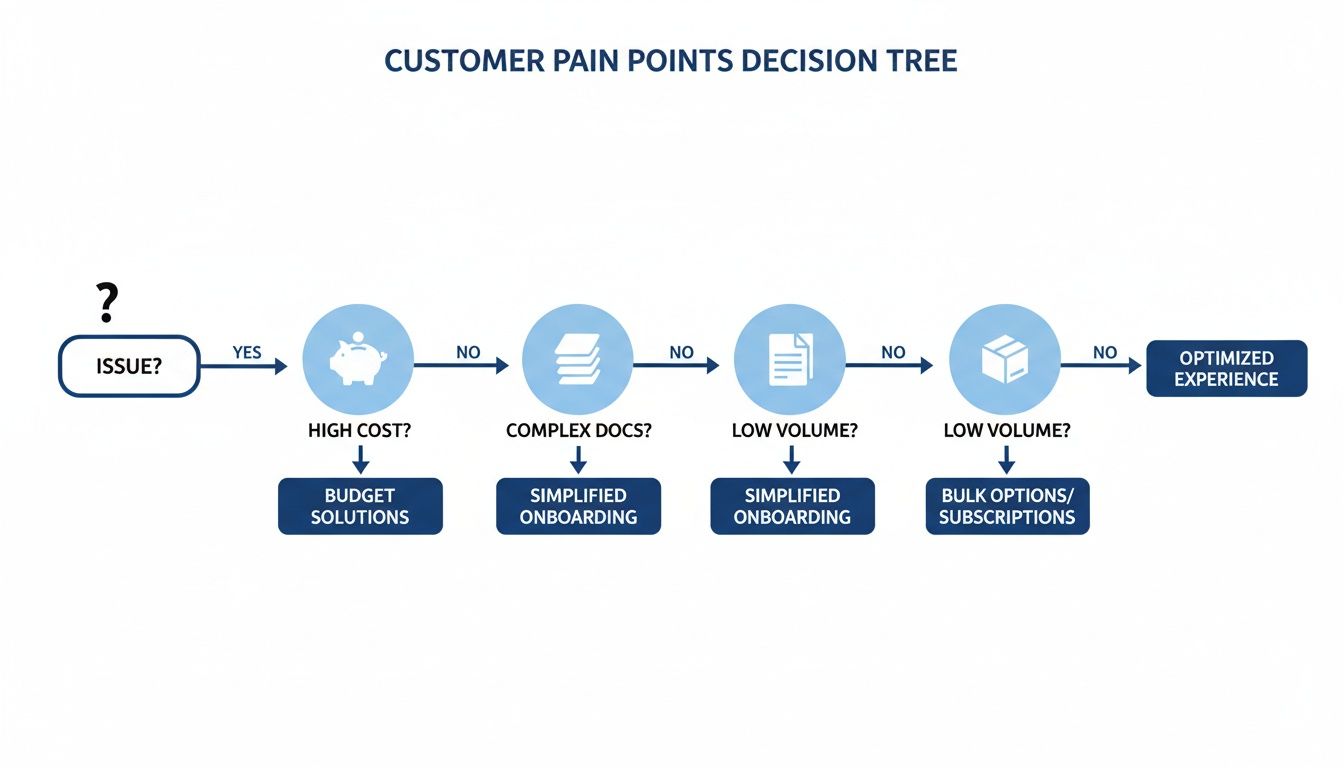
    First, you have to adopt a data-first mindset. Stop guessing and start knowing. Using global trade data allows you to see exactly who is shipping on your most profitable lanes, turning prospecting from a random shot in the dark into a targeted, intelligence-led mission.

    Second, use the right technology to get your time back. Platforms like Coreties are designed to cut out the manual grunt work, helping you find qualified leads and their verified contact info in minutes, not days. This frees you up to do what you do best: building relationships and closing deals.

    Putting the Blueprint into Action

    Once you have the right data and tools in hand, your focus can shift to the most important part—the human connection. This brings us to the third principle: leading every conversation with value.

    Don't just call and ask for a rate. Instead, open with an insight you discovered. You could suggest a smarter route, a more efficient mode of transport, or offer a solution to a shipping challenge you've already identified in their activity. That’s how you stand out.

    Finally, you need to measure what actually moves the needle. Forget vanity metrics like how many emails you sent. Track actionable KPIs like your lead-to-opportunity conversion rate and the average length of your sales cycle. If you want to see real growth, you have to understand how to improve your sales conversion rate with smarter outreach, not just more of it.

    Your Next Steps

    What you do next depends on your role on the team.

    • For Freight Forwarders & Reps: Your immediate goal should be finding your next ten qualified shipper leads this week. Dive into a data platform, filter for companies on your target lanes, and send personalized outreach based on their actual shipping history.
    • For Sales Managers & Leaders: Your mission is to elevate the entire team's performance. Start by implementing the KPIs we discussed to get a clear diagnosis of your sales pipeline. Then, equip your people with the tools and training they need to have data-backed, consultative conversations. If you're looking for more ways to sharpen your team's financial acumen, our guide on understanding cost-plus import models is a great place to start.

    At the end of the day, the goal is simple: build a revenue pipeline you can count on, month after month. When you combine data-driven prospecting with a genuine, value-first approach, you give your sales team the power to navigate any market and lay the foundation for solid growth through 2026 and beyond.

    Frequently Asked Questions About Sales in Logistics

    If you're in logistics sales, you know it’s a field with its own unique quirks. The rules, roles, and strategies can feel like a world apart from other industries. Let’s tackle some of the most common questions we hear from freight forwarders, carriers, and sales pros looking to grow their book of business.

    What Is the Biggest Challenge in Logistics Sales Today?

    Honestly? It's that everyone sounds the same. Logistics and supply chain managers get dozens of emails and calls every single day, and nearly all of them promise the exact same thing: "competitive rates." Their inboxes are a graveyard of generic pitches.

    The only way to break through is to stop selling and start solving. Instead of just asking for a shot to quote a lane, top performers are doing their homework first. They use global trade data to understand a prospect's shipping activity before the first call, allowing them to open with a smart, specific idea. It’s all about showing your value before you ask for their business.

    How Long Does It Take to Close a New Shipper?

    This is the classic "it depends" answer, but it's the truth. The sales cycle can be as short as a few weeks for a simple, transactional lane or stretch out for six months or more for a complex, multi-year 3PL contract.

    A few things really move the needle on this timeline:

    • Relationship Strength: A warm intro from a mutual connection can slice weeks or even months off the process.
    • Shipper's Urgency: Nothing closes a deal faster than a shipper with a real fire to put out, like a sudden port disruption or a carrier dropping the ball.
    • Contract Complexity: The more customized the services and the bigger the deal, the more hoops you'll have to jump through with procurement, legal, and leadership.

    Keep a close eye on your average sales cycle. If you notice it’s starting to creep up, that’s usually a red flag that something in your sales process is creating friction.

    Do I Need to Be a Logistics Expert to Succeed in Sales?

    You don't need to have spent a decade in an operations role, but you absolutely need a strong grasp of the fundamentals. You have to speak the language—understanding freight forwarding, different transport modes, major trade lanes, and basic terminology is the price of admission for a credible conversation.

    Your real job isn't to be a walking encyclopedia of logistics. It's to be an expert problem-solver who connects a shipper's business pain—like high demurrage costs or unpredictable transit times—to a concrete solution you can provide.

    Your expertise should be focused on how your services directly impact a client's bottom line. The best sales reps are always learning, and they know how to show that they aren't just another vendor, but a strategic partner for success in sales in logistics.


    Ready to stop guessing and start winning your ideal shippers? Coreties transforms messy global trade data into a goldmine of qualified leads. Our platform helps you find the right companies, connect with verified decision-makers, and craft outreach that gets replies. Discover your next customer with Coreties.

  • Your Guide to Winning Singapore Food Imports

    Your Guide to Winning Singapore Food Imports

    For a nation like Singapore, food imports are its lifeblood. The country sources over 90% of its food supply from a vast network of global partners, a reality that creates a massive, non-stop logistics opportunity for freight forwarders and carriers.

    This guide is your playbook for carving out a piece of this critical, multi-billion-dollar market.

    Why Food Imports Fuel Singapore's Economy

    A busy port with container ships and cranes, symbolizing a food supply engine for a city.

    Think of Singapore as a high-performance engine that runs on fuel shipped in from every corner of the globe. That essential fuel is food. With very limited agricultural land, the island nation's survival and economic stability are directly tied to how well its global supply chain operates. This isn't just another market; it's a matter of national food security.

    For logistics professionals, this dependency translates into a remarkably resilient and ever-present revenue stream. Unlike seasonal goods or passing consumer fads, the demand for food is constant. Every single day, millions of residents depend on a steady flow of produce, meat, and seafood arriving by both air and sea.

    A Landscape of Opportunity and Challenge

    The scale here is immense. To feed its 5.9 million residents, this bustling city-state imports food from an incredible 187 countries and regions. That’s a huge leap from just 140 sources two decades ago, highlighting a very deliberate diversification strategy to buffer against risks like geopolitical tensions, climate events, and pandemics.

    This constant expansion of trade lanes is a golden opportunity for forward-thinking freight forwarders to tap into high-volume routes. You can discover more about Singapore's food security strategy and its global sourcing efforts to get a better sense of the big picture.

    Of course, this lucrative market comes with its own unique hurdles. Success here requires more than just moving boxes from Point A to Point B. It demands real expertise in navigating a complex and exacting ecosystem.

    For logistics providers, Singapore's food import market isn't just about transport; it's about becoming a critical partner in the nation's food security framework. Mastering the regulations and cold chain isn't just a good idea—it's the price of entry.

    Navigating the Core Demands

    To truly succeed, logistics providers have to master a few key areas that define this market. These aren't just obstacles; they're the primary areas where a knowledgeable forwarder can add serious value and build lasting client relationships.

    The main challenges you'll face are:

    • Complex Regulations: Sticking to the strict guidelines set by the Singapore Food Agency (SFA) is completely non-negotiable.
    • Cold Chain Integrity: Getting temperature-sensitive shipments right—from chilled meats to fresh produce—is crucial for preventing spoilage and massive financial losses.
    • Customs and Documentation: Making sure every single shipment has flawless paperwork is the only way to avoid costly, frustrating delays at the port or airport.

    This guide will give you the essential playbook for turning these very challenges into your biggest competitive advantages.

    To get a foothold in Singapore's food import market, you need a map. Not just any old map, but one that shows you exactly where the highest volumes of food are coming from and what those products are. For logistics professionals, it's like a treasure map pointing straight to the most profitable and consistent trade lanes that keep the nation's global pantry stocked.

    Knowing these key routes is the difference between casting a wide, ineffective net and making a precise, surgical strike. It lets you zero in on the shippers and commodities that offer the most consistent volume. Your prospecting shifts from guesswork to a data-driven strategy, giving your sales team a serious competitive edge.

    The Heavyweights: Meat and Poultry

    Meat and poultry are an absolute powerhouse in Singapore's food import scene. This category is a massive opportunity, but it demands a rock-solid cold chain. For carriers who can get it right, it offers substantial, recurring business. The sheer volume alone makes it a top-tier target for any logistics provider.

    Just look at the numbers. In 2023, Singapore's total meat imports hit a staggering US$1.4 billion—that's 407.3 million kilograms, making it the 29th largest global market for meat. The biggest slice of that pie? Frozen cuts and edible offal of fowls, which alone accounted for US$273.5 million.

    And where is it all coming from? Brazil is the undisputed king here, supplying an incredible 80.1% of that specific product. The Brazil-Singapore route is a goldmine for both air and ocean carriers.

    This isn't just about moving frozen chicken. It's about plugging into a highly organised, high-volume supply chain that is a cornerstone of Singapore's food security. The consistency of this trade lane is something you can build a strong portfolio around.

    For freight forwarders, the data gives a clear directive: focus on Brazilian poultry exporters shipping to Singaporean importers. That's your direct path to securing high-value, long-term contracts. Get to know their specific needs and understand the requirements of the major players, like the Mediterranean Shipping Line, to really tailor your services.

    Fresh Produce From Regional Partners

    While meat travels across oceans, the fresh produce market is all about close-to-home partnerships. For fruits and vegetables, freshness is everything and shelf life is short. This trade lane is defined by speed and efficiency, often relying on a well-oiled machine of land and sea transport.

    Malaysia is, without a doubt, the primary source for a huge portion of Singapore's fresh produce. The short transit times across the Causeway and Second Link make it the perfect partner. This route sees a constant flow of trucks carrying everything from leafy greens to tropical fruits, which demands a logistics network that's both incredibly fast and flexible.

    Key opportunities in this lane include:

    • Cross-border trucking services that can handle customs clearance without a hitch.
    • Cold storage facilities strategically placed near the border to manage inventory and distribution.
    • Last-mile delivery solutions that get produce to retailers in pristine condition.

    Of course, it's not just Malaysia. Countries like Australia and China are also major suppliers, especially for produce that has a longer shelf life or is out of season locally. These routes often depend on refrigerated sea freight, with specialised air cargo used for high-value, delicate items like berries and avocados.

    Before we dive into the next categories, let's take a quick look at the top food import lanes at a glance.


    Top Singapore Food Import Categories and Key Source Countries

    This table highlights the major food categories imported by Singapore, their recent market value, and the primary countries supplying them, offering a snapshot of key trade lanes.

    Food Category Recent Import Value (Approx.) Primary Source Countries Key Logistics Considerations
    Meat & Poultry US$1.4 Billion Brazil, USA, Australia Reefer containers (ocean), temperature-controlled air cargo, strict veterinary certification.
    Fresh Fruits & Vegetables US$1.2 Billion Malaysia, China, Australia Fast land transport (Malaysia), efficient customs clearance, short-shelf-life handling.
    Seafood US$1.1 Billion Indonesia, Vietnam, Norway, China Cold chain for fresh/frozen, live transport solutions, air freight for high-value items.
    Dairy & Eggs US$900 Million Australia, New Zealand, USA Unbroken cold chain, specialised handling for liquid/fragile goods, reefer availability.

    This overview clearly shows where the big money and volume lie, giving you a starting point to focus your sales and operational planning.


    Dairy and Seafood From Oceania and Beyond

    The dairy and seafood categories really put Singapore's global reach on display. Australia and New Zealand are the dominant forces in dairy, supplying essentials like milk, cheese, and butter. These products require a flawless, unbroken cold chain, making reefer container availability and reliability a critical selling point for any carrier trying to win this business.

    Seafood, another huge part of the local diet, arrives from all over the world. While neighbours like Indonesia and Vietnam are major suppliers of fresh and frozen seafood, premium products like salmon are often air-freighted from as far away as Norway. These high-value, time-sensitive shipments are perfect targets for air cargo specialists who can guarantee temperature integrity from the moment it leaves the water to the moment it lands in Singapore.

    Navigating SFA Regulations Without Delays

    If you’re moving food into Singapore, the Singapore Food Agency (SFA) is the ultimate gatekeeper. For any logistics provider handling Singapore food imports, you have to see the SFA not as a hurdle, but as the final checkpoint. Every single shipment needs its papers in perfect order to get through without being held up, fined, or flat-out rejected.

    Getting this process right is non-negotiable. It’s the difference between being just another carrier and becoming a strategic partner who gives clients invaluable peace of mind. Let's be frank: mastering SFA compliance is a massive value-add that helps you win and keep high-value accounts in a very competitive space.

    The SFA’s main job is to keep the nation’s food supply safe and secure. This means everything from frozen beef to fresh avocados is covered by strict rules on how it’s imported, handled, and sold. For freight forwarders, this boils down to one thing: absolute precision in your paperwork and processes.

    The Shipment Passport: Your SFA Compliance Checklist

    Think of it like this: just as a traveller needs a passport and visa, every food shipment needs its own set of credentials. One missing or incorrect document can bring the entire operation to a grinding halt, racking up costly port charges and leaving you with a very unhappy client.

    The whole process starts before the shipment even leaves its port of origin. You’ve got to have the right licences and permits sorted out first. Skipping this step is like showing up to the airport for an international flight without a ticket—you're not going anywhere.

    Here’s the essential paperwork you'll need:

    • Importer's Licence: The importer in Singapore must be officially licensed by the SFA. No exceptions.
    • Import Permit: You need a specific permit for each individual consignment, which is applied for through the TradeNet system.
    • Health Certificates: For high-risk items like meat and seafood, a government-endorsed health certificate from the exporting country is mandatory. It’s their official stamp saying the product is safe to eat.
    • Certificates of Origin: This document simply verifies where the food was actually produced.

    Getting through SFA requirements isn't about memorising a thousand rules. It's about building a bulletproof, repeatable process. A simple checklist for every single shipment can wipe out 90% of the common documentation mistakes that cause delays at the port.

    The chart below shows the big-ticket categories that get the most regulatory attention simply because of their sheer volume.

    Bar chart showing Singapore's top food imports: Meat 45%, Seafood 30%, Produce 25%.

    As you can see, meat, seafood, and fresh produce are the dominant players. Each of these comes with its own very specific sanitary and phytosanitary (SPS) requirements that have to be met.

    Avoiding Common—and Costly—Mistakes

    While paperwork is king, it's not the only place where things can go wrong. A few other common slip-ups can cause major delays and financial headaches. Knowing these pitfalls ahead of time lets you guide your clients and really show your expertise.

    One of the most frequent offenders is incorrect product labelling. The SFA has incredibly detailed rules for what needs to be on a food label. We’re talking product name, ingredient list, country of origin, and net weight—all in English. A simple typo or omission can get an entire container flagged for re-labelling, which is a slow and expensive fix.

    Another huge bottleneck is a mismatch between what's declared on the paperwork and what's actually in the container. This happens all the time with mixed shipments where the Harmonized System (HS) codes aren't applied correctly to every single item. If you need a refresher, our guide on the Singapore customs HS code system is a great resource for ensuring accuracy.

    Finally, failing to meet specific product standards can lead to a shipment being rejected on the spot. For instance, fresh produce might be tested for pesticide residues, or processed foods checked for unapproved additives. The best move you can make is to advise your clients to confirm these standards with their suppliers long before the shipment is even booked. It’s a crucial step that ensures a smooth ride and helps everyone avoid a costly disaster.

    Mastering the Cold Chain for Perishable Goods

    Warehouse scene showing a refrigerated truck, pallets of goods, and a temperature control sign.

    When it comes to Singapore food imports, a lot of the journey is a high-stakes race against the clock. Temperature isn't just a detail; it's everything. For sensitive cargo like chilled meats, fresh seafood, and delicate produce, even a small shift from the ideal temperature can turn a valuable shipment into a complete write-off. This is the reality of cold chain management, and getting it right is non-negotiable.

    Imagine the cold chain as an unbroken, temperature-controlled tunnel running all the way from a farm in Australia to a supermarket shelf in Singapore. A single crack in that tunnel—a faulty reefer unit on a ship, a long delay on a sun-baked tarmac, or sloppy handling in a warehouse—can compromise the entire shipment. This is precisely where a logistics provider proves their worth.

    Effectively managing the cold chain means you are the guardian of that tunnel. It demands airtight coordination across every single link, making sure the "baton" of temperature integrity is passed flawlessly from one handler to the next.

    Technology and Infrastructure: The Cold Chain Lifeline

    Today’s cold chains are underpinned by a whole suite of technologies built to prevent these costly temperature deviations. These aren’t just nice-to-haves; they are fundamental tools for managing risk and giving clients peace of mind for their sensitive cargo.

    The most important technologies in the toolkit include:

    • Real-time Temperature Monitors: These are small, IoT-enabled sensors placed inside containers that stream live temperature and humidity data. This gives you the power to act immediately if conditions start to stray from the required range.
    • Specialised Packaging: Think insulated containers, gel packs, and phase-change materials. These create a stable micro-environment around the product, adding another layer of defence against outside temperature swings.
    • Refrigerated Containers ("Reefers"): The workhorses of the cold chain, these are essentially mobile refrigerators. Getting the most out of them means paying attention to every detail, including the proper maintenance of components like refrigerated shipping container floor drains.

    Of course, all this tech needs to be backed by world-class infrastructure. Singapore gets this. Both Changi Airport and the Port of Singapore have invested huge sums into cold storage facilities, refrigerated loading docks, and fast-track handling processes designed specifically for perishables.

    A single temperature excursion can wipe out the entire profit margin of a shipment. For a logistics provider, offering a guaranteed, monitored cold chain isn't a premium service—it's the core promise that builds trust and secures long-term business with high-value food shippers.

    Mitigating Risks and Proving Reliability

    The biggest threats in any cold chain are human error and equipment failure. A simple mistake, like keying in the wrong temperature on a reefer or leaving a container door open for a few extra minutes, can have devastating results. This is why having rock-solid standard operating procedures (SOPs) is just as critical as the technology you use.

    To position your service as the go-to, reliable choice, you have to show you're on the front foot with risk management. This means pre-trip inspections of all refrigerated gear, having contingency plans ready for unexpected delays, and keeping the client in the loop with transparent communication throughout the journey.

    When you hand over a detailed temperature log at delivery, it’s more than just good practice. It's concrete proof of your commitment to quality and integrity. By demonstrating this level of expertise, you stop being just another carrier. You become a crucial partner in your client’s supply chain, safeguarding their products and making sure they land in Singapore in perfect condition, time after time.

    Finding High-Value Food Shippers with Data

    A man views a laptop displaying sales data, logistics charts, and a truck, with a 'DATA DRIVEN SALES' sign.

    Knowing the market landscape and all the regulatory hurdles is one thing. Actually turning that knowledge into new business is a whole different ball game. For freight forwarders and carriers, this means getting past the old-school grind of cold calls and generic email blasts to find clients who genuinely need what you're offering.

    The secret to cracking this market is data. Forget guessing which companies are importing food into Singapore. It’s time to put on your detective hat and let hard facts guide your sales strategy. This simple shift turns prospecting from a spray-and-pray numbers game into a precision-guided operation.

    Platforms built on global customs data become your eyes and ears on the ground, showing you exactly who is shipping what, from where, and how often. This isn't just a static list of company names. It's a living, breathing map of the entire Singapore food imports ecosystem, pointing you directly to the big players and their specific shipping habits.

    From Raw Data to Actionable Leads

    The first step is to see data for what it really is: a collection of clues, not just numbers in a spreadsheet. Every single bill of lading and customs declaration tells a story about a company's real-world supply chain needs. By piecing this information together, you can answer the critical questions that make your prospecting laser-focused.

    You can instantly find out:

    • Who are the biggest food importers? Zero in on the companies consistently bringing in container loads of meat, produce, or seafood.
    • Which trade lanes are they active on? See if their key routes from Brazil, Australia, or Malaysia line up with your company's operational strengths.
    • How often do they ship? Spot those regular, clockwork-like shipments that scream "long-term contract opportunity."
    • Who are they working with now? This gives you a clear picture of the competition and helps you figure out exactly how to position your own services.

    This kind of insight lets you build a highly targeted prospect list filled with genuinely warm opportunities, not just cold leads. You're no longer just another forwarder begging for their business; you're a problem-solver who's already done their homework.

    Crafting Outreach That Actually Gets a Reply

    When you're armed with specific details about a prospect’s shipping history, your outreach instantly becomes more relevant and impossible to ignore. Instead of a generic "Can we handle your freight?" email that gets deleted on sight, you can lead with a powerful, data-driven conversation starter.

    Think about sending a message like this:

    "I noticed your company consistently imports frozen poultry from Santos, Brazil, to Singapore. We specialise in that specific trade lane and have deep experience maintaining cold chain integrity for sensitive shipments just like yours."

    An approach like this immediately shows you understand their business and have a specific solution for their real-world needs. It cuts through all the noise and positions you as a knowledgeable expert, not just another salesperson. You can find out more about how to effectively check a company's import-export activities to get even better at this.

    This whole strategy is backed by the sheer volume of goods flowing into the country. Singapore's Food & Live Animals imports have averaged a massive SGD 992.89 million every month for the last decade, even hitting a record SGD 1,297.23 million in December 2021. Even with market ups and downs, volumes held strong at SGD 928.43 million in February 2024. That stability, driven by the nation's 90%+ reliance on imports, is a green light for any carrier planning their next move.

    The Efficiency Revolution in Logistics Sales

    The difference between old-school and data-driven prospecting is night and day. Traditional methods eat up your time and deliver painfully low conversion rates. A modern, data-first approach, on the other hand, is fast, targeted, and gives you a much better return on your effort. Using advanced data extraction software helps logistics companies pull crucial information together from different places, making it much easier to find and qualify high-value food shippers.

    Let’s put it side-by-side to see just how big the difference is.

    Traditional vs Data-Driven Prospecting for Food Shippers

    This table shows the huge jump in efficiency you get by using a data platform like Coreties instead of banging your head against the wall with manual sales methods.

    Activity Traditional Method (Hours/Week) Coreties Method (Hours/Week) Outcome & Advantage
    Lead Generation 8-10 hours of slogging through directories, LinkedIn, and company websites. 1-2 hours of filtering customs data for high-volume food importers on your key lanes. 80% time saving. You get pre-qualified leads based on actual shipping activity, not guesswork.
    Contact Discovery 5-7 hours of hunting for decision-maker names and guessing email formats. <1 hour with instant access to verified contacts and their LinkedIn profiles. Huge cut in admin work. You connect directly with the right people in logistics and supply chain.
    Outreach & Personalisation 6-8 hours of writing generic emails for a big, untargeted list and hoping for the best. 1-2 hours of writing smart, personalised emails based on what you know they import. Sky-high engagement. Your messages are relevant and prove you're an expert, leading to far better response rates.
    Total Weekly Time 19-25 hours 3-5 hours Up to 5x more efficient. Your sales team can finally focus on building relationships and closing deals.

    The numbers in the table don't lie—the advantages are clear as day. By making the switch to a data-first strategy, sales teams can get dozens of hours back every single month. That newfound time allows them to focus on what actually moves the needle: having real conversations with qualified prospects, building solid relationships, and ultimately, winning more business in Singapore’s competitive food import market.

    Alright, you've got the lay of the land—the complete map to Singapore’s massive food import market. Now, how do you turn that knowledge into real business?

    Success here isn't just about moving boxes from Point A to Point B. It’s about becoming a critical link in the nation's food security chain. That requires a smart, deliberate approach, and I’ve always found it boils down to four key areas.

    First, you absolutely have to know the market inside and out. Pinpoint the high-volume trade lanes for meat, fresh produce, and seafood. Where is the demand most consistent? Focusing your efforts on these hotspots means your sales team isn't just throwing darts in the dark; they're targeting the most lucrative segments of Singapore food imports.

    Mastering What Truly Matters

    Next, you need to become an expert in compliance. Think of the Singapore Food Agency (SFA) guidelines not as a bureaucratic headache, but as your competitive advantage. When your documentation is flawless and your labelling is perfect every single time, you're not just a carrier anymore. You become a trusted advisor, saving your clients from costly delays and building the kind of loyalty that competitors can't touch.

    Then, you have to be obsessive about the cold chain. For anything perishable, temperature control is everything. There’s no room for error. Investing in the right technology and having rock-solid operating procedures isn't just about protecting cargo—it’s about proving your reliability when a single mistake can mean a total loss for your client.

    In such a competitive field, your ultimate edge comes from turning all this market knowledge into sharp, actionable sales intelligence. Winning isn't just about being good at logistics; it's about prospecting smarter with data, so you can connect with the right shippers before anyone else does.

    Finally, and this is where the real magic happens, use customs data to build a killer sales pipeline. Forget cold calls and generic marketing emails that get deleted instantly. Armed with real shipping data, you can identify high-value importers, see exactly what they're moving, and craft a pitch so relevant it's impossible to ignore. This data-first strategy is how you unlock real, sustainable growth.

    These four pillars aren’t just theory; they’re a practical framework for winning. By putting these insights into action, you can carve out your piece of this thriving trade and cement your place as a leader in the market.

    Common Questions & Straight Answers

    When you're dealing with Singapore's food import scene, a lot of questions pop up. It’s a complex world of regulations, tight timelines, and high stakes. Here are some of the most common queries I hear from logistics pros, along with some straight-talking advice based on years in the trenches.

    What's the Single Biggest Mistake to Avoid?

    Easy. Treating documentation as a last-minute job. It's the most common and expensive error you can make.

    Assuming the paperwork for Singapore food imports will just sort itself out is a recipe for disaster. A single missing health certificate or a slightly off HS code on an import permit is all it takes to get an entire container stuck at the port. Suddenly, you're looking at painful demurrage charges, potential fines from the Singapore Food Agency (SFA), and a client relationship that's gone sour fast.

    The only way to win this game is to be proactive. Have a non-negotiable, pre-shipment checklist. Verify every single document is perfect before the cargo even thinks about moving. Compliance isn't just a box to tick; it's your best insurance against costly delays.

    How Can We Compete with the Big, Established Players?

    You're not going to beat the industry giants by trying to be a cheaper version of them. To break into a market this established, you have to compete smarter. That means finding a niche and absolutely owning it.

    Instead of being a generalist, become a specialist. Think about where you can add real, focused value:

    • Pick a high-demand commodity: Become the go-to expert for handling something specific, like chilled Australian beef or high-value Norwegian salmon. Know the ins and outs better than anyone.
    • Offer next-level visibility: Use technology to give clients real-time temperature and location tracking. This kind of peace of mind is a huge selling point that larger carriers often don't provide to every customer.
    • Master a trade lane: Dominate a specific route, like the Malaysia-Singapore land-bridge for fresh produce. Be known for having the fastest, most reliable customs clearance on that lane.

    By carving out your own space, you build a powerful reputation for being the best at one thing, which is far more valuable than being average at everything.

    Air Freight or Sea Freight: Which is Better for Food?

    This is a classic question, but there's no single right answer. It’s not about which mode is "better" overall, but which one is right for the specific product. They serve completely different strategic needs.

    Here’s a simple way to think about it:

    • Sea Freight: This is your workhorse. It's built for frozen goods, processed foods, and anything with a decent shelf life, like apples or onions. For bulk shipments where time isn't the absolute top priority, it's hands-down the most cost-effective choice.
    • Air Freight: This is your express service for the VIPs—the high-value, highly perishable items. We're talking fresh berries, live seafood, or premium chilled meats where every single hour counts. The high cost is an investment in preserving freshness and market value.

    The most successful logistics providers are the ones who can confidently advise clients on both. When you can explain exactly why air freight is worth the cost for one shipment but sea freight is the smarter play for another, you're no longer just a vendor—you're a strategic partner.
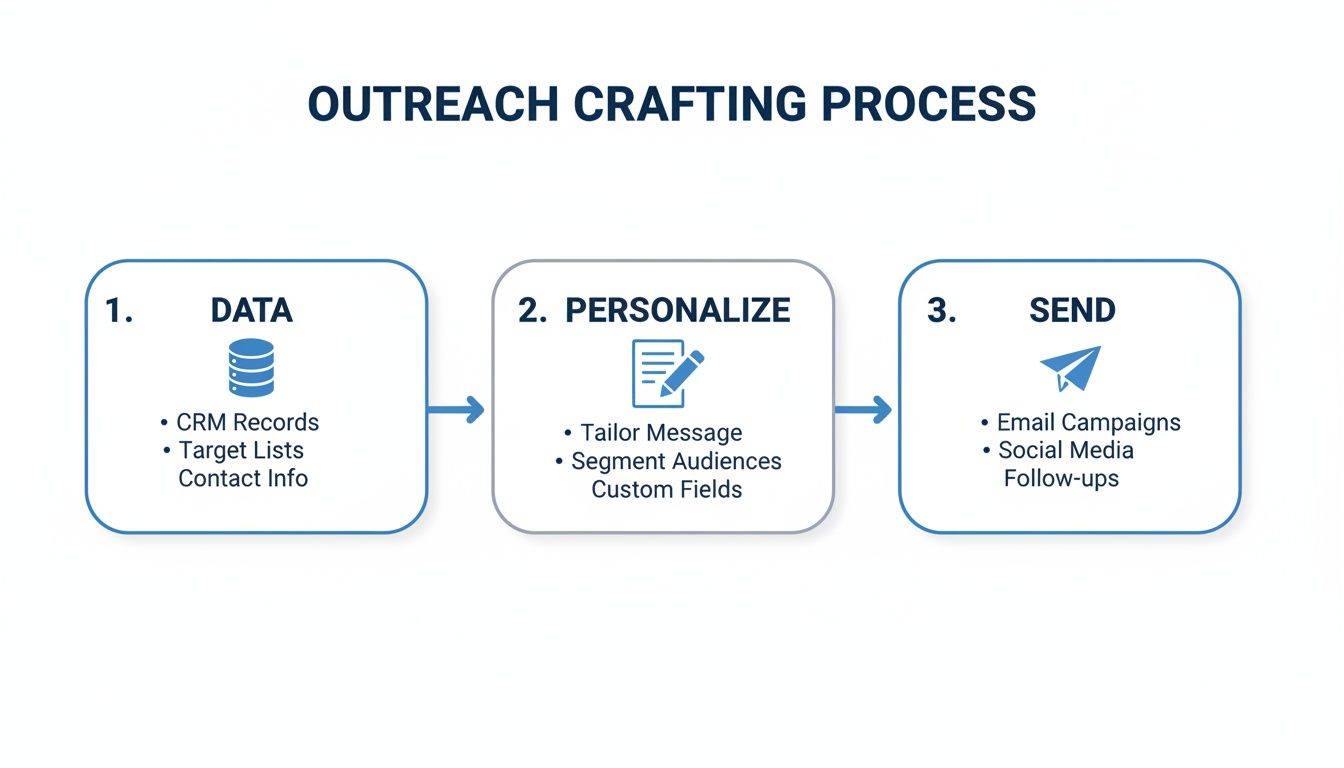
    Your ability to guide clients to the optimal choice for their specific product is what builds the kind of trust that leads to long-term business.


    Ready to stop guessing and start winning high-value food shippers? Coreties transforms global customs data into your ultimate sales playbook. Find qualified leads, connect with decision-makers, and craft data-driven outreach that gets replies. Discover your next client with Coreties today.

  • A Sales Guide to CWT Globelink Pte Ltd

    A Sales Guide to CWT Globelink Pte Ltd

    If you're in freight forwarding sales, you've definitely come across the name CWT Globelink. They're a massive player in Asian logistics, specifically as a Non-Vessel Operating Common Carrier (NVOCC). Getting a handle on how they dominate the small shipment game is key to figuring out where you fit in—whether that’s partnering with them or competing against them.

    What Is CWT Globelink and Why Does It Matter?

    Aerial view of a busy global logistics hub with large blue cranes, container ships, and trucks.

    The easiest way to think of CWT Globelink is as a major hub airport, but for ocean freight. An airline gathers passengers from smaller cities at a central hub to fill up huge international jets. CWT Globelink does the exact same thing, but with cargo. They use their strategic network to collect countless smaller shipments and consolidate them into full containers.

    This core business is called Less than Container Load (LCL) consolidation, and it’s why they’re such a critical piece of the global supply chain puzzle.

    A Master Consolidator in Asian Logistics

    Imagine you're a small business that needs to ship a few pallets of goods overseas. You don't have nearly enough cargo to fill a whole container, and booking one would be a massive waste of money. This is the exact problem CWT Globelink Pte Ltd was built to solve.

    As an NVOCC, they essentially act as a "carrier to shippers." They buy container space in bulk from the big shipping lines and then sell that space off in smaller chunks to multiple customers.

    This model is a game-changer for many businesses because it:

    • Slashes Costs: You only pay for the space your cargo takes up, not for an empty container.
    • Boosts Flexibility: Companies can ship goods as soon as they're ready instead of waiting to have enough stock for a full container.
    • Opens Up Markets: It gives smaller businesses a ticket to the global trade lanes they couldn't otherwise afford.

    An Established Industry Pillar

    CWT Globelink isn’t some new start-up; they're a cornerstone of Singapore's logistics scene. The company was officially incorporated way back on 23 February 1984. By 2025, they’ll have been operating for 41 years right in the heart of one of the world's busiest trade hubs. You can find more on their corporate history and registration through official records.

    By mastering LCL consolidation, CWT Globelink has become an indispensable partner for freight forwarders and a vital enabler for SME exporters across Asia. Their network transforms complex, fragmented shipping needs into streamlined, efficient global transport.

    For any logistics professional, understanding their function is simply non-negotiable. Whether you view them as a competitor, a potential partner, or a go-to service provider, their influence on cargo moving through Asia is impossible to ignore.

    Mapping The CWT Globelink Network And Services

    A world map on a wooden desk with red and blue pushpins connected by lines, depicting a network map.

    To really get a handle on CWT Globelink Pte Ltd, you have to look at the two things that give them their edge: their specialised services and their sprawling physical network. The two are deeply intertwined, creating a powerhouse in the logistics world. At its core, the company is a neutral Non-Vessel Operating Common Carrier, or NVOCC.

    So, what’s an NVOCC? Think of it like a cargo wholesaler. CWT Globelink doesn't own the massive container ships crisscrossing the oceans. Instead, they buy up space on those ships in bulk and then sell that space to freight forwarders and businesses who only need to ship smaller amounts of cargo. This is the foundation of their main specialisation: Less than Container Load (LCL) consolidation.

    By bundling dozens of small shipments from different customers into a single, full container, they create an incredibly cost-effective and flexible option for anyone who can't justify paying for a whole container on their own. This service isn't just a part of their business; it's the engine that drives everything else.

    A Closer Look At Their Core Services

    While LCL consolidation is their bread and butter, CWT Globelink offers a much wider menu of logistics solutions to handle the entire shipping journey. Understanding these other services is key to figuring out how you can either partner with them or compete more effectively.

    Let's break down what they bring to the table. The table below summarises their main offerings and shows who benefits most from each one.


    CWT Globelink Core Service Offerings

    Service Description Ideal Customer
    Ocean Freight (LCL & FCL) Their primary business, offering both Less than Container Load (LCL) for small shipments and Full Container Load (FCL) for larger ones. Small to medium-sized forwarders, SMBs with inconsistent shipping volumes, or large enterprises needing flexible options.
    Multi-modal Transport Seamlessly connects ocean shipping with road, rail, or air transport to provide a true door-to-door delivery solution. Businesses that require end-to-end logistics management and can't afford delays or hand-off issues between transport modes.
    Warehousing & Distribution Operates storage facilities in key hubs for services like inventory management, cross-docking, and last-mile distribution. Companies needing more than just transport, such as those in e-commerce, retail, or manufacturing who require a supply chain partner.

    This integrated service model allows them to manage cargo right from the factory floor to the final customer's doorstep, which is a massive advantage in today's complex supply chains. It's a structure you'll see with other major players, and you can see how a company like UPS SCS Singapore structures its services for a useful comparison.

    The real secret sauce for CWT Globelink isn’t just offering these services individually. It's their proven ability to execute them flawlessly across an enormous, strategically built global network. That footprint is their competitive moat.

    The Strategic Global Footprint

    The company’s physical presence is massive, boasting a network of over 92 offices in 30 countries. But this isn't just about having dots on a map; it's about owning the key trade arteries, especially within Asia.

    Their network is particularly dense throughout Southeast Asia, forming a powerful web that connects major hubs like Singapore, Malaysia, Vietnam, and Thailand to the rest of the world. For other freight forwarders, this is a golden opportunity. You can tap into their established routes to offer your clients services on trade lanes where you don't have a strong presence, essentially using their network as an extension of your own.

    By digging into their key trade lanes, you can quickly spot where your services align for a smart, profitable partnership.

    Understanding the Corporate Structure and Key Players

    To really get anywhere with CWT Globelink Pte Ltd, you first need to see where they fit in the grand scheme of things. They aren't just a standalone company; they're a key piece of a much larger, multi-layered organisation. This setup gives them serious stability and deep pockets, making them a fixture in the logistics world you can count on for the long haul.

    At the very top sits CWT International Limited, a public company listed on the Hong Kong Stock Exchange (HKEX: 521). This is the parent company overseeing a whole portfolio of businesses—everything from logistics and commodity marketing to financial services. Because they're publicly traded, you can easily look up their financial health, which gives partners and customers a solid sense of predictability.

    One level down, you'll find CWT Pte. Limited, the integrated supply chain solutions provider that’s been around since 1970. This is the entity that actually owns CWT Globelink, along with other specialised divisions like CWT Commodity Logistics. This direct link gives CWT Globelink access to an enormous network and a wealth of resources, cementing its powerful position in the market. For any sales team, this backing means stability. They’re a low credit risk and have the capital to pour back into their technology and global network.

    Identifying The Decision-Makers

    Knowing the corporate family tree is one thing, but connecting with the right people is what actually gets deals done. Firing off generic emails to a general inbox is a fast track to nowhere. You have to aim your message at the specific individuals who hold the power and actually need what you're offering.

    In a big NVOCC like CWT Globelink, decisions are often made at the trade lane or regional level. You'll get much further targeting the person who actually manages the specific route you're selling than you will by aiming for a top-level executive in a corner office.

    To make sure your message hits the mark, focus on these key roles within their organisation:

    • Trade Lane Managers: These are your bread and butter. The manager handling the Trans-Pacific eastbound lane, for example, has direct say over carrier choices, rates, and capacity on that route. They are the ones in the trenches.
    • Regional Procurement or Capacity Managers: These folks are responsible for sourcing and negotiating rates with ocean carriers and other providers across an entire region, like Southeast Asia or Europe. They look at the bigger picture for their territory.
    • Country or General Managers: If you're pitching a broader partnership—like a new tech integration or last-mile delivery services for an entire country—this is the person you need to talk to.
    • Heads of Ocean Freight (LCL/FCL): These are the strategic leaders overseeing the entire ocean freight product. They're focused on high-level goals like overall profitability, network growth, and major vendor relationships.

    Strategic Outreach and Messaging

    Once you've found the right person, your message needs to be sharp and packed with value. A Trade Lane Manager for the Asia-Europe route couldn't care less about a great new service you have in South America. It's just not their problem.

    Your pitch needs to speak directly to their specific duties. Offer them a competitive rate on their main lane, promise guaranteed capacity when things get crazy during peak season, or show them a faster transit option that shaves time off their current schedule.

    When you align your pitch with their day-to-day operational goals, you stop being just another vendor and start looking like a potential strategic partner. That shift is what dramatically boosts your odds of getting a response.

    Who Exactly is the CWT Globelink Customer?

    To get anywhere with CWT Globelink Pte Ltd, you first need to get a really clear picture of who they're built to serve. Their whole operation, especially their heavy focus on Less than Container Load (LCL) consolidation, is designed to fix very specific problems for a particular kind of shipper.

    The heart and soul of their client list isn't the massive multinational shipping thousands of boxes. Instead, it's the small and medium-sized enterprise (SME). These are the businesses that are the true engine of global trade, but they often hit a wall with logistics. Think manufacturers, boutique retailers, or specialised distributors who need to get their goods across oceans but just don't have the volume to justify a whole container. This is their biggest headache, and it's the exact problem CWT Globelink was created to solve.

    A Closer Look at Their Typical Client

    Let's paint a picture. Imagine a small, family-run furniture workshop in Vietnam. They've just landed their first big break—a retail partner in Europe. They need to ship ten dining sets, which is nowhere near enough to fill a Full Container Load (FCL). This is your textbook CWT Globelink customer.

    This workshop is juggling a few major challenges:

    • Sky-High Costs: Booking a full container would be a financial disaster. They’d be paying for a massive amount of empty steel.
    • Complex Paperwork: For a small team without a dedicated logistics person, managing customs, port handling, and final delivery for a small shipment is an absolute nightmare.
    • No Wiggle Room: They can't afford to sit on stock for months, waiting to build up enough orders to fill a container. They need to ship products as they're made to keep cash flowing and their new retail partner happy.

    This is where CWT Globelink comes in. They act as the perfect middleman. By combining the furniture workshop’s ten dining sets with other small shipments from dozens of other customers, they bring the per-unit shipping cost down to a manageable, predictable level. They take on all the complicated paperwork, turning a daunting process into a single, straightforward transaction for the SME.

    At its core, CWT Globelink's value proposition is incredibly simple: they make ocean freight accessible to everyone. They give SMEs a ticket to the global stage—markets that would otherwise be completely out of reach because of high costs and complexity.

    The Pain Points That Fuel Their Business

    Knowing what keeps these customers up at night is gold for any sales team trying to work with, or compete against, CWT Globelink. Every service they offer is a direct answer to these pressures. If you're curious to learn more about the documentation side of things, our guide on a company's import-export needs is a great place to start.

    Here are the key struggles that send SMEs straight to a consolidator like CWT Globelink:

    • Tight Cash Flow: SMEs live and die by their cash flow. Shipping smaller amounts more often helps them manage inventory and get paid quicker.
    • Not Enough In-House Know-How: Most small businesses don't have a logistics expert on the payroll. They have to lean on reliable partners to help them navigate the maze of international shipping regulations.
    • The Drive to Grow: These businesses are hungry. They're actively looking for partners who can help them scale up and tap into new international markets without needing to sink a fortune into their own logistics setup.

    Once your team truly gets this customer profile, you can start positioning your own services much more effectively—whether as a better alternative, a valuable add-on, or a clever strategic partner.

    Your Game Plan for Partnering with CWT Globelink

    Turning what you know about CWT Globelink into a solid business relationship takes more than just a good pitch; it requires a real strategy. If you're in sales and looking to get on their radar, a generic email just won't cut it. You have to lead with value, showing them exactly how what you offer solves a specific problem within their massive network.

    Think about it from their perspective. Whether you're a carrier with a killer rate on one of their key trade lanes or a 3PL with a specialised last-mile service they're missing, your first contact needs to feel like a genuine business proposition. This isn't about just selling; it's about presenting a data-backed solution that makes them stop and think. You need to show you get their business model and the headaches their customers face.

    Finding the Right Person and the Right Angle

    Before you even think about writing an email, you have to know who you're writing to. Firing off a message to a general inbox is the fastest way to get ignored. Success hinges on connecting with the one person whose job your solution makes easier.

    Once you have your target, your message needs to speak their language.

    • Trade Lane Managers: These folks live and breathe operations. Talk to them about better transit times, guaranteed space during the chaos of peak season, or—even better—lower rates on their high-volume routes, like the ones linking Southeast Asia to Europe.
    • Regional Procurement Heads: They're focused on the bigger picture. Frame your pitch around strategic value. Show them the numbers on how you can drive down their total costs across a region or make their network run smoother, helping them hit their major KPIs.
    • Country Managers: Think partnership. If you’ve got a great local warehouse, slick customs brokerage, or a unique last-mile delivery network, show them how plugging it into their system can open up a new revenue stream or seriously beef up their local service offerings.

    This decision tree gives you a peek into the exact customer problems CWT Globelink is set up to solve.

    A customer pain points decision tree flowchart showing solutions for high cost, complex documents, and low volume.

    When you understand this flow, you can position your service perfectly. You're either making their existing value proposition even stronger or filling a critical gap their SME customers desperately need filled.

    How to Write an Email They'll Actually Read

    Your first message needs to be short, sharp, and all about them. An email promising "great services" is destined for the trash folder. Instead, lead with a concrete benefit that tackles a challenge you know they’re facing.

    The Secret Sauce: The best outreach proves you've done your homework. Mentioning a specific trade lane you know they're big on, or referencing a common industry pain point, instantly shows your email isn't just another automated blast.

    Here's a simple, four-step structure that works:

    1. Acknowledge Their World: Start by showing you know who they are (e.g., "As the Trade Lane Manager overseeing Intra-Asia routes…").
    2. Hit Them with a Hard Number: Lead with a specific data point they can't ignore (e.g., "…we're currently offering 15% below market rate on the SIN-HKG LCL lane.").
    3. Connect the Dots for Them: Spell out the "what's in it for me" (e.g., "This could directly boost the margin performance on one of your most important corridors.").
    4. Make the Next Step Easy: Suggest a quick, low-commitment action (e.g., "Are you free for a 10-minute call next week to run through the numbers?").

    This approach respects their time and instantly positions you as a sharp problem-solver, not just another salesperson.

    To help you get started, here are a few different messaging hooks you can adapt based on who you are and who you're trying to reach.

    Outreach Messaging Angles for CWT Globelink

    Your Role (e.g., Carrier, 3PL) Target Contact Role Effective Messaging Hook
    Ocean Carrier Trade Lane Manager "We have immediate, guaranteed capacity and a rate 10% lower than average on your key Shanghai to Rotterdam lane for the next quarter."
    Regional Trucking Firm Country Manager (e.g., Malaysia) "Our last-mile network can cut your delivery times in the Klang Valley by 24 hours, giving your clients a premium service option."
    Customs Brokerage Specialist Head of Operations "Our automated clearance process for Indonesian imports can reduce your average customs holds by 48 hours, a common pain point for SME shippers."
    Tech/SaaS Provider Head of Digital Transformation "Our tracking API provides real-time container-level visibility, which can reduce customer service queries by 30% for your LCL clients."

    Choosing the right angle makes all the difference. For more practical advice on streamlining logistics paperwork—a constant headache in this industry—check out our guide on what every import-export firm needs to know. By using this playbook, you're not just sending another cold email; you're starting a strategic conversation.

    Your CWT Globelink Questions, Answered

    Alright, let's wrap things up by tackling some of the most common questions freight forwarders and sales teams have when looking at CWT Globelink Pte Ltd. These are the quick-fire answers you need to understand where they really fit in the market.

    What Is CWT Globelink's Main Gig?

    At its heart, CWT Globelink is a master of Less than Container Load (LCL) consolidation. They're a Non-Vessel Operating Common Carrier (NVOCC), which is a fancy way of saying they're experts at bundling smaller shipments. Think of them as the ultimate cargo carpool service.

    They take partial shipments from a bunch of different customers and cleverly pack them into one full container. This is a game-changer for small and medium-sized businesses that don't have enough freight to justify a whole container, letting them tap into global ocean routes without breaking the bank.

    How Does a Freight Forwarder Work With CWT Globelink?

    Freight forwarders typically team up with CWT Globelink to use their neutral LCL services. Let's say your client needs to ship a few pallets on a lane where CWT Globelink is a major player. You simply book that space with them and manage the rest for your customer.

    It's a smart way to instantly expand your own service map without the headache and massive cost of setting up your own consolidation network. You get to tap into their established routes and frequent sailings, all while keeping the focus on your own client relationships.

    For a freight forwarder, CWT Globelink isn't just another vendor—they're a network multiplier. Working with them means you can say "yes" to more LCL quotes, instantly widening your service area with virtually no risk.

    This kind of collaboration is standard practice in logistics. It's all about leveraging partnerships to compete more effectively and serve your clients better.

    Which Trade Lanes Are Their Stronghold?

    With their home base in Singapore and a network spanning over 92 offices, there's no question: intra-Asia trade lanes are their bread and butter. These routes are the core of their entire operation.

    The major arteries connect hubs like Singapore, Malaysia, Thailand, and Vietnam with mainland China. Beyond that, they have very solid, high-frequency services linking the rest of Asia to:

    • The Middle East
    • The Indian Subcontinent
    • Europe

    If you're planning a sales pitch or doing a competitive analysis, zero in on these lanes. That's where they have the most volume, the best rates, and the tightest control.

    Is It Only Ocean Freight, or Is There More?

    While LCL ocean freight is what they're famous for, CWT Globelink is part of a much larger logistics group. That means they have the capability to offer more comprehensive, end-to-end solutions.

    Often, this includes multi-modal services that blend their core ocean product with airfreight or trucking for a full door-to-door delivery. But make no mistake, their identity and deepest expertise is as an NVOCC.

    When you reach out, showing that you get this distinction is crucial. It proves you've done your homework and helps you frame a conversation that's actually relevant to their team.


    Knowing who to talk to at a company like CWT Globelink is half the battle for any logistics sales pro. Coreties is designed to solve that exact problem. Our platform digs into customs data to hand you a ready-made list of qualified prospects, complete with the verified contact info you need to get the conversation started. See how Coreties can help you connect with the right people and close deals faster.

  • A Modern Playbook to Win Any Import Export Firm

    A Modern Playbook to Win Any Import Export Firm

    Let's be honest: the days of winning over an import export firm with cold calls and generic email blasts are long gone. In today's freight forwarding world, if you want to get ahead, you need a much smarter, data-backed strategy. This guide is all about that new approach—using global customs and shipment data to find and connect with the shippers who truly need your services.

    A New Playbook for Winning Import-Export Business

    A person's hands point at a laptop displaying a colorful data analytics world map, with a coffee cup.

    It’s time to stop prospecting blindly. The freight forwarders and carriers who are really succeeding have traded guesswork for certainty. The core idea is simple but powerful: shift your focus from who you can sell to, to how you can offer immediate, tangible value based on a company's real-world shipping patterns.

    This means you can finally stop pushing generic service packages. Instead, you can build proposals that directly address an import-export firm's day-to-day operations. When you analyse their shipment data, you can see their active trade lanes, the exact commodities they're moving, and how often they're shipping.

    Pinpointing Real, Actionable Opportunities

    The sheer amount of global trade data can feel like trying to drink from a firehose, but hidden within it are incredible opportunities. Just look at a major hub like Singapore. In 2022, its exports of goods and services were a massive 186.55% of its GDP, while imports came in at 150.31%. Think about that—it shows the colossal volume of shipments moving through its ports every single day, creating a goldmine for finding new partners. You can dig deeper into these kinds of trade dynamics over at globaledge.msu.edu.

    Adopting this data-first mindset completely changes your sales game. You're no longer asking a prospect what they need; you're approaching them with a solution for a need you've already identified.

    This strategic shift turns you from just another vendor into a proactive partner who brings valuable insights to their supply chain. It’s the difference between knocking on a door and being invited inside.

    The real strength here is precision. When you work with these insights, you can:

    • Zero in on high-value shippers: Spend your time on companies whose shipping volumes and routes are a perfect match for what you do best.
    • Grasp their specific needs: You'll know the HS codes, ports, and carriers they’re already using before you even pick up the phone.
    • Create hyper-personalised outreach: Your messages will actually connect because they mention real operational details, not just a vague sales pitch.

    This guide lays out a proven framework to turn that raw data into qualified leads and, ultimately, into loyal, long-term clients. For a broader overview, take a look at our guide on the intricacies of the import and export business.

    Pinpointing High-Value Shippers with Customs Data

    Close-up of a laptop displaying a world map with shipping locations, with 'HIGH-VALUE SHIPPERS' overlay.

    It's time to stop casting a wide, inefficient net and switch to precision targeting. With global trade data platforms, you can get a clear view into exactly how your ideal import export firm operates. This isn't about just finding any company that moves cargo; it's about identifying the ones whose needs are a perfect match for your specialised services.

    The trick is to learn the signals that flag a prospect as high-value. These aren't just hunches; they're hard data points pulled directly from customs records and bills of lading. Consistent, data-backed insights empower your sales team to stop chasing poor-fit leads and concentrate on companies they can truly help.

    Moving Beyond Basic Company Searches

    Generic searches will only ever give you generic results. If you want to build a list of A-tier prospects, you need to apply advanced filters that get into the real nitty-gritty of global logistics. This approach lets you slice through the noise and surface companies whose shipping behaviour tells a compelling story.

    Think about the detailed filters you can find in a platform like Coreties. You can layer multiple criteria to paint a super-specific picture of your ideal customer. For example, you could pinpoint a company that consistently ships automotive parts from Germany to Singapore. That single piece of data tells you they have a recurring need on a trade lane you specialise in.

    Here are the key data points to start with:

    • Shipment Frequency: Are they shipping daily, weekly, or just once a month? High frequency signals a steady, reliable revenue stream for any logistics partner lucky enough to win their business.
    • Commodity Types: What exactly are they moving? If you have expertise in perishables or hazardous materials, finding shippers of those goods makes you an instant, high-value match.
    • Trade Lane Consistency: Do they use the same routes over and over? A consistent lane suggests a stable supply chain and a fantastic long-term opportunity for partnership.

    By zeroing in on these signals, you shift from a reactive sales process to a proactive one. You're not just finding leads; you're uncovering strategic opportunities where your unique value is impossible to ignore.

    Using Filters to Build Your Target List

    Let's walk through a real-world scenario. Imagine your firm has a killer rate on the Vietnam-to-US lane, especially for electronics. Using a trade data platform, you could filter for every import export firm that has shipped goods with specific electronics HS codes from the Port of Hai Phong to the Port of Long Beach in the past six months.

    If you want to get deeper into this, our guide on the power of using an HS code filter is a great resource.

    That one search immediately generates a list of pre-qualified leads. You already know their product, their origin port, and their destination port. This is no longer a cold list. It’s a warm list of companies with a proven, ongoing need for the exact services you excel at. This data-driven precision makes your outreach relevant from the very first sentence, massively boosting your chances of starting a real conversation.

    Finding the Right Decision-Makers

    Spotting a promising import export firm in a pile of shipment data is a great first step, but it’s really only half the job. Let’s be honest, a perfectly tailored proposal sent to a generic info@ email address is going straight to the digital graveyard. If you actually want to close deals, you have to get in front of the right person—the one whose daily headache is solving the very logistics puzzles you're an expert in.

    This is where data enrichment becomes your secret weapon. The whole point is to turn a company name from a bill of lading into the verified email and phone number of a key decision-maker. Getting this step right means your message actually lands in the inbox of someone who has the authority to say "yes."

    From Company Name to Key Contact

    Once you've got a solid list of target shippers, the real detective work begins: finding the key players inside those companies. You need to connect with the people whose job titles scream "logistics."

    This used to be a manual, time-consuming slog, but a platform like Coreties can now do the heavy lifting for you, pulling up LinkedIn profiles and verified emails for contacts at your target company almost instantly. This lets you slice and dice the contact list to find the exact person you're looking for.

    Keep your eyes peeled for titles like these:

    • Logistics Manager or Director: This is your front-line pro, the person dealing with the day-to-day chaos of shipping.
    • Supply Chain Director or VP: Think bigger picture. This person is focused on the overall efficiency and strategy of the entire supply chain.
    • Procurement Manager: They're the ones holding the purse strings for services, including the freight contracts you want to win.
    • Operations Manager: This role often has a wide remit, and logistics is almost always a major piece of their operational puzzle.

    Targeting these specific roles means you sidestep the gatekeepers and get straight to the person who feels the pain of a missed delivery or a customs delay. You’re not just another cold email—you’re a potential solution arriving directly to the problem-solver.

    Refining Your Search for Maximum Impact

    To really stand out, you need to drill down even further. A massive import export firm isn't a monolith; it might have several logistics managers, each responsible for different regions or product lines. This is where getting granular with your filters for location and department makes all the difference, especially when you're exploring leads within enterprise-level exim organisations.

    Imagine you've found a shipper moving a lot of cargo into Singapore. It makes no sense to email their North American logistics head. Instead, you'd filter for contacts based right there in Singapore or, at the very least, in the wider APAC region. This simple move immediately shows you’ve done your homework and aren't just spamming a list. It signals that you have local knowledge and are a serious potential partner, not just another vendor blasting out emails.

    This level of detail helps you build a complete picture of your ideal contact. You can see their exact role, how senior they are, and even glance at their career history on LinkedIn. All of this is gold when it comes to personalising your outreach. You can reference their specific responsibilities or mention their company’s recent shipping patterns. This transforms your prospecting from a shot-in-the-dark numbers game into a targeted, strategic sales effort, massively boosting your odds of getting a reply and starting a real conversation.

    Crafting Outreach That Actually Gets a Response

    You’ve done the hard work. You have a solid list of ideal prospects and you know who the key decision-makers are. But here's the reality: that list is worthless if your outreach falls flat. A generic sales email to an import–export firm is a guaranteed one-way ticket to the trash folder.

    To actually start a conversation, your message needs to cut through the noise. It has to show, not just tell, that you've done your homework and have something genuinely valuable to offer. This is where you put all that rich shipment data to work, transforming it from a spreadsheet row into a conversation starter they can’t ignore. Forget vague claims like "we offer competitive freight services." It’s time to get specific.

    The Anatomy of a Hyper-Personalised Email

    A killer email isn't about flowery language; it's about razor-sharp relevance. Every single sentence should be built around what you know about the prospect's real-world operations. This immediately changes their perception of you. You're no longer just another salesperson; you're a potential partner who already gets it.

    Let's break down what makes these emails work.

    • The Data-Driven Subject Line: Your subject line is everything. It’s the gatekeeper. Ditch the generic stuff. Instead of "Freight Forwarding Solutions," try something that feels like an internal memo: "A question re your apparel shipments from Shanghai." It's specific, intriguing, and signals that this email is actually for them.

    • The Insightful Opening: Your first sentence has one job: prove you're not guessing. It needs to hook directly into their recent shipping activity, showing you've looked beyond their company name.

    A truly effective outreach starts by referencing a specific, verifiable detail from a prospect's recent shipping data. This simple act instantly elevates your message from a cold pitch to a relevant business inquiry.

    For example, you could open with: "I noticed your company’s recent TEU shipments of apparel (HS Code 6204.42) from Shanghai to Felixstowe." That one line does so much heavy lifting—it proves you understand their cargo, their volumes, and their lanes.

    From Insight to Actionable Value

    Okay, you've got their attention. Now, you need to pivot from observation to value. This is the crucial step where you connect their current shipping patterns to a tangible improvement you can provide. Your goal is to plant a seed—an idea for a better way of doing things they might not have considered.

    Let’s say the import–export firm you’re targeting has been running the same lane for years. Your own analysis, maybe pulled from a platform like Coreties, shows there’s a smarter route.

    Here’s how you could frame that insight:

    "While the Shanghai-Felixstowe lane is a classic, have you considered routing through Rotterdam to take advantage of the new rail connections into the UK? For a shipment of your size, this could potentially shave up to 48 hours off your inland transit times."

    See the difference? You’re not just pitching a service. You’re offering free, expert consultation that could directly benefit their supply chain.

    Structuring Your Call to Action

    The final piece is a clear and compelling call to action (CTA). Vague requests like, "Let me know if you're interested," put all the work on the prospect. You need to make it incredibly easy for them to say yes.

    Your CTA should propose a low-friction next step. Don't ask for a 30-minute demo right out of the gate. Try something much lighter:

    • "Would you be open to a brief 10-minute call next week to walk through what this alternative route could look like for your Q4 shipments?"
    • "If it's helpful, I can send over a one-page comparison of the transit times and cost estimates for both routes. What's the best email for that?"

    This approach feels less like a sales commitment and more like the start of a helpful discussion. When you ground every part of your outreach in the prospect’s real shipping data, you don't just increase your chance of getting a reply. You set the stage for turning a well-researched lead into a long-term client.

    Building a Repeatable Sales Workflow for Growth

    One-off wins feel great, but they don't build a business. Real, sustainable growth in logistics sales comes from having a scalable, repeatable process. Once you've got the tools to pinpoint a promising import export firm and its key decision-makers, the real work begins: turning that process into a well-oiled machine. This is how you create a steady flow of qualified opportunities, making business development a consistent, optimised activity instead of a mad scramble.

    The aim here is simple but powerful: create a system where a single sales rep can spend just one focused hour sending over 30 highly personalised, data-driven emails. That kind of efficiency is a game-changer. It frees your team from the drudgery of manual prospecting so they can focus on what they do best—building relationships and closing deals.

    This all boils down to a straightforward, three-part motion: gather the right data, use it to personalise your message, and then send it out.

    A flow chart illustrating the three-step outreach crafting process: Data, Personalize, and Send.

    This is the foundation of a system that turns raw shipment data into actual, meaningful conversations.

    Structuring Your Daily Prospecting Hour

    To hit that level of productivity, you need structure. Forget starting from scratch every single day. The secret is to build your workflow around saved searches and meticulously organised lists. This transforms a daunting task into a simple, repeatable routine that just plain works.

    Here’s a practical workflow you can put into action right away:

    • Create and Save Your Go-To Searches: For every territory or trade lane you cover, build a specific search query in a platform like Coreties and save it. Think along the lines of "Shippers of automotive parts from Japan to Singapore" or "Companies importing consumer electronics into the UK." Running these saved searches daily takes mere seconds and immediately brings fresh, qualified leads to your screen.

    • Map Out Your Territory with Geo-Search: Get visual with your market. A geo-search tool lets you literally draw a circle on a map to see all the relevant shipper activity in that zone. It's incredibly useful for planning regional sales trips or uncovering clusters of high-potential clients you might have otherwise missed.

    • Sort Prospects into Actionable Lists: When you find a good lead, don't let it get lost in a massive search result. Move it into a dedicated list. Name them something useful, like "Q4 Singapore Follow-Up" or "High-Volume Vietnam Shippers." This kind of segmentation is what allows you to run truly targeted campaigns.

    Systematising the discovery phase removes the friction that slows down most sales teams. Your goal should be to spend less time hunting for information and more time acting on the insights it gives you.

    Activating Your Lists with Sequences

    With your prospects neatly organised, the final piece of the puzzle is engaging them at scale without sounding like a robot. This is where automated follow-up sequences shine.

    You can enrol an entire list of similar companies into a pre-written email sequence. By using data points you've already gathered—like their company name or a specific trade lane they use—each email feels personal.

    This approach lets you nurture dozens of potential relationships at once. A thoughtfully crafted sequence keeps you on their radar, delivering value over a series of touchpoints until that import export firm is ready to talk business. This repeatable system is the engine that drives sustainable growth and makes sure your pipeline never runs dry.

    Your Top Questions About Shipper Prospecting Answered

    Switching to data-driven prospecting is a big move. It’s a completely different way of finding clients, so it’s only natural to have questions about how it all works in practice. We've heard a lot of the same queries from freight forwarders and carriers making the jump, so let's tackle them head-on.

    Think of this as your practical guide to clearing up the common hurdles so you can start using tools like Coreties with total confidence.

    How Current Is the Shipment Data?

    This one comes up all the time, and for good reason—timing is everything in logistics. The great news is that global customs data is typically updated daily. You can often see a bill of lading online within 24 to 48 hours after it’s been filed.

    This isn’t about looking at what a company shipped six months ago; it’s about seeing what’s happening right now. Imagine spotting a new shipper moving cargo on a lane you specialise in. With this kind of speed, you can get in touch while their shipping needs are still fresh in their minds, giving you a huge leg up on competitors who are still working from old directories.

    The freshness of customs data is your edge. It turns prospecting from a historical review into a live, actionable intelligence operation, allowing you to engage with an import export firm at the perfect moment.

    Can I Find Contact Information for Small Businesses?

    Definitely. It's a common misconception that data tools only work for big corporations. Modern data enrichment platforms are surprisingly good at digging up the right contacts at small and medium-sized businesses (SMEs). They scan everything from public records and company websites to professional networks like LinkedIn to pinpoint the person in charge.

    The trick is to think about who wears the logistics hat in a smaller company. You might not find a "VP of Supply Chain," but you'll almost certainly find someone with a title like:

    • Owner or Founder
    • Operations Manager
    • General Manager

    Someone is responsible for getting those goods moving. Good data enrichment helps you figure out exactly who that person is, so your pitch lands in the right inbox instead of a generic "info@" address.

    What If My Target Company Uses a Freight Forwarder?

    Seeing a freight forwarder’s name on a bill of lading can feel like hitting a brick wall, but it's really a detour, not a dead end. In fact, it’s a very common scenario. The best data platforms are designed to see past this.

    They can often identify the actual shipper or consignee listed on the documentation, even when a forwarder is the primary name. This is a game-changer. It means you can go straight to the source—the business that owns the cargo. When you know who the end customer is, you can speak directly to their pain points, whether it’s shipping car parts or coffee beans, making your outreach far more relevant and powerful.


    Ready to stop prospecting with guesswork and start using a precise, data-driven system? Coreties provides the tools you need to find high-value shippers, connect with the right decision-makers, and send messages that actually get a response. Stop searching and start connecting by visiting https://coreties.com.