Author: [email protected]

  • Exporter and Importer: Your Guide to the exporter and importer Landscape

    Exporter and Importer: Your Guide to the exporter and importer Landscape

    At its most basic level, an exporter is the party selling and sending goods out of a country, while an importer is the one buying and bringing those goods in. Think of it like a global handshake: the exporter extends their hand by shipping the product, and the importer completes the deal by receiving it.

    Understanding the World of Exporters and Importers
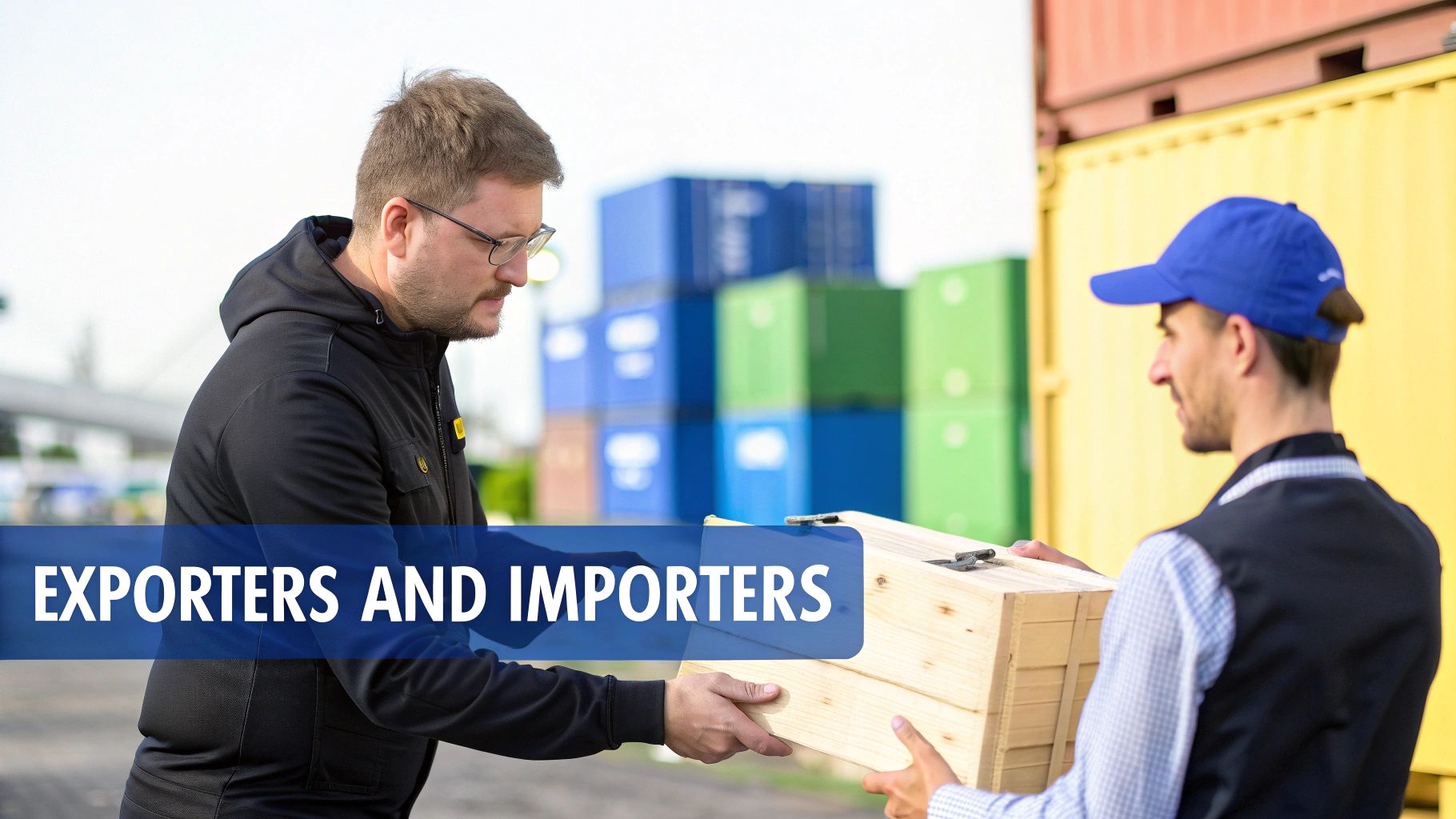
    Two men exchanging a wooden box at a shipping yard with many containers, representing import-export business.

    While the definitions seem simple, the roles of exporters and importers are packed with legal and financial responsibilities that can make or break a shipment. They're not just passive senders and receivers; they are the key players in any international trade transaction.

    For freight forwarders, who are the organisers and problem-solvers of global logistics, mastering the nuances of these roles is non-negotiable.

    The Role of the Exporter

    The exporter is the seller, producer, or shipper who kicks off the entire logistics journey. Their job is to prepare the goods for their international voyage and ensure every local regulation is met before the cargo even thinks about leaving the country.

    Their main duties typically include:

    • Packaging and Labelling: Properly packing goods to survive a long journey and labelling everything to meet international standards.
    • Export Documentation: Getting all the critical paperwork in order, from the commercial invoice and packing list to any special export licences.
    • Export Customs Clearance: Officially declaring the goods to their own country's customs authority and settling any export-related fees or taxes.

    Imagine a furniture maker in Malaysia sending a container of handcrafted tables to a buyer in Australia. That Malaysian company is the exporter. They're on the hook for everything from securely packing the tables to clearing them with Malaysian customs and getting them loaded onto the ship at Port Klang.

    The exporter’s fundamental task is to get the product packed, documented, and legally cleared to leave its home country. A single mistake here can create a bottleneck that delays the entire shipment from the very start.

    If you're thinking about starting your own trading operation, it pays to understand the full scope of what's involved in running a successful import-export business.

    The Role of the Importer

    On the other side of the transaction is the importer, the buyer who takes the baton once the goods arrive in the destination country. Their responsibility is to navigate all the local entry requirements to get the cargo released and delivered.

    The importer's key responsibilities usually are:

    • Import Customs Clearance: Filing the correct entry declarations with the customs agency in their country.
    • Paying Duties and Taxes: Handling all import duties, tariffs, and taxes (like VAT or GST) needed to clear the goods.
    • Final Delivery: Organising the final leg of the journey—transporting the goods from the port to their warehouse, distribution centre, or storefront.

    Exporter vs Importer Key Responsibilities at a Glance

    To make it even clearer, here's a simple breakdown of who typically does what in an international shipment.

    Responsibility Exporter Role Importer Role
    Origin Logistics Arranges transport from factory to the port/airport of departure. Not typically involved.
    Export Documentation Prepares commercial invoice, packing list, export licences. Receives and verifies copies of documents.
    Export Customs Files export declaration and pays any origin duties/fees. Not involved.
    Main Freight Arranges and pays for shipping (depending on Incoterms). Arranges and pays for shipping (depending on Incoterms).
    Import Customs Not involved. Files import declaration and works with a customs broker.
    Duties & Taxes Not involved. Pays all applicable import duties, tariffs, and taxes.
    Destination Logistics Not typically involved. Arranges transport from the arrival port/airport to the final destination.

    This table shows how the responsibilities are split, with the handover often happening somewhere in the middle of the journey. Understanding this division of labour is crucial for anticipating needs and providing value as a logistics partner.

    Decoding the Language of Global Trade and Compliance
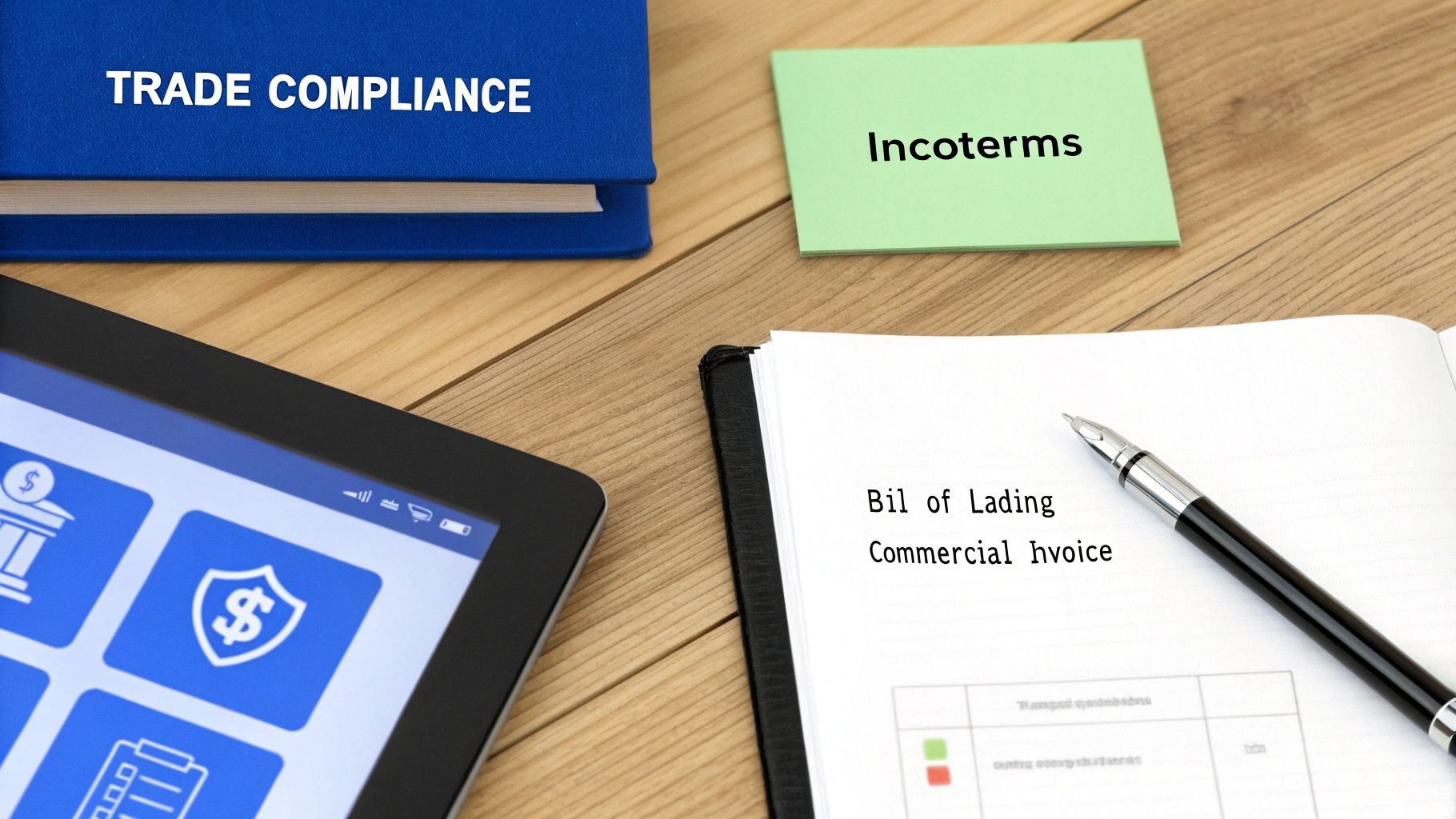
    Desk with trade compliance book, Incoterms note, tablet, pen, and shipping documents.

    For any exporter and importer, compliance isn't just about paperwork. It's the entire rulebook that keeps international trade moving. When a freight forwarder speaks this language fluently, they stop being just a service provider and become a strategic partner—one who can spot trouble before it starts and offer real guidance.

    This all comes down to mastering the documents and terms that are the bedrock of every shipment. Get it wrong, and you're looking at delays, fines, and very unhappy clients.

    The Essential Paper Trail

    Think of shipping documents as a passport for your cargo. Each piece of paper serves a critical purpose, proving ownership, value, and compliance from the moment it leaves the warehouse to the moment it arrives. Together, they tell a story that customs officials worldwide need to understand instantly.

    Two documents stand above the rest in importance:

    • Commercial Invoice: This is the core bill of sale between the exporter and the importer. It breaks down what's being sold, how much it's worth, and the payment terms. For customs, this is the go-to document for calculating duties and taxes, so any inaccuracy can cause major problems.
    • Bill of Lading (B/L): For sea freight, this is the holy grail. It’s a contract, a receipt for the goods, and, most importantly, a document of title. Whoever holds the original B/L physically owns the cargo and has the right to claim it at the destination.

    A simple typo on either of these can bring a shipment to a dead stop. An undervalued commercial invoice might trigger a customs audit and heavy fines. A lost Bill of Lading? That’s a logistical nightmare where the importer can't legally touch their own goods. You can learn more about the crucial legal role of the Importer of Record and their documentation duties in our detailed guide.

    Understanding Incoterms: The Rules of the Game

    Beyond the paper trail, you have Incoterms (International Commercial Terms). These are the universally accepted rules that spell out exactly who is responsible for what between the seller and the buyer. Published by the International Chamber of Commerce, they remove ambiguity by defining who pays for each step and, crucially, who bears the risk if something goes wrong.

    Let’s say an exporter in Singapore is selling electronics to an importer in Germany. The Incoterm they agree on will settle key questions upfront:

    • Who is paying for the main sea freight from Singapore to Hamburg?
    • When exactly does the risk of loss or damage transfer from the seller to the buyer?
    • Is the exporter on the hook for handling German import customs clearance?

    Think of Incoterms as the pre-nuptial agreement for an international sale. They set clear boundaries for cost, risk, and responsibility, preventing expensive arguments long before a container is even booked.

    Nailing these terms is fundamental. For instance, a common term like FOB (Free On Board) means the exporter's job is done once the goods are safely loaded onto the ship at the origin port. But under DDP (Delivered Duty Paid), the exporter handles almost everything—right up to paying import duties and arranging final delivery. For a freight forwarder, the Incoterm is a cheat sheet that instantly tells you who your client is for each part of the journey.

    Tuning into Your Prospect's Pain Points

    Talk to any seasoned exporter or importer, and they'll have a catalogue of horror stories. They can tell you about the shipment that disappeared off the grid for three days, the surprise invoice that ate their entire profit margin, or the customs hold that torpedoed a critical deadline. As a freight forwarder, your superpower is learning how to listen for these stories.

    When you truly understand these frustrations, you stop selling freight services and start offering genuine solutions. The language of logistical pain is universal, and once you’re fluent, you can connect with potential clients on a level your competitors simply can't reach.

    These aren't just gripes; they are massive buying signals. A prospect who mentions constant documentation errors isn't just venting—they're practically shouting about a weakness in their current setup. That’s your cue to show them how your expertise prevents those exact mistakes from happening in the first place.

    Common Shipper Frustrations

    While every business has its own quirks, the core anxieties for an exporter and importer usually circle back to the same few problems. If you can spot these patterns, you can anticipate their needs and build a pitch that solves the problems keeping them up at night.

    When you hear these, you know you're onto something:

    • The Black Hole of Visibility: Shippers absolutely hate feeling powerless. Not knowing where their cargo is or if it’s cleared customs creates a huge amount of stress and makes it impossible to keep their own customers in the loop.
    • The Sting of Surprise Costs: Nothing kills trust faster than a bill full of hidden fees. Demurrage, detention, and random administrative charges can flip a profitable shipment into a loss, instantly souring them on their current provider.
    • Radio Silence: Having to wait hours, or even days, for a simple update is a major red flag for any shipper. Poor communication makes them feel unimportant and leaves them scrambling to manage their supply chain blind.

    A recent study found that 73% of shippers would jump to a new provider for better customer service alone. A massive part of that service is clear communication and transparency. When a prospect complains about their forwarder’s response times, they’re really asking for a partner they can actually rely on.

    Turning Pain into Opportunity

    Your job is to draw a straight line from their specific frustration to a tangible solution you offer. This isn’t about a hard sell; it's about active listening and a consultative approach. Don't lead with a price list. Lead with questions that get them talking about their operational headaches.

    Think of yourself as a doctor. You need to understand the symptoms before you can even think about prescribing a cure. For an exporter and importer, the symptoms are their day-to-day logistical nightmares.

    Here’s how to translate their complaints into real opportunities:

    Shipper Says… This Is a Signal Of… Your Solution Is…
    "My last shipment was stuck in customs for a week." Compliance & Documentation Issues: Their current partner is likely dropping the ball on paperwork, causing delays and risking fines. Your team's deep expertise in getting documentation right the first time, ensuring a smooth path through customs.
    "I never know where my container is." Poor Technology & Visibility: They’re stuck with a forwarder who either lacks a modern tracking platform or just doesn't bother providing updates. Your easy-to-use, real-time tracking portal that gives them end-to-end visibility and automated alerts. No more guessing games.
    "We got hammered with unexpected charges at the port." Lack of Transparency & Poor Planning: Their forwarder either gave them a fuzzy quote or completely failed to manage the shipment's timeline. Your commitment to clear, all-in pricing and meticulous planning that dodges costly demurrage and detention fees.

    When you frame your services this way, the conversation shifts from cost to value. You’re no longer just another option in a long list of forwarders. You become the specific solution to a costly, painful problem.

    Finding High-Value Shippers with Customs Data

    Let's be honest, old-school prospecting is a grind. For freight forwarders, it often feels like you're just throwing darts in the dark—endless cold calls to long company lists, hoping you eventually hit an exporter or importer who might actually need your services. It's a massive drain on time, energy, and resources.

    But what if you had a map? That’s exactly what global customs data is. It's a live, daily treasure map detailing who is shipping what, where they're shipping it, and how often. Instead of guessing, you get a crystal-clear look at the real-world shipping activities of thousands of companies.

    This data allows you to see the entire playing field. You can pinpoint businesses moving serious volume along the exact trade lanes you excel in, letting you instantly separate the high-value prospects from the tyre-kickers.

    Turning Raw Data into Sales Intelligence

    Raw customs data is incredibly powerful, but on its own, it’s just a sea of numbers. To make it work for you, you need a way to sift through it, make sense of it, and turn it into something you can act on. This is where a proper data platform becomes non-negotiable for a modern sales team.

    Tools like Coreties are built for this very purpose. They take that mountain of information and refine it into sharp, actionable sales intelligence. They don't just give you shipment records; they connect those records to the right companies and, crucially, to the decision-makers you need to talk to.

    Here’s what that looks like in practice:

    • Pinpoint Your Ideal Customer: You can filter companies by the specific commodities they move, their shipping volumes, and the trade lanes they frequent to build a laser-focused lead list.
    • Qualify Before You Call: You can see a prospect’s shipping history and their current partners, so you know they’re a solid fit before you even pick up the phone.
    • Know Their Business Inside-Out: Seeing what an exporter and importer ships lets you craft a pitch that speaks directly to their world, not yours.

    Just look at Singapore's trade data for a real-world example. In December 2025, the country's non-oil domestic exports (NODX) grew by 6.1%, and non-oil re-exports (NORX) shot up by a massive 15.0%. This kind of growth, particularly in sectors like electronics, signals a clear and growing demand for dependable logistics partners. You can dive deeper into Singapore's robust trade performance on enterprisesg.gov.sg.

    The process for turning this insight into a solution is actually quite simple.
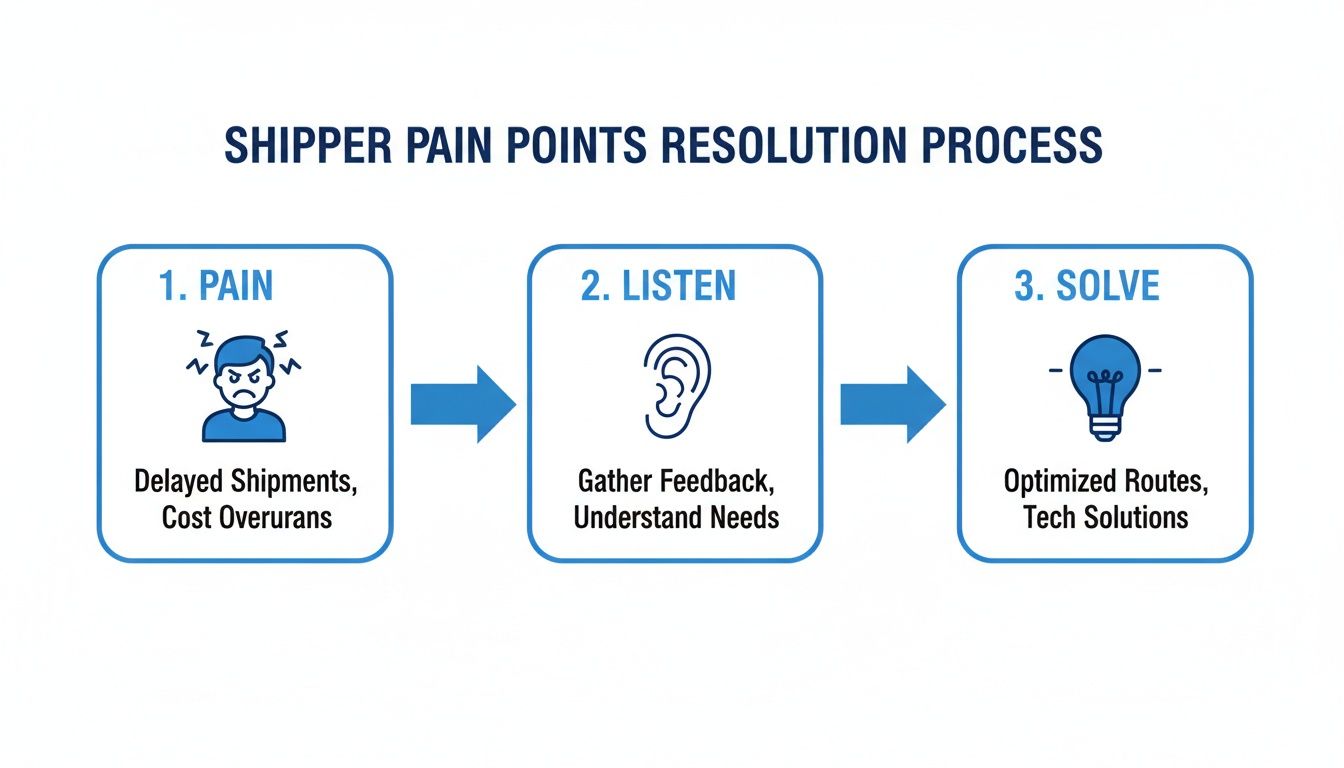
    Diagram illustrating a 3-step shipper pain points resolution process: Pain, Listen, and Solve.

    It starts by using data to spot a shipper's pain point. From there, you listen to their challenges and present a tailored solution. This simple shift turns a generic sales pitch into a genuine, problem-solving conversation.

    From Identification to Outreach

    Okay, so you’ve found a promising exporter or importer. What's next? This is where a data platform really shows its value by linking those customs records directly to verified contact details for logistics and supply chain managers.

    The entire goal is to stop making generic sales pitches and start having relevant conversations. Instead of "Let me tell you about my freight company," you can open with, "I see you're regularly shipping automotive parts to Mexico." That's a completely different and far more powerful conversation.

    This targeted approach works because it's grounded in their actual, recent business activities. You're no longer just another salesperson. You're a well-informed expert who understands their needs and can offer a specific, valuable solution. Suddenly, every outreach email and every call has a much better chance of landing.

    Crafting Outreach That Actually Gets a Reply

    Having a list of high-value leads is a great start, but it's just that—a start. The real magic happens when you turn that raw data into a real conversation. The line between an email that gets deleted instantly and one that gets a thoughtful reply is razor-thin, and it all comes down to one thing: relevance.

    Let's be honest, we can all spot a generic, copy-pasted email from a mile away. An experienced exporter and importer certainly can. The secret is to show you've done your homework and actually understand their business, right from the first sentence.

    Forget the tired old "Let me introduce our freight services" opener. Instead, imagine leading with something that makes them stop and think: "I saw your company's recent shipments of electronic components from Vietnam to the EU, and I have an idea that could optimise that specific lane." Instantly, you've gone from being just another salesperson to a potential expert who understands their world.

    Moving From Generic to Data-Driven

    This is the big shift—from spraying and praying with mass emails to targeted, intelligent outreach. It shows you respect their time and signals that you're here to add genuine value to their supply chain, not just sell a service. Your entire message should be built on the foundation of their actual shipping activity.

    This approach works because it connects directly with their day-to-day reality. You can use concrete details from customs data to show you've put in the effort:

    • Trade Lanes: Mention the specific routes they're running cargo on.
    • Commodities: Refer to the exact types of goods they move.
    • Partners: Note their known trading partners or destinations.

    This kind of personalisation turns a cold call into a warm, consultative conversation starter. It tells them you’re prepared to talk specifics and solve their real-world logistical headaches. For more insights on how manufacturers and exporters can connect with the right business partners, check out our guide on connecting EXIM, MFR, and enterprise sectors.

    For many, this is a significant change from the old way of doing things. The difference in approach—and results—is stark.

    Traditional vs Data-Driven Outreach

    Element Traditional Approach Coreties' Data-Driven Approach
    Lead Source Purchased lists, industry directories, cold calls. Verified customs data, identifying active shippers.
    Opening Line "Hi, I'm from XYZ Logistics…" "I noticed your recent shipment of [Commodity] from [Origin]…"
    Value Proposition Generic: "We offer great rates and service." Specific: "We can help you navigate customs delays on the [Trade Lane] route."
    Follow-Up Standard "Just checking in…" emails. Value-add: "Here's an article on new regulations affecting [Commodity] imports."
    Success Metric Volume of calls/emails sent. Quality of conversations started.

    Ultimately, the data-driven method is about quality over quantity. It's a more strategic, respectful, and frankly, more effective way to build a pipeline of high-value clients.

    Finding Opportunities in Economic Trends

    The best outreach doesn't just happen in a vacuum; it uses context. By understanding the bigger economic picture, you can frame your solutions in a way that resonates deeply.

    Take Singapore's trade data, for example. In December 2025, the country posted a trade surplus of 2,205.64 SGD million, right after a massive 7,669.08 SGD million surplus in November. These aren't just numbers; they're a clear signal of booming export activity. This means more Singapore-based companies are actively seeking reliable, efficient shipping partners to handle their growing volume. You can dig into the specifics in this report on Singapore's balance of trade from tradingeconomics.com.

    When your outreach combines specific company data with wider market intelligence, you create a powerful narrative. You're not just offering a service; you're offering a timely solution perfectly aligned with their business needs and the current economic landscape.

    By connecting the dots between customs data and real-world trade flows, your message becomes almost impossible for the right exporter and importer to ignore. It positions you as a strategic partner from the very first email.

    Uncovering Opportunities Beyond Merchandise Trade

    When we think about global trade, it's easy to picture massive container ships filled with consumer goods. But that's only part of the story. Some of the most valuable opportunities for freight forwarders are hiding in plain sight, within the services sector.

    Take industries like tech, finance, or engineering. They aren't shipping t-shirts or toys, but their logistics needs are incredibly critical. Imagine a tech company setting up a new data centre overseas and needing to ship highly specialised servers. Or think about a renewable energy firm that has to transport fragile, multi-million dollar turbine components for a new wind farm.

    These are high-stakes, project-defining shipments. The companies acting as both the exporter and importer of this kind of equipment can't afford mistakes. They absolutely need a logistics partner they can trust, which is where a savvy forwarder comes in. It’s a call to look beyond the usual cargo and tap into these lucrative, and often less crowded, market segments.

    The numbers back this up, too. In the first quarter of 2025 alone, Singapore's trade in services shot up by 3.8% compared to the previous year, hitting a value of around SGD 249 billion. This isn't just abstract data; it represents a booming market that needs physical, high-value goods to make those services happen. You can dig deeper into Singapore's recent trade performance and its economic impact to see the trends for yourself.

    By homing in on companies in these growing service industries, you can get a real leg up on the competition. These clients are often looking for reliability and specialised care, not just the lowest price, making them perfect for building profitable, long-term partnerships.

    This is where a tool like Coreties becomes so powerful. It helps you follow these economic shifts and pinpoint the key players in these parallel sectors—the very ones your competitors are likely ignoring.

    Your Questions, Answered

    Let's dig into some of the common questions freight forwarders ask when they're on the hunt for a new exporter and importer to work with.

    How Can I Find High-Value Importers Instead of Low-Volume Shippers?

    This is the classic quality-over-quantity problem. The best way to solve it is by getting your hands on global customs data. A solid platform like Coreties lets you slice and dice that data, filtering leads by how much they ship, how often, the value of their goods, and the specific trade lanes they use.

    Instead of casting a wide, hopeful net, this lets you zero in on companies that perfectly match your ideal customer profile. You can spend your time on the big fish, not the small, one-off shippers.

    What's the Best Way to Start a Conversation with an Exporter Lead?

    Whatever you do, don't send a generic "Hello, we're a freight forwarder" email. That's a one-way ticket to the trash folder. You need to show them you've done your homework.

    Use the insights you've gathered from customs data to craft a message they can't ignore. For example, you could say something like, "I noticed you're regularly exporting electronic components to Germany. We've just secured a great rate on that air freight lane and I think we could save you a fair bit." See the difference? You're immediately showing value and proving you understand their specific business needs.

    What Information Is Crucial for Qualifying a Lead Besides Customs Data?

    Customs data is your foundation, but it’s just the start. You need to build on it by finding out more about the company and, crucially, who to talk to. Look for things like the company's size, what industry they're in, and any recent news that might signal a change in their shipping patterns.

    But the real game-changer is finding the right person. You need to get past the gatekeepers and connect with the Logistics Managers, Supply Chain Directors, or Heads of Procurement.

    A fantastic lead is worthless if you can't get your pitch in front of the person who actually makes the decisions. That's why platforms that combine verified contact details with customs data are so powerful—they connect you directly to the people who can say "yes".


    Ready to find your next high-value exporter and importer? Coreties turns raw customs data into real sales intelligence, helping you create outreach that actually gets replies and wins business. Discover qualified shippers today at coreties.com.

  • Exporters in singapore: A Quick Guide to Finding and Qualifying Top Partners

    Exporters in singapore: A Quick Guide to Finding and Qualifying Top Partners

    Singapore's export market is a goldmine of high-value goods, but you need the right map to find the treasure. It's dominated by advanced electronics, pharmaceuticals, and specialised machinery. For any logistics seller trying to break in or expand, knowing these core industries is just the starting point. The real game is about pinpointing the companies with consistent, high-volume shipping needs.

    Getting to Know the Singapore Export Scene

    To really make a dent and find the best exporters in singapore, you have to look past the obvious and dig into the trade data. This is where the true market dynamics reveal themselves. Yes, Singapore’s strategic location and business-friendly policies have built a robust export economy, but the golden opportunities are hidden within specific, fast-growing commodity groups and the trade lanes they frequent.

    Forget the scattergun approach of contacting every company you can find. A focused analysis lets you pour your energy into sectors that are actually shipping, meaning you're not just finding any exporters—you're finding the right ones.

    Where the Action Is: High-Growth Sectors and Key Commodities

    The engine room of Singapore's export economy is its high-tech and high-value manufacturing. While many industries play a part, a few consistently stand out for their sheer volume and upward trajectory.

    Here's a quick snapshot of the key export categories showing significant recent growth, which can help you identify high-potential industries.

    Singapore's High-Growth Export Sectors

    Export Sector Key Products Recent Growth Indicator
    Electronics & Electrical Machinery Semiconductors, integrated circuits, disk media, telecom equipment Accounts for over a third of total exports, with some sub-sectors growing over 80%.
    Pharmaceuticals & Chemicals Pharmaceutical products, organic chemicals, medical instruments Requires specialised, often temperature-controlled, logistics solutions.
    Specialised Machinery Industrial turbines, precision engineering components, manufacturing equipment Reflects Singapore's critical role in complex global supply chains.

    These are the sectors where logistics demand is proven and growing. By understanding what they ship and how they ship it, you can tailor your value proposition to solve their specific challenges.

    The electronics and electrical machinery sector is the undisputed champion, making up over a third of all exports. We're talking about a daily flood of semiconductors, integrated circuits, and telecom gear leaving the country.

    Then you have the biomedical sciences hub. Singapore pushes out a massive volume of pharmaceuticals, organic chemicals, and medical instruments—shipments that often demand specialised handling and cold-chain integrity. Finally, specialised machinery, from industrial turbines to precision parts, highlights Singapore’s position as an essential link in global manufacturing supply chains.

    The official numbers back this up. Singapore's non-oil domestic exports (NODX) recently posted a remarkable 4.8% growth, blowing past forecasts. What powered this surge? Electronics. Integrated circuits jumped 32.1%, disk media products climbed 53.5%, and telecommunications equipment shot up by an astounding 81.4%. You can read more about these export growth trends on The Straits Times.

    Drilling down into these specific products is crucial. To get a better handle on identifying them within customs data, check out our guide on how to navigate Singapore's customs HS codes.

    By zeroing in on these thriving areas, you align your sales efforts with the most active and valuable parts of the market. This data-first approach means your time is spent engaging prospects who have immediate and ongoing logistics needs, which naturally leads to better conversations and a much higher chance of winning their business.

    Using Customs Data to Find Qualified Shippers

    A bigger list isn't the answer to better prospecting; a smarter one is. For any logistics provider trying to win business with exporters in Singapore, the best tool in your arsenal is customs data. This raw information, once you know how to filter and analyse it, goes from being a sea of noise to a curated pipeline of genuinely qualified leads.

    Forget sifting through outdated business directories. Real trade data tells you exactly who is actively shipping, what they’re moving, and how often they're doing it. This methodical approach means your sales team spends their time on prospects with tangible, immediate logistics needs, which completely changes your prospecting ROI. It’s the difference between a shot-in-the-dark cold call and a warm, data-backed conversation.

    Pinpointing Active Exporters with Precision Filters

    The real magic of a platform like Coreties is its ability to slice through the clutter. You can move past basic company demographics and start filtering prospects based on their actual shipping behaviour. This is how you build hyper-targeted lists of companies whose needs are a perfect match for what you do best.

    Here are a few of the most powerful filters I always start with:

    • HS Codes: This lets you zero in on companies exporting specific commodities. If you specialise in handling electronics, you can filter for HS Code 85 to instantly find every company shipping semiconductors and telecommunications gear.
    • Trade Volume: Want to find the bigger fish? Set a filter for the total weight or declared value of shipments over a set period. This helps you prioritise exporters with more consistent, high-value freight.
    • Shipping Frequency: This is key for identifying businesses with regular, ongoing demand. A simple filter for companies shipping more than five times a month to a specific destination uncovers businesses with stable, predictable logistics needs.
    • Trade Lanes: Focus your energy on the routes where you have the strongest operational advantage. You can build a targeted list of every company exporting from Singapore to key markets like China, Malaysia, or the USA.

    By combining these filters, you can create an incredibly powerful search. For example, you could find all Singaporean companies that have shipped over 10,000 kg of pharmaceutical products (HS Code 30) to the United States in the last six months. That’s not a prospect; that’s a qualified lead ready for a call.

    The workflow below shows just how simple yet effective this process is for turning raw data into real conversations.

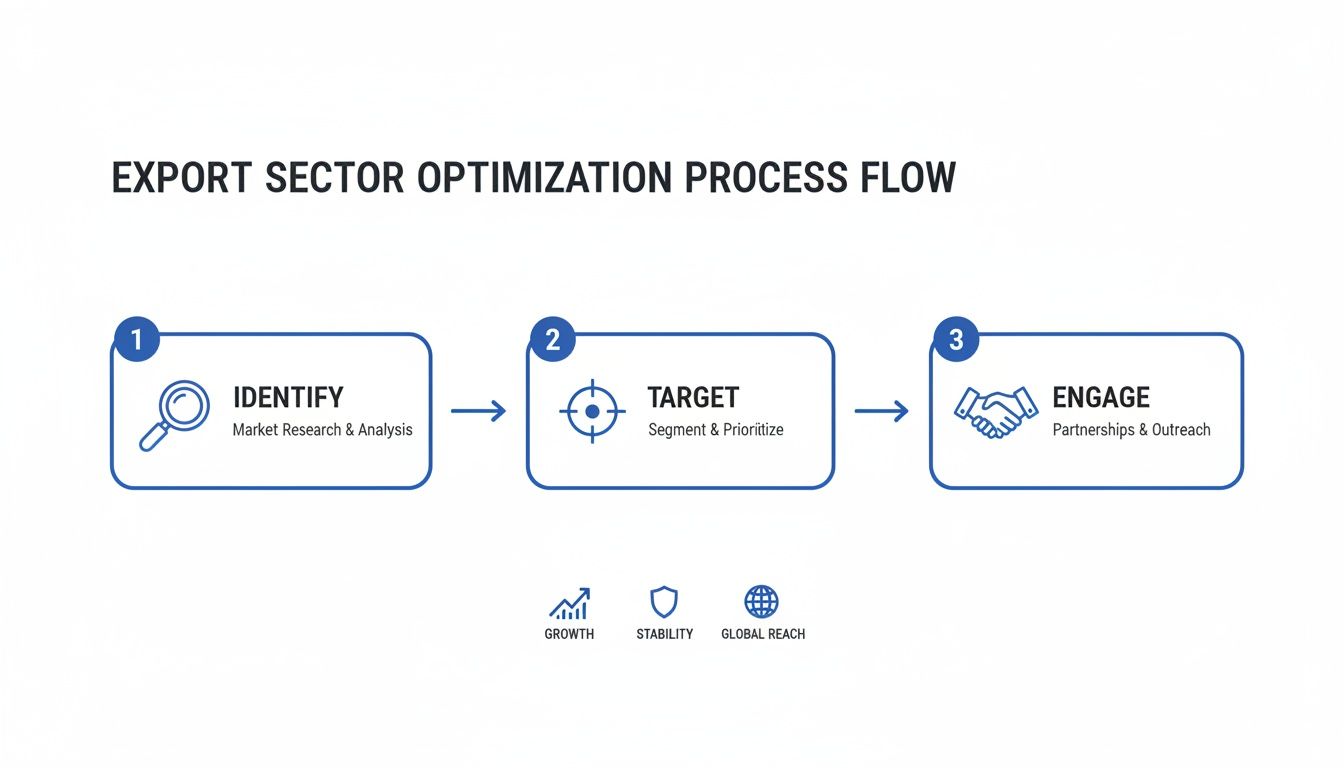
    Export sector optimization process flow with three steps: Identify, Target, Engage, aiming for Growth, Stability, Global Reach.

    This simple flow—Identify, Target, Engage—is the foundation of a data-driven sales strategy. It gets you from broad market awareness to specific, high-potential conversations, fast.

    From Data Points to Actionable Insights

    Once your initial filters are in place, the next step is to interpret what you’re seeing to qualify prospects even further. A company shipping a high volume of a single commodity to one destination has very different pain points from one sending smaller, mixed consignments to multiple countries. Your pitch has to reflect that reality.

    For instance, a company consistently exporting machinery parts to Taiwan could be a perfect fit for your consolidated LCL services on that lane. Another business moving high-value electronics to Europe might be much more interested in a proposal that highlights your premium air freight capacity and enhanced security measures. If you want to dive deeper into this, check out our guide on how to use an HS code filter for smarter prospecting.

    This level of insight is just impossible to get from standard prospecting tools. When you ground your strategy in real shipping data, you're not just finding potential customers—you're uncovering their specific logistics challenges before you even pick up the phone.

    Spotting High-Value Trade Lanes and Opportunities

    Let's be honest, not all trade lanes are created equal. If you want to succeed in prospecting exporters in Singapore, you need to get smart about identifying and chasing the most profitable shipping routes. Global trade is always in flux, and those shifts constantly carve out new opportunities for anyone paying close attention.

    The best way to do this? Ditch the guesswork and dive into real-world customs data. This is how you pinpoint lanes with surging volumes and tailor your services to match. Imagine knowing that exports to a specific country have shot up recently. You can get ahead of the curve, secure competitive capacity on that lane, and walk into a sales meeting with a powerful, relevant value proposition.

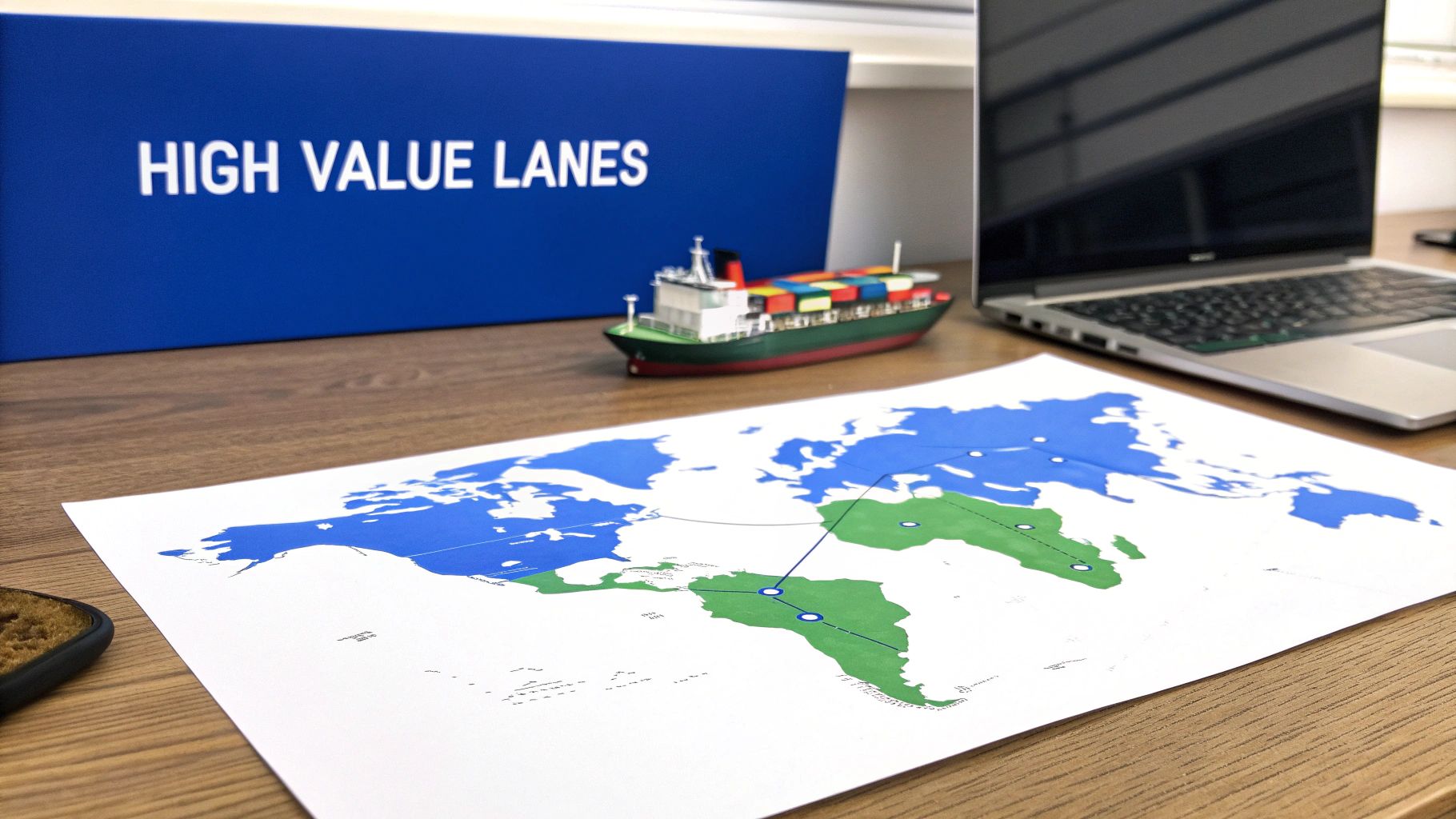
    Global logistics setup with a world map, container ship model, laptop, and 'HIGH VALUE LANES' sign.

    This image nails the concept of finding those golden lanes. The real trick, though, is turning that big-picture idea into hard data that fuels your sales strategy.

    Analysing Recent Trade Shifts

    Looking at the latest data, we can see some pretty significant shifts in where Singapore's exports are headed. Recent figures for non-oil domestic exports (NODX) show a 17.9% jump in shipments to China. Even more impressive, exports to Taiwan climbed 24.3%, and Malaysia saw a solid 13.3% increase.

    On the flip side, the United States market took a hit, with exports dropping a sharp 36.3%. You can dig into these recent export figures from Morningstar for a closer look.

    This isn't just random noise; it's a clear signal. Singapore's export focus is pivoting towards key Asian markets. For freight forwarders, these numbers are gold. They tell you exactly where to point your sales team—towards lanes with proven, growing demand and away from those hitting a rough patch.

    Turning Lane Data into a Sales Advantage

    Knowing the trends is one thing; using them to win business is another. This is where you can really separate yourself from the competition. Forget the generic sales pitch and start segmenting your prospect list based on where they actually ship their goods.

    Here's how this plays out in the real world:

    • For Exporters to China and Taiwan: Your outreach should be all about your strong capacity, competitive transit times, and local know-how in these booming markets. You're speaking their language.
    • For Exporters to Malaysia: You can lead with efficient cross-border trucking or smart intermodal solutions that balance speed with cost. It’s a practical, valuable suggestion.
    • For Exporters to the US: The conversation changes. With volumes down, your focus should shift to value-add services. Talk about optimising their supply chain, suggest alternative routing, or offer warehousing solutions to help them navigate the downturn.

    By aligning your service offerings with real-time trade lane dynamics, you transform from a simple service provider into a strategic partner. You are no longer just selling freight; you are offering data-backed solutions to a prospect’s most current and pressing logistics challenges.

    This level of insight is what makes top performers stand out. It ensures your team is always zeroed in on the most promising parts of the market, armed with a message that actually resonates. When you can engage the right exporters in Singapore with solutions that solve their immediate operational headaches, your chances of winning their business go way up.

    Connecting With the Right Decision-Makers

    You've got a solid list of high-potential exporters in Singapore. Great. But that's only half the battle, isn't it? A list of company names doesn't sign deals. Real people do. This is where we shift from crunching customs data to taking targeted action, getting your pitch past the gatekeepers and onto the screen of the person who actually makes the decisions.

    Let's be honest: firing off a brilliant proposal to a generic info@ email address is a complete waste of your time and effort. Our goal is to pinpoint the exact individuals whose job it is to solve the shipping headaches you're built to fix.

    A person's hand touches a tablet displaying 'Reach DECISION MAKERS' and a business profile picture.

    Identifying Key Logistics Contacts

    First things first, you need to know who you’re looking for. Aiming for the "CEO" at a major enterprise is usually a rookie mistake; they're often too far removed from the day-to-day grit of logistics. You need to get more granular.

    Your best bet is to find people with titles that scream logistics, supply chain, or operations. Think along these lines:

    • Head of Logistics
    • Supply Chain Manager
    • Global Operations Director
    • Procurement Manager (especially those with a logistics focus)
    • Export/Import Manager

    This is where a tool like LinkedIn Sales Navigator becomes your best friend. You can zero in on a target company and filter its employee list by these keywords. It’s a quick and dirty way to build a highly relevant contact list, ensuring your message lands with someone who genuinely cares about freight rates and on-time deliveries. If you're looking to understand how these roles fit into different company structures, it helps to know the differences between EXIM, MFR, and enterprise setups.

    A common pitfall I see is aiming too high or too low in the org chart. A junior coordinator probably doesn’t have the authority to sign off on a new freight partner. A C-level exec is focused on the 30,000-foot view, not specific shipping lanes. Your sweet spot is the mid-to-senior level manager who feels the direct pain of logistics problems.

    Crafting Data-Driven Outreach

    Once you’ve identified the right person, your outreach has to show you’ve done your homework. A generic "we can save you money" email gets deleted in a heartbeat. This is your chance to weave in the valuable data you've already gathered.

    Your opening line is everything. It needs to instantly signal that this isn't some mass-blasted spam. Reference a specific commodity they ship or a high-volume trade lane they operate on, and you’ll immediately establish credibility.

    Here’s a practical example for a prospect shipping electronics to Taiwan:

    Subject: A thought on your electronics shipments to Taiwan

    Body: "Hi [Prospect Name], I saw that your company is a significant exporter of integrated circuits to Taiwan. With volumes on that lane growing, I thought you might be interested in our consolidated air freight options that have been helping similar electronics shippers reduce transit times by up to 20%."

    See the difference? This approach is powerful because it’s not about you—it’s about them. It shows you understand their business, their specific market, and their potential challenges.

    The scale of opportunity here is massive. In a recent peak month, Singapore's total export value hit 70,121.84 SGD million, with forecasts trending around 64,000 SGD million for the coming months. With that much volume moving, a personalised, data-informed message isn't just a good idea; it's the only way to cut through the noise. You can discover more insights about Singapore’s export trends on Trading Economics.

    Crafting Proposals That Win Business

    Getting that first "yes" from a decision-maker is a great feeling, but it’s really just the starting whistle. The real game is turning that initial interest into a solid, long-term partnership. This is where you bring all your data-driven insights to the table and build a proposal that doesn't just quote prices—it solves their specific shipping challenges.

    Your whole mindset needs to shift from just selling freight to offering genuine strategic value. You’ve already done the hard work of figuring out what an exporter ships and where. Now, it’s time to use that intel to frame a proposal that speaks directly to their world, proving you get their supply chain inside and out.

    Moving Beyond Price-Led Conversations

    The quickest way to get lost in the noise is to make it all about price. Competing on cost is a race to the bottom, turning your valuable service into a commodity. The good news is, the customs data you've gathered on exporters in Singapore gives you the perfect opening to talk about value, efficiency, and reliability—the things that really impact a shipper's bottom line.

    Think about it this way: you’re not just offering a rate for shipping electronics to Europe. You’re proposing a smarter routing option through a key partner hub that could shave a day off transit time. Or maybe you're suggesting a clever intermodal solution that perfectly balances cost and speed for their chemical shipments to the US.

    It’s these kinds of specific, thoughtful recommendations that show you’re thinking like a partner, not just another vendor quoting a lane.

    Tailoring Solutions with Trade Data

    Your proposal should feel like a direct answer to the prospect's needs, using their actual shipping patterns as the foundation. Let's walk through a couple of practical examples.

    • The High-Volume Electronics Exporter: You’ve found a company sending thousands of kilograms of semiconductors (HS Code 85) to Taiwan every month. A generic air freight quote won’t cut it. Instead, your proposal could lead by highlighting your priority booking access with certain airlines on that specific lane, guaranteeing their high-value, time-sensitive goods are always wheels-up on schedule.

    • The Specialised Chemical Shipper: Your data shows a prospect exports organic chemicals (HS Code 29) to several spots in Southeast Asia. Here, you can lead with your proven expertise in handling hazardous materials. Outline your specific safety protocols and compliance measures that take the risk off their plate for this sensitive cargo.

    The trick is to turn data points into direct, tangible benefits. Don't just say, "I see you ship to Germany." Instead, explain how your consolidated service to Hamburg will improve their operations, reduce their risk, or even save them money in ways they hadn't considered.

    This consultative approach completely changes the sales dynamic. You’re no longer just one of many bidders in their inbox; you become a trusted advisor. By proving you’ve invested the time to understand their business before you even ask for it, you’re not just more likely to win the deal—you're laying the groundwork for a profitable, long-lasting relationship.

    Got Questions About Finding Singaporean Exporters?

    Even with the best data in hand, hitting the ground running to find new exporters in Singapore can feel tricky. You're not alone. Let's walk through some of the most common questions and sticking points I see sales professionals run into.

    Think of this as your quick-reference playbook for getting past those hurdles that can really stall your momentum.

    What's the Best Way to Actually Get a List of Exporters?

    Honestly, forget generic business directories. The real game-changer is getting your hands on a platform that taps directly into customs and bill of lading data. This is where the gold is.

    Why? Because it’s not about finding a list of companies; it's about finding proof of their shipping activity. This kind of data lets you get incredibly specific.

    • Commodities: You can use HS codes to pinpoint companies that export the exact goods you're best at handling. No more guessing.
    • Shipping Volume: Want to chase the big fish? Filter for high-volume shippers and focus your energy where it counts.
    • Trade Lanes: Target businesses shipping to destinations where you know you have a competitive edge.
    • Frequency: Zero in on companies with steady, reliable shipping schedules—the bread and butter of our business.

    When you start with real trade data, you’re no longer prospecting blind. You’re building a qualified list of active exporters who have a clear, current need for what you’re selling.

    Which Industries Are Shipping the Most Volume Right Now?

    No surprise here: electronics are king. This sector is a juggernaut, pushing out massive volumes of integrated circuits (HS Code 85), telecom gear, and computer parts. We're talking about over a third of Singapore’s total exports.

    But don't stop there. Pharmaceuticals, chemicals, and specialised machinery are also huge players. The key is to look deeper. Use the data to see which specific products are heading to destinations that match your strongest trade lanes.

    The real secret isn't just knowing the top industries; it's finding the perfect overlap between a niche's needs and your unique value. For instance, if you're a pro at cold-chain, targeting pharmaceutical exporters shipping to Europe is a far smarter play than just spamming every manufacturer out there.

    How Do I Make My Outreach Email Not Sound Like Everyone Else's?

    Data-driven personalisation is your secret weapon. Generic emails get deleted in seconds. Your first message has to prove you’ve done your homework.

    Try opening with something specific you found. For example: "I noticed your company is consistently shipping electronic components to Taiwan. That’s a key lane for us, and we've been able to secure priority air freight space that could cut your transit times."

    This kind of opener works because it immediately shows you get their business. You're not just another forwarder—you're a potential partner who understands their specific routes and commodities. That's how you cut through the noise and get a reply.

    What Are Some Common Prospecting Mistakes I Should Avoid?

    One of the biggest pitfalls is chasing only the massive, household-name exporters. They’re constantly bombarded by your competitors and are usually locked into rigid, long-term contracts. The smarter move? Use data to find those fast-growing small and medium-sized enterprises (SMEs). Their logistics needs are changing, and they're often more open to new partners.

    Another classic mistake is leading with price. Your first email should scream "value," not "discount." Show you understand their supply chain. Finally, make sure you're talking to the right person. Don't just email a generic info@ address. Use tools like LinkedIn Sales Navigator to find the Head of Logistics or Supply Chain Manager—the person who can actually say yes.


    Ready to stop guessing and start connecting with qualified exporters in Singapore? Coreties transforms raw customs data into an actionable pipeline of high-value leads. Filter by commodity, lane, and volume, then connect with verified decision-makers using data-driven outreach. Discover how much faster you can build your sales pipeline.

  • HS Code for Clothing A Guide to Accurate Classification

    HS Code for Clothing A Guide to Accurate Classification

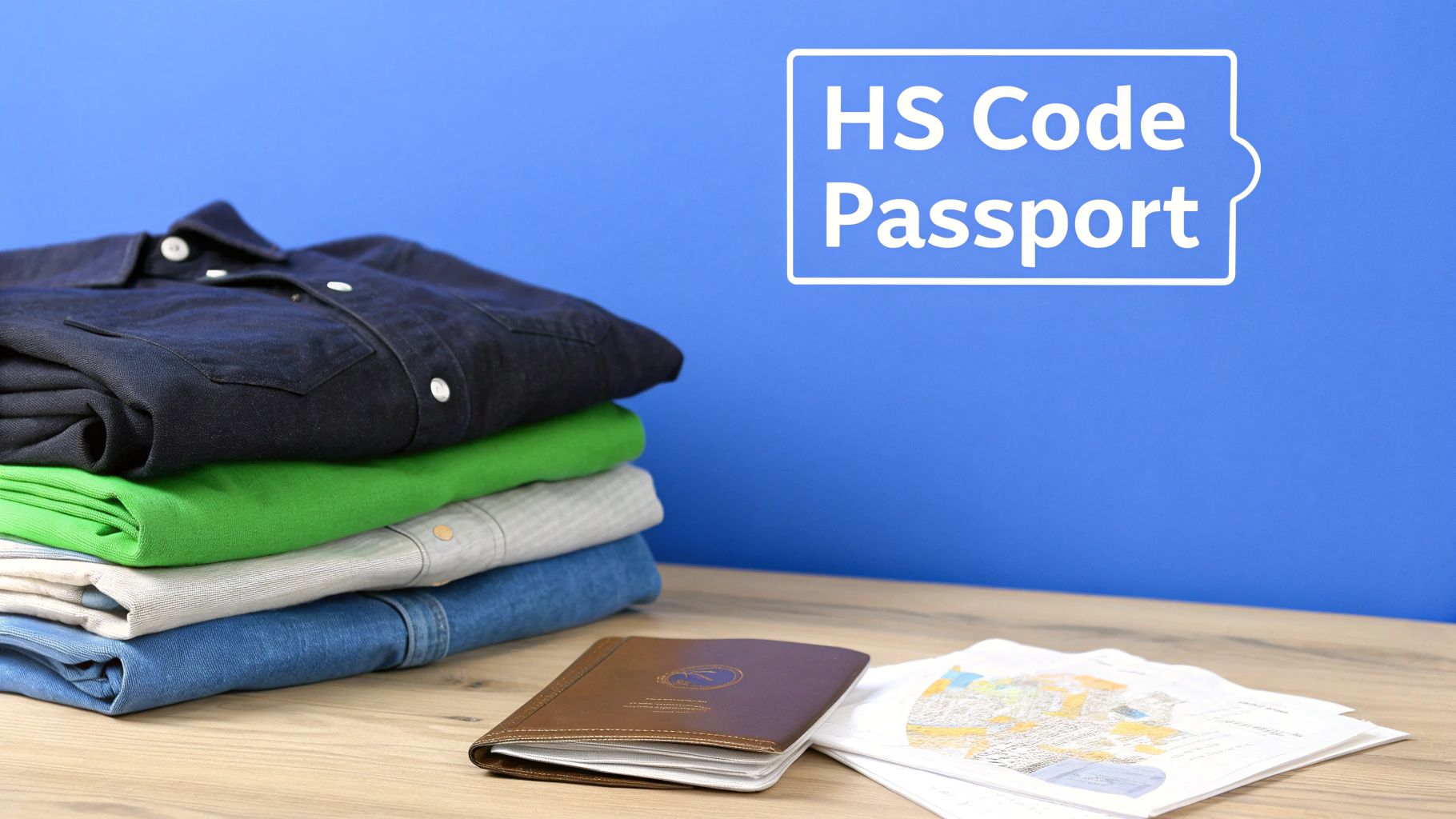
    Think of the HS code for clothing as a universal passport for every garment crossing a border. This simple six-to-ten-digit number tells customs officers worldwide exactly what's in the box—what an item is, what it's made of, and who it's for—making sure it gets classified correctly for duties and taxes.

    Decoding the Language of Global Apparel Trade

    A stack of folded clothes, a brown passport booklet, and papers on a table with 'HS Code Passport' text.

    For anyone in freight forwarding, getting a handle on the Harmonized System (HS) code isn't just about ticking a compliance box; it's a real strategic advantage. The right code paves a smooth path from the factory floor to the customer's hands, sidestepping costly delays, surprise fines, and the kind of friction that can sour a client relationship. Get one digit wrong, and a profitable shipment can quickly become a logistical nightmare.

    It helps to think of the HS code as a highly specific GPS coordinate for your apparel shipment. Each pair of digits zooms in, refining the product's identity until there's a clear, universal description that leaves no room for guesswork at customs.

    The Building Blocks of a Clothing HS Code

    The whole system is built on a simple, logical hierarchy. It starts broad and gets more specific with each number, allowing customs officials to pinpoint a garment's exact nature in seconds. This structure is absolutely essential for applying the correct tariffs and trade rules.

    Here's a quick look at how it works:

    • Chapter: The first two digits sort the item into a general category. For clothing, you'll almost always be in Chapter 61 (knitted or crocheted apparel) or Chapter 62 (woven apparel).
    • Heading: The next two digits define the type of product, like "jerseys and pullovers" or "trousers and shorts."
    • Subheading: The final two digits of the international code add the crucial details, such as the material (e.g., cotton, synthetic fibres) or the intended wearer (men's, women's, etc.).

    In global trade, the HS code is the single source of truth for product classification. Getting it right from the start eliminates downstream complications, ensuring that tariffs are calculated correctly and shipments clear customs without friction.

    This six-digit foundation is the bedrock of international apparel shipping. Take Singapore, for example. The local HS code framework, which centres on Chapters 61 and 62, is crucial for accurate trade analytics. A simple misclassification can lead to serious hold-ups, which is why Singapore Customs provides tools like their ruling database to help businesses stay compliant. You can see just how much these classifications matter to the economy in official trade publications.

    Ultimately, understanding this system is your key to navigating the complex world of global logistics. It turns the daunting task of classification into a manageable process, giving you the confidence to handle any apparel shipment that comes your way.

    How HS Codes for Clothing Are Structured

    Think of an HS code for clothing like a postcode. It tells customs officials exactly what's in the box, starting from a broad region and zooming right down to a specific street address. Getting this code right isn't just a technicality—it's what determines how quickly your shipment clears and how much duty you'll pay.

    The entire universe of clothing is split into two massive categories, known as Chapters. These first two digits are the most important decision you'll make when classifying a garment. The distinction is simple but absolutely fundamental.

    The First Big Decision: Knitted or Woven?

    Right at the start, the path splits based on how the fabric was made. Every single piece of clothing falls into one of two Chapters:

    • Chapter 61 is for all apparel that is knitted or crocheted.
    • Chapter 62 is for all apparel that is woven.

    What's the difference in real life? A classic cotton t-shirt has that familiar stretch because its fabric is made from a single thread looped over and over—that's knitted (Chapter 61). On the other hand, a formal dress shirt feels crisp and holds its shape because its fabric is made by weaving threads over and under each other, like a basket. That's woven (Chapter 62).

    This isn't a minor detail; it's the foundation of the entire code. A knitted garment's HS code must start with "61". A woven one must start with "62". No exceptions.

    An incorrect Chapter is one of the most common and costly mistakes in apparel shipping. It instantly invalidates the rest of the code, leading to customs rejections, surprise duties, and major delays for your clients.

    Narrowing It Down with Headings

    Once you've picked the right Chapter, the next two digits—the Heading—get more specific about the type of garment. This is where you go from a broad category like "knitted apparel" to identifying the actual item.

    For instance, within Chapter 61 (Knitted), you'll find different Headings for different products:

    • 6105: Men's or boys' shirts, knitted or crocheted.
    • 6109: T-shirts, singlets, and other vests, knitted or crocheted.
    • 6110: Jerseys, pullovers, and cardigans, knitted or crocheted.

    Chapter 62 (Woven) works the same way, with Headings like 6203 for men's suits or 6205 for men's shirts. The Heading adds that second layer of detail, confirming what the product is. While the global standard is six digits, many countries, including Singapore, add extra digits for more local detail. You can dive deeper into this in our guide on the HS code system in Singapore.

    Adding Critical Details with Subheadings

    The last two digits of the international HS code are the Subheading. This is where things get really granular—and it's often where classification disputes happen. The Subheading locks in the final details that determine the exact tariff rate.

    These crucial details almost always include:

    • Material Composition: Is it cotton, wool, silk, or a synthetic fibre like polyester? A cotton t-shirt has a different code from a polyester one.
    • Intended Wearer: Is it for men, women, boys, girls, or infants? This distinction is non-negotiable and can completely change the code.

    Let's walk through an example: a men's cotton t-shirt.

    1. Chapter: It’s a t-shirt, so it's knitted. We start with 61.
    2. Heading: It’s a t-shirt, so we use Heading 09.
    3. Subheading: It’s made of cotton, which is assigned Subheading 10.

    Put it all together, and the correct 6-digit HS code for a men's cotton t-shirt is 6109.10. This logical, step-by-step process is designed to remove guesswork, so customs officials anywhere in the world can understand exactly what they're looking at.

    Key Classification Rules You Need to Know

    Once you’ve got a handle on the basic structure of an HS code, the real work begins. Getting the classification right is what separates a smooth customs clearance from a shipment stuck in limbo. It’s all about a process of elimination—you start with the most critical distinction and work your way down through the details until only one correct code remains.

    The whole system essentially asks you a series of questions. The first one is the big one: is the garment knitted or woven? This single detail decides whether you start in Chapter 61 or Chapter 62, and getting it wrong from the get-go throws off everything else.

    The Critical Knitted Versus Woven Divide

    Think of a garment’s fabric construction as its fundamental DNA. Knitted fabric is made from a single, continuous thread looped together, kind of like a chain-link fence. This structure gives it natural stretch, which is why your t-shirts, jumpers, and gym wear are almost always knitted. These items all belong in Chapter 61.

    Woven fabric, on the other hand, is created by interlacing two or more threads at right angles, much like a basket weave. This grid-like structure makes the material more rigid and durable—perfect for things like formal shirts, denim jeans, and structured blazers. These garments fall under Chapter 62.

    A word of warning: Getting the knitted vs. woven distinction right is non-negotiable. An experienced customs inspector can tell the difference in seconds, and classifying under the wrong Chapter is an immediate red flag that often triggers inspections and costly re-classifications.

    To make it easier to tell them apart at a glance, here’s a quick reference table.

    Knitted (Chapter 61) vs Woven (Chapter 62) At a Glance

    Characteristic Knitted Apparel (Chapter 61) Woven Apparel (Chapter 62)
    Fabric Construction Made from a single, continuous yarn looped together. Made by interlacing two or more sets of yarn at right angles.
    Feel & Stretch Stretchy, flexible, and comfortable. Returns to shape easily. More rigid, structured, and holds its shape. Limited stretch.
    Look Up Close You'll see tiny, braided loops, similar to knitting. You'll see a distinct grid-like or criss-cross pattern.
    Common Garments T-shirts, jumpers, polo shirts, hoodies, leggings, underwear. Dress shirts, blouses, trousers, jeans, suits, blazers, jackets.

    Remembering these key differences is the first and most important step in correctly classifying any piece of clothing.

    What About Blended Fabrics?

    It’s rare to find clothing made from just one material. So what happens when you have a t-shirt that’s 60% cotton and 40% polyester? This is where the "principal character" rule comes into play. You classify the garment based on the material that gives it its primary identity.

    For blended fabrics, the rule is thankfully straightforward: you classify the garment based on the material with the highest percentage by weight. In our example, since cotton makes up 60% of the fabric, you’d classify the t-shirt under the subheading for cotton, not polyester.

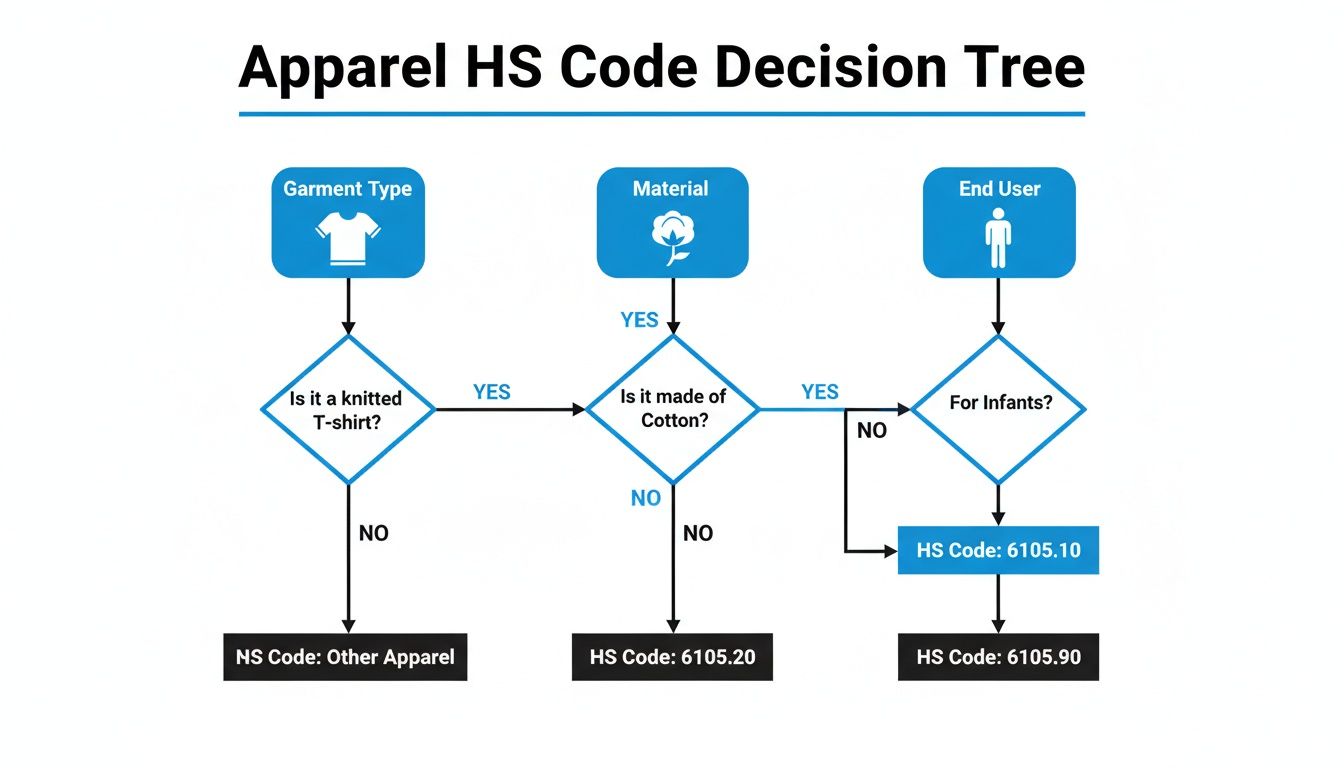
    This simple decision tree shows the logical flow for classifying a garment, starting from its type and drilling down to the end-user.

    Apparel HS Code decision tree flowchart for classifying garments by type, material, and end user.

    As you can see, each decision you make narrows down the possibilities, guiding you systematically to the right HS code.

    The Importance of Gender and Age

    After fabric and material, the next hurdle is the intended wearer. The HS code system makes very clear distinctions between apparel for different demographics, and this isn’t a suggestion—it’s a hard-and-fast rule with separate codes for each group.

    You absolutely must classify garments into one of these categories:

    • Men's or boys'
    • Women's or girls'
    • Infants'

    A men’s cotton shirt will have a different HS code than a women’s cotton shirt, even if they look practically identical. The "infants" category is also very specific, usually covering clothing for babies up to a certain size (for instance, up to size 86 cm in many regions). Mistaking a unisex-style hoodie as "men's" when the shipment is for a women's retailer is a classic mistake that can cause major compliance headaches.

    When Small Details Change Everything

    Finally, never underestimate the power of design features. Seemingly minor details can completely change an HS code because the system is designed to be incredibly specific. A simple collar, a pocket, or a particular type of fastening can easily bump a garment from one heading to another.

    For example, a knitted pullover with no pockets or openings might fall under heading 6110. But add a partial opening at the neck with a few buttons, and it could suddenly be classified as a shirt under an entirely different heading. Always examine the garment’s physical traits closely—the smallest details often hold the key to an accurate classification.

    Common HS Codes for Major Clothing Categories

    Now that we’ve got the ground rules down, let's put theory into practice. Knowing the right HS code for clothing is only useful when you can apply it quickly to the garments you handle every single day.

    Think of this section as your classification cheat sheet. We're going to walk through some of the most common apparel categories—from t-shirts to jeans—and show you exactly how the logic of Chapter, Heading, and Subheading comes together to form the correct 6-digit code.

    T-Shirts, Singlets, and Other Vests

    This category is easily one of the most frequently shipped worldwide, and a standard t-shirt is a perfect, clear-cut example of how the HS system works.

    Let’s classify a basic men's 100% cotton t-shirt:

    • Chapter: T-shirts are almost always made from that familiar stretchy, looped fabric, which means they are knitted. This puts them squarely in Chapter 61.
    • Heading: Within Chapter 61, the specific heading for "T-shirts, singlets and other vests" is 09.
    • Subheading: The material is cotton, which corresponds to subheading 10.

    Put it all together, and you get the 6-digit HS code: 6109.10.

    In Singapore, the HS code 6109.10 covers these exact items. For customs declarations, this is often broken down even further for men/boys (6109.10.10) or women/girls (6109.10.20). While duties are generally zero under Singapore’s trade-friendly policies, getting the code right is non-negotiable for smooth clearance. A quick look at trade data shows that basic crew necks, V-necks, and graphic tees make up the bulk of shipments under this code.

    Trousers and Jeans

    Trousers and jeans are another massive category in global apparel, but their classification takes a different path because they are usually made from woven fabric.

    Picture a pair of classic men's blue denim jeans. Here’s how you'd classify them:

    • Chapter: Denim is a tough, woven twill fabric, which immediately sends us over to Chapter 62.
    • Heading: The heading for "Trousers, bib and brace overalls, breeches and shorts" for men or boys is 03.
    • Subheading: There's a specific subheading just for denim, which is 42.

    The result is the HS code 6203.42. If those same trousers were made from synthetic fibres instead of denim, the subheading would change (to .43), but the Chapter and Heading would stay the same.

    The same principles of material and construction apply across all apparel. If you’re curious about how this works for accessories, you can dive into our guide on the HS code for shoes.

    Jumpers, Pullovers, and Cardigans

    When we start talking about colder-weather clothing, we usually find ourselves back in the world of knitted goods. Jumpers, pullovers, and cardigans are all about that comfortable, stretchy construction.

    Let's break down a women's jumper made from a 55% wool, 45% acrylic blend.

    • Chapter: Its construction is knitted, so we begin again in Chapter 61.
    • Heading: The correct heading for "Jerseys, pullovers, cardigans, waistcoats and similar articles" is 10.
    • Subheading: This is where the material blend rule is crucial. Since wool is the dominant fibre by weight (55%), we use the subheading for wool, which is 11.

    The final HS code is 6110.11. If the blend had been flipped and acrylic was the dominant material, the code would have shifted to reflect that.

    A common pitfall is classifying a hoodie under heading 6110. Hoodies often have features like pockets, linings, or a full-zip front that can push them into a completely different classification. Always examine the garment’s specific features, not just its general description.

    Example HS Codes for Popular Apparel Items

    To help you get a feel for the patterns, here’s a quick-reference table for some of the most common clothing items you'll run into.

    Apparel Item Example Description Key Classification Factors HS Code (6-Digit)
    Polo Shirt Men's, 100% cotton, knitted Knitted, Men's, Cotton 6105.10
    Dress Shirt Men's, 100% cotton, woven Woven, Men's, Cotton 6205.20
    Women's Blouse 100% silk, woven Woven, Women's, Silk 6206.10
    Jacket / Blazer Men's, woven wool Woven, Men's, Wool 6203.31
    Women's Skirt 100% polyester, woven Woven, Women's, Synthetic 6204.53
    Underwear Men's cotton briefs, knitted Knitted, Men's, Cotton 6107.11

    By using these examples as a guide, you can start building the confidence needed to classify any garment accurately. Getting this right from the start is the key to ensuring your shipments move across borders efficiently and without any costly compliance headaches.

    How to Avoid Costly Classification Mistakes

    Getting an HS code for clothing wrong by even a single digit can set off a chain reaction of problems. A shipment gets flagged, customs officials start asking questions, and suddenly you're facing unexpected fines, storage fees, and an unhappy client. Shifting from guesswork to confident verification isn’t just about ticking a compliance box; it’s about protecting your profit margin and your reputation.

    The key is to treat classification as a systematic process, not an assumption. It's tempting to rely on a supplier's code or reuse one from a similar-looking shipment, but that's a risky shortcut. At the end of the day, the responsibility for accuracy falls on the importer and, by extension, the forwarder guiding them.

    A solid verification process is your best defence against these expensive errors. It’s all about cross-referencing information and never taking a single source as gospel.

    Your Three-Step Verification Process

    To nail the classification every time, it helps to have a simple but effective checklist. This methodical approach cuts through the ambiguity and creates a defensible record for every shipment you handle.

    1. Start with the Source Document: Always begin with the commercial invoice and packing list. Really scrutinise the product descriptions. Are they detailed enough? A description like "women's tops" is far too vague. You need specifics, like "women's 100% cotton woven long-sleeve blouse."

    2. Consult Official Tariff Databases: Armed with a detailed description, look up the code in an official government database. For shipments into Singapore, the Singapore Customs HS/CA Product Code Search is your ultimate source of truth. This step is crucial for validating your initial assessment against the country's specific legal framework.

    3. Cross-Reference with WCO Resources: When you're dealing with a tricky case, turn to the World Customs Organization (WCO) Explanatory Notes. These documents provide the official interpretation of HS headings, offering detailed guidance on what is—and isn't—included in a particular category.

    Following these steps turns classification from a quick guess into a documented, evidence-based decision. It's the kind of diligence that protects both you and your client from potential disputes down the line.

    Common Classification Pitfalls to Sidestep

    Even with a good process, some common mistakes still trip up seasoned forwarders. Just being aware of these traps is half the battle.

    One of the biggest errors is misidentifying fabric blends. The rule is simple but often missed: classify the garment based on the material with the highest percentage by weight. So, a shirt that's 55% polyester and 45% cotton is classified as a polyester shirt, period.

    Never assume a garment's material just by its look or feel. Always insist on a detailed material composition breakdown from the shipper. This single piece of data is one of the most critical factors in finding the correct HS code.

    Another frequent slip-up is overlooking small but significant design details. A simple drawstring, a hood, or even the type of waistband can be enough to shift a garment from one HS code to a completely different one.

    Finally, watch out for outdated codes. The WCO updates the Harmonized System every five years to keep up with new products and technologies. Using a code from 2021 for a shipment today might mean you're using a classification that doesn't even exist anymore. Always, always confirm you're working with the most current version of the tariff schedule.

    Find New Business Using HS Code Data

    A laptop on a wooden desk displays an e-commerce website showing various clothing items for selection.

    So far, we've treated the HS code for clothing as a necessary tool for compliance. But what if these codes could do more than just get your shipments cleared? What if they could actually point you directly to your next big client? The truth is, the data tied to every single shipment—all neatly organised by HS code—is a goldmine for business development.

    Think about it. Every time a container of apparel crosses a border, it leaves a data trail. This customs record shows exactly who is shipping what, how much they’re shipping, and where it’s all going. This isn't just logistical noise; it’s a detailed map of your entire potential client base.

    By tapping into this trade data, you can finally ditch the cold calls and start having conversations based on real, relevant insights. Your sales approach transforms from a shot in the dark to a data-backed strategy.

    Turning Data into Qualified Leads

    Let's say you're a specialist in shipping knitted apparel. Instead of guessing which companies might need your services, you could simply search customs data for businesses importing goods under Chapter 61. Right away, you've filtered out all the noise and are left with a targeted list of active importers.

    You can even drill down further. A quick filter for HS code 6109.10, for example, will show you every company in Singapore that’s importing cotton t-shirts. This kind of detail helps you zero in on high-potential clients whose shipping needs are a perfect match for your expertise.

    This method gives you some incredibly powerful market intelligence:

    • Pinpoint Active Importers: You'll find companies currently shipping the exact types of clothing you handle.
    • Gauge Shipping Volumes: See which businesses are importing at a scale that makes them a valuable partner for you.
    • Map Out Trade Routes: Discover the specific lanes your prospects are using, which allows you to pitch more competitive alternatives.

    By using customs data, you aren’t just finding leads; you’re uncovering a company’s entire supply chain story. This lets you craft an outreach that speaks directly to their real-world operational needs and challenges.

    Crafting a Winning Outreach Strategy

    Once you have your list of high-potential companies, the next step is reaching the right person. Modern trade intelligence platforms can help you find contact details for the key decision-makers, like logistics managers or supply chain directors, within these target businesses.

    Armed with this information, you can finally stop sending those generic "hope you're well" emails. Instead, you can build a personalised message based on actual data. Imagine mentioning their recent shipment volumes from Vietnam or highlighting how your services on a particular trade lane could offer them a better deal. To see exactly how to set up these searches, our guide on using an HS code filter offers a detailed walkthrough.

    This data-driven approach immediately shows you've done your homework. It proves to prospects that you understand their business and can offer genuine value, which dramatically increases your chances of getting a response and starting a real conversation. It’s the key to building a robust and sustainable sales pipeline.

    Frequently Asked Questions

    When you're dealing with apparel shipments day in and day out, a few questions tend to pop up again and again. Let's tackle some of the most common ones that freight forwarders and shippers run into with the HS code for clothing.

    What Is the Difference Between an HS Code and an HTS Code?

    Think of the HS code as the global "first name" for a product. It’s a six-digit code that’s the same pretty much everywhere, from Singapore to Spain, thanks to the World Customs Organization (WCO). It’s the universal standard.

    An HTS (Harmonized Tariff Schedule) code is more like a product's full name, specific to the country it's entering. The United States, for instance, tacks on four extra digits to that base HS code. This creates a 10-digit HTS code that lets them get super specific for calculating duties and gathering trade data.

    The bottom line: The first six digits are your universal key. Anything after that is country-specific. Always, always use the full HTS code required by the destination country for your customs paperwork.

    Do All Countries Use the Same HS Codes for Clothing?

    Yes, but also no. It's a bit of a trick question. The core six-digit HS code is used by over 200 countries, which is fantastic because it creates a common language for global trade. The code for a men's woven cotton shirt (6205.20) is recognised worldwide.

    The "no" part comes in after those first six digits. Many countries add their own numbers to get more detailed. This is why a shipment heading to the US needs a 10-digit code, while another going to Japan might only require a 9-digit one.

    How Often Do HS Codes Change?

    The Harmonized System isn't set in stone. The WCO gives it a major review about every five years to keep up with new products and technology. The last big update was in 2022, and the next one is already on the calendar for 2027.

    Staying on top of these changes is non-negotiable. Using an old, deleted code is one of the fastest ways to get a shipment stuck in customs, creating delays and potential fines for your clients.


    Ready to turn all this customs data into your next big client? With a tool like Coreties, you can filter through active shippers using specific clothing HS codes, pinpoint the right decision-makers, and build a targeted outreach list that actually converts. Discover qualified leads faster with Coreties.

  • The Ultimate Guide to HS Code for Shoes Classification

    The Ultimate Guide to HS Code for Shoes Classification

    You won't find one single HS code for shoes. Instead, every pair of shoes gets classified under Chapter 64 of the Harmonized System, and the right code depends on a few specific details. The classification almost always comes down to the material used for the shoe's upper and its outer sole—think leather, textiles, or rubber.

    Decoding the HS Code System for Footwear

    The Harmonized System (HS) is the global standard for classifying products moving across borders. It’s essentially a universal language for customs, making sure a pair of leather boots is understood the same way in Singapore as it is in Switzerland. For footwear, thankfully, everything is neatly organised into one place.

    All footwear classifications live within Chapter 64 of the HS tariff schedule. This chapter covers everything from waterproof wellingtons and elegant leather loafers to individual parts like insoles and uppers. Getting the code right isn't just a box-ticking exercise; it directly affects the duties and taxes paid, and how quickly your shipment clears customs.

    The Two Golden Rules of Shoe Classification

    When you're trying to pin down the right HS code for a pair of shoes, it all boils down to two key questions:

    • What's the upper made of? This is the part of the shoe covering the top of your foot. The material that makes up the largest external surface area—whether it’s leather, canvas, or plastic—is the first major deciding factor.
    • What's the outer sole made of? This is the bit that hits the pavement. The material here—rubber, plastic, leather, or even textile—is the second piece of the puzzle.

    Here's a quick reference to keep these factors top of mind:

    Key Determinants for Shoe HS Code Classification

    This table summarises the primary factors that customs officials look at when classifying footwear under the Harmonized System.

    Classification Factor Description Example Impact
    Upper Material The material with the largest external surface area on the part of the shoe above the sole. A shoe with a textile upper will fall under a different heading (e.g., 6404) than one with a leather upper (6403).
    Outer Sole Material The material of the sole that makes direct contact with the ground. A rubber or plastic outer sole is a primary distinction for headings 6401, 6402, and 6404.
    Specific Features Special characteristics like being waterproof, having a protective metal toe-cap, or covering the ankle. Waterproof footwear is often classified under heading 6401, regardless of the upper material in some cases.
    Intended Wearer Some classifications make distinctions for men's, women's, or children's footwear. This is usually a subheading distinction that can affect duty rates.

    Understanding these determinants is crucial because a small difference in material can shift a shoe into a completely different HS heading, potentially changing the tariff significantly.

    For freight forwarders and shippers, getting this right is non-negotiable. A mistake can lead to expensive delays, fines, and unhappy clients. Knowing the ins and outs of Chapter 64 is especially important for navigating specific trade lanes. For instance, in 2023, Singapore was the 36th largest global footwear exporter, a small but important player in the market. You can dig deeper into Singapore's global footwear trade statistics on OEC.world.

    One of the most common pitfalls is classifying a shoe by its style instead of its materials. "Sneaker" isn't a classification category. The correct HS code depends on what it's made of. If the upper is textile, it likely belongs in heading 6404. If it's plastic, it probably falls under 6402. This distinction is the bedrock of an accurate customs declaration.

    Classifying Shoes by Upper and Outer Sole Materials

    When you're trying to find the right HS code for a pair of shoes, it all boils down to two key parts: the upper and the outer sole. Get these right, and you’ve laid the groundwork for an accurate classification. These components are what customs officials look at first to decide which primary heading in Chapter 64 your footwear belongs to.

    The upper is simply the part that covers the top, sides, and back of your foot. The outer sole, as the name suggests, is the part that hits the ground. Everything else is secondary to these two elements.

    This decision tree gives you a great visual starting point, breaking down the process based on the two most critical components of any shoe.

    HS Code decision tree for footwear, classifying shoes based on upper and sole material.

    As you can see, the first question is always about the upper's material, followed immediately by the outer sole. This simple path will guide you straight to the correct HS heading.

    Footwear with Rubber or Plastic Uppers

    If the upper is made mostly of rubber or plastics, you're looking at HS Heading 6402. This is a massive category, covering everything from everyday trainers to heavy-duty work boots.

    • Example 1: Think of a pair of synthetic running shoes. They have a plastic mesh upper and a rubber sole, which puts them squarely in this heading.
    • Example 2: Even a basic pair of rubber flip-flops falls under 6402 because of their simple material makeup.

    The rule here is straightforward: for heading 6402 to apply, both the outer sole and the upper must be made of rubber or plastics.

    Footwear with Leather Uppers

    Shoes with a leather upper belong under HS Heading 6403. This heading is for any and all footwear with leather uppers, no matter what the outer sole is made from—be it rubber, plastic, or even more leather.

    A very common mistake is to classify a shoe with a leather upper based on its rubber sole. The rules for Chapter 64 are clear: the leather upper takes priority. Getting this detail right is crucial for avoiding expensive delays and penalties at customs.

    For example, a classic pair of men's brogues with a polished leather upper and a sturdy rubber sole is correctly classified under Heading 6403. The leather dictates the code.

    Footwear with Textile Uppers

    When the upper is made from textiles—like canvas, cotton, or synthetic fabrics—the classification shifts to HS Heading 6404. This is the home of countless casual shoes, from espadrilles to classic canvas trainers.

    But there's a catch. This heading only applies if the outer sole is made of rubber, plastics, leather, or composition leather.

    • Example: A pair of canvas plimsolls with a textile upper and a vulcanised rubber sole is a textbook case for Heading 6404.

    If a shoe has a textile upper but its sole is made from something else, like the plaited rope on a traditional espadrille, it gets bumped into a different category entirely.

    The Essential Character Rule for Mixed Materials

    Let's be realistic—many modern shoes are a mix of materials. You'll often see leather combined with mesh panels or other fabrics. When faced with a hybrid design, you need to apply the "essential character" rule, which comes from the General Rules of Interpretation (GRIs).

    To do this, you determine which material covers the greatest external surface area of the upper. It's important to ignore accessories or small reinforcements like ankle patches, logos, or eyelet stays during this assessment. This rule provides a consistent way to classify complex footwear, bringing clarity to even the most innovative designs.

    Classifying Specialised Footwear and Components

    Once you move past everyday shoes, the classification system gets a lot more specific. It has dedicated headings for specialised footwear and even for individual shoe parts. For any logistics professional dealing with diverse cargo—from high-performance athletic gear to raw materials for a factory—getting these distinct categories right is crucial. A mistake here can be just as costly as misclassifying a standard pair of shoes.

    The main categories you need to keep a close eye on are waterproof footwear, certain types of sports footwear, and components that are shipped separately. Each of these has its own unique criteria that will actually override the general material-based rules we've already covered.

    A collection of specialized footwear and accessories, including boots, shoes, insoles, and tools, displayed on a table.

    Waterproof Footwear Under Heading 6401

    The first specialised category is HS Heading 6401. This heading is reserved for waterproof footwear where both the outer sole and the upper are made of rubber or plastics. The key detail here is how they are put together: the upper must not be fixed to the sole using stitching, riveting, nailing, or any similar method.

    Think of items like seamless rubber boots or galoshes. They are primarily designed to keep water out, and their single-mould construction reflects that purpose.

    • Example: A pair of classic Wellington boots, moulded from a single piece of rubber, is a perfect fit for heading 6401.

    Identifying Dedicated Sports Footwear

    This is where things can get tricky. While many athletic-style sneakers will fall under general headings like 6402 or 6404, the HS system has very specific subheadings for footwear designed exclusively for a sporting activity. These aren't your average gym shoes.

    This category is for items that have features like spikes, studs, clips, or special attachments. We're talking about football boots with cleats or ski-boots designed to lock into bindings. These features make them completely unsuitable for everyday walking and clearly mark them for a specific sport.

    One of the most common errors we see is classifying a high-end running shoe as "sports footwear" in this specialised sense. Unless it has spikes for track and field, it should generally be classified based on its upper and sole material (e.g., 6402 if plastic/rubber or 6404 if textile).

    Classifying Footwear Parts and Components

    So, what happens when you're shipping shoe parts instead of the finished product? This is exactly what HS Heading 6406 is for. It acts as a catch-all for various footwear components that are shipped on their own.

    This heading covers a huge range of items that are essential for shoe manufacturing and repair.

    • Uppers and their parts: This is the main body of the shoe, but shipped without a sole attached to it.
    • Outer soles and heels: These are the bottom components, made from materials like rubber, plastic, or leather.
    • Other components: This bucket covers everything else—removable in-soles, gaiters, leggings, and similar articles.

    Classifying these parts correctly is absolutely vital for supply chain and manufacturing logistics. An importer bringing in thousands of rubber soles for a factory must use heading 6406, not a code for finished shoes. Getting the hs code for shoes and their individual components right ensures duties are assessed accurately and your materials move through customs without a hitch.

    Navigating HTS Codes and Country-Specific Tariffs

    Think of the six-digit HS code as a universal language for identifying footwear around the world. It’s a great starting point, but it's not the full story when it comes to customs clearance. Each country takes this global standard and builds upon it, creating its own Harmonized Tariff Schedule (HTS) by adding extra digits to fit its unique economic policies and regulations. For any freight forwarder, understanding this distinction is crucial.

    While the first six digits are the same everywhere, the final two to six digits can change dramatically from one country to the next. These extra numbers, often called statistical subdivisions, are what customs authorities use to apply specific tariff rates, manage trade agreements, and gather detailed import data. This is why a single HS code for shoes can result in very different duty payments depending on where the goods are headed.

    Understanding National Variations

    A country’s HTS code gives its customs agency the power to set different tariff rates for very specific types of products. For instance, a broad category like "footwear with textile uppers" can be broken down even further. You might find different duties based on whether the shoes are for men, women, or children, or if they have specific features like reinforced toecaps.

    This is where paying close attention to the details really matters. If you only use the standard six-digit HS code and don't check the destination country’s full HTS, you're risking inaccurate duty calculations, which means surprise costs for your client and frustrating delays at the border.

    The screenshot below, taken from the U.S. Harmonized Tariff Schedule, shows exactly how one general heading gets split into multiple subheadings, each with its own specific code and duty rate.

    As you can see, a single footwear category is dissected into much more precise classifications. Each one carries different tariff implications, which really underscores the need for accuracy.

    The Impact on Duties and Trade Agreements

    Ultimately, the main job of the extended HTS code is to pinpoint the exact duty rate for an imported product. A great example is Singapore's footwear trade under HS 6404.20.60. The general US duty rate for this category is a hefty 37.50%. However, that rate can drop significantly—or even be eliminated—if the goods qualify under a Free Trade Agreement (FTA). You can dive into the specifics and see the financial impact by exploring preferential trade under this specific HTS code.

    Getting the hang of the subtle differences between the universal HS code and a country's specific HTS code is what sets an experienced forwarder apart. It allows you to give clients precise quotes, help them take advantage of FTAs, and make sure their shipments clear customs smoothly by catching compliance problems before they happen.

    Keeping up with these national tariff schedules isn’t just good practice; it's essential for running a tight operation. For businesses shipping to or from Southeast Asia, knowing the local interpretation of these codes is especially important. For more targeted advice, check out our guide on using the HS code in Singapore. This kind of knowledge is what helps you master the complexities of global trade and deliver real value to your clients.

    A Quick Guide to Common Shoe HS Codes

    When you're dealing with footwear shipments, getting the classification right from the start saves a massive amount of time. Think of this as your go-to cheat sheet for quickly finding the correct 4-digit HS heading for the most common types of shoes.

    It’s designed to help you quickly narrow down the possibilities before you dive into the nitty-gritty of a specific country's tariff schedule. This is the first, and most crucial, step in finding the full HTS code.

    A blue folder with 'HS Code Cheat Sheet' text, a document, phone, pencil, and laptop on a wooden desk.

    Common Footwear Types and Corresponding HS Headings

    To help speed up your workflow, we’ve put together a simple lookup table. Just identify the shoe's upper and outer sole materials to find the correct 4-digit HS heading.

    Shoe Type Example Upper Material Outer Sole Material HS Heading
    Men's Leather Oxfords Leather Rubber / Plastic / Leather 6403
    Canvas Sneakers Textile (e.g., Canvas) Rubber / Plastic 6404
    Rubber Flip-Flops Rubber / Plastic Rubber / Plastic 6402
    Waterproof Wellingtons Rubber / Plastic Rubber / Plastic 6401
    Running Shoes Plastic / Synthetic Mesh Rubber / Plastic 6402
    Suede Ankle Boots Leather (Suede) Rubber / Plastic 6403
    Fabric Espadrilles Textile Rubber / Plastic 6404
    Shoe Uppers (Shipped Alone) Any (e.g., Leather) Not Applicable 6406
    Removable Insoles Any Not Applicable 6406

    This table covers the basics and points you in the right direction. It's the perfect starting point for classifying anything from running shoes to formal leather Oxfords.

    Getting the Most Out of This Table

    Remember, this reference is your starting point, not the final word. Once you’ve found the right 4-digit heading here, your next job is to look up the complete, country-specific HTS code for your destination.

    The first four digits get you into the right category, but the final digits are what really matter for duties. For instance, a men's leather shoe under heading 6403 will likely have a different full HTS code—and a different tariff rate—than a woman's shoe made of the exact same materials. Those details are found at the 8 or 10-digit level in the national tariff schedule.

    By starting broad with this table and then drilling down into specifics, you create a solid process that ensures both speed and accuracy for every shipment.

    Turning HS Code Data Into Business Opportunities

    Understanding the correct HS code for shoes is far more than a simple compliance exercise; it's a real strategic advantage. For freight forwarders, getting the classification right directly helps your clients. It means they pay the correct tariffs and can properly benefit from Free Trade Agreements (FTAs). This level of expertise turns a standard forwarding service into a genuine cost-saving partnership.

    But the real game-changer is turning this data outward. HS codes aren't just for declarations—they are incredibly powerful tools for prospecting. By tapping into customs data platforms, you can pinpoint companies that are frequently shipping or importing specific kinds of footwear. Suddenly, a technical code becomes a highly qualified lead list.

    Identifying High-Value Footwear Shippers

    The whole process starts with a targeted look at the data. Instead of just making generic sales calls, you can filter global trade data for the specific HS codes tied to high-value or high-volume footwear. This data-first approach lets you find the exact companies moving the products you are best equipped to handle.

    • Filter by HS Code: You can isolate companies importing large quantities under headings like 6403 (leather footwear) or 6404 (textile footwear).
    • Analyse Trade Lanes: Focus your energy on shippers who operate in lanes where you already have competitive rates or specialised services.
    • Assess Shipment Volume: Prioritise businesses with consistent, high-volume shipments to make sure your efforts will deliver the best possible return.

    This method takes you from cold calling to strategic, evidence-based prospecting. For a deeper look at how to apply these filters effectively, you might be interested in our guide on using an HS code filter for lead generation. A targeted strategy like this ensures you're only spending time on prospects who have a proven need for what you offer.

    By transforming customs data into market intelligence, forwarders can stop chasing leads and start attracting them. Knowing a prospect's exact shipping patterns allows you to craft an outreach message that speaks directly to their business needs, showcasing your expertise from the very first interaction.

    Crafting Data-Driven Outreach

    Once you’ve identified your ideal targets, the next step is to put together a message that resonates. Your knowledge of their specific shipping activity is your most powerful tool. You can directly reference the types of footwear they import, the volumes they handle, and the trade lanes they depend on to show you can add value right away.

    For instance, the adoption of detailed HS codes like 6405.20 in Singapore's footwear sector shows its commitment to global standards under Chapter 64. This code covers items like leather-soled trainers and canvas shoes with textile uppers, positioning the city-state as a key compliance hub for regional logistics. For platforms like Coreties, this data allows for precise prospecting by revealing verified contacts for key shippers in these specific footwear lanes. You can learn more about how Singapore's HS codes create logistics opportunities.

    Leading with this level of detail proves you’ve done your homework and that you genuinely understand their business. When you open a conversation with insights pulled from their own shipping data, you position yourself not as just another logistics provider, but as a proactive partner who is ready to help optimise their supply chain. It's how a simple compliance detail becomes a powerful engine for business growth.

    Common Footwear Classification Mistakes to Avoid

    Working with Chapter 64 can be tricky, and even a small slip-up when finding the right hs code for shoes can cause major delays and costly penalties. Getting it right the first time is crucial—misclassification doesn't just snarl up supply chains, it can seriously damage your client's trust. Knowing the common pitfalls is the best way to ensure smooth sailing.

    One of the most frequent errors I see is getting the main upper material wrong, especially on shoes made from a mix of materials. The rule itself is simple, but it gets misapplied all the time: you must classify the shoe based on the material covering the largest external surface area. Things like logos, eyelets, or small bits of reinforcement don't count towards this calculation.

    Another classic mistake is mixing up everyday, athletic-style trainers with footwear designed for a specific sport.

    Misinterpreting Specialised Sports Footwear

    From a customs perspective, a high-performance running shoe and a football boot are entirely different animals. Proper sports footwear, which gets classified under specific subheadings like 6402.19 or 6403.19, must have specialised features like spikes, studs, or fixings for attaching equipment such as ski bindings.

    Your standard trainers, the kind people wear for a casual run or just as daily fashion, belong under the general headings (6402, 6403, or 6404) based on what they're made of. Classifying a standard sneaker as specialised sports footwear is a surefire way to get a query from customs and a likely reclassification.

    Getting detailed product specification sheets from the shipper isn’t just a nice-to-have; it's absolutely essential. These documents give you the exact material breakdown you need to apply the General Rules of Interpretation (GRIs) properly and justify your classification if it's ever challenged.

    Overlooking Country-Specific HTS Variations

    A huge mistake is thinking the universal 6-digit HS code is enough. It isn't. Importers must use the full 8 to 12-digit Harmonized Tariff Schedule (HTS) code for the destination country, because those extra digits dictate the final duty rate. A single 6-digit HS code can easily branch into several different HTS codes with different tariffs for men's, women's, or children's shoes.

    This isn't unique to footwear; you can learn more about how other product categories have similar complexities by reading about the HS code for garments.

    Finally, don't forget about footwear parts. Shoe uppers, insoles, or outer soles that are shipped on their own have their own place. They must be declared under heading 6406. If you use a code for a finished shoe, you’ll end up with the wrong duty calculations and a compliance problem. Mastering these distinctions is what separates a smooth customs clearance from a stressful one.

    Frequently Asked Questions

    When you're classifying footwear, some questions pop up time and time again. Getting the details right can feel tricky, so here are some clear, straightforward answers to the most common queries we see.

    How Do I Classify A Shoe With Mixed Materials?

    This is a classic problem. What happens when a shoe's upper is a 50/50 split between, say, leather and textile? This is where the General Rules of Interpretation (GRIs) become your best friend.

    Specifically, GRI 3(b) is the rule you need. It tells you to classify the shoe based on the material that gives it its "essential character". For footwear, this usually means the material covering the most external surface area. But keep in mind, other factors like the value or specific function of the materials can sometimes influence the final decision.

    What's The Difference Between Sports Shoes and Sneakers?

    It’s easy to get these confused, but the HS system is very specific here. True "sports footwear" (found in headings like 6402.19 or 6403.19) is purpose-built for a particular athletic activity. Think football boots with cleats, golf shoes with spikes, or cycling shoes with attachments for pedals.

    Your typical everyday trainers or fashion sneakers, even if they look sporty, don't fit this definition. They get classified under the standard headings (6402, 6403, or 6404) based simply on the materials of their upper and outer sole, not their athletic style.

    Where Can I Find The Official HS Code?

    For the most accurate and legally binding information, always go straight to the source: the official customs authority of the country you're importing into.

    If you need absolute certainty, the best move is to request a formal binding ruling from the importing country's customs agency. This gives you a definitive classification you can rely on.


    Trying to connect with high-volume footwear shippers can feel like searching for a needle in a haystack. Coreties uses global trade data to build targeted lead lists, putting you in touch with the right decision-makers in just a few clicks. Find qualified prospects and create data-driven outreach at https://coreties.com.
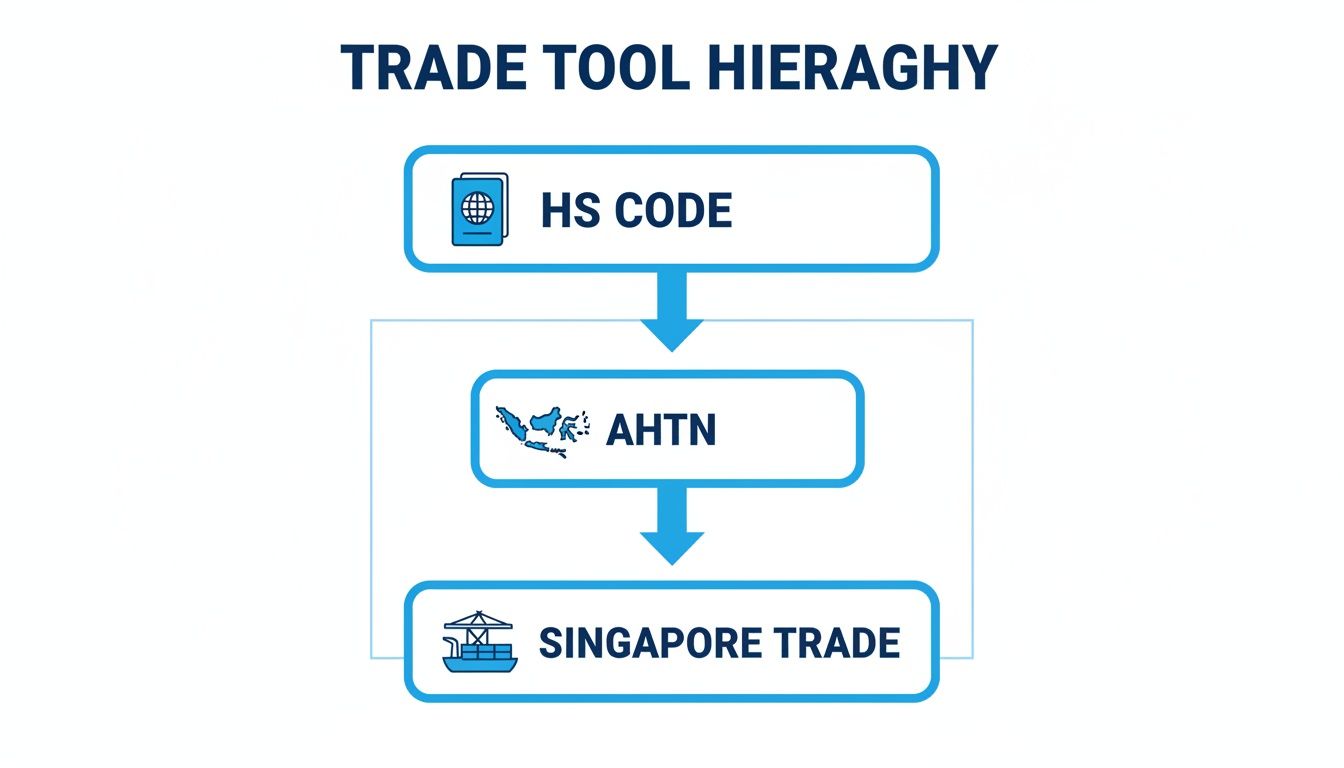
  • Your Guide to the Books HS Code for Global Shipping

    Your Guide to the Books HS Code for Global Shipping

    When it comes to shipping books internationally, the most important number you'll ever need to know is tucked away in Chapter 49 of the Harmonized System (HS) tariff schedule. For most standard printed books, you'll be looking at HS 4901, but if you're shipping children's picture books, that changes to HS 4903. Nailing the right code from the start is the difference between a smooth delivery and a shipment stuck in customs.

    Your Quick Guide to Books HS Codes

    Woman working on a laptop with an open binder, books, and a 'BOOKS HS Codes' sign.

    Think of a book's HS code as its universal product passport. This multi-digit number tells customs officers across the globe exactly what’s inside the box, no questions asked. For anyone working in logistics, getting these codes right isn't just a box-ticking exercise; it’s fundamental to avoiding costly delays, frustrating fines, and compliance headaches.

    The entire world of printed materials, from best-selling novels to daily newspapers, is neatly organised under one roof: Chapter 49 of the Harmonized System. This chapter works like a library, with each heading acting as a specific shelf for a different type of publication. Once you understand its layout, you can classify any shipment with confidence.

    Navigating the Basics of Chapter 49

    While Chapter 49 covers a huge range of printed goods, a handful of key headings pop up time and time again for book-related shipments. For freight forwarders and logistics sales teams, knowing these core codes off the top of your head is a game-changer. It means you can give quick, accurate answers to clients and build trust right from the first conversation.

    An HS code is more than just a number. It’s a shared language between exporters, importers, and customs authorities that keeps global trade moving efficiently. Misclassifying an item is like giving your cargo the wrong travel documents—it's bound to get stopped at the border.

    Printed books under HS 4901 are a massive category, but it’s fascinating to see the sheer diversity of other items within Chapter 49. For instance, a look at Singapore's imports from September 2019 to September 2020 revealed that printed books made up 18% ($1.56 million) of the chapter's total trade value.

    But what was the top import? Surprisingly, it was unused postage stamps under HS 4907, which clocked in at $2.8 million. You can dig into more of Singapore's import trends at Export Genius. This data just goes to show why precision is everything—every single item has its own specific code.

    Navigating Chapter 49: The Library of Book Classification

    Think of Chapter 49 of the Harmonized System as a massive, perfectly organised library. Each heading represents a specific aisle, and every subheading is a shelf dedicated to a particular type of printed material. For anyone in logistics, getting the layout of this "library" right is the key to declaring goods correctly and keeping shipments moving.

    This system isn’t just a random collection of numbers; there’s a clear logic behind it. The main distinction often boils down to the item's core purpose and format. It’s why a hefty university textbook and a colourful children’s picture book, while both technically "books," end up on completely different shelves.

    The Core Principle: Text Versus Pictures

    When classifying a book, the first and most critical question you need to ask is: what tells the story? Is it the words, or is it the pictures? This single distinction is the dividing line between two of the most common headings you'll ever use.

    If the text is the star of the show and any illustrations are just playing a supporting role, the item will almost always fall under HS Heading 4901. This is your go-to "aisle" for the vast majority of printed books, from paperback novels and technical manuals to corporate brochures.

    But, if the pictures are the main attraction and the text is minimal or just there to add a little context, the classification shifts. This is where HS Heading 4903 comes in, a heading specifically for children's picture, drawing, or colouring books. A good rule of thumb: if a child can follow the story just by looking at the images, it belongs in 4903.

    For customs purposes, a book isn't just a book. Its classification hinges on its "essential character." Getting the difference between HS Code 4901 (text-driven) and 4903 (picture-driven) wrong can change duty rates and jam up clearance, so this is one detail you absolutely have to get right.

    Exploring Other Aisles in the Library

    While 4901 and 4903 will cover the bulk of book shipments you see, Chapter 49 has plenty of other important classifications that freight forwarders run into all the time. Knowing these other "aisles" is crucial for avoiding misclassification, especially when you’re dealing with mixed shipments.

    Here are a few other key headings to keep on your radar:

    • HS Heading 4904: This one is exclusively for music, whether it's printed or in manuscript form. It doesn't matter if it's bound or illustrated; if it's sheet music, it goes here.
    • HS Heading 4905: This covers all maps and hydrographic charts. Think atlases, wall maps, and even printed globes.
    • HS Heading 4911: This is a broad but vital category for other printed items. It acts as a catch-all for things like trade advertising materials, commercial catalogues, and calendars.

    Picture a single shipment that contains educational textbooks (4901), a case of colouring books for a school (4903), and a stack of promotional flyers for a book fair (4911). Each of these items needs its own specific HS code on the commercial invoice. Trying to group them all under one generic code is a surefire way to trigger customs delays and maybe even fines. When it comes to customs, precision is everything.

    How to Classify Every Type of Book

    Getting the HS code right means going beyond the general 4-digit heading and drilling down to the specific 6, 8, or 10-digit code that customs authorities demand. Think of it this way: the 4-digit heading tells you it's a "car," but the full code specifies it's a "2024 Toyota Camry XSE in Supersonic Red." That level of detail is exactly what's needed to avoid delays at the border.

    Let's walk through a few real-world examples. Your standard paperback or hardcover novel, where the text is the star of the show, fits neatly under HS Heading 4901. Depending on the country-specific rules, its full code might end up as 4901.99.00, which basically means it's an "other" type of printed book in that category.

    But what about a children’s colouring book? That’s a different story. Since the illustrations for colouring in are the main attraction, it jumps over to a completely different category: HS Heading 4903. The full code is typically 4903.00.00. Simple, right?

    Navigating Tricky Classifications

    It gets interesting when products start to blur the lines. What do you do with an activity book that’s shrink-wrapped with a small packet of crayons? Is it a book from Chapter 49 or a toy from Chapter 95? This is where customs officials rely on a key principle called "essential character."

    You have to ask: what gives the product its primary purpose? If the book itself is the main item and the crayons are just a little extra, it stays a book under Chapter 49. But if the whole package is really about the activity and the crayons are just as important, it could easily be classified as a toy set.

    This simple decision tree can help you visualise how to approach the most common types of books you'll encounter.

    Flowchart illustrating a book classification decision tree for categorizing books into types with HS codes.

    As the flowchart shows, the first question is always the same: is the book primarily about the text, or do pictures tell the main story?

    A Note on Digital Products

    One of the biggest tripwires in modern logistics is how to classify digital publications. The rule here is simple but absolutely critical: e-books, PDFs, and any other digital files are not covered by Chapter 49.

    Chapter 49 is for physical, printed goods only. Digital products are classified completely differently, usually as software or electronic services. Confusing a PDF with a paperback is a fundamental mistake that will get your shipment flagged immediately.

    Understanding these details has real financial implications. In Singapore, for instance, the trade in physical printed materials is substantial. Imports under HS Code 4901.10 (printed books and brochures in single sheets) were valued at roughly $15.2 million USD, primarily sourced from China, Indonesia, and Malaysia. You can dig into more of these trade flows on the World Bank WITS platform.

    Having this hands-on knowledge is what separates an average forwarder from a great one. For a more comprehensive look, check out our complete guide to the HS code for books. When you get the classification right every time, you build trust and make sure your clients' shipments glide through customs without a problem.

    Common Classification Mistakes and How to Avoid Them

    Even the sharpest logistics pros can get tripped up on HS codes. When it comes to books, what seems like a minor slip-up can quickly snowball into customs delays, surprise fees, and unhappy clients. Knowing where others go wrong is the best way to make sure you get it right every time.

    One of the most common stumbles is with children’s books. The mistake usually happens when someone classifies a book based on its story rather than its physical makeup. A novel written for a ten-year-old might feel like a children's book, but if it's mostly text, it still falls under HS Heading 4901. The rule of thumb is simple: if pictures are the star of the show and dominate the pages, it’s a 4903. If text does the heavy lifting, it's a 4901.

    Another classic mix-up is between books and promotional material. That glossy, beautifully bound catalogue might look and feel like a book, but if its main job is to sell something, it belongs under HS Heading 4911, not 4901. Getting this wrong can lead to serious miscalculations on duties and taxes.

    Overlooking National-Level Codes

    A huge and potentially costly mistake is stopping at the 6-digit HS code. While those first six digits are the universal language of global trade, many countries—especially major hubs—use more specific 8 or 10-digit codes for their own national tariffs.

    Trying to clear customs with a 6-digit code when the destination country demands a 10-digit one is a surefire way to get your shipment flagged and rejected. This oversight often happens because we assume the system is uniform all the way down. It isn't.

    The Solution: Always, always check the full HS code against the destination country’s official customs tariff schedule. Never assume the 6-digit code is enough. Taking this one extra step can save you from hours of headaches and steep non-compliance penalties.

    This level of detail is crucial for keeping things moving. Take Singapore, for example. In 2023, the country exported $954,000 USD in school and exercise books, all classified under a very specific national code derived from HS Heading 4901. You can dig deeper into Singapore's export data on the OEC website.

    Common Pitfalls Checklist

    To keep your shipments sailing smoothly, keep an eye out for these frequent errors:

    • Content vs. Format: Don't classify a children's book based on the story. Focus on the picture-to-text ratio.
    • Promotional vs. Informational: Is it a sales catalogue (4911) or a general printed book (4901)? The purpose matters.
    • The 6-Digit Trap: Always find the full 8 or 10-digit code required by the destination country. Don't stop short.
    • Ignoring 'Essential Character': For sets (like a book with a toy), you have to correctly identify the main item that gives the set its character. Don't just default to the book.

    By getting ahead of these issues, you can ensure every declaration is spot-on. That's how you build a reputation for reliability and expertise that clients truly value.

    Documentation and Customs Procedures for Shipping Books

    A pen rests on a document titled 'Shipping Documents' on a wooden desk, with other papers and a box.

    Getting the right HS code for a book shipment is a massive first step, but it’s really only half the battle. If your paperwork isn’t spot-on to back that code up, you’re setting yourself up for a customs headache. This is where theory meets reality, and where a smooth clearance process is won or lost.

    At the heart of any international book shipment are three core documents. They each have a different job to do, but they must all tell the same, consistent story to customs agents.

    Core Shipping Documents

    Think of your shipping paperwork like a three-legged stool. If one leg is wobbly or missing entirely, the whole thing comes crashing down.

    • Commercial Invoice: This is the master document of the sale. It spells out who sold what to whom, for how much. Crucially, it must list the precise books HS code for every type of book in the shipment.
    • Packing List: This document details the physical contents of the shipment—how many books, their weights, and box dimensions. It’s the proof that what’s on the commercial invoice is actually what’s packed in the cartons.
    • Bill of Lading (B/L) or Air Waybill (AWB): This is your contract with the shipping company. It’s the receipt for your goods and it, too, needs to reference the correct HS codes.

    There's absolutely no room for error here. If the HS code on the invoice doesn't match the one on the bill of lading, alarm bells will ring at customs. That kind of mistake almost guarantees an inspection, leading to frustrating and expensive delays.

    The golden rule of customs clearance is simple: your paperwork must be a perfect mirror of your cargo. Any discrepancy, no matter how small, creates doubt and invites scrutiny.

    Navigating Duties and Taxes

    There's a common misconception that all books are exempt from duties and taxes. While it’s true that many countries grant preferential treatment to educational materials, it's by no means a universal rule. The final duties and taxes owed always come down to the specific HS code and the import country's local laws.

    For instance, a container of novels classified under HS 4901 might sail through customs duty-free. But a shipment of glossy advertising brochures under HS 4911 could easily be hit with import duties. On top of that, Value Added Tax (VAT) or Goods and Services Tax (GST) often applies even when an item is duty-free. For a closer look at these local details, our guide on the HS code in Singapore offers some great regional examples.

    This is precisely where a good freight forwarder proves their worth. By providing your clients with an accurate, all-in cost estimate—including duties and local taxes—you prevent nasty surprises when the shipment arrives. This kind of transparency doesn't just prevent disputes; it builds trust and cements your reputation as a knowledgeable logistics partner.

    Turn HS Code Knowledge Into Shipper Leads

    Knowing the ins and outs of HS codes for books isn't just about smooth customs clearance—it's a seriously effective tool for winning new business. For any logistics sales team, this technical expertise can be your secret weapon, turning a cold outreach process into a warm, data-driven conversation.

    Forget guessing which companies might be importing books. You can use actual customs data to find out for sure. This completely shifts your approach from prospecting in the dark to surgically targeting ideal customers with information they genuinely care about.

    A Practical Lead Generation Scenario

    Let's walk through a real-world example of how this works. Say your goal is to find new clients who regularly import children's books into the United States. You already know from our discussion that the specific code for these products is HS Code 4903.

    With just that one piece of information, you can tap into a trade data platform and pull up a list of every company that has recently declared a shipment under that exact code.

    This strategy transforms your sales pitch. You're no longer just another forwarder asking for a chance to quote; you're a specialist who understands a prospect's specific supply chain needs before you even pick up the phone.

    The process itself is surprisingly straightforward:

    1. Identify the Niche: You decide to focus on importers of children's picture books. Simple enough.
    2. Pinpoint the Code: You know their shipments fall under HS Code 4903.
    3. Search Trade Data: Using a platform with an HS code filter, you run a search for all U.S. import records matching that code. Instantly, you have a list of active importers.
    4. Analyse and Qualify: The data doesn't just give you names. You can see their shipping volumes, their main trade lanes, and maybe even who their current forwarders are.
    5. Find the Decision-Maker: The last step is to connect the dots and find the right person—the supply chain or logistics manager—at these target companies.

    This method lets you craft a pitch that is incredibly relevant. You're not just another service provider; you're positioning yourself as an expert partner who's already done their homework. You can learn more about how to apply a powerful HS code filter for lead generation in our detailed guide.

    Your Top Questions About Book HS Codes, Answered

    Even when you feel you've got a handle on the basics, the world of customs classification always has a few curveballs. Let's tackle some of the most common questions that pop up when classifying books, so you can handle these shipments with complete confidence.

    What’s the Real Difference Between HS Code 4901 and 4903?

    This is a classic one, and it all boils down to what makes the book a book. Is it the words or the pictures?

    HS Code 4901 is your go-to for most printed material where the text does the heavy lifting. We’re talking about novels, non-fiction, textbooks, and even technical manuals. The words are the main event.

    On the other hand, HS Code 4903 is specifically carved out for children's picture, drawing, or colouring books. Here, the illustrations are the star of the show. If a child can follow the story or the main idea just by flipping through the pictures, it almost certainly belongs under 4903. The text is just there for support.

    Do E-books and Digital Downloads Use Chapter 49?

    Absolutely not. This is a critical distinction that can cause major headaches if you get it wrong. Chapter 49 is strictly for tangible, physical, printed goods.

    Digital products are a completely different beast. E-books, audiobooks, and downloadable PDFs aren't considered "goods" in the same way. They are typically classified as software or digital services, which often fall under different chapters (like Chapter 85) or are sometimes treated as intangible services with no HS code required at all.

    How Do I Find the Full 8 or 10-Digit HS Code?

    The first six digits of an HS code are the universal standard set by the World Customs Organisation. But for actual customs clearance, you need the full story. Countries add their own two to four digits to get more specific for their own tariff and statistical needs.

    To lock in the correct, full-length code, you have to check the official tariff database for the country of import. For instance, you'd use the Harmonized Tariff Schedule (HTS) for shipments to the USA or the TARIC system for the European Union. Never just stop at the 6-digit code; it’s rarely enough for the final declaration.


    Finding and reaching out to shippers in specific niches like children's books is easier with the right tools. Coreties uses customs data to help you identify active importers by their exact HS code, find their decision-makers, and craft data-driven outreach that gets results. Discover your next lead at https://coreties.com.

  • Your Complete Guide to Shipping with Aramex to Singapore

    Your Complete Guide to Shipping with Aramex to Singapore

    Shipping to Singapore with Aramex is a popular choice for a reason. It plugs you right into one of Southeast Asia's most important commercial centres, offering a solid mix of speed and value. Whether you're an e-commerce store, a B2B supplier, or just sending a personal parcel, Aramex provides a well-trodden path into this bustling market.

    Your Roadmap to Shipping with Aramex to Singapore

    Getting your head around international logistics can feel like trying to untangle a knot. You've got service options, customs forms, tracking numbers—each piece has to be in the right place at the right time. This guide is here to straighten all that out, giving you a clear, step-by-step roadmap for every Aramex shipment heading to Singapore. We'll break it all down so you can manage your shipping with confidence.

    Think of it as building your knowledge from the ground up. We'll start with the basics, like figuring out which Aramex service is right for you, and then move on to the finer details. You won't just learn what to do, but also why it's important for a smooth delivery.

    This guide is built for two different groups, with specific advice for each:

    • For Individuals and Businesses: We'll walk you through the entire shipping journey. You'll get clear guidance on choosing the best service, getting your paperwork in order to prevent customs headaches, and keeping an eye on your shipment until it reaches its destination.
    • For Freight Forwarders and Logistics Teams: We'll go a step further. We'll show you how to use powerful trade data tools, like Coreties, to spot companies already using Aramex to ship to Singapore. This is about turning raw data into real business leads.

    By the time you're done here, you'll have a practical, complete picture of how Aramex works for Singapore-bound freight. Whether you're just sending one box or trying to win a new slice of the market, you'll have the know-how to make it happen. Let's start by looking at the different shipping services Aramex has on offer.

    Choosing the Right Aramex Shipping Service to Singapore

    Figuring out the best way to ship your goods to Singapore with Aramex shouldn't be a headache. It really comes down to balancing three things: how fast you need it there, what you're willing to spend, and the size and type of your shipment.

    Think of it like planning a trip. You could take a private jet, a commercial flight, or a cross-country bus. Each has its place, and your choice depends on whether your priority is speed, budget, or something in between. Aramex’s services work in much the same way.

    Once you get a feel for how speed, cost, and your shipment’s needs play off each other, picking the right service becomes second nature.

    This quick decision tree lays out the options clearly, helping you see the best path forward whether you're sending a personal package or managing business logistics.

    Aramex shipping solutions decision tree illustrating options for individual and business shippers based on needs.

    As you can see, it all starts with a simple question: are you an individual or a business? From there, your urgency and budget will point you to the most logical service.

    Aramex Express: The Fastest Route

    When time is money, Aramex Express is your go-to. This is the "private jet" option, built for speed and perfect for urgent documents, high-value items, or time-critical parcels. If it absolutely, positively has to get to Singapore tomorrow, this is the service you want.

    We see it used all the time for things like:

    • Urgent Business Documents: Last-minute contracts or legal papers that can’t wait.
    • High-Value E-commerce Orders: When a customer has paid a premium for next-day delivery on luxury goods or electronics.
    • Critical Replacement Parts: A vital machine component needed to keep a factory in Singapore from shutting down.

    Of course, this level of speed comes at a price. Express is the premium option because your shipment gets top priority, often using direct flights and a fast-tracked customs process. You're paying for peace of mind.

    Aramex Air Freight: A Balanced Approach

    Aramex Air Freight is the workhorse of international shipping—the reliable commercial flight. It strikes an excellent balance between speed and cost, making it the most popular choice for a huge range of commercial goods. It's significantly faster than sending by sea but much more affordable than the all-out speed of Express.

    This is the sweet spot for larger commercial shipments that need to arrive in a timely manner but don't quite justify the express price tag. Think of a retailer stocking up on popular products before a big sale, or a food importer moving perishable goods that need to hit the shelves quickly.

    Aramex is a major player here. The company, Aramex PJSC, pulls in about AED 6.35 billion in annual revenue, and its Freight Forwarding division is a core part of that success. Their expertise in air, land, and ocean transport is especially strong on routes into Singapore, a market where B2B last-mile delivery holds a commanding 51% share. You can dig deeper into Aramex's financial performance for more context.

    Key Takeaway: For most businesses, Air Freight is the default choice. It’s dependable and reasonably quick without breaking the bank, making it a cornerstone of efficient B2B logistics.

    Aramex Ocean Freight: The Most Economical Option

    Finally, we have Aramex Ocean Freight. This is your powerful, steady cargo ship. It’s built for large, heavy, or non-urgent shipments where keeping costs down is the number one priority. If you can plan ahead and are moving serious volume, nothing beats the value of ocean freight.

    It’s the only practical option for:

    • Bulk Raw Materials: Moving huge quantities of materials for manufacturing plants in Singapore.
    • Large Stock Orders: Shipping full container loads of inventory to a distribution centre.
    • Heavy Machinery or Equipment: Transporting items that are simply too big or heavy to fly.

    The trade-off is time. A sea journey can take weeks, so it requires smart inventory management and long-term planning. But for businesses that can build that lead time into their supply chain, the cost savings are enormous and can dramatically lower the per-unit shipping cost. It’s the backbone of global trade for a reason.

    Getting Through Singapore Customs Without a Hitch

    Let’s be honest, international shipping can feel like navigating a maze. One wrong turn—usually a missing document—and your shipment is stuck. When you're sending a parcel with Aramex to Singapore, getting your paperwork in order isn't just a good idea; it's the only way to ensure a smooth, headache-free journey through customs.

    Think of Aramex as your expert guide. They’ll act as your customs broker, taking all your documents and presenting them to the officials at Singapore Customs. All you need to do is make sure everything you give them is accurate and complete. That’s the foundation for a quick release.

    Documents and a book on a desk overlooking Singapore's Marina Bay Sands skyline, with text about customs.

    The Absolute Must-Have Paperwork

    Before your shipment can even think about leaving the ground, there are a couple of documents you absolutely must have ready. These are the non-negotiables. They act as your shipment's passport, telling customs everything they need to know at a glance.

    To get started, here's a quick look at the documents you'll almost always need for a smooth customs process in Singapore.

    Document Purpose Required For
    Commercial Invoice Details the contents, value, and parties involved. This is what customs uses to assess duties and GST. All commercial shipments.
    Air Waybill (AWB) The contract and "ticket" for your shipment. It contains tracking info and transport details. All air freight and express shipments.
    Packing List Provides a detailed breakdown of the package contents, weights, and dimensions. Recommended for all shipments, especially multi-item consignments.
    Import Permit/Licence Special permission needed to import controlled or restricted goods (e.g., specific electronics, food items). Only for controlled goods.

    Having these documents ready and filled out correctly from the start is the best way to avoid unnecessary hold-ups at the border.

    Understanding Singapore's Import Rules: GST and De Minimis

    Beyond the basics, you've got to know Singapore's specific import rules, especially when it comes to taxes. The big one to remember is the Goods and Services Tax (GST).

    Singapore levies a 9% GST on the value of most goods coming into the country. But here’s the good news: there's a key threshold you should know about called the de minimis value.

    What's the De Minimis Value? Put simply, if the total value of your shipment (that's the item cost plus shipping and insurance) is S$400 or less, it’s typically exempt from GST. This is a huge plus for anyone sending small e-commerce orders or personal gifts, as it means faster clearance and no surprise charges.

    If your shipment's value tips over that S$400 mark, GST will be due before the goods can be released. Don't worry, Aramex usually handles the payment for you and then includes the cost in your final invoice, which keeps things simple.

    The Critical Role of HS Codes

    Every single product, from a pair of sneakers to a circuit board, has a unique classification number called a Harmonised System (HS) code. This universal code tells customs officers exactly what's inside your box.

    Why does this matter so much? Because using the right HS code is essential for calculating the correct taxes and flagging any potential import restrictions.

    Get the code wrong, and you could face:

    • Wrong Tax Bills: You might end up overpaying or, worse, underpaying, which creates a whole new set of problems.
    • Customs Delays: Officials will put your shipment on hold while they figure out what it actually is, adding days to the delivery time.
    • Possible Fines: Make the same mistake too many times, and you could be looking at financial penalties.

    Nailing down the correct HS codes is a step many newcomers miss, but it's a game-changer. For a deeper look, check out our guide on how to find the right Singapore customs HS codes. Taking a few extra minutes to get this right will make your entire Aramex to Singapore experience go that much more smoothly.

    Keeping Tabs on Your Shipment and Handling Hiccups

    Once your package is on its way to Singapore with Aramex, you’ll naturally want to know where it is. Thankfully, keeping an eye on your shipment’s journey is straightforward. Aramex’s tracking system is designed to give you clear, real-time updates, taking the guesswork out of the delivery process.

    It all starts the moment Aramex picks up your parcel. You'll get a unique tracking number—this is your golden ticket to following its progress. Just pop that number into the Aramex website or their mobile app to see exactly where your shipment is at any given moment.

    Making Sense of Tracking Updates

    As your package makes its way across the globe, you'll see its status change. Most of the updates are pretty obvious, but a few can be a bit cryptic. Knowing what they mean helps you manage expectations and keep your customer in the loop.

    Here’s a quick rundown of the most common statuses you'll encounter:

    • Shipment Information Received: This just means the digital paperwork is in. Aramex knows a shipment is coming, but they haven't physically got their hands on your package yet.
    • In Transit: Your parcel is officially on the move. It could be on a flight or in a truck, making its way between Aramex facilities.
    • Arrived at Sort Facility: The package has landed at a major hub, like the one at Changi Airport. Here, it gets sorted and prepped for the next leg of its journey.
    • Customs Clearance in Progress: This is a big one. Singapore Customs is currently reviewing your shipment and its paperwork. If everything is in order, this part is usually a breeze.
    • Out for Delivery: The final countdown! Your package is loaded onto a local delivery van and is en route to its final address in Singapore.

    Expert Tip: The "Customs Clearance in Progress" stage is where things can get held up. The single best way to avoid delays here is to double-check that your commercial invoice is flawless and the HS codes are spot on before you ship.

    What to Do When a Shipment Goes Sideways

    Let's be realistic—sometimes things don't go as planned. A package might get damaged in transit, or in very rare cases, go missing. It's frustrating, but knowing how to handle it can make a world of difference.

    If you find yourself in this situation, the key is to act fast. Aramex has a clear process for filing claims, and having all your ducks in a row will make it much smoother.

    Here’s what you need to do to file a claim:

    1. Contact Aramex Right Away: The moment you notice a problem, get in touch with Aramex customer service. There are usually tight deadlines for filing a claim, so don't wait.
    2. Collect Your Paperwork: You'll need the original Air Waybill (AWB), the commercial invoice (which proves the item's value), and the tracking number.
    3. Take Pictures (For Damage): If the item is damaged, photos are non-negotiable. Take clear pictures of the damaged product and the packaging from every angle. This is your strongest piece of evidence.
    4. Complete the Claim Form: Fill out the official Aramex claim form with as much detail as possible. Be precise about the damage or loss.

    By following these steps, you’re building a solid case. An organised, well-documented claim helps the Aramex team process it quickly, which means a faster resolution for you.

    Tapping Into Singapore's Red-Hot E-commerce Scene

    Singapore is far more than just a global logistics hub—it's an absolute goldmine for e-commerce sellers. To really succeed here, you need to understand what makes this market tick. With its incredibly high digital adoption, strong consumer spending power, and a real hunger for international goods, Singapore is the perfect storm for cross-border trade. For any business shipping with Aramex to Singapore, this isn't just another delivery point; it's a strategic growth opportunity waiting to be seized.

    The demand is explosive because the population is one of the most connected and tech-savvy on the planet. When almost everyone is online and comfortable buying from overseas, the usual barriers for international brands practically disappear. This opens a direct channel to customers actively searching for unique products they can't find on their local high street.

    A smiling delivery person hands a package to a customer confirming delivery on a smartphone in Singapore.

    Why Singaporean Shoppers Look Abroad

    Let's be clear: Singaporean consumers are sharp. They're on the hunt for quality, variety, and good value, and they have no hesitation about shopping globally to get it. This mindset is a huge advantage for international sellers offering products that stand out from the local crowd.

    A few key factors are driving this trend:

    • A World of Choice: Shoppers can get their hands on products, styles, and brands simply not available in local brick-and-mortar shops.
    • The Quality Perception: Many consumers link international brands with higher quality, particularly in popular categories like electronics, fashion, and beauty products.
    • Smart Pricing: Even after factoring in shipping, direct-to-consumer models can often beat the prices found at local retailers.

    In this environment, fast and reliable shipping isn't just a nice-to-have; it's a critical competitive edge.

    How Aramex Delivers for E-commerce

    This is where a solid logistics partner like Aramex becomes absolutely indispensable. The modern Singaporean online shopper has high expectations—they want their orders fast, they want to track them every step of the way, and they expect zero drama. A single bad delivery experience can completely undo all the hard work you put into a great product.

    Aramex's service offerings are well-tuned to meet these very demands. Their Express option is perfect for businesses that want to offer premium, next-day delivery—a surefire way to build serious customer loyalty. For more routine shipments, their standard services provide a dependable solution that won't break the bank.

    Beyond speed, Aramex’s detailed tracking and efficient last-mile delivery network keep customers in the loop and ensure their packages arrive without a hitch. That seamless final step is vital for building the trust that leads to repeat business. It's no wonder that many of the top import and export companies in Singapore make strong logistics partnerships a top priority.

    Singapore is a major strategic hotspot for Aramex. It ranks as its 6th largest export destination from London Heathrow alone, a clear sign of the immense volume flowing through this cross-border freight lane.

    This focus is right on the money. With 87% of Singapore's population being active digital users and over half of them buying goods from abroad, the consumer shift online is massive and undeniable. Anchored by Singapore, the broader Southeast Asia e-commerce market is now worth over USD 4.9 billion, pulling in merchants from high-demand sectors like apparel, electronics, and beauty. You can dig deeper into this trend on Aramex's official blog. This powerful combination of consumer demand and established logistics channels makes the Aramex to Singapore route a vital artery for modern e-commerce.

    How Freight Teams Can Find and Win Aramex Shippers

    Okay, so we've covered the ins and outs of shipping with Aramex to Singapore. But for freight forwarders and logistics sales teams, the real question is: how do you tap into this busy trade lane and find new clients?

    The old way of cold calling is a grind. A better approach is to use trade data to find companies already using the Aramex to Singapore route. It's about working smarter, not harder.

    This is where a tool like Coreties really shines. It helps you shift from throwing darts in the dark to a focused, data-backed sales strategy. You can pinpoint high-value shippers and craft an outreach that actually resonates because it's based on what they're already doing.

    Zeroing In on the Right Leads

    Hunting for new business can feel like searching for a needle in a haystack. Coreties completely changes the game by giving you the tools to filter global customs data. You can instantly pull up a list of companies that are actively shipping goods into Singapore, giving you a warm, pre-qualified list to work from.

    Think about how much time you'd save by narrowing your search to prospects that are a perfect fit. This lets you focus your energy where it's most likely to pay off.

    Here’s how you can slice and dice the data to find your ideal clients:

    • By Carrier: Filter for companies that have recently used Aramex for their shipments to Singapore. Simple.
    • By Geography: Target shippers in a specific city, state, or country that matches your company's key service areas.
    • By Commodity: Focus on businesses shipping specific types of goods, letting you lead with your team's unique expertise.

    The screenshot below from the Coreties platform shows just how easy it is to apply these filters and get a targeted list of potential customers.

    This visual approach makes it a breeze to layer different filters, quickly building a list of qualified companies that fit your ideal customer profile.

    Turning Data Into Meaningful Conversations

    Finding a company name is just the start. The real challenge is getting in touch with the right person and having a conversation that adds real value. Coreties helps here too, giving you much more than just a list of names.

    The platform links directly with professional networks like LinkedIn, so you can easily find the contact details for logistics managers, supply chain directors, or heads of procurement. This ensures your pitch actually lands in the right inbox. Plus, knowing exactly what a company ships is a huge advantage. You can learn more about how to do this by reading our guide on using the HS code filter for super-targeted prospecting.

    The Coreties Advantage: When you combine customs data with verified contact info, your outreach becomes incredibly personal. Instead of a generic "Can we ship for you?" email, you can open with something like, "I saw you recently shipped product X to Singapore with Aramex, and I think we can offer you a more competitive solution."

    This data-first approach immediately positions you as a knowledgeable partner, not just another salesperson. It builds trust from the first touchpoint and dramatically increases your odds of starting a real conversation.

    This kind of precise targeting is especially powerful in a market like Singapore, a true logistics powerhouse in Southeast Asia. The local last-mile delivery market is expected to hit a staggering USD 23.07 billion by 2030, growing at a rapid 12.19% clip.

    This boom highlights Singapore's vital role as a logistics hub, where platforms like Coreties help forwarders connect with high-volume importers on key routes. For freight teams, this isn't just a number—it's a clear signal of massive opportunity waiting to be seized.

    Your Top Questions Answered

    Shipping internationally always comes with a few questions. To make things easier, we've put together some quick, straightforward answers to the most common queries we see about sending parcels to Singapore with Aramex.

    Think of this as your go-to cheat sheet for everything from delivery times and costs to customs and tracking.

    How Long Does Aramex Shipping to Singapore Take?

    This is probably the first question on everyone's mind. The short answer is: it really depends on which Aramex service you pick.

    • Aramex Express: If you need it there yesterday, this is your best bet. It's built for speed, with parcels typically arriving in just 1-3 business days.
    • Aramex Air Freight: This option strikes a great balance between speed and cost. You’re usually looking at a delivery window of about 3-7 business days.
    • Aramex Ocean Freight: For bigger, less urgent shipments, ocean freight is the most cost-effective route. Patience is key here, as it can take anywhere from 20-30 days, sometimes more, depending on where it’s coming from.

    Keep in mind, these are solid estimates, but things like customs processing or the specific country of origin can always add a day or two.

    How Are Aramex Shipping Costs Calculated?

    Aramex calculates your shipping cost based on what they call "chargeable weight." This isn't just about how heavy your box is; it's also about how much space it takes up.

    They look at two things: the actual, physical weight and the volumetric weight. Whichever is higher becomes the chargeable weight.

    So, What's Volumetric Weight?
    It’s a way of measuring a parcel’s density. Light, bulky items take up more space on a plane than small, heavy ones. The formula is usually (Length x Width x Height in cm) / 5000. It ensures the price fairly reflects the space your package occupies.

    Besides chargeable weight, the final price tag is also influenced by:

    • The service you choose (Express will always cost more than standard freight).
    • The distance it’s travelling (origin and destination).
    • Any extras you add on, like insurance or special handling for fragile goods.

    What Items Are Restricted for Import into Singapore?

    Every country has its own set of rules, and Singapore is no different. They have a list of items that are either completely prohibited or restricted, meaning they need a special permit to enter.

    While Aramex has its own list of things they won't carry, you also need to be mindful of Singapore's specific regulations.

    Some common restricted items include:

    • Chewing gum (the only exception is for oral dental or medicated types).
    • Certain types of telecommunication equipment.
    • Specific publications, videos, and software.
    • Controlled drugs and psychotropic substances.

    The golden rule is to always double-check the official Singapore Customs website before you even pack your box. It can save you a world of trouble down the line.

    How Are Duties and Taxes Handled for My Shipment?

    In Singapore, if the value of your shipment is over the S$400 threshold (known as the de minimis value), it will be subject to a Goods and Services Tax (GST) of 9%.

    The good news is that Aramex usually handles this for you. They’ll calculate the GST based on the value you declared on the commercial invoice and pay it upfront to Singapore Customs. This is a huge help because it prevents your parcel from getting stuck in customs limbo. They simply bill the tax amount back to you later.


    Ready to turn global trade data into your next big client? With Coreties, you can instantly find companies shipping on the Aramex to Singapore lane, access key decision-maker contacts, and craft data-driven outreach that gets results. Stop cold calling and start having smarter conversations. Discover your next customer at https://coreties.com.

  • Import and export companies in singapore: Find trusted partners today

    Import and export companies in singapore: Find trusted partners today

    Singapore's strategic location and pro-business environment make it a global trade powerhouse. For logistics providers, freight forwarders, and sales teams, identifying the right import and export companies in Singapore is crucial for capturing new business and building resilient supply chains. Yet, with thousands of registered traders, pinpointing qualified leads can feel like searching for a needle in a haystack.

    This guide cuts through the noise. We have curated a definitive list of the top 7 directories and platforms where you can find, vet, and connect with Singaporean trading partners efficiently. This resource is designed specifically for professionals aiming to streamline their sales prospecting and partnership discovery processes.

    Inside this comprehensive roundup, you will learn:

    • Which platforms offer the most detailed company profiles, including financial data and key contacts.
    • How to filter directories to find businesses operating in specific industries or trade lanes.
    • Actionable strategies for leveraging each resource to build targeted lead lists.

    We will break down the unique strengths of each tool, from structured B2B databases perfect for building organised prospect lists to local directories ideal for uncovering niche players. More importantly, we'll offer practical insights on how to use these platforms effectively, ensuring your outreach is not just efficient, but also impactful. Each entry includes direct links and screenshots to help you navigate these resources immediately. Consider this your go-to guide for connecting with the vibrant network of import and export companies in Singapore.

    1. Kompass Singapore – Importers & Exporters Directory

    For sales and business development teams needing a structured, top-of-funnel prospecting tool, Kompass Singapore stands out as an essential B2B directory. It is less of a direct logistics provider and more of a powerful database for identifying potential partners among the vast number of import and export companies in Singapore. Its primary strength lies in its highly organised data, allowing users to move beyond generic searches and into targeted lead generation.

    The platform functions as a sophisticated filter for the entire Singaporean business landscape. Users can quickly segment companies by their specific roles, such as "Importer," "Exporter," "Distributor," or "Producer." This is invaluable for logistics professionals aiming to build a pipeline of qualified shippers. Instead of sifting through thousands of companies, a sales team can instantly generate a list of, for example, all electronics manufacturers in Singapore that explicitly identify as exporters.

    Key Features and User Experience

    Kompass’s interface is built for efficiency, particularly for those building outreach lists. Its structured taxonomy is its main differentiator, allowing for precise market segmentation.

    • Granular Filtering: Search by industry (e.g., "Pharmaceuticals," "Automotive Parts"), company size, and specific activities. This helps pinpoint high-value targets.
    • Detailed Company Profiles: Listings often include key personnel, contact numbers, revenue figures, and a description of their business activities, providing a solid foundation for initial outreach.
    • Data Export Capabilities: The core value for sales teams is the EasyBusiness service. This paid feature allows users to export curated prospect lists directly into CSV or Excel formats, ready for integration into a CRM system. A free trial is typically available to test its functionality.

    How to Use Kompass Effectively

    To maximise the platform's potential, go beyond simple keyword searches. Start by defining your ideal customer profile (ICP). Are you a 3PL specialising in cold chain logistics? Use Kompass to filter for food and beverage exporters. Are you an airfreight forwarder? Search for high-value electronics or medical device importers. The precision of its filters directly translates into higher-quality leads.

    Pro Tip: Before committing to a paid plan, leverage the free access to browse profiles and assess the data quality within your target vertical. Even without exporting, the free profiles provide enough information to manually build a small, highly targeted prospect list.

    Pricing and Access

    While basic browsing is free, accessing the full depth of data and, most importantly, the export functionality, requires a subscription to the EasyBusiness plan. Some contact details are also gated behind a free registration wall. This model makes Kompass best suited for sales teams who see it as a strategic investment in lead generation rather than a casual search tool. Understanding the nuances of this market is crucial; you can learn more about the intricacies of the import-export business landscape here.

    Feature Free Access EasyBusiness (Paid)
    Company Search Yes, with basic filters Advanced, multi-criteria filtering
    Contact Details Limited (often gated) Full access to direct phone and email data
    List Exporting Not available Yes (CSV, Excel), customisable
    Target Audience Researchers, casual browsers Sales teams, marketers, business development pros

    Website: https://sg.kompass.com/a/importers-and-exporters/81100/

    2. Yellow Pages Singapore – Importers & Exporters

    For those seeking a straightforward, locally focused tool to find partners, Yellow Pages Singapore offers a traditional yet effective business directory. Unlike global B2B databases, its strength lies in its simplicity and deep roots in the local market, making it an excellent resource for identifying small-to-medium-sized import and export companies in Singapore that might not have a significant online presence elsewhere. It serves as a rapid discovery tool for direct outreach and initial market mapping.

    The platform is organised into clear business categories, with dedicated pages for "Importers & Exporters" and "Exporters." This allows for quick navigation to relevant listings. While it lacks the sophisticated filtering of specialised sales intelligence tools, its direct approach is ideal for sales teams needing to quickly build a list of local contacts or for businesses looking for a straightforward way to connect with potential logistics partners without a steep learning curve.

    Yellow Pages Singapore – Importers & Exporters

    Key Features and User Experience

    Yellow Pages Singapore prioritises accessibility and direct contact. The interface is familiar and intuitive, designed for users who need actionable information like phone numbers and addresses without navigating complex systems.

    • Dedicated Category Pages: The platform curates businesses into specific categories, allowing users to browse all listed "Importers & Exporters" in one place.
    • Direct Contact Information: A significant advantage is that many listings prominently display direct phone numbers and physical addresses, facilitating immediate outreach via calls or even direct mail.
    • "Send Your Enquiry" Feature: Many profiles include a built-in contact form, allowing users to send a message directly to the listed company through the Yellow Pages portal, streamlining the initial point of contact.
    • Mix of Businesses: The directory includes a wide range of companies, from well-established trading houses to smaller, niche operators, offering a broad view of the market.

    How to Use Yellow Pages Effectively

    To get the most out of the platform, use it as a starting point for local prospecting. Instead of broad searches, use the dedicated category pages to manually browse and qualify potential partners. Its value is highest when searching for smaller, local traders who may not be listed on larger international platforms. Use the provided phone numbers for direct, high-touch sales calls.

    Pro Tip: Cross-reference interesting companies you find on Yellow Pages with their ACRA (Accounting and Corporate Regulatory Authority) registration to verify their business status and gather more detailed corporate information before engaging.

    Pricing and Access

    Yellow Pages is a free-to-use directory for browsers. There are no subscriptions or paywalls to access the core listing information, making it an accessible tool for any team, regardless of budget. Businesses pay to get listed or to have enhanced profiles, but for users searching for companies, the access is open. This model is perfect for ad-hoc searches and for teams that don't require the advanced data export and filtering capabilities of paid platforms. For a deeper understanding of the regulatory environment these companies operate in, you can find valuable insights by exploring more about the role of an importer in Singapore.

    Feature Free Access Paid (for Lister)
    Company Search Yes, by category and keyword N/A
    Contact Details Publicly available (phone, address, website) N/A
    List Exporting Not available (manual collection required) N/A
    Target Audience Sales teams doing local outreach, SMEs, researchers Singaporean businesses seeking local visibility

    Website: https://www.yellowpages.com.sg/listing-category/business-professional-services/trading/importers-exporters/

    3. SGPBusiness – Singapore Company Search

    For due diligence and initial verification, SGPBusiness serves as an indispensable, free-to-use directory of all Singapore-registered entities. Unlike lead-generation platforms, its core function is to provide foundational, publicly available data, making it a crucial first step in the pre-qualification process. It helps sales teams and logistics providers confirm the legitimacy and operational status of potential partners among the many import and export companies in Singapore.

    The platform acts as a high-level verification tool, drawing directly from official registries. Users can quickly search for a company by name or registration number to confirm its existence, registered address, and official business activities. This initial check is vital for filtering out inactive or improperly classified companies before investing time in deeper outreach, ensuring that prospecting efforts are directed at legitimate and relevant businesses.

    Key Features and User Experience

    SGPBusiness offers a straightforward, no-frills interface designed for rapid information retrieval. Its value lies in its simplicity and reliance on official data, making it a trusted source for preliminary background checks.

    • Fast Company Verification: Instantly search for any Singapore-registered company to see its official status (e.g., "Live Company"), registration number, and incorporation date.
    • SSIC and Activity Descriptions: Profiles include the company's Singapore Standard Industrial Classification (SSIC) code and a description of its principal activities, helping you confirm if their business aligns with your target sector.
    • Data Freshness: The platform indicates when the data was last refreshed, providing confidence in the currency of the information presented.

    How to Use SGPBusiness Effectively

    Maximise SGPBusiness by integrating it at the very beginning of your sales funnel. Before adding a company from a trade show or a referral to your CRM, run a quick search on SGPBusiness. This simple step verifies that the company is active and officially registered for activities related to trade. For example, you can confirm whether a company is classified under a freight forwarding or wholesale trade SSIC.

    Pro Tip: Use the SSIC code listed on a prospect's SGPBusiness profile as a keyword in other databases like Kompass or LinkedIn. This can help you uncover similarly classified companies, expanding your list of potential import and export companies in Singapore.

    Pricing and Access

    SGPBusiness is completely free to use, with no registration or subscription required. This makes it an accessible tool for everyone, from individual freight brokers to large enterprise sales teams. Its purpose is not to provide direct contact details for sales outreach but to serve as a public utility for business verification. This focus on official data is essential, especially when dealing with compliance aspects like customs declarations, where understanding a company's registered activities is crucial. You can dive deeper into the classification of goods by understanding the role of the HS code system in Singapore.

    Feature Free Access Paid Access
    Company Search Yes, by name or registration number Not applicable
    Contact Details Not provided Not applicable
    Verification Data Full access to registration status and SSIC Not applicable
    Target Audience Anyone needing to verify a Singaporean company Sales and compliance teams for pre-qualification

    Website: https://www.sgpbusiness.com/

    4. Singapore International Chamber of Commerce (SICC) – Online Members Directory

    For businesses seeking a vetted and highly credible source of partners, the Singapore International Chamber of Commerce (SICC) Online Members Directory offers a curated alternative to sprawling public databases. Unlike open directories, the SICC list comprises member companies that have been verified by the Chamber, adding a layer of trust and reliability. This makes it an excellent resource for identifying established import and export companies in Singapore that are active and committed participants in the nation's trade ecosystem.

    Singapore International Chamber of Commerce (SICC) – Online Members Directory

    The directory functions as a high-trust network for business development. While not as granular in its filtering as dedicated data platforms, its strength lies in the implied credibility of its members. For a freight forwarder, connecting with an SICC member company often means engaging with a business that is serious about its role in international trade, potentially leading to more substantive and long-term partnerships. The platform allows users to find companies categorised under relevant sectors like "Traders" and "Transport & Logistics."

    Key Features and User Experience

    The SICC directory is straightforward and designed for networking and initial discovery rather than mass data extraction. Its value is in the quality and reputation of the listed entities.

    • Vetted Membership: Every company listed is a member of the SICC, signalling a degree of stability and commitment to the local business community.
    • Sector-Specific Search: Users can filter the online directory by industry sectors, making it easy to isolate potential partners in logistics, manufacturing, or trading.
    • Detailed Member Profiles: Each profile typically includes a business description, contact information, and a link to the company's website, providing essential details for initial outreach.
    • Annual Printed Directory: For those who prefer an offline resource, the SICC publishes a comprehensive annual Members' Directory available for purchase, which often contains more detailed contact information.

    How to Use SICC Effectively

    The best approach is to use the directory for targeted, high-quality prospecting. Instead of building a large list, focus on identifying a handful of best-fit companies. Use the sector search to find "Traders" or "Logistics" providers. Review their company profiles to understand their business and ensure they align with your service offerings. The goal here is quality over quantity, leveraging the SICC's reputation as a conversation starter.

    Pro Tip: When reaching out to a company found through the SICC directory, mention it. Stating "We found your company listed as a valued member of the SICC" can add credibility to your outreach and differentiate it from generic sales emails.

    Pricing and Access

    The online members' directory is free to browse and search, providing public access to company names and basic details. However, to unlock the full potential of the network and access more in-depth resources like the printed directory, becoming an SICC member yourself is often the most effective route. This positions the SICC not just as a directory, but as a strategic networking and business development ecosystem.

    Feature Free Online Access SICC Membership (Paid)
    Company Search Yes, by name and sector Full access to all member benefits and events
    Contact Details Basic contact info and website links Access to exclusive networking and member-only data
    List Exporting Not available Not applicable (directory is for browsing)
    Target Audience Researchers, B2B prospectors Companies seeking deep integration into SG business community

    Website: https://sicc.com.sg/membership/sicc-online-members-directory/

    5. Alibaba – Suppliers in Singapore (Country/Region filter)

    For businesses seeking to source products directly or find trading partners for smaller consignments, Alibaba offers a unique approach. While known as a global B2B giant, its powerful filtering capabilities allow users to specifically target import and export companies in Singapore. This transforms the platform from a broad sourcing engine into a targeted tool for connecting with Singapore-based traders, distributors, and manufacturers across a vast array of product categories.

    Its core strength lies in its transactional nature, making it ideal for initiating contact, requesting quotations (RFQs), and arranging for samples or small test orders. Unlike pure directories, Alibaba facilitates the entire initial engagement process, from discovery to communication and even secure payment through its Trade Assurance programme for eligible suppliers. This makes it an accessible starting point for companies looking to validate a Singaporean supplier before committing to larger freight volumes.

    Alibaba – Suppliers in Singapore (Country/Region filter)

    Key Features and User Experience

    Alibaba’s platform is designed for rapid supplier evaluation and outreach. The interface allows buyers to efficiently compare multiple suppliers and initiate conversations, streamlining the procurement and partner discovery process.

    • Singapore-Specific Filtering: Users can easily isolate suppliers by selecting "Singapore" in the Country/Region filter, instantly narrowing the massive database to local entities.
    • Request for Quotation (RFQ) Tools: The platform's primary value is its streamlined RFQ workflow, enabling buyers to send detailed product requests to multiple Singaporean suppliers simultaneously and manage responses in one place.
    • Supplier Verification Signals: Listings often feature trust badges, such as "Verified Supplier" and the number of years they have been on the platform, providing a preliminary layer of due diligence.
    • Trade Assurance: For applicable transactions, this feature provides a payment protection service, securing funds until the buyer confirms the order has been received as agreed.

    How to Use Alibaba Effectively

    To leverage Alibaba for finding Singaporean partners, use the filters strategically. Start by searching for your product, then immediately apply the "Country/Region: Singapore" filter. Scrutinise the supplier profiles for clear indicators of their business type. Many are traders or distributors, which can be ideal for consolidating products but may differ from dealing with a direct manufacturer. Always engage with multiple suppliers to compare pricing, communication quality, and product specifics.

    Pro Tip: Before placing a large order, always start with a sample. Use the platform's messaging system to ask detailed questions about their export capabilities, typical shipping incoterms, and experience with your target market. This initial interaction is a strong indicator of their professionalism.

    Pricing and Access

    Searching, browsing profiles, and contacting suppliers on Alibaba is entirely free for buyers. Costs are incurred only when purchasing products. The platform is built on a transactional model, where suppliers pay for premium memberships and advertising. This free access makes it an invaluable tool for market research and initial supplier vetting without any upfront financial commitment. However, it's crucial to remember that the onus of due diligence rests heavily on the buyer, as the quality and legitimacy of listings can vary significantly.

    Feature Free Access (Buyer) Paid (Supplier)
    Supplier Search Yes, with advanced filters (including location) N/A
    Contacting Suppliers Yes, via integrated messaging and RFQ tools N/A
    Placing Orders Yes, directly through the platform Requires a supplier membership to list products
    Target Audience Buyers, importers, product sourcers Exporters, manufacturers, trading companies

    Website: https://www.alibaba.com/distributors-in-singapore-suppliers.html

    6. Global Sources – Country Search (Singapore)

    For businesses focused on product sourcing and identifying verified manufacturers, Global Sources provides a powerful B2B marketplace. While known for its extensive network of Chinese and ASEAN suppliers, its ‘Source by Country’ function is a highly effective tool for zeroing in on import and export companies in Singapore. This platform is ideal for procurement managers and businesses looking to source finished goods directly from Singapore-based exporters.

    The core strength of Global Sources lies in its deep integration of product discovery with supplier verification. Users can search for specific products (e.g., “semiconductor components”) and then apply a country filter to see only suppliers from Singapore. This immediately connects a product need to a potential export partner, streamlining the initial stages of the supply chain process. It positions itself as a trust-centric platform, aiming to connect buyers with credible, trade-show-vetted manufacturers and exporters.

    Key Features and User Experience

    Global Sources is built for buyers who need to assess supplier credibility quickly. The interface combines product listings with rich supplier profiles, offering a more holistic view than a simple business directory.

    • Verified Supplier Status: Many listings feature badges like "Verified Supplier" and "Audited Manufacturer," indicating that Global Sources has independently authenticated their business registration, production capabilities, and quality control systems.
    • Source by Country Filter: The ability to isolate Singaporean suppliers is crucial. This transforms a global sourcing engine into a targeted tool for finding local export partners.
    • Rich Product & Company Details: Profiles often include main products, factory size, QC processes, and certifications, providing essential data for due diligence before making first contact.
    • Integrated Inquiry System: The platform facilitates direct communication with suppliers through its built-in Request for Quotation (RFQ) and inquiry tools.

    How to Use Global Sources Effectively

    To get the most out of the platform, combine product and country searches. Start by searching for your product category, then navigate to the supplier location filters and select "Singapore." This avoids generic searches and surfaces companies that actively export the goods you need. Pay close attention to the verification badges and the supplier’s years in business.

    Pro Tip: Look for suppliers who participate in Global Sources trade shows. This often signals a more established and export-ready company that is invested in international trade and is more likely to have robust logistics and compliance processes in place.

    Pricing and Access

    Browsing the platform, viewing products, and seeing supplier profiles are generally free, but you will need to register for an account to send inquiries or access deeper company details. This free registration model is designed to connect serious buyers with suppliers. While there are no direct subscription fees for buyers, some premium analytics or sourcing services may be offered separately.

    Feature Free Access (Registered User) Premium Services (Varies)
    Supplier Search Yes, with country and product filters Advanced sourcing support, dedicated matchmaking
    Verification Details Yes, badges and basic reports are visible Full, in-depth audit reports may require a fee
    Send Inquiries (RFQ) Yes, unlimited to listed suppliers Not applicable
    Target Audience Procurement managers, sourcing agents, importers Large enterprises needing managed sourcing services

    Website: https://www.globalsources.com/

    7. Exporters.SG – Singapore-based B2B Marketplace

    For businesses seeking a direct B2B connection within the Asian trade ecosystem, Exporters.SG serves as a vital digital marketplace. Unlike pure data providers, this platform is a hands-on portal designed to facilitate direct transactions and partnerships. It’s an essential resource for companies looking to source products or find buyers, acting as a bridge between the diverse import and export companies in Singapore and their global counterparts. Its strength lies in its dual-purpose functionality, catering equally to sellers looking for leads and buyers posting inquiries.

    Exporters.SG – Singapore-based B2B Marketplace

    The platform functions as a dynamic "yellow pages" for international trade, focused heavily on the Singaporean and broader Asian markets. Users can navigate extensive directories of exporters and importers, filtering by specific product categories like "Apparel," "Electronics," or "Food & Beverage." This targeted approach allows a procurement manager in Europe, for instance, to quickly find a list of Singaporean coffee exporters or an electronics distributor to source specific components.

    Key Features and User Experience

    Exporters.SG is built around action-oriented tools that encourage direct communication between trading partners. The user interface is straightforward, prioritising connectivity over complex analytics.

    • Dual-Sided Marketplace: Users can browse exporter listings or post their own "buying leads," specifying exactly what products they need. This creates opportunities for both active searching and passive lead generation.
    • Comprehensive Listings: Company profiles include business descriptions, product catalogues, and contact information, providing a solid basis for initiating trade discussions.
    • Category and Location Filters: The ability to narrow searches by industry and country helps users efficiently pinpoint relevant suppliers or buyers.
    • Mobile Accessibility: A dedicated mobile app allows users to manage inquiries and browse listings on the go, which is crucial for time-sensitive trade opportunities.

    How to Use Exporters.SG Effectively

    To get the most value, engage with the platform’s interactive features. If you are a buyer, don't just browse; post a detailed buying lead. Specify your required product, quantity, target price, and shipping destination. This shifts the effort to sellers, who will then approach you with proposals. For sellers, regularly check the buying leads section for your product category and respond promptly to relevant inquiries to stay ahead of competitors.

    Pro Tip: When creating an exporter profile, invest time in building a comprehensive and professional listing. Include high-quality product images, detailed descriptions, and clear contact information. A complete profile is significantly more likely to attract serious inquiries from international buyers.

    Pricing and Access

    Basic access, including browsing company listings and posting buying leads, is generally free. However, to gain a competitive edge, Exporters.SG offers premium membership tiers. These paid plans provide enhanced visibility, such as top placement in search results, a verified member badge to build trust, and advanced promotional tools. This model allows casual users to explore the platform at no cost while offering serious traders the tools they need to boost their international presence.

    Feature Free Membership Premium Membership (Paid)
    Company Listing Yes, with basic profile features Enhanced profile, priority placement, verified badge
    Browse Listings Full access to exporter/importer directories Full access
    Post Buying Leads Yes Yes, with potential for higher visibility
    Direct Enquiries Yes Advanced communication and promotion tools
    Target Audience SMEs, sourcing agents, individual traders Established exporters, serious buyers, distributors

    Website: https://www.exporters.sg/

    7-Way Comparison: Singapore Import & Export Directories

    Service Implementation complexity Resource requirements Expected outcomes Ideal use cases Key advantages
    Kompass Singapore – Importers & Exporters Directory Moderate — use filters and export workflows Paid plan for full exports (free trial available); time to filter Targeted prospect lists and role-tagged leads List-building, outbound prospecting, vertical filtering Structured taxonomy; CSV/Excel exports; contact details on profiles
    Yellow Pages Singapore – Importers & Exporters Low — simple browsing and enquiry flow Mostly free; manual lookup and outreach Quick local discovery and direct contact info Rapid outreach to local SMEs and small traders Local focus; many phone/address listings; easy navigation
    SGPBusiness – Singapore Company Search Low — basic search and lookup Free; minimal time per lookup Company existence, registration and status verification Pre-qualification and basic compliance checks Free, fast verification using public data
    SICC – Online Members Directory Low–Moderate — searchable member listings Free search; full printed directory or membership may cost Vetted, credibility-signaled contacts Networking, credible supplier discovery, chamber engagement Chamber-vetted members; useful sector classifications
    Alibaba – Suppliers in Singapore (Country filter) Low–Moderate — search + RFQ workflows Free browsing; paid services/assurance optional; time for due diligence High-volume supplier responses, sample/order opportunities Rapid supplier comparison, RFQs, sampling and small orders Massive reach; RFQ tools; Trade Assurance on eligible listings
    Global Sources – Country Search (Singapore) Moderate — country+category sourcing and verification Free browse; signup to view gated details; event attendance optional Higher-trust exporter leads and show-connected suppliers Category-plus-country sourcing; verified exporter searches Emphasis on verified exporters and sourcing events
    Exporters.SG – Singapore-based B2B Marketplace Low–Moderate — listing and inquiry tools Free tier with paid promotional features; mobile app available Local marketplace leads and posted buying leads Local supply or buying; promotional visibility for sellers Singapore-based platform; serves both buyers and sellers; long-standing local presence

    From Prospecting to Partnership: Activating Your Outreach Strategy

    Navigating Singapore’s dynamic trade landscape requires more than just a list of names; it demands a sophisticated strategy for identifying, qualifying, and engaging the right partners. Throughout this guide, we have explored a diverse set of resources, from the comprehensive directories of Kompass and Yellow Pages to the membership-focused listings of the Singapore International Chamber of Commerce (SICC) and the B2B marketplaces of Alibaba and Exporters.SG. Each platform offers a unique lens through which to view the vast network of import and export companies in Singapore, providing the foundational data necessary to build your initial prospect list.

    The key takeaway is that no single source provides a complete picture. A truly effective prospecting strategy integrates insights from multiple platforms. For instance, you might identify a potential partner on SGPBusiness, cross-reference their industry standing through SICC, and then verify their product specialisation on Global Sources. This multi-pronged approach ensures your outreach is not just broad, but also deep and well-informed.

    Synthesising Data into Actionable Intelligence

    The real challenge begins after you have compiled your initial list. How do you transform this raw data into a pipeline of qualified, high-intent leads? This is where strategic execution becomes paramount. Simply cold-calling or sending generic emails to a long list of companies is an inefficient use of valuable sales resources. The goal is to move from a volume-based approach to a value-based one.

    To achieve this, your team must focus on several critical steps:

    1. Segmentation and Prioritisation: Do not treat all prospects equally. Segment your list based on criteria that matter most to your business. This could include company size, specific commodities they trade, key trade lanes (e.g., Singapore-Europe, Intra-Asia), or their likely logistics needs (air freight vs. ocean freight). Prioritise outreach to companies that most closely align with your ideal customer profile.

    2. Identifying Key Decision-Makers: A general inquiry to an info@ email address is easily ignored. Your research must extend to identifying the specific individuals responsible for logistics, procurement, or supply chain management. This targeted approach dramatically increases the likelihood of your message reaching the right person and receiving a response.

    3. Crafting a Value-Driven Message: Your initial contact should immediately demonstrate that you understand the prospect’s business and have a relevant solution. Instead of a generic "we offer freight services" pitch, lead with a specific insight. For example, "We noticed your company frequently imports electronics from Vietnam and have developed a consolidated air freight solution that has reduced transit times by 15% for similar businesses."

    The Power of Data-Driven Outreach

    The directories and platforms we have covered provide the "who," but modern sales intelligence tools provide the "what, when, and why." While manual research is a starting point, leveraging specialised platforms built on global customs data can act as a significant force multiplier for your sales team. These tools cut through the noise, allowing you to filter for companies that are actively shipping specific products along your key trade lanes.

    Key Insight: The transition from simple prospecting to a successful partnership hinges on your ability to connect with the right person, at the right time, with a message that resonates with their specific business challenges. Generic outreach is no longer effective in a competitive market.

    By integrating this level of precision into your strategy, you empower your business development team to engage in meaningful conversations backed by real-world data. This elevates your outreach from a speculative inquiry to a strategic proposal. You are no longer just another logistics provider; you are a potential partner who has already done their homework and can offer tangible value from the very first interaction. This data-first approach is the definitive way to build a robust and sustainable growth engine for your operations within the bustling hub of import and export companies in Singapore.


    Ready to move beyond static directories and activate a truly data-driven sales strategy? Coreties transforms global trade data into a powerful lead generation engine, allowing you to identify active shippers, pinpoint key decision-makers, and craft compelling outreach based on verified shipping histories. Stop prospecting in the dark and start building a high-quality pipeline by visiting Coreties to see how you can connect with your ideal customers today.

  • Explore hs code singapore: A Guide to Classification, Duties & Compliance

    Explore hs code singapore: A Guide to Classification, Duties & Compliance

    When you're moving goods in or out of Singapore, think of the Harmonized System (HS) code as your product's universal passport. This string of numbers is the first thing Singapore Customs looks at to understand exactly what you're shipping – from its material to its purpose.

    Getting the HS code Singapore right isn't just a box-ticking exercise; it's fundamental to keeping your logistics smooth, compliant, and cost-effective.

    Why HS Codes Are Your Most Important Tool in Singapore Trade

    An HS code is like a product's unique fingerprint. It’s a shorthand that gives Singapore Customs all the crucial details they need to process a shipment. This single code determines everything: import duties, taxes, and even whether your goods need special permits or a physical inspection.

    Nailing the classification is about more than just filling out forms correctly. It's about speed, cost, and your reputation.

    In a hyper-efficient hub like the Port of Singapore, even small delays can cause big problems. A wrong HS code is an instant red flag for customs officials. It can trigger detailed inspections, holds on your shipment, and expensive demurrage fees while everything gets sorted out. For any freight forwarder, that means unhappy clients and a damaged professional relationship.

    The Bedrock of Compliance and Efficiency

    Correct classification is the absolute foundation of trade compliance. Singapore uses an eight-digit system called the ASEAN Harmonised Tariff Nomenclature (AHTN). It starts with the international six-digit HS standard set by the World Customs Organisation and adds two more digits for specifics relevant to trade within Southeast Asia.

    Getting to grips with this system helps you:

    • Avoid Expensive Delays: The right code means your shipment breezes through customs checkpoints without unnecessary friction.
    • Stay Compliant: Using the correct AHTN code shows you've done your homework and helps you steer clear of some pretty hefty penalties.
    • Calculate Costs Accurately: Your HS code is directly tied to the Goods and Services Tax (GST) and any duties owed, which is key for working out a precise landed cost for your client.

    In the end, mastering the HS code Singapore framework isn't just a compliance chore—it's a real competitive edge. It allows you to give clients reliable timelines, transparent pricing, and peace of mind. You’re turning a complex customs requirement into a way to build trust and grow your business.

    Decoding the 8-Digit Singapore HS Code

    At first glance, an 8-digit Singapore HS code can look like just another string of numbers on a customs form. But it’s far from random. Think of it as a product’s universal passport, telling customs officers exactly what it is, what it’s made of, and its function in a language they all understand.

    Every digit in this code adds a layer of detail, starting broad and getting progressively more specific. Getting this structure right is the foundation of smooth customs clearance.

    The Global Standard: The First Six Digits

    The first six digits of any HS code are the global standard, set by the World Customs Organisation (WCO). This means that whether you're shipping a smartphone to Singapore, Germany, or Brazil, the initial classification is the same everywhere. It creates a common language for global trade.

    These six digits are broken down into three pairs, each one narrowing down the product's identity:

    • Chapter (Digits 1-2): This is the highest-level category. It groups products into broad sectors, like "Machinery and mechanical appliances" (Chapter 84).
    • Heading (Digits 3-4): This gets more specific. Within Chapter 84, we might find "Telephone sets, including smartphones" (Heading 8517).
    • Subheading (Digits 5-6): This adds another layer of detail, distinguishing between different types of products within the heading. For a smartphone, this might be Subheading 8517.13, specifying "Smartphones".

    This hierarchical system flows from the global HS code framework down to the regional AHTN standard, and finally into Singapore's own trade regulations.

    A hierarchical diagram illustrating trade tools, starting from HS Code, then AHTN, and concluding with Singapore Trade.

    As the diagram shows, the system is designed like a funnel. It starts with a universal standard and refines it for regional and national needs, making trade across ASEAN much more consistent.

    The Regional Touch: The Final Two Digits

    So what about the last two digits? This is where Singaporean (and ASEAN) specificity comes in. These final digits are determined by the ASEAN Harmonised Tariff Nomenclature (AHTN), a system used across the 10 ASEAN member states.

    This AHTN code provides the final, crucial details that Singapore Customs needs to apply the correct duties, Goods and Services Tax (GST), and determine if the product qualifies for preferential treatment under any free trade agreements.

    Let’s put it all together. The table below breaks down the anatomy of a full 8-digit Singapore HS code for a smartphone.

    Anatomy of an 8-Digit Singapore HS Code

    Code Digits Level of Classification Example (e.g., for a Smartphone)
    85 Chapter Machinery and electrical equipment.
    8517 Heading Telephone sets, including smartphones.
    8517.13 Subheading Smartphones.
    8517.13.00 AHTN Suffix The specific code for smartphones under the ASEAN standard.

    This breakdown shows how the code builds a detailed product identity, from a broad industrial category right down to the specific item being shipped. It’s this level of precision that keeps the wheels of international trade turning smoothly.

    Singapore's move to the 8-digit AHTN framework has been a game-changer for its logistics sector. Managed by Singapore Customs, this system allows for the precise classification of over 10,000 product categories. For freight forwarders navigating the nation's $1 trillion+ annual merchandise trade, mastering these codes isn't just about compliance—it's about efficiency and competitiveness.

    How to Reliably Find the Correct HS Code

    Finding the right HS code in Singapore isn't a guessing game. It’s a methodical process that demands precision and the right tools. Your go-to, non-negotiable resource should always be the Singapore Customs' HS/CA Product Code Search engine, which you can find on the GoBusiness portal. This is the definitive source for all classifications.

    It's tempting to take a shortcut, maybe by using a code your supplier gave you or one you found on an unofficial website. But that’s a risky move. These sources can easily be outdated or just plain wrong, setting you up for a compliance headache down the road. The GoBusiness portal, on the other hand, is directly updated by Singapore Customs, so you know the information is current and legally sound.

    Using the Official GoBusiness Portal

    When you're using the search tool, accuracy is everything. Throwing in a vague term like "computer" will spit back hundreds of potential codes, leaving you to sort through the mess. You need to be specific. Think about what makes your product unique—its primary function, what it’s made of, and any distinct features.

    So, instead of just searching for "laptop," try something like "portable laptop computer with 14-inch screen." The more detail you provide, the closer you'll get to the correct code on the first try.

    A person types on a laptop screen displaying 'FIND HS CODE' for product classification.

    The search results will give you the 8-digit AHTN code you need, along with a detailed product description. It will also flag any controlled goods status (CA), which is crucial—it tells you if the item needs a special permit from a Competent Authority before it can be imported or exported.

    Advanced Classification Strategies

    What about those tricky products? The innovative gadgets or multi-component items where a simple keyword search just doesn't cut it. For these, you need to dig a little deeper.

    Here's how seasoned pros tackle it:

    • Consult the Explanatory Notes: Singapore Customs publishes extensive explanatory notes that act as the official guide to interpreting the HS code system. These documents are invaluable for understanding the scope and boundaries of each classification.
    • Check the Customs Ruling Database: If you’re dealing with a product that's new to the market, chances are someone has been in your shoes before. Search Singapore Customs' database of past classification rulings to see if a precedent has already been set for similar goods.
    • Apply for a Formal Ruling: When you need absolute certainty, this is the way to go. You can formally apply to Singapore Customs for an official classification ruling on your product. The decision they provide is legally binding, giving you complete peace of mind and protection from future disputes.

    Think of classification like building a legal case. You start with a detailed description of your product (your evidence), use the search tool to identify potential matches, and then back up your choice with the explanatory notes or past rulings. This turns a confusing task into a reliable, repeatable workflow.

    For a comprehensive look at the classification process, the official HS Code book and its guiding principles are an excellent resource. Getting comfortable with these official tools is the best way to guarantee every shipment is declared correctly, helping you avoid costly delays and build a solid reputation with clients and customs officials alike.

    Avoiding Common HS Code Mistakes and Costly Penalties

    It’s easy to think of an HS code as just another number on a form, but a simple mistake here can spiral into a massive headache, both financially and operationally. Misclassifying a product isn't just a clerical error; it’s a fast track to your shipment getting stuck at the port, attracting customs audits, and landing you with some pretty hefty fines.

    So, let's move past the theory and look at what actually goes wrong. The most common mistakes are often the simplest. Maybe you relied on an old code from a supplier, or the product description was too vague, or you just weren't sure how to classify an item that does multiple things. These small slip-ups can snowball, eating into your profits and damaging your reputation with clients.

    Close-up of a magnifying glass, clipboard, pen, and 'Avoid Penalties' document for thorough review.

    The High Cost of an Error

    Let’s be clear: the penalties for getting an HS code Singapore declaration wrong are no joke. Singapore Customs can hit you with a fine of up to S$10,000 for each incorrect entry. Think about a shipment with ten different products, all misclassified. That financial risk adds up incredibly fast, turning what should have been a profitable deal into a serious loss.

    And the direct fines are just the beginning. An incorrect HS code often brings a whole host of other problems:

    • Costly Delays: Your goods can be held for inspection, racking up demurrage and detention charges that nobody wants to pay.
    • Increased Scrutiny: One mistake can put your business on customs' radar. That means more of your future shipments are likely to be pulled aside for a closer look.
    • Incorrect GST Payments: Getting the code wrong might mean you've underpaid the Goods and Services Tax (GST). You'll be on the hook for back-payments plus interest, which can really mess with your landed cost calculations.

    The world of HS codes is always changing, which makes staying compliant a continuous effort. Just look at the Singapore Customs' HS/CA Search Engine on GoBusiness – it now features over 12,000 codes. What's more, about 15% of those are flagged for specific controls, like strategic goods under HS 98. This just goes to show how critical it is to get your classification right every single time.

    Anonymised Case Study: Advanced Batteries

    Let me give you a real-world example. A freight forwarder was handling a shipment of advanced lithium-ion batteries. The shipper's paperwork was a bit lazy, just describing them as "power units." The forwarder went with a general code for electrical machinery, which seemed reasonable enough.

    The problem? These specific batteries fell under a much more precise HS code, one that classifies them as regulated dangerous goods.

    The misclassification triggered an immediate customs hold. The shipment sat at the port for two weeks, the importer was slapped with an S$8,000 penalty for the wrong declaration, and the forwarder's relationship with a very important client was left in tatters.

    This story is a perfect illustration of how one small oversight can explode into a full-blown compliance disaster. It also highlights why having clear legal responsibility, which often falls on the Importer of Record, is so critical. It’s a painful but powerful lesson in doing your homework on every single shipment.

    Using HS Code Data to Drive Logistics Sales

    For most logistics professionals, dealing with HS codes is just part of the job—a compliance hurdle you need to clear to get goods through customs. But what if that data could do more? For a sharp sales team, it's a treasure map.

    Instead of casting a wide, hopeful net, you can use customs data to see exactly who is moving the kind of freight you specialise in. It transforms a tedious regulatory detail into a powerful tool for finding your next big client. By digging into this data, you can uncover which companies are importing or exporting specific goods in high volumes, revealing their main trade lanes and what they really do.

    Pinpointing High-Value Opportunities

    Let’s get practical. Imagine your company excels at temperature-controlled air freight for life sciences. Instead of guessing, you can zero in on companies declaring shipments under HS Chapter 30 (Pharmaceutical Products). Suddenly, you know not just who is in your target market, but also the potential scale of their business.

    This simple shift means you stop wasting time and focus your energy where it counts. The same logic works across any sector. A freight forwarder focusing on electronics can build a target list of businesses shipping under HS Chapter 85 (Electrical machinery and equipment), a massive market in Singapore.

    It’s about replacing guesswork with real intelligence. You're building a pipeline of pre-qualified leads who have already shown they need exactly what you offer.

    Crafting Data-Driven Outreach

    Once you’ve identified a company that looks like a perfect fit, you need to find the right person to talk to. This is where a good sales intelligence platform comes in handy. You can take the company's name and quickly find the Logistics Manager or Supply Chain Director, complete with their verified contact details.

    Now for the best part: your outreach can be incredibly specific. Forget generic emails. Try something like this:

    • For a Tech Importer: "I noticed your company regularly imports integrated circuits under HS Code 8542.31. We specialise in secure air freight for high-value electronics on the Taipei-Singapore lane and know how to get those components here safely and on schedule."
    • For a Medical Exporter: "Our data shows you're a key exporter of diagnostic reagents under HS Code 3822.19. We have deep expertise in cold-chain logistics to Europe, ensuring your products maintain full integrity right up to the distributor's door."

    Think about the sheer scale. Singapore imported $515 billion in goods. Within that, HS 71 (pearls, precious stones) shot up 45% to $18.5 billion. On the other side, exports under HS 84 (machinery) hit $168 billion, making up 38% of the total—a huge signal for any airfreight forwarder chasing the tech sector. You can explore more of these trade statistics on ASEAN's official data portal.

    This level of detail immediately sets you apart. It shows you’ve done your homework and understand their world, positioning you as a problem-solver, not just another salesperson with a pitch.

    Platforms with an HS Code filter are built for this kind of targeted prospecting. By understanding a potential client’s actual shipping patterns, you can start conversations that matter, leading to far better response rates and, ultimately, more business.

    Nailing HS Codes in Your Daily Workflow

    Knowing the theory behind HS codes is one thing, but making it part of your team's muscle memory is what really sets you apart. For freight forwarders and carriers in Singapore, getting the HS code Singapore right every time isn't just about dodging fines; it’s about building a rock-solid reputation for getting things done without a hitch.

    A simple yet powerful habit is to build your own internal database of HS codes for the products you handle most often. Think of it as your team's cheat sheet. This little library of verified codes cuts down the research time for repeat shipments, ensures everyone on your team is on the same page, and slashes the risk of simple human error.

    Dealing with Vague Descriptions and Missing Details

    Let's be honest, not every client sends over perfectly detailed shipping documents. You'll often get product descriptions that are vague, incomplete, or just plain confusing. When that happens, guessing is the worst thing you can do.

    Your team needs a clear game plan:

    • Create a Standard Operating Procedure (SOP): Make it a hard-and-fast rule: if the description is unclear, you stop. The next step is always to go back to the shipper and ask for more detail. No exceptions.
    • Know When to Escalate: Sometimes a product is so new or complex that even with more information, it's a tough call. Your SOP should define this trigger point, where the best advice for your client is to get an official, legally-binding classification ruling directly from Singapore Customs.

    For carriers, the HS code is more than just a piece of customs data; it’s a vital part of risk management.

    Imagine you're transporting a shipment of chemicals. The HS code tells you instantly if you're dealing with hazardous materials and what special handling is required. This isn't just about compliance—it's about safety, smart resource planning, and ensuring a smooth journey from A to B.

    Putting these habits into practice turns HS code classification from a tedious, reactive task into a proactive part of your operation. By having clear rules for tricky situations like vague descriptions, you create a more resilient and efficient workflow. At the end of the day, it's this commitment to getting the details right that clients notice and trust.

    Your Top HS Code Questions Answered

    Even after you get the hang of HS codes, practical questions always come up in the day-to-day grind. Let's tackle some of the most common ones that logistics pros in Singapore run into. Think of this as your quick-reference guide.

    What’s the Difference Between a 6-Digit and an 8-Digit HS Code?

    It all comes down to global standards versus regional specifics. The first 6 digits of any HS code are universal. They’re set by the World Customs Organisation (WCO) and mean the same thing whether you’re shipping to New York or Nairobi. It's a global language for product categories.

    But Singapore, being part of ASEAN, takes it a step further. We use the ASEAN Harmonised Tariff Nomenclature (AHTN), which adds two more digits to create a more specific 8-digit code. Those last two digits are crucial for our region, helping to pinpoint products for trade policies and tariff calculations right here in Southeast Asia.

    Where’s the Official Place to Look Up Singapore HS Codes?

    There's only one place you should ever go for this: the Singapore Customs' HS/CA Product Code Search engine. You can find this free tool on the GoBusiness portal, and it's always the most up-to-date and legally recognised source.

    Let me be crystal clear here: You must use the official GoBusiness portal. Relying on codes from a supplier or a third-party website is a huge gamble. Those sources are often outdated, and a wrong code can land you in serious trouble. Stick to the single source of truth.

    What Happens If I Mess Up and Use the Wrong HS Code?

    Using the wrong HS code isn't a minor slip-up; it's a costly mistake that can send ripples through your entire supply chain.

    The consequences are real and can hit you hard:

    • Gridlock at the Port: The first thing you'll notice is your shipment getting stuck. Customs clearance delays can throw your entire delivery schedule into chaos.
    • Unexpected Bills: You could be looking at audits, which often lead to back-paying Goods and Services Tax (GST) and other duties. Suddenly, your carefully calculated landed costs are out the window.
    • Serious Fines: Don't forget the legal bite. Singapore Customs can slap you with penalties of up to S$10,000 for every single incorrect declaration. This makes getting the code right less of a 'best practice' and more of a critical risk management task.

    Ready to stop prospecting blindly and start engaging high-value shippers? Coreties transforms customs data into your next big client. Find qualified leads and craft data-driven outreach in just a few clicks at https://coreties.com.
  • A Freight Forwarder’s Guide to HS Code Malaysia

    A Freight Forwarder’s Guide to HS Code Malaysia

    Think of an HS Code as a universal passport for your products. It’s a simple, standardized language that tells customs authorities worldwide exactly what you’re shipping, no matter the local dialect.

    For anyone in freight forwarding or logistics dealing with Malaysia, getting this code right isn't just a box-ticking exercise. It's the difference between a smooth delivery and a shipment getting bogged down in costly delays.

    A desk with a laptop showing 'HS CODE GUIDE', shipping boxes, documents, and a bottle.

    Why HS Codes Are a Cornerstone of Malaysian Trade

    In logistics, the term "HS code" is more than just customs jargon; it’s the bedrock of global trade. An HS code is a globally recognised system that classifies every product imaginable with a specific number. This allows customs officers to instantly identify goods, assess the right duties and taxes, and collect trade data.

    Without the correct code, your shipment is essentially a mystery box. Imagine trying to clear customs with a manifest that just says "electronics." Is it a smartphone? A batch of microchips? A kid's toy? Each one is treated differently, with its own taxes and regulations. The HS code cuts through that confusion with a precise, universally understood classification.

    Malaysia takes this a step further by using the ASEAN Harmonised Tariff Nomenclature (AHTN). It’s an eight-digit system built on top of the international six-digit standard. This regional layer ensures consistent tariff and trade rules across all ASEAN member countries, which is a massive help for streamlining trade within this bustling economic bloc.

    For freight forwarders, mastering the Malaysian HS code system isn't just about compliance. It's a strategic advantage that lets you give clients accurate cost estimates, sidestep delays, and ultimately deliver a much better service.

    When you nail the classification with the correct hs code malaysia, you unlock some major benefits:

    • Precise Duty and Tax Calculation: You ensure that you and your clients are paying the exact amount required—no costly overpayments or nasty penalties for under-declaring.
    • Faster Customs Clearance: A correct code lets customs officials quickly process your shipment, dramatically lowering the risk of it being pulled aside for inspection.
    • Access to Trade Agreements: Proper classification is your ticket to benefiting from preferential tariffs under agreements like the ASEAN Trade in Goods Agreement (ATIGA).
    • Better Business Analytics: All that trade data, neatly organised by HS codes, gives you powerful insights into market trends and your own shipping volumes.

    How to Find the Right HS Code in Malaysia

    Figuring out the correct HS code for a shipment in Malaysia isn’t a guessing game; it’s a methodical process. Your go-to resource should always be the official HS Explorer portal, which is managed by the Royal Malaysian Customs Department (JKDM). This is the single source of truth for classifying any goods moving in or out of the country.

    Think of the HS Explorer as the ultimate product encyclopaedia for customs. Instead of leafing through a massive, dusty book, you can search digitally to find the exact 8-digit AHTN code your shipment needs. For anyone in logistics dealing with Malaysian trade, getting comfortable with this tool is non-negotiable.

    Starting Your Search on the JKDM Portal

    First things first, head over to the HS Explorer website. The portal is built around a keyword search function, so you’ll need a good description of your product to get started. My advice? Don't just stick to one term.

    For instance, if you're shipping rubber gloves, try searching for "rubber gloves," but also "nitrile gloves" or even "surgical gloves." Using a mix of common and technical terms gives you the best shot at landing in the right section of the tariff schedule. Your initial goal is just to find the right chapter—the broad category—before you start digging deeper.

    Here’s what the HS Explorer's main search page looks like. This is where your journey begins.

    As you can see, it’s a straightforward search bar where you pop in your product description to kick off the lookup.

    Navigating the Chapters and Headings

    Once you’ve put in a keyword, the portal will present a list of potential chapters and headings. This is where your own product knowledge really comes into play. You have to read the descriptions for each one and decide which category fits your goods best.

    Let’s stick with the rubber glove example to see how this works in practice:

    1. Initial Search: A search for "rubber gloves" will likely point you towards Chapter 40, which covers "Rubber and articles thereof."
    2. Narrowing Down: Within Chapter 40, you’ll scan the headings for something more specific. You'd quickly find heading 4015, which is for "Articles of apparel and clothing accessories (including gloves, mittens and mitts), for all purposes, of vulcanised rubber other than hard rubber."
    3. Pinpointing the Subheading: From there, it's about drilling down even further. You’d look at the subheadings under 4015 until you find the perfect match, like 4015.11.00, which specifically covers "Surgical gloves."

    This step-by-step filtering is how you move from a very general category to a precise product code, ensuring your classification is accurate. The system is designed to be logical. If you're handling regional trade, you'll notice the process is quite similar elsewhere; our guide on Singapore Customs HS codes breaks down the same logic for another key ASEAN hub.

    Final Verification and Confirmation

    After navigating through the subheadings, you'll land on a specific 8-digit AHTN code. The portal will show you this final code along with a detailed product description.

    Crucial Tip: Never skip this final check. Read the official description and compare it meticulously against your product's actual specifications—its material, function, and form. Does it match perfectly? A single digit off in the HS code can trigger customs inspections, fines, or serious delays. This final verification is your last line of defence against expensive mistakes.

    Decoding the Structure of a Malaysian HS Code

    An HS code isn't just a random string of numbers. Think of it as a product's universal passport, telling customs officials its entire story, from its general family down to its specific identity. For anyone moving goods in and out of Malaysia, getting this code right is non-negotiable. It’s the key to smooth clearance and avoiding costly, frustrating delays.

    The entire system is built on a global foundation: the Harmonized System (HS). This is a six-digit code maintained by the World Customs Organization (WCO) and used by over 200 countries. It creates a common language for trade, ensuring a product is understood in the same basic way whether it's arriving in Port Klang or Rotterdam.

    But Malaysia, being part of ASEAN, takes it a step further. We use an eight-digit system called the ASEAN Harmonised Tariff Nomenclature (AHTN). This system simply adds two more digits to the global six-digit code, providing a layer of detail specific to our region. This extra precision is vital for managing trade agreements and tariffs among ASEAN member states.

    Breaking Down the Digits

    Each pair of digits in an AHTN code acts like a funnel, narrowing down the classification from broad to incredibly specific. It’s a bit like finding an address: you start with the state, then the city, the street, and finally the exact house number.

    HS code discovery process flow showing three steps: search, navigate, and classify.

    This logical flow—searching, navigating, and then classifying—is the fundamental process every forwarder and shipper needs to master.

    To really get a feel for this, let's look at an example for an electronic integrated circuit. The code for this item is HS 8542.31.

    Here's how that number is constructed, piece by piece.

    Breakdown of an 8-Digit Malaysian AHTN Code

    Code Segment Example (HS 8542.31) Description
    Chapter 85 The first two digits. This places the item in a very broad category, like "Electrical machinery and equipment."
    Heading 8542 The next two digits. This narrows it down to "Electronic integrated circuits."
    Subheading 8542.31 The final two digits of the global code. This specifies "Processors and controllers." This is the standard 6-digit WCO code.

    This six-digit code, 8542.31, is the universal identifier. But for entry into Malaysia, we need the full eight-digit AHTN code.

    The Final ASEAN Layer

    The last two digits are what make the code specific to our region. For this particular integrated circuit, the full AHTN code might be 8542.31.00. These final digits are the ASEAN subheading, providing the granularity needed for regional trade rules.

    This layered structure means a customs officer in Malaysia, Thailand, or Vietnam can instantly understand a product's classification with the same clarity. For those of us in logistics, mastering this hierarchy isn't just about compliance; it's about turning a simple code into a tool that makes trade faster, smoother, and more predictable.

    HS Code Examples for Malaysia's Top Exports

    Theory is one thing, but seeing how the classification process works in the real world is where it all starts to click. To really get a handle on the HS code Malaysia system, let's walk through the classification for three of the country's export powerhouses: palm oil, semiconductors, and wooden furniture. These are the kinds of goods that freight forwarders see every single day, and the logic behind their codes reveals the core principles you can apply to almost any product.

    Items for export classification: CPU, liquid, sponge, and miniature chair on an 'Export HS Codes' box.

    These examples aren't just about finding a code; they're about understanding the why. Once you grasp the reasoning, you go from being someone who just looks up codes to an expert who can advise clients with real confidence.

    Classifying Palm Oil

    Palm oil is a massive part of the Malaysian economy, but how you classify it completely depends on its state. Are you shipping it crude, refined, or as a fractionated product? Each one gets a different HS code.

    Let’s take a common export: refined palm oil.

    • Chapter 15: This is our starting point, covering "Animal or vegetable fats and oils and their cleavage products." Makes sense.
    • Heading 1511: This zooms in on "Palm oil and its fractions, whether or not refined, but not chemically modified." We're getting closer.
    • Subheading 1511.90: This final step identifies the product as "Other," which in this context means it's refined (since crude oil is specifically listed under 1511.10).

    So, the full AHTN code for refined palm oil will be built on the 1511.90 heading. This distinction is absolutely critical, as crude and refined oils often face different export duties and government regulations.

    Classifying Semiconductors

    As a global hub for semiconductor assembly and testing, Malaysia ships a staggering volume of electronic components. These tiny, incredibly complex products need pinpoint-accurate classification.

    Let's look at a standard integrated circuit, or microchip.

    • Chapter 85: This is the go-to chapter for "Electrical machinery and equipment and parts thereof."
    • Heading 8542: This heading is specifically for "Electronic integrated circuits."
    • Subheading 8542.31: Now we're drilling down to the specific type: "Processors and controllers, whether or not combined with memories, converters, logic circuits, amplifiers, clock and timing circuits, or other circuits."

    The resulting international six-digit code is 8542.31. For Malaysia, the full AHTN code would add two more digits for regional detail, like 8542.31.00. If you handle a lot of electronics, our guide on the printed circuit board HS code is a great resource for getting into the nitty-gritty of this vital category.

    The key takeaway here is specificity. A vague description like "computer parts" on your customs declaration is a recipe for delays. The HS system forces you to classify a product based on exactly what it is and what it does—is it a processor, a memory chip, or a simple diode?

    Classifying Wooden Furniture

    Wooden furniture is another major Malaysian export, and its classification really drives home the importance of a product's final form. A shipment of raw timber, processed planks, and a finished dining table are all classified differently.

    Let's classify a finished wooden dining table.

    • Chapter 94: This is the chapter for "Furniture; bedding, mattresses… and similar furnishings."
    • Heading 9403: This covers "Other furniture and parts thereof."
    • Subheading 9403.60: This one narrows it down to "Other wooden furniture."

    So, a wooden dining table gets classified under 9403.60. But if you were shipping the raw timber needed to make that table, you’d be looking at Chapter 44 ("Wood and articles of wood"). This perfectly illustrates a core principle of HS classification: the degree of processing and the product's final use are what determine its code.

    How HS Codes Impact Malaysian Tariffs and Duties

    The HS code you assign to a shipment is so much more than a number on a form. It's the key that unlocks the financial side of customs clearance in Malaysia, directly determining the taxes and duties your goods will face upon arrival.

    Think of it this way: the moment your shipment hits the border, that code tells customs officials exactly what import or export duty rate to apply. It also dictates the Sales and Service Tax (SST) and whether any special anti-dumping duties are triggered. Get it wrong—even by a single digit—and you could be looking at a cascade of problems, from surprise tax bills and heavy fines to painful shipment delays that can derail your entire schedule.

    Turning Classification Into a Competitive Advantage

    Getting your HS codes right isn't just about playing defence and avoiding penalties. It's a strategic move. When you truly get the hang of the Malaysian HS code system, you can offer clients advice that genuinely impacts their costs, turning your service from a simple transport solution into a financial one.

    For example, a deep understanding of the code nuances might reveal opportunities for serious savings. Certain goods could qualify for lower duty rates or even complete exemption if they fall under one of the Free Trade Agreements (FTAs) Malaysia has signed.

    By proactively guiding your clients to the most favourable—and still 100% compliant—HS code, you're not just moving a box. You're demonstrating expertise that builds trust and makes you an essential partner in their business.

    The Role of HS Codes in Regional Trade

    The financial weight of HS codes becomes crystal clear when you look at high-volume trade routes. Take the bustling corridor between Malaysia and its top export partner, Singapore. These codes are the backbone for classifying billions of dollars worth of goods flowing between the two nations.

    Singapore accounts for 16.03% of Malaysia's total exports, a figure valued at a staggering $50.45 billion. This highlights just how intertwined their economies are within ASEAN. Electrical and electronic products, typically found in HS chapters 84 and 85, are the main event here, making up over 40% of these shipments. You can explore comprehensive export data for a closer look at these trade dynamics.

    For these goods, proper classification is the ticket to leveraging powerful agreements like the ASEAN Trade in Goods Agreement (ATIGA), which can often bring tariffs down to zero. This is a massive responsibility, usually handled by a specific entity. To understand who that is, check out our guide on the Importer of Record.

    Common HS Code Mistakes and How to Avoid Them

    Getting an HS code wrong, even by a single digit, can snowball into a world of logistical pain. We're talking about costly fines, frustrating shipment delays, and a lot of time wasted sorting things out. Knowing where people usually trip up is the best way to make sure your declarations are spot on every time.

    One of the biggest culprits is a lazy product description. A shipper might jot down "machine parts" or "electronics," but to a customs officer, that's practically meaningless. What kind of part? What does the electronic device do? Each possibility has its own unique HS code, and a vague description is an open invitation for a customs inspection.

    Another classic mistake is getting the primary function wrong, which is especially tricky when you're dealing with products that do more than one thing.

    The Challenge of Multi-Function Devices

    Think about something like a modern smartwatch. It tells the time, yes, but it also tracks your heart rate, sends messages, and plays music. So, is it a watch (Chapter 91), a medical device (Chapter 90), or a communication device (Chapter 85)?

    This is where the Harmonized System's General Rules of Interpretation (GRIs) come in. They're the official rulebook, and they tell us to classify a product based on its principal function—the core feature that gives the item its essential character. For the smartwatch, its data processing and communication features are arguably more central than its simple time-telling ability, pointing you towards Chapter 85. Classifying it purely as a timepiece would be a major misstep.

    To sidestep these common pitfalls, here are a few solid practices to build into your process:

    • Get Granular with Descriptions: Forget generic labels. Be specific. What's it made of? What’s its main job? What are its secondary functions? Who is the end-user? The more detail, the better.
    • Lean on the GRIs: The General Rules of Interpretation aren't just suggestions; they are the framework for correct classification. Getting familiar with them is non-negotiable for tackling complex items.
    • Check for Updates: The AHTN isn't set in stone. The tariff codes and classifications are updated every few years. Always make sure you're referencing the most current version from the Royal Malaysian Customs Department's portal.

    Pro Tip: When in doubt, provide more documentation than you think you need. Attaching technical spec sheets, product manuals, or detailed invoices can give a customs officer everything they need to confirm your classification on the spot. This simple, proactive step can save you from a world of delays and position you as a credible, expert partner.

    Common Questions About Malaysian HS Codes

    When you're dealing with customs clearance day in and day out, a few key questions always pop up. Here are the straightforward answers to what freight forwarders and shippers most frequently ask about the Malaysian HS code system.

    What’s the Deal with 6-Digit vs. 8-Digit Codes?

    Think of it like a global language with a local dialect. The first 6 digits of an HS code are universal, set by the World Customs Organization. This means a product's 6-digit code is recognised pretty much everywhere, from Singapore to Spain.

    But Malaysia, as part of ASEAN, takes it a step further. We use the 8-digit ASEAN Harmonised Tariff Nomenclature (AHTN). The first six digits are the standard global code, but the last two digits add a layer of detail specific to the ASEAN region. This extra detail helps ensure everyone in the trading bloc is on the same page, applying the same tariffs consistently.

    Where’s the Best Place to Check Malaysian Import Duties?

    Don't rely on third-party sites or outdated charts. Your single source of truth should always be the Royal Malaysian Customs Department's (JKDM) HS Explorer portal.

    Once you've nailed down the correct 8-digit AHTN code for your shipment, just pop it into the portal. It will show you the latest import duties, Sales & Service Tax (SST), and any other taxes that apply. Customs rates change, so make checking the official portal a non-negotiable step in your process.

    Getting the HS code wrong isn't just a simple mistake. It can snowball into major headaches like frustrating customs delays, paying the wrong amount of duty (which can lead to fines), or, in the worst-case scenario, having your goods seized. Nailing the classification is the bedrock of smooth customs clearance in Malaysia.

    So, What Actually Happens If I Mess Up the HS Code?

    Using the wrong HS code is one of the most common—and costly—mistakes in logistics. At best, you’re looking at shipment delays while customs officials sort out the discrepancy.

    More often, it leads to financial pain. If you’ve underpaid duty, you’ll face fines and back-payments. If you’ve overpaid, good luck trying to claim that money back. In serious cases, customs can seize the entire shipment. It’s a compliance issue that can damage your reputation and your bottom line, so there's simply no room for error.


    Finding and engaging the right shippers in Malaysia is essential for growth. Coreties transforms global customs data into targeted prospect lists, helping your sales team connect with qualified decision-makers in just a few clicks. Streamline your outreach and build your pipeline faster at https://coreties.com.
  • A Complete Guide to PCB Board HS Code Classification

    A Complete Guide to PCB Board HS Code Classification

    The main HS code for a printed circuit board is 8534, which covers bare, unpopulated printed circuits. But that simple number is just the beginning. The correct code changes dramatically the moment you add components, turning that bare board into a Printed Circuit Board Assembly (PCBA). Getting this distinction right is the single most important step to avoiding expensive shipping delays and customs fines.

    Cracking the Code: Understanding PCB HS Codes

    A green printed circuit board, a brown package, and an 'HS Code 8534' label on a workbench.

    Trying to ship electronic components internationally can often feel like speaking a different language. The Harmonized System (HS) code is that language—a universal classification system that customs authorities all over the world use to identify products, calculate duties, and gather trade data. Think of it as a global passport for your goods; it makes sure every country knows exactly what's inside the box.

    For anyone working in electronics logistics, knowing your PCB HS codes isn't just about ticking a box. It's a core skill. The wrong code can flag your shipment for inspection, slap you with surprise tariffs, and even damage your relationship with your customers. Nail it, and your shipments will glide through customs, saving you a world of time and money.

    Why This Code Matters So Much

    The HS code is built like a pyramid, breaking products down from broad categories into very specific items. It starts with a general Chapter, gets more specific with a Heading, and then drills down even further with a Subheading. The first six digits are the same everywhere, creating a universal standard for global trade.

    It’s this shared system that lets a customs officer in Singapore understand a shipment from Germany without needing to read a complex technical manual. It makes the whole process predictable.

    The most crucial factor in determining the correct HS code is the board's state: is it bare or populated? This single distinction changes everything, from the primary heading used to the potential duties owed.

    Bare vs. Populated Boards: A Critical First Step

    The heart of PCB classification comes down to one question: is it a bare board or an assembly?

    A bare Printed Circuit Board (PCB) is just the foundation. It's the flat board etched with conductive pathways, but with no electronic components soldered onto it yet. These fall cleanly under HS Heading 8534.

    But the second you solder on components like microchips, resistors, or capacitors, it becomes a Printed Circuit Board Assembly (PCBA). This completely changes its "essential character" in the eyes of customs. It's no longer just a circuit; it's now a functioning electronic module.

    As a result, its classification shifts to entirely different headings. It might fall under HS 8542 for integrated circuits, or even be classified under the chapter for the final product it's designed to be part of. We’ll walk through how to make this call with confidence, paving the way for smooth, accurate customs declarations.

    Decoding HS Code 8534: The Language of Printed Circuits

    Think of a product’s HS code not as a random set of numbers, but as a universal language that tells customs officials its story. For bare, unpopulated printed circuit boards, that story begins with Chapter 8534. This is the specific identifier that tells everyone, from a customs agent in Singapore to one in Germany, that you’re shipping a bare printed circuit.

    The whole system works on a simple idea: getting more specific with each set of numbers. Every two digits you add drills down further into the product's details, like filtering search results. The first six digits are the most important, as they are standardised across the globe, creating a common ground for international trade.

    This global standard is what makes trade work smoothly. It means an agent doesn't need to be a circuit board engineer to understand what they're looking at. The code does the talking, classifying a complex component into a clear category for assessing duties and taxes.

    The First 6 Digits: A Universal Standard

    Let's break down the most common code for bare PCBs, 8534.00, to see how this hierarchy works in practice.

    • Chapter 85: This is the top-level category. It covers all "Electrical machinery and equipment and parts thereof," placing your PCB squarely in the electronics family.
    • Heading 8534: This narrows it down significantly to just "Printed circuits." Now, customs knows it’s a board designed for mounting components, not a finished product.
    • Subheading 8534.00: This final pair of digits, at the international level, often simply confirms the item is a printed circuit, with no other bells and whistles.

    This screenshot from the World Customs Organisation's Trade Tools shows how the system funnels down from a broad section to a very specific product heading.

    As you can see, it’s a logical path from a massive category of goods down to the precise item you’re shipping.

    Getting Specific: Subheadings for Different PCB Types

    While 8534.00 is a great starting point, the real world of PCBs is far more diverse. At the 8- or 10-digit national level, customs codes get much more granular to account for this. This is where the physical characteristics of the board come into play, and knowing them helps you get the classification right every time.

    Two of the most common differentiators are:

    • Layer Count: Is it a simple single-sided board, a double-sided one, or a complex multilayer PCB? Often, boards with more than four layers get a different national code (like one ending in .10) compared to those with four or fewer (which might end in .90).
    • Flexibility: Is the board rigid, made from a material like FR-4, or is it a flexible circuit (FPC) designed to bend and fit into compact devices? This is a critical distinction in modern electronics and has its own classification path.

    The trade volumes tell the story of how important these distinctions are. For example, Singapore's imports under HS Code 85340090, which often covers simpler multilayer PCBs, hit USD 98.50 million. This came from 3,330 shipments and 397 suppliers, showing just how much activity falls under one specific national code. You can explore more insights on Singapore's PCB import data and its supply chain.

    By getting a handle on this logic, you stop guessing. You can confidently ask your clients for the specific details—layer count, material, flexibility—that you need to nail the customs declaration. This precision is what prevents costly delays and rejections at the border.

    Classifying Populated PCBs and Assemblies Correctly

    One of the most frequent—and costly—mistakes in electronics logistics is misclassifying a populated printed circuit board. As soon as you add components, a bare board's identity completely changes in the eyes of customs, and so must its pcb board hs code. Getting this wrong can trigger major delays, hefty fines, and incorrect duty payments.

    Think of a bare PCB under HS Code 8534 as an empty street grid. It has potential, with roads and plots laid out, but it doesn't do anything specific just yet. The moment you start adding buildings (microchips), traffic lights (capacitors), and power lines (resistors), it’s no longer just a grid. It has become a functional city, a living system with a distinct purpose.

    This transformation is what customs officials call a change in "essential character." The board is no longer just a "printed circuit"; it's now a functional electronic module. This critical shift means it can no longer be classified under the generic heading 8534.

    The Shift Away from HS Code 8534

    Once a PCB is populated, it becomes a Printed Circuit Board Assembly (PCBA). Its classification now hinges on its primary function or the main component that gives it its purpose. This is where precision becomes everything, as the new HS code could land in a completely different chapter.

    Here are some of the most common destinations for a PCBA's HS code:

    • HS Code 8542: This heading covers "Electronic integrated circuits." If your assembly's principal function comes from a powerful microchip, microcontroller, or memory module, it will almost certainly be classified here.
    • HS Code 8517: This is for "Telephone sets… and other apparatus for the transmission or reception of voice, images or other data." A PCBA designed for a router or a mobile communication device would fall squarely under this heading.
    • Chapter 90: This chapter is for "Optical, photographic, cinematographic, measuring, checking, precision, medical or surgical instruments and apparatus." A PCBA built specifically as the brain of a medical scanner would be classified as a part of that device.

    The logic is simple: the final function dictates the classification. The board is no longer defined by what it is (a circuit) but by what it does.

    This decision tree infographic helps visualise the classification journey, starting from the broad Chapter 85 and drilling down based on whether the board has components.

    A flowchart illustrates the PCB HS code decision tree, guiding classification based on electrical parts and components.

    The key takeaway here is that the presence of populated components is the main fork in the road. It sends you down a completely different classification path than a bare board.

    Practical Checklist for Populated Boards

    To sidestep the common pitfalls, run through these questions before assigning a pcb board hs code to your assembly. This simple checklist helps you think like a customs official and cover all the bases they use to determine the correct classification.

    1. What is the principal function of the assembly?

      • Does it process data like a computer motherboard? (Could be 8473)
      • Does it manage power like a voltage regulator? (Could be 8504)
      • Is it an integrated circuit that acts as the "brain" of a device? (Likely 8542)
    2. Is the assembly a "part" of a larger machine?

      • If the PCBA is exclusively designed for one specific product—like a car's engine control unit—it should be classified as a part of that product under its chapter.
      • This requires clear documentation proving its dedicated use.
    3. What component gives the board its essential character?

      • Pinpoint the most significant or highest-value component on the board. A PCBA with a powerful central processing unit (CPU) is fundamentally different from one whose main job is to light up a few simple LEDs.

    The golden rule for PCBAs is to classify the assembly based on its primary function, not its physical form. A board populated with a GPS module is a GPS device, not just a circuit board.

    By adopting this function-first mindset, you align your declarations with customs logic. This proactive approach not only ensures compliance but also minimises the risk of your shipments getting stuck, protecting both your timeline and your bottom line.

    Navigating Country-Specific Tariff Codes

    The first six digits of a PCB HS code are like a universal language for customs officials, a shared standard that works the same way from Singapore to Spain. But that’s where the global harmony stops. After the sixth digit, each country or trading bloc tacks on its own suffix—usually two to four more numbers—creating a national tariff code. This is where global trade gets local, and it’s these last digits that actually determine duties and taxes.

    Think of it like a global phone number. The first part (the country and area code) gets you to the right city, but you need the final, unique digits to reach a specific house. For a freight forwarder, mastering these local variations is the secret to giving clients accurate landed-cost estimates and preventing nasty surprises at the border. An identical 4-layer PCB can face completely different duty rates depending on whether it's landing in the US, the EU, or right here in Singapore.

    This divergence means that relying solely on the 6-digit HS code is a recipe for disaster. You have to dig deeper and use the destination country's specific tariff system to find the full 8 to 10-digit code.

    Comparing Major Trading Blocs

    Different economic regions have their own systems for extending the HS code. Getting a handle on how these national codes are structured is absolutely vital for anyone managing an international electronics supply chain.

    • United States (HTSUS): The US uses the Harmonized Tariff Schedule of the United States, which extends the code to 10 digits. These last four digits provide incredible specificity, differentiating products to apply various trade agreement benefits or, in some cases, punitive tariffs.
    • European Union (TARIC): The EU uses the Integrated Tariff of the European Communities (TARIC), another 10-digit system. The first eight digits (known as the CN code) are used for export declarations and stats, while the full 10 digits are mandatory for import declarations to apply duties, quotas, and other regulations.
    • Asian Markets: Many major players in Asia, like China, Japan, and South Korea, typically use 8 to 10-digit codes. Each nation tailors its system to reflect its own industrial policies and trade agreements.

    The key takeaway is simple: a single product needs multiple, distinct tariff codes depending on where it’s going. This is a crucial detail that can make or break shipping costs and customs clearance times.

    For freight forwarders, the difference between a 6-digit and a 10-digit code is the difference between a rough guess and a professional, accurate quote. It demonstrates expertise and protects your client from unforeseen expenses.

    This becomes especially important in markets with their own complex regulations. For instance, navigating the specific tariff requirements for Indonesia involves understanding local nuances that go well beyond the global standard. You can explore a detailed breakdown in our guide on the Indonesia HS code system.

    A Practical Example of Code Variation

    To see how this plays out in the real world, let's look at how a standard, 4-layer rigid PCB gets classified across different regions. It’s the perfect way to see how the same product is treated differently from a customs perspective.

    This table shows just how much the final code can change for the very same item.

    Example of HS Code Variation for a 4-Layer Rigid PCB

    Region/Country Example Tariff Code Structure Explanation
    Global Standard 8534.00 The 6-digit international heading for all printed circuits.
    United States 8534.00.0040 The HTSUS code specifies "Plastics impregnated, multilayered" with 4 layers or less.
    European Union 8534.00.19 The 8-digit CN code for multilayered printed circuits.
    Singapore 8534.00.90 This local code covers many multilayered circuits, reflecting its trade focus.

    As you can see, what starts as a simple 8534.00 branches out into highly specific national codes that determine the final landed cost. It's a small detail with a big financial impact.

    Drilling down into Singapore's trade dynamics under HS Code 8534.00.90 reveals a thriving import scene valued at USD 98.50 million. This comes from 3,330 shipments to 357 importers from 397 suppliers—a testament to the island's status as a logistics nerve centre in SG. For forwarders looking to find high-potential electronics clients, these figures are pure gold. You can discover more insights about Singapore's import landscape on OEC.world.

    Best Practices for Customs Documentation

    Nailing the right pcb board hs code is a huge step, but it's only half the battle. That code needs to be backed up by airtight customs documentation. Think of your HS code as the headline and your documents as the full story. If they don't tell the same tale, customs officials will hit the pause button, and that means delays and inspections. Getting your paperwork in order from the get-go is the secret to a smooth, predictable supply chain.

    The commercial invoice is ground zero for this process. It needs a clear, straightforward, and non-technical description of your goods. This is where so many shipments go wrong.

    A person's hand points at a detailed document in a notebook, next to a PCB board in a box.

    Crafting a Clear Product Description

    Vague descriptions are a massive red flag for customs. Using lazy terms like "electronic parts" or "circuit components" is asking for trouble. An inspector’s job is to make sure your declared HS code actually matches what’s in the box, and a generic description gives them zero confidence. It pretty much forces them to open up your shipment, costing you precious time and money.

    Instead, your description needs to be specific enough that someone who isn't an electrical engineer can understand it. Most importantly, it must line up perfectly with the HS code you’ve chosen.

    • Weak Description: "Electronic Parts for Machine"
    • Strong Description: "Bare, 4-Layer Rigid Printed Circuit Boards (Unpopulated)"

    See the difference? The strong example instantly justifies a classification under HS code 8534. It tells the officer the board's state (bare), its layer count (4-layer), and its physical type (rigid). There's no room for guessing.

    The whole point of your product description is to make the customs officer's job easy. Give them enough detail to justify your HS code at a glance, and your odds of a lengthy inspection drop dramatically.

    Knowing When to Include Supporting Documents

    For a simple shipment of bare boards, a perfectly crafted commercial invoice will usually do the trick. But as the complexity of your shipment grows, so does the need for extra paperwork. This is particularly true for populated boards (PCBAs) or any item classified as a component of a larger machine.

    For these more complex shipments, you should consider including:

    • Technical Datasheets: For a PCBA, a datasheet clearly explains the board’s function. This helps justify a more specific classification, like under heading 8542 for integrated circuits.
    • Bill of Materials (BOM): A BOM is a complete list of every single component on a PCBA. It’s powerful proof that helps determine the "essential character" of the assembly, a critical factor for correct classification.
    • Engineering Drawings: If your circuit is clearly a part of a larger piece of equipment (like a medical device), engineering drawings prove it was designed for that specific purpose.

    These documents are your evidence. They show customs you’ve done your homework and build trust over time. This level of detail is especially critical for anyone acting as the Importer of Record, since they carry the legal responsibility for the shipment's accuracy. To understand more, check out our guide on the role of an Importer of Record. A little extra effort on your paperwork upfront can save you from major logistical nightmares down the road.

    Using Customs Data to Verify Codes and Win Clients

    Getting the right pcb board hs code is one thing, but what if you could use that knowledge to actively grow your business? This is where things get interesting. Knowing your HS codes isn't just about avoiding customs headaches; it's a powerful tool for finding and winning new clients. It's time to stop thinking of compliance as a chore and start seeing it as a competitive edge.

    Imagine having a direct line of sight into the supply chains of your ideal customers. You could see exactly which companies are importing printed circuit boards, where they're getting them from, and in what volumes. This isn't a far-fetched idea—it's precisely what modern customs data platforms make possible.

    Turning Data into Actionable Leads

    The whole process starts with the HS code itself. You can flip the script: instead of just verifying a code for a current shipment, you use it as a search filter to hunt for new business. By searching for shipments classified under key PCB codes, like 8534.00.90, you instantly get a list of active importers. These are your prime prospects.

    This isn't just a list of names, either. You can dig deeper to analyse their shipping volumes, trade partners, and frequency. This kind of intel helps you zero in on high-value targets who are already moving the exact kind of freight you handle best.

    By mastering HS code classification, you’re not just ensuring smooth customs clearance; you’re building a targeted list of the most valuable shipper leads in the electronics sector. It’s a direct path to smarter, more effective sales prospecting.

    For freight forwarders, this data is pure gold. Take Singapore's PCB sector. It's a perfect example of Southeast Asia's manufacturing boom. The country has a mature ecosystem that holds its own against regional powerhouses like Thailand and Malaysia. In a recent period, Singapore imported USD 98.50 million worth of goods under HS 85340090 across 3,330 shipments. This activity involved 357 importers sourcing from 397 international suppliers, showing just how much opportunity there is for savvy logistics providers. You can read more about Southeast Asia's growing PCB industry on Businesswire.com.
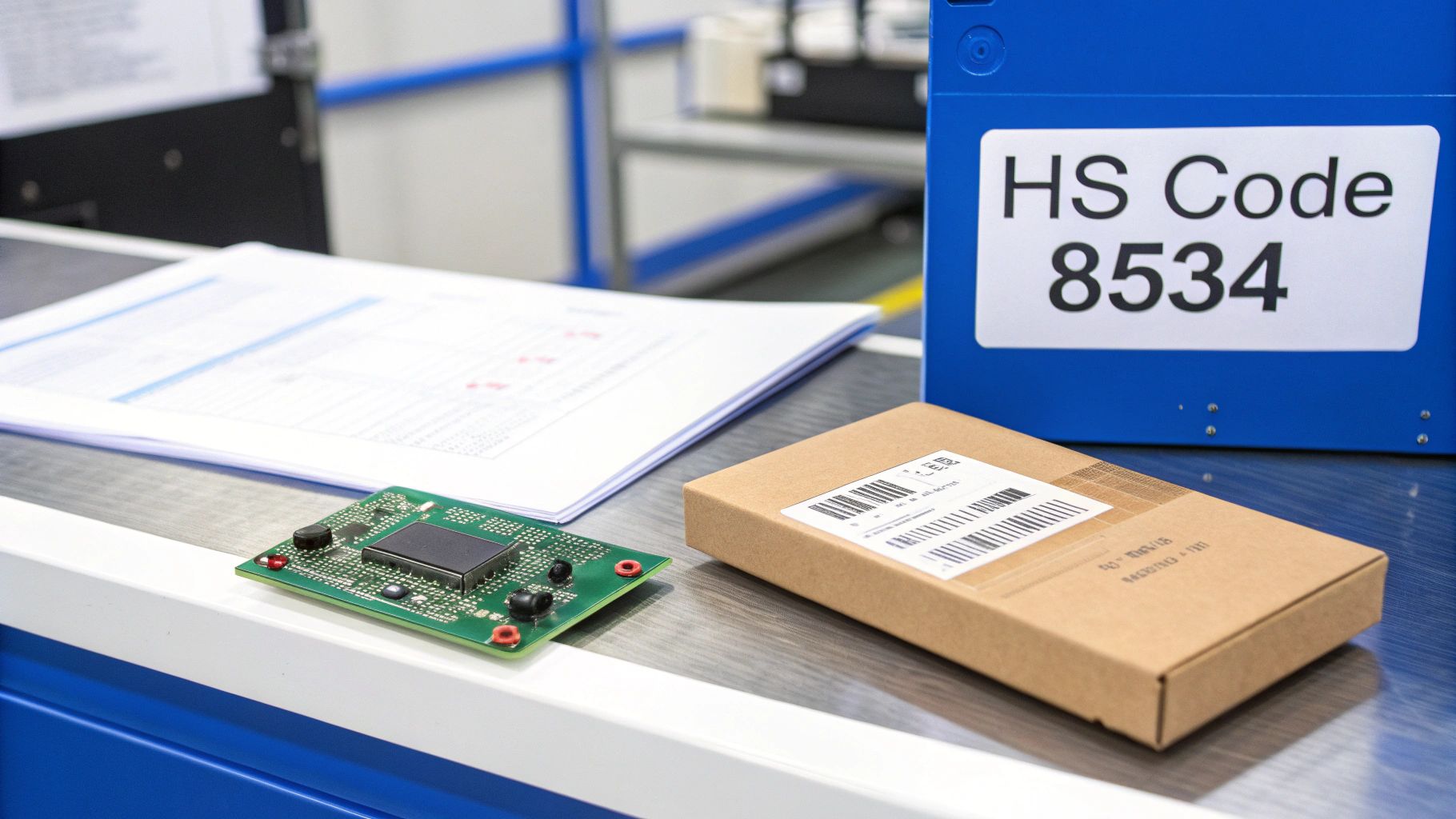
    From Prospecting to Winning Business

    Once you’ve pinpointed a promising lead, your expert knowledge of the pcb board hs code is your best opening line. Forget the generic sales pitch. You can approach a potential client with specific, valuable insights about their own operations.

    For instance, you could open with: "I noticed you're regularly importing multilayer PCBs from Taiwan under code 8534.00.90. We specialise in this classification and have a great track record of clearing these shipments without a hitch, which could save you from potential delays." This immediately shows your value and establishes you as an expert, not just another sales rep.

    The best part is that modern logistics sales platforms now integrate customs data directly into their prospecting tools. They let you apply an HS code filter to find ideal shippers and then help you connect with the key decision-makers. Check out our guide on how to use an HS code filter for lead generation to see this strategy in action. It’s a seamless way to turn your regulatory know-how into your most effective sales tool.

    Common Questions About PCB Board HS Codes

    When you're dealing with the nitty-gritty of shipping electronics, the same questions about PCB board HS codes tend to pop up again and again. Getting these right isn't just about theory; it's about practical, on-the-ground expertise that saves you from expensive mistakes and keeps your cargo from getting stuck at the border.

    Let's walk through some of the most common issues that freight forwarders and shippers run into. Think of these as quick, actionable answers you can use right away.

    What Is the Biggest Mistake Shippers Make?

    Hands down, the most common and costly error is classifying a populated Printed Circuit Board Assembly (PCBA) as a bare board under HS 8534. This one slip-up is responsible for a huge number of customs holds and fines.

    The moment you solder components like chips, resistors, or capacitors onto that board, its entire nature changes. In the eyes of customs, its "essential character" is no longer just a circuit. It’s now a functional electronic module.

    This shift means you have to change its classification. The new HS code needs to reflect its new function, which might be HS 8542 for integrated circuits or another code entirely, depending on what the final product does. Sticking with the old code leads to paying the wrong duties and facing serious delays.

    How Do I Classify a Flexible Printed Circuit?

    Flexible Printed Circuits (FPCs) start under the same main heading as their rigid cousins: HS 8534. They share the same initial six digits, but the final classification will hinge on the specific tariff schedule of the country it's headed to.

    At the national level, customs systems have more detailed subheadings to tell different board types apart.

    The best practice here is to be crystal clear. On your commercial invoice, describe the item specifically as a "flexible printed circuit". This simple detail helps guide customs officials to the correct 8- or 10-digit code and ensures you’re paying the right duties.

    My PCB Is a Part for a Medical Device

    This is a classic "it depends" situation, and it really shows how important context is in HS classification. The right code comes down to how the item is shipped and described.

    • Shipped Alone: If you're shipping the PCBA by itself, you classify it based on its own electronic function. That will likely land it under a heading like 8542.
    • Identifiable as a Part: But, if the board is clearly a part designed only for a specific medical device (found in Chapter 90), then you should classify it as a "part" of that device.

    As a general rule, customs classifies parts designed exclusively for a particular machine along with that machine. To go this route, you'll need solid proof, like technical drawings, to show its specific use. For these kinds of shipments, talking to a customs broker is always a smart move.


    At Coreties, we turn complex customs data into your most powerful sales tool. Our platform helps you filter shipper leads by HS code, trade volume, and location, so you can find and connect with high-value clients in the electronics sector faster than ever. Discover qualified leads and streamline your outreach with Coreties today.