Finding the right importer in Singapore means digging deeper than surface-level trade numbers. Your success depends on zeroing in on the high-value sectors that are the real engine of this global trade hub.
Understanding the Singapore Import Ecosystem
Singapore's standing as a trade giant is no accident. It's built on a bedrock of high-value, high-demand industries. While the total trade figures are staggering, the real gold for freight forwarders is knowing which specific commodities are constantly moving through its ports. This insight is what separates generic prospecting from a targeted, effective sales strategy.
Think of the market as a bustling ecosystem, not a single entity. A few key sectors drive the vast majority of import value. Your first job is to identify the companies operating in these specific verticals to build a lead list that’s actually worth pursuing.
Key Import Sectors to Target
If you want to find a truly valuable importer in Singapore, you need to go where the volume is. The most significant opportunities for logistics partnerships are found in the industries that are the lifeblood of the nation's economy.
-
Electronics: This is the big one. The electronics sector is massive, covering everything from tiny semiconductors and integrated circuits to finished consumer goods. Global supply chains for the biggest tech names in the world run directly through Singapore, meaning importers here are always busy.
-
Machinery and Equipment: A strong second, this category includes heavy-hitters like industrial machinery, power generation equipment, and specialised mechanical parts. These goods fuel Singapore's world-class manufacturing and construction sectors.
-
Energy and Petroleum Products: Singapore is a major refining and distribution hub, so it's no surprise that it imports enormous quantities of crude oil and other mineral fuels. Companies in this space deal in massive volumes and require logistics partners with serious expertise.
-
Pharmaceuticals and Chemicals: This is a rapidly growing, high-value sector. Pharmaceuticals and specialised chemical products need incredibly strict handling and airtight supply chains, opening the door for forwarders who can offer that specialised service.
It really boils down to this: follow the money. When you focus on these high-value trade lanes, you're putting your services in front of the most active and profitable importers. It dramatically increases your odds of landing valuable, long-term partnerships right from the start.
Strategic Trade Lane Focus
Knowing what is being imported is only half the battle. You also need to know where it's coming from. Singapore’s top trading partners are consistently the world’s economic powerhouses—think China, Malaysia, the United States, and nations across the European Union. An importer’s main trade lanes tell you a lot about their operational needs.
For instance, a company bringing in container loads of electronics from South Korea has a completely different set of logistical headaches than one sourcing heavy machinery from Germany. Once you analyse these patterns, you can shape your pitch to solve their specific problems and show them why you're the perfect fit.
If you’re just starting out, getting a solid handle on the fundamentals of the import-export business is crucial. Doing this homework is what turns a wide, hopeful search into a sharp, strategic campaign.
Using Trade Data to Pinpoint High-Value Importers
Forget casting a wide net with generic prospect lists and cold calls that go nowhere. If you want to find a quality importer in Singapore, you need to stop guessing and start following the data. The real story is in the trade data—specifically, customs declarations. This gives you a detailed map of who is importing what, from where, and how often.
Instead of trying to sell to everyone, this approach lets you build a hyper-targeted list of companies that are already buying the exact services you offer. Imagine knowing precisely which businesses are consistently receiving shipments of electronics from South Korea or heavy machinery from the United States. This kind of intelligence turns your sales process from a shot in the dark into a data-backed strategy.
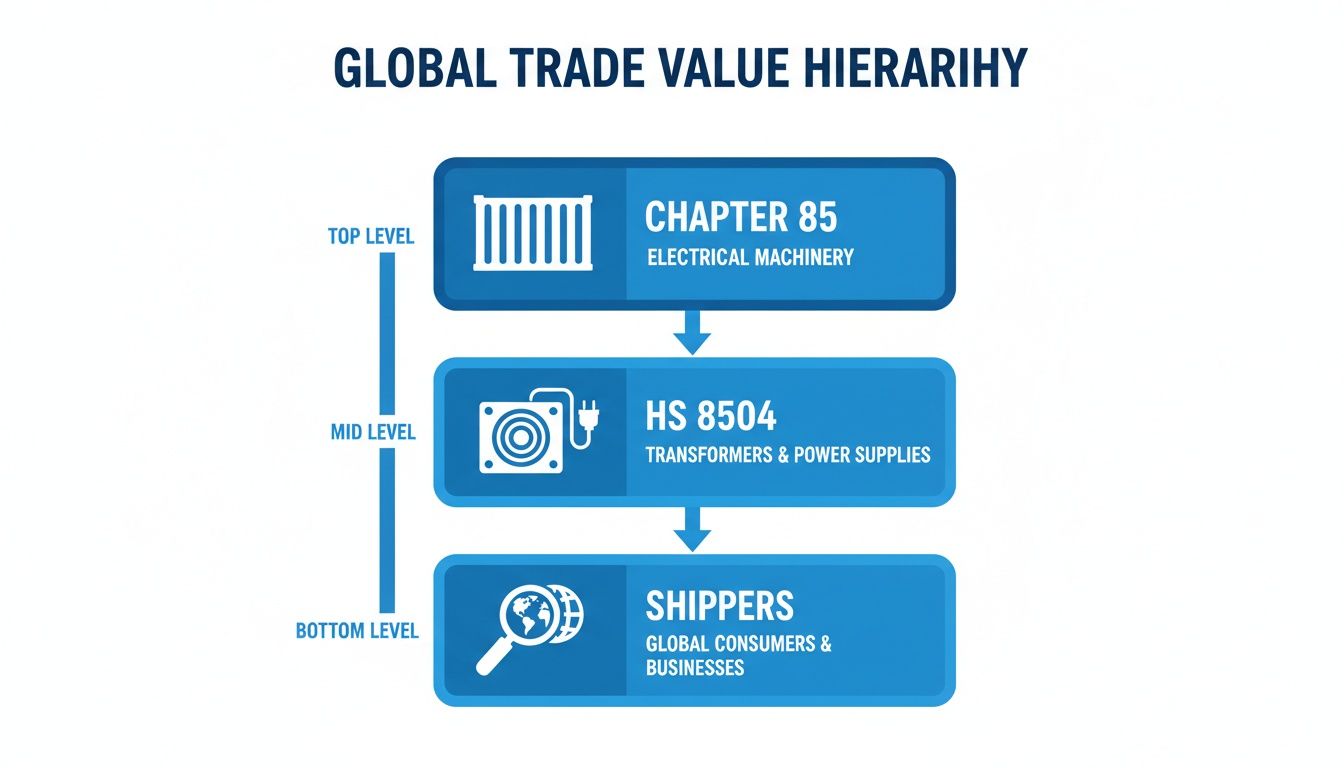
The major import categories flowing into Singapore paint a clear picture of where the biggest opportunities lie.
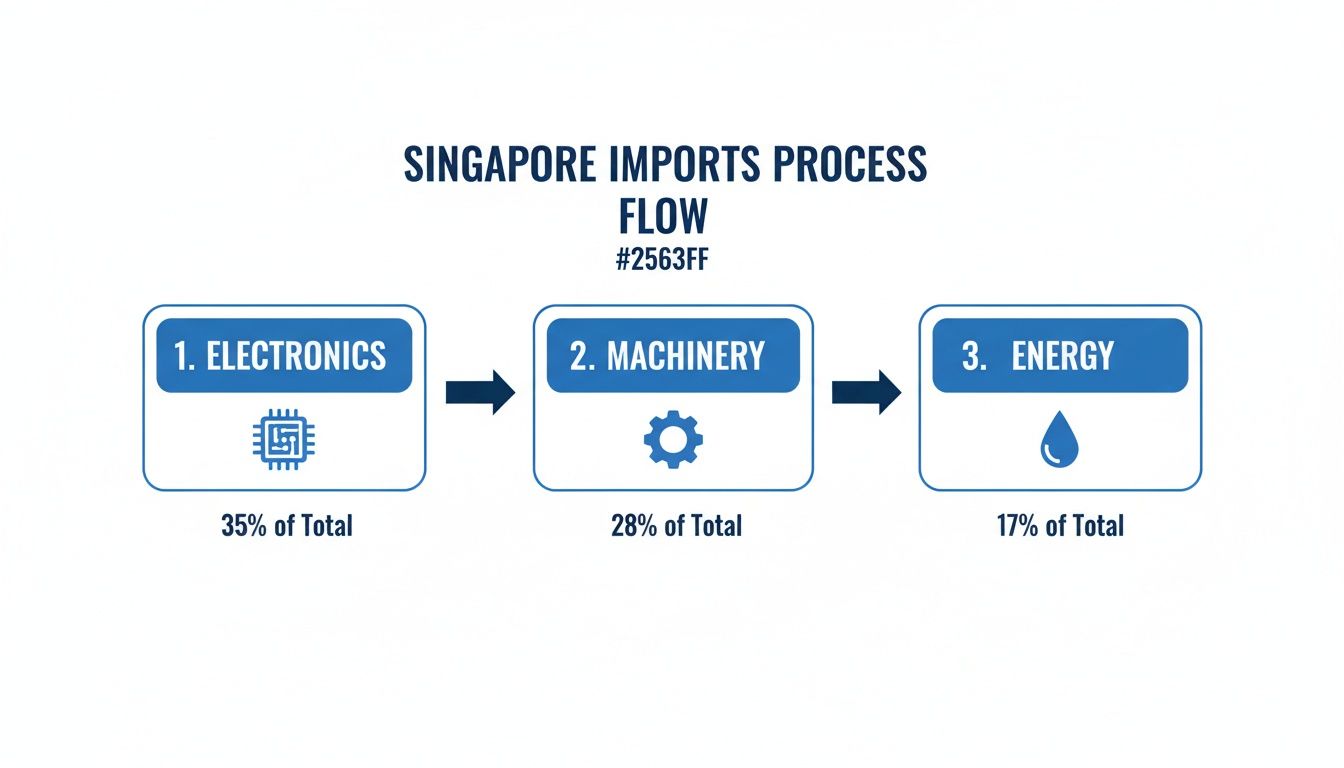
As you can see, electronics, machinery, and energy products are the heavyweights. These sectors represent the most significant and consistent import volumes, making them prime targets for logistics providers.
Decoding Customs Data
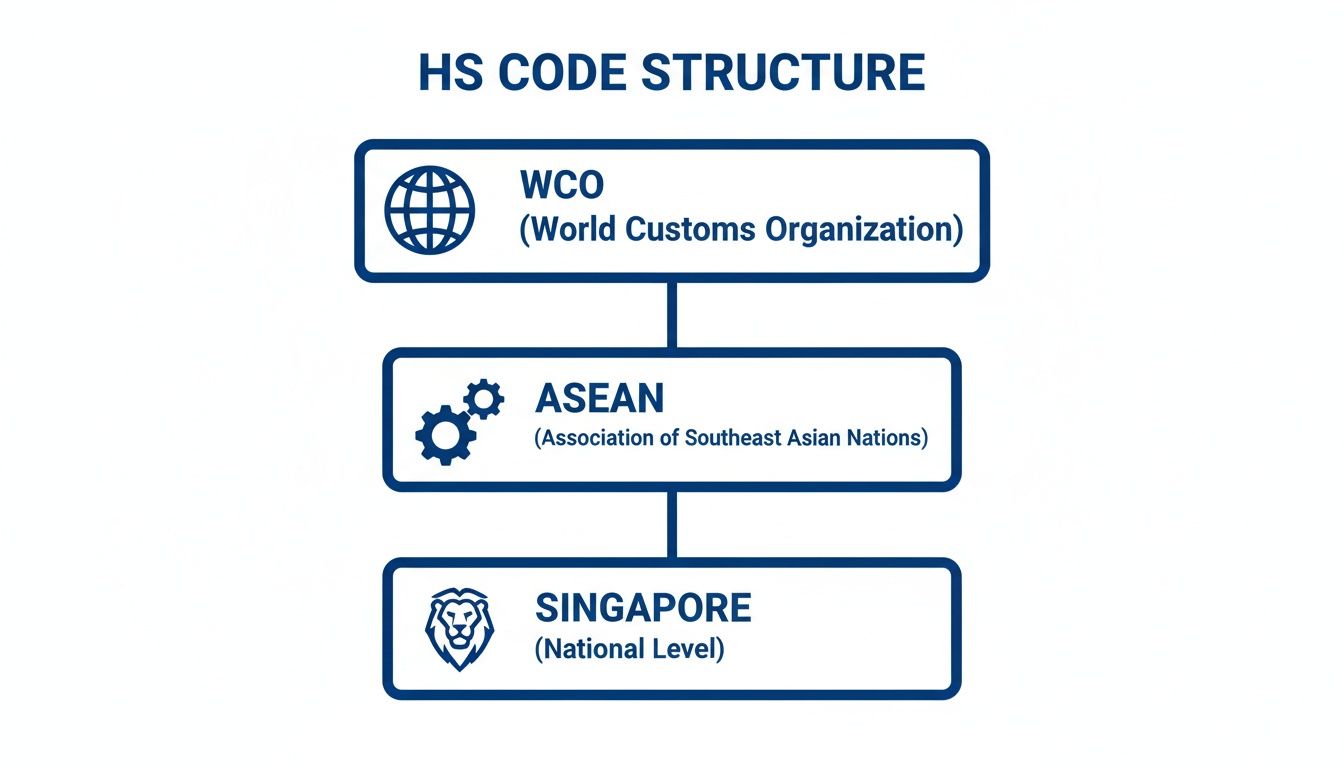
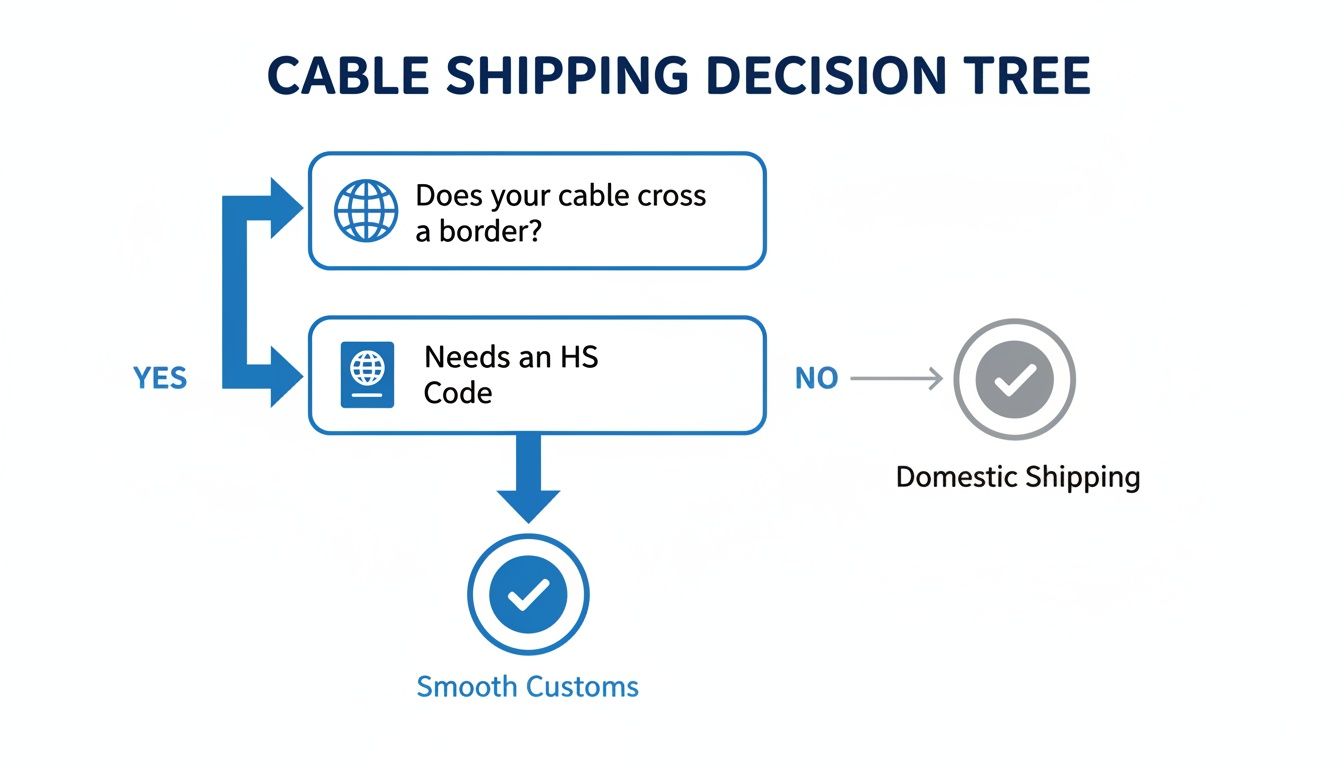
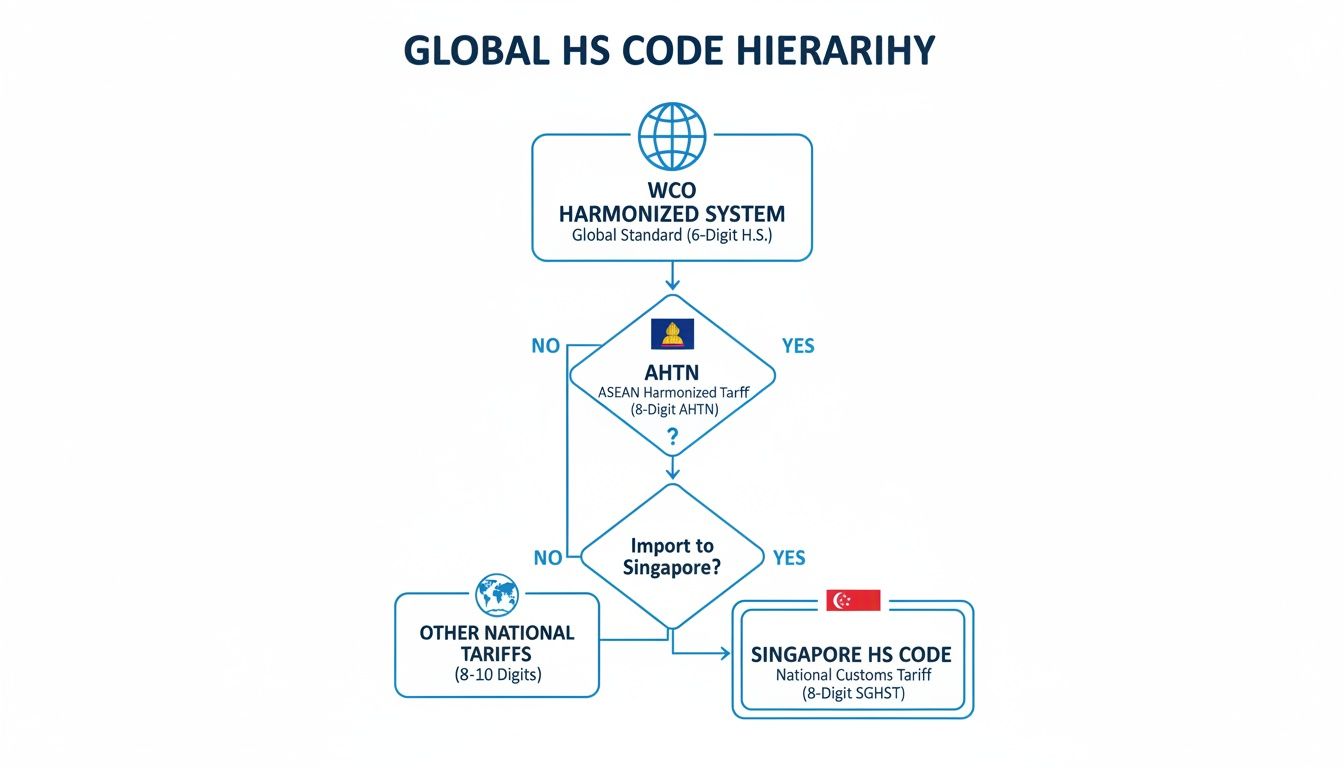
At the core of all this trade data are Harmonised System (HS) codes. These are the standardised numerical codes that customs authorities around the globe use to classify every product imaginable. By filtering your search for specific HS codes, you can instantly see every company in Singapore that has recently imported the exact products you specialise in handling.
Let's say your firm excels at shipping automotive parts. You could run a search for importers bringing in goods under HS code chapter 87. Just like that, you've cut through the noise and are looking at a list of relevant, high-potential leads.
Refining Your Search with Strategic Filters
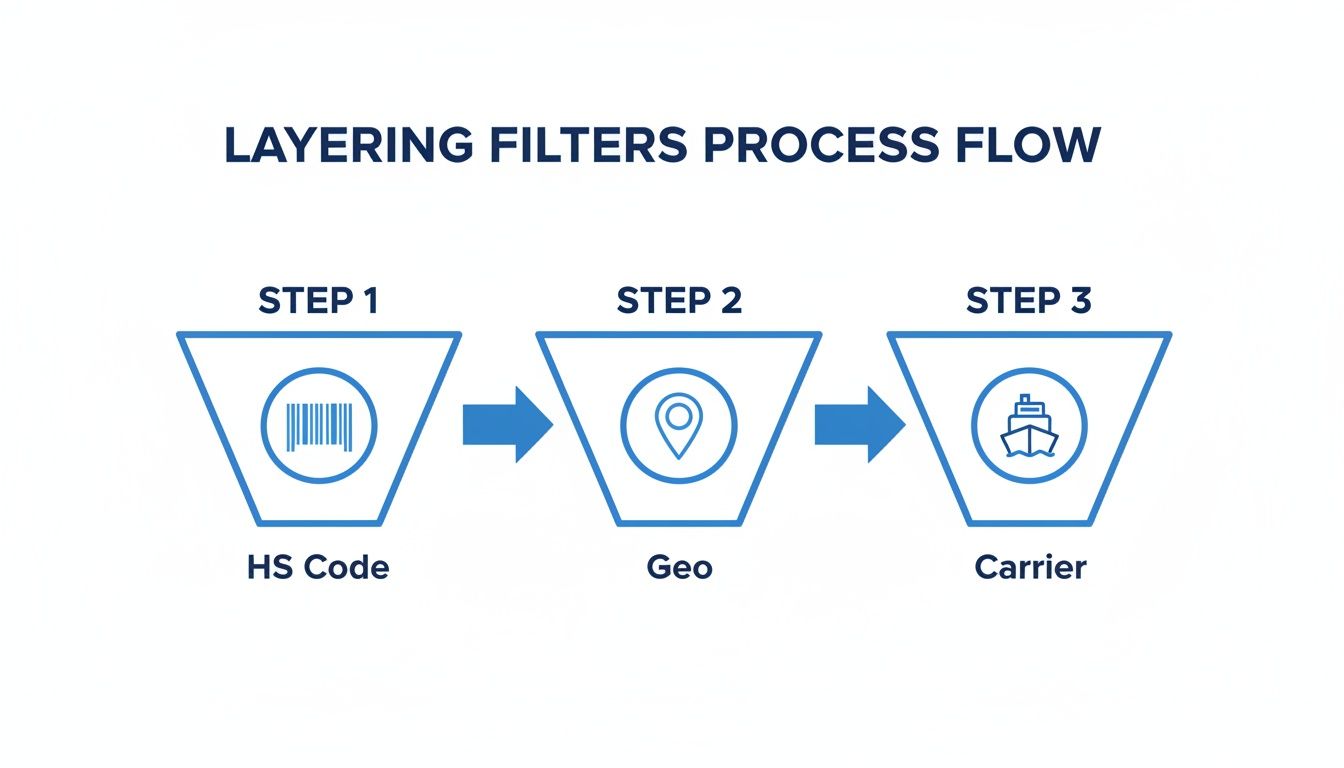
A basic HS code search is a great start, but the real power comes from layering on additional filters. This is how you separate the high-value, long-term partners from the occasional shippers.
Here are a few filtering strategies I've seen work wonders:
- Country of Origin: Focus on importers sourcing goods from specific countries. This is perfect for targeting companies active on the trade lanes where you have the strongest network and most competitive rates.
- Shipment Frequency: Isolate companies with consistent import volumes. An importer receiving multiple containers every month is a far more valuable prospect than one who only imports once a year.
- Shipment Value: Zero in on importers dealing in high-value goods. This often points to a more mature and stable business that understands the importance of a reliable logistics partnership.
By combining these filters, you can get incredibly specific. For instance, you could identify all companies that imported more than $500,000 worth of electronic components from China at least five times in the last quarter. Now that's a qualified lead.
The goal here is to shift from a broad list of "potential importers" to a curated list of "ideal partners." Data allows you to define exactly what your ideal partner looks like and then find them with surgical precision, saving you countless hours of wasted effort.
To give you a better idea of the landscape, we've compiled a table highlighting Singapore's key import partners and the types of goods they supply.
Top Import Sources and Key Commodities for Singapore
This table highlights Singapore's main import partners and the corresponding high-value product categories, helping logistics professionals target specific trade lanes.
| Origin Country | Share of Imports | Primary Commodities |
|---|---|---|
| China | 13.5% | Electronics, Machinery, Consumer Goods |
| Malaysia | 12.1% | Refined Petroleum, Integrated Circuits |
| United States | 10.3% | Aircraft Parts, Medical Instruments, Oil |
| Taiwan | 8.9% | Semiconductors, Electronic Equipment |
| South Korea | 6.2% | Petroleum Products, Telecommunications |
This data provides a strategic starting point, showing you where to focus your business development efforts based on current trade flows.
Understanding this landscape is critical. Singapore's total imports recently hit a staggering 45.9 USD billion in a single month—a massive 20.3% year-over-year jump. With machinery and equipment making up 43% of this total, the opportunity for forwarders who can effectively target the right players is immense.
This data-driven method ensures that every company you reach out to is already qualified. For freight forwarders, platforms providing this level of detailed information are indispensable, turning raw data into actionable leads. They help you understand the specific needs of each importer in Singapore before you even pick up the phone. To dig deeper, you can learn more about how to use EXIM data for manufacturers and enterprises and build a powerful prospecting pipeline.
How to Qualify and Vet Potential Import Partners
You’ve got a list of potential importers. That’s a great start, but it's just that—a start. The real work begins now, separating the high-volume, consistent players from the one-off shippers. This qualification step is non-negotiable. It’s how you make sure every bit of effort you put into outreach is aimed at a company that actually fits your business.
Vetting an importer in Singapore goes way beyond a simple existence check. You need to get into the rhythm of their business. Think shipment volume, frequency, and the specific trade lanes they use over and over. This kind of data-driven digging lets you weed out the low-potential leads and concentrate on building genuinely profitable, long-term relationships.

Assessing Shipment Patterns and Consistency
The first thing I always look at is an importer’s shipping history. It tells you almost everything you need to know. A business that brings in a single container twice a year has completely different needs from one juggling multiple shipments every week. What you’re looking for is consistency.
-
Volume and Frequency: Look for importers with regular, predictable shipping schedules. That steady activity is a massive green flag, signalling a stable business with a constant need for the kind of logistics services you offer.
-
Trade Lane Stability: Does the importer stick to the same routes? Someone consistently shipping from hubs like China or the US has a stable supply chain. That makes them a far more reliable—and valuable—target for your services.
These patterns reveal a company's operational maturity. They tell a story that raw numbers can't, showing you who has a genuine need for the sophisticated solutions you provide.
A partner's legitimacy and operational scale are two sides of the same coin. Verifying their official registration builds trust, while analysing their trade history confirms their commercial viability. Skip one, and you risk wasting time on a dead end.
Verifying Company Legitimacy and Reputation
Once you’ve found importers with promising shipping patterns, it’s time to confirm they are who they say they are. This is basic risk management and ensures you’re partnering with a trustworthy organisation.
Your first stop should always be Singapore's Accounting and Corporate Regulatory Authority (ACRA). A quick search on the ACRA portal will confirm a company’s registration, address, and other official details. Consider this the absolute baseline for your due diligence.
But don’t stop there. Look beyond the official records to get a feel for their market reputation. Do they have a professional online presence? What are people saying about them in industry reviews or trade publications? This qualitative check gives you context that data alone can't. It's also worth getting clear on the responsibilities involved, which you can learn about by understanding the importer of record in our guide.
Understanding the Broader Economic Context
No importer operates in a vacuum. Their performance is directly linked to Singapore's overall trade health. The nation’s annual merchandise imports recently hit around US$567.3 billion.
Even with a slight dip from the previous year, the recovery has been impressive, with trade jumping 19.0% month-over-month in December. Much of this growth came from increased imports from key partners like China and Malaysia. Keeping an eye on these macroeconomic trends in Singapore's main imports helps you gauge a potential partner’s stability and future growth prospects.
Finding the Right Decision-Makers
Pinpointing a high-value importer in Singapore is a great start, but it's only half the battle. The real work begins when you need to get your pitch in front of the right person. This is where most outreach campaigns fall flat.
A brilliant email sent to a generic inbox or a junior staff member is an email wasted. To get any traction, you have to connect directly with the individual who actually feels the pressure of logistics problems and has the authority to do something about it. Your mission is to find the people whose performance hinges on how smoothly their supply chain runs.
Decoding Job Titles and Hierarchies
In logistics, job titles are your roadmap. They tell you who sets the strategy and who handles the day-to-day grind. If you want your message to land with someone who can actually sign a deal, you need to be precise in your targeting.
Keep an eye out for titles like these:
- Supply Chain Director or VP of Supply Chain: These are the big-picture thinkers. They're focused on high-level strategy—things like cost optimisation, managing risk, and building long-term partner relationships.
- Logistics Manager or Head of Logistics: This is your person on the ground. They're wrestling with carriers, customs, and delivery schedules every single day, so they’re often very open to solutions that can simplify their workload.
- Procurement Manager or Sourcing Manager: These are the negotiators. Their world revolves around contracts and managing the company's relationships with suppliers, including freight and logistics partners.
- Operations Manager: Especially in smaller companies, this role is a catch-all. The Operations Manager frequently oversees the entire import and export process from start to finish.
Getting a handle on this hierarchy is key. You might start a conversation with the Logistics Manager about operational details, but it's the Supply Chain Director you'll ultimately need to win over for a major partnership.
Your outreach success rate will skyrocket once you stop sending messages to generic "info@" email addresses and start engaging directly with the people whose job titles scream "I manage freight."
Using Professional Networks and Sales Tools
Alright, so how do you actually track these people down? This is where your digital toolkit comes into play. Professional networks and sales intelligence platforms are essential here.
LinkedIn is the natural first stop, and it's an incredibly potent tool for this. Just search for the company you're targeting and click on their "People" tab. You can then filter their entire employee list by job title using keywords like "logistics" or "procurement," and narrow it down by location to Singapore. In minutes, you can map out their whole supply chain team.
If you need direct contact details, dedicated sales intelligence tools can give you verified email addresses and phone numbers. Yes, these platforms have a subscription fee, but the return on investment can be huge. Skipping the gatekeeper and landing your pitch directly in a decision-maker's inbox turns a hopeful shot in the dark into a targeted, meaningful conversation with the right importer in Singapore.
Crafting Outreach That Actually Gets a Response
So you've done the legwork. You’ve sifted through the data, identified a promising importer in Singapore, and vetted their business. This next step—the first point of contact—is where most sales efforts fall flat.
Let's be honest, generic, copy-pasted emails are dead on arrival. They get deleted in seconds. If you want to even get a reply, your message has to prove from the very first line that you’ve done your homework and have something genuinely valuable to offer.
This is where all that research you did pays off. Instead of a weak opening like, "we can help with your logistics," you can lead with something specific and impossible to ignore. This data-driven approach turns your outreach from a speculative shot in the dark into a targeted, relevant conversation that busy decision-makers will actually read.

From Data to Dialogue
That trade data you analysed? It's your golden ticket to a good opening line. Mentioning a specific shipping lane they use or a recent shipment pattern immediately shows you understand their world. This isn't about being creepy or intrusive; it's about showing you're a professional who has already invested time in understanding their operational reality.
For instance, instead of a generic intro, you could try something grounded in their actual activity:
- "I noticed your company has consistent shipments of electronic components arriving from South Korea…"
- "We specialise in the Germany-to-Singapore trade lane and saw your recent activity with heavy machinery imports…"
See the difference? This simple tweak proves your relevance before you even pitch your services. You're no longer just another salesperson begging for a meeting; you're a potential partner who has already pinpointed a key part of their supply chain.
The most effective outreach feels less like a sales pitch and more like the start of a strategic consultation. When you open with an observation about their business, you invite a conversation about their challenges and goals, not just your services.
Framing Your Value Proposition
Once you've got their attention, the next move is to connect their likely problems to your solutions. Importers are in a constant battle with freight costs, transit times, and supply chain reliability. Your job is to frame what you do as the direct answer to those headaches.
The current economic climate makes this more crucial than ever. Singapore's Import Price Index, for example, has been all over the place, recently falling 0.7% one month only to jump 1.1% the next. You can dig into the specifics of these price index trends from SingStat.
This kind of volatility puts immense pressure on an importer's margins. They are actively looking for ways to control costs and improve efficiency. This context is your secret weapon. You can position your freight forwarding partnership as a way to stay competitive, even when input costs are unpredictable.
Real-World Outreach Examples
Let's see what this looks like in the real world. Here’s a side-by-side comparison of a typical, ineffective email versus a sharp, data-informed one.
The Generic Approach (Headed for the Bin):
Subject: Logistics Services for Your Company
"Hi [Prospect Name],
My name is [Your Name] from [Your Company]. We offer competitive freight forwarding services and would love to discuss how we can help your business. Are you free for a call next week?"
This is a one-way ticket to the trash folder. It’s all about the sender and offers precisely zero value to the person reading it.
The Data-Informed Approach (Gets a Reply):
Subject: Question about your shipments from Vietnam
"Hi [Prospect Name],
I noticed your company consistently imports furniture from Ho Chi Minh City. We manage significant volume on that lane and have helped clients reduce their average transit time by 15%.
Given the port congestion we've seen recently, I imagine maintaining a reliable delivery schedule is a key priority. Would you be open to a brief chat about how we could potentially offer a more streamlined solution for your Vietnam-Singapore shipments?"
This version just works. It's specific, it's relevant, and it’s focused entirely on solving a likely problem for the importer in Singapore. You immediately come across as an expert, not just another salesperson in their inbox.
Common Questions About Finding Importers in Singapore
When you're looking to break into the Singaporean market, a lot of questions come up. It's a busy, competitive hub, so getting straight answers from the get-go can save you a ton of time and prevent you from chasing dead ends. Let's tackle some of the most common queries we hear from freight forwarders.
Where Do I Find the Best Data on Singapore Importers?
Honestly, the most reliable and actionable information comes from specialised trade intelligence platforms and official customs databases. These aren't your average business directories; they pull together real shipping data and make it searchable for your sales team.
What sets these tools apart is the ability to get granular. You can filter by specific HS codes, see where shipments are coming from, and spot actual shipping patterns. This is how you find an active importer in Singapore whose logistics needs are a perfect match for what you offer, rather than just a company that happens to be based there.
The real trick is to look past static company lists. You need live shipping manifests and historical trade data. That's what tells you what an importer actually does and needs, long before you even pick up the phone.
How Can I Be Sure a Singaporean Importer Is Legitimate?
Verification is a crucial step before you invest any time in outreach. Your first port of call should always be the Accounting and Corporate Regulatory Authority (ACRA). A quick search in their business registry will confirm if the company is officially registered and give you their basic details.
But that's just step one. To get the full picture, you need to dig into their trade history, check out their reputation in the industry, and get a sense of their financial stability. This due diligence is what separates a one-time shipment from a reliable, long-term partnership.
What Are the Hottest Industries for Imports Right Now?
If you're looking to target the biggest slice of the pie, current trade volumes point to a few key sectors. These are where the real opportunities lie for logistics providers:
- Electronics: This is the largest and most consistent category by a long shot.
- Machinery: A massive sector, covering everything from heavy industrial equipment to tiny specialised parts.
- Mineral Fuels: We're talking high-volume oil and gas, a cornerstone of Singapore's trade.
- Pharmaceuticals & Chemicals: These are high-value goods that often need specialised handling and care.
By focusing your efforts here, you’re aligning your business with the most significant import flows into Singapore, which naturally creates more opportunities.
Finding and qualifying the right partners is so much faster when you have the right tools. Coreties turns raw global trade data into highly targeted lead lists, putting you in touch with verified decision-makers in just a few clicks. See how you can build a powerful sales pipeline by visiting https://coreties.com.