Category: Uncategorized

  • A Guide to UPS SCS Singapore for Logistics Teams

    A Guide to UPS SCS Singapore for Logistics Teams

    When most people hear "UPS," they immediately think of the familiar brown trucks zipping around town delivering parcels. But for businesses in Singapore, the real story is UPS Supply Chain Solutions (SCS). This is a completely different beast, a division dedicated to the heavy lifting of global logistics, far beyond your average package delivery. Think of them as a major third-party logistics (3PL) player, orchestrating everything from international freight to massive warehousing operations for multinational corporations.

    Getting to Grips with UPS SCS in Singapore

    If you're in logistics sales or working for a competing freight forwarder, the first thing you need to do is get the image of those brown trucks out of your head. UPS SCS Singapore is the engine behind the company's entire Southeast Asia strategy, not just a local delivery office. It masterfully uses Singapore's position as a global trade hub to deliver incredibly complex, end-to-end supply chain management.

    Here’s a simple way to look at it: The regular UPS parcel service is like a taxi, designed to get one package from A to B efficiently. In contrast, UPS SCS is like the entire public transport system for a major city. It coordinates a vast, interconnected network of trucks, ocean liners, and cargo planes to move staggering amounts of goods for huge companies.

    Why Singapore is So Critical to Their Strategy

    UPS didn't just randomly set up shop here; their presence in Singapore is a calculated, strategic move. The country's top-tier port and airport, combined with its political stability and prime location, make it the perfect nerve centre for regional logistics. For companies based here, UPS SCS offers a single, powerful gateway to a global network, which is a tough pitch for smaller forwarders to beat.

    Their operations really stand on three core pillars:

    • Global Freight Forwarding: This is their bread and butter—managing intricate air and ocean freight shipments across the world's busiest trade routes.
    • Contract Logistics: They go beyond just moving goods. This involves providing dedicated warehousing, meticulous inventory management, and distribution services designed for specific industry needs.
    • Integrated Solutions: This is where they tie it all together, blending freight, customs brokerage, and ground transport into one smooth operation. The goal is to take the headache away from the shipper.

    By positioning itself as a one-stop-shop in one of the world's most vital trade hubs, UPS SCS Singapore is a serious competitor. To effectively compete, you have to understand their model inside and out. This guide will unpack their services, the industries they target, and where they stand in the market, giving you the insights needed to find the gaps where a more nimble or specialised provider can win.

    A Look Inside Their Core Logistics Services

    First things first, to really understand UPS SCS Singapore—whether you see them as a competitor or a potential partner—you need to get past the image of the iconic brown trucks. Their world isn't about dropping off parcels at your door. We're talking about a completely different beast: a sophisticated, large-scale logistics machine built for multinational corporations navigating seriously complex global supply chains.

    It’s less about selling individual services off a menu and more about providing interlocking building blocks. A client might come to them for a simple air freight shipment, but the real power play from UPS SCS is their ability to connect all these blocks—freight, customs, warehousing—into one seamless system that manages a product's entire journey from factory to final destination.

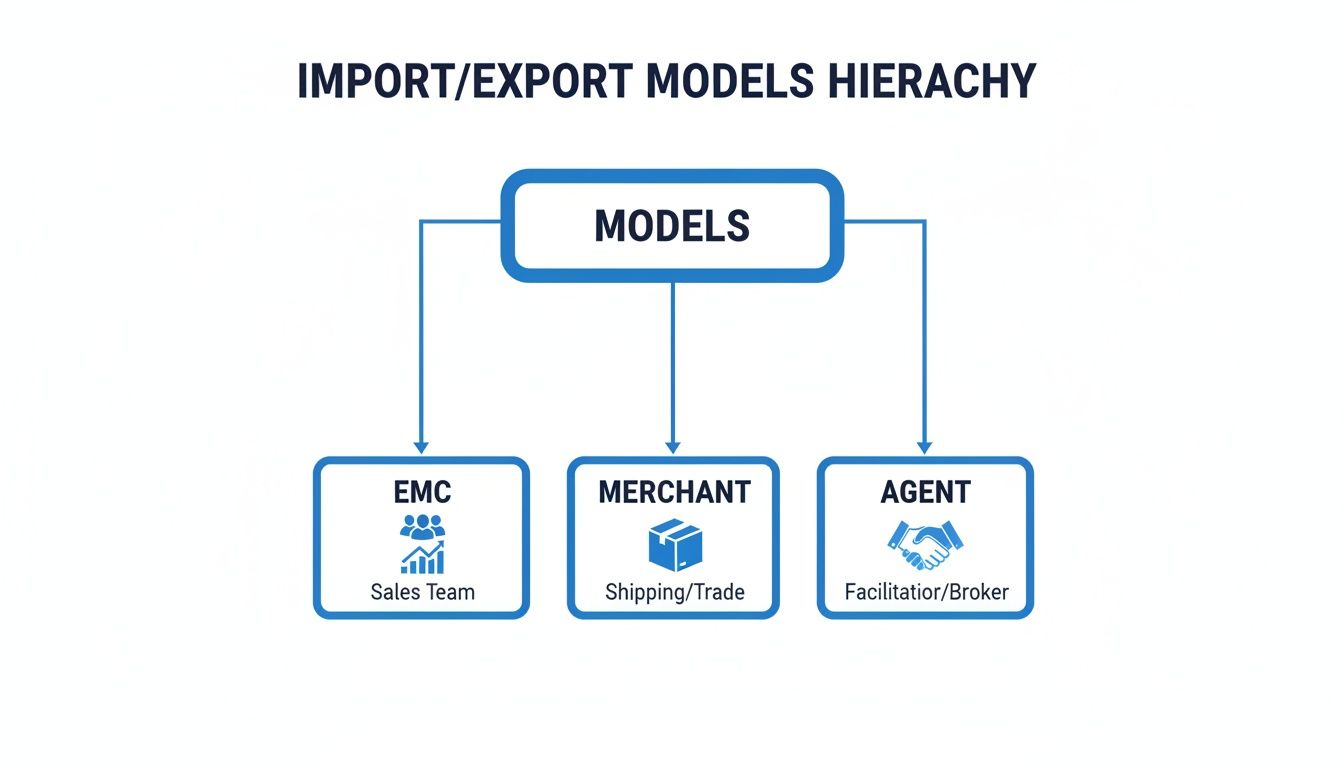
    This diagram really clarifies how UPS separates its business. You have the familiar express parcel side, and then you have the industrial-grade supply chain solutions arm.
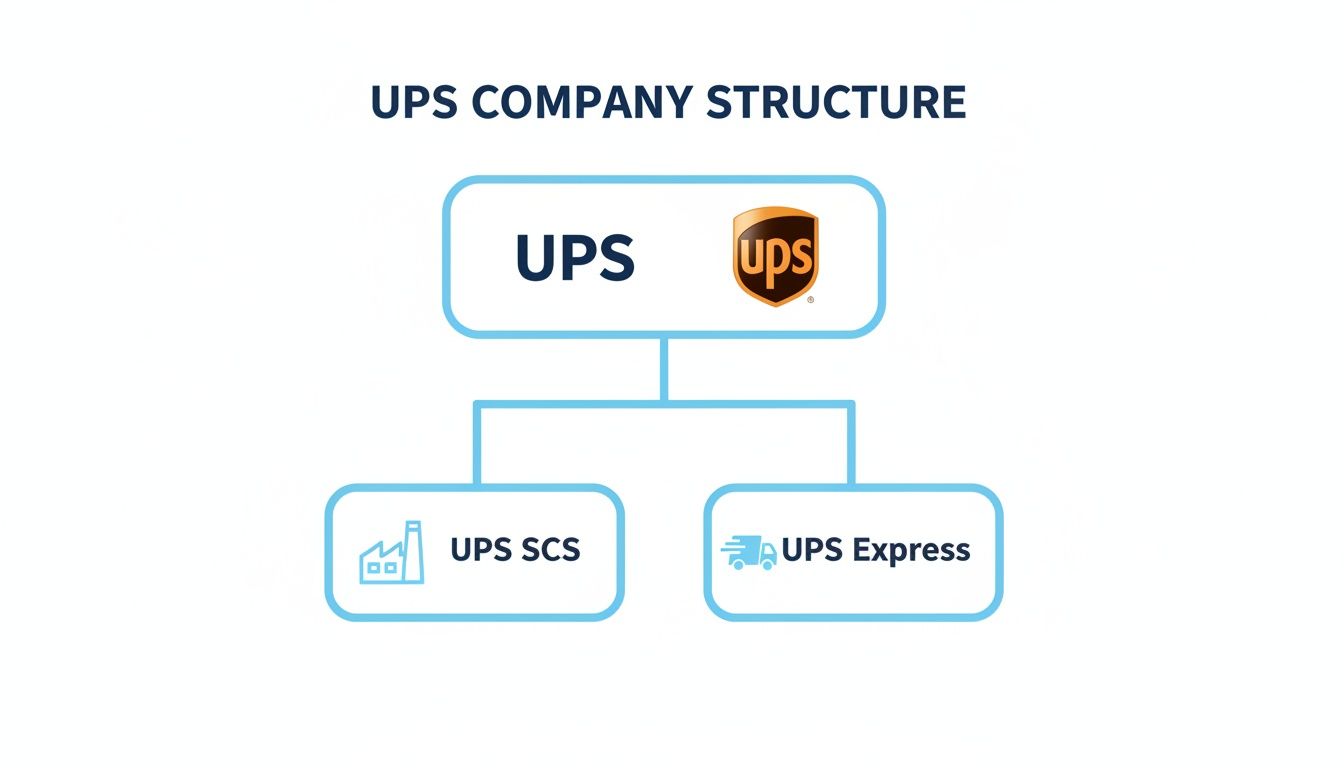
    Diagram showing the UPS company structure, with UPS at the top, branching into UPS SCS and UPS Express.

    Seeing it laid out like this makes it obvious that UPS SCS is a distinct B2B entity. It's not chasing the same business as the parcel network, and that distinction is crucial for understanding who they target and how they operate in Singapore.

    Freight Forwarding: The Air and Ocean Powerhouse

    At its core, UPS SCS Singapore is a massive freight forwarder. They move a staggering volume of cargo through the air and across the seas, acting as the critical link between the companies shipping the goods and the asset owners—the airlines and shipping lines.

    For air freight, they lean heavily on Singapore Changi Airport's world-class status as a premier cargo hub. This is non-negotiable for their key clients in the high-tech and healthcare sectors, where goods are often extremely time-sensitive. This isn't just about finding space on a flight; it's a full-service operation that includes ground handling, consolidating shipments, and making sure every piece of cargo clears strict aviation security protocols.

    Their ocean freight game is just as strong, capitalising on the Port of Singapore's unmatched global connectivity. They've got the full playbook of services:

    • Full Container Load (FCL): For clients with enough cargo to fill an entire 20- or 40-foot container.
    • Less than Container Load (LCL): The solution for smaller shipments, where they cleverly consolidate freight from multiple customers into a single shared container.
    • Specialised Services: Think temperature-controlled "reefer" containers for sensitive pharmaceuticals or handling the logistics for massive, oversized industrial equipment.

    Customs Brokerage and Compliance

    One of the biggest weapons in the UPS SCS arsenal is their in-house customs brokerage. In the world of cross-border trade—a minefield of red tape and potential delays—this integrated service is a game-changer.

    By baking customs clearance directly into the freight forwarding process, UPS SCS delivers a truly seamless "port-to-door" experience. This is a massive weight off a shipper's shoulders. A single mistake on a customs form can bring an entire multi-million dollar shipment to a screeching halt, racking up painful delays and storage fees.

    Their expertise here is especially vital for industries like medical devices and electronics, which are saddled with complex import rules, specific documentation, and tricky duty calculations. For any competitor, offering a service this tightly integrated is a very high bar to clear.

    Contract Logistics and Warehousing

    UPS SCS doesn't just move boxes from Point A to Point B. They also manage them. Their extensive contract logistics services mean they operate entire warehousing and distribution centres for their clients. These aren't just dusty sheds for storage; they are high-activity hubs for managing inventory, fulfilling orders, and providing a whole host of value-added services.

    Imagine a global electronics brand. They could use a UPS SCS facility in Singapore to:

    1. Receive enormous bulk shipments from their factories across Asia.
    2. Store all that inventory securely in a climate-controlled warehouse right near Changi Airport.
    3. Have the UPS team perform quality checks or even add localised packaging and manuals.
    4. Distribute the finished products directly to retailers and distributors all over Southeast Asia.

    This is what turns them from a mere transport provider into a deeply embedded supply chain partner. It's a much stickier, more valuable relationship.

    The Hidden Connection to Uninterruptible Power Systems

    When you think about logistics, ships, planes, and warehouses probably come to mind first. But there’s a prospecting angle for UPS SCS Singapore that’s often missed, hiding in plain sight: the hardware that keeps modern commerce running—specifically, Uninterruptible Power Supply (UPS) systems. And no, this isn't just a clever play on the company's name. It's a direct link to one of Singapore’s most vital and rapidly growing sectors.

    A clean data center features rows of server racks, a blue UPS unit, and a 'Power Reliability' sign.

    Think about what truly powers Singapore’s economy. It’s a global hub for high-tech manufacturing, finance, and, crucially, data centres. The one thing all these industries absolutely cannot function without is clean, stable, uninterrupted electricity. Even a momentary power flicker in a data centre or an automated warehouse isn't a small problem—it's a potential catastrophe, leading to millions in lost data and operational downtime.

    Why Power Systems Are a Logistics Goldmine

    This absolute need for power reliability has created a huge market for UPS hardware and the tech that goes with it. These systems are the unsung heroes of the digital and automated economy, making sure servers, factory robots, and port machinery run 24/7. For a sharp logistics sales team, this dependency is a golden opportunity.

    It breaks down pretty simply:

    • Massive Demand: As Singapore's key industries expand, so does their need for new and replacement power systems.
    • Sensitive Freight: UPS units aren't just any cargo. They are heavy, delicate, and often contain hazardous materials like large batteries, which means they need specialised handling.
    • High-Value Shipments: These are expensive pieces of equipment. Shippers can't afford to take risks, making secure and reliable transport their number one priority.

    By grasping just how critical these power systems are, a freight forwarder can approach potential clients not just as another company offering a rate, but as a partner who gets it. A partner who understands the importance of their product. That's a much stronger sales conversation.

    Singapore's Uninterruptible Power Supply (UPS) market is booming, projected to grow at a robust CAGR of 6.2% from 2025 to 2031. This growth is driven by the nation's explosive data centre expansion, with over 60 facilities already hosting giants like Google and Alibaba who demand flawless power backups. Discover more insights on the Singapore UPS market.

    A Practical Prospecting Strategy

    This insight isn't just theory; it's an actionable sales strategy. Instead of sending out generic emails, your team can zero in on the manufacturers and distributors of UPS hardware. You can walk into a conversation already understanding their unique challenges, from navigating complex customs classifications to ensuring their sensitive electronics are handled with care. To get even more specific, check out our guide on the HS code for power supply units to build your expertise.

    When you speak their language and show you understand how crucial their products are, you elevate the conversation beyond a simple price quote. You start building a real partnership based on specialist knowledge, tapping into a high-value niche in the tech shipping market that a player like UPS SCS Singapore is almost certainly focused on.

    Mapping Their Key Industries and Trade Routes

    To go head-to-head with a global logistics giant like UPS, you first need to understand their playbook. It's not just about knowing what they do, but why they do it. By looking at where UPS SCS Singapore focuses its energy and resources, you can spot both their fortresses and the cracks where smaller, more agile players can find an opening.

    Their entire strategy is built around serving specific, high-value industries. These are sectors where rock-solid, integrated logistics aren't just a nice-to-have; they're an absolute necessity.
    A large container ship is docked at a busy port, with green cranes, city skyline, and a 'TRADE ROUTES' overlay.

    This sharp focus lets them develop deep, specialised knowledge and create solutions that a generalist forwarder just can't match. Think of it like this: if you have a complex heart problem, you don't go to your family doctor. You see a cardiologist. UPS SCS positions itself as that specialist for certain supply chain challenges.

    Their High-Value Industry Verticals

    UPS SCS Singapore isn't trying to be everything to everyone. That's not their game. Instead, they've doubled down on a handful of sectors that play to Singapore's economic strengths and their own powerful global network.

    • High-Tech and Electronics: This is their bread and butter. Singapore is a massive hub for electronics, and UPS is right in the middle of it, providing secure warehousing, specialised anti-static handling, and mission-critical air freight for everything from tiny components to finished laptops.
    • Healthcare and Pharmaceuticals: In this field, there's zero room for error. UPS provides sophisticated, temperature-controlled logistics (cold chain), navigates the maze of regulatory compliance, and even handles direct-to-hospital deliveries—services far beyond what most standard forwarders can offer.
    • Retail and E-commerce: For big-name brands, UPS is the engine behind the scenes. They manage vast inventory for regional distribution hubs and run the complex fulfilment operations that power a booming e-commerce market.
    • Industrial Manufacturing: This vertical involves the heavy lifting—moving machinery, critical spare parts, and raw materials for Singapore’s manufacturing base. It requires real expertise in handling oversized and project cargo.

    By zeroing in on these demanding industries, UPS SCS creates incredibly "sticky" client relationships. A med-tech firm that depends on their cold chain expertise isn't going to jump ship to save a few bucks. This makes these clients tough to win over, but incredibly valuable if you can.

    Major Trade Lanes and Strategic Routes

    Knowing who they serve is one thing, but knowing where the cargo is going is just as important. The main trade lanes UPS SCS Singapore operates are the lifeblood of their network, connecting this little red dot to the world’s economic powerhouses.

    Their key routes are all about connecting Singapore with three core regions:

    1. Intra-Asia: Massive cargo flows move back and forth between mainland China, Hong Kong, Japan, and South Korea. This traffic is the backbone of the regional electronics and manufacturing supply chains.
    2. Europe: You'll see consistent freight moving to and from major hubs like Frankfurt, Amsterdam, and London. This is typically high-value cargo like pharmaceuticals and advanced technology.
    3. North America: These are the critical air and ocean lanes to the United States and Canada, serving both import and export demands across all their key industry verticals.

    For a local forwarder or NVOCC, this map is a goldmine. It tells you which lanes are dominated by the big players and, more importantly, which ones might be underserved. For any sales team trying to win business, understanding the landscape of active exporters in Singapore is the essential starting point. This intelligence lets you build a smarter pitch—maybe you can offer a faster transit time on a specific route, a more aggressive price point, or the kind of personalised customer service that a global machine sometimes struggles to deliver.

    Sizing Up the Competition in Singapore

    To go head-to-head with a global powerhouse like UPS, you need to understand exactly how they fit into the local market. While UPS SCS Singapore has a massive global network and brand recognition that few can match, they are far from the only game in town. Singapore’s logistics scene is incredibly crowded and dynamic, and knowing their strengths and weaknesses is the first step to carving out your own space.

    Think of the logistics market like vehicles on a highway. UPS SCS is the massive, long-haul lorry. It’s powerful, dependable, and can haul a huge, varied load across continents using a standardised system. For a big multinational corporation that needs a consistent, predictable service to hundreds of destinations, it’s the perfect choice.

    Global Integrators vs. Local Specialists

    The most obvious competitors are the other global giants—think DHL Supply Chain and Kuehne + Nagel. They all battle on a similar field, offering integrated, end-to-end solutions backed by sprawling global infrastructure. For a shipper, the choice between them often boils down to which one has a stronger presence on a specific trade lane or whether a global contract is already in place.

    But the real opportunity for most local players lies in the contrast. Singaporean freight forwarders and agile Non-Vessel Owning Common Carriers (NVOCCs) are the nimble sports cars and delivery motorbikes of the logistics world. They may not have the sheer scale of the global lorry, but they have other critical advantages.

    A local forwarder, for example, might have deep, personal relationships at the port that can get a tricky customs issue sorted with a single phone call. That’s a level of hands-on service a global machine often struggles to replicate. To see how another major player positions themselves, you can check out our deep dive on Nippon Express Singapore.

    The Achilles' heel for global integrators is often their rigid, one-size-fits-all approach. Their pricing and service models are built for scale and standardisation, making them less flexible for shippers with unique or fluctuating needs.

    UPS SCS vs Local Forwarders: A Competitive Snapshot

    This table breaks down the core differences in how UPS SCS and a typical local forwarder operate and who they best serve.

    Attribute UPS SCS Singapore Typical Local Freight Forwarder
    Ideal Customer Large MNCs with global, standardised shipping needs. SMEs or companies with specialised, niche cargo requirements.
    Key Strength Global network, integrated technology, brand reliability. Personalised service, operational agility, deep local knowledge.
    Service Model Standardised, process-driven, end-to-end solutions. Customised, flexible solutions tailored to the client's needs.
    Pricing Often based on rigid, global rate structures. More flexible, can offer spot rates and creative pricing.
    Weakness Can be inflexible, bureaucratic, and less personal. Limited global reach without partners, smaller scale.

    Understanding this distinction is crucial. You aren't just selling against a competitor; you're selling a fundamentally different approach to logistics.

    Finding and Exploiting Your Edge

    This is precisely where your sales team can press its advantage. While UPS SCS sells the power of its global system, you can sell adaptability, specialised expertise, and direct access to decision-makers.

    • Personalised Service: Your clients get a dedicated contact who knows their business inside and out, not a rotating cast in a call centre.
    • Pricing Flexibility: Without the massive overheads of a global network, you can often put forward more competitive or creative pricing structures.
    • Niche Expertise: Double down on a specific industry or a challenging cargo type that requires specialised handling—the kind of business the big players might find too troublesome.

    Ultimately, competing against UPS SCS Singapore isn't about trying to match them feature for feature. It's about identifying the shippers who are a poor fit for the "long-haul lorry" model and showing them the value of a more customised, responsive, and personal logistics partner.

    Actionable Strategies for Winning New Business

    Knowing the competition is one thing, but actually using that insight to land new clients is where the real work begins. This is how your analysis becomes revenue. For any logistics sales team going head-to-head with UPS SCS Singapore, you need a smart, data-backed plan to find and connect with the right prospects.

    The aim isn't to just cast a wide net. It's about surgically targeting shippers who are a perfect match for what you do best. You're looking for businesses operating in the same high-value sectors and trade lanes that UPS SCS owns, but who might be getting frustrated with a rigid, one-size-fits-all approach.

    Pinpointing Prime Opportunities

    Your first step? Dive into customs data platforms. These tools are absolute goldmines, letting you sift through Singapore's import and export records to find companies shipping high-tech electronics, medical devices, or industrial parts along those key routes into Europe and North America.

    When you identify these shippers, you're armed with powerful intel before you even pick up the phone. You can see their shipping volumes, who they're trading with, and get a solid estimate of their logistics spend. This data lets you build a sharp, relevant message that speaks directly to their business.

    Imagine ditching the generic sales pitch. Instead, you can open with something like, "I noticed you're regularly moving electronics from Singapore to Frankfurt. We offer specialised handling for sensitive cargo on that exact lane, which could give you a more secure and reliable alternative."

    Crafting a Winning Pitch

    Once you've built your target list, your outreach has to be on point. Trying to out-muscle UPS on global scale is a fight you won't win. Your real advantage lies in being the more agile, focused, and hands-on partner.

    Here’s how to frame your pitch for maximum impact:

    • Lead with Flexibility: This is a major pain point for clients stuck with large integrators. Talk about how you create tailored solutions, offer more adaptable pricing, and can pivot quickly when their needs change.
    • Flaunt Your Niche Expertise: If you’re a specialist in a certain commodity, like temperature-controlled pharmaceuticals or oversized machinery, put that front and centre. It's your biggest differentiator.
    • Sell Superior Service: Emphasise the value of a single, dedicated point of contact who genuinely understands their business. Contrast that with the often anonymous, call-centre experience they might be getting from a global giant.

    By blending sharp data analysis with a pitch that highlights your unique value, your team can effectively challenge UPS SCS Singapore and win over high-value clients who are looking for a more responsive and specialised logistics partner.

    Got Questions About UPS SCS in Singapore? We've Got Answers.

    Here are a few common questions that pop up when logistics pros talk about UPS Supply Chain Solutions in Singapore. Let's clear the air and get straight to what sets them apart from the classic brown trucks.

    What's the Real Difference Between UPS and UPS SCS?

    Think of it this way: they’re part of the same family, but with completely different jobs. The regular UPS you know—the one with the iconic brown vans—is all about express parcel delivery. Their world revolves around getting individual packages from point A to point B, fast. It’s a machine built for speed and a massive volume of small shipments.

    UPS SCS Singapore, however, plays in a totally different league. They are a full-blown third-party logistics (3PL) provider. Instead of small parcels, they manage entire supply chains for big multinational companies. This includes everything from chartering air and ocean freight and navigating complex customs clearance to running massive warehouses.

    Which Industries Are Their Bread and Butter?

    In Singapore, UPS SCS doesn't try to be everything to everyone. They've strategically zeroed in on high-value, high-stakes sectors where things absolutely cannot go wrong. Their sweet spot is in:

    • High-Tech and Electronics: Think secure transport and specialised warehousing for delicate, high-value components.
    • Healthcare and Pharmaceuticals: This is where their expertise in temperature-controlled (cold chain) logistics and navigating strict regulations really shines.
    • Retail and E-commerce: They act as the engine behind regional distribution hubs and e-commerce fulfilment centres.
    • Industrial Manufacturing: They handle the big stuff, like oversized cargo and just-in-time machinery parts.

    By focusing so intently on these demanding industries, UPS SCS has built up a deep well of expertise. They become less of a vendor and more of an embedded partner in their clients' operations, which is a massive competitive advantage.

    How Do Their Prices Stack Up Against Local Forwarders?

    This is where you see the global giant versus the local expert play out. As a rule, UPS SCS Singapore works with a more structured, global pricing framework. Their rates tend to be most competitive for large multinational corporations that ship high volumes consistently and can benefit from a standardised, global contract.

    A local freight forwarder, on the other hand, is usually far more flexible and dynamic with their pricing. They’re the ones who can give you a sharp spot rate for a one-off shipment or build a completely custom pricing model for a small or medium-sized business with unique needs. While UPS SCS sells system-wide reliability, the local players often win on agility and cost.


    Ready to stop guessing and start targeting the right shippers? Coreties transforms global trade data into your next hot lead list. Our platform helps you find qualified prospects, get verified contact details, and craft data-driven outreach that wins business. See how much faster you can build your pipeline at https://coreties.com.

  • A Sales Playbook for Competing with Nippon Express Singapore

    A Sales Playbook for Competing with Nippon Express Singapore

    If you're a sales team trying to make headway in Southeast Asia's logistics scene, Nippon Express Singapore is more than just another competitor—it’s the benchmark. Really getting to grips with how this giant got to the top, and stays there, is your first step toward landing the same kind of high-value clients. Think of this guide as your playbook for breaking down their success and sharpening your own sales approach.

    Decoding a Logistics Titan in Southeast Asia

    A busy container port with large cranes, stacked containers, and the text 'LOGISTICS BENCHMARK'.

    To compete, you have to know the field. In Singapore's dynamic trade ecosystem, Nippon Express is a cornerstone, with a history that goes back fifty years. Their success wasn't a fluke; it's the result of smart positioning, deep integration into key industries, and a massive local footprint.

    When you pull apart their operations, you get a powerful lens to view the entire market. This isn't just about watching a rival from the sidelines; it's about spotting patterns you can actually use. Once you know the industries they focus on, the trade lanes they own, and the infrastructure they've built, you start to see exactly what their ideal customers need.

    The Foundation of Regional Dominance

    Nippon Express Singapore's story starts at a pivotal time for global trade. The company set up shop in 1973, catching the wave of Singapore's meteoric rise as a central trade hub. As the Port of Singapore’s throughput blew past 100 million tons and container traffic jumped by 15-20% annually in the late 1970s, Nippon Express was right there, building its foundation. For a deeper dive, you can explore the company's long history.

    For sales teams, this history is more than just a fun fact. It points to deep, long-standing relationships with multinational corporations and an innate grasp of regional supply chain challenges that newer competitors simply don't have.

    This entrenched presence is a roadmap for your own prospecting. By studying their client list and service menu, you can pinpoint shippers with similar needs who might just be looking for a more nimble or specialised logistics partner. This guide will walk you through turning that analysis into outreach that works. For more background, you might find our guide on navigating the import-export business helpful.

    Mapping Their Core Services and Key Trade Lanes

    To get under the hood of Nippon Express Singapore, you need to see them as more than just a list of services. Their real power comes from how they weave together air, ocean, and warehousing into a seamless, integrated machine, especially for high-value industries. This isn’t about just moving boxes from A to B; it's about engineering precise, reliable supply chains.

    For any sales team looking to compete, this integration is a blueprint. When you understand how they bundle these services, you start to see the exact pain points and priorities of their top clients. This insight is your opening to position your own offerings as a smarter alternative—maybe one with more flexibility, deeper specialisation, or a fresh approach.

    Where They Dominate: High-Value Verticals

    Nippon Express Singapore has staked its claim in sectors where there's zero room for error. Their entire operation is fine-tuned for industries with notoriously complex logistics—the kind that demand Fort Knox-level security, breakneck speed, and airtight compliance.

    You can see this focus baked into their infrastructure and service design. They don't just offer generic freight; they provide highly specialised solutions built for the unique headaches of specific cargo.

    To illustrate how Nippon Express Singapore has positioned itself, let's look at their core service offerings and the markets they're built to serve.

    Nippon Express Singapore Key Service Offerings

    Service Category Description Primary Industries Served Key Trade Lanes
    Air Freight Specialised handling for time-sensitive, high-value cargo, including temperature-controlled and secure transport options. Electronics & Semiconductors, Pharmaceuticals, Automotive Components Intra-Asia, Asia-Europe, Asia-North America
    Ocean Freight Full container load (FCL) and less-than-container load (LCL) services, with a focus on reliability and network reach. Retail & Consumer Goods, Industrial Manufacturing, Automotive Trans-Pacific, Asia-Europe
    Warehousing & Distribution Secure, compliant storage solutions, including bonded warehousing, climate-controlled facilities, and value-added services. Pharmaceuticals, High-Tech Electronics, Luxury Goods Domestic Singapore, Regional hub for Southeast Asia
    Cross-Border Trucking An extensive road network connecting Singapore with Malaysia, Thailand, and the broader ASEAN region for seamless land transport. Automotive, Electronics, Fast-Moving Consumer Goods (FMCG) Singapore-Malaysia, Singapore-Thailand
    Specialised Logistics Custom solutions for heavy-lift projects, fine art transportation, and supply chain consulting. Energy, Arts & Exhibitions, Project Cargo Global, project-specific

    This table shows a clear pattern: a deep focus on industries that can't afford mistakes and the infrastructure to back it up.

    The Power of Key Trade Corridors

    Since setting up shop here in 1973, Nippon Express Singapore has grown in lockstep with Singapore Changi Airport, which has since become one of the world's most critical cargo hubs. To put that in perspective, the airport handled a massive 2.01 million tonnes in 2022, a notable jump from pre-pandemic levels. Nippon Express's own global air cargo volume hit 870,000 tons that same year, with Singapore acting as a vital linchpin. You can dig into more details in their materiality report from Nippon Express Holdings.

    The airport is a powerhouse for high-value goods like electronics and pharmaceuticals, which make up a staggering 40% of its total throughput. It's on these critical trade lanes, particularly the intra-Asia and Asia-Europe routes, where Nippon Express’s network really flexes its muscle.

    For sales professionals, customs data from these specific corridors is a goldmine. It lets you find shippers moving the exact same types of goods along the same routes. Suddenly, you have a hyper-targeted prospect list whose logistics challenges are a mirror image of Nippon Express's current clients.

    This kind of data-driven approach turns a cold call into a warm, relevant conversation. By knowing the cargo and corridors they own, you can identify shippers with an identical logistics profile and present a solution that speaks directly to what they need.

    Taking a Closer Look at Their Local Infrastructure Advantage

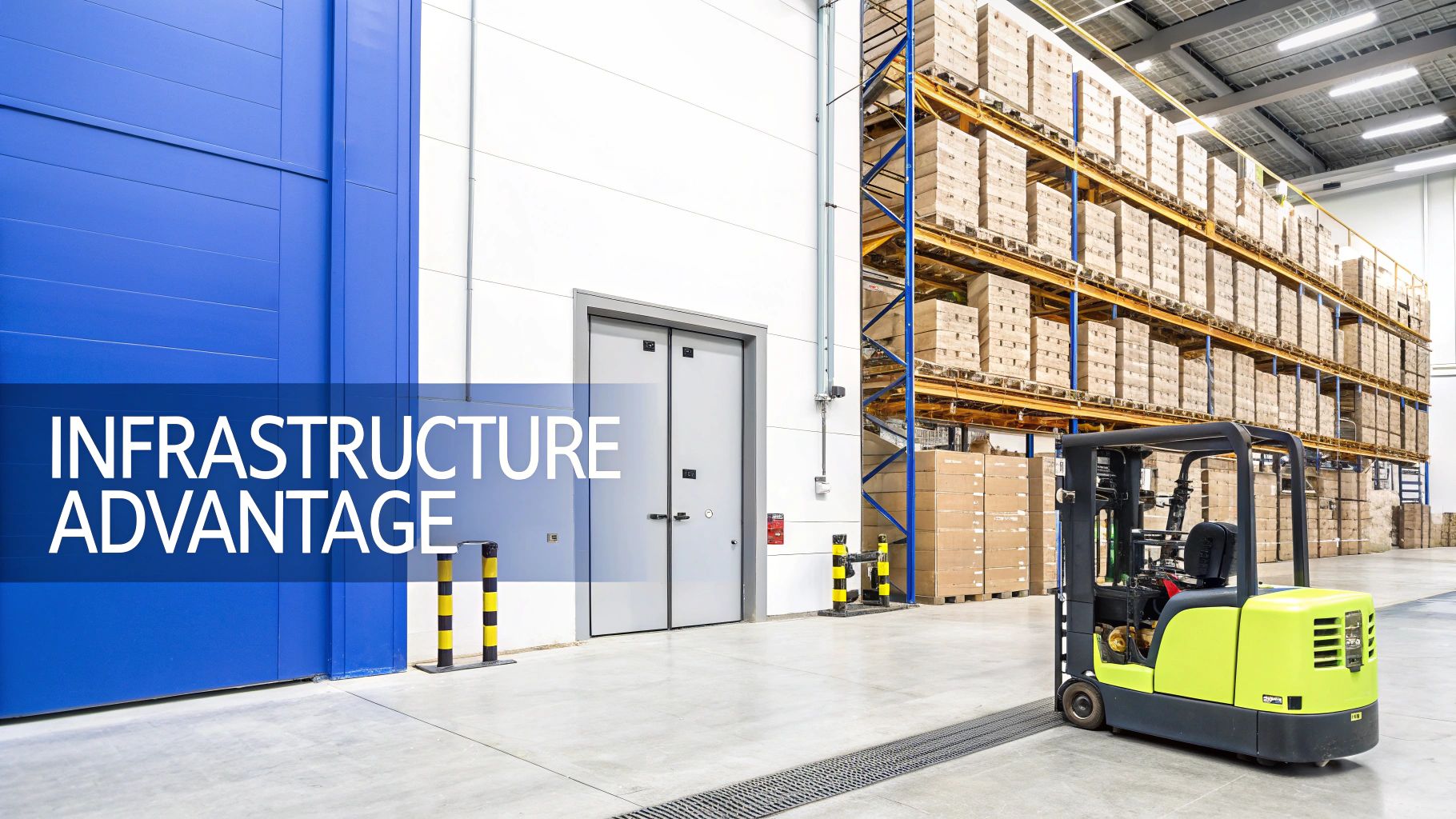
    A spacious, modern warehouse facility featuring tall shelves filled with products and a parked forklift.

    The services you see from Nippon Express Singapore are all built on a massive physical foundation. Their real strength isn't just about having space; it's about having the right space in the right places. They’ve turned prime real estate into a serious strategic weapon.

    This network of advanced warehouses and logistics hubs is the engine driving their entire Singapore operation.

    Don't think of their facilities as simple storage sheds. They're highly specialised centres, deliberately placed within key economic zones to cut down on friction and boost speed. This gives them a clear competitive edge, paving the way for faster customs clearance and smoother handling for cargo where every minute counts.

    For any sales team trying to compete, getting a handle on this physical footprint is non-negotiable. It shows you exactly where the high-stakes logistics decisions are being made and gives you a map for smart prospecting.

    The Power of Being in the Right Place

    Nippon Express Singapore has poured serious money into facilities inside Singapore’s Free Trade Zones (FTZs). These secure areas are gold for transshipment, letting goods be stored, bundled, or processed without formal customs entry. That means fewer duties and far less administrative headache for their clients.

    Their spot at the Changi Airfreight Centre is another ace up their sleeve. Having direct airside access is absolutely essential for the high-value electronics and pharmaceutical industries they cater to.

    This strategic infrastructure isn't just concrete and steel; it's what makes their complex, value-added services possible. It gives them capabilities that smaller players simply can't replicate.

    Specialised Facilities for High-Stakes Cargo

    It’s not just where the facilities are, but what they can do that sets Nippon Express Singapore apart. Many of their warehouses are custom-built for very specific, demanding supply chains.

    • Temperature-Controlled Logistics: They run GDP-certified facilities for pharmaceuticals, maintaining strict temperature and humidity controls to protect drug integrity all the way to the final delivery.
    • Secure Storage: For the semiconductor and electronics crowd, they offer TAPA-certified warehouses with beefed-up security protocols to guard valuable components against theft or damage.
    • Value-Added Services: These aren't just holding bays. They act as hubs for kitting, light assembly, quality checks, and custom packaging, embedding themselves deep into their clients' production and distribution cycles.

    This infrastructure is a huge selling point for them. If you’re looking to win business from them, the challenge isn’t just about offering a lower price. It's about proving you have a credible alternative that can handle these complex requirements. By zeroing in on shippers located in these industrial hubs, you can focus your energy where the most valuable logistics contracts are up for grabs.

    Finding the Right People to Talk To

    Let's be honest, in logistics sales, a great service only gets you so far. The real challenge is getting that message to the right person at the right time. When you're going after clients like the ones Nippon Express Singapore serves, you're usually dealing with big, complex companies. Firing off a generic email to their main inbox is the quickest way to get deleted.

    To actually make an impression, you need to understand how these companies are structured. Think of their org chart less as a rigid ladder and more as a map of influence. Your mission is to find the people whose daily headaches and career goals line up perfectly with the solutions you're selling.

    Who Actually Makes the Logistics Decisions?

    Inside any large shipper, a few key roles pull the levers on logistics and supply chain decisions. The job titles might change from one company to another, but the responsibilities are pretty consistent. Nailing down who these players are is your first, most important step.

    These roles don't operate in a vacuum; they work together on the big calls. The Head of Procurement will be laser-focused on the cost, while the Supply Chain Director is thinking about resilience and keeping things moving on schedule.

    • Supply Chain Director or VP of Supply Chain: This is your strategic thinker. They’re obsessed with the big picture—making the supply chain more efficient, less risky, and a driver of business growth.
    • Logistics Manager: This person lives in the trenches. Their world is all about carrier performance, tracking shipments, clearing customs, and putting out fires when delays pop up.
    • Procurement Manager or Head of Procurement: Their job is all about the numbers. They negotiate contracts, manage suppliers, and are always looking for partners who deliver serious value for money. They live and breathe SLAs.
    • Operations Manager: Often coming from the manufacturing or production floor, their main worry is keeping the factory running. They need a smooth, predictable flow of raw materials coming in and finished goods going out. Any hiccup hits their KPIs directly.

    When you understand what makes each of these roles tick, you can shape your message to hit home. A pitch about cost savings will get a Procurement Manager’s attention, while a conversation about better supply chain visibility will have a Logistics Manager leaning in.

    How to Find and Connect With These Contacts

    Once you know the type of person you’re looking for, the hunt begins. This is where modern sales intelligence tools become your best friend. Platforms that crunch customs data can show you exactly which companies are shipping what, where—letting you build a list that mirrors the Nippon Express Singapore client profile.

    From there, you can jump onto professional networking sites and use data tools to pinpoint the actual people in those target roles. If you really want to get into the weeds on this, you can learn more about how to find the right contacts at EXIM and manufacturing enterprises in our detailed guide.

    When it's time to reach out, you have to do more than just sell. Your message needs to show you've done your homework. Mentioning their company's shipping routes or the specific products they move shows you get their business. This data-first approach proves you’re not just another salesperson—you’re a problem-solver with a relevant solution, which massively boosts your chances of starting a real conversation.

    Finding Your Edge in a Crowded Market

    Trying to take on a logistics powerhouse like Nippon Express Singapore with a better price list alone is a losing game. You need a sharper strategy, one that’s built on knowing what they do exceptionally well and, more importantly, spotting the gaps they leave behind. They’re a dominant force, for sure, but they’re not unbeatable.

    So, what’s their secret sauce? A couple of things, really. First, they have incredibly strong, long-standing ties with Japanese multinational corporations (MNCs). These relationships have been cultivated for decades and act as a powerful defensive wall. Second, their entire brand is built on precision and reliability, especially for high-value industries like pharmaceuticals and electronics where a single mistake can be catastrophic. This makes them the go-to provider for any shipper who can't afford to take risks.

    Pinpointing Your Competitive Angle

    The trick is to stop trying to be a smaller version of them. Instead of fighting on every front, pick your battles and focus on areas where you can offer something genuinely different and better. It’s all about finding your sweet spot and owning it.

    Your value proposition has to be crystal clear and solve a real problem for the shipper. Think about where smaller, more agile players often have the upper hand:

    • Real Flexibility: Big companies often mean rigid systems. You can offer more adaptable pricing, create bespoke service packages, or say "yes" to the kind of non-standard cargo that just doesn't fit into their highly optimised operations.
    • Deep Niche Expertise: While Nippon Express is strong in several major sectors, there are always emerging industries or highly specialised verticals. This is your chance to become the undisputed expert and provide a service that truly understands the nuances of that field.
    • A Human Touch: It’s easy to feel like just another account number when dealing with a global corporation. You can position yourself as a true partner, offering a dedicated contact person who actually picks up the phone and has the authority to solve problems quickly.

    The goal isn't to be cheaper than Nippon Express on every single lane. It's to find the customers who are quietly getting frustrated with inflexible contracts, generic service, or a 'one-size-fits-all' mindset and show them a better way.

    Crafting Your Value Proposition

    Once you know where you can win, you need to turn that advantage into a simple, compelling message. For instance, if you hear a shipper complaining about rigid pickup times from their current provider, your entire pitch should revolve around your customised scheduling. If they feel lost in a sea of compliance paperwork their provider doesn't understand, your outreach should lead with your specific industry certifications and success stories.

    By seeing the strengths of Nippon Express Singapore clearly, you can carve out your own space and become the obvious choice for shippers who are looking for a different kind of logistics partner.

    Crafting Your Data-Driven Outreach Playbook

    So, you've got all this great intel on Nippon Express. Now what? The real magic happens when you turn that market analysis into actual sales meetings. This isn't about firing off generic emails and hoping for the best; it’s about building a repeatable process that works.

    We're going to walk through how to use these insights on Nippon Express Singapore to build a concrete, data-driven strategy. The goal is simple: stop making cold calls and start having intelligent conversations that prove your value from the very first sentence.

    By understanding what a typical Nippon Express client looks like, you can approach similar companies with a message that speaks directly to their most pressing logistics challenges.

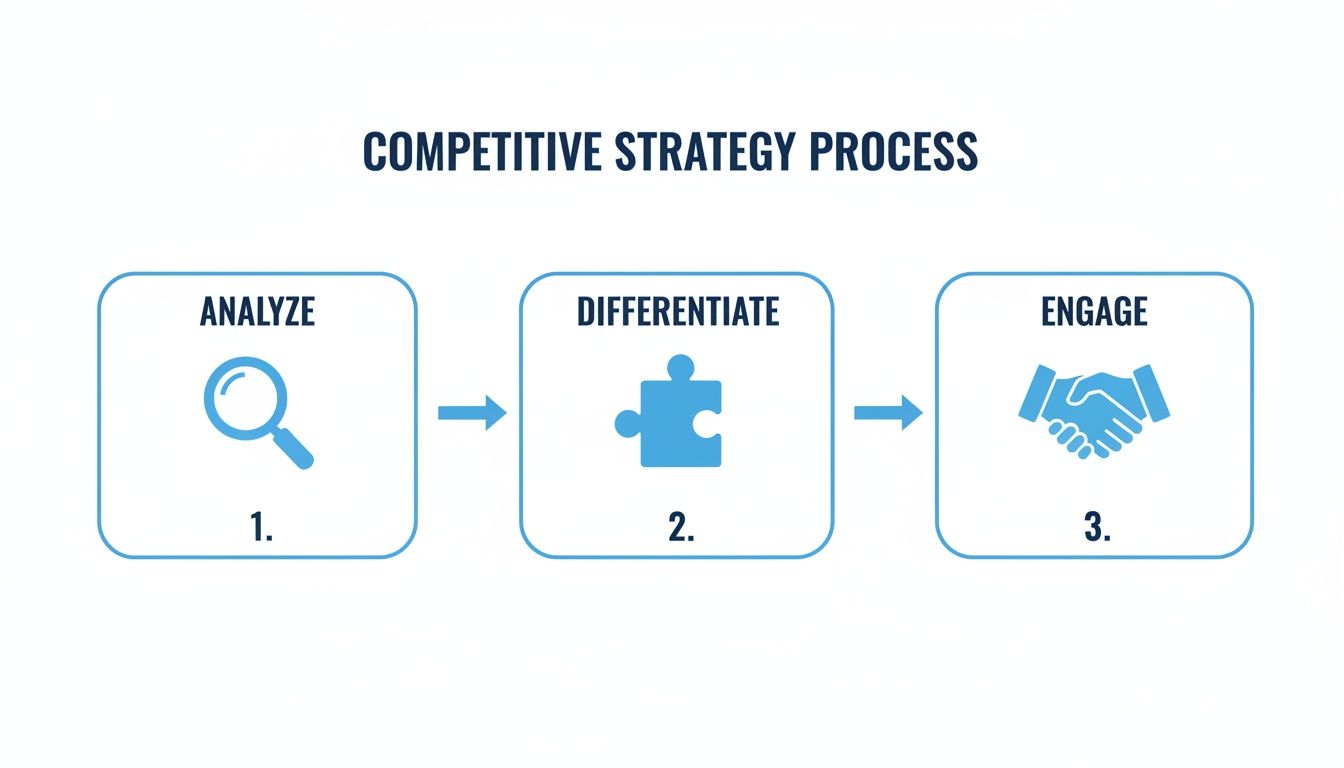
    Diagram showing a three-step competitive strategy process: Analyze, Differentiate, and Engage with icons.

    This simple flow—Analyse, Differentiate, and Engage—is your roadmap for turning competitor intelligence into real opportunities.

    Step 1: Pinpoint High-Potential Prospects

    First things first: you need a hit list. But not just any list. We're talking about a highly targeted group of prospects whose shipping behaviour looks a lot like that of Nippon Express's customers. Think specific commodities, key trade routes, and consistent volumes.

    The smart way to do this is with a logistics intelligence platform. You can filter the entire market based on the exact signals you uncovered in your analysis of Nippon Express.

    • Commodity Focus: Search for companies shipping electronics, pharmaceuticals, or automotive parts using specific HS codes.
    • Trade Lane Activity: Hone in on shippers who are frequently moving goods along the busy intra-Asia and Asia-Europe corridors.
    • Volume and Frequency: Identify businesses with steady, predictable shipping volumes. This is a dead giveaway that they need a reliable logistics partner.

    This approach cuts through the noise and makes sure you’re only talking to companies that are a natural fit. For a more detailed breakdown of this technique, take a look at our guide on finding company import-export data.

    Step 2: Uncover the Right People and Their Pain Points

    Once you have your target companies, you need to find the right person to talk to. Your targets are the Supply Chain Directors, Logistics Managers, and Procurement Heads—the people who lie awake at night worrying about logistics performance.

    Modern sales tools are brilliant for this. They can help you identify these key contacts and even give you a peek into their specific roles and recent company activities. A little digging here helps you understand what's on their mind. Are they under pressure to cut costs? Struggling with on-time delivery? Or are they searching for more flexible shipping solutions?

    The Key Shift: When you align your outreach with a decision-maker's actual pain points, you're no longer making a sales pitch. You're starting a problem-solving conversation. That’s how you get their attention.

    Step 3: Write an Outreach Message They Can’t Ignore

    This is where all your hard work pays off. It's time to put together a message so relevant that it's practically impossible to ignore. Instead of the usual "Hi, I'm from X company…" lead with a specific, data-backed insight.

    For instance, you could open with: "I noticed your company regularly ships electronic components from Singapore to Frankfurt. That's a lane where we specialise in secure, temperature-controlled air freight, often beating standard transit times."

    An opening like that does two things instantly: it proves you've done your homework and establishes your credibility. You're not just another vendor anymore; you're a potential strategic partner who genuinely understands their business. This data-informed approach is your ticket to higher response rates and a much more productive conversation about why you’re a better alternative to their current setup.

    Data-Driven Outreach Strategy Comparison

    The difference between the old way of doing sales and this new, data-driven approach is night and day. One is about volume and luck; the other is about precision and value.

    The table below illustrates this contrast clearly.

    Outreach Step Traditional Method Coreties-Powered Method
    1. Prospecting Buying generic lists or manually searching for companies in a target industry. Filtering for companies with specific shipping volumes, commodities, and trade lanes that match your ideal customer profile.
    2. Finding Contacts Guessing job titles (e.g., "[email protected]") or using broad LinkedIn searches. Pinpointing specific Supply Chain Directors or Procurement Heads using sales intelligence tools.
    3. Initial Outreach Sending a generic email or making a cold call with a standard company pitch. Leading with a highly specific insight about their shipping activity, instantly demonstrating relevance.
    4. Value Proposition "We offer great rates and service." "We can improve your on-time delivery on the Singapore-Frankfurt lane, where you ship frequently."
    5. Follow-Up "Just following up on my last email…" Sharing a relevant case study or market update related to their specific trade lanes or products.
    6. Overall Outcome Low response rates, conversations focused on price, and long sales cycles. Higher engagement, value-driven conversations, and a faster path to building trust and closing deals.

    As you can see, the Coreties-powered method transforms every step of the outreach process. It replaces guesswork with certainty, allowing your sales team to act as informed consultants rather than just another voice in a crowded inbox. This is how you win in a competitive market.

    Answering Your Key Questions

    When you're squaring up against a giant like Nippon Express Singapore, a few key questions always come to mind. Getting straight answers is the first step to building a sales strategy that actually has a chance of working. Let's tackle the big ones.

    Think of this as the strategic cheat sheet. It’s not just trivia; it’s a quick summary of the critical points you can use to find your opening and start making inroads.

    What Are the Main Industries Served by Nippon Express Singapore?

    Nippon Express Singapore doesn't try to be everything to everyone. They’ve zeroed in on high-value, high-stakes sectors. You’ll find their core client base is heavily concentrated in electronics, semiconductors, pharmaceuticals, and automotive parts.

    It’s no accident. Their whole setup—from secure, temperature-controlled warehouses to their compliance protocols—is built to handle the delicate, time-sensitive nature of these goods. This specialisation is where they really shine.

    How Can I Find Shippers with Similar Needs?

    This is where the data comes in. The best way to find companies with the same logistics DNA is to dive into global customs data using a solid intelligence platform. The trick is to filter your search using the same playbook they do.

    By looking for the specific commodity codes (HS codes) and trade routes that Nippon Express dominates, you can build an incredibly focused prospect list. This method lets you pinpoint shippers with identical needs and get right to the logistics contacts who make the decisions.

    What Is Their Strategic Advantage in Singapore?

    Their biggest trump card is their use of Singapore's port and airport as a strategic command centre for the entire South Asia and Oceania region. This isn't just about location; it's about integration.

    This position allows them to offer sophisticated multi-modal transport solutions, like seamless sea-to-air transhipments, that are a huge draw for customers with urgent, high-value cargo. They've turned Singapore into a powerful, flexible hub that smaller players find almost impossible to match.


    Ready to stop guessing and start targeting the right shippers? Coreties transforms global trade data into your next sales opportunity. Find qualified leads that match your ideal customer profile, identify key decision-makers, and craft data-driven outreach that gets results. Learn more at https://coreties.com.
  • Ocean Network Express Pte Ltd: ocean network express pte ltd overview

    Ocean Network Express Pte Ltd: ocean network express pte ltd overview

    You can't miss them. In a sea of otherwise standard blue and grey containers, the bright magenta ships of Ocean Network Express (ONE) really stand out. That vibrant colour isn't just for show; it symbolises a relatively new but powerful force in global shipping.

    For any logistics professional, knowing how ONE came to be is the first step to understanding its unique place in the market. It’s a story of how three of Japan's biggest maritime names joined forces to create something new and formidable.

    The Formation of a Global Shipping Giant

    The creation of Ocean Network Express was born out of necessity. Back in the mid-2010s, the global shipping industry was in a tough spot. Overcapacity was rampant, freight rates were all over the place, and carriers were scrambling to find ways to stay efficient and competitive.

    Facing this pressure, three of Japan’s most established shipping lines decided that working together made more sense than continuing to battle it out. Instead of a race to the bottom, they chose collaboration.

    That pivotal decision came in 2016. The container shipping divisions of Nippon Yusen Kaisha (NYK), Mitsui O.S.K. Lines (MOL), and Kawasaki Kisen Kaisha (K-Line) agreed to merge. This wasn't just a loose alliance; it was a full-blown integration of their container businesses into one unified company, designed to compete on a global scale.

    A Merger Built on Strength

    Each of the founding companies brought a wealth of experience and serious assets to the new venture:

    • Nippon Yusen Kaisha (NYK): A massive global network and a deep history of innovation.
    • Mitsui O.S.K. Lines (MOL): Extensive expertise in energy transport and a strong foothold in key Asian markets.
    • Kawasaki Kisen Kaisha (K-Line): A powerful fleet and deep operational know-how, especially on the critical trans-Pacific trade lanes.

    Here’s a quick look at the company’s vital statistics.

    Ocean Network Express (ONE) At a Glance

    Metric Details
    Official Name Ocean Network Express Pte. Ltd.
    Headquarters Singapore
    Established July 7, 2017
    Operations Began April 1, 2018
    Parent Companies NYK (38%), MOL (31%), K-Line (31%)
    Global Ranking 6th largest container carrier by TEU capacity
    Approximate Fleet Size ~230 vessels
    Approximate TEU Capacity ~1.8 million TEU

    By combining their fleets and service networks, ONE instantly became a major player. The company was officially established in 2017, with commercial operations kicking off on 1 April 2018. They chose Singapore, a major maritime crossroads, as the home for their global headquarters to manage their sprawling network. You can dive deeper into their background on ONE’s corporate history page.

    The birth of Ocean Network Express is a classic case study in strategic consolidation. It shows how long-standing rivals can come together to build a more robust and competitive company that’s better prepared for the rough seas of international shipping. This move allowed them to streamline vessel deployment, cut down on operational overlap, and ultimately offer a much broader service range to customers everywhere.

    Understanding ONE’s Fleet and Service Capabilities

    To really get a handle on Ocean Network Express Pte Ltd, you need to look past the bright magenta branding and dig into the assets that give them their global muscle. Their strength isn't just in the number of ships they have; it’s in a modern, flexible fleet and a broad menu of services built to handle just about any logistical challenge. Think of their assets as a highly specialised toolkit for moving goods around the world.

    When NYK, MOL, and K-Line merged their container shipping arms, ONE instantly became a major player on the world's oceans. Today, they run a fleet of around 230 vessels, with a total capacity closing in on 1.8 million TEU. That kind of scale puts them squarely in the big leagues, giving them the power to compete effectively on all the major trade routes.

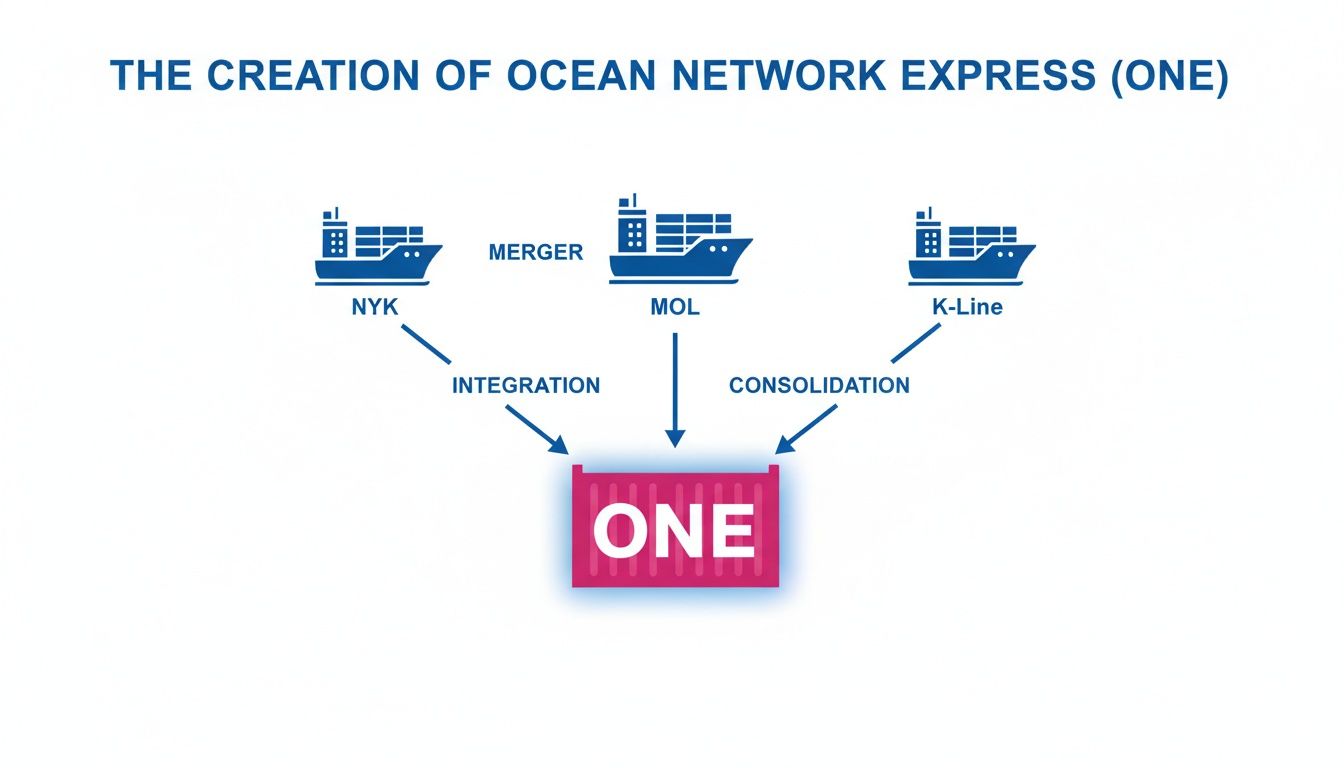
    This diagram shows how the three Japanese shipping giants brought their container divisions together to create the single, unified force that is ONE.

    Diagram illustrating the integration and consolidation of NYK, MOL, and K-Line into Ocean Network Express (ONE).

    As you can see, by pooling their individual resources, the parent companies built a new carrier with far greater scale and market presence than any of them could have achieved on their own.

    A Modern and Eco-Conscious Fleet

    ONE is making some serious moves to modernise its fleet, with a sharp focus on efficiency and sustainability. The company is pumping money into new vessels, including cutting-edge ships designed to be converted to run on next-gen fuels like methanol and ammonia down the line.

    This isn't just about ticking boxes for environmental regulations. These "eco-ships" are engineered for better fuel consumption, which helps keep their operational costs more stable and predictable—a big plus in a volatile market.

    Core Service and Container Offerings

    You can judge a carrier by the variety of cargo it can handle, and this is where Ocean Network Express Pte Ltd really shines. They offer a solid portfolio of services, meaning freight forwarders can almost always find the right fit for their clients' needs.

    Here’s a quick rundown of what they bring to the table:

    • Standard Dry Cargo: ONE has the full lineup of standard boxes, from 20-foot units all the way up to 45-foot High Cubes. Those high cube containers are a lifesaver for anyone shipping light but bulky goods, offering an internal height of up to 2.69 metres to really max out the loading space.
    • Refrigerated (Reefer) Cargo: They’ve got advanced reefer containers equipped with smart temperature monitoring and control. Some of their units even have dual-temperature capabilities, which is a huge advantage for clients in the food and pharmaceutical sectors who need to ship different perishable items in the same container.
    • Specialised and Out-of-Gauge Cargo: For the awkward, oversized, or heavy stuff, ONE provides specialised gear like open-top and flat-rack containers. This offers the flexibility needed for moving machinery, project cargo, and other freight that just won’t fit in a standard box.

    For any logistics pro, knowing these details is key. When you know that ONE has advanced dual-temp reefers or is building a fleet ready for future fuels, you can design smarter, more resilient, and more valuable supply chain solutions for your clients.

    ONE’s Strategic Role in Global Trade Alliances

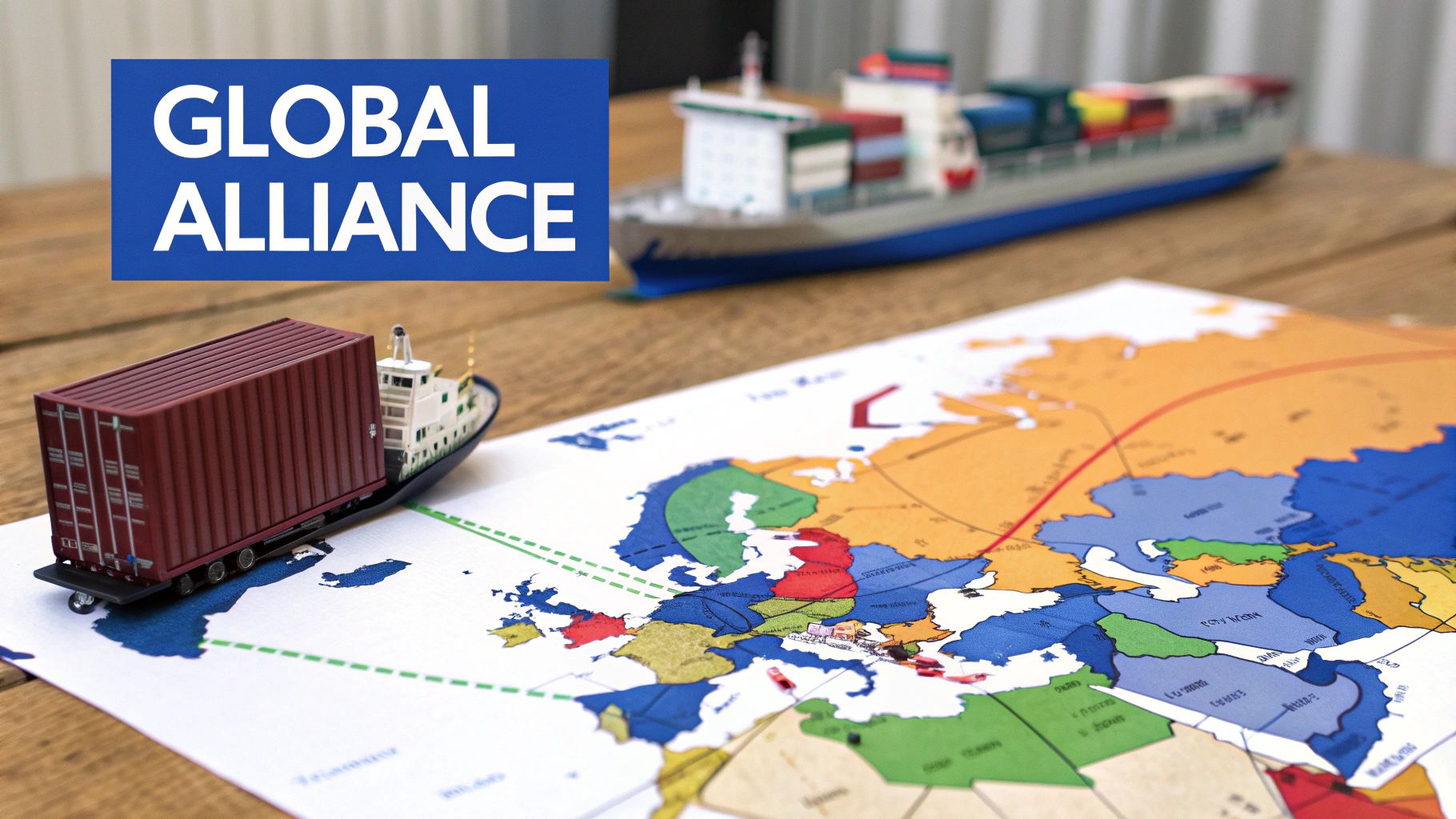
    Miniature container ships on a map of Europe and Asia with 'GLOBAL ALLIANCE' text, symbolizing international trade and logistics.

    In today’s world of container shipping, going it alone is a tough, if not impossible, game. The staggering cost of running a global fleet of vessels makes strategic partnerships the key to survival and growth. This is exactly why Ocean Network Express Pte Ltd isn’t just a member, but a cornerstone of one of the industry's biggest vessel-sharing agreements: THE Alliance.

    The concept is a lot like an airline codeshare agreement. You might book a ticket with one airline but find yourself flying on a partner's aircraft. Shipping alliances operate on the same logic. Member carriers pool their ships, share space, and synchronise schedules. This teamwork allows ONE to offer far more frequent sailings to a much wider array of ports than it could ever hope to cover on its own.

    For any logistics professional, getting your head around this is non-negotiable. It means that when you place a booking with ONE, your cargo could be sailing on a vessel operated by Hapag-Lloyd, HMM, or Yang Ming—the other power players in THE Alliance. Their combined muscle creates a more robust and expansive network that benefits everyone.

    Dominating Key Global Trade Lanes

    The main job of THE Alliance is to offer comprehensive, competitive service loops across the world’s most critical trade routes. This partnership has given ONE a massive footprint on the major East-West lanes. By sharing vessel capacity, the alliance can put bigger, more efficient ships to work, which helps keep operating costs down and, in theory, improves service reliability for shippers.

    Here’s where ONE, as part of THE Alliance, is a real force to be reckoned with:

    • Asia-Europe: This is one of the planet's busiest and most valuable trade corridors. It’s the lifeline connecting Asia's manufacturing giants with the huge consumer markets in Northern Europe and the Mediterranean. The alliance often puts its largest ships—some carrying over 20,000 TEU—on these routes to get the best possible economies of scale.
    • Trans-Pacific: Linking Asia with both the West and East Coasts of North America, this lane is the backbone of countless global supply chains. THE Alliance runs multiple weekly services here, giving shippers a good mix of options and competitive transit times.
    • Trans-Atlantic: While it might not have the sheer volume of the other two, the route connecting Europe and North America is a vital artery for high-value goods. It’s a crucial piece of the alliance's complete global puzzle.

    Being part of THE Alliance effectively transforms Ocean Network Express Pte Ltd from a standalone carrier into a key player in a much larger, integrated global web. For freight forwarders, this is gold. It means you can get creative and build more competitive routing options for your clients by tapping into a combined schedule with more sailings and more port calls. Knowing how to do this—and understanding how other giants like the Mediterranean Shipping Line work within their own networks—is what separates a good logistics partner from a great one.

    Evaluating Financial Stability and Market Standing

    When a freight forwarder hands over a client's high-value cargo, they're not just trusting a carrier's ships and schedules. They're making a bet on that company's financial resilience. A carrier’s financial health is the bedrock of its reliability, impacting everything from whether it can maintain service during a downturn to its ability to invest in a modern, efficient fleet.

    For Ocean Network Express (ONE), this financial picture is painted against the backdrop of the notoriously cyclical and often brutal global shipping industry.

    Looking at a carrier's market standing involves more than just counting vessels. You have to gauge its ability to ride out serious economic storms. The container shipping market is a genuine rollercoaster, with wild swings in freight rates, unpredictable fuel costs, and geopolitical shocks that can change the game overnight. A carrier with a strong balance sheet can absorb these hits without cutting corners on service, making it a far more dependable partner for the long haul.

    A Look at Recent Performance

    Like every other major carrier, ONE's bottom line is directly tethered to these powerful market forces. The post-pandemic period has been a particularly rough ride. We've seen freight rates fall from their historic, dizzying highs while operational costs have stayed stubbornly elevated. This has squeezed margins across the board, forcing carriers to be incredibly disciplined just to stay in the black.

    ONE’s recent results show these pressures in sharp relief. The company reported a net loss of US$88 million for the third quarter of its 2025 fiscal year (covering October to December 2025). This loss came on revenues of US$4,074 million, a clear sign of just how tough the operating environment has become. You can dig into the numbers yourself in ONE's Q3 financial report.

    CEO Jeremy Nixon has been vocal about these headwinds. He’s emphasised a strategic focus on disciplined capacity management and tight cost controls—a clear signal that the company is shifting from simply chasing volume to building more profitable, sustainable operations.

    The Strategic Outlook

    Despite the quarter-to-quarter turbulence, ONE’s financial strategy is clearly aimed at long-term stability. The company is pushing ahead with major investments in state-of-the-art, eco-friendly vessels. These aren't just any ships; they're designed from the ground up to be converted to next-gen fuels like methanol and ammonia.

    These are massive capital expenditures, backed by complex financing deals that show a real vote of confidence from financial institutions in ONE's long-term vision.

    For a freight forwarder, this is a critical piece of the puzzle. It shows that Ocean Network Express Pte. Ltd. isn't just reacting to today's market—it's actively building for a more sustainable and efficient future. A carrier willing to make big investments during challenging times is often one that's built to last, providing a stable foundation for the global supply chains that depend on it.

    How to Partner Effectively with Ocean Network Express

    Two men collaborate, reviewing documents and a laptop, with moving boxes and a 'PARTNER EFFECTIVELY' banner.

    Working with a global carrier like Ocean Network Express Pte Ltd isn't just about asking for a rate sheet. It's about building a solid, working relationship. To do that, you first need to get a handle on their sheer scale and figure out where your business fits into their massive operation.

    Make no mistake, ONE is a giant. In 2023, the company pulled in roughly US$14.5 billion in annual revenue, a number that speaks volumes about its footprint across more than 120 countries. That kind of financial muscle keeps their services running and their network expanding, which creates a huge pool of opportunity for forwarders. You can dig into ONE's financial performance on Statista for more context.

    What does this mean for you? It means that while the head office might sign the big contracts, the real work—securing space, getting answers, and solving problems—happens on the ground with the local teams.

    Initiating Contact and Building Rapport

    Your first move is to pinpoint the right regional ONE office for your key trade lanes. Their global directory is your starting point. When you reach out, being prepared is everything. It’s what separates the serious players from the rate-shoppers.

    Before you pick up the phone or type that first email, get your ducks in a row. Have this information handy:

    • Your Key Trade Lanes: Be specific. Don't just say "Asia-US"; say "Shanghai to Los Angeles" or "Rotterdam to Singapore".
    • Your Anticipated Volumes: Give them a realistic estimate of your weekly or monthly TEU count on those specific routes.
    • Your Cargo Types: Let them know if you're moving standard dry boxes, reefer containers, or oversized project cargo.
    • Your Current Pain Points: What headaches are you having with your current carriers? This tells ONE exactly where they can step in and offer a better solution.

    Coming to the table with this level of detail shows you've done your homework and you mean business. This is how you start building a real connection with the local reps who can get you space during peak season and help you cut through the red tape when things go wrong.

    Mastering ONE’s Digital Tools

    Once you've made contact, the next step is getting comfortable with ONE's digital ecosystem. Their online portal is where almost everything happens, from placing bookings to handling documentation.

    I see it all the time—forwarders who don't take the time to properly learn a carrier's online platform. Mastering the system's quirks, from its booking templates to its tracking tools, will save you an incredible amount of time and prevent mistakes that can cost real money.

    Get your team trained up on their e-commerce platform. They need to be fluent in submitting bookings, filing shipping instructions (SIs), and tracking containers online. When you use their tools efficiently, you’re not just making your own life easier; you're proving to ONE that you’re a competent, reliable partner. A solid grasp of the necessary import-export documentation for your company will also make every transaction that much smoother.

    Turning Carrier Knowledge Into a Competitive Edge

    It’s one thing to know a carrier’s sailing schedule. It's another thing entirely to truly understand what makes them tick. For a company like Ocean Network Express Pte Ltd, that means connecting the dots between its historic merger, its brand-new fleet, and its pivotal role in a major global alliance.

    This isn't just trivia for shipping nerds. It's the kind of deep knowledge that gives you a real competitive advantage. When you get ONE's backstory, you see how its DNA—a fusion of three legendary Japanese shipping lines—drives a culture of precision and long-term thinking. This insight helps you anticipate how they operate.

    Knowing their fleet isn't just about vessel names and TEU counts. It's about knowing you can confidently match a client's high-value refrigerated cargo to their advanced reefer container technology, adding tangible value beyond a simple price quote.

    From Insight to Action

    This kind of carrier intelligence is where the real business development magic happens. Imagine being able to talk specifics about ONE’s role in THE Alliance or their dominance on the Trans-Pacific and Asia-Europe trade lanes. You immediately stop being just another vendor quoting a rate and become a strategic advisor.

    For logistics professionals, deep carrier knowledge is the ultimate differentiator. It lets you build smarter, more resilient supply chains, see capacity crunches coming, and forge genuine, consultative partnerships with your clients.

    This is what fuels smarter prospecting. You can pinpoint shippers whose cargo flows perfectly align with ONE's network strengths and walk into a sales call with a solution that’s already half-formed in your mind.

    This is what separates the forwarders who react to the market from those who proactively shape their own success. For more tips on growing your business, check out our guide on how to find new clients for your import-export firm. It’s how you turn information into revenue and build a reputation that stands out.

    Your Questions About ONE, Answered

    When you're dealing with a global carrier like Ocean network express pte ltd, a few key questions always seem to pop up. Here are some straightforward answers to help you get the information you need, fast.

    Who's Actually Behind the Wheel at ONE?

    You can't buy shares of Ocean Network Express on the stock market. It’s a privately-owned joint venture, born from a strategic merger of the container shipping arms of Japan’s three legacy carriers.

    Here’s how the ownership breaks down:

    • Nippon Yusen Kaisha (NYK): The majority shareholder with a 38% stake.
    • Mitsui O.S.K. Lines (MOL): Holds a 31% stake.
    • Kawasaki Kisen Kaisha (K-Line): Also holds a 31% stake.

    What this really means is that ONE's strategy is a blend of three very distinct, very experienced maritime giants. Their combined expertise is baked right into the company's DNA.

    What’s the Big Deal with the Magenta Colour?

    Let's be honest, in a sea of blues, greys, and greens, those vibrant magenta ships and containers are hard to miss. That was exactly the point. The choice was a deliberate branding move to create an identity that would stand out in any port around the world.

    The bold magenta colour was chosen to signal a fresh start after the merger. It’s a visual break from the old guard, reinforcing ONE's slogan, "AS ONE, WE CAN," by giving a single, powerful identity to the combined fleets.

    The magenta branding is more than just a colour; it’s a constant visual reminder of ONE's unique origin story and its commitment to standing out in the global shipping landscape.

    What is THE Alliance?

    THE Alliance is one of the major vessel-sharing agreements in global shipping, and Ocean Network Express Pte Ltd is a core member. They operate alongside Hapag-Lloyd, HMM, and Yang Ming.

    Think of it as a massive codeshare agreement, but for container ships. This partnership is crucial because it lets ONE and its partners pool their ships and resources together. For freight forwarders, this translates into more frequent sailings and a much wider range of port coverage than any single carrier could offer on its own. It means more options and more flexibility for your cargo.

    Where Can I Find Their Shipping Schedules?

    The single best source for up-to-date sailing information for Ocean Network Express Pte Ltd is their official website, one-line.com. Their online portal is pretty robust and lets you search for schedules in a few different ways:

    • By a specific point-to-point route.
    • By looking up calls at an individual port.
    • By tracking a specific vessel by name.

    For anyone planning shipments, using this tool is non-negotiable for getting accurate departure dates, estimated arrivals, and transit times.


    Ready to turn carrier knowledge into qualified leads? Coreties uses global trade data to help freight forwarders find and connect with high-value shippers who rely on carriers like ONE. Find your next customer faster.

  • Your Guide to the Mediterranean Shipping Line Network

    Your Guide to the Mediterranean Shipping Line Network

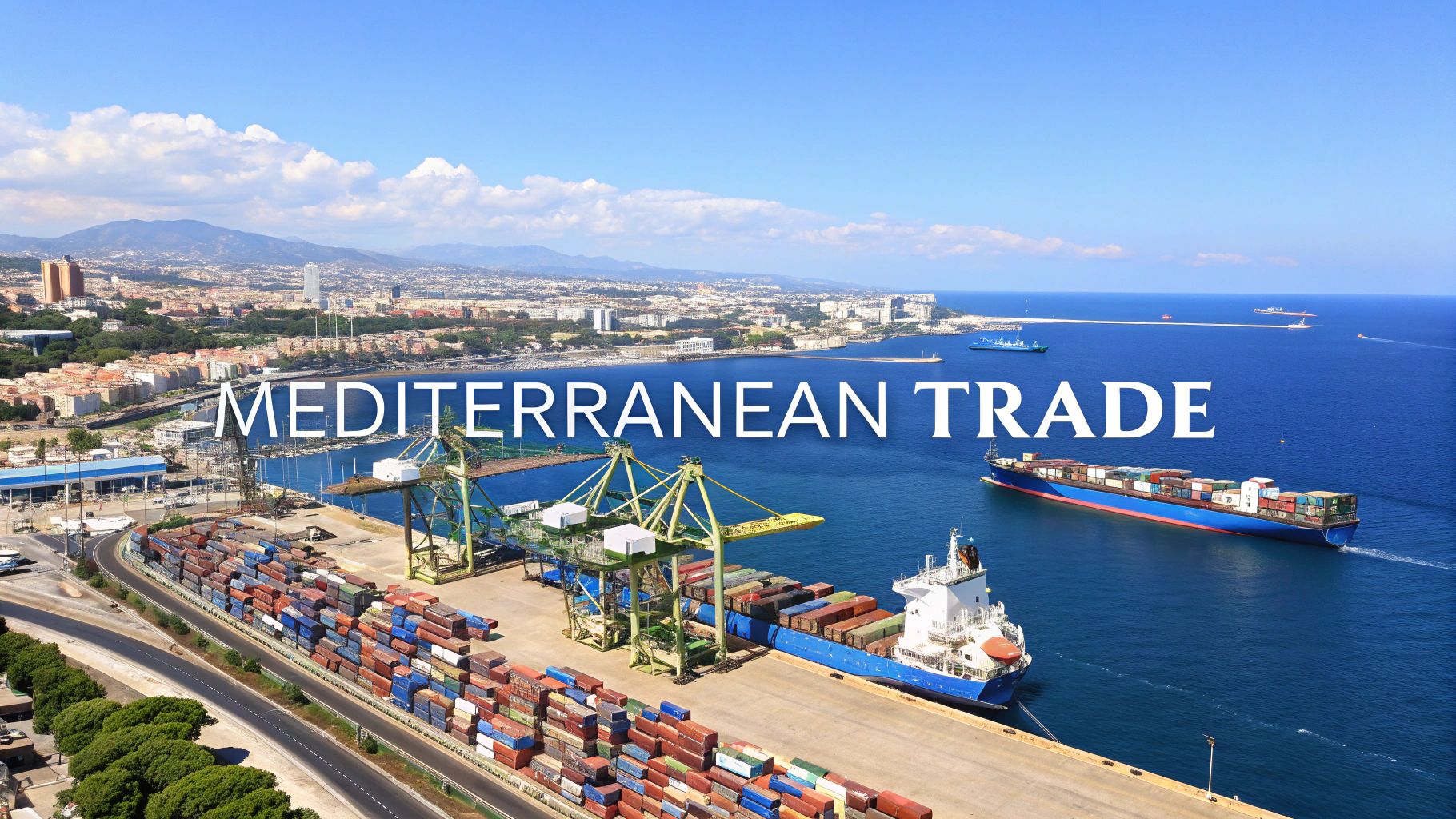
    A Mediterranean shipping line is essentially any carrier running sea freight services that touch the Mediterranean Sea, connecting this historic body of water to the rest of the world. Think of the Med not just as a sea, but as a crucial maritime superhighway linking the economic powerhouses of Asia, Europe, and Africa. For any freight forwarder, getting a firm handle on this region isn't just useful—it's key to unlocking some serious commercial opportunities.

    Understanding the Mediterranean Shipping Ecosystem

    The Mediterranean is far more than just a picturesque body of water; it's a dynamic, high-stakes arena for global trade. Picture it as a massive roundabout for international shipping. Huge container vessels steaming in from Asia meet a web of regional ships crisscrossing between Europe and North Africa.

    This convergence creates a complex, yet incredibly rewarding, market. For logistics pros, mapping out this ecosystem is the first step to building a solid business development strategy.

    At its heart, this shipping ecosystem is shaped by a few core traits:

    • A Strategic Crossroads: Its geography puts it right at the intersection of major East-West and North-South trade routes, with the Suez Canal corridor acting as the main artery.
    • Diverse Players: You have the global giants like MSC and Maersk dominating the major lanes. At the same time, a whole host of specialised regional carriers provide the vital feeder services that connect to smaller, niche ports.
    • High-Volume Hubs: A network of enormous transhipment ports—think Valencia, Algeciras, and Piraeus—function as the nerve centres, sorting and redirecting millions of containers every year.

    Aerial view of a bustling Mediterranean port with cargo ships, cranes, and containers.

    The Mix of Global Power and Local Expertise

    What really makes this region fascinating is the interplay between global scale and local specialisation. On one side, you have the behemoth carriers orchestrating massive, intercontinental voyages with clockwork precision. Their operations are a masterclass in efficiency and scale.

    Take MSC’s expansion in Asia, for example. It’s a perfect case study of how a global player strategically builds a regional stronghold to feed its major trade lanes. When MSC set up its regional headquarters in Singapore back in April 1996, it was a pivotal move. By 2021, it had grown to over 50 offices across 10 Asian markets, creating a powerful network that channels cargo directly into its vital Asia-Mediterranean-Europe services.

    On the other side of the coin, you have smaller, more agile carriers. These guys thrive by offering tailored services that the giants might overlook, connecting the major hubs to hundreds of smaller ports scattered across Italy, Greece, Turkey, and North Africa.

    For freight forwarders, this dual structure presents a clear opportunity. You can partner with global lines for long-haul reliability and leverage regional specialists for last-mile connectivity, creating a truly comprehensive service offering for your clients.

    A Vibrant Territory for Business Growth

    At the end of the day, the Mediterranean is a living, breathing landscape of moving cargo, bustling ports, and non-stop commercial activity. Every single container is a potential client, and every trade lane is a new business opportunity.

    For anyone in the import and export business, learning to spot the patterns within this ecosystem is the bedrock of successful prospecting. That constant flow of goods is a goldmine of data for pinpointing companies that desperately need reliable logistics partners. By getting to know the key players and the dominant trade flows, you can strategically position yourself to capture a piece of this thriving market.

    Getting to Know the Major Players on Mediterranean Routes

    The Mediterranean shipping network isn’t some chaotic free-for-all; it’s a highly organised, competitive space where a handful of global titans call the shots. These carriers don't just pass through the region—they set its commercial rhythm. They invest heavily in ports, deploy their largest vessels, and ultimately shape the flow of global trade. For any freight forwarder, understanding who these players are and what they do best is day-one knowledge.

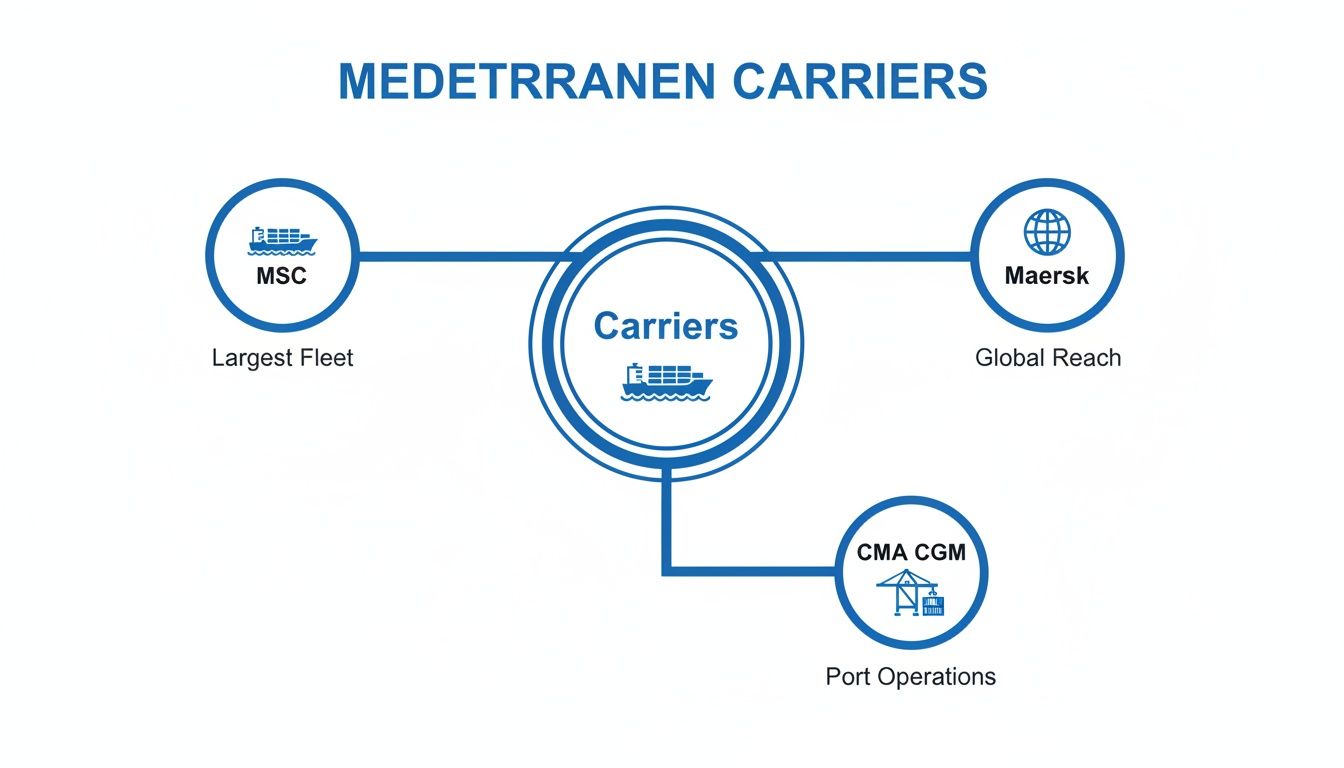
    Think of companies like the Mediterranean Shipping Company (MSC), Maersk, and CMA CGM as the architects of the Med's maritime highways. They are the undisputed leaders. Their massive fleets and sprawling global networks mean they can connect the Mediterranean to pretty much any major market on the planet. They form the backbone of the critical East-West trade lanes that act as a conveyor belt for goods moving between Asia and Europe.

    But it’s not a complete monopoly. A second, dynamic tier of regional and specialised carriers thrives by filling the gaps left by the mega-carriers. These smaller, more agile lines are the lifeblood of the intra-Med network, providing essential feeder services that link major transhipment hubs like Valencia and Piraeus with hundreds of smaller ports across Italy, Greece, North Africa, and the Black Sea.

    The Global Titans of the Med

    When you start digging into the major container routes, three names pop up again and again. Their strategic moves send ripples across the entire supply chain, affecting everything from freight rates to port congestion.

    • Mediterranean Shipping Company (MSC): With deep roots in the Mediterranean, MSC has a natural home-field advantage. It runs one of the world's largest container fleets and offers unmatched port coverage throughout the region. MSC is famous for its aggressive growth and massive investments in terminal infrastructure, which gives it incredible control over its operations.

    • Maersk: The Danish giant is a force in global logistics, and its Mediterranean presence is no different. Maersk’s game is all about reliability and integrated, door-to-door solutions that go far beyond the port gates. You can see their proactive mindset in action when they strategically reroute services away from congested hubs like Rotterdam to protect their schedules.

    • CMA CGM: This French carrier has a long history in the Mediterranean. It uses its strategic hub in Marseille-Fos as a powerful springboard into key European and African markets. CMA CGM is particularly dominant on the Asia-Europe trade lane and has earned a reputation for its vast network and customer-focused service options.

    These three carriers, along with their alliance partners, own a huge slice of the market. And their scale matters. Recent data shows that during peak season, a vessel delay at a major hub like Antwerp can balloon from 32 hours to 44 hours—a 37% jump. How these titans handle such disruptions directly impacts whether you can deliver on your promises to your clients.

    Specialised Services and Regional Experts

    Beyond the big three, a whole ecosystem of other carriers has carved out important niches. For example, some lines are known for their superior reefer (refrigerated container) capacity, making them the automatic choice for shipping perishable goods like fruit and pharmaceuticals from Spain or Italy. Others might offer the best, most reliable connections to less-frequented ports in the Eastern Mediterranean or North Africa.

    This is a forwarder’s secret weapon. Understanding these specialisations lets you move beyond a one-size-fits-all approach and build truly optimised shipping solutions that perfectly match a client's cargo and destination.

    Knowing which carrier excels with hazardous materials, or which one has the most dependable feeder link to a small Greek island, can be the difference between a happy client and a logistical nightmare. This kind of deep market knowledge is what elevates you from a simple booking agent to a truly valuable logistics partner.

    Top Carriers on Mediterranean Shipping Lanes At a Glance

    To make smart partnership decisions, it helps to see how the major players stack up side-by-side. Each carrier brings a unique set of strengths to the table, and the best choice nearly always depends on the specific demands of your shipment.

    This table offers a quick comparison of their key attributes.

    Carrier Name Primary Mediterranean Trade Lanes Key Regional Hubs Noteworthy Specialisations
    MSC Asia-Europe, Intra-Med, Transatlantic Gioia Tauro, Valencia Extensive feeder network, large vessel capacity
    Maersk Global (all major lanes), North-South Algeciras, Tangier Med Integrated logistics, schedule reliability, digital solutions
    CMA CGM Asia-Europe, Europe-Africa Marseille-Fos, Malta Strong reefer services, extensive African network
    Regional Carriers Intra-Mediterranean, Black Sea connections Piraeus, Istanbul, Genoa Niche port access, flexible scheduling, specialised cargo types

    Ultimately, having a clear picture of each carrier's strengths, weaknesses, and specialities is crucial. It empowers you to select the right partner not just for one shipment, but to build a resilient and effective strategy for all your Mediterranean business.

    Mapping Key Trade Lanes and Strategic Ports

    Think of the Mediterranean Sea not as a single body of water, but as a complex web of commercial arteries. For a freight forwarder, knowing these routes is like a taxi driver knowing a city's main roads and back alleys. It’s fundamental to building supply chains that are not just cheap, but also smart and resilient.

    These trade lanes are carved out by the forces of global economics, connecting continents and channelling trillions of dollars in goods. They're the invisible conduits that bring your smartphone from Asia to a shop in Europe or move Spanish olives to markets across the world.

    When you trace these paths, you start to see the logic behind why certain ports have become so powerful. The entire system is built for efficiency, speed, and connectivity, with each route serving a very specific purpose.

    The Dominant East-West Corridor

    The most important artery by far is the East-West trade lane. This is the maritime superhighway linking Asia with Europe, and the Suez Canal is its main gateway.

    Vessels stream in from the Red Sea and head west, making strategic stops at massive transhipment hubs along the way. This route carries an incredible volume of finished goods—everything from electronics and clothing to car parts—all originating from manufacturing hubs in China, Vietnam, and Southeast Asia.

    For any Mediterranean shipping line, mastering this corridor is non-negotiable. It's the highest-volume, highest-value route and the absolute focus for global giants like MSC, Maersk, and CMA CGM.

    The diagram below highlights the major carriers that command these vital trade lanes.

    Diagram illustrating three major Mediterranean shipping carriers: MSC, Maersk, and CMA CGM, highlighting their strengths.

    This just goes to show how a few key players anchor the region's shipping network, each playing to their own unique strengths and port strategies.

    Crucial North-South and Intra-Med Routes

    While the East-West lane grabs the headlines, the North-South corridors are the workhorses of regional trade. These routes connect the industrialised nations of Europe with the booming markets and resource-rich economies of North Africa.

    The traffic here flows both ways. Northbound, you'll see a steady stream of commodities and raw materials. Southbound, the ships are filled with machinery, vehicles, and consumer goods, fuelling development across the African continent.

    On top of that, a dense web of intra-Mediterranean routes acts as the region's local delivery network. These services, often run by specialised regional carriers, connect smaller ports and islands, making sure cargo from the big hubs gets to its final destination. This network is absolutely essential for getting goods distributed efficiently across all the different economies lining the sea.

    Spotlighting the Nerve Centre Ports

    Over time, a few ports have emerged as the undisputed nerve centres of the Mediterranean. These aren't just stops; they are highly sophisticated logistics hubs engineered for maximum efficiency. Their importance comes from a perfect mix of geography, world-class infrastructure, and seamless inland connections.

    Three ports, in particular, stand out as the region’s premier transhipment hubs:

    • Port of Algeciras (Spain): Sitting right at the mouth of the Med near the Strait of Gibraltar, Algeciras is the first and last major European call for ships on the East-West lane. Its location makes it a natural sorting centre for cargo moving between Europe, the Americas, and West Africa.

    • Port of Valencia (Spain): Another Spanish powerhouse, Valencia offers incredible container handling capacity and fantastic road and rail links deep into the Iberian Peninsula and the rest of Europe. It's a critical gateway for imports heading to European consumers.

    • Port of Piraeus (Greece): Perfectly positioned in the Eastern Med, Piraeus has become the primary entry point for Asian goods destined for Central and Eastern Europe. Its modern infrastructure allows for the lightning-fast transfer of containers from huge ocean liners to smaller feeder vessels.

    These hubs act like giant sorting machines. A single massive vessel might drop off thousands of containers, which are then rapidly reloaded onto dozens of smaller ships, each heading to a different final destination. This model squeezes every bit of efficiency out of the primary Mediterranean shipping line services.

    Understanding what each port does best is critical. If a client needs to get goods into Central Europe, knowing that Piraeus has strong rail connections can shave days off the transit time. Likewise, for shipments involving Africa, Algeciras often offers the most direct route. This kind of granular knowledge is vital, especially when navigating complex setups like those managed by an importer of record.

    Navigating Operational Challenges and Opportunities

    Knowing the key players and trade lanes is one thing, but thriving in the Mediterranean shipping market is a whole different ball game. It’s about getting ahead of the real-world operational and commercial curveballs that can derail even the most carefully laid plans. We’re talking about everything from port logjams to the ripple effects of regional instability.

    Mastering these factors is what separates a good freight forwarder from a truly great one. It’s about shifting from a reactive "firefighting" mode to a proactive, strategic mindset. That's how you advise clients with confidence and protect your margins in a market famous for its volatility. This practical knowledge is your best defence against the unexpected.

    Tackling Port Congestion and Delays

    Port congestion is a constant headache across the major Mediterranean hubs. When peak season hits, delays can snowball in a heartbeat. Just look at recent data from European ports, where wait times in hubs like Antwerp shot up from 32 hours to 44 hours in a matter of weeks—that’s a 37% jump. Delays like that create a domino effect, throwing vessel schedules, inland transport, and final delivery dates into chaos.

    And this isn't just a local problem. The global transhipment hubs feeding into the Mediterranean are just as critical. Take the MSC-PSA Asia Terminal (MPAT) in Singapore, a massive cornerstone of MSC's Asian operations. Since growing from three berths in 2006 to seven by 2021, MPAT has become a mega-hub cranking through millions of TEUs a year. Its incredible efficiency, which keeps vessel dwell times under 1.5 days, is what keeps the vital Asia-Med trade lane moving. Any bottleneck there would send shockwaves across the entire network.

    For forwarders, staying ahead of these logjams means you have to:

    • Monitor Port Performance: Keep a close eye on turnaround times and be aware of any potential labour disputes at key hubs like Valencia, Algeciras, and Piraeus.
    • Build Route Flexibility: Always have a Plan B. If Valencia is jammed, could a smaller Spanish port or even Marseille work as a temporary fix?
    • Communicate Proactively: Tell your clients about potential delays before they become a problem. Better yet, come to them with a solution already in hand.

    Managing Commercial Volatility

    The commercial side of Mediterranean shipping is just as turbulent. Freight rates can swing wildly depending on seasonal demand, vessel capacity, and what's happening in the global economy. For example, the summer peak for agricultural exports out of Spain and Italy can make reefer containers scarce and send prices through the roof.

    Managing this volatility requires a sharp commercial focus. It’s not just about finding the lowest price today, but about securing stable, reliable service for your clients over the long term.

    What’s more, the moves made by major carrier alliances (like 2M or Ocean Alliance) have a huge impact. A decision by an alliance to skip a port call to get back on schedule can leave your client's cargo high and dry. Staying on top of these service changes is absolutely crucial for managing risk and giving your customers accurate transit times.

    A smart approach mixes a few key strategies:

    • Diversify Your Carrier Relationships: Never put all your eggs in one basket. Working with a mix of global giants and smaller, niche regional lines gives you far more options when capacity gets tight.
    • Use Rate Management Tools: Platforms that provide real-time rate data are essential. They help you quote competitively while making sure you aren't sacrificing your own margins.
    • Understand the Seasonal Rhythms: Know the market's pulse. For those agricultural exports, you need to be booking reefer space well in advance to dodge last-minute price shocks and equipment shortages.

    How to Find Shipper Leads on Mediterranean Lanes

    Knowing the carriers and trade lanes crisscrossing the Mediterranean is a great start, but how do you turn that market intelligence into actual business? For a freight forwarder, the constant hum of activity at ports like Valencia, Piraeus, and Algeciras is more than just commerce—it’s a live, flowing database of potential clients. The trick is knowing how to tap into it.

    This is where a modern approach to prospecting makes all the difference. Forget cold calls and dusty contact lists. Today’s savvy logistics teams use customs data to see exactly which companies are moving goods along specific Mediterranean routes. It transforms lead generation from a guessing game into a precise, data-backed strategy, letting you focus only on prospects who have a proven need for your services.

    From Data to Deals: A Modern Playbook

    The old way of finding leads was a grind. You'd spend hours manually searching for companies, guessing who the right contact might be, and firing off generic emails that mostly went unanswered. Now, platforms built for logistics prospecting can do the heavy lifting, turning raw trade data into qualified, ready-to-contact leads in a fraction of the time.

    This technology allows you to sift through the entire universe of shippers and zero in on your ideal clients. You can filter for companies based on criteria that actually matter to your business.

    • By Port of Call: Instantly pull up a list of every company that has recently moved cargo through key Med hubs like Genoa or Marseille.
    • By Commodity Type: Hone in on businesses shipping specific products, whether it's automotive parts out of Turkey or agricultural goods from Spain.
    • By Shipping Line: Find companies that frequently use a particular Mediterranean shipping line, giving you a perfect, informed way to start a conversation.

    This is what it looks like in practice—filtering a massive database of customs records to surface highly relevant shipper leads based on their real-world shipping patterns.

    A laptop displaying business analytics, a notebook, and pen on a wooden desk with a 'FIND SHIPPER LEADS' search bar.

    By using filters like these, you’re no longer just finding random companies. You're discovering businesses with a clear, active need for freight forwarding on the very lanes you specialise in.

    Pinpointing the Right Decision-Makers

    Of course, finding the right company is only half the battle. The next, crucial step is getting in front of the right person—the logistics manager, supply chain director, or procurement head who actually signs the contracts. A powerful prospecting platform takes the guesswork out of this by integrating contact data directly with the customs information.

    This means once you’ve identified a promising shipper, you can instantly find the names, job titles, LinkedIn profiles, and verified email addresses of the key decision-makers. It’s a game-changer, saving you countless hours of manual research and ensuring your pitch actually lands in the right inbox.

    The goal is to shift from broad, impersonal outreach to sharp, data-backed conversations. Mentioning a specific trade lane they use or a recent shipment shows you've done your homework and immediately signals that you understand their business.

    This targeted approach dramatically boosts your chances of getting a response. If you're looking to build out your operation, you can learn more in our guide to starting an import-export firm.

    Crafting Outreach That Converts

    With a list of qualified leads and their direct contact info, the final piece is writing a message that actually gets read. This is where your market knowledge and data insights truly shine. Instead of a generic "we can handle your shipping" email, you can lead with undeniable value.

    For example, since Mediterranean Shipping Company opened its Singapore office in 1996, it has become a cornerstone of Southeast Asia's logistics network. As the port handled a record 39.9 million TEU in 2024, Singapore's customs data has become a goldmine. Forwarders can see that MSC-handled shipments are up 15% year-over-year and then filter for leads on high-growth lanes like SG-Mediterranean (which makes up 12% of MSC's local traffic). Armed with this insight, you can send hyper-targeted emails to decision-makers in booming trade corridors. You can read more about MSC's data and its potential on Datalastic.com.

    Here’s a simple, three-step framework for your outreach:

    1. Reference a Specific Data Point: Kick things off by mentioning their activity on a Mediterranean lane (e.g., "I noticed your company recently shipped from Valencia…").
    2. Offer a Clear Value Proposition: Connect their activity to a solution you provide (e.g., "…we specialise in that lane and have helped similar companies cut transit times by 15%.").
    3. End with a Simple Call to Action: Make it easy for them to say yes (e.g., "Would you be open to a brief chat next week to discuss your current setup?").

    By combining powerful data tools with smart, personalised communication, you can transform your prospecting efforts on every Mediterranean shipping line and build a predictable pipeline of new business.

    Your Top Questions About Mediterranean Shipping, Answered

    Jumping into any major trade region will always stir up a few questions. The Mediterranean, with its unique mix of global superhighways and complex local networks, is certainly no different. If you're a freight forwarder looking to really get a handle on this market, getting clear, straightforward answers is the first step to building a winning strategy and advising your clients like a pro.

    This section gets right to the point, tackling some of the most common questions about operating on a Mediterranean shipping line. We'll cover everything from the key ports to the commercial realities on the ground, giving you practical insights you can use immediately. Think of it as your quick-reference guide for sharpening your focus and making smarter decisions.

    Which Are the Biggest Transhipment Hubs in the Mediterranean?

    When it comes to transhipment, three ports stand out as the undisputed heavyweights and strategic nerve centres of the Mediterranean: the Port of Valencia and the Port of Algeciras in Spain, and the Port of Piraeus in Greece. These three hubs truly form the backbone of the region's container logistics.

    It's no accident they're on top. The major carriers all favour them for a few critical reasons: they have deep-water berths that can handle the biggest vessels on the water, they're kitted out with advanced cargo-handling tech, and they run massive feeder networks. These networks are the real secret sauce, acting like spokes on a wheel to connect the hubs with hundreds of smaller ports all over the Med, North Africa, and the Black Sea.

    Their geographic locations are also perfect, acting as natural pivot points for cargo flowing between Asia, Europe, and the Americas. For a freight forwarder, tapping into these hubs unlocks a huge number of routing options. But be warned—it also means you need to plan carefully to get ahead of potential congestion, which can snarl things up fast during peak season.

    How Do Carrier Alliances Affect My Options on Mediterranean Shipping Lines?

    Carrier alliances like 2M, Ocean Alliance, and THE Alliance have a massive impact on services across every Mediterranean route. By letting carriers pool their resources and share vessel space, these partnerships offer some serious upsides, like much broader port coverage and more frequent sailings than any single line could ever manage on its own.

    For you as a freight forwarder, that translates directly into more choices and, often, better rates for your clients. You get to tap into a combined network with incredible reach. The flip side, however, is that this consolidation can water down the service differences between carriers in the same alliance. The vessel might be operated by one line, but it’s probably carrying boxes for all its alliance partners.

    This tight integration also creates a shared risk. A major disruption hitting one member—say, a port strike or a big vessel delay—can trigger a domino effect, throwing off the schedules of every partner on that service loop. It's crucial to know who's allied with whom when you're quoting options to a shipper so you can manage their expectations.

    What Are the Primary Commodities Shipped on Mediterranean Routes?

    The cargo mix flowing through the Mediterranean is incredibly diverse, which makes sense given the varied economies it connects. You can generally break down the commodity flows by direction, which is a great way to understand what the market needs.

    • Eastbound traffic leaving Europe for Asia and beyond is often packed with high-value manufactured goods, chemicals, pharmaceuticals, and specialised machinery.
    • Westbound traffic coming in from Asia is dominated by consumer electronics, clothing, furniture, toys, and all sorts of other finished goods heading for European shelves.
    • Intra-Mediterranean trade is full of agricultural products. We're talking olive oil from Greece, wine from Italy, and fresh produce from Spain, plus a lot of automotive parts moving between different manufacturing plants.
    • North-South trade between Europe and Africa typically sees commodities like cocoa, oil, and minerals heading north, with vehicles, industrial equipment, and consumer goods flowing south.

    Knowing these cargo flows is more than just trivia. For a forwarder, it's a prospecting roadmap. It helps you target specific industries and companies that you know have a real need for logistics services on these lanes.

    How Can I Find Reliable Routing Information for Mediterranean Services?

    Let's be honest: manually checking every carrier's website for schedules and routes is a slow, painful, and outdated way of doing things. In a market where speed and accuracy give you the edge, you need a much better solution to stay in the game.

    The most effective way forward is using logistics platforms that pull in multi-carrier routing insights. For example, tools that plug into services like Routescanner give you a complete picture of the market on a single screen. This lets you compare end-to-end routing options—including transit times, service frequencies, and intermodal connections—across different shipping lines all at once.

    A tool like this gives you the power to build competitive and solid quotes for shippers using real-time, consolidated data. It's worlds better than trying to piece everything together from ten different sources, helping you answer client requests faster and with a lot more confidence.


    Ready to transform your prospecting strategy on Mediterranean shipping lines? With Coreties, you can access verified customs data to find high-value shippers, identify key decision-makers, and craft data-driven outreach that gets results. Stop guessing and start connecting with qualified leads today. Discover your next opportunity at Coreties.

  • A Freight Forwarder’s Guide to Harmonized Code for Clothing

    A Freight Forwarder’s Guide to Harmonized Code for Clothing

    If you’ve ever wondered how customs officers worldwide can tell a container full of t-shirts from one packed with dress shirts, the answer is the Harmonized System (HS) code. For clothing, this universal numeric code is the key to smooth international shipping.

    The most important thing to get right from the start is the difference between Chapter 61, which covers knitted or crocheted garments, and Chapter 62, for woven garments. Think t-shirts versus jeans. Nailing this basic distinction is your first line of defence against expensive shipping headaches.

    What Are Harmonized Codes for Clothing?

    Imagine an HS code as a product's universal passport. It's a standardised language that lets a customs officer in Singapore and another in the United States know exactly what's inside a box without ever having to open it. For freight forwarders dealing with apparel, getting the harmonized code for clothing right isn't just a technicality—it’s absolutely central to your business.

    Getting it wrong kicks off a nasty domino effect.

    • Shipment Delays: The wrong code immediately raises a red flag, often leading to manual inspections that leave cargo sitting at the port.
    • Incorrect Duty/Tax Calculation: The code is what determines the Goods and Services Tax (GST) and any other duties owed.
    • Financial Penalties: Customs can, and will, issue fines for non-compliance, which directly eats into your profits.
    • Damaged Client Trust: Shippers count on your expertise for a seamless process. A simple coding error can quickly break that trust.

    Here in Singapore, the global 6-digit codes are expanded into the 8-digit ASEAN Harmonised Tariff Nomenclature (AHTN). This system, managed by Singapore Customs, adds an extra layer of detail for trade within the region. For instance, a simple cotton T-shirt falls under HS code 6109.10, while a pair of women's woven jeans is classified under 6204.62.

    This level of precision is vital for clearing the immense volume of goods moving through hubs like PSA Singapore Terminals, which saw over 37 million TEUs in 2023. Understanding these codes is also crucial for calculating GST liability, currently set at 9% for most clothing imports. You can learn more about how Singapore applies these codes to manage its imports and exports.

    At its core, the entire HS code system for clothing hinges on one fundamental question: Is the fabric knitted or woven? That single detail decides which chapter—and which set of rules—applies to your garment.

    To make this crystal clear, here’s a quick guide to the two main chapters for apparel.

    Quick Guide to Clothing HS Code Chapters

    The table below breaks down the primary distinction between the two main HS chapters for clothing. Use it as a quick reference to guide your initial classification.

    HS Chapter Type of Clothing Common Examples
    Chapter 61 Knitted or Crocheted T-shirts, sweaters, sweatshirts, polo shirts, leggings
    Chapter 62 Woven (Not Knitted) Jeans, dress shirts, suits, blouses, trousers, jackets

    Knowing the difference between these two chapters is the foundation of accurate apparel classification. It’s the starting point from which all other details, like material and garment type, follow.

    How to Read an HS Code Like a Pro

    At first glance, a harmonized code for clothing can look like a random string of numbers. But it’s not random at all. Each digit tells a detailed story about the garment, much like how a postal address can guide a letter from a broad region right down to a specific doorstep. Learning to read this structure is the key to classifying apparel with confidence.

    The entire system is built on a global standard from the World Customs Organization (WCO). This foundation is a 6-digit code that’s recognised by customs authorities worldwide, giving everyone a consistent starting point.

    Of course, countries often need more detail. In Singapore, that 6-digit base is extended to an 8-digit ASEAN Harmonised Tariff Nomenclature (AHTN) code. Those extra two digits provide more regional specificity, which helps fine-tune duty calculations and trade analysis right here in Southeast Asia.

    Breaking Down the Code Structure

    Think of an HS code as a family tree. It starts with a broad ancestor (the Chapter) and gets more specific with each new generation (the Heading and Subheading). Every pair of digits adds another layer of crucial detail.

    Here’s how the first six digits break down:

    • First two digits (Chapter): This is the highest level, identifying the broad category. For clothing, this will almost always be Chapter 61 (knitted) or Chapter 62 (woven).
    • Next two digits (Heading): This narrows it down to the type of product within that chapter, like "T-shirts" (6109) or "Trousers" (6204).
    • Final two digits (Subheading): This provides the final layer of detail, often specifying the material or intended wearer, such as "of cotton" (6109.10).

    This simple flowchart shows how apparel classification branches out from that very first decision point.

    A flowchart diagram illustrating Apparel HS Codes, categorizing apparel into knitted and woven types.

    As you can see, the fundamental split between knitted (Chapter 61) and woven (Chapter 62) is the most critical first step in finding the right harmonized code for any piece of clothing.

    Putting It All Together: An Example

    Let's decode 6109.10.00, the AHTN code for a simple cotton t-shirt, and see how this works in practice.

    1. 61: The garment is from Chapter 61, telling us it’s knitted or crocheted.
    2. 09: Within that chapter, it falls under Heading 09, which is for "T-shirts, singlets and other vests."
    3. 10: The Subheading specifies the material is "of cotton."
    4. 00: These are the final two digits specific to the AHTN, adding another layer for regional classification.

    By reading the numbers in pairs, you can deconstruct any code and understand the exact characteristics of the garment it represents. This skill transforms a confusing number into a clear and precise product description.

    The Golden Rules of Clothing Classification

    Knowing the difference between Chapters 61 and 62 is a great start, but real-world apparel shipments are rarely that simple. What happens when a hoodie is made of a cotton-polyester blend? Or when a two-piece suit is shipped as a single unit? These are the kinds of details where costly mistakes happen.

    To really master the harmonised code for clothing, you have to move beyond basic definitions and start applying a set of "golden rules." These principles, laid out by customs authorities, give us a consistent framework for classifying even the most ambiguous garments. Getting them right isn't just good practice; it's a legal requirement.

    Rule 1: The Predominant Material by Weight

    So many garments these days are made from blended fabrics to get the right mix of comfort, durability, or style. When you’re faced with a blend, classification comes down to a simple but strict rule: the material that makes up the greatest percentage of the garment's weight dictates its classification.

    Take a t-shirt that's 60% cotton and 40% polyester. Since cotton is the heaviest component, the t-shirt gets classified under a subheading for cotton garments within Chapter 61. If you flip that ratio—60% polyester and 40% cotton—it would fall under a man-made fibre subheading instead.

    This rule is a massive compliance checkpoint. Getting HS codes right under Chapters 61-62 is legally mandated, and errors can easily trigger audits, delays at Tuas or Changi Cargo, and hefty fines. With upcoming WCO updates hinting at significant penalties for misclassification, this is especially true for blends. The final code, like 6109.90 for man-made fibre T-shirts, all comes down to what material weighs the most. You can dig deeper into how to find the correct code for your goods on the Singapore Customs website.

    Rule 2: Classifying Clothing Sets

    Apparel is often sold and shipped in sets, like suits or tracksuits. When items are packaged together for retail sale as a single unit, they are generally classified under a single HS code. That code usually corresponds to the set's primary or most defining garment.

    Think of a men's two-piece suit with a jacket and trousers made from the same woven fabric. The entire set gets classified under the heading for suits, such as 6203.11 (of wool or fine animal hair). You wouldn't classify the jacket and trousers separately.

    But, of course, there are conditions to meet:

    • The items have to be put up together for retail sale.
    • They must be made of the same fabric and style.
    • The set must contain a specific number and type of garments as defined in the tariff notes.

    When classifying a set, think of it as a single product. The HS code should reflect the complete unit as the consumer would buy it, not its individual components.

    Rule 3: When Specific Features Change Everything

    Sometimes, a seemingly minor detail can completely change a garment's classification. Features like zippers, pockets, or even the type of waistband can push an item from one subheading to another, often with very different duty implications.

    A classic example is the line between trousers and shorts. A standard pair of men’s woven cotton shorts might fall under 6203.42. But, if those same shorts have specific features that officially qualify them as swimwear, they’d get reclassified under a completely different heading, 6211.11.

    This is precisely why a detailed commercial invoice is your best friend. It’s not enough to list "trousers." You need specifics like "men's woven cotton trousers with a zipper fly." This level of detail gives you the power to verify the shipper's code, prevent compliance headaches, and ultimately prove your expertise and build trust with your clients.

    Common HS Codes for Apparel and How to Find Them

    Knowing the classification rules is half the battle. The other half is applying them quickly and accurately to the dozens of shipments that come across your desk every day. This is where having a reliable list of common codes and knowing where to verify them becomes essential.

    While every garment has its own specifics, most fall into predictable patterns. You don't need to memorise every single harmonised code for clothing, but getting familiar with the most common ones gives you a massive head start. It's the kind of experience that helps you spot a potential error on a shipper's declaration from a mile away.

    A desk with a laptop, open book, plant, and a blue folder labeled 'COMMON HS CODES'.

    A Practical Reference Guide

    To help you get started, we've put together a quick reference table. These aren't just theoretical codes; they are the practical, 8-digit AHTN codes used in Singapore for some of the most frequently shipped apparel items your team will actually see.

    Common Clothing Items and Their Singapore HS Codes (AHTN)

    Clothing Item Material Construction Example AHTN Code
    T-Shirt Cotton Knitted 6109.10.00
    Women's Blouse Polyester Woven 6206.40.00
    Men's Trousers Cotton (Jeans) Woven 6203.42.00
    Sweater/Pullover Man-made fibres Knitted 6110.30.00
    Men's Suit Jacket Wool Woven 6203.31.00
    Women's Dress Silk Woven 6204.41.00

    Think of this table as a handy cheat sheet. It's a great starting point, but always remember it's no substitute for proper verification using official resources, especially when dealing with a new or unusual product.

    How to Verify Any HS Code

    Just taking the shipper's provided code at face value is a risky game. The best approach is to equip your team with the tools to verify codes themselves. This transforms a simple administrative task into a proactive service that adds real value for your clients and protects your business from compliance headaches.

    Thankfully, Singapore Customs offers some excellent, free-to-use tools for this.

    • HS/CA Product Code Search Engine: This should be your go-to resource. You can search by a keyword like "t-shirt" or pop in a known HS code to pull up its official description, duty rates, and any other relevant controls.
    • Customs Rulings Database: For those trickier items, this database is a goldmine. It contains past classification decisions made by Singapore Customs, giving you clear examples of how they’ve handled unusual or complex garments before.

    Using these official tools is like having a direct line to the customs authority. It takes the guesswork out of the equation and gives you a documented, defensible reason for your classification choice—something that's invaluable if a shipment is ever questioned.

    By teaching your team how to find and verify this information themselves, you build genuine expertise within your organisation. It reduces your reliance on third-party data that could be outdated or just plain wrong. This proactive stance not only leads to smoother customs clearance but also cements your reputation as a knowledgeable and trustworthy logistics partner.

    You can dive deeper in our complete guide covering every aspect of the HS code for garments.

    The Real Business Cost of Incorrect Classification

    Getting the harmonised code for clothing right is so much more than a box-ticking exercise. Think of it less as paperwork and more as a direct threat to your profitability, client relationships, and operational flow. It's one of those small details that can quietly unleash a cascade of expensive, time-consuming problems.

    In a fast-paced hub like Singapore, the consequences are swift and serious. A simple misclassification can trigger a full customs audit, leading to significant shipment delays at the port. Instead of clearing customs smoothly, your client's cargo is suddenly stuck, racking up demurrage fees while you scramble for answers. This hits your bottom line and your reputation at the same time.

    The Financial Domino Effect

    Beyond the delays, the financial penalties can be steep. An incorrect code often leads to errors in calculating the 9% Goods and Services Tax (GST), which can mean underpayment and subsequent fines from IRAS. A seemingly minor mistake can have a painful financial sting, quickly turning a profitable shipment into a loss-making headache.

    Let's look at a real-world example. Imagine mixing up knitted trousers (Chapter 61) with woven ones (Chapter 62). Classifying knitted trousers (6104.62) as woven (6204.62) doesn't just risk a GST miscalculation at 9%. It could also lead to customs holds or even fines from the World Customs Organization.

    An error like this can easily delay an ocean shipment by 2-5 days in Singapore. For any importer or forwarder, that's a major disruption. You can find more insights on how HS code accuracy impacts apparel importers on Commenda.io.

    A single wrong digit doesn't just create a compliance issue; it erodes client trust. When a shipment is delayed and fined, the shipper looks to their forwarder for accountability.

    This is where the responsibility of the freight forwarder becomes critical, often blurring the lines with the duties of the Importer of Record. We dive deeper into the complexities of this role in our guide on what it means to be the Importer of Record.

    Ultimately, accurate classification is the bedrock of efficient and reliable logistics. It protects your revenue, strengthens client confidence, and prevents you from constantly putting out avoidable operational fires. It solidifies your status as an expert partner, not just a service provider.

    Turning HS Code Data Into High-Value Shipper Leads

    Hands holding a tablet displaying a business application designed to find shipper leads.

    Getting the harmonized code for clothing right is obviously crucial for customs compliance. But for a freight forwarder, that’s just scratching the surface. The real opportunity is hidden in the data itself.

    Every import declaration filed is public information, and it tells a detailed story: who is shipping what, where it's coming from, and how much of it they’re moving. This isn’t just noise; it's a treasure map for anyone in logistics. By tapping into this data, you can stop waiting for quotes and start actively pursuing the clients who are a perfect fit for your services.

    From Data Points to Qualified Prospects

    Let's say your speciality is handling large apparel shipments. Instead of cold-calling a long list of companies, imagine you could pull up a list of every business in Singapore that imported over 10,000 kg of women's blouses last month. That’s the power of transforming raw customs data into genuine business intelligence.

    Platforms like Coreties are built to do exactly this. They comb through millions of customs records and organise them into a simple, searchable database. This lets you filter for new business opportunities with pinpoint accuracy.

    You can zero in on shippers based on what actually matters to your operations:

    • Specific HS Codes: Target companies that import the exact products you handle best, whether it's knitted sweaters (HS 6110) or woven jackets (HS 6202).
    • Shipment Volume: Forget small-time shipments. Filter for importers moving goods above a certain weight or value to focus on high-value accounts.
    • Trade Lanes: Find prospects importing from countries or regions where you have the strongest network and most competitive rates.
    • Consistency: Track import frequency to identify businesses with steady, reliable shipping needs.

    This focused approach means your sales team isn't wasting time on dead ends. They’re engaging with prospects who are already qualified.

    Turning Insights Into Conversations

    Of course, finding the right company is only half the battle. You still need to talk to the right person. Modern data platforms bridge this gap, linking shipment records to verified contact details for decision-makers in logistics and supply chain roles.

    When you use customs data, you’re no longer just another forwarder asking for their business. You walk into the conversation as a strategic partner who already understands their shipping patterns and pain points.

    This approach gives you a massive advantage before you even pick up the phone.

    You can see just how straightforward it is to pinpoint companies importing specific types of apparel, turning a sea of data into a clean, actionable prospect list. To dig deeper, you can explore how to find high-value prospects using an HS code filter and see how it can sharpen your lead generation. It’s a smart way to build a stronger, more sustainable sales pipeline.

    Got Questions About Clothing HS Codes? We’ve Got Answers.

    When you're dealing with international shipping for clothing, the same questions about harmonised codes pop up time and time again. Let's tackle some of the most common ones that freight forwarders and shippers run into, clearing up any confusion so you can classify with confidence.

    What's the Real Difference Between an HS Code and an HTS Code?

    Think of it like a global language versus a local dialect.

    The HS (Harmonised System) code is the universal foundation—a 6-digit standard from the World Customs Organisation (WCO) that's understood everywhere. It’s the reason a cotton t-shirt is fundamentally classified the same way whether it's heading to Tokyo or Toronto.

    An HTS (Harmonised Tariff Schedule) code is what individual countries build on top of that foundation. For example, Singapore uses the 8-digit AHTN. It takes the first six universal HS digits and adds its own two for more granular detail, which helps in calculating precise duties and gathering specific trade data.

    Who's Actually on the Hook for the Right HS Code?

    Legally, the buck stops with the importer of record. They are the ones who are ultimately responsible for the accuracy of everything on that customs declaration, including the HS code. If duties, taxes, or penalties are due, they're the ones who have to pay up.

    But that’s where you, as a freight forwarder or customs broker, come in. Your role is much more than just moving boxes; you're a trusted advisor. Verifying codes isn't just a box to tick—it's a critical service that protects your clients from expensive hold-ups and fines. Getting it right proves your value and builds the kind of trust that keeps clients coming back.

    While the importer holds the legal liability, the forwarder’s expertise is the first line of defence against compliance issues. Proactive verification protects both your client and your reputation.

    How Often Do These Clothing Codes Actually Change?

    The HS system isn't set in stone. The WCO overhauls the entire framework roughly every five years to keep up with new products, materials, and global trade shifts. The last major updates, for instance, were in 2017 and 2022.

    On top of that, individual countries or trading blocs can tweak their own tariff schedules, like Singapore’s AHTN, even more often. This is why it's absolutely crucial to work with the most current version of the tariff schedule for any country you're shipping to. Using outdated information is a surefire way to run into compliance headaches.


    Stop guessing and start targeting the right shippers. Coreties transforms complex customs data into a simple, powerful tool for finding qualified leads. Discover high-value importers, access decision-maker contacts, and grow your business faster. Learn more at Coreties.

  • A Practical Guide to the Harmonized Code for Clothing

    A Practical Guide to the Harmonized Code for Clothing

    When you're shipping apparel internationally, every garment needs a passport. This isn't a paper booklet, but a universal numerical code that tells customs officials everywhere exactly what's in the box. This is the harmonized code for clothing, and it allows a T-shirt made in Vietnam to be instantly understood and classified in Singapore, Europe, or anywhere else, cutting through any language barriers.

    Why Harmonized Codes Are Make-or-Break for Apparel Shipments

    Getting this code right isn't just a bit of administrative box-ticking. It’s the absolute bedrock of your entire customs process. The harmonized code dictates the duties, taxes, and regulations that apply to your shipment. One wrong digit can snowball into serious financial headaches and logistical nightmares.

    Think of the Harmonized System (HS) like a giant, globally recognised library for every product imaginable. Just as a library uses a system to organise books by subject, the HS organises goods into precise categories. This shared language ensures everyone is on the same page, creating a predictable and efficient framework for global trade.

    The Foundation of Customs Duties

    The most immediate impact of the harmonized code is on your bottom line. The specific number assigned to a garment directly determines the tariff rate the importing country will charge.

    A seemingly minor difference—say, classifying a shirt as 100% cotton versus a cotton-polyester blend—can shift it into a completely different category with a higher or lower duty. This is why nailing the classification is mission-critical for managing your costs and protecting your profit margins.

    For example, Singapore uses the 8-digit ASEAN Harmonised Tariff Nomenclature (AHTN), which builds on the global 6-digit standard. These digits break down the classification, starting with the chapter (like Chapter 61 for knitted apparel) and getting more specific with the heading and subheading for material and style. Accurate classification isn't optional; it's a legal requirement for every single trade declaration. You can learn more about Singapore's HS classification requirements on the official customs site.

    Avoiding Costly Delays and Penalties

    Beyond just the cost of duties, getting the code right is your ticket to a smooth customs clearance process. A wrong code is an immediate red flag for customs officials, and it often triggers a cascade of problems:

    • Shipment Inspections: Customs might decide to pull your container aside for a full physical inspection, leaving your goods stuck at the port for days or even weeks.
    • Fines and Penalties: Misdeclaration is seen as a compliance failure, and authorities won't hesitate to issue financial penalties.
    • Seizure of Goods: If the mistake is serious enough or happens repeatedly, officials have the authority to seize your entire shipment.

    Breaking Down the Structure of a Harmonized Code

    At first glance, a harmonized code can look like a random jumble of numbers. But it’s actually a meticulously organised system, with a clear logic behind it. The best way to think of it is like a postal address for your product. Just as an address narrows down from a country to a city, then to a specific street number, an HS code starts broad and gets more detailed with each pair of digits.

    This tiered structure is precisely why it works so well globally. Every country that's part of the Harmonized System—and that includes Singapore—agrees on the first six digits. This common ground creates a universal language for customs officials, ensuring a men's cotton shirt is classified the same way whether it’s landing at Changi Airport or the Port of Hamburg.

    The First Six Digits: A Global Language

    The World Customs Organisation (WCO) governs the first six digits of any harmonized code for clothing. This part of the code is built in three distinct layers, each one adding more specific detail about the product.

    This diagram shows how the system funnels down from the very general Chapter level to the much more specific Subheading.

    HS Code Hierarchy diagram showing Chapter, Heading, and Subheading levels with examples.

    As you can see, each level drills down further into the product's identity, making sure the classification is spot on.

    Let’s walk through the classification of a simple men's knitted cotton T-shirt to see how this plays out in the real world:

    1. Chapter (First 2 Digits): The code always starts with the most general category. For clothing, the two chapters you’ll see most often are Chapter 61 (for knitted or crocheted apparel) and Chapter 62 (for woven apparel). Since our T-shirt is knitted, it belongs in Chapter 61.

    2. Heading (Next 2 Digits): This level gets more specific, identifying the type of garment. Inside Chapter 61, Heading 09 is designated for "T-shirts, singlets and other vests, knitted or crocheted." So now, our code is 6109.

    3. Subheading (Final 2 Global Digits): These last two digits of the internationally recognised code specify the material. Subheading 10 is for items "of cotton." That gives us the complete, universal 6-digit code: 6109.10.

    At this 6-digit level, customs authorities in over 200 countries can instantly identify the product as a knitted, cotton T-shirt. It’s a remarkably effective system for standardising global trade and making cross-border communication much smoother.

    Beyond the Global Standard: Country-Specific Digits

    While the first six digits are set in stone internationally, individual countries can add more numbers for their own tariff and statistical needs. This is why you'll often see 8-digit or even 10-digit codes.

    For example, Singapore uses the 8-digit ASEAN Harmonised Tariff Nomenclature (AHTN). These extra digits add another layer of detail, which is often crucial for calculating the precise duty rates. It’s vital to get the full code right, a topic you can explore in our comprehensive https://www.coreties.com/blog/hs-code-book. After all, it's this complete number that ends up on your final customs declaration.

    Finding Common Harmonised Codes for Apparel

    Diving into the world of Harmonised Codes can feel like learning a new language. The good news? For most apparel shippers, a small handful of codes will cover the bulk of your inventory. The single most important thing to get right from the start is the difference between knitted and woven fabrics.

    This one detail determines whether your garment belongs in Chapter 61 or Chapter 62, and it's the first major fork in the road for classification.

    Think of it this way: a knitted garment, like your favourite T-shirt, is made from a single, continuous yarn that’s looped together. This gives it that natural stretch and comfort. On the other hand, a woven garment, like a crisp dress shirt, is made by interlacing multiple yarns at right angles, creating a more structured and rigid fabric.

    Knitted Garments: Chapter 61

    Chapter 61 is the designated home for all apparel that is knitted or crocheted. These items are what we typically associate with casual, comfortable wear because of their inherent flexibility.

    Let's take a standard cotton T-shirt, one of the most shipped clothing items on the planet. Its classification is quite straightforward:

    • Chapter: 61 (Knitted apparel and clothing accessories)
    • Heading: 09 (T-shirts, singlets, and other vests)
    • Subheading: .10 (Of cotton)

    Put it all together, and you get the 6-digit HS code: 6109.10.

    Woven Garments: Chapter 62

    Following the same logic, Chapter 62 covers all apparel made from woven fabrics. These garments, like formal trousers or structured blouses, tend to hold their shape and have less give.

    Consider a pair of women's denim jeans. Denim feels tough and sturdy, but it's fundamentally a woven fabric (a classic twill weave, to be specific). Here's how it breaks down:

    • Chapter: 62 (Woven apparel and clothing accessories)
    • Heading: 04 (Women's or girls' suits, ensembles… trousers)
    • Subheading: .62 (Of cotton, since denim is made from cotton)

    This gives us the 6-digit code 6204.62. Notice how that one detail—knitted vs. woven—completely changes the chapter and the final code.

    In a major trading hub like Singapore, the Harmonised Code system for clothing reflects sophisticated standards that directly affect customs duties and how efficiently your supply chain runs. This material-specific coding is critical. For instance, HS code 6109.10 identifies cotton knitted T-shirts, while 6104.63 is used for synthetic knitted items like yoga leggings.

    Woven clothing is categorised separately. A cotton button-up shirt falls under 6205.20, and women's cotton trousers are specified by 6204.62. Getting these details right influences everything from duty calculations to logistics. You can find more practical insights on how HS codes impact apparel importers on commenda.io.

    A flat lay of various clothing items, including pants and shirts, surrounding a blue box labeled 'COMMON HS CODES'.

    To help bring this all together, here is a quick reference guide for some of the most common clothing items you're likely to ship.

    Quick Reference Guide for Common Clothing HS Codes

    This table provides a snapshot of HS codes for frequently imported apparel, showing how they change based on material and construction.

    Clothing Item Material Construction Harmonised Code (Example)
    T-Shirt Cotton Knitted 6109.10
    Yoga Leggings Synthetic Knitted 6104.63
    Men's Dress Shirt Cotton Woven 6205.20
    Women's Trousers Cotton Woven 6204.62
    Sweater/Pullover Man-made Fibres Knitted 6110.30
    Women's Blouse Silk Woven 6206.10

    As you can see, the details matter immensely. While this table is a great starting point, always verify the full code based on your product's specific characteristics.

    Key Takeaway: Always start your classification by asking two simple questions. First, is it knitted or woven? Second, what is the primary material by weight? Answering these two questions correctly will guide you to the right chapter and subheading more than 90% of the time.

    How to Classify Complex and Mixed Garments

    Not every piece of clothing fits neatly into one box. What do you do with a jacket that has a detachable fleece liner? Or a gift set with a shirt and a matching tie? This is where you have to get into the official rulebook for HS codes, the General Rules of Interpretation (GRIs).

    These rules give you a clear, step-by-step method for classifying tricky items, whether they're made of mixed materials, sold as a set, or even incomplete. The official text can be a bit dry, but the logic behind it is pretty simple once you get the hang of it. The main goal is always to find the single HS code that best describes the item as a whole.

    Identifying the Essential Character

    For mixed garments, the most important idea to grasp is the "essential character." This principle helps you decide which component truly defines the product when it’s made from multiple materials or includes several different items packaged together.

    GRI 3(b) is the key here. It says that composite goods should be classified based on the material or component that gives them their essential character. For clothing, this often comes down to the material with the greatest weight, but it could also be about value, bulk, or the component's role in how the item is used.

    Let's take a practical example: a winter coat with a nylon outer shell and a removable wool liner. To classify it, you have to ask what really makes it a "coat." Is it the weather-resistant shell or the warm liner inside? In this case, the nylon outer shell gives the garment its primary function and structure. It's what makes it a coat. So, you'd classify it as a nylon coat, not a wool one.

    Classifying Sets and Unfinished Goods

    The GRIs also have clear instructions for items sold together as a set or for garments that aren't quite finished yet. This prevents goods from being misclassified just because of their packaging or their stage in the production line. If you want to dive deeper into how different materials are classified, our guide on the fabric HS code is a great resource.

    Here’s a quick rundown of how to handle these common situations:

    • Goods Put Up in Sets: Picture a gift box with a woven men's shirt and a matching silk tie. According to GRI 3(b), if these items are packaged together to meet a specific need (like formal wear), you classify the whole set under the HS code for the item that gives it its essential character. The shirt is clearly the main component here, so the entire set takes the HS code for the shirt.

    • Unfinished Garments: What about importing a shipment of suit jackets that are fully stitched but don't have their buttons sewn on yet? GRI 2(a) makes this clear. An item that's incomplete should be classified as the finished product, as long as it has the "essential character" of the complete item. Since it's unmistakably a jacket, you'd use the HS code for a finished suit jacket.

    A Practical Workflow for Verifying HS Codes

    A laptop on a wooden desk displaying an HS verification interface, with a notebook and pen.

    When your shipment’s integrity and bottom line are on the line, misclassifying a harmonised code for clothing just isn't an option. Having a reliable verification process is your best defence against expensive mistakes. This simple workflow takes you from basic product knowledge all the way to official confirmation, ensuring you get it right every time.

    The journey to the correct HS code always starts with the product itself. You simply can't find the right code without knowing the garment inside and out. So, before you even think about looking up a number, your first job is to gather all the essential facts about the apparel.

    Think of this first step as laying the foundation – get it right, and the rest of the process becomes much simpler.

    Step 1: Gather Comprehensive Product Details

    Picture yourself as a detective building a case for a specific HS code. The more evidence you collect, the stronger and more defensible your classification will be. Your goal here is to create a complete profile of your product before you even glance at a tariff schedule.

    Here are the key details you need to have on hand:

    • Primary Material Composition: What’s the exact fabric blend by weight (e.g., 60% cotton, 40% polyester)? This is often the single most critical detail.
    • Construction Method: Is the garment knitted (Chapter 61) or woven (Chapter 62)?
    • Garment Type: What is it, exactly? A T-shirt, a pair of trousers, a jacket, or a blouse?
    • Intended Wearer: Is the item designed for men/boys, women/girls, or infants?

    Once you have this information clearly documented, you’re ready to navigate the official tariff tools with confidence.

    Step 2: Use Official Classification Tools

    With your detailed product profile in hand, it's time to consult the official sources. It's crucial to avoid relying on unofficial charts or outdated lists you might find online. Always go directly to the customs authorities for the most accurate and current information.

    For businesses in Singapore, the go-to resource is the Singapore Customs' HS/CA Product Code Search Engine. This tool lets you search the national tariff schedule to pinpoint the precise 8-digit AHTN code. If you’re verifying codes for international shipments, the WCO Trade Tools platform is an excellent resource for the global 6-digit standard.

    When you absolutely need to be certain—especially for a new or unusual product—consider applying for a Binding Tariff Information (BTI) ruling. This is a legally binding decision from customs that confirms the correct HS code for your specific product. It gives you complete peace of mind and protects you from future classification disputes.

    Following this systematic approach—starting with detailed product analysis, using official databases, and seeking formal rulings when needed—turns what can be a complex task into a straightforward and repeatable process for staying compliant.

    Turn Customs Data into Business Opportunities

    That string of numbers—the harmonised code for clothing—is so much more than a box to tick for compliance. Think of it as a key, one that unlocks a massive, hidden vault of business intelligence. Every single time a container of apparel crosses a border, its HS code gets logged in public customs data. For freight forwarders and logistics pros, this isn't just noise; it's a goldmine for finding highly qualified leads.

    Suddenly, a regulatory headache becomes your secret sales weapon. By zeroing in on specific apparel codes, your team can ditch the generic cold calls and start having conversations with surgical precision. It’s a data-driven way to know a potential client's business inside and out before you even pick up the phone.

    Pinpoint Prospects with Surgical Accuracy

    Let's make this real. Imagine your sales team wants to land new clients who import women's blouses. Instead of casting a wide, hopeful net, they can filter customs data for a specific harmonised code like 6206.10 (women's or girls' blouses of silk). Instantly, they have a list of companies actively bringing that exact product into the country.

    This is the kind of detail that gives you a serious competitive edge. You're no longer guessing—you can see:

    • Who is importing: Get the actual names of companies buying specific types of clothing.
    • What they import: Understand their niche, whether it’s cotton T-shirts or high-end synthetic activewear.
    • Where they source from: See their key trade lanes and the countries they rely on for supply.

    This information transforms your sales pitch. The conversation shifts from a generic, "Do you ship apparel?" to a highly targeted, "I noticed you're bringing in woven trousers from Vietnam, and we happen to run a strong lane consolidation service out of Ho Chi Minh City."

    Customs data isn't just about finding names; it's about understanding needs. It reveals shipping volumes, trade lane frequency, and sourcing patterns, giving you the context to position your services as the perfect solution to their specific logistical challenges.

    Get a Competitive Edge with Trade Data

    Digging into import data also shines a light on the most lucrative trade corridors for your sales team to focus on. Take Singapore's apparel import market in 2023 as an example. The data shows clear, concentrated activity from specific regions. The nation imported apparel and accessories valued at $4,311.43K, with China dominating as the top supplier at $999.66K. This kind of intelligence tells you exactly which trade lanes are hot. You can explore more about Singapore's import statistics on wits.worldbank.org.

    When you build this data into your workflow, you create a prospecting machine that consistently surfaces warm leads. Platforms built for freight forwarders are designed to help you slice and dice this information effectively. You can learn more about how to use an HS code filter to find qualified shipper leads in our detailed guide. It's how a simple harmonised code can lead you straight to your next big client.

    Common Questions About Clothing HS Codes

    Even with the system laid out, you're bound to run into some tricky situations when classifying clothing. It happens to everyone. Let's tackle some of the most common questions that pop up for shippers and forwarders day in and day out.

    What Happens If I Use the Wrong Harmonised Code?

    Getting the code wrong can create a real mess, fast. At best, your shipment gets stuck at the border, leading to delays, unhappy customers, and extra storage fees you hadn't budgeted for.

    But the bigger problem is the money. An incorrect code means you're paying the wrong amount of duty and tax. If you underpay, you can expect penalties from customs. If you overpay, you're just giving money away. Repeated mistakes can also get you flagged, meaning customs will scrutinise all your future shipments much more closely.

    How Do I Classify an Item Made from Blended Materials?

    Ah, the classic blend question. This is where the General Rules of Interpretation (GRIs) come into play. The guiding principle here is to classify the garment based on the material that gives it its "essential character."

    For most clothing, this simply comes down to weight. If you have a shirt that's 60% cotton and 40% polyester, it’s classified as a cotton shirt. The cotton dictates its character.

    Do Children's Clothes Need a Different Code Than Adult Clothes?

    They certainly do. The HS system carves out specific categories for men's or boys' wear versus women's or girls' apparel. You'll also find dedicated codes just for infants' clothing. It’s absolutely vital to dig into the descriptions within Chapters 61 and 62 to make sure you're matching the code to the right age and gender.


    Trying to find and double-check these codes in global trade data can feel like a huge task, but this is exactly where Coreties can help. Our platform lets freight forwarders search customs data using specific HS codes to find qualified shipper leads. We turn what looks like a compliance headache into a genuine business opportunity. Find your next client at https://coreties.com.

  • A Modern Playbook to Win Any Import Export Firm

    A Modern Playbook to Win Any Import Export Firm

    Let's be honest: the days of winning over an import export firm with cold calls and generic email blasts are long gone. In today's freight forwarding world, if you want to get ahead, you need a much smarter, data-backed strategy. This guide is all about that new approach—using global customs and shipment data to find and connect with the shippers who truly need your services.

    A New Playbook for Winning Import-Export Business

    A person's hands point at a laptop displaying a colorful data analytics world map, with a coffee cup.

    It’s time to stop prospecting blindly. The freight forwarders and carriers who are really succeeding have traded guesswork for certainty. The core idea is simple but powerful: shift your focus from who you can sell to, to how you can offer immediate, tangible value based on a company's real-world shipping patterns.

    This means you can finally stop pushing generic service packages. Instead, you can build proposals that directly address an import-export firm's day-to-day operations. When you analyse their shipment data, you can see their active trade lanes, the exact commodities they're moving, and how often they're shipping.

    Pinpointing Real, Actionable Opportunities

    The sheer amount of global trade data can feel like trying to drink from a firehose, but hidden within it are incredible opportunities. Just look at a major hub like Singapore. In 2022, its exports of goods and services were a massive 186.55% of its GDP, while imports came in at 150.31%. Think about that—it shows the colossal volume of shipments moving through its ports every single day, creating a goldmine for finding new partners. You can dig deeper into these kinds of trade dynamics over at globaledge.msu.edu.

    Adopting this data-first mindset completely changes your sales game. You're no longer asking a prospect what they need; you're approaching them with a solution for a need you've already identified.

    This strategic shift turns you from just another vendor into a proactive partner who brings valuable insights to their supply chain. It’s the difference between knocking on a door and being invited inside.

    The real strength here is precision. When you work with these insights, you can:

    • Zero in on high-value shippers: Spend your time on companies whose shipping volumes and routes are a perfect match for what you do best.
    • Grasp their specific needs: You'll know the HS codes, ports, and carriers they’re already using before you even pick up the phone.
    • Create hyper-personalised outreach: Your messages will actually connect because they mention real operational details, not just a vague sales pitch.

    This guide lays out a proven framework to turn that raw data into qualified leads and, ultimately, into loyal, long-term clients. For a broader overview, take a look at our guide on the intricacies of the import and export business.

    Pinpointing High-Value Shippers with Customs Data

    Close-up of a laptop displaying a world map with shipping locations, with 'HIGH-VALUE SHIPPERS' overlay.

    It's time to stop casting a wide, inefficient net and switch to precision targeting. With global trade data platforms, you can get a clear view into exactly how your ideal import export firm operates. This isn't about just finding any company that moves cargo; it's about identifying the ones whose needs are a perfect match for your specialised services.

    The trick is to learn the signals that flag a prospect as high-value. These aren't just hunches; they're hard data points pulled directly from customs records and bills of lading. Consistent, data-backed insights empower your sales team to stop chasing poor-fit leads and concentrate on companies they can truly help.

    Moving Beyond Basic Company Searches

    Generic searches will only ever give you generic results. If you want to build a list of A-tier prospects, you need to apply advanced filters that get into the real nitty-gritty of global logistics. This approach lets you slice through the noise and surface companies whose shipping behaviour tells a compelling story.

    Think about the detailed filters you can find in a platform like Coreties. You can layer multiple criteria to paint a super-specific picture of your ideal customer. For example, you could pinpoint a company that consistently ships automotive parts from Germany to Singapore. That single piece of data tells you they have a recurring need on a trade lane you specialise in.

    Here are the key data points to start with:

    • Shipment Frequency: Are they shipping daily, weekly, or just once a month? High frequency signals a steady, reliable revenue stream for any logistics partner lucky enough to win their business.
    • Commodity Types: What exactly are they moving? If you have expertise in perishables or hazardous materials, finding shippers of those goods makes you an instant, high-value match.
    • Trade Lane Consistency: Do they use the same routes over and over? A consistent lane suggests a stable supply chain and a fantastic long-term opportunity for partnership.

    By zeroing in on these signals, you shift from a reactive sales process to a proactive one. You're not just finding leads; you're uncovering strategic opportunities where your unique value is impossible to ignore.

    Using Filters to Build Your Target List

    Let's walk through a real-world scenario. Imagine your firm has a killer rate on the Vietnam-to-US lane, especially for electronics. Using a trade data platform, you could filter for every import export firm that has shipped goods with specific electronics HS codes from the Port of Hai Phong to the Port of Long Beach in the past six months.

    If you want to get deeper into this, our guide on the power of using an HS code filter is a great resource.

    That one search immediately generates a list of pre-qualified leads. You already know their product, their origin port, and their destination port. This is no longer a cold list. It’s a warm list of companies with a proven, ongoing need for the exact services you excel at. This data-driven precision makes your outreach relevant from the very first sentence, massively boosting your chances of starting a real conversation.

    Finding the Right Decision-Makers

    Spotting a promising import export firm in a pile of shipment data is a great first step, but it’s really only half the job. Let’s be honest, a perfectly tailored proposal sent to a generic info@ email address is going straight to the digital graveyard. If you actually want to close deals, you have to get in front of the right person—the one whose daily headache is solving the very logistics puzzles you're an expert in.

    This is where data enrichment becomes your secret weapon. The whole point is to turn a company name from a bill of lading into the verified email and phone number of a key decision-maker. Getting this step right means your message actually lands in the inbox of someone who has the authority to say "yes."

    From Company Name to Key Contact

    Once you've got a solid list of target shippers, the real detective work begins: finding the key players inside those companies. You need to connect with the people whose job titles scream "logistics."

    This used to be a manual, time-consuming slog, but a platform like Coreties can now do the heavy lifting for you, pulling up LinkedIn profiles and verified emails for contacts at your target company almost instantly. This lets you slice and dice the contact list to find the exact person you're looking for.

    Keep your eyes peeled for titles like these:

    • Logistics Manager or Director: This is your front-line pro, the person dealing with the day-to-day chaos of shipping.
    • Supply Chain Director or VP: Think bigger picture. This person is focused on the overall efficiency and strategy of the entire supply chain.
    • Procurement Manager: They're the ones holding the purse strings for services, including the freight contracts you want to win.
    • Operations Manager: This role often has a wide remit, and logistics is almost always a major piece of their operational puzzle.

    Targeting these specific roles means you sidestep the gatekeepers and get straight to the person who feels the pain of a missed delivery or a customs delay. You’re not just another cold email—you’re a potential solution arriving directly to the problem-solver.

    Refining Your Search for Maximum Impact

    To really stand out, you need to drill down even further. A massive import export firm isn't a monolith; it might have several logistics managers, each responsible for different regions or product lines. This is where getting granular with your filters for location and department makes all the difference, especially when you're exploring leads within enterprise-level exim organisations.

    Imagine you've found a shipper moving a lot of cargo into Singapore. It makes no sense to email their North American logistics head. Instead, you'd filter for contacts based right there in Singapore or, at the very least, in the wider APAC region. This simple move immediately shows you’ve done your homework and aren't just spamming a list. It signals that you have local knowledge and are a serious potential partner, not just another vendor blasting out emails.

    This level of detail helps you build a complete picture of your ideal contact. You can see their exact role, how senior they are, and even glance at their career history on LinkedIn. All of this is gold when it comes to personalising your outreach. You can reference their specific responsibilities or mention their company’s recent shipping patterns. This transforms your prospecting from a shot-in-the-dark numbers game into a targeted, strategic sales effort, massively boosting your odds of getting a reply and starting a real conversation.

    Crafting Outreach That Actually Gets a Response

    You’ve done the hard work. You have a solid list of ideal prospects and you know who the key decision-makers are. But here's the reality: that list is worthless if your outreach falls flat. A generic sales email to an import–export firm is a guaranteed one-way ticket to the trash folder.

    To actually start a conversation, your message needs to cut through the noise. It has to show, not just tell, that you've done your homework and have something genuinely valuable to offer. This is where you put all that rich shipment data to work, transforming it from a spreadsheet row into a conversation starter they can’t ignore. Forget vague claims like "we offer competitive freight services." It’s time to get specific.

    The Anatomy of a Hyper-Personalised Email

    A killer email isn't about flowery language; it's about razor-sharp relevance. Every single sentence should be built around what you know about the prospect's real-world operations. This immediately changes their perception of you. You're no longer just another salesperson; you're a potential partner who already gets it.

    Let's break down what makes these emails work.

    • The Data-Driven Subject Line: Your subject line is everything. It’s the gatekeeper. Ditch the generic stuff. Instead of "Freight Forwarding Solutions," try something that feels like an internal memo: "A question re your apparel shipments from Shanghai." It's specific, intriguing, and signals that this email is actually for them.

    • The Insightful Opening: Your first sentence has one job: prove you're not guessing. It needs to hook directly into their recent shipping activity, showing you've looked beyond their company name.

    A truly effective outreach starts by referencing a specific, verifiable detail from a prospect's recent shipping data. This simple act instantly elevates your message from a cold pitch to a relevant business inquiry.

    For example, you could open with: "I noticed your company’s recent TEU shipments of apparel (HS Code 6204.42) from Shanghai to Felixstowe." That one line does so much heavy lifting—it proves you understand their cargo, their volumes, and their lanes.

    From Insight to Actionable Value

    Okay, you've got their attention. Now, you need to pivot from observation to value. This is the crucial step where you connect their current shipping patterns to a tangible improvement you can provide. Your goal is to plant a seed—an idea for a better way of doing things they might not have considered.

    Let’s say the import–export firm you’re targeting has been running the same lane for years. Your own analysis, maybe pulled from a platform like Coreties, shows there’s a smarter route.

    Here’s how you could frame that insight:

    "While the Shanghai-Felixstowe lane is a classic, have you considered routing through Rotterdam to take advantage of the new rail connections into the UK? For a shipment of your size, this could potentially shave up to 48 hours off your inland transit times."

    See the difference? You’re not just pitching a service. You’re offering free, expert consultation that could directly benefit their supply chain.

    Structuring Your Call to Action

    The final piece is a clear and compelling call to action (CTA). Vague requests like, "Let me know if you're interested," put all the work on the prospect. You need to make it incredibly easy for them to say yes.

    Your CTA should propose a low-friction next step. Don't ask for a 30-minute demo right out of the gate. Try something much lighter:

    • "Would you be open to a brief 10-minute call next week to walk through what this alternative route could look like for your Q4 shipments?"
    • "If it's helpful, I can send over a one-page comparison of the transit times and cost estimates for both routes. What's the best email for that?"

    This approach feels less like a sales commitment and more like the start of a helpful discussion. When you ground every part of your outreach in the prospect’s real shipping data, you don't just increase your chance of getting a reply. You set the stage for turning a well-researched lead into a long-term client.

    Building a Repeatable Sales Workflow for Growth

    One-off wins feel great, but they don't build a business. Real, sustainable growth in logistics sales comes from having a scalable, repeatable process. Once you've got the tools to pinpoint a promising import export firm and its key decision-makers, the real work begins: turning that process into a well-oiled machine. This is how you create a steady flow of qualified opportunities, making business development a consistent, optimised activity instead of a mad scramble.

    The aim here is simple but powerful: create a system where a single sales rep can spend just one focused hour sending over 30 highly personalised, data-driven emails. That kind of efficiency is a game-changer. It frees your team from the drudgery of manual prospecting so they can focus on what they do best—building relationships and closing deals.

    This all boils down to a straightforward, three-part motion: gather the right data, use it to personalise your message, and then send it out.

    A flow chart illustrating the three-step outreach crafting process: Data, Personalize, and Send.

    This is the foundation of a system that turns raw shipment data into actual, meaningful conversations.

    Structuring Your Daily Prospecting Hour

    To hit that level of productivity, you need structure. Forget starting from scratch every single day. The secret is to build your workflow around saved searches and meticulously organised lists. This transforms a daunting task into a simple, repeatable routine that just plain works.

    Here’s a practical workflow you can put into action right away:

    • Create and Save Your Go-To Searches: For every territory or trade lane you cover, build a specific search query in a platform like Coreties and save it. Think along the lines of "Shippers of automotive parts from Japan to Singapore" or "Companies importing consumer electronics into the UK." Running these saved searches daily takes mere seconds and immediately brings fresh, qualified leads to your screen.

    • Map Out Your Territory with Geo-Search: Get visual with your market. A geo-search tool lets you literally draw a circle on a map to see all the relevant shipper activity in that zone. It's incredibly useful for planning regional sales trips or uncovering clusters of high-potential clients you might have otherwise missed.

    • Sort Prospects into Actionable Lists: When you find a good lead, don't let it get lost in a massive search result. Move it into a dedicated list. Name them something useful, like "Q4 Singapore Follow-Up" or "High-Volume Vietnam Shippers." This kind of segmentation is what allows you to run truly targeted campaigns.

    Systematising the discovery phase removes the friction that slows down most sales teams. Your goal should be to spend less time hunting for information and more time acting on the insights it gives you.

    Activating Your Lists with Sequences

    With your prospects neatly organised, the final piece of the puzzle is engaging them at scale without sounding like a robot. This is where automated follow-up sequences shine.

    You can enrol an entire list of similar companies into a pre-written email sequence. By using data points you've already gathered—like their company name or a specific trade lane they use—each email feels personal.

    This approach lets you nurture dozens of potential relationships at once. A thoughtfully crafted sequence keeps you on their radar, delivering value over a series of touchpoints until that import export firm is ready to talk business. This repeatable system is the engine that drives sustainable growth and makes sure your pipeline never runs dry.

    Your Top Questions About Shipper Prospecting Answered

    Switching to data-driven prospecting is a big move. It’s a completely different way of finding clients, so it’s only natural to have questions about how it all works in practice. We've heard a lot of the same queries from freight forwarders and carriers making the jump, so let's tackle them head-on.

    Think of this as your practical guide to clearing up the common hurdles so you can start using tools like Coreties with total confidence.

    How Current Is the Shipment Data?

    This one comes up all the time, and for good reason—timing is everything in logistics. The great news is that global customs data is typically updated daily. You can often see a bill of lading online within 24 to 48 hours after it’s been filed.

    This isn’t about looking at what a company shipped six months ago; it’s about seeing what’s happening right now. Imagine spotting a new shipper moving cargo on a lane you specialise in. With this kind of speed, you can get in touch while their shipping needs are still fresh in their minds, giving you a huge leg up on competitors who are still working from old directories.

    The freshness of customs data is your edge. It turns prospecting from a historical review into a live, actionable intelligence operation, allowing you to engage with an import export firm at the perfect moment.

    Can I Find Contact Information for Small Businesses?

    Definitely. It's a common misconception that data tools only work for big corporations. Modern data enrichment platforms are surprisingly good at digging up the right contacts at small and medium-sized businesses (SMEs). They scan everything from public records and company websites to professional networks like LinkedIn to pinpoint the person in charge.

    The trick is to think about who wears the logistics hat in a smaller company. You might not find a "VP of Supply Chain," but you'll almost certainly find someone with a title like:

    • Owner or Founder
    • Operations Manager
    • General Manager

    Someone is responsible for getting those goods moving. Good data enrichment helps you figure out exactly who that person is, so your pitch lands in the right inbox instead of a generic "info@" address.

    What If My Target Company Uses a Freight Forwarder?

    Seeing a freight forwarder’s name on a bill of lading can feel like hitting a brick wall, but it's really a detour, not a dead end. In fact, it’s a very common scenario. The best data platforms are designed to see past this.

    They can often identify the actual shipper or consignee listed on the documentation, even when a forwarder is the primary name. This is a game-changer. It means you can go straight to the source—the business that owns the cargo. When you know who the end customer is, you can speak directly to their pain points, whether it’s shipping car parts or coffee beans, making your outreach far more relevant and powerful.


    Ready to stop prospecting with guesswork and start using a precise, data-driven system? Coreties provides the tools you need to find high-value shippers, connect with the right decision-makers, and send messages that actually get a response. Stop searching and start connecting by visiting https://coreties.com.

  • Your Guide to Fabric HS Code for Singapore Freight Forwarders

    Your Guide to Fabric HS Code for Singapore Freight Forwarders

    So, what exactly is a fabric HS code? Think of it as a universal product passport for textiles. It's a specific number from the global Harmonised System that customs officers around the world use to identify exactly what kind of fabric is being shipped.

    This single code tells them everything they need to know—from raw silk to coated polyester—ensuring every textile is classified the same way, no matter where it's going. Getting this number right from the start is the key to seamless global trade.

    Why Mastering Fabric HS Codes Matters for Your Business

    Let's be honest, staring at a customs form packed with long, complicated codes can feel like a chore. But for freight forwarders in Singapore, those numbers are more than just a compliance headache. They're a hidden opportunity to get a serious edge over the competition.

    The HS code is the common language of international trade. It lets you describe a shipment’s contents to a customs official on the other side of the world without them ever needing to open the box. When you and your team are fluent in this language, your business gains some very real advantages:

    • Smoother Operations: The right code is like a green light at customs. Shipments fly through, clearance times shrink, and your clients' supply chains stay on schedule.
    • Happier Clients: Quick, reliable customs processing isn't just a service—it's peace of mind. It builds incredible trust and positions you as an indispensable partner, which is exactly how you build lasting relationships.
    • Fewer Costly Delays: A wrong code is one of the fastest ways to get hit with unexpected fines, extra fees, and expensive storage charges. Nailing the classification protects your profit margins and your customer’s budget.

    Mastering fabric HS codes isn't just about dodging penalties. It's about turning a complex regulatory task into a powerful business development tool. It lets you solve problems before they happen and shows a level of expertise that truly makes your service stand out.

    Ultimately, this guide won't just teach you how to classify any textile with confidence. It will show you how to turn that knowledge into a secret weapon for business growth. By seeing who is shipping what kind of fabric, you can pinpoint high-value prospects and tailor your outreach. This is about more than just moving boxes; it's about moving your business forward.

    Decoding the Structure of Textile HS Codes

    Ever felt like HS codes are just a random string of numbers? Think of the Harmonised System for textiles less like a code and more like a story. Each number tells a piece of a product's tale, guiding it through customs. It’s a bit like a library's filing system—you don't need to memorise every number, but understanding the logic behind the organisation is key.

    The system is built on a hierarchy, starting broad and getting progressively more specific. With every pair of digits added, you're narrowing down the product's identity, much like adding a street name and then a house number to an address. For fabrics, this journey begins with the raw material and drills down to the final, finished product.

    Globally, the Harmonised System is organised into Sections, Chapters, Headings, and Subheadings. You'll find most textiles and textile articles hanging out in Section XI, which covers Chapters 50 through 63. Think of this section as the "Textiles" wing of our global trade library.

    From Chapter to Subheading

    Let's unpack how a fabric HS code is built, layer by layer.

    The first two digits point to the Chapter, which tells you the broad material category. For example, Chapter 52 is all about cotton, while Chapter 54 deals with man-made filaments. Simple enough.

    The next two digits give you the Heading, which gets a bit more specific about the product’s form. A heading within Chapter 52 might tell you if you're dealing with raw cotton, yarn, or a woven fabric.

    Finally, the last two digits form the Subheading, providing the fine-print details. This is where you'll find information about the fabric's weight, weave pattern (like twill or plain weave), or how it's finished (dyed, printed, or bleached). So, a code like 5208.32 instantly tells a customs officer they’re looking at a very specific type of dyed, plain-weave cotton fabric. If you want a complete overview of the system, our deep dive into the HS Code book is a great place to start.

    Let’s look at that example, 5208.32, more closely to see how it all fits together.

    Breaking Down a Fabric HS Code Example 5208.32

    Code Digits Level Description
    52 Chapter Identifies the material as Cotton.
    5208 Heading Specifies it's a woven fabric of cotton, containing at least 85% cotton by weight.
    5208.3 5-Digit Subheading Narrows it down to dyed fabrics.
    5208.32 6-Digit Subheading Provides the final detail: it's a plain weave fabric.

    As you can see, each set of digits adds a crucial layer of information, leaving no room for ambiguity at the border.

    A diagram illustrating the advantages of mastering HS codes, showing benefits like smoother customs, cost savings, and compliance.

    The real takeaway here is that getting this classification right isn't just about paperwork. It directly impacts how smoothly your shipments clear customs and can even unlock new ways to identify potential business leads.

    This structured approach removes the guesswork from customs classification. By progressively identifying the material, construction, and finish, you follow a clear path to the correct code, ensuring compliance and preventing costly delays at the border.

    Each number tells part of the story, and when you put them all together, they create a complete, universally understood profile for customs authorities around the world.

    Navigating Common Fabric HS Code Categories

    Okay, now that we've got the theory down, let's put it into practice. Think of this as your cheat sheet for the fabric HS code categories you'll see most often as a freight forwarder in Singapore. Getting familiar with these key chapters will make classifying shipments a whole lot faster and give you more confidence in your decisions.

    The Harmonised System is actually quite logical. It organises textiles by following their journey from raw fibre all the way to a finished product. For anyone in freight, the most critical chapters live in Section XI, which is the comprehensive guide to pretty much every textile you can imagine.

    A display of various fabric categories, including colorful and textured swatches, laid out on a table.

    Natural Fibres: Chapters 50 to 53

    The classification journey almost always starts with natural fibres. Each one gets its own chapter, and these are the essential building blocks for countless textile and apparel items.

    • Chapter 50 – Silk: This covers the entire silk lifecycle, from the raw silkworm cocoons right up to woven silk fabrics. If you're handling a shipment of pure silk fabric destined for luxury scarves, its home is under heading 5007.
    • Chapter 51 – Wool and Animal Hair: Here’s where you’ll find codes for wool, cashmere, and mohair, whether they’re raw, spun into yarn, or woven into fabric.
    • Chapter 52 – Cotton: Cotton is one of the world's most traded commodities, so its chapter is incredibly detailed. A very common fabric HS code you'll encounter is 5208, which is for woven cotton fabrics that are at least 85% cotton by weight.
    • Chapter 53 – Other Vegetable Fibres: This chapter is the catch-all for plant-based materials like linen (from flax), jute, and hemp.

    Nailing these foundational chapters is the first real step to correctly identifying the source material of any textile product you're clearing.

    Man-Made Fibres and Specialised Fabrics

    Once we move past the natural stuff, the HS system has several chapters dedicated to synthetic and specialised textiles. This is where all the modern fabric innovations get classified.

    Singapore's textile industry is a major player in its trade economy, and HS codes from Chapters 50-63 cover everything from raw silk to finished clothing. This makes accurate coding absolutely essential. In fact, the Textile Fibres price index recently jumped by 5.6% in just one month. For businesses using Coreties, this is valuable intel. You can geo-search for prospects using these specific HS codes and match them with Routescanner options to create compelling bids, boosting your outreach efficiency by up to 30x.

    One of the most critical distinctions you’ll have to make is between 'woven' and 'knitted' materials. A woven fabric, like denim, has threads that interlace at right angles. A knitted fabric, like a t-shirt, is made from interlocking loops. Getting this small detail wrong can throw off your entire classification and cause real headaches at customs.

    Here are the key chapters to keep on your radar:

    • Chapter 54 – Man-Made Filaments: This includes materials like nylon and polyester when they exist as long, continuous threads (filaments). Picture a huge spool of polyester thread ready for a sewing factory.
    • Chapter 55 – Man-Made Staple Fibres: When those same synthetic materials are chopped into short, staple lengths to be spun like cotton, they move over to this chapter.
    • Chapter 60 – Knitted or Crocheted Fabrics: This chapter is exclusively for fabrics made through knitting. A big roll of jersey fabric that will be cut and sewn into t-shirts belongs right here. For a deeper look into how these fabrics become finished products, check out our guide on the HS code for garments.

    This overview should give you a solid map for navigating the most common textile categories, helping you find the right fabric HS code with much more precision.

    Your Step-By-Step Process for Accurate Classification

    Figuring out the right fabric HS code can feel a bit like cracking a code, but once you have a solid method, it becomes a logical and repeatable process. This guide breaks down the classification into clear, practical steps, giving you the confidence to handle any textile shipment precisely.

    Think of yourself as a textile detective. Your job is to uncover three key pieces of information: the material it's made from, how it was constructed, and any special treatments it has received. Armed with these facts, you can confidently navigate the Harmonised System and sidestep the costly delays that come from simple guesswork.

    Person's hands reviewing classification steps on a clipboard and a laptop showing checklists.

    Step 1: Identify the Material Composition

    First things first: what is the fabric actually made of? The entire Harmonised System is built on material type, so this is always your starting point. You need to identify the main fibre that gives the fabric its essential character.

    For a single-material fabric, like 100% cotton, this part is easy. But what about blends, like a common 60/40 cotton-polyester mix? The rules here are just as straightforward: classification is based on whichever material has the highest percentage by weight.

    • Example: A fabric that is 60% cotton and 40% polyester is treated as a cotton fabric and classified under Chapter 52.
    • Example: If that blend were flipped to 60% polyester and 40% cotton, it would be classified as a man-made staple fibre fabric under Chapter 55.

    Always insist on getting the exact percentages from the shipper's documentation. It's the only way to be sure.

    Step 2: Determine the Construction Method

    Once you know the what, you need to figure out the how. The way a fabric is constructed is the second critical piece of the puzzle, as the HS system draws a hard line between different manufacturing methods.

    The two main construction types you’ll run into are woven and knitted.

    1. Woven Fabrics: These are made by interlacing two sets of yarns (the warp and weft) at right angles. Think of denim, twill, or a classic poplin shirt. Woven fabrics are generally found in Chapters 50-55.
    2. Knitted or Crocheted Fabrics: These are produced from a single yarn that's looped together, creating a more flexible material. T-shirt jersey and fleece are perfect examples. Knitted fabrics get their very own chapter: Chapter 60.

    This distinction is crucial. Mistaking a knitted fabric for a woven one (or vice versa) is a common but completely avoidable error that almost guarantees a customs headache.

    Step 3: Account for Special Finishes or Treatments

    The final step is to look for any special finishes or treatments that have been applied to the fabric. These details often determine the final, more specific digits of the HS code at the subheading level.

    Keep an eye out for these common finishes:

    • Dyed: Is the fabric coloured in a single, solid shade?
    • Printed: Does it have a multi-coloured pattern or design on its surface?
    • Coated or Laminated: Has a substance like PVC or polyurethane been applied to make it water-resistant or give it other properties?

    A great real-world example is a water-resistant jacket. If it's made from a polyester fabric coated with plastic, it would likely be classified under Heading 5903. This is a world away from an uncoated polyester fabric, showing just how much a simple finish can change everything.

    By working through these three steps—composition, construction, and finish—you build a reliable system for pinpointing the correct HS code every single time. This diligence is what separates a shipment that sails through customs from one that gets stuck in costly limbo.

    Turning HS Code Data into High-Value Shipper Leads

    So far, we've mostly talked about fabric HS codes as a customs hurdle—something you have to get right to avoid delays and fines. But what if that same code could be your most potent sales weapon? For logistics providers willing to think a little differently, customs data is a goldmine of market intelligence.

    This is where you can flip the script from a reactive chore to a proactive growth strategy. Instead of just classifying fabrics for customs, you can use those very codes to find companies that are shipping those exact products right now. It's about turning public data into a private pipeline of opportunities.

    Platforms like Coreties are built around this idea. They let you take a specific fabric HS code—say, 5903.90 for coated fabrics—and instantly see a list of every Singaporean company importing or exporting those goods. Suddenly, you're not making cold calls anymore. You're making informed calls.

    From Data Points to Client Conversations

    This simple shift completely changes how you build a prospect list. Forget generic company directories. You're now working with a hyper-targeted list of active shippers. You know who is shipping, what they are shipping, and you can even get a sense of their volumes.

    This kind of insight allows for incredibly personalised outreach. Imagine identifying all the top synthetic yarn exporters in Singapore. You could then approach them with a proposal that doesn't just talk about logistics in general, but specifically mentions your expertise with their product and offers better routing options for their main trade lanes.

    Here’s a glimpse of how you might find and engage prospects using the search function in a tool like Coreties.

    The screenshot shows just how fast this works—a quick search based on specific criteria turns into a list of qualified leads. A data-driven approach like this means you waste less time guessing and spend more time talking to potential clients who actually need what you offer.

    Filtering shipment data with a specific fabric HS code turns a compliance number into a direct line to a potential client. It’s the difference between casting a wide net and using a spear.

    Capitalising on Market Trends

    This strategy also positions you to ride the wave of market trends. For example, Singapore's exports of textile fabrics coated with plastics (HS 5903.90) recently hit over $5.2 million in value. That number tells you there’s real strength in specialised textiles here.

    As you can find out in our deeper look into the HS Code Filter, a statistic like that is pure gold for Coreties users. A savvy freight forwarder can filter customs data by that exact code to find these high-volume shippers, then set up automated, personalised outreach to their key decision-makers on LinkedIn. To dive deeper into these figures, you can explore more about Singapore's textile trade data on wits.worldbank.org.

    This is how you get ahead of the competition—by using data to connect with the right people at exactly the right time.

    Here's the rewritten section, designed to sound like it was written by an experienced logistics professional:


    Side-Stepping Costly Mistakes and Compliance Headaches

    Getting fabric HS codes right isn't just a box-ticking exercise. It's about actively dodging the expensive mess that happens when you get it wrong. One little slip-up on a fabric code can spark a domino effect of problems, hitting your bottom line and shaking your client’s confidence in you.

    We're not just talking about extra paperwork, either. The fallout is real. Think shipments stuck in customs for days or weeks, racking up painful demurrage and detention fees. A misclassification can even trigger a full-blown customs audit, pulling your team into a time-consuming investigation when they should be moving freight.

    The usual suspects: Where classifications go wrong

    From what I’ve seen, the same mistakes pop up time and time again. Knowing where the landmines are is the best way to avoid stepping on one.

    • Woven vs. Knitted Confusion: This is the big one we've talked about. Classifying a roll of jersey fabric (which is knitted, Chapter 60) under a woven category (like Chapter 52 for cotton) is an instant red flag for a customs inspector.
    • Getting Blends Wrong: The rule for mixed-fibre fabrics is simple: the material with the highest percentage by weight dictates the code. If you're just guessing or don't have the exact breakdown from the supplier, you're setting yourself up for trouble.
    • Forgetting Finishes and Treatments: Did you overlook that special coating, lamination, or dye? That detail can shunt the fabric into a completely different subheading, throwing off your duty calculations and leading straight to penalties.

    These aren't just hypothetical problems. A misclassified shipment can mean unexpected duties and tariffs are slapped on, sometimes months after the goods have been delivered. Nothing sours a client relationship faster than a surprise bill showing up out of the blue.

    Your best defence is just being thorough. Look at niche trade flows, like Indonesia importing fabric labels from Singapore—the data gets that specific. Even as the WCO keeps updating HS codes, a simple mistake on common textiles like cotton (Chapter 52) or knits (Chapter 60) is a massive, avoidable risk.

    For any freight forwarder, double-checking classifications with reliable data isn’t just good practice; it’s essential self-preservation. You can dig into these kinds of SG-Indo trade insights on eximtradedata.com to see just how detailed this information can get.

    Answering Your Top Fabric HS Code Questions

    Even with a solid process, you're bound to run into some tricky situations with fabric HS codes. Let's tackle some of the most common questions we hear from logistics pros, giving you clear, practical answers to navigate these challenges with confidence.

    What Happens If a Shipper Provides the Wrong Fabric HS Code?

    This is a big one. If a shipper gives you the wrong HS code, customs authorities often hold the freight forwarder responsible. The fallout can be immediate and painful: shipment delays, surprise inspections, paying the wrong duties, and even fines that eat into your profits.

    That’s why it's absolutely critical to verify the information you receive. You can use a trade data platform to see how similar products have been classified by other shippers in the past. This simple cross-check helps you spot potential errors before they snowball into costly problems at the border, protecting both your business and your client.

    How Do I Classify a Garment Made from a Cotton and Polyester Blend?

    When you’re dealing with mixed-material fabrics, the General Interpretative Rules (GIRs) are your guide. The key rule here says you classify the product based on the material that gives it its "essential character"—which, for fabrics, almost always means the material with the highest percentage by weight.

    So, if you have a shirt that’s 60% cotton and 40% polyester, it gets classified under the cotton apparel headings in Chapter 52. Flip those numbers, and it would fall under a polyester category instead. Always get the exact weight percentages from the shipper’s documentation before deciding.

    Think of it this way: the dominant fibre gets to tell the story. Whichever material makes up the majority of the fabric dictates its identity for customs purposes, leaving no room for ambiguity.

    How Often Do Fabric HS Codes Change?

    The Harmonised System isn't set in stone. The World Customs Organisation (WCO) reviews and updates the entire system every five years to keep up with new technologies and changing trade patterns. The next major global overhaul is scheduled for 2027.

    But don't wait until then. Individual countries can—and do—make smaller tweaks to their own national tariffs much more frequently. For forwarders in Singapore, it’s vital to monitor updates from Singapore Customs and the authorities in your key destination markets. Staying current is the only way to prevent your shipments from being held up or rejected for using an outdated code.


    Ready to turn customs data into your next big client? Coreties transforms complex shipment information into a powerful lead-generation engine, helping you find and connect with high-value shippers in just a few clicks. Discover your next opportunity at https://coreties.com.
  • Your Guide to a Modern Import and Export Business

    Your Guide to a Modern Import and Export Business

    At its heart, an import and export business is all about connecting the dots on a global map. It’s the essential link that gets products from a manufacturer in one country into the hands of a customer in another. This line of work is far more than just moving boxes; it's a dynamic field that involves managing complex logistics, navigating a maze of regulations, and strategically building profitable trade routes.

    Understanding the Global Trade Ecosystem

    Aerial view of a busy container port with cargo ships, cranes, and stacks of colorful containers.

    Think of the global economy as a sprawling, bustling marketplace. The import-export business acts as the network of roads, shipping lanes, and flight paths that allows this marketplace to thrive. It ensures that the electronics assembled in one part of the world can reach a store shelf thousands of miles away.

    This whole system is driven by the timeless principles of supply and demand. One country might have a surplus of coffee beans, while another is a leader in producing high-tech machinery. The job of an import-export professional is to spot these opportunities and create value by bridging the gap between supply and demand across borders.

    The Key Players and Their Roles

    To succeed in this industry, you have to understand who does what. The global supply chain is a finely-tuned machine, and if one part fails, the entire process can grind to a halt, leading to costly delays and unhappy clients.

    The entire process hinges on a handful of key players, each with a specific job to do. Without this clear division of labour, getting a product from Point A to Point B would be nearly impossible. Let’s look at who’s who in this ecosystem.

    Key Players in the Import and Export Ecosystem

    Player Core Function Primary Responsibility
    Exporter Seller/Producer Finds international markets and ships goods out of their home country.
    Importer Buyer/Distributor Brings foreign goods into their country for resale or manufacturing.
    Freight Forwarder Logistics Coordinator Arranges the entire shipping process, from booking cargo space to managing documentation.
    Customs Broker Compliance Specialist Ensures shipments clear customs by preparing and submitting required declarations and paying duties.
    Carrier Transportation Provider Physically moves the goods via sea, air, rail, or road (e.g., shipping lines, airlines).

    As you can see, each player has a critical role that keeps the gears of global trade turning. It's a team sport. While these roles are distinct, a single company can sometimes wear multiple hats, acting as both an importer and an exporter. For a closer look at their specific functions, you can learn more about the differences between an exporter and importer in our detailed guide.

    Let's quickly unpack the three most central roles:

    • Exporters: These are the sellers. They could be manufacturers or producers looking to expand their reach beyond their own country's borders and tap into new international markets.
    • Importers: These are the buyers. They might be retailers sourcing products to sell in their stores, or a factory that needs raw materials from abroad to make their own goods.
    • Freight Forwarders: Think of them as the travel agents for cargo. They don't own the ships or planes, but they are the logistics experts who orchestrate the entire journey, finding the best routes and rates to get goods from origin to destination smoothly.

    At its heart, global trade is about connection and coordination. A successful import and export business excels not just at buying and selling, but at managing the intricate web of relationships between suppliers, buyers, and logistics partners to deliver goods efficiently and reliably across the globe.

    This collaboration is what fuels international commerce. It's not just for massive corporations, either. In 2022, small and medium-sized businesses were responsible for an incredible 43% of the United States' exported goods. Every one of those businesses relied on this ecosystem of importers, exporters, and forwarders to connect with their customers. Understanding how these pieces fit together is the first step to navigating this exciting industry.

    Choosing the Right Business Model for You

    Starting an import and export business isn't a case of just picking a product and finding a buyer. The way you structure your business—your model—is the bedrock of your entire operation. It dictates how much money you need to start, the risks you’ll face, and how you'll make your profits.

    Think of it as choosing your role in the global supply chain. Are you the hands-on owner of the goods, a strategic sales partner, or a well-connected dealmaker? Each path has its own challenges and rewards. Let's dig into the three main models to see which one lines up with your resources and ambition.

    The Export Management Company (EMC)

    Imagine you're the outsourced international sales team for a local company. That’s essentially what an Export Management Company (EMC) does. You don't buy the products yourself. Instead, you represent domestic businesses that want to go global but don't have the know-how or the people to pull it off.

    Your job is to do the heavy lifting: find overseas buyers, craft the marketing strategy, handle the tangled web of logistics, and manage all the export paperwork. Your income comes from a commission on the sales you close. For example, an EMC in Singapore might team up with local snack makers to get their products onto shelves in Australia and the Middle East, managing everything from brand positioning to the final shipment.

    The EMC model is a fantastic starting point if you're a natural salesperson with a flair for international marketing. It’s a lower-risk way to get your foot in the door because you’re not shelling out cash for inventory.

    Your main investment here is time, effort, and building a solid network. It’s an excellent way to learn the ropes of international trade without the financial headache of holding stock.

    The Import/Export Merchant

    This is what most people picture when they think of an import/export business. As a merchant, you're a direct player, buying goods from a manufacturer in one country and selling them in another. You take full ownership of the products, from the factory floor to the customer's hands.

    This means you're on the hook for everything—paying for the goods upfront, arranging and insuring the freight, and, most importantly, finding someone to buy it all. It’s a high-stakes game. But with that higher risk comes the potential for a much bigger payoff. Since you own the inventory, you set the price and keep the entire profit margin.

    A perfect example is a merchant who spots a growing trend for sustainable bamboo furniture in Europe. They’d buy a container load directly from a supplier in Vietnam, handle the import process into Germany, and then sell the furniture to retail chains or even directly to shoppers online.

    • Pros: High profit potential and total control over your products and pricing.
    • Cons: Needs a serious amount of starting capital and carries a high risk if the products don't move.
    • Best For: Entrepreneurs with solid financial backing and a very strong belief in their chosen product and market.

    The Agent or Broker

    The agent or broker is the ultimate matchmaker. In this model, you never touch or own the goods. Your entire business is built on connecting a buyer who needs something with a seller who has it. Once the deal is done, you collect a commission or a flat fee for making the introduction.

    Financially, this is the leanest and lowest-risk way to operate. Your greatest assets are your contact list and your reputation for being reliable. For instance, a broker might find out a large construction firm in Singapore needs a specific grade of steel beams. They then use their network to connect the firm with a manufacturer in South Korea that can produce them. Once the contract is signed, the broker gets paid their agreed-upon fee.

    So, which path is yours? It all comes down to your personal circumstances. A broker can get started with little more than a phone and a solid network. A merchant, on the other hand, needs a detailed business plan and deep pockets. Take a hard look at your capital, your contacts, and your appetite for risk to choose the model that gives your new import and export business the best shot at success.

    Getting to Grips with International Compliance and Paperwork

    Diving into the world of import/export means you’ve got to learn the language of global trade. This isn't about speaking French or Mandarin; it's about mastering the language of documents, codes, and very specific rules. It might look like a mountain of paperwork at first, but every single document has a vital job to do. Think of them as passports for your products, letting them move smoothly from one country to another.

    Nailing this part of the business isn't just about ticking off boxes on a checklist. It's about keeping your shipments moving, dodging hefty fines, and building a solid reputation for being a reliable operator. Get it wrong, and your cargo could be stuck in a customs warehouse for weeks, racking up storage fees and leaving your customers seriously unhappy. Get it right, and you turn a massive potential headache into a real competitive edge.

    The Must-Have Documents for Any Shipment

    Every international shipment, no matter how big or small, relies on a core set of documents. These papers tell the complete story of your goods: who sent them, what they are, where they're headed, and what they're worth. They are the absolute foundation of trade compliance.

    Let’s break down the big three:

    • Commercial Invoice: This is your main bill of sale. It lays out the products, their value, and the payment terms agreed between you and the buyer. Customs officials use this to figure out exactly how much duty and tax is owed.
    • Bill of Lading (B/L) or Air Waybill (AWB): Essentially, this is the contract between you (the owner of the goods) and the shipping company. It does three things: acts as a receipt for the cargo, confirms the transport agreement, and serves as the document of title—meaning whoever has the original B/L owns the goods.
    • Packing List: This is a detailed inventory of everything inside your shipment. It breaks down the contents of each carton, including weights and dimensions. This helps customs officers check your cargo quickly without having to rip everything open.

    While these three are the bedrock, you might need extra paperwork like a Certificate of Origin or special import licences, depending on what you're shipping and where it's going.

    Your paperwork is basically the shipment's DNA. The Commercial Invoice is its financial identity, the Bill of Lading is its travel history, and the Packing List is its physical makeup. Together, they create a clear, verifiable story that keeps customs happy and your goods on the move.

    Speaking the Universal Language of Trade

    Once you've got the basic documents down, there are two universal systems you need to understand to trade effectively: Harmonized System (HS) codes and Incoterms. Knowing how these work is non-negotiable for accurate customs declarations and crystal-clear contracts. They prevent the kind of simple misunderstandings that can completely derail a shipment.

    A hierarchy chart illustrating import/export business models: EMC (Sales Team), Merchant (Shipping/Trade), and Agent (Facilitator/Broker).

    This image helps to visualise the different hats you can wear in this industry, which we touched on earlier. Each role, from the hands-off Agent to the all-in Merchant, comes with its own set of responsibilities when it comes to logistics and compliance.

    What Are HS Codes?

    Think of the Harmonized System (HS) Code as a universal barcode for every product on the planet. It's a global standard that customs authorities use to classify goods and apply the correct duties and taxes. Getting this code right is absolutely critical. One wrong digit can get your shipment flagged, re-inspected, and slapped with surprise fees.

    Demystifying Incoterms

    Incoterms are a set of official commercial terms that define the responsibilities of sellers and buyers. Published by the International Chamber of Commerce (ICC), these simple three-letter codes (like FOB, CIF, or EXW) spell out exactly who is responsible for the goods at every step of the journey. They clarify who pays for shipping, insurance, and customs clearance, and precisely when the risk transfers from one party to the other. Agreeing on the right Incoterm from the start is key to avoiding arguments and financial headaches down the line.

    Mastering these systems gives you the confidence to navigate the often-choppy waters of global trade. For a deeper dive into who holds the legal liability at the border, it’s also useful to understand the Importer of Record and its compliance duties.

    Mastering Logistics and Choosing Your Partners

    A man working on a laptop with toy logistics vehicles and a world map, representing global shipping.

    Once your paperwork is in order, the next mountain to climb is the physical journey of your goods. Logistics is the real engine of your import and export business—the incredibly complex art of moving products across oceans, continents, and borders.

    Figuring out the right way to ship and picking the best partners to handle it is one of the most critical decisions you'll make. It’s a constant balancing act between speed, cost, and the nature of your cargo. Get it wrong, and you could see your profit margins vanish or face reputation-damaging delays.

    Selecting Your Mode of Transport

    At its core, there are three main ways to move goods around the world: by sea, air, and land. Understanding the trade-offs of each is the key to building a supply chain that's both cost-effective and reliable enough to keep your customers happy.

    • Ocean Freight: This is the undisputed workhorse of global trade, responsible for moving over 80% of all international goods by volume. It's by far the cheapest option for large, heavy, or non-urgent shipments, but you pay for that with time—it’s also the slowest.
    • Air Freight: When speed is everything, you turn to air freight. It’s the go-to for high-value, perishable, or time-sensitive goods. Just be prepared for the price tag, as this premium service comes at a significantly higher cost.
    • Land Freight: Using trucks and trains, land freight is essential for moving goods within a continent or across the border to a neighbouring country. It offers a great mix of flexibility and decent speed for regional trade.

    Often, the smartest solution isn't just one of these but a combination, a strategy known as intermodal transport. A classic example is having goods arrive at a port via a container ship and then finish their journey to an inland warehouse by truck.

    The Critical Role of a Freight Forwarder

    Think of a freight forwarder as the travel agent for your cargo. They are the logistics experts who take on the headache of managing the entire shipping process for you, navigating the maze of international transport so you don’t have to.

    A great freight forwarder does much more than just book space on a ship or plane. They are the orchestrator of the entire journey. They’ll negotiate freight rates, arrange the transport, prepare documentation, and track your shipment from start to finish. For any serious import and export business, this partnership is absolutely vital.

    A reliable logistics partner is more than a vendor; they are an extension of your business. Their expertise can save you money, prevent costly delays, and provide the operational backbone needed to scale your global trade activities effectively.

    Choosing the right one isn't about chasing the lowest price. You need a true ally with a solid global network, modern tracking technology, and genuine expertise in the specific trade lanes you'll be using.

    Vetting Your Logistics Partners

    A strong supply chain is built on carefully chosen partners. When you’re evaluating freight forwarders or carriers, you need to dig deeper than just the price on the quote. You're assessing their capability, their reliability, and the quality of their service to ensure your goods are in safe hands.

    Here’s what to look for during your selection process:

    1. Experience and Specialisation: Have they handled your type of product before? Do they have a proven track record in the countries you’re shipping to and from? A forwarder that excels with perishable goods will have a completely different skillset than one that focuses on heavy machinery.
    2. Network and Reach: A strong global network of agents and partners isn’t just a nice-to-have; it’s essential. This ensures they can manage your shipment smoothly from door to door, even when things go wrong.
    3. Technology and Visibility: Can they give you real-time tracking and clear updates? Modern logistics runs on data, and you need a partner whose systems give you a clear window into where your shipment is at all times.
    4. Customer Service and Communication: When a problem pops up—and it will—you need a partner who is responsive and proactive. Check their reviews and ask for references to see how they handle pressure.

    This vetting process helps you build a resilient business. This is especially true in a major hub like Singapore, a nation whose economy lives and breathes global trade. In 2022, Singapore's exports of goods and services hit an astonishing 186.55% of its GDP, a figure that speaks volumes about the logistics expertise required to manage that flow. You can find more about Singapore's powerful trade ecosystem on Statista. By choosing partners with a proven track record in such demanding environments, you're setting your own business up for success.

    Finding Profitable Products and Untapped Markets

    Any successful import and export business is built on a foundation of smart choices. While passion for a product certainly helps, the businesses that last are launched with solid, verifiable data, not just a gut feeling. Guesswork is an expensive habit in this industry; making calculated decisions from day one is what sets you up for real growth.

    The trick is to start thinking less like a speculator and more like a market analyst. Instead of asking, "What products do I like?" the better question is, "Where is there proven demand that isn't being properly met?" The answers are hiding in plain sight, buried within global trade statistics and customs data. This information is essentially a map of the global marketplace, showing you exactly what’s moving, where it’s going, and who is moving it.

    Using Data to Spot Opportunities

    Global customs data gives you a surprisingly transparent look into the supply chains of businesses all over the world. By digging into this information, you can essentially reverse-engineer successful trade routes. You can see which companies are importing specific goods over and over, pinpoint high-volume shipping lanes, and uncover niches your competitors have completely overlooked.

    Think of it this way: instead of trying to find a needle in a haystack, you get a magnet that pulls the needle right to you. This kind of intelligence points you towards genuine market needs, helping you avoid sinking cash into products with weak demand or trying to muscle into markets that are already saturated.

    This data-driven approach lets you:

    • Identify High-Demand Products: See which commodities are being imported or exported in huge volumes to specific countries.
    • Analyse Competitor Activity: Uncover who your competitors are shipping to and from, giving you a peek into their core markets.
    • Find Underserved Niches: Discover products with growing demand but only a handful of established suppliers in a particular region.
    • Validate Business Ideas: Confirm there’s a real, existing market for a product before you invest a single dollar.

    From Raw Data to Actionable Insights

    Of course, just having the data isn't enough; you need to know what to do with it. Let's say a freight forwarder analyses customs records and finds a company that imports large quantities of electronic components from Taiwan to Singapore every month. This isn't just a random fact—it's a qualified lead. Armed with this knowledge, the forwarder can approach that importer with a very specific, value-driven proposal.

    The most powerful move you can make in the import and export business is replacing "I think" with "I know." Data intelligence transforms your strategy from hopeful guesses into targeted actions based on real-world shipping activities.

    This level of detail makes your outreach immediately relevant. You can reference their exact shipping needs in your first conversation, which makes your business sound well-informed and genuinely capable of solving their specific logistics challenges.

    This approach works especially well in sophisticated trade hubs. Take Singapore, for example. Its merchandise trade landscape reveals a clear structure that creates specific opportunities for freight forwarders. In 2021, Singapore's total imports were valued at over $406 billion USD. The commodity data shows that electrical machinery made up the lion's share of these imports at $137.87 billion, with industrial machinery following at $59.91 billion.

    These categories create consistent, high-volume shipping demand, meaning steady business for forwarders who specialise in machinery and high-tech logistics. You can explore more of Singapore's trade statistics on globalEDGE to see for yourself.

    By diving into these numbers, you get to skip the generic sales pitches. You can start conversations based on a clear understanding of a potential client’s business, which is how you build the foundation for a strong, long-term partnership. This is how a modern import and export business thrives.

    Using Trade Data to Generate High-Quality Leads

    For any logistics pro, global trade data isn't just for market research—it's a goldmine brimming with qualified leads. An import and export business is built on relationships, and this data is basically a treasure map pointing you straight to the most valuable connections. It lets you ditch the cold calls and start having strategic, informed conversations that build real trust and, ultimately, win business.

    Think about it. This completely flips the script from guessing who might need your services to knowing exactly who does. By digging into customs data, a freight forwarder can spot a company that's consistently importing goods on a specific lane, find the right person to talk to, and craft a message that actually resonates.

    Imagine knowing precisely what a potential client ships, how often they ship it, and from which port. That knowledge allows you to approach them not with a generic "we move freight" pitch, but with a highly specific solution. You can point out a more efficient route or a cost-saving opportunity in your very first email, showing your value right from the get-go.

    Turning Data into Actionable Opportunities

    The whole process kicks off when you start spotting patterns in shipping manifests and bills of lading. For instance, a sharp freight forwarder might notice a huge volume of automotive parts flowing into Singapore from Germany. That single insight is a powerful jumping-off point for prospecting.

    From there, they can use a platform like Coreties to dive deeper, filtering these shipments to pinpoint the exact companies involved. Instead of casting a wide, inefficient net, they can zoom in on businesses that match their ideal customer profile—maybe those shipping at a certain frequency or volume.

    Person analyzes business data and qualified leads on a laptop with charts and graphs.

    This is what turning raw data into an organised prospect list looks like. With just a few clicks, a sales professional gets a clear view of who's shipping what, and from where, transforming a sea of information into a clear list of potential clients.

    Crafting a Data-Driven Outreach

    Once you’ve zeroed in on a promising prospect, it’s time for targeted outreach. The data you’ve gathered gives you all the context you need to make your message personal and genuinely relevant. It even helps you find verified contact details for the actual decision-makers, like a logistics manager or supply chain director.

    So, instead of a generic email, your outreach could look something like this:

    "Hi [Contact Name], I noticed your company regularly imports automotive components from Hamburg to Singapore. We specialise in this trade lane and have helped similar businesses reduce their transit times by up to two days. Would you be open to a brief chat about optimising this route?"

    This approach works so well because it’s grounded in the prospect's real, day-to-day business activities. It shows you've done your homework.

    This method is especially powerful in major trading hubs. Take Singapore, for example—it's a massive player, with exports hitting S$60.95 billion in a single recent month. That trend is set to continue, which means there are huge opportunities for forwarders who can pinpoint the right clients within this massive market.

    By using data, you’re swapping speculation for certainty. If you want to dig deeper into finding and verifying a company's shipping activities, check out our guide on how to look up a company's import and export history.

    Frequently Asked Questions

    Jumping into global trade for the first time? It's natural to have a few questions. Let's break down some of the most common ones that come up when people are looking to start their own import and export business.

    How Much Money Do I Need to Start?

    This is the big question, and the honest answer is: it depends entirely on the path you choose. Your starting capital will land in one of three buckets.

    • Low Capital (Agent/Broker): This is the most accessible route. Since you're not buying any stock yourself, your main costs are for setting up the business, a bit of marketing, and building your network.
    • Moderate Capital (EMC): As an Export Management Company, you'll need a bit more cash. Think marketing campaigns, travel to meet clients, and general running costs. The good news is you still don't have the huge expense of purchasing goods.
    • High Capital (Merchant): Taking the merchant path requires the most significant investment, by far. You’ll need a healthy bankroll to buy inventory upfront, pay for international shipping, cover customs duties and taxes, and possibly handle warehousing.

    To get a real number, you absolutely need to create a detailed business plan. Map out every single cost you can think of, from sourcing your first product to getting it into the customer's hands.

    How Do I Find Reliable Suppliers and Buyers?

    Your entire business is built on the quality of your partners. Finding trustworthy suppliers and buyers is everything, and it takes a bit of legwork and smart vetting.

    A fantastic place to start is by visiting international trade shows for your specific industry. Nothing beats a face-to-face meeting. Online B2B platforms like Alibaba and Global Sources are also incredibly useful, but you have to do your homework. Always ask for references, dig into their business history, and—this is non-negotiable—order samples before you even think about a large order.

    Finding the right partner isn't just a transaction; it's a strategic alliance. A reliable supplier ensures product quality, while a dependable buyer ensures steady cash flow. Both are critical for long-term stability and growth in the competitive world of global trade.

    What Are the Biggest Risks in This Business?

    The biggest headaches in global trade usually come from three areas: logistics, money, and red tape. Supply chain meltdowns, like a backed-up port or a delayed ship, can cost you a fortune. On the finance side, currency exchange rates can swing wildly and take a surprise bite out of your profits.

    Another major risk is simply not getting paid. To avoid this, insist on secure payment methods like a Letter of Credit (L/C). This is essentially a guarantee from a bank that you'll get paid once you've held up your end of the deal. And always, always get comprehensive cargo insurance to cover your goods if they get lost or damaged on their journey.

    Finally, you have to be meticulous about customs rules. One tiny mistake on a form can lead to hefty fines and your shipment being stuck for weeks. The best way to sidestep these issues is to work with experienced freight forwarders and customs brokers. They know how to navigate the system and keep your business moving smoothly.


    Ready to turn global trade data into high-quality leads? Coreties helps you find and connect with the right shippers, turning market intelligence into real business opportunities. Discover your next customer today at https://coreties.com.

  • Your Playbook for Company Import Export Lead Generation

    Your Playbook for Company Import Export Lead Generation

    Still spending your days sifting through stale email lists and making endless cold calls? The most successful freight forwarders I know have moved past that grind. They're using real intelligence to find their next big clients, turning prospecting from a numbers game into a strategic hunt. This isn't about ditching your sales skills; it's about fuelling them with the right data at the right time.

    Moving Beyond Spreadsheets to Find Shippers

    The logistics world waits for no one, and prospecting methods are no exception. Sticking to static lists and generic outreach is a surefire way to fall behind, especially when timing and precision are what close deals. The old way is a guessing game—you’re never quite sure who is actively shipping and who actually needs your services.

    This is where global customs data completely changes the playbook.

    When you can tap into real-time shipment information, you’re no longer guessing. Prospecting becomes a science. Suddenly, you can:

    • Pinpoint companies that are actively importing or exporting right now.
    • Get a clear picture of their trade lanes, shipment volumes, and how often they move cargo.
    • Figure out what they need before you even pick up the phone.

    This data-first strategy means you're only talking to qualified leads who are already in the market for freight solutions. It’s the classic "work smarter, not harder" mantra, but with the tools to actually make it happen.

    From Old School to New School Prospecting

    To really grasp this shift, let's look at how things have changed. We've gone from casting a wide net and hoping for the best to using a highly-targeted spear.

    Old School vs New School Prospecting

    Method Traditional Approach (Manual) Modern Approach (Data-Driven)
    Lead Source Purchased lists, trade show directories, cold calling. Real-time customs and shipment data.
    Targeting Broad, based on industry or company size. Hyper-specific, based on actual shipping behaviour.
    Timing Random, often contacting companies with no current need. Timely, engaging prospects when they are actively shipping.
    Outreach Generic, one-size-fits-all emails and scripts. Personalised, based on their known commodities and trade lanes.
    Efficiency Low. High volume of rejections and unqualified leads. High. Focussed efforts on pre-qualified, high-intent prospects.

    The move from old-school tactics to a modern, data-driven strategy is more than just an upgrade—it's a complete evolution in how we find new business.

    This evolution is all about connecting the dots more effectively. Instead of chasing dead ends, you’re using data as a bridge to a more targeted and ultimately more successful sales process.

    Lead generation process evolution diagram from old manual ways to data & research, culminating in new automated and targeted methods.

    Adopting this strategy is especially crucial in a bustling trade hub. For example, by the full year 2025, Singapore's total exports hit an impressive S$739,441.7 million, marking a 9.6% growth. With total trade jumping 12.3% in December alone, the opportunities are massive—if you can find the right shippers in that sea of activity. You can see more on this from Statistics Singapore.

    The key takeaway is simple: intelligence drives efficiency. When you know who is shipping, what they are shipping, and where, your outreach immediately becomes more relevant and a lot more effective.

    Instead of throwing a wide, generic net, you can zero in on prospects with a proven, immediate need. A great starting point is filtering by commodity. For a deep dive on this, you might find our guide on using the HS code filter to be a real help. This ensures every conversation you have is built on a foundation of solid data, not just a hunch.

    How to Pinpoint Your Ideal Shippers

    Just searching for a "company import export" online is a recipe for disaster. You’ll get buried under thousands of irrelevant results. The real power of using customs data isn't just finding a list of companies; it's about finding the right companies with almost surgical precision. This is where we move beyond basic name lookups and start layering filters to build a list of high-value prospects.

    Think of yourself as a logistics detective. Instead of asking a vague question like "who ships things?", you need to get specific. You should be asking questions like:

    • Which companies in Singapore are consistently importing automotive parts (that's HS Code 87) from Germany?
    • Are there any new businesses that started exporting medical devices (HS Code 90) to the United States in the last quarter?
    • Who is my competitor’s top client on the Singapore-to-Vietnam trade lane?

    These are the kinds of questions that unearth qualified leads who are genuinely in the market for your services.

    A man works at a desk with two computer screens displaying data and 'Beyond Spreadsheets'.

    Combining Filters for Smarter Prospecting

    This is where the magic really happens—when you start combining filters. Start broad, then progressively narrow your focus. For example, you could pull a list of all companies exporting from Singapore and then apply specific criteria to whittle it down to your ideal customer profile.

    Let's walk through a real-world scenario. Say you specialise in handling electronics shipments. A smart filtering sequence would look something like this:

    1. Trade Lane: First, set the origin to Singapore and the destination to Vietnam.

    2. Commodity: Next, filter by HS Codes related to electronics. Chapter 85, which covers electrical machinery and equipment, is a great place to start.
    3. Shipment Frequency: Now, look for companies with at least five shipments per month. This helps you focus on businesses with consistent activity.
    4. Volume: Finally, target shippers moving a minimum of ten TEUs (twenty-foot equivalent units) monthly. This ensures they have a significant volume worth pursuing.

    This multi-layered approach takes a massive ocean of data and turns it into a manageable, actionable list of prospects who actually need your expertise on that specific lane. To go even deeper, you can explore the roles within these companies with our guide on the differences between an exporter and importer of record.

    Identifying Growth and Opportunity

    Trade data isn’t just a snapshot of the present; it's a crystal ball for spotting emerging trends and opportunities. You want to look for sudden spikes in activity. A company that suddenly doubles its import volume from a specific region over a few months is a prime target. They're likely expanding or diversifying their supply chain, and that often comes with logistical headaches.

    The trade relationship between Singapore and Vietnam, for instance, is absolutely booming. In 2025, trade between the two nations smashed records, hitting S$31 billion. A huge chunk of that growth was driven by machinery and electrical equipment. In fact, imports of these goods into Singapore from Vietnam soared by 112% from 2024, signalling a massive opportunity for forwarders who can service this lane. You can get more details on this Vietnam-Singapore trade surge.

    By monitoring these dynamic trade patterns, you can anticipate a company's needs before they even realise them. A sudden increase in shipments often signals growing pains or a need for more robust logistics support—creating the perfect opening for you to introduce your services as the solution.

    This kind of strategic analysis ensures your outreach is always timely and relevant. It positions you as a knowledgeable partner who's done their homework, not just another salesperson sending a cold email.

    Finding the Right People Inside Target Companies

    Spotting a company with a high volume of imports is a fantastic start, but let's be honest—it's only half the battle. Firing off a brilliant proposal to a generic 'info@' email address is like stuffing a message in a bottle and tossing it into the sea. You're just hoping the right person stumbles upon it. The real work starts now: turning that promising company name into a list of actual people you can have a conversation with.

    This is where you need to enrich your data. The goal is to drill down from the company level and uncover the key players in the logistics and supply chain departments. Your pitch will land with maximum impact when it reaches the person who is directly feeling the pain of inefficient shipping.

    A person's hand points at a digital map on a large screen displaying "PINPOINT SHIPPERS".

    Uncovering Key Logistics Contacts

    Modern data platforms can instantly cross-reference a company’s shipping activity with its employee directory. This is how you find verified contact details and professional profiles for the exact roles that matter.

    You’re not just looking for anyone. You’re looking for specific titles:

    • Logistics Manager or Director
    • Supply Chain Coordinator
    • Head of Procurement
    • VP of Operations
    • Import/Export Specialist

    A verified email is obviously critical, but don't underestimate the value of a LinkedIn profile. It’s a goldmine of context, giving you a peek into their professional background, their connections, and their career path. This information is invaluable for building rapport and personalising your outreach.

    The goal isn't just to find one contact. It's to map out the entire decision-making unit. A logistics manager might be your way in, but in many organisations, it’s the supply chain director or VP of operations who has the final say.

    Mapping the Decision-Making Unit

    Getting a clear picture of the internal hierarchy is crucial. A single shipment decision can touch multiple desks, and knowing who influences the process—and how—is the key to a successful pitch.

    Let’s say you’ve found a company that regularly imports electronics from Asia.

    The Logistics Manager is your person on the ground. They're consumed with the daily grind of carrier performance, customs clearance, and on-time delivery. They'll be your internal champion if you can make their life easier.

    But then there's the Head of Procurement, who lives and breathes spreadsheets. They’re laser-focused on cost savings and contract terms. To get their attention, you need to show them a clear financial benefit.

    And finally, you have the VP of Operations. They’re looking at the big picture: supply chain resilience, risk mitigation, and finding a partner who can support their long-term growth.

    By identifying each of these individuals, you can tailor your messaging. You might lead with operational improvements for the logistics manager, but shift to cost-effectiveness for the procurement head. This multi-threaded approach ensures your value proposition hits home with everyone involved. It dramatically increases your odds of starting a real conversation instead of just becoming another unread email.

    Prioritising Your Outreach for Maximum Impact

    So, you’ve enriched your prospect list and have the right names and numbers. What now? The biggest mistake I see teams make is just starting at the top of the list and dialling. That scattergun approach is a massive time-waster. The real secret to efficiency is prioritisation—figuring out which companies are most likely to convert right now and focusing all your energy there.

    Your time is your most valuable asset, and you need a smart way to separate a genuinely warm lead from a cold one. Sure, consistent shipment volume is a decent starting point, but the gold is in spotting change. A company with the same predictable, stagnant shipping patterns month after month is far less interesting than one showing sudden growth or making strategic shifts.

    Laptop displaying 'Right Contacts' with a professional man's profile and checklist on a wooden desk.

    Tuning into High-Priority Triggers

    Think of certain data points as buying signals—flashing green lights that tell you a company might be ready to talk. These are the prospects you want to bump to the very top of your list.

    Here are the critical signs I always look for:

    • Recent Spikes in Activity: Has their shipment volume or frequency suddenly jumped? This is a huge tell. It could signal a new product launch, expansion into a new market, or a surge in demand that their current forwarder is struggling to keep up with.
    • New Trade Lanes: When a company starts importing from a new country, it's a clear sign of supply chain diversification. This period is often filled with logistical trial and error, making it the perfect time for you to step in with a proven, reliable solution for that specific lane.
    • High-Value Commodities: Shippers moving expensive or specialised goods—think pharmaceuticals, sensitive electronics, or high-end machinery—aren’t just shopping on price. They need quality and reliability. This is where you can position your service as a premium, dependable partner.

    By focusing on these dynamic indicators, you move beyond simply finding any company import export business. You start identifying those with an immediate, pressing need for better logistics support.

    A Simple Scoring System to Rank Your Prospects

    Once you’ve identified these triggers in the data, it's time to rank your leads. This doesn't need to be some overly complicated algorithm. A straightforward scoring system can work wonders. Just assign points based on the criteria that matter most to your business.

    Here’s a quick example of how you could structure it:

    1. Volume Spike: If a prospect's TEU volume shot up by over 20% in the last quarter, give them +10 points.
    2. New Lane: If they’ve started shipping on a trade lane where you have a strong network, that's an easy +8 points.
    3. Competitor's Client: If customs data shows they're currently working with one of your key competitors, add +5 points. You know their pain points better than anyone.

    This kind of data-led approach means you're always talking to your most promising opportunities first. It turns your daily outreach from a reactive chore into a proactive, strategic game plan.

    In a market as dynamic as Singapore's, where total trade hit S$327 billion in just the first quarter of 2025, you have to be strategic. With imports climbing 6.4% in that period alone, the opportunities are everywhere, but only the most focused teams will actually capture them. You can dig into more of these stats in Enterprise Singapore's official trade review.

    Getting Your Foot in the Door: Outreach That Actually Gets a Reply

    All the data in the world means nothing if your message lands in the trash folder before it’s even read. This is the moment where all your hard work gathering intelligence pays off and starts turning into real revenue.

    Let's be honest, a generic, one-size-fits-all email has a lifespan of about three seconds. A sharp, personalised message, on the other hand, is what kicks off a genuine conversation.

    The secret is to stop sounding like every other salesperson flooding their inbox. Your prospects are buried under messages promising vague benefits. You need to prove you’ve done your homework from the very first sentence, and the insights you’ve pulled from customs data are your best way to do that.

    Shifting from a Cold Pitch to a Warm Introduction

    Think about the difference between these two opening lines. Which one would you actually reply to?

    • Generic: "Hi, I'm reaching out to introduce my freight forwarding services…"
    • Data-Driven: "Hi [Name], I noticed your company's recent spike in electronics imports from Ho Chi Minh City…"

    The second one grabs your attention immediately because it’s specific. It proves you understand their business, you see what they're doing right now, and you aren’t just blasting out a template. It instantly positions you as a knowledgeable partner, not just another vendor trying to sell something.

    This is the entire game. You have to reference the data you've found to make your message impossible to ignore. Mention specific trade lanes, shipment volumes, or commodities to show you’re not guessing.

    When your outreach is built on a foundation of facts, you’re no longer asking for a moment of their time—you’re offering tangible value based on their actual business needs. This simple shift changes the entire dynamic of the conversation.

    Building Your Data-Driven Outreach

    So, how do you put this into practice? Let’s break down the key elements of an email that gets a response. Your goal is to be concise, relevant, and laser-focused on solving a problem they're likely facing.

    Here’s a structure I've seen work time and again:

    1. The Hyper-Relevant Subject Line: Your subject line's only job is to stop the scroll. Be specific. Instead of "Freight Services," try something like, "Question about your Singapore-Vietnam shipments."

    2. The Data-Informed Opener: This is your hook. Lead with the insight you uncovered. For example, "I saw you shipped 15 TEUs of automotive parts from Germany last month."

    3. The Implied Challenge: Gently connect that data point to a potential pain point. "Managing a lane with that kind of consistent volume can bring unique challenges, especially with carrier availability and customs."

    4. Your Specific Solution: This is where you briefly introduce how you can help with that specific challenge. "We have a strong network in Hamburg that helps our clients secure capacity and streamline clearance for that exact commodity."

    5. The Clear Call to Action: End with a simple, low-friction next step. Don't ask for a meeting; ask for a conversation. "Would you be open to a brief call next week to discuss how we might be able to improve transit times on that lane?"

    This approach respects their intelligence and their time. You aren’t wasting their day with a generic pitch; you’re presenting a focused solution to a problem you already have good reason to believe they're dealing with. This is how you find a company import export lead and turn them into a long-term client.

    For a closer look at how enterprise-level businesses manage their complex import-export operations, you can learn more about the EXIM MFR enterprise in our detailed guide.

    Got Questions? We've Got Answers

    When it comes to using customs data to drum up new business, a few questions always pop up. Here are the most common ones we hear from freight forwarding teams, along with some straight-talking answers based on what we see in the field.

    How Reliable Is This Data, Really?

    It’s incredibly accurate. Reputable platforms pull their information directly from official sources like customs authorities and bill of lading records. This isn't just a list of names; it's verified data showing you who shipped what, and where.

    Of course, you might see the occasional blip from a typo in a filing, but that's the exception, not the rule. The best data providers are constantly refreshing their databases—often daily—so you're always working with the latest shipping movements.

    Think of it this way: you’re moving from educated guesswork to data-driven strategy. You can build out your prospect list with confidence because it's based on actual, recent shipping activity, not some dusty old directory.

    Can I Find the Right Person to Talk to, Like a Logistics Manager?

    The raw customs data usually just gives you the company name, but this is where a good platform earns its keep. They build in powerful data enrichment tools to solve this exact problem.

    Once you’ve flagged a promising company import export business based on its shipping patterns, the system helps you peel back the layers to find the people who actually make the decisions. With just a click or two, you can usually pull up:

    • Full names and up-to-date job titles.
    • Verified work email addresses.
    • Direct links to their LinkedIn profiles.

    This completely changes the game. You can go straight from spotting an opportunity to having a direct conversation with the right person, skipping the gatekeepers and the dreaded info@ email address.

    How Should I Approach Companies That Already Have a Forwarder?

    Let’s be honest—any company shipping regularly already has a freight forwarder. But that’s precisely why this data is so powerful. You can often see exactly who your prospects are working with right now.

    This insight is gold. Instead of sending another generic "we're great, use us" email, you can tailor your approach. Your outreach can zero in on your specific strengths for their trade lanes, maybe offer a more competitive rate, or highlight a service level their current partner can't match. You walk into the conversation armed with intelligence, making your pitch a strategic alternative rather than just another shot in the dark.

    Is This a Realistic Strategy for a Small Freight Forwarder?

    Absolutely. In fact, this approach is a huge equaliser, letting smaller outfits punch well above their weight. These platforms handle the grunt work of prospecting—all the manual research and lead-sifting that eats up so much time.

    This frees up smaller teams to focus their energy where it really counts: building relationships and closing deals with genuinely qualified leads. The time saved is massive. A single account manager can build and manage a pipeline that would have traditionally needed a whole team. It’s a smart, scalable way to grow your business, no matter your size.


    Ready to stop guessing and start targeting the right shippers? Coreties transforms global trade data into your next big client. Our platform helps you find qualified leads, enrich contacts, and craft data-driven outreach in a fraction of the time. See how Coreties can sharpen your prospecting workflow.