
Still spending your days sifting through stale email lists and making endless cold calls? The most successful freight forwarders I know have moved past that grind. They're using real intelligence to find their next big clients, turning prospecting from a numbers game into a strategic hunt. This isn't about ditching your sales skills; it's about fuelling them with the right data at the right time.
Moving Beyond Spreadsheets to Find Shippers
The logistics world waits for no one, and prospecting methods are no exception. Sticking to static lists and generic outreach is a surefire way to fall behind, especially when timing and precision are what close deals. The old way is a guessing game—you’re never quite sure who is actively shipping and who actually needs your services.
This is where global customs data completely changes the playbook.
When you can tap into real-time shipment information, you’re no longer guessing. Prospecting becomes a science. Suddenly, you can:
- Pinpoint companies that are actively importing or exporting right now.
- Get a clear picture of their trade lanes, shipment volumes, and how often they move cargo.
- Figure out what they need before you even pick up the phone.
This data-first strategy means you're only talking to qualified leads who are already in the market for freight solutions. It’s the classic "work smarter, not harder" mantra, but with the tools to actually make it happen.
From Old School to New School Prospecting
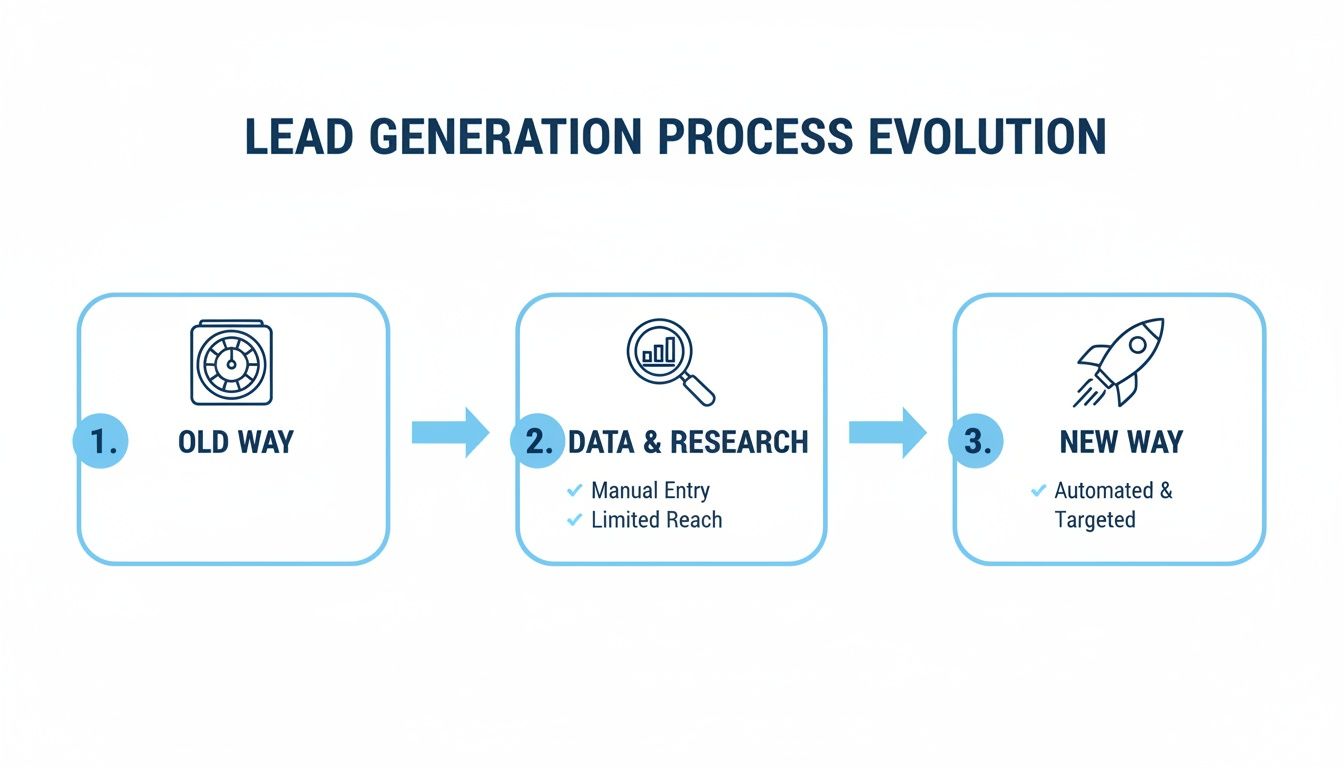
To really grasp this shift, let's look at how things have changed. We've gone from casting a wide net and hoping for the best to using a highly-targeted spear.
Old School vs New School Prospecting
| Method | Traditional Approach (Manual) | Modern Approach (Data-Driven) |
|---|---|---|
| Lead Source | Purchased lists, trade show directories, cold calling. | Real-time customs and shipment data. |
| Targeting | Broad, based on industry or company size. | Hyper-specific, based on actual shipping behaviour. |
| Timing | Random, often contacting companies with no current need. | Timely, engaging prospects when they are actively shipping. |
| Outreach | Generic, one-size-fits-all emails and scripts. | Personalised, based on their known commodities and trade lanes. |
| Efficiency | Low. High volume of rejections and unqualified leads. | High. Focussed efforts on pre-qualified, high-intent prospects. |
The move from old-school tactics to a modern, data-driven strategy is more than just an upgrade—it's a complete evolution in how we find new business.
This evolution is all about connecting the dots more effectively. Instead of chasing dead ends, you’re using data as a bridge to a more targeted and ultimately more successful sales process.
Adopting this strategy is especially crucial in a bustling trade hub. For example, by the full year 2025, Singapore's total exports hit an impressive S$739,441.7 million, marking a 9.6% growth. With total trade jumping 12.3% in December alone, the opportunities are massive—if you can find the right shippers in that sea of activity. You can see more on this from Statistics Singapore.
The key takeaway is simple: intelligence drives efficiency. When you know who is shipping, what they are shipping, and where, your outreach immediately becomes more relevant and a lot more effective.
Instead of throwing a wide, generic net, you can zero in on prospects with a proven, immediate need. A great starting point is filtering by commodity. For a deep dive on this, you might find our guide on using the HS code filter to be a real help. This ensures every conversation you have is built on a foundation of solid data, not just a hunch.
How to Pinpoint Your Ideal Shippers
Just searching for a "company import export" online is a recipe for disaster. You’ll get buried under thousands of irrelevant results. The real power of using customs data isn't just finding a list of companies; it's about finding the right companies with almost surgical precision. This is where we move beyond basic name lookups and start layering filters to build a list of high-value prospects.
Think of yourself as a logistics detective. Instead of asking a vague question like "who ships things?", you need to get specific. You should be asking questions like:
- Which companies in Singapore are consistently importing automotive parts (that's HS Code 87) from Germany?
- Are there any new businesses that started exporting medical devices (HS Code 90) to the United States in the last quarter?
- Who is my competitor’s top client on the Singapore-to-Vietnam trade lane?
These are the kinds of questions that unearth qualified leads who are genuinely in the market for your services.

Combining Filters for Smarter Prospecting
This is where the magic really happens—when you start combining filters. Start broad, then progressively narrow your focus. For example, you could pull a list of all companies exporting from Singapore and then apply specific criteria to whittle it down to your ideal customer profile.
Let's walk through a real-world scenario. Say you specialise in handling electronics shipments. A smart filtering sequence would look something like this:
- Trade Lane: First, set the origin to Singapore and the destination to Vietnam.
- Commodity: Next, filter by HS Codes related to electronics. Chapter 85, which covers electrical machinery and equipment, is a great place to start.
- Shipment Frequency: Now, look for companies with at least five shipments per month. This helps you focus on businesses with consistent activity.
- Volume: Finally, target shippers moving a minimum of ten TEUs (twenty-foot equivalent units) monthly. This ensures they have a significant volume worth pursuing.
This multi-layered approach takes a massive ocean of data and turns it into a manageable, actionable list of prospects who actually need your expertise on that specific lane. To go even deeper, you can explore the roles within these companies with our guide on the differences between an exporter and importer of record.
Identifying Growth and Opportunity
Trade data isn’t just a snapshot of the present; it's a crystal ball for spotting emerging trends and opportunities. You want to look for sudden spikes in activity. A company that suddenly doubles its import volume from a specific region over a few months is a prime target. They're likely expanding or diversifying their supply chain, and that often comes with logistical headaches.
The trade relationship between Singapore and Vietnam, for instance, is absolutely booming. In 2025, trade between the two nations smashed records, hitting S$31 billion. A huge chunk of that growth was driven by machinery and electrical equipment. In fact, imports of these goods into Singapore from Vietnam soared by 112% from 2024, signalling a massive opportunity for forwarders who can service this lane. You can get more details on this Vietnam-Singapore trade surge.
By monitoring these dynamic trade patterns, you can anticipate a company's needs before they even realise them. A sudden increase in shipments often signals growing pains or a need for more robust logistics support—creating the perfect opening for you to introduce your services as the solution.
This kind of strategic analysis ensures your outreach is always timely and relevant. It positions you as a knowledgeable partner who's done their homework, not just another salesperson sending a cold email.
Finding the Right People Inside Target Companies
Spotting a company with a high volume of imports is a fantastic start, but let's be honest—it's only half the battle. Firing off a brilliant proposal to a generic 'info@' email address is like stuffing a message in a bottle and tossing it into the sea. You're just hoping the right person stumbles upon it. The real work starts now: turning that promising company name into a list of actual people you can have a conversation with.
This is where you need to enrich your data. The goal is to drill down from the company level and uncover the key players in the logistics and supply chain departments. Your pitch will land with maximum impact when it reaches the person who is directly feeling the pain of inefficient shipping.
Uncovering Key Logistics Contacts
Modern data platforms can instantly cross-reference a company’s shipping activity with its employee directory. This is how you find verified contact details and professional profiles for the exact roles that matter.
You’re not just looking for anyone. You’re looking for specific titles:
- Logistics Manager or Director
- Supply Chain Coordinator
- Head of Procurement
- VP of Operations
- Import/Export Specialist
A verified email is obviously critical, but don't underestimate the value of a LinkedIn profile. It’s a goldmine of context, giving you a peek into their professional background, their connections, and their career path. This information is invaluable for building rapport and personalising your outreach.
The goal isn't just to find one contact. It's to map out the entire decision-making unit. A logistics manager might be your way in, but in many organisations, it’s the supply chain director or VP of operations who has the final say.
Mapping the Decision-Making Unit
Getting a clear picture of the internal hierarchy is crucial. A single shipment decision can touch multiple desks, and knowing who influences the process—and how—is the key to a successful pitch.
Let’s say you’ve found a company that regularly imports electronics from Asia.
The Logistics Manager is your person on the ground. They're consumed with the daily grind of carrier performance, customs clearance, and on-time delivery. They'll be your internal champion if you can make their life easier.
But then there's the Head of Procurement, who lives and breathes spreadsheets. They’re laser-focused on cost savings and contract terms. To get their attention, you need to show them a clear financial benefit.
And finally, you have the VP of Operations. They’re looking at the big picture: supply chain resilience, risk mitigation, and finding a partner who can support their long-term growth.
By identifying each of these individuals, you can tailor your messaging. You might lead with operational improvements for the logistics manager, but shift to cost-effectiveness for the procurement head. This multi-threaded approach ensures your value proposition hits home with everyone involved. It dramatically increases your odds of starting a real conversation instead of just becoming another unread email.
Prioritising Your Outreach for Maximum Impact
So, you’ve enriched your prospect list and have the right names and numbers. What now? The biggest mistake I see teams make is just starting at the top of the list and dialling. That scattergun approach is a massive time-waster. The real secret to efficiency is prioritisation—figuring out which companies are most likely to convert right now and focusing all your energy there.
Your time is your most valuable asset, and you need a smart way to separate a genuinely warm lead from a cold one. Sure, consistent shipment volume is a decent starting point, but the gold is in spotting change. A company with the same predictable, stagnant shipping patterns month after month is far less interesting than one showing sudden growth or making strategic shifts.

Tuning into High-Priority Triggers
Think of certain data points as buying signals—flashing green lights that tell you a company might be ready to talk. These are the prospects you want to bump to the very top of your list.
Here are the critical signs I always look for:
- Recent Spikes in Activity: Has their shipment volume or frequency suddenly jumped? This is a huge tell. It could signal a new product launch, expansion into a new market, or a surge in demand that their current forwarder is struggling to keep up with.
- New Trade Lanes: When a company starts importing from a new country, it's a clear sign of supply chain diversification. This period is often filled with logistical trial and error, making it the perfect time for you to step in with a proven, reliable solution for that specific lane.
- High-Value Commodities: Shippers moving expensive or specialised goods—think pharmaceuticals, sensitive electronics, or high-end machinery—aren’t just shopping on price. They need quality and reliability. This is where you can position your service as a premium, dependable partner.
By focusing on these dynamic indicators, you move beyond simply finding any company import export business. You start identifying those with an immediate, pressing need for better logistics support.
A Simple Scoring System to Rank Your Prospects
Once you’ve identified these triggers in the data, it's time to rank your leads. This doesn't need to be some overly complicated algorithm. A straightforward scoring system can work wonders. Just assign points based on the criteria that matter most to your business.
Here’s a quick example of how you could structure it:
- Volume Spike: If a prospect's TEU volume shot up by over 20% in the last quarter, give them +10 points.
- New Lane: If they’ve started shipping on a trade lane where you have a strong network, that's an easy +8 points.
- Competitor's Client: If customs data shows they're currently working with one of your key competitors, add +5 points. You know their pain points better than anyone.
This kind of data-led approach means you're always talking to your most promising opportunities first. It turns your daily outreach from a reactive chore into a proactive, strategic game plan.
In a market as dynamic as Singapore's, where total trade hit S$327 billion in just the first quarter of 2025, you have to be strategic. With imports climbing 6.4% in that period alone, the opportunities are everywhere, but only the most focused teams will actually capture them. You can dig into more of these stats in Enterprise Singapore's official trade review.
Getting Your Foot in the Door: Outreach That Actually Gets a Reply
All the data in the world means nothing if your message lands in the trash folder before it’s even read. This is the moment where all your hard work gathering intelligence pays off and starts turning into real revenue.
Let's be honest, a generic, one-size-fits-all email has a lifespan of about three seconds. A sharp, personalised message, on the other hand, is what kicks off a genuine conversation.
The secret is to stop sounding like every other salesperson flooding their inbox. Your prospects are buried under messages promising vague benefits. You need to prove you’ve done your homework from the very first sentence, and the insights you’ve pulled from customs data are your best way to do that.
Shifting from a Cold Pitch to a Warm Introduction
Think about the difference between these two opening lines. Which one would you actually reply to?
- Generic: "Hi, I'm reaching out to introduce my freight forwarding services…"
- Data-Driven: "Hi [Name], I noticed your company's recent spike in electronics imports from Ho Chi Minh City…"
The second one grabs your attention immediately because it’s specific. It proves you understand their business, you see what they're doing right now, and you aren’t just blasting out a template. It instantly positions you as a knowledgeable partner, not just another vendor trying to sell something.
This is the entire game. You have to reference the data you've found to make your message impossible to ignore. Mention specific trade lanes, shipment volumes, or commodities to show you’re not guessing.
When your outreach is built on a foundation of facts, you’re no longer asking for a moment of their time—you’re offering tangible value based on their actual business needs. This simple shift changes the entire dynamic of the conversation.
Building Your Data-Driven Outreach
So, how do you put this into practice? Let’s break down the key elements of an email that gets a response. Your goal is to be concise, relevant, and laser-focused on solving a problem they're likely facing.
Here’s a structure I've seen work time and again:
-
The Hyper-Relevant Subject Line: Your subject line's only job is to stop the scroll. Be specific. Instead of "Freight Services," try something like, "Question about your Singapore-Vietnam shipments."
-
The Data-Informed Opener: This is your hook. Lead with the insight you uncovered. For example, "I saw you shipped 15 TEUs of automotive parts from Germany last month."
-
The Implied Challenge: Gently connect that data point to a potential pain point. "Managing a lane with that kind of consistent volume can bring unique challenges, especially with carrier availability and customs."
-
Your Specific Solution: This is where you briefly introduce how you can help with that specific challenge. "We have a strong network in Hamburg that helps our clients secure capacity and streamline clearance for that exact commodity."
-
The Clear Call to Action: End with a simple, low-friction next step. Don't ask for a meeting; ask for a conversation. "Would you be open to a brief call next week to discuss how we might be able to improve transit times on that lane?"
This approach respects their intelligence and their time. You aren’t wasting their day with a generic pitch; you’re presenting a focused solution to a problem you already have good reason to believe they're dealing with. This is how you find a company import export lead and turn them into a long-term client.
For a closer look at how enterprise-level businesses manage their complex import-export operations, you can learn more about the EXIM MFR enterprise in our detailed guide.
Got Questions? We've Got Answers
When it comes to using customs data to drum up new business, a few questions always pop up. Here are the most common ones we hear from freight forwarding teams, along with some straight-talking answers based on what we see in the field.
How Reliable Is This Data, Really?
It’s incredibly accurate. Reputable platforms pull their information directly from official sources like customs authorities and bill of lading records. This isn't just a list of names; it's verified data showing you who shipped what, and where.
Of course, you might see the occasional blip from a typo in a filing, but that's the exception, not the rule. The best data providers are constantly refreshing their databases—often daily—so you're always working with the latest shipping movements.
Think of it this way: you’re moving from educated guesswork to data-driven strategy. You can build out your prospect list with confidence because it's based on actual, recent shipping activity, not some dusty old directory.
Can I Find the Right Person to Talk to, Like a Logistics Manager?
The raw customs data usually just gives you the company name, but this is where a good platform earns its keep. They build in powerful data enrichment tools to solve this exact problem.
Once you’ve flagged a promising company import export business based on its shipping patterns, the system helps you peel back the layers to find the people who actually make the decisions. With just a click or two, you can usually pull up:
- Full names and up-to-date job titles.
- Verified work email addresses.
- Direct links to their LinkedIn profiles.
This completely changes the game. You can go straight from spotting an opportunity to having a direct conversation with the right person, skipping the gatekeepers and the dreaded info@ email address.
How Should I Approach Companies That Already Have a Forwarder?
Let’s be honest—any company shipping regularly already has a freight forwarder. But that’s precisely why this data is so powerful. You can often see exactly who your prospects are working with right now.
This insight is gold. Instead of sending another generic "we're great, use us" email, you can tailor your approach. Your outreach can zero in on your specific strengths for their trade lanes, maybe offer a more competitive rate, or highlight a service level their current partner can't match. You walk into the conversation armed with intelligence, making your pitch a strategic alternative rather than just another shot in the dark.
Is This a Realistic Strategy for a Small Freight Forwarder?
Absolutely. In fact, this approach is a huge equaliser, letting smaller outfits punch well above their weight. These platforms handle the grunt work of prospecting—all the manual research and lead-sifting that eats up so much time.
This frees up smaller teams to focus their energy where it really counts: building relationships and closing deals with genuinely qualified leads. The time saved is massive. A single account manager can build and manage a pipeline that would have traditionally needed a whole team. It’s a smart, scalable way to grow your business, no matter your size.
Ready to stop guessing and start targeting the right shippers? Coreties transforms global trade data into your next big client. Our platform helps you find qualified leads, enrich contacts, and craft data-driven outreach in a fraction of the time. See how Coreties can sharpen your prospecting workflow.
Leave a Reply