Tag: shipper leads

  • Find Any Importer in Spain: A 2026 Sales Playbook

    Find Any Importer in Spain: A 2026 Sales Playbook

    You already know the bad version of prospecting.

    A rep downloads a directory, filters for “import/export,” grabs a few phone numbers, and starts dialing. Half the companies do not control freight. Some have not imported in months. Others buy on lanes you do not serve well. The few that are active get the same generic pitch they have heard from every forwarder in the market.

    That is not a Spain problem. It is a process problem.

    If you want to win business with any serious importer in Spain, stop treating lead generation like list building. Treat it like trade intelligence. The goal is not to find names. The goal is to find importers with current buying activity, a lane pattern you can support, and a reason to take your call now.

    Beyond Directories The Modern Hunt for Spanish Importers

    Spain is large enough to punish lazy prospecting and attractive enough to reward disciplined prospecting.

    According to Spain import data from Trading Economics, Spain's imports reached a record high of €41.6 billion in September 2022. The same source notes that the European Union accounts for 45% of total imports, followed by China at 11% and the US at 7%. That mix matters because it tells you something practical. Spain is not a niche import market. It is a broad, active buying market tied to major manufacturing and sourcing corridors.

    A modern laptop displaying data analytics charts on a wooden desk near a window and old telephone.

    Static directories flatten that complexity. They show legal entities, not current trade behavior. A customs-led approach does the opposite. It shows who is importing, what they are moving, where they are sourcing, and whether the account fits your network.

    What directories miss

    A list broker can give you company names in Madrid, Valencia, or Barcelona. That still leaves the hard part undone.

    You need to know:

    • Product fit: Does the company import cargo you handle well?
    • Lane fit: Are they buying on routes where you can quote competitively?
    • Activity fit: Are they importing consistently, or did they make one purchase months ago?
    • Commercial fit: Is this a shipper, a distributor, a buying office, or just a registered entity with no real forwarding need?

    That is why “find an importer in Spain” is the wrong brief for a sales team. The right brief is “find active Spanish importers whose shipment pattern matches our strengths.”

    The fastest way to waste a quarter is to confuse market size with lead quality.

    Build a system, not a call sheet

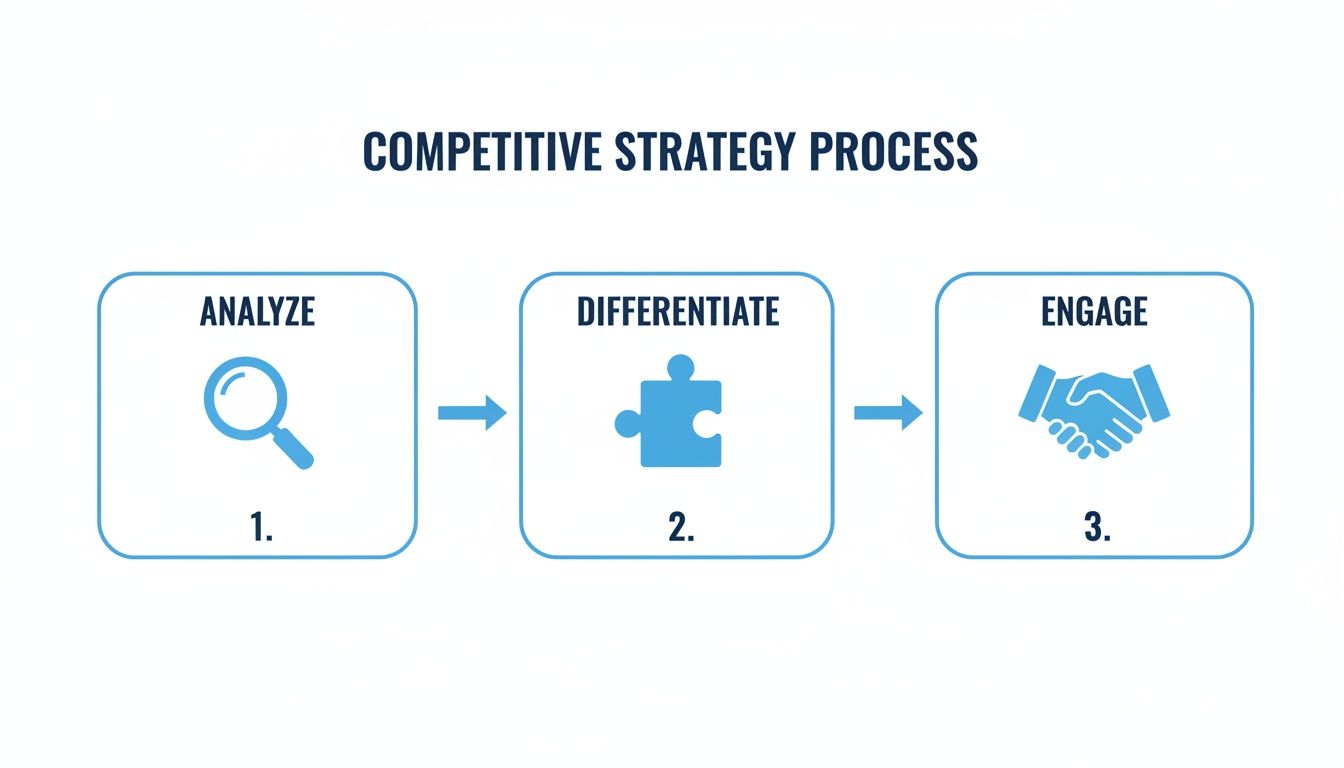
    The strongest teams build a repeatable workflow:

    1. Pull shipment-level signals.
    2. Narrow by Spain as consignee market.
    3. Filter by HS code, origin country, and shipment rhythm.
    4. Qualify the company, then the buyer.
    5. Contact only the accounts where your value is obvious.

    That shift changes the conversation. You stop opening with “we provide sea and air freight.” You start opening with a lane-specific point of view backed by observed trade activity.

    That is how you break into Spain without burning through weeks on low-intent names.

    Building Your High-Intent Prospect List with Shipment Data

    The raw material for a good prospect list is not a buyer directory. It is shipment evidence.

    Spain’s import base gives you a strong starting map. According to the World Bank country snapshot for Spain, intermediate goods account for $93.9 billion and capital goods account for $108.4 billion in imports. The same source identifies petroleum oils, medicaments, and automobiles among top imported products. For a logistics sales team, that tells you where real freight density sits and where repeat demand is more likely.

    Infographic

    Start with the lane, not the logo

    Most reps search for familiar brands first. That is backwards.

    Search by the lanes you can win. If your team is strong on Germany to Spain, China to Spain, or the US to Spain, begin there. If your network handles pharma, machinery, automotive inputs, or controlled cargo better than the market average, build your list around those flows.

    A practical first pass looks like this:

    • Country filter: Spain as the importer destination.
    • Origin filter: Countries where your buying power, consolidation, or service reliability is strongest.
    • Product filter: HS codes tied to the cargo types your operations team likes to move.
    • Shipment cadence: Repeated activity beats one-off shipments.
    • Recency: Recent movement matters more than stale history.

    This process gives you a list built around commercial reality, not brand recognition.

    Use HS codes like a salesperson, not a customs clerk

    HS codes matter because they force precision.

    If you say you sell “industrial logistics,” that is too broad to prospect well. If you filter for machinery components, medicaments, automotive parts, or steel-related flows, you can see which Spanish companies repeatedly buy those products and from where.

    That changes everything about outreach. Instead of pitching your full service menu, you can contact a buyer with a narrow point:

    • you handle their product type,
    • on a lane they already use,
    • with a service model that matches how they buy.

    Filter for movement patterns

    The best importer in Spain for your team is not always the biggest account. It is the account where the shipment pattern aligns with your service offer.

    Look for signals such as:

    Repeated origin countries

    A company buying from the same country again and again is easier to approach with a routing or consolidation proposal.

    Multiple suppliers on one lane

    That often opens a conversation about origin coordination, vendor consolidation, and booking simplification.

    Mixed mode potential

    Some shippers buy the same category across ocean, road, and air depending on urgency. That is where flexible forwarders often get traction.

    Consistent activity

    Regular import behavior usually beats occasional spikes. It gives you a stronger reason to invest in research and follow-up.

    Good prospecting reduces uncertainty before the first email. Great prospecting makes the first email feel late.

    Turn raw trade records into a usable list

    Once you have filtered by product and lane, your next job is cleanup. Remove entities that are clearly outside your target, such as firms with mismatched cargo types, irrelevant shipment profiles, or no evidence of ongoing import activity.

    Then enrich the list with contactable company and buyer data. That is where workflow matters. A manual approach can drag for days. A purpose-built process using customs-led intelligence and port import export reporting workflows shortens the path from raw records to a usable target account list.

    At this stage, you do not need a perfect list. You need a credible shortlist of companies that appear active, relevant, and commercially reachable.

    Qualifying Prospects to Verify Contacts and Potential

    A company name is not a lead. It is a research prompt.

    Most sales teams lose time after list building because they stop at the company level. They know the shipper exists, but they do not know whether the business is stable, who owns logistics decisions, or whether customs friction will derail the account before it becomes valuable.

    The qualification standard should be much higher.

    According to the importer evaluation manual from XNova International, a practical importer review includes verifying EU legal status and VAT registration, assessing annual turnover, and reviewing customs compliance. That source also states that importers with more than €2M turnover show higher repeat order rates, that unvetted importers have a 20% transaction success rate compared with 65% for stable, vetted ones, and that ignoring compliance can lead to 15-20% shipment delays.

    A professional woman reviews digital market data and company profiles on computer screens while taking notes.

    Check the company before you check the contact

    A verified email address is useful. A verified email address at the wrong company is not.

    I qualify Spanish importers in this order.

    Legal standing

    If the company is not properly established for EU trade and VAT handling, you can get stuck in avoidable customs and billing issues later. That does not mean you skip every complex structure. It means you identify complexity before you sell into it.

    Operating scale

    Turnover is not a perfect measure, but it helps you estimate purchasing power and the likelihood that the company can support a real forwarding relationship instead of occasional ad hoc moves.

    Compliance behavior

    Some importers create work. Others create problems. The difference often shows up in documentation habits, customs disputes, and payment discipline.

    Then identify the buyer group

    The old approach was to find “the logistics person.” That is too vague.

    In practice, the decision may sit with:

    • Logistics managers who control mode and carrier allocation
    • Supply chain directors who care about resilience and vendor performance
    • Procurement leaders who run tenders and frame cost discussions
    • Operations heads who feel pain first when freight misses production timing

    A good qualification process matches the business issue to the likely owner. If your angle is customs simplification, you may need someone closer to trade compliance. If your angle is multi-supplier consolidation, procurement and logistics may both matter.

    What works and what does not

    Here is the trade-off many reps ignore.

    Approach What happens
    Calling the main switchboard You get routed into a generic inbox or junior gatekeeper
    Contacting a sales or admin email The message is rarely tied to a logistics problem
    Finding a named logistics or supply chain contact You start closer to the operational pain
    Verifying both role and recent company activity Your outreach becomes relevant instead of speculative

    Use qualification to decide whether to pursue, not just how

    Not every importer in Spain is worth a sequence.

    Disqualify aggressively when you see these signs:

    • Low operational fit: The cargo does not match your service strengths.
    • Weak import evidence: Activity looks sporadic or outdated.
    • Structural friction: Legal or customs issues appear likely to slow execution.
    • No clear stakeholder: You cannot identify who would own the problem you solve.

    Keep the account when the opposite is true. Stable legal setup, visible import pattern, clear contact path, and a shipment profile that maps to something your team can improve.

    Qualification is where sales discipline protects margin. The wrong shipper can consume more effort after signing than before.

    For non-EU sellers entering Spain without a local entity, there is another layer to qualification. Some prospects may need support around importer responsibility and local compliance structure rather than standard forwarding alone. That is where understanding the operational role of an importer of record helps you frame the conversation correctly.

    Prioritizing Your Outreach by Lane and Value Proposition

    Once you have a qualified list, the temptation is to sort by company size and start at the top.

    That is usually wrong.

    Priority should go to the accounts where your value proposition is easiest to prove. A mid-sized importer moving on your strongest lane is often a better first target than a large, famous shipper whose network you cannot materially improve.

    Research published by AIMS Press on Spanish firms and import experience found that Spanish firms with prior import experience show 20-30% higher survival rates when they begin exporting, and that the effect is strongest when imports occurred within the last year. For sales, the useful takeaway is practical. Companies with recent import activity are usually easier to engage because international trade is already part of how they operate.

    A hand interacting with a holographic business strategy chart on a wooden desk with a laptop.

    Rank by fit, not by prestige

    I use a simple ranking logic.

    Tier one

    Recent importers on lanes where we have a clear service advantage.

    Examples include faster routing options, stronger origin control, better supplier coordination, mode flexibility, or experience with the cargo class.

    Tier two

    Good companies with active imports, but where our differentiation is narrower. These accounts may still convert, but they require sharper messaging or stronger timing.

    Tier three

    Qualified names with unclear urgency, limited lane fit, or weak visible pain. Keep them in nurture, but do not let them steal attention from stronger targets.

    Match pain to offer

    The value proposition should come from the shipment pattern.

    A few examples:

    • Repeated imports from one origin region: Lead with origin management and booking consistency.
    • Multiple suppliers shipping similar products: Lead with consolidation and reduced coordination burden.
    • Sensitive or regulated products: Lead with execution reliability and documentation discipline.
    • Volatile buying categories: Lead with contingency options and routing flexibility.

    That sounds basic, but most outreach still ignores it. Reps describe what their company sells instead of identifying what the importer is trying to control.

    Build a scorecard your team can use weekly

    A prioritization model only works if the team applies it the same way every week.

    Use a short scorecard with factors such as:

    • Lane strength: Strong, moderate, weak
    • Cargo fit: High, medium, low
    • Import recency: Recent or unclear
    • Contact path: Named decision-maker or generic route
    • Clear problem to solve: Yes or no

    You do not need a complicated model. You need one the whole team trusts.

    Prospecting gets easier when the rep can answer one question fast: why this account before the next one?

    In practical terms, this means your first fifty calls and emails should go to importers where the lane, cargo, and business problem already line up. That is how outreach starts producing meetings instead of polite silence.

    Crafting Data-Driven Outreach That Gets a Response

    Most cold outreach to a Spanish importer fails before the second sentence.

    It fails because the message is interchangeable. It could go to a food importer, a pharma distributor, a machinery buyer, or a retailer. The sender clearly knows nothing specific about the company except that it exists.

    The fix is not more personalization theater. It is relevance.

    One useful angle comes from current market conditions. According to recent reporting on Spain’s textile market, Spanish textile imports saw double-digit declines in 2023. For a forwarder, that is not just a market headline. It is a conversation starter around volatility, supplier concentration, cost pressure, and risk mitigation.

    The bad email

    Subject: Freight services for your imports

    Body:
    Hello, we are an international logistics company offering competitive sea and air freight solutions for importers in Spain. We would love to discuss how we can support your supply chain and reduce costs. Are you available for a quick call next week?

    Nothing in that email proves the sender understands the account.

    The better email

    Subject: Spain textile imports and supplier risk on your inbound flows

    Body:
    Hello [Name], I am reaching out because your company appears active on inbound textile purchasing into Spain. With textile imports under pressure in Spain, many buyers are reviewing supplier spread, routing options, and booking flexibility. We help import teams tighten control on volatile lanes, especially when purchase timing and replenishment windows shift. If this is on your agenda, I can share a few practical options relevant to your current import pattern.

    That email still needs customization, but it is grounded in the buyer’s world.

    Build emails around one observed fact and one offer

    A practical structure works well:

    1. State the observed import pattern.
    2. Connect it to a likely operational issue.
    3. Offer one relevant improvement.
    4. Ask for a small next step.

    Do not pile on every service you offer. One email, one angle.

    Data-Driven Outreach Templates for Spanish Importers

    Value Proposition Subject Line Email Body Snippet
    Lane optimization Valencia inbound options for your current sourcing lane I noticed your team is active on imports into Spain on a lane where transit reliability and handoff quality often decide performance. We support importers that want a cleaner routing plan and tighter control over exceptions. If improving that lane is on your list, I can send a few ideas specific to your current flow.
    Supplier consolidation Reducing coordination across multiple suppliers shipping into Spain Your import pattern suggests purchases from more than one supplier on the same trade corridor. That usually creates extra booking and follow-up work at origin. We help importers simplify those moves with a more coordinated pickup and consolidation setup. Worth a short exchange?
    Risk mitigation Building more resilience into your inbound Spain shipments Many Spanish importers in volatile categories are revisiting how they protect inbound supply when demand shifts. If you are reviewing routing flexibility, backup options, or shipment visibility, I can share a practical approach based on the lanes you already use.
    Compliance support A cleaner process for inbound freight and customs handoffs Some importers grow into avoidable delays when freight execution and compliance ownership are not aligned. We work with teams that want a more controlled inbound process, especially when documentation accuracy matters. Happy to compare notes if this is an issue internally.

    Use the first follow-up to deepen the point

    The first follow-up should not say “just checking in.”

    Use it to add one useful observation:

    • a lane you serve well,
    • a product handling capability,
    • a likely issue tied to supplier spread,
    • a note on import structure that affects execution.

    That keeps the conversation business-led. It also separates you from generic sequence spam.

    For teams refining this process at scale, sales in logistics workflows are useful as an operating model because they force a tighter link between lead intelligence and the message itself.

    Keep the ask small

    Do not ask for a full procurement review in a cold email.

    Ask for something proportional:

    • a short call,
    • permission to share a lane idea,
    • feedback on whether the issue is relevant,
    • the right contact if logistics ownership sits elsewhere.

    The best outreach to an importer in Spain sounds like informed help, not a pitch deck looking for a meeting.

    Conclusion Turning Insights into Revenue

    Winning with an importer in Spain is rarely about who sends the most emails. It is about who enters the conversation with the clearest operational point of view.

    The pattern is straightforward. Use shipment data to find active importers. Qualify the company before investing in outreach. Rank accounts by lane fit and by the value you can prove quickly. Then write messages that reflect actual trade behavior, not recycled sales copy.

    That process fixes two expensive problems at once. It cuts wasted effort on weak accounts, and it improves the quality of the conversations your team starts. Reps spend less time hunting and more time discussing real routing, sourcing, compliance, and resilience issues with buyers who move freight.

    Directories still have a place as background context. They should not drive your pipeline.

    The teams that win Spain consistently do not guess who might need help. They identify who is importing now, what they are moving, and where their network creates an advantage. That is how prospecting becomes a revenue system instead of an activity report.


    If you want to turn customs data into qualified shipper leads instead of static lists, Coreties gives logistics sales teams a faster way to find active importers, surface the right contacts, and send specific outreach based on real trade activity. It is built for forwarders, carriers, and 3PL teams that want more relevant conversations and a cleaner path from prospecting to signed business.

  • Unlock Success with Standard Caribbean Shipping

    Unlock Success with Standard Caribbean Shipping

    When you hear “standard Caribbean shipping,” it’s easy to picture a container ship sailing through turquoise waters. While that’s part of it, the reality is far more complex. This isn't just about moving boxes; it's the logistical lifeblood for an entire region that depends heavily on imports.

    At its core, standard Caribbean shipping is the established network of ocean freight services that keeps the islands supplied with everything from food and medicine to construction materials and consumer goods. It primarily involves containerized cargo, whether it’s a Full Container Load (FCL) or a Less-than-Container-Load (LCL) shipment.

    The Engine Room of Caribbean Commerce

    Think of this shipping network as the region's circulatory system. It’s what moves essential goods from major hubs in the U.S., Europe, and Latin America to every island port, ensuring economic stability and supporting daily life.

    But this system isn’t run by a single entity. It’s a carefully coordinated dance between several key players:

    • Ocean Carriers: These are the companies that own and operate the vessels, the heavy lifters physically moving containers across the sea.
    • NVOCCs (Non-Vessel Owning Common Carriers): They act like wholesalers, leasing container space in bulk from carriers and selling it to shippers, often under their own bill of lading.
    • Freight Forwarders: Think of them as the travel agents for your cargo. They manage the entire shipping process, from booking space and handling customs paperwork to troubleshooting any issues that pop up along the way.

    Getting a grip on who does what is fundamental. A good freight forwarder, for example, is your best asset for navigating the notoriously tricky customs processes in the Caribbean. We dive deeper into their role in our guide on what a freight forwarder does.

    To make these concepts even clearer, here’s a quick breakdown of the core components.

    Key Components of Standard Caribbean Shipping at a Glance

    This table provides a snapshot of the essential elements that define standard shipping services in the Caribbean.

    Component Description Primary Challenge
    Service Types Dominated by FCL (Full Container Load) and LCL (Less-than-Container-Load) ocean freight. Balancing cost-effectiveness of LCL with the security of FCL.
    Key Players A mix of Ocean Carriers, NVOCCs, and Freight Forwarders managing the logistics. Coordinating between multiple parties to ensure a smooth transit.
    Trade Routes Primarily connects the Caribbean to hubs in the U.S. (especially South Florida), Europe, and Asia. Port congestion and limited direct sailings to smaller islands.
    Documentation Requires precise Bills of Lading, commercial invoices, and island-specific customs forms. Strict and varied customs regulations that can cause costly delays.
    Operational Factors Subject to seasonality (hurricane season), port capacity limitations, and fluctuating demand. Unpredictable capacity and rate volatility.

    Understanding these individual pieces helps you see the bigger picture of how goods actually make their way to the islands.

    Thriving in a Volatile Market

    The Caribbean shipping trade is a high-stakes environment marked by constant change. For both carriers and forwarders, the biggest headache is often dealing with unpredictable pricing, tight capacity, and ever-shifting sailing schedules. This market is especially reactive to global economic shifts.

    Consider that over 80% of world trade by volume moves by sea. When global maritime trade growth slows—as it did from 2.2% in 2024 to a projected 0.5% in 2025—the ripple effects hit Caribbean lanes hard, impacting the flow of essential imports.

    This is where having the right data becomes your unfair advantage. Success today isn’t just about having a ship or booking a container; it's about reading the market correctly. Knowing exactly which companies are shipping to which islands turns a cold call into a conversation about solving a real, existing need.

    This is the gap that platforms like Coreties fill. By providing clear, actionable data on trade lanes and identifying active shippers, they allow freight forwarders and carriers to stop reacting and start planning. You can move from just quoting rates to proactively offering smarter, more resilient shipping strategies—and win more business in one of the world's most demanding trade regions.

    Choosing Between LCL and FCL Shipments

    One of the first conversations you'll have about any standard Caribbean shipment boils down to a simple choice: Less than Container Load (LCL) or Full Container Load (FCL). It’s a fundamental decision. Getting it right is the first step in giving your clients a solution that’s both efficient and on-budget.

    Think of it like this: FCL (Full Container Load) is like chartering your own private jet. You book the entire thing, it’s all yours. A shipper pays for the exclusive use of a 20-foot or 40-foot container. It gets sealed at the starting point and isn't touched again until it reaches its final destination. This offers the best security and the least amount of handling.

    On the flip side, LCL (Less than Container Load) is the "fly commercial" option. It's the perfect choice when your client's cargo just won't fill a whole container. Your shipment gets grouped with cargo from other shippers into one shared container. This whole process is orchestrated by a consolidator, which is usually a freight forwarder acting as the ringmaster for the group.

    The Private Truck vs. The Shared Ride

    I find the best way to explain this to clients is by using a simple ground-shipping analogy. It clicks almost instantly.

    FCL is the private moving truck:

    • You get the whole truck. No one else’s stuff is in there.
    • It’s a direct shot from the pickup point to the destination.
    • Your goods are only handled when you load them and when you unload them, which drastically cuts the risk of damage.

    LCL is the shared delivery service:

    • You’re only paying for the corner of the truck your boxes are in. It’s incredibly cost-effective for smaller loads.
    • But, that truck is going to make other stops to pick up and drop off freight.
    • Your goods will be handled a few more times as they're moved into the consolidated container and then sorted back out at the destination.

    This simple distinction is at the heart of the cost, timing, and security of a shipment. These are the three levers you’ll constantly be adjusting when advising a client on their cargo heading to the Caribbean.

    When to Choose FCL Shipments

    There are a few clear-cut scenarios where FCL is the only way to go. The most obvious one is pure volume. Once a client's shipment hits about 10 cubic meters or more, you're getting close to the tipping point where a dedicated 20-foot container is often cheaper than paying the higher per-cubic-meter LCL rate.

    Security is another huge driver. If you're shipping high-value electronics, fragile artwork, or anything sensitive, the sealed, dedicated space of an FCL container is a massive selling point. The shipper loads and seals it, and the consignee breaks that seal. Period. It nearly eliminates the risk of theft or damage in transit.

    FCL is also your best bet for speed. Think about it: the container completely skips the LCL consolidation and de-consolidation steps at the ports. This means transit times are not only faster but also far more predictable. For any shipment with a tight deadline, FCL is the clear winner.

    When to Choose LCL Shipments

    LCL is the engine that powers small and medium-sized businesses shipping to the Caribbean. It’s also fantastic for companies just dipping their toes into a new island market. Its main draw is being incredibly cost-effective for small volumes. You pay for the space you use, not for a whole container, which opens up international trade without needing a huge capital outlay.

    The other big plus is flexibility. LCL lets businesses ship smaller amounts more often, which is a game-changer for inventory control and cash flow. For example, a retailer in Barbados might find it much smarter to get small weekly LCL top-ups of a hot-selling item rather than a massive FCL shipment every two months that ties up capital and warehouse space.

    Of course, there's a trade-off for that flexibility. LCL shipments are handled more, and they're cozying up with other people’s cargo, so the risk of delays or damage is naturally a bit higher. The consolidation and de-consolidation steps add time on both ends, which means you have to plan for longer total transit times compared to a direct FCL shipment.

    Navigating the Key Trade Routes and Hubs

    To get a real handle on standard Caribbean shipping, you have to stop thinking about a bunch of separate islands and start seeing the network of sea lanes and hubs that connect them. This isn't just a random collection of ports—it's a carefully structured system of maritime highways and central sorting stations that keeps the entire region supplied.

    The main trade lanes are the superhighways, bringing goods into the Caribbean from their primary sources around the globe. Most of the action comes from three key areas:

    • The U.S. East Coast: South Florida, in particular, is the launching point for an enormous volume of everything from cars and groceries to construction materials headed for the islands.
    • Europe: Major ports like Antwerp and Rotterdam are the origin for European machinery, luxury items, and other specialized equipment.
    • Latin America and Asia: Raw materials and finished goods flow from manufacturing centers in Asia and commodity exporters like Brazil and Colombia, feeding into the regional supply chain.

    But here's the thing: a container leaving a massive port in Asia rarely sails directly to a smaller island like St. Kitts. Instead, it gets routed through a massive transshipment hub.

    The Role of Caribbean Transshipment Hubs

    The best way to think about a transshipment hub is like a major airport's sorting facility. The giant container ships—the equivalent of a long-haul international flight—dock there. Cargo is then unloaded, sorted, and re-loaded onto smaller "feeder" vessels for the final, shorter journey to individual islands.

    These hubs are the absolute linchpins of Caribbean logistics. The biggest players in the game are:

    • Kingston, Jamaica: Perfectly located to handle cargo moving between the Americas, Europe, and Asia.
    • Freeport, Bahamas: A critical hub for freight coming off the U.S. East Coast.
    • Cartagena, Colombia: The primary gateway for South American goods moving into the Caribbean basin.

    The performance of these hubs sets the pace for the entire region's commerce. If a hub like Kingston gets jammed up with high volume, labor issues, or bad weather, it doesn't just delay freight for Jamaica. It sends a ripple effect across the network, holding up cargo on feeder ships destined for dozens of smaller islands.

    This flowchart breaks down the two main container shipping strategies used within these routes.

    A flowchart detailing Caribbean container shipping solutions, comparing Shared (LCL) and Private (FCL) options based on cost, volume, and control.

    It really comes down to a choice between sharing space with LCL or getting a dedicated container with FCL, a decision that directly affects how your cargo gets processed at these critical hubs.

    How Global Events Shake Up Caribbean Routes

    The Caribbean shipping lanes are deeply connected to what's happening in the rest of the world. A factory shutdown in China or a commodity boom in Brazil has a direct impact on vessel space and schedules for cargo heading to Barbados. For instance, if South American exports surge, ships get filled up quickly, making it tougher and more expensive to find a spot for your Caribbean-bound freight.

    We can see this playing out right now. The Port of Santos in Brazil, a major launchpad for cargo that feeds into Caribbean routes, handled a record-breaking 460.8 thousand TEUs in January 2025. That’s a staggering 12.1% jump from the year before. That commodity-driven volume clogs the arteries of the system, creating backlogs at hubs like Cartagena and Kingston and pushing rates up. You can explore additional Caribbean logistics insights to get a better feel for these market dynamics.

    For freight forwarders and carriers, this proves that offering a "standard" service is anything but simple. It demands a constant, expert read on global trade flows. If you can see these shifts coming, you can offer clients smarter routes that bypass the bottlenecks—turning a major headache into a real competitive edge.

    Cracking the Code on Caribbean Shipping Costs and Customs

    A clipboard with a document and a pen on a shipping container, illustrating shipping costs.

    When a client asks for the price of standard Caribbean shipping, they’re rarely looking for just one number. The truth is, the final invoice is a collection of different costs, each tied to a specific step in the journey. If you want to build trust and provide accurate quotes, you have to know how to break these down for your customers.

    It all starts with the base ocean freight—the fundamental charge for moving a container from its origin port to its destination. But that's just the starting line. A handful of surcharges are almost always layered on top, covering the very real, and very fluid, costs of running a shipping line.

    What's Really in a Shipping Quote?

    Think of these extra fees like the taxes and service charges on a plane ticket. They allow carriers to account for fluctuating operational expenses without constantly overhauling their main pricing structure. On Caribbean routes, you'll see a few of these pop up time and time again.

    • Bunker Adjustment Factor (BAF): This is all about fuel. Because marine fuel prices can be incredibly volatile, the BAF gives carriers a way to adjust for those swings.
    • Peak Season Surcharge (PSS): From late summer through November, everyone is trying to ship to the Caribbean. This surge in demand puts a strain on vessel capacity, and the PSS is an extra fee carriers apply to manage the rush.
    • Terminal Handling Charges (THC): These are straightforward fees charged by the port terminals for the physical work of loading your container onto the ship and taking it off at the other end.

    This is also where a solid grasp of trade rules like Incoterms becomes critical. They spell out exactly who is responsible for paying which part of the bill, including many of these surcharges.

    It's a classic rookie mistake for a shipper to get a quote, focus only on the base freight, and then get hit with sticker shock on the final bill. Your real value as a logistics partner is in pulling back the curtain and showing them exactly what each line item means.

    The Customs Gauntlet: Why Paperwork is Everything

    Once you’ve got the costs figured out, you run straight into the next major challenge: customs clearance. A miscalculation on cost can ding a budget, but a documentation mistake can bring a shipment to a screeching halt for weeks, racking up huge storage fees and even bigger client headaches.

    Every single shipment needs a core set of documents. But the real trick is knowing that what works for one island nation might get your cargo flagged for inspection in another.

    The two non-negotiable documents you'll always need are:

    1. The Commercial Invoice: This is the master list for customs. It breaks down what’s in the shipment, how much it’s worth, and who is buying and selling it. Customs officials use this to calculate duties and taxes.
    2. The Bill of Lading (B/L): This is the official contract between the shipper and the carrier. It acts as a receipt for the goods and, crucially, as the document of title—whoever holds the B/L owns the cargo.

    From there, things get very specific, very fast. The Dominican Republic, for instance, has a notoriously strict customs process, often demanding that documents be legalized in ways that aren't required for, say, Barbados. Trinidad and Tobago has its own unique set of import forms and rules. Making one small mistake on a commodity classification can trigger major fines—our guide on Harmonized Code books is a great resource for getting those details right.

    Mastering these different regulatory hurdles is what separates a true expert in standard Caribbean shipping from the rest. You’re not just moving a container; you're guiding your client's cargo through a maze of red tape, ensuring it arrives safely and without the kind of delays that can cripple a supply chain.

    Winning More Business With Data-Driven Strategies

    In the world of standard Caribbean shipping, just having a good service isn't enough to stand out. To really grow your business, you have to move past casting a wide net and hoping for a bite. The real secret is connecting with the right shippers at the right time, and that means swapping guesswork for a smart, data-driven strategy.

    Think about the old-school approach: cold-calling every manufacturer or distributor you can find in a region. It’s like fishing in the open ocean with no sonar. You know the fish are out there somewhere, but you’re wasting a ton of time and energy on empty water.

    Building Hyper-Targeted Prospect Lists

    Precision is the name of the game in modern freight sales. Instead of just searching for company types, a data-focused approach uses global customs data to pinpoint businesses that are already moving freight on the very Caribbean trade lanes you specialize in. This completely flips the script, letting you get ahead of the market instead of just reacting to it.

    A platform like Coreties lets you slice and dice this mountain of information to build incredibly targeted lead lists. It’s surprisingly straightforward.

    • Filter by Commodity: Zero in on companies shipping specific goods, like fresh produce to Barbados or construction equipment to the Dominican Republic.
    • Filter by Volume: Target the big players who need your FCL services or, conversely, find smaller shippers who are perfect candidates for your LCL consolidation.
    • Filter by Geography: Concentrate your sales efforts on companies shipping from a particular U.S. port to a specific Caribbean island, lining up perfectly with your strongest routes.

    This isn't just a list; it's a pipeline of pre-qualified leads who have a proven need for what you offer. You’re no longer making assumptions—you're engaging prospects based on their actual shipping patterns. You can see a deeper dive into how this works by checking out our port import-export reporting service.

    From Data to Deals: Crafting Personalized Outreach

    Identifying the right company is just the first step. The real challenge is getting your message to the right person—the decision-maker who actually manages their freight. We’ve all been there, spending hours on LinkedIn trying to track down a logistics manager, only to find an old email or hit a dead end.

    This is where a data platform becomes your most valuable player. Coreties doesn’t just show you who’s shipping; it provides verified contact information and direct LinkedIn profiles for the key people in those organizations. This lets you skip the gatekeepers and start a real conversation.

    The real power comes from using that data to make your outreach personal. Instead of a generic "we ship to the Caribbean" email, you can send a message that proves you’ve done your homework.

    For instance, you could reach out with: "I noticed your company is regularly shipping automotive parts from Miami to Kingston. Our direct service on that lane could cut your transit time by two days." An email like that instantly shows your value and turns a cold outreach into a warm, consultative opening.

    This focused approach is a massive productivity booster. But just how much more effective is it? Here’s a quick comparison.

    Traditional Prospecting vs. Data-Driven Outreach

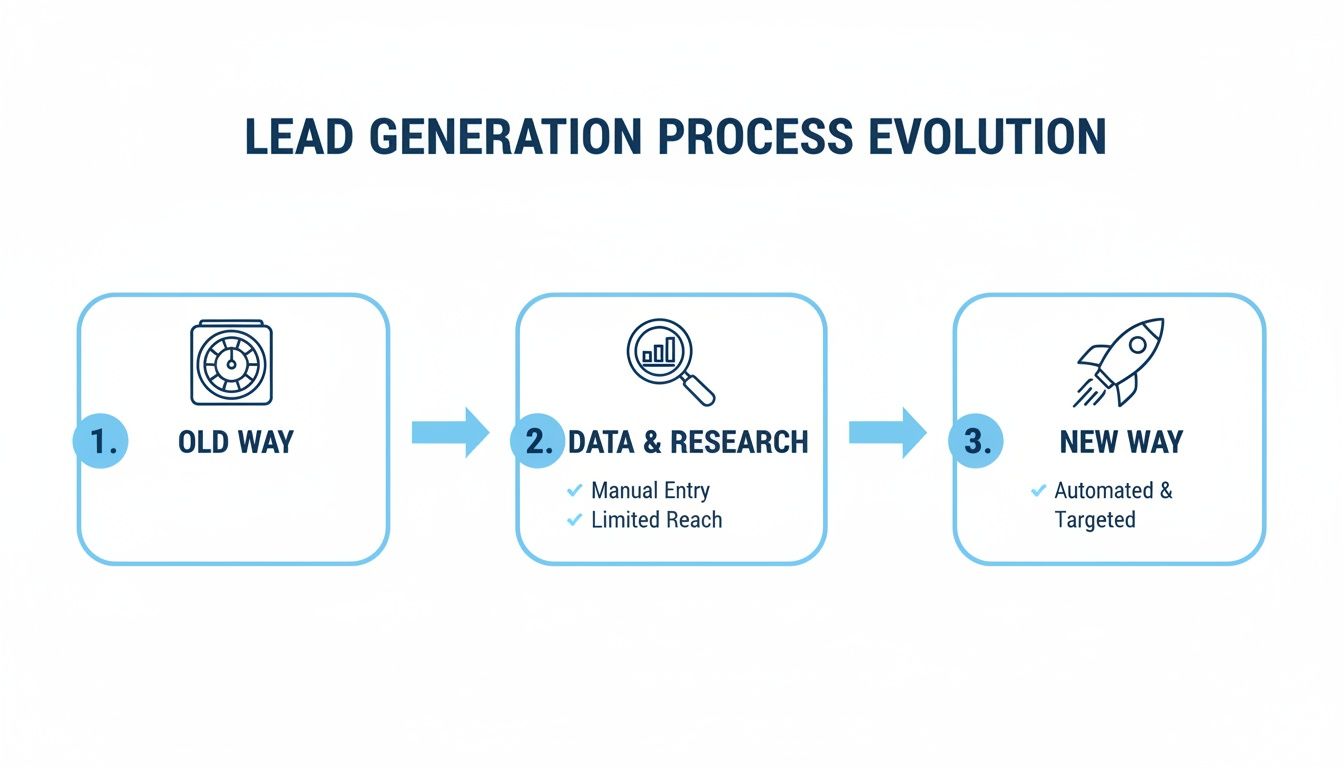
    Metric Traditional Method Coreties Method
    Lead Source General business directories, manual searches, cold calls Verified global customs data, active shipper records
    Lead Quality Low; based on assumptions and broad categories High; based on actual, recent shipping activity
    Time to Find a Lead Hours of manual research for a single potential lead Minutes to generate a list of hundreds of qualified leads
    Outreach Personalization Generic, "one-size-fits-all" templates Hyper-personalized based on commodity, lane, and volume
    Conversion Rate Very low; often less than 1% Significantly higher due to relevance and timing

    As you can see, the difference is stark. In the time it takes to manually research and craft one customized email, you could be sending over 30 highly personalized messages using a data-driven workflow. This isn’t just about working harder; it’s about working smarter.

    With global container demand projected to grow 3-4% in 2025 against a 4.8% fleet expansion, competition will only get tougher. January 2025 already saw volumes climb 5.8% year-over-year to 15.4 million TEUs. In this environment, using customs data to find and engage shippers isn’t just an advantage—it’s essential.

    For more on where the market is headed, check out these global ocean freight market trends on Bertling.com. And if you're ready to dig even deeper into using data to gain a competitive edge, exploring topics like Enhancing Logistics with Python Data Analytics can unlock a whole new level of efficiency.

    Your Questions on Caribbean Shipping Answered

    Even the most seasoned pros have questions when it comes to the nitty-gritty of Caribbean logistics. Let's get into some of the common ones we hear all the time, breaking down the practical answers you need to plan your shipments with confidence.

    How Far in Advance Should I Book Shipments?

    The golden rule? Don't wait until the last minute. For a full container load (FCL) coming out of a major hub like the U.S. East Coast or Europe, booking 3-4 weeks in advance is your sweet spot during normal times. This gives you enough runway to lock in a good rate and secure your space on the vessel.

    But when peak season hits—think late summer through November—you need to add a couple of weeks to that buffer. Aim for 5-6 weeks out. For less-than-container-load (LCL) shipments, the most important deadline is the warehouse cut-off. You'll want to be in touch with your freight forwarder at least 2-3 weeks before the ship is set to sail to make sure your cargo gets consolidated on time.

    What Are the Most Common Causes of Delays?

    When a shipment gets held up, it almost always comes down to one of three usual suspects: customs, congestion, or weather.

    • Customs Issues: Paperwork. It's the number one killer of schedules. A single missing form or an incorrect tariff code can leave your container sitting for weeks, racking up fees. Your best defense is being absolutely meticulous with your documentation.
    • Port Congestion: Major transshipment hubs like Kingston or Cartagena are the arteries of the Caribbean, and sometimes they get clogged. When these ports are swamped, ships can end up anchored offshore waiting for a berth, which causes a domino effect of delays across the entire region.
    • Weather Events: Hurricane season, which runs from June to November, is a fact of life in the Caribbean. A major storm can shut down ports entirely or force vessels to take long, costly detours. A good forwarder is always watching the weather and has backup plans ready to go.

    The key is to understand these risks so you can set realistic expectations with your clients. You can't always prevent a delay, but you can manage the fallout with clear communication and by having alternate routes in your back pocket.

    Can I Ship Hazardous Materials?

    Yes, but this is a whole different ballgame. Shipping hazardous materials (HAZMAT) isn't something you can just wing; it requires total compliance with a maze of international and local rules.

    First, you'll need to provide a Material Safety Data Sheet (MSDS). This is non-negotiable. Then, your cargo must be packaged, labeled, and placarded exactly as required by the International Maritime Dangerous Goods (IMDG) Code.

    Keep in mind that not every carrier will handle all nine classes of HAZMAT cargo, and every island has its own list of what it will and won't allow in. You absolutely must declare any hazardous goods to your freight forwarder from the very start. Hiding it or getting it wrong can lead to massive fines, rejected shipments, and serious legal trouble. When it comes to HAZMAT, there's no room for assumptions—full transparency is the only way.


    Ready to stop guessing and start winning more Caribbean business? Coreties transforms global customs data into a powerful lead generation engine. Find qualified shippers, connect with decision-makers, and craft personalized outreach that gets results. Discover how our platform can supercharge your sales pipeline by visiting https://coreties.com.

  • Your Guide to Winning US Auto Exports

    Your Guide to Winning US Auto Exports

    For freight forwarders looking for a high-value, high-volume market, it’s tough to beat US auto exports. It’s a space where deep expertise pays off, and the logistics puzzles are as complex as the potential revenue is significant. This isn't just about moving cars; it’s about mastering a specialized corner of global trade.

    Cracking the Code on US Auto Exports

    Worker inspecting rows of new cars at a bustling port, ready for US auto exports.

    Let's get right to it. The United States is a global automotive powerhouse, with vehicles constantly rolling off assembly lines and heading to nearly every country imaginable. For a logistics pro, orchestrating this flow is a high-stakes game of timing, compliance, and international coordination.

    This guide is your playbook. We're going to break down the US auto export market piece by piece, giving you the practical intelligence needed to do more than just quote rates—you'll learn how to become an indispensable partner to automotive shippers.

    To win in this sector, you have to know:

    • The most profitable trade lanes and what’s driving demand in those destinations.
    • The critical documentation and regulations that can stop a shipment in its tracks.
    • How to use modern data tools to find and connect with the right auto shippers.

    A Market of Big Swings and Bigger Opportunities

    The US auto export market is known for two things: impressive volume and wild fluctuations. These ups and downs are tied to everything from global parts shortages and shifting consumer tastes to new trade deals. For forwarders, this volatility is actually a major opening.

    Just look at the recent numbers. In December 2025, new vehicle exports hit around 116.07 thousand units. While that was down 23.46% from the month before, it was a staggering 83% jump from the same time the previous year. You can dig into the historical trends yourself with this detailed export data on ycharts.com.

    That kind of volatility is where you prove your worth. When the market gets shaky, shippers don't want a rate-bot—they want an expert who can give them clarity, solve problems, and keep their cargo moving.

    Here's a quick snapshot of the key market characteristics every forwarder should know.

    US Auto Exports at a Glance

    This table summarizes the core metrics of the US auto export market, offering a quick reference for understanding the landscape and identifying where the opportunities lie for freight forwarders.

    Metric Recent Data (2025-2026) Key Takeaway for Forwarders
    Annual Export Value ~$65 Billion+ High-value cargo translates to higher revenue per shipment and greater potential for service-based margins.
    Key Export Destinations Canada, Mexico, Germany, China, UAE Focus prospecting and marketing efforts on shippers active in these high-volume lanes.
    Primary Export HS Code 8703 (Motor cars and other motor vehicles) This is the core commodity code. Knowing its variations for new, used, and EVs is critical for compliance and targeting.
    Market Volatility ~83% YoY increase (as of Dec 2025) Shippers need reliable partners to manage uncertainty. Offer stability, flexible solutions, and expert advice.
    Emerging Trend Electric Vehicles (EVs) A new, complex, and high-value stream. Build expertise in handling EV batteries (DG) to gain a competitive edge.

    As you can see, the numbers point to a robust but demanding market. Success here means moving beyond basic freight services and positioning yourself as a specialist.

    Why Auto Exports Should Be on Your Radar

    If you're a forwarder looking to grow, the auto export sector offers a direct path. The scale is massive, so even a small slice of the pie can make a huge impact on your business. More importantly, the complexity lets you shine.

    From handling hazardous materials like EV batteries to navigating the tricky customs rules for salvaged vehicles, these shipments demand real expertise. That’s your chance to move beyond price and compete on value, which naturally leads to better margins.

    The boom in electric vehicles (EVs) is opening up a whole new frontier. As US factories increase EV production for export, they're creating a specialized, high-value freight stream. If you get ahead of the curve and build out your capabilities for handling EV logistics, you'll be one of the go-to forwarders in a rapidly growing niche.

    Where the Rubber Meets the Road: Your Top Revenue Lanes

    If you're a freight forwarder looking to grow your automotive business, you have to know where the big money is flowing. Following these major trade lanes is the surest way to find consistent, high-volume business. These aren't just lines on a map—they're rivers of revenue, and your sales team needs to know them inside and out.

    It’s not enough to just know that cars are being exported. To really make an impact, your team has to pinpoint the high-density routes where vehicles and parts are moving by the thousands. This means getting specific: what kind of cargo is moving, and how is it getting from Point A to Point B?

    The North American Superhighway

    Let's start close to home. The single largest flow of US auto exports happens right in our own backyard, across the borders with Canada and Mexico. The supply chains here are so tightly woven that they essentially form a single logistical superhighway.

    The US is a true automotive powerhouse for its neighbors. Canada, for instance, consistently snaps up about 45% of all US auto exports. We're talking roughly 500,000 vehicles heading north every year as of 2026, a direct result of the deep integration under the USMCA. Mexico isn't far behind, claiming around 25% of the market. With nearshoring trends in full swing, it's common to see monthly volumes top 30,000 units as of 2025. You can dig into the specifics yourself by checking out the latest automotive trade data on trade.gov.

    The best way to think about the USMCA region is not as three separate countries, but as one massive, interconnected factory floor. A car might be assembled in the US with parts from Mexico, then shipped to Canada to be sold. Getting a handle on this three-way dance is the first step to winning more business here.

    This tight-knit relationship creates very specific logistics needs—and big opportunities for forwarders:

    • Finished Vehicles to Canada: This is a classic Roll-On/Roll-Off (Ro-Ro) game. Thousands of brand-new cars are constantly moving from major US production hubs by sea or by rail. It's all about volume and efficiency.
    • Parts to Mexico: As manufacturers ramp up assembly south of the border, the demand for US-made parts has gone through the roof. This is a container-driven business, with everything from engines to electronics being shipped FCL and LCL. If you excel at container logistics, this is a market you can't ignore.

    Looking Beyond Our Borders

    While the action in North America is massive, don't sleep on the lucrative streams flowing to Europe and Asia. These markets often have a taste for different kinds of American vehicles, which opens up specialized niches for forwarders who know where to look.

    High-Value Hubs in Europe

    Germany and Belgium are the two big players here. They serve as both final destinations and critical gateways to the rest of the continent.

    1. Germany: This is a prime market for American-made luxury SUVs and, more and more, electric vehicles. Shippers sending cargo here expect absolute precision. They need a forwarder who is a master of EU import regulations and can guarantee a smooth process.
    2. Belgium (Port of Antwerp-Bruges): This port is an absolute giant. It's a major entry point for vehicles that will eventually be sold all over Europe. If you can prove you have solid expertise in transshipment and intra-European trucking or rail, you'll have a serious advantage.

    Key Markets in Asia

    From high-performance muscle cars to reliable family haulers, Asia's demand for US vehicles is incredibly diverse. Understanding what each market wants is the key to unlocking it.

    • China: Even with trade headwinds, China is still a massive market for premium US brands and specialty vehicles. The regulations can be a minefield, which makes a forwarder with real-world experience there an invaluable partner.
    • South Korea: There's a strong appetite here for American trucks and large SUVs, which are often seen as status symbols. Shippers targeting this market are looking for partners who can deliver fast transit times and perfect documentation.
    • Middle East (UAE and Saudi Arabia): This region loves American luxury, power, and size. High-end sedans, powerful trucks, and performance cars are always in demand. For the most valuable and urgent shipments, air freight is a very common and profitable option.

    Once you have these key revenue lanes mapped out, you can stop casting a wide, generic net. Instead, you can zero in on the shippers who are active on these routes and approach them with a solution that speaks directly to the challenges and opportunities they face every day.

    Capitalizing on the Electric Vehicle Boom

    Worker loads a white EV SUV into a blue shipping container on a truck for export.

    The future of U.S. auto exports is undeniably electric. For freight forwarders who get ahead of the curve, this shift is creating a massive wave of opportunity. As the world pivots toward sustainability, demand for American-made electric vehicles from giants like Tesla and GM is absolutely exploding in Europe and Asia.

    This isn't just another model year change; it's a fundamental reshaping of the entire auto export market. The growth is already redrawing trade lanes. In fact, U.S. EV exports skyrocketed over 200% between 2020 and 2025, with tens of thousands of units now heading to markets like Germany and Japan each year. You can dig into the numbers yourself on the EV export dashboard from Autos Drive America.

    For forwarders, this boom represents a high-value, high-complexity niche. Success here means moving beyond standard RoRo and mastering the unique logistical puzzle of shipping what is essentially high-voltage cargo.

    The Unique Challenges of EV Logistics

    Shipping an electric vehicle is a completely different ballgame than shipping a traditional car with an internal combustion engine (ICE). The large lithium-ion battery at its core introduces a whole new layer of complexity, demanding specialized knowledge and handling. Think of it less like moving a car and more like managing sensitive, high-value, hazardous freight.

    To win this business, you have to prove you can navigate three critical areas:

    • HAZMAT Compliance: That lithium-ion battery classifies the entire vehicle as a Dangerous Good (DG). This isn't optional—it means you must adhere to strict international regulations for documentation and handling.
    • Specialized Handling: These aren't just cars; they're rolling computers. EVs often need specific crating and bracing to protect sensitive electronics and the battery pack from the shocks and vibrations of transit.
    • Climate Control: Extreme heat or cold can seriously degrade battery life and performance. For high-value models or certain trade lanes, a climate-controlled container becomes a necessity, not a luxury.

    Shippers of these high-tech vehicles aren't just shopping for the lowest rate. They're looking for a logistics partner who can guarantee safety, compliance, and a flawless arrival. This is where you can stand out and command better margins.

    Positioning Yourself as an EV Export Expert

    To become the go-to forwarder for EV shippers, you can't just react—you need to proactively build and showcase your expertise. This goes way beyond simply reading the rulebook; it's about having your operations buttoned up and ready to go.

    Actionable Steps to Build Your EV Capabilities

    1. Get Certified: This is the absolute baseline. Make sure your team members handling DG documentation have current training and certifications. It's a non-negotiable and a powerful selling point.
    2. Develop Standard Operating Procedures (SOPs): Create detailed, step-by-step internal guides for handling every EV shipment. Cover everything from initial vehicle inspection and verifying the battery's state-of-charge to correct labeling and container securing.
    3. Partner with Specialists: You don't have to do it all alone. Build a network of trusted drayage and warehousing partners who have proven, hands-on experience with EVs and their unique requirements.
    4. Educate Your Sales Team: Your sales and customer-facing staff need to speak the language of EV logistics. They should be able to confidently explain HAZMAT regulations and walk a potential client through your company’s specific, safety-focused procedures.

    By mastering the intricacies of EV logistics, you transform your company from a simple service provider into an essential risk-management partner. That shift elevates your value and makes you an indispensable link in the booming electric vehicle supply chain.

    Navigating Export Compliance and Documentation

    When it comes to US auto exports, getting compliance wrong isn't an option. Think of it less like paperwork and more like the difference between a smooth sailing and a shipment that's dead in the water—stuck, fined, or even seized. For a freight forwarder, mastering these rules is what makes you an indispensable partner, not just another vendor.

    Export documentation is essentially the vehicle's passport. Without the right stamps and details, it’s not going anywhere. This entire process is built to give U.S. Customs and Border Protection (CBP) a clear, legal record of what's leaving the country and where it's headed.

    Mastering the AES and EEI Filing

    The first hurdle for any U.S. vehicle export is filing the Electronic Export Information (EEI) through the Automated Export System (AES). This is a non-negotiable electronic report submitted to the Census Bureau that outlines the specifics of your export. It's the primary way the government tracks trade statistics and enforces export laws.

    Don't mistake this for a simple formality. An EEI filing is mandatory for any single commodity valued over $2,500, and for any self-propelled vehicle, regardless of its value. Failing to file—or filing with sloppy, inaccurate information—can bring on some serious financial penalties.

    A classic mistake is a document mismatch. The Vehicle Identification Number (VIN) on the EEI absolutely must be a perfect match to the VIN on the vehicle's title and the one stamped on the vehicle itself. Even a one-digit error can flag the entire shipment, triggering an inspection and causing delays that will frustrate your client and damage your reputation.

    The 72-Hour Rule Explained

    One of the most critical and often misunderstood regulations is the 72-hour rule. This CBP mandate is simple: all documentation and the vehicle itself must be presented to customs at the port of export at least 72 hours before the ship is scheduled to leave.

    This isn't a suggestion—it's a hard deadline. Miss that window, and your vehicle is not getting on that vessel. The rule gives CBP the time they need to review paperwork and, if they choose, physically inspect vehicles.

    Smart planning is the only way to manage this. The best forwarders build a buffer into their schedules. They get documents from the shipper far in advance and coordinate tightly with trucking partners to hit that deadline without breaking a sweat. This proactive approach eliminates last-minute panic and ensures a clean, on-time loading process.

    Common Documentation Pitfalls to Avoid

    Beyond the EEI and the 72-hour window, a few other common documentation snags frequently trip up unprepared forwarders. Getting these details right is what separates a smooth export from a logistical nightmare.

    First, let's look at what's required for new versus used vehicles. The paperwork isn't the same, and knowing the difference is crucial.

    Essential Documents for US Auto Exports

    Document/Requirement New Vehicle Export Used/Salvage Vehicle Export
    Certificate of Title Not Applicable Required (Original, clean)
    Manufacturer's Statement of Origin (MSO) Required (Original) Not Applicable
    Bill of Sale Required Required
    Power of Attorney Required Required
    EEI Filing (AES) Required Required

    As you can see, the core difference lies in the proof of ownership—the MSO for a brand-new vehicle and the original Title for a used one. Any liens must be cleared, and all information must be accurate.

    Here are a few other common issues to keep on your radar:

    • HS Code Classification: Giving a vehicle the wrong Harmonized System (HS) code is an easy way to cause problems. A sedan, an SUV, and an electric truck all have unique codes. The logic for classifying finished vehicles is similar to parts, which you can learn more about in our guide on HS codes for auto parts.

    • Specialized Cargo Regulations: As we've touched on, electric vehicles aren't just cars—they're hazardous cargo because of their batteries. You must follow strict rules for shipping them. That means understanding complex guidelines like the Lithium Battery Shipping Requirements to ensure safety during transit.

    When you become an expert in these compliance details, you change the conversation with your clients. It's no longer just about price. You become the partner who sees problems before they happen, protects them from risk, and makes a complicated process feel simple. That expertise is your most powerful selling tool.

    Choosing the Right Ports and Shipping Methods

    Think of it this way: choosing a port is like picking the right tool for a delicate job. Picking the wrong one doesn't just slow you down; it can mess up the entire project. For every US auto exports shipment you handle, your choice of port and shipping method directly hits the bottom line, influencing everything from transit time to final cost.

    Getting this wrong can be painful. Imagine trying to ship a car through a port that barely handles Roll-On/Roll-Off (Ro-Ro) traffic—it's a recipe for delays and ballooning costs. Your real value as a forwarder is steering your client away from these logistical dead-ends before they even become a problem.

    Top US Auto Export Hubs

    When it comes to shipping cars, not just any port will do. The U.S. has a few heavy hitters, massive hubs purpose-built for vehicle logistics. Each has its own personality and strategic advantages.

    • The Port of Baltimore: A true powerhouse on the East Coast. If you're sourcing cars from the Midwest and shipping to Europe or the Middle East, Baltimore is often your best bet. It’s famous for its sprawling Ro-Ro terminals and deep-water access that can handle the largest vehicle carriers.

    • The Port of Jacksonville (JAXPORT): Further down the coast, JAXPORT has carved out a niche as a specialist in auto processing. It's a go-to hub for shipments heading to the Caribbean, Central, and South America, known for its frequent sailings and strong carrier relationships.

    • The Ports of Los Angeles/Long Beach: This West Coast behemoth is the undisputed gateway to Asia and Oceania. The sheer scale is staggering, offering incredible flexibility with its countless carrier services. The trade-off? Navigating this complex requires an expert hand and tight coordination.

    The best port isn't always the closest one. It's the one that offers the optimal blend of specialized infrastructure, frequent carrier service on your target trade lane, and efficient inland connections.

    Selecting the Right Transport Method

    Once you've zeroed in on a port, the next question is how the vehicle will travel. The choice between Ro-Ro, container, and air freight depends entirely on the car's value, condition, and the client's urgency.

    Ro-Ro: The Workhorse of Auto Shipping

    For most standard, running vehicles, Roll-On/Roll-Off is the default and for good reason. It’s the bread and butter of the industry. Cars are simply driven onto the vessel, secured below deck like in a massive floating garage, and driven off at the destination. It’s straightforward, efficient, and cost-effective.

    Container Shipping: The Secure Option

    When you’re dealing with a high-value classic, an exotic sports car, or a non-running vehicle, security becomes the top priority. That’s where container shipping shines. The vehicle is carefully loaded, braced, and locked inside a dedicated 20-foot or 40-foot container, protecting it from the elements and any bumps along the way. This is also the perfect method for shipping parts along with a vehicle.

    To get a closer look at the entire process, from documentation to delivery, our guide on the complete process of exporting cars from the USA breaks it all down.

    Air Freight: The Express Lane

    Sometimes, the client just needs it there now. Whether it's a race car needed for an event or a luxury vehicle for a waiting customer, air freight is the answer when speed trumps cost. It is significantly more expensive, but it's the ultimate solution for time-critical shipments.

    Ultimately, mastering these options isn't just about moving metal; it’s about providing smart, cost-effective solutions that build trust. Great logistics and shipping efficiency turns you from a simple service provider into an indispensable strategic partner.

    How to Find and Win Auto Shipper Leads

    Knowing the ins and outs of US auto exports is one thing. Finding a steady stream of clients who need that expertise? That's a completely different ballgame. This is where your knowledge translates directly into revenue.

    Forget about mind-numbing cold calls. The modern, and frankly much smarter, way to prospect is to use data to find high-value auto shippers. You can then walk in the door with a solution that's already a perfect fit for their business.

    Let’s walk through a proven playbook for turning raw export data into profitable client relationships. This is how you stop prospecting in the dark and start engaging leads with laser precision.

    Step 1: Mine Customs Data for Shipper Intelligence

    At the heart of smart prospecting lies customs data. Every single time a vehicle is shipped overseas, it creates a digital footprint. Your job is to become a detective and follow that trail. Start by digging into raw export data to see which companies are actively shipping vehicles and parts.

    Here’s what that looks like in practice:

    • Filter by HS Code: Your first move is to zero in on codes like Chapter 87 (Vehicles other than railway or tramway rolling stock, and parts and accessories thereof). This immediately narrows your search to companies in the auto export business.

    • Segment by Destination: Next, cross-reference those HS codes with the destination countries. This is how you spot shippers who are already moving freight on the exact trade lanes where you have great partners and competitive rates.
    • Analyze Volume and Frequency: Look for consistency. A company shipping 50 cars a month to Germany is a much better prospect than one shipping a single vehicle once a year. The goal is to find shippers with regular, high-volume business.
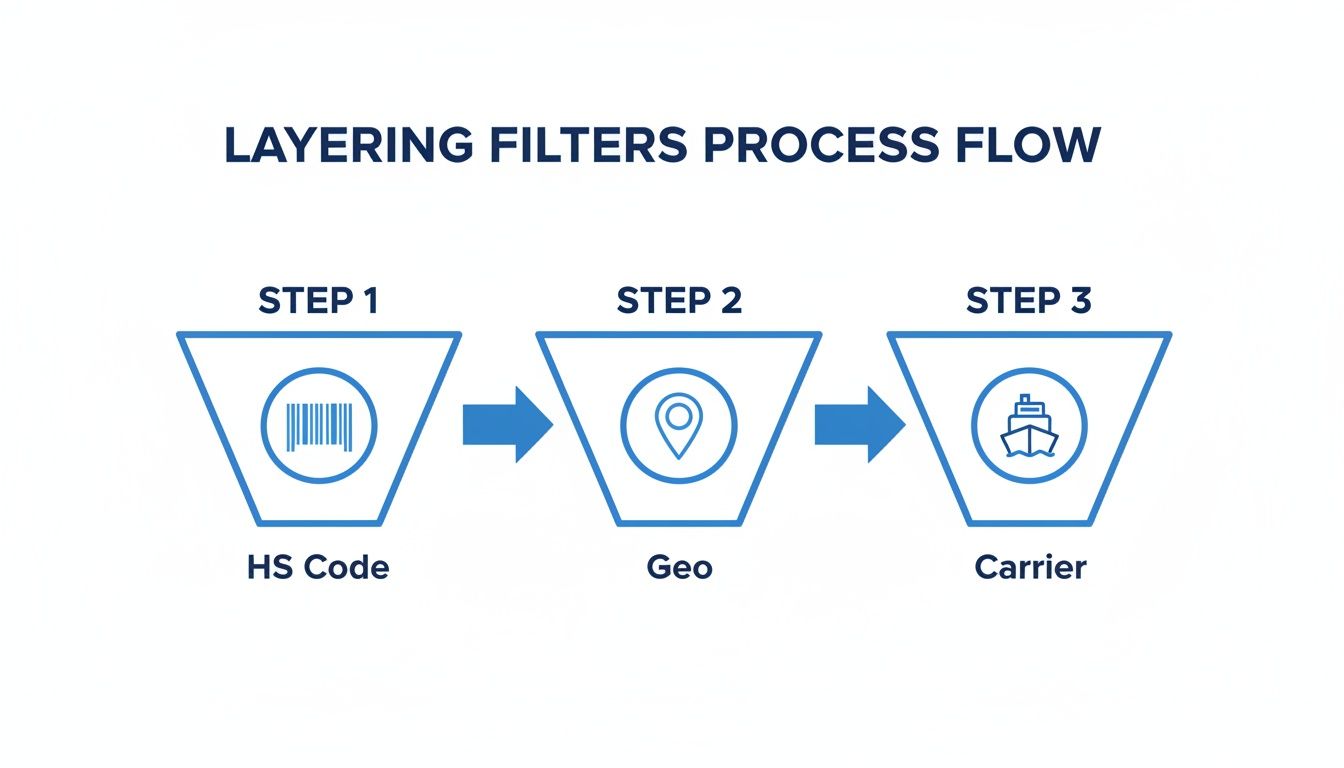
    This data-first approach completely changes the game. You're no longer just asking, "Who ships cars?" Instead, you're asking, "Which companies are shipping 100+ SUVs to the UAE from the Port of Baltimore every quarter?" That’s a question you can act on.

    Step 2: Transform Data into an Actionable Prospect List

    Okay, so you've got a list of promising companies. Now what? Sending a fantastic proposal to a generic "info@" email is like throwing it in the trash. You need to get in front of the actual decision-makers who manage the company's logistics.

    This is where a good data platform really proves its worth. These tools take that raw company data and enrich it, helping you pinpoint the right people to contact.

    1. Identify Decision-Makers: Look for job titles like Logistics Manager, Supply Chain Director, or Export Coordinator. These are the people who hire and fire freight partners.
    2. Find Verified Contact Information: A quality platform will give you verified email addresses and direct phone numbers, making sure your message actually gets to the right person.
    3. Gather Context: Many of these tools now integrate with LinkedIn, giving you a quick snapshot of a prospect's professional history and day-to-day responsibilities.

    This infographic shows the typical process your prospects are navigating—and all the points where your expertise can make a difference.

    Flowchart illustrating the US auto export shipping process including port, RO-RO, and container steps.

    From handling everything at the port to deciding between Ro-Ro and container shipping, this is their world. Your job is to show them you can make it run more smoothly.

    Step 3: Craft a Data-Driven Outreach Message

    Now for the final piece. You have your target company, the right person's name, and their contact info. It's time to write an email that gets opened, read, and answered. The secret is to show you've done your homework and can offer immediate value.

    Keep your message short, sharp, and relevant. Ditch the generic, "My name is…" intro and lead with a specific insight you pulled from the data.

    Here's a quick example:

    "Hi [Prospect Name],

    I noticed your company has been consistently shipping vehicles under HS code 8703 to Belgium out of Jacksonville. We have a lot of experience on that specific lane and I think we could help you cut down on transit times and trim your drayage costs."

    An approach like this proves you understand their business before you even ask for it. It immediately sets you apart from the dozens of other forwarders clogging their inbox with generic pitches. For more tips on this, our guide on finding shippers for freight brokers has a ton of other proven techniques.

    When you combine customs data with a sharp, targeted outreach, you build a powerful system for winning more US auto exports business. You stop sounding like a salesperson and start acting like a problem-solver.

    Frequently Asked Questions About US Auto Exports

    If you're looking to get into auto exports, you probably have a few questions. It’s a profitable niche, but the details can make or break a shipment. Let's tackle some of the most common questions forwarders have when they start moving vehicles.

    What Is The Difference Between Ro-Ro And Container Shipping?

    Think of Ro-Ro (Roll-on/Roll-off) shipping as a massive, floating parking garage. It’s the most common and cost-effective way to ship standard, working vehicles. The cars are simply driven onto the vessel, secured in place, and driven off at the destination. Simple and efficient.

    Container shipping, on the other hand, is like getting a private room for the car. The vehicle is loaded, braced, and sealed inside a dedicated steel container. This method offers far more protection from the elements and handling.

    It’s the best choice for:

    • High-end luxury or classic cars needing extra security.
    • Non-running or salvaged vehicles that can't be driven.
    • Shipments where you need to include spare parts with the car.

    How Do I Handle Exporting A Salvaged Vehicle?

    Shipping a car with a salvaged title requires extra attention to detail. Just like with a standard vehicle, you absolutely must present the original salvage title to U.S. Customs at the port at least 72 hours before the ship is set to depart.

    The real difference is the level of scrutiny. Customs officers will often inspect salvaged vehicles much more closely. They're on the lookout for stolen cars or parts being disguised for export. You need to make sure every VIN on your paperwork perfectly matches the VINs on the vehicle.

    Key Takeaway: When shipping a salvaged car, your documentation has to be perfect. Any inconsistency between the title, the bill of sale, and the car itself is a huge red flag for customs and will stop your shipment in its tracks.

    What Are The Biggest Mistakes To Avoid In Auto Export Logistics?

    In this business, the costliest mistakes usually come from simple oversights. Here are the top three pitfalls we see time and again:

    1. Incorrect Documentation: This is the number one cause of delays. Mismatched VINs, a missing title, or using the wrong HS code will get your shipment flagged instantly.
    2. Ignoring the 72-Hour Rule: If you miss the customs deadline for presenting your documents and the vehicle, the car simply won’t be loaded. There are no exceptions.
    3. Underestimating Port Congestion: Assuming everything will run on schedule at busy ports like Los Angeles or Baltimore is a rookie mistake. Always build in a buffer for potential delays that can throw off your entire timeline.

    Ready to stop guessing and start winning more auto shipper clients? Coreties transforms raw customs data into an actionable prospecting machine. Find high-volume shippers on your key lanes, connect with the right decision-makers, and send data-driven outreach in minutes, not hours. Discover your next client with Coreties.

  • Canadian Importers Exporters: 2026 Guide to canadian importers exporters

    Canadian Importers Exporters: 2026 Guide to canadian importers exporters

    To zero in on high-value Canadian importers and exporters, you need to look past the surface-level numbers. The real money for freight forwarders isn't just in the total volume of goods—it's in finding the right volume moving through the most profitable lanes. It's about drilling down into booming industries and understanding the strategic value of Canada's key logistics hubs.

    Tapping Into Canada's High-Value Trade Market

    For any logistics sales team, the Canadian market is a goldmine. But without a map, it's easy to get lost digging in the wrong places. The key is to stop chasing just "any" shipper and start targeting prospects based on their actual value. This means figuring out which product categories offer consistent, lucrative freight contracts and which provinces are the critical arteries for moving those goods.

    The sheer scale of this market might feel overwhelming at first, but it also shows the massive opportunity. In 2023, Canada's total imports reached a staggering $978 billion CAD, with $770 billion CAD of that being physical goods. That’s a huge pie.

    This volume cements Canada's role as a global trade heavyweight, deeply connected with partners like the United States (44% of imports), China (11%), and the European Union (10%). For a freight forwarder, knowing that top sectors like consumer products and motor vehicles each make up 15% of all imports gives you a powerful starting point. You can explore more of this top-level data over at Trading Economics.

    Identifying Lucrative Sectors and Provinces

    Let's be honest: not all freight is created equal. Some sectors simply offer better margins and more reliable volumes, making them prime targets for your sales efforts.

    The automotive supply chain, for example, is the backbone of Canadian trade, especially in Ontario. This province isn’t just a place where cars are made; it's a complex ecosystem of parts suppliers and assembly plants that are constantly shipping goods back and forth across the US-Canada border. This is where you find consistent, high-frequency freight.

    Out west, British Columbia is the main gateway for goods arriving from Asia, with the Port of Vancouver being the star player. If you target electronics or consumer goods importers using this lane, you can pitch specialized knowledge and services that cater directly to their unique pain points.

    The most successful logistics providers don't just sell freight; they sell solutions tailored to specific industries and trade corridors. Focusing your efforts on high-value segments like Ontario's auto sector or B.C.'s Asia-Pacific trade allows you to build expertise and become an indispensable partner rather than just another carrier.

    Before we turn this data into a hit list, it's helpful to see where the biggest opportunities are clustered. This table breaks down some of the most valuable segments based on current trade patterns.

    High-Value Prospecting Segments in Canadian Trade

    This table identifies the most valuable sectors and trade lanes for logistics providers targeting Canadian importers and exporters, based on recent trade data.

    Target Segment Key Data Point Strategic Implication for Freight Forwarders
    Ontario Automotive Supply Chain The province hosts 5 major global automotive assembly plants. A high-density target for LTL/FTL, cross-border, and just-in-time (JIT) delivery services. Expertise in this lane is a major differentiator.
    B.C. Trans-Pacific Imports The Port of Vancouver is Canada's largest, handling $1 of every $3 of trade outside North America. Ideal for targeting importers of electronics, apparel, and furniture from Asia. Offer drayage, transloading, and intermodal solutions.
    Quebec Aerospace & Pharma Quebec is one of the world's top 3 aerospace clusters. A niche for specialized, high-value, and often time-sensitive logistics. Requires security and compliance knowledge.
    Alberta Energy & Agriculture The province is a leading exporter of crude oil, natural gas, and grains. Opportunity in oversized/project cargo for the energy sector and bulk/containerized freight for agricultural exports.

    This framework shows that by narrowing your focus, you can develop a much more compelling and relevant sales pitch.

    From Data to a Strategic Prospecting Map

    So how do you turn all this information into an actual sales plan? It's time to build a focused prospecting map instead of just casting a wide, inefficient net.

    Here’s a simple, effective way to get started:

    • Target by Sector: Build lists of companies specifically in the automotive, consumer goods, and electronics industries. These are your bread-and-butter prospects.
    • Target by Geography: Zoom in on businesses located in or shipping through key provinces like Ontario, Quebec, and British Columbia.
    • Target by Trade Lane: Prioritize shippers who are active on the most profitable lanes, like the busy US-Canada border crossings or the trans-Pacific routes into Vancouver.

    This methodical approach transforms overwhelming national data into a manageable and highly effective sales strategy. When you understand the foundational principles of how these businesses operate, you can position your services to meet their exact needs. To get a better handle on this, check out our guide on the essentials of an import-export firm. This ensures your outreach is always relevant, strategic, and far more likely to land you a meeting.

    Look, if you're still buying generic prospect lists and making purely cold calls, you're working with a playbook from a bygone era. In today's freight market, precision is everything. The single most powerful way to find high-value Canadian importers and exporters is by getting your hands on customs data. It gives you a direct window into a company's actual shipping activity, swapping out guesswork for a data-backed approach.

    Forget about those stale, recycled lists. With real trade data, you can build your own pipeline filled with companies that are actively shipping right now. This means you can find prospects who are a perfect fit for what you do best, whether that's handling specific commodities, serving niche trade lanes, or managing certain types of freight. It’s all about focusing your energy where it will have the biggest impact.

    The chart below gives you a bird's-eye view of how to take broad Canadian trade information and narrow it down to find these golden opportunities.

    Flowchart illustrating the Canadian trade value process, including sectors, provinces, and markets.

    This process is your roadmap, showing you how to move from a wide view of the market to a hyper-focused list of prospects, making sure every call you make counts.

    Sifting Through the Data to Find Gold

    Jumping into a customs database for the first time can feel like staring at an endless ocean of information. It's overwhelming. But the secret isn't to analyze everything; it's to know which filters to apply. Modern data platforms built for logistics sales pros are designed to do just this—turn raw data into a laser-focused prospecting tool.

    Think about it: you wouldn't try to find a specific fish by draining the entire lake. You'd use the right bait and cast your line in the right spot. In this case, filters are your bait.

    Here are the filters I've found to be the most effective in my experience:

    • HS Codes (Harmonized System Codes): This is your bread and butter. It lets you find companies shipping exact products. For example, if your team has experience handling pharmaceuticals, you can instantly pull a list of every company importing or exporting under those specific HS codes.
    • Trade Lanes: This is where you can align opportunities with your operational strengths. Filter by the port of loading and port of unlading to find shippers active on the exact routes you service, whether it's the Shanghai-Vancouver ocean lane or a cross-border LTL route from Illinois to Ontario.
    • Shipment Volume & Frequency: You want to find the whales, not just the minnows. Use filters for shipment counts or declared TEU values to separate the one-off shippers from the high-volume accounts that can become the cornerstones of your book of business.
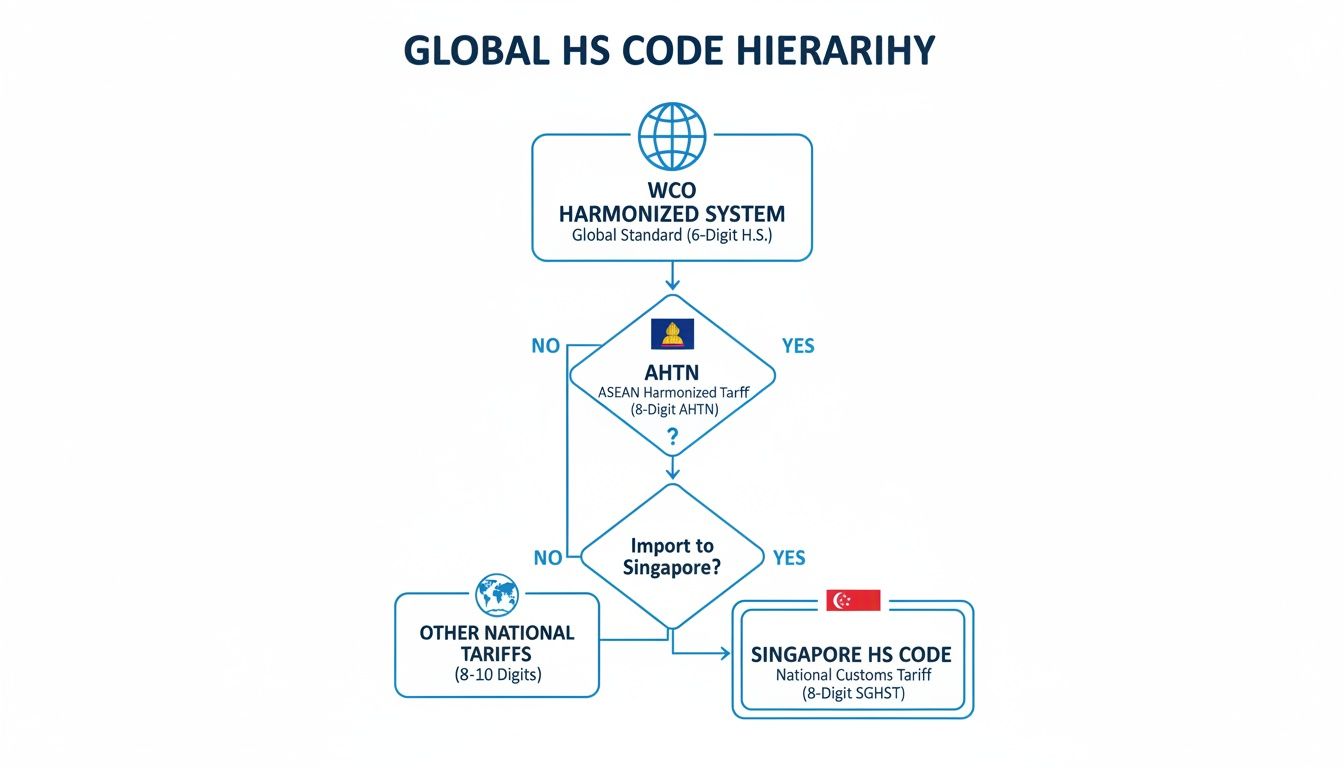
    • Company Name or Location: Already have a target in mind? Or maybe you're trying to build density in a specific industrial park. A direct search for a company or city lets you instantly analyze their shipping patterns and see if they're a good fit.

    By combining these filters, you can build incredibly targeted and valuable lists of Canadian importers and exporters. If you want to get really granular on this, our complete guide on using an HS Code filter for smarter prospecting breaks this technique down even further.

    A Practical Example: Prospecting in Action

    Let's walk through a real-world scenario. Imagine your freight forwarding business has a strong network for automotive parts moving between the US and Canada. This is a smart niche to target. After all, the US-Canada trade partnership is the most significant one for Canadian businesses by a long shot. Canada’s trade with the United States accounts for a massive 77% of Canadian goods exports and 63% of its goods imports.

    A recent Scotiabank economic report offers even more insight into this critical partnership, highlighting key sectors like machinery, chemicals, and electronics. But how do you turn that high-level knowledge into a call list?

    This is where a trade data platform comes in. The search below shows how you can apply multiple filters to quickly isolate your ideal prospects.

    Flowchart illustrating the Canadian trade value process, including sectors, provinces, and markets.

    In this example, we’ve pinpointed companies that are actively importing automotive parts from the United States directly into Ontario.

    That’s the power of using data properly. In just a few minutes, you’ve gone from a general idea ("I want more automotive clients") to a verified list of companies importing the exact products you handle on the exact lane you service.

    When you turn raw trade data into a curated prospect list, you completely change the sales conversation. You're no longer just another cold caller with a generic pitch; you're a potential partner who clearly understands their business and has already identified a need.

    This level of precision is what separates the top-performing logistics sales teams from the rest. It saves countless wasted hours, dramatically increases your response rates, and ultimately fills your pipeline with shippers who are far more likely to become valuable, long-term customers.

    Validating and Prioritizing Your Shipper Leads

    Tablet showing a 'Prioritize Leads' map with location pins, next to a notebook and pen.

    Alright, you’ve used customs data to build a list of potential Canadian importers and exporters. That's a great starting point, but let's be honest—it's just raw material. The real work begins now: turning that long list into a high-value sales pipeline by figuring out who’s actually worth your time.

    This is where you separate the signal from the noise. Your job is to confirm that the shipping activity you've uncovered isn't just a fluke but part of a consistent, ongoing operation. Think of it as adding layers of context to your data.

    Once you have your core list, you need a system to rank your opportunities. It's smart to build a framework for how to qualify sales leads so you can methodically prioritize your efforts. This simple discipline ensures you’re not just busy, but productive.

    Verifying Shipment Activity and Volume

    The first thing I always look for is consistency. A single bill of lading might catch my eye, but a company with ten bills of lading over the past three months? That’s a qualified lead. Dive into their shipment history on your data platform.

    Get answers to these questions:

    • Frequency: Are they moving goods weekly, monthly, or just once in a blue moon?
    • Volume: Is this a single container here and there, or are they shipping multiple TEUs at a time?
    • Consistency: Do they stick to the same trade lanes and commodities, or is their activity all over the map?

    Answering these questions helps you quickly estimate a prospect's potential value. A shipper with predictable volume on a lane you serve well is a goldmine compared to one with sporadic, low-value shipments. This is also where understanding who the legal importer of record is becomes incredibly useful, as it points you to the entity with the most at stake.

    A prospect's past shipping behavior is the single best predictor of their future needs. Analyzing their shipment frequency and volume is like looking at their logistics fingerprint—it tells you exactly where they've been and where they're likely to go next.

    This data-first approach takes the guesswork out of prioritizing. You’re ranking leads based on cold, hard facts, which means your sales team can focus its energy where it matters most.

    Pinpointing the Right Decision-Makers

    Finding the right company is only half the battle. You need to reach the right person. Firing off emails to a generic "info@" address is a recipe for getting ignored. Your goal is to connect with the individual who lives and breathes that company’s logistics.

    This is exactly what modern sales intelligence platforms are for. Once you've zeroed in on a promising shipper, these tools help you find the people who actually make decisions. Look for titles like:

    • Head of Logistics
    • Supply Chain Director
    • VP of Operations
    • Import/Export Manager

    Platforms like Coreties often integrate directly with professional networks like LinkedIn, which is a game-changer. You can find the right person, check their professional background, and grab verified contact info without ever leaving the platform.

    By connecting company-level shipping data with the right person's contact details, you've built a complete and actionable profile. You know who they are, what they ship, and who to call. Your outreach is no longer a cold call—it’s a warm, informed introduction. That's the difference between guessing and knowing.

    Crafting Outreach That Gets a Response

    Desk setup with a laptop showing data, a notebook, pen, and a blue 'PERSONALIZED OUTREACH' banner.

    You’ve done the heavy lifting—you have a solid, prioritized list of prospects. But all that work is wasted if your first email gets instantly deleted. Sending a generic, one-size-fits-all message to a logistics manager at a company you know is a perfect fit is a recipe for failure.

    This is where the real art of sales comes in. It’s about turning all that data into a real conversation. The point isn't just to pitch your services; it's to prove from the very first sentence that you understand their world. A personalized message shows you've done your homework, separating you from the noise in their inbox.

    The best outreach gets straight to the point. Instead of a vague, "We can help with your shipping," imagine opening with, "I saw you're regularly moving automotive parts from Detroit to Windsor." That one detail changes everything. It proves you're not guessing, and it buys you a few more precious seconds of their attention.

    Moving Beyond the Generic Cold Email

    The difference between a generic email and one powered by trade data is night and day. The first one is all about you and what you’re selling. The second is all about them and their supply chain, positioning your services as a direct answer to a challenge you’ve already spotted.

    Think of it this way: a standard email asks for their business, while a data-driven one shows you've already invested time in understanding it. For busy decision-makers, that distinction is everything.

    Let's look at how you can transform a typical cold email into something that actually builds credibility and relevance right away.

    From Generic to Data-Driven Outreach

    The table below breaks down how to take a standard, low-impact cold email and infuse it with insights from trade data to create a message that demands attention.

    Email Element Generic Approach (Low Impact) Data-Driven Approach (High Impact)
    Subject Line Freight Services Inquiry Question re your recent shipments from Shanghai
    Opening Line "My name is [Your Name] and I'm with [Your Company]. We offer competitive logistics solutions." "I noticed your company has been consistently importing consumer electronics (HS Code 8517) through the Port of Vancouver over the last quarter."
    Value Prop "We can help you save money and improve efficiency." "We specialize in the trans-Pacific lane and have helped clients like [Similar Company] reduce drayage costs in Vancouver by up to 15%. With the current port congestion, have you explored alternative routing options to clear customs faster?"
    Call to Action "Are you free for a call next week to discuss?" "Would you be open to a brief 15-minute call next week to discuss how we might be able to offer a more reliable schedule for your Q3 shipments?"

    See the difference? The data-driven example makes it clear you’re not just another vendor. You’re a potential partner who knows what they ship and where they ship it from, and you're already thinking about their specific operational challenges.

    Your outreach should feel less like a sales pitch and more like a well-researched consultation. By leading with a specific observation about their business, you're not asking for their time—you're demonstrating that your time together will be valuable.

    This shift in framing moves the conversation from a generic, "What do you do?" to a specific, "How can you help me with this?" It's a simple change that can make a huge impact on your response rates.

    Leading with Value and Expertise

    Once you’ve grabbed their attention with a sharp, data-backed observation, it’s time to deliver value. This is critical in today's environment, where Canadian importers and exporters are dealing with constant uncertainty. For example, the upcoming USMCA/CUSMA review in 2026 is on the minds of many, creating potential disruptions to long-established supply chains.

    When you mention these kinds of market forces, you signal that you're more than just a salesperson—you're a strategic advisor. You could bring up recent tariff impacts on their commodities, noting that some studies show over 85% of those costs are being passed on to importers.

    Here are a few practical ways to lead with value:

    • Suggest an Optimized Route: If you notice a prospect shipping through a notoriously congested port, use a tool like Routescanner to find a smarter alternative. Present it as a helpful tip, not a hard sell.
    • Share Relevant Intel: Send a quick note about a new regulation affecting their specific products or a recent development on one of their key trade lanes. This positions you as a go-to resource.
    • Highlight Your Niche Expertise: If you’re a pro at handling a certain type of freight, say so. "We have extensive experience clearing temperature-sensitive pharmaceuticals through Toronto Pearson" is far more compelling than a generic capabilities deck.

    This approach effectively bypasses the initial discovery phase of the sales cycle because you’ve already done it. Your first contact becomes a pre-qualified consultation, putting you miles ahead of the competition and on a much faster track to building solid partnerships with high-value Canadian importers and exporters.

    Putting Your Outreach on Autopilot (The Smart Way)

    Let's be honest, real growth in logistics sales isn't about grinding out more hours. It's about working smarter. Once you've got a system for finding and qualifying prospects, the next hurdle is figuring out how to contact all of them without sacrificing the personal touch that actually closes deals.

    This is where smart sales automation comes into play. Modern platforms built for freight forwarders are designed to take the repetitive grunt work off your plate. Instead of spending your day manually researching and emailing one company at a time, you can effectively reach dozens of qualified Canadian importers and exporters in the same amount of time.

    This isn’t about blasting out generic spam. Good automation is about sending a high volume of personalized emails, with each one powered by the customs data you’ve already collected. By setting up targeted outreach sequences, you can ensure consistent follow-up and stay on the radar of your most promising accounts.

    How Smart Automation Drives Efficiency

    The magic of sales automation is how it blends scale with precision. Think about it: you can build a workflow that automatically sends a series of emails to a fresh list of validated leads.

    For example, the first email might reference their specific commodity and a major trade lane they use. A few days later, a second email could share a relevant market update for that lane. The third might ask for a brief call to discuss a specific opportunity you've identified.

    This kind of systematic approach means no lead ever gets forgotten or falls through the cracks. It’s a disciplined way to nurture relationships at scale, which is nearly impossible to manage with a spreadsheet once your prospect list gets serious. If you want to really dig into building these systems, exploring guides on Mastering Marketing Automation Workflows can give you a huge leg up.

    The goal of automation isn't to replace a great salesperson—it's to superpower them. It handles the 90% of outreach that's repetitive, freeing you to focus your expertise on the 10% that requires a human touch: negotiating, solving complex problems, and building real trust.

    A well-crafted automation sequence lets you maintain a steady, professional presence with hundreds of prospects at once. It’s the difference between fishing with a single rod and casting a wide, intelligent net.

    Adding Value with Geo-Search and Smart Routing

    Beyond email sequences, the best platforms give you tools that make your sales pitch geographically smarter and instantly more valuable to the prospect.

    The geo-search feature is a game-changer for territory planning. Let's say you have a sales trip to the Greater Toronto Area coming up. You can instantly pull up a map of every qualified lead within a 50-kilometer radius of your hotel. Suddenly, your trip is infinitely more productive.

    But here’s where you can really stand out: integrating smart routing suggestions directly into your pitch. When your platform connects customs data with live intermodal schedules, you can move from a generic sales call to a high-value consultation.

    Imagine this scenario:

    • You find a prospect: You spot a company importing home goods from China to a warehouse in Edmonton. The data shows they always route shipments through the Port of Vancouver.
    • You identify an opportunity: You know from experience and your own data that the Port of Prince Rupert often has less congestion and faster rail service to Edmonton.
    • You make a data-driven pitch: Your opening line isn't, "Hi, I'm a freight forwarder." It's, "I noticed you're shipping from China to Edmonton via Vancouver. Have you considered routing through Prince Rupert? We're often able to cut transit time by 2-3 days on that lane. I ran a quick comparison for you."

    This simple shift changes everything. You’re no longer just another vendor asking for their business. You’re an expert advisor bringing a tangible solution to the table, giving them a compelling reason to talk to you. In a crowded market, leading with this kind of value is how you win.

    Frequently Asked Questions

    Even with the best plan in hand, jumping into the world of prospecting for Canadian importers and exporters always brings up a few questions. Let's walk through some of the most common ones we hear from sales teams and get you some clear, practical answers.

    What Is the Most Effective Way to Find Contact Information for Logistics Managers?

    From my experience, the most reliable way to get the right contact info is a two-step process. It starts with using a customs data platform to find companies that are actively shipping. These tools are great because they often give you the name and title you need—like ‘Head of Supply Chain’—right in the company profile.

    Once you have a name, you pivot to a professional networking site. This is where you confirm they’re still in that role, get a feel for their professional background, and, with the right tools, find a verified email. This method beats buying stale, outdated contact lists every time and ensures your message actually lands in the right inbox.

    How Can I Filter Canadian Exporters by Specific Trade Lanes?

    Getting that granular requires a solid trade intelligence platform. You’re looking for a tool that lets you filter not just by country, but by the specific port of loading and port of unlading. This is where the real magic happens.

    For instance, you could run a search for all shipments loaded in Shanghai and discharged in Vancouver. Instantly, you have a list of every single company working that lane. This kind of specific targeting lets you tailor your pitch perfectly to their known shipping patterns, making your outreach relevant from the very first sentence.

    Think of it this way: focusing on specific trade lanes shifts your position from a generalist to a specialist. A prospect is far more likely to talk to someone who already understands their primary shipping corridors and the challenges that come with them.

    Are Free Sources for Finding Canadian Importers Reliable?

    The short answer? Not really. While free government sources like the Canadian Importers Database exist, they come with some serious drawbacks that can end up wasting a lot of your time. The information is often static and quickly becomes outdated.

    More importantly, these free lists are missing all the crucial context you need to qualify a lead. You won't find answers to key questions like:

    • Shipment Volume: Are they moving one box or hundreds of containers?
    • Frequency: Is this a daily shipper or a company that imports once a year?
    • Specific Trade Routes: Where are their goods actually coming from?

    A free list might give you a company name, but it won’t tell you if they're a high-value target or a dead end. Investing in a dynamic platform with real-time data always delivers a better return by saving you time and improving lead quality.

    What Are Promising Markets for Canadian Importers Besides the US and China?

    Looking beyond the obvious trade partners is a fantastic way to uncover less competitive—and often highly profitable—opportunities. Recent data shows that the European Union (especially Germany), Mexico, and Japan are all major and growing partners for Canadian importers and exporters.

    Focusing your prospecting efforts here can be a brilliant strategic move. For example, targeting companies that bring in automotive parts from Mexico or specialized machinery from Germany allows you to build expertise in a lucrative niche. You'll often find yourself facing far less competition than on the crowded trans-Pacific or US-Canada lanes, giving you a real edge.


    Ready to stop guessing and start connecting with high-value shippers? Coreties transforms global customs data into a prioritized list of qualified leads, complete with verified contact information and data-driven outreach tools. Discover your next best customer today.

  • Your Guide to Winning West Coast Ship Supply Business

    Your Guide to Winning West Coast Ship Supply Business

    Trying to find new West Coast ship supply partners can feel like staring at a massive, churning ocean of data and not knowing where to cast your net. This playbook is my attempt to change that. It’s not about generic port stats; it’s about the specific, actionable strategies I've used to turn overwhelming trade volumes into solid, qualified leads.

    The Playbook for West Coast Ship Supply Prospecting

    Let's be honest: the biggest challenge on the West Coast isn't a lack of opportunity—it's the sheer noise. Everyone knows the ports are busy. The real trick is sifting through thousands of potential shippers to find the ones that are a perfect fit for your services. This is where having a smart, data-driven process becomes your competitive edge.

    My goal here is to give you a field-tested method for taking raw customs data, finding high-value importers, and crafting outreach that actually gets a response. It’s about building a predictable pipeline for your freight business, starting right now.

    To make this simple, I’ve broken the entire workflow down into three core phases: Identify, Pinpoint, and Secure.

    West Coast Prospecting Process flow chart shows three stages: Identify, Pinpoint, Secure, for faster conversion.

    Think of this as your roadmap. It’s how you systematically move from the big picture of market data to a signed contract, all by being more targeted and strategic in your approach.

    Grasping the Market's True Scale

    Before diving in, it’s crucial to understand just how significant the West Coast market is. These ports aren't just dots on a map; they are enduring gateways for an immense flow of global trade.

    To put this in perspective, let’s look at a recent snapshot. This table breaks down the import tonnage for major USWC ports, showing you exactly where the volume is concentrated.

    West Coast Port Market Share (July 2026)

    Port/Region Share of U.S. Import Tonnage
    Los Angeles/Long Beach 28.8%
    All Other West Coast Ports 8.4%
    Total USWC 37.2%

    These numbers tell a clear story. The Ports of Los Angeles and Long Beach are the undisputed giants, handling nearly a third of all U.S. import tonnage alone. Despite all the talk of shifting trade lanes, the West Coast’s market share has proven remarkably resilient. You can dig into more historical trends and data over at PMSAShip.com.

    The takeaway here isn't to be overwhelmed by the numbers, but to see them as your guide. This data shows you exactly where to focus your initial efforts to find the most promising opportunities.

    Turning Raw Data Into Real Leads

    So, how do you translate that massive volume into a focused list of prospects? It’s all about a repeatable process that saves time and gets better results. It means leaving generic company lists behind and zeroing in on shippers whose specific needs match your services.

    When you follow a structured playbook like this one, you’ll find that you can:

    • Stop guessing: Pinpoint shippers based on their actual import history, commodities, and shipping partners.
    • Work smarter, not harder: Slash the hours spent on manual research and dead-end cold calls.
    • Close more deals: Approach prospects with personalized, data-backed insights that immediately show you’ve done your homework.

    Ultimately, this is a framework for transforming how you approach every import and export firm. It’s about building a stronger, more qualified sales pipeline, one targeted prospect at a time.

    How to Pinpoint High-Value Shippers with Precision

    Forget about casting a wide, hopeful net into the ocean of West Coast trade. That’s a fast track to a bloated pipeline and wasted hours. The real secret to winning west coast ship supply business is knowing exactly who you’re looking for before you even start your search. It’s a shift from chasing volume to targeting value—finding companies whose shipping DNA is a perfect match for your services.

    Laptop displaying logistics software, with toy cargo ship, containers, and boxes in a modern office.

    This all comes down to filtering a massive universe of customs data into a short, high-potential list. The goal isn't just to find companies that are active; it’s to find the right kind of active.

    Let's dig into the filtering strategies I’ve seen work time and again, turning raw data into a goldmine of qualified leads. This isn't just about knowing who is shipping, but getting the full picture of what, how often, and from where.

    Decoding Commodities with HS Codes

    Your first and most powerful filter is the Harmonized System (HS) code. These are the universal product codes that give you an x-ray view into exactly what a company is moving across the border. This is where you start aligning prospects with your specific expertise.

    If your team excels at handling sensitive electronics, you can immediately filter for companies importing goods under Chapter 85 (Electrical machinery and equipment). Just like that, you’ve cut out all the noise from businesses shipping furniture or food products that aren't a good fit.

    You’re no longer looking for any company that ships. You’re looking for companies that ship the exact commodities you move best. That simple shift is a game-changer.

    Knowing this detail makes your first touchpoint incredibly relevant. If you see a prospect is importing high-value automotive parts from Japan, you can speak directly to the challenges and opportunities of that specific lane.

    Analyzing Shipment Volume and Frequency

    Once you know what they’re shipping, the next question is: how much and how often? This is where you separate the big, consistent players from the one-off importers. Shipment volume—whether you measure it in TEUs or by weight—and frequency are the best indicators of a company's scale.

    A good data platform like Coreties lets you ask very specific questions and get answers in seconds:

    • Who are the top 20 importers of consumer electronics by TEU volume into the Port of Long Beach?
    • Which companies have consistently brought in at least 10 shipments per month from Vietnam over the last year?
    • Has anyone's volume spiked in the last 90 days? A sudden increase could mean they’re launching a new product or, even better, are unhappy with their current forwarder.

    This kind of analysis helps you create smart, tiered prospect lists. You can have a "whale" list for the high-volume enterprise shippers and a "growth potential" list for the smaller but consistent importers who could become your next big account.

    A Real-World Scenario: Finding Electronics Importers

    Let’s say your team wants to land new clients importing consumer electronics from Asia. Instead of spending days on manual research, you can use a data platform to run a quick, surgical search.

    You’d start by defining the trade lane—say, from the ports of Shanghai and Shenzhen to Los Angeles, Long Beach, and Oakland. Then, you’d layer on the commodity filters using HS codes like 8517 (phones) or 8471 (computers). To weed out the small-time players, you might set a minimum threshold of 50 TEUs annually.

    The result? A clean, qualified list of companies that fit your ideal customer profile, generated in minutes. This gives your sales team a massive head start. For an even more focused search, you can apply other powerful techniques like those outlined in this guide on how to generate leads from LinkedIn.

    Adding Another Layer with NAICS Codes

    Here’s a final pro-tip: use North American Industry Classification System (NAICS) codes to add another layer of context. While HS codes tell you what a company ships, NAICS codes tell you what kind of business they are.

    This helps you understand their place in the supply chain. Are they a manufacturer (NAICS 31-33), a wholesaler (NAICS 42), or a retailer (NAICS 44-45)? Each one has completely different pain points. A manufacturer worries about production line inputs, while a big-box retailer is focused on stocking shelves.

    You can learn more about combining these data points in our guide to finding the right company import export data. Stacking these filters—HS codes, shipment volume, and NAICS codes—is how you build a truly three-dimensional view of a prospect, making sure every call and email you send is smart, informed, and impossible to ignore.

    Turning a Prospect List into Real Opportunities

    So, you've built your list of companies. That's a solid first step, but let's be honest—a list of names is just a starting point. It’s potential, not a pipeline. The real work is turning that raw data into actual conversations with the right people. This is where you graduate from having a list to having legitimate prospects.

    Hands interacting with a tablet displaying contact profiles, a person writing, with coffee on a wooden desk.

    The next move is to look past the company name and zero in on the key players who manage the supply chain day-to-day. You’re hunting for titles like Logistics Manager, Supply Chain Director, or VP of Operations. These are the people who feel the sting of a delayed container or an unexpected rate hike.

    Pinpointing the Right People

    Finding the right person—and their contact info—is the bridge between your spreadsheet and your first phone call. Modern tools like Coreties build this discovery right into your workflow, letting you pull up LinkedIn profiles and verified emails directly from your prospect list. This alone can save you hours of mind-numbing manual searches.

    But the real art isn't just snagging one name. To really succeed in the west coast ship supply market, you need to map out the entire logistics department.

    Think of it from a strategic perspective:

    • A Logistics Coordinator is in the trenches. They can give you the ground-level truth about operational bottlenecks and carrier issues.
    • A Supply Chain Manager is thinking bigger picture. They're focused on carrier performance, network efficiency, and cost control.
    • A VP of Operations cares about the bottom line. Their world revolves around budget, risk mitigation, and long-term strategic partnerships.

    When you understand this hierarchy, you can tailor your message perfectly. You can hit up a manager with a specific solution for their primary trade lane while approaching the VP with a broader, more strategic value proposition about de-risking their supply chain.

    An Example of Practical Data Enrichment

    Let’s run through a quick, real-world scenario. You’ve flagged a mid-sized electronics importer in Irvine, California, that consistently ships from Taiwan into the Port of Long Beach. Now, it's time to bring this lead to life.

    First, you use an integrated tool to find people with logistics and supply chain titles at the company. Your search turns up three great contacts: a Senior Logistics Specialist, a Director of Global Sourcing, and a VP of Supply Chain.

    Next, you do a quick gut check on their LinkedIn profiles. The Director of Global Sourcing just posted about port congestion headaches. The VP of Supply Chain’s experience is all about scaling operations for high-growth companies. Interesting.

    Then you toggle back to their shipping data and spot something huge: their import volume jumped by 30% three months ago and has stayed there. That’s a critical piece of intel.

    By layering personnel data on top of shipping activity, you’ve created a rich, three-dimensional view. You're no longer just calling a company; you're reaching out to a specific person with a compelling, data-backed reason to connect.

    This completely changes the game. Instead of a cold, "Can I help with your shipping?" you can open with an informed, "I noticed your import volume from Taiwan has spiked recently, and I have a few ideas for managing the landed costs that come with that kind of growth." Now that is a conversation starter. This strategy is also essential when you're prospecting for very specific roles, a topic we cover in our guide to finding the right exim mfr enterprise partners.

    Connecting Data to Market Realities

    This level of detail is incredibly powerful, especially with the container volumes currently hitting the West Coast. In August 2026 alone, the San Pedro Bay ports handled a massive 944,832 inbound loaded TEUs, a 24.3% jump from pre-pandemic figures in 2019. This isn't a fluke; it's a trend. Long Beach processed 4,729,552 inbound TEUs in 2024, a 24.3% year-over-year gain, as shippers pivot from East Coast uncertainty.

    For anyone in logistics sales, those numbers should make your ears perk up. You can dig into more of this data on the Pacific Merchant Shipping Association website.

    Having enriched contact data lets you tie these huge market trends directly to an individual prospect. You can see exactly which companies are part of this volume surge and reach out with a message that proves you understand the pressure they’re under right now. It’s the difference between being another vendor and becoming a true strategic partner.

    How to Craft Outreach That Actually Gets a Response

    So you’ve built a fantastic, perfectly curated list of prospects. That’s a huge win, but the job's not done. Now comes the part where most sales efforts stall out: actually starting a conversation. All that rich data is useless if your outreach gets lost in the flood of generic emails that are deleted in less than three seconds.

    To make a dent in the competitive west coast ship supply market, your message can't just be sent. It has to be seen, opened, and valued. The decision-makers you're trying to reach are absolutely bombarded. They have a built-in, expert-level filter for spam and lazy sales pitches. The only way you’re breaking through is with a message that shows you’ve done your homework and can offer immediate value.

    From Generic to Granular

    Let's look at the night-and-day difference between a standard, forgettable email and one that uses data to make an instant connection. The first one is easy to write, but it's even easier for your prospect to ignore.

    The Generic Approach (and a quick trip to the trash folder):
    Subject: Your West Coast Shipping Needs

    Hi [Prospect Name],
    I'm with ABC Forwarding, and we offer competitive rates for ocean freight to the West Coast. I'd love to learn more about your shipping challenges and see how we can help. Are you free for a quick call next week?

    This email screams "mass blast." It shows zero understanding of the prospect’s business and offers nothing but a request for their time. Now, watch what happens when we weave in the data we worked so hard to gather.

    The Data-Informed Approach:
    Subject: Idea for your shipments from Taiwan to Long Beach

    Hi [Prospect Name],
    I noticed your company has been consistently importing industrial machinery from Kaohsiung, with a significant volume increase over the past quarter. With transpacific rates fluctuating—prices jumped 22% just last month—managing landed costs on that lane must be a key focus.

    I have an idea for an alternative routing through Oakland that could offer more predictability. Are you open to a 15-minute chat next Tuesday to walk through it?

    See the difference? The second email is specific, insightful, and completely changes the dynamic. You're not just another salesperson asking for a meeting; you’re a knowledgeable expert offering a targeted solution to a problem they are very likely thinking about right now.

    Pro Tip: Your most powerful opening line is never about you or your company. It's about your prospect's world—their shipments, their trade lanes, and their challenges. Lead with an observation that proves you get it.

    Lead with Value, Not Just Price

    While everyone appreciates a good rate, leading with price is a race to the bottom. A far more durable strategy is to lead with value and insight, and your data is the perfect fuel for this. For instance, think about ongoing market volatility. The disruptions in the Red Sea have had ripple effects across the globe.

    Even though most Asia-Europe services have adapted by routing around the Cape of Good Hope, this has tied up vessel capacity. The result is occasional tightness on other lanes, like the transpacific. Mentioning this kind of context shows you have a deep, real-time understanding of the market. You could suggest strategies to build in buffer time or secure capacity ahead of peak seasons, like the annual rush before Lunar New Year.

    Build a Multi-Touch Cadence That Works

    One email, no matter how well-crafted, is rarely enough. The key is professional persistence. A simple, effective outreach cadence keeps you on your prospect's radar without turning into a pest.

    Day 1: The Value-Led Opener
    This is your data-informed email we just crafted. It’s all about a specific insight into their business, like a spike in volume from a certain port or a notoriously challenging trade lane they operate on.

    Day 3: The LinkedIn Connection
    Two days later, send a personalized connection request. Don't pitch here. Just reference your email with a quick, professional note: "Hi [Name], I sent you an email a couple of days ago with an idea for your shipments from Taiwan. Hope to connect."

    Day 5: The Follow-Up Bump
    A few days after that, reply directly to your original email with a short, polite follow-up. Keep it simple: "Just wanted to gently bump this up your inbox. Is managing transpacific costs a priority for you right now?"

    Day 8: The Value-Add Message
    If they’ve accepted your LinkedIn request, send a brief message. This is another chance to add value, not to sell. Share a relevant article about port congestion or market trends that could impact their business.

    Day 12: The Professional Break-Up
    If you still haven’t heard back, it’s time for a polite closing email. This shows respect for their time and keeps the door open for the future. "Looks like now might not be the right time. I’ll stop reaching out, but please feel free to get in touch if your logistics needs change."

    This structured approach balances persistence with professionalism. It gives your prospect multiple chances to engage on their preferred channel while showing that you're an organized and respectful partner—a proven way to turn a cold name on a list into a warm conversation.

    Carving Up the West Coast: A Modern Territory Plan for Freight Sales

    I’ve seen too many sales teams treat the West Coast as one giant, messy territory. They’ll give one rep Southern California and another the Pacific Northwest, draw a line on a map, and call it a day. That’s not a strategy; it’s a recipe for burnout and missed opportunities.

    A smart territory plan isn't about geography—it's about opportunity. It transforms the vast expanse of the West Coast from an intimidating map into a series of manageable, high-potential sales zones. This is how you shift from reactive selling to proactively owning your market.

    A man interacts with a large digital territory map showing marked locations for strategic planning.

    The secret is ditching the outdated, zip-code-based approach and building your plan around real-time trade data. Doing so aligns your sales efforts with actual shipping activity, ensuring every call and email is aimed at a real, active importer.

    Find the Hotspots: Visualizing Your Prospecting Universe

    Before you can divide the pie, you need to see how big it is and where the richest slices are. The first step is to get a visual lay of the land. Using a geo-search tool, like the one inside Coreties, lets you instantly map out prospect density around the West Coast's major economic engines.

    Right away, you’ll see clusters light up around these critical zones:

    • The LA/Long Beach Nexus: This is the heavyweight champion. You’ll find an incredible density of importers here, touching nearly every industry imaginable.
    • The Bay Area Hub: Centered on the Port of Oakland, this region is packed with high-value shippers in tech, retail, and agriculture.
    • The Pacific Northwest Gateway: The Seattle-Tacoma corridor is a crucial link for Asian trade, home to massive aerospace and retail companies.

    Just seeing these clusters on a map is an eye-opener. It helps you decide where to focus your resources instead of trying to be everywhere at once. This visual overview is the foundation of your entire strategy.

    It's Time to Move Beyond Zip Codes

    Top-performing sales managers stopped carving up territories with zip codes and county lines years ago. In a market this complex, that’s a one-dimensional approach that just doesn't work anymore. The best plans today segment the market based on criteria that actually matter.

    This modern approach means you divide territories by factors like:

    • Industry Verticals: Assign one rep to go after automotive parts importers while another becomes the go-to expert for consumer electronics. They'll quickly develop deep industry knowledge and learn to speak their prospects' language.
    • Import Volume Tiers: You can have a senior team dedicated to "whale hunting"—pursuing the top 1% of importers by TEU volume—while another team focuses on nurturing those high-growth, mid-market accounts that are the bedrock of your business.
    • Trade Lane Specialization: If you have a killer LCL service from Southeast Asia, why not have a specialist own every prospect shipping from that region? They become the undisputed expert, regardless of where the prospect is located in the U.S.

    A data-driven territory plan isn't about drawing lines on a map; it's about aligning your sales firepower with the most lucrative segments of the market to ensure maximum impact.

    This strategic division fosters true expertise. Your reps become specialists, their outreach becomes more relevant, and your win rate naturally climbs.

    Territory Planning Approaches

    The difference between a traditional plan and a data-driven one is stark. When you see them side-by-side, it becomes obvious why modern logistics teams have made the switch. The old way feels like guessing, while the new way feels like a calculated, strategic assault.

    Planning Element Traditional Approach Data-Driven Approach
    Segmentation Based on zip codes or states. Based on import volume, HS codes, or industry verticals.
    Prioritization Reps chase any lead in their area. Reps focus on high-fit accounts matching ideal profiles.
    Goal Setting Generic KPIs like "number of calls." KPIs tied to qualified leads and meetings booked in a segment.
    Adaptability Slow to react to market shifts. Quickly reallocates resources based on real-time data.

    Ultimately, a data-driven plan replaces guesswork with certainty and empowers your team to focus on what they do best: selling.

    Setting KPIs That Actually Make Sense

    Finally, a solid territory plan needs clear, achievable goals. When your plan is built on real data, you can stop pulling numbers out of thin air and set Key Performance Indicators (KPIs) based on the actual number of qualified leads in each rep's territory.

    For example, if your data shows that the "Automotive – LA Basin" territory contains 150 high-potential prospects, you can set a realistic and motivating goal for your rep to secure meetings with 10% of them this quarter.

    This is worlds better than a vague target like "make 50 calls a day." It gives your team a clear finish line to run towards and makes performance reviews objective, data-backed, and far more productive.

    Measuring What Matters to Optimize Your Strategy

    Here’s where great prospecting pulls away from just good prospecting: you have to track what’s working. To consistently win west coast ship supply business, you need to know your numbers and use them to sharpen your approach, not just admire them. It's time to stop chasing vanity metrics like "emails sent" and start focusing on what actually puts money in the bank.

    This means looking at the entire sales journey. You need a clear line of sight from your open and reply rates all the way through to the meetings you book and the new business you close. This feedback is your most valuable asset for getting better, campaign after campaign.

    Focusing on Actionable Analytics

    Think of your analytics dashboard as a treasure map. The data tells you exactly where your strategy is hitting the mark and where you're wasting time. If you dig in, the numbers will show you the way.

    Start by asking the right questions—the ones that point toward performance:

    • Which email templates actually get replies? Open rates are nice, but reply rates are what lead to conversations.
    • Which trade lanes are sparking the most interest? If your emails mentioning the Oakland-to-Shanghai lane get twice the response rate, you know where to focus your next round of calls.
    • What subject lines are people actually clicking? This is the perfect place to run a simple A/B test and find a winner.

    The real magic happens with small, data-backed improvements. A/B testing one subject line might only bump your open rate by 5%, but when you apply that learning to every single campaign going forward, the gains really start to stack up.

    Learning how to measure marketing campaign effectiveness is non-negotiable. It’s how you methodically fine-tune your strategy, making sure every ounce of effort you put into the competitive West Coast market gets smarter and more efficient over time.

    From Measurement to Optimization

    Once you've identified what's working—a specific email opening, a compelling subject line, or a value prop that resonates—make it the standard. Build a playbook for your team filled with the templates and talking points that are proven to get results right now.

    This process is the core theme of this entire guide. A data-driven approach isn't just a buzzword; it's your key to sustainable growth. It turns prospecting from a guessing game into a strategic science, giving you a powerful, repeatable edge for 2026 and beyond.

    Answering Your Top Prospecting Questions

    As you start digging into the west coast ship supply market, a few key questions always pop up. Let's tackle some of the most common ones we hear from sales teams trying to gain an edge.

    How Fresh Does My Customs Data Really Need to Be?

    You need it as close to real-time as you can get, ideally updated daily. Anything less and you’re flying blind.

    The West Coast shipping scene changes fast. A prospect’s shipping needs can pivot in a few weeks because of a new supplier, a shift in the market, or just seasonal demand. If you're working with data that’s even a month old, you’re already behind, basing your entire approach on history that's no longer relevant.

    Platforms that refresh their customs data daily are non-negotiable. They let you reference a prospect's most recent shipments, which makes your outreach feel immediate and incredibly specific. It's the difference between saying "I see you ship things" and "I noticed your shipment of HS Code X that landed in Long Beach last Tuesday."

    Should I Go After the Big Importers or Focus on Smaller Shippers?

    This isn't an either/or question. The smartest play is to build a balanced portfolio of both. Don't fall for the idea that you have to choose one lane.

    • Large-Volume Importers: We all love chasing these "whales." They represent huge potential revenue and can quickly build your baseline volume. The downside? Every other forwarder is chasing them, too, so the competition is fierce.

    • Smaller, Niche Shippers: These are often your most profitable accounts. They typically offer better margins, have far less competition vying for their business, and are more receptive to building a real partnership.

    A modern, data-first approach means you can target both at the same time. In one sitting, you can pull a "whale" list of the top 10 importers by TEU volume. Then, you can immediately create a second, separate list of companies importing under 50 TEUs a year in a high-value niche. That's how you build a resilient pipeline.

    The absolute worst thing you can do is send a generic email. A message that just says, "We're a freight forwarder, can we help you?" gets deleted instantly. It screams amateur and burns your credibility.

    If you want to get a reply, you have to prove you’ve done your homework. Mentioning their specific commodities, the ports they use, or a recent change in their shipping volume shows you understand their world. This single step—using data to inform your outreach—is what separates the pros from the people who get ignored.


    Stop guessing and start selling with precision. With Coreties, you get daily-updated customs data, direct access to decision-makers, and the tools to build outreach campaigns that actually get responses. Find your next high-value shipper by visiting Coreties today.

  • A Sales Playbook for Competing with Nippon Express Singapore

    A Sales Playbook for Competing with Nippon Express Singapore

    If you're a sales team trying to make headway in Southeast Asia's logistics scene, Nippon Express Singapore is more than just another competitor—it’s the benchmark. Really getting to grips with how this giant got to the top, and stays there, is your first step toward landing the same kind of high-value clients. Think of this guide as your playbook for breaking down their success and sharpening your own sales approach.

    Decoding a Logistics Titan in Southeast Asia

    A busy container port with large cranes, stacked containers, and the text 'LOGISTICS BENCHMARK'.

    To compete, you have to know the field. In Singapore's dynamic trade ecosystem, Nippon Express is a cornerstone, with a history that goes back fifty years. Their success wasn't a fluke; it's the result of smart positioning, deep integration into key industries, and a massive local footprint.

    When you pull apart their operations, you get a powerful lens to view the entire market. This isn't just about watching a rival from the sidelines; it's about spotting patterns you can actually use. Once you know the industries they focus on, the trade lanes they own, and the infrastructure they've built, you start to see exactly what their ideal customers need.

    The Foundation of Regional Dominance

    Nippon Express Singapore's story starts at a pivotal time for global trade. The company set up shop in 1973, catching the wave of Singapore's meteoric rise as a central trade hub. As the Port of Singapore’s throughput blew past 100 million tons and container traffic jumped by 15-20% annually in the late 1970s, Nippon Express was right there, building its foundation. For a deeper dive, you can explore the company's long history.

    For sales teams, this history is more than just a fun fact. It points to deep, long-standing relationships with multinational corporations and an innate grasp of regional supply chain challenges that newer competitors simply don't have.

    This entrenched presence is a roadmap for your own prospecting. By studying their client list and service menu, you can pinpoint shippers with similar needs who might just be looking for a more nimble or specialised logistics partner. This guide will walk you through turning that analysis into outreach that works. For more background, you might find our guide on navigating the import-export business helpful.

    Mapping Their Core Services and Key Trade Lanes

    To get under the hood of Nippon Express Singapore, you need to see them as more than just a list of services. Their real power comes from how they weave together air, ocean, and warehousing into a seamless, integrated machine, especially for high-value industries. This isn’t about just moving boxes from A to B; it's about engineering precise, reliable supply chains.

    For any sales team looking to compete, this integration is a blueprint. When you understand how they bundle these services, you start to see the exact pain points and priorities of their top clients. This insight is your opening to position your own offerings as a smarter alternative—maybe one with more flexibility, deeper specialisation, or a fresh approach.

    Where They Dominate: High-Value Verticals

    Nippon Express Singapore has staked its claim in sectors where there's zero room for error. Their entire operation is fine-tuned for industries with notoriously complex logistics—the kind that demand Fort Knox-level security, breakneck speed, and airtight compliance.

    You can see this focus baked into their infrastructure and service design. They don't just offer generic freight; they provide highly specialised solutions built for the unique headaches of specific cargo.

    To illustrate how Nippon Express Singapore has positioned itself, let's look at their core service offerings and the markets they're built to serve.

    Nippon Express Singapore Key Service Offerings

    Service Category Description Primary Industries Served Key Trade Lanes
    Air Freight Specialised handling for time-sensitive, high-value cargo, including temperature-controlled and secure transport options. Electronics & Semiconductors, Pharmaceuticals, Automotive Components Intra-Asia, Asia-Europe, Asia-North America
    Ocean Freight Full container load (FCL) and less-than-container load (LCL) services, with a focus on reliability and network reach. Retail & Consumer Goods, Industrial Manufacturing, Automotive Trans-Pacific, Asia-Europe
    Warehousing & Distribution Secure, compliant storage solutions, including bonded warehousing, climate-controlled facilities, and value-added services. Pharmaceuticals, High-Tech Electronics, Luxury Goods Domestic Singapore, Regional hub for Southeast Asia
    Cross-Border Trucking An extensive road network connecting Singapore with Malaysia, Thailand, and the broader ASEAN region for seamless land transport. Automotive, Electronics, Fast-Moving Consumer Goods (FMCG) Singapore-Malaysia, Singapore-Thailand
    Specialised Logistics Custom solutions for heavy-lift projects, fine art transportation, and supply chain consulting. Energy, Arts & Exhibitions, Project Cargo Global, project-specific

    This table shows a clear pattern: a deep focus on industries that can't afford mistakes and the infrastructure to back it up.

    The Power of Key Trade Corridors

    Since setting up shop here in 1973, Nippon Express Singapore has grown in lockstep with Singapore Changi Airport, which has since become one of the world's most critical cargo hubs. To put that in perspective, the airport handled a massive 2.01 million tonnes in 2022, a notable jump from pre-pandemic levels. Nippon Express's own global air cargo volume hit 870,000 tons that same year, with Singapore acting as a vital linchpin. You can dig into more details in their materiality report from Nippon Express Holdings.

    The airport is a powerhouse for high-value goods like electronics and pharmaceuticals, which make up a staggering 40% of its total throughput. It's on these critical trade lanes, particularly the intra-Asia and Asia-Europe routes, where Nippon Express’s network really flexes its muscle.

    For sales professionals, customs data from these specific corridors is a goldmine. It lets you find shippers moving the exact same types of goods along the same routes. Suddenly, you have a hyper-targeted prospect list whose logistics challenges are a mirror image of Nippon Express's current clients.

    This kind of data-driven approach turns a cold call into a warm, relevant conversation. By knowing the cargo and corridors they own, you can identify shippers with an identical logistics profile and present a solution that speaks directly to what they need.

    Taking a Closer Look at Their Local Infrastructure Advantage

    A spacious, modern warehouse facility featuring tall shelves filled with products and a parked forklift.

    The services you see from Nippon Express Singapore are all built on a massive physical foundation. Their real strength isn't just about having space; it's about having the right space in the right places. They’ve turned prime real estate into a serious strategic weapon.

    This network of advanced warehouses and logistics hubs is the engine driving their entire Singapore operation.

    Don't think of their facilities as simple storage sheds. They're highly specialised centres, deliberately placed within key economic zones to cut down on friction and boost speed. This gives them a clear competitive edge, paving the way for faster customs clearance and smoother handling for cargo where every minute counts.

    For any sales team trying to compete, getting a handle on this physical footprint is non-negotiable. It shows you exactly where the high-stakes logistics decisions are being made and gives you a map for smart prospecting.

    The Power of Being in the Right Place

    Nippon Express Singapore has poured serious money into facilities inside Singapore’s Free Trade Zones (FTZs). These secure areas are gold for transshipment, letting goods be stored, bundled, or processed without formal customs entry. That means fewer duties and far less administrative headache for their clients.

    Their spot at the Changi Airfreight Centre is another ace up their sleeve. Having direct airside access is absolutely essential for the high-value electronics and pharmaceutical industries they cater to.

    This strategic infrastructure isn't just concrete and steel; it's what makes their complex, value-added services possible. It gives them capabilities that smaller players simply can't replicate.

    Specialised Facilities for High-Stakes Cargo

    It’s not just where the facilities are, but what they can do that sets Nippon Express Singapore apart. Many of their warehouses are custom-built for very specific, demanding supply chains.

    • Temperature-Controlled Logistics: They run GDP-certified facilities for pharmaceuticals, maintaining strict temperature and humidity controls to protect drug integrity all the way to the final delivery.
    • Secure Storage: For the semiconductor and electronics crowd, they offer TAPA-certified warehouses with beefed-up security protocols to guard valuable components against theft or damage.
    • Value-Added Services: These aren't just holding bays. They act as hubs for kitting, light assembly, quality checks, and custom packaging, embedding themselves deep into their clients' production and distribution cycles.

    This infrastructure is a huge selling point for them. If you’re looking to win business from them, the challenge isn’t just about offering a lower price. It's about proving you have a credible alternative that can handle these complex requirements. By zeroing in on shippers located in these industrial hubs, you can focus your energy where the most valuable logistics contracts are up for grabs.

    Finding the Right People to Talk To

    Let's be honest, in logistics sales, a great service only gets you so far. The real challenge is getting that message to the right person at the right time. When you're going after clients like the ones Nippon Express Singapore serves, you're usually dealing with big, complex companies. Firing off a generic email to their main inbox is the quickest way to get deleted.

    To actually make an impression, you need to understand how these companies are structured. Think of their org chart less as a rigid ladder and more as a map of influence. Your mission is to find the people whose daily headaches and career goals line up perfectly with the solutions you're selling.

    Who Actually Makes the Logistics Decisions?

    Inside any large shipper, a few key roles pull the levers on logistics and supply chain decisions. The job titles might change from one company to another, but the responsibilities are pretty consistent. Nailing down who these players are is your first, most important step.

    These roles don't operate in a vacuum; they work together on the big calls. The Head of Procurement will be laser-focused on the cost, while the Supply Chain Director is thinking about resilience and keeping things moving on schedule.

    • Supply Chain Director or VP of Supply Chain: This is your strategic thinker. They’re obsessed with the big picture—making the supply chain more efficient, less risky, and a driver of business growth.
    • Logistics Manager: This person lives in the trenches. Their world is all about carrier performance, tracking shipments, clearing customs, and putting out fires when delays pop up.
    • Procurement Manager or Head of Procurement: Their job is all about the numbers. They negotiate contracts, manage suppliers, and are always looking for partners who deliver serious value for money. They live and breathe SLAs.
    • Operations Manager: Often coming from the manufacturing or production floor, their main worry is keeping the factory running. They need a smooth, predictable flow of raw materials coming in and finished goods going out. Any hiccup hits their KPIs directly.

    When you understand what makes each of these roles tick, you can shape your message to hit home. A pitch about cost savings will get a Procurement Manager’s attention, while a conversation about better supply chain visibility will have a Logistics Manager leaning in.

    How to Find and Connect With These Contacts

    Once you know the type of person you’re looking for, the hunt begins. This is where modern sales intelligence tools become your best friend. Platforms that crunch customs data can show you exactly which companies are shipping what, where—letting you build a list that mirrors the Nippon Express Singapore client profile.

    From there, you can jump onto professional networking sites and use data tools to pinpoint the actual people in those target roles. If you really want to get into the weeds on this, you can learn more about how to find the right contacts at EXIM and manufacturing enterprises in our detailed guide.

    When it's time to reach out, you have to do more than just sell. Your message needs to show you've done your homework. Mentioning their company's shipping routes or the specific products they move shows you get their business. This data-first approach proves you’re not just another salesperson—you’re a problem-solver with a relevant solution, which massively boosts your chances of starting a real conversation.

    Finding Your Edge in a Crowded Market

    Trying to take on a logistics powerhouse like Nippon Express Singapore with a better price list alone is a losing game. You need a sharper strategy, one that’s built on knowing what they do exceptionally well and, more importantly, spotting the gaps they leave behind. They’re a dominant force, for sure, but they’re not unbeatable.

    So, what’s their secret sauce? A couple of things, really. First, they have incredibly strong, long-standing ties with Japanese multinational corporations (MNCs). These relationships have been cultivated for decades and act as a powerful defensive wall. Second, their entire brand is built on precision and reliability, especially for high-value industries like pharmaceuticals and electronics where a single mistake can be catastrophic. This makes them the go-to provider for any shipper who can't afford to take risks.

    Pinpointing Your Competitive Angle

    The trick is to stop trying to be a smaller version of them. Instead of fighting on every front, pick your battles and focus on areas where you can offer something genuinely different and better. It’s all about finding your sweet spot and owning it.

    Your value proposition has to be crystal clear and solve a real problem for the shipper. Think about where smaller, more agile players often have the upper hand:

    • Real Flexibility: Big companies often mean rigid systems. You can offer more adaptable pricing, create bespoke service packages, or say "yes" to the kind of non-standard cargo that just doesn't fit into their highly optimised operations.
    • Deep Niche Expertise: While Nippon Express is strong in several major sectors, there are always emerging industries or highly specialised verticals. This is your chance to become the undisputed expert and provide a service that truly understands the nuances of that field.
    • A Human Touch: It’s easy to feel like just another account number when dealing with a global corporation. You can position yourself as a true partner, offering a dedicated contact person who actually picks up the phone and has the authority to solve problems quickly.

    The goal isn't to be cheaper than Nippon Express on every single lane. It's to find the customers who are quietly getting frustrated with inflexible contracts, generic service, or a 'one-size-fits-all' mindset and show them a better way.

    Crafting Your Value Proposition

    Once you know where you can win, you need to turn that advantage into a simple, compelling message. For instance, if you hear a shipper complaining about rigid pickup times from their current provider, your entire pitch should revolve around your customised scheduling. If they feel lost in a sea of compliance paperwork their provider doesn't understand, your outreach should lead with your specific industry certifications and success stories.

    By seeing the strengths of Nippon Express Singapore clearly, you can carve out your own space and become the obvious choice for shippers who are looking for a different kind of logistics partner.

    Crafting Your Data-Driven Outreach Playbook

    So, you've got all this great intel on Nippon Express. Now what? The real magic happens when you turn that market analysis into actual sales meetings. This isn't about firing off generic emails and hoping for the best; it’s about building a repeatable process that works.

    We're going to walk through how to use these insights on Nippon Express Singapore to build a concrete, data-driven strategy. The goal is simple: stop making cold calls and start having intelligent conversations that prove your value from the very first sentence.

    By understanding what a typical Nippon Express client looks like, you can approach similar companies with a message that speaks directly to their most pressing logistics challenges.

    Diagram showing a three-step competitive strategy process: Analyze, Differentiate, and Engage with icons.

    This simple flow—Analyse, Differentiate, and Engage—is your roadmap for turning competitor intelligence into real opportunities.

    Step 1: Pinpoint High-Potential Prospects

    First things first: you need a hit list. But not just any list. We're talking about a highly targeted group of prospects whose shipping behaviour looks a lot like that of Nippon Express's customers. Think specific commodities, key trade routes, and consistent volumes.

    The smart way to do this is with a logistics intelligence platform. You can filter the entire market based on the exact signals you uncovered in your analysis of Nippon Express.

    • Commodity Focus: Search for companies shipping electronics, pharmaceuticals, or automotive parts using specific HS codes.
    • Trade Lane Activity: Hone in on shippers who are frequently moving goods along the busy intra-Asia and Asia-Europe corridors.
    • Volume and Frequency: Identify businesses with steady, predictable shipping volumes. This is a dead giveaway that they need a reliable logistics partner.

    This approach cuts through the noise and makes sure you’re only talking to companies that are a natural fit. For a more detailed breakdown of this technique, take a look at our guide on finding company import-export data.

    Step 2: Uncover the Right People and Their Pain Points

    Once you have your target companies, you need to find the right person to talk to. Your targets are the Supply Chain Directors, Logistics Managers, and Procurement Heads—the people who lie awake at night worrying about logistics performance.

    Modern sales tools are brilliant for this. They can help you identify these key contacts and even give you a peek into their specific roles and recent company activities. A little digging here helps you understand what's on their mind. Are they under pressure to cut costs? Struggling with on-time delivery? Or are they searching for more flexible shipping solutions?

    The Key Shift: When you align your outreach with a decision-maker's actual pain points, you're no longer making a sales pitch. You're starting a problem-solving conversation. That’s how you get their attention.

    Step 3: Write an Outreach Message They Can’t Ignore

    This is where all your hard work pays off. It's time to put together a message so relevant that it's practically impossible to ignore. Instead of the usual "Hi, I'm from X company…" lead with a specific, data-backed insight.

    For instance, you could open with: "I noticed your company regularly ships electronic components from Singapore to Frankfurt. That's a lane where we specialise in secure, temperature-controlled air freight, often beating standard transit times."

    An opening like that does two things instantly: it proves you've done your homework and establishes your credibility. You're not just another vendor anymore; you're a potential strategic partner who genuinely understands their business. This data-informed approach is your ticket to higher response rates and a much more productive conversation about why you’re a better alternative to their current setup.

    Data-Driven Outreach Strategy Comparison

    The difference between the old way of doing sales and this new, data-driven approach is night and day. One is about volume and luck; the other is about precision and value.

    The table below illustrates this contrast clearly.

    Outreach Step Traditional Method Coreties-Powered Method
    1. Prospecting Buying generic lists or manually searching for companies in a target industry. Filtering for companies with specific shipping volumes, commodities, and trade lanes that match your ideal customer profile.
    2. Finding Contacts Guessing job titles (e.g., "[email protected]") or using broad LinkedIn searches. Pinpointing specific Supply Chain Directors or Procurement Heads using sales intelligence tools.
    3. Initial Outreach Sending a generic email or making a cold call with a standard company pitch. Leading with a highly specific insight about their shipping activity, instantly demonstrating relevance.
    4. Value Proposition "We offer great rates and service." "We can improve your on-time delivery on the Singapore-Frankfurt lane, where you ship frequently."
    5. Follow-Up "Just following up on my last email…" Sharing a relevant case study or market update related to their specific trade lanes or products.
    6. Overall Outcome Low response rates, conversations focused on price, and long sales cycles. Higher engagement, value-driven conversations, and a faster path to building trust and closing deals.

    As you can see, the Coreties-powered method transforms every step of the outreach process. It replaces guesswork with certainty, allowing your sales team to act as informed consultants rather than just another voice in a crowded inbox. This is how you win in a competitive market.

    Answering Your Key Questions

    When you're squaring up against a giant like Nippon Express Singapore, a few key questions always come to mind. Getting straight answers is the first step to building a sales strategy that actually has a chance of working. Let's tackle the big ones.

    Think of this as the strategic cheat sheet. It’s not just trivia; it’s a quick summary of the critical points you can use to find your opening and start making inroads.

    What Are the Main Industries Served by Nippon Express Singapore?

    Nippon Express Singapore doesn't try to be everything to everyone. They’ve zeroed in on high-value, high-stakes sectors. You’ll find their core client base is heavily concentrated in electronics, semiconductors, pharmaceuticals, and automotive parts.

    It’s no accident. Their whole setup—from secure, temperature-controlled warehouses to their compliance protocols—is built to handle the delicate, time-sensitive nature of these goods. This specialisation is where they really shine.

    How Can I Find Shippers with Similar Needs?

    This is where the data comes in. The best way to find companies with the same logistics DNA is to dive into global customs data using a solid intelligence platform. The trick is to filter your search using the same playbook they do.

    By looking for the specific commodity codes (HS codes) and trade routes that Nippon Express dominates, you can build an incredibly focused prospect list. This method lets you pinpoint shippers with identical needs and get right to the logistics contacts who make the decisions.

    What Is Their Strategic Advantage in Singapore?

    Their biggest trump card is their use of Singapore's port and airport as a strategic command centre for the entire South Asia and Oceania region. This isn't just about location; it's about integration.

    This position allows them to offer sophisticated multi-modal transport solutions, like seamless sea-to-air transhipments, that are a huge draw for customers with urgent, high-value cargo. They've turned Singapore into a powerful, flexible hub that smaller players find almost impossible to match.


    Ready to stop guessing and start targeting the right shippers? Coreties transforms global trade data into your next sales opportunity. Find qualified leads that match your ideal customer profile, identify key decision-makers, and craft data-driven outreach that gets results. Learn more at https://coreties.com.

  • Your Playbook for Company Import Export Lead Generation

    Your Playbook for Company Import Export Lead Generation

    Still spending your days sifting through stale email lists and making endless cold calls? The most successful freight forwarders I know have moved past that grind. They're using real intelligence to find their next big clients, turning prospecting from a numbers game into a strategic hunt. This isn't about ditching your sales skills; it's about fuelling them with the right data at the right time.

    Moving Beyond Spreadsheets to Find Shippers

    The logistics world waits for no one, and prospecting methods are no exception. Sticking to static lists and generic outreach is a surefire way to fall behind, especially when timing and precision are what close deals. The old way is a guessing game—you’re never quite sure who is actively shipping and who actually needs your services.

    This is where global customs data completely changes the playbook.

    When you can tap into real-time shipment information, you’re no longer guessing. Prospecting becomes a science. Suddenly, you can:

    • Pinpoint companies that are actively importing or exporting right now.
    • Get a clear picture of their trade lanes, shipment volumes, and how often they move cargo.
    • Figure out what they need before you even pick up the phone.

    This data-first strategy means you're only talking to qualified leads who are already in the market for freight solutions. It’s the classic "work smarter, not harder" mantra, but with the tools to actually make it happen.

    From Old School to New School Prospecting

    To really grasp this shift, let's look at how things have changed. We've gone from casting a wide net and hoping for the best to using a highly-targeted spear.

    Old School vs New School Prospecting

    Method Traditional Approach (Manual) Modern Approach (Data-Driven)
    Lead Source Purchased lists, trade show directories, cold calling. Real-time customs and shipment data.
    Targeting Broad, based on industry or company size. Hyper-specific, based on actual shipping behaviour.
    Timing Random, often contacting companies with no current need. Timely, engaging prospects when they are actively shipping.
    Outreach Generic, one-size-fits-all emails and scripts. Personalised, based on their known commodities and trade lanes.
    Efficiency Low. High volume of rejections and unqualified leads. High. Focussed efforts on pre-qualified, high-intent prospects.

    The move from old-school tactics to a modern, data-driven strategy is more than just an upgrade—it's a complete evolution in how we find new business.

    This evolution is all about connecting the dots more effectively. Instead of chasing dead ends, you’re using data as a bridge to a more targeted and ultimately more successful sales process.

    Lead generation process evolution diagram from old manual ways to data & research, culminating in new automated and targeted methods.

    Adopting this strategy is especially crucial in a bustling trade hub. For example, by the full year 2025, Singapore's total exports hit an impressive S$739,441.7 million, marking a 9.6% growth. With total trade jumping 12.3% in December alone, the opportunities are massive—if you can find the right shippers in that sea of activity. You can see more on this from Statistics Singapore.

    The key takeaway is simple: intelligence drives efficiency. When you know who is shipping, what they are shipping, and where, your outreach immediately becomes more relevant and a lot more effective.

    Instead of throwing a wide, generic net, you can zero in on prospects with a proven, immediate need. A great starting point is filtering by commodity. For a deep dive on this, you might find our guide on using the HS code filter to be a real help. This ensures every conversation you have is built on a foundation of solid data, not just a hunch.

    How to Pinpoint Your Ideal Shippers

    Just searching for a "company import export" online is a recipe for disaster. You’ll get buried under thousands of irrelevant results. The real power of using customs data isn't just finding a list of companies; it's about finding the right companies with almost surgical precision. This is where we move beyond basic name lookups and start layering filters to build a list of high-value prospects.

    Think of yourself as a logistics detective. Instead of asking a vague question like "who ships things?", you need to get specific. You should be asking questions like:

    • Which companies in Singapore are consistently importing automotive parts (that's HS Code 87) from Germany?
    • Are there any new businesses that started exporting medical devices (HS Code 90) to the United States in the last quarter?
    • Who is my competitor’s top client on the Singapore-to-Vietnam trade lane?

    These are the kinds of questions that unearth qualified leads who are genuinely in the market for your services.

    A man works at a desk with two computer screens displaying data and 'Beyond Spreadsheets'.

    Combining Filters for Smarter Prospecting

    This is where the magic really happens—when you start combining filters. Start broad, then progressively narrow your focus. For example, you could pull a list of all companies exporting from Singapore and then apply specific criteria to whittle it down to your ideal customer profile.

    Let's walk through a real-world scenario. Say you specialise in handling electronics shipments. A smart filtering sequence would look something like this:

    1. Trade Lane: First, set the origin to Singapore and the destination to Vietnam.
    2. Commodity: Next, filter by HS Codes related to electronics. Chapter 85, which covers electrical machinery and equipment, is a great place to start.
    3. Shipment Frequency: Now, look for companies with at least five shipments per month. This helps you focus on businesses with consistent activity.
    4. Volume: Finally, target shippers moving a minimum of ten TEUs (twenty-foot equivalent units) monthly. This ensures they have a significant volume worth pursuing.

    This multi-layered approach takes a massive ocean of data and turns it into a manageable, actionable list of prospects who actually need your expertise on that specific lane. To go even deeper, you can explore the roles within these companies with our guide on the differences between an exporter and importer of record.

    Identifying Growth and Opportunity

    Trade data isn’t just a snapshot of the present; it's a crystal ball for spotting emerging trends and opportunities. You want to look for sudden spikes in activity. A company that suddenly doubles its import volume from a specific region over a few months is a prime target. They're likely expanding or diversifying their supply chain, and that often comes with logistical headaches.

    The trade relationship between Singapore and Vietnam, for instance, is absolutely booming. In 2025, trade between the two nations smashed records, hitting S$31 billion. A huge chunk of that growth was driven by machinery and electrical equipment. In fact, imports of these goods into Singapore from Vietnam soared by 112% from 2024, signalling a massive opportunity for forwarders who can service this lane. You can get more details on this Vietnam-Singapore trade surge.

    By monitoring these dynamic trade patterns, you can anticipate a company's needs before they even realise them. A sudden increase in shipments often signals growing pains or a need for more robust logistics support—creating the perfect opening for you to introduce your services as the solution.

    This kind of strategic analysis ensures your outreach is always timely and relevant. It positions you as a knowledgeable partner who's done their homework, not just another salesperson sending a cold email.

    Finding the Right People Inside Target Companies

    Spotting a company with a high volume of imports is a fantastic start, but let's be honest—it's only half the battle. Firing off a brilliant proposal to a generic 'info@' email address is like stuffing a message in a bottle and tossing it into the sea. You're just hoping the right person stumbles upon it. The real work starts now: turning that promising company name into a list of actual people you can have a conversation with.

    This is where you need to enrich your data. The goal is to drill down from the company level and uncover the key players in the logistics and supply chain departments. Your pitch will land with maximum impact when it reaches the person who is directly feeling the pain of inefficient shipping.

    A person's hand points at a digital map on a large screen displaying "PINPOINT SHIPPERS".

    Uncovering Key Logistics Contacts

    Modern data platforms can instantly cross-reference a company’s shipping activity with its employee directory. This is how you find verified contact details and professional profiles for the exact roles that matter.

    You’re not just looking for anyone. You’re looking for specific titles:

    • Logistics Manager or Director
    • Supply Chain Coordinator
    • Head of Procurement
    • VP of Operations
    • Import/Export Specialist

    A verified email is obviously critical, but don't underestimate the value of a LinkedIn profile. It’s a goldmine of context, giving you a peek into their professional background, their connections, and their career path. This information is invaluable for building rapport and personalising your outreach.

    The goal isn't just to find one contact. It's to map out the entire decision-making unit. A logistics manager might be your way in, but in many organisations, it’s the supply chain director or VP of operations who has the final say.

    Mapping the Decision-Making Unit

    Getting a clear picture of the internal hierarchy is crucial. A single shipment decision can touch multiple desks, and knowing who influences the process—and how—is the key to a successful pitch.

    Let’s say you’ve found a company that regularly imports electronics from Asia.

    The Logistics Manager is your person on the ground. They're consumed with the daily grind of carrier performance, customs clearance, and on-time delivery. They'll be your internal champion if you can make their life easier.

    But then there's the Head of Procurement, who lives and breathes spreadsheets. They’re laser-focused on cost savings and contract terms. To get their attention, you need to show them a clear financial benefit.

    And finally, you have the VP of Operations. They’re looking at the big picture: supply chain resilience, risk mitigation, and finding a partner who can support their long-term growth.

    By identifying each of these individuals, you can tailor your messaging. You might lead with operational improvements for the logistics manager, but shift to cost-effectiveness for the procurement head. This multi-threaded approach ensures your value proposition hits home with everyone involved. It dramatically increases your odds of starting a real conversation instead of just becoming another unread email.

    Prioritising Your Outreach for Maximum Impact

    So, you’ve enriched your prospect list and have the right names and numbers. What now? The biggest mistake I see teams make is just starting at the top of the list and dialling. That scattergun approach is a massive time-waster. The real secret to efficiency is prioritisation—figuring out which companies are most likely to convert right now and focusing all your energy there.

    Your time is your most valuable asset, and you need a smart way to separate a genuinely warm lead from a cold one. Sure, consistent shipment volume is a decent starting point, but the gold is in spotting change. A company with the same predictable, stagnant shipping patterns month after month is far less interesting than one showing sudden growth or making strategic shifts.

    Laptop displaying 'Right Contacts' with a professional man's profile and checklist on a wooden desk.

    Tuning into High-Priority Triggers

    Think of certain data points as buying signals—flashing green lights that tell you a company might be ready to talk. These are the prospects you want to bump to the very top of your list.

    Here are the critical signs I always look for:

    • Recent Spikes in Activity: Has their shipment volume or frequency suddenly jumped? This is a huge tell. It could signal a new product launch, expansion into a new market, or a surge in demand that their current forwarder is struggling to keep up with.
    • New Trade Lanes: When a company starts importing from a new country, it's a clear sign of supply chain diversification. This period is often filled with logistical trial and error, making it the perfect time for you to step in with a proven, reliable solution for that specific lane.
    • High-Value Commodities: Shippers moving expensive or specialised goods—think pharmaceuticals, sensitive electronics, or high-end machinery—aren’t just shopping on price. They need quality and reliability. This is where you can position your service as a premium, dependable partner.

    By focusing on these dynamic indicators, you move beyond simply finding any company import export business. You start identifying those with an immediate, pressing need for better logistics support.

    A Simple Scoring System to Rank Your Prospects

    Once you’ve identified these triggers in the data, it's time to rank your leads. This doesn't need to be some overly complicated algorithm. A straightforward scoring system can work wonders. Just assign points based on the criteria that matter most to your business.

    Here’s a quick example of how you could structure it:

    1. Volume Spike: If a prospect's TEU volume shot up by over 20% in the last quarter, give them +10 points.
    2. New Lane: If they’ve started shipping on a trade lane where you have a strong network, that's an easy +8 points.
    3. Competitor's Client: If customs data shows they're currently working with one of your key competitors, add +5 points. You know their pain points better than anyone.

    This kind of data-led approach means you're always talking to your most promising opportunities first. It turns your daily outreach from a reactive chore into a proactive, strategic game plan.

    In a market as dynamic as Singapore's, where total trade hit S$327 billion in just the first quarter of 2025, you have to be strategic. With imports climbing 6.4% in that period alone, the opportunities are everywhere, but only the most focused teams will actually capture them. You can dig into more of these stats in Enterprise Singapore's official trade review.

    Getting Your Foot in the Door: Outreach That Actually Gets a Reply

    All the data in the world means nothing if your message lands in the trash folder before it’s even read. This is the moment where all your hard work gathering intelligence pays off and starts turning into real revenue.

    Let's be honest, a generic, one-size-fits-all email has a lifespan of about three seconds. A sharp, personalised message, on the other hand, is what kicks off a genuine conversation.

    The secret is to stop sounding like every other salesperson flooding their inbox. Your prospects are buried under messages promising vague benefits. You need to prove you’ve done your homework from the very first sentence, and the insights you’ve pulled from customs data are your best way to do that.

    Shifting from a Cold Pitch to a Warm Introduction

    Think about the difference between these two opening lines. Which one would you actually reply to?

    • Generic: "Hi, I'm reaching out to introduce my freight forwarding services…"
    • Data-Driven: "Hi [Name], I noticed your company's recent spike in electronics imports from Ho Chi Minh City…"

    The second one grabs your attention immediately because it’s specific. It proves you understand their business, you see what they're doing right now, and you aren’t just blasting out a template. It instantly positions you as a knowledgeable partner, not just another vendor trying to sell something.

    This is the entire game. You have to reference the data you've found to make your message impossible to ignore. Mention specific trade lanes, shipment volumes, or commodities to show you’re not guessing.

    When your outreach is built on a foundation of facts, you’re no longer asking for a moment of their time—you’re offering tangible value based on their actual business needs. This simple shift changes the entire dynamic of the conversation.

    Building Your Data-Driven Outreach

    So, how do you put this into practice? Let’s break down the key elements of an email that gets a response. Your goal is to be concise, relevant, and laser-focused on solving a problem they're likely facing.

    Here’s a structure I've seen work time and again:

    1. The Hyper-Relevant Subject Line: Your subject line's only job is to stop the scroll. Be specific. Instead of "Freight Services," try something like, "Question about your Singapore-Vietnam shipments."

    2. The Data-Informed Opener: This is your hook. Lead with the insight you uncovered. For example, "I saw you shipped 15 TEUs of automotive parts from Germany last month."

    3. The Implied Challenge: Gently connect that data point to a potential pain point. "Managing a lane with that kind of consistent volume can bring unique challenges, especially with carrier availability and customs."

    4. Your Specific Solution: This is where you briefly introduce how you can help with that specific challenge. "We have a strong network in Hamburg that helps our clients secure capacity and streamline clearance for that exact commodity."

    5. The Clear Call to Action: End with a simple, low-friction next step. Don't ask for a meeting; ask for a conversation. "Would you be open to a brief call next week to discuss how we might be able to improve transit times on that lane?"

    This approach respects their intelligence and their time. You aren’t wasting their day with a generic pitch; you’re presenting a focused solution to a problem you already have good reason to believe they're dealing with. This is how you find a company import export lead and turn them into a long-term client.

    For a closer look at how enterprise-level businesses manage their complex import-export operations, you can learn more about the EXIM MFR enterprise in our detailed guide.

    Got Questions? We've Got Answers

    When it comes to using customs data to drum up new business, a few questions always pop up. Here are the most common ones we hear from freight forwarding teams, along with some straight-talking answers based on what we see in the field.

    How Reliable Is This Data, Really?

    It’s incredibly accurate. Reputable platforms pull their information directly from official sources like customs authorities and bill of lading records. This isn't just a list of names; it's verified data showing you who shipped what, and where.

    Of course, you might see the occasional blip from a typo in a filing, but that's the exception, not the rule. The best data providers are constantly refreshing their databases—often daily—so you're always working with the latest shipping movements.

    Think of it this way: you’re moving from educated guesswork to data-driven strategy. You can build out your prospect list with confidence because it's based on actual, recent shipping activity, not some dusty old directory.

    Can I Find the Right Person to Talk to, Like a Logistics Manager?

    The raw customs data usually just gives you the company name, but this is where a good platform earns its keep. They build in powerful data enrichment tools to solve this exact problem.

    Once you’ve flagged a promising company import export business based on its shipping patterns, the system helps you peel back the layers to find the people who actually make the decisions. With just a click or two, you can usually pull up:

    • Full names and up-to-date job titles.
    • Verified work email addresses.
    • Direct links to their LinkedIn profiles.

    This completely changes the game. You can go straight from spotting an opportunity to having a direct conversation with the right person, skipping the gatekeepers and the dreaded info@ email address.

    How Should I Approach Companies That Already Have a Forwarder?

    Let’s be honest—any company shipping regularly already has a freight forwarder. But that’s precisely why this data is so powerful. You can often see exactly who your prospects are working with right now.

    This insight is gold. Instead of sending another generic "we're great, use us" email, you can tailor your approach. Your outreach can zero in on your specific strengths for their trade lanes, maybe offer a more competitive rate, or highlight a service level their current partner can't match. You walk into the conversation armed with intelligence, making your pitch a strategic alternative rather than just another shot in the dark.

    Is This a Realistic Strategy for a Small Freight Forwarder?

    Absolutely. In fact, this approach is a huge equaliser, letting smaller outfits punch well above their weight. These platforms handle the grunt work of prospecting—all the manual research and lead-sifting that eats up so much time.

    This frees up smaller teams to focus their energy where it really counts: building relationships and closing deals with genuinely qualified leads. The time saved is massive. A single account manager can build and manage a pipeline that would have traditionally needed a whole team. It’s a smart, scalable way to grow your business, no matter your size.


    Ready to stop guessing and start targeting the right shippers? Coreties transforms global trade data into your next big client. Our platform helps you find qualified leads, enrich contacts, and craft data-driven outreach in a fraction of the time. See how Coreties can sharpen your prospecting workflow.

  • Exporter and Importer: Your Guide to the exporter and importer Landscape

    Exporter and Importer: Your Guide to the exporter and importer Landscape

    At its most basic level, an exporter is the party selling and sending goods out of a country, while an importer is the one buying and bringing those goods in. Think of it like a global handshake: the exporter extends their hand by shipping the product, and the importer completes the deal by receiving it.

    Understanding the World of Exporters and Importers

    Two men exchanging a wooden box at a shipping yard with many containers, representing import-export business.

    While the definitions seem simple, the roles of exporters and importers are packed with legal and financial responsibilities that can make or break a shipment. They're not just passive senders and receivers; they are the key players in any international trade transaction.

    For freight forwarders, who are the organisers and problem-solvers of global logistics, mastering the nuances of these roles is non-negotiable.

    The Role of the Exporter

    The exporter is the seller, producer, or shipper who kicks off the entire logistics journey. Their job is to prepare the goods for their international voyage and ensure every local regulation is met before the cargo even thinks about leaving the country.

    Their main duties typically include:

    • Packaging and Labelling: Properly packing goods to survive a long journey and labelling everything to meet international standards.
    • Export Documentation: Getting all the critical paperwork in order, from the commercial invoice and packing list to any special export licences.
    • Export Customs Clearance: Officially declaring the goods to their own country's customs authority and settling any export-related fees or taxes.

    Imagine a furniture maker in Malaysia sending a container of handcrafted tables to a buyer in Australia. That Malaysian company is the exporter. They're on the hook for everything from securely packing the tables to clearing them with Malaysian customs and getting them loaded onto the ship at Port Klang.

    The exporter’s fundamental task is to get the product packed, documented, and legally cleared to leave its home country. A single mistake here can create a bottleneck that delays the entire shipment from the very start.

    If you're thinking about starting your own trading operation, it pays to understand the full scope of what's involved in running a successful import-export business.

    The Role of the Importer

    On the other side of the transaction is the importer, the buyer who takes the baton once the goods arrive in the destination country. Their responsibility is to navigate all the local entry requirements to get the cargo released and delivered.

    The importer's key responsibilities usually are:

    • Import Customs Clearance: Filing the correct entry declarations with the customs agency in their country.
    • Paying Duties and Taxes: Handling all import duties, tariffs, and taxes (like VAT or GST) needed to clear the goods.
    • Final Delivery: Organising the final leg of the journey—transporting the goods from the port to their warehouse, distribution centre, or storefront.

    Exporter vs Importer Key Responsibilities at a Glance

    To make it even clearer, here's a simple breakdown of who typically does what in an international shipment.

    Responsibility Exporter Role Importer Role
    Origin Logistics Arranges transport from factory to the port/airport of departure. Not typically involved.
    Export Documentation Prepares commercial invoice, packing list, export licences. Receives and verifies copies of documents.
    Export Customs Files export declaration and pays any origin duties/fees. Not involved.
    Main Freight Arranges and pays for shipping (depending on Incoterms). Arranges and pays for shipping (depending on Incoterms).
    Import Customs Not involved. Files import declaration and works with a customs broker.
    Duties & Taxes Not involved. Pays all applicable import duties, tariffs, and taxes.
    Destination Logistics Not typically involved. Arranges transport from the arrival port/airport to the final destination.

    This table shows how the responsibilities are split, with the handover often happening somewhere in the middle of the journey. Understanding this division of labour is crucial for anticipating needs and providing value as a logistics partner.

    Decoding the Language of Global Trade and Compliance

    Desk with trade compliance book, Incoterms note, tablet, pen, and shipping documents.

    For any exporter and importer, compliance isn't just about paperwork. It's the entire rulebook that keeps international trade moving. When a freight forwarder speaks this language fluently, they stop being just a service provider and become a strategic partner—one who can spot trouble before it starts and offer real guidance.

    This all comes down to mastering the documents and terms that are the bedrock of every shipment. Get it wrong, and you're looking at delays, fines, and very unhappy clients.

    The Essential Paper Trail

    Think of shipping documents as a passport for your cargo. Each piece of paper serves a critical purpose, proving ownership, value, and compliance from the moment it leaves the warehouse to the moment it arrives. Together, they tell a story that customs officials worldwide need to understand instantly.

    Two documents stand above the rest in importance:

    • Commercial Invoice: This is the core bill of sale between the exporter and the importer. It breaks down what's being sold, how much it's worth, and the payment terms. For customs, this is the go-to document for calculating duties and taxes, so any inaccuracy can cause major problems.
    • Bill of Lading (B/L): For sea freight, this is the holy grail. It’s a contract, a receipt for the goods, and, most importantly, a document of title. Whoever holds the original B/L physically owns the cargo and has the right to claim it at the destination.

    A simple typo on either of these can bring a shipment to a dead stop. An undervalued commercial invoice might trigger a customs audit and heavy fines. A lost Bill of Lading? That’s a logistical nightmare where the importer can't legally touch their own goods. You can learn more about the crucial legal role of the Importer of Record and their documentation duties in our detailed guide.

    Understanding Incoterms: The Rules of the Game

    Beyond the paper trail, you have Incoterms (International Commercial Terms). These are the universally accepted rules that spell out exactly who is responsible for what between the seller and the buyer. Published by the International Chamber of Commerce, they remove ambiguity by defining who pays for each step and, crucially, who bears the risk if something goes wrong.

    Let’s say an exporter in Singapore is selling electronics to an importer in Germany. The Incoterm they agree on will settle key questions upfront:

    • Who is paying for the main sea freight from Singapore to Hamburg?
    • When exactly does the risk of loss or damage transfer from the seller to the buyer?
    • Is the exporter on the hook for handling German import customs clearance?

    Think of Incoterms as the pre-nuptial agreement for an international sale. They set clear boundaries for cost, risk, and responsibility, preventing expensive arguments long before a container is even booked.

    Nailing these terms is fundamental. For instance, a common term like FOB (Free On Board) means the exporter's job is done once the goods are safely loaded onto the ship at the origin port. But under DDP (Delivered Duty Paid), the exporter handles almost everything—right up to paying import duties and arranging final delivery. For a freight forwarder, the Incoterm is a cheat sheet that instantly tells you who your client is for each part of the journey.

    Tuning into Your Prospect's Pain Points

    Talk to any seasoned exporter or importer, and they'll have a catalogue of horror stories. They can tell you about the shipment that disappeared off the grid for three days, the surprise invoice that ate their entire profit margin, or the customs hold that torpedoed a critical deadline. As a freight forwarder, your superpower is learning how to listen for these stories.

    When you truly understand these frustrations, you stop selling freight services and start offering genuine solutions. The language of logistical pain is universal, and once you’re fluent, you can connect with potential clients on a level your competitors simply can't reach.

    These aren't just gripes; they are massive buying signals. A prospect who mentions constant documentation errors isn't just venting—they're practically shouting about a weakness in their current setup. That’s your cue to show them how your expertise prevents those exact mistakes from happening in the first place.

    Common Shipper Frustrations

    While every business has its own quirks, the core anxieties for an exporter and importer usually circle back to the same few problems. If you can spot these patterns, you can anticipate their needs and build a pitch that solves the problems keeping them up at night.

    When you hear these, you know you're onto something:

    • The Black Hole of Visibility: Shippers absolutely hate feeling powerless. Not knowing where their cargo is or if it’s cleared customs creates a huge amount of stress and makes it impossible to keep their own customers in the loop.
    • The Sting of Surprise Costs: Nothing kills trust faster than a bill full of hidden fees. Demurrage, detention, and random administrative charges can flip a profitable shipment into a loss, instantly souring them on their current provider.
    • Radio Silence: Having to wait hours, or even days, for a simple update is a major red flag for any shipper. Poor communication makes them feel unimportant and leaves them scrambling to manage their supply chain blind.

    A recent study found that 73% of shippers would jump to a new provider for better customer service alone. A massive part of that service is clear communication and transparency. When a prospect complains about their forwarder’s response times, they’re really asking for a partner they can actually rely on.

    Turning Pain into Opportunity

    Your job is to draw a straight line from their specific frustration to a tangible solution you offer. This isn’t about a hard sell; it's about active listening and a consultative approach. Don't lead with a price list. Lead with questions that get them talking about their operational headaches.

    Think of yourself as a doctor. You need to understand the symptoms before you can even think about prescribing a cure. For an exporter and importer, the symptoms are their day-to-day logistical nightmares.

    Here’s how to translate their complaints into real opportunities:

    Shipper Says… This Is a Signal Of… Your Solution Is…
    "My last shipment was stuck in customs for a week." Compliance & Documentation Issues: Their current partner is likely dropping the ball on paperwork, causing delays and risking fines. Your team's deep expertise in getting documentation right the first time, ensuring a smooth path through customs.
    "I never know where my container is." Poor Technology & Visibility: They’re stuck with a forwarder who either lacks a modern tracking platform or just doesn't bother providing updates. Your easy-to-use, real-time tracking portal that gives them end-to-end visibility and automated alerts. No more guessing games.
    "We got hammered with unexpected charges at the port." Lack of Transparency & Poor Planning: Their forwarder either gave them a fuzzy quote or completely failed to manage the shipment's timeline. Your commitment to clear, all-in pricing and meticulous planning that dodges costly demurrage and detention fees.

    When you frame your services this way, the conversation shifts from cost to value. You’re no longer just another option in a long list of forwarders. You become the specific solution to a costly, painful problem.

    Finding High-Value Shippers with Customs Data

    Let's be honest, old-school prospecting is a grind. For freight forwarders, it often feels like you're just throwing darts in the dark—endless cold calls to long company lists, hoping you eventually hit an exporter or importer who might actually need your services. It's a massive drain on time, energy, and resources.

    But what if you had a map? That’s exactly what global customs data is. It's a live, daily treasure map detailing who is shipping what, where they're shipping it, and how often. Instead of guessing, you get a crystal-clear look at the real-world shipping activities of thousands of companies.

    This data allows you to see the entire playing field. You can pinpoint businesses moving serious volume along the exact trade lanes you excel in, letting you instantly separate the high-value prospects from the tyre-kickers.

    Turning Raw Data into Sales Intelligence

    Raw customs data is incredibly powerful, but on its own, it’s just a sea of numbers. To make it work for you, you need a way to sift through it, make sense of it, and turn it into something you can act on. This is where a proper data platform becomes non-negotiable for a modern sales team.

    Tools like Coreties are built for this very purpose. They take that mountain of information and refine it into sharp, actionable sales intelligence. They don't just give you shipment records; they connect those records to the right companies and, crucially, to the decision-makers you need to talk to.

    Here’s what that looks like in practice:

    • Pinpoint Your Ideal Customer: You can filter companies by the specific commodities they move, their shipping volumes, and the trade lanes they frequent to build a laser-focused lead list.
    • Qualify Before You Call: You can see a prospect’s shipping history and their current partners, so you know they’re a solid fit before you even pick up the phone.
    • Know Their Business Inside-Out: Seeing what an exporter and importer ships lets you craft a pitch that speaks directly to their world, not yours.

    Just look at Singapore's trade data for a real-world example. In December 2025, the country's non-oil domestic exports (NODX) grew by 6.1%, and non-oil re-exports (NORX) shot up by a massive 15.0%. This kind of growth, particularly in sectors like electronics, signals a clear and growing demand for dependable logistics partners. You can dive deeper into Singapore's robust trade performance on enterprisesg.gov.sg.

    The process for turning this insight into a solution is actually quite simple.

    Diagram illustrating a 3-step shipper pain points resolution process: Pain, Listen, and Solve.

    It starts by using data to spot a shipper's pain point. From there, you listen to their challenges and present a tailored solution. This simple shift turns a generic sales pitch into a genuine, problem-solving conversation.

    From Identification to Outreach

    Okay, so you’ve found a promising exporter or importer. What's next? This is where a data platform really shows its value by linking those customs records directly to verified contact details for logistics and supply chain managers.

    The entire goal is to stop making generic sales pitches and start having relevant conversations. Instead of "Let me tell you about my freight company," you can open with, "I see you're regularly shipping automotive parts to Mexico." That's a completely different and far more powerful conversation.

    This targeted approach works because it's grounded in their actual, recent business activities. You're no longer just another salesperson. You're a well-informed expert who understands their needs and can offer a specific, valuable solution. Suddenly, every outreach email and every call has a much better chance of landing.

    Crafting Outreach That Actually Gets a Reply

    Having a list of high-value leads is a great start, but it's just that—a start. The real magic happens when you turn that raw data into a real conversation. The line between an email that gets deleted instantly and one that gets a thoughtful reply is razor-thin, and it all comes down to one thing: relevance.

    Let's be honest, we can all spot a generic, copy-pasted email from a mile away. An experienced exporter and importer certainly can. The secret is to show you've done your homework and actually understand their business, right from the first sentence.

    Forget the tired old "Let me introduce our freight services" opener. Instead, imagine leading with something that makes them stop and think: "I saw your company's recent shipments of electronic components from Vietnam to the EU, and I have an idea that could optimise that specific lane." Instantly, you've gone from being just another salesperson to a potential expert who understands their world.

    Moving From Generic to Data-Driven

    This is the big shift—from spraying and praying with mass emails to targeted, intelligent outreach. It shows you respect their time and signals that you're here to add genuine value to their supply chain, not just sell a service. Your entire message should be built on the foundation of their actual shipping activity.

    This approach works because it connects directly with their day-to-day reality. You can use concrete details from customs data to show you've put in the effort:

    • Trade Lanes: Mention the specific routes they're running cargo on.
    • Commodities: Refer to the exact types of goods they move.
    • Partners: Note their known trading partners or destinations.

    This kind of personalisation turns a cold call into a warm, consultative conversation starter. It tells them you’re prepared to talk specifics and solve their real-world logistical headaches. For more insights on how manufacturers and exporters can connect with the right business partners, check out our guide on connecting EXIM, MFR, and enterprise sectors.

    For many, this is a significant change from the old way of doing things. The difference in approach—and results—is stark.

    Traditional vs Data-Driven Outreach

    Element Traditional Approach Coreties' Data-Driven Approach
    Lead Source Purchased lists, industry directories, cold calls. Verified customs data, identifying active shippers.
    Opening Line "Hi, I'm from XYZ Logistics…" "I noticed your recent shipment of [Commodity] from [Origin]…"
    Value Proposition Generic: "We offer great rates and service." Specific: "We can help you navigate customs delays on the [Trade Lane] route."
    Follow-Up Standard "Just checking in…" emails. Value-add: "Here's an article on new regulations affecting [Commodity] imports."
    Success Metric Volume of calls/emails sent. Quality of conversations started.

    Ultimately, the data-driven method is about quality over quantity. It's a more strategic, respectful, and frankly, more effective way to build a pipeline of high-value clients.

    Finding Opportunities in Economic Trends

    The best outreach doesn't just happen in a vacuum; it uses context. By understanding the bigger economic picture, you can frame your solutions in a way that resonates deeply.

    Take Singapore's trade data, for example. In December 2025, the country posted a trade surplus of 2,205.64 SGD million, right after a massive 7,669.08 SGD million surplus in November. These aren't just numbers; they're a clear signal of booming export activity. This means more Singapore-based companies are actively seeking reliable, efficient shipping partners to handle their growing volume. You can dig into the specifics in this report on Singapore's balance of trade from tradingeconomics.com.

    When your outreach combines specific company data with wider market intelligence, you create a powerful narrative. You're not just offering a service; you're offering a timely solution perfectly aligned with their business needs and the current economic landscape.

    By connecting the dots between customs data and real-world trade flows, your message becomes almost impossible for the right exporter and importer to ignore. It positions you as a strategic partner from the very first email.

    Uncovering Opportunities Beyond Merchandise Trade

    When we think about global trade, it's easy to picture massive container ships filled with consumer goods. But that's only part of the story. Some of the most valuable opportunities for freight forwarders are hiding in plain sight, within the services sector.

    Take industries like tech, finance, or engineering. They aren't shipping t-shirts or toys, but their logistics needs are incredibly critical. Imagine a tech company setting up a new data centre overseas and needing to ship highly specialised servers. Or think about a renewable energy firm that has to transport fragile, multi-million dollar turbine components for a new wind farm.

    These are high-stakes, project-defining shipments. The companies acting as both the exporter and importer of this kind of equipment can't afford mistakes. They absolutely need a logistics partner they can trust, which is where a savvy forwarder comes in. It’s a call to look beyond the usual cargo and tap into these lucrative, and often less crowded, market segments.

    The numbers back this up, too. In the first quarter of 2025 alone, Singapore's trade in services shot up by 3.8% compared to the previous year, hitting a value of around SGD 249 billion. This isn't just abstract data; it represents a booming market that needs physical, high-value goods to make those services happen. You can dig deeper into Singapore's recent trade performance and its economic impact to see the trends for yourself.

    By homing in on companies in these growing service industries, you can get a real leg up on the competition. These clients are often looking for reliability and specialised care, not just the lowest price, making them perfect for building profitable, long-term partnerships.

    This is where a tool like Coreties becomes so powerful. It helps you follow these economic shifts and pinpoint the key players in these parallel sectors—the very ones your competitors are likely ignoring.

    Your Questions, Answered

    Let's dig into some of the common questions freight forwarders ask when they're on the hunt for a new exporter and importer to work with.

    How Can I Find High-Value Importers Instead of Low-Volume Shippers?

    This is the classic quality-over-quantity problem. The best way to solve it is by getting your hands on global customs data. A solid platform like Coreties lets you slice and dice that data, filtering leads by how much they ship, how often, the value of their goods, and the specific trade lanes they use.

    Instead of casting a wide, hopeful net, this lets you zero in on companies that perfectly match your ideal customer profile. You can spend your time on the big fish, not the small, one-off shippers.

    What's the Best Way to Start a Conversation with an Exporter Lead?

    Whatever you do, don't send a generic "Hello, we're a freight forwarder" email. That's a one-way ticket to the trash folder. You need to show them you've done your homework.

    Use the insights you've gathered from customs data to craft a message they can't ignore. For example, you could say something like, "I noticed you're regularly exporting electronic components to Germany. We've just secured a great rate on that air freight lane and I think we could save you a fair bit." See the difference? You're immediately showing value and proving you understand their specific business needs.

    What Information Is Crucial for Qualifying a Lead Besides Customs Data?

    Customs data is your foundation, but it’s just the start. You need to build on it by finding out more about the company and, crucially, who to talk to. Look for things like the company's size, what industry they're in, and any recent news that might signal a change in their shipping patterns.

    But the real game-changer is finding the right person. You need to get past the gatekeepers and connect with the Logistics Managers, Supply Chain Directors, or Heads of Procurement.

    A fantastic lead is worthless if you can't get your pitch in front of the person who actually makes the decisions. That's why platforms that combine verified contact details with customs data are so powerful—they connect you directly to the people who can say "yes".


    Ready to find your next high-value exporter and importer? Coreties turns raw customs data into real sales intelligence, helping you create outreach that actually gets replies and wins business. Discover qualified shippers today at coreties.com.

  • Unlock the hs code filter to refine searches and boost qualified leads

    Unlock the hs code filter to refine searches and boost qualified leads

    If you're in logistics sales, you know the grind of sifting through endless company lists, making cold calls, and hoping for a lucky break. It's a numbers game, but it's often inefficient. What if you could skip the guesswork and go straight to shippers who definitely need your specific services?

    That’s where an HS code filter comes in. Think of it as your secret weapon. This search function, found in good trade intelligence platforms, lets you pinpoint companies based on the exact goods they're importing or exporting. It turns a compliance headache—those standardized commodity codes—into a goldmine of pre-qualified leads.

    Why an HS Code Filter Is Your Secret Weapon for Logistics Sales

    A woman points at a large digital screen showing a world map with business icons and 'Precision Prospecting'.

    In this business, timing and relevance are everything. The old way of prospecting just doesn't cut it anymore. An HS code filter flips the script entirely. It takes raw customs data and turns it into a strategic roadmap, showing you exactly who your ideal customers are. You stop guessing and start building hyper-targeted lists based on the real products companies are moving right now.

    Moving from Broad Searches to Precision Targeting

    Let's get practical. Say your specialty is temperature-controlled logistics for pharmaceuticals. A generic search for "healthcare companies" is a waste of time—it's far too broad.

    But what if you filter for shippers who actively move goods under HS Chapter 30 (Pharmaceutical products)? Suddenly, you have a list of pre-qualified prospects. You know, without a doubt, that they handle sensitive cargo. You can confidently assume they need specialised handling, cold chain integrity, and someone who understands compliance.

    This level of precision is a game-changer. It lets you:

    • Pinpoint Lucrative Niches: Uncover shippers dealing in high-value or highly regulated goods, like electronics (HS Chapter 85) or specialised chemicals (HS Chapter 29).
    • Align with Your Expertise: Stop chasing every lead and focus only on companies whose freight profile is a perfect match for your core services, whether that's oversized machinery, perishable foods, or hazardous materials.
    • Get Ahead of Market Trends: By analysing shipment volumes for specific HS codes, you can spot emerging trends and identify companies whose logistics needs are growing.

    The real power here is the context. You're not just finding a company name. You're getting a snapshot of their supply chain before you even pick up the phone.

    A Practical Advantage in a Global Hub

    This strategy is especially powerful in major trading hubs like Singapore. Here, HS code filtering is the backbone of how savvy sales teams identify profitable trade lanes. Singapore uses 8-digit HS codes under the ASEAN Harmonised Tariff Nomenclature (AHTN), adding a layer of national-level detail to the global 6-digit standard.

    Those extra two digits are crucial. They distinguish subtle product variations that can have massive duty implications, which is vital for qualifying leads in verticals like electronics or medical devices. If you want to dive deeper, it's worth checking out the specifics of Singapore's HS classification system.

    By making this shift, you stop throwing everything at the wall to see what sticks. Instead, you focus your time and energy on high-potential shippers who are already moving the exact type of cargo you were born to handle. It's smarter, not harder.

    Choosing the Right HS Code Granularity for Your Search

    A hand uses a magnifying glass to examine a document with data, on a blue folder labeled "HS Granularity".

    Using an HS code filter effectively is a lot like using a microscope. You can pull back for a wide, general overview or zoom right in for a super-detailed look. It's not just about plugging in a number; it's about strategically choosing the right level of detail.

    Each layer of the Harmonized System—Chapter, Heading, and Subheading—serves a different purpose. Go too broad, and you'll be swimming in irrelevant leads. Go too narrow, and you might miss a golden opportunity sitting just next door. The trick is to match the code’s precision to what you’re trying to achieve.

    The Wide-Angle View With 2-Digit Chapters

    The broadest search you can run is at the 2-digit HS Chapter level. Think of this as your 30,000-foot view of an entire industry.

    For instance, searching for Chapter 39 (Plastics and articles thereof) will pull up a massive list of companies. You'll see everyone from raw material suppliers shipping polymer pellets to manufacturers of finished plastic toys.

    This high-level approach is fantastic for:

    • Market Analysis: Getting a quick read on the major players and trade volumes in a sector.
    • Finding the Big Fish: Identifying large corporations that ship a diverse range of products within that category.
    • Initial Territory Planning: Understanding the dominant industries in a specific region or trade lane.

    For day-to-day lead generation, though, a Chapter-level search is usually just the first step. It shows you who’s in the game, but not what specific game they’re playing.

    Gaining Focus With 4-Digit Headings

    Ready to zoom in a bit? The 4-digit Heading level gives you a much clearer picture. This is where you start separating distinct product types within that broad chapter.

    Let's stick with our plastics example. Inside Chapter 39, you could refine your search to Heading 39.26 (Other articles of plastics). This simple move instantly cuts out the bulk polymer suppliers and sharpens your focus on companies dealing in finished plastic goods—a far more relevant list for a forwarder not equipped to handle bulk raw materials.

    A 4-digit search often hits the sweet spot. It’s specific enough to cut through the noise but broad enough to give you a healthy list of prospects without getting bogged down in tiny details.

    Pinpoint Precision With 6-Digit Subheadings

    When you need to be surgical with your prospecting, the 6-digit Subheading is the tool for the job. This is the most detailed level recognised worldwide, letting you zero in on highly specific products. If you specialise in a particular niche, this is where your HS code filter truly shines.

    Imagine you're a freight forwarder who has expertise in handling delicate, high-value electronics. A search for Chapter 85 (Electrical machinery and equipment) is way too general. But targeting Subheading 8507.60 (Lithium-ion accumulators)? Now you’re talking.

    This search instantly flags companies importing or exporting high-value, regulated batteries—a perfect match for your specialised services.

    It’s also worth remembering that many countries, including Singapore, add their own layers of detail with 8 or 10-digit codes for national customs purposes. Getting familiar with these local variations is crucial. For more on this, our guide on the Singapore Customs HS Code is a great resource.

    Mastering these different levels turns a simple search into a powerful business development strategy.

    How to Build Smart Queries That Uncover Hidden Opportunities

    A person types on a laptop, with the screen displaying an HS code query: 'HS: 85: OR 8507.60'.

    Once you’ve got a handle on HS code granularity, the real fun starts. This is where you graduate from basic lookups and start building smart queries that turn your search tool into a proper lead-generation engine.

    The goal is to construct searches that answer specific business questions, revealing pockets of opportunity you’d otherwise never find. Think of it like giving the database more intelligent instructions—you're not just asking for one file, you're telling it to bring you all the files in a certain category that also meet your specific criteria.

    Expanding Your Reach With Wildcards

    Your best friend for capturing an entire product category without typing out dozens of codes is the wildcard—usually an asterisk (*). It’s a simple placeholder that tells your hs code filter to find anything beginning with the numbers you’ve entered.

    For example, a query for HS: 85* is incredibly powerful. This one search will pull up every shipper dealing in goods from Chapter 85 (Electrical machinery and equipment). In a single click, you get a bird's-eye view of the entire electronics sector, from microchips to industrial generators.

    Combining Forces With Boolean Operators

    This is where you can start to pinpoint really niche shipper profiles. Boolean operators—mainly AND, OR, and NOT—let you layer multiple criteria into a single, highly specific search.

    • OR is for when you want to broaden your net. A search like (HS: 2905*) OR (HS: 3824*) will find companies shipping either alcohols and their derivatives or prepared binders and chemical products. It’s perfect for targeting a wider segment of the chemical industry.
    • AND is for narrowing your focus. You'll typically use this with other filters like geography, but it's also great for finding shippers who deal in complementary products.

    This kind of tactical search is vital in a diverse trading hub like Singapore. As one of the world’s most diversified trading centres, using HS-code filtering directly influences where freight forwarders can find the densest clusters of potential customers. Singapore is a high-variety trader, a status measured by the huge number of products imported at the HS 6-digit level.

    This data integration means a sales rep can now ask, "Which HS codes saw the biggest import growth into Singapore recently?" Insights like these help you identify not just individual companies but entire booming verticals—essential knowledge for any modern EXIM enterprise focused on strategic growth.

    Complex Query Breakdown: Finding Footwear Exporters

    Let's build a query to answer a real business question: 'Show me all companies in Vietnam exporting footwear to the United States.'

    The Query: (HS: 64*) AND (Origin: Vietnam) AND (Destination: USA)

    • HS: 64* targets all products in Chapter 64 (Footwear).
    • AND (Origin: Vietnam) layers on the first geographic filter.
    • AND (Destination: USA) adds the final layer, creating a precise, actionable list.

    Layering Filters to Create Hyper-Targeted Lead Lists

    Using an HS code filter by itself is a great start, but the real magic happens when you start layering it with other data points. It’s the difference between looking at a flat photograph and having a detailed, 3D model of your ideal customer. When you combine product data with specific logistics information, a broad list of potential shippers suddenly becomes a curated group of perfect-fit leads.

    This approach goes way beyond just knowing what a company ships. It gives you the full story of their supply chain—where their goods come from, where they’re headed, and who they’re working with right now. That kind of insight is exactly what you need to build a sales pitch that isn’t just personalised, but genuinely relevant to their day-to-day operations.

    Building a Precise Lead Profile

    Let's walk through a practical example to see how this works. Say you’re looking for German coffee importers who frequently ship with a major carrier.

    Here’s how you’d build your search:

    • Start with the Product: First, you’d filter by the HS code for coffee, 0901*. This immediately isolates all companies trading coffee from the entire global database.
    • Add the Origin: Next, you layer on an origin filter for Brazil. Now your list only contains companies bringing coffee in from one of the world's biggest producers.
    • Pinpoint the Destination: Then, apply a destination filter for Germany to focus squarely on your target market.
    • Identify the Carrier: Lastly, you filter by a specific carrier, for instance, Maersk.

    What you’re left with is an incredibly specific list: German companies that import coffee from Brazil and already use Maersk. You know their exact product, their key trade lane, and one of their current logistics providers.

    This isn't just another lead; it's a strategic opening. Your first email can now be laser-focused, referencing their Brazil-to-Germany lane and showing you’ve done your homework on their supply chain.

    Sample Filter Layering for Prospecting Scenarios

    Combining filters allows you to build highly specific lead lists tailored to your team's sales goals. Whether you're focusing on a new trade lane, a specific commodity, or trying to win business from a competitor, the right filter combination is key.

    Here’s a table showing a few different scenarios to give you an idea of how this plays out in the real world.

    Sales Goal HS Code Filter Layered Filter 1 Layered Filter 2 Resulting Lead Profile
    Expand Perishables Air Freight 0804* (Dates, figs, avocados) Origin: Mexico Mode: Air US food importers flying fresh produce from Mexico.
    Target Competitor Accounts 8517* (Smartphones) Destination: Vietnam Carrier: [Competitor Name] Tech companies shipping phones to Vietnam using your competitor's service.
    Promote New Reefer Capacity 0303* (Frozen fish) Origin: Norway Destination: Japan Japanese seafood distributors importing frozen fish on the Norway-Japan lane.
    Win LCL E-commerce Business 9503* (Toys) Origin: China Shipment Size: < 10 tonnes Small to medium-sized toy importers with frequent, smaller LCL shipments from China.

    As you can see, a few simple layers can take you from a massive, generic dataset to a small, actionable list of high-potential prospects who fit your exact service offering.

    Using Regional Data to Sharpen Your Focus

    This technique is especially powerful when you apply it to a major trade hub like Singapore. For sales and routing teams, layering HS-code filters on top of Singapore’s detailed merchandise trade data is a game-changer. The country's official statistics report annual import and export flows for every HS chapter. This historical data lets you build filtered lead lists around high-growth commodities—like electronics or pharmaceuticals—and then add destination markets and routing options to create hyper-targeted, lane-specific outreach campaigns. You can dig into these datasets yourself over at ASEANStats trade data.

    By layering filters, you build a compelling story. You're no longer approaching a prospect with a generic, "We can ship your goods." Instead, you can lead with a confident, value-packed proposition: "We see you're moving significant volumes of coffee from Brazil to Germany and can offer a competitive solution for that specific lane." That kind of specific insight shows real expertise and immediately makes you stand out.

    Turning Search Results into Actionable Daily Outreach

    Finding that perfect-fit shipper with an HS code filter feels like a win, but it's really just the starting whistle. A list of names is just raw data. The real magic happens when you turn those results into actual conversations. This is where you pivot from researcher to relationship-builder, creating a daily outreach habit that actually moves the needle.

    Before you even think about picking up the phone or typing an email, you need to validate your findings. Take a quick look at the company’s recent shipment data. Are their shipping patterns, volumes, and preferred trade lanes consistent? This sanity check confirms you're looking at their current reality, not just old, dusty data.

    From Company Name to Decision-Maker

    Once you've confirmed a company is a solid prospect, the next puzzle is finding the right person. This used to be a huge time-sink, but modern tools with integrated LinkedIn profiles and verified emails make it much easier. You can often filter contacts by department—like “Logistics” or “Supply Chain”—to zero in on the exact decision-maker responsible for freight.

    This step is critical. It takes the guesswork out of the equation and makes sure your well-researched message doesn't just get lost in a general info@ inbox.

    This entire filtering process can be visualised as a funnel, narrowing down from a broad market to a specific, high-value lead.

    A process flow diagram illustrating layering filters for data, including HS Code, Geo, and Carrier.

    Starting with the product, then layering on geography and carrier details, is the foundation for creating a hyper-targeted list that powers your personalised outreach efforts.

    Crafting Outreach That Actually Gets a Reply

    Okay, time for the outreach. Let's be honest: generic sales emails are dead on arrival. The powerful advantage you have is the specific data you’ve uncovered. When you reference the exact commodity and trade lane, you instantly prove you've done your homework.

    The goal is to show you understand their business, not just that you want their business. A quick mention of their specific shipments demonstrates you’ve found a real pain point you can help solve.

    Here’s a simple, effective framework you can adapt:

    • Subject: Question about your automotive parts (HS: 8708*) shipments from Germany
    • Body: "Hi [Contact Name], I noticed your company regularly imports automotive components from Germany to Singapore. We specialise in this lane and have helped similar importers optimise their transit times. Would you be open to a brief chat next week to discuss how we might be able to support your supply chain?"

    This approach is direct, respectful, and loaded with relevance. It’s worlds apart from the lazy "Can I introduce my company?" emails that flood everyone's inbox. You're leading with value and showing your expertise from the very first sentence.

    Taking the time to understand who is ultimately responsible for the shipment, such as the importer of record, can sharpen your targeting even further. By consistently turning raw data into these kinds of sharp insights, you build a repeatable daily process that fills your pipeline with genuinely qualified leads.

    Here’s the rewritten section, crafted to sound human-written and natural, following all your requirements.


    Common Pitfalls to Avoid When Using an HS Code Filter

    Using an HS code filter can be a game-changer for finding leads, but it's easy to get tripped up. I've seen a few common mistakes derail even the most well-intentioned prospecting efforts, leading to messy lead lists and a lot of wasted time. If you can steer clear of these traps, you'll build a much more reliable and efficient process.

    The biggest mistake people make is not accounting for country-specific code variations. While the first six digits of an HS code are standardised globally, individual countries often tack on extra digits for more granular detail. For instance, Singapore uses an 8-digit system, but the United States uses a 10-digit Harmonized Tariff Schedule (HTS).

    If you're just searching with a 6-digit code when targeting a country that uses a more detailed system, you're absolutely going to miss out on some of your best, most specific leads. Always take a moment to adapt your search to the destination country's code structure.

    Misinterpreting Broad Chapter-Level Data

    Another classic pitfall is running a search at the 2-digit Chapter level and thinking you've struck gold. Sure, filtering for Chapter 84 (Machinery) will pull up thousands of companies. The problem? It won’t tell you if you're looking at an exporter of massive industrial boilers or an importer of small household coffee makers.

    This kind of broad search is fantastic for getting a high-level view of a market, but it’s completely useless for targeted outreach. You’ll just end up spamming companies that have zero interest in what you offer.

    • The Problem: Your outreach will feel irrelevant, leading to terrible response rates.
    • The Fix: Always go deeper. Drill down to at least the 4-digit Heading, but I'd strongly recommend getting to the 6-digit Subheading to make sure you're hitting the right targets.

    Finally, don't ever take the code at face value. You have to cross-reference the HS code with the actual product descriptions in the shipment data. A simple typo by a shipper or a lazy, overly broad classification can stick a product under a completely misleading code. A quick scan of the description is all it takes to confirm you’re actually looking at the cargo you think you are, ensuring your entire prospecting campaign is built on a solid foundation of clean data.

    Common Questions Answered

    How Often Is HS Code Shipment Data Updated?

    It's a common misconception that since the official Harmonized System codes are updated globally by the WCO only every five years, the data is stale. Nothing could be further from the truth.

    The codes themselves are stable, but the actual shipment data—the bills of lading tied to those codes—is incredibly dynamic. Depending on the trade intelligence platform you're using, this data can be refreshed as often as daily or weekly. This is crucial because it ensures your HS code filter searches reflect what shippers are doing right now.

    Can I Use This Filter for Both Importers and Exporters?

    Yes, absolutely. Any robust trade data platform will let you segment your search by the direction of trade. You can easily specify whether you're hunting for companies importing goods under a specific HS code or those on the other side, exporting them.

    This feature is fundamental for targeting the right players in the supply chain for whatever you're selling.

    What if a Company Ships Under Multiple HS Codes?

    This is the norm, not the exception, especially for larger or more diversified shippers. Don't let it throw you off.

    The best strategy is to start by filtering for the HS codes that represent your ideal type of cargo. Once you've identified a promising lead, dive deeper. A good platform will let you analyse their complete shipping profile to see the full spectrum of commodities they're moving. This holistic view often reveals their broader operational needs and can uncover entirely new sales opportunities you hadn't even considered.


    Ready to stop guessing and start targeting the right shippers? Coreties transforms global trade data into your next customer list. Find, verify, and contact decision-makers in minutes, not days. Discover your next lead at https://coreties.com.

  • A Logistics Pro’s Guide to the Singapore Customs HS Code

    A Logistics Pro’s Guide to the Singapore Customs HS Code

    For any freight forwarder in Singapore, a single 8-digit number can make or break a shipment. That number is the Singapore Customs HS code, and it governs everything from import duties to how quickly your cargo clears customs. Getting this right isn't just about ticking a compliance box; it's a strategic move that turns customs know-how into a real advantage for your business.

    Getting to Grips with the Singapore HS Code System

    If you're moving goods in and out of Southeast Asia, the Singapore Harmonized System (HS) code is your starting point for every single shipment. Think of it less as a random string of numbers and more as a universal language for classifying products. It’s what ensures a pallet of running shoes is identified the same way in Singapore as it is in Spain or South Africa. It’s the logistics world’s equivalent of the Dewey Decimal System—a logical framework for the chaos of global trade.

    While it’s built on a global standard, Singapore adds its own layer of detail, which is something every forwarder needs to master.

    The Code's Layered Structure

    The HS code is built like a pyramid, starting broad at the top and getting much more specific as you go down. Singapore Customs uses an 8-digit framework known as the ASEAN Harmonised Tariff Nomenclature (AHTN). The first six digits are the global standard set by the World Customs Organization, but Singapore adds two more to provide greater detail for regional trade.

    This 8-digit system is what you’ll use for all trade declarations through TradeNet. Nailing the correct code is what helps Singapore process an incredible 99% of permits within just 10 minutes.

    Let's break down what those numbers actually mean.

    Breaking Down the Singapore HS Code Structure

    This table shows how each part of the 8-digit code adds another layer of detail, using a motor car as an example.

    Code Digits Level of Specificity Example (Motor Car)
    87 Chapter: Vehicles other than railway or tramway rolling-stock Vehicles
    8703 Heading: Motor cars and other motor vehicles Motor Cars
    8703.23 Subheading: Of a cylinder capacity exceeding 1,500 cc but not exceeding 3,000 cc Car > 1,500 cc
    8703.23.90 AHTN Code: Other Other cars > 1,500 cc

    As you can see, the code drills down from a general category (vehicles) to a very specific classification.

    A classic rookie mistake is just using the 6-digit code a supplier sends over from overseas. For any shipment coming into Singapore, you absolutely must use the full 8-digit AHTN code. Anything less is a surefire way to get your shipment flagged for inspection.

    Why Freight Forwarders Must Master This

    For a freight forwarder, fluency in the Singapore Customs HS code isn't optional—it's central to your job. It directly impacts your bottom line and your client relationships, shifting your role from a simple carrier to a strategic partner.

    Here’s where it makes a tangible difference:

    • Spot-On Costing: The right code lets you calculate the exact duties and Goods and Services Tax (GST). This means you can give clients airtight quotes without any nasty surprises when the invoice arrives.
    • Quicker Clearances: When your declarations are accurate from the start, shipments fly through customs. This keeps your delivery schedules on track and your clients happy.
    • Avoiding Penalties: Let’s be blunt: misclassification can lead to hefty fines, seized goods, and a damaged reputation. Getting the code right protects your business and your client from serious financial and operational headaches.

    Ultimately, becoming an expert in the Singapore Customs HS code is what separates a good freight forwarder from a great one. This skill doesn't just keep operations running smoothly; it gives you valuable insights into trade patterns that can help you find new customers. If you want to learn more, you can dive deeper into the strategies for growing your import-export business with our detailed guide.

    How to Find and Verify the Correct HS Code

    Nailing the right Singapore Customs HS code from the get-go is non-negotiable. Get it wrong, and you’re looking at costly delays, surprise inspections, and fines—a conversation no freight forwarder wants to have with a client. Luckily, Singapore Customs gives you some solid tools to find and double-check the right 8-digit code for just about any product.

    Your first stop should always be the official Singapore Customs HS/CA Product Code Search Engine. This free portal is the single source of truth for classifying goods in Singapore. Getting comfortable with this tool is the difference between guesswork and confident declarations.

    Navigating the TradeNet Search Portal

    The search engine lets you hunt for codes using keywords or by drilling down through the tariff schedule. The trick is to think like a customs officer. Use precise, technical terms, not brand names or marketing fluff.

    For example, searching for "smartphone" is okay, but you'll get much closer to the official terminology with "mobile telephone." Always consider the product's main function and what it's made of.

    This is what the TradeNet portal looks like—it’s built for speed, letting you plug in keywords or browse by chapter to zero in on the right classification.

    Flowchart illustrating the global HS code hierarchy and its application for Singapore customs tariffs.

    As you can see, the HS code structure is hierarchical. It starts with the global WCO standard and gets more specific for Singapore's AHTN code, with each digit adding another layer of detail.

    Tips for an Effective Search

    What happens when a product could plausibly fit into a few different categories? It’s a common problem. Here’s how to cut through the confusion and find the correct HS code.

    • Get Specific: Instead of a generic term like "plastic bottle," try "polyethylene bottle for cosmetics." Adding details about the material and its intended use makes a huge difference.
    • Read the Chapter Notes: Every HS chapter comes with legal notes that define terms and lay out classification rules. These notes are your best friend when you're stuck.
    • Think Function First: The General Interpretative Rules (GIRs) are clear: a product's main purpose or "essential character" is what usually determines its classification. What does the item do?

    A classic pitfall is classifying product 'sets' or 'kits'. Take a grooming kit with scissors, a comb, and electric clippers. You don't classify each item separately. Instead, you have to decide which item gives the kit its essential character. In this case, customs rules would almost certainly point to the electric clippers (HS 8510).

    Verifying Your Code with Classification Rulings

    Once you think you've found the right HS code, your job isn't done. The next step is verification. Never assume the first code you land on is correct, especially for complex or new-to-market products.

    This is where you turn to Singapore Customs’ Classification Rulings database. It’s a public library of legally binding decisions that customs has already made on specific products. If someone has imported something similar before, a search here can give you a definitive answer.

    The TradeNet HS/CA Search Engine is a workhorse, processing over 2 million lookups a year and flagging controls for roughly 15% of goods. To back this up, the Classification Rulings database is growing by 20% annually and is on track to exceed 10,000 entries, making it an indispensable tool for tricky classifications.

    Still not 100% sure after checking the search engine and the rulings database? Your safest move is to apply for an official Classification Ruling from Singapore Customs. This gives you a legally binding HS code for your product, offering total certainty and protecting you from compliance headaches. It takes time, but for high-value or unusual shipments, it's the smartest way to manage risk.

    For an extra layer of research, you can also explore our extensive database of Singapore HS codes to cross-reference what you've found.

    Calculating Tariffs, Duties and GST

    Once you’ve locked in the correct 8-digit Singapore Customs HS code, you can finally translate that string of numbers into its real-world financial impact. This code is the key to figuring out the exact tariffs, customs duties, and Goods and Services Tax (GST) your shipment will attract when it lands.

    Getting this calculation right is non-negotiable for freight forwarders. It’s the foundation for providing accurate quotes and, frankly, for building trust with your clients.

    A calculator, cardboard box, and laptop on a desk with a 'LANDED COST' sign, illustrating cost calculation for goods.

    The very first question to answer is whether the goods are dutiable. Singapore is famous for its pro-trade policies, which means the vast majority of imported goods aren't subject to customs duties at all. Only four very specific categories are.

    Identifying Dutiable Goods

    In Singapore, duties are only charged on a small, select group of products, mostly for social or environmental reasons. The list is short and sweet:

    • Intoxicating liquors (like beer, wine, and spirits)
    • Tobacco products (cigarettes, cigars, etc.)
    • Motor vehicles (including cars and motorcycles)
    • Petroleum products and biodiesel blends

    For literally everything else—from electronics and apparel to heavy machinery—you only need to worry about GST. This simplifies things for most shipments, but it also raises the stakes for getting it right when you are handling one of these dutiable items.

    Calculating the Total Landed Cost

    To give a client a quote they can count on, you need to calculate the total landed cost. This isn’t just the price of the goods; it’s everything combined—logistics fees, insurance, and taxes. The two main components from Singapore Customs are customs duty (if it applies) and GST.

    As of 1 January 2024, the GST is set at 9%. It’s a broad-based tax that applies to nearly every single thing imported into Singapore.

    Here's the detail that trips people up: GST is calculated on the CIF value (Cost, Insurance, and Freight) plus any customs duty you’ve already paid. You don't just take 9% of the invoice value; you have to add the duty to the base amount first.

    Let's walk through a real-world example. Imagine you're importing a consignment of French wine.

    Scenario A: Dutiable Goods (Wine)

    • CIF Value of Goods: S$15,000
    • Customs Duty Rate (Example): S$88 per litre of alcohol
    • GST Rate: 9%

    The Calculation Breakdown

    1. Calculate Customs Duty: Let’s say the shipment has 100 litres of alcohol. The duty is 100 L x S$88/L = S$8,800.
    2. Calculate GST: Now, you add the duty to the CIF value before calculating GST. (S$15,000 + S$8,800) x 0.09 = S$2,142.
    3. Total Taxes Payable: S$8,800 (Duty) + S$2,142 (GST) = S$10,942.

    Now, let's look at a much more common scenario: importing non-dutiable goods like laptops.

    Scenario B: Non-Dutiable Goods (Laptops)

    • CIF Value of Goods: S$15,000
    • Customs Duty Rate: 0%
    • GST Rate: 9%

    The Calculation Breakdown

    1. Calculate Customs Duty: Simple—it’s S$0.
    2. Calculate GST: With no duty to add, the GST is calculated on the CIF value alone. S$15,000 x 0.09 = S$1,350.
    3. Total Taxes Payable: S$1,350.

    The huge difference between these two outcomes shows exactly why correctly identifying a product's dutiable status with the right HS code is the first, and most critical, step. It's also worth remembering that someone has to be responsible for these payments; for a closer look at that role, check out our guide on the Importer of Record and their responsibilities.

    The Role of Free Trade Agreements

    Don’t forget about Free Trade Agreements (FTAs). These agreements can seriously reduce or even completely eliminate customs duties on certain goods. Singapore has an impressive network of FTAs with major trading partners around the world.

    To get the benefit of an FTA, the shipment needs a Certificate of Origin (CO) to prove the goods were made in a partner country and meet specific "Rules of Origin." Always check if an FTA might apply to your shipment—it can be a massive competitive advantage for your client.

    Avoiding Common HS Code Classification Mistakes

    Getting the Singapore Customs HS code wrong is an expensive lesson. I've seen even seasoned logistics pros make small mistakes that spiral into hefty fines, seized shipments, and seriously strained client relationships. A simple oversight in classification can quickly become a major operational headache, with penalties climbing as high as S$10,000.

    The truth is, product classification is rarely a straightforward lookup. It’s an art that demands careful interpretation of complex rules, especially for modern goods that don't fit neatly into old categories. Knowing where others trip up is the first step to building a bulletproof compliance process for your team.

    Man in a warehouse checking inventory on a clipboard near boxes, with an 'Avoid Mistakes' sign.

    So many errors start with vague or incomplete product details from the shipper. A customs officer has to make a judgement call based on the paperwork, and ambiguity is your enemy. This is why a painfully detailed product description is always your best defence.

    The Tricky Business of Product Sets and Kits

    One of the most common classification traps involves goods sold together as a set. Picture a DIY electronics kit with a circuit board, wires, sensors, and a plastic casing. Do you classify each tiny piece separately? Absolutely not.

    The Harmonized System's General Interpretative Rules (GIRs) are clear on this: you must classify the entire set under the single HS code that represents the item giving the kit its "essential character." In our example, the circuit board is the heart of the kit, so its HS code applies to the whole package. Getting this wrong can lead to huge duty discrepancies if the individual components have wildly different tariff rates.

    A lazy description like "tech repair kit" is a huge red flag for customs. Be specific. Something like "Smartphone Repair Kit, comprising miniature screwdrivers, prying tools, and suction cup (essential character: hand tools under HS heading 8205)" is what they want to see.

    The Fine Line Between Parts and Accessories

    Another classic mix-up is the distinction between a "part" and an "accessory." It’s a crucial difference because they often fall under completely different HS chapters, which means different duty rates. A part is essential for the main product to function. An accessory, on the other hand, just makes it better or more convenient.

    Let's use a professional camera as an example:

    • A replacement lens mount is a part. The camera is useless without it.
    • A camera bag is an accessory. It protects the camera, but you can still take a picture without it.

    Trying to classify a non-essential accessory as a "part" to lump it in with the main item's HS code is a surprisingly common mistake. We see this all the time with things like phone cases or laptop stands. It’s an easy error to avoid with a bit of diligence.

    Classifying New and Emerging Technology

    Let's be honest, the global trade system moves much slower than technological innovation. New gadgets—from advanced wearables to highly specialised drones—often don't have a perfect, ready-made HS code waiting for them. This ambiguity is a massive compliance risk.

    When you're faced with a brand-new piece of tech, you have to classify it under the code for the product it is most like in function and materials. This means digging deep into the chapter notes and truly understanding the GIRs. For instance, a smart ring that tracks health metrics could potentially fall under heading 8517 (telecommunications apparatus) or 9029 (measuring instruments), all depending on what you argue its primary function is.

    In these grey areas, never just trust the overseas supplier's classification. The safest bet is to seek a formal Classification Ruling from Singapore Customs. This gives you a definitive, legally binding decision before the goods even ship, eliminating the guesswork and saving your business from a world of trouble.


    To keep your team sharp, it helps to see these common issues and their solutions side-by-side.

    Common HS Code Errors and Proactive Solutions

    Common Pitfall Potential Consequence Proactive Solution
    Vague Product Descriptions Delays, inspections, incorrect duties, and potential fines. Always request and provide detailed descriptions, including material composition, function, and intended use.
    Misclassifying "Sets" Incorrect duty calculation based on the wrong "essential character" component. Identify the main component that defines the set's purpose and use its HS code. Document your reasoning clearly.
    Confusing "Parts" vs. "Accessories" Applying the wrong HS code and duty rate, leading to compliance penalties. Determine if the item is essential for the main product's function (part) or just enhances it (accessory). Classify separately.
    Classifying New Tech High risk of misclassification due to no specific code existing. Research codes for similar products. When in doubt, apply for an official Classification Ruling from Singapore Customs for certainty.

    Ultimately, being proactive is the key. By training your team to spot these red flags, you turn a potential liability into a smooth, compliant shipping process.

    Using HS Codes to Drive Business Growth

    So far, we’ve mostly talked about the Singapore Customs HS code as a compliance hurdle—a detail you have to get right for smooth clearances and accurate costing. But what if that same 8-digit code could be your best business development tool? It’s time to flip the script from defence to offence.

    Your team's expertise in HS codes is a serious strategic asset. When you pair that knowledge with the right data, you can stop prospecting blindly and start targeting high-value shippers with surgical precision. This is where customs data platforms, like Coreties, completely change the game for freight forwarders and logistics sales teams.

    Instead of just waiting for the phone to ring, you can proactively find the exact companies that need your specific skills.

    Pinpoint High-Value Shippers by Product Niche

    Let’s say your company is brilliant at handling sensitive electronics. You know the ins and outs of packaging, handling, and customs for goods under HS Chapter 85 (Electrical machinery and equipment). With the old way of doing things, finding companies that import these specific products is a slow, painful grind.

    This is where a data-driven approach makes all the difference. Using a tool like Coreties, you can filter the entire market by the exact HS codes companies are trading. You can build a targeted list of every single business in Singapore importing semiconductors (HS 8542), exporting lithium-ion batteries (HS 8507), or dealing in industrial robots (HS 8543).

    This lets you focus your sales team's energy where you already have a massive competitive edge. Your outreach is no longer a generic pitch; it’s a specific, value-packed conversation about their products.

    By focusing on specific HS codes, you move from "We're a great freight forwarder" to "We are the experts in shipping the exact high-value electronic components your business depends on." That simple shift in messaging will dramatically boost your credibility and get you more replies.

    Uncover Growth Opportunities in Trade Lanes

    HS code data doesn't just tell you what companies are shipping—it shows you where they're shipping to and from. Think of it like this: analysing trade lane data tied to specific products is like getting a map of untapped market potential.

    Imagine you notice a big spike in the volume of medical devices (HS Chapter 90) being imported into Singapore from Germany. This isn’t just an interesting fact for a report; it’s a green light for your business development team.

    You can use this insight to:

    • Target German exporters who are already shipping to Singapore but might be unhappy with their current logistics partner.
    • Develop specialised services for this trade lane, like temperature-controlled logistics or expedited customs clearance for medical gear.
    • Craft data-backed outreach that proves you understand their specific market and its unique supply chain headaches.

    This kind of insight allows your team to get ahead of the curve, spotting trends and positioning your company as the perfect partner before your competitors even know what’s happening.

    Crafting Data-Driven Outreach That Actually Converts

    The final piece of the puzzle is turning these insights into real conversations that lead to new business. Knowing a prospect's HS codes is the ultimate icebreaker because it instantly proves you've done your homework.

    Let's walk through a quick scenario. Your team uses Coreties to find a company that regularly imports machinery parts under HS Chapter 84 from Vietnam. Your first email or call can now be incredibly personalised.

    Traditional Outreach (Generic and forgettable):
    "Hi, I'm with ABC Logistics. We offer competitive rates for shipping from Asia. Can we talk about your freight needs?"

    Data-Driven Outreach (Specific and compelling):
    "Hi, I saw your company is a key importer of machinery parts under HS 8479 from Vietnam. We have deep experience clearing this exact commodity at Jurong Port and recently helped similar importers cut their landed costs by optimising duty calculations. Do you have 15 minutes to see if we could do the same for you?"

    The second approach is on a completely different level. It immediately establishes your expertise, shows you understand their business, and leads with a clear, tangible benefit. By using the Singapore Customs HS code as a strategic intelligence tool, you turn your sales process from a numbers game into a targeted, high-conversion strategy. This is how modern forwarders build lasting revenue and become true partners to their clients.

    Got Questions About Singapore HS Codes? We've Got Answers.

    When you're dealing with shipments day in and day out, you run into the same practical questions about Singapore Customs HS codes over and over. Getting straight answers is crucial for keeping everything on track. Here’s a rundown of the most common queries we hear, with the kind of direct advice you can actually use.

    What’s the Deal with 6-Digit vs. 8-Digit HS Codes?

    This one trips a lot of people up, but it's pretty simple once you break it down. Think of it like a global standard with a local twist.

    The first six digits of any HS code are universal. They're set by the World Customs Organization (WCO), so a product like a smartphone has the same initial six digits whether it's headed for Singapore, Spain, or South Africa. It's a common language for global trade.

    But Singapore, being part of ASEAN, takes it a step further using the ASEAN Harmonised Tariff Nomenclature (AHTN). This system tacks on two extra digits, creating a more detailed 8-digit code. Those last two digits give a much more specific, regional classification that's unique to ASEAN countries.

    Bottom line: For any import or export declaration you file in Singapore via the TradeNet system, you absolutely must use the full 8-digit HS code. A 6-digit code is an incomplete declaration and will get your shipment stuck in customs.

    How Often Do Singapore HS Codes Actually Change?

    The global HS system—the foundation for Singapore's codes—gets a major refresh every five years. The WCO does this to keep pace with new technology and evolving trade patterns. The last big overhaul was in 2022.

    Singapore Customs aligns its 8-digit AHTN codes with these global updates. But don't get too comfortable—smaller, specific amendments can happen far more frequently. A new type of electronic device might get its own code, or the description for an existing one could be tweaked for clarity.

    Your only safe bet is to treat the official Singapore Customs HS/CA Product Code Search Engine on TradeNet as your single source of truth. Relying on an old list or a saved spreadsheet is just asking for compliance trouble.

    My Product Fits Two Different HS Codes. Now What?

    This is easily one of the most common headaches in customs classification. When your product seems to fall into two different categories, just picking one and hoping for the best is a terrible idea.

    The right way to solve this is by using the General Interpretative Rules (GIRs). These are the official, legally-backed principles that govern classification worldwide. They provide a clear pecking order for making a decision:

    • Be specific. A code that describes your product precisely will always trump a general, catch-all "other" category.
    • Find the "essential character." If you're shipping a kit or a composite item, you classify it based on the component that gives the whole thing its primary purpose. Think of a first-aid kit; you'd classify it under medical supplies, not as a plastic box.

    If you’ve gone through the GIRs and you're still scratching your head, the smartest move is to apply for an official Classification Ruling from Singapore Customs. This gives you a legally binding decision for your product, offering total peace of mind and protecting you from future penalties.

    Can I Just Use the HS Code My Supplier Gave Me?

    Using your supplier’s HS code is a fine place to start, but never accept it as final without checking it yourself. In Singapore, the legal responsibility for the correct HS code declaration rests squarely on the importer of record—that’s you, not your supplier.

    A supplier's code can be wrong for a few key reasons:

    • They often only provide the universal 6-digit code, which won’t cut it for Singapore's 8-digit requirement.
    • Their country might interpret the classification rules differently for that specific product.
    • The code they're using could simply be outdated and no longer valid.

    Always take the information from your supplier and run it through the Singapore Customs HS/CA Product Code Search Engine. It’s a quick verification step that confirms the code is accurate, current, and meets the 8-digit requirement needed for a smooth customs clearance. It's five minutes of work that can save you days of delay.


    Ready to turn customs data into your most powerful sales tool? With Coreties, you can stop prospecting in the dark and start targeting high-value shippers based on the exact HS codes they trade. Find qualified leads, craft data-driven outreach, and build your pipeline faster than ever before. Discover your next best customer on Coreties today.