Tag: customs data

  • Supply Chain Databases: A Forwarder’s Guide to Leads

    Supply Chain Databases: A Forwarder’s Guide to Leads

    Most freight sales teams don't have a prospecting problem. They have a data problem.

    A rep starts with a broad target list, pulls a few company names from memory, scrapes together contact details, and sends outreach that sounds polished but lands flat because it isn't tied to an actual shipping pattern. Another rep spends half the week chasing inbound noise instead of building a lane plan. Sales leadership asks which accounts are worth pursuing next quarter, and the answer is usually a blend of instinct, stale CRM notes, and whoever yelled loudest in the last pipeline review.

    That's expensive. Not always in a way finance can see immediately, but expensive all the same. Missed accounts. Misassigned territories. Weak proposals. Slow follow-up when a shipper changes ports, modes, or sourcing geography.

    The root issue is fragmentation. As Accuris puts it, "The data lives in too many places, is trusted by too few people, and is costing organizations more than most leadership teams have stopped to calculate." For freight forwarders, that means teams can't accurately assess supplier risk, pricing exposure, or geopolitical vulnerabilities until a disruption forces emergency action, as noted in Accuris' discussion of fragmented supply chain data.

    A solid supply chain database changes that. It turns customs records, shipment activity, internal account history, schedules, and contact intelligence into a working commercial system. For a forwarder, that isn't an IT project first. It's a revenue project. The point isn't to collect more data. The point is to find shippers you should call, understand what they move, and approach them with a relevant offer before a competitor does.

    Why Your Next Best Shipper Is Hidden in Data

    A common sales scene in logistics looks productive from the outside. Reps are busy. Phones are ringing. Lists are growing. Emails are going out.

    But activity isn't the same as coverage.

    A stressed man sitting at a desk with piles of paperwork and a computer showing data graphs.

    A forwarder trying to grow a transatlantic book might assign a salesperson to "target importers in consumer goods" across a region. That sounds reasonable until the rep realizes the target market is too broad to act on. Which importers are active right now? Which ones are shipping on the lanes you serve well? Which ones are routing through ports where you already have pricing strength? Which accounts look large on paper but are locked into contracts you won't displace easily?

    Without a database built for commercial use, the rep fills the gaps manually. They search directories, ask operations for anecdotal insights, export old CRM records, and try to stitch together a prospect list from disconnected sources.

    Busy teams still miss obvious accounts

    The core waste isn't just time. It's misdirected effort.

    A shipper can be moving consistent volume through exactly the ports and carriers you know how to handle, yet your team won't see it because the signal is buried in customs activity, a spreadsheet on someone's desktop, or a siloed system no salesperson checks during prospecting. Meanwhile, reps chase logos with no lane fit and no reason to switch.

    Practical rule: If a rep can't explain why an account belongs on their call list using actual movement data, the list is probably guesswork.

    This is why supply chain databases matter to sales, not just operations. They expose commercial intent through movement patterns. If a company repeatedly imports through a specific gateway, works with a certain carrier mix, or shows recurring product flows, that tells you far more than industry code alone.

    What changes when data becomes visible

    Once the data is unified, prospecting gets narrower and sharper. A sales director can stop asking for "more activity" and start asking better questions:

    • Which shippers match our strongest lanes: Not every importer is a fit. The best accounts align with your operational strengths.
    • Where are we under-penetrated: If your network is strong in one corridor but your customer base is thin there, that's a sales coverage issue.
    • Which prospects have a trigger event: New sourcing countries, port shifts, mode changes, and frequency changes create openings.

    That is the practical value of supply chain databases. They don't make your team smarter by magic. They remove blindness. And in forwarding, reduced blindness usually shows up first in better lead selection.

    Defining the Digital Foundation of Modern Logistics

    A supply chain database is the commercial memory of a logistics business. Think of it as a central library where every useful signal about freight movement, counterparties, lanes, products, timing, and contacts is organized so people can use it.

    Not a dumping ground. Not a folder full of exports. A working system.

    A diagram illustrating how a central supply chain database connects data ingestion, processing, analytics, and output functions.

    One place to trust

    Most logistics teams already have data. They just don't have alignment.

    Operations has shipment data. Finance has customer codes. Sales has CRM notes. Procurement tracks carrier performance somewhere else. Market intelligence sits in separate tools. Email threads carry half the context that never reaches a system. That's how companies end up with fragmented visibility.

    Only 6% of organizations report full end-to-end supply chain visibility, according to Emapta's supply chain statistics roundup. For a forwarder, that gap doesn't stay in operations. It spills directly into prospecting, account planning, and renewal strategy.

    A useful database creates a single working view of the market and your place in it. It doesn't mean every system disappears. It means critical facts stop contradicting each other.

    What sits inside supply chain databases

    At a practical level, supply chain databases usually combine several layers:

    • Movement data: Customs records, bills of lading, shipment references, schedules, and routing signals.
    • Entity data: Shippers, consignees, suppliers, carriers, ports, terminals, and related business identifiers.
    • Commercial data: CRM ownership, account status, quote history, opportunity notes, and contact records.
    • External context: Market rates, disruptions, carrier changes, and sometimes commodity or freight index inputs.

    When these layers are connected, a salesperson can move from "Who is this company?" to "What do they move, on which lane, how often, and why should we have a reason to win?"

    A database becomes commercially valuable when sales can answer account questions without asking three departments and opening five spreadsheets.

    The difference between storage and intelligence

    A lot of teams confuse "we have a database" with "we have usable intelligence." Those are not the same.

    If records can't be matched cleanly across systems, if names vary by source, if shipment data isn't refreshed in a usable cadence, and if users can't filter by lane or product relevance, then the system is just a warehouse for unresolved noise.

    That's why data exchange standards matter. If your team is still working through disconnected order and shipment messages, a practical primer on EDI in supply chain helps frame how structured data moves between trading partners and why normalization matters before analytics can help.

    How to tell if your foundation is working

    You don't need a perfect enterprise architecture diagram to know whether the foundation is solid. Ask simpler questions:

    Test What a strong setup looks like
    Can sales identify active shippers by lane? Reps can filter prospects based on actual movement patterns
    Can operations validate fit quickly? Teams can check volume, gateways, and mode alignment without manual digging
    Can leadership trust account rollups? One company isn't split into several near-duplicate records
    Can outreach be personalized with real freight context? Messages reference shipment behavior, sourcing regions, or routing realities

    If the answer to most of those is no, the issue probably isn't effort. It's the underlying data structure.

    Unpacking the Most Valuable Data Sources

    Not all logistics data deserves equal attention. Some sources help operations track freight. Others help sales find revenue. The strongest supply chain databases pull from both, but they treat each source differently because the commercial use case isn't the same.

    For freight forwarders, the question isn't "What data exists?" It's "Which data helps us find, qualify, and approach the right shipper faster than the market?"

    Customs data and bills of lading

    This is usually where commercial value becomes visible first.

    Customs records and bill of lading data can reveal who is shipping, what they're moving, where the cargo originates, where it lands, how often activity occurs, and which parties appear repeatedly across the movement. For a sales team, that turns a broad market into an addressable account universe.

    If a rep filters for importers receiving specific product categories through a target port pair, they aren't guessing anymore. They are prospecting based on observed trade activity.

    A practical use case is narrowing down port-focused opportunities. If you're trying to build an account list around a specific gateway, a guide to port import export reporting service is useful because it shows how port-level reporting can sharpen account selection rather than just describe traffic in the abstract.

    Internal CRM and account history

    Customs activity tells you who moves freight. Your CRM tells you whether you should already know them.

    Many forwarders commonly fail. They buy or collect external data, then prospect into accounts the company already quoted, lost, onboarded, or blacklisted under another branch name. Internal data prevents that waste. It also gives context that external trade data never will. Existing relationship owner, payment history, quote responsiveness, prior objections, and internal notes from operations all matter when deciding whether an account is worth pursuing now.

    Carrier schedules and service data

    A shipment record can tell you that freight moved. It doesn't tell you what you can credibly propose next.

    Carrier schedules, service strings, cutoffs, transit patterns, and intermodal options make the difference between generic outreach and a specific commercial angle. If a shipper is routing in a way that looks slow, costly, or operationally awkward, schedule data gives your team a way to start a business conversation with substance.

    This matters most when your sales approach includes alternatives, not just introductions.

    Good prospecting data identifies the account. Good routing data gives the rep something worth saying.

    Supplier portals and customer systems

    Some of the best account intelligence never enters public trade datasets. It lives in supplier portals, customer onboarding records, shipment milestones, exception logs, and service interactions.

    These internal and partner-facing feeds are especially useful for account expansion. They can show changes in booking rhythm, recurring issue types, location growth, and service gaps. Sales teams that ignore these signals usually depend too heavily on new-logo prospecting when expansion opportunities were already sitting inside operational systems.

    Real-time telemetry and event feeds

    For some forwarders, especially those handling sensitive or time-critical freight, event data matters as much as shipment history. GPS, RFID, temperature readings, carrier APIs, and supplier portal updates can shift supply chain databases from static records to predictive systems.

    GEP notes that integrating these real-time feeds enables immediate deviation detection and supports predictive sensing and should-cost modeling through event-driven supply chain data integration. Commercially, that means a forwarder can spot problem patterns sooner and use them in account strategy, proposal design, and service differentiation.

    Key Supply Chain Data Sources for Freight Forwarders

    Data Source Information Provided Primary Use Case
    Customs records Shipper, consignee, commodity clues, origin, destination, recurring trade activity New lead discovery and lane targeting
    Bills of lading Shipment-level movement details and party relationships Shipment pattern analysis and account qualification
    CRM data Ownership, pipeline stage, notes, prior quotes, existing relationships Avoiding duplicate outreach and improving timing
    Carrier schedules Service options, transit patterns, cutoffs, route structures Building relevant proposals and routing angles
    Port and terminal activity Gateway relevance, throughput context, operational fit Territory planning and port-centric campaigns
    Supplier and customer portals Exception history, order flow, service interactions Account expansion and retention strategy
    Telemetry and API event data Real-time milestones, deviations, condition status High-value service design and predictive account conversations

    The mistake is trying to treat all of these as one undifferentiated feed. They aren't. Each source answers a different commercial question. The database becomes valuable when those answers can be connected at account level.

    From Raw Data to Actionable Sales Intelligence

    Raw data is a cost center until a sales team can use it to change behavior.

    That is the line most logistics companies never cross. They collect customs records, subscribe to market feeds, maintain a CRM, maybe connect carrier data, and still prospect like it's a directory business. The revenue lift doesn't come from possession. It comes from application.

    A modern graphic showing data statistics including users, revenue, orders, and RPU over abstract colorful streams.

    Lead discovery that starts with movement, not logos

    The first use case is the most obvious and the most mishandled.

    Sales teams often build target lists from company size, industry, geography, or whatever list they can buy fastest. Those filters are easy to source but weak commercially. They don't tell you whether the company is actively moving freight on lanes where you can compete.

    A better model starts with trade activity. Find shippers with recurring movement in your target corridor, then enrich that list with ownership, contact, and internal account context. If the shipper's product mix and routing pattern fit your strengths, that's a lead. If not, it's just a company name.

    That distinction matters because reps don't need more names. They need fewer, better names.

    Lane analysis that improves where you spend sales time

    Sales coverage should follow route opportunity, not regional habit.

    If your network is strong in specific origin-destination combinations, your database should show where shipper activity overlaps with those strengths. That lets a sales director assign territories based on lane density, mode fit, and account concentration instead of broad geography alone.

    Product-level filtering becomes powerful. If a team is focused on particular commodities or tariff classifications, tools built around HS code filtering for trade prospecting help narrow outreach to shippers moving relevant goods instead of every importer in a region.

    The fastest way to waste a strong sales team is to give them a territory map that ignores how freight actually moves.

    Territory planning that reflects market reality

    Most territory plans are cleaner in PowerPoint than in practice. A region gets assigned. A list gets divided. Then reality arrives. One rep inherits a dense cluster of active importers with lane relevance. Another gets a huge territory with low-fit accounts spread across too many verticals.

    A database-driven territory plan fixes that by combining account activity with service fit. The result is not just fairness. It's focus.

    Useful territory planning usually depends on three inputs:

    • Observed shipping behavior: Which companies are active and on what corridors.
    • Operational strength: Where your branch network, pricing position, and partners are strongest.
    • Commercial readiness: Which accounts lack owner coverage, have stale engagement, or show signs of change.

    This is also why forecasting improves when commercial data is structured around actual movement. If your sales leaders are rebuilding targets or coverage models, a practical overview of sales forecasting methodologies can help frame how pipeline assumptions should connect to evidence rather than optimism.

    Competitive routing that gives outreach a reason to exist

    A cold email that says "We'd love to support your logistics needs" says nothing. A message that says, in effect, "We noticed your shipments are concentrated on this lane and we may be able to propose a better routing structure" gives the buyer a reason to read.

    That only works when the database connects shipment patterns to route alternatives.

    Later in the sales process, richer event integration can make this sharper. GEP describes how telemetry, carrier APIs, and supplier portals can turn databases into predictive systems capable of immediate deviation detection and should-cost modeling. In practice, that means commercial teams can support proposals with fresher operating context, not generic promises.

    A short explainer is worth watching if you want to see how data-led logistics workflows are often framed in practical terms:

    Applied data changes the sales conversation

    When the workflow is working, the rep's job changes.

    They stop introducing themselves as another forwarder with capacity. They start approaching a shipper with a hypothesis: you move this kind of freight, on these lanes, through these gateways, and there may be a better commercial option. That is what turns supply chain databases from background infrastructure into frontline sales intelligence.

    The Coreties Playbook A Practical Example

    A practical workflow helps make this real.

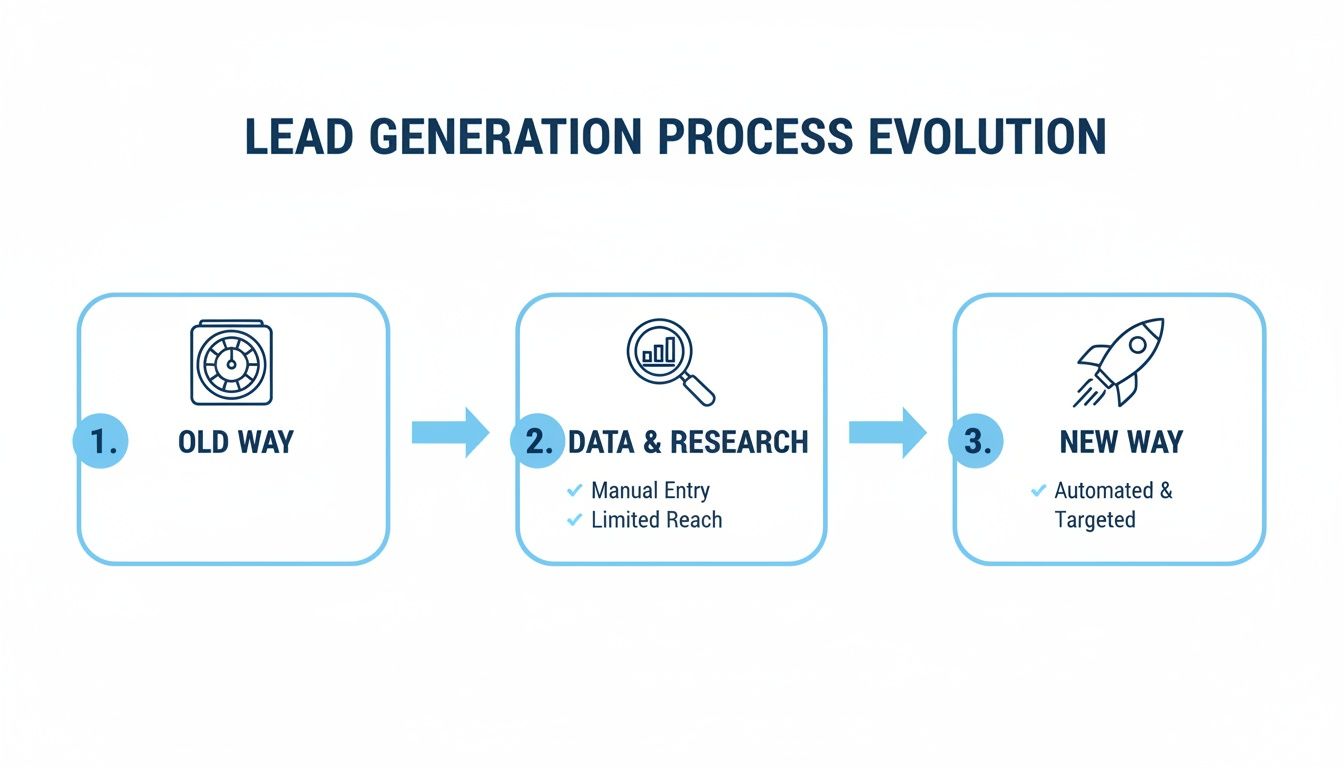
    Start with a forwarder who wants to grow business on a defined set of trade lanes. The old process is familiar. Pull a rough target list, ask around for names, verify contacts manually, and send generic outreach that doesn't show any real understanding of the shipper's freight profile. The rep may work hard and still struggle to get traction.

    The better process begins with account evidence.

    A hand using a digital pen on a tablet showing a supply chain diagram with product stages.

    Start with a searchable prospect universe

    A platform such as Coreties takes global customs data and turns it into a searchable account universe for freight teams. Instead of asking "Who should I call in this region?" the rep can start with a tighter question: which companies are actively moving freight that matches our target lane, commodity focus, or geography?

    That changes the quality of the first list. The rep isn't building from broad firmographics alone. They are starting from trade activity.

    If the team wants to understand a specific company's movement footprint before outreach, a walkthrough of company import export data helps illustrate how shipment history can support account selection and timing.

    Enrich the record before the first email

    Movement data on its own is useful, but incomplete. A rep still needs people, context, and an angle.

    The next step is record enrichment. That means tying the shipper entity to verified contacts, department relevance, and professional profiles so the message goes to someone who can act on it. It also means checking for duplicates, branch variants, and related entities that can distort account ownership if left unresolved.

    Many teams lose speed when they identify a promising importer, then spend too much time finding the right person and writing from scratch. A cleaner workflow shortens the gap between insight and action.

    Build outreach around lane relevance

    Now the rep has what they need to write something credible.

    A strong first email doesn't dump trade details on the prospect. It uses them selectively. It might reference the lane focus, the likely shipping pattern, or a routing issue worth discussing. If the workflow includes daily-updated customs data plus intermodal and carrier schedules, the rep can go further and suggest a practical routing conversation instead of sending a vague introduction.

    The commercial payoff is demonstrated by customer results. According to the publisher information provided for Coreties, customers report up to 30x gains in outreach efficiency, spending about an hour to send 30+ customized emails versus a single message with traditional methods. Used properly, that kind of workflow doesn't replace selling. It removes the manual drag that keeps reps from doing enough relevant selling.

    A prospecting system earns its place when it helps a rep reach the right shipper with a message that already sounds informed.

    Turn territory planning into an operating habit

    The last piece is discipline.

    A forwarder using this approach doesn't treat data prospecting as a one-time list pull. They revisit lane filters, geography clusters, and account fit regularly. Geo-search can help branch managers spot nearby concentrations of likely targets. Contact enrichment keeps records usable. Routing inputs make outreach more specific. Sales leadership gets a clearer view of where the market is active and where team coverage is thin.

    That's the playbook. Find active shippers, enrich the account, align the message to the lane, and make outreach timely enough to matter.

    Building a Foundation of High-Quality Data

    Most supply chain database failures don't start with a bad dashboard. They start much earlier, when teams assume more data will compensate for poor data discipline.

    It won't.

    If records are duplicated, entities are mismatched, formats are inconsistent, and ownership rules are fuzzy, the system becomes harder to trust every month. Sales stops using it first. Operations follows. Then leadership decides the problem was the tool, when data hygiene was the issue.

    Deduplication is not administrative cleanup

    In supply chain master data, duplication rates of 25% to 30% in item and material master records are common, according to ECCMA's guidance on supply chain data standards. The same pattern shows up commercially in shipper, consignee, and contact records. One account appears under multiple legal variants, branch names, abbreviations, or badly imported fields.

    That causes more damage than is often acknowledged. Reps may prospect into the same corporate family from different branches. Managers may overestimate market coverage. Analysts may split shipment history across near-identical entities and miss the full account picture.

    ECCMA also notes that applying international formatting standards enables automated deduplication and can reduce inventory by 50%, MRO costs by 15%, and requisition errors by 60%. Those figures come from operations, but the lesson carries into freight sales. Standardized data makes matching possible. Matching makes trust possible.

    Build a golden record for each account

    A golden record is the version of an account your business agrees is the best current representation. It doesn't mean every field is perfect. It means the record is governed enough to use.

    For freight teams, a golden record usually includes:

    • Entity identity: Legal name, trading names, branch relationships, and country context.
    • Commercial ownership: Account owner, branch owner, status, recent activity, and exclusions.
    • Trade relevance: Lanes, product clues, shipment frequency patterns, and service fit.
    • Contact layer: Decision-makers, role relevance, verified channels, and consent status where required.

    The point is to avoid asking users to reconcile truth manually every time they open a record.

    Ingest carefully, not aggressively

    More connectors aren't always better.

    Pulling data from APIs, flat files, CRM exports, carrier feeds, and manual uploads can help, but only if you define how records are matched, refreshed, and corrected. If not, ingestion just accelerates contamination.

    A disciplined workflow usually includes:

    1. Standardize fields first: Normalize company names, addresses, units, and date formats before matching.
    2. Set survivorship rules: Decide which source wins when fields conflict.
    3. Track refresh cadence: Some records need near-real-time updates. Others don't.
    4. Log exceptions visibly: Give users a way to see unresolved conflicts instead of hiding them.

    Clean ingestion beats broad ingestion. A smaller trusted dataset is more valuable than a bigger disputed one.

    Don't ignore governance and compliance

    Commercial databases often combine business identifiers with direct contact information. That means governance can't be an afterthought.

    Teams need clear rules for who can edit records, who owns data quality, how suppression works, and how contact information is handled across markets. If your prospecting motion includes personal data, legal review and regional privacy requirements need to be built into the process rather than patched on later.

    The simple principle is this. If sales is going to rely on supply chain databases for outreach, the database has to be accurate enough to trust and governed enough to defend.

    Your Questions on Supply Chain Databases Answered

    Do small forwarders need a full enterprise stack to use supply chain databases

    No. Smaller teams don't need to replicate a multinational architecture to get value.

    They do need a clear use case. Start with one commercial problem such as finding active importers on a target lane, cleaning duplicate account records, or aligning trade data to CRM ownership. A narrow workflow with disciplined data handling usually beats a broad transformation plan that never reaches daily use.

    Are public trade records enough on their own

    Usually not.

    Public or semi-public trade data can help identify movement patterns, but sales teams still need account context, contact intelligence, and internal history to make that data commercially usable. Without those layers, reps can still end up targeting the wrong branch, duplicating outreach, or chasing low-fit accounts.

    What's the biggest mistake teams make first

    They buy technology before deciding what question the database should answer.

    A sales director should ask for outcomes, not features. Do we need better lead discovery? Better lane coverage planning? Better account prioritization? Better proposal angles? If that isn't clear, the database becomes a general repository instead of a working revenue tool.

    How should leadership judge whether the system is working

    Look for behavioral change before looking for grand transformation.

    Useful signs include reps building target lists from trade activity instead of memory, managers assigning coverage based on lane relevance, and account reviews using a common record rather than competing spreadsheets. If users still rely on side files and manual reconciliation, adoption is weak no matter how polished the interface looks.

    Is AI the next step once the data is collected

    Only if the underlying data is ready.

    One of the most underreported issues in logistics data is that AI projects often stall because the bottleneck is data quality and integration, not interest. ERP Today's analysis notes that only 10 percent of brands are running AI in live supply chain workflows, and that the constraint is data discipline rather than enthusiasm, as discussed in ERP Today's review of supply chain preparedness gaps.

    That should change the order of operations for supply chain groups. Clean, standardize, match, govern, then automate.

    What's the smartest way to get started this quarter

    Pick one lane, one branch, or one segment. Build a trusted list of active accounts. Match it against CRM records. Remove duplicates. Enrich the contacts. Then run outreach with a message tied to observed freight relevance.

    That approach is practical, measurable, and easier to sustain than a company-wide data overhaul launched from the boardroom.


    If your team wants a simpler way to turn customs activity into qualified shipper outreach, Coreties is built for that workflow. It helps freight forwarders and carriers turn trade data into searchable prospect lists, connect those records to decision-makers, and send personalized outreach grounded in actual lane activity rather than guesswork.

  • A Guide to Finding Sulphuric Acid Buyers

    A Guide to Finding Sulphuric Acid Buyers

    You already know the problem. Generic shipper lead lists give you company names, not sales angles. You get a fertilizer company, a mining operator, or a chemical distributor on a spreadsheet, but you still don't know who is buying sulphuric acid, what grade they need, which lanes matter, or why they'd switch forwarders now.

    Sulphuric acid buyers are different. The cargo is hazardous, the buyer base is concentrated in a few industrial use cases, and the sales motion rewards people who can connect customs data, product specs, compliance, and routing risk into one conversation. If you sell freight into this vertical with the same playbook you'd use for general chemicals, you'll sound interchangeable.

    The upside is that this market is specific enough to prospect intelligently. The companies that buy sulphuric acid usually leave a clearer trail than general cargo shippers do. Bills of lading, product descriptions, trade lanes, consignee patterns, packaging type, and plant locations all tell you something useful if you know how to read them.

    The High-Value Opportunity in Shipping Sulphuric Acid

    Sulphuric acid isn't a niche cargo. It's one of the clearest examples of a product where industrial demand directly translates into recurring freight demand.

    The commercial case is straightforward. The global sulfuric acid market was valued at USD 23.2 billion in 2024 and is projected to reach USD 70.4 billion by 2034, growing at a CAGR of 11.2%. The same market view notes that phosphate fertilizer production accounts for up to 60% of global consumption. That matters because fertilizer plants don't buy casually. They buy at industrial scale, on repeat schedules, with operational consequences if supply slips. See the market breakdown from Global Market Insights on the sulfuric acid market.

    An industrial liquid gas tanker ship sailing on the open ocean under a clear blue sky.

    Why this vertical pays attention to freight

    In many sectors, logistics is a support function. In sulphuric acid, logistics often decides whether a plant can keep running.

    That changes the sales dynamic. You're not pitching cheaper transport in the abstract. You're stepping into a chain that serves fertilizer producers, chemical manufacturers, metals processors, refiners, and battery-related supply networks. Each of those buyer groups has different urgency, handling needs, and tolerance for disruption.

    A buyer using sulphuric acid for fertilizer feedstock thinks in terms of continuity and large-volume replenishment. A buyer tied to metals processing or battery materials often thinks in terms of reagent availability, supply security, and plant scheduling. Those aren't the same conversation.

    Where the freight opportunities sit

    From a logistics standpoint, sulphuric acid buyers cluster around a few predictable demand centers:

    • Fertilizer producers with repeat inbound needs and plant-based discharge requirements.
    • Mining and metals operations that tie acid availability to leaching and processing continuity.
    • Chemical manufacturers and refiners that need consistent spec compliance and safer handling execution.
    • Battery and specialty industrial users that care more about grade, contamination control, and schedule discipline.

    The best opportunities usually sit where volume and urgency overlap. That's why this vertical rewards lane knowledge more than broad market coverage.

    Practical rule: If a prospect can lose production because acid arrives late, that account deserves senior-level qualification early.

    What works and what doesn't

    What works is specialization. Buyers respond when you understand the cargo's operational role and can discuss tank availability, inland handling constraints, terminal capability, and contingency routing without hand-waving.

    What doesn't work is generic chemical outreach. "We handle DG cargo globally" is too broad. Every forwarder says it. Sulphuric acid buyers want evidence that you understand corrosive cargo movements, procurement pressure, and the consequences of a missed delivery window.

    This is also why prospecting effort in this vertical is worth the time. The addressable buyer pool is narrower than general chemicals, but the accounts are more structured, more data-visible, and often more valuable once won.

    Identifying Buyers Using Customs Data and HS Codes

    A good sulphuric acid prospect list starts with trade records, not directories.

    Directories can help with enrichment later. They don't tell you who is importing, how often they buy, or whether they recently changed origins. Customs data does.

    A five-step infographic illustrating how to identify global sulphuric acid buyers using international customs data.

    Start with the HS code and buyer geography

    For sulphuric acid, the working code to begin with is HS 2807.00. Don't stop at that filter. Use it to build the first cut, then narrow by destination market, consignee type, and shipment pattern.

    If you need a refresher on how to validate code structure before you build searches, this guide on how to find a harmonized code is a useful operational reference.

    The first pass should answer three questions:

    1. Which countries are showing active import demand?
    2. Which consignees appear repeatedly under sulphuric acid-related declarations?
    3. Which suppliers or origin countries are feeding those buyers?

    Read bills of lading like a salesperson

    Most reps make one mistake with customs data. They stop at the company name.

    The better approach is to read the shipment record for commercial meaning. Look at consignee names, shipper names, product descriptions, packaging clues, ports, recurrence, and timing. A single record rarely closes a deal. A pattern does.

    Here's the workflow I use when qualifying sulphuric acid buyers from trade data:

    • Filter by product code first. Pull records tied to HS 2807.00, then separate likely end users from traders and intermediaries.
    • Scan consignee naming. Plant operators, mining entities, fertilizer companies, and chemical manufacturers usually reveal more in legal names than people expect.
    • Check shipment rhythm. Repeated movements suggest contracted demand. Irregular movements suggest spot exposure, stockouts, or shifting sourcing.
    • Map origin dependence. If a buyer relies heavily on one origin, that's a sales opening when that origin tightens.
    • Flag route complexity. Inland discharge, border crossings, tank repositioning, and hazardous handling all raise the value of a forwarder that can solve execution problems.

    Repetition matters more than one large shipment. A buyer that appears consistently is easier to model, prioritize, and approach with confidence.

    Use supply shocks as targeting signals

    Not every importer is equally receptive. Timing matters.

    A strong example is the disruption tied to China. Tridge's coverage of sulphuric acid supply tightening notes that China exported 4.6 million tonnes in 2025, then introduced export restrictions starting in May 2026. The same report notes that India took 9% of those exports. That's not just market news. It's a targeting signal.

    When a major source country tightens supply, buyers in dependent markets become far more open to conversations about alternate sourcing, route diversity, transshipment options, and schedule protection.

    Build a short list, not a huge one

    By the end of this step, you don't need hundreds of names. You need a list you can work.

    A useful sulphuric acid target list includes:

    Focus area What to capture
    Buyer identity Legal entity, site location, likely plant function
    Trade behavior Frequency, recent activity, origin pattern
    Lane exposure Main ports, inland legs, possible chokepoints
    Commercial angle Reliability risk, sourcing shift, routing complexity

    If your data only gives names and no buying context, keep digging. In this vertical, the context is the pitch.

    Qualifying Importers by Industry and Shipment Profile

    A raw importer list is where junior prospecting starts. Revenue comes from qualification.

    The same sulphuric acid product can serve fertilizer production, copper leaching, refining, water treatment, batteries, electronics, or specialty chemical processes. If you treat those buyers as one segment, your outreach will miss the operational issue that gets their attention.

    Read the acid specification for sales meaning

    Specs tell you what the buyer values.

    For example, Global Buyers Online's sulphuric acid specification reference notes that industrial-grade sulphuric acid commonly requires a minimum concentration of 98% H2SO4 and maximum iron content of 300 PPM. That isn't just technical detail. It's qualification data.

    If a shipment record or product sheet points to standard industrial-grade material, you're likely dealing with a high-volume industrial user. If the language shifts toward battery-grade, reagent-grade, or very tight impurity control, the buyer's priorities change. They may care more about contamination risk, handling discipline, documentation quality, and predictable lot integrity than simple linehaul cost.

    Segment by use case, not just by country

    This is where good sales intelligence matters. You aren't just asking who imported. You're asking what kind of buyer this company is, what operation the acid supports, and who inside the organization owns the problem.

    A practical qualification model looks like this:

    • Fertilizer plants
      Usually better fits for repeat-volume discussions, plant delivery coordination, and resilient contract execution.

    • Mining and leach operations
      Often stronger candidates for conversations around operational continuity, inland complexity, inventory pressure, and backup routing.

    • Chemical manufacturers and refiners
      More likely to ask detailed questions about handling standards, tank suitability, scheduling precision, and documentation.

    • Battery and high-purity users
      Best approached with a tighter message around quality protection, chain-of-custody discipline, and exception management.

    Shipment profile tells you account value

    Volume matters, but pattern matters more.

    A buyer with regular inbound movement from the same origin often has an established procurement routine. That can be hard to displace, but it's easier to model. A buyer showing changing suppliers, fragmented origins, or unusual gaps between shipments may be easier to open because something in the chain is already unstable.

    The easiest way to sharpen this work is to compare company trade records against broader company activity. This explainer on company import export data is useful for seeing how to connect customs activity to a fuller account view.

    The best sulphuric acid leads usually have two traits. They buy repeatedly, and they have a visible operational reason to care about execution quality.

    What to score before outreach

    I like to qualify each account on four simple dimensions:

    Qualification lens What to look for
    Operational dependency Is acid central to plant uptime or output?
    Supply flexibility Does the buyer appear tied to one origin or seller?
    Service fit Can your network handle the lanes, equipment, and inland legs?
    Message clarity Can you state one concrete reason they should reply?

    What doesn't work is ranking leads only by shipment size. Some large importers are locked into long-term structures and hard to penetrate. A mid-sized buyer with route instability, compliance friction, or supplier concentration may convert faster and become more profitable to serve.

    Mastering Compliance and Routing for Sulphuric Acid

    Most sales teams treat compliance as an operations handoff. In sulphuric acid, that's a mistake.

    If you can speak credibly about hazardous handling, equipment choice, sanctions risk, routing alternatives, and screening discipline before the customer asks, you stop sounding like a broker shopping rates and start sounding like a logistics partner worth testing.

    A professional man reviews global logistics risk management data on a digital computer monitor at a desk.

    Compliance knowledge wins trust early

    Sulphuric acid buyers don't need a lecture on danger. They need confidence that your team won't create new risk.

    That means being ready to discuss hazmat document quality, carrier acceptance, equipment compatibility, transloading exposure, terminal handling limits, and restricted-party screening. If your sales process doesn't include a clear compliance check, fix that. This reference on denied party screening is a good baseline for building that discipline into account qualification.

    Buyers notice the difference between someone who says "we can move DG" and someone who asks the right operational questions the first time.

    Routing is where your commercial value shows up

    Routing decisions are not administrative in this vertical. They affect continuity, cost, and plant confidence.

    The Oregon Group's analysis of sulphur and sulphuric acid chokepoint exposure notes that the Strait of Hormuz carries 24% of global sulphur, and that buyers in places like Indonesia or Africa may hold only 1 to 2 months of inventory. That's the kind of detail that should shape your sales language.

    If a buyer's feedstock chain depends on a vulnerable corridor and they don't hold much inventory, your value isn't "competitive freight." Your value is optionality.

    Three commercial questions matter more than a generic quote:

    • Can you propose alternate routings if the primary corridor degrades?
    • Can you support multimodal execution when direct vessel plans no longer hold?
    • Can you communicate exceptions early enough for procurement and plant teams to react?

    Buyers forgive a difficult market faster than they forgive silence during disruption.

    A short technical explainer can help frame those conversations internally and with customers:

    What works in live deals

    The strongest sulphuric acid proposals usually include a routing position, not just a freight price.

    That can mean identifying a secondary port pair, explaining where tank availability could tighten, flagging likely carrier acceptance issues early, or suggesting a mode mix that protects delivery when the cleanest option isn't available. Astute buyers care less about polished slides and more about whether your plan survives stress.

    What doesn't work is leading with "we'll optimize costs." In corrosive bulk and tank logistics, buyers often accept a higher landed transport cost if it lowers execution risk and protects supply continuity.

    Data-Driven Outreach to Secure Sulphuric Acid Buyers

    Most sulphuric acid outreach fails for one simple reason. It sounds like it was written before the sender looked at a single shipment record.

    A buyer gets a message saying, "We support chemical imports globally and would love to quote your business." That tells them nothing. It doesn't show industry understanding, lane knowledge, or any awareness of the pressure they're under.

    A laptop on a wooden desk displaying a business dashboard with various performance charts and financial metrics.

    What buyers respond to now

    The tone has changed. Procurement teams in this market aren't only comparing rates. They're judging whether a logistics provider can reduce uncertainty.

    Logistics Viewpoints' reporting on sulphuric acid supply constraint conditions in copper makes the key point clearly. Buyers are prioritizing supplier reliability and delivery certainty over pure price optimization. That should change how you write emails.

    Your outreach should reflect three things:

    • You understand the buyer's application and likely risk.
    • You can speak to the lane or sourcing pattern they use.
    • You are offering planning support, timing predictability, or backup execution. Not just a quote.

    Bad outreach versus useful outreach

    Here is the kind of message that gets ignored:

    We are an international freight forwarder handling hazardous cargo worldwide. We offer competitive rates for sulphuric acid shipments and would appreciate the opportunity to support your imports.

    Nothing in that message is false. It's just empty.

    A better message is shorter and more specific:

    Noticed your company has been active on sulphuric acid import lanes tied to industrial processing. Several buyers in this market are dealing with tighter delivery windows and less sourcing flexibility. If your team is reviewing backup routing or looking for more predictable shipment timing, I can share a lane-specific option and the operational trade-offs behind it.

    That works because it speaks to the buyer's situation, not your service menu.

    A practical outreach structure

    When I coach reps on this vertical, I push a five-part email structure:

    1. Observed activity
      Mention the import behavior, product category, or lane exposure you found.

    2. Operational context
      Tie that activity to a likely business issue such as reliability, compliance sensitivity, or route concentration.

    3. Specific offer
      Offer one concrete next step. A route option, shipment review, origin diversification discussion, or compliance check.

    4. Proof of seriousness
      Show you understand corrosive cargo execution. Mention planning, timing, inland coordination, or hazardous handling controls.

    5. Low-friction close
      Ask for a short review call, not a procurement overhaul.

    Example outreach by buyer type

    To a fertilizer importer

    Your inbound sulphuric acid flows look tied to recurring industrial demand rather than occasional spot buying. If your team is under pressure to protect delivery timing into plant operations, I can map alternate routing options and identify where schedule reliability may matter more than nominal ocean cost.

    To a mining or metals buyer

    We track sulphuric acid lanes where supply continuity is becoming more important than lowest available freight. If your operation is balancing inventory cover against variable transit performance, I can share practical routing alternatives and likely execution constraints before they become plant issues.

    To a higher-purity industrial buyer

    For buyers managing tighter acid specifications, transport execution often matters beyond transit time. If your team needs cleaner handoff points, stronger shipment visibility, or more disciplined exception handling, I can outline how we'd structure that lane.

    Don't personalize with trivia. Personalize with operational relevance.

    Who to contact

    In sulphuric acid accounts, the right contact isn't always procurement alone.

    Useful targets include logistics managers, import managers, supply chain directors, plant procurement leads, and category managers tied to chemicals or raw materials. If the cargo is strategically important, operations may influence the decision even if they don't sign the contract.

    The handoff point matters too. If your first reply comes from a junior buyer asking only for rates, don't assume that's the full buying center. In this vertical, the person who approves a new provider often cares more about execution credibility than headline price.

    Turning Conversations into Long-Term Logistics Partnerships

    Winning sulphuric acid buyers doesn't come from one clever email. It comes from a repeatable system.

    The system is simple to describe and harder to execute well. Start with customs data. Narrow by HS code and actual import activity. Qualify by industry use case, shipment rhythm, and likely acid grade. Build a point of view on compliance and routing risk. Then write outreach that sounds like you understand the buyer's plant reality, not like you're filling a sequence.

    The reason this works is that sulphuric acid logistics is operationally exposed. Buyers don't need another vendor promising coverage everywhere. They need someone who can connect trade intelligence to execution decisions.

    The commercial shift is important. You aren't trying to be a cheaper option on a one-off movement. You're trying to become the forwarder they call when supply tightens, a route degrades, or a hazardous shipment needs cleaner planning than their current provider is giving them.

    That changes your role in the account.

    You move from quote source to problem solver. From shipment taker to planning partner. From broad prospecting to a focused pipeline where each target has a clear reason to hear from you.

    If you're building a vertical sales motion in chemicals, sulphuric acid buyers are a good test case. The market is specific, the pain points are visible, and the accounts reward preparation.


    If you want a faster way to turn sulphuric acid trade records into usable prospect lists, Coreties helps logistics teams work from customs data, identify the right shipper accounts, find relevant contacts, and build outreach around actual lane activity instead of generic templates.

  • Unlock Opportunities: Find Your Ideal Importer from China

    Unlock Opportunities: Find Your Ideal Importer from China

    Most freight sales teams don’t have a lead problem. They have a targeting problem.

    A rep spends the morning on LinkedIn, pulls a list of companies that “look like” they buy overseas, sends a batch of generic emails to info@ inboxes, then follows up with a cold call to someone in reception. By the end of the day, there’s activity, but not much progress. The pipeline feels busy and thin at the same time.

    That gets worse when you’re chasing an importer from china. The market is huge, the buyer set is messy, and a lot of companies talking about China sourcing aren’t moving freight in a way that fits your network. If you sell ocean, air, customs, transloading, compliance support, or multi-leg forwarding, guessing isn’t a sales strategy.
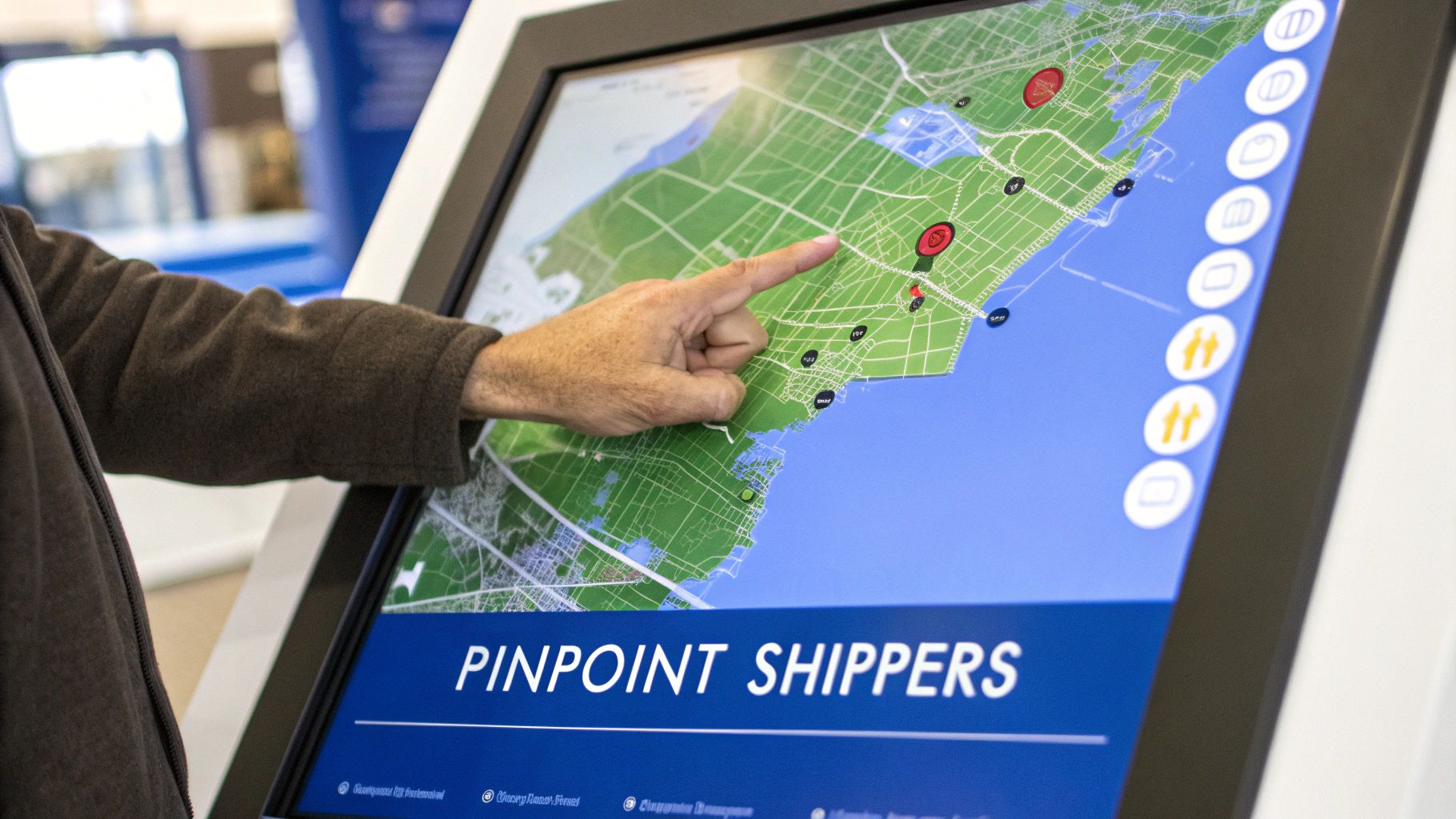
    The fix isn’t more hustle. It’s better signal.

    The teams that consistently close importer accounts work from shipment evidence first, then build outreach around trade lane reality, commodity fit, and decision-maker relevance. They don’t ask, “Who might import from China?” They ask, “Who is importing now, on lanes we can serve, with pain we can solve?”

    Beyond the Cold Call A New Prospecting Playbook

    A new rep usually starts with the same playbook. Search “supply chain manager” on LinkedIn. Export a list from somewhere. Send the same note to everyone. Mention rates, mention service, ask for a shipment. Wait.

    That process creates motion, not traction.

    The problem is simple. Most of those companies aren’t active fits. Some don’t import from China at all. Some do, but only once in a while. Some already have a stable forwarding setup. Some are exactly the right prospect, but the message lands with the wrong person and says nothing useful.

    Why generic prospecting breaks down

    The importer market has real risk built into it. Nearly 90% of first-time importers from China fail, with an average loss of $50,000 per venture, largely because of avoidable mistakes in supplier selection, documentation compliance, and quality control, according to this breakdown of first-time China importer failure patterns.

    That fact matters for sales. It means many prospects don’t need another “Can I quote your next shipment?” email. They need a partner who understands where import programs break.

    Practical rule: If your outreach starts with your rate sheet, you’re competing with every other forwarder. If it starts with the shipper’s actual risk, you’re in a different conversation.

    Old-school prospecting also wastes your best asset, which is context. A rep who knows the lane, the commodity, the likely bottleneck, and the internal stakeholder can write a short message that sounds informed instead of mass-produced.

    That’s also why smart teams don’t throw away channels like LinkedIn. They just use them with discipline. If your reps still rely on social selling, this LinkedIn prospecting guide is useful because it shows how to structure outreach instead of spraying connection requests.

    What the modern workflow looks like

    A practical importer-from-China playbook looks more like this:

    1. Start with shipping activity and confirm the company is importing.
    2. Read the lane so you know what they move, from where, and how often.
    3. Filter hard so the list matches your network, service model, and margin profile.
    4. Find the operator or budget owner instead of emailing a dead mailbox.
    5. Write from evidence. Mention a real issue you can help solve.

    That approach is a lot closer to account selection than lead generation.

    If your team still builds lists manually, it’s worth reviewing how freight sellers tighten this process in practice through customs-driven targeting, as outlined in this Coreties article on https://www.coreties.com/blog/finding-shippers-for-freight-brokers.

    Using Customs Data to Uncover Your Ideal Shipper Profile

    Most reps hear “customs data” and think database, spreadsheet, or analyst work. In sales, it’s simpler than that. It’s a live trail of commercial behavior.

    If a company appears in customs records as an active buyer, you’re no longer guessing whether it’s a real importer from china. You’re looking at operating evidence.

    China’s total imports reached a record US$2.65 trillion in 2025, and its total import-export volume hit US$6.36 trillion, which is why the pool of potential importer accounts is so large and why broad prospecting alone becomes inefficient in this market, as reported by China Briefing’s review of China trade in 2025.

    A professional analyzing custom data insights on multiple computer monitors in a bright, modern office workspace.

    The signals that matter first

    A raw shipment record isn’t useful by itself. The value comes from reading patterns.

    Start with these signals:

    • Shipment recurrence tells you whether the company is testing suppliers, buying seasonally, or running a stable replenishment program.
    • Origin concentration shows whether sourcing is centralized in one Chinese manufacturing cluster or spread across multiple points.
    • Destination pattern helps you see whether they’re feeding one warehouse, multiple DCs, or mixed customer delivery points.
    • Carrier and forwarder changes can reveal a switch in service model, internal disruption, or dissatisfaction.
    • Commodity description tells you what the cargo likely demands in handling, compliance, and timing.

    A company importing furniture and a company importing electronics may both say they “import from China,” but they are not the same sales motion. One may care most about floor planning, demurrage control, and inland final mile. The other may care about tighter inventory turns, classification accuracy, and time-definite options.

    Read the story, not just the record

    Good reps don’t stop at “they imported.” They ask what the records imply operationally.

    Here’s a simple interpretation table your team can use.

    Customs signal What it often means for sales
    Repeating shipments on the same lane The account may value consistency, scheduling discipline, and lane-specific expertise
    Multiple Chinese origins The buyer may be managing several suppliers and could feel pain around coordination
    Irregular shipment spacing Procurement may be reactive, seasonal, or tied to supplier instability
    Different service providers over time The shipper may be testing alternatives or cleaning up service issues
    Commodity with compliance exposure Outreach should go to supply chain or compliance leadership, not just procurement

    That’s the difference between list building and account reading.

    The shipment data gives you a reason to contact the company. The pattern gives you a reason for them to answer.

    Build the first universe broadly

    At this stage, don’t over-filter.

    Pull a broad set of active companies importing from China within the sectors your team understands. If you’re strong in apparel, industrial inputs, consumer products, electronics, machinery, or food-related support services, let the initial universe stay wide enough to show pattern clusters.

    Then review the records with a sales lens:

    • Who imports repeatedly enough to justify account development?
    • Who uses lanes you can support well with your existing network?
    • Who seems operationally exposed because of routing complexity, supplier spread, or product sensitivity?
    • Who has enough activity that a better forwarder relationship would matter?

    A tool like Coreties can be useful as one option. It turns customs records into searchable company lists, then layers contact and routing context on top so reps can move from discovery to outreach without rebuilding the account by hand.

    What not to do with customs data

    A lot of teams misuse shipment intelligence in two ways.

    First, they go microscopic too early. They spend too long analyzing a single account before deciding whether it’s even a fit. Second, they treat every importer the same once they confirm activity.

    Avoid both.

    The purpose here is to build a credible prospect universe fast. You are not writing the final pitch yet. You are identifying active shippers whose behavior suggests they belong in your territory.

    Use customs data to answer three basic questions:

    1. Is this company a real importer from china?
    2. Does it move freight in a way that matches our operating strengths?
    3. Is there enough pattern in the shipments to justify a specific approach?

    If the answer is yes on all three, the account moves forward. If not, move on.

    Qualify Prospects by Trade Lane and Commodity

    Discovery creates volume. Qualification creates pipeline.

    Most sales teams lose discipline here. They build a broad list from shipment activity, then refuse to cut it down because every importer feels like a possible opportunity. That’s how reps end up chasing low-fit freight, awkward geographies, and cargo they can’t serve well.

    The sharper move is exclusion.

    A four-stage prospect qualification funnel chart illustrating the process of identifying and targeting potential importers.

    Trade lane fit comes before company size

    A mid-sized importer on a lane you know cold is usually better than a large account on a lane where your team has no edge.

    That means your first qualification pass should focus on route logic:

    • Origin fit. Which Chinese ports or manufacturing zones align with your agent setup and carrier coverage?
    • Destination fit. Which arrival ports match your customs, drayage, transload, or inland strengths?
    • Mode fit. Are you strongest in ocean, air, or a blended model for urgent SKUs?
    • Handover fit. Does the buyer ship in a way that lets you control the right leg and effectively deliver value?

    A lot of forwarding teams say they handle “China imports” broadly. In practice, they win on narrower combinations.

    Commodity fit changes the conversation

    Commodity filtering matters because the same lane can produce completely different sales motions depending on cargo type.

    A shipper moving industrial components may care about production continuity and documentation control. A shipper moving retail goods may care more about booking reliability and warehouse timing. A shipper moving sensitive products may involve legal, compliance, quality, and sourcing teams earlier.

    An estimated 70% of first-time China importers face major issues, many tied to logistics errors such as underestimating full transit times, since port wait and customs can add 10-20 days, according to Approved Forwarders’ guide to common importing mistakes.

    That’s why commodity qualification isn’t just segmentation. It shapes the problem you lead with.

    A practical filtering sequence

    Don’t qualify everything at once. Use a narrowing sequence.

    Filter layer What you’re checking Why it matters
    Trade lane Specific origin and destination pattern Confirms you can support the lane operationally
    Commodity Product family or handling profile Tells you what pain points and stakeholders matter
    Shipment style Repeat cadence, consolidation pattern, mode tendencies Helps you gauge account value and urgency
    Internal fit Margin profile, service complexity, territory ownership Keeps reps focused on winnable business

    This is also where internal examples help a new rep. If your team is good with machinery inbound to one coast but weak on lightweight fashion programs spread across multiple DCs, say it plainly. Qualification should reflect operational truth, not brochure language.

    What a qualified list should look like

    A qualified list should feel almost narrow enough to make a rep nervous.

    That’s a good sign.

    You want a rep to look at the list and immediately know why each company is on it. Not because it imports from China in a vague sense, but because the account aligns with lane, cargo, and service capability.

    Field note: If a rep can’t explain in one sentence why the account belongs in their patch, the account isn’t qualified yet.

    For example, your shortlist may include companies importing dense industrial goods through one origin cluster into one gateway where your team already controls customs and inland moves. That list is far more actionable than a random set of “Asia importers.”

    If you need a simple model for how niche trade segmentation changes prospecting quality, this article on https://www.coreties.com/blog/soybean-importers-in-china is a useful reference because it shows how trade data gets more valuable as the category gets more specific.

    What to cut without regret

    Remove prospects that create noise:

    • Companies outside your lane strengths
    • Cargo categories you can’t serve confidently
    • One-off importers with no repeat signal
    • Accounts whose shipment pattern suggests tiny strategic value
    • Prospects owned by another territory or another team

    Salespeople hate deleting names. Strong sales leaders insist on it.

    Every account you remove gives the rep more time to study the accounts that remain. That’s where better meetings come from. Not from having more names, but from having names your operation can support with conviction.

    From Company Name to Decision-Makers Inbox

    Once the account list is qualified, the next failure point is obvious. The team contacts the wrong person.

    A company can be a perfect fit on paper and still go nowhere because the outreach lands with a buyer who doesn’t own freight, a receptionist, or a generic procurement alias that never replies.

    A professional woman in a green blazer typing on a laptop with a blue text overlay.

    Start with role, not just seniority

    New reps often over-prioritize titles that sound impressive. Seniority matters, but operational ownership matters more.

    For an importer from china, common stakeholder groups include:

    • Logistics managers who own execution, bookings, and daily issue management
    • Supply chain directors who care about continuity, cost control, and service structure
    • Compliance leaders when product origin, sourcing visibility, or regulatory exposure is in play
    • Operations executives when freight issues affect inventory, customer service, or plant continuity

    The best contact is the one who feels the problem you solve.

    That matters even more when compliance becomes part of the sales angle. With the Uyghur Forced Labor Prevention Act, goods from the Xinjiang region are presumed to involve forced labor unless proven otherwise, which makes compliance and supply chain leadership highly relevant contacts for affected import programs, as explained in Northeastern’s coverage of UFLPA supply chain traceability work.

    Build a contact map inside the account

    Don’t stop at one name.

    A solid account map usually includes one operational contact, one strategic contact, and one adjacent stakeholder. That gives the rep options if the first email stalls, and it reduces the risk of tying the whole effort to a single inbox.

    Use this progression:

    1. Identify the department most likely to own inbound freight.
    2. Pull likely titles tied to logistics, supply chain, procurement, or compliance.
    3. Check the person’s relevance against the commodity and lane.
    4. Verify the contact path before launch.

    If the cargo profile suggests traceability exposure, a compliance-oriented contact may be more responsive than a transportation manager. If the issue looks like booking discipline and inland execution, the logistics lead may be the right first move.

    Enrichment has to be operationally clean

    A bad contact record creates avoidable damage. Emails bounce. Reps waste follow-ups. Sender reputation suffers.

    That’s why the enrichment step matters as much as finding the name. You need a verified email, current role alignment, and ideally a current LinkedIn profile so the rep can cross-check relevance before sending.

    A lot of teams ignore deliverability until performance drops. That’s backward. If your sales motion depends on outbound email, this Mastering Email Deliverability Strategies piece is worth reviewing with reps before they scale campaigns.

    A quick video overview can help newer reps understand how this contact-to-conversation workflow should feel in practice.

    What a rep should know before pressing send

    Before a first touch goes out, the rep should be able to answer:

    • Why this person instead of another contact in the account?
    • What part of the import program they likely influence?
    • Which issue will matter most to them?
    • What proof point from the shipment pattern makes the outreach feel informed?

    Don’t hand a rep a company name and call it a lead. Hand them a company, a likely owner, and a reason that owner should care.

    That’s the handoff point between data work and message work. If the contact is wrong, even a smart pitch falls flat.

    Crafting Outreach That Gets a Response

    At this point, most of the hard work is done. The mistake is acting like it isn’t.

    Reps build a good list, identify the right lane, find the right stakeholder, then send the same old message anyway. “We handle China imports.” “Can we quote your next shipment?” “Would love to connect.”

    That throws away the advantage.

    A close up view of a computer monitor displaying an email draft for a business partnership proposal.

    What weak outreach sounds like

    Weak logistics outreach is easy to spot:

    • It leads with the seller
    • It asks for a meeting too early
    • It says nothing specific about the account
    • It treats all China importers as interchangeable
    • It offers a quote before diagnosing a problem

    A bad email sounds like a brochure wearing a greeting.

    A better email sounds like an operator who has done the homework.

    Use the shipment pattern to earn relevance

    The rep doesn’t need to show off every data point. They need to use one or two signals that prove they understand the account.

    Good outreach usually includes:

    • A clear observation about the importer’s lane, sourcing pattern, or likely friction point
    • A practical implication tied to timing, compliance, routing, or execution
    • A modest offer that lowers the effort required to respond

    That’s it.

    Here’s a simple comparison:

    Weak version Stronger version
    We’re a global freight forwarder and would love to quote your imports from China. Noticed your inbound China program appears concentrated on a small number of origins. When buyers scale that way, coordination between supplier handoff, booking timing, and arrival planning usually matters more than the linehaul quote alone.
    Can we set up a call to discuss your shipping needs? If it’s useful, I can share where importers on similar lanes usually run into avoidable timing and compliance issues.
    We offer ocean, air, and customs clearance. We support import programs where freight execution and regulatory handoff need to stay tight across more than one function.

    Lead with risk the buyer already recognizes

    The best emails don’t manufacture urgency. They name the risk the buyer already feels.

    One underused angle is sanctions complexity. The 2023 to 2025 OFAC FAQs prohibit PRC-controlled firms from participating in Venezuelan-origin transactions routed through U.S. channels, which creates a real compliance issue for some import programs involving Chinese entities and third-country trade structures, as detailed in the updated OFAC FAQs.

    That doesn’t belong in every email. But if the trade pattern suggests exposure, mentioning it tells the buyer you understand more than freight rates.

    Sales advice: Relevance beats creativity. A plain email with one accurate operational insight will outperform a polished email that could have gone to anyone.

    A practical email structure reps can reuse

    Use a short structure that keeps the message grounded.

    Opening line

    Reference the account in a way that proves this is not list spam. Mention the import program, lane pattern, or sourcing structure at a high level.

    Problem line

    Name one issue that often matters for that profile. This could be timing drift, routing complexity, handoff control, or compliance exposure.

    Value line

    Offer one useful next step. Not a giant pitch deck. Not a “full capabilities overview.” Just a specific kind of help.

    Closing line

    Ask a low-friction question.

    For example:

    • Would it be helpful if I shared a quick read on lane options?
    • Worth comparing your current setup against a tighter routing model?
    • Open to a short discussion if this is already on your team’s radar?

    That tone works because it respects the buyer’s time and doesn’t pretend the relationship already exists.

    Match the message to the stakeholder

    The same account needs different outreach depending on who receives it.

    • To a logistics manager, focus on execution, transit reliability, and day-to-day friction.
    • To a supply chain director, focus on continuity, planning confidence, and structural risk.
    • To a compliance stakeholder, focus on origin visibility, documentation exposure, and screening discipline.
    • To an operations leader, focus on what freight problems do to inventory and customer commitments.

    That’s where many teams leave money on the table. They personalize the company, but not the person.

    If you want your team to tighten this link between shipment data and outbound messaging, this article on https://www.coreties.com/blog/logistics-and-sales is a useful way to frame sales as an extension of operational understanding rather than generic prospecting.

    Keep follow-up useful

    Follow-up should add signal, not pressure.

    A second message can mention another angle from the account’s import pattern. A third can offer a practical observation about routing or stakeholder alignment. What it shouldn’t do is repeat “just bumping this to the top of your inbox.”

    When outreach gets responses, it usually isn’t because the rep wrote something brilliant. It’s because the buyer recognized themselves in the message.

    Building a Sustainable Importer Pipeline for 2026

    Teams that rely on list buying and cold calls live in a feast-or-famine cycle. One month feels active. The next month dries up. Reps start over, rebuild lists, and repeat the same waste.

    A sustainable pipeline looks different.

    It starts with active importer identification, not assumption. It narrows by lane and commodity, not broad industry labels. It moves to the right stakeholder, not whichever email address turns up first. Then it converts shipment intelligence into outreach that sounds informed because it is informed.

    What this changes inside a sales team

    When reps work this way, coaching gets easier.

    Managers can review account choices, qualification logic, contact mapping, and email quality using evidence instead of opinion. Territory planning improves because the team can see where importer clusters match actual network strengths. Marketing becomes more useful because campaigns can support lane and commodity priorities instead of generic brand messaging.

    The bigger shift is cultural. Sales stops behaving like a numbers game and starts behaving like a targeting discipline.

    The standard that will matter next

    The market for any importer from china account isn’t getting simpler. Buyers face routing complexity, compliance pressure, sourcing shifts, and internal pressure to protect margin while keeping cargo moving. A rep who only offers rates will be easy to ignore.

    The winning seller is the one who shows up already understanding how the import program works, where it breaks, and who inside the account owns the fix.

    That’s the standard worth training to for 2026. Not more outreach. Better selection, sharper qualification, cleaner contact strategy, and messages built from real trade behavior.


    If your team wants to operationalize that workflow, Coreties is built for exactly that motion. It turns customs data into targeted shipper lists, helps reps surface relevant contacts, and supports personalized outreach based on lanes, departments, and shipment patterns so prospecting becomes a repeatable sales process instead of a guessing game.

  • How to Find an Importer in China

    How to Find an Importer in China

    Finding a reliable importer in China used to be a frustrating game of chance. Sales teams would burn through their budgets on outdated directories, exhausting trade show circuits, and a relentless barrage of cold calls that almost never connected. It was like shouting into the void.

    But the playbook has completely changed. The most successful freight forwarders and logistics teams today don't search for leads anymore. They filter for them.

    Your Modern Strategy to Find a Chinese Importer

    The new approach is all about data. Instead of guessing who might need your shipping services, you can now tap into global customs data to see exactly who is importing what, from where, and in what volume. This shift turns prospecting from a shot in the dark into a precise, strategic exercise.

    For logistics sales teams, this isn't just an improvement—it's a total transformation of the sales process.

    From Raw Data to Qualified Leads

    A data-first strategy allows you to build a pipeline of genuinely qualified leads by perfectly matching your services to an importer's verified shipping history. Modern platforms, like Coreties, are built for exactly this. They take mountains of complex customs information and refine it into clean, actionable lists of prospects who need what you sell.

    The workflow is simple but powerful: you access the data, apply filters for your ideal customer profile, and get a curated list of high-potential importers.

    Modern prospecting process flow diagram showing data leading to filter, then to leads.

    Think of it this way: all that raw customs data gets poured through a funnel. You set the filters—maybe a specific trade lane or HS code—and out comes a focused list of qualified importers ready for your call.

    The real advantage here is efficiency. You get to skip all the time-wasting manual research and jump straight to engaging importers who are already active on your key routes.

    Let's say you specialize in freight from the US to Shanghai. You can instantly filter for companies currently moving high volumes on that exact lane, giving you a ready-made list of your top prospects. This is a game-changer in a market as vast as China. To get a better handle on how these businesses operate, check out our guide on the structure of an import-export firm.


    Old Methods vs Modern Data-Driven Prospecting

    The difference between the old spray-and-pray approach and today's targeted strategy is night and day. This table breaks down just how much has changed for sales teams trying to win business with Chinese importers.

    Method Effectiveness Targeting Precision Time Investment
    Old Methods Low ROI, high rejection rate Very low; based on generic directories or cold lists Extremely high; hours spent on manual research and dead-end calls
    Data-Driven Prospecting High ROI, better connection rates Surgical; based on verified shipment data (lanes, volume, frequency) Low; data platforms deliver qualified leads in minutes

    Ultimately, a data-driven approach means your sales team spends less time searching and more time selling to prospects who have already proven they need your services.


    The old way was broadcasting your services to anyone who would listen. The new way is about surgical precision—finding active importers and tailoring your outreach to their documented shipping history.

    The Scale of the Opportunity

    Adopting this targeted approach is essential, given the sheer scale of the Chinese market. As of 2026, China remains the world's second-largest import market, with total imports hitting a staggering 18.48 trillion yuan (roughly US$2.58 trillion).

    For freight forwarders, this signals a massive opportunity, especially in sectors like industrial inputs and machinery. Shipments of mechanical and electrical products alone reached 7.4 trillion yuan, a 5.7% increase. Those aren't just numbers; they represent millions of TEUs and tons of air freight waiting for a reliable logistics partner.

    Building Your Prospect List with Customs Data

    Two men actively point at large digital screens displaying data and maps during a business meeting.

    This is where the rubber meets the road. Having access to customs data is one thing, but turning that raw information into a real, high-value prospect list is another game entirely. The goal here isn't just to find any importer in China; it's to build a smart, targeted list of companies you know are a good fit because their shipping history proves it.

    Every company that makes it onto your pipeline should be pre-qualified based on their actual, verified shipping behavior. It’s about precision, not just volume.

    Pinpointing High-Value Niches

    Start by filtering for what matters most to your business. If you’re a pro at handling perishables, for example, you can instantly zero in on importers bringing in high volumes of products like fruits or edible oils—both of which are huge growth categories in the Chinese market right now.

    This lets you sync your sales efforts with what’s actually happening on the ground. Recent data shows that as China’s import appetite grows, certain premium segments are exploding. Edible vegetable oil imports, for instance, jumped 16.6% to US$8.6 billion, and fresh fruit imports shot up 5.6% to US$19.4 billion. By targeting the HS codes for these products, you're not just finding a random importer; you're finding one in a booming vertical. To learn about China's evolving trade partnerships and other trends, official government reports can be a goldmine.

    Good luck getting that level of insight from a cold call list. With a platform like Coreties, you can isolate these high-growth importers in a matter of minutes.

    Analyzing Trade Lanes for Growth Opportunities

    Looking beyond products, trade lane data gives you another powerful angle. It helps you spot the importers who are actively expanding their supply chains beyond the usual routes and into emerging markets.

    A huge tell for a valuable partner is diversification. An importer in China that’s opening up new shipping lanes from Latin America or Africa isn’t just reacting to the market—they’re a proactive, growth-focused company.

    A prospect's shipping history is their business plan in action. An importer expanding into new trade corridors is actively seeking new partners and solutions—making them a prime target for your outreach.

    This strategy helps you get ahead of the pack. While your competitors are busy fighting over the same saturated lanes, you can establish yourself as the go-to expert in these less-crowded, high-potential corridors.

    Using Filters to Separate Quality from Quantity

    A long list of names is a liability, not an asset. What you need is a short list of great names. The key is using smart filters to weed out the occasional, low-volume shippers and focus on the real players.

    Here are a few filters I always apply to build an effective prospect list:

    • Shipment Frequency: Are they importing every week or just once a quarter? Consistent, regular schedules are the mark of a serious, high-value account.
    • Volume and Weight: Filter by TEU count or total shipment weight. This quickly narrows your focus to the major players in your target industry and ensures you're chasing accounts that can actually move the needle on your revenue.
    • Specific HS Codes: Don't just look for "electronics." Get granular. Drill down to the exact HS codes for the components you specialize in, whether it's semiconductors or specialized automotive displays.

    Getting the most out of customs data often comes down to deciphering the documents themselves. For anyone new to this, understanding key shipping documents like the Bill of Lading is a foundational skill.

    This filtering process is what transforms a massive database from a data dump into a strategic weapon. Every filter you apply sharpens your search, so every prospect left on your list is a genuinely qualified lead.

    With this approach, you're not wasting time on companies that will never be the right fit. To get even better results, you might explore detailed guidance on using a port import export reporting service to supercharge your targeting efforts.

    How to Verify and Qualify Potential Importers

    A laptop screen displays 'Qualified importers' interface, with fresh fruits in blue crates in the background.

    Alright, you've pulled a list of companies from customs data. That’s the easy part. A name on a spreadsheet is just a lead, not an opportunity. The real work starts now: digging in to confirm whether a potential importer in China is a legitimate, active business that’s actually a good fit for you.

    This is the make-or-break stage. Taking the time for proper due diligence is what separates top-performing sales reps from those who spend their days chasing ghost companies. Your goal is to build a solid, vetted shortlist of importers you can approach with confidence because you know you can help them.

    From Data Points to Business Profiles

    The first thing you need to do is put a face to the name. Take the company name from your data and start cross-referencing it with official business registries and their own online presence. You’re hunting for consistency.

    Does the company have a professional website that clearly explains what they do? In 2026, a total lack of a digital footprint is a massive red flag. An established importer should have, at the very least, a basic corporate site and maybe an active LinkedIn page. If they’re practically invisible online, you need to ask why.

    Once you start building your list, it's smart to have a system for evaluating each lead. This practical guide to B2B lead qualification offers some great frameworks for scoring prospects against your ideal customer profile, so you can focus your energy where it counts.

    Your Importer Verification Checklist

    To keep yourself honest and efficient, use a checklist. This simple tool ensures you cover all the essential bases before you invest time and resources into outreach. It’s how you turn a raw data dump into a qualified sales pipeline.

    Here’s a practical checklist to help you confirm an importer is the real deal:

    Verification Step Recommended Tool or Method What to Look For
    Business Registration National Enterprise Credit Information Publicity System (China) A valid, active business license and consistent company details.
    Online Presence Google Search, LinkedIn, Company Website A professional website and profiles that match the company's import activity.
    Shipping History Analysis Customs Data Platform (e.g., Coreties) Consistent volumes, stable trade lanes, and a logical mix of products.
    Contact Discovery LinkedIn Sales Navigator, Coreties Contact Finder Verified contact details for decision-makers in logistics or procurement roles.

    Following a structured process like this is your best defense against "phantom" companies—businesses that look good on paper but have very little real-world activity.

    Decoding Shipping Patterns for Stability

    Your customs data platform isn't just for finding leads; it's one of your best vetting tools. Go back and take a closer look at the shipping history of your top prospects. You're searching for signs of a healthy, stable operation.

    A company's shipping history is a direct reflection of its operational health. Erratic volumes, frequent changes in freight partners, and scattered trade lanes often point to instability or a reactive, disorganized supply chain.

    On the flip side, an importer showing steady year-over-year volume growth on a key trade lane is a golden opportunity. They have a predictable need. This allows you to craft a data-backed pitch that’s impossible to ignore: "I noticed your import volume from Germany has jumped 20% in the last year. We’ve helped similar importers on that lane cut their transit times."

    This is also a critical moment for compliance. You absolutely have to ensure you aren't about to engage a restricted or sanctioned entity. Running a quick check is a non-negotiable part of the process. For a complete rundown, our guide on the essentials of denied party screening breaks it all down.

    Finding the Right Person to Contact

    Finally, all this verification work should lead you to a specific person. A brilliant pitch sent to a generic [email protected] email address is a complete waste of time. The goal is to pinpoint the actual decision-maker.

    • Logistics or Supply Chain Manager: This is usually your bullseye. They live and breathe freight management and are always looking for ways to improve efficiency and control costs.
    • Procurement or Purchasing Head: In larger organizations, the procurement team often holds the purse strings and has major sway in selecting new forwarders.
    • Founder or General Manager: For small to mid-sized importers, the owner or GM is often still hands-on with big operational decisions, including logistics.

    Using a platform with built-in contact-finding tools can dramatically speed this up. It lets you move straight from verifying the company to identifying the right individual and getting their contact info, closing the gap between raw data and a real conversation.

    Crafting Outreach That Earns a Conversation

    You've done the hard work. You have a list of solid, verified prospects—a fantastic start. But let's be honest, a list is just a list until you turn it into a conversation. This is the critical moment where data analysis meets human connection, and frankly, it's where most sales efforts fall apart.

    Busy logistics managers and procurement heads in China don't have time for generic, self-serving emails. Their inboxes are a battlefield, and your message has about three seconds to prove it isn't just another casualty. To get a reply, you need to be sharp, personal, and immediately valuable. You have to show you've done your homework and understand their world, positioning yourself as a potential partner, not just another vendor.

    Putting Your Data to Work

    The single biggest mistake I see is sending an email that could have been written to anyone. "We offer great rates and service" is an instant trip to the trash folder. You found all that rich customs data for a reason—now it's time to use it.

    The key to cutting through the noise is referencing the specific insights you already uncovered. Did you notice they’re consistently importing a certain product? Or that their volume on a particular lane has shot up? Mention it.

    This small act of personalization does something powerful:

    • It shows you’re not just blasting out a template to every importer in China.
    • It proves you’ve invested time to understand their specific business operations.
    • It immediately separates you from 99% of the competition.

    Think about weaving your findings directly into your opening. Instead of a generic intro, try something like, "I saw your company is consistently importing automotive parts from Germany," or, "I noticed you've ramped up your TEU volume from Brazil by over 20% in the last six months." This shifts the dynamic from a cold pitch to a relevant business discussion right from the first sentence.

    The Art of the Data-Driven Hook

    Your opening line is everything. It needs to grab their attention and give them a compelling reason to keep reading. Don't lead with who you are; lead with what you know about them and how you can solve a problem they likely have.

    Here’s a real-world example of what this looks like in practice.

    Example: The Lane Specialist Approach

    Subject: Optimizing your Machinery Shipments from Germany

    Hi [Contact Name],

    I noticed you’re consistently importing machinery (HS Code 84) from Germany to Shanghai. We’ve recently helped another importer on that same lane cut their customs clearance time by two days.

    Is improving transit speed on your European routes a priority for you right now?

    This works because it’s specific, it’s backed by your research, and it focuses entirely on a potential pain point—transit time. You're not selling freight; you’re offering a solution to a problem they probably think about every day.

    Navigating Chinese Business Communication

    While your data provides the hook, your tone builds the bridge. In China, business communication thrives on a blend of professionalism, directness, and mutual respect. Avoid being overly casual, but don’t be so formal that you sound like a robot.

    A key cultural point is the emphasis on demonstrating expertise to build trust. Your first email is the start of that process. By leading with data, you’re not just a salesperson; you’re an expert who has invested time in their business before asking for anything in return.

    Your goal is not to sell freight forwarding in the first email. Your goal is to sell a 15-minute conversation. Use your data to prove that conversation will be worth their time.

    The Anatomy of an Effective Email

    Busy people don't read walls of text. Keep your emails short, scannable, and focused.

    Here's a simple, proven structure that gets results:

    • The Personalized Hook: Start with your specific, data-driven observation about their business.
    • A Relevant Value Prop: Briefly explain how you solve a related problem for similar companies. If you have a number, use it (e.g., "reduced port fees by 12%").
    • A Simple, Low-Friction Ask: End with a single, clear call to action. Don't ask them to do work. Instead of "Let me know what time works for you," try, "Are you open to a brief call next week to explore this?"

    By combining sharp data with a respectful, direct tone, you’ll stop being just another name in a crowded inbox. You’ll be the expert who did their homework, and that’s the person who gets a reply.

    From First Call to Lasting Partner: Mastering Compliance with Chinese Importers

    Person typing on a laptop displaying a business application for personalized outreach.

    Getting an importer in China on the phone is a major step. But turning that initial conversation into a signed contract? That takes more than a good sales pitch. It requires you to prove you can navigate China's complex regulatory landscape and build genuine trust.

    One compliance mistake can completely derail a promising opportunity. When you can anticipate these hurdles and present solutions that are both cost-effective and fully compliant, you stop being just another vendor. You become a strategic asset.

    Know the Rules of the Road: China's Import Regulations

    The web of Chinese import regulations can seem intimidating, but focusing on a few key areas will show you’ve done your homework. Bringing these up proactively demonstrates your expertise and builds instant credibility.

    At a minimum, you need a solid grasp of the customs clearance process, including the critical role of China Inspection and Quarantine (CIQ) and the specific certifications required for different commodities.

    Pay close attention to these common sticking points:

    • China Compulsory Certification (CCC): This applies to a huge list of products, from toys and electronics to auto parts. Pitching a shipping plan without checking the CCC status for a prospect’s cargo is a red flag they’ll spot a mile away.
    • Documentation Precision: Tiny errors on a bill of lading, commercial invoice, or packing list can cause massive delays and painful fines. There is zero room for error here.
    • Product-Specific Requirements: If your prospect deals in food, cosmetics, or medical devices, you’re playing in a different league. The rules are exceptionally strict, and knowing them for your prospect’s specific industry is non-negotiable.

    A forwarder who asks smart questions about CCC marks and CIQ pre-inspections isn’t just thinking about the port-to-port move. They’re thinking about the importer’s total cost and risk—and that’s how a real partnership begins.

    Crafting Solutions That Are Compliant and Compelling

    Knowing the regulations is step one. Using that knowledge to build a smarter, more efficient solution is what actually wins the business. This is where the right tools can give you a serious edge.

    Modern data platforms do more than just hand you a list of leads; they help you craft a much better pitch.

    For example, a platform like Coreties, through its Routescanner integration, lets you map out complete, end-to-end logistics plans that are already vetted. You can see daily-updated sailing schedules and intermodal connections, allowing you to build a quote that's not only attractive but also realistic and compliant from the start.

    This changes the entire conversation. You shift from, "Can I get a chance to quote your next shipment?" to "I've already mapped a fully compliant route from Hamburg that can trim a day off your usual transit. Can I walk you through it?" The difference is night and day. It proves you're a problem-solver, not just an order-taker.

    Securing the Relationship for the Long Haul

    A single successful shipment is a win, but turning it into a long-term, profitable partnership requires a different mindset. Your work isn't over when the container is delivered. The real goal is to keep demonstrating your value and cementing your role in their supply chain.

    This is where you circle back to the data. After that first shipment, follow up with a simple performance report. Show them exactly how you delivered on what you promised.

    Track and share a few key performance indicators (KPIs) that matter to them:

    • On-Time Delivery: Did the cargo arrive when you said it would?
    • Customs Clearance Time: How quickly did you clear customs compared to their average?
    • Total Landed Cost: Can you point to any cost savings, no matter how small, that you helped them realize?

    Sharing this data does more than just prove you’re reliable. It gives your contact—the logistics manager you’ve been working with—the evidence they need to justify their decision to their own boss. You’re not just making yourself look good; you're making your partner look good, too.

    By consistently combining deep compliance expertise with data-driven proof of performance, you build a relationship that’s both resilient and profitable. You graduate from being one of many forwarders to becoming the trusted logistics advisor for a growing importer in China.

    Frequently Asked Questions

    Even with the best data in hand, I know questions always pop up when you're trying to crack the Chinese import market. It’s a complex space. Let's walk through some of the most common questions I hear from logistics professionals so you can move forward with a clear plan.

    What Is the Most Reliable Way to Find a Chinese Importer?

    Hands down, the best method is to use a platform that gives you access to global customs data. Forget about old-school directories or just shooting in the dark on LinkedIn. Those methods are a total gamble.

    When you analyze actual bills of lading, you're working with hard evidence. You can see exactly what companies are importing, how frequently, and from which countries. This lets you build a highly targeted list of prospects whose needs are a perfect match for your freight services. You're no longer making a cold call; you're starting a warm conversation backed by real-world activity.

    How Can I Verify if an Importer Is Legitimate?

    Finding a name in a database is one thing; making sure they’re a stable, legitimate business is another. This is where you need to do a little detective work. It’s a critical step.

    First, take the company name you found and run it through official business registries in China. Then, do a quick digital health check. Do they have a professional website? An active LinkedIn company page? In 2026, a company with zero digital footprint is a major red flag.

    Finally, dive back into the customs data and look at their shipping history.

    • Consistency is Key: A healthy business usually has a steady, predictable flow of shipments on specific trade lanes.
    • Watch for Volatility: Are their volumes all over the place? Do they jump between freight partners constantly? That kind of erratic behavior can be a sign of instability.

    Legitimate partners leave a trail. You should be able to see a consistent pattern in both their online presence and their real-world shipping records.

    What Are the Biggest Mistakes to Avoid When Contacting Chinese Importers?

    The two fastest ways to get your email deleted are sending a generic, copy-paste message and failing to show you've done any homework on their business. A bland email that just lists your services looks exactly like the dozen others they got that day. It's destined for the trash folder.

    The most effective outreach isn't about selling your services; it's about proving your value. Your first email's only job is to earn a 15-minute conversation by showing you've done your homework.

    So, how do you stand out? Use the data you’ve gathered. Instead of a generic opening, try something specific. Mention their "consistent shipments of machinery from Brazil" or the "recent growth in your electronics imports from Vietnam." This immediately shows you’ve invested time and positions you as an expert who understands their world, not just another salesperson with a quota.

    How Important Is Understanding Trade Tensions?

    It’s incredibly important. Paying attention to global trade dynamics, like the ongoing US-China tensions, isn't just for economists—it directly impacts your opportunities. These shifts can close doors, but they always open new ones.

    For instance, when new US tariffs hit Chinese goods, we often see Chinese exporters pivot and push those products into other markets, like the Eurozone. Suddenly, European importers in those specific verticals become much more active.

    If you’re paying attention, you can anticipate these shifts. It allows you to get ahead of the curve and proactively target importers who are scrambling to adjust their supply chains. That’s how you find new business before your competitors even know it exists.


    Ready to stop chasing cold leads and start engaging qualified importers? Coreties transforms global trade data into your next customer list. Find, verify, and contact the right decision-makers with personalized, data-backed outreach that gets replies. Discover your next high-value importer today.

  • Finding shippers for freight brokers: Win New Business in 2026

    Finding shippers for freight brokers: Win New Business in 2026

    Finding shippers isn't what it used to be. The old playbook of hammering the phones and refreshing load boards just doesn't cut it anymore. Today, the sharpest brokers and forwarders are using a much more surgical approach: they dig into customs and carrier data to find companies with real, active shipping needs.

    From there, it’s all about crafting outreach that speaks directly to a prospect’s specific trade lanes and logistics activity. This data-first mindset is the new gold standard for building a reliable sales pipeline.

    Rethinking Shipper Prospecting in 2026

    Man pointing at a large digital world map display in a modern operations center with computers.

    Let's be honest: the days of getting by on sheer volume of cold calls are over. Shippers are drowning in generic emails and calls from brokers all promising the same thing. To break through that noise, you have to show up with immediate, tangible value from the very first conversation.

    This is actually great news for anyone willing to adapt. The global freight brokerage market isn't just growing; it's getting smarter. The market was valued at USD 54.9 billion in 2024 and is on track to hit USD 100.2 billion by 2034.

    While North America holds a solid 33% market share, the real action is in the Asia-Pacific region. Its manufacturing sector alone accounted for a 30.2% market share in 2024, signaling a massive opportunity in cross-border trade.

    Adopting a Modern Freight Sales Mindset

    So, how do you capture a piece of that growth? It boils down to embracing two powerful trends: digitalization and the explosion in global trade. The most successful brokers I know have stopped acting like simple matchmakers and started behaving like strategic advisors armed with hard data.

    By focusing on data-driven insights, you transition from a commodity service provider to an indispensable partner. You're not just offering a rate; you're offering intelligence.

    A modern approach means you're no longer just looking for "a company that ships stuff." You're identifying the specific logistics manager at an e-commerce firm who's struggling with port delays or the purchasing director at a manufacturer who needs a better solution for their components coming out of Southeast Asia.

    As you rethink your strategy for 2026 and beyond, knowing how to properly build a sales pipeline gives you a proven framework for turning these insights into consistent revenue.

    A New vs. Old Look at Prospecting

    The difference between the old way and the new way is stark. One is about casting a wide, inefficient net, while the other is about precision targeting.

    Traditional vs Modern Shipper Prospecting Methods

    Method Traditional Approach Modern Approach Outcome
    Lead Source Buying generic lists, using load boards, cold calling directories. Mining customs data (BOLs), analyzing carrier networks, industry reports. Higher quality leads with verified shipping activity.
    Outreach "Can I give you a quote?" Generic, one-size-fits-all pitch. "I see you’re moving 10 containers a month from Vietnam to Long Beach…" A consultative, value-driven conversation from the start.
    Targeting Broad industries or geographic areas. Anyone who might ship. Specific companies in niche industries on exact trade lanes. Deeper expertise and a stronger reputation in a profitable vertical.
    Goal Find a load. Any load. Become a strategic partner for the shipper's entire supply chain. Long-term, high-value relationships and recurring revenue.

    Moving to a modern approach isn't just about using new tools; it’s a fundamental shift in strategy that positions you for long-term success, not just one-off wins.

    Where to Focus Your Efforts Now

    To build a pipeline of shippers who will actually stick around, you need to shift your attention to a few areas that deliver compounding returns. Stop trying to be everything to everyone and start getting specific.

    • Find Your Niche: Instead of being a generalist, become the go-to expert for a specific vertical. Think automotive parts, pharmaceuticals, or perishable foods. Deep knowledge in one area is far more valuable than shallow knowledge in many.
    • Master Key Trade Lanes: Dominate a few profitable routes. Whether it's transpacific eastbound or intra-Asia, developing deep carrier relationships and operational expertise on specific lanes makes you invaluable.
    • Let Data Lead the Conversation: Use global trade data to turn a cold call into a warm, consultative discussion. Starting with "I know you ship X from Y" is infinitely more powerful than "Do you have any freight for me?"

    Defining Your Ideal Shipper Profile

    Before you even think about picking up the phone or firing off an email, let's get one thing straight: chasing every possible lead is a surefire way to burn out and get nowhere. The most successful brokers I know don't play a numbers game; they play a strategy game. It all starts with creating a crystal-clear Ideal Shipper Profile (ISP).

    Think of your ISP as a hyper-detailed picture of the perfect customer. This isn't just about company size or location. It's about finding shippers whose freight is a perfect match for what your brokerage does best, leading to profitable, long-term relationships.

    Beyond Generic Company Details

    A truly effective ISP digs much deeper than basic company info. It's built on the logistical DNA of a shipper's business. To get the ball rolling, you can use a solid ideal customer profile template as a framework, but the real magic is in the details you fill in.

    Here’s what you should be zeroing in on:

    • Specific Trade Lanes: Don't just say you're looking for "importers." Get granular. Are you after shippers moving automotive parts from Germany into the U.S. Southeast? As we cover in our guide to finding importers in Germany, specificity is your greatest asset.
    • Niche Industries: Do you have a knack for handling delicate electronics or time-sensitive pharmaceuticals? Leaning into an industry where you have proven expertise immediately sets you apart from the generalists.
    • Shipment Volume & Frequency: Be realistic. Is your operation built to handle a customer moving 200 containers a month, or is five per month more your speed? Target shippers whose volume fits your operational sweet spot.
    • Unique Logistics Needs: What are the tough problems you solve? Maybe it’s providing reliable temperature-controlled capacity, navigating hazmat regulations, or managing complex drayage at gridlocked ports. Pinpoint shippers who desperately need that expertise.

    The point isn't to find just any shipper with freight. The goal is to find the right shipper. A well-defined ISP transforms your prospecting from a shot in the dark into a targeted, strategic mission.

    When you get this specific, you're no longer just another broker cold-calling. You're a specialist who understands a prospect's business before you even introduce yourself.

    Pinpointing Your Brokerage's Strengths

    Building your ISP is a two-way street. It’s just as much about a critical look in the mirror as it is about defining the customer. What is your brokerage’s unfair advantage?

    Maybe you have an iron-clad network of carriers running the I-5 corridor in the Pacific Northwest. Or perhaps your team has mastered the art of clearing customs for airfreight coming out of Vietnam.

    Get brutally honest about what you do better than anyone else. If you have deep-seated relationships with carriers on the transpacific eastbound lane, that’s your gold mine. Your ISP should then be laser-focused on companies that live and die by that lane. This is where you stop selling a rate and start offering a real solution to their biggest headaches.

    Using Data to Build Your Prospect List

    Alright, you've mapped out your ideal shipper. Now it’s time to stop theorizing and start building a real-world prospect list. Cold calling random businesses is a recipe for frustration. The real game-changer? Using publicly available global customs data to find companies that are a perfect fit for your brokerage.

    Think of it as a live feed of the shipping world. This isn't just a directory of company names; it's a window into who is actively shipping, what they’re moving, where it’s going, and how often. It’s the difference between guessing who needs your help and knowing who needs it right now.

    The trick is to start broad and then narrow your focus until you have a list of high-value targets. You're essentially filtering the entire market down to your sweet spot.

    A process flow diagram outlines defining a shipper profile: Industries, Lanes, and Needs.

    This simple flow—from industry to specific lanes and finally to their unique needs—is how you zero in on the best prospects. Every company that makes it to the end of this process isn't just a lead; they're a potential long-term partner.

    Turning Data Into Actionable Leads

    The raw data itself, usually in the form of millions of Bills of Lading (BOLs), can feel overwhelming. Trying to sort through that manually is a non-starter. This is where you need a good data platform to do the heavy lifting, surfacing the golden nuggets from all that noise.

    Let’s say you’re an expert in moving machinery parts from Asia to the US Midwest. With the right tool, you can instantly pull a list of every company that imported those specific goods on those exact lanes within the last 90 days.

    This isn't just a list; it's deep sales intelligence. You get:

    • Active Shippers: Companies with a current, proven need for your lanes.
    • Shipment Patterns: You can spot frequency, volume, and even seasonal trends.
    • Existing Partners: You can often see which carriers or forwarders they're using, giving you an immediate competitive angle.

    Your goal is to turn an ocean of data into a short, powerful list of companies that mirror your Ideal Shipper Profile. This stops the guesswork and puts all your sales energy where it counts.

    The digital freight brokerage space is growing fast—projected to jump from USD 5.87 billion in 2024 to USD 24.36 billion by 2030, according to Grand View Research. For sales teams, this means opportunity. Platforms that tap into daily customs data have been shown to boost outreach efficiency by up to 30x.

    From Company Name to Key Contact

    Finding the right company is a huge step, but it's only half the job. Now, you need to find the right person—the Logistics Manager or Supply Chain Director who actually makes the decisions. Firing off an email to a generic "info@" address is the fastest way to get ignored.

    This is where modern lead-sourcing tools really shine. They don't just give you the company name; they connect the dots to verified contact information. In a matter of clicks, you can go from seeing a prospect's recent shipment to having the LinkedIn profile and direct email of the person in charge. If you're new to this, our guide on using company import-export data is a great place to start.

    It's this final connection that makes a data-driven strategy so potent. You're no longer just guessing. You're armed with the who (the company), the what (their shipping activity), and the direct line you need to start a smart, relevant conversation.

    Crafting Outreach That Actually Gets a Reply

    A laptop and smartphone sit on a wooden desk, featuring a 'Smart Outreach' text overlay.

    You’ve done the heavy lifting and built a fantastic, data-backed prospect list. But now comes the real test: breaking through the wall of noise that is a logistics manager’s inbox. They get dozens of generic emails every single day, and most of them go straight to the trash.

    The secret isn’t a magic template. It's about changing your entire approach. Instead of a cold, self-serving pitch, you're starting a warm conversation based on specific details you already know about their freight. This simple shift from "asking" to "informing" makes all the difference.

    The Problem With Most Prospecting Emails

    Generic emails get deleted. It’s that simple. To get a response, every part of your message has to prove you’ve done your homework and aren't just blasting out a template you bought online.

    Think about it from the shipper’s perspective. Vague subject lines like "Freight Quote" or "Partnership Opportunity" scream "I don't know anything about you." They're lazy and they get ignored. Your message needs to show you understand their world from the very first line.

    The most effective outreach feels less like a sales pitch and more like a free consultation. You aren't just asking for their business; you're offering intelligence that can immediately improve it.

    Personalization Is More Than a First Name

    True personalization is about weaving the specific shipping details you’ve uncovered directly into your outreach. It’s the difference between saying "I see you ship things" and "I see you just moved a container of industrial machinery from Hamburg." One is generic, the other shows you’re a professional.

    Let’s put this into a real-world context. Your data shows a company is consistently importing machinery from Germany into Chicago.

    This is what most brokers send (and why they fail):

    Subject: Freight Services

    Hi Sarah,
    My name is John from ABC Brokerage. We offer competitive rates for FCL and LCL shipments. Do you have any freight you need a quote for?

    This is what an expert sends (and why it works):

    Subject: Your Recent Shipment from Hamburg

    Hi Sarah,
    I saw your company recently imported a container of industrial machinery from Hamburg to Chicago. With the current congestion at the port, have you explored routing options through the Great Lakes as an alternative to the East Coast rails? We've helped similar importers cut transit times by up to four days on that lane.

    The second email doesn't even ask for the business yet. It offers a valuable, specific insight that opens the door for a real conversation. When you lead with this kind of value, finding shippers for freight brokers becomes a much more strategic—and successful—process.

    To help you put this into practice, here’s a breakdown of what makes a high-converting email.

    Key Elements of a High-Converting Outreach Email

    Email Component Purpose Bad Example Good Example
    Subject Line Earn the click by being specific and intriguing. Freight Quote Question about your recent Dallas to LA shipment
    Opening Line Immediately prove you've done your research. I'm reaching out to see if you need help with your shipping... I noticed you're consistently moving produce out of Nogales...
    Value Prop Connect their activity to a problem you can solve. We have the best rates. With the current capacity crunch, have you considered using intermodal on that lane to lock in costs?
    Call to Action Make it easy and low-friction to respond. Let me know if you want a quote. Is this something you'd be open to discussing for 10 minutes next week?

    Following this structure shifts the dynamic entirely. You're no longer just another salesperson—you're a potential partner with valuable ideas.

    Propose Smarter Routes from Day One

    The ultimate power move is to offer a better logistics solution in your very first email. By analyzing a shipper's active lanes, you can often spot more efficient or cost-effective alternatives they might not have considered.

    This is where you can truly shine as an expert. Mentioning a specific routing alternative—like a different port, a cross-dock opportunity, or a shift to intermodal—instantly proves your value and sets you apart from the competition.

    Tools that merge customs data with real-time carrier and intermodal schedules are your best friend here, as they make finding these opportunities much faster. If you want to get deeper into the weeds on this, our post on using enterprise-level import-export data is a great resource. Presenting a smarter route is the single fastest way to turn a cold lead into a serious conversation.

    Turning a Warm Lead Into a Loyal Shipper

    Getting that positive reply to your outreach feels great, but don't pop the champagne just yet. That "yes" is just the beginning. Now the real work starts—the part where you go from being a name in an email to a genuine partner they can't imagine working without.

    This all hinges on your first real conversation, what we call a discovery call. This isn't the time for a hard sales pitch. Think of it more like a diagnostic session. Your main job here is to shut up and listen. You need to understand their world, their frustrations, and what keeps them up at night. A great call shifts the focus from a single load to a long-term, strategic relationship.

    Running an Effective Discovery Call

    The whole point of this call is to figure out if this shipper is actually a good fit for you. You used data to get your foot in the door; now you'll use your expertise and intuition to see if you should stay.

    I always tell my team to think of themselves as logistics doctors. You can't prescribe a solution until you've properly diagnosed the problem.

    So, what should you be asking? Focus on questions that peel back the layers and reveal their real pain points.

    • Current Pains: Get them talking with open-ended questions. I've had huge success with things like, "What's the most frustrating part of your shipping process right now?" or my personal favorite, "If you had a magic wand, what's the one thing you'd fix about your logistics?" Their answer is pure gold.
    • Service Expectations: You need to know what they truly value. Is it the absolute cheapest rate? Or is it perfect on-time performance and constant communication? A great way to frame this is, "In your eyes, what separates a good freight partner from a great one?"
    • The Decision-Making Process: It’s critical to know who actually controls the budget and gives the final green light. You can ask this directly without being pushy: "Besides yourself, who else is typically involved when you bring on a new logistics partner?"

    Remember, you're not just hunting for freight. You're uncovering problems that you are uniquely qualified to solve. When a shipper complains about poor communication from their current broker, that's a massive opportunity for someone who prides themselves on proactive updates.

    Finding shippers isn't about selling your services; it's about solving their problems.

    From First Call to Ongoing Partner

    Once you've talked and feel confident it's a good match, the real relationship-building begins. The goal is to stay top-of-mind without becoming a pest. Nobody likes the broker who calls every Tuesday asking, "Got anything for me?" That’s the fastest way to get your number blocked.

    Instead, every single time you reach out, provide some kind of value.

    Send a quick email with an industry article you think they'd find interesting. If you see a news flash about port congestion on a lane you know they run, forward it with a quick, "Saw this and thought of you—might cause some delays." This shows you're invested in their business, even when a commission isn't on the line.

    This slow-burn approach builds incredible trust and positions you as an expert resource, not just another salesperson. Then, when they have an emergency shipment or finally decide to kick their current provider to the curb, you’ll be the very first person they call. That consistent, value-first follow-up is what transforms a warm lead into a loyal, profitable shipper who’s in it with you for the long haul.

    Common Questions About Finding Shippers

    Even with a solid, data-backed strategy, a few questions always seem to pop up when you're on the hunt for new shippers. Getting straight answers to these common hurdles can give you the confidence to turn your prospecting grind into a steady stream of wins.

    Let's break down some of the most frequent questions I hear from brokers trying to build their book of business.

    What Is the Fastest Way to Find Active Shippers?

    Hands down, the quickest way to find shippers who are actively moving freight is by tapping into real-time customs data. It's like getting a peek behind the curtain.

    Platforms that provide this information show you exactly who is importing and exporting, on which lanes, and how often. You're no longer taking a shot in the dark; you're targeting businesses with a proven, immediate need for the exact services you offer. This lets you skip the generic cold calls and start a much warmer conversation based on their actual, recent shipping activity.

    How Can I Stand Out from Other Freight Brokers?

    Stop selling and start solving. The difference between you and the ten other brokers calling a prospect this week is the value you bring to that first conversation. This is where personalization, fueled by good data, becomes your secret weapon.

    Use what you've learned from customs or carrier data to craft a message that’s impossible to ignore.

    For instance, instead of a generic "Can I quote your next shipment?" email, try leading with an observation:

    "I was looking at your recent container volume from Shanghai to Los Angeles and had a thought…"

    This shows you’ve done your homework. Even better, if you can spot a potential inefficiency or suggest a better routing, you immediately position yourself as a strategic partner, not just another salesperson hungry for a quote.

    What Are Some Underutilized Sources for Shipper Leads?

    Everyone knows about customs data and load boards, but the real gems are often found where other brokers aren't looking. You have to think beyond the obvious channels.

    Here are a few goldmines that are surprisingly overlooked:

    • Niche LinkedIn Groups: Find the groups where logistics and supply chain managers hang out. Don't just spam them; listen to their discussions. You'll uncover real pain points and opportunities to offer genuine solutions.
    • Local Business Journals: These publications are a treasure trove. They're constantly announcing new manufacturing facilities, warehouse expansions, and major distribution deals—all of which are flashing neon signs for new or expanding shipping needs.
    • Your Best Carriers: Your carrier partners are on the front lines. They know which shippers are getting poor service from their current brokers. A warm referral from a carrier who trusts you is one of the most powerful introductions you can possibly get.

    How Many Times Should I Follow Up with a Lead?

    Persistence is key, but pestering is a death sentence. The sweet spot is a sequence of 5-7 touches spread out over a few weeks. Mix up your channels—use email, LinkedIn, maybe even a well-timed call—to stay on their radar without becoming an annoyance.

    The cardinal rule of following up? Every single touchpoint has to offer new value.

    That "just checking in" email is a waste of everyone's time. Instead, send them a relevant article, share an observation about their industry, or offer a quick insight you found about their shipping patterns. This keeps you top-of-mind as a helpful expert, not just another name in their inbox.


    Finding and connecting with the right shippers is faster and more effective with the right tools. Coreties transforms global customs data into verified prospect lists, helping you find and contact key decision-makers with personalized, data-driven outreach. See how you can build a stronger pipeline by visiting the Coreties website.

  • Your Guide to Winning West Coast Ship Supply Business

    Your Guide to Winning West Coast Ship Supply Business

    Trying to find new West Coast ship supply partners can feel like staring at a massive, churning ocean of data and not knowing where to cast your net. This playbook is my attempt to change that. It’s not about generic port stats; it’s about the specific, actionable strategies I've used to turn overwhelming trade volumes into solid, qualified leads.

    The Playbook for West Coast Ship Supply Prospecting

    Let's be honest: the biggest challenge on the West Coast isn't a lack of opportunity—it's the sheer noise. Everyone knows the ports are busy. The real trick is sifting through thousands of potential shippers to find the ones that are a perfect fit for your services. This is where having a smart, data-driven process becomes your competitive edge.

    My goal here is to give you a field-tested method for taking raw customs data, finding high-value importers, and crafting outreach that actually gets a response. It’s about building a predictable pipeline for your freight business, starting right now.

    To make this simple, I’ve broken the entire workflow down into three core phases: Identify, Pinpoint, and Secure.

    West Coast Prospecting Process flow chart shows three stages: Identify, Pinpoint, Secure, for faster conversion.

    Think of this as your roadmap. It’s how you systematically move from the big picture of market data to a signed contract, all by being more targeted and strategic in your approach.

    Grasping the Market's True Scale

    Before diving in, it’s crucial to understand just how significant the West Coast market is. These ports aren't just dots on a map; they are enduring gateways for an immense flow of global trade.

    To put this in perspective, let’s look at a recent snapshot. This table breaks down the import tonnage for major USWC ports, showing you exactly where the volume is concentrated.

    West Coast Port Market Share (July 2026)

    Port/Region Share of U.S. Import Tonnage
    Los Angeles/Long Beach 28.8%
    All Other West Coast Ports 8.4%
    Total USWC 37.2%

    These numbers tell a clear story. The Ports of Los Angeles and Long Beach are the undisputed giants, handling nearly a third of all U.S. import tonnage alone. Despite all the talk of shifting trade lanes, the West Coast’s market share has proven remarkably resilient. You can dig into more historical trends and data over at PMSAShip.com.

    The takeaway here isn't to be overwhelmed by the numbers, but to see them as your guide. This data shows you exactly where to focus your initial efforts to find the most promising opportunities.

    Turning Raw Data Into Real Leads

    So, how do you translate that massive volume into a focused list of prospects? It’s all about a repeatable process that saves time and gets better results. It means leaving generic company lists behind and zeroing in on shippers whose specific needs match your services.

    When you follow a structured playbook like this one, you’ll find that you can:

    • Stop guessing: Pinpoint shippers based on their actual import history, commodities, and shipping partners.
    • Work smarter, not harder: Slash the hours spent on manual research and dead-end cold calls.
    • Close more deals: Approach prospects with personalized, data-backed insights that immediately show you’ve done your homework.

    Ultimately, this is a framework for transforming how you approach every import and export firm. It’s about building a stronger, more qualified sales pipeline, one targeted prospect at a time.

    How to Pinpoint High-Value Shippers with Precision

    Forget about casting a wide, hopeful net into the ocean of West Coast trade. That’s a fast track to a bloated pipeline and wasted hours. The real secret to winning west coast ship supply business is knowing exactly who you’re looking for before you even start your search. It’s a shift from chasing volume to targeting value—finding companies whose shipping DNA is a perfect match for your services.

    Laptop displaying logistics software, with toy cargo ship, containers, and boxes in a modern office.

    This all comes down to filtering a massive universe of customs data into a short, high-potential list. The goal isn't just to find companies that are active; it’s to find the right kind of active.

    Let's dig into the filtering strategies I’ve seen work time and again, turning raw data into a goldmine of qualified leads. This isn't just about knowing who is shipping, but getting the full picture of what, how often, and from where.

    Decoding Commodities with HS Codes

    Your first and most powerful filter is the Harmonized System (HS) code. These are the universal product codes that give you an x-ray view into exactly what a company is moving across the border. This is where you start aligning prospects with your specific expertise.

    If your team excels at handling sensitive electronics, you can immediately filter for companies importing goods under Chapter 85 (Electrical machinery and equipment). Just like that, you’ve cut out all the noise from businesses shipping furniture or food products that aren't a good fit.

    You’re no longer looking for any company that ships. You’re looking for companies that ship the exact commodities you move best. That simple shift is a game-changer.

    Knowing this detail makes your first touchpoint incredibly relevant. If you see a prospect is importing high-value automotive parts from Japan, you can speak directly to the challenges and opportunities of that specific lane.

    Analyzing Shipment Volume and Frequency

    Once you know what they’re shipping, the next question is: how much and how often? This is where you separate the big, consistent players from the one-off importers. Shipment volume—whether you measure it in TEUs or by weight—and frequency are the best indicators of a company's scale.

    A good data platform like Coreties lets you ask very specific questions and get answers in seconds:

    • Who are the top 20 importers of consumer electronics by TEU volume into the Port of Long Beach?
    • Which companies have consistently brought in at least 10 shipments per month from Vietnam over the last year?
    • Has anyone's volume spiked in the last 90 days? A sudden increase could mean they’re launching a new product or, even better, are unhappy with their current forwarder.

    This kind of analysis helps you create smart, tiered prospect lists. You can have a "whale" list for the high-volume enterprise shippers and a "growth potential" list for the smaller but consistent importers who could become your next big account.

    A Real-World Scenario: Finding Electronics Importers

    Let’s say your team wants to land new clients importing consumer electronics from Asia. Instead of spending days on manual research, you can use a data platform to run a quick, surgical search.

    You’d start by defining the trade lane—say, from the ports of Shanghai and Shenzhen to Los Angeles, Long Beach, and Oakland. Then, you’d layer on the commodity filters using HS codes like 8517 (phones) or 8471 (computers). To weed out the small-time players, you might set a minimum threshold of 50 TEUs annually.

    The result? A clean, qualified list of companies that fit your ideal customer profile, generated in minutes. This gives your sales team a massive head start. For an even more focused search, you can apply other powerful techniques like those outlined in this guide on how to generate leads from LinkedIn.

    Adding Another Layer with NAICS Codes

    Here’s a final pro-tip: use North American Industry Classification System (NAICS) codes to add another layer of context. While HS codes tell you what a company ships, NAICS codes tell you what kind of business they are.

    This helps you understand their place in the supply chain. Are they a manufacturer (NAICS 31-33), a wholesaler (NAICS 42), or a retailer (NAICS 44-45)? Each one has completely different pain points. A manufacturer worries about production line inputs, while a big-box retailer is focused on stocking shelves.

    You can learn more about combining these data points in our guide to finding the right company import export data. Stacking these filters—HS codes, shipment volume, and NAICS codes—is how you build a truly three-dimensional view of a prospect, making sure every call and email you send is smart, informed, and impossible to ignore.

    Turning a Prospect List into Real Opportunities

    So, you've built your list of companies. That's a solid first step, but let's be honest—a list of names is just a starting point. It’s potential, not a pipeline. The real work is turning that raw data into actual conversations with the right people. This is where you graduate from having a list to having legitimate prospects.

    Hands interacting with a tablet displaying contact profiles, a person writing, with coffee on a wooden desk.

    The next move is to look past the company name and zero in on the key players who manage the supply chain day-to-day. You’re hunting for titles like Logistics Manager, Supply Chain Director, or VP of Operations. These are the people who feel the sting of a delayed container or an unexpected rate hike.

    Pinpointing the Right People

    Finding the right person—and their contact info—is the bridge between your spreadsheet and your first phone call. Modern tools like Coreties build this discovery right into your workflow, letting you pull up LinkedIn profiles and verified emails directly from your prospect list. This alone can save you hours of mind-numbing manual searches.

    But the real art isn't just snagging one name. To really succeed in the west coast ship supply market, you need to map out the entire logistics department.

    Think of it from a strategic perspective:

    • A Logistics Coordinator is in the trenches. They can give you the ground-level truth about operational bottlenecks and carrier issues.
    • A Supply Chain Manager is thinking bigger picture. They're focused on carrier performance, network efficiency, and cost control.
    • A VP of Operations cares about the bottom line. Their world revolves around budget, risk mitigation, and long-term strategic partnerships.

    When you understand this hierarchy, you can tailor your message perfectly. You can hit up a manager with a specific solution for their primary trade lane while approaching the VP with a broader, more strategic value proposition about de-risking their supply chain.

    An Example of Practical Data Enrichment

    Let’s run through a quick, real-world scenario. You’ve flagged a mid-sized electronics importer in Irvine, California, that consistently ships from Taiwan into the Port of Long Beach. Now, it's time to bring this lead to life.

    First, you use an integrated tool to find people with logistics and supply chain titles at the company. Your search turns up three great contacts: a Senior Logistics Specialist, a Director of Global Sourcing, and a VP of Supply Chain.

    Next, you do a quick gut check on their LinkedIn profiles. The Director of Global Sourcing just posted about port congestion headaches. The VP of Supply Chain’s experience is all about scaling operations for high-growth companies. Interesting.

    Then you toggle back to their shipping data and spot something huge: their import volume jumped by 30% three months ago and has stayed there. That’s a critical piece of intel.

    By layering personnel data on top of shipping activity, you’ve created a rich, three-dimensional view. You're no longer just calling a company; you're reaching out to a specific person with a compelling, data-backed reason to connect.

    This completely changes the game. Instead of a cold, "Can I help with your shipping?" you can open with an informed, "I noticed your import volume from Taiwan has spiked recently, and I have a few ideas for managing the landed costs that come with that kind of growth." Now that is a conversation starter. This strategy is also essential when you're prospecting for very specific roles, a topic we cover in our guide to finding the right exim mfr enterprise partners.

    Connecting Data to Market Realities

    This level of detail is incredibly powerful, especially with the container volumes currently hitting the West Coast. In August 2026 alone, the San Pedro Bay ports handled a massive 944,832 inbound loaded TEUs, a 24.3% jump from pre-pandemic figures in 2019. This isn't a fluke; it's a trend. Long Beach processed 4,729,552 inbound TEUs in 2024, a 24.3% year-over-year gain, as shippers pivot from East Coast uncertainty.

    For anyone in logistics sales, those numbers should make your ears perk up. You can dig into more of this data on the Pacific Merchant Shipping Association website.

    Having enriched contact data lets you tie these huge market trends directly to an individual prospect. You can see exactly which companies are part of this volume surge and reach out with a message that proves you understand the pressure they’re under right now. It’s the difference between being another vendor and becoming a true strategic partner.

    How to Craft Outreach That Actually Gets a Response

    So you’ve built a fantastic, perfectly curated list of prospects. That’s a huge win, but the job's not done. Now comes the part where most sales efforts stall out: actually starting a conversation. All that rich data is useless if your outreach gets lost in the flood of generic emails that are deleted in less than three seconds.

    To make a dent in the competitive west coast ship supply market, your message can't just be sent. It has to be seen, opened, and valued. The decision-makers you're trying to reach are absolutely bombarded. They have a built-in, expert-level filter for spam and lazy sales pitches. The only way you’re breaking through is with a message that shows you’ve done your homework and can offer immediate value.

    From Generic to Granular

    Let's look at the night-and-day difference between a standard, forgettable email and one that uses data to make an instant connection. The first one is easy to write, but it's even easier for your prospect to ignore.

    The Generic Approach (and a quick trip to the trash folder):
    Subject: Your West Coast Shipping Needs

    Hi [Prospect Name],
    I'm with ABC Forwarding, and we offer competitive rates for ocean freight to the West Coast. I'd love to learn more about your shipping challenges and see how we can help. Are you free for a quick call next week?

    This email screams "mass blast." It shows zero understanding of the prospect’s business and offers nothing but a request for their time. Now, watch what happens when we weave in the data we worked so hard to gather.

    The Data-Informed Approach:
    Subject: Idea for your shipments from Taiwan to Long Beach

    Hi [Prospect Name],
    I noticed your company has been consistently importing industrial machinery from Kaohsiung, with a significant volume increase over the past quarter. With transpacific rates fluctuating—prices jumped 22% just last month—managing landed costs on that lane must be a key focus.

    I have an idea for an alternative routing through Oakland that could offer more predictability. Are you open to a 15-minute chat next Tuesday to walk through it?

    See the difference? The second email is specific, insightful, and completely changes the dynamic. You're not just another salesperson asking for a meeting; you’re a knowledgeable expert offering a targeted solution to a problem they are very likely thinking about right now.

    Pro Tip: Your most powerful opening line is never about you or your company. It's about your prospect's world—their shipments, their trade lanes, and their challenges. Lead with an observation that proves you get it.

    Lead with Value, Not Just Price

    While everyone appreciates a good rate, leading with price is a race to the bottom. A far more durable strategy is to lead with value and insight, and your data is the perfect fuel for this. For instance, think about ongoing market volatility. The disruptions in the Red Sea have had ripple effects across the globe.

    Even though most Asia-Europe services have adapted by routing around the Cape of Good Hope, this has tied up vessel capacity. The result is occasional tightness on other lanes, like the transpacific. Mentioning this kind of context shows you have a deep, real-time understanding of the market. You could suggest strategies to build in buffer time or secure capacity ahead of peak seasons, like the annual rush before Lunar New Year.

    Build a Multi-Touch Cadence That Works

    One email, no matter how well-crafted, is rarely enough. The key is professional persistence. A simple, effective outreach cadence keeps you on your prospect's radar without turning into a pest.

    Day 1: The Value-Led Opener
    This is your data-informed email we just crafted. It’s all about a specific insight into their business, like a spike in volume from a certain port or a notoriously challenging trade lane they operate on.

    Day 3: The LinkedIn Connection
    Two days later, send a personalized connection request. Don't pitch here. Just reference your email with a quick, professional note: "Hi [Name], I sent you an email a couple of days ago with an idea for your shipments from Taiwan. Hope to connect."

    Day 5: The Follow-Up Bump
    A few days after that, reply directly to your original email with a short, polite follow-up. Keep it simple: "Just wanted to gently bump this up your inbox. Is managing transpacific costs a priority for you right now?"

    Day 8: The Value-Add Message
    If they’ve accepted your LinkedIn request, send a brief message. This is another chance to add value, not to sell. Share a relevant article about port congestion or market trends that could impact their business.

    Day 12: The Professional Break-Up
    If you still haven’t heard back, it’s time for a polite closing email. This shows respect for their time and keeps the door open for the future. "Looks like now might not be the right time. I’ll stop reaching out, but please feel free to get in touch if your logistics needs change."

    This structured approach balances persistence with professionalism. It gives your prospect multiple chances to engage on their preferred channel while showing that you're an organized and respectful partner—a proven way to turn a cold name on a list into a warm conversation.

    Carving Up the West Coast: A Modern Territory Plan for Freight Sales

    I’ve seen too many sales teams treat the West Coast as one giant, messy territory. They’ll give one rep Southern California and another the Pacific Northwest, draw a line on a map, and call it a day. That’s not a strategy; it’s a recipe for burnout and missed opportunities.

    A smart territory plan isn't about geography—it's about opportunity. It transforms the vast expanse of the West Coast from an intimidating map into a series of manageable, high-potential sales zones. This is how you shift from reactive selling to proactively owning your market.

    A man interacts with a large digital territory map showing marked locations for strategic planning.

    The secret is ditching the outdated, zip-code-based approach and building your plan around real-time trade data. Doing so aligns your sales efforts with actual shipping activity, ensuring every call and email is aimed at a real, active importer.

    Find the Hotspots: Visualizing Your Prospecting Universe

    Before you can divide the pie, you need to see how big it is and where the richest slices are. The first step is to get a visual lay of the land. Using a geo-search tool, like the one inside Coreties, lets you instantly map out prospect density around the West Coast's major economic engines.

    Right away, you’ll see clusters light up around these critical zones:

    • The LA/Long Beach Nexus: This is the heavyweight champion. You’ll find an incredible density of importers here, touching nearly every industry imaginable.
    • The Bay Area Hub: Centered on the Port of Oakland, this region is packed with high-value shippers in tech, retail, and agriculture.
    • The Pacific Northwest Gateway: The Seattle-Tacoma corridor is a crucial link for Asian trade, home to massive aerospace and retail companies.

    Just seeing these clusters on a map is an eye-opener. It helps you decide where to focus your resources instead of trying to be everywhere at once. This visual overview is the foundation of your entire strategy.

    It's Time to Move Beyond Zip Codes

    Top-performing sales managers stopped carving up territories with zip codes and county lines years ago. In a market this complex, that’s a one-dimensional approach that just doesn't work anymore. The best plans today segment the market based on criteria that actually matter.

    This modern approach means you divide territories by factors like:

    • Industry Verticals: Assign one rep to go after automotive parts importers while another becomes the go-to expert for consumer electronics. They'll quickly develop deep industry knowledge and learn to speak their prospects' language.
    • Import Volume Tiers: You can have a senior team dedicated to "whale hunting"—pursuing the top 1% of importers by TEU volume—while another team focuses on nurturing those high-growth, mid-market accounts that are the bedrock of your business.
    • Trade Lane Specialization: If you have a killer LCL service from Southeast Asia, why not have a specialist own every prospect shipping from that region? They become the undisputed expert, regardless of where the prospect is located in the U.S.

    A data-driven territory plan isn't about drawing lines on a map; it's about aligning your sales firepower with the most lucrative segments of the market to ensure maximum impact.

    This strategic division fosters true expertise. Your reps become specialists, their outreach becomes more relevant, and your win rate naturally climbs.

    Territory Planning Approaches

    The difference between a traditional plan and a data-driven one is stark. When you see them side-by-side, it becomes obvious why modern logistics teams have made the switch. The old way feels like guessing, while the new way feels like a calculated, strategic assault.

    Planning Element Traditional Approach Data-Driven Approach
    Segmentation Based on zip codes or states. Based on import volume, HS codes, or industry verticals.
    Prioritization Reps chase any lead in their area. Reps focus on high-fit accounts matching ideal profiles.
    Goal Setting Generic KPIs like "number of calls." KPIs tied to qualified leads and meetings booked in a segment.
    Adaptability Slow to react to market shifts. Quickly reallocates resources based on real-time data.

    Ultimately, a data-driven plan replaces guesswork with certainty and empowers your team to focus on what they do best: selling.

    Setting KPIs That Actually Make Sense

    Finally, a solid territory plan needs clear, achievable goals. When your plan is built on real data, you can stop pulling numbers out of thin air and set Key Performance Indicators (KPIs) based on the actual number of qualified leads in each rep's territory.

    For example, if your data shows that the "Automotive – LA Basin" territory contains 150 high-potential prospects, you can set a realistic and motivating goal for your rep to secure meetings with 10% of them this quarter.

    This is worlds better than a vague target like "make 50 calls a day." It gives your team a clear finish line to run towards and makes performance reviews objective, data-backed, and far more productive.

    Measuring What Matters to Optimize Your Strategy

    Here’s where great prospecting pulls away from just good prospecting: you have to track what’s working. To consistently win west coast ship supply business, you need to know your numbers and use them to sharpen your approach, not just admire them. It's time to stop chasing vanity metrics like "emails sent" and start focusing on what actually puts money in the bank.

    This means looking at the entire sales journey. You need a clear line of sight from your open and reply rates all the way through to the meetings you book and the new business you close. This feedback is your most valuable asset for getting better, campaign after campaign.

    Focusing on Actionable Analytics

    Think of your analytics dashboard as a treasure map. The data tells you exactly where your strategy is hitting the mark and where you're wasting time. If you dig in, the numbers will show you the way.

    Start by asking the right questions—the ones that point toward performance:

    • Which email templates actually get replies? Open rates are nice, but reply rates are what lead to conversations.
    • Which trade lanes are sparking the most interest? If your emails mentioning the Oakland-to-Shanghai lane get twice the response rate, you know where to focus your next round of calls.
    • What subject lines are people actually clicking? This is the perfect place to run a simple A/B test and find a winner.

    The real magic happens with small, data-backed improvements. A/B testing one subject line might only bump your open rate by 5%, but when you apply that learning to every single campaign going forward, the gains really start to stack up.

    Learning how to measure marketing campaign effectiveness is non-negotiable. It’s how you methodically fine-tune your strategy, making sure every ounce of effort you put into the competitive West Coast market gets smarter and more efficient over time.

    From Measurement to Optimization

    Once you've identified what's working—a specific email opening, a compelling subject line, or a value prop that resonates—make it the standard. Build a playbook for your team filled with the templates and talking points that are proven to get results right now.

    This process is the core theme of this entire guide. A data-driven approach isn't just a buzzword; it's your key to sustainable growth. It turns prospecting from a guessing game into a strategic science, giving you a powerful, repeatable edge for 2026 and beyond.

    Answering Your Top Prospecting Questions

    As you start digging into the west coast ship supply market, a few key questions always pop up. Let's tackle some of the most common ones we hear from sales teams trying to gain an edge.

    How Fresh Does My Customs Data Really Need to Be?

    You need it as close to real-time as you can get, ideally updated daily. Anything less and you’re flying blind.

    The West Coast shipping scene changes fast. A prospect’s shipping needs can pivot in a few weeks because of a new supplier, a shift in the market, or just seasonal demand. If you're working with data that’s even a month old, you’re already behind, basing your entire approach on history that's no longer relevant.

    Platforms that refresh their customs data daily are non-negotiable. They let you reference a prospect's most recent shipments, which makes your outreach feel immediate and incredibly specific. It's the difference between saying "I see you ship things" and "I noticed your shipment of HS Code X that landed in Long Beach last Tuesday."

    Should I Go After the Big Importers or Focus on Smaller Shippers?

    This isn't an either/or question. The smartest play is to build a balanced portfolio of both. Don't fall for the idea that you have to choose one lane.

    • Large-Volume Importers: We all love chasing these "whales." They represent huge potential revenue and can quickly build your baseline volume. The downside? Every other forwarder is chasing them, too, so the competition is fierce.

    • Smaller, Niche Shippers: These are often your most profitable accounts. They typically offer better margins, have far less competition vying for their business, and are more receptive to building a real partnership.

    A modern, data-first approach means you can target both at the same time. In one sitting, you can pull a "whale" list of the top 10 importers by TEU volume. Then, you can immediately create a second, separate list of companies importing under 50 TEUs a year in a high-value niche. That's how you build a resilient pipeline.

    The absolute worst thing you can do is send a generic email. A message that just says, "We're a freight forwarder, can we help you?" gets deleted instantly. It screams amateur and burns your credibility.

    If you want to get a reply, you have to prove you’ve done your homework. Mentioning their specific commodities, the ports they use, or a recent change in their shipping volume shows you understand their world. This single step—using data to inform your outreach—is what separates the pros from the people who get ignored.


    Stop guessing and start selling with precision. With Coreties, you get daily-updated customs data, direct access to decision-makers, and the tools to build outreach campaigns that actually get responses. Find your next high-value shipper by visiting Coreties today.

  • A Modern Guide to the Global Export of Cars for Logistics Teams

    A Modern Guide to the Global Export of Cars for Logistics Teams

    Success in the global export of cars isn't just about moving metal—it’s about knowing where the market is headed. For any logistics team looking to grow, spotting high-demand trade lanes before they become common knowledge is where the real money is made.

    The Global Car Export Landscape in 2026

    A large blue and white cargo ship at a port, surrounded by rows of new cars awaiting global export.

    The automotive export market is in the middle of a major shake-up. Traditional powerhouses are seeing new competition, and the kinds of cars being shipped are changing fast. This isn't a threat; it's a huge opportunity for freight forwarders who can read the tea leaves and adapt quickly.

    The biggest story right now? China. Its auto industry has exploded, largely thanks to its dominance in new-energy vehicles (NEVs), and it has firmly planted its flag as a global leader.

    Recent data shows just how staggering this growth is. In 2025, China's auto sales hit 30.103 million units, a massive 9.2% jump from the previous year. This wasn't just a small bump—it was a surge driven by NEV giants like BYD and Geely.

    To give you a clearer picture of where the opportunities lie, here’s a snapshot of the key global markets for 2026.

    2026 Automotive Export Market Snapshot

    This table breaks down the major regional trends, what’s driving them, and most importantly, where your logistics team can find an opening.

    Region Key Performance Metric Primary Driver/Trend Logistics Opportunity
    China Continued dominance in NEV exports Government support for NEV production and global brand expansion. High-volume RoRo and container services for brands like BYD, Geely, and NIO.
    South Korea Rapid growth in used car exports Favorable exchange rates and strong brand reputation for Kia/Hyundai. Specialized services for high-volume used vehicle shipments to developing markets.
    Japan Consistent niche demand for classic cars The "25-Year Rule" in the USA and Australia creating a collector's market. Niche logistics for classic JDM cars, requiring careful handling and documentation.
    Europe Mixed performance; some declines Economic headwinds and supply chain disruptions affecting major brands. Offer optimized, cost-effective routing to help exporters stay competitive.

    As the table shows, the landscape is diverse. While China presents a massive volume opportunity, don't overlook the profitable niches emerging from Japan or the high-demand used car market out of South Korea.

    Key Market Trends to Watch

    Beyond China's headline-grabbing numbers, a few other critical trends are carving out new trade lanes. These are the shifts that savvy logistics teams can jump on.

    • South Korea's Used Car Boom: The world has caught on to the quality of South Korean cars. A favorable exchange rate has made their used vehicles a bargain, causing exports to spike. This is a golden opportunity for carriers with solid RoRo and container capacity.
    • The "25-Year Rule" Phenomenon: This is a fascinating and consistent niche. Once Japanese Domestic Market (JDM) cars turn 25, they become much easier to import into countries like the USA and Australia. This creates a dedicated, passionate market for classics like the Nissan Skyline, Toyota Supra, and Mazda RX-7.
    • European Market Headwinds: It's true that the EU's export numbers have seen some dips, but demand for European cars isn't going away. Forwarders who can find and offer smarter, cheaper routing solutions will win business here by helping manufacturers navigate the pressure.

    The most successful logistics teams don't just wait for quote requests. They proactively track these trends to find the companies shipping the volume before their competitors even know what's happening.

    From Market Intelligence to Actionable Leads

    Knowing about these trends is one thing. Turning that knowledge into paying customers is another game entirely. This is where you need to get smart with your data.

    Instead of cold-calling or waiting for inbound leads, the top players are using customs data platforms to get a real-time view of the market. Imagine seeing exactly which companies are exporting cars, where they're sending them, and how often.

    This is how you turn a generic sales pitch into a real conversation. You can find more ideas on this in our guide on how to provide top-tier export import services.

    With this data, you can approach a potential shipper and say, "I see you're regularly moving vehicles to the Middle East. We have a direct routing option that could cut your transit time by three days." That kind of targeted, value-first approach immediately sets you apart and proves you're a strategic partner, not just another vendor.

    Mastering Documentation and Customs Compliance

    Let's be blunt: paperwork mistakes are the single biggest reason car exports go wrong. They cause delays that are not just frustrating, but incredibly expensive. If you want to avoid a vehicle getting stuck at the port while demurrage fees pile up, you have to get this part right. It’s less about just filling out forms and more about understanding why each document exists and how to prevent problems before they even start.

    Think of your documentation as the car’s passport for its journey. Any little inconsistency—a VIN on the title that doesn't perfectly match the one on the dashboard, or a questionable value on the commercial invoice—can trigger a full-blown customs inspection or even get the car rejected at its destination. The details have to be perfect.

    The Core Documents You Cannot Get Wrong

    While rules change from one country to another, a few key documents are the bedrock of any vehicle export. There’s no room for error with these.

    • Vehicle Title (or Certificate of Origin for new cars): This is your proof of ownership, period. The name on the title absolutely must match the seller's name on the Bill of Sale. A classic mistake we see is forgetting the lien release from the bank on a used car—that’s a guaranteed way to have U.S. Customs reject the export on the spot.
    • Bill of Sale: This piece of paper confirms the deal between the buyer and seller. Customs officials will often cross-reference the price on here with your Commercial Invoice, so make sure they match. Any discrepancy raises immediate questions about the vehicle's valuation.
    • Bill of Lading (B/L): This is your contract with the carrier. Once issued, it acts as a receipt for the car and contains all the critical shipment details. The person receiving the car (the consignee) will need the original B/L to claim it. An error here could literally prevent the rightful owner from getting their hands on their vehicle.

    I remember a colleague telling me about a classic Porsche shipment that was held up for two weeks. The problem? The original title listed the owner as "Robert Jones," but the Bill of Sale was signed "Bob Jones." That tiny slip-up cost the client thousands in storage fees and almost killed the whole deal.

    The U.S. Customs and Border Protection (CBP) website has a great foundational checklist of the documents you'll need for exporting a vehicle. It's a solid starting point for any shipment leaving the States.

    As you can see, customs authorities don't just ask for the title—they demand the original plus two complete copies. And you need to submit them at least 72 hours before export. This isn’t a friendly suggestion; it’s a hard deadline. Miss it, and your car isn’t getting on that boat.

    Navigating Complex Customs Procedures

    Once you have the core paperwork down, you'll run into specific customs procedures. For instance, in the United States, you're required to file through the Automated Export System (AES) for any vehicle valued over $2,500. This is the electronic declaration that feeds the U.S. government trade data and helps them enforce the law.

    Another common hurdle is classifying the vehicle correctly. Every product has a Harmonized System (HS) code, and cars are no exception. Using the wrong code can lead to incorrect duty calculations and stiff penalties. If you're ever in doubt, our guide on how to find a harmonized code is an incredibly useful resource to have on hand.

    Let's look at how this plays out in the real world with two different scenarios:

    1. Shipping a New Car for a Dealer: This is usually more straightforward. Instead of a title, you’ll be working with a Manufacturer's Certificate of Origin (MCO). The paperwork is typically clean and standardized. The most important thing here is making sure the MCO is properly assigned to the foreign buyer and the Commercial Invoice shows the correct dealer price.
    2. Shipping a Classic Car for a Collector: Now this is where things can get tricky. Imagine you're shipping a 1965 Ford Mustang. You might be dealing with a fragile, 50-year-old title with faded ink. There could be a long chain of ownership documented across multiple bills of sale. Your job is to build a paper trail so clear and logical that a customs officer can follow it without a single question. That means verifying every name, date, and VIN along the entire chain of ownership.

    In the end, succeeding in customs compliance comes down to being proactive. Treat every document as if it's the most important one, double-check every detail, and truly understand the rules for both the country of origin and the destination. Doing that work upfront is what prevents costly fires later and builds the kind of reputation that keeps clients coming back.

    Getting Vehicles Ready for Their Journey Overseas

    A mechanic inspects the underside of a lifted car, holding a tablet for a pre-shipment check.

    Once the paperwork is squared away, the real hands-on work begins. Getting a vehicle physically ready for export is more than just a checklist; it's a critical process that protects the car, prevents costly customs fines, and ensures your client has a good experience on the other side. This is where your operational expertise in the export of cars really shines.

    Think about it from the receiver's perspective. A car that shows up filthy, with a dead battery, or full of random personal items immediately signals a lack of professionalism and can create massive headaches. Getting the prep work right is non-negotiable.

    The Pre-Shipment Inspection: Your Best Defense

    Before a vehicle moves an inch, a meticulous pre-shipment inspection is your single best tool against damage claims. This isn't a casual walk-around. It’s about creating a bulletproof record of the car’s condition the moment it enters your care.

    Grab a good camera and document everything. Take dozens of high-resolution photos from every angle, making sure to capture any and all existing dings, scuffs, or scratches. This isn't about finding fault; it's about establishing a baseline. When you share this detailed report with your client upfront, it eliminates any arguments about when a particular dent might have appeared.

    A solid inspection should always cover:

    • The Exterior: Get shots of every panel, bumper, light, and wheel. Zoom in on any scratches or chips you find.
    • The Interior: Photograph the dashboard to log the mileage, and be sure to capture the condition of the seats, door panels, and headliner.
    • The Undercarriage: Don't skip this. For many destinations, it's a critical inspection point. Get photos of the chassis to show its condition and note any significant rust or damage.
    • The Engine Bay: A quick photo of the engine confirms its general state upon receipt.

    This process gives you a clear, time-stamped condition report. If a claim pops up later, you have undeniable proof of the vehicle's state before it ever hit the road or the water.

    Cleaning and Biosecurity: More Than Just a Car Wash

    A clean car is a compliant car. For many countries, especially places like Australia and New Zealand, cleanliness isn’t about looks—it’s a strict biosecurity measure to keep out foreign soil, pests, and plant materials.

    The exterior wash is the easy part. The real focus needs to be on the undercarriage, wheel wells, and suspension. Every bit of caked-on mud and dirt has to go. If customs finds organic material, the vehicle will be flagged for quarantine, racking up expensive cleaning fees and frustrating delays for your customer.

    I once saw a shipment of several cars bound for Australia get held for over a week because one vehicle had a small amount of dried mud caked onto its subframe. The entire container was flagged, and the importer faced a bill for thousands in cleaning and inspection fees. It was a costly lesson in the importance of a spotless undercarriage.

    Rules for Fuel, Batteries, and Personal Items

    Managing what's inside the car is just as important as managing what's on the outside. Carriers and customs are incredibly strict about these rules for safety and compliance.

    Fuel Level
    This is a big one for fire safety. The fuel tank must be nearly empty. The industry-standard rule is no more than 1/4 of a tank. A car that arrives at the port with a full tank will be rejected on the spot. No exceptions.

    Personal Belongings
    Make it clear to your clients: the car must be empty. All personal items have to be removed. Carriers won’t take responsibility for anything lost or stolen, and customs agents might see a car full of personal effects as an attempt to ship undeclared goods. The only things that should be left are standard equipment like a spare tire and a jack.

    Battery Handling
    How you handle the battery depends entirely on the type of car you’re shipping.

    • Standard Cars: The battery must be disconnected. You’ll then want to securely tape the cable ends to prevent any contact or sparks. This is standard procedure for both RoRo and container shipping.
    • Electric Vehicles (EVs): Shipping an EV is a different ballgame. Their large lithium-ion batteries are classified as dangerous goods (DG). You have to follow a strict protocol: the battery’s state of charge must be below 30%, the vehicle must be declared under the correct DG classification (usually UN 3171), and it needs the proper DG labels. Only work with carriers who can prove they have experience shipping EVs.

    Choosing the Right Shipping Method and Insurance

    One of the biggest decisions you'll guide a client through is how to actually get their car on a ship. This choice hits everything: the final price, the vehicle's safety, and how long it takes to arrive. Getting this right is a huge part of your job as a logistics pro.

    When it comes to the export of cars, you're really looking at two main ways to do it: Roll-on/Roll-off (RoRo) or putting the vehicle in a container. They both get the job done, but they're built for very different situations and budgets. Knowing the real-world pros and cons is how you provide real value.

    Roll-on/Roll-off (RoRo) Shipping

    Think of a RoRo vessel as a giant, floating parking garage. It’s the most common and cheapest way to ship a standard car. Workers literally drive the car onto the ship at the port of origin and drive it off at the destination. It’s efficient and straightforward.

    This is the go-to method for new car manufacturers and for clients shipping their daily driver—an everyday sedan, SUV, or truck. But that lower cost comes with a trade-off. The vehicles are exposed to the salty air and weather on the deck. They're also handled by multiple port workers, which slightly bumps up the risk of a minor ding or scratch.

    Container Shipping

    For anything high-value, classic, or even a non-runner, container shipping is the way to go. Here, the car is carefully loaded and braced inside a dedicated steel container. This shields it completely from weather, debris, and any bumps and scrapes during loading.

    This method gives you far more security and is the only realistic option if your client wants to ship personal belongings with the car. For a classic 1965 Porsche or a brand-new Lamborghini, the peace of mind a container offers is easily worth the higher price tag.

    Before any car starts its journey, a solid pre-transit inspection is a must. You need to document every detail of its condition. Using a detailed ultimate used car inspection checklist is a great way to make sure nothing gets missed, which helps protect everyone involved if a damage claim arises later.

    Making the right shipping choice is even more critical in tricky markets. For example, the EU's car export market hit some bumps in 2025, with export values dropping by 3.3%. Even so, more than a third of all cars made in the EU were still sold overseas. The results were mixed, though—exports to the U.S. fell 13.6% to €17.3 billion, while exports to the U.K. actually climbed 8.1% to €18.5 billion. In a market like that, choosing the most cost-effective and secure shipping method helps your clients protect their bottom line. You can dig deeper into these global and EU auto industry trends.

    RoRo vs Container Shipping for Car Exports

    Deciding between RoRo and container shipping often comes down to balancing cost, security, and the type of vehicle. Here’s a quick breakdown to help you and your client make the best call.

    Feature RoRo (Roll-on/Roll-off) Container Shipping
    Cost Generally the most affordable option. More expensive due to container, handling, and drayage fees.
    Security Lower security; vehicle is exposed to elements and accessible to staff. High security; vehicle is locked inside a steel container.
    Vehicle Condition Best for operational, standard vehicles. Ideal for high-value, classic, luxury, or non-running cars.
    Personal Items Not allowed. The car must be completely empty. Allowed. Clients can load personal effects in the car or container.
    Destination Availability Widely available, but not all ports can handle RoRo vessels. Available at virtually any major port worldwide.

    Ultimately, RoRo is for volume and economy, while container shipping is for protection and peace of mind. Your job is to lay out these facts so the client can choose with confidence.

    Marine Cargo Insurance The Right Way

    No matter which shipping method is chosen, marine cargo insurance is absolutely non-negotiable. Letting a client ship a car overseas without it is just asking for trouble. Your role is to help them understand the different types of coverage and why one might be better than another for their specific car.

    Here’s where I see a lot of people make a mistake: they only insure the car for what they paid for it. The right way is to insure it for the purchase price + freight costs + 10%. This formula covers the full replacement value at the destination, including the money it would cost to ship another one if the first is lost or damaged beyond repair.

    You'll generally come across two main types of policies:

    • All-Risk Coverage: This is the best and most comprehensive policy you can get. It covers just about any physical loss or damage from any external cause. For any car of value, especially one in a container, this is the policy I recommend.
    • Total Loss Only (TLO): This is a bare-bones policy. It only pays out if the vehicle is completely destroyed or lost (e.g., the ship sinks). It’s cheaper, but it offers zero protection for partial damage like a smashed window or a big dent in the door.

    By walking your clients through these options and explaining the logic behind the insurance calculation, you’re doing more than just booking freight. You're acting as a true advisor, helping them manage risk and protect their investment across thousands of miles of ocean.

    How to Find and Win Car Shipper Clients

    Knowing the market and the customs rules is your ticket to the game. But turning that knowledge into paying clients? That’s how you win. Finding and signing new car exporters is where the real growth happens, blending smart data work with even smarter outreach. This is the part where you stop just reacting to quote requests and start building a real pipeline.

    Forget the old days of cold calling or just waiting for the phone to ring. That approach is slow, painful, and frankly, inefficient. The modern playbook is all about data. By using customs data platforms, you can get a clear picture of which companies are actually involved in the export of cars, what they’re moving, and where it’s all headed. It’s a complete game-changer for your sales process.

    Unlocking Leads with Customs Data

    Imagine having a live map of the entire vehicle export industry. That’s essentially what a platform like Coreties gives you. Instead of just guessing who might need your help, you can pinpoint active shippers and get to know their business before you ever send that first email.

    With this kind of data, you can:

    • Find Active Exporters: See exactly who is shipping cars right now, from the high-volume dealers to the niche guys handling classic car exports.
    • Discover Their Trade Lanes: Identify the specific origin and destination ports they use. This is gold for tailoring your pitch.
    • Analyze Their Volume: Get a feel for the size of the opportunity. Are they a small outfit shipping a few cars a month, or a major player you need to be talking to?
    • Identify the Right People: Skip the generic "info@" email address. Good data helps you find the logistics managers and supply chain directors who actually sign the contracts.

    This approach lets you spot trends as they happen. For example, South Korea's used car exports recently shot up by 75% to a record $8.9 billion, a surge driven by a strong brand reputation and favorable currency rates. With customs data, you could have seen which exporters were riding that wave and proactively offered them capacity. You can see the full breakdown in the report on South Korea's record vehicle exports.

    Crafting Outreach That Actually Works

    Once you have the data, the real work begins. A generic sales pitch is just spam. Your advantage is the specific, helpful insight you can offer right from the start. The goal isn't to ask for their business; it's to start a real conversation.

    The best outreach email isn't a sales pitch at all. It’s a sharp observation followed by a genuinely helpful suggestion. You’re not just selling a service—you’re solving a problem they might not even realize they have.

    Let's say you've found a prospect shipping cars from Los Angeles to Dubai. Here’s the difference between the old way and the right way.

    • The Old Way: "Hi, we are a leading freight forwarder with competitive rates for car exports. Can we schedule a call?"
    • The Data-Driven Way: "Hi [Prospect Name], I saw you're consistently moving vehicles from LA to Jebel Ali. We actually have a direct sailing that leaves every Friday and can often cut two days off the transit time. Would you be open to seeing a comparison?"

    The second email proves you did your homework. It’s specific, relevant, and offers immediate value. That’s how you get a reply instead of being ignored.

    This whole process can seem complex, but for the shipper, it boils down to a few key decisions.

    Infographic showing a three-step car shipping process: choose method, secure insurance, and ship vehicle.

    While this visual simplifies the journey, your real value is in guiding them through the tricky details of each step—like choosing between RoRo and a container or getting the right marine insurance.

    Building a Targeted Prospecting Workflow

    To make this sustainable, you need a repeatable process. For instance, if you want to find new business in a specific country, you can focus your entire search there. Our guide on finding car exporters in Singapore shows exactly how to execute this kind of targeted search.

    A solid workflow usually involves a few key activities:

    • Define Your Ideal Client: First, get specific. Are you hunting for classic car shippers in Japan or used car dealers in the UAE?
    • Filter with Data: Next, use your platform to filter companies by commodity (vehicles), origin, and destination to build a prospect list.
    • Do Some Quick Homework: Before reaching out, spend five minutes on their website and the LinkedIn profiles of their logistics team.
    • Find Your Angle: What makes you the right choice for this specific company? Is it faster transit? Better rates on a new lane they're testing? Or your expertise in handling EV battery regulations?
    • Send a Personalized Message: Start with a proven template but always customize it with what you found. Keep an eye on your open and response rates to see what’s working.

    When you put data at the front of your process, business development stops being a guessing game. You'll spend far less time chasing dead-end leads and more time having valuable conversations with companies you already know you can help.

    Common Questions About Car Exports

    When you're in the trenches of vehicle logistics, the same questions pop up time and again. Getting these right is the difference between a car sailing through customs and one collecting dust (and fees) at the port. Here are the straight-up answers to the most common queries we see from clients and partners.

    What Are the Most Common Mistakes in Car Exports?

    Honestly, the most frequent screw-ups are almost always preventable. The biggest culprit? Paperwork. A tiny mismatch between the name on the title and the Bill of Sale can bring the entire process to a screeching halt. Right behind that is simply not checking the destination country's rules—things like age limits or emissions standards can kill a deal if you're not paying attention.

    A few other classic blunders we see all the time include:

    • Improper Vehicle Prep: People try to ship cars with personal belongings inside, or with more than a quarter tank of gas. These are rookie mistakes that get a vehicle instantly rejected by the port authorities.
    • Under-Insuring the Shipment: Skimping on insurance is a massive gamble. You have to insure the vehicle for its full replacement value at its destination, not just what you paid for it. A total loss could be financially devastating otherwise.

    My best advice? Triple-check every document against the VIN. Then, have your team confirm the destination's latest import regulations with a local agent on the ground. It’s the only way to sidestep these headaches.

    How Do I Handle the Export of Electric Vehicles?

    Exporting an electric vehicle (EV) is a whole different ballgame. You can't just treat it like a regular car because those big lithium-ion batteries are classified as dangerous goods (DG).

    First, you have to verify the battery is in good condition. More importantly, its state of charge must be under the carrier’s specified limit, which is typically 30%. The EV has to be declared with the correct UN number (it's usually UN 3171 for a battery-powered vehicle) on all shipping docs, and the car itself needs to be placarded with the right DG labels.

    Look, you absolutely must work with a carrier who knows how to handle EVs. They have specific stowage plans to mitigate fire risk, and trying to ship one with a carrier that isn't experienced is just asking for a disaster. These regulations, especially in the International Maritime Dangerous Goods (IMDG) code, change often, so always check the latest version.

    Can I Export a Car That Has an Outstanding Loan?

    In nearly every situation, the answer is a hard no. To get customs clearance in the U.S. and most other countries, you need to show a clean title with zero liens. The lienholder—the bank or finance company—has a legal claim to that car until the loan is paid off.

    Before that car goes anywhere, the loan has to be paid in full. Once it is, the lender will issue a lien-free title or a formal lien release letter. Only then can you present the paperwork to customs. While it’s technically possible to get a permission letter from the lienholder, it’s incredibly rare and so complicated that it's a non-starter for almost every shipment.

    What Is the 25-Year Rule for Importing Cars?

    You've probably heard about the "25-Year Rule," especially if you deal with cars coming from Japan. This is a U.S. federal regulation that creates a huge opportunity for exporters. It allows cars that are 25 years old or older to be imported into the States without having to meet today's stringent safety and emissions standards.

    This rule is why a massive, passionate market for classic Japanese Domestic Market (JDM) vehicles exists. Every year, a new batch of iconic cars like the Nissan Skyline, Toyota Supra, and Mazda RX-7 hits that 25-year mark, becoming legal for import. For logistics providers, this creates a predictable and highly lucrative niche, with demand surging for specific models from a particular production year.


    Ready to turn market insights into paying clients? Coreties transforms global customs data into a powerful lead-generation tool, helping you find and connect with active car shippers faster than ever before. Discover your next big opportunity at https://coreties.com.

  • Ups House Singapore: Boost Freight Leads with Customs Data (ups house singapore)

    Ups House Singapore: Boost Freight Leads with Customs Data (ups house singapore)

    When you hear the term ‘UPS House Singapore’ in local logistics circles, don't picture a retail storefront. Instead, think of it as a major consolidation hub—the engine room for UPS SCS (Singapore) Pte. Ltd. This is a strategic facility where countless individual shipments are expertly bundled together into larger consignments for their international journey.

    For savvy freight forwarders, this address is more than just a location; it's a treasure trove of potential business.

    Demystifying UPS House in Singapore

    The name ‘UPS House Singapore’ is less about a physical building and more of a powerful keyword for your sales strategy. When it pops up as the consignee on a Bill of Lading, it’s a massive clue. It tells you the shipment isn’t heading to a single end customer but is actually a consolidated load containing goods for many different companies.

    This process is really the bread and butter of modern freight forwarding. A consolidator like UPS will group smaller shipments from various businesses into one large container or air freight unit. It’s a classic economy-of-scale play—far more cost-effective than if each business sent its small cargo load on its own. And for sales teams, this is where the opportunity really opens up.

    What This Means for Your Sales Pipeline

    Think about it: every consolidated shipment bound for the UPS House Singapore facility is essentially a pre-qualified list of active importers. These aren't just names on a list; they are real businesses with proven shipping needs, established supply chains, and an existing budget for logistics services.

    They are precisely the kinds of clients every freight forwarder is looking for. The real challenge has always been figuring out how to identify these individual companies tucked away inside that one big consolidated shipment.

    By understanding the role of a consolidation hub, you can shift your focus. Instead of chasing single, obvious shipments, you start uncovering the dozens of hidden customers bundled within them. This is the first step toward a much smarter and more targeted way of developing business.

    For quick reference, here’s a summary of the key details for the facility.

    UPS House Singapore Key Information at a Glance

    This table provides a snapshot of the essential details for the UPS SCS (Singapore) Pte. Ltd. facility, a critical point in the regional supply chain.

    Attribute Detail
    Official Name UPS SCS (Singapore) Pte. Ltd.
    Address 22 Changi South Avenue 2 #06-00, Singapore 486064
    Incorporation Date 26 November 1984
    Primary Function Consolidation hub and registered office
    Strategic Location Near Changi Airport, a major air cargo hub
    Significance A key indicator of consolidated shipments

    This information helps frame the importance of the facility and its role in identifying active shippers in the Singapore market.

    The official facility at 22 Changi South Avenue 2 #06-00, Singapore 486064, is not just a warehouse but the registered office for a company that’s been a major player since its incorporation on 26 November 1984. Its prime location near Changi Airport, one of Asia’s premier air cargo hubs, underscores its vital role in the region's supply chain.

    Recognising the significance of this hub is the first step. The next is understanding how UPS SCS Singapore operates, which gives you the deeper context needed to turn this knowledge into actionable sales leads.

    Understanding House and Master Air Waybills

    If you want to unearth the valuable leads tucked away inside a consolidated shipment, you first need to get familiar with the documents that track its journey. It all boils down to two key pieces of paper: the House Air Waybill (HAWB) and the Master Air Waybill (MAWB). Understanding what each one does is absolutely crucial for making sense of customs data.

    Let's use a simple analogy. Think of a big consolidated air shipment as an apartment building.

    The Master Air Waybill (MAWB) is essentially the master key to the entire building. The airline (the building owner) issues this single document to the freight forwarder (the property manager). It covers the whole shipment from origin to destination, listing the freight forwarder—in this case, UPS—as both the shipper and the consignee. It’s the top-level view.

    The Power of the House Air Waybill

    Now, the House Air Waybill (HAWB) is like the key to an individual apartment. For every single customer whose cargo is part of that larger shipment, the freight forwarder issues a unique HAWB. This document gets into the specifics: it details what’s inside that one particular box and, most importantly, names the actual exporter and the final importer.

    This two-tier system is the magic that makes consolidation work. It lets a forwarder like UPS bundle dozens, sometimes hundreds, of smaller shipments together under one MAWB. This gives them bulk-buying power to get better rates from airlines, and they can pass those savings on. But for anyone in sales, the real value is the paper trail it creates.

    The MAWB tells you who is moving the freight (the forwarder), but the stack of HAWBs underneath it reveals whose freight it actually is. That's where you find the gold—the individual businesses actively importing products.

    This flowchart shows you exactly how it works. You have individual shipments flowing into a central point like UPS House Singapore, where they get consolidated. This process is what creates the opportunity to find new leads.

    A flowchart illustrating the UPS House Hierarchy: Hub, Consolidation, and Leads in sequence.

    As you can see, everything comes together at the hub. This consolidation step is precisely where the leads get hidden. So, when you're looking at customs data and see "UPS House" listed as the consignee, you're looking at the MAWB level—the apartment building.

    The real trick is to use that as your starting point to find all the individual importers listed on the HAWBs inside. This turns one single data point into a list of qualified prospects who are actively shipping. You’re no longer just looking at the property manager; you're finding all the tenants inside.

    Why UPS House Shipments Are a Goldmine for Forwarders

    This is where the rubber meets the road—where all that talk about waybills and consolidation turns into real, tangible business for your team. When you see "UPS House Singapore" pop up as the consignee in customs data, it’s more than just another data point. It’s a massive flashing sign that your sales team needs to pay attention to.

    You’re not just looking at a single box heading to one final destination. What you're actually seeing is the tip of an iceberg. It's the Master Air Waybill for a consolidated shipment packed with goods for dozens, maybe even hundreds, of different companies. And every single one of those companies is a potential new client.

    From Data Point to Red-Hot Lead

    Every business with cargo tucked inside a UPS House Singapore consolidation is an active, pre-qualified lead. Let's break down what this signal actually tells you:

    • They're Active Shippers: These companies are importing into Singapore right now. They have a proven, ongoing need for the exact services you provide.
    • They Have a Budget: They're already paying for freight forwarding, so you're not trying to convince them to spend money on something new.
    • They Have a Live Supply Chain: You can see their active trade lanes, giving you a chance to analyse their current setup and find ways to improve it.

    These aren't just names on a cold-call list; they are confirmed players in the market. They're already working with a competitor (UPS, in this case), which makes them the perfect target for a forwarder who can offer better service, sharper pricing, or a specialised solution for their particular cargo.

    Think of it this way: a single "UPS House" entry in customs data isn't one lead—it's a directory of leads. It’s a ready-made list of active importers, already vetted by the market, saving your sales team countless hours of chasing dead ends.

    Giving Your Sales Team a Strategic Edge

    Spotting these consolidated shipments lets your team flip the script, moving from a reactive sales model to a proactive one. Instead of sitting back and waiting for the phone to ring, you can build a highly targeted list of prospects who are already shipping on the very lanes you want to dominate.

    This completely changes the first conversation. You're no longer asking vague, low-value questions like, "Do you happen to ship internationally?"

    Instead, you can lead with something far more powerful: "I saw you're regularly bringing in electronic components from Frankfurt, and I think we have a more efficient routing option that could save you time and money."

    That kind of targeted insight immediately builds your credibility and shows you've done your homework. You instantly go from being "just another forwarder" to a potential strategic partner who understands their business. By zeroing in on UPS House Singapore shipments, you turn raw data into a pipeline of high-potential, actionable sales opportunities.

    How to Pinpoint High-Value Shipper Leads

    Laptop on a wooden desk displaying 'Find UPS Leads' and 'UPS SCS (Singapore) PTE. LTD.' with a map.

    Knowing the difference between a house and master bill is great, but turning that knowledge into actual revenue is what really counts. This is where you need the right tools to cut through the noise of raw customs data and pull out a clean list of actionable leads.

    The whole point is to give your sales team a clear, repeatable process for spotting high-potential shippers who are currently using a competitor’s consolidation service. By following proven sales prospecting best practices and using a targeted approach, you can turn a massive database into a strategic asset for growth.

    Step 1: Isolate the Consolidator Shipments

    First things first, you need to filter the entire ocean of shipment data to find only those where a consolidator is listed as the consignee. In a platform like Coreties, this is as simple as setting up a search filter for company names.

    Your team should look for all the known variations of the UPS House Singapore entity, including:

    • UPS SCS (Singapore) Pte. Ltd.
    • UPS Singapore Pte Ltd
    • United Parcel Service Singapore

    This initial search instantly pulls out all the Master Air Waybill (MAWB) shipments that UPS is handling. Think of each result as a container—inside are all the individual shippers who represent your future clients.

    Step 2: Refine by Your Specialised Trade Lanes

    A giant list of consolidated shipments is a starting point, but it's still way too broad to be useful. The next move is to layer on another filter that aligns with your company's unique strengths.

    Let's say your company has an incredible network and killer rates for freight coming out of Germany. You can simply add a filter to show only shipments with a Port of Lading in Frankfurt (FRA) or Hamburg (HAM). Just like that, you’ve narrowed the list down to prospects whose shipping patterns are a perfect match for what you do best.

    This moves you from a "spray and pray" approach to a highly targeted one.

    Step 3: Filter by Commodity for a Niche Approach

    Want to get even more specific? You can drill down one level deeper by filtering for particular commodities.

    If you have a ton of experience handling sensitive electronics, pharmaceuticals, or even oversized automotive parts, you can use HS Codes to find shippers moving those exact products. For a deeper dive, you can learn more about how to effectively use the HS Code filter in your search.

    This multi-layered filtering is what separates the pros from the amateurs. You’re turning an overwhelming amount of raw data into a highly curated list of ideal customer profiles. These are businesses actively shipping, on your key trade lanes, with the exact commodities you excel at handling. This isn't just lead generation; it's genuine, strategic market intelligence.

    Targeting the Lucrative Healthcare Logistics Niche

    Healthcare logistics warehouse scene showing medical vials, a scale, and stacks of wooden pallets.

    When you dig into customs data, you find more than just run-of-the-mill cargo leads. You can actually pinpoint highly specialised sectors that bring in better margins and demand real expertise. One of the most profitable examples is healthcare logistics, a niche where the UPS House Singapore facility has carved out a serious advantage.

    This isn’t about just moving boxes from A to B. We're talking about high-stakes cargo like biologics, pharmaceuticals, and vaccines that need sophisticated handling. These shipments are extremely sensitive to temperature and time, so shippers in this field can't afford to take risks. For freight forwarders, finding these companies means tapping into a market that's not only profitable but also incredibly resilient to economic downturns.

    Uncovering High-Stakes Opportunities

    The critical need for specialised logistics became impossible to ignore during recent global health crises. In response to the massive demand for vaccine distribution, UPS rolled out advanced, ultra-low temperature freezer farms at its Singapore hub, showcasing the kind of infrastructure healthcare shippers desperately need.

    To put it in perspective, during the COVID-19 pandemic, a single compact freezer at the facility could hold enough vaccine doses for over 148,000 people – that's roughly the entire population of Pasir Ris. This capability was a cornerstone of Singapore’s strategy to become a key vaccine distribution point for Southeast Asia. You can read more about how these freezer farms supported the region’s efforts.

    When you filter customs data for pharmaceutical HS Codes and see shipments clearing through UPS House, you’re not just finding another lead. You’re identifying companies with incredibly complex, high-value supply chains. These shippers aren't hunting for the lowest price; they need a logistics partner who has proven expertise and the right gear to protect their products.

    This is where the real opportunity lies. By zeroing in on these specific shippers, your sales team can stop sending generic pitches and start having meaningful conversations. You can showcase your own cold-chain capabilities or highlight your experience with sensitive cargo, immediately distinguishing your service from the crowd. It’s a smart way to turn a simple data search into a direct connection with some of the best clients in the logistics business.

    Turning Data Insights into Measurable Revenue

    Finding a high-potential shipper tucked away in a UPS House Singapore consolidation is a great start. But let's be honest, that’s only half the job. The real challenge is turning that piece of data into a real conversation, and then, into a signed contract. This is where the right tools can completely change your business development game.

    Instead of just handing you a company name and wishing you luck, platforms like Coreties are built to close the gap between finding a lead and actually reaching out. You can move from spotting a promising shipper to launching a focused sales campaign in minutes, not days. That speed is what really separates the fast-growing forwarders from everyone else.

    From Identification to Actionable Outreach

    Once you’ve pinpointed a shipper you want to work with, the old-school approach meant hours of painful, manual digging. You’d be scouring LinkedIn, guessing at email formats, and trying to figure out who the right person to talk to even is. Today, that whole process can be put on autopilot.

    An integrated platform gives you instant access to verified contact details for the key people inside that target company. Just think about how powerful it is to filter your search by:

    • Role: Get straight to the Logistics Manager or Head of Supply Chain.
    • Seniority: Aim for C-level executives for bigger, strategic deals.
    • Department: Focus your efforts on the procurement or operations teams.

    This level of precision means your pitch actually lands in the right inbox. If you're looking to simplify the analysis of complex customs data to pull out these kinds of details, you might also find tools like AI data chat solutions helpful.

    Crafting a Value-Led Proposition

    Let's face it: a generic sales email is dead on arrival. It's going straight to the trash folder. You win by showing your value from the very first sentence, and that’s where pulling in real-time routing data becomes your secret weapon. For a closer look at this tactic, have a read of our guide on finding company import export data.

    By using tools like Routescanner directly inside Coreties, you can see a prospect's current shipping lanes and come to them with a better option. Your outreach shifts from a weak, "Can we quote your next shipment?" to a powerful, "I noticed you ship from Frankfurt to Singapore. I've found a route that could cut your transit time by two days."

    This data-first approach immediately changes the conversation. You're no longer just another salesperson; you're a consultant offering a concrete solution based on their real-world shipping activity. This is how you turn insights from UPS House Singapore shipments into actual, measurable revenue.

    Got Questions? We've Got Answers

    You're not the first to wonder about the ins and outs of using customs data to find new clients. Here are some of the most common questions freight forwarders ask us, along with some straight-talking answers to help you get started.

    Does This Trick Only Work for UPS?

    Not at all. We’ve used UPS House Singapore as our main example because they're a massive player, but this exact strategy works for any consolidator you can think of—DHL, Kuehne + Nagel, DSV, you name it.

    The principle is the same across the board. Just search for the big consolidator's name as the consignee in a platform like Coreties. This will pull up their master bills, letting you peel back the curtain and see the real shippers—your future customers—hidden within.

    Is This Actually Legal?

    Yes, completely. It's a common misconception, but using customs data for prospecting is both legal and an accepted industry practice.

    The information you see on platforms like Coreties is sourced from public records, specifically the Bill of Lading. In many countries, this document is part of the public domain for sea and air freight. Think of it as business intelligence—you're simply using publicly available information to understand the market and find potential partners, which is a standard part of business development in logistics.

    How Do I Avoid Sounding Like Every Other Salesperson?

    This is the most important question. To cut through the noise, your outreach needs to be sharp, specific, and genuinely helpful. Forget generic pitches.

    Instead, lead with the data. Mention a specific trade lane they're active on or the type of product they're moving.

    With a tool like Coreties, which has Routescanner built-in, you can take it a step further. You could suggest a smarter, faster, or cheaper route for their shipments. That immediately shows you've done your homework and are thinking about their business, not just yours.

    When you start the conversation by offering a solution to a problem they might not even know they have, you're no longer just a salesperson. You're a potential partner, and that changes everything.


    Stop chasing cold leads and start engaging active shippers. With Coreties, you can turn customs data into a predictable revenue stream by identifying high-value prospects and reaching them with compelling, data-driven outreach. Discover qualified leads faster at https://coreties.com.

  • Your Playbook for Company Import Export Lead Generation

    Your Playbook for Company Import Export Lead Generation

    Still spending your days sifting through stale email lists and making endless cold calls? The most successful freight forwarders I know have moved past that grind. They're using real intelligence to find their next big clients, turning prospecting from a numbers game into a strategic hunt. This isn't about ditching your sales skills; it's about fuelling them with the right data at the right time.

    Moving Beyond Spreadsheets to Find Shippers

    The logistics world waits for no one, and prospecting methods are no exception. Sticking to static lists and generic outreach is a surefire way to fall behind, especially when timing and precision are what close deals. The old way is a guessing game—you’re never quite sure who is actively shipping and who actually needs your services.

    This is where global customs data completely changes the playbook.

    When you can tap into real-time shipment information, you’re no longer guessing. Prospecting becomes a science. Suddenly, you can:

    • Pinpoint companies that are actively importing or exporting right now.
    • Get a clear picture of their trade lanes, shipment volumes, and how often they move cargo.
    • Figure out what they need before you even pick up the phone.

    This data-first strategy means you're only talking to qualified leads who are already in the market for freight solutions. It’s the classic "work smarter, not harder" mantra, but with the tools to actually make it happen.

    From Old School to New School Prospecting

    To really grasp this shift, let's look at how things have changed. We've gone from casting a wide net and hoping for the best to using a highly-targeted spear.

    Old School vs New School Prospecting

    Method Traditional Approach (Manual) Modern Approach (Data-Driven)
    Lead Source Purchased lists, trade show directories, cold calling. Real-time customs and shipment data.
    Targeting Broad, based on industry or company size. Hyper-specific, based on actual shipping behaviour.
    Timing Random, often contacting companies with no current need. Timely, engaging prospects when they are actively shipping.
    Outreach Generic, one-size-fits-all emails and scripts. Personalised, based on their known commodities and trade lanes.
    Efficiency Low. High volume of rejections and unqualified leads. High. Focussed efforts on pre-qualified, high-intent prospects.

    The move from old-school tactics to a modern, data-driven strategy is more than just an upgrade—it's a complete evolution in how we find new business.

    This evolution is all about connecting the dots more effectively. Instead of chasing dead ends, you’re using data as a bridge to a more targeted and ultimately more successful sales process.

    Lead generation process evolution diagram from old manual ways to data & research, culminating in new automated and targeted methods.

    Adopting this strategy is especially crucial in a bustling trade hub. For example, by the full year 2025, Singapore's total exports hit an impressive S$739,441.7 million, marking a 9.6% growth. With total trade jumping 12.3% in December alone, the opportunities are massive—if you can find the right shippers in that sea of activity. You can see more on this from Statistics Singapore.

    The key takeaway is simple: intelligence drives efficiency. When you know who is shipping, what they are shipping, and where, your outreach immediately becomes more relevant and a lot more effective.

    Instead of throwing a wide, generic net, you can zero in on prospects with a proven, immediate need. A great starting point is filtering by commodity. For a deep dive on this, you might find our guide on using the HS code filter to be a real help. This ensures every conversation you have is built on a foundation of solid data, not just a hunch.

    How to Pinpoint Your Ideal Shippers

    Just searching for a "company import export" online is a recipe for disaster. You’ll get buried under thousands of irrelevant results. The real power of using customs data isn't just finding a list of companies; it's about finding the right companies with almost surgical precision. This is where we move beyond basic name lookups and start layering filters to build a list of high-value prospects.

    Think of yourself as a logistics detective. Instead of asking a vague question like "who ships things?", you need to get specific. You should be asking questions like:

    • Which companies in Singapore are consistently importing automotive parts (that's HS Code 87) from Germany?
    • Are there any new businesses that started exporting medical devices (HS Code 90) to the United States in the last quarter?
    • Who is my competitor’s top client on the Singapore-to-Vietnam trade lane?

    These are the kinds of questions that unearth qualified leads who are genuinely in the market for your services.

    A man works at a desk with two computer screens displaying data and 'Beyond Spreadsheets'.

    Combining Filters for Smarter Prospecting

    This is where the magic really happens—when you start combining filters. Start broad, then progressively narrow your focus. For example, you could pull a list of all companies exporting from Singapore and then apply specific criteria to whittle it down to your ideal customer profile.

    Let's walk through a real-world scenario. Say you specialise in handling electronics shipments. A smart filtering sequence would look something like this:

    1. Trade Lane: First, set the origin to Singapore and the destination to Vietnam.
    2. Commodity: Next, filter by HS Codes related to electronics. Chapter 85, which covers electrical machinery and equipment, is a great place to start.
    3. Shipment Frequency: Now, look for companies with at least five shipments per month. This helps you focus on businesses with consistent activity.
    4. Volume: Finally, target shippers moving a minimum of ten TEUs (twenty-foot equivalent units) monthly. This ensures they have a significant volume worth pursuing.

    This multi-layered approach takes a massive ocean of data and turns it into a manageable, actionable list of prospects who actually need your expertise on that specific lane. To go even deeper, you can explore the roles within these companies with our guide on the differences between an exporter and importer of record.

    Identifying Growth and Opportunity

    Trade data isn’t just a snapshot of the present; it's a crystal ball for spotting emerging trends and opportunities. You want to look for sudden spikes in activity. A company that suddenly doubles its import volume from a specific region over a few months is a prime target. They're likely expanding or diversifying their supply chain, and that often comes with logistical headaches.

    The trade relationship between Singapore and Vietnam, for instance, is absolutely booming. In 2025, trade between the two nations smashed records, hitting S$31 billion. A huge chunk of that growth was driven by machinery and electrical equipment. In fact, imports of these goods into Singapore from Vietnam soared by 112% from 2024, signalling a massive opportunity for forwarders who can service this lane. You can get more details on this Vietnam-Singapore trade surge.

    By monitoring these dynamic trade patterns, you can anticipate a company's needs before they even realise them. A sudden increase in shipments often signals growing pains or a need for more robust logistics support—creating the perfect opening for you to introduce your services as the solution.

    This kind of strategic analysis ensures your outreach is always timely and relevant. It positions you as a knowledgeable partner who's done their homework, not just another salesperson sending a cold email.

    Finding the Right People Inside Target Companies

    Spotting a company with a high volume of imports is a fantastic start, but let's be honest—it's only half the battle. Firing off a brilliant proposal to a generic 'info@' email address is like stuffing a message in a bottle and tossing it into the sea. You're just hoping the right person stumbles upon it. The real work starts now: turning that promising company name into a list of actual people you can have a conversation with.

    This is where you need to enrich your data. The goal is to drill down from the company level and uncover the key players in the logistics and supply chain departments. Your pitch will land with maximum impact when it reaches the person who is directly feeling the pain of inefficient shipping.

    A person's hand points at a digital map on a large screen displaying "PINPOINT SHIPPERS".

    Uncovering Key Logistics Contacts

    Modern data platforms can instantly cross-reference a company’s shipping activity with its employee directory. This is how you find verified contact details and professional profiles for the exact roles that matter.

    You’re not just looking for anyone. You’re looking for specific titles:

    • Logistics Manager or Director
    • Supply Chain Coordinator
    • Head of Procurement
    • VP of Operations
    • Import/Export Specialist

    A verified email is obviously critical, but don't underestimate the value of a LinkedIn profile. It’s a goldmine of context, giving you a peek into their professional background, their connections, and their career path. This information is invaluable for building rapport and personalising your outreach.

    The goal isn't just to find one contact. It's to map out the entire decision-making unit. A logistics manager might be your way in, but in many organisations, it’s the supply chain director or VP of operations who has the final say.

    Mapping the Decision-Making Unit

    Getting a clear picture of the internal hierarchy is crucial. A single shipment decision can touch multiple desks, and knowing who influences the process—and how—is the key to a successful pitch.

    Let’s say you’ve found a company that regularly imports electronics from Asia.

    The Logistics Manager is your person on the ground. They're consumed with the daily grind of carrier performance, customs clearance, and on-time delivery. They'll be your internal champion if you can make their life easier.

    But then there's the Head of Procurement, who lives and breathes spreadsheets. They’re laser-focused on cost savings and contract terms. To get their attention, you need to show them a clear financial benefit.

    And finally, you have the VP of Operations. They’re looking at the big picture: supply chain resilience, risk mitigation, and finding a partner who can support their long-term growth.

    By identifying each of these individuals, you can tailor your messaging. You might lead with operational improvements for the logistics manager, but shift to cost-effectiveness for the procurement head. This multi-threaded approach ensures your value proposition hits home with everyone involved. It dramatically increases your odds of starting a real conversation instead of just becoming another unread email.

    Prioritising Your Outreach for Maximum Impact

    So, you’ve enriched your prospect list and have the right names and numbers. What now? The biggest mistake I see teams make is just starting at the top of the list and dialling. That scattergun approach is a massive time-waster. The real secret to efficiency is prioritisation—figuring out which companies are most likely to convert right now and focusing all your energy there.

    Your time is your most valuable asset, and you need a smart way to separate a genuinely warm lead from a cold one. Sure, consistent shipment volume is a decent starting point, but the gold is in spotting change. A company with the same predictable, stagnant shipping patterns month after month is far less interesting than one showing sudden growth or making strategic shifts.

    Laptop displaying 'Right Contacts' with a professional man's profile and checklist on a wooden desk.

    Tuning into High-Priority Triggers

    Think of certain data points as buying signals—flashing green lights that tell you a company might be ready to talk. These are the prospects you want to bump to the very top of your list.

    Here are the critical signs I always look for:

    • Recent Spikes in Activity: Has their shipment volume or frequency suddenly jumped? This is a huge tell. It could signal a new product launch, expansion into a new market, or a surge in demand that their current forwarder is struggling to keep up with.
    • New Trade Lanes: When a company starts importing from a new country, it's a clear sign of supply chain diversification. This period is often filled with logistical trial and error, making it the perfect time for you to step in with a proven, reliable solution for that specific lane.
    • High-Value Commodities: Shippers moving expensive or specialised goods—think pharmaceuticals, sensitive electronics, or high-end machinery—aren’t just shopping on price. They need quality and reliability. This is where you can position your service as a premium, dependable partner.

    By focusing on these dynamic indicators, you move beyond simply finding any company import export business. You start identifying those with an immediate, pressing need for better logistics support.

    A Simple Scoring System to Rank Your Prospects

    Once you’ve identified these triggers in the data, it's time to rank your leads. This doesn't need to be some overly complicated algorithm. A straightforward scoring system can work wonders. Just assign points based on the criteria that matter most to your business.

    Here’s a quick example of how you could structure it:

    1. Volume Spike: If a prospect's TEU volume shot up by over 20% in the last quarter, give them +10 points.
    2. New Lane: If they’ve started shipping on a trade lane where you have a strong network, that's an easy +8 points.
    3. Competitor's Client: If customs data shows they're currently working with one of your key competitors, add +5 points. You know their pain points better than anyone.

    This kind of data-led approach means you're always talking to your most promising opportunities first. It turns your daily outreach from a reactive chore into a proactive, strategic game plan.

    In a market as dynamic as Singapore's, where total trade hit S$327 billion in just the first quarter of 2025, you have to be strategic. With imports climbing 6.4% in that period alone, the opportunities are everywhere, but only the most focused teams will actually capture them. You can dig into more of these stats in Enterprise Singapore's official trade review.

    Getting Your Foot in the Door: Outreach That Actually Gets a Reply

    All the data in the world means nothing if your message lands in the trash folder before it’s even read. This is the moment where all your hard work gathering intelligence pays off and starts turning into real revenue.

    Let's be honest, a generic, one-size-fits-all email has a lifespan of about three seconds. A sharp, personalised message, on the other hand, is what kicks off a genuine conversation.

    The secret is to stop sounding like every other salesperson flooding their inbox. Your prospects are buried under messages promising vague benefits. You need to prove you’ve done your homework from the very first sentence, and the insights you’ve pulled from customs data are your best way to do that.

    Shifting from a Cold Pitch to a Warm Introduction

    Think about the difference between these two opening lines. Which one would you actually reply to?

    • Generic: "Hi, I'm reaching out to introduce my freight forwarding services…"
    • Data-Driven: "Hi [Name], I noticed your company's recent spike in electronics imports from Ho Chi Minh City…"

    The second one grabs your attention immediately because it’s specific. It proves you understand their business, you see what they're doing right now, and you aren’t just blasting out a template. It instantly positions you as a knowledgeable partner, not just another vendor trying to sell something.

    This is the entire game. You have to reference the data you've found to make your message impossible to ignore. Mention specific trade lanes, shipment volumes, or commodities to show you’re not guessing.

    When your outreach is built on a foundation of facts, you’re no longer asking for a moment of their time—you’re offering tangible value based on their actual business needs. This simple shift changes the entire dynamic of the conversation.

    Building Your Data-Driven Outreach

    So, how do you put this into practice? Let’s break down the key elements of an email that gets a response. Your goal is to be concise, relevant, and laser-focused on solving a problem they're likely facing.

    Here’s a structure I've seen work time and again:

    1. The Hyper-Relevant Subject Line: Your subject line's only job is to stop the scroll. Be specific. Instead of "Freight Services," try something like, "Question about your Singapore-Vietnam shipments."

    2. The Data-Informed Opener: This is your hook. Lead with the insight you uncovered. For example, "I saw you shipped 15 TEUs of automotive parts from Germany last month."

    3. The Implied Challenge: Gently connect that data point to a potential pain point. "Managing a lane with that kind of consistent volume can bring unique challenges, especially with carrier availability and customs."

    4. Your Specific Solution: This is where you briefly introduce how you can help with that specific challenge. "We have a strong network in Hamburg that helps our clients secure capacity and streamline clearance for that exact commodity."

    5. The Clear Call to Action: End with a simple, low-friction next step. Don't ask for a meeting; ask for a conversation. "Would you be open to a brief call next week to discuss how we might be able to improve transit times on that lane?"

    This approach respects their intelligence and their time. You aren’t wasting their day with a generic pitch; you’re presenting a focused solution to a problem you already have good reason to believe they're dealing with. This is how you find a company import export lead and turn them into a long-term client.

    For a closer look at how enterprise-level businesses manage their complex import-export operations, you can learn more about the EXIM MFR enterprise in our detailed guide.

    Got Questions? We've Got Answers

    When it comes to using customs data to drum up new business, a few questions always pop up. Here are the most common ones we hear from freight forwarding teams, along with some straight-talking answers based on what we see in the field.

    How Reliable Is This Data, Really?

    It’s incredibly accurate. Reputable platforms pull their information directly from official sources like customs authorities and bill of lading records. This isn't just a list of names; it's verified data showing you who shipped what, and where.

    Of course, you might see the occasional blip from a typo in a filing, but that's the exception, not the rule. The best data providers are constantly refreshing their databases—often daily—so you're always working with the latest shipping movements.

    Think of it this way: you’re moving from educated guesswork to data-driven strategy. You can build out your prospect list with confidence because it's based on actual, recent shipping activity, not some dusty old directory.

    Can I Find the Right Person to Talk to, Like a Logistics Manager?

    The raw customs data usually just gives you the company name, but this is where a good platform earns its keep. They build in powerful data enrichment tools to solve this exact problem.

    Once you’ve flagged a promising company import export business based on its shipping patterns, the system helps you peel back the layers to find the people who actually make the decisions. With just a click or two, you can usually pull up:

    • Full names and up-to-date job titles.
    • Verified work email addresses.
    • Direct links to their LinkedIn profiles.

    This completely changes the game. You can go straight from spotting an opportunity to having a direct conversation with the right person, skipping the gatekeepers and the dreaded info@ email address.

    How Should I Approach Companies That Already Have a Forwarder?

    Let’s be honest—any company shipping regularly already has a freight forwarder. But that’s precisely why this data is so powerful. You can often see exactly who your prospects are working with right now.

    This insight is gold. Instead of sending another generic "we're great, use us" email, you can tailor your approach. Your outreach can zero in on your specific strengths for their trade lanes, maybe offer a more competitive rate, or highlight a service level their current partner can't match. You walk into the conversation armed with intelligence, making your pitch a strategic alternative rather than just another shot in the dark.

    Is This a Realistic Strategy for a Small Freight Forwarder?

    Absolutely. In fact, this approach is a huge equaliser, letting smaller outfits punch well above their weight. These platforms handle the grunt work of prospecting—all the manual research and lead-sifting that eats up so much time.

    This frees up smaller teams to focus their energy where it really counts: building relationships and closing deals with genuinely qualified leads. The time saved is massive. A single account manager can build and manage a pipeline that would have traditionally needed a whole team. It’s a smart, scalable way to grow your business, no matter your size.


    Ready to stop guessing and start targeting the right shippers? Coreties transforms global trade data into your next big client. Our platform helps you find qualified leads, enrich contacts, and craft data-driven outreach in a fraction of the time. See how Coreties can sharpen your prospecting workflow.

  • Exporter and Importer: Your Guide to the exporter and importer Landscape

    Exporter and Importer: Your Guide to the exporter and importer Landscape

    At its most basic level, an exporter is the party selling and sending goods out of a country, while an importer is the one buying and bringing those goods in. Think of it like a global handshake: the exporter extends their hand by shipping the product, and the importer completes the deal by receiving it.

    Understanding the World of Exporters and Importers

    Two men exchanging a wooden box at a shipping yard with many containers, representing import-export business.

    While the definitions seem simple, the roles of exporters and importers are packed with legal and financial responsibilities that can make or break a shipment. They're not just passive senders and receivers; they are the key players in any international trade transaction.

    For freight forwarders, who are the organisers and problem-solvers of global logistics, mastering the nuances of these roles is non-negotiable.

    The Role of the Exporter

    The exporter is the seller, producer, or shipper who kicks off the entire logistics journey. Their job is to prepare the goods for their international voyage and ensure every local regulation is met before the cargo even thinks about leaving the country.

    Their main duties typically include:

    • Packaging and Labelling: Properly packing goods to survive a long journey and labelling everything to meet international standards.
    • Export Documentation: Getting all the critical paperwork in order, from the commercial invoice and packing list to any special export licences.
    • Export Customs Clearance: Officially declaring the goods to their own country's customs authority and settling any export-related fees or taxes.

    Imagine a furniture maker in Malaysia sending a container of handcrafted tables to a buyer in Australia. That Malaysian company is the exporter. They're on the hook for everything from securely packing the tables to clearing them with Malaysian customs and getting them loaded onto the ship at Port Klang.

    The exporter’s fundamental task is to get the product packed, documented, and legally cleared to leave its home country. A single mistake here can create a bottleneck that delays the entire shipment from the very start.

    If you're thinking about starting your own trading operation, it pays to understand the full scope of what's involved in running a successful import-export business.

    The Role of the Importer

    On the other side of the transaction is the importer, the buyer who takes the baton once the goods arrive in the destination country. Their responsibility is to navigate all the local entry requirements to get the cargo released and delivered.

    The importer's key responsibilities usually are:

    • Import Customs Clearance: Filing the correct entry declarations with the customs agency in their country.
    • Paying Duties and Taxes: Handling all import duties, tariffs, and taxes (like VAT or GST) needed to clear the goods.
    • Final Delivery: Organising the final leg of the journey—transporting the goods from the port to their warehouse, distribution centre, or storefront.

    Exporter vs Importer Key Responsibilities at a Glance

    To make it even clearer, here's a simple breakdown of who typically does what in an international shipment.

    Responsibility Exporter Role Importer Role
    Origin Logistics Arranges transport from factory to the port/airport of departure. Not typically involved.
    Export Documentation Prepares commercial invoice, packing list, export licences. Receives and verifies copies of documents.
    Export Customs Files export declaration and pays any origin duties/fees. Not involved.
    Main Freight Arranges and pays for shipping (depending on Incoterms). Arranges and pays for shipping (depending on Incoterms).
    Import Customs Not involved. Files import declaration and works with a customs broker.
    Duties & Taxes Not involved. Pays all applicable import duties, tariffs, and taxes.
    Destination Logistics Not typically involved. Arranges transport from the arrival port/airport to the final destination.

    This table shows how the responsibilities are split, with the handover often happening somewhere in the middle of the journey. Understanding this division of labour is crucial for anticipating needs and providing value as a logistics partner.

    Decoding the Language of Global Trade and Compliance

    Desk with trade compliance book, Incoterms note, tablet, pen, and shipping documents.

    For any exporter and importer, compliance isn't just about paperwork. It's the entire rulebook that keeps international trade moving. When a freight forwarder speaks this language fluently, they stop being just a service provider and become a strategic partner—one who can spot trouble before it starts and offer real guidance.

    This all comes down to mastering the documents and terms that are the bedrock of every shipment. Get it wrong, and you're looking at delays, fines, and very unhappy clients.

    The Essential Paper Trail

    Think of shipping documents as a passport for your cargo. Each piece of paper serves a critical purpose, proving ownership, value, and compliance from the moment it leaves the warehouse to the moment it arrives. Together, they tell a story that customs officials worldwide need to understand instantly.

    Two documents stand above the rest in importance:

    • Commercial Invoice: This is the core bill of sale between the exporter and the importer. It breaks down what's being sold, how much it's worth, and the payment terms. For customs, this is the go-to document for calculating duties and taxes, so any inaccuracy can cause major problems.
    • Bill of Lading (B/L): For sea freight, this is the holy grail. It’s a contract, a receipt for the goods, and, most importantly, a document of title. Whoever holds the original B/L physically owns the cargo and has the right to claim it at the destination.

    A simple typo on either of these can bring a shipment to a dead stop. An undervalued commercial invoice might trigger a customs audit and heavy fines. A lost Bill of Lading? That’s a logistical nightmare where the importer can't legally touch their own goods. You can learn more about the crucial legal role of the Importer of Record and their documentation duties in our detailed guide.

    Understanding Incoterms: The Rules of the Game

    Beyond the paper trail, you have Incoterms (International Commercial Terms). These are the universally accepted rules that spell out exactly who is responsible for what between the seller and the buyer. Published by the International Chamber of Commerce, they remove ambiguity by defining who pays for each step and, crucially, who bears the risk if something goes wrong.

    Let’s say an exporter in Singapore is selling electronics to an importer in Germany. The Incoterm they agree on will settle key questions upfront:

    • Who is paying for the main sea freight from Singapore to Hamburg?
    • When exactly does the risk of loss or damage transfer from the seller to the buyer?
    • Is the exporter on the hook for handling German import customs clearance?

    Think of Incoterms as the pre-nuptial agreement for an international sale. They set clear boundaries for cost, risk, and responsibility, preventing expensive arguments long before a container is even booked.

    Nailing these terms is fundamental. For instance, a common term like FOB (Free On Board) means the exporter's job is done once the goods are safely loaded onto the ship at the origin port. But under DDP (Delivered Duty Paid), the exporter handles almost everything—right up to paying import duties and arranging final delivery. For a freight forwarder, the Incoterm is a cheat sheet that instantly tells you who your client is for each part of the journey.

    Tuning into Your Prospect's Pain Points

    Talk to any seasoned exporter or importer, and they'll have a catalogue of horror stories. They can tell you about the shipment that disappeared off the grid for three days, the surprise invoice that ate their entire profit margin, or the customs hold that torpedoed a critical deadline. As a freight forwarder, your superpower is learning how to listen for these stories.

    When you truly understand these frustrations, you stop selling freight services and start offering genuine solutions. The language of logistical pain is universal, and once you’re fluent, you can connect with potential clients on a level your competitors simply can't reach.

    These aren't just gripes; they are massive buying signals. A prospect who mentions constant documentation errors isn't just venting—they're practically shouting about a weakness in their current setup. That’s your cue to show them how your expertise prevents those exact mistakes from happening in the first place.

    Common Shipper Frustrations

    While every business has its own quirks, the core anxieties for an exporter and importer usually circle back to the same few problems. If you can spot these patterns, you can anticipate their needs and build a pitch that solves the problems keeping them up at night.

    When you hear these, you know you're onto something:

    • The Black Hole of Visibility: Shippers absolutely hate feeling powerless. Not knowing where their cargo is or if it’s cleared customs creates a huge amount of stress and makes it impossible to keep their own customers in the loop.
    • The Sting of Surprise Costs: Nothing kills trust faster than a bill full of hidden fees. Demurrage, detention, and random administrative charges can flip a profitable shipment into a loss, instantly souring them on their current provider.
    • Radio Silence: Having to wait hours, or even days, for a simple update is a major red flag for any shipper. Poor communication makes them feel unimportant and leaves them scrambling to manage their supply chain blind.

    A recent study found that 73% of shippers would jump to a new provider for better customer service alone. A massive part of that service is clear communication and transparency. When a prospect complains about their forwarder’s response times, they’re really asking for a partner they can actually rely on.

    Turning Pain into Opportunity

    Your job is to draw a straight line from their specific frustration to a tangible solution you offer. This isn’t about a hard sell; it's about active listening and a consultative approach. Don't lead with a price list. Lead with questions that get them talking about their operational headaches.

    Think of yourself as a doctor. You need to understand the symptoms before you can even think about prescribing a cure. For an exporter and importer, the symptoms are their day-to-day logistical nightmares.

    Here’s how to translate their complaints into real opportunities:

    Shipper Says… This Is a Signal Of… Your Solution Is…
    "My last shipment was stuck in customs for a week." Compliance & Documentation Issues: Their current partner is likely dropping the ball on paperwork, causing delays and risking fines. Your team's deep expertise in getting documentation right the first time, ensuring a smooth path through customs.
    "I never know where my container is." Poor Technology & Visibility: They’re stuck with a forwarder who either lacks a modern tracking platform or just doesn't bother providing updates. Your easy-to-use, real-time tracking portal that gives them end-to-end visibility and automated alerts. No more guessing games.
    "We got hammered with unexpected charges at the port." Lack of Transparency & Poor Planning: Their forwarder either gave them a fuzzy quote or completely failed to manage the shipment's timeline. Your commitment to clear, all-in pricing and meticulous planning that dodges costly demurrage and detention fees.

    When you frame your services this way, the conversation shifts from cost to value. You’re no longer just another option in a long list of forwarders. You become the specific solution to a costly, painful problem.

    Finding High-Value Shippers with Customs Data

    Let's be honest, old-school prospecting is a grind. For freight forwarders, it often feels like you're just throwing darts in the dark—endless cold calls to long company lists, hoping you eventually hit an exporter or importer who might actually need your services. It's a massive drain on time, energy, and resources.

    But what if you had a map? That’s exactly what global customs data is. It's a live, daily treasure map detailing who is shipping what, where they're shipping it, and how often. Instead of guessing, you get a crystal-clear look at the real-world shipping activities of thousands of companies.

    This data allows you to see the entire playing field. You can pinpoint businesses moving serious volume along the exact trade lanes you excel in, letting you instantly separate the high-value prospects from the tyre-kickers.

    Turning Raw Data into Sales Intelligence

    Raw customs data is incredibly powerful, but on its own, it’s just a sea of numbers. To make it work for you, you need a way to sift through it, make sense of it, and turn it into something you can act on. This is where a proper data platform becomes non-negotiable for a modern sales team.

    Tools like Coreties are built for this very purpose. They take that mountain of information and refine it into sharp, actionable sales intelligence. They don't just give you shipment records; they connect those records to the right companies and, crucially, to the decision-makers you need to talk to.

    Here’s what that looks like in practice:

    • Pinpoint Your Ideal Customer: You can filter companies by the specific commodities they move, their shipping volumes, and the trade lanes they frequent to build a laser-focused lead list.
    • Qualify Before You Call: You can see a prospect’s shipping history and their current partners, so you know they’re a solid fit before you even pick up the phone.
    • Know Their Business Inside-Out: Seeing what an exporter and importer ships lets you craft a pitch that speaks directly to their world, not yours.

    Just look at Singapore's trade data for a real-world example. In December 2025, the country's non-oil domestic exports (NODX) grew by 6.1%, and non-oil re-exports (NORX) shot up by a massive 15.0%. This kind of growth, particularly in sectors like electronics, signals a clear and growing demand for dependable logistics partners. You can dive deeper into Singapore's robust trade performance on enterprisesg.gov.sg.

    The process for turning this insight into a solution is actually quite simple.

    Diagram illustrating a 3-step shipper pain points resolution process: Pain, Listen, and Solve.

    It starts by using data to spot a shipper's pain point. From there, you listen to their challenges and present a tailored solution. This simple shift turns a generic sales pitch into a genuine, problem-solving conversation.

    From Identification to Outreach

    Okay, so you’ve found a promising exporter or importer. What's next? This is where a data platform really shows its value by linking those customs records directly to verified contact details for logistics and supply chain managers.

    The entire goal is to stop making generic sales pitches and start having relevant conversations. Instead of "Let me tell you about my freight company," you can open with, "I see you're regularly shipping automotive parts to Mexico." That's a completely different and far more powerful conversation.

    This targeted approach works because it's grounded in their actual, recent business activities. You're no longer just another salesperson. You're a well-informed expert who understands their needs and can offer a specific, valuable solution. Suddenly, every outreach email and every call has a much better chance of landing.

    Crafting Outreach That Actually Gets a Reply

    Having a list of high-value leads is a great start, but it's just that—a start. The real magic happens when you turn that raw data into a real conversation. The line between an email that gets deleted instantly and one that gets a thoughtful reply is razor-thin, and it all comes down to one thing: relevance.

    Let's be honest, we can all spot a generic, copy-pasted email from a mile away. An experienced exporter and importer certainly can. The secret is to show you've done your homework and actually understand their business, right from the first sentence.

    Forget the tired old "Let me introduce our freight services" opener. Instead, imagine leading with something that makes them stop and think: "I saw your company's recent shipments of electronic components from Vietnam to the EU, and I have an idea that could optimise that specific lane." Instantly, you've gone from being just another salesperson to a potential expert who understands their world.

    Moving From Generic to Data-Driven

    This is the big shift—from spraying and praying with mass emails to targeted, intelligent outreach. It shows you respect their time and signals that you're here to add genuine value to their supply chain, not just sell a service. Your entire message should be built on the foundation of their actual shipping activity.

    This approach works because it connects directly with their day-to-day reality. You can use concrete details from customs data to show you've put in the effort:

    • Trade Lanes: Mention the specific routes they're running cargo on.
    • Commodities: Refer to the exact types of goods they move.
    • Partners: Note their known trading partners or destinations.

    This kind of personalisation turns a cold call into a warm, consultative conversation starter. It tells them you’re prepared to talk specifics and solve their real-world logistical headaches. For more insights on how manufacturers and exporters can connect with the right business partners, check out our guide on connecting EXIM, MFR, and enterprise sectors.

    For many, this is a significant change from the old way of doing things. The difference in approach—and results—is stark.

    Traditional vs Data-Driven Outreach

    Element Traditional Approach Coreties' Data-Driven Approach
    Lead Source Purchased lists, industry directories, cold calls. Verified customs data, identifying active shippers.
    Opening Line "Hi, I'm from XYZ Logistics…" "I noticed your recent shipment of [Commodity] from [Origin]…"
    Value Proposition Generic: "We offer great rates and service." Specific: "We can help you navigate customs delays on the [Trade Lane] route."
    Follow-Up Standard "Just checking in…" emails. Value-add: "Here's an article on new regulations affecting [Commodity] imports."
    Success Metric Volume of calls/emails sent. Quality of conversations started.

    Ultimately, the data-driven method is about quality over quantity. It's a more strategic, respectful, and frankly, more effective way to build a pipeline of high-value clients.

    Finding Opportunities in Economic Trends

    The best outreach doesn't just happen in a vacuum; it uses context. By understanding the bigger economic picture, you can frame your solutions in a way that resonates deeply.

    Take Singapore's trade data, for example. In December 2025, the country posted a trade surplus of 2,205.64 SGD million, right after a massive 7,669.08 SGD million surplus in November. These aren't just numbers; they're a clear signal of booming export activity. This means more Singapore-based companies are actively seeking reliable, efficient shipping partners to handle their growing volume. You can dig into the specifics in this report on Singapore's balance of trade from tradingeconomics.com.

    When your outreach combines specific company data with wider market intelligence, you create a powerful narrative. You're not just offering a service; you're offering a timely solution perfectly aligned with their business needs and the current economic landscape.

    By connecting the dots between customs data and real-world trade flows, your message becomes almost impossible for the right exporter and importer to ignore. It positions you as a strategic partner from the very first email.

    Uncovering Opportunities Beyond Merchandise Trade

    When we think about global trade, it's easy to picture massive container ships filled with consumer goods. But that's only part of the story. Some of the most valuable opportunities for freight forwarders are hiding in plain sight, within the services sector.

    Take industries like tech, finance, or engineering. They aren't shipping t-shirts or toys, but their logistics needs are incredibly critical. Imagine a tech company setting up a new data centre overseas and needing to ship highly specialised servers. Or think about a renewable energy firm that has to transport fragile, multi-million dollar turbine components for a new wind farm.

    These are high-stakes, project-defining shipments. The companies acting as both the exporter and importer of this kind of equipment can't afford mistakes. They absolutely need a logistics partner they can trust, which is where a savvy forwarder comes in. It’s a call to look beyond the usual cargo and tap into these lucrative, and often less crowded, market segments.

    The numbers back this up, too. In the first quarter of 2025 alone, Singapore's trade in services shot up by 3.8% compared to the previous year, hitting a value of around SGD 249 billion. This isn't just abstract data; it represents a booming market that needs physical, high-value goods to make those services happen. You can dig deeper into Singapore's recent trade performance and its economic impact to see the trends for yourself.

    By homing in on companies in these growing service industries, you can get a real leg up on the competition. These clients are often looking for reliability and specialised care, not just the lowest price, making them perfect for building profitable, long-term partnerships.

    This is where a tool like Coreties becomes so powerful. It helps you follow these economic shifts and pinpoint the key players in these parallel sectors—the very ones your competitors are likely ignoring.

    Your Questions, Answered

    Let's dig into some of the common questions freight forwarders ask when they're on the hunt for a new exporter and importer to work with.

    How Can I Find High-Value Importers Instead of Low-Volume Shippers?

    This is the classic quality-over-quantity problem. The best way to solve it is by getting your hands on global customs data. A solid platform like Coreties lets you slice and dice that data, filtering leads by how much they ship, how often, the value of their goods, and the specific trade lanes they use.

    Instead of casting a wide, hopeful net, this lets you zero in on companies that perfectly match your ideal customer profile. You can spend your time on the big fish, not the small, one-off shippers.

    What's the Best Way to Start a Conversation with an Exporter Lead?

    Whatever you do, don't send a generic "Hello, we're a freight forwarder" email. That's a one-way ticket to the trash folder. You need to show them you've done your homework.

    Use the insights you've gathered from customs data to craft a message they can't ignore. For example, you could say something like, "I noticed you're regularly exporting electronic components to Germany. We've just secured a great rate on that air freight lane and I think we could save you a fair bit." See the difference? You're immediately showing value and proving you understand their specific business needs.

    What Information Is Crucial for Qualifying a Lead Besides Customs Data?

    Customs data is your foundation, but it’s just the start. You need to build on it by finding out more about the company and, crucially, who to talk to. Look for things like the company's size, what industry they're in, and any recent news that might signal a change in their shipping patterns.

    But the real game-changer is finding the right person. You need to get past the gatekeepers and connect with the Logistics Managers, Supply Chain Directors, or Heads of Procurement.

    A fantastic lead is worthless if you can't get your pitch in front of the person who actually makes the decisions. That's why platforms that combine verified contact details with customs data are so powerful—they connect you directly to the people who can say "yes".


    Ready to find your next high-value exporter and importer? Coreties turns raw customs data into real sales intelligence, helping you create outreach that actually gets replies and wins business. Discover qualified shippers today at coreties.com.